Survival
is the new ethic of our era. The hottest flames burn blue. As if ready to
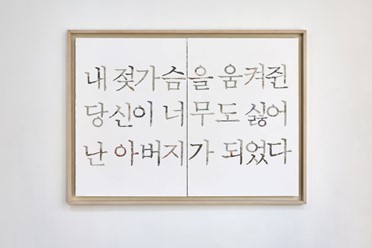
engulf the white pages of her book in such azure fire, Keem Jiyoung wrote Wind
Beyond the Closed Windows (2018). From the Hangang Bridge
Bombing of 28 June 1950 to the Euijeongbu Apartments Fire of 10 January 2015, Keem
rummaged through old newspaper articles to compile 32 cases of demolition,
collapse, fire, and sinking incidents recorded in modern Korean history. Many
of these incidents took place before modern safety standards were established
for public infrastructure such as bridges or the subway, or for venues of
mass–gathering such as hotels, apartments, and cruise ships. Even after safety
standards were put in place, neglect borne of complacency still led to
accidents in more recent years. Reading Keem’s dryly crafted, matter–of–fact
account of these massive accidents caused by human factors over the past
half–century in Korea provides a chilling reminder that an accident like the
Sewol ferry disaster of 16 April 2014 is not a singular event of the recent
past, but rather a part of the historic legacy of urban disasters, which is
perhaps an unfortunate archetype of modern society.
Accidents
like these become ingrained in the public’s mind as images more visually
shocking than murder cases. Spectacles of accidents at public places or
architecture are often akin to those of blockbuster disaster movies. Emboldened
by the overwhelming sense of physical and sentimental violence, the images of
such monumental disasters inflict the contemporaneous people with trauma. Once
a person has experienced something so shocking, they recognize similar cases
that follow as a repetition of the same experience instead of as new stimulus.
As such, events like these remain interconnected in the spectators’ minds,
instead of being remembered as isolated cases. The manner in which a person
responds to such recurrence of disasters will depend on how the person
responded to that initially shocking experience, which disrupted their daily
life and forced a new, unfamiliar perspective of life and society. Such
disruption of daily life by powerfully shocking events is not unique to
disasters; even before they have fully formed their personality or thought
process, children often come across something that changes how they see the
world. What then, could have induced Keem to select the sinking of MV Sewol as
a special turning point in her daily life and artistic endeavors?
To
“experience” something goes well beyond simply “knowing” or “understanding”.
Once the volume of information and knowledge thrust upon us crosses a certain
threshold of experience and perception, there comes a moment when we come to
physically “experience” something we merely “knew” as individuals or society.
Each person has their own way of coping with a painful experience powerful
enough to stop everything in daily life and render us speechless. Many choose
to remain silent as the notion of pain is particularly more dreadful to those
who have already become numbed by pain. Those who do broach the subject would
do so slowly and with due gravity. The series of painful experience that
follows the initial moment of suffering become bearable with the immunity
afforded by silence. But as the African American lesbian feminist Audre Lorde
put it, silence does not protect us, “for we have been socialized to respect
fear more than our own needs for language and definition, and while we wait in
silence for that final luxury of fearlessness, the weight of that silence will
choke us”.¹
Thus,
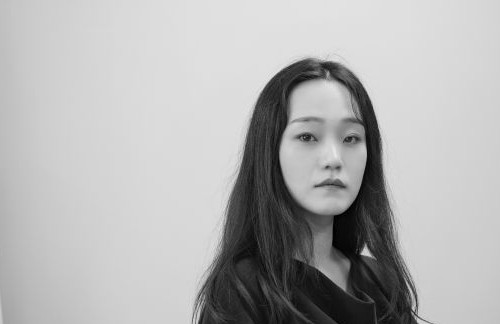
Keem embraces such unshakeable fear as she returns to her creative process. On Wave (2015),
which Keem created by rubbing the charcoal stick so hard that it actually tore
into the paper, Keem said “charcoal is the lightest [of all drawing materials],
and I thought grinding it against the paper until everything was pitch black
was the only way to get myself to [draw again]”.² As the French philosopher
Gaston Bachelard said, “the cohesion of the graphite gets goaded into adhesion
by the immaculate paper. The paper awakens from its own virgin dream and is
roused from its nightmare of whiteness”.³ Bachelard gave the example of
graphite and paper as part of his explanation on the realism in a certain
romanticist artist’s work, saying that realism “exists in the material (instead
of an external world)”.⁴ While this is likely intended to emphasize the
importance of the material rather than to discredit the external world,
debating the importance of one over the other may sometimes become meaningless
depending on how the artist lives. The elaborate expression of the graphite’s
self–isolating cohesion, changing into adhesion when applied on the paper that
is itself roused from purity and white nightmare, is a powerful metaphor for
the cruelty of reality. For Keem, dwelling in the world of the canvases and
paint does not feel any different from interacting with the events of the
“real” world and the people around her. If anything, the two worlds goad each
other on.
Survival
is no longer simply a matter of mindless, automated cycle of eating and
breathing irrelevant to reasoning. There was a time when ethical discourse was
considered as something that takes place during emergencies, an extraordinary
exception to daily life. However, according to sociologist Kim Hong Jung the
“cruel and surreal eco–ontological crisis” known as Anthropocene “provides an
opportunity to transform survivalism into a progressive and radical political
resource”.⁵
Such ontological transformation can be reached by the moderately distant
observer who undergoes “changes in self–identity from disillusionment or
disappointment”(Kim Hong Jung)⁶, or by the oppressed and scarred who “remind [themselves] that [they]
have lived through it already, and survived”(Lorde)⁷. Either way, the transformation is in and of itself a painful
process. The life after the transformation is not one free of suffering either.
Life itself is suffering, after all.
Keem’s
life of creativity appears physically taxing. She spends nearly a month on
building a single work, focusing every fiber of her being to turn the empty
paper or canvas into a certain state. Like any office worker,
Keem
commutes to her studio every day, constructing her surface layer by layer, hour
after hour. In order to ensure her surface does not dry flat and maintains
specific layers, Keem does not resort to the tools often used to dry the oil
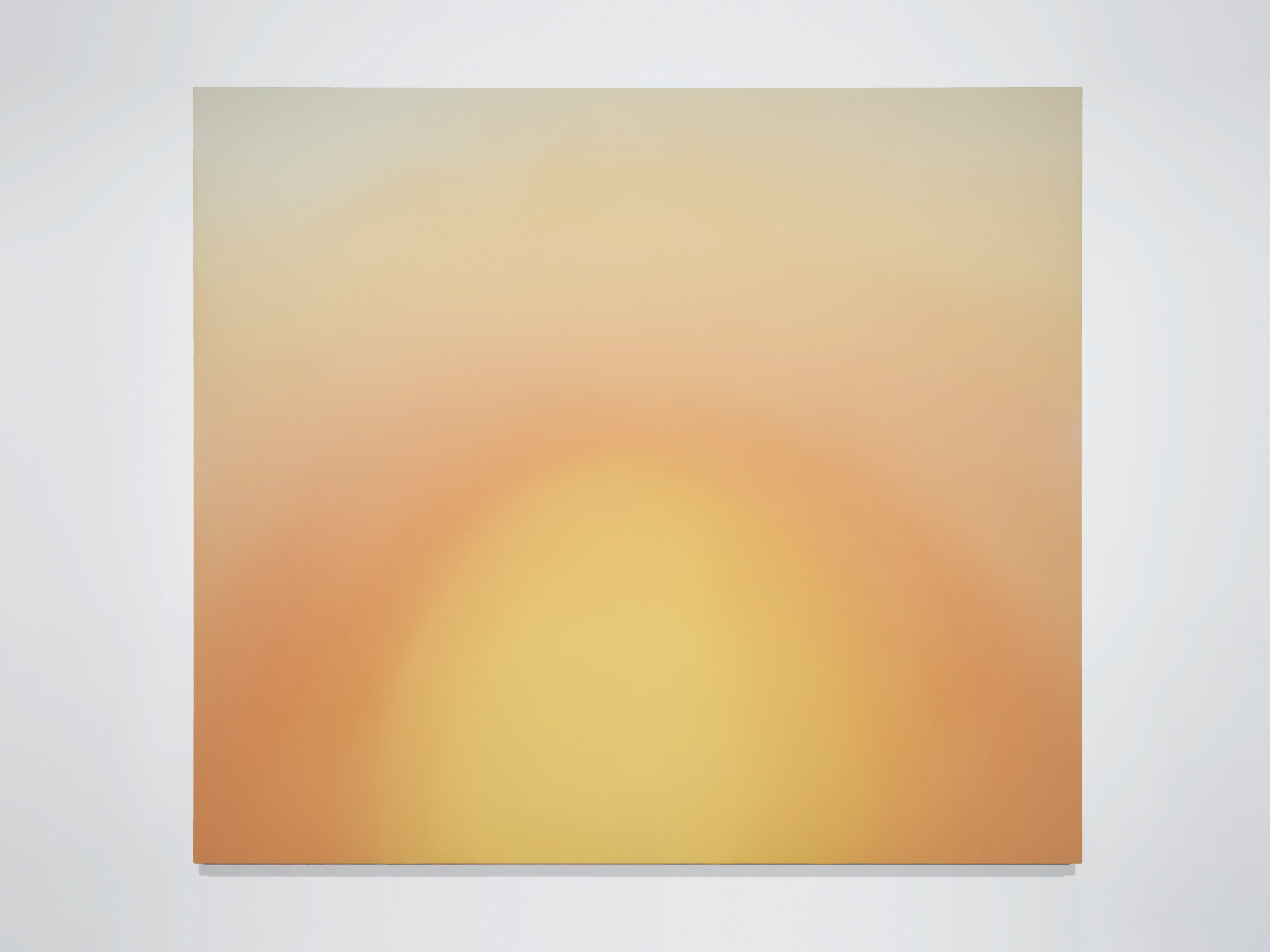
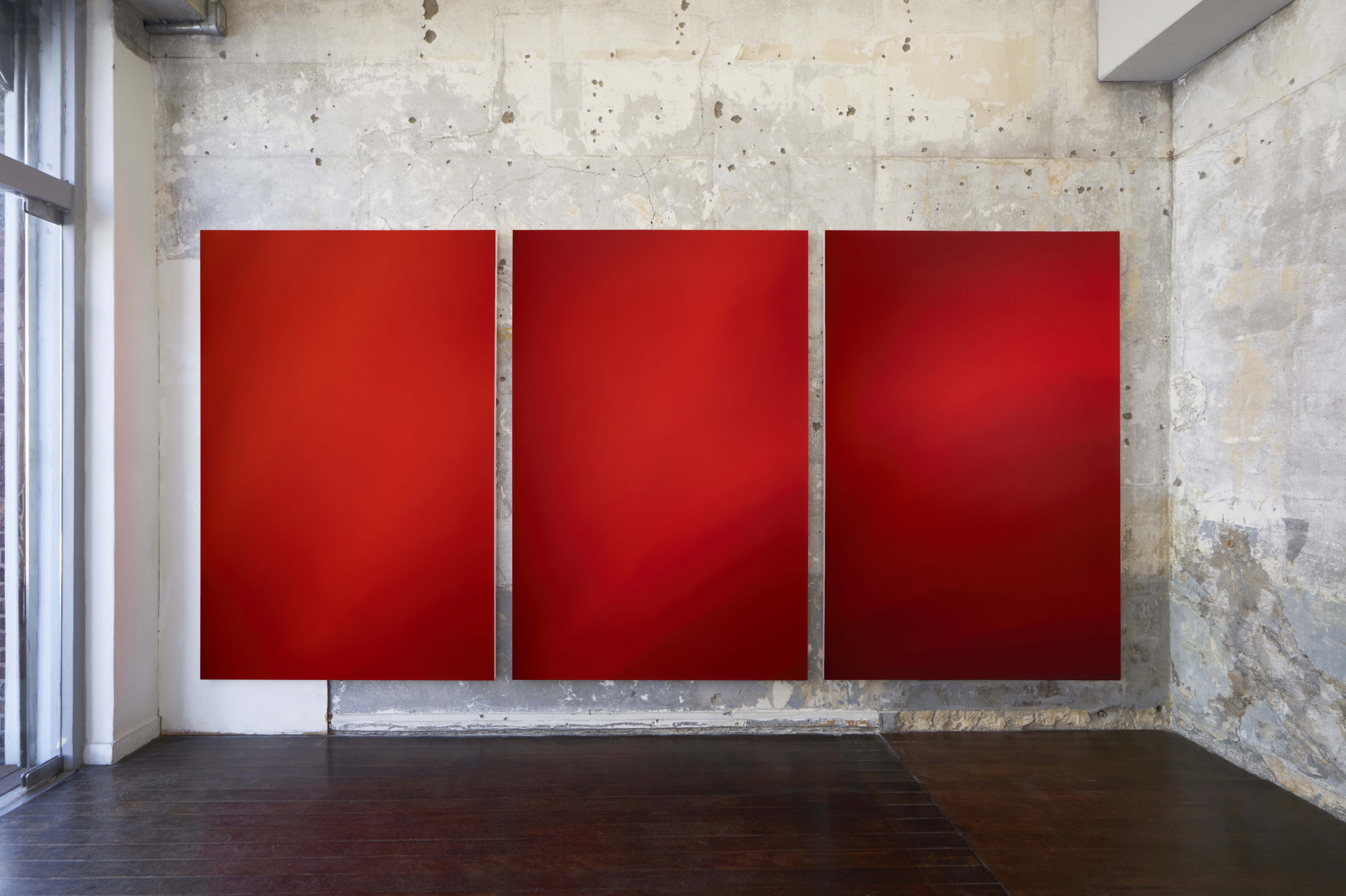
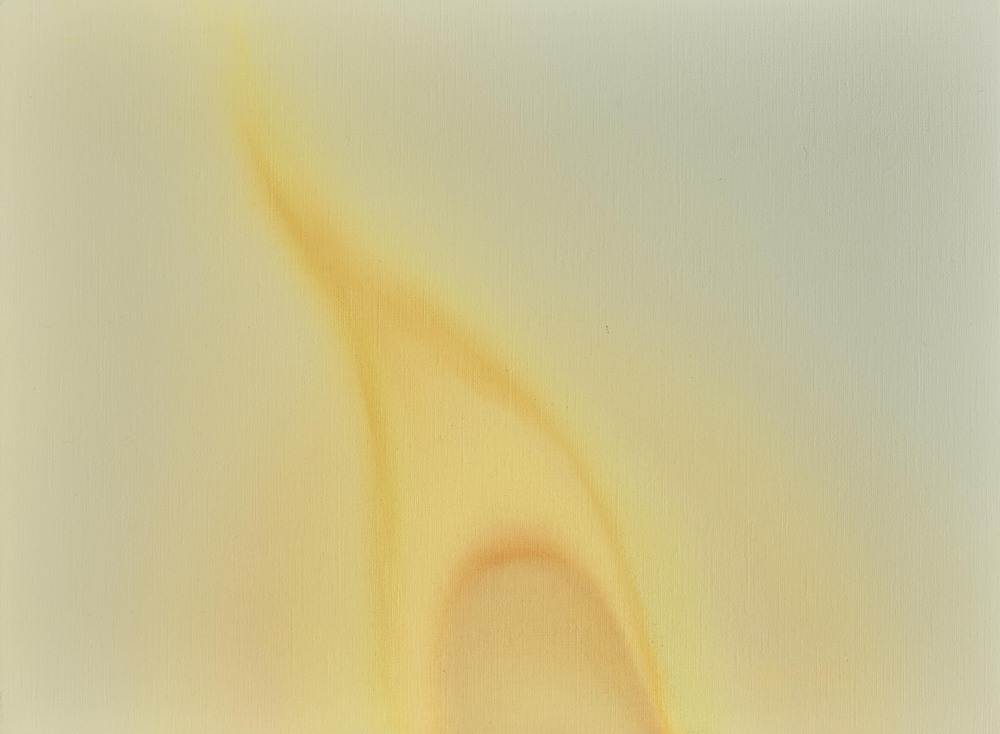
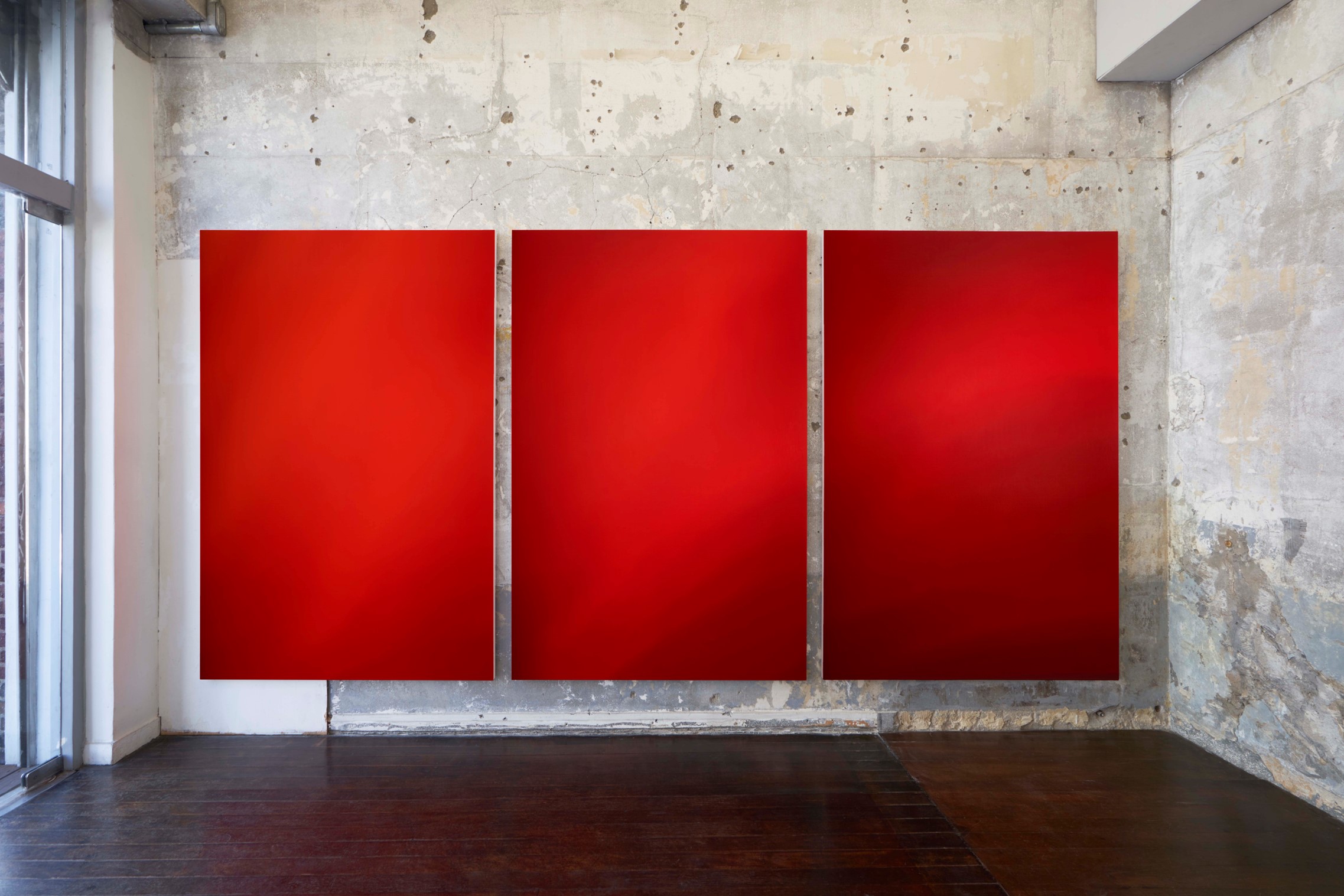
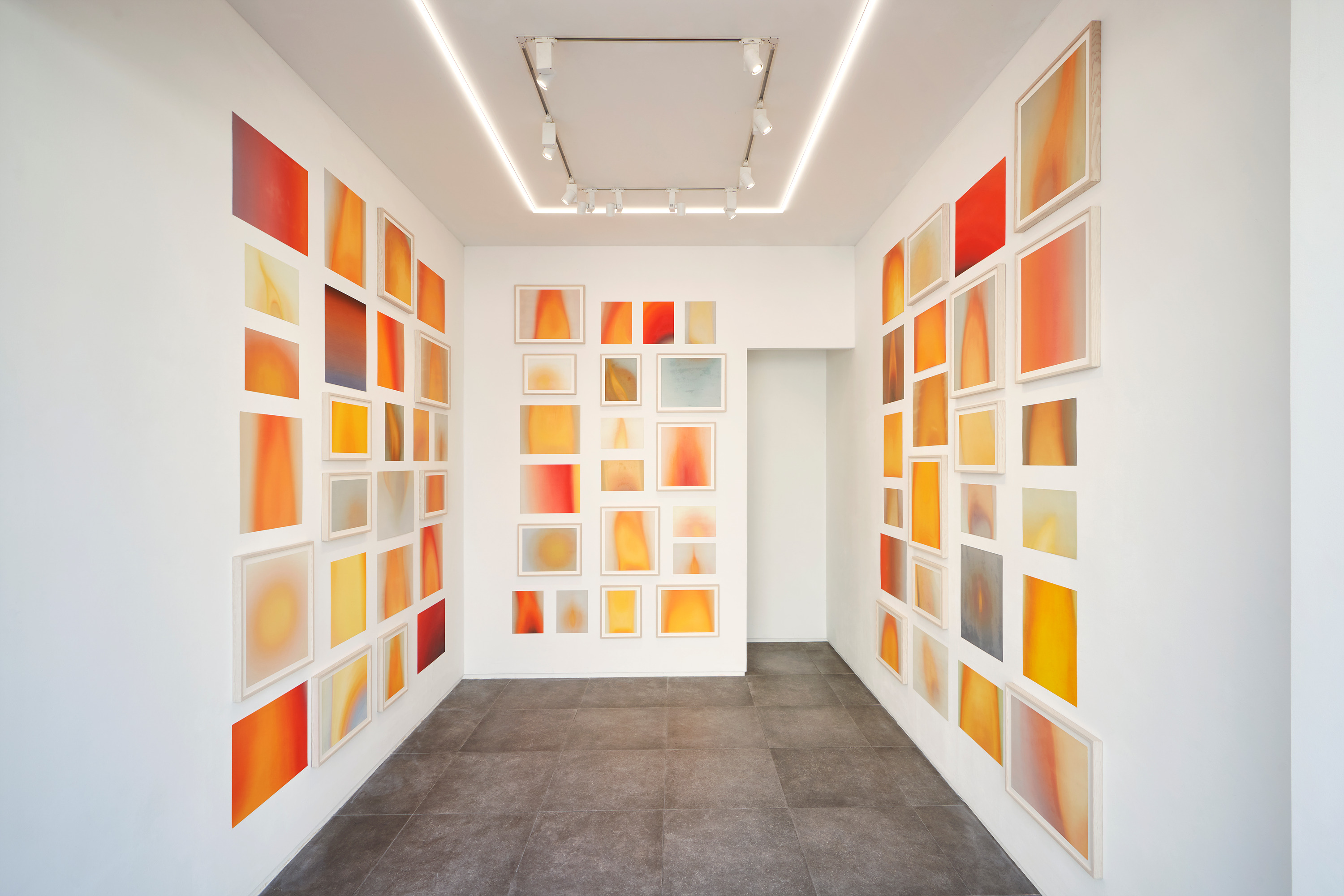
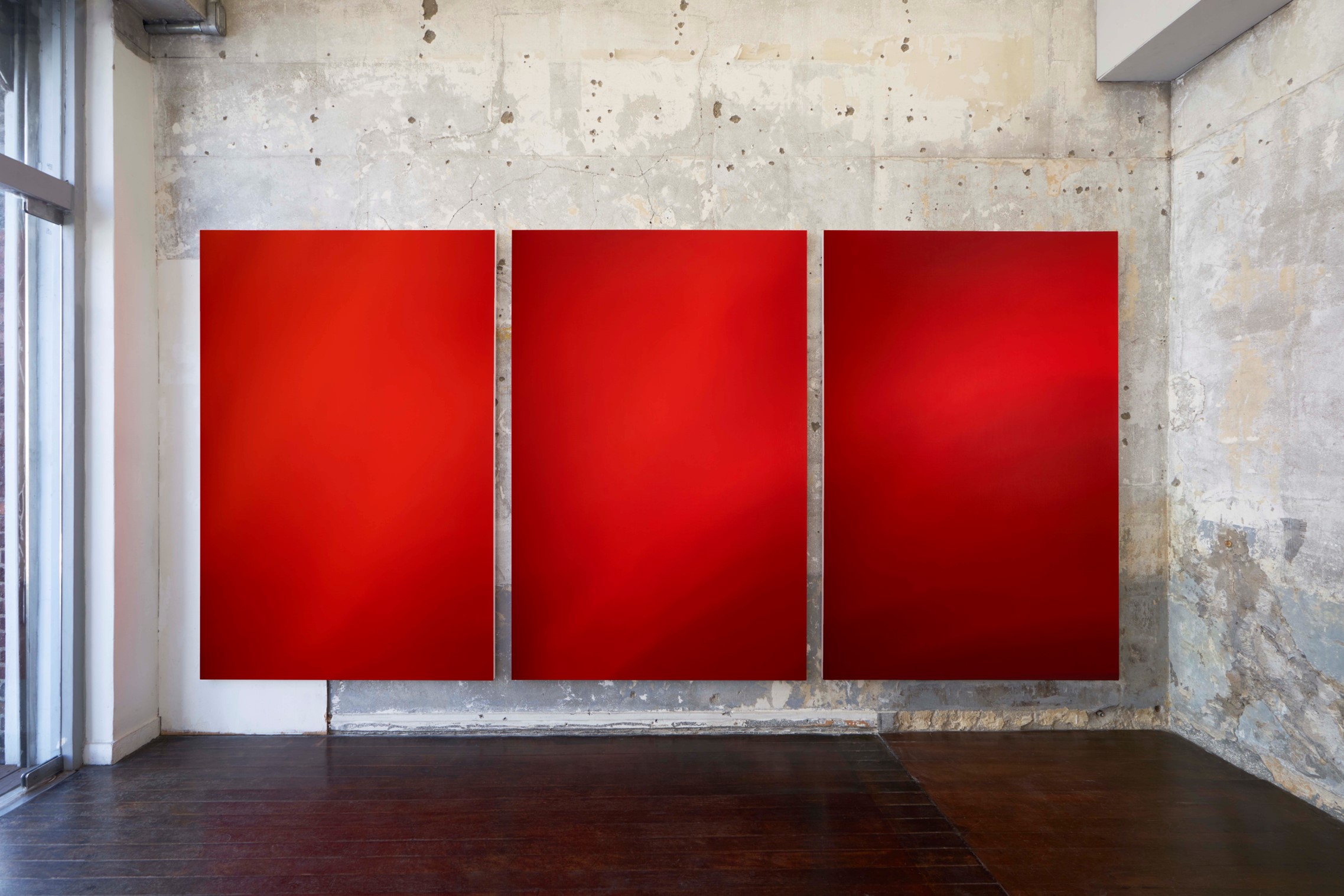
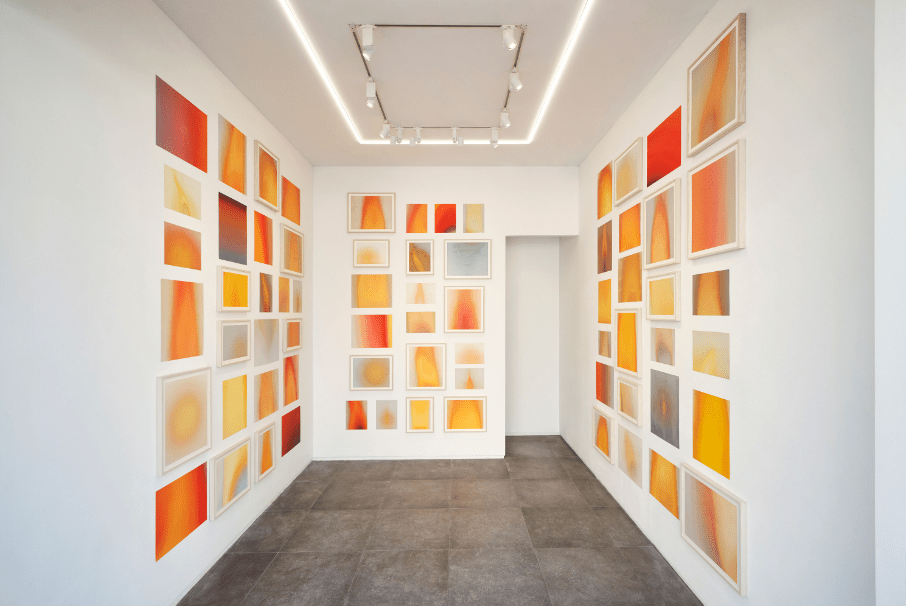
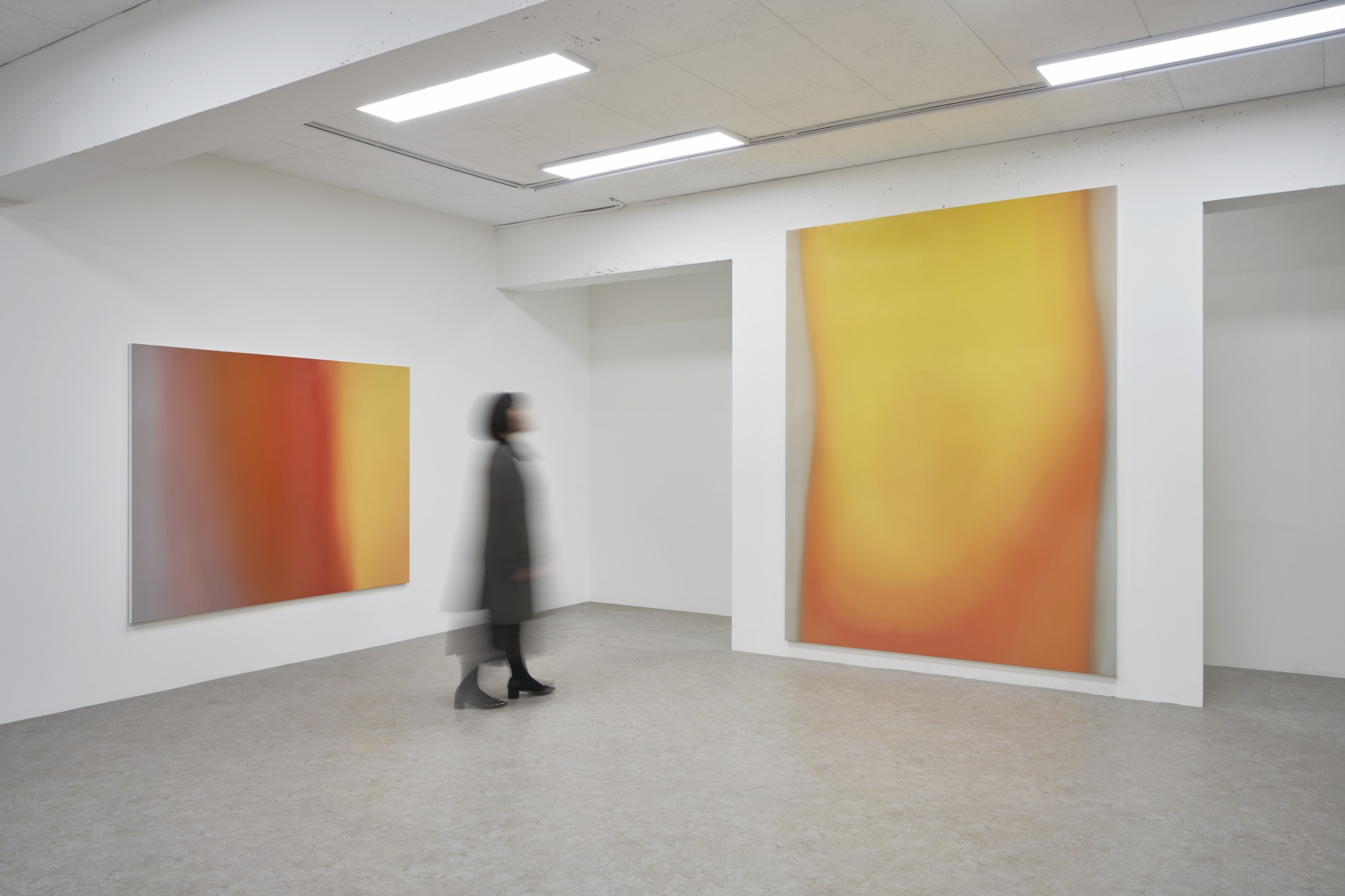
paint quickly. In the ‘Glowing Hour’ (2020–2021) series, her
paintings are mostly large, but with varying proportions. The square painting
measuring 112cm x 112cm is designed to present a clearer look at the candle’s
shape, while bigger canvases capture the light bleeding out above and below.
Such large works consume considerable amount of physical energy to create. Yet
the subject in the works is always a single candle. Keem must have spent hours
staring at her candle’s wicker quietly burn through beneath the dim fluorescent
lamp of her studio, relentlessly watching how the flicker of the flame changes
the illumination with breeze. The candlelight becomes a catalyst for daydreaming,
connecting her to the thoughts about the victims of disasters. The flame
continues to flicker and change, but always remains hot. In the time it takes
for a single candle to burn through, Keem sees human life. Her daydreams and
imaginations are always accompanied by physical labor. There is no time for
musings like whether it is possible to represent disaster and suffering or not.
It also does not matter that regardless of what she paint, it will end up
representing something either figuratively or symbolically. What really matters
is whether her body can withstand the toils of creative representation to the
very end.
Unlike
empty survivalism, survival as an ethic is the most important topic in the
creative lives of contemporaneous artists today. Whether it is a social
disaster or a personal suffering, the artistic endeavors to remember such agony
takes a toll on the body. Such exhaustion is inevitable, just as the candle
melts along with the burning wicker in order to emit light and warmth. How many
people, and how far does such a light reach? Even when the flame is
extinguished, leaving behind only the lingering warmth in the air, it will not
be too late. After all, memories are all about heading towards the future that
has yet to come, instead of dwelling in the present.
¹Audre
LORDE, “The Transformation of Silence into Language and
Action”(1977), Sister Outsider, trans. Hae Yeon CHOO and Mi Sun PARK
(Seoul: Humanitas, 2018), p.53.
²Remarks
by KEEM Jiyoung during a conversation at Incheon Art Platform, August 19, 2021.
³Gaston
BACHELARD, “Hand vs. matter”, The Right to Dream, trans. Lee Garim (Paju:
Youlhwadang, 2007/1980), p.78.
⁴Ibid.,
p.76.
⁵KIM Hong Jung, Reclusive
Machine (Seoul: Munhakdongne, 2020), p.231, p.234.
⁶Ibid., p.77.
⁷LORDE, “Eye to Eye” (1983),
Op.cit., p.331.