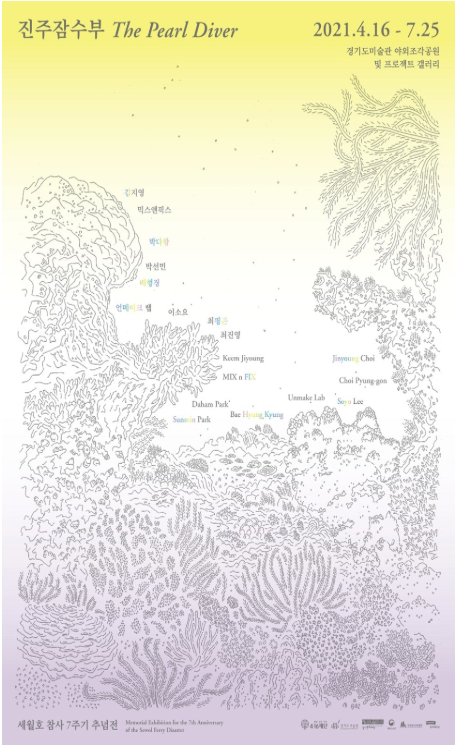
Keem Jiyoung’s active visualization of text in her work is not a
new approach. For example, in Testimony 1 (2010)
and Testimony 2 (2010), Keem combined cut–up
newspapers and receipts to express a strong will resisting the violence and
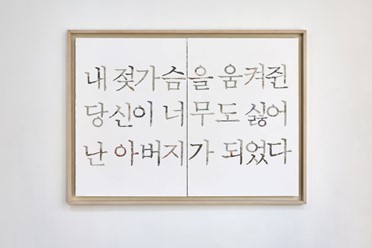
impotence of power. In Gentle Suggestion (2014/2018),
she symbolically represented a toad―a weak being consumed by a snake that preys
and pillages―by creating the lyrics of a traditional children’s song ‘Toad,
Toad’ with cellophane. In her work, text functions as a device to question the
power of ‘visible’ worlds or visual images and to make statements.
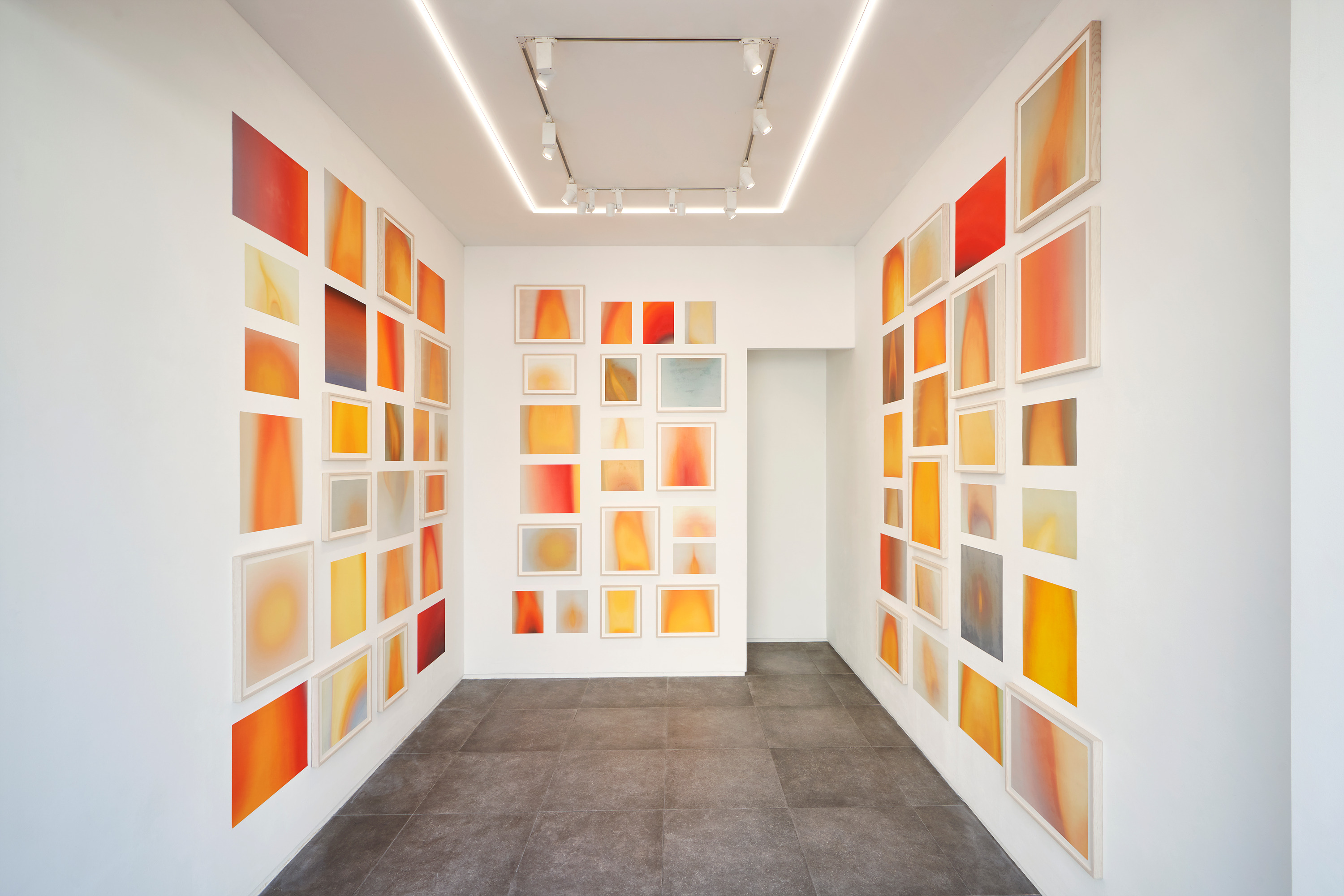
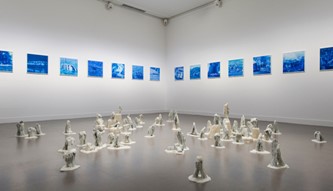
The motif of ‘waves’ appears repeatedly in Keem Jiyoung’s work.
In Wave (2015), she depicted death with charcoal,
and in From April to March (2015/2019), she
observed and drew the changes in waves over a year with pencil. In the video
work Glow Breath Warmth (2020), she captured the
waves and ambient sounds of Paengmok Port. Through repeated processes of
‘embodiment,’ she reconstructs reality, and the repetitive movements at her
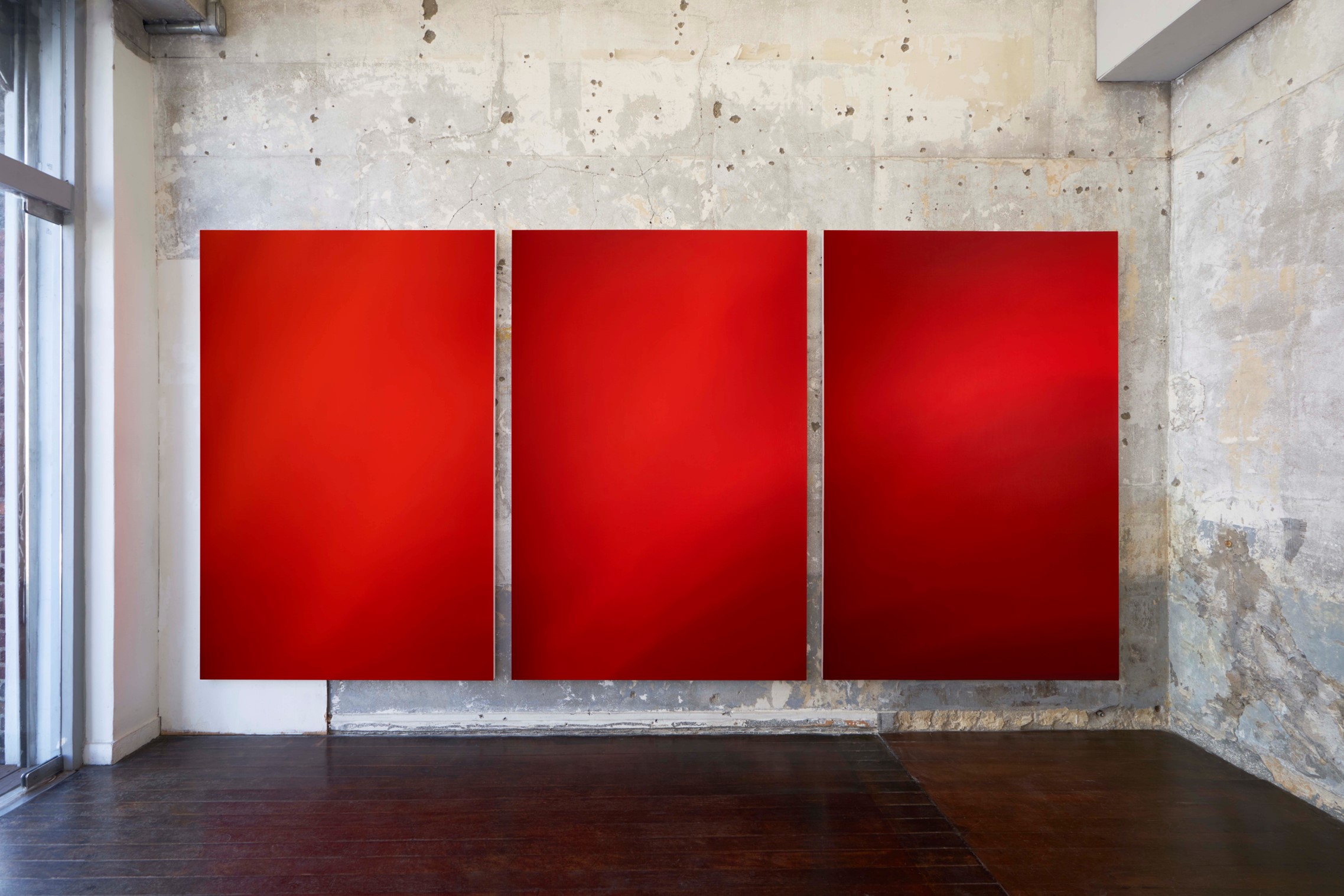
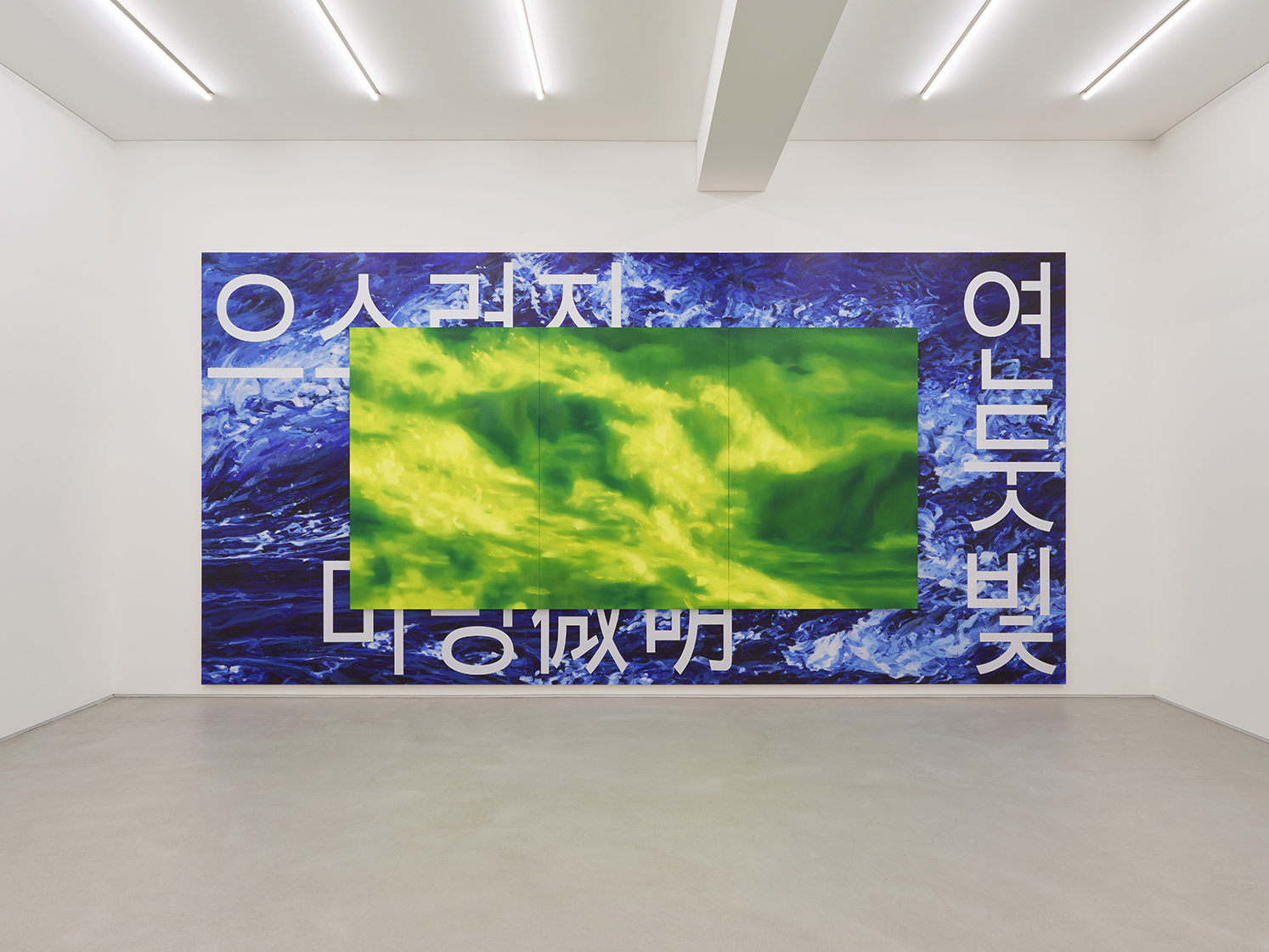
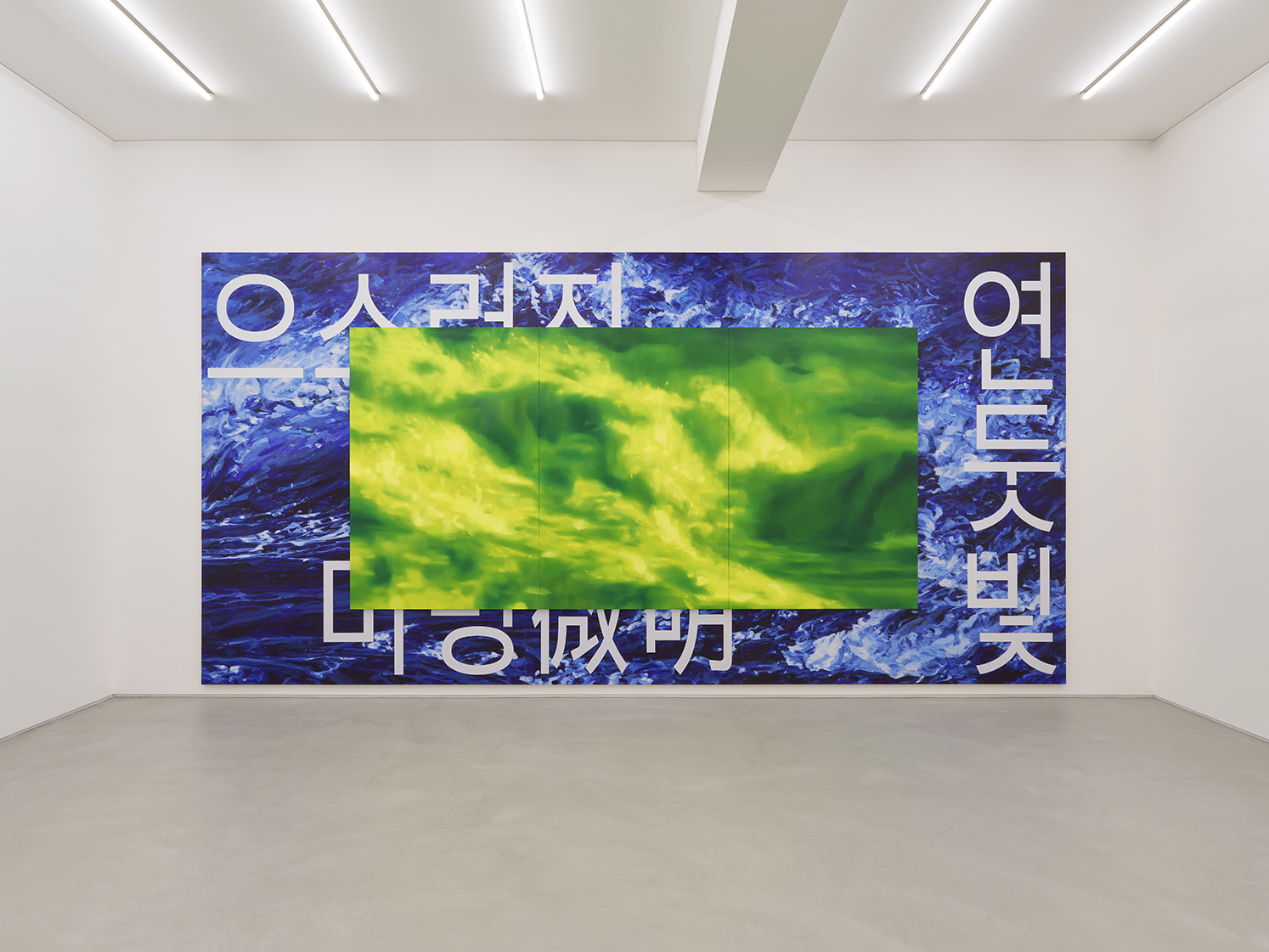
fingertips record the historical context. In Wrath, Tidal (2024),
the waves, which reappear with an air that suggests they could swallow small
creatures at any moment, continue to ripple ‘still.’ The tranquil sea harbors
waves that can suddenly turn into tyrants.
“In times when deception is demanded and errors are encouraged,
the thinker strives to correct whatever he reads and hears. Whatever he reads
and hears, he says aloud quietly, and as he says it he corrects it. Sentence by
sentence, he replaced the false statements with true ones.” This very practical
methodology is described in Brecht’s 1934 essay “The restoration of the
truth”.² (Jan knopf, “Until the War Primer Comes Out”)
In “War Primer”(1955), Brecht employed a format consisting of
photojournalism, objective descriptions of photographs, and ‘photo–epigrams’
composed of quatrains. His ‘photo–text montage’ technique critiqued media that
distorts facts and hoped readers would discover the hidden truths behind the
photos themselves. Meanwhile, Keem Jiyoung’s work employs a ‘text–image
montage’ technique, not to directly interpret the appearance of waves but to
attempt a combination with poetic text. The artist likely hopes that through
the text, viewers will discern why it is a wave shape, what this image
signifies, and acquire meaning on their own.
With Night’s Nape Between Our Jaws / We Are
Briefly Alive / The Past Arrives As the Future’s
Face / Stones Only Pelt Enfeebled Place / Crushed Green
Ripples / Melody Lingers In Memory / And Breath Unfurls
Into Wind / With Night’s Nape Between Our Jaws
When one finally reads through the interconnected sentence,
something invisible behind the swirling waves begins to faintly emerge. Keem
Jiyoung’s approach to reading and listening makes images operate on various
levels. As we follow the artist’s gaze while gazing at the image, it allows for
contemplation beyond the surface. This is how art enables us to sense even the
‘non–art’ aspects.
The artist’s words remain here, undissipated. Her voice remains
succinct and clear. Here, we need not even decipher the implied meanings.
¹“It was another cold winter day and going to see a show was
merely a part of my everyday life. However, as I stepped in, I was reminded of
Sewol ferry which was starting to slip my mind. Realizing how I had carried on
without thinking about the incident for a while was in itself horrible. At the
same time, I wondered if the banal expression that things are eventually
forgotten and we manage to move on with time might actually be true
(Translation: Jiwon Yu).”–Preface from Keem Jiyoung’s solo exhibition 《Wind Beyond the Closed Windows》 (2018,
Sansumunhwa).
²Bertolt Brecht, War Primer, trans. by Bae Suah, 2007,
Workroom Press, p. 193.