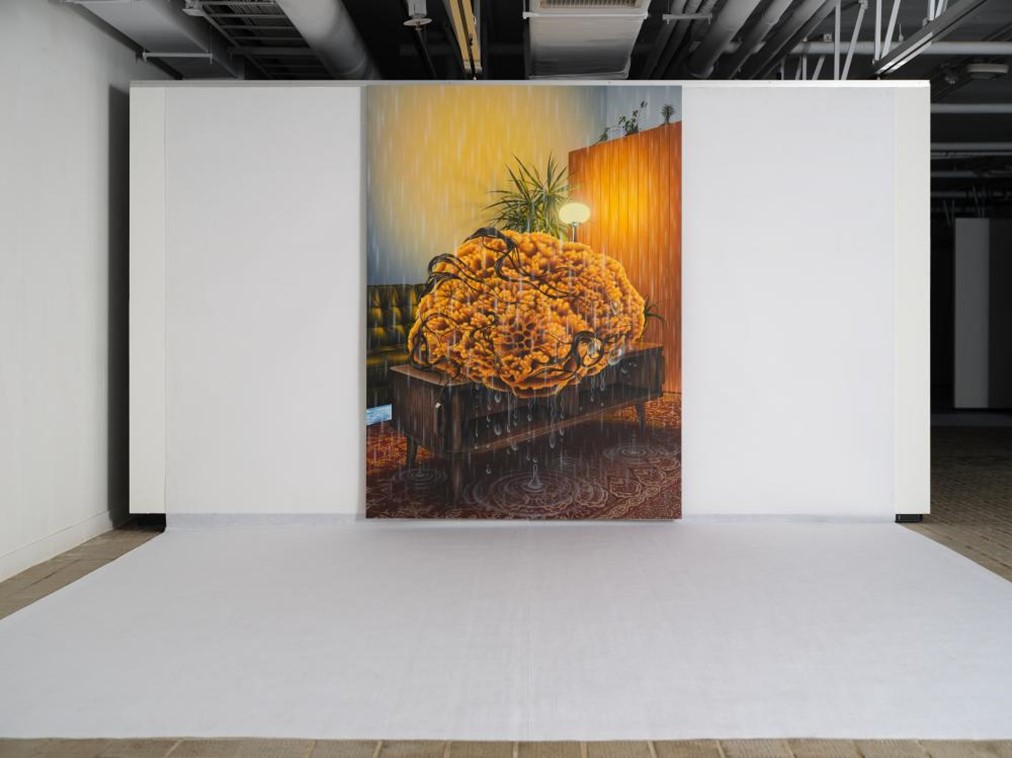
Often sourcing personal memories,
physical images and personal data of others freely available on social media
platforms, Sun Woo merges these disparate remnants together through
digital-like process of alterations and edit, to create a mediated interface on
her canvas. While her microscopic precision of detail obfuscates the “realness”
of her canvas paintings to that of a Photoshop artifice, the prolonged physical
labor to transform her digital collages into traditional modes of presentation–
painting and sculpture–depict a longing to delay and obstruct the fleeting and
transient nature of the contemporary condition. Through this synchroneity
between technique and technology, Sun Woo opens a liminal space where the
experience of duality is possible, sparking a nuanced reflection on both
internal and physical dislocation.
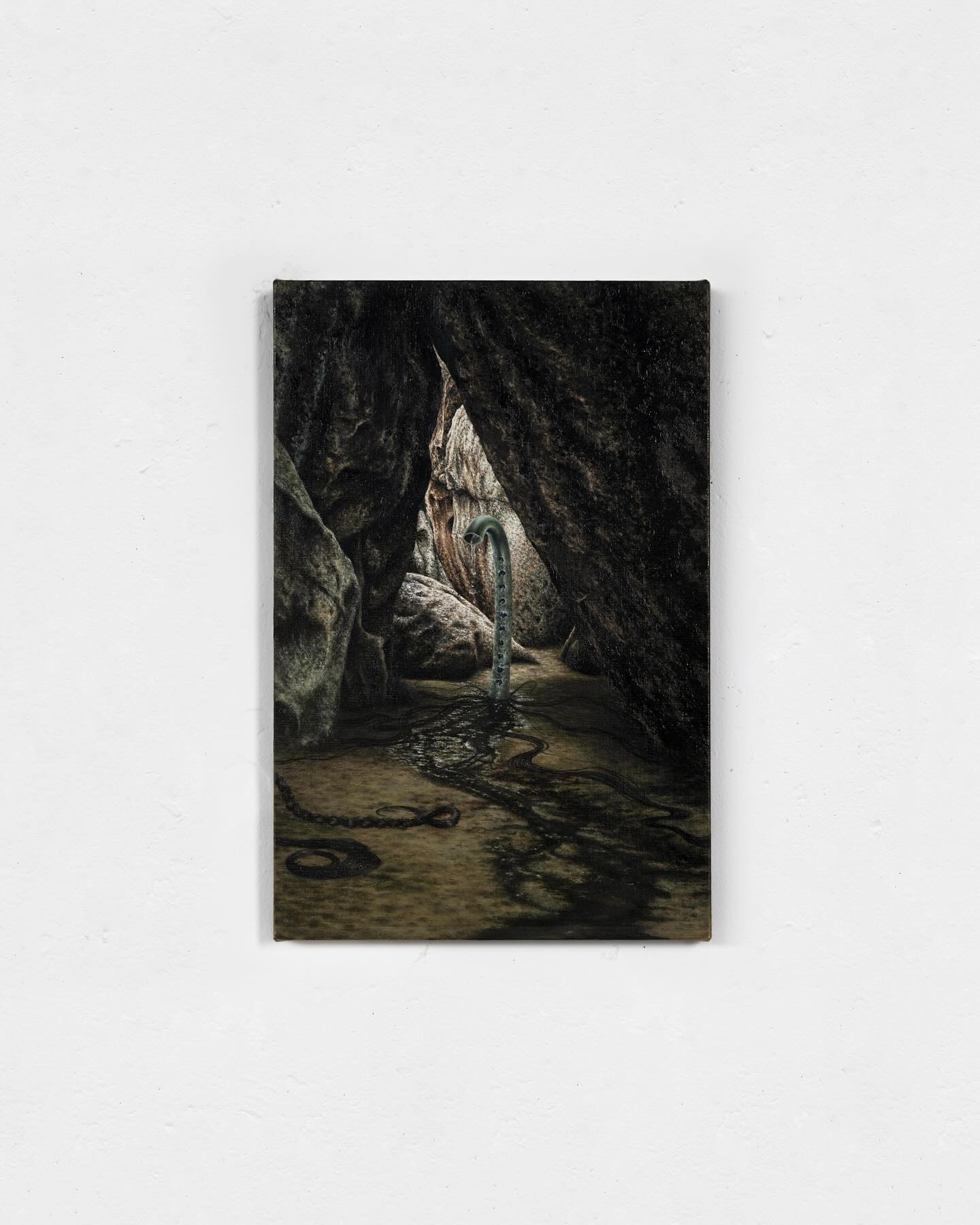
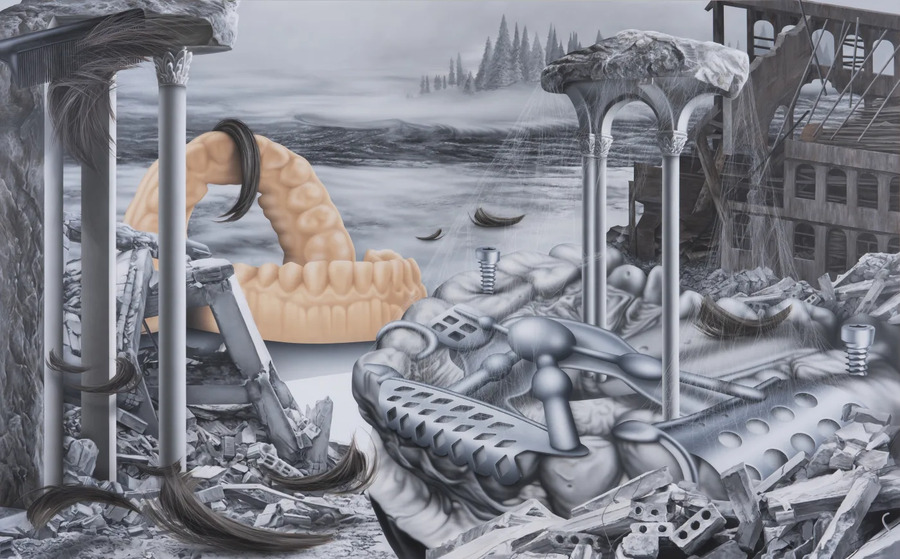
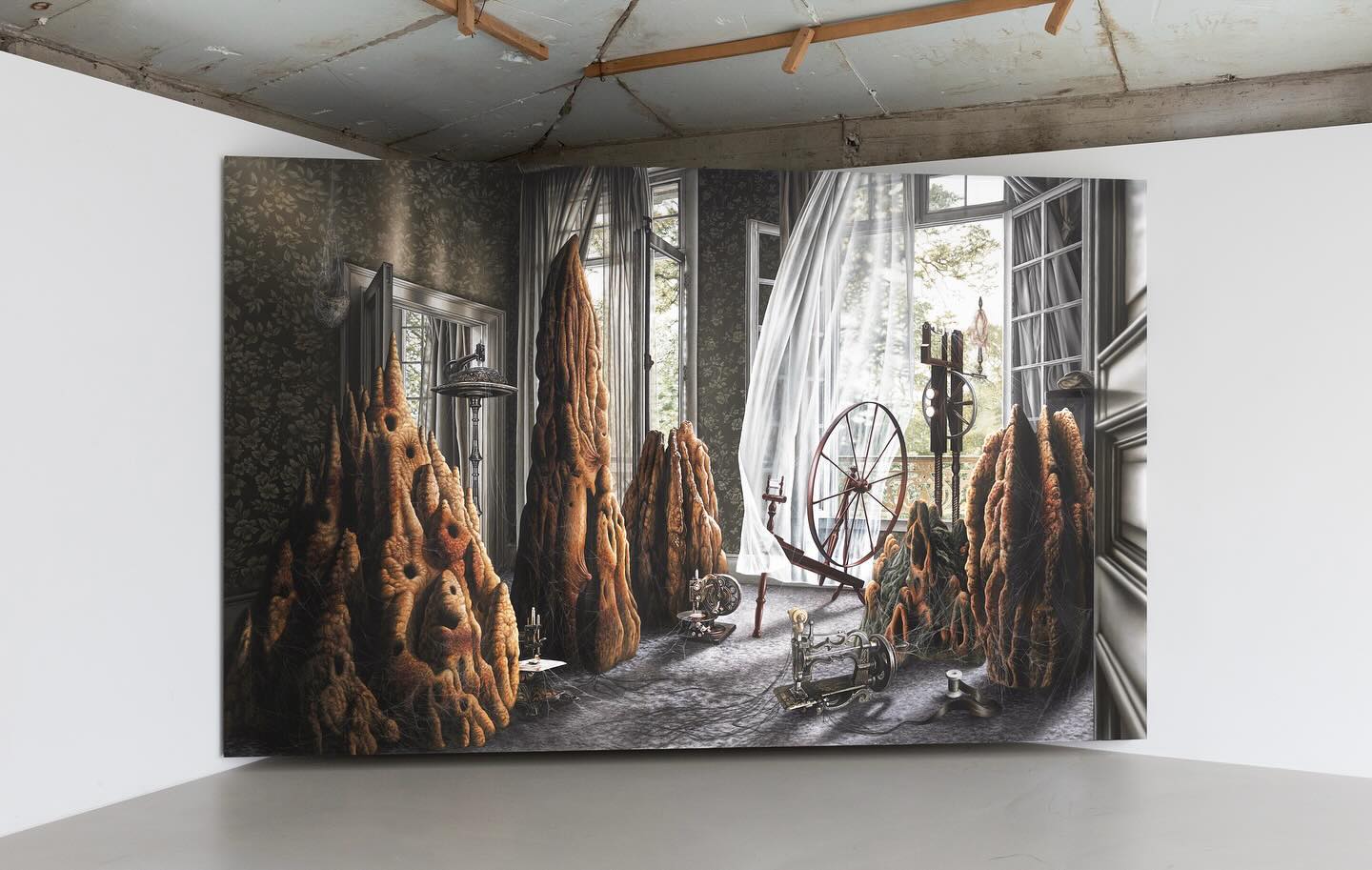
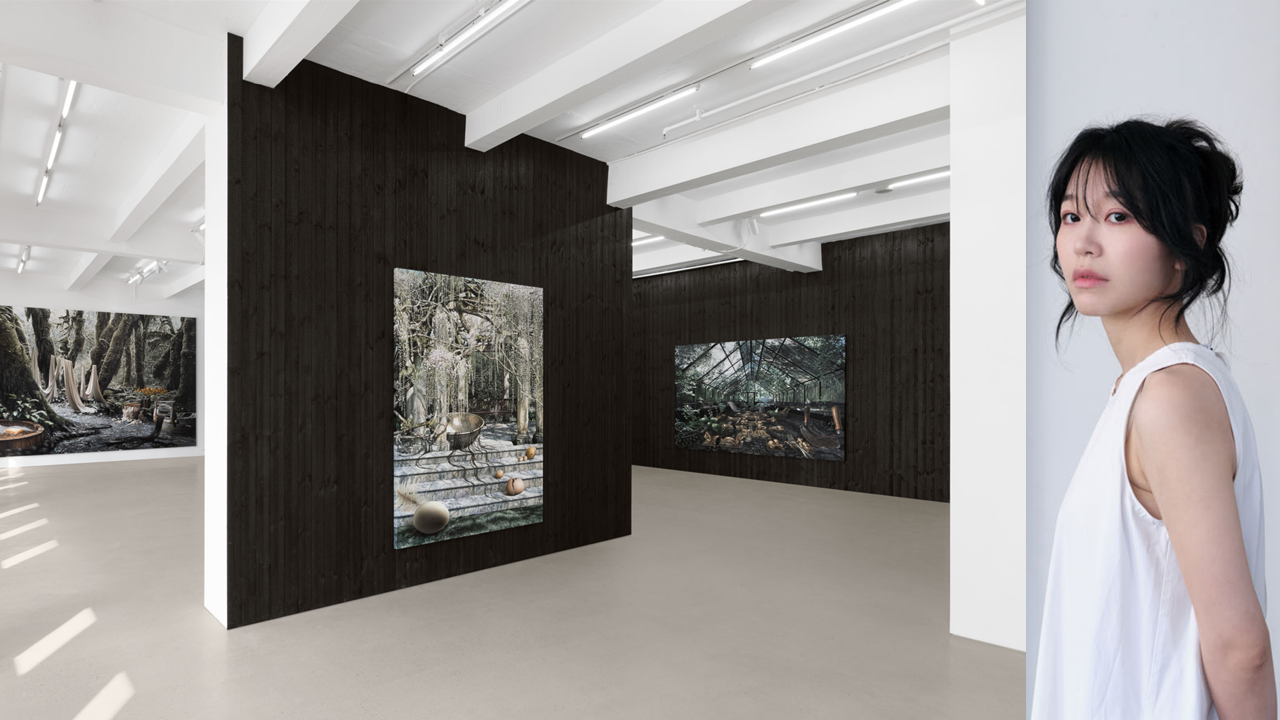
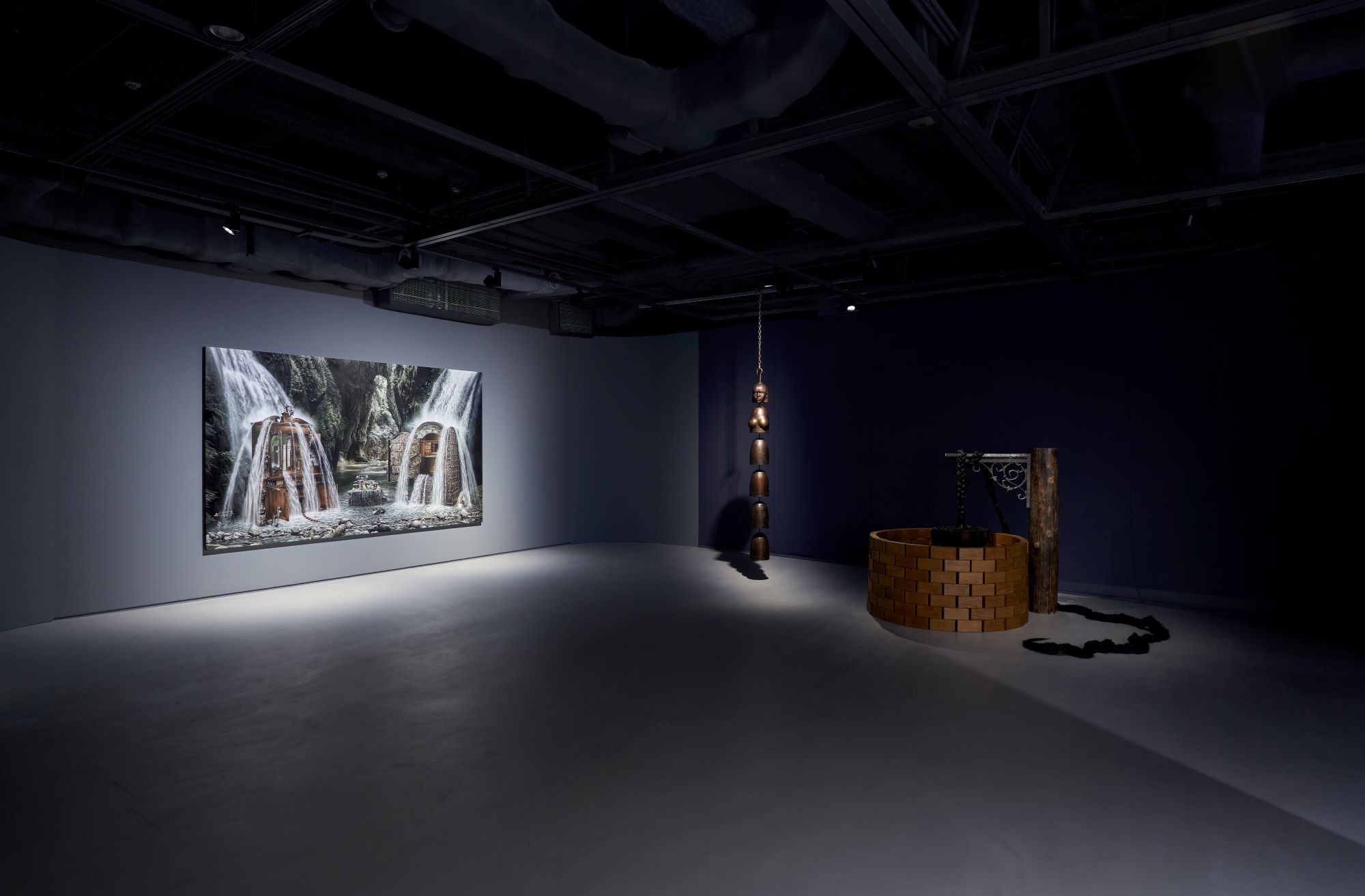
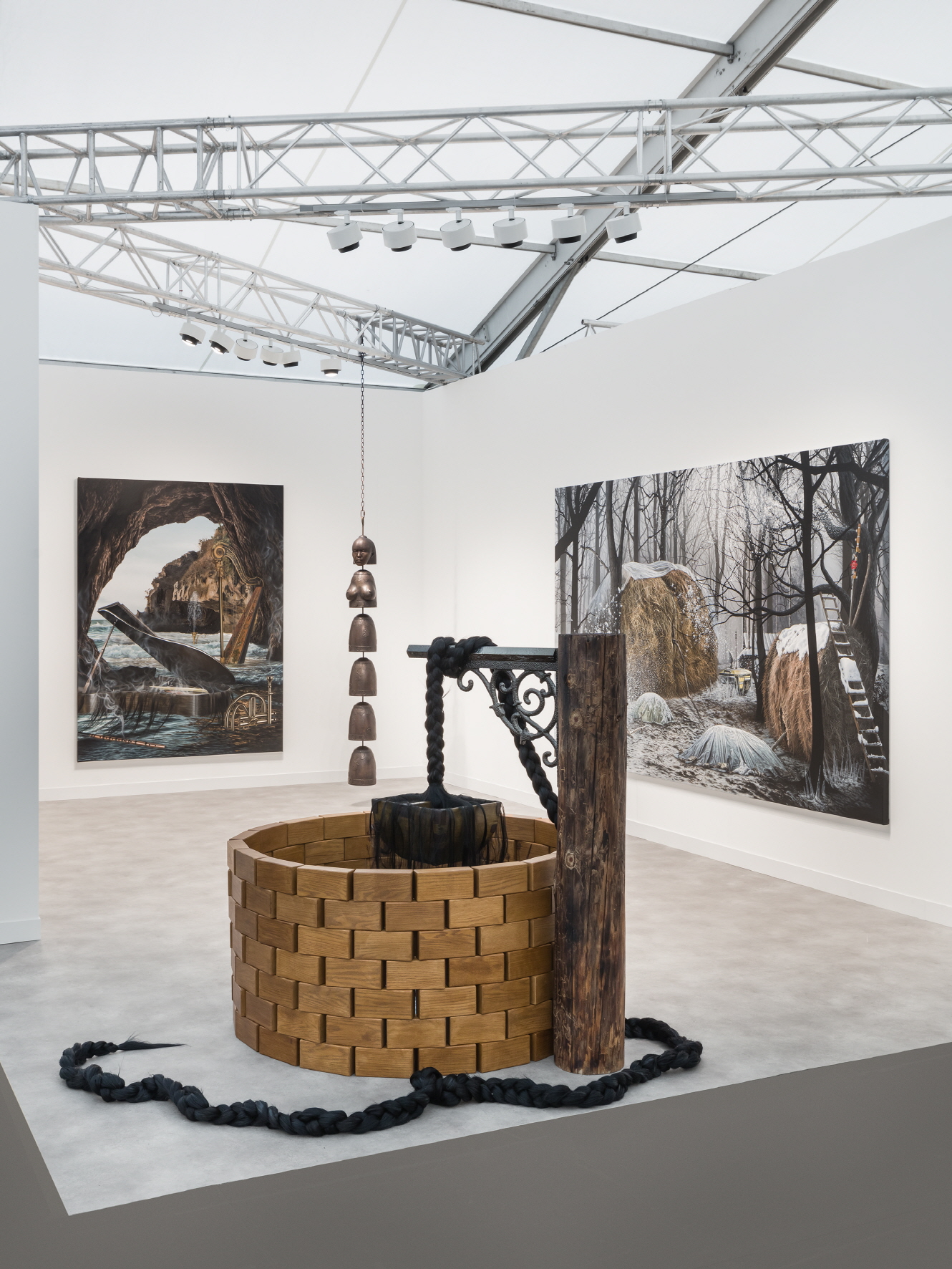
In her large-scale paintings, Sun
Woo merges bodily elements with geological formations like sea caves,
coniferous forests and objects, both vintage and modern, to form mesmerizing
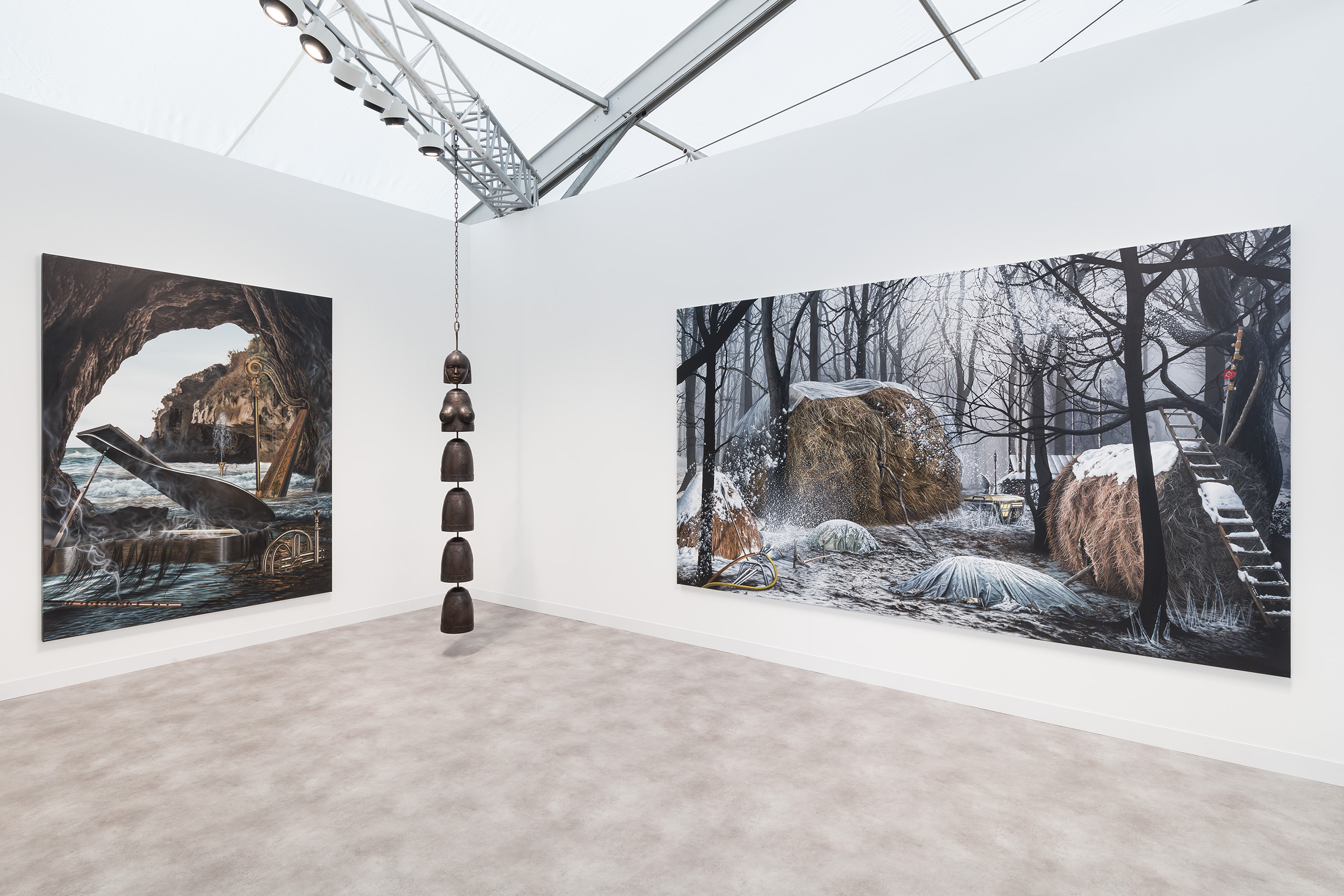
visual paradoxes that defy conventional logic. The Chorus (2024),
which details orchestra instruments submerged in a sea cave, evokes a feeling
of displacement between civilization and nature, the interior and the exterior,
the familiar and the strange. These objects are further embedded with
human-like features: hair drooping from the grand piano, smoke exhaled through
the flute, and water expelled like bodily fluid from the horn. While such
detail encourages one to relate to one’s own body, the overall hybridity breeds
a sense of anxiety, impotence, and decay related to human transience instead of
intimacy.
At the same time, there is an
undercurrent of violence toward the body that repeatedly haunts her works. The
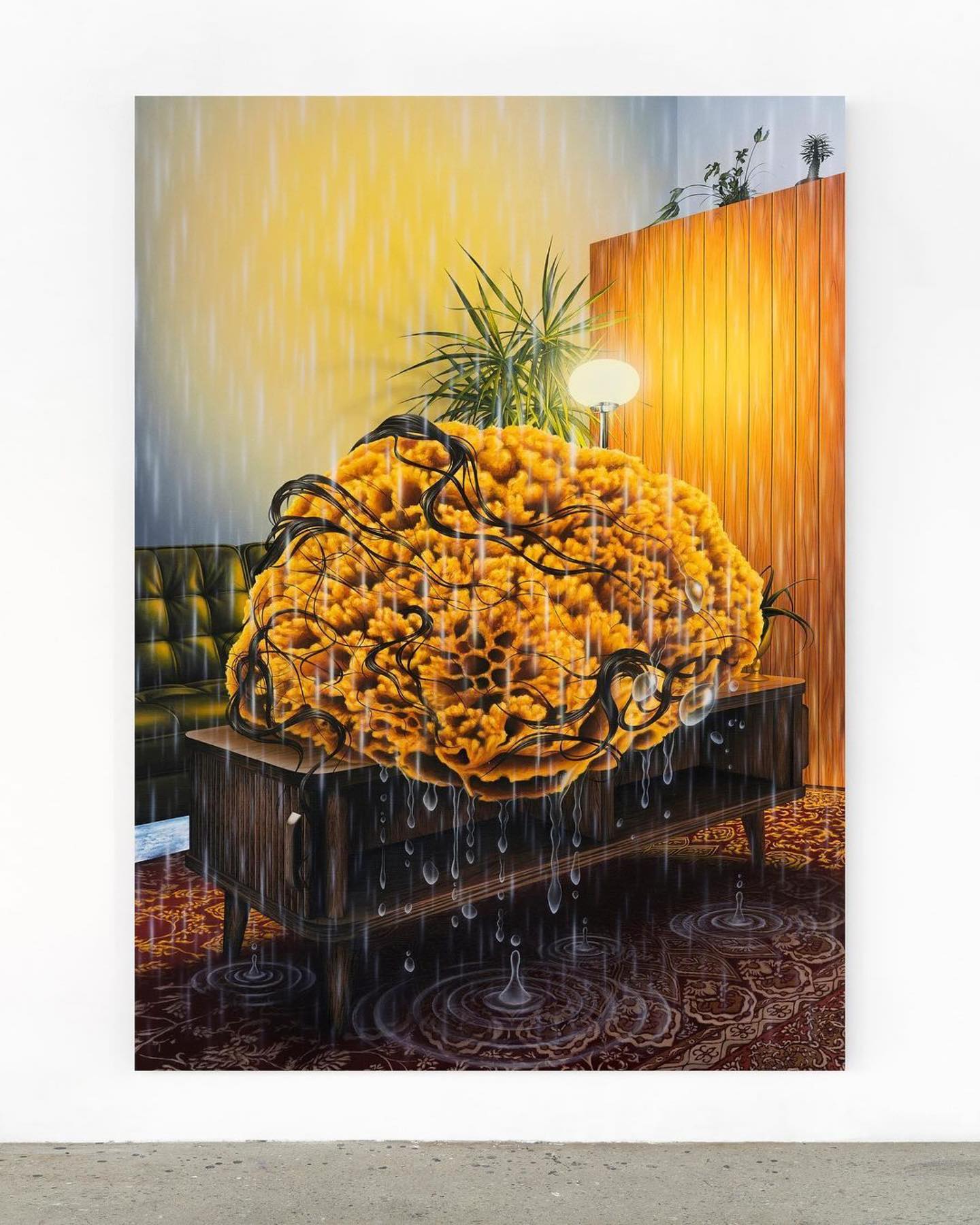
effect appears most pronounced in Shivers (2024);
the slit within the haystacks of which bears an uncanny resemblance to the
female orifice or an open wound, is brutally penetrated by twigs, while robotic
snow blowers chill these bodies in extreme closeups. Such catastrophism
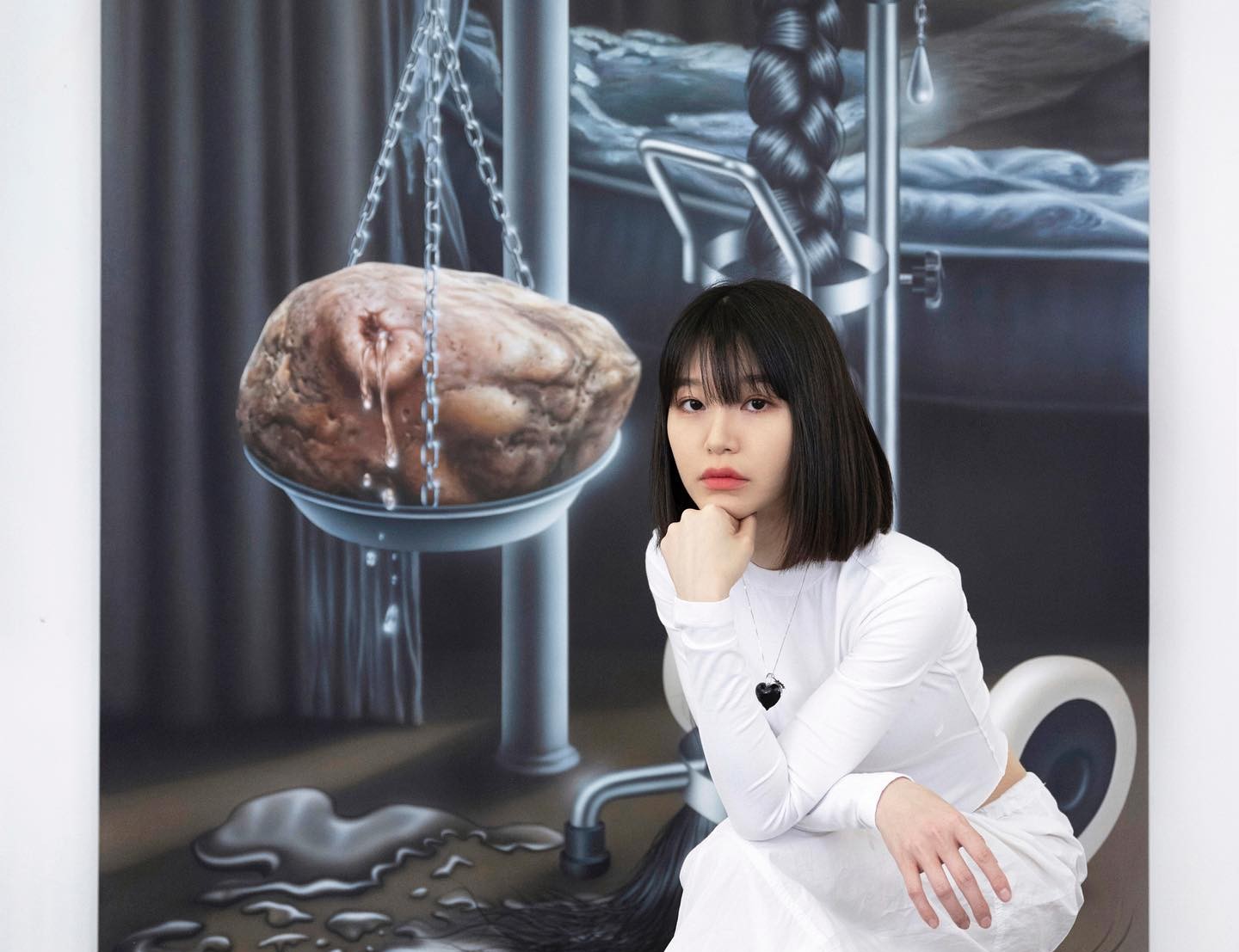
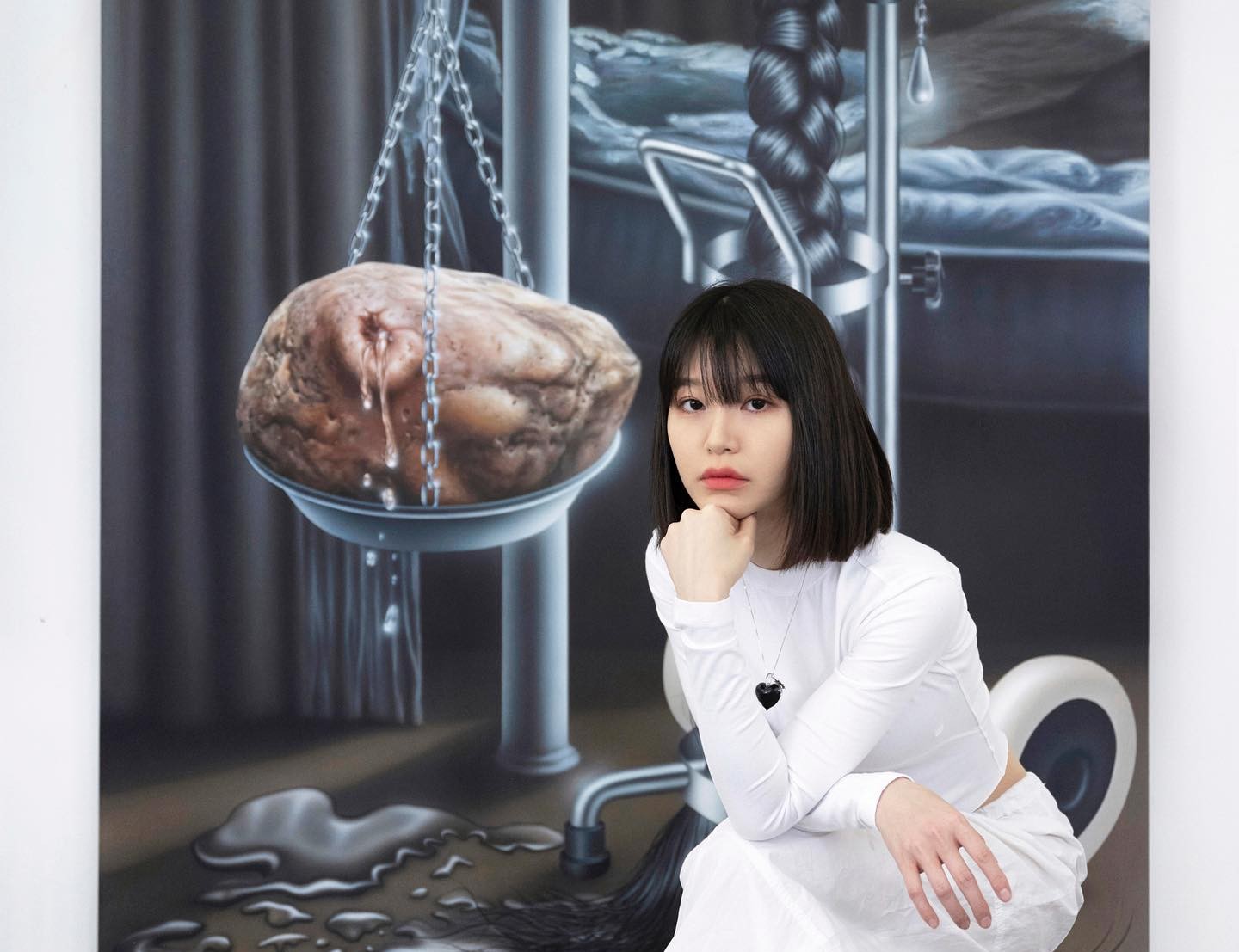
reappears in her other works, as seen in Rest (2024),
the rocks’ colossal weight tensions a supporting braid from the trampoline bed
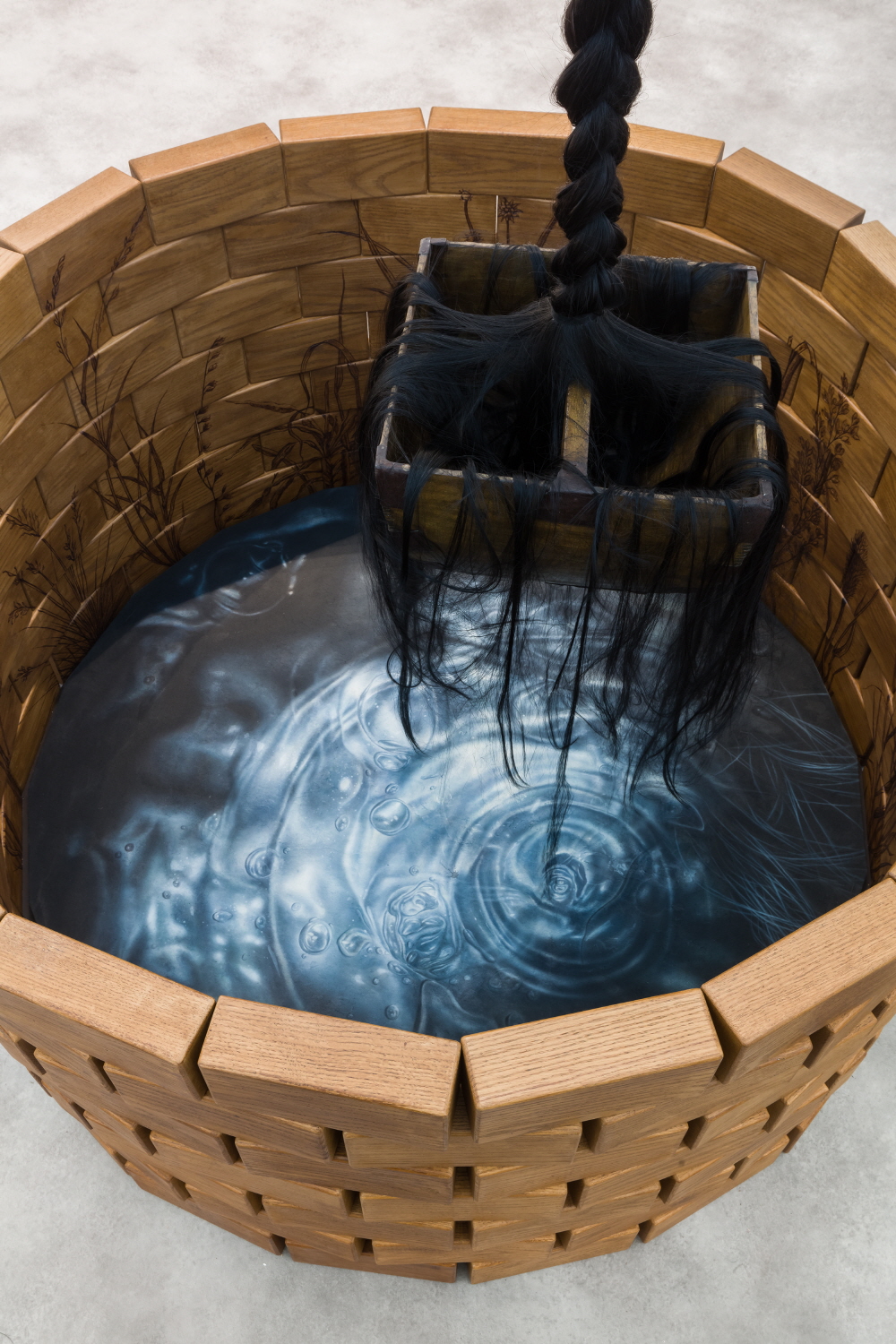
to the brink of snapping; and in Mother and Child (2024),
a vintage scale weighs between two portions of hair which, as implied by its
title, belong to a mother and her offspring. In all three cases, Sun Woo weighs
down and overwhelms components of the female body to elicit a mediated
condition of one’s memory, history and identity, playing on such mismatch in
order to reflect the politics of female sexuality. She also depicts these
figures as stranded in unknown wilderness, recollecting the landscapes of the
suburban West where she grew up as the only woman of color, portraying them as
places of both nurture and menace. Alongside the implications of gravity and
mortality, these in-between states also suggest fissures in rigid boundaries,
highlighting moments of potential rupture.