Esther
Schipper is delighted to announce 《When you understand my secret, it
becomes a ghost》, Hyunsun
Jeon’s first solo presentation with the gallery. On view will be 10 new
paintings by Jeon whose representation was announced in February of this year.
Hyunsun
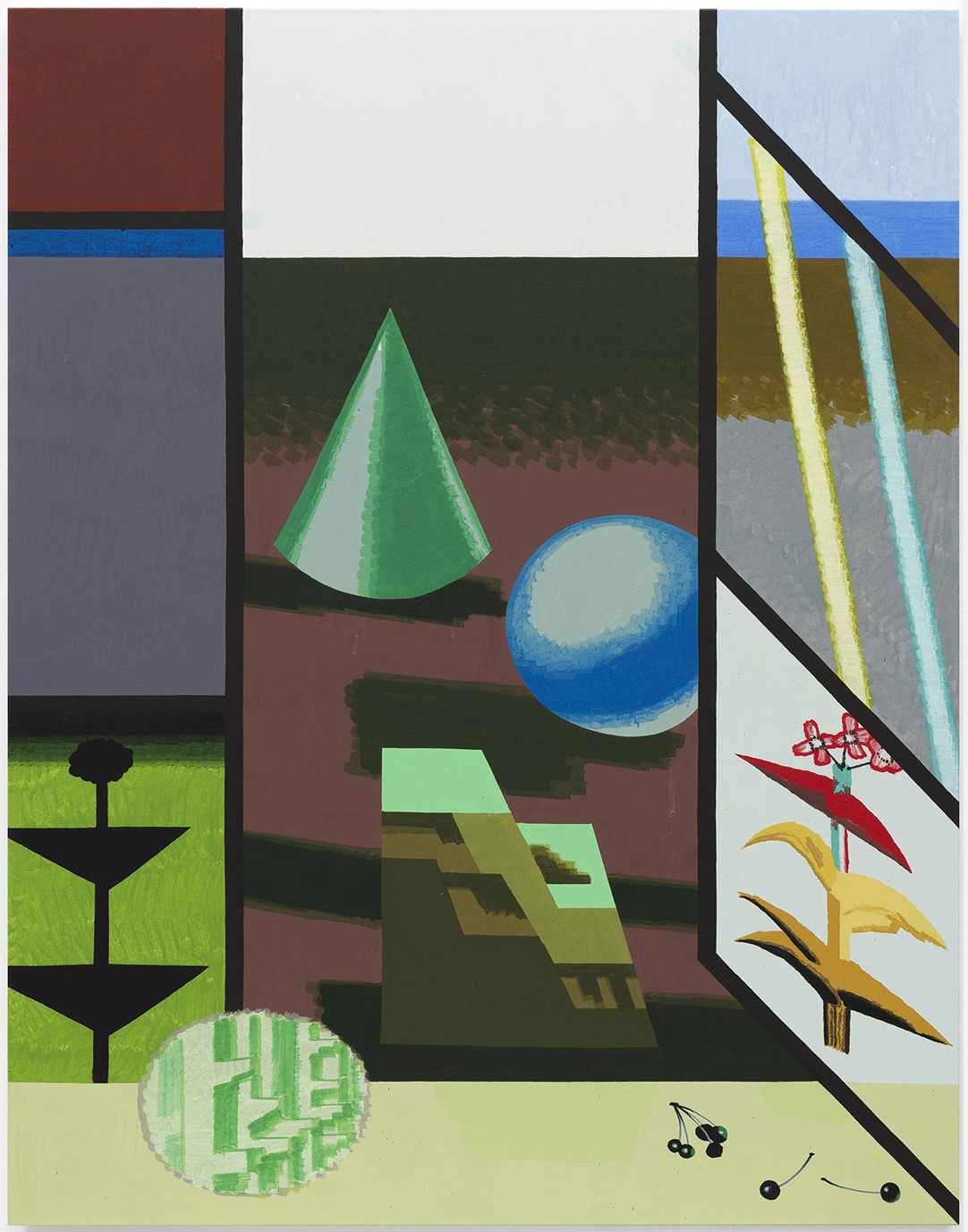
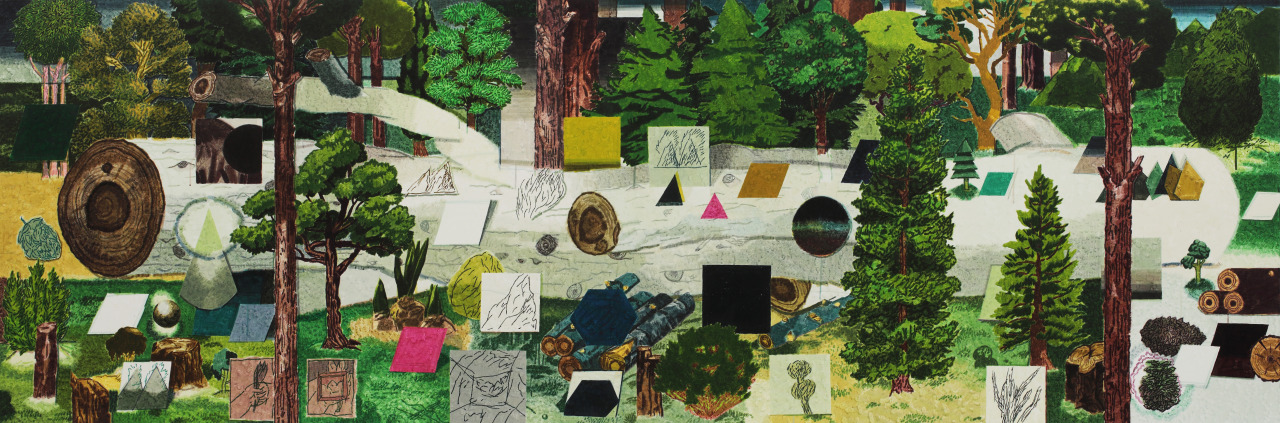
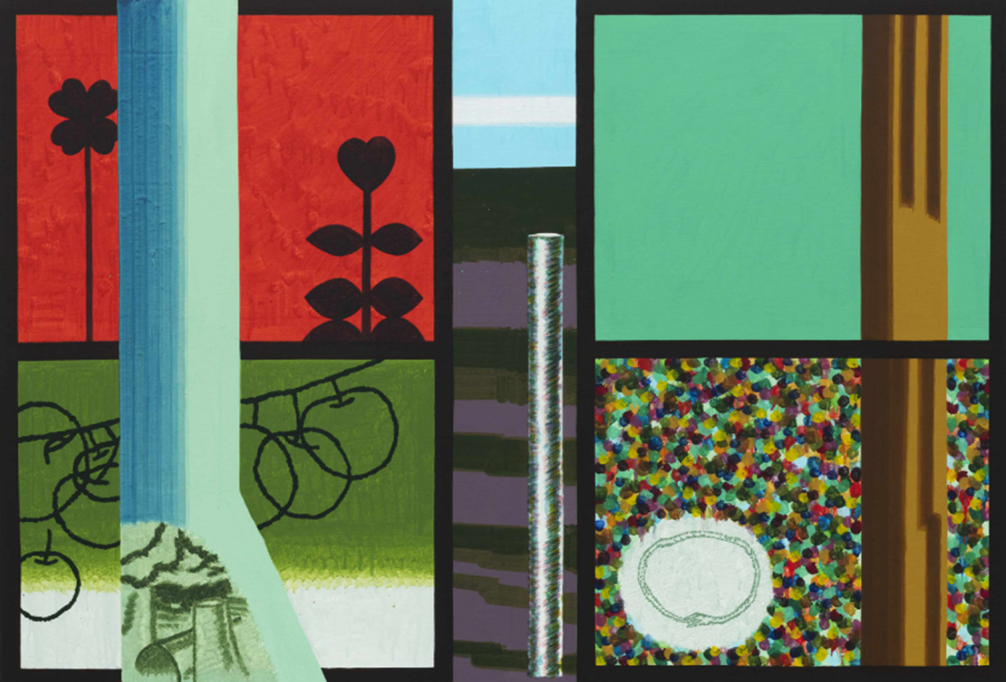
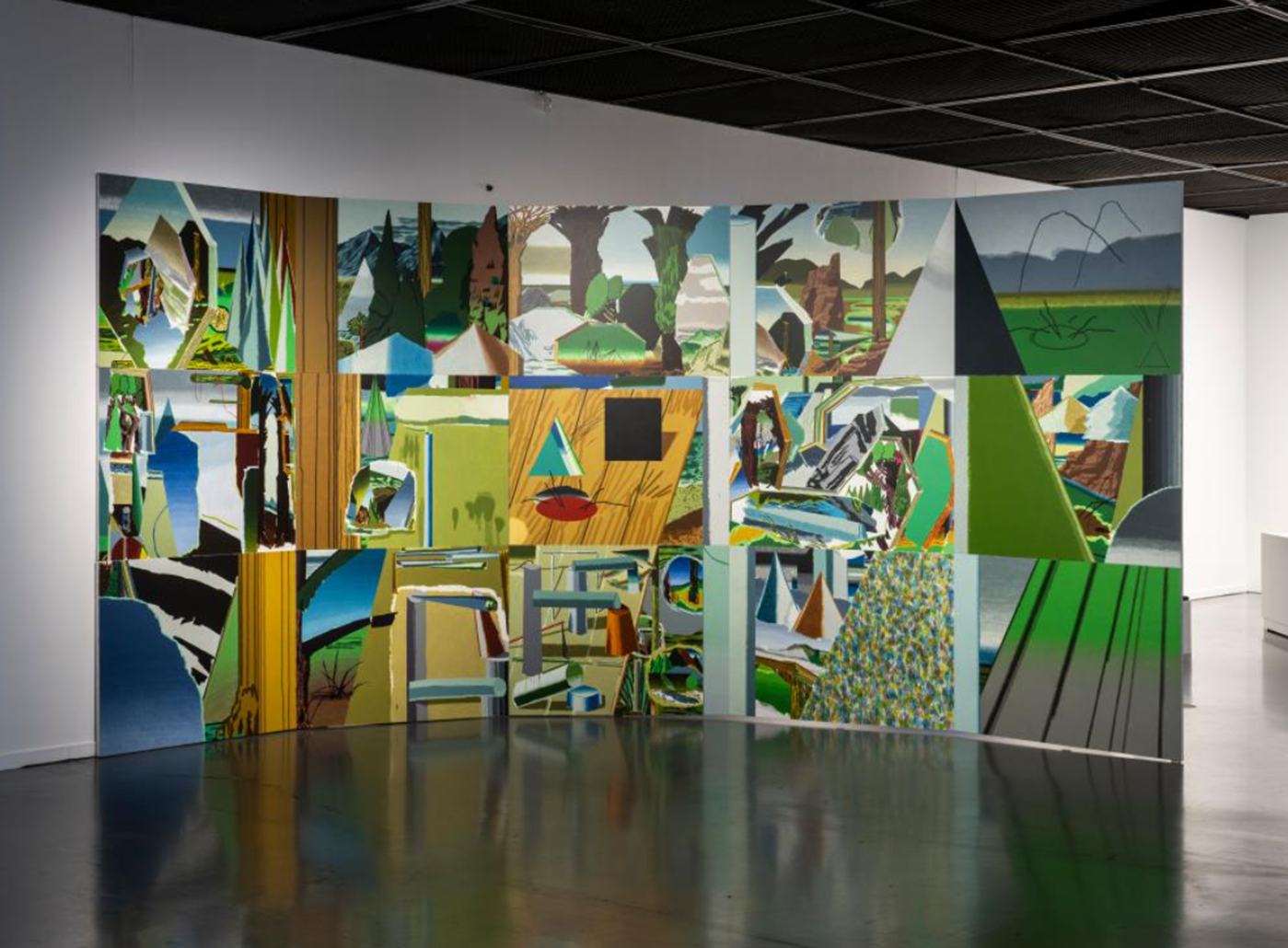
Jeon has developed a distinct iconography that combines figurative elements,
such as trees, fruits, and objects from everyday life, with abstract forms,
color planes and, increasingly since 2014, sets of classic geometric shapes.
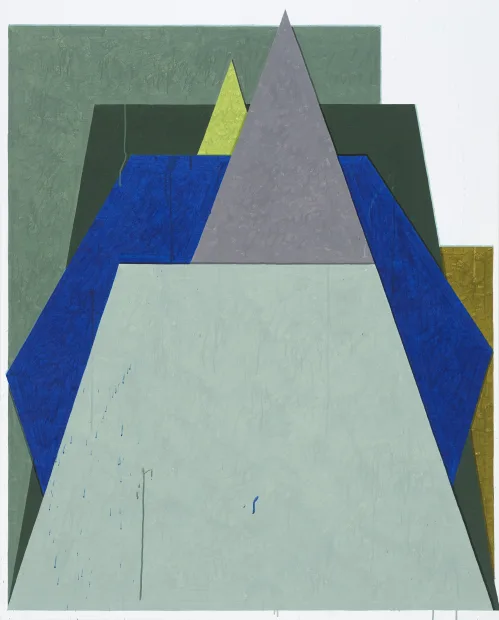
Jeon’s forms are engaged in a constant shift between dimensions and
associations—a cone, for example, may occur as a triangle, rendered with color
gradients to suggest depth, or in the form of vulcanoes, mountains or hats.
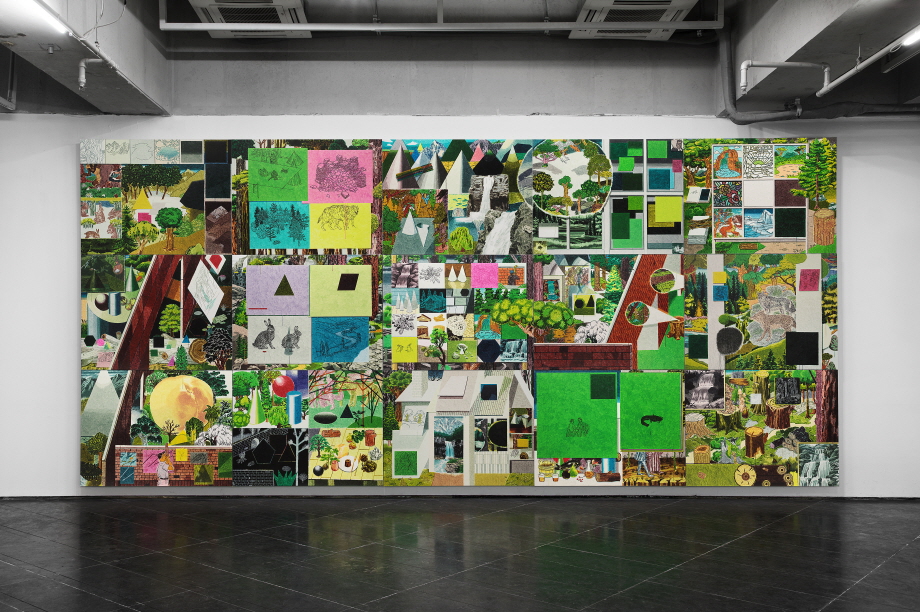
Jeon’s project has an all-encompassing, even world-building quality: quoting
different styles as motifs, a work might simultaneously include painterly
passages, pointillist sections or simulated brushstrokes, and motifs that have
the linear quality of digital renderings or pixelation.
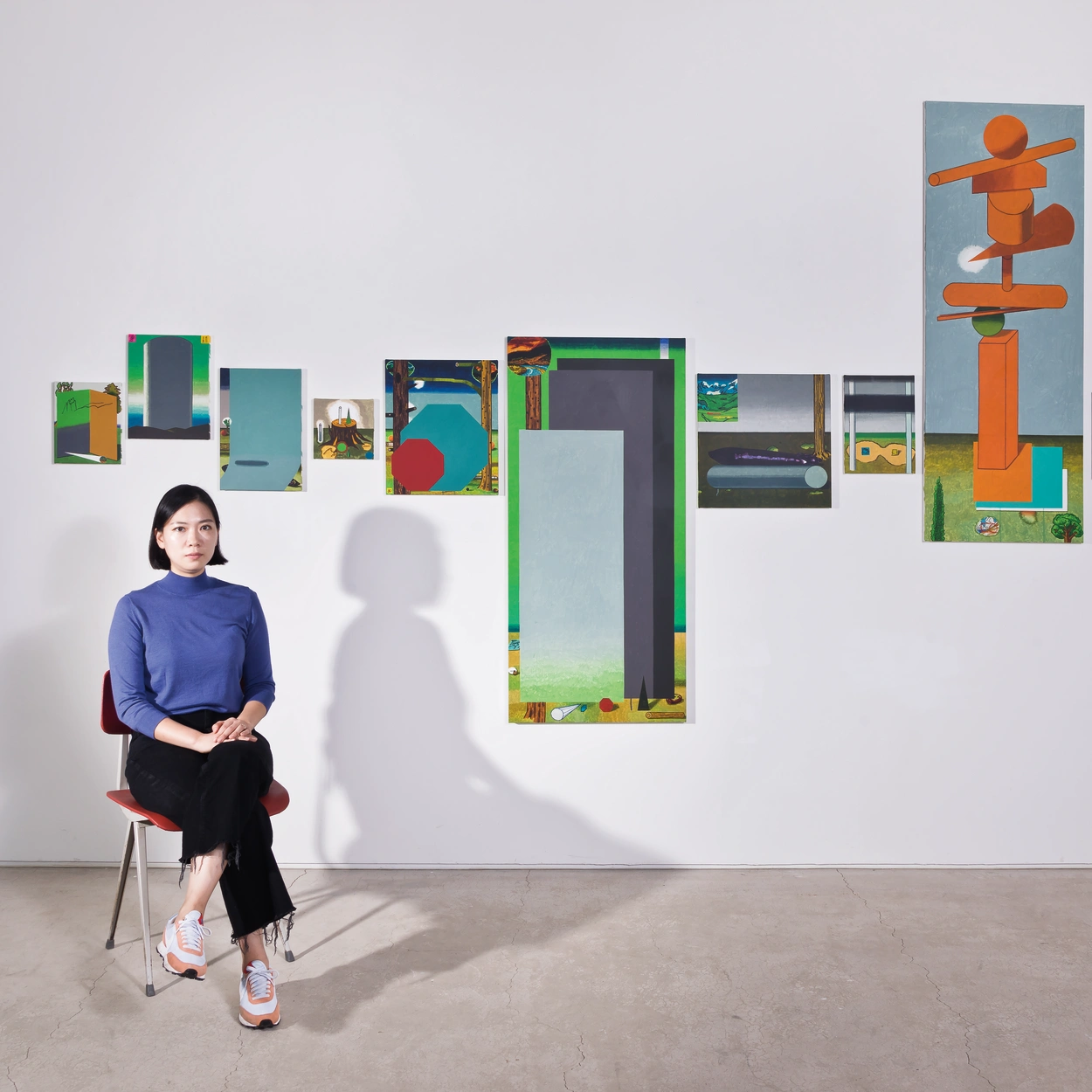
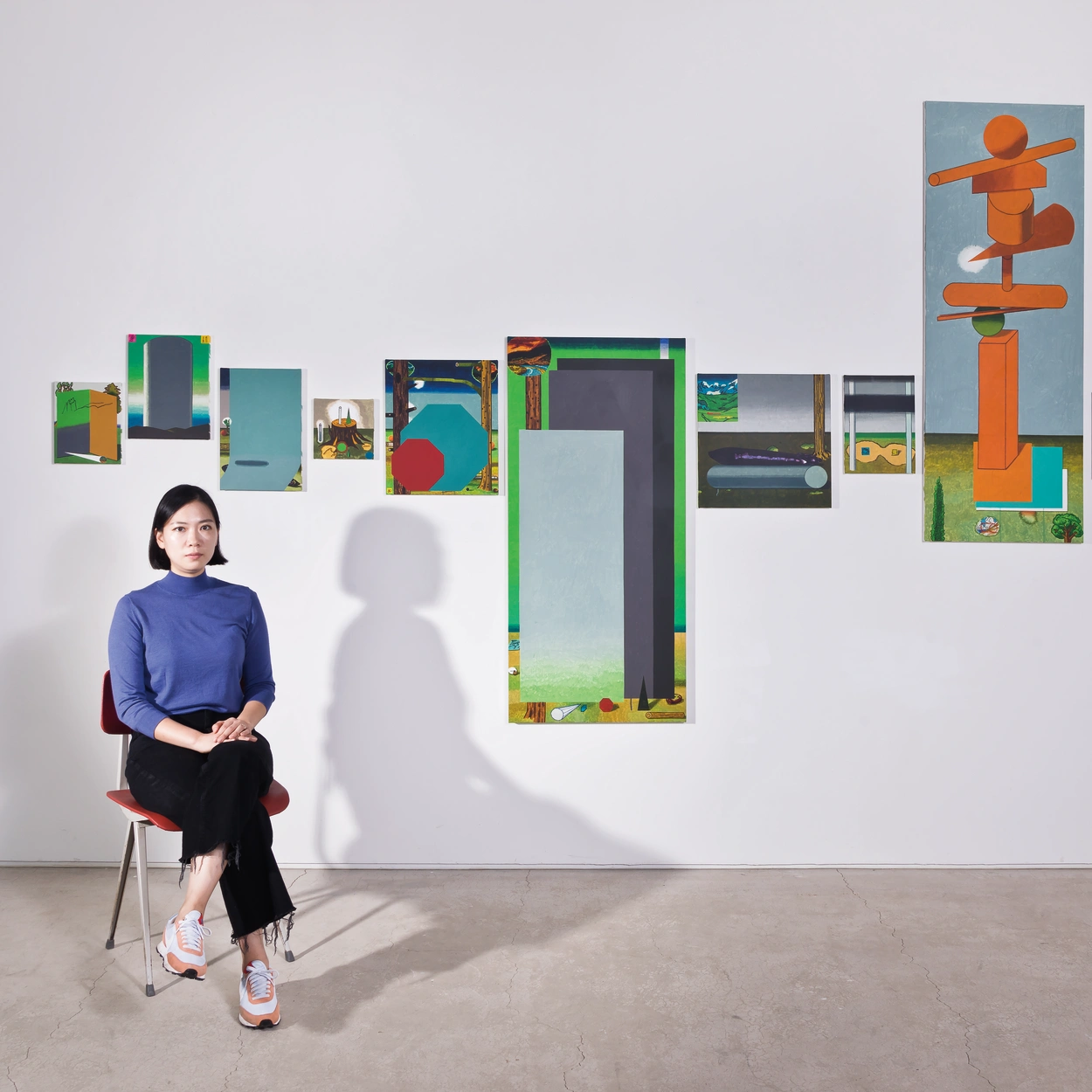
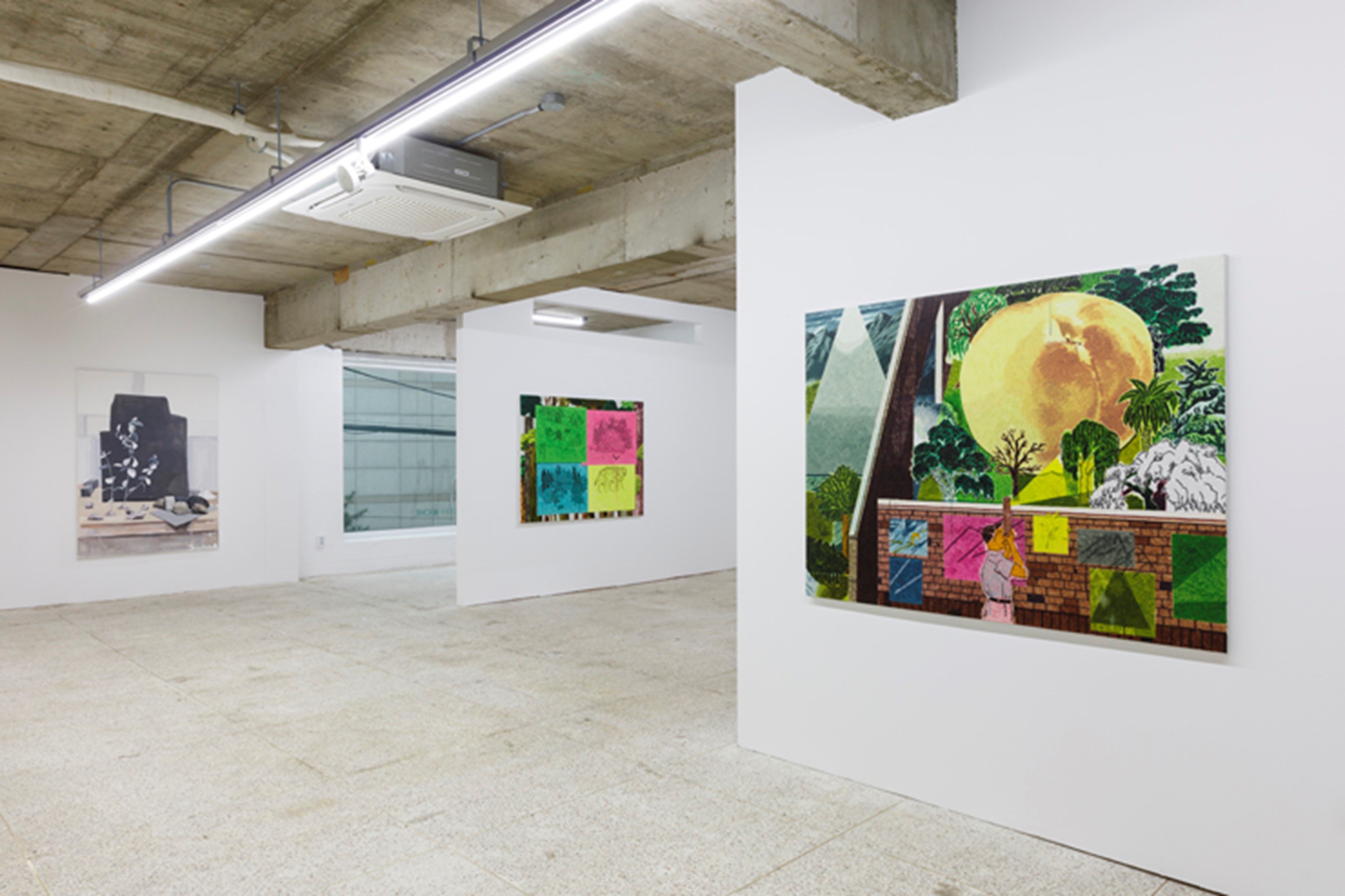
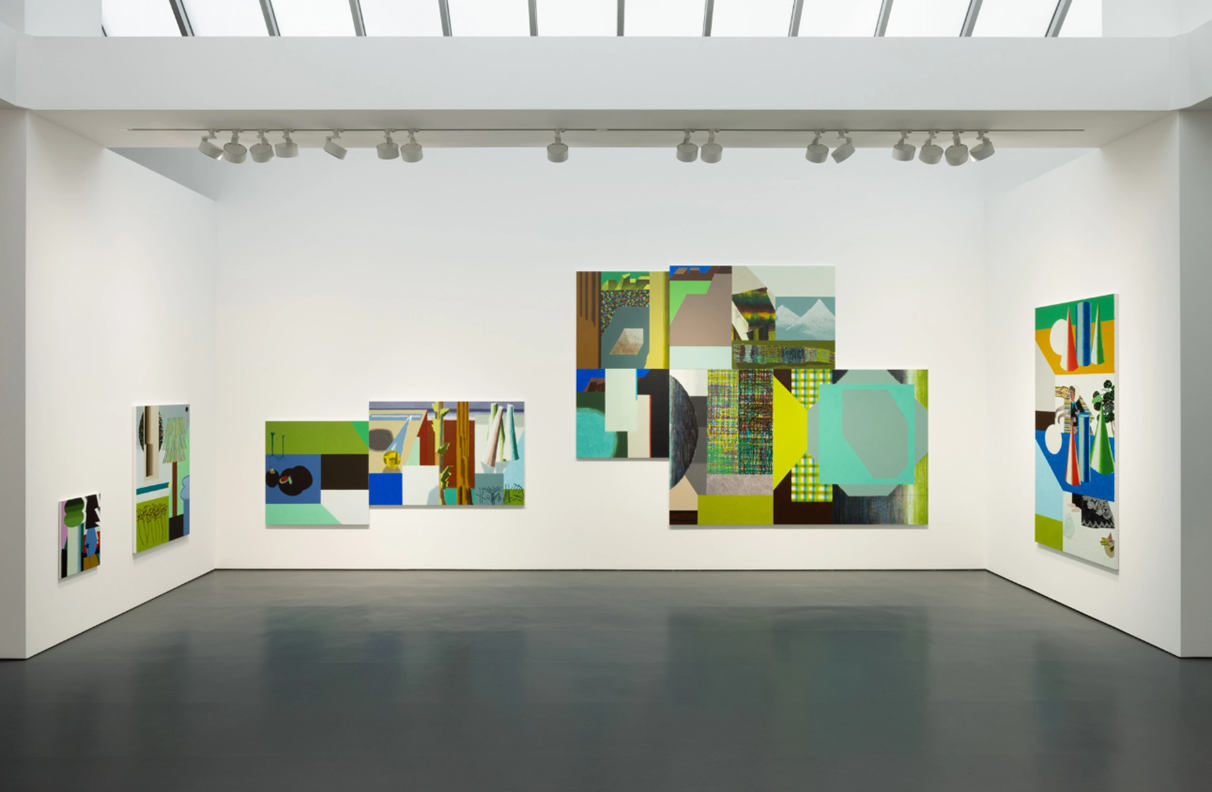
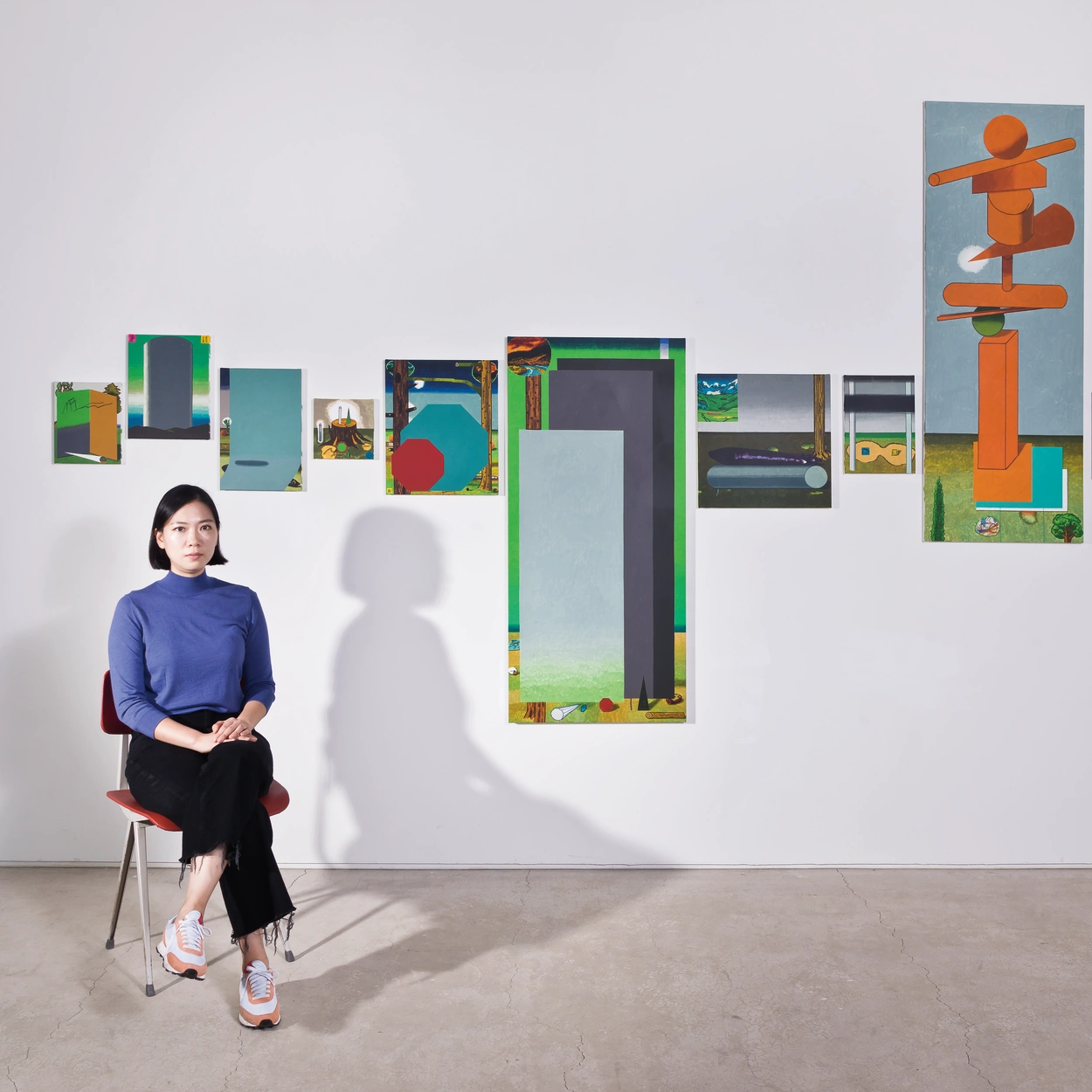
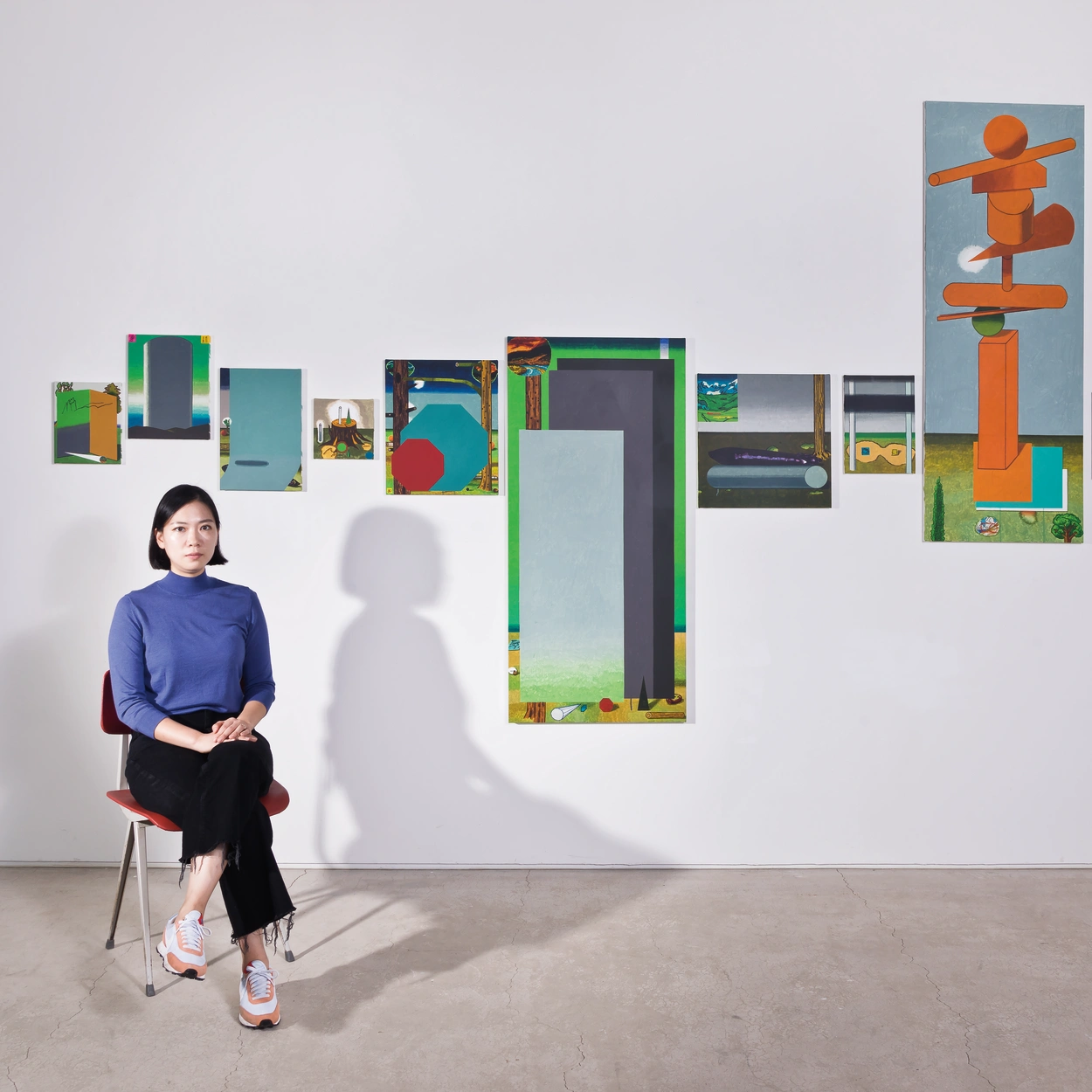
Installed
in a loose grouping across three walls, Jeon’s constellation makes the
paintings appear to shift across the space. Echoing the overlapping and
superimposition of motifs in the paintings themselves, the empty sections
between the works is activated and becomes present as a kind of virtual space,
an effect akin to windows on a computer screen or the layering of trompe l’oeil
still lifes found on traditional folding screens found throughout East Asia.
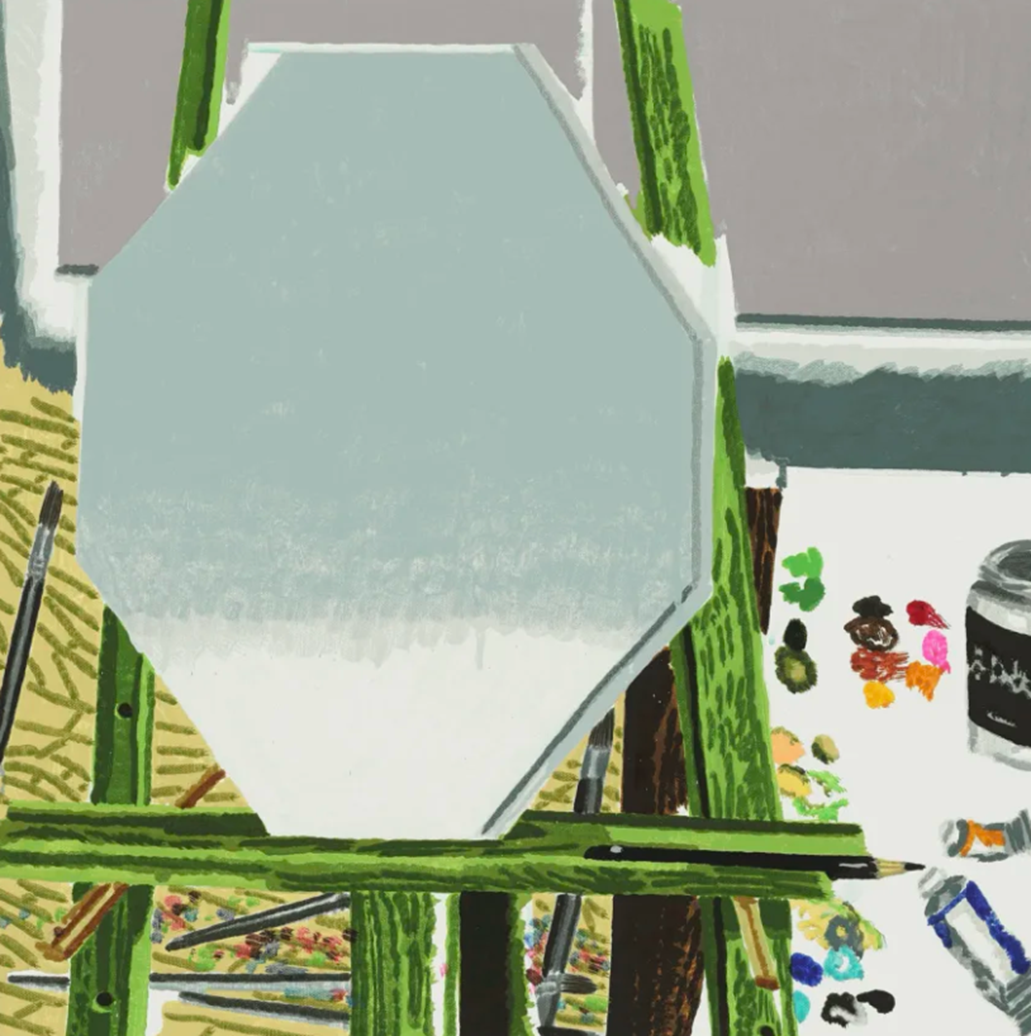
Working
in a medium that has traditionally thrived on creating the illusion of
three-dimensional space on a two-dimensional surface, Jeon’s work celebrates
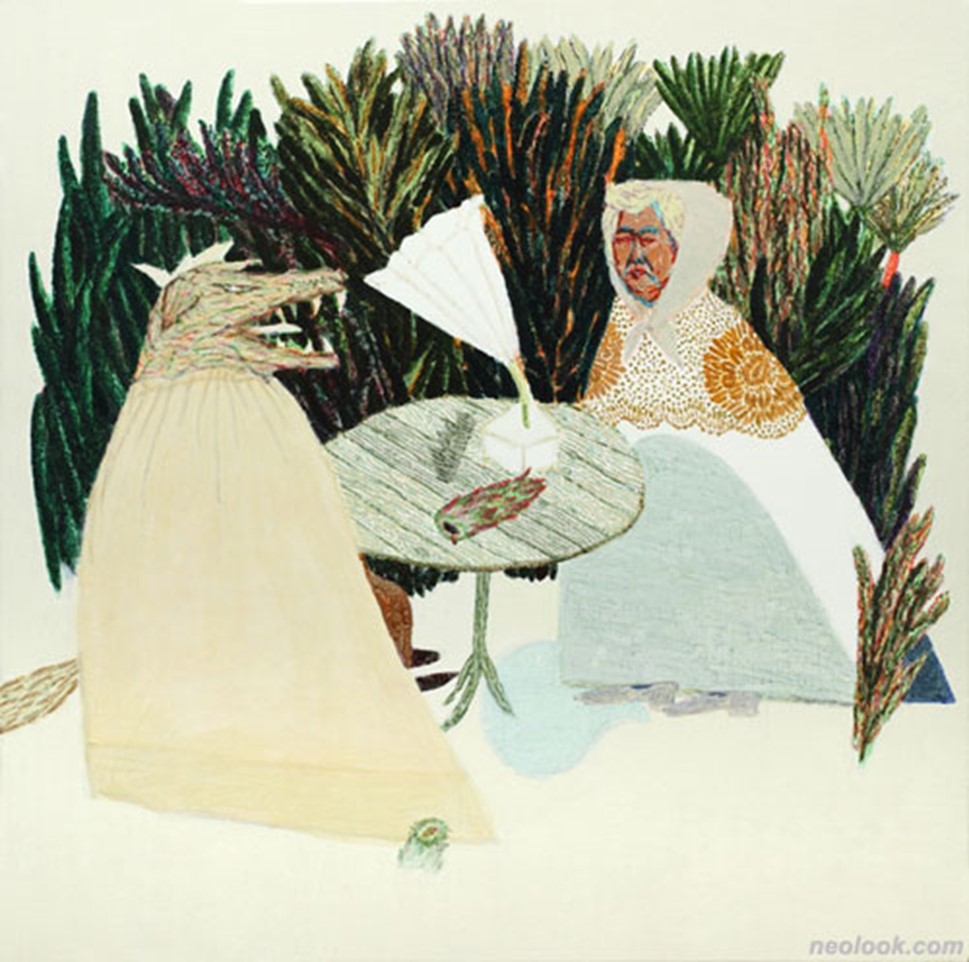
flatness. Her preferred medium, watercolor, achieves saturation and
shallowness, maintaining a relatively thin layer of paint. Sometimes pierced by
holes that open up views “into” the painting or superimposed fragments, Jeon
finds ways to continuously remind the viewer of the planarity of the canvas, of
looking at a flat surface, and of the actual thinness of the paint that
supplies the illusion of depth.
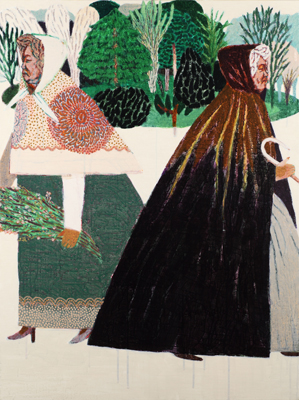
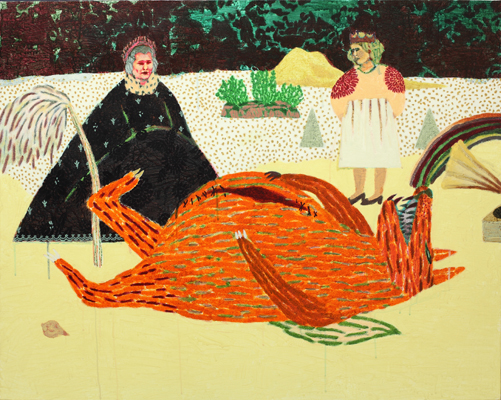
Initially
drawn to the mechanics of storytelling in folktales, mythology and religion,
Jeon has sought a narration specific to the practice of painting. Inspired by
the scenery surrounding the religious figures in altarpieces, Jeon forges a
world in which the main character—the saints and sinners—are omitted. Instead
shapes, strokes and colors, caught in the constant maelstrom of becoming,
occupy it. Yet, while her art historical references to medieval altarpieces
remain visible in the compositional structure, her aesthetic is grounded in the
now. Jeon knowingly incorporates aspects of the digital world, in particular
her generation’s familiarity with and visual socialization through early video
games. To Jeon, her work is a translation into analog form of characteristics
she associates with the digital—among them being clear, sharp, smooth, sleek,
or superficial.
Her
seriousness about what it means to be looking at something, explains Jeon’s
affinity for the work of Paul Cézanne. The French painter’s comment to his
younger friend Emile Bernard “to treat nature by means of the cylinder, the
sphere, [and] the cone” resonated deeply with Jeon and to this day determines
her artistic vision. Jeon’s paintings don’t tell stories or depict situations
but in making us question every shape, plane, and motif, they communicate the
uncertainness of our existence.