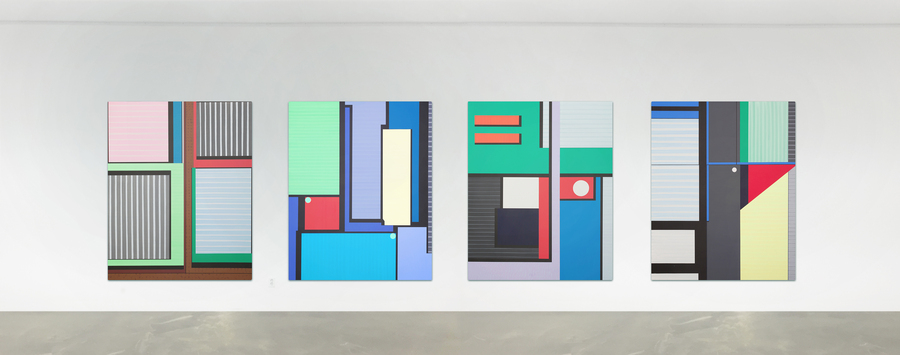
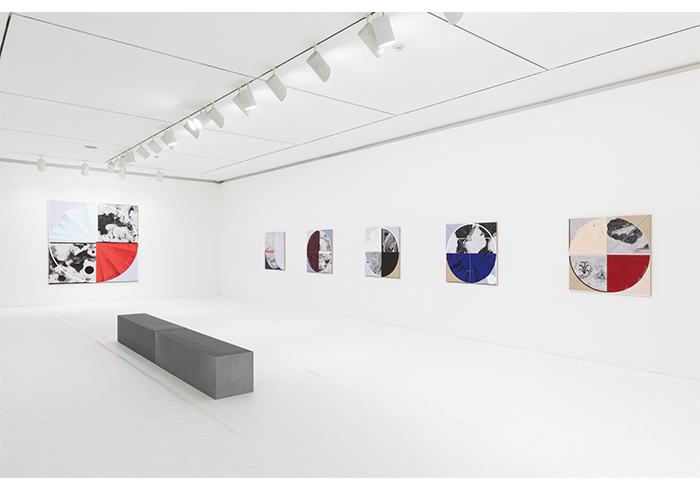
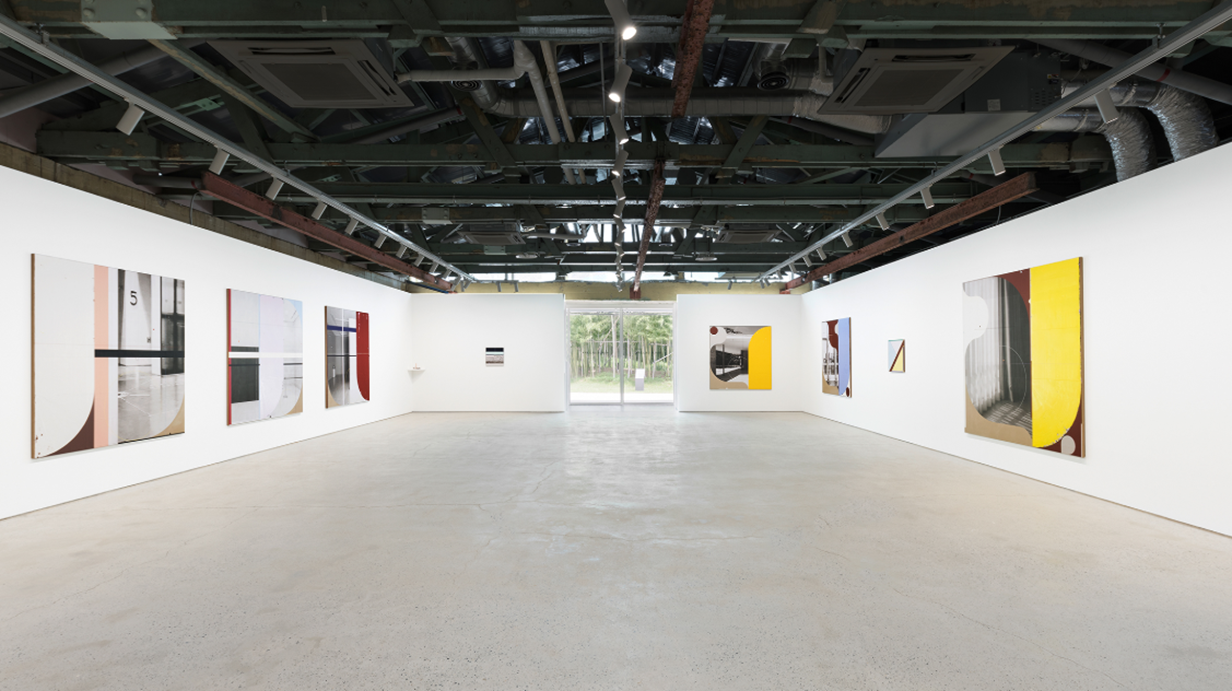
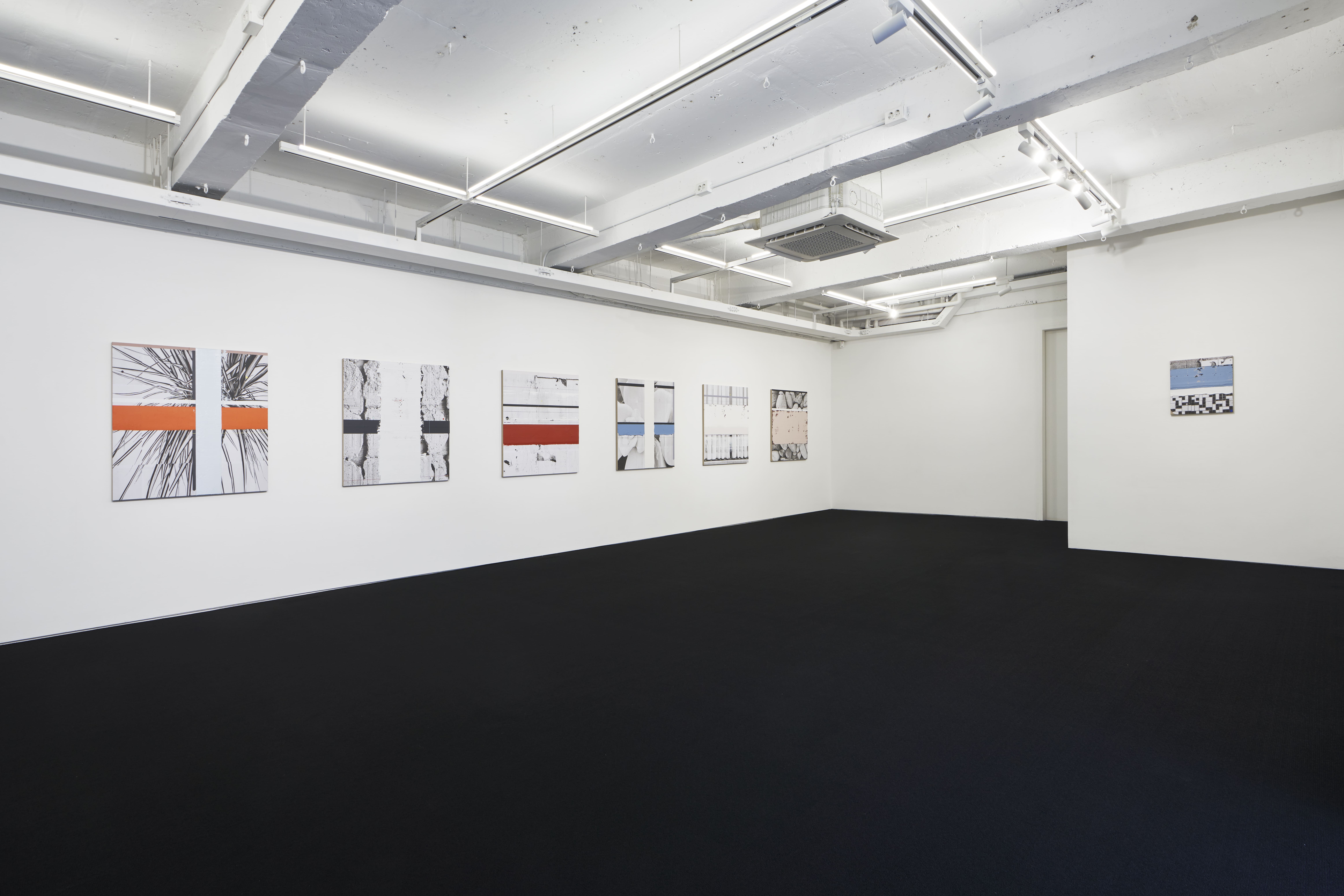
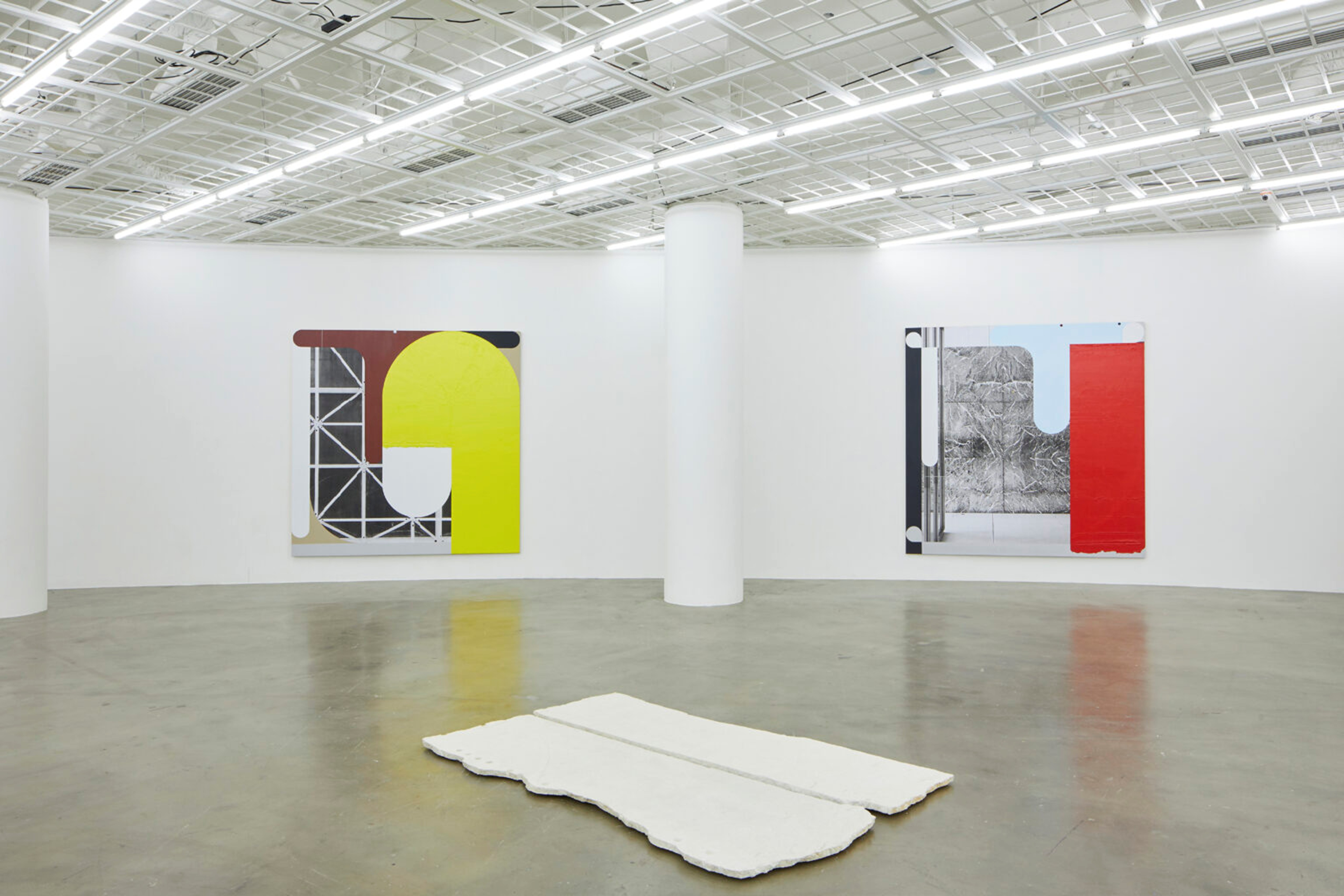
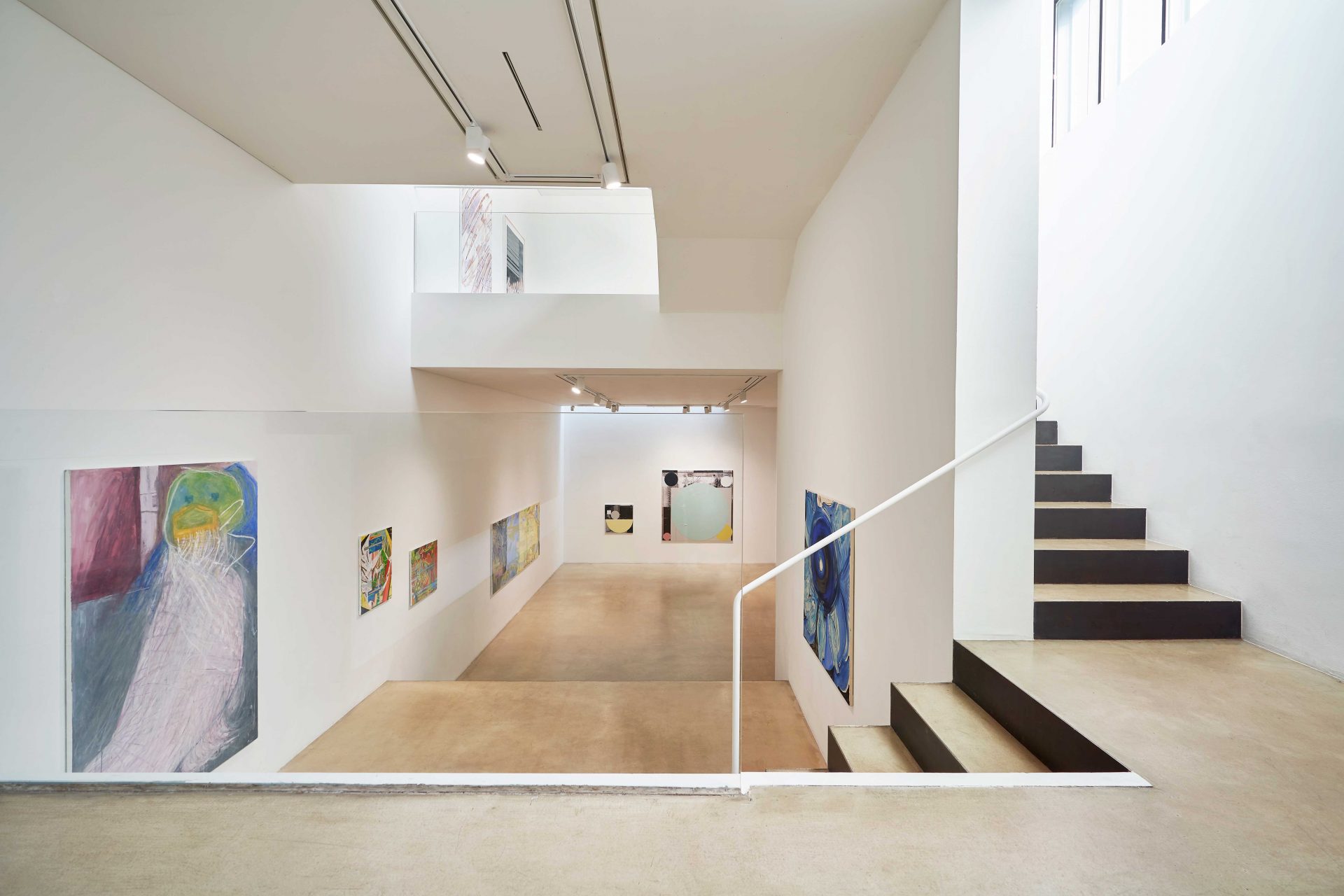
This
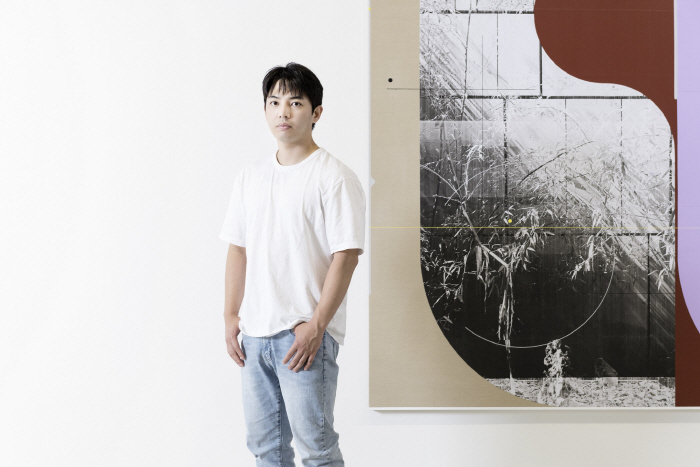
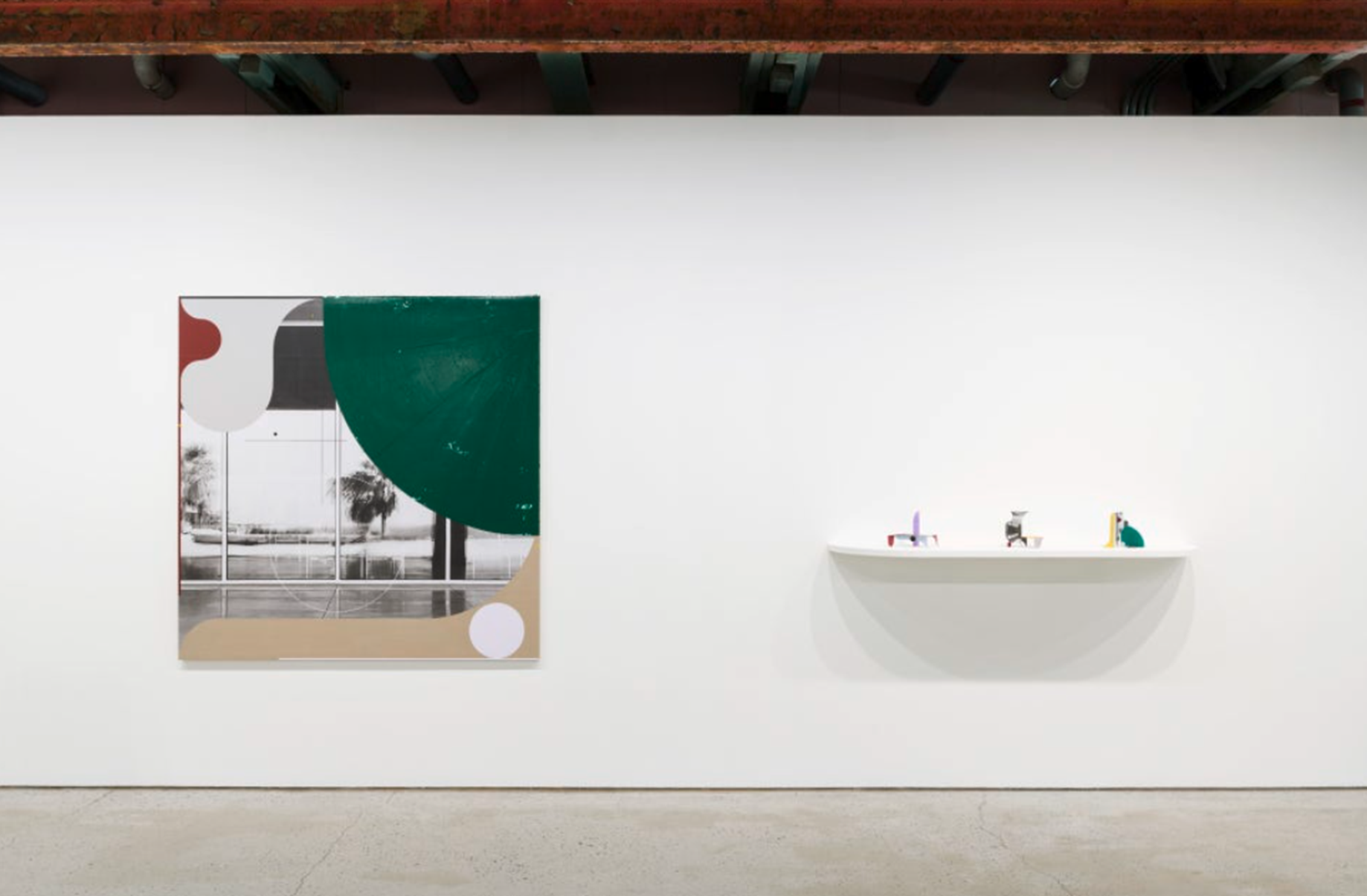
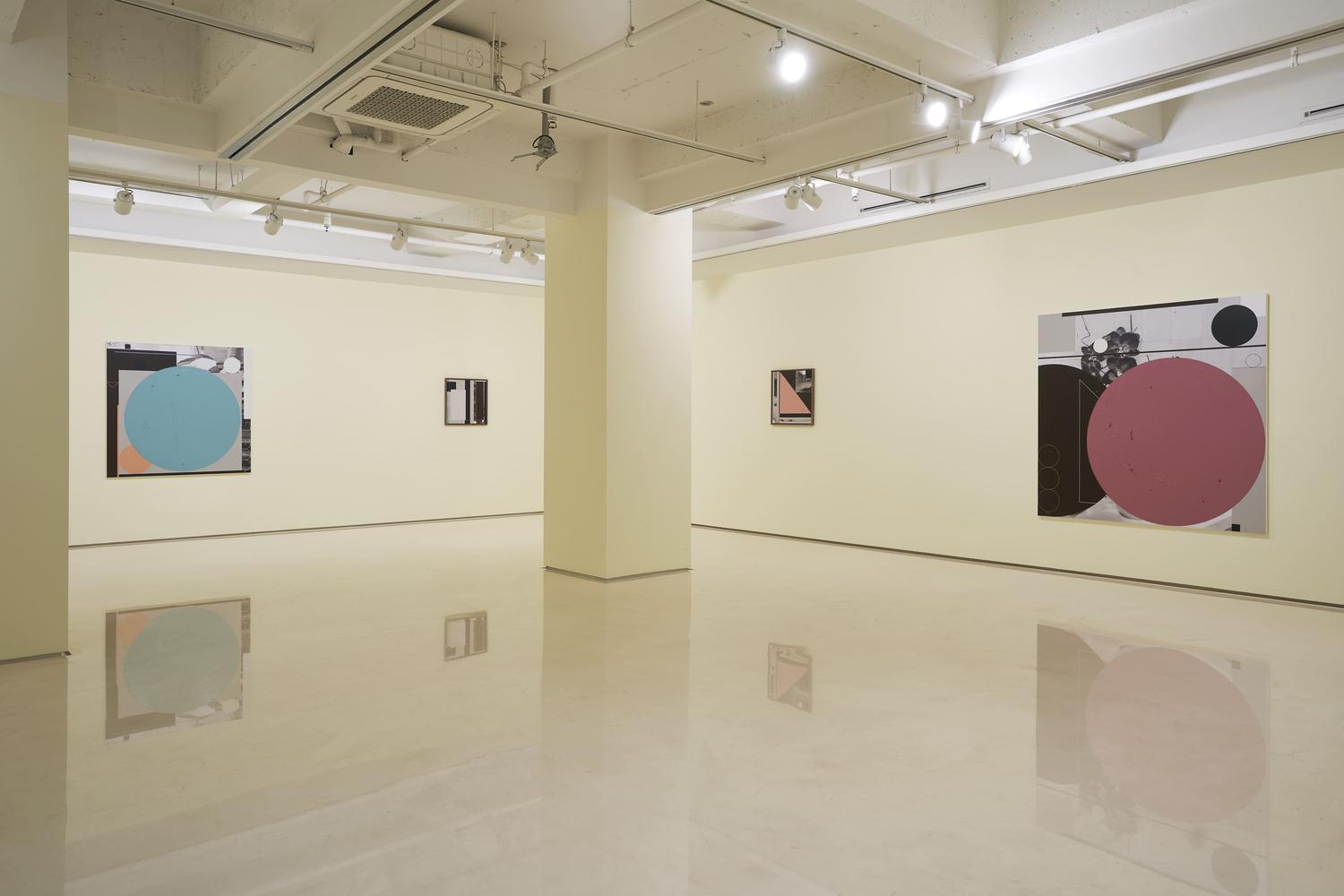
exhibition, ⟪The Tourist⟫, presents a series of paintings based on Lee’s spatial
experience of location, which he also dealt with in his previous series, ‘Biei’.
Sustaining the same practice since 2015, he converted his visual experience at
Biei in Hokkaido, Japan, a well-known tourist spot, into a series of abstract
paintings, ‘Biei’. In his recent series titled ‘The Tourist’, Lee
implicitly draws attention to the possibility of abstract expression and the
possibility of recognition of the abstract expression with different means and
mediums. This transition can be traced back to the series ‘Floating Floor’ at
the group exhibition ⟪Painting Network⟫ in 2019 which featured the works of three artists. Under these
circumstances, I unfold my imagination and surmise that perhaps ⟪The Tourist⟫ was carried out with an
intention to re-mediate the methodology he has built over the last five years,
produce this principle on his own, and finally expand and renew the autonomous
system.
As embraced in ‘The Tourist’, the evidence refers to the short
history of his oeuvre, which was built over a period of time as if estimating
the cumulative time of the future in a non-linear way and then used to
re-mediate a new sequence of painting system. In other words, ‘The Tourist’, now
officially announced as his 7th series since 2015, aims to present a journey to
a new achievement with the data and tools based on the fruit of his methodology
up to this period. And perhaps, the duty to pick up the pieces of evidence and
to detect their roles through the formal system of ‘The Tourist’ may
be already predetermined as a part of his plan. Furthermore, by instantly
verifying what is implied in the attitude and the perception of ‘The
Tourist’, the title of the exhibition encourages the audience to internalize
the sense of abstract expression by crossing the borders between ambiguity and
curiosity.
Heejoon Lee began to delve deeper into his principle of abstract painting in
the series ‘Interior nor Exterior’. This reminded me of early European
abstract painters after Paul Cézanne (1839-1906), but he seemed to insist on
so-called, “Realist Abstraction” by referring back and forth between the
materiality of the medium and the pure form of painting. Let us take a look at
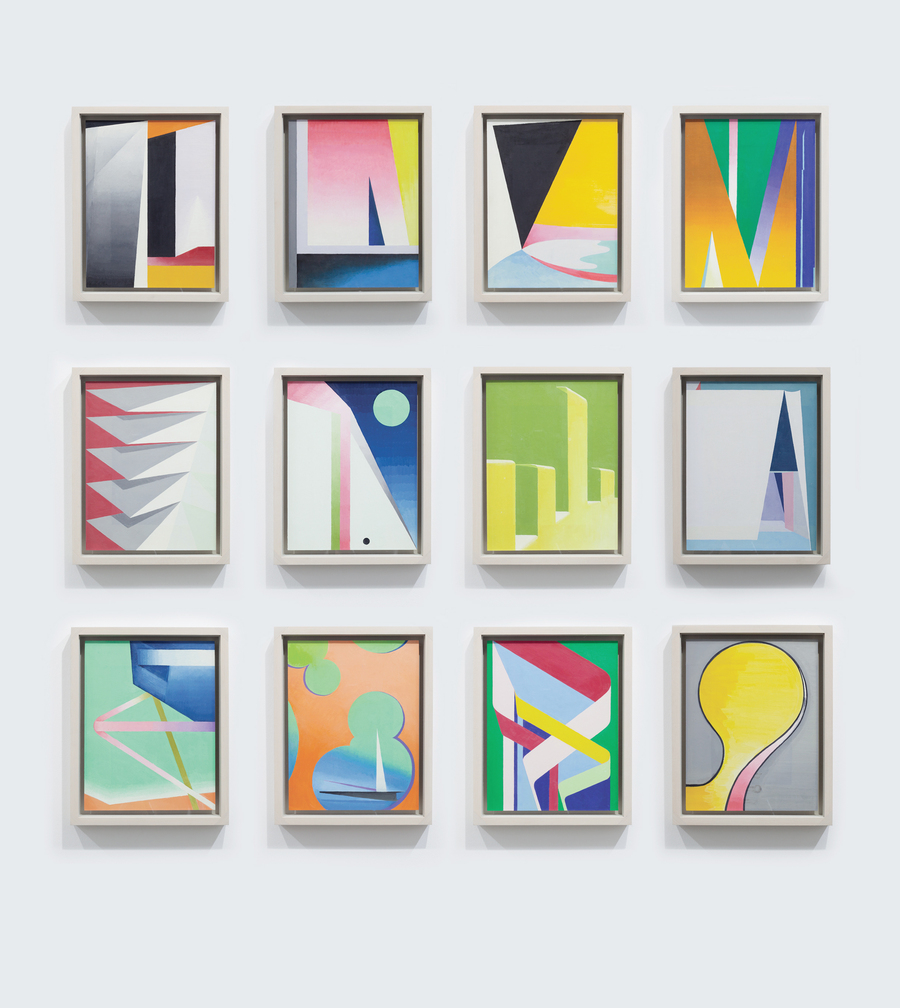
the 12 paintings from ‘Interior nor Exterior: Prototype’ series
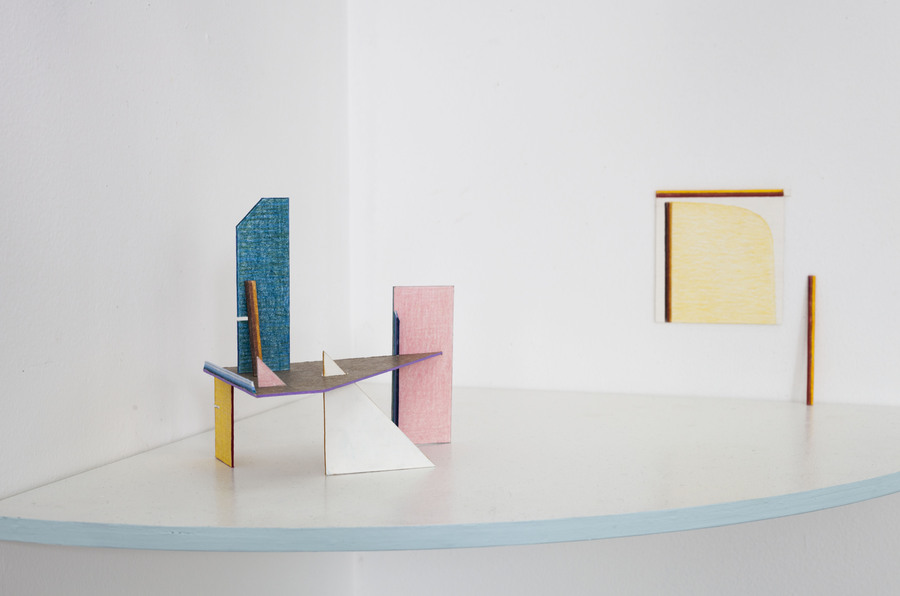
collectively. He built a prototype that immediately reverted architectural form
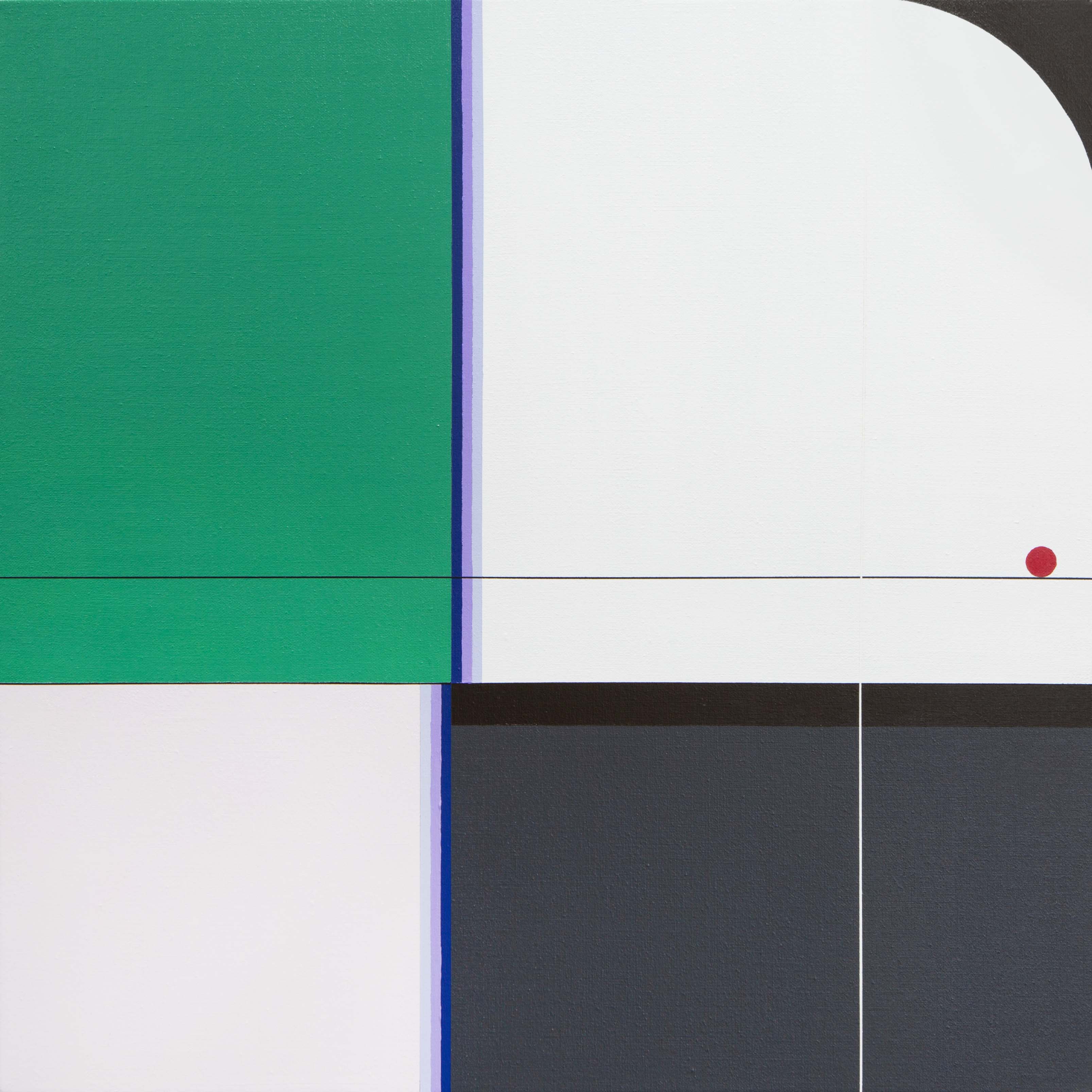
into the abstract by referring to its color and geometric shapes. This
referential attitude can be called Neo-Geo, a movement based in
Post-Conceptualism in the 1980s, and be seen as a setup to re-refer to Peter
Halley (1953-), a central figure in geometric abstract paintings. Halley’s
attempt, which greatly reinvigorated today’s resurgence of abstract painting,
has been received as a reflection of the characteristics of Post-modernism,
which imitated and appropriated the abstract language of modern paintings from
the perspective of the end of the century. Here in ‘Interior nor Exterior’, Heejoon
Lee (re)imitated Halley’s unique language of abstract painting. Yet, rather
than reaching toward a symbolic image, he went a step with further in his trust
of the historical context, captured the principle of abstraction from the color
and shape from modern architecture, and then converted them into a formative
and aesthetical structure.
For instance, we can assume that he has been focusing on the practice of
“transition” from a three-dimensional abstraction embodied in a certain
building structure into a two-dimensional abstract painting on a flat plane.
Here, perhaps to exemplify his justification of abstract formation received by
visual perception, he employed the photo-editing process to draw images and to
at last reach abstract painting. To put it in a simpler way, he specifically
collected the photo images of geometrical structures in architecture, analyzed
each color and geometrical shape to determine what was accentuated in each
photograph via the editing process, and then finally reified them into the
formative language of abstract painting. Then, dividing the color and the
plane, he dramatically maximized the space created by the light in the
photograph to the sense of spatial depth with gradation effect and the usage of
lines and curves. In summation, his practice can be summarized into geometric
color-field abstraction, the motivation for which he received from architecture
from his early abstract painting series, and we can find his character as an
abstract painter from the way he extracted an immaterial sense of abstraction
from the three-dimensional characteristics of buildings in the photographs.
His attitude toward abstract painting and self-constructed methodology started
to gain momentum and confidence over the series ‘A Shape of Taste’
and ‘Biei’ and expanded their field. I assume that this was fostered
by his encounter with the self-raised questions of how to (re)establish the
relationship between a real object in the three-dimensions, which was mediated
by a collection of photographs overcoming the limitation of abstract visual
information, and the abstract paintings in two-dimensions and his numerous
experiments in painting to find an answer. While working on those two series, Lee
explored the possibility of converting an object from first-hand experience
into the language of abstract painting. He then takes a further step to boost
the reference/relationship of abstract painting (not metaphysical originality)
to interchange the experience of visual perception with the materiality of the
painting medium and the formative principle into an abstract sense, or vice
versa, from (universal) abstract sense to a (particular) experience of visual
perception. In the series ‘A Shape of Taste’ (2018), he designated an
old residential area in a city and took photographs of the buildings, which
were remodeled due to changes in the area, and converted them into abstract
geometric elements by (its unique) color, property of paint (similar to the
texture of the object), geometric shape (based on the structure of the object),
etc. In ‘Biei’ (2019), he retrieved the impression on the nature and
the city he received while traveling there by looking at photographs after the
passage of time. He then carefully abstracted the sense of visual perception
onto the canvas.
Interestingly, (whether he was aware of this or not) the distinct visual effect
drawn from ‘A Shape of Taste’ and ‘Biei’ was the stress on
the outer edge of the canvas, along with the arrangement of abstract elements,
which created infinite depth of space within the crystal-clear frame of the
canvas followed by an optical illusion. Considering that he was already well
trained in deducing the abstract integration of images chosen by photo-editing,
the completeness of images from both series could be considered as a classical
technique that emphasizes the flat shape of the canvas, which later fulfilled
its duty as an alibi for the complete transition to abstract painting with
referential emergence of the grid. In other words, the emergence of the grid in
abstract paintings involved with photographic editing of actual objects
(easily) earned its justification (in history). What I would like to stress
here is that the grid guaranteed the flatness of the abstract painting and, at
the same time, paradoxically supported the implication of the spatial sense or
the sense of distance from it. Those paradoxes and the different thicknesses of
color (paint) created small and large confusions, alternating between virtual
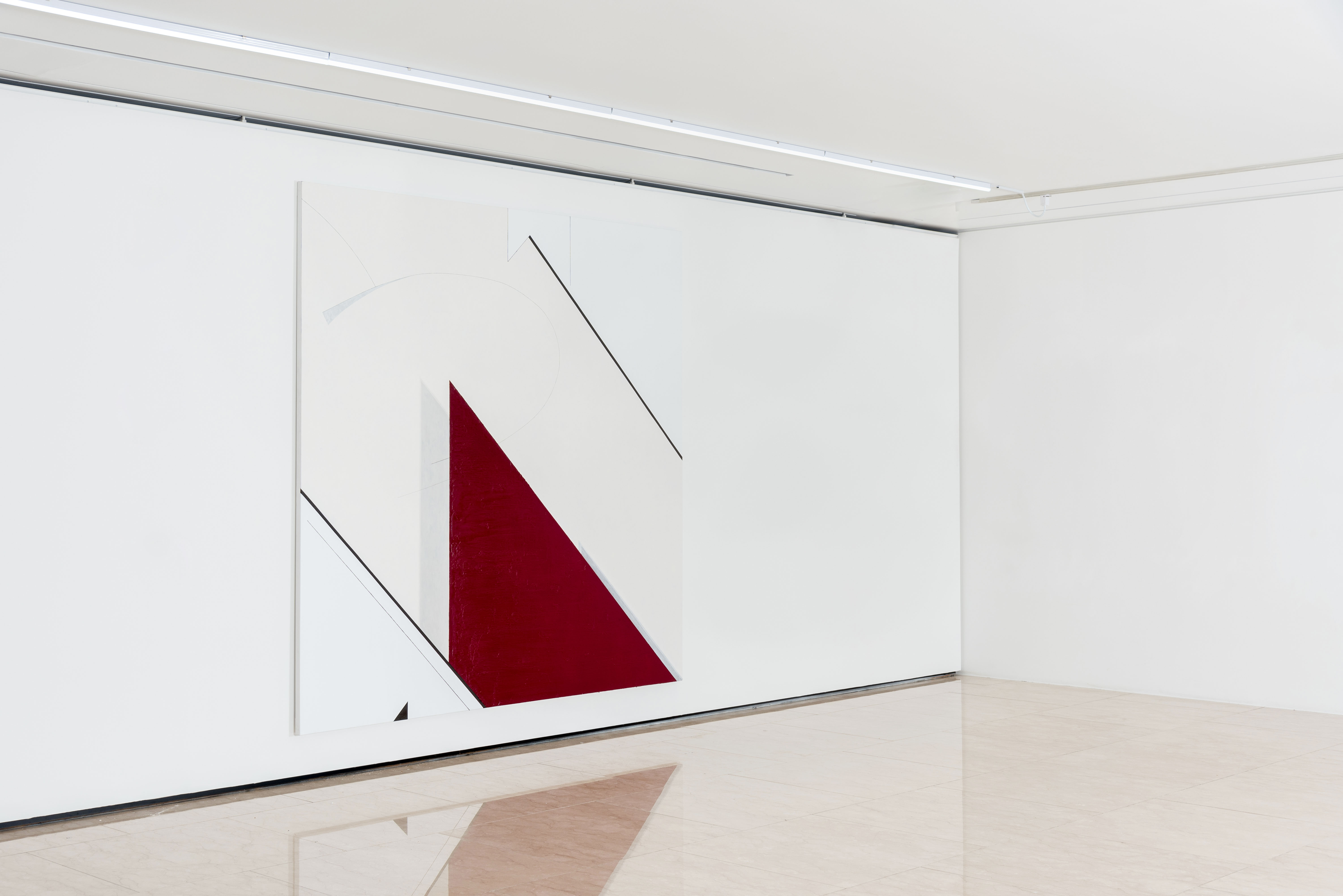
illusion and actual effect in Lee's recent works. For example, Biei
no. 106 (2019) is an abstract painting that extracted
geometrical shapes from a snow-covered mountain. The horizontal and vertical
lines build a flat grid on the canvas and, at the same time, other geometric
lines forming acute angles create a series of overlapping effects, showing off
not only the spatiality between the objects, but also quite an extreme distance
between the objects and the viewer. Moreover, as if zooming in on the distant
abstract scenery and pulling it toward the front, the thickness of paint
escapes visual prediction when gazing at a point and creates different volumes.
This kind of visual experience steps right in front of the screen and arouses
endless (mal)function of visual perception and its renewal.
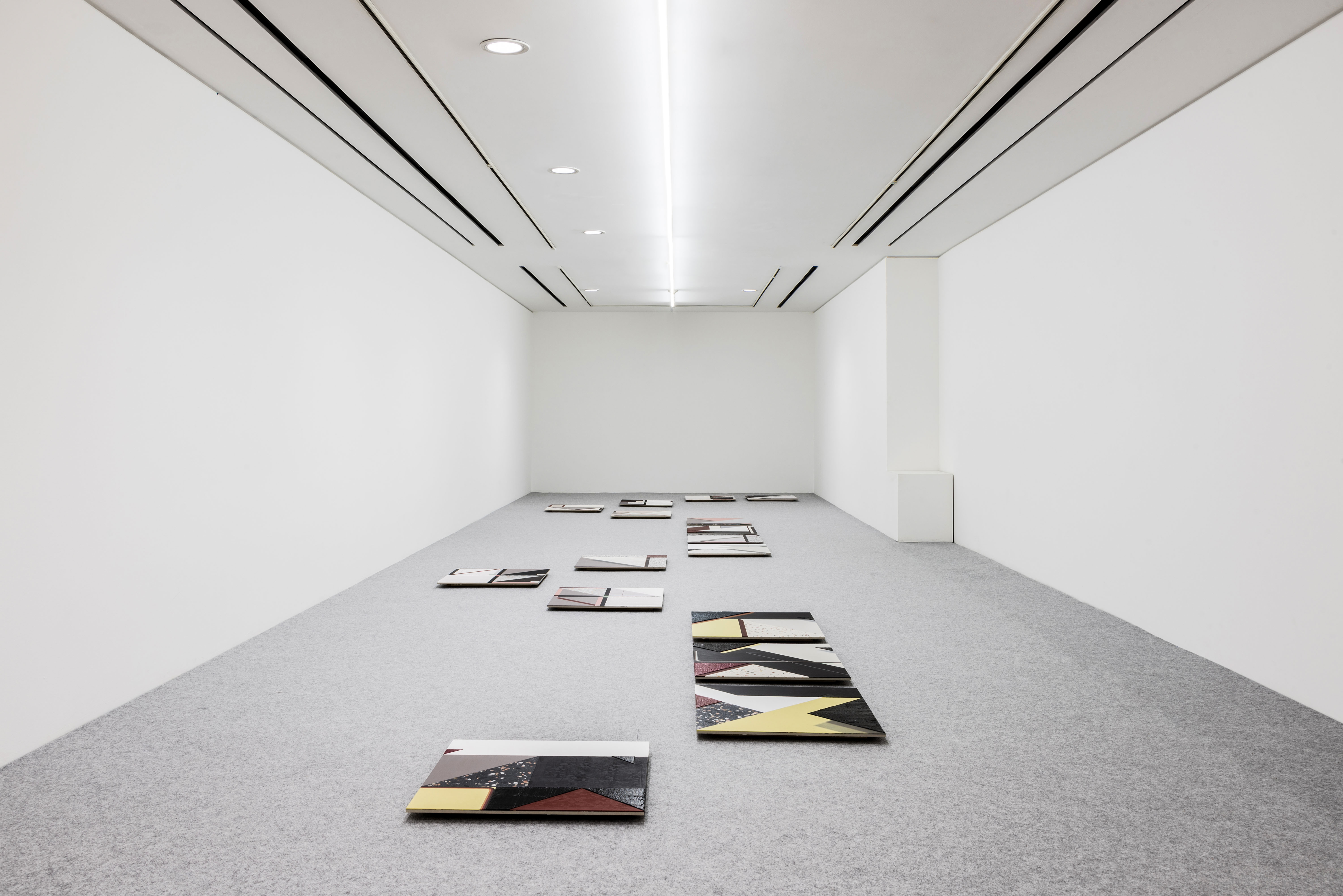
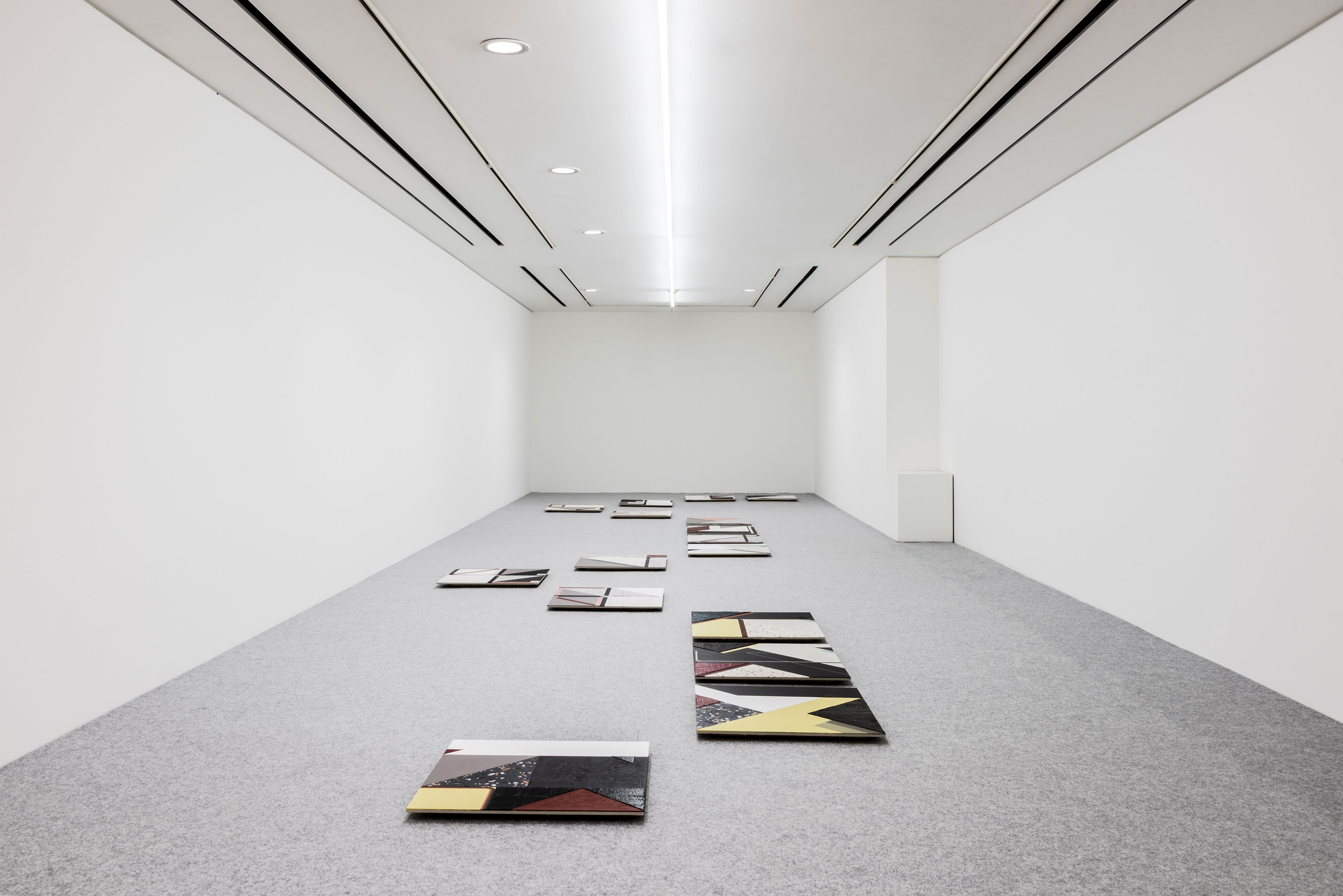
Last but not least, we should not forget that the series ‘Floating Floor’ helps
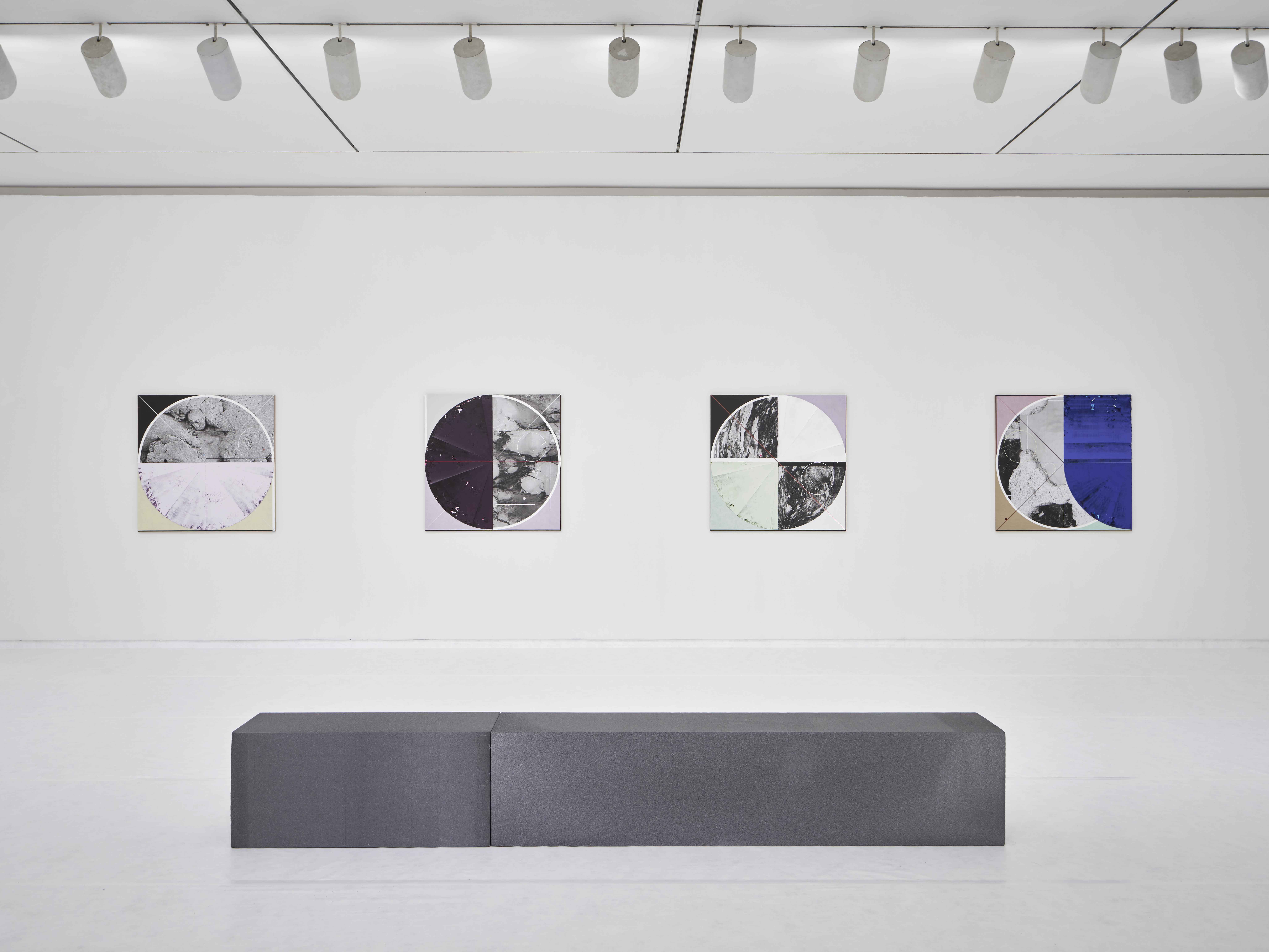
explain the clues embraced in ‘The Tourist’. Lee brought Terrazzo tiles, a
construction material, in person, and seamlessly combined them with painting
materials to create a unique style of geometrical abstract painting, which he
later named ‘Floating Floor’. What I focused on in his new attempt was
that the terrazzo tiles, an artificial stone which can found throughout the
world, were given a role not only as a material to comprise the painting's
materiality, but also as a data tool to compute abstract geometric principles.
For instance, Lee purchased several types of ready-made terrazzo tiles, decided
to use them merely as supporters for the painting's material and then extended
this idea to a square-shaped abstract painting through (arbitrary)
reinterpretation of each tile via its unique particles, color, and shape
depending on the amount of terrazzo content. If the division among
objects(things), images(photographs) and abstract paintings were clearly made
with a cause-and-effect relationship in his pre-existing works, in ‘Floating
Floor’ the division is activated (only) within the completed work, thus
reverting the process into individual geometric elements. The result has quite
a number of common denominators with his existing works, especially in the
aspect of space and distance, in that he is still allowing us to estimate the
immeasurable artificial and virtual depth, which is fundamentally rendered in
his works, with the tools of perspective, weight, density, etc. from the
painting itself by referring to the characteristics of terrazzo. Perhaps we can
say Lee, who was seeking the possibility of abstract painting by displacing the
innate abstraction of the structure of architecture or objects into images, is
trying to produce his own abstract world through the application of actual
construction materials directly into this painting.
Now, after a long detour, we're back to ‘The Tourist’ series. The
composition is significantly different from his other series and this curiosity
arising from a sense of unfamiliarity encourages him to focus on the attitude
required to renew his persistent methodology throughout the series and to
attempt to create its own production. This provides continuity from ‘Floating
Floor’. Just like how he was trying to imitate the characteristics of a
medium by directly applying materials into the painting with a reference to the
(universal) characteristics of terrazzo, ‘The Tourist’’ series takes
similar stance by utilizing photo images from trip as materialistic support and
constructing geometric sense derived from the medium on the canvas instead of
than using them merely as a reference.
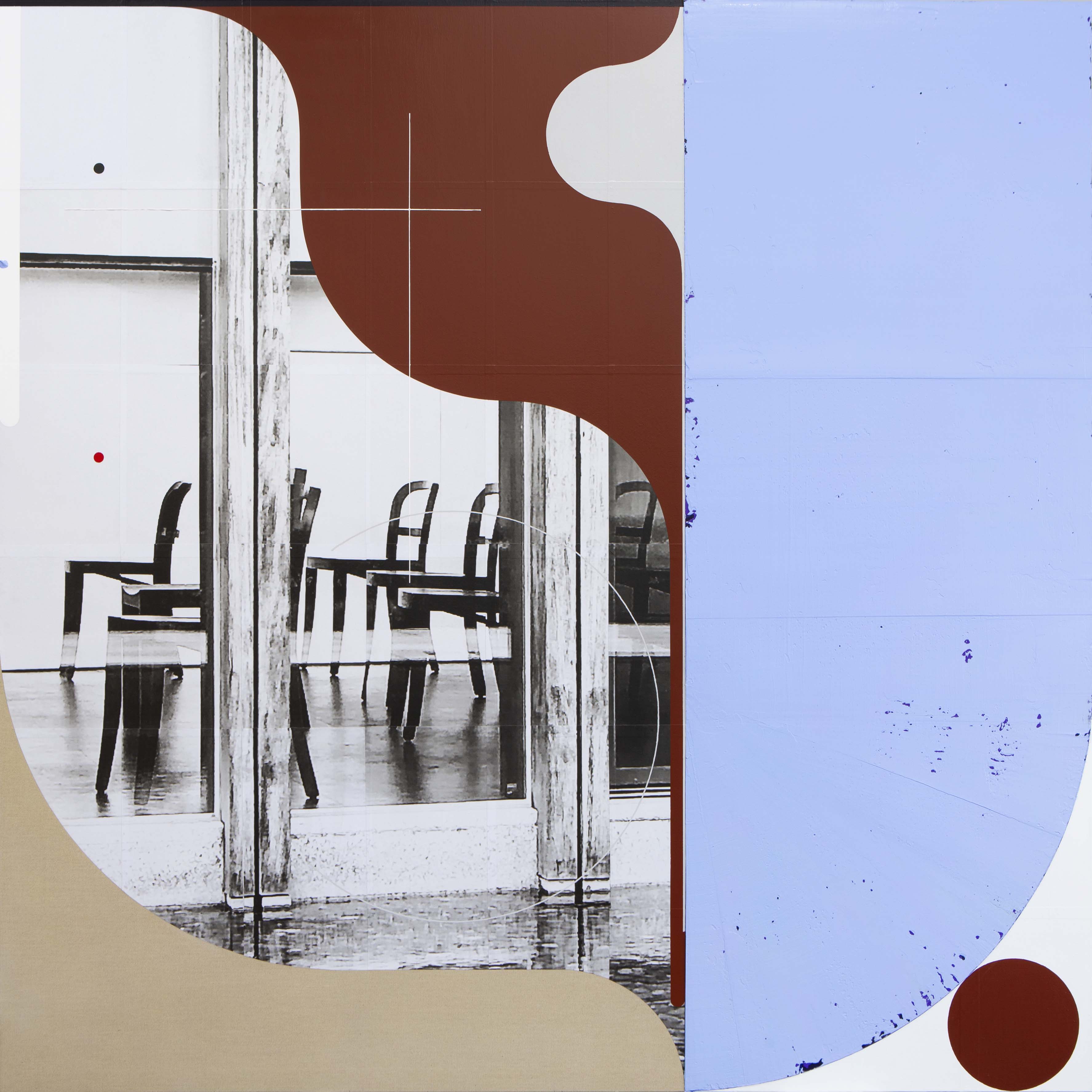
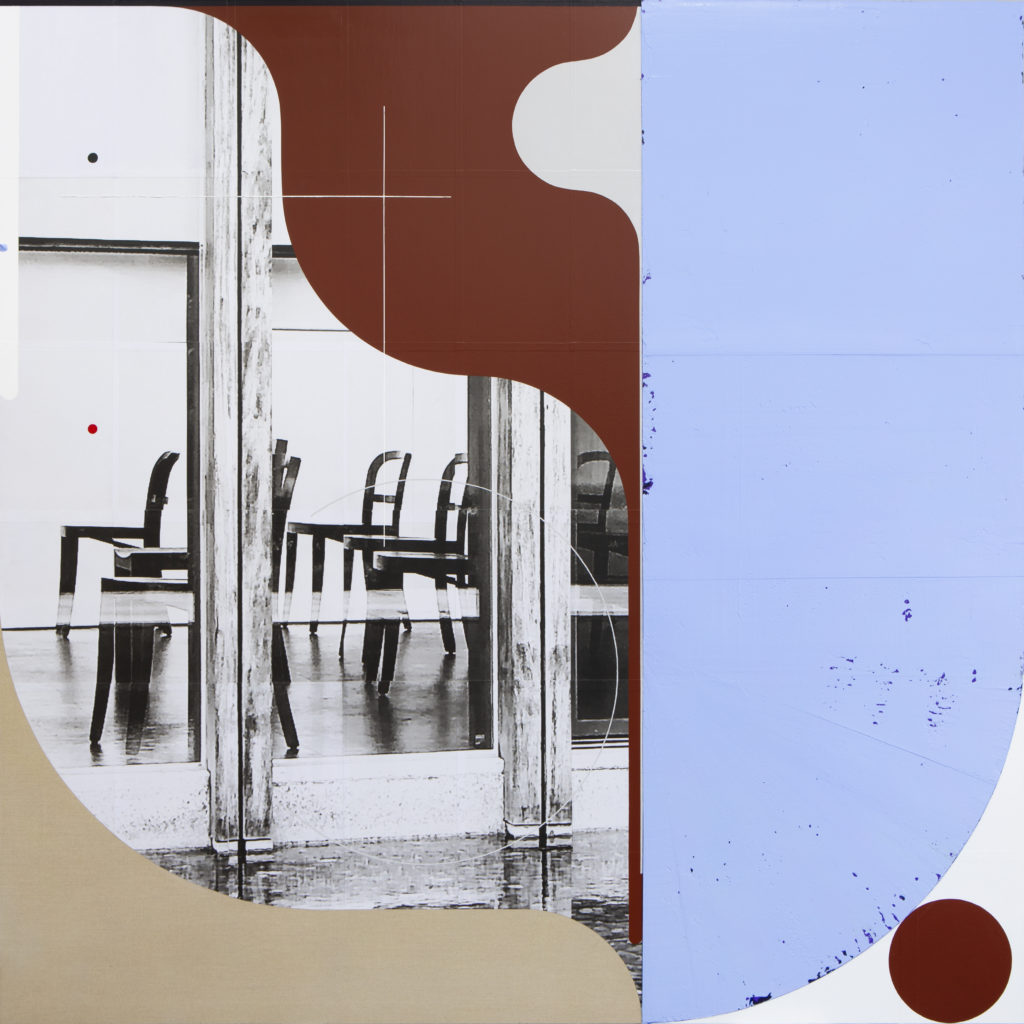
For example, if you look at particular pieces such as A Welcome
Orchid (2020) or Nikko Hotel(2019), you
may realize that the composition process is quite simple and clear. He saves
the photographs he took during the trip, prints them on A4 paper in black
white, and then attaches them across the canvas as if he is doing an
underpainting. Then the one to one transition from the photo image to
abstraction, which was conspicuously remarked in the series of ‘A Shape of
Taste’ and ‘Biei’, is referred to in order to stimulate a new
understanding of visual perception and the subjective gap. In other words, if
the mediation by photo-image assured the objective justification to transform
abstract structure in three-dimensions into abstract painting in two-dimensions
in his previous works, then the current series works in reverse; they mediate
the gap between the experience on visual perception in reality and the photo
image to the abstract painting rather than focusing on objectivity extracted
from the photo-image.
Then considering all these circumstances, how will our abstract perception
on ‘The Tourist’ be justified? There can be two points: one is the
matter of perception and the other is the matter of sense of color. Already
well noted in ‘Interior nor Exterior to A Shape of Taste’, the
conspicuous characteristics of the screen have been revealing the paradoxical
sense of flatness and space, gradually intruding from the inside to the
outside. That characteristic is repeated in ‘The Tourist’, but it plays a
specific role in engendering a strange sense of déjà vu. Almost like a screen
that displays images through sLeek liquid crystal, ‘The Tourist’ proves
our capability of updated visual perception, which allows us repeatedly
traverse between the firmly compressed sense of space and the unlimited
perspective beyond the event horizon. Moreover, the object of the painting,
which is transferred into geometrical shapes, operates as evidence by
sustaining homogeneity with the data from the black and white photos. Thus,
photographs here play almost the same role (as an abstract medium) as terrazzo
in Floating Floor. After all, the black and white
photograph images as a form remind me of a program that urges the artist’s
memories onward to find the color of the object from the abstracted color tool,
then the geometric shape and the color effect created as a result, which would
bring back and restore the information that has been omitted or deteriorated in
the black and white photographs.
Heejoon Lee tried to reify the experience of visual perception, evoked by
degraded photographs, by applying paint and geometric forms on top of black and
white photographs printed at low resolution and assembled into the size and
shape of the canvas. In other words, it is an attempt to restore memories
through photo images and realize the subjective experience encountered at the
travel destination through the language of abstract painting. Therefore, if the
difference between the actual object and the abstract painting has been playing
a role as a mediator up until now, then this time that role is played by the
difference between the actual object and the photo images to aid viewers in
comprehending the scope of perception of the visual experience. At the same
time, just as he was able to deliver the color and the form of abstract
painting systematically through photo-editing, in ‘The Tourist’, his
methodology not only gains new justification but also expands itself by
realizing the colors in a similar algorithm as low-resolution photos. As a
result, this new series flexibly opens up cognition in abstraction through the
low resolution black and white photographs and both physical and non-physical
sense of space and distance derived from the overlapping layers of the
algorithmic color and form.