People who copy are those who train in faith. They are the
metaphor and representation of the desire for immortality in humans who are
born, who have to live, and who will one day die. The copyist, who is usually a
male, worships the immortal being or its name by copying the words of God, a
masterpiece of a great author, or religious scriptures. Rather than live in the
present, he seeks to transcend temporality by imitating the things that have
acquired a timeless, universal value that has survived despite the contingency
of time. Rather than committing to a meaningless life that’s merely something
that change, he seeks to believe in the (non)being of life that is unaffected
by change and chance. He tries to escape, through what he is currently reading
or seeing. Burying his face in the works, he believes that if he faithfully
copies them, he will one day enter their world. Or, rather, he believes his act
of copying will call forth that world. What madness, irrationality, and hope!
The novice copyist likely experiences his or her qualitative leap the moment an
image or text comes to life in the real world. Or perhaps the copyist is
already captivated by the materiality or corporeality of the text or image,
already believing that such world really exists. In any case, a copyist is
someone who seeks to stay with the immortal text, scripture, or word so as to
deny and delay death, the inescapable equalizer of all people. Recall the monk
who copy the words of God onto palimpsest, the amateur painter who imitates a masterpiece,
or the aspiring writer who copies the great works in stacks of manuscript as
tall as himself. These are the people who sustain the hegemony of the things
that have survived the test of time, using for that service whatever they have
at disposal given their historical, cultural, and other surrounding conditions,
whether they be the parchment and quill, paintbrush and canvas, silk and
pigment powders, or paper and pen.
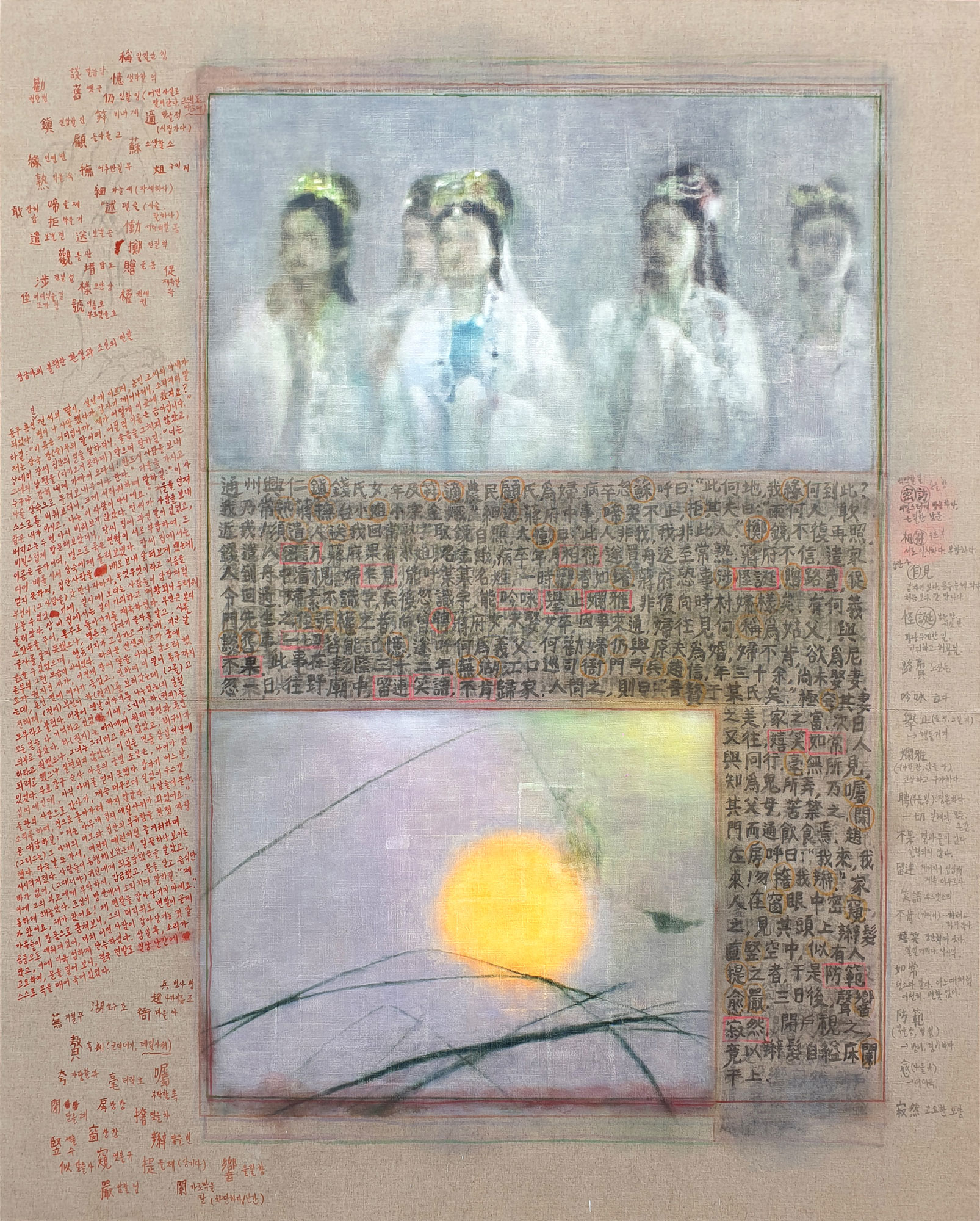
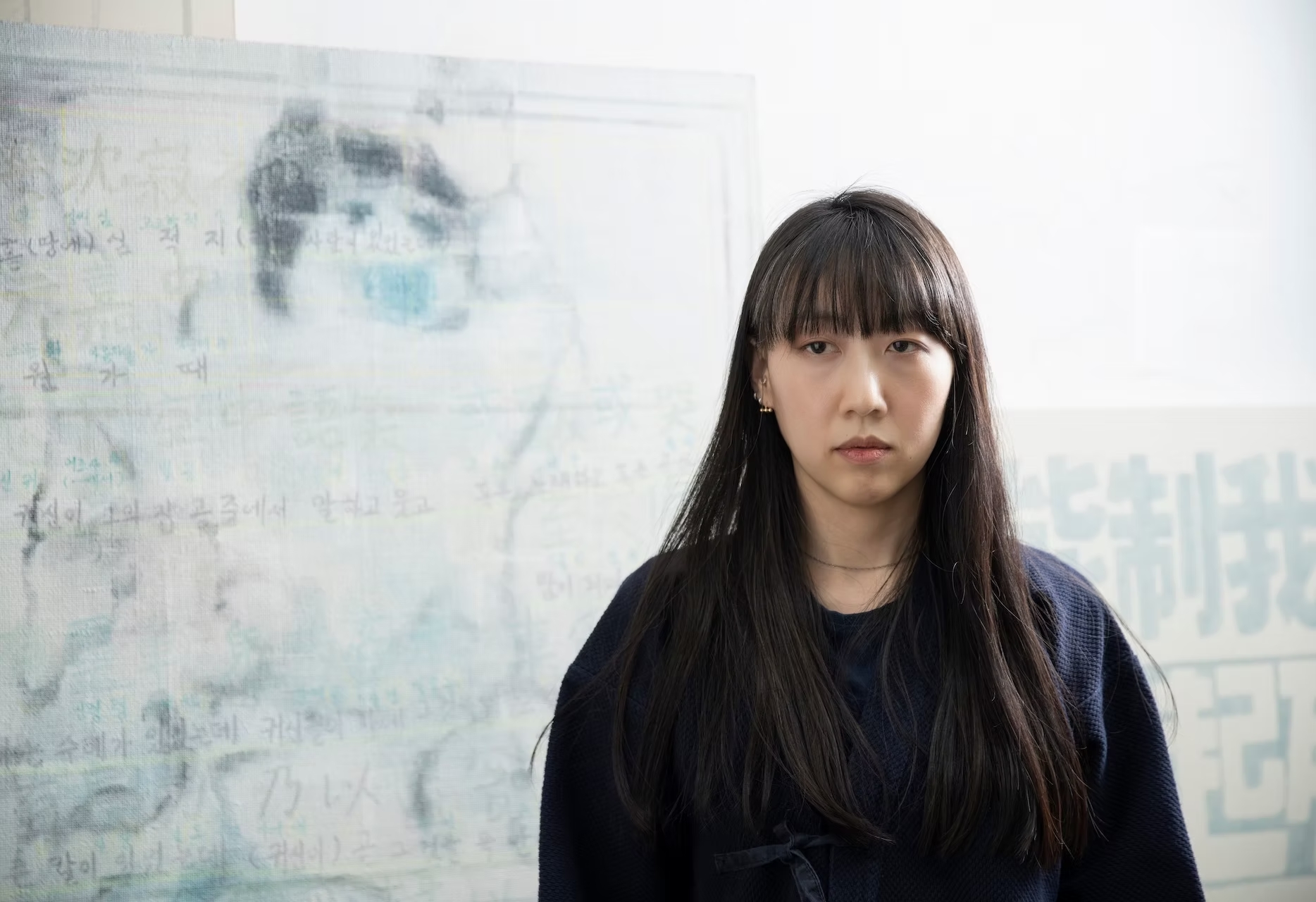
There is painter who copies works such as Taiping Guangji (太平廣記) or Liaozhai Zhiyi (聊齋志異). They are
"scriptures" never heard of before, so they are searched on the
internet. I had to somehow fall in love with this artist who had taken a liking
for them, so as I browsed the academic papers, my eyes were opened to a new
world. In short, Taiping Guangji was a collection of fables from the Song
Dynasty in the amount of 500 volumes, featuring elements like mystical hermits,
Taoist magic, and others who are skilled in the use of the mysterious arts.
Liaozhai Zhiyi was a collection of nearly 500 short stories written by PU
Songling, "a novelist and playwright in the early Qing Dynasty," that
featured the times’ strangest events, usually related to ghosts and foxes.
There are several translations available of the Liaozhai Zhiyi for both
children and adults from multiple publishers. There is even a comic book
version. Given the fact that CHOE Sooryeon even owns an English translation, it
seems that she has an almost obsessive interest in Chinese fables and ghost
stories. CHOE said the first translation she read was the children's version in
her home, growing up in a generation that had stopped the everyday use of
classical Chinese script despite learning about it. Then, in her teens, she
enjoyed watching classical fantasy films and videos (about Taoist wizards) from
Hong Kong like most other Koreans at the time. I am sure many have watched the
movie A Chinese Ghost Story, about a ghost and an innocent young man who fall
in love. This movie is also based on Liaozhai Zhiyi. CHOE had finished her
studies as a painting/western painting major in graduate school when tried to
decide what she should paint. She started copying the Chinese fables, ghost
stories, and Hong Kong movies that had significantly influenced her growing up.
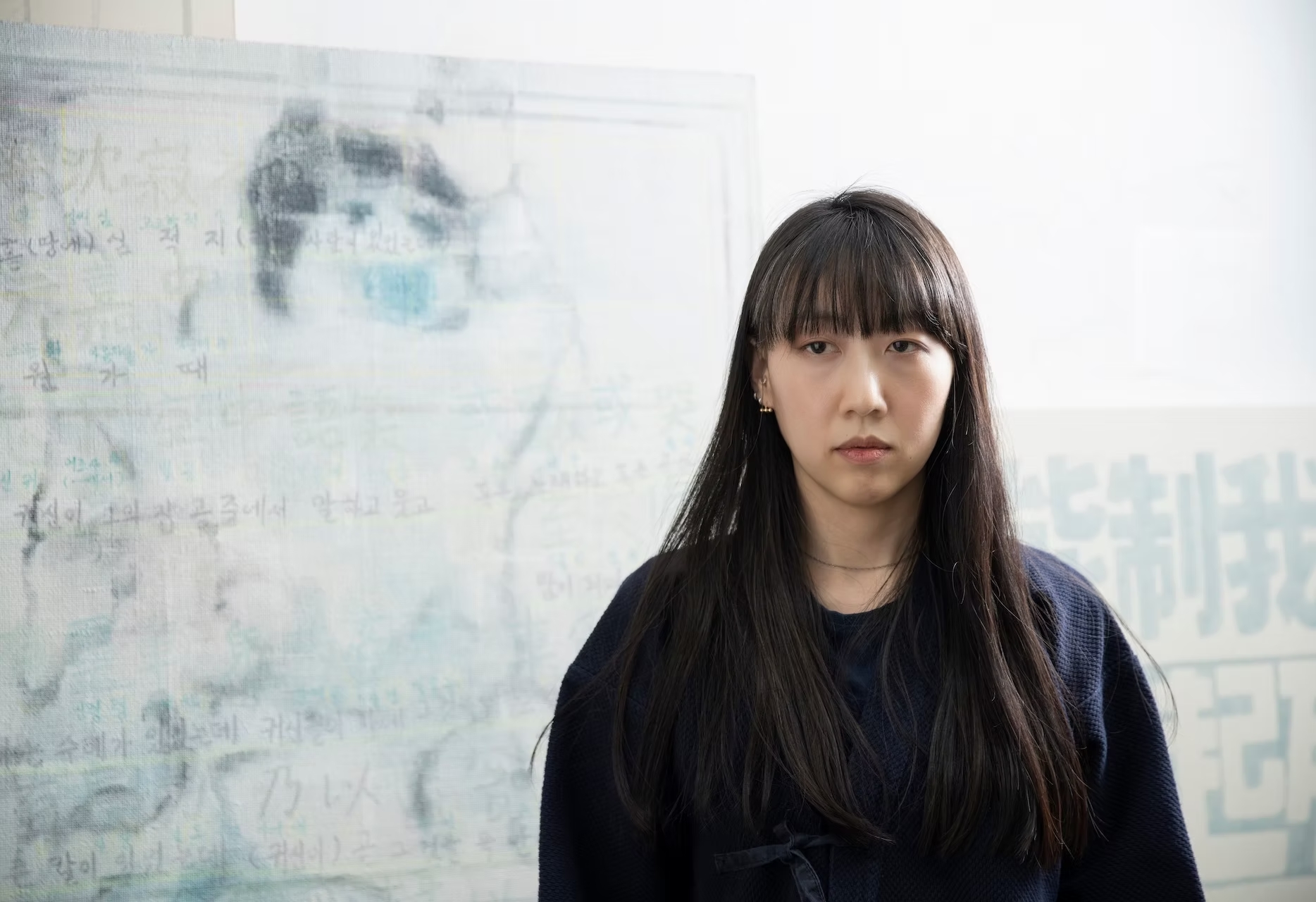
One needs to pay attention to the fact that CHOE, who "identifies"
herself as a painter, chose neither to discuss the issues of contemporary
society nor express herself subjectively. Rather, she chose to copy the stories
of fantasies and images of movies that once captivated her but were completely
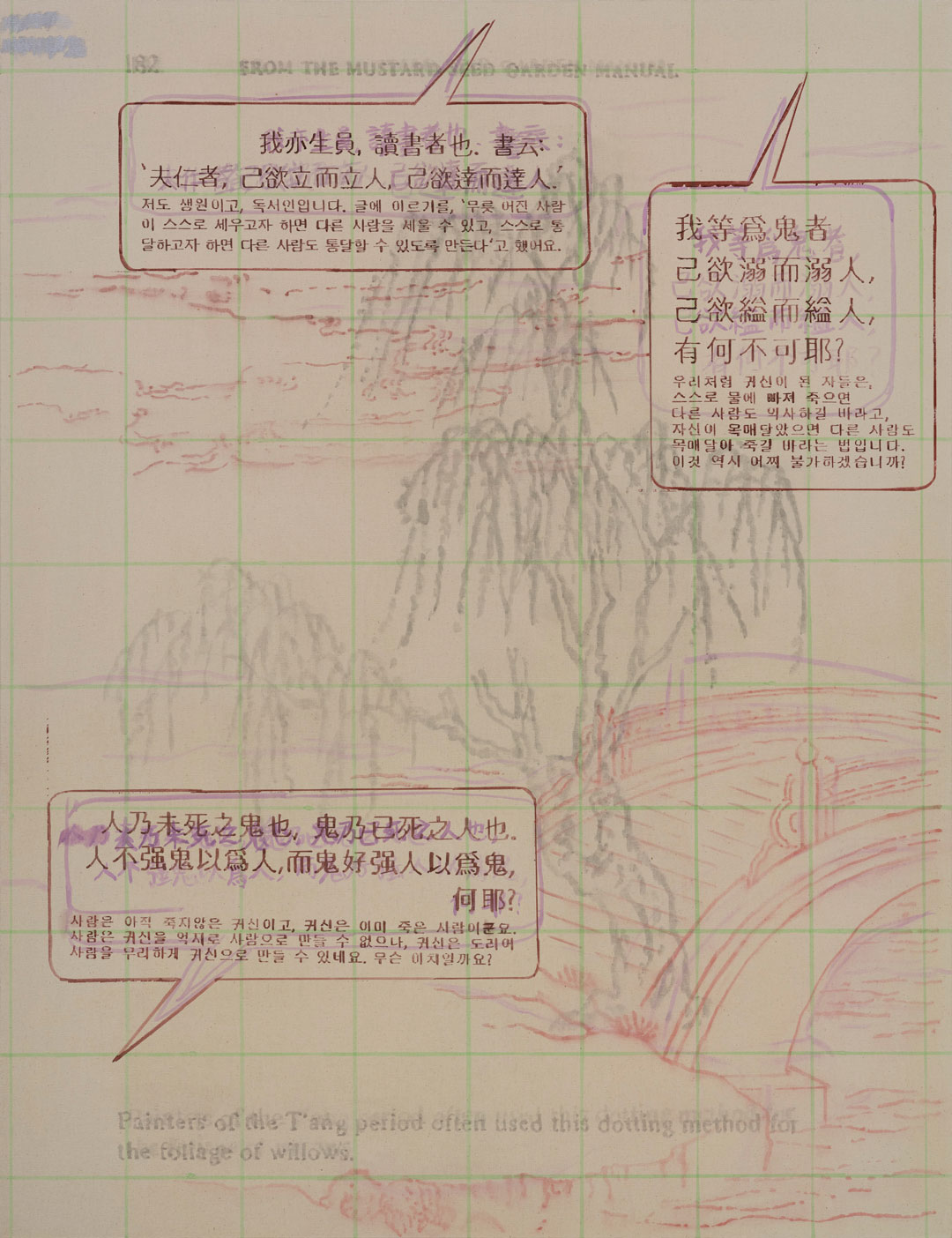
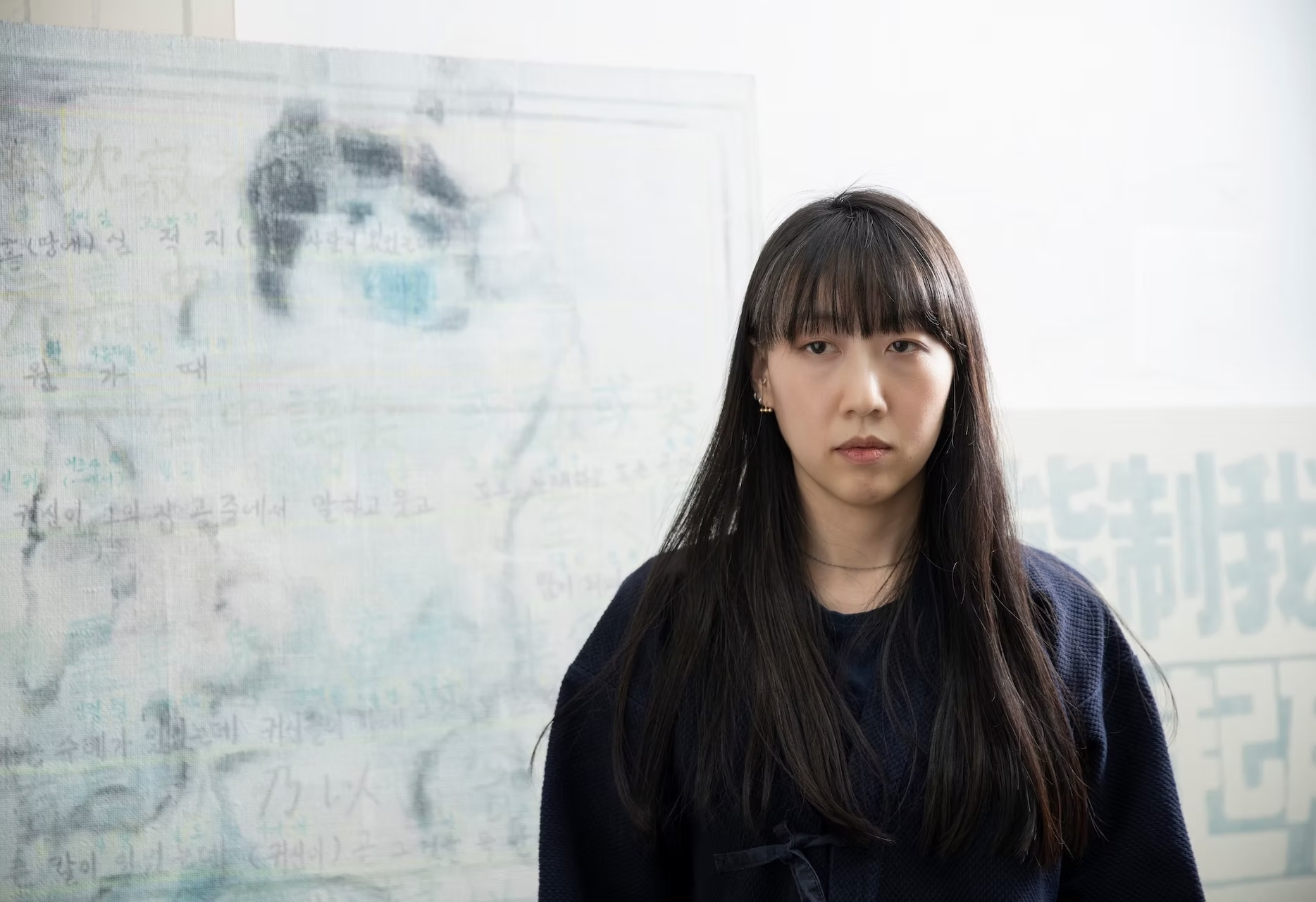
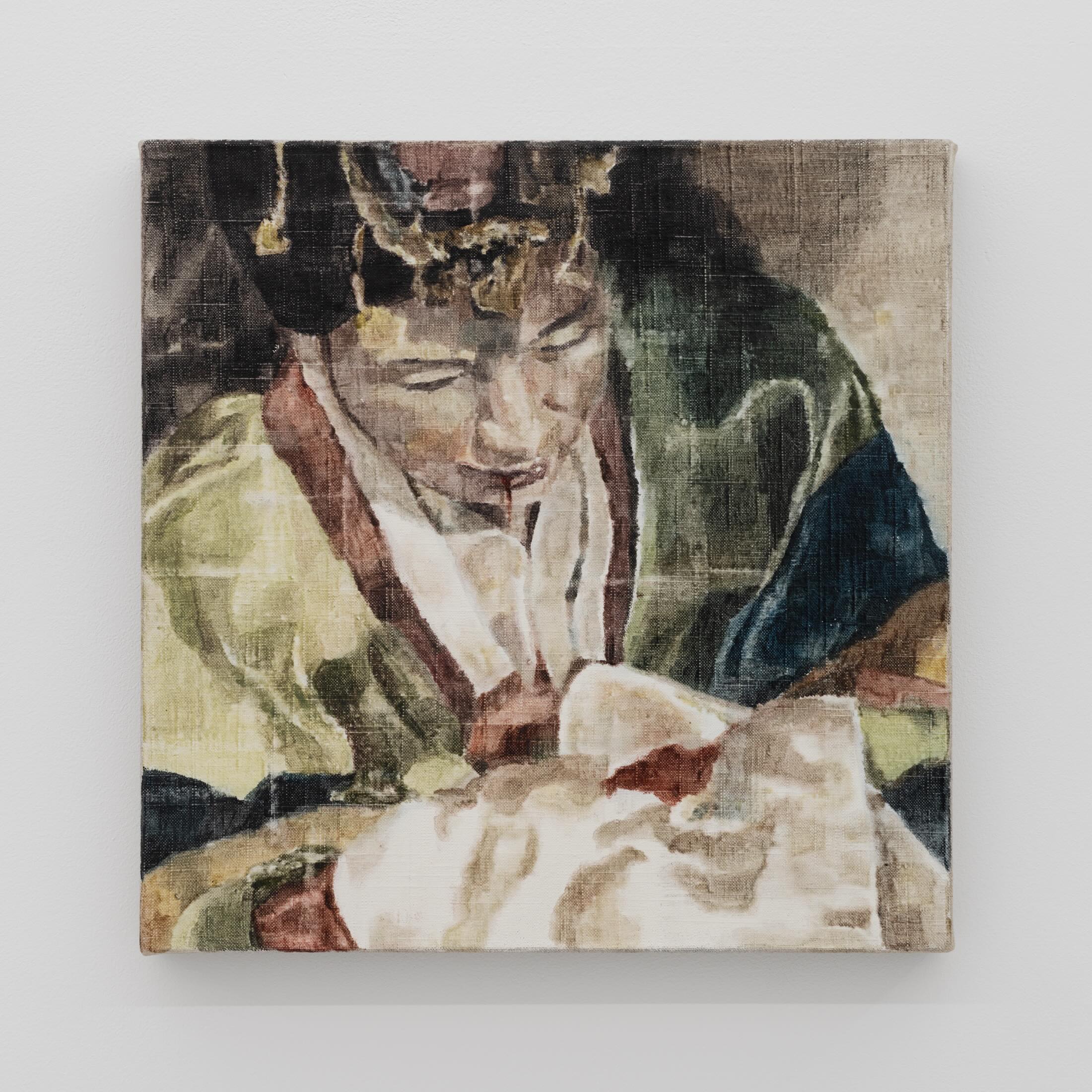
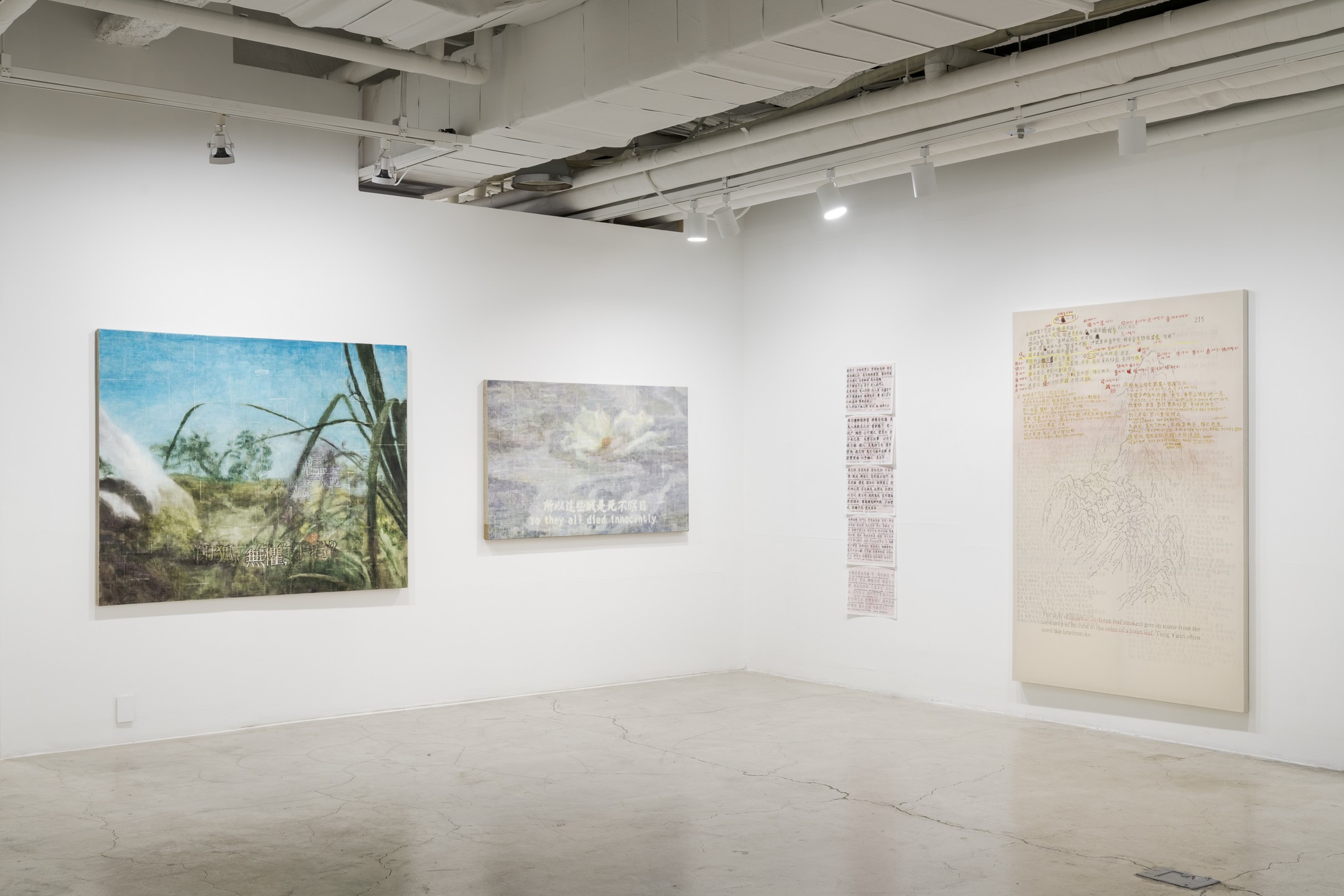
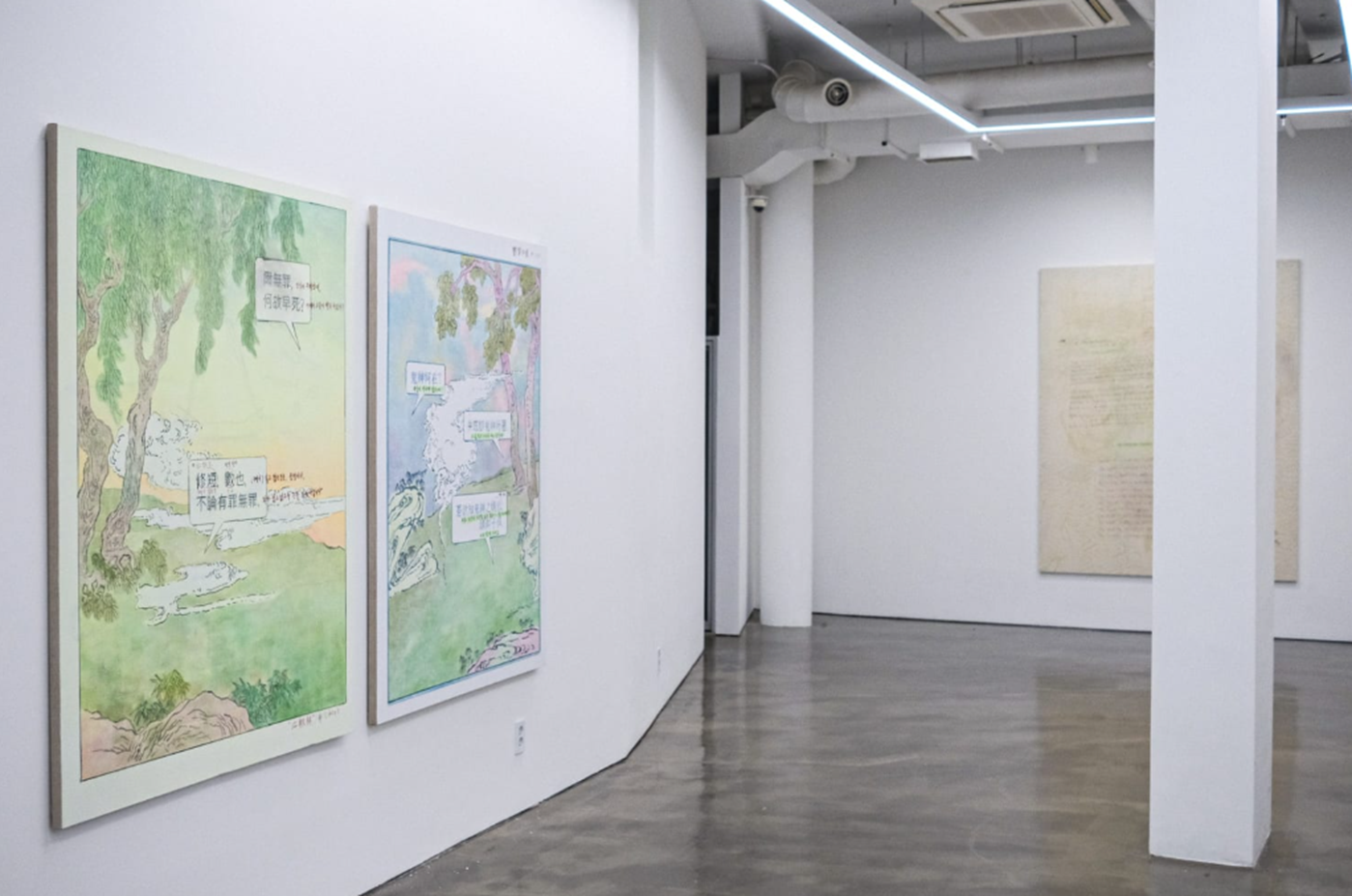
fictional. CHOE copies the fables as if they were "scriptures." Her
work is an imitation of a student's notebook, carefully copying each character
of Chinese text as if it were an individual image, then neatly writing the
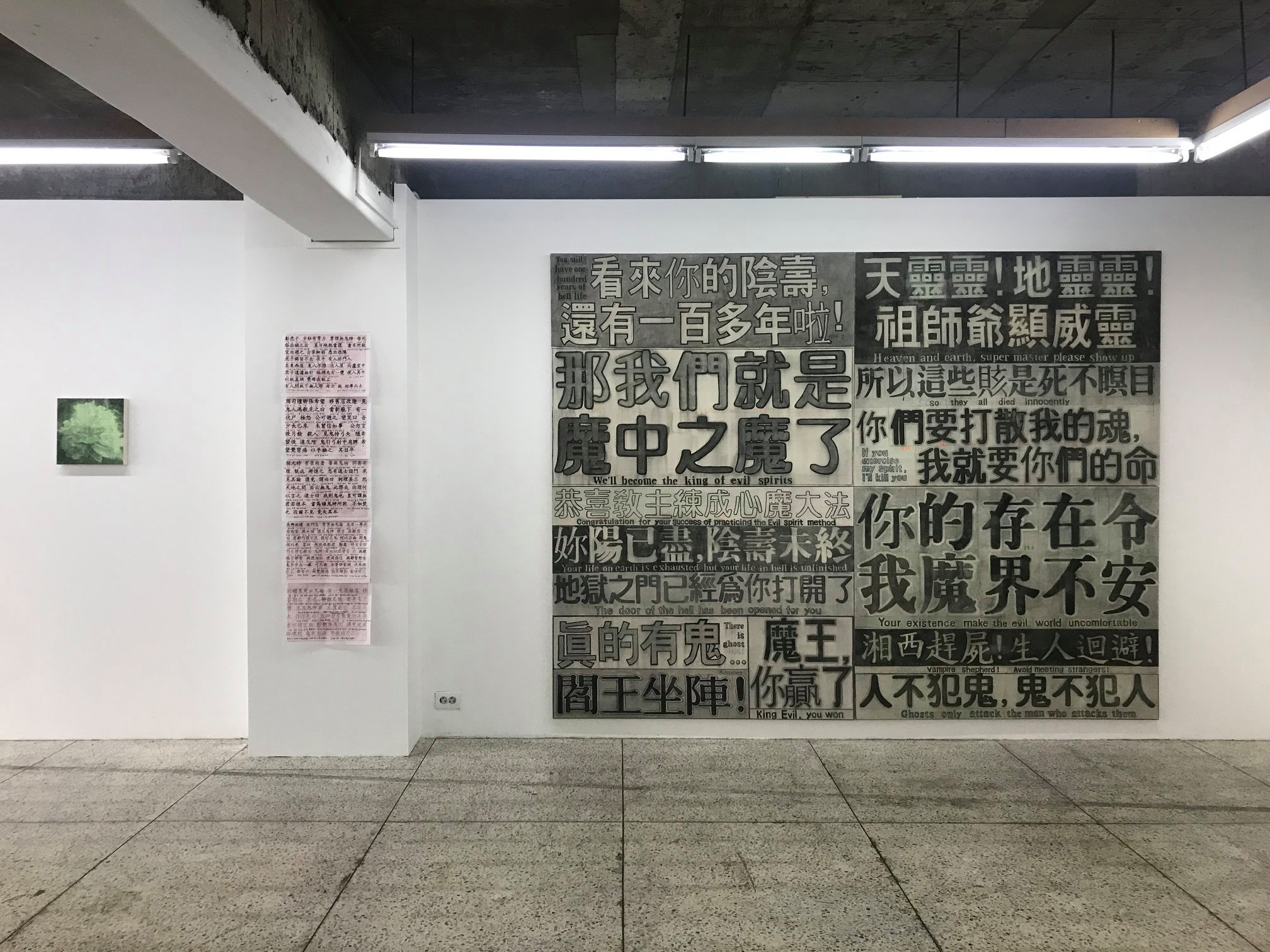
Korean translation next to it. It can also be the production of a canvas ruined
by the poor work of a novice painter, or a profusion of the retro-style
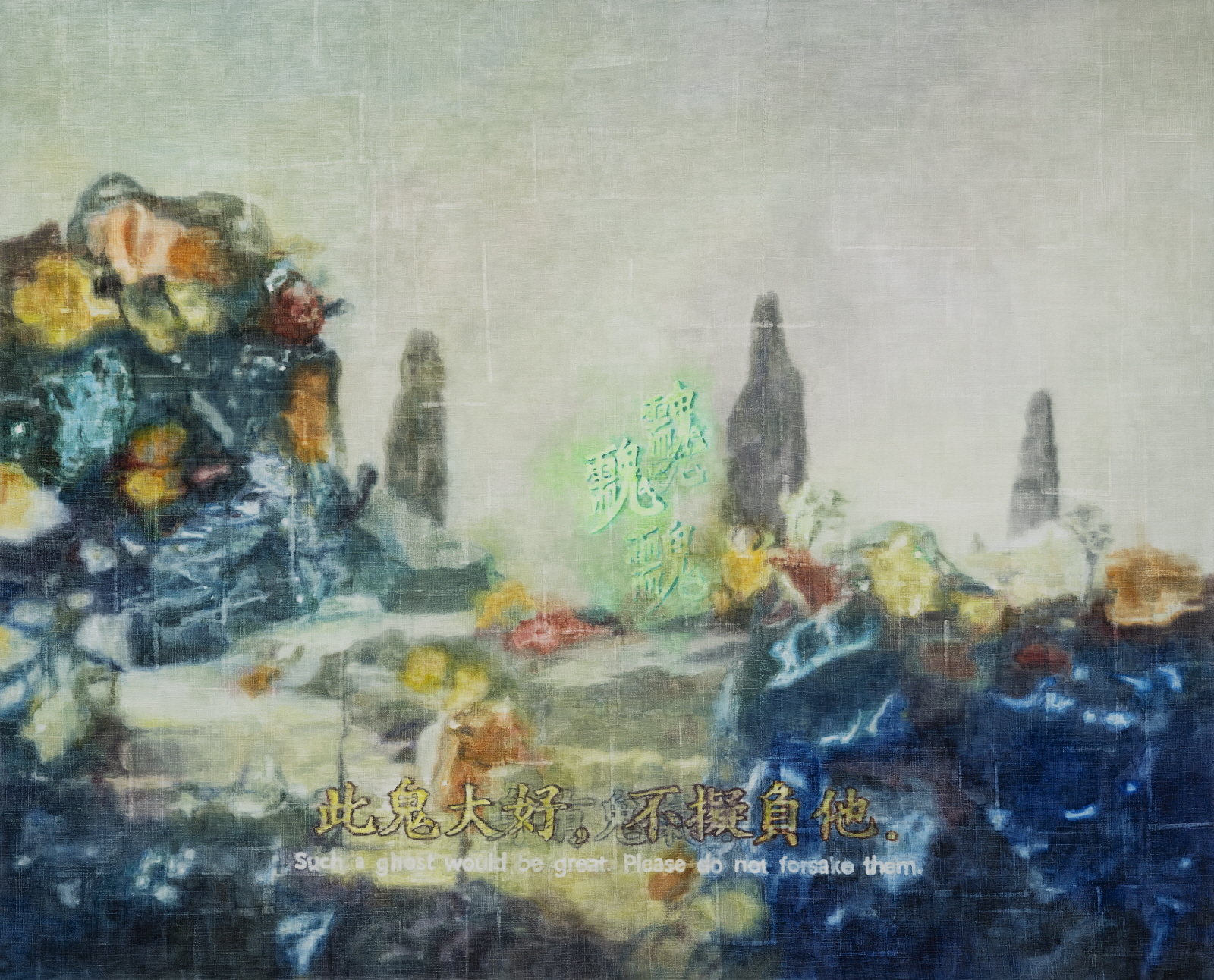
"gungseo" typeface. It is the barraging of viewers with the closing
line "it's dead" which blocks their view, or the unfamiliarity and
comedy of seeing English translations right next to classical Chinese texts.
Surely, the things one believed in and enjoyed as a child turn out to be small
and unimpressive when looked (down) on when they have grown up. Such parallex
and distance can be sensed in the style of CHOE's work.
I confess that I let out a burst of laughter as soon as I saw
these works. Therefore, I am responsible for justifying the lightness or a
sense of “freedom" pursued in the work. However, before I do, I must first
point out the "element of introspection" that is present in the work.
The first thing we must discuss regarding CHOE's style of
"subtraction"—which replaces her place as the painter or artist with
the "form" of a novice, student, or amateur—is the relationship between
Orientalism and painting and Western painting.1) CHOE's works betray her
awakening that the culture she once enjoyed when she was young (and perhaps
ignorant) was a part of Orientalism. Despite the process called
"modernization" by which Western/universal reason sought to remove
the irrational local culture, fables and ghost stories persisted within the
scope of literature and the "exotic" Hong Kong films. We know that
disguising/modifying Orientalism, which had been invented by otherizing the
East so that the West may have a mirror-image, as the self-image of the East
was part of the non-West's means of modernization. Gayatri Chakravorty SPIVAK
(1942~) used the term "worlding" to refer to the
"relationship" that emerged between the third and first worlds as the
former reappropriated the images projected onto it by the latter as its
self-image. As such, the dichotomy of Eastern and Western painting or between
"The Painting" (with the definite article) and paintings become an
issue for CHOE. This helps us understand why she uses Eastern images or fables
as her subject matter even though she identifies herself as a Western painter.
Just as the West once defined itself by inventing the other it called the East,
CHOE disrupts order in what is self-evident, induces anxiety, and and makes the
visual hidden laughter of the always already knowing other by confronting the
selfdefinition of painting/Western painting with the reappropriated
"orientalism." he ghosts are unworthy of being copied. They are the
other that could neither join the gods nor take part in the human narrative of
reward for the good and punishment of evil. Yet the stories of how they go
around stirring the fear of death and tricking, saving, condemning, and loving
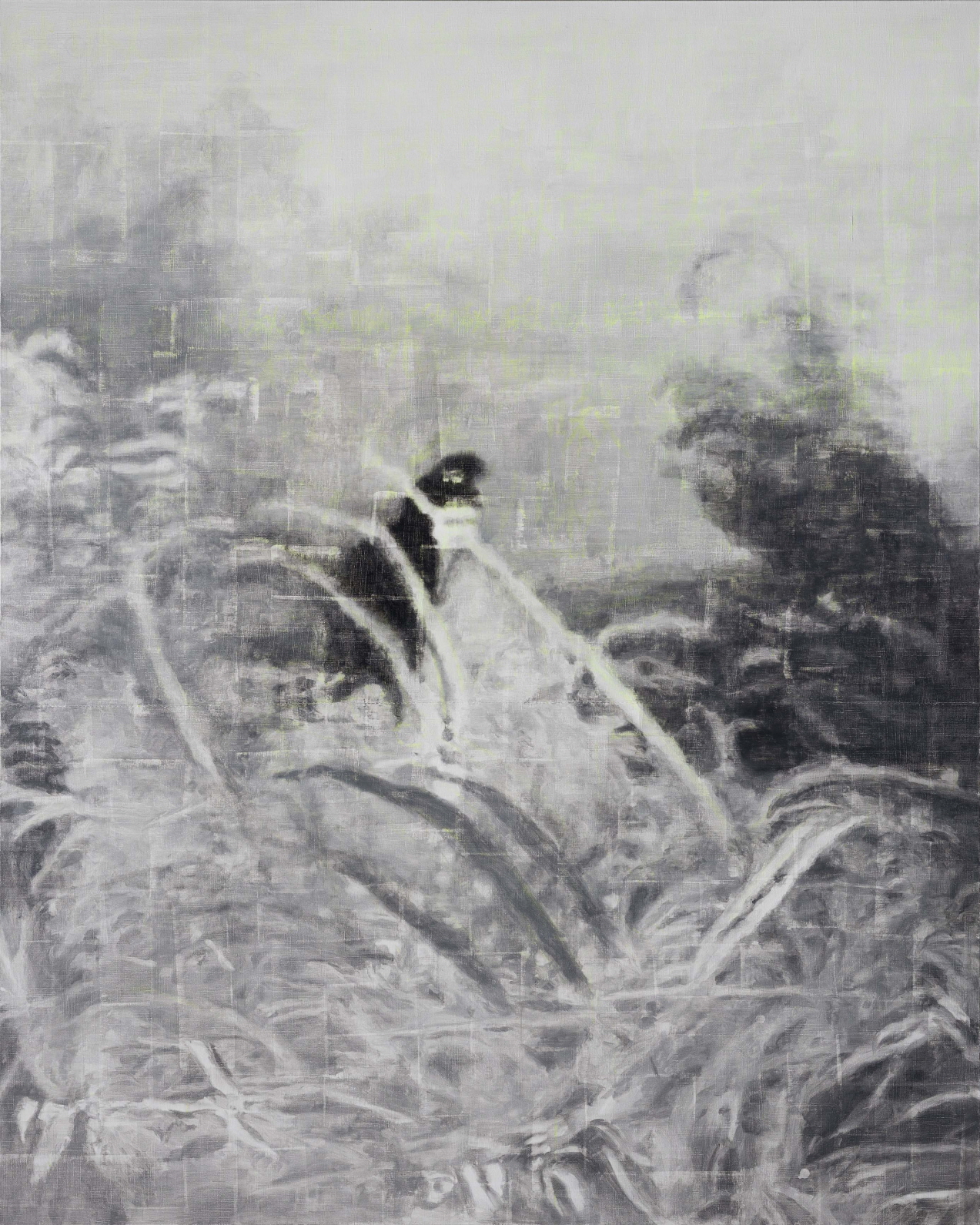
others fail to solidly fix on the canvas in the faded images, unfinished
letters, and scenes of a passionate student transcribing, filled with
highlighters. hey are faintly imprinted, scattered, then erased on CHOE's
paintings, which look like advertisements or propaganda posters from a
totalitarian state that surely do not look like paintings. And if these works
are the traditions/lessons/values that are rejected as soon as they are quoted,
vanish as soon as they appear, made foolish as soon as they are announced; if
such is the quality of CHOE's works of copying; if their aesthetic compositions
present the corrosivity of time through the form and style of painting, then I
believe my laughing before these works, which are devoted to the certain demise
of the powers and structures of our time that feed on the tyranny of the originals/scriptures/masterpieces,
as an act of support and solidarity for CHOE's aesthetic attitude.
Usually taking the form of a woman to intervene in human affairs
to seduce, trick, or save a man, ghosts are the name given to the other in the
fables who incarnate fear by absorbing the fear of death. The clearcut
narrative of rewarding the good and punishing evil corrodes with their
appearance. It is the role of the ghost to take on the fear or desire that
cannot be reduced to the conventional morals and values of sociey. Perhaps I
laughed at seeing the "paintings" that copy a fable featuring ghosts
and ending with the phrase that someone "died" not because I was too
old to fear ghosts but because I realized at some point that even the ghosts
are sorrowful and vulnerable beings. CHOE presents an endless series of stories
that end with the phrase "it's dead" as if it were a rhyme. She puts
these before the eyes of the viewers who came to the gallery, stripped of
secular temporality, so they can see something immortal on the canvases. The
viewers came to see "art" so they can escape death. Instead, they are
met with a profusion of death and no "art." (CHOE's inspiration for
using "dead" as a rhyme in her fables about the other may have been
the refrain of "and so-and-so gave birth to so-and-so, who gave birth to
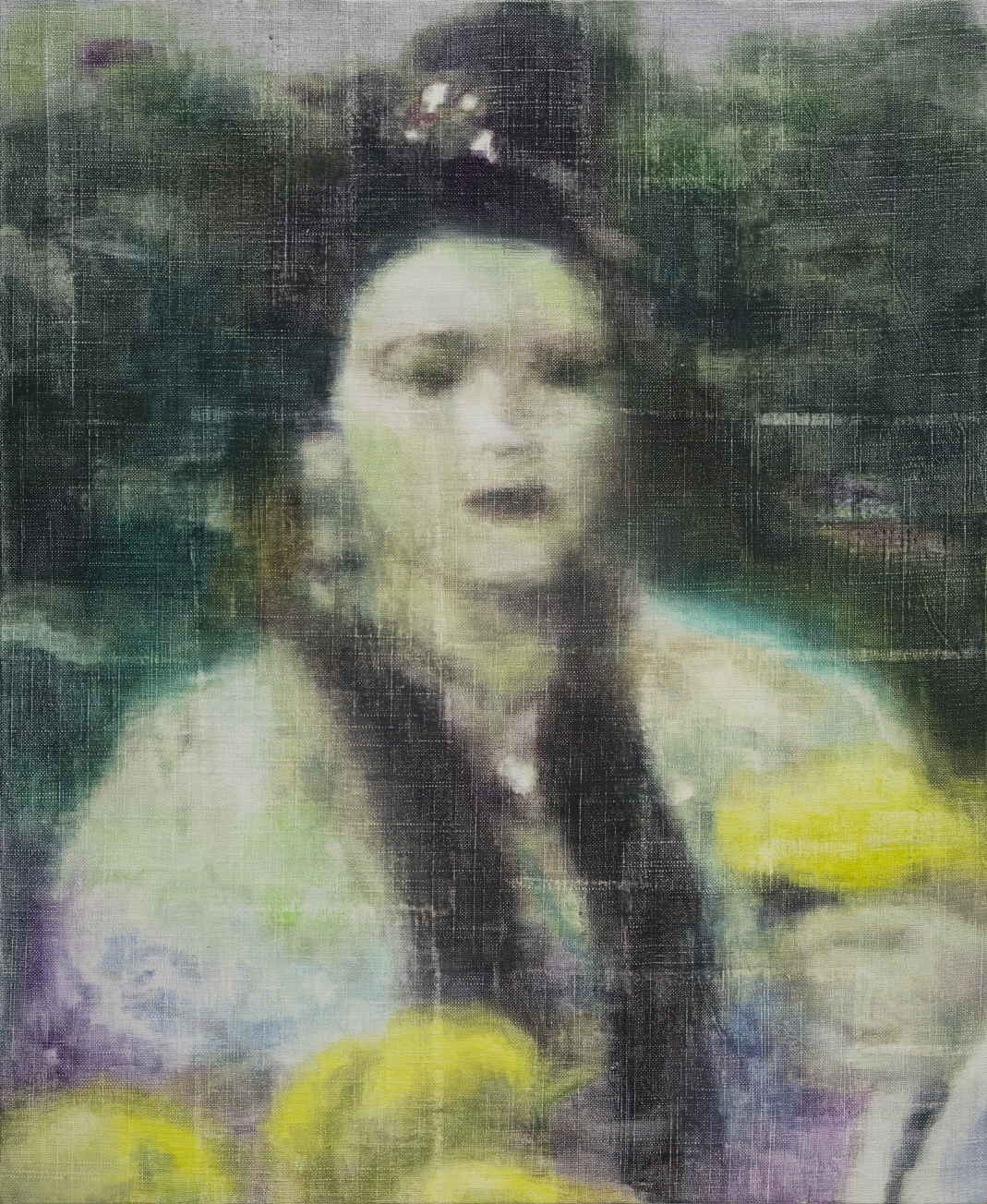
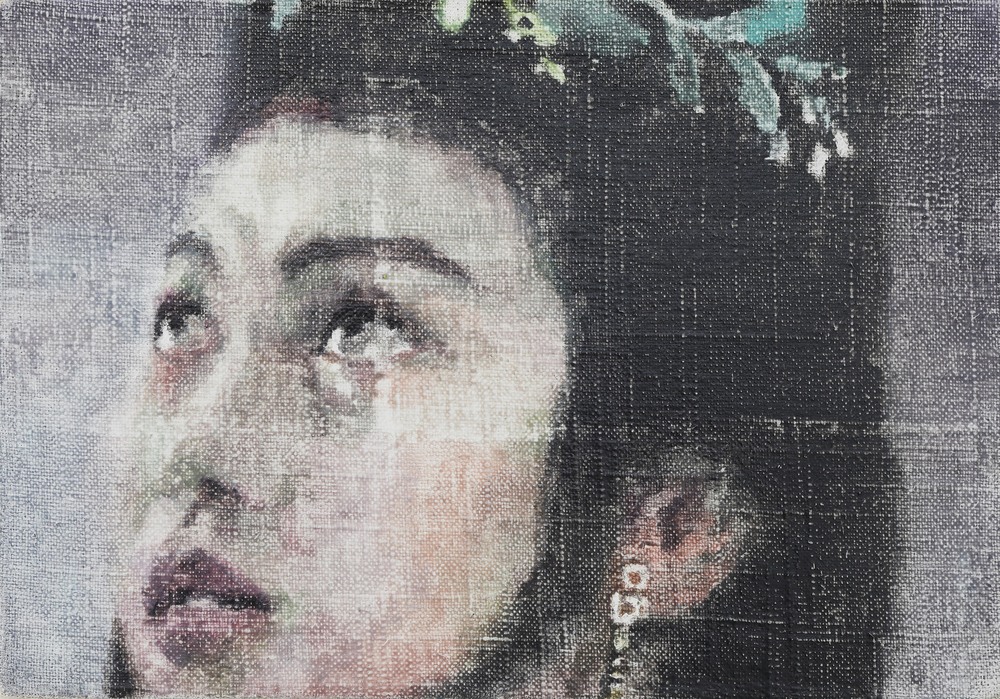
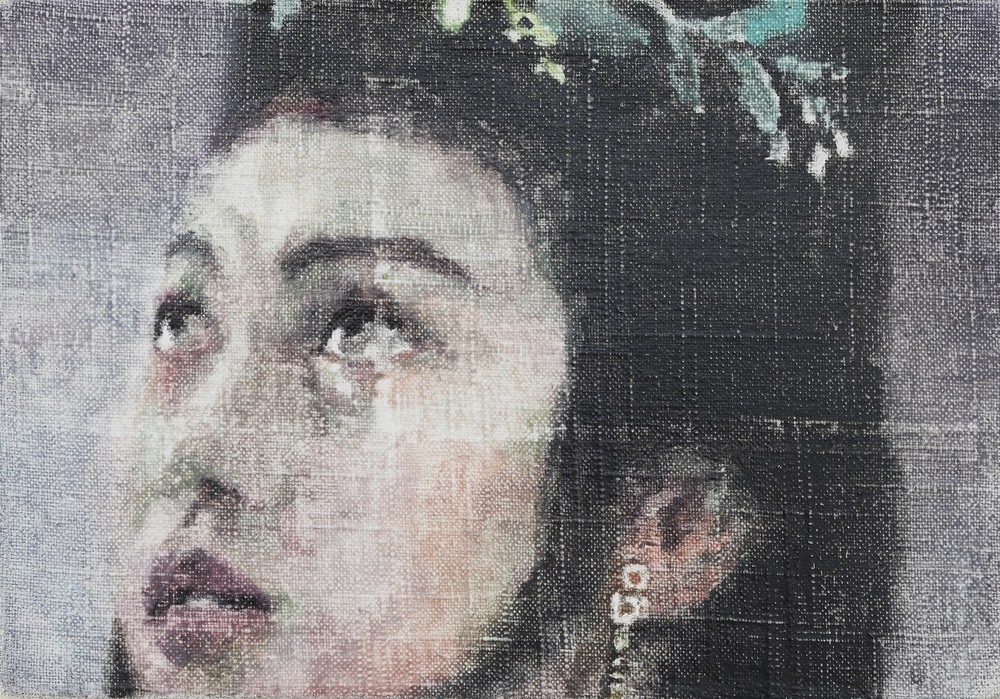
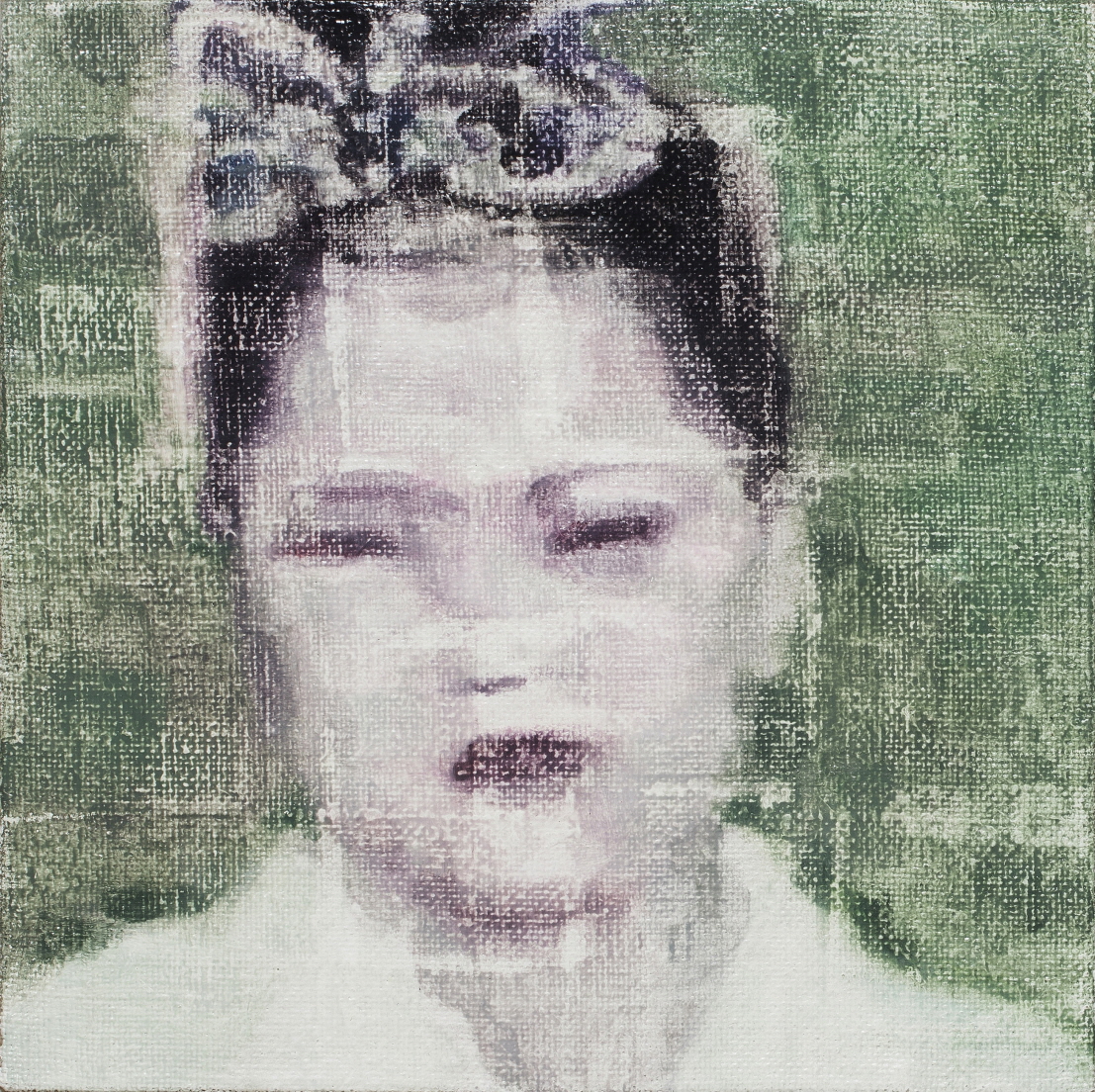
so-and-so" in the Old Testament.) The copied images have reached such low
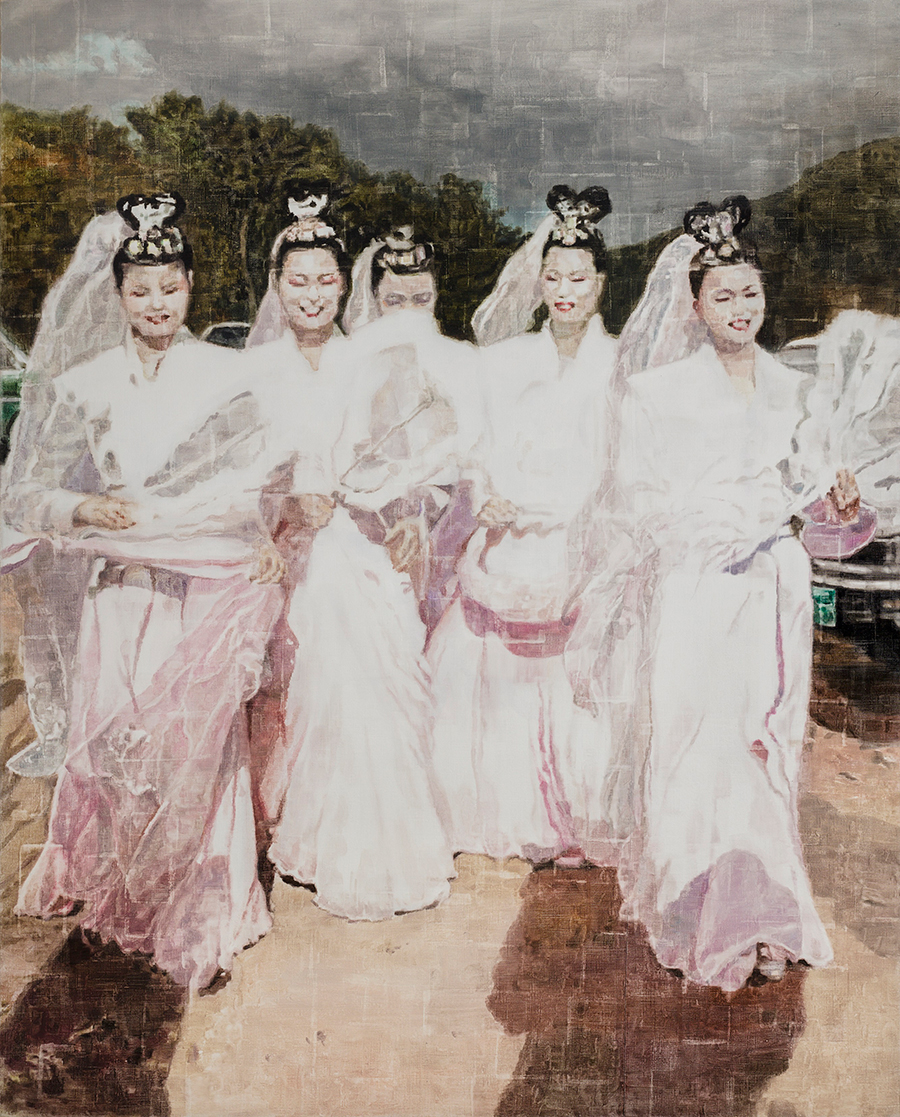
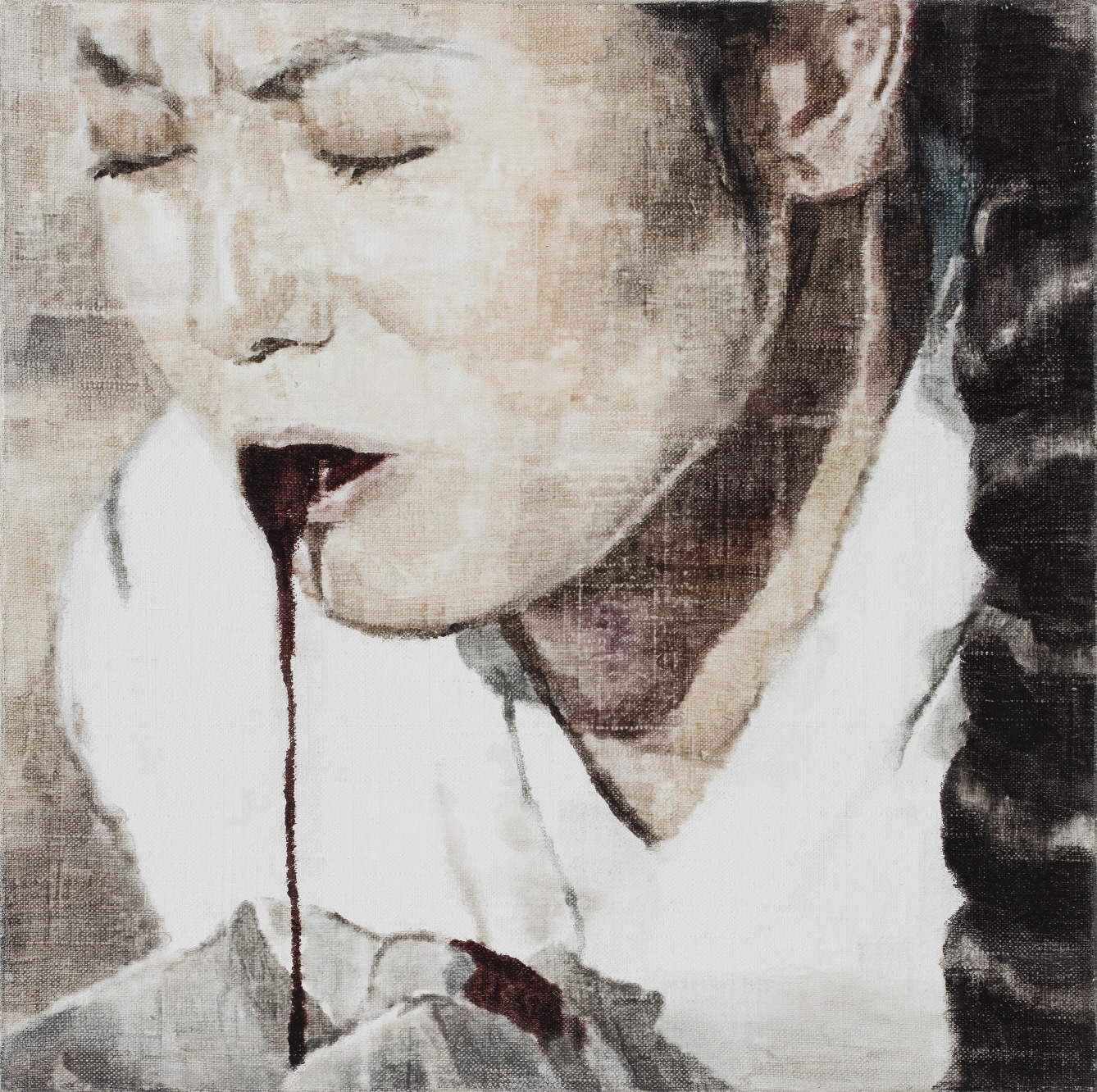
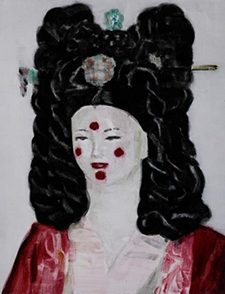
resolutions as a result of being rewound so many times that the Seonnyeo
(Taoist fairy) or "carefree women" they depict all but lost their
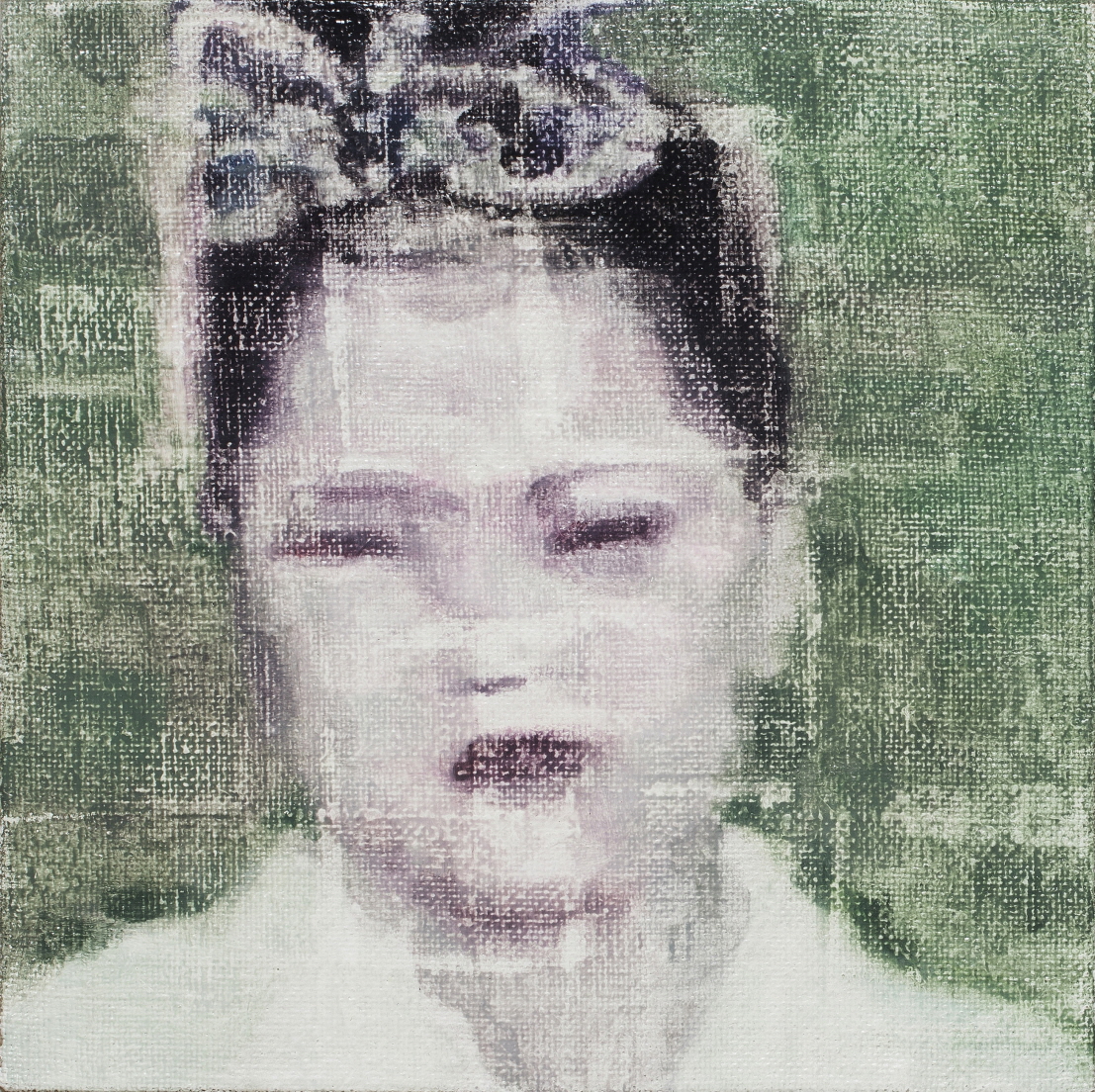
fantastic quality. They are "emotionally expressive" women who shake
their fingers and scream at the heavens. The images, in which the women make
such ugly faces in such beautiful dresses, "miss a note." As such,
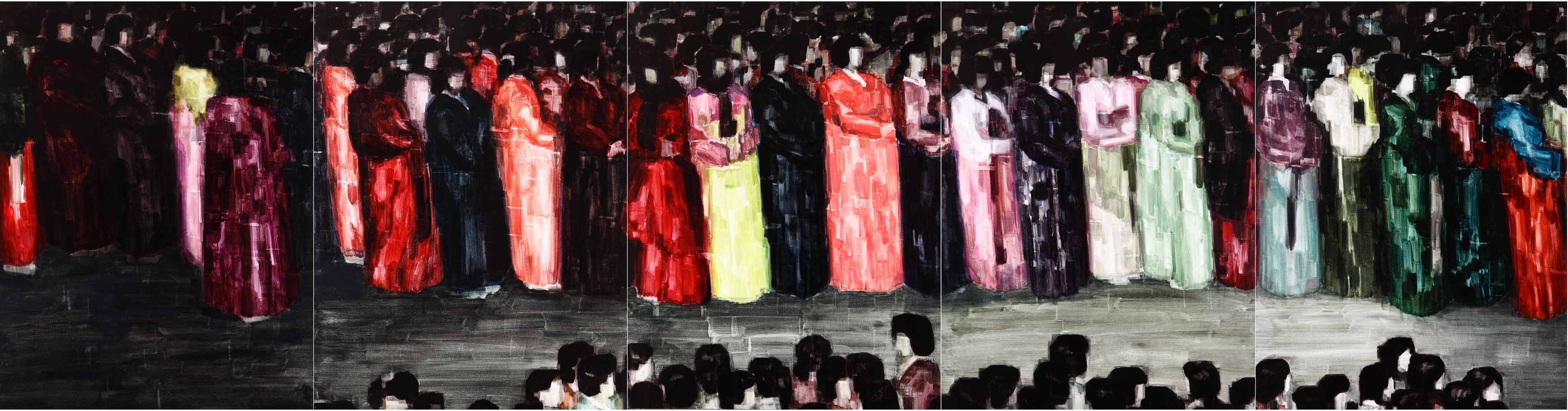
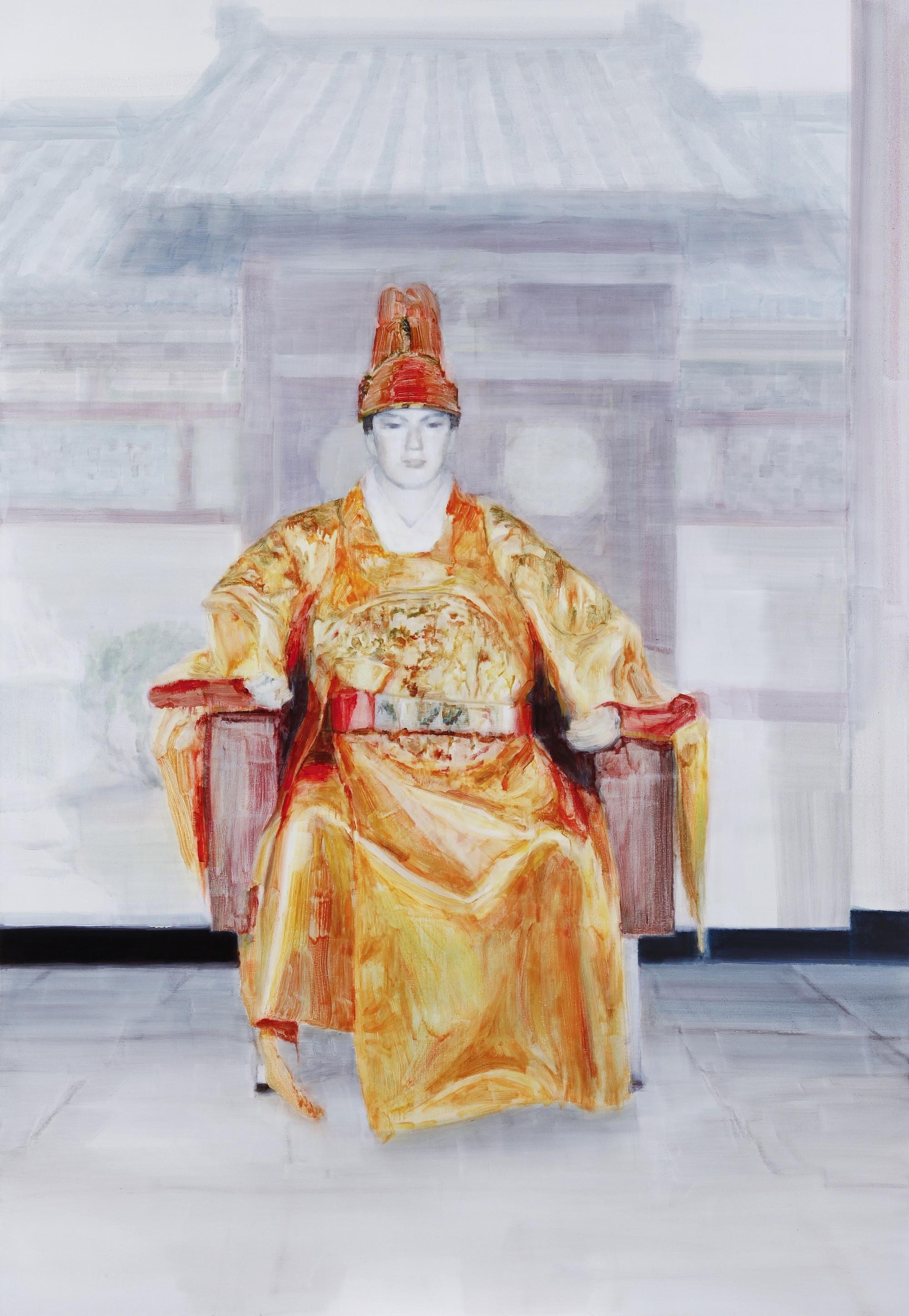
they are "impoverished" images that one can very well laugh at. CHOE
said in an interview that she does "not deal with the noble images you can
see in a museum, but rather the distorted, warped, comical, and shoddy images
that have been reproduced in our age." CHOE's art or her "painter's
gesture," as she calls it, does not lie in the serious imagery a community
worships at the behest of the state. Rather, it lies in the image of those that
continue to roam the earth without dying. It lies in the image of those who are
used up, soiled, worn, and eventually broken down, of the ghostly women who
undergo the physical changes of life without availing themselves much of the
transcendent at all, yet never quite dying and fully disappearing, capturing
the other form in the immortal state of being undead.
CHOE's works depict ghosts who live between divinity and humanity,
pretending to be women with an "ugly/desirous" face. The works
overwhelm with the post-humanist grand narrative that there are no lessons to
be gained in life and that "we" will all eventually "be
dead." The texts are painted and written in the manner of "fliers,
propaganda slogans, or advertisement banners," and the sheer boredom of
seeing them ultimately makes a mockery and laughingstock out of death. They are
both "comical and fearsome" at the same time. I do not know if the
reason I laugh every time I see and read these works of impersonal writing from
which CHOE erased her place as a formal artist is my desire to laugh at
something or the wind CHOE finally caught in the nets of her painting. After
all, she did mention the painter’s gesture earlier.
Ōṁ (唵)!
[Footnote]
1) The rest of the paragraph here can be understood as my
elaboration of the interview with the artist that can be found in Incheon
Culture Press 3.0 website.
URL: http://news.ifac.or.kr/archives/22458
2) “Palbok Art Factory Website”, Residency Artists,
URL:
https://www.palbokart.kr/main/inner.php?sMenu=D2200&mode=view&no=31.
***
An aesthetics and art critic, YANG Hyo-Sil obtained a Ph.D. D in
Aesthetics at Seoul National University for the thesis “Research on the Concept
of Baudelaire’s Modernity” and currently teaches Aesthetics at Seoul National
University and Korea National University of Arts. She has translated Judith
Butler’s works including Precarious Life (Busan: Kyungsung University
Publication Department, 2014), Giving an Account of Oneself: A Critique of
Ethical Violence (Goyang: Ingansarang, 2013), and Parting Ways: Jewishness and
the Critique of Zionism (Seoul: Sidaebooks, 2016). She authored Imagination
against Power – Chronicle of Culture Movements (Seoul: Hyunsilbook, 2017),
Crippled Life, Words of Love (Seoul: Hyunsilbook, 2017).