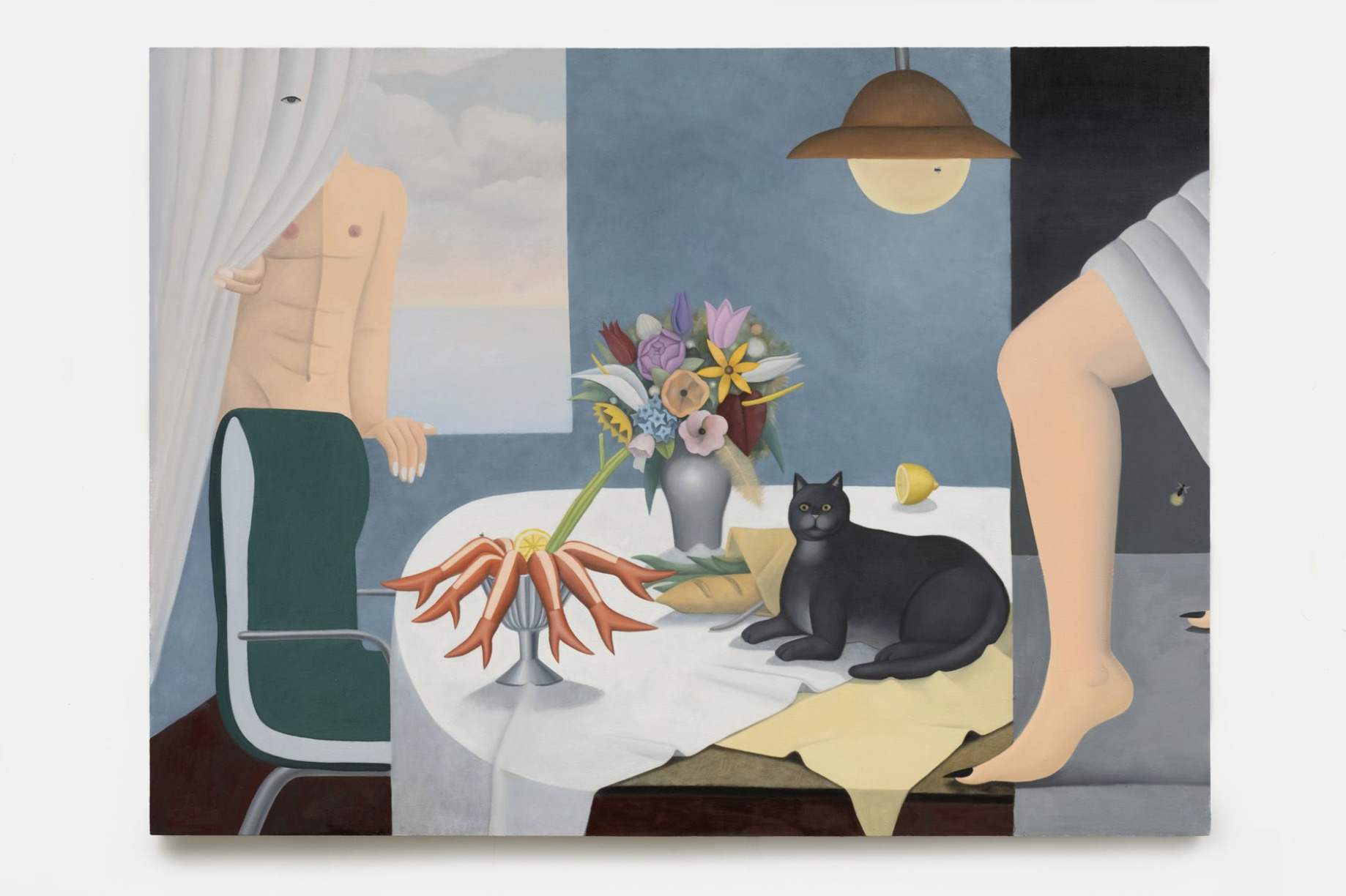
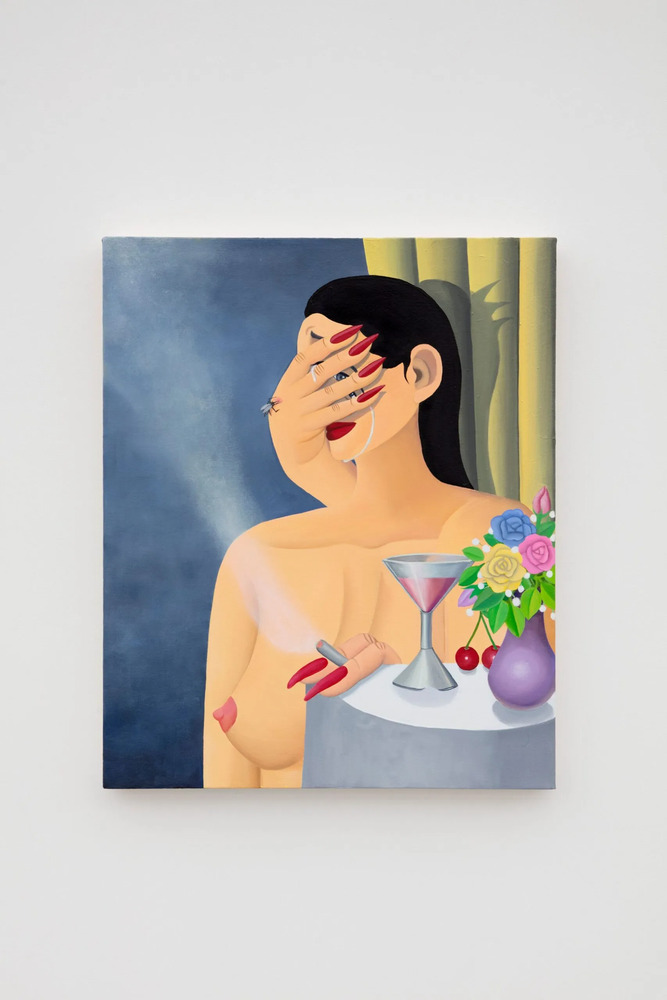
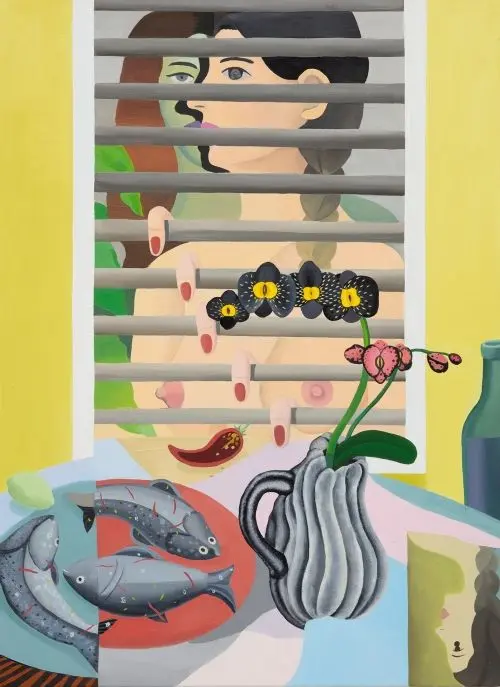
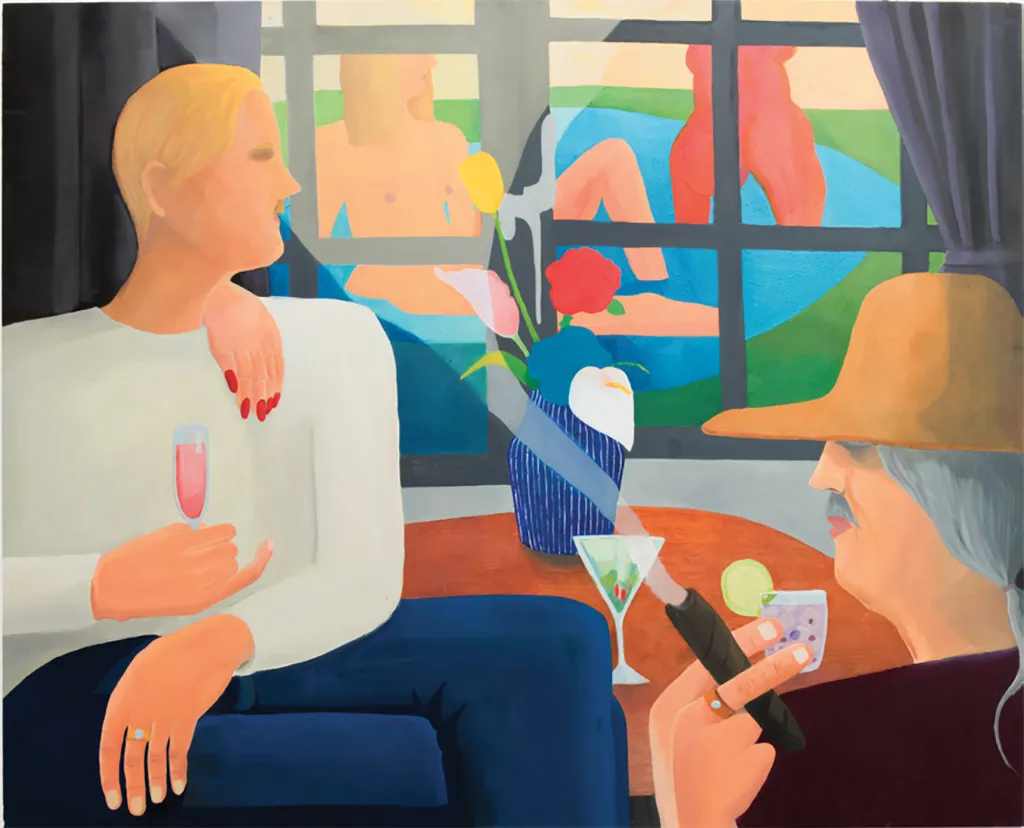
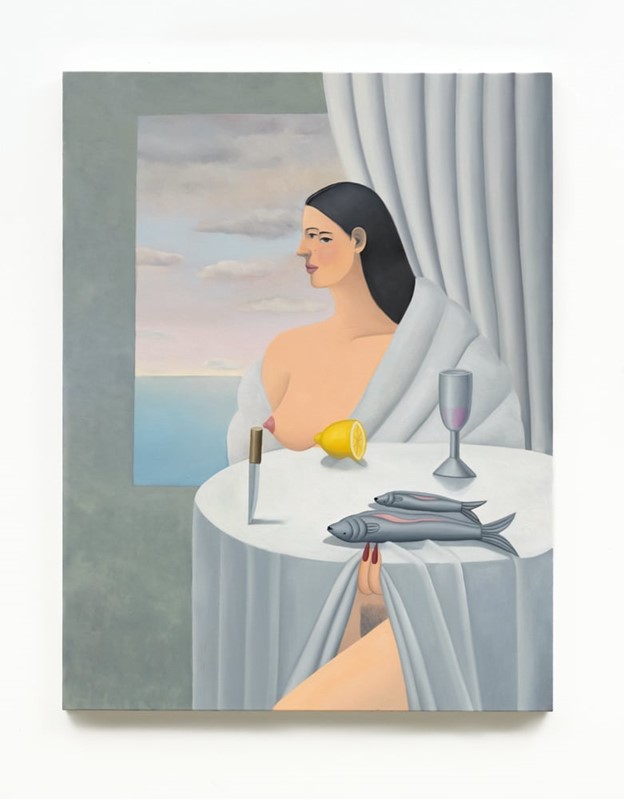
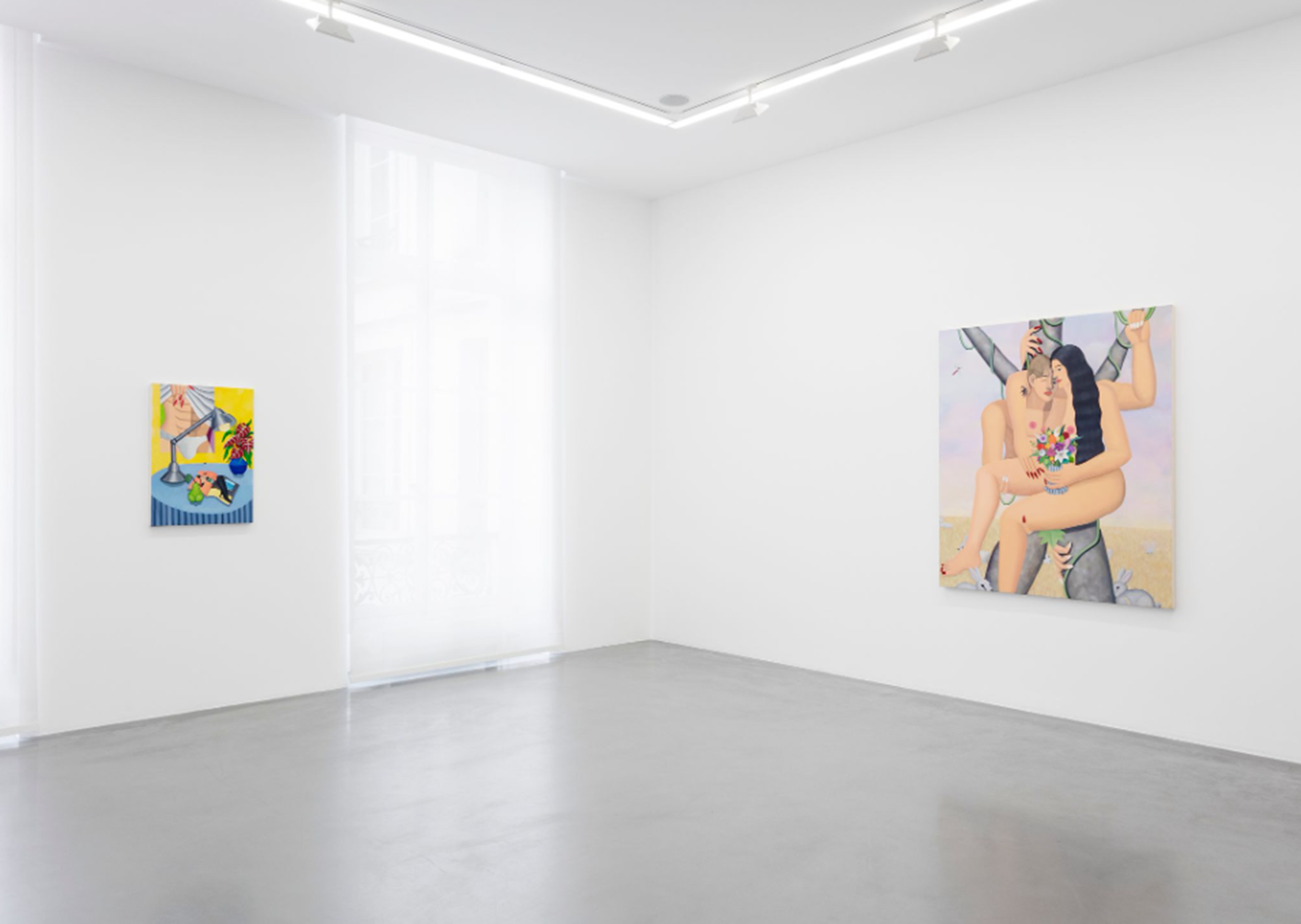
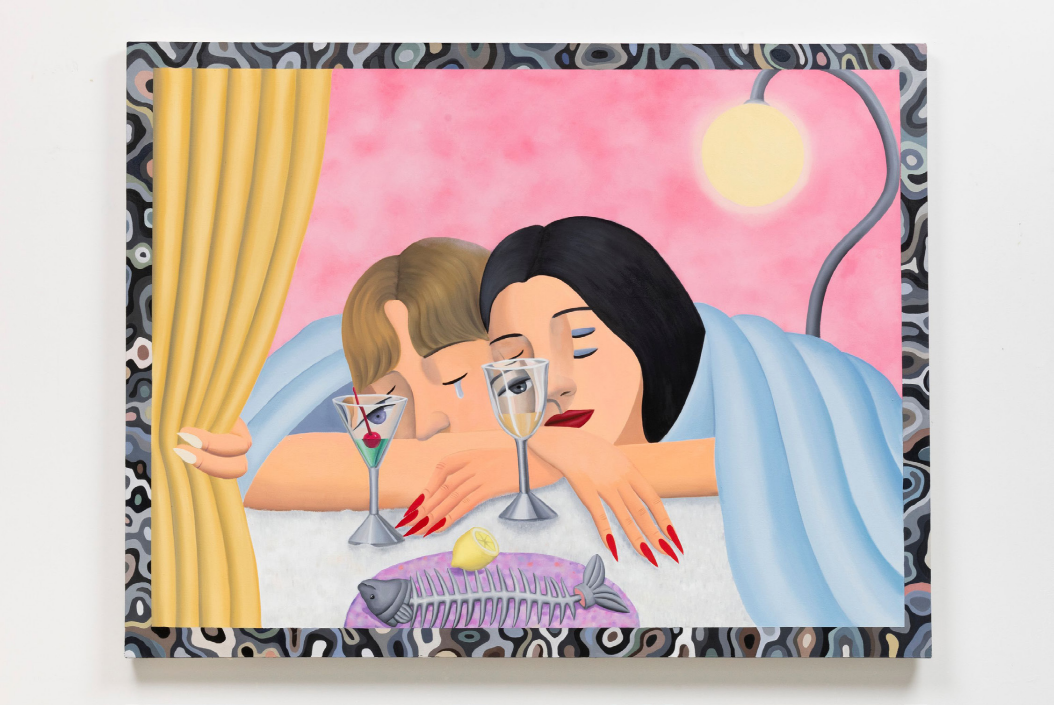
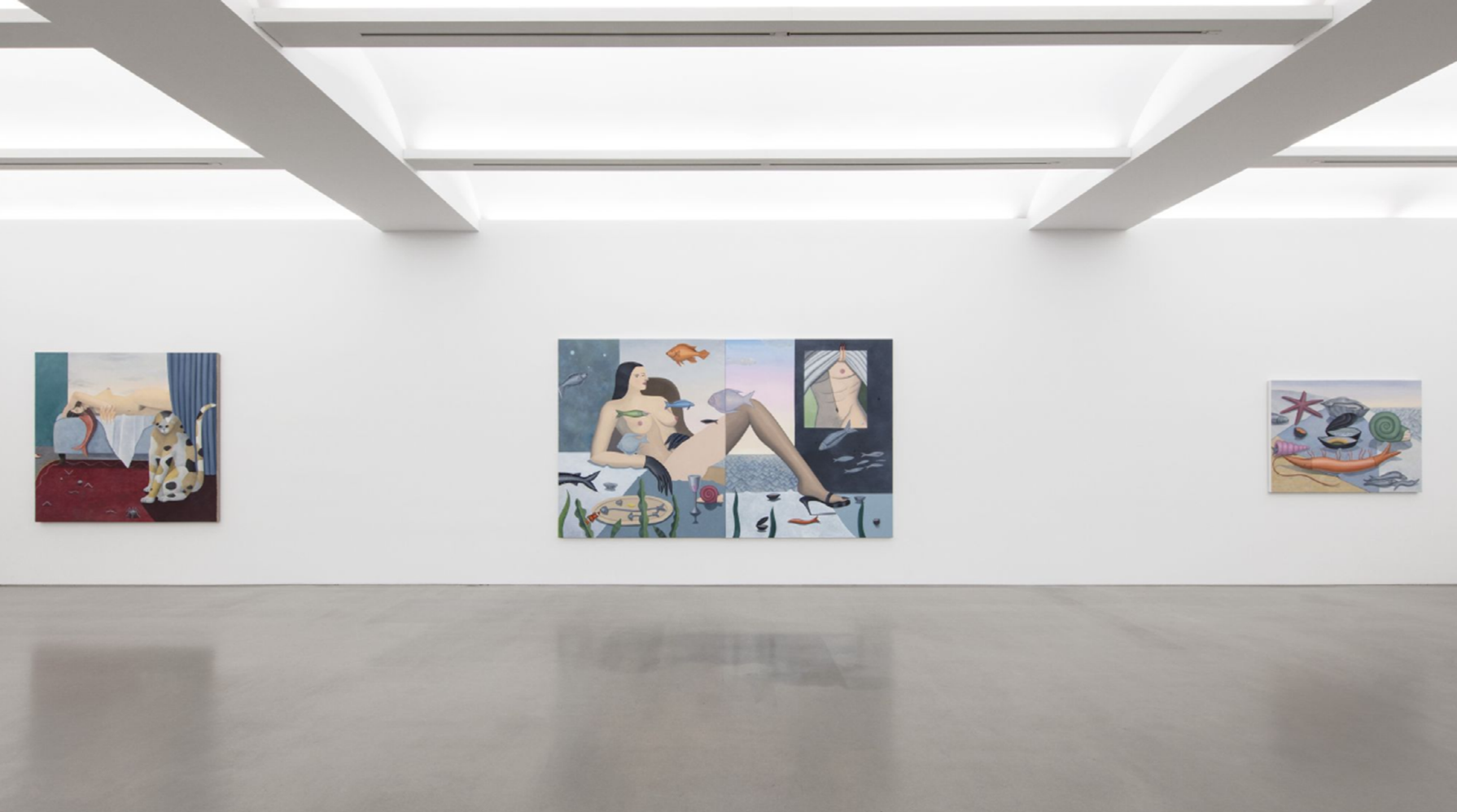
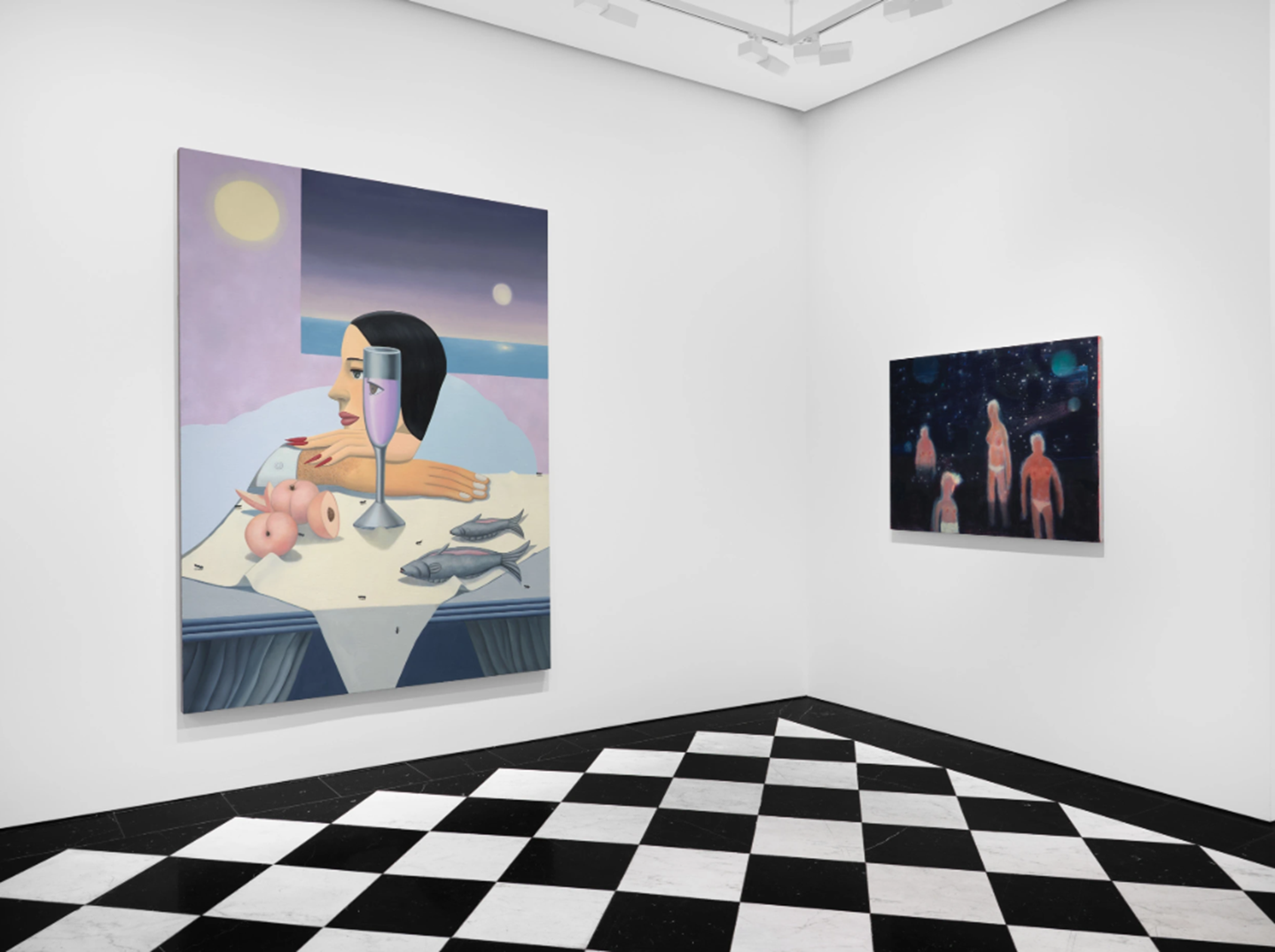
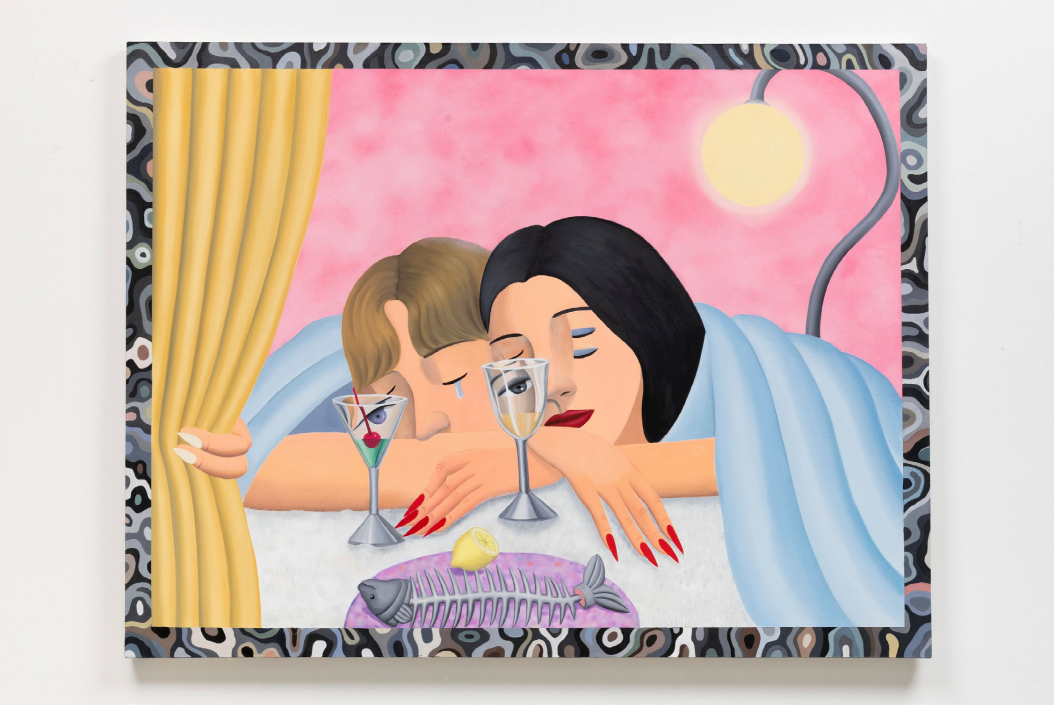
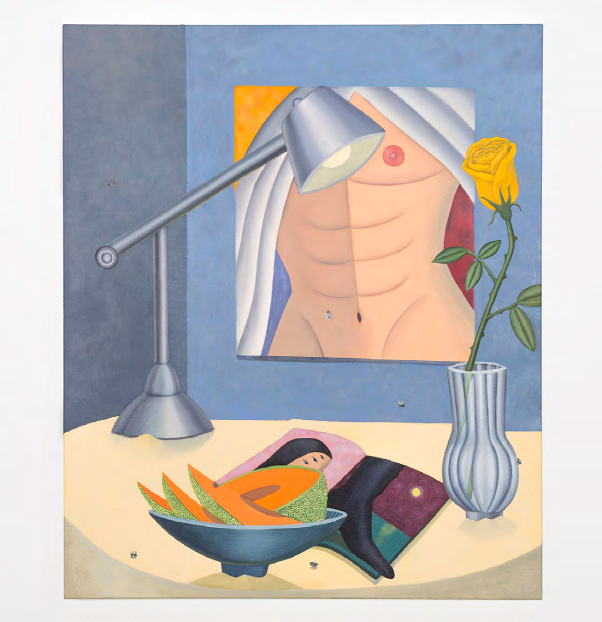
Her paintings are permeated by hands with manicured nails and many
pairs of eyes, which have crucial connotations for the artist. Gazes multiply,
everywhere: we look at each other, we eat, we taste, we drink, at the end of a
meal or in a moment of relaxation. We kiss, we caress. In these intertwining
moments—both visual and physical—the link, the connection, the relationship to
oneself and to the other situate such painting between love and friendship,
desire and comfort.
As though in a dream, or a reenacted film scene, GaHee Park zooms
in, takes sequence shots and multiplies temporalities using reflection,
duplication, shadow or repetition. She references allegorical paintings from
ancient and modern art, as well as popular culture. Everything becomes fluid,
connects and metamorphoses between bodies with indistinct genders. Emotions
combine, aligning or not, through distortions and transformations.
Often, these are nocturnal pleasures where reflections of light
appear in glasses or mirrors and participate in the multiplicity of interacting
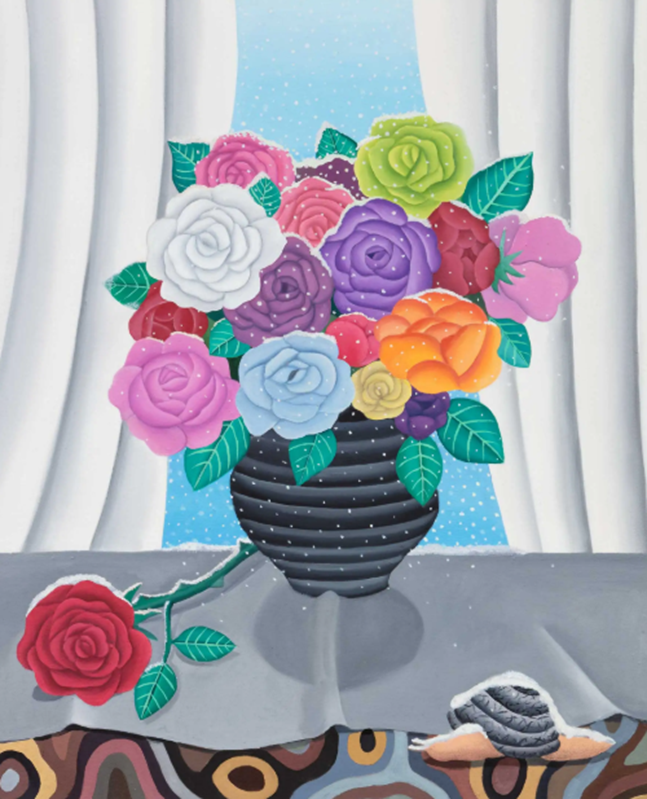
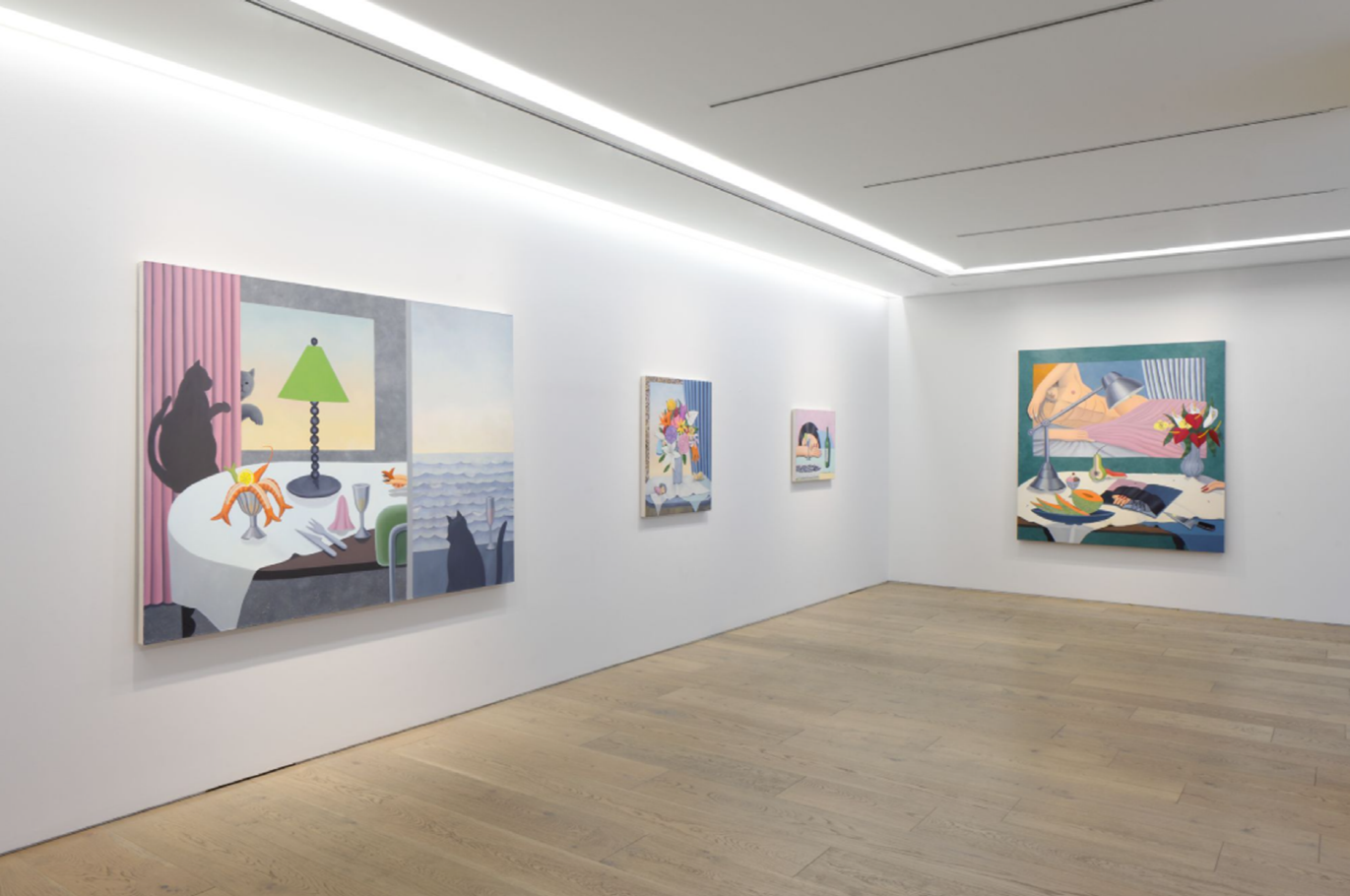
worlds. Here and there are bouquets of flowers and plants. A disturbance lies
at the heart of this suspended timeframe, made up of interlinked stories and
nested scenarios. There are as many realities present as there are points of
view or emotions. While each painted or drawn moment is unique, the stories
repeat themselves with infinite variations—GaHee Park’s love of art appears as
the real subject of these mirror effects, orchestrated to reflect life and vice
versa. The border between reality and fiction is particularly porous,
alluringly creating a flash of beauty amongst the stream of everyday life.
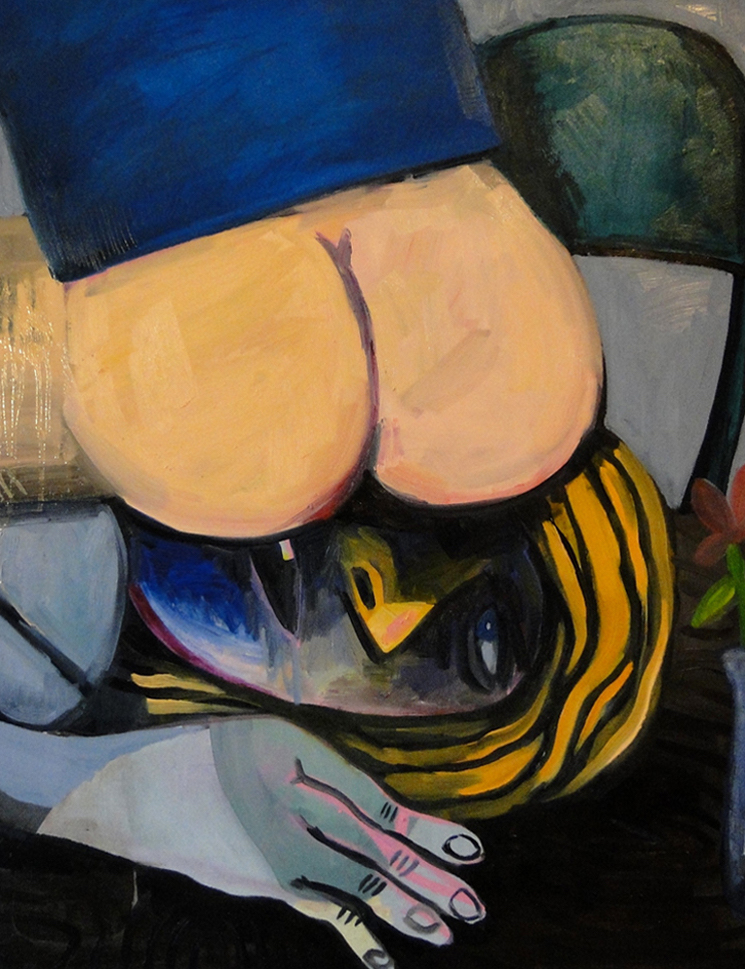
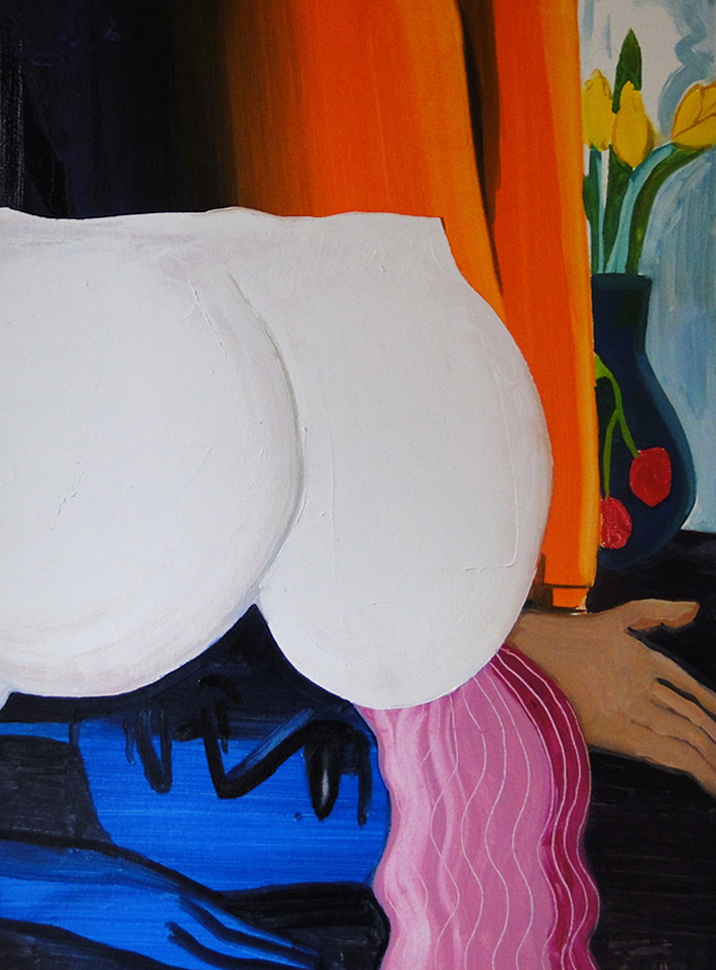
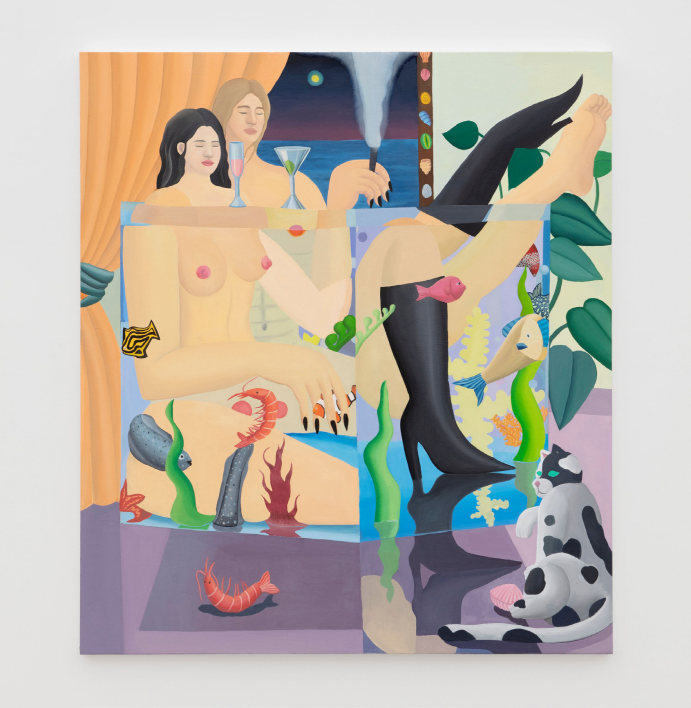
Mixing the sexual and the domestic, her eroticized paintings stray
from conventions around the body, the nude and the relationship to sex or
sexuality, refusing to submit to dominant aesthetic codes. Painting overrides a
sectarian vision of the world: a world at war, in competition, mistrustful of
everything. Painting confidence and symbiosis provides a feminist approach akin
to Gaia, a symbol of scientific theories formulated by American microbiologist
Lynn Margulis, who advocated for cooperation rather than competition between
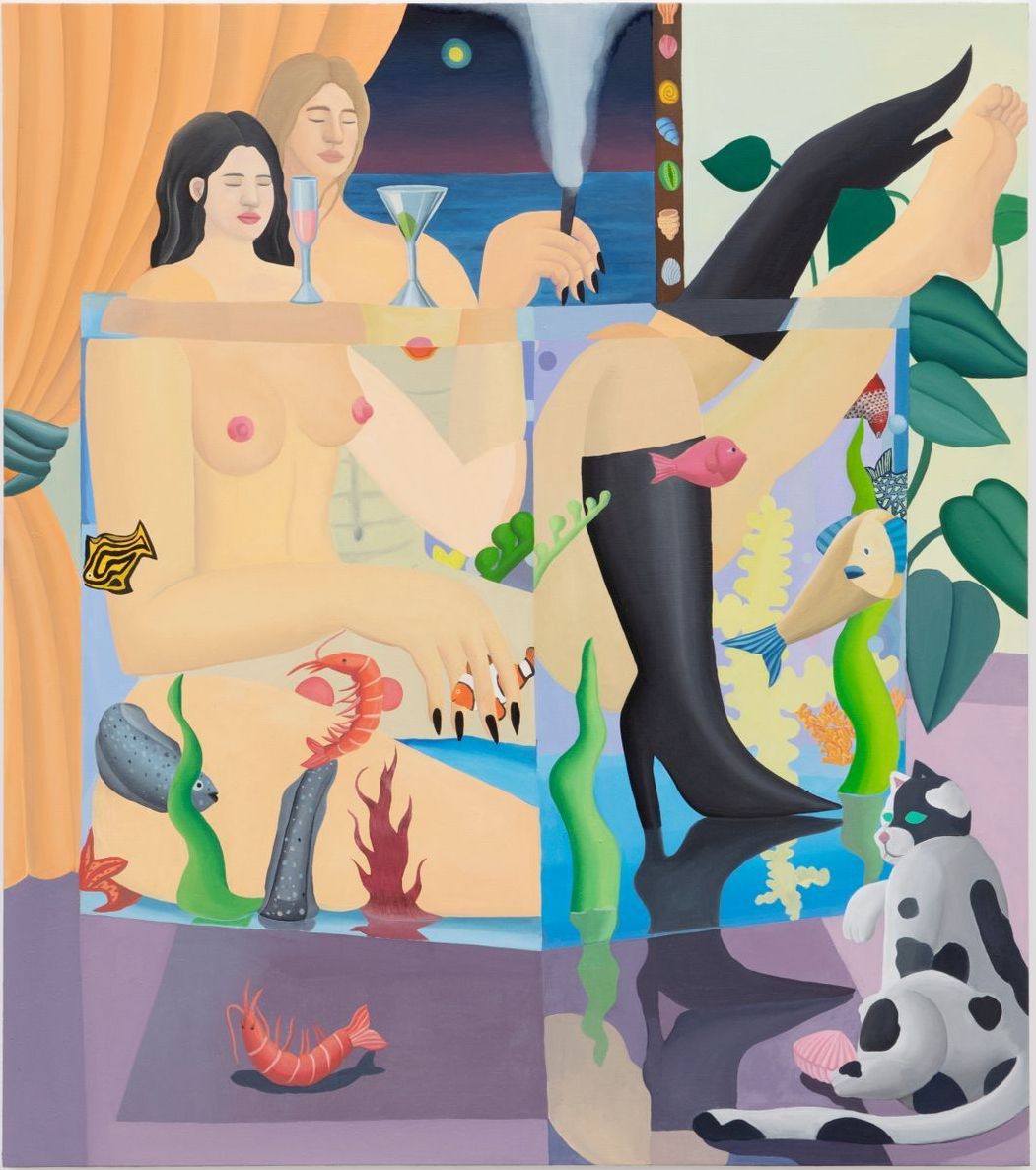
species. From Gaia to GaHee, there is a celebration of dangerous
co-existence—human and non-human, aquatic, aerial and terrestrial—from shrimp
to fish, spiders to rabbits. There is potential in quite simply being linked,
tied together, in a non-hierarchical relationship with the other, be it an
animal or an insect. Without hierarchy or domination, Park paints an
alternative bestiary, which takes into account the great diversity of living
forms.
Park’s style might appear naive at first glance but the
psychological, social and political aspects of her paintings heighten the
stakes. She frees herself from authoritarian and dominant dogmas by considering
affects and feelings as a means to gaining knowledge of the world. To do this,
she disarms the weight of conventions, turns away from them to assert a
different force and power. Then, by reappropriating a part of art history
through the nude and the still life, she displaces these elements in order to
deconstruct the mental shackles that prevent us from letting love have free
rein: a force for action that transcends influence and control. Human
experience is composed of these political and social transformations. Similarly
to the artist Gertrude Abercrombie— queen of bohemian artists in the 1930s,
under-recognized for her mysterious paintings filled with nocturnal, mercurial,
magnetic and mystical energies—we find the love of “painting simple things that
are a little strange.” Behind these sentimental landscapes and emotional spaces
is, ultimately, an unceasing way of painting other ways of existing.