“Woman” serves as perhaps the most immediate entry point into
Youngjoo Cho’s body of work. Through videos, performances, and installations,
Cho critically reconfigures symbols of femininity that have been otherized and
stereotyped, drawing deeply from her personal experiences and perspectives as a
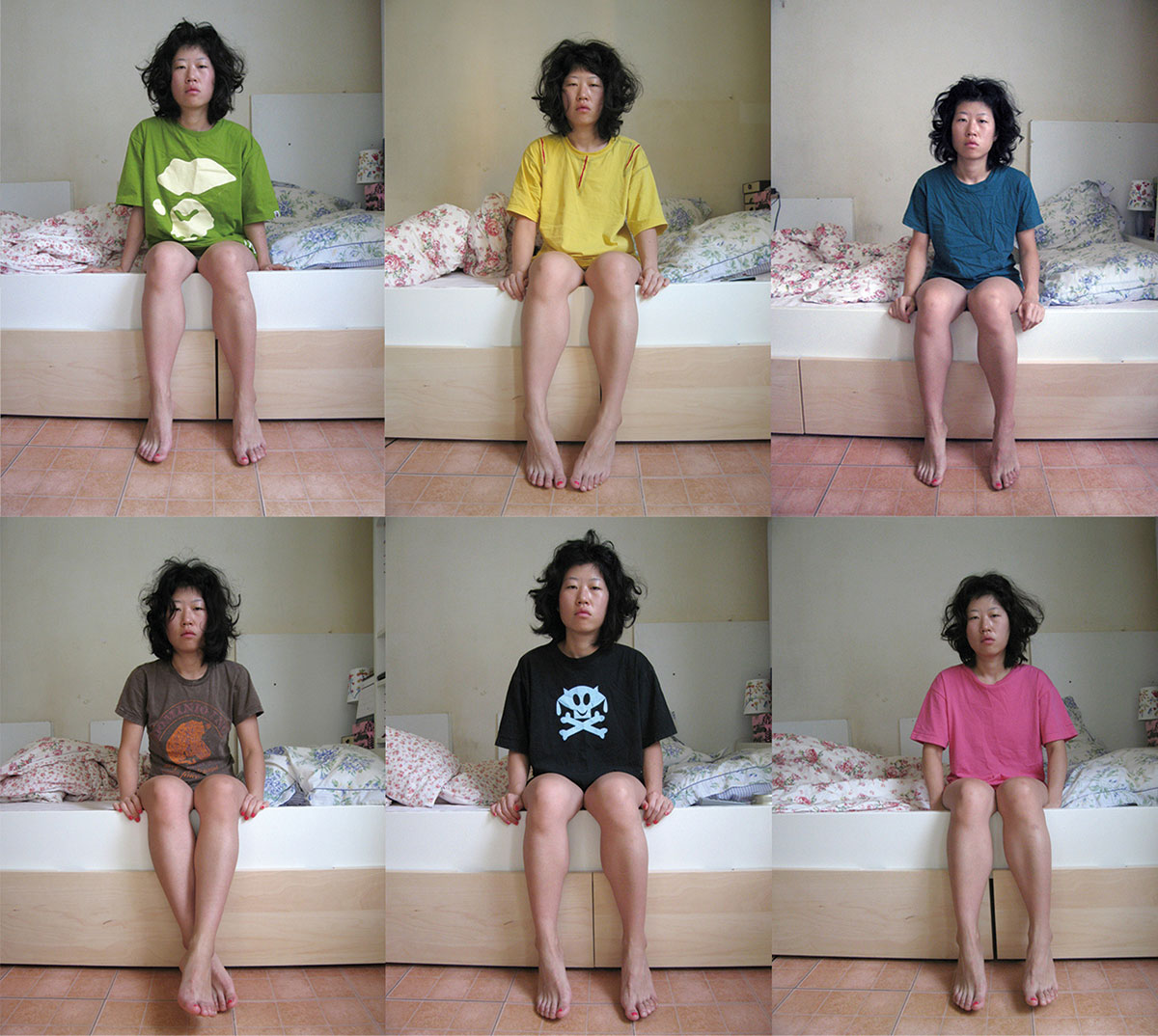
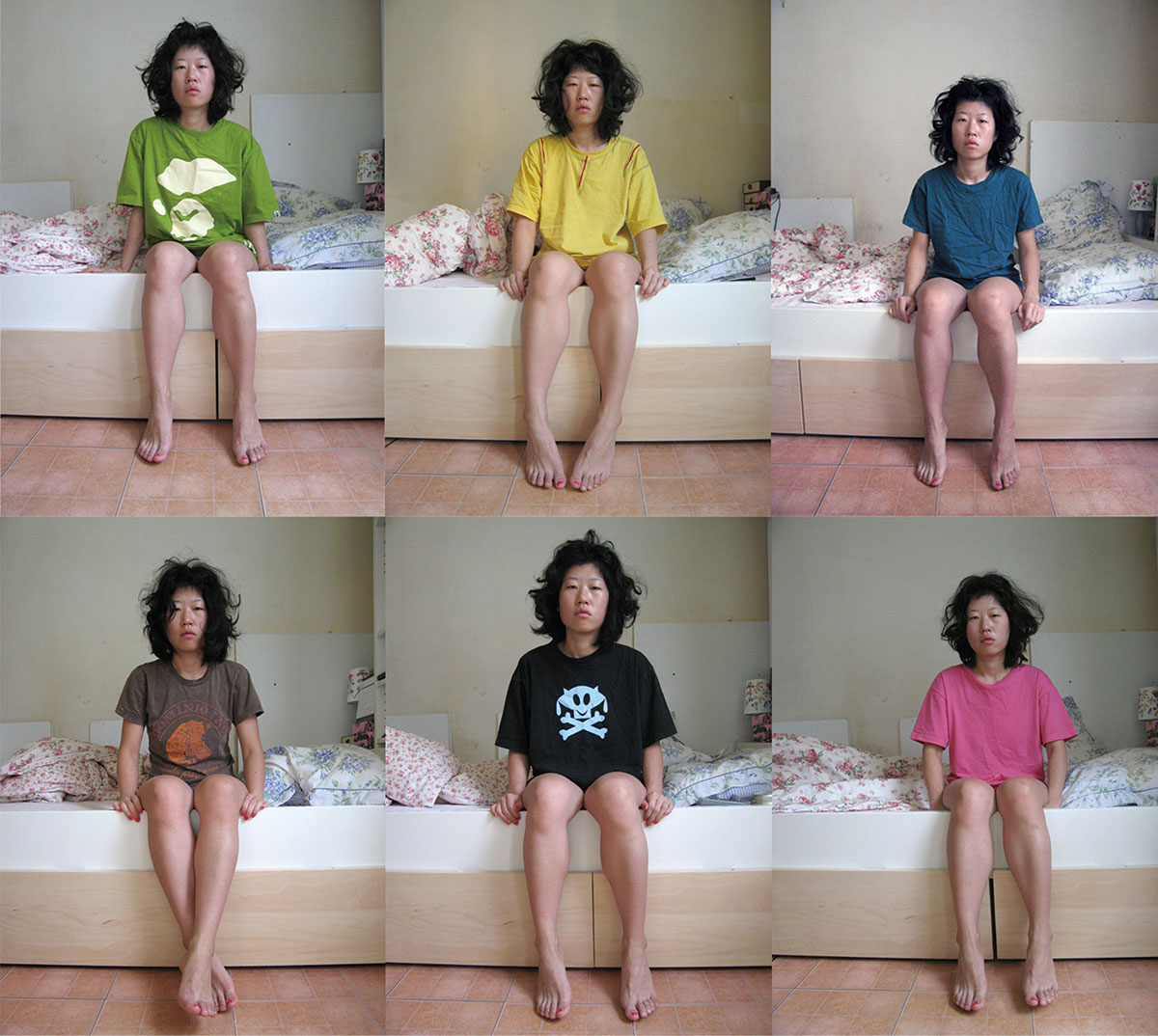
woman. An illustrative example is One night with someone’s t-shirt in my
bed (2006-2007), where Cho borrowed T-shirts from men during her time
studying abroad in Europe, photographing them as if they were “trophies.” This
piece serves as an experiment on harnessing the stereotypes attached to Asian
women as a form of “resource.” Upon returning to Korea, Cho delved into a
series of works focusing on the self-expression of “ajumma,” a pejorative
Korean term for middle-aged women. Central to this series is Floral
patterned romance (2014), which presents an unskilled yet sincere group
dance performed by individuals dressed in kitschy “ajumma” outfits, subtly
exposing the multifaceted lives and desires of individual women and rejecting
reduction to a singular group identity. With recent experiences such as
childbirth and navigating the pandemic, the theme of “care” has emerged as
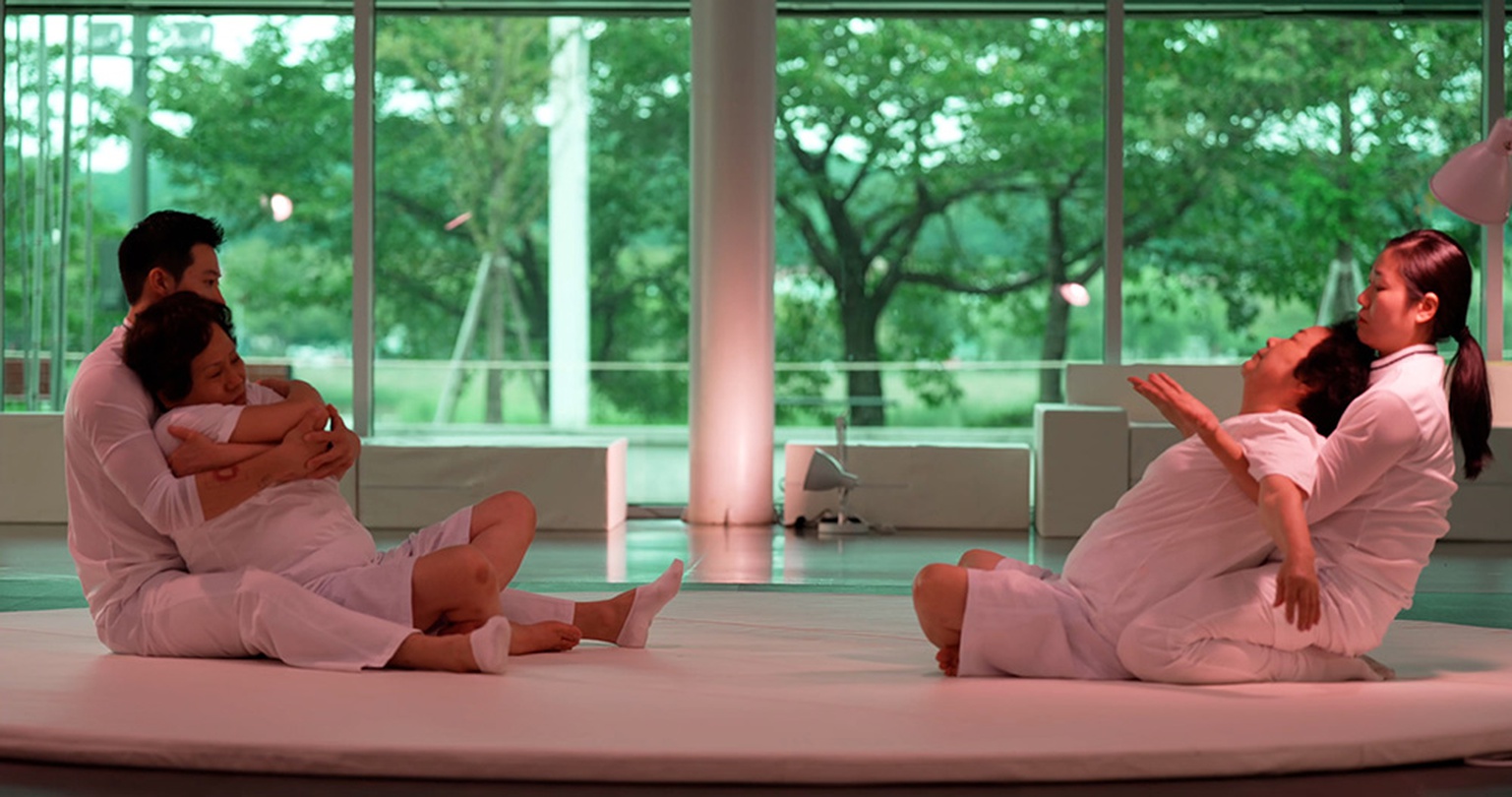
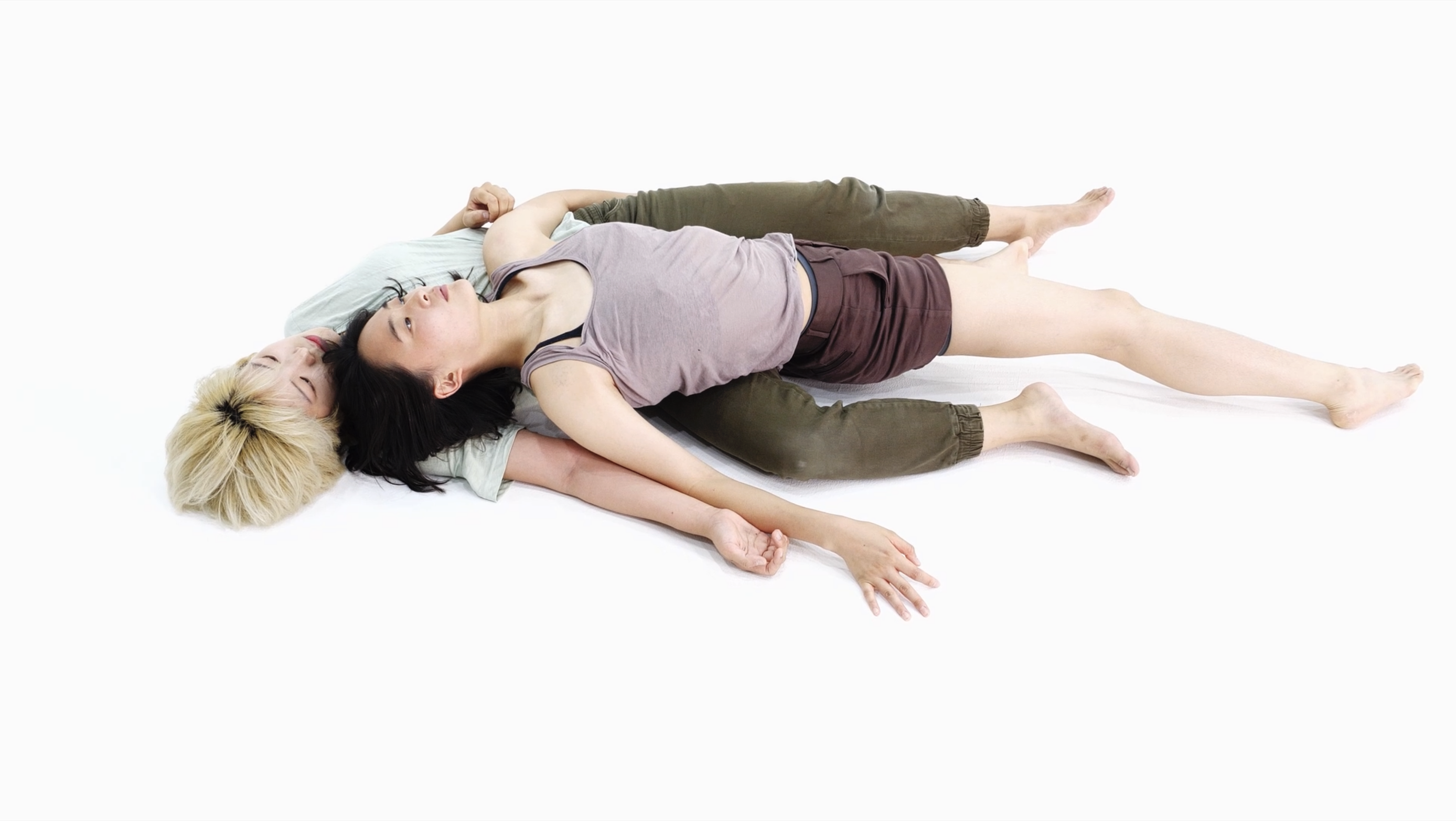
another focal point for the artist. In Feathers on lips (2020), women
in different outfits and engage in movements reminiscent of jiu-jitsu and
wrestling, exploring the power dynamics inherent in caregiving relationships.
The blurred line between caress and violence in this work invites reflection.
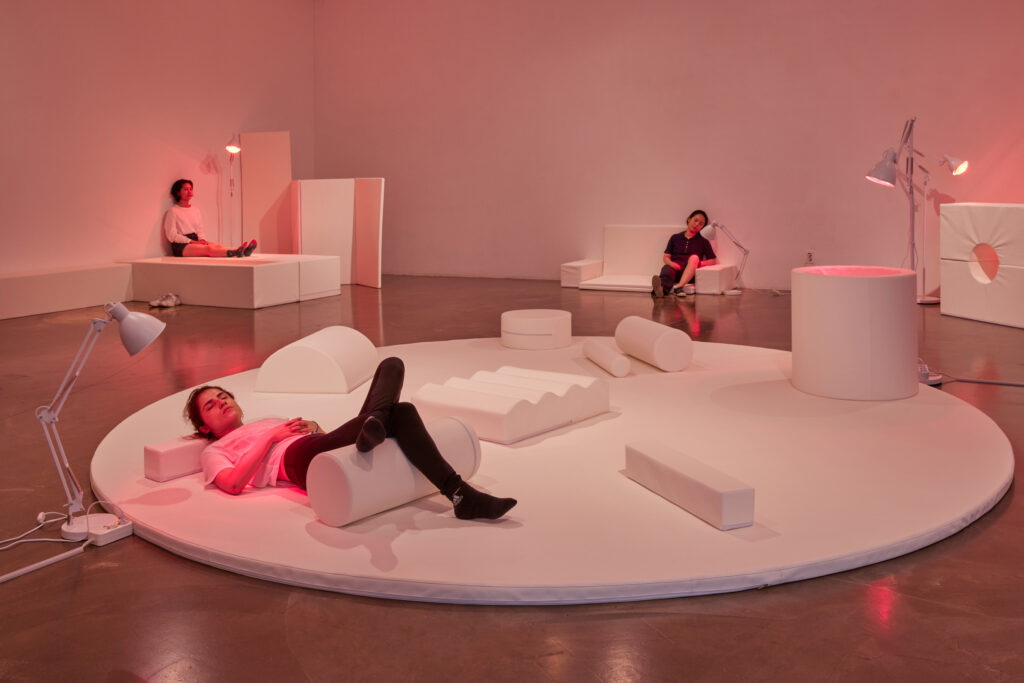
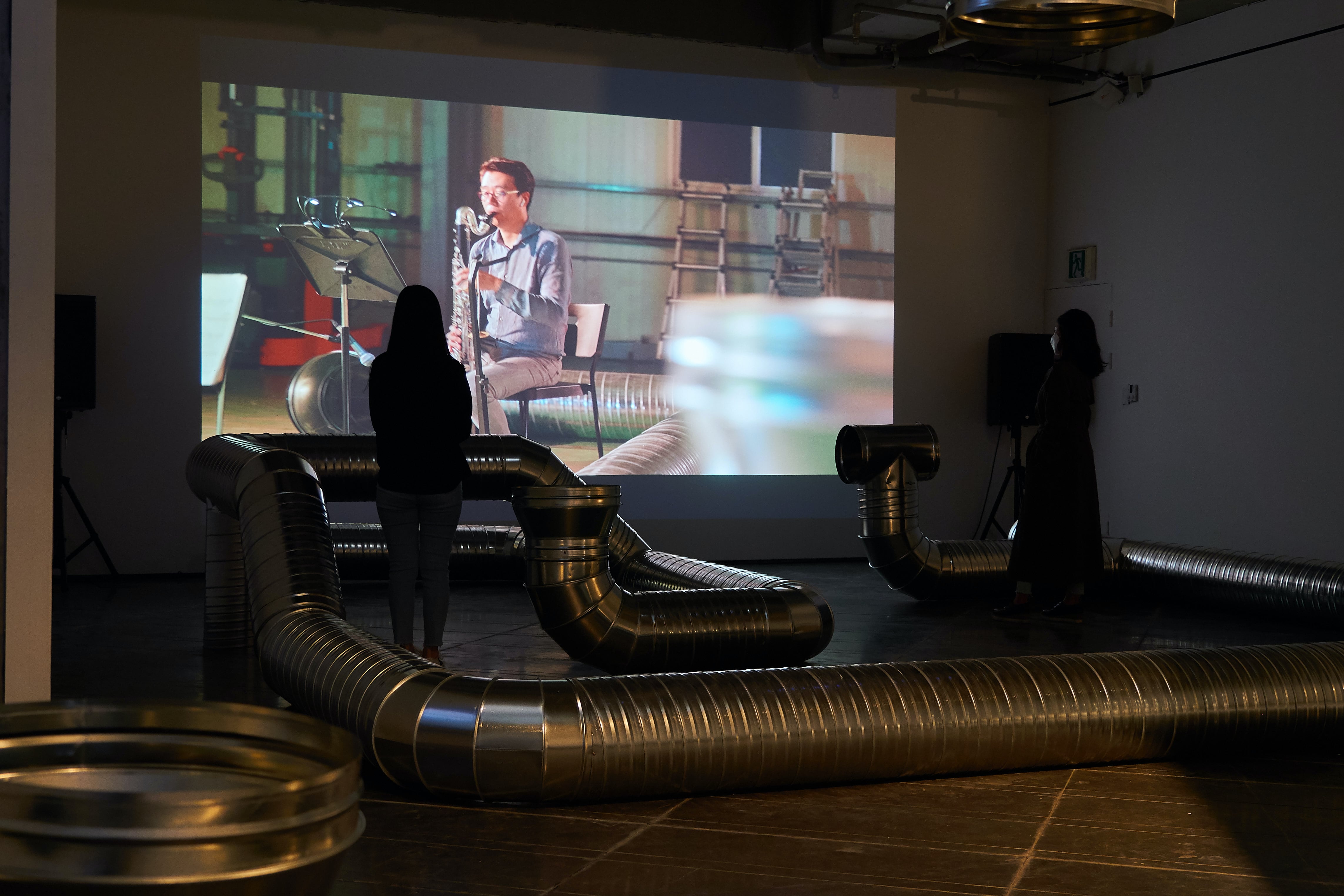
Created around the same period, the performance Human beings don’t spring
up like mushrooms (2021), along with its edited video iteration
titled Com pani (2021), presents performers each assigned a physical
constraint by the artist, embodying narratives or fables where they alternately
compete and cooperate towards a shared destination—an unusual approach in Cho’s
oeuvre. While many expect a naive or optimistic utopia of mutual coexistence
within the concept of “care,” Cho’s fable renders this nearly impossible,
challenging conventional notions of caregiving and coexistence.
Cho’s work originates from her own individual experiences, yet it
transcends mere self- narrative. While she engages with women categorized
within certain types, she cannot entirely detach herself from these
categorizations. In this regard, the artist’s work embodies a form of
self-ethnography. Youngjoo Cho regards women, including herself, as subjects of
inquiry. Here, “women” extends beyond the material foundations that accumulate
and mediate their unique histories and experiences. It encompasses a set of
cultural signifiers long considered as constitutive facts. Cho separates these
signifiers of femininity from the essential nature of womanhood, then iterates
and mutates them through the medium of performers’ bodies, engaging in a form
of symbolic “play” that borders on self- division. This inclination to “play,”
perhaps, arises from the “small bubble of autonomy” (Audrey Wollen) she clings
to in navigating a suffocating world framed by Eurocentric, male, heterosexual,
and ableist standards. Cho seeks to puncture this solid world, even if only
through a small hole, reclaiming lost agency through her creative endeavors.
However, for some, the act of “playing with” or appropriating may be
unsettling. Cho opts not to denounce or deconstruct the materials bestowed upon
her—expectations and prejudices accompanying her identity as an Asian woman and
mother. Instead, she chooses to leverage and manipulate them. Consequently, her
work may seem to perpetuate stereotypical images through the
over-representation of certain visual symbols. Yet, there’s a crucial
distinction to note. Cho’s objective isn’t to eradicate stereotypical
conventions but to subvert them. Destruction happens but once, while
contamination can be perpetually repeated. The insidious nature of contamination
is its contagiousness, both visibly and invisibly spreading its effects.
Describing Cho’s work as “contagious” might initially seem
extreme, carrying negative connotations that imply harm. However, her thematic
focus on women, care, and collaboration suggests a deeper exploration of
community dynamics within her artistic framework. In her latest
exhibition, Discrete bodies reconnect (2024) and Discrete bodies
reunite (2022), Cho delves into the emotions and affects stemming from the
repetitive representation of symbols of femininity, or the affective resonance
attached to such symbols. This prompts a reconsideration of the infectious
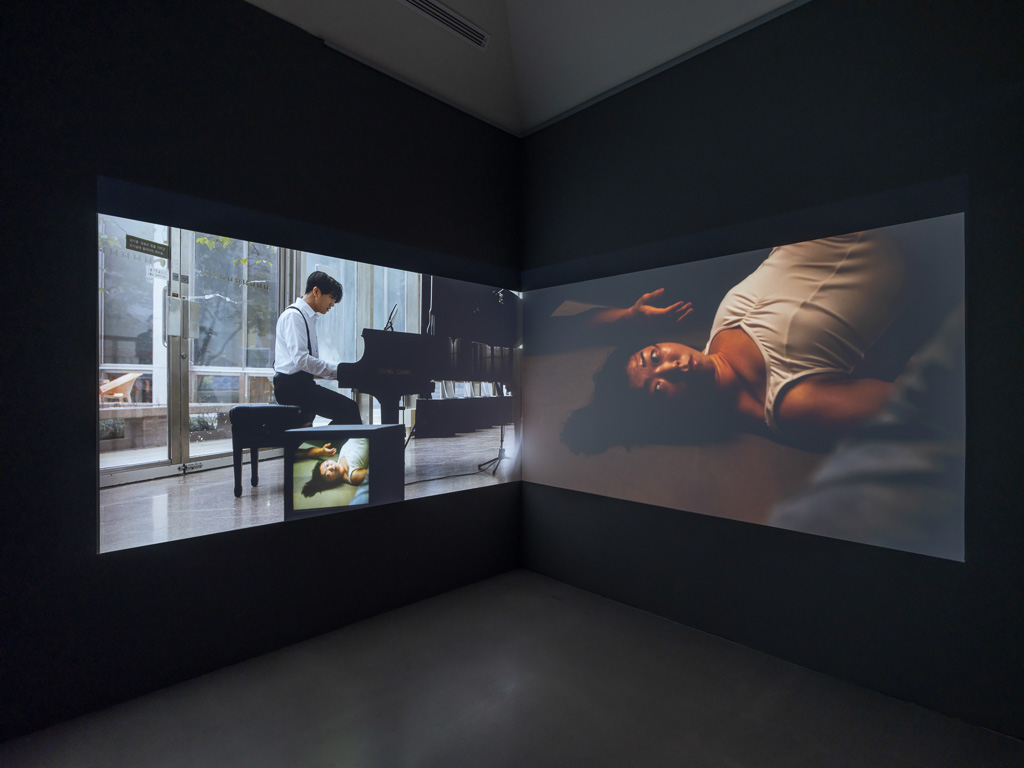
“power” inherent in her work. Displayed on the basement gallery, Discrete
bodies reconnect is a re-edited video of a live performance presented in a
dual feed format reminiscent of television programs from previous decades. The
four women actors, each embodying a different stereotype of the “inclusively”
accepted Asian woman in Europe, evoke Cindy Sherman’s Untitled Film
Stills series, where she directed herself as if in a suspense film.
Additionally, the actors evoke themes from The Hours, a classic feminist
film, portraying individuals existing in different time periods but sharing
similar fates. Much like in Sherman’s series and The Hours, the actors
in Discrete bodies reconnect display nervous expressions, conveying
an anticipatory tension without dialogue, filling the empty space with palpable
anxiety. This unspoken anxiety, described as a “noncathartic” emotional state
with a “remarkable capacity for duration” by Sianne Ngai, is particularly resonant
for minorities who often endure disproportionate exposure to anxiety due to
structural discrimination. For them, anxiety becomes both an “existential
crisis ordinary” (Lauren Berlant) and “minor feelings” that risk dismissal as
“hysteria” or “overreaction” (Kathy Park Hong) when expressed publicly. Cho’s
own anxieties as a young Asian student, a Korean woman, and a mother resurface
through the medium of the screen, almost seeking retribution from a world that
once marginalized them. These anxieties, though unarticulated, permeate the
ambiance of the work, paradoxically uniting viewers in a transient “community
of anxiety.”
Discrete bodies reunite, another video re-edit of a performance
employing a dual feed format, serves as a choreographed reconstruction of
women’s bodily expressions, encapsulating the history of tragedies in Korea’s
modern and contemporary eras over recent decades. Unlike Cho’s previous works,
there’s a palpable sense of obscenity or indecency in this piece. It
disentangles gendered bodily expressions—such as anger, grief, pain, and loss—
commonly portrayed in news reports and documentary genres from the historical
events that precipitated them. In Discrete bodies reunite, the performers
engage in finger-pointing devoid of explicit accusation. Rather, it manifests
as a patterned choreography that visibly drains the performers. Yet, they exude
a potent mix of anger, sadness, pain, and loss simply through the repetitive
act of pointing fingers. These gestures highlight how certain subjects have
long been associated with specific emotions within our visual perception
framework. This linkage between “women’s bodily expression” and “excessive
emotion” stems from the portrayal of women as the Other in mass media
narratives documenting historical events. Centered on women depicted as
emotional “animals” who cry, express frustration, and point fingers at others, Discrete
bodies reunite prompts viewers to become “contagious” to the intense
emotions embodied by these women. From the perspective that emotions (affects)
are not proprietors of symbols or commodities like “capital” but are merely
“effects of circulation” (Sara Ahmed), this combination of bodily expression
and emotional intensity reflects the enduring impact of media representations
on our collective consciousness. Through this work, Cho exposes the deeply
ingrained associations between gendered expressions and societal perceptions,
inviting viewers to confront the complexities of emotional contagion and
representation.
In closing, I would like to delve into the theme of collaboration
within Cho’s work. The title of Cho’s solo exhibition, Cadenza, alludes to
a section of a concerto where the orchestra momentarily ceases playing,
allowing the soloist to showcase their virtuosic technique. This solo
performance, a variation on the composition’s theme, offers the audience an
opportunity to evaluate the performer’s mastery of the instrument and
interpretation of the music. As the orchestra pauses and the cadenza is
about to commence, the audience holds its breath, fixated on the soloist. For
decades, Cho has viewed collaboration, akin to a concerto, as a foundational
aspect of her artistic practice. In her view, the soloist in
a cadenza encompasses more than just the artist
herself. Soloists (2024), a video within her exhibition, features a
chorus of migrant women. Positioned at the exhibition’s exit, it also serves as
an entry point to her future projects. Within Cho’s work, the bodies possess
their own score, even as they manifest as a “collective.” Each cadenza,
each collaborative endeavor, is inherently unique. It is in those moments when
we hold our breath, attentively listening to these distinct bodies, that “we”
become present, if only for a fleeting instant.