“Why do you paint?”
This may come off as a silly question, considering IM Youngzoo majored in
painting. Although it might sound redundant, this question is pertinent to my
inquiry of whether or not the medium of painting is conducive to tackling
themes in IM’s oeuvre. From her early works, IM
consistently addresses how a belief system is formed and embodies the
precarious state between truth and fraud through her works. Her select works
operate as a divine and miraculous tool that connects reality (viewers) to
other worlds (characters in her works). This is done, on the one hand, by
making the viewers laugh at the characters who are immersed in nonsensical
scenarios; on the other hand, the viewers are curious about what lured the
characters in (or making them engrossed by the story through their viewing
experience). This can be found in IM’s works Sul
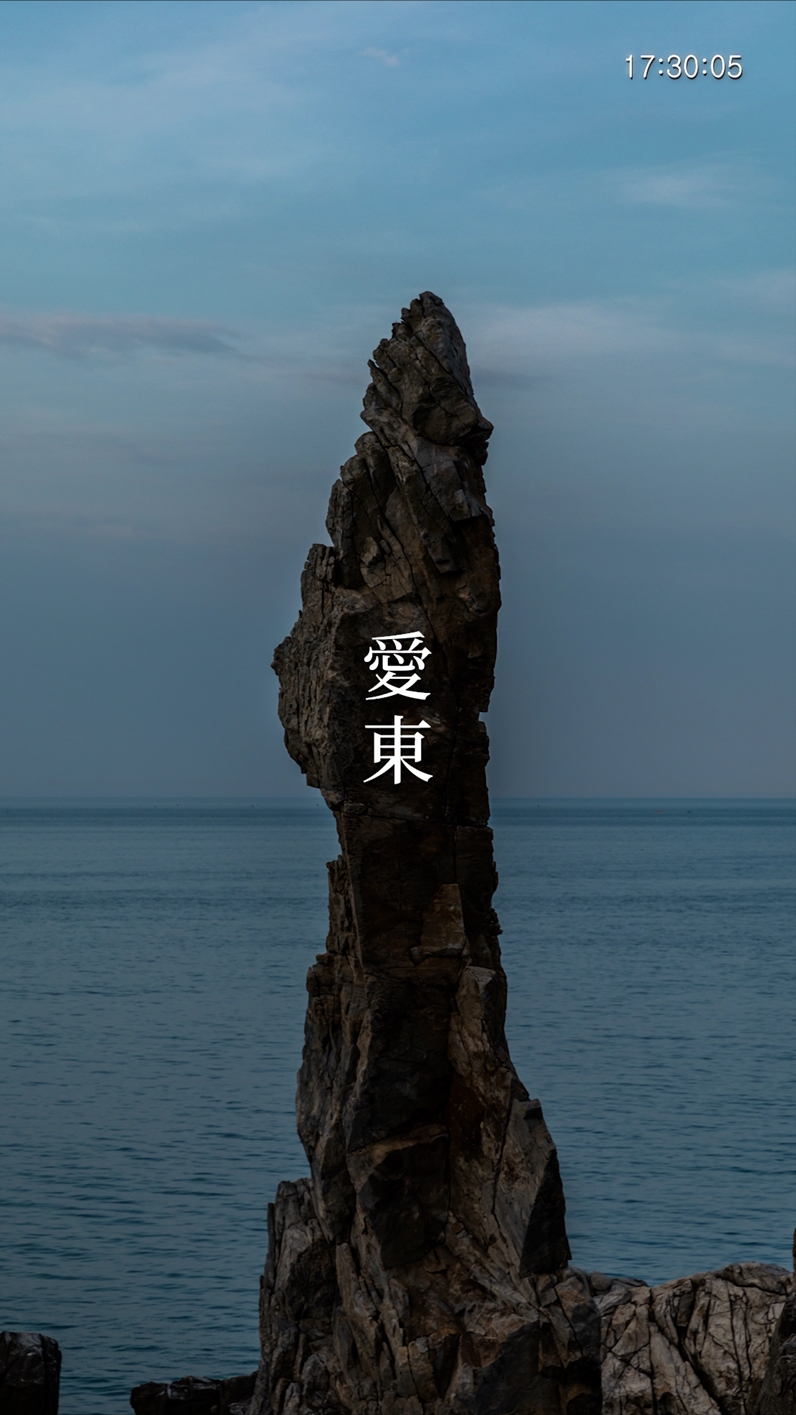
Sul Sul Apt (2014), AEDONG (2015)—a work on Chotdae Bawi (t/n: a candlestick-shaped rock) and
idolization, and Rock and Fairy (2016)—featuring people who search for moon rocks and alluvial gold. In
terms of the tool, painting seems to be too stiff and obstinate medium to
achieve fascination. While video can be a medium that fascinates more easily by
having many elements such as image, sound, and text subjected to manipulation,
painting cannot contain speech, and its materiality is less than sculpture due
to its two-dimensionality. Painting has only two materials of expression:
canvas and paint.
Matter ⇔ Non-Matter
My supposedly nonsensical question was resolved and lead to two answers after
listening to IM’s explanation. The first answer was
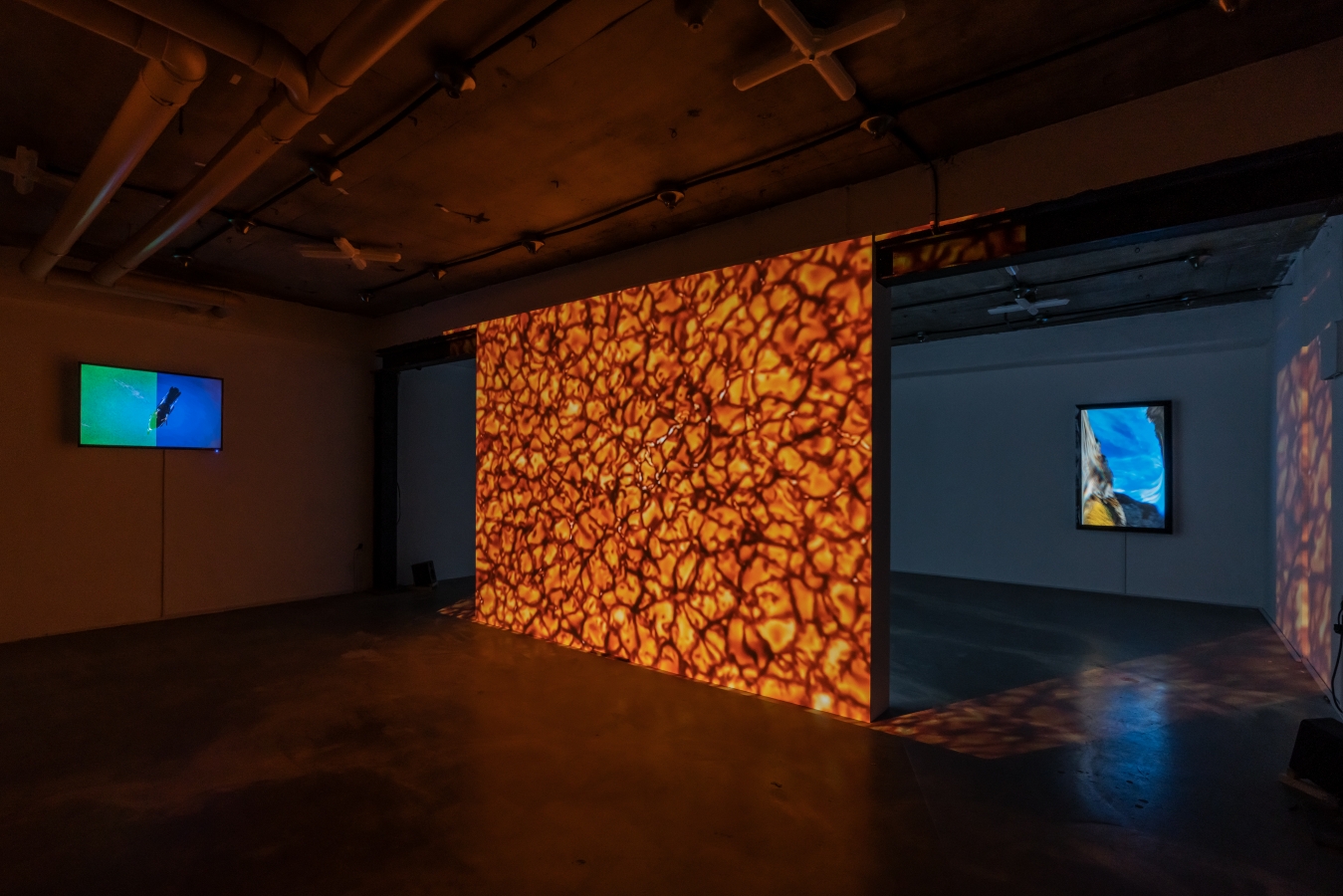
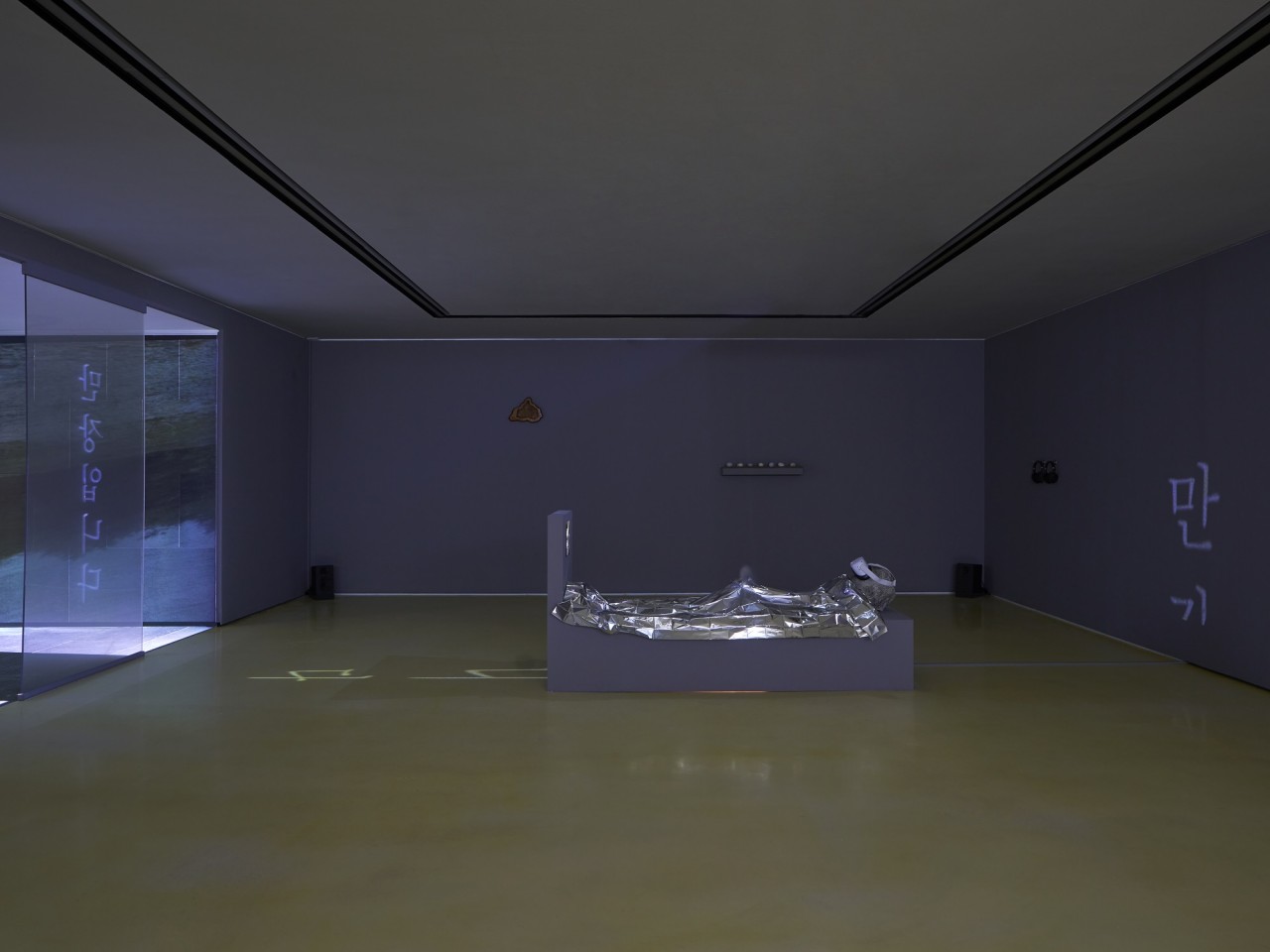
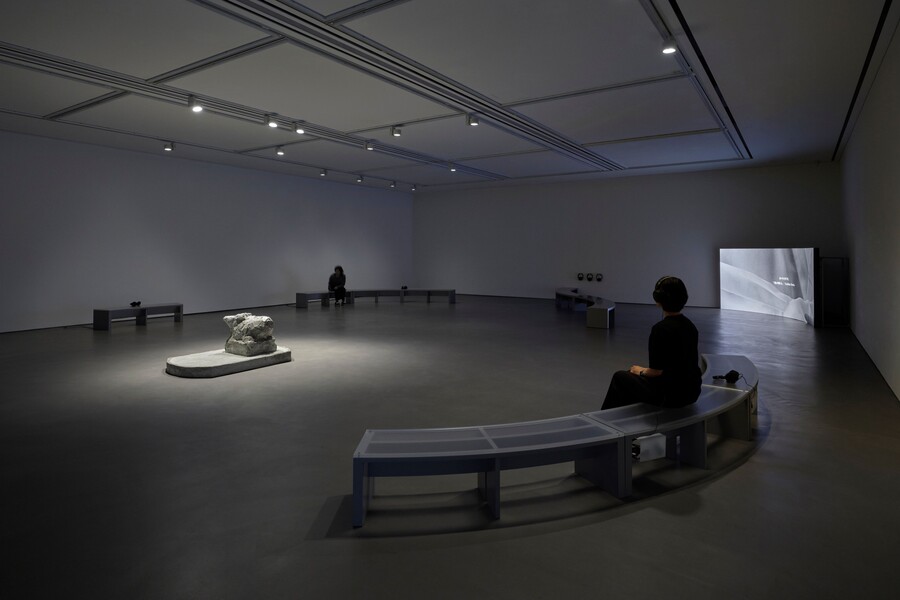
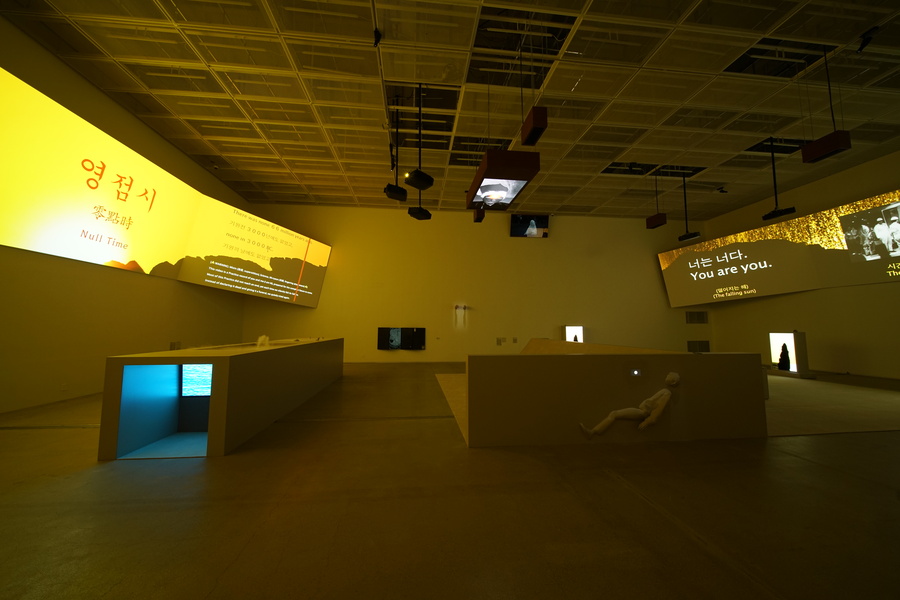
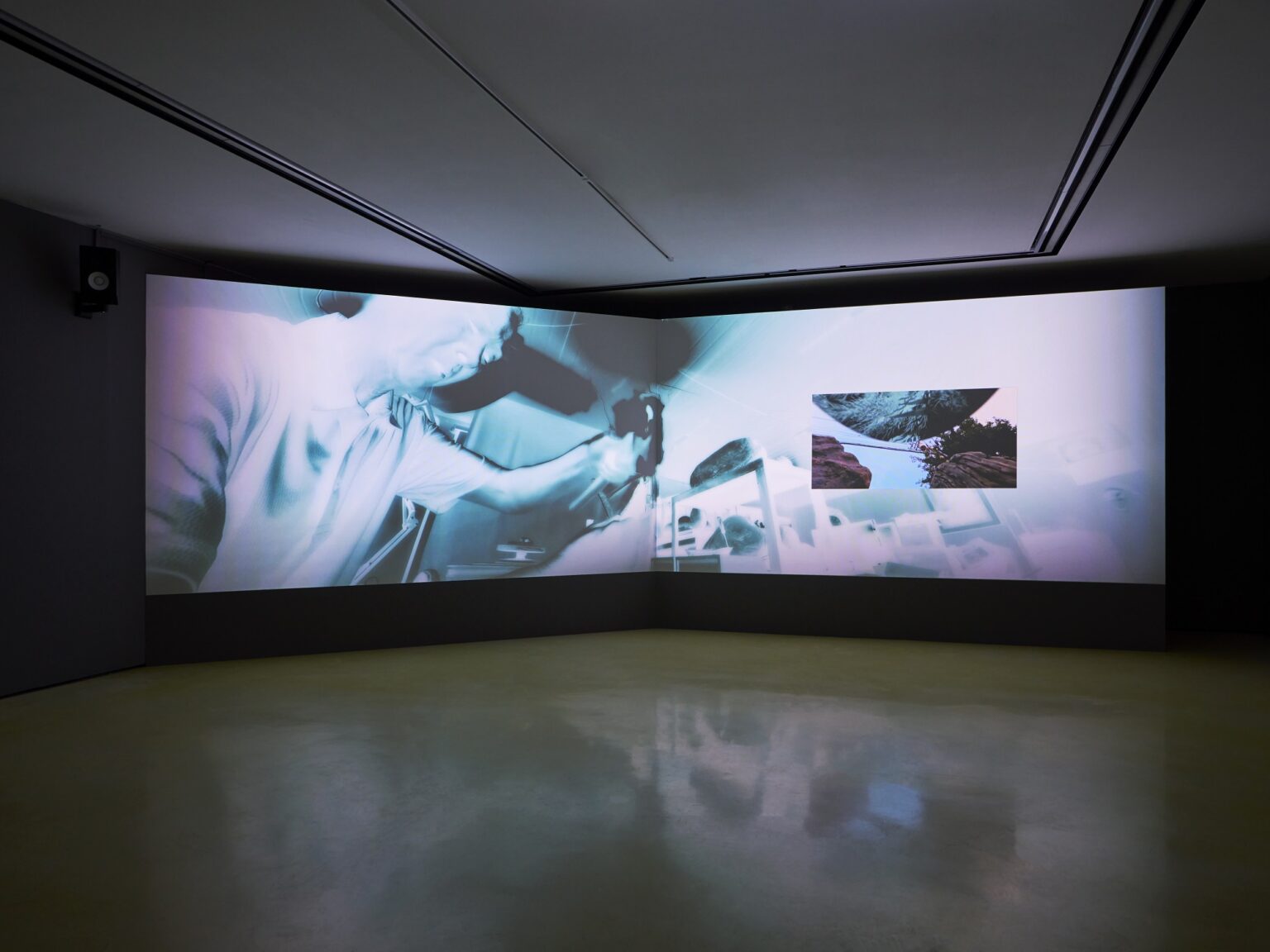
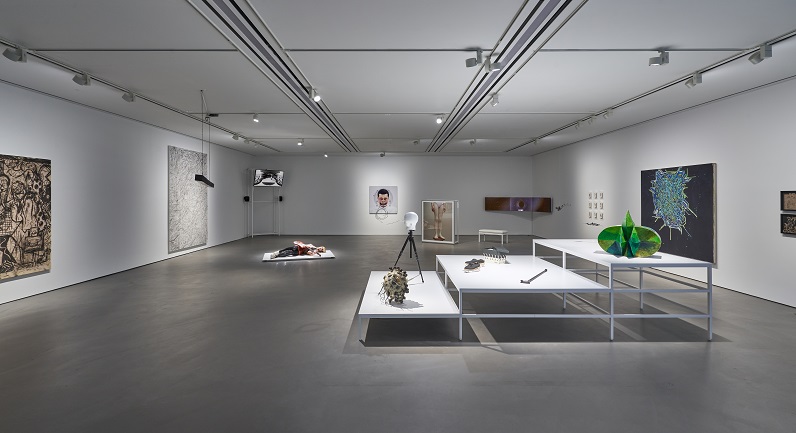
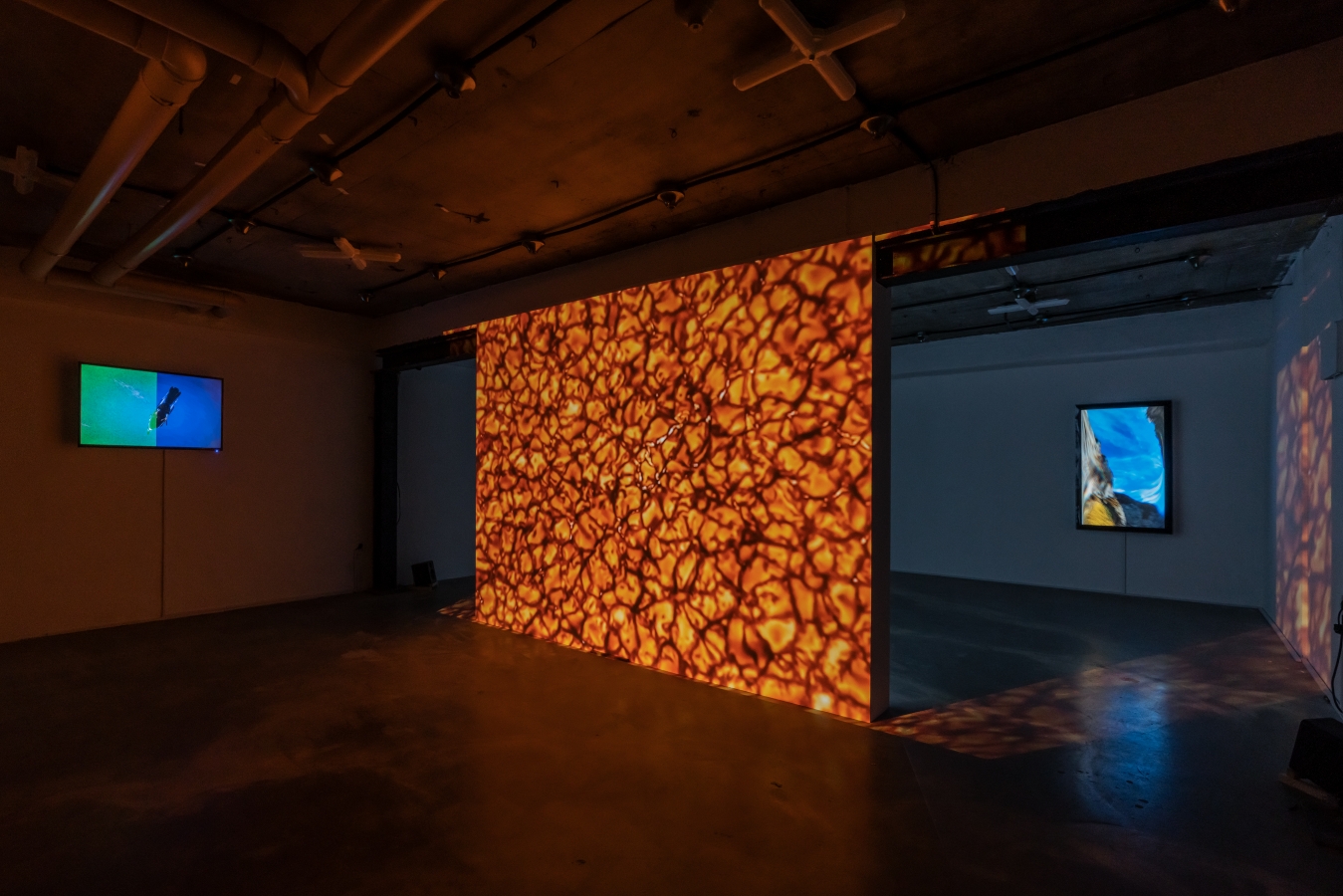
suggested by the structure of this exhibition, 《Look,
Here Begins the Omega》(SANSUMUNHWA, 2017), in which
video and painting have been realized on separate platforms. Video and painting
in IM’s works operate as two freestanding factors––one is not subordinate to the other. And yet, it is more proper to
say that both mediums are in an interdependent, symbiotic relationship than
exist as irrelevant entities—one is in need of the
other for its survival. That is to say, in IM’s works
painting requires video for its existence while video also depends on painting.
This kind of inter-dependency is also revealed clearly in the way IM works. Her
daily routine demonstrates a well-arranged plan to adjust the balance between
her mind and body. She watches a morning soap opera when she gets up in the
morning. From 10 a.m. to 2 p.m. she paints. After having lunch, she edits
videos from 3 p.m. to 7 p.m. She finishes her day by watching a nighttime
drama. Her daily routine is an elaborate apparatus to control her biological
rhythm and rhythm in the mediums she works with. Time flows relatively slowly
in the medium of oil painting because some time should be allowed for the
paints to dry.
Meanwhile, time flows quickly in video because you need to pay
attention to every second while editing–– seeing one
second as multiple frames. Moreover, video’s open
structure that allows for infinite re-editing makes videographers insatiable,
continuing to make changes. Because of these features, video tends to make its
practitioner develop a short temper. Painting, on the other hand, seems to have
an alleviating effect on the impatience that video causes. In this respect, IM
has an optimized routine in which each medium’s
distinct characteristics are in balance with her biorhythm: she begins her day
with the slow pace of painting, raising the speed by becoming engrossed in the
fast pace of video, and ending her day when things get tiring. In this way, her
paintings and videos complement and support each other with their differences
in pace and working method, although both were produced in the same period and
deal with the same subject matter.
The interrelations between
painting and video do not merely happen on the physical level in IM’s production process. The consequences of their mutual influence are
interestingly manifested in the form of the final product. For instance, the
way paintings are arranged in the exhibition space seems like an extension of
the still images in the video to me. A good example is a relationship among
images in IM’s video AEDONG and her
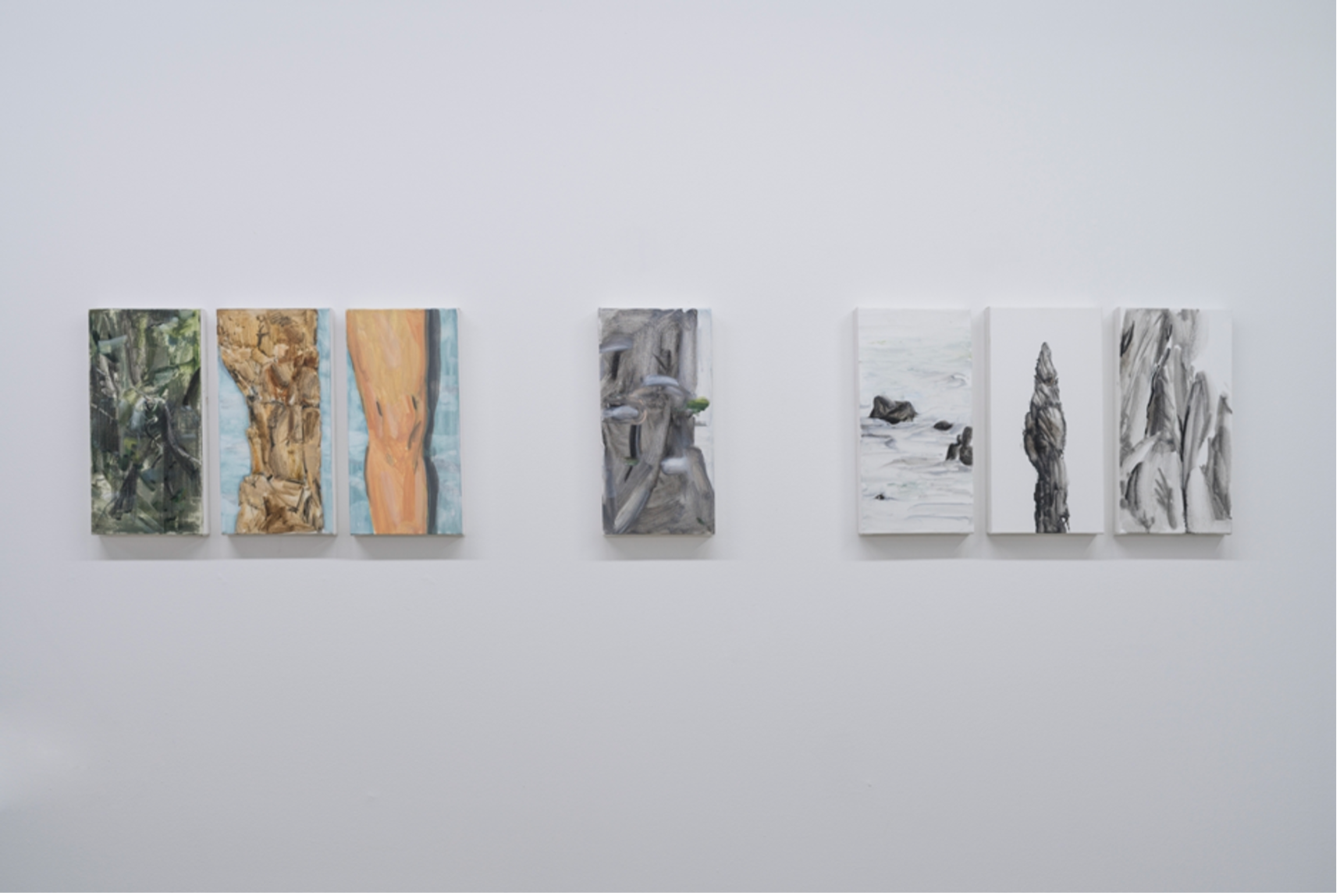
painting The Bottom_Gristle and Synovia (2017). While
paintings of Chotdae Bawi is the subject matter of AEDONG, The
Bottom_Gristle and Synovia, a series of three paintings—one of the sea from a distance, another featuring the panoramic view
of the Chotdae Bawi, and the third of an enlarged surface of rock—seems to materialize the scenes that are cut into zoomed in and out
units. A trick in the way of installation reveals that IM’s approach to arranging her paintings is the same as that of video
editing; in order to see a complete image, the viewers need to combine the
separated images marked by the protruded column on the wall.
Multiple canvases
are connected normally or upside down, while different shapes and numbers of
canvases are placed together to make a new arrangement. The method of playing
with the combination of elements to create new arrangements exactly corresponds
to editing in the medium of video. IM’s painting
technique that crosses the boundary between figuration and abstraction also
parallels the repetitive zooming in and out in video that blurs or accentuates
images. Meanwhile, her video is also influenced by her paintings. This is
manifested in the shift in her methodology from focusing on stories to images.
Her 2016 work Rock and Fairy was a turning point. Other
works made after this point such as STARRY STARRY (2017) and
Aurora Reflection (2017) are highly image-centric. The
influence of painting is evident in the fusion of images in her videos. For
instance, another set of paintings under the title of The Bottom
_Gristle and Synovia shows a leap in thinking in which the form of a
candlestick-shaped rock is transformed into knees. Her videos reflect this free
association technique. In STARRY STARRY, the messages sent
to the universe leaps into a glacier scene in a (South Korean animation film)
Dooly the Little Dinosaur where Dooly’s origin is
explained, and the scene cuts to the image of Neptune covered with glaciers.
This chain of image associations is an example where the spatial jump in The
Bottom_Gristle and Synovia is transformed into a temporal leap.
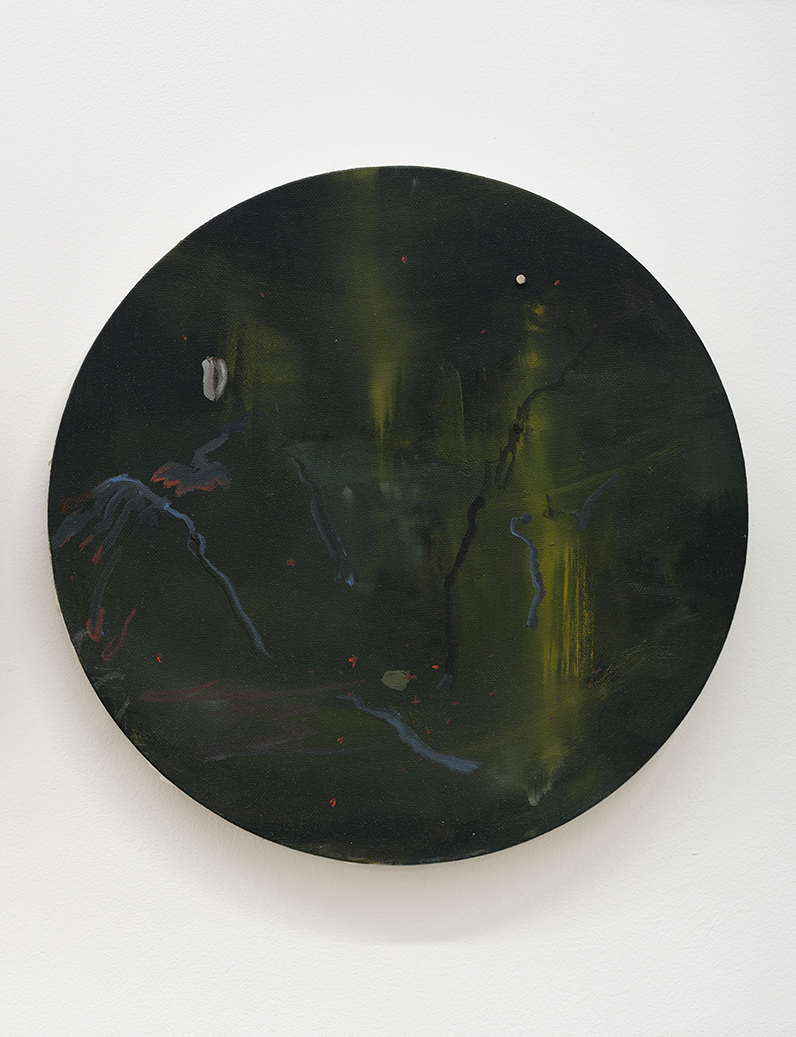
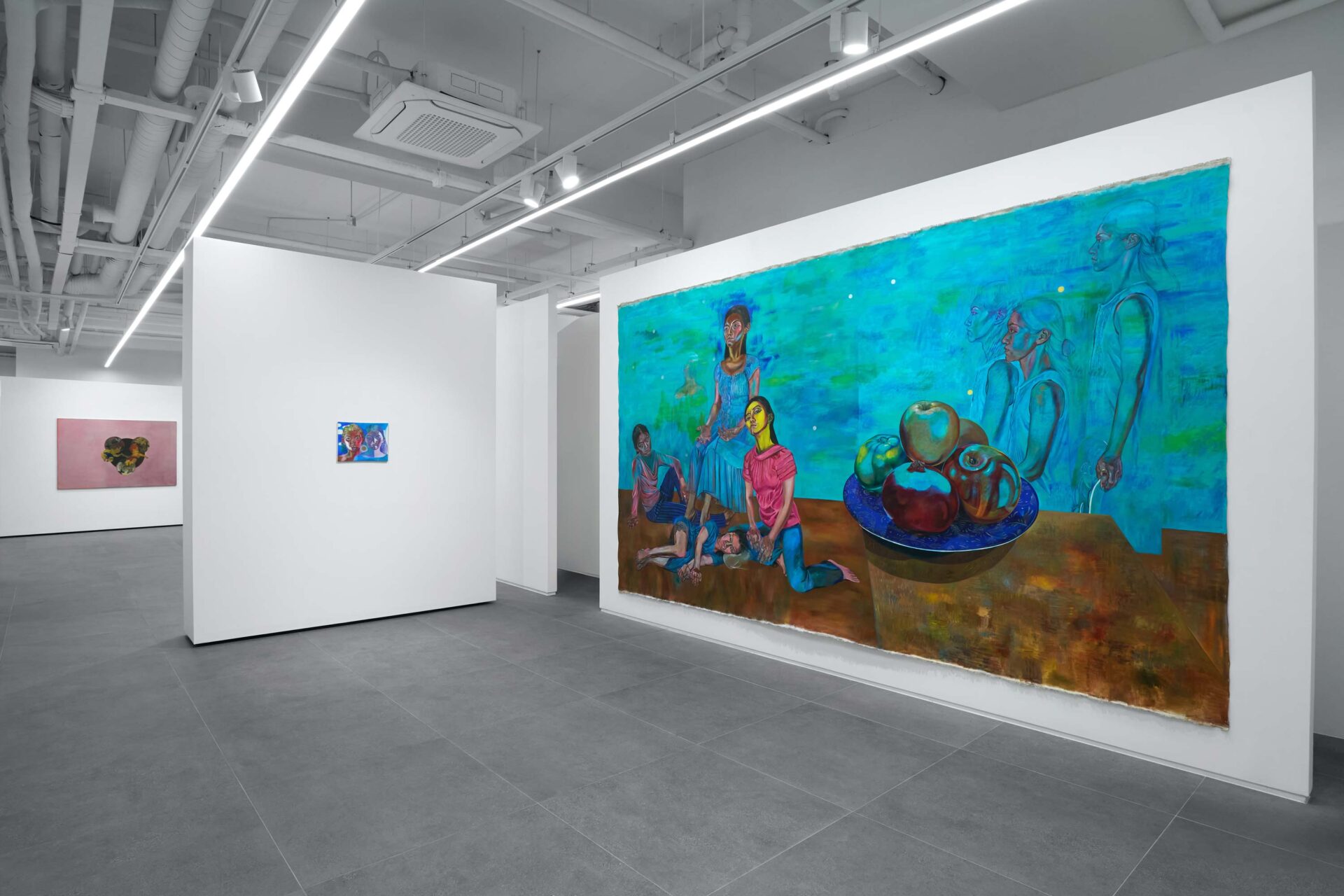
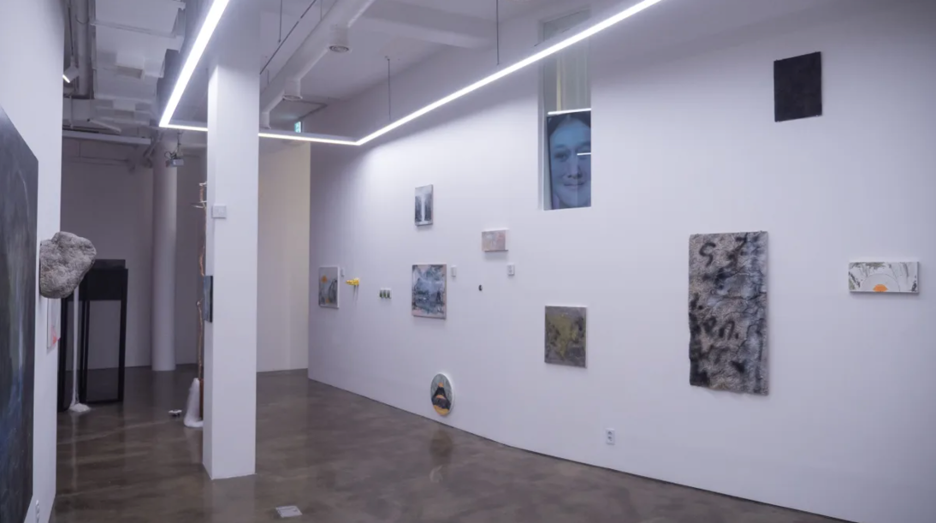
Aside from the interaction of the two mediums, painting is needed for the sake
of materiality. IM Youngzoo said that she is interested in the ways paintings
are hung. In other words, for IM, the frame of the painting is as important as
what is depicted in painting. Her use of canvases of diverse shapes such as
circles and ovals, as well as standardized squares shows her perspective on
painting as “an object” of a
specific shape and size. The act of hanging a circular painting next to a
square painting or placing a stone on the frame of painting also reveals her
vision to consider painting as an object. Then, can we say that the reason why
IM incorporates paintings or objects in her video works is because these media
fill the gap of materiality lacked in video, which is an immaterial medium?
This is an interesting point: it is not important for IM to emphasize the sense
of “realness” normally expected
in materials, or the sense of presence that you can feel through touch and
feeling. Any dichotomous distinction between the real and fake is meaningless
in IM’s work, in which no clear division is marked
between the sacred and profane, the belief and disbelief. Rather, her intention
is to greatly experiment with the effects that would make people take fake for
real. A clue to better understand this statement is IM’s
words from an interview where she said that any religious body has its own
music, picture, video, and performance. Her exhibition is directed in a way
that paintings and objects spatially complement what cannot be achieved by
videos. The flatness of paintings is supported by the comprehensive stage
effects of video’s three dimensionality.
What makes viewers believe?
As mentioned above, IM’s previous works are based on
the interest in the structure that engenders beliefs. Rock and Fairy,
a story that features explorations of club members who collect meteorites and
alluvial gold is simultaneously a documentary based on interviews and coverage
following the subjects and a fantasy genre story searching for a fairy. The
culture of the exploration club looks like a pseudo-religion and such suspicion
is intensified by the effects used in the video that make an absurd belief look
significant. These delusional mechanisms captivate viewers are as follows:
narration with an echoing effect, incomprehensible conversations (repetition of
“I want to see”-“You will see”-“I am
seeing”), mysterious sound effects, multiple viewpoints
that oscillate between an omnipresent viewpoint and a participant’s point of view, and camerawork that captures close-ups and repeated
shots. As examined, one of the most important characteristics of IM’s work is the fitting pairing between content and form. The
confluence of content and form especially stands out through her use of “effects” in her videos: AEDONG,
STARRY STARRY, and Aurora Reflection.
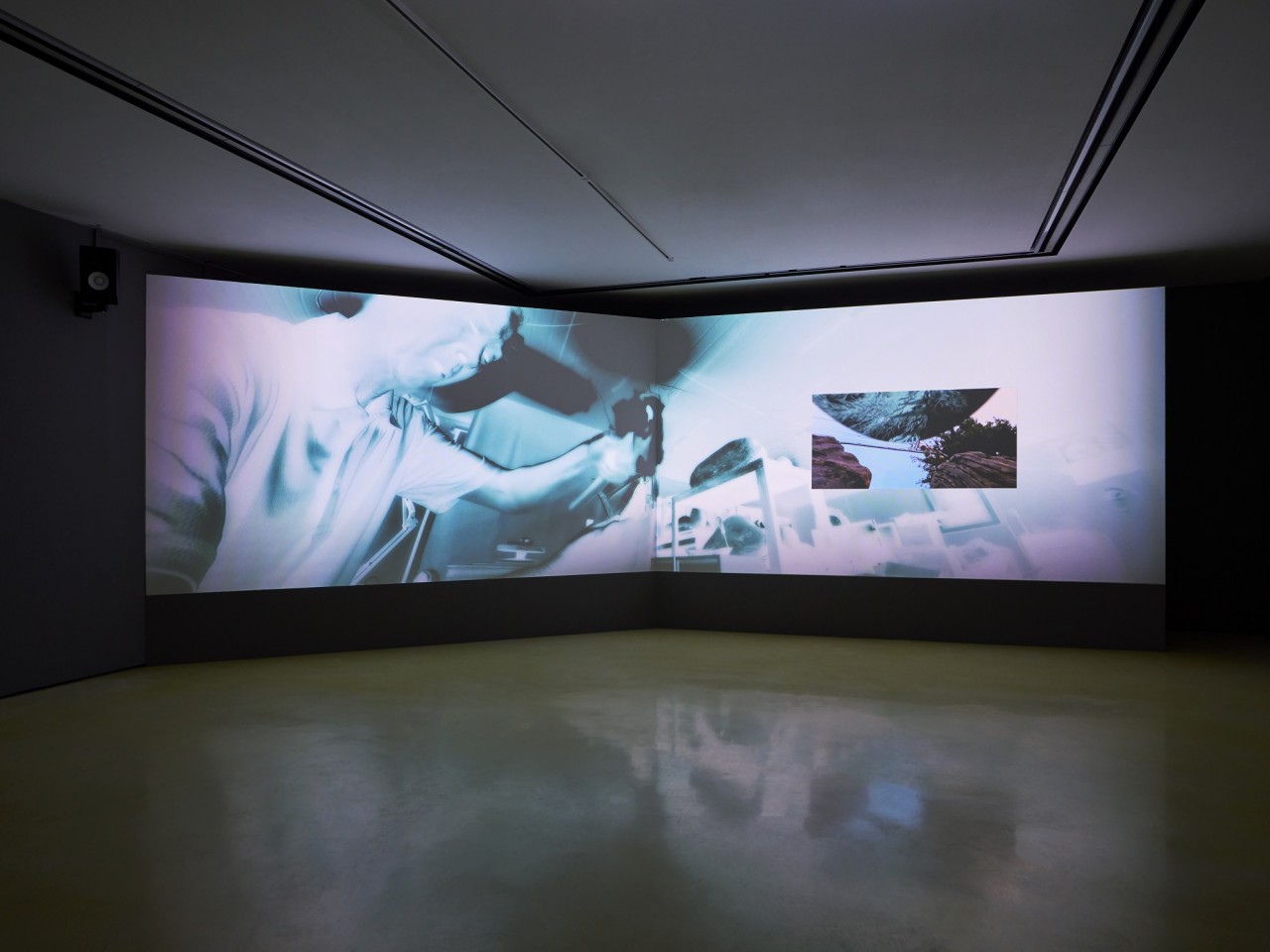
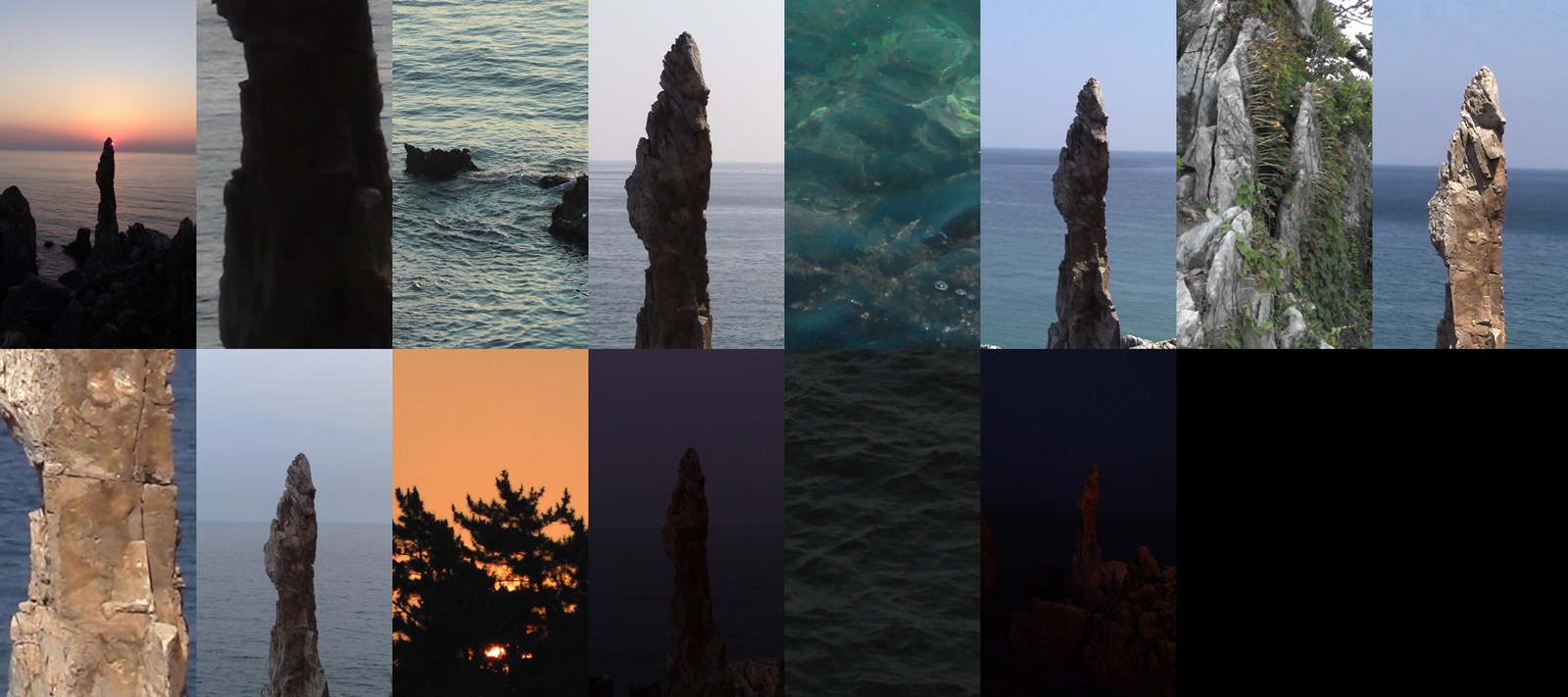
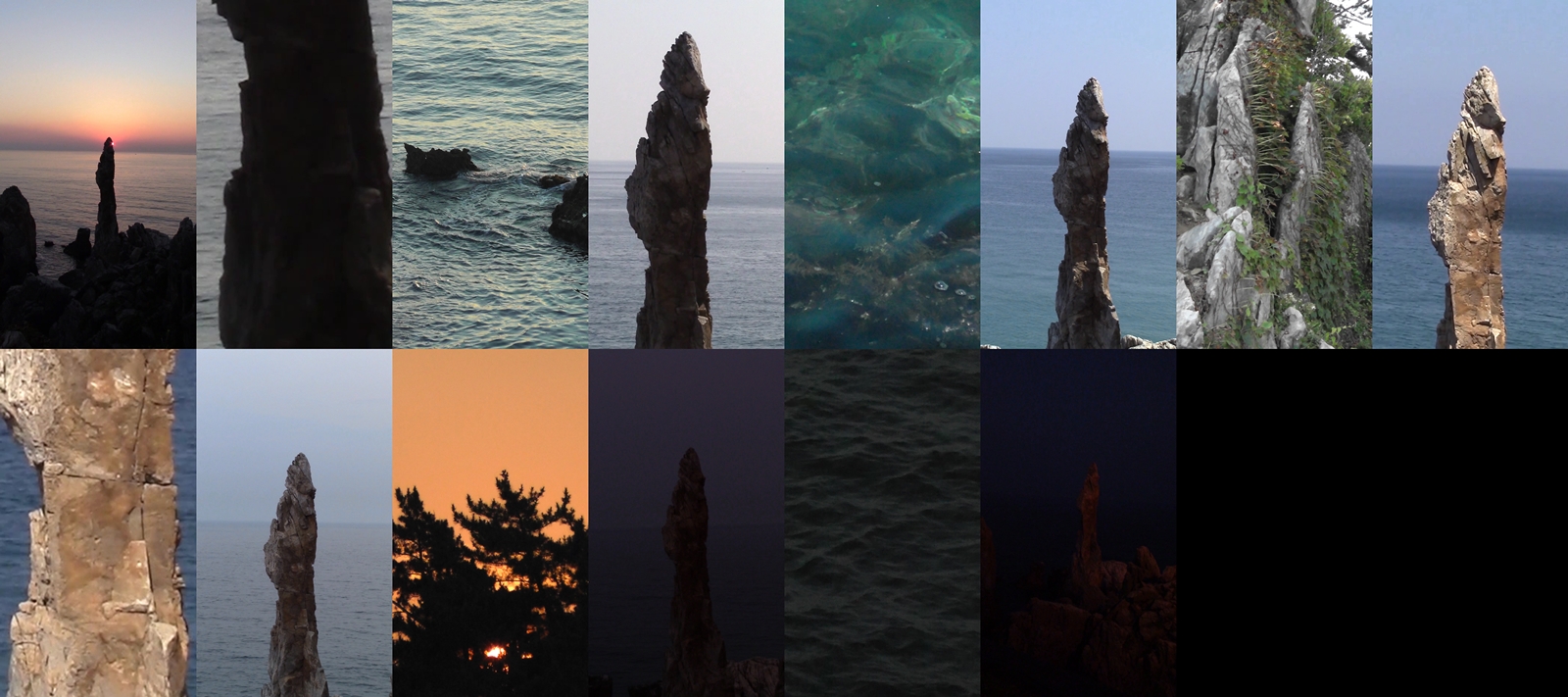
The structure of AEDONG is relatively simple: it features
Chotdae Bawi filmed at an interval of one hour from sunrise to sunset. The
composition of each video is almost identical as they were filmed with a fixed
camera with a repetition of zooming in and out. The video shows Chotdae Bawi
that appears enlarged and again distanced within a time cycle of about three
minutes. Slight variations are made in the color of the sea and the light that
gradually changes as the sun rises and in the close-ups. A piece of overly
solemn (and thus comical) music, which is a variation of a passage that says “Donghae-mulgwa [The water of the East Sea]”
of the Korean national anthem, is compulsively repeated at every cycle. The
experience of watching this video is quite weird and painful. Your senses are
paralyzed if you are exposed to the same song and similar looking images
repetitively for 30 minutes. The catchy sound, in particular, contributed much
to the effect of watching this piece, because the song lingers in the mind of
viewers even when they do not watch the video anymore. This strong effect on
the viewers’ visionary and hearing senses paralyzes
their ability to make judgments.
In fact, repetition, the most salient feature
of AEDONG, is associated with the subject matter of Chotdae
Bawi. This rock was one of the rocks called Chuam, which was a part of superb
landscape called Neungpadae. After the image of the rock was used for the video
of the Korean national anthem, this rock has become famous and a tourist
attraction for viewing the sunrise. According to IM, visitors to this place take
photographs of this rock only, not the whole landscape: all of the photographs
are similar because the rock is enlarged. The essence of idolization is to
equally and quickly consume the icon, removed from any context. It seems that
IM associated this vulgar act of consuming the image of rock to pornography
[the title AEDONG is appropriated from “yadong” (porn films in Korean)]. The rock and pornography share
similarities in that both are filmed in a way that the focal point is enlarged
without any storyline or emotions and both are produced and consumed in a
repetitive pattern. A semantic zoom-in that is abbreviated into a flow that
shows Neungpadae, Chuam, and Chotdae Bawi is merged with a close-up of the
video, and the suspension of judgment equally applies both to the rock and her
work.
IM focuses more on effect than content in her recent works such as STARRY
STARRY and Aurora Reflection. STARRY
STARRY takes its theme from the effect that makes people believe in
something. The video integrates various audiovisual materials about the
universe—such as Morse code, glitch effects in VHS, and
footage of Apollo 13’s atmospheric reentry of the Earth’s atmosphere—causing an odd hypnotic effect.
The noticeable video technique here is “looping.” Bizarre phrases that are like instructions at a meditation center
(e.g. “The eye sees the nose –
The nose sees the mouth – The mouth sees the navel”) are repeated with the word “again” as a starting point. The image displayed with the narration is Object
Discovery (2016), a video of water drops on a running car’s window. What is interesting here is what reacts to the word “again” is not just the narration––a water drop that was running leftward starts to run rightward
signaled by the word “again.”
This reversed cycle is applied to the whole structure of this video. The first
scene of Starry Starry shows discordance between image and
sound. For example, excited voice of those who discovered meteor is put
together with the last scene featuring a burning satellite that reenters the
atmosphere. In this way, the beginning and end is connected to form a looping
cycle.
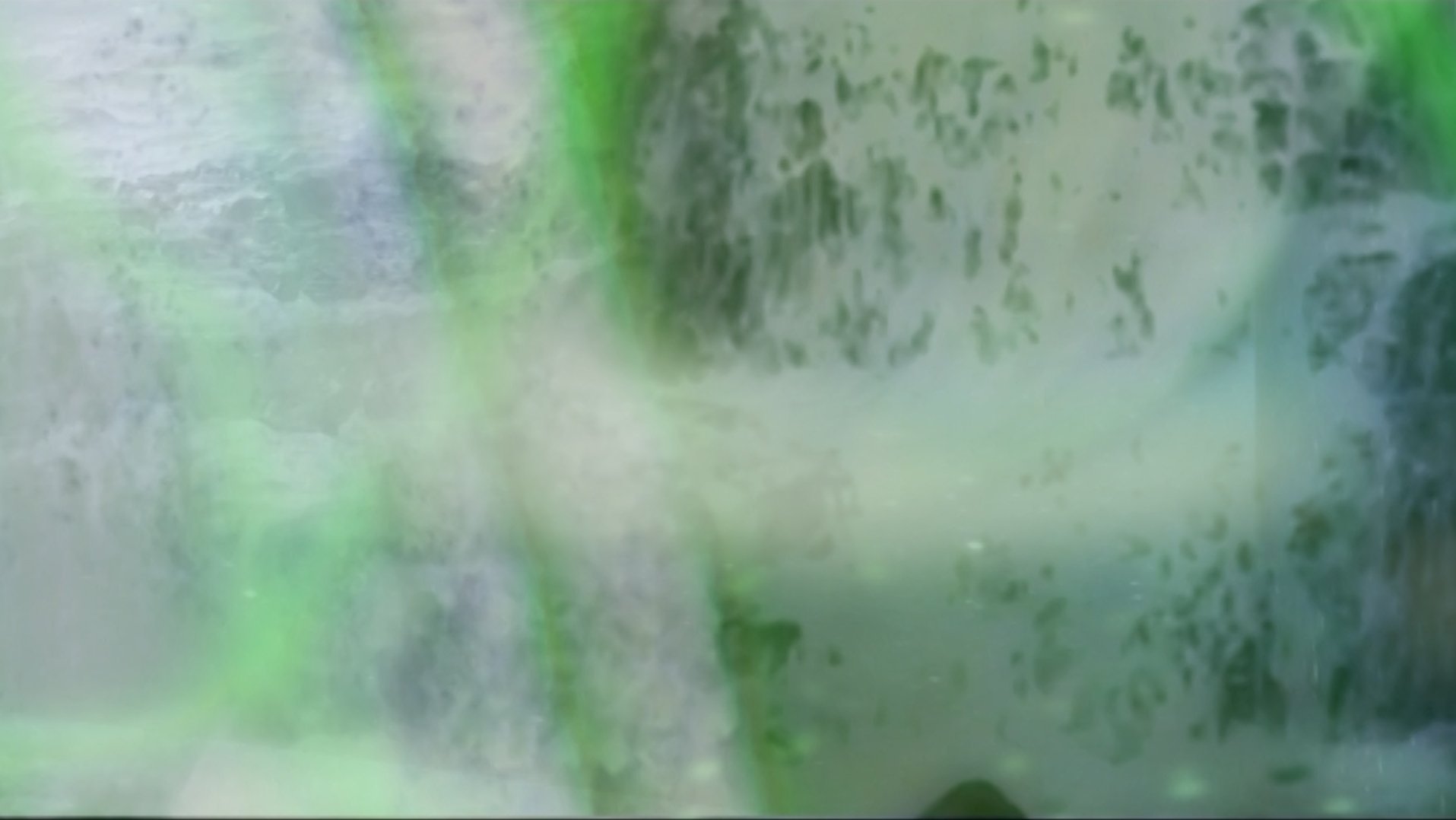
Aurora Reflection starts with the color green in the green
screen that is used to synthesize images. This work discloses an editing
technique that makes the fake look real. This video technique reflects her
interest in the effects that engender belief systems. Its first scene
symbolizes the meaning of the entire video in which the Chotdae Bawi images
from AEDONG are pixelated and green lines (signifying the aurora) are generated
in between images. The joining of images, which should not be exposed to make
the images look real, has become the main character here. One of the
outstanding moments of this work is a scene in which two-channel videos that
look like they are in the same color, but are slightly different and combined
into one through the process of screen adjustment. The images and sounds in the
videos of each channel do not match up with each other. The images are falling
apart when a circle passes through the border of the two channels and sounds
make dissonance as if two tones are played at once. The viewers would burst out
laughing when the video enters into the universe at the moment when the images
and sounds are perfectly synchronized. This minute editing demonstrates IM’s unique technique that pays attention to details and blends humor
with seriousness. Failed editing is not encouraged normally, however, in IM’s works it unmasks the process of creating trickery and leads the
viewers to see the mechanism that lends credibility to images.
“It looks that way if you squint or gaze at one spot,”
said someone who is an aquarium hobbyist. This is no different from what IM
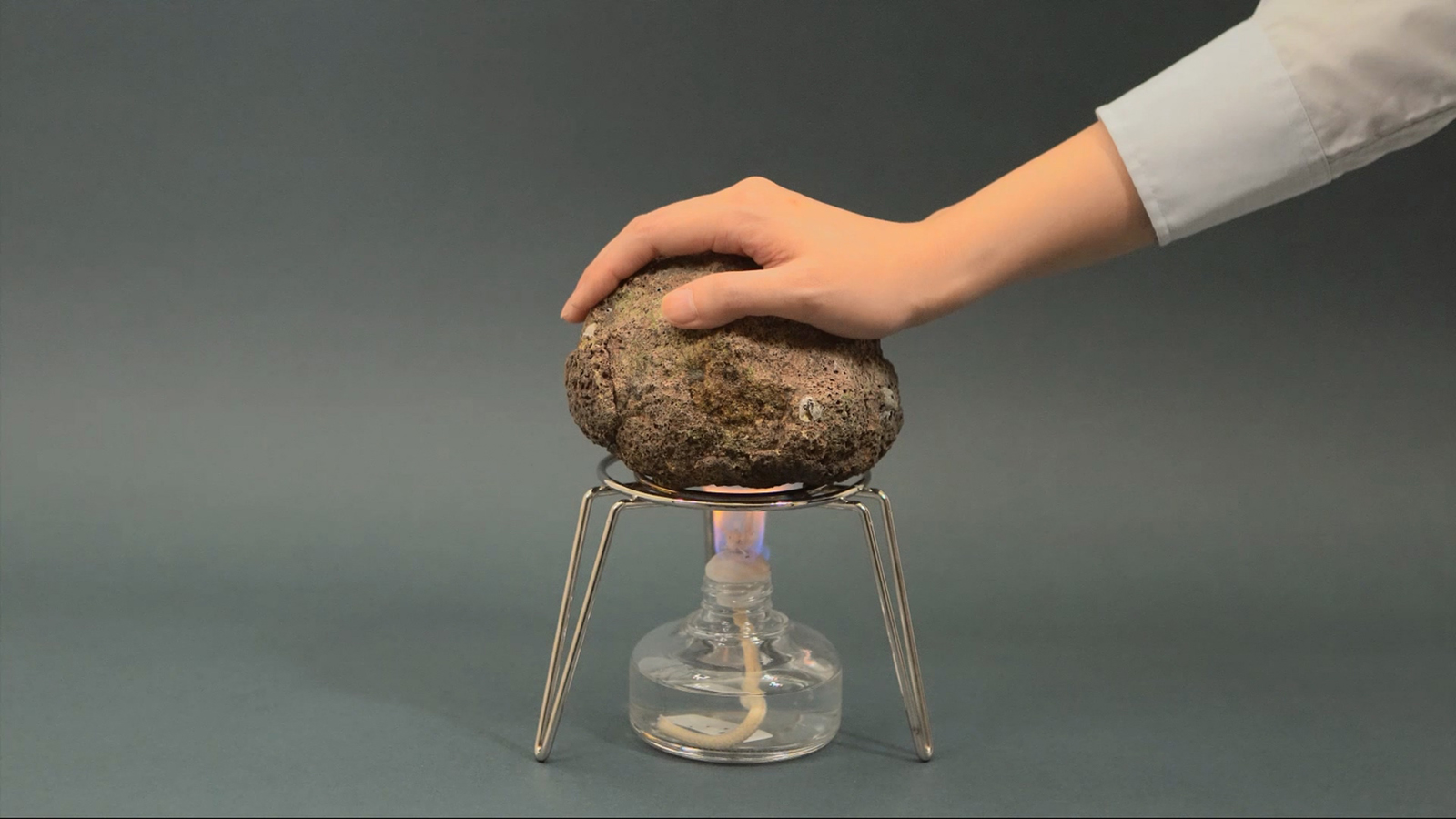
thinks about belief systems. A fake rock whose surface is made of fiberglass
looks real if placed in a proper context––so does a
belief. People are ready to take anything—whatever it
is—for truth if it is supported by apparatuses that
make things look real. Scientific statistics, standardized ways of
presentation, or objective tone in speaking, enhance credibility, while the
tone––like a fortune teller, groundless assumptions,
and illogical connections decreases credibility; although both the weather
forecast (in the tone of the former) and today’s horoscope
(in the tone of the latter) are equally inaccurate. IM’s
attitude toward beliefs is more so that of an observer than of a believer in
that it is focused on the effects generated by beliefs than actually having
beliefs. Distance, not immersion, is required to grasp the structure of things.
Perhaps, the works by IM Youngzoo play with the operating mechanism of art by
experimenting “again,” and “once again,” with the structure that makes
the viewers believe in her intentions by the apparatuses she has laid
out.
MUN Hye Jin is a critic, translator and lecturer on contemporary art. After She
had graduated in material science at Korea Advanced Institute of Science and
Technology, she majored in Art Theory at Korea National University of Arts. Her
major interest is the formal analysis of technology-based media, the
interdisciplinary study on the crossmedia and the contemporary Korean art. She
currently teaches contemporary art theory, photography and video art in the
School of Visual Arts, Korea National University of Arts. She is author of 90's
Korean Art and Postmodernism: In Search of Origin of Contemporary Korean Art
(Hyunsil Munwha, 2015) and translator of two major textbooks: Themes of
Contemporary Art: Visual Art after 1980 written by Jean Robertson and Craig
McDaniel (Oxford University Press, 2010); Photography: A Critical Introduction
edited by Liz Wells (Routledge, 2009).