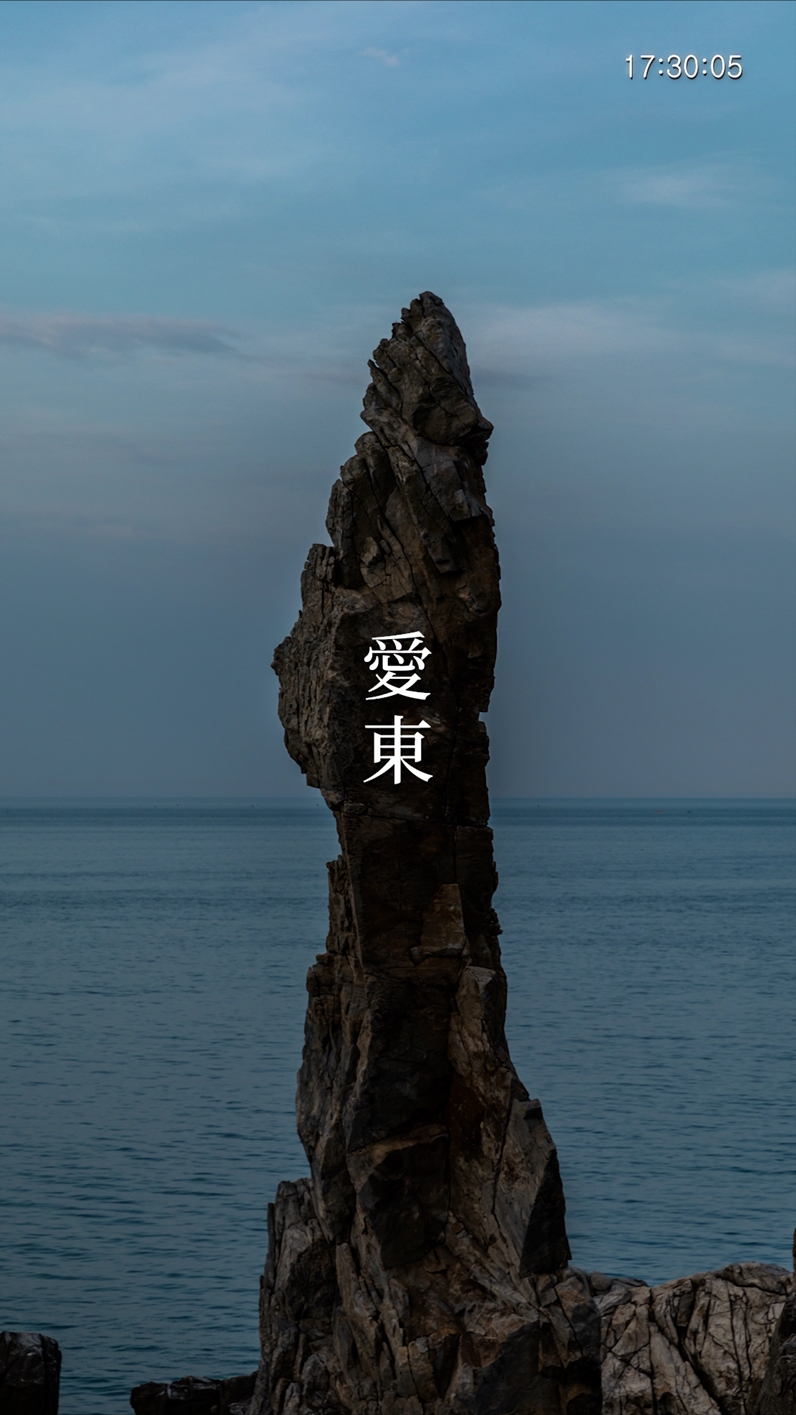
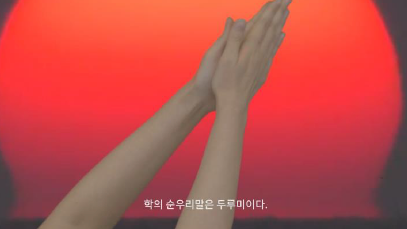
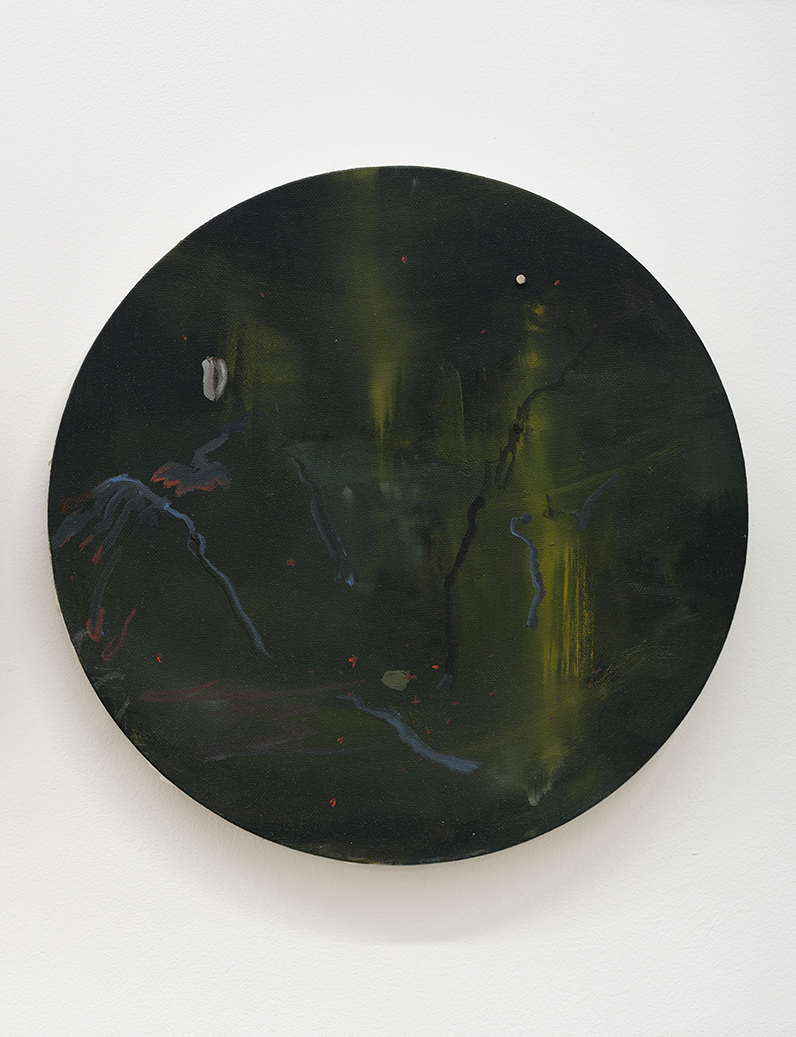
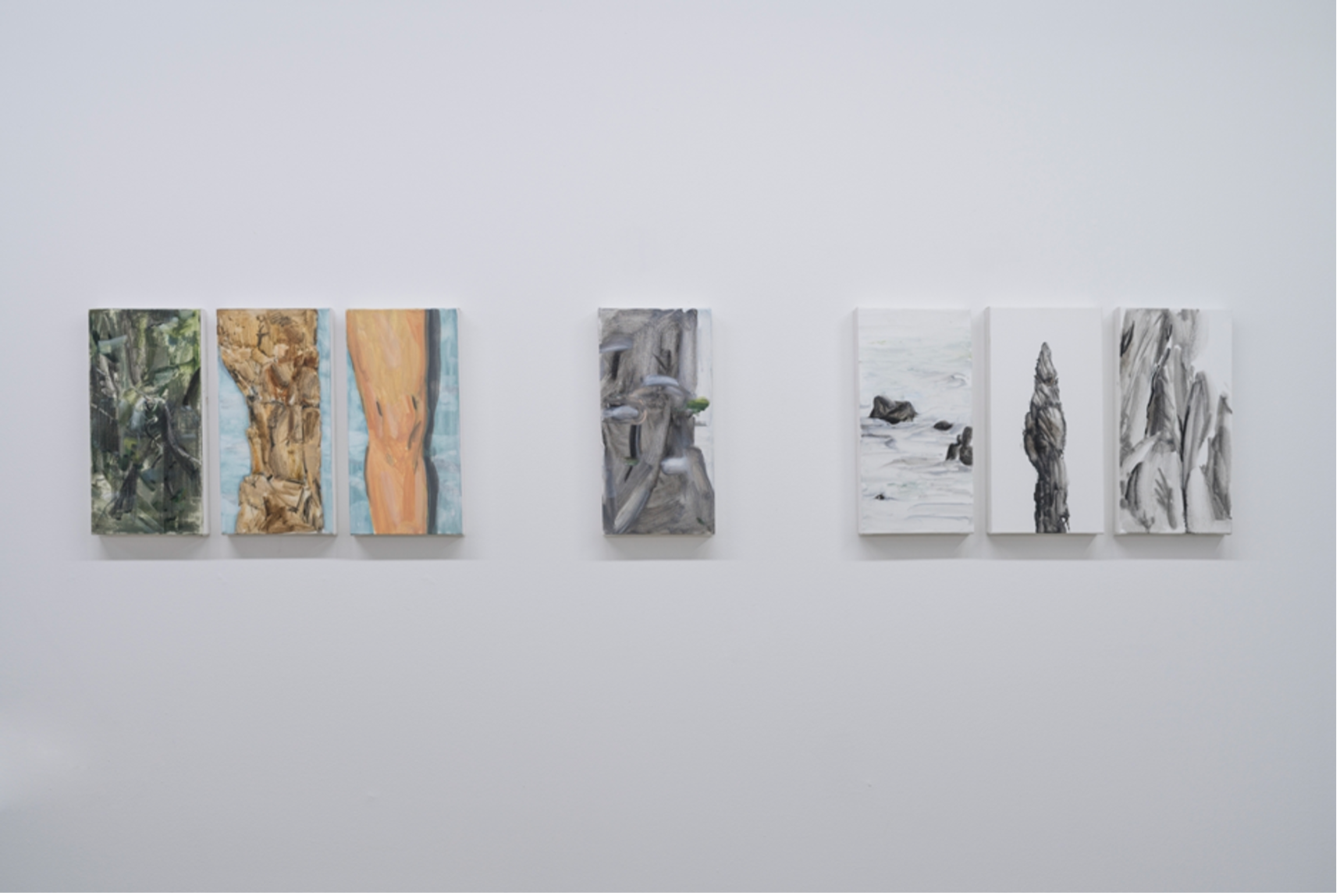
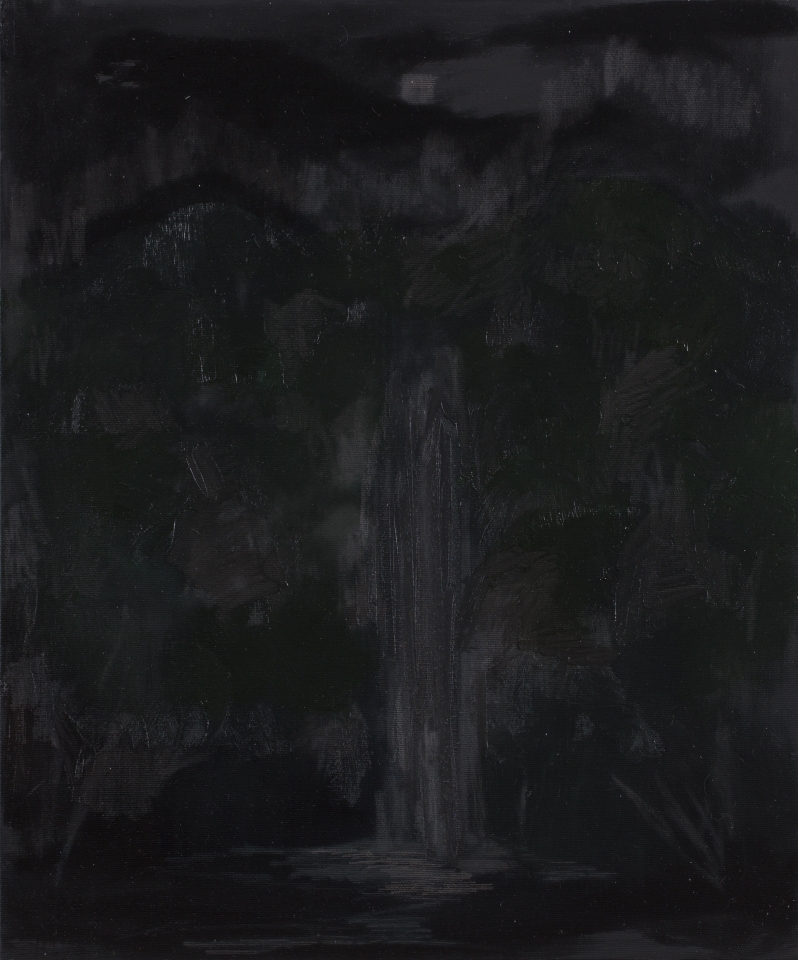
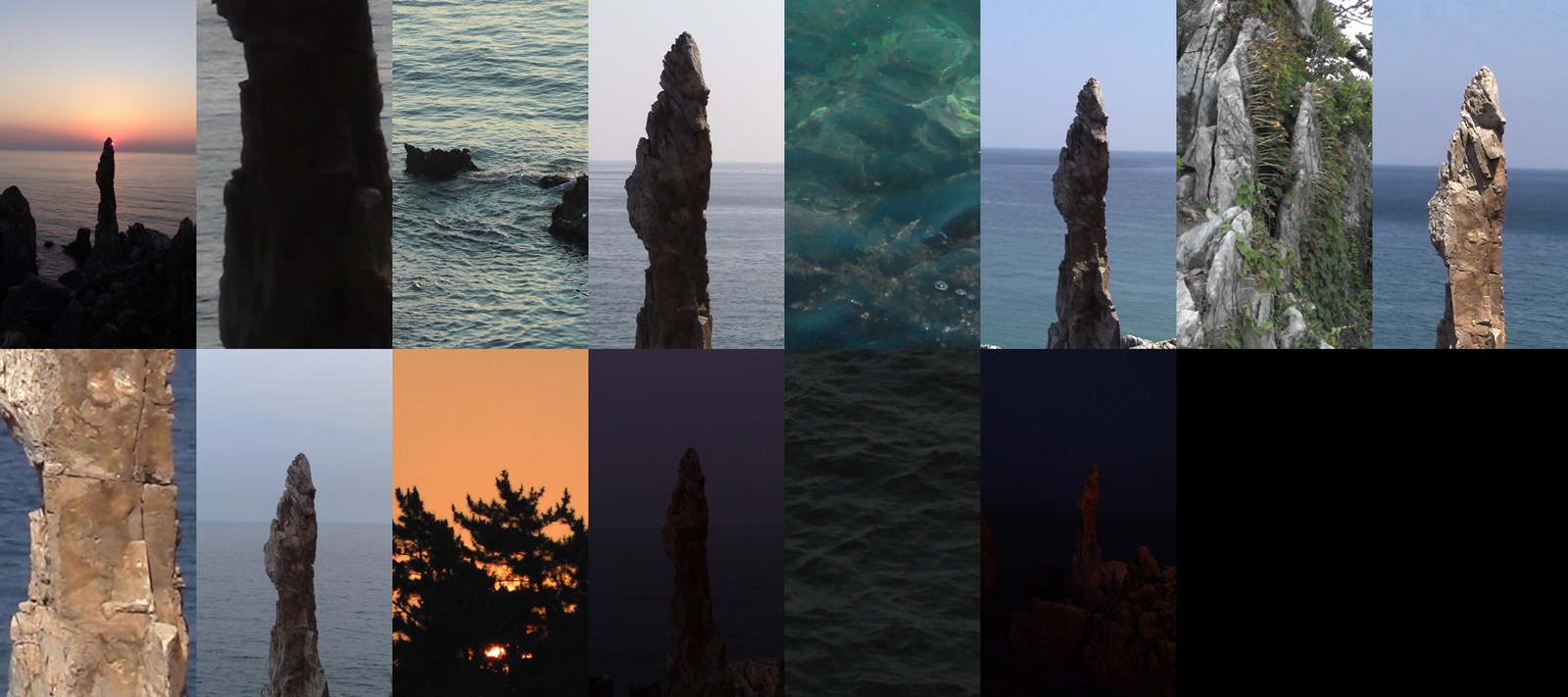
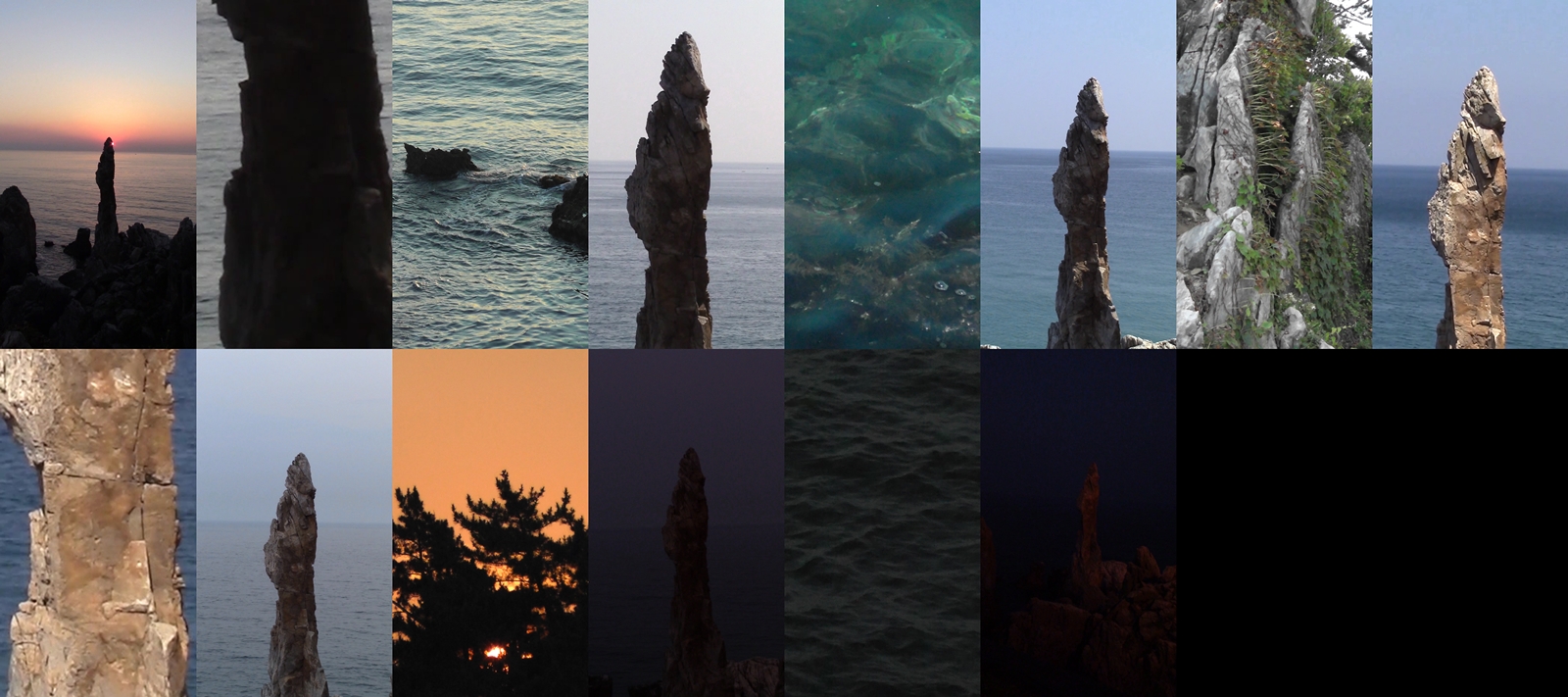
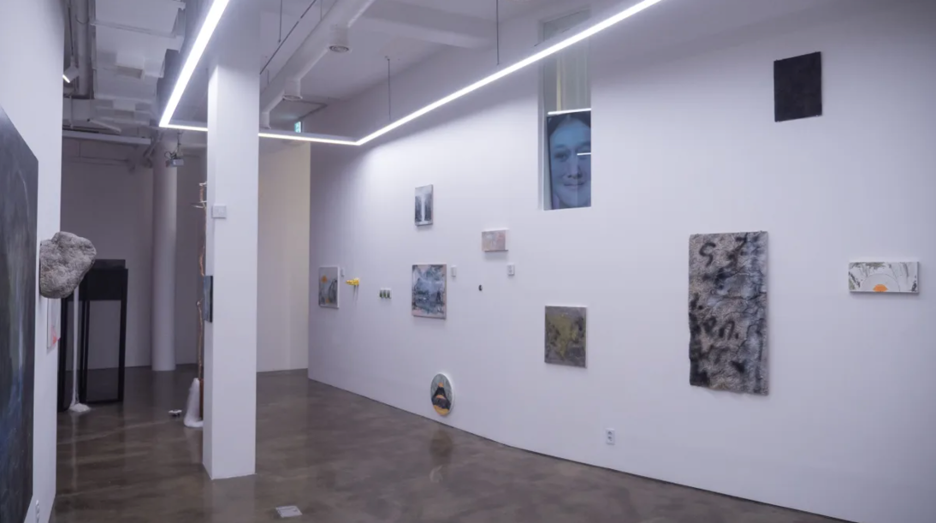
The roof of the observatory opens. I expect to see stars that are
invisible to the naked eye, but the overly bright light makes everything in my
vision disappear. It's like being sucked into a pupil, not knowing if it's mine
or yours. A story about a third eye, which I've never seen or imagined before,
is repeated three times. I've come to see something, but I'm constantly told to
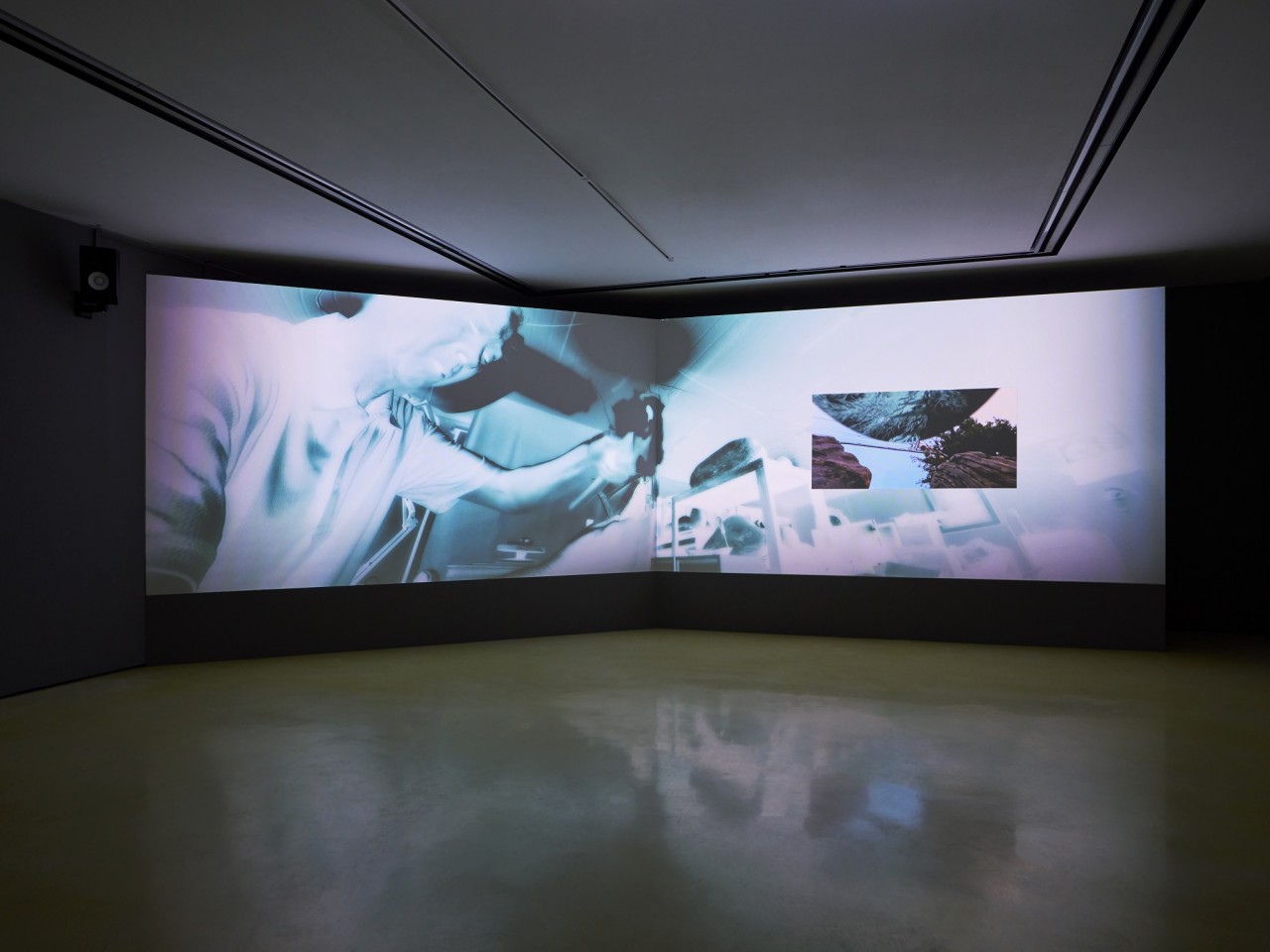
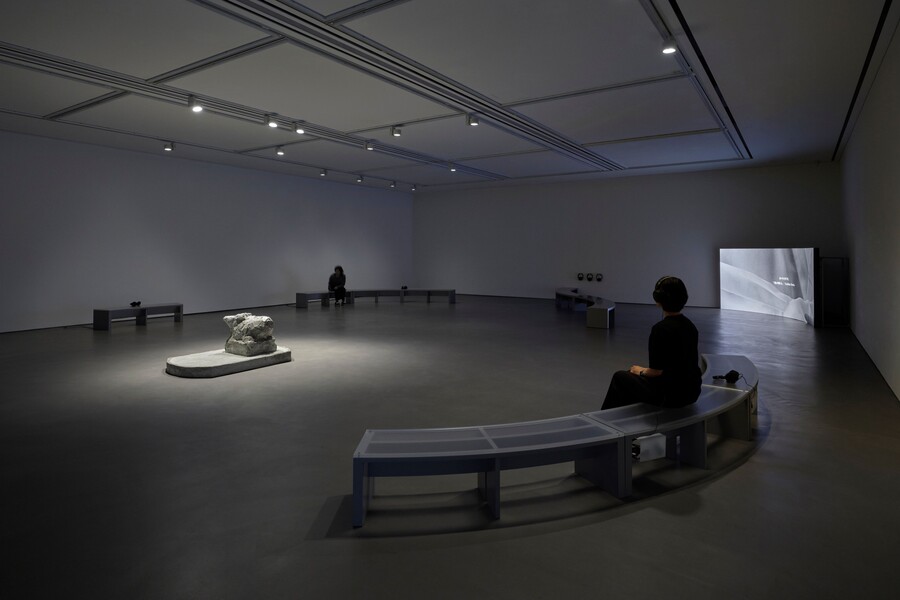
close my eyes. A large stone appears. Someone lies down. Taxidermy birds
appear. The view of looking up while lying down seems dizzying, like a
360-degree screen beyond the limits of human vision. Taxidermy birds appear.
Someone calls out the names of the birds. Overall, the screen looks like a
landscape seen through an infrared telescope. The birds fly in a flock across
the sky. The birds land. They are floating on water. The birds are going into
the water. It seems like I'm not seeing the birds together with both eyes, but
separately. A blackout occurs. The sounds of birds and insects make it seem as
if I've entered a forest. The scene shifts to the view of taxidermied birds in
an exhibition hall looking out. It feels like I'm with them. I don't know
exactly what I'm looking at, but from the slight dizziness and discomfort I
feel, it seems as if I've crossed several territories.
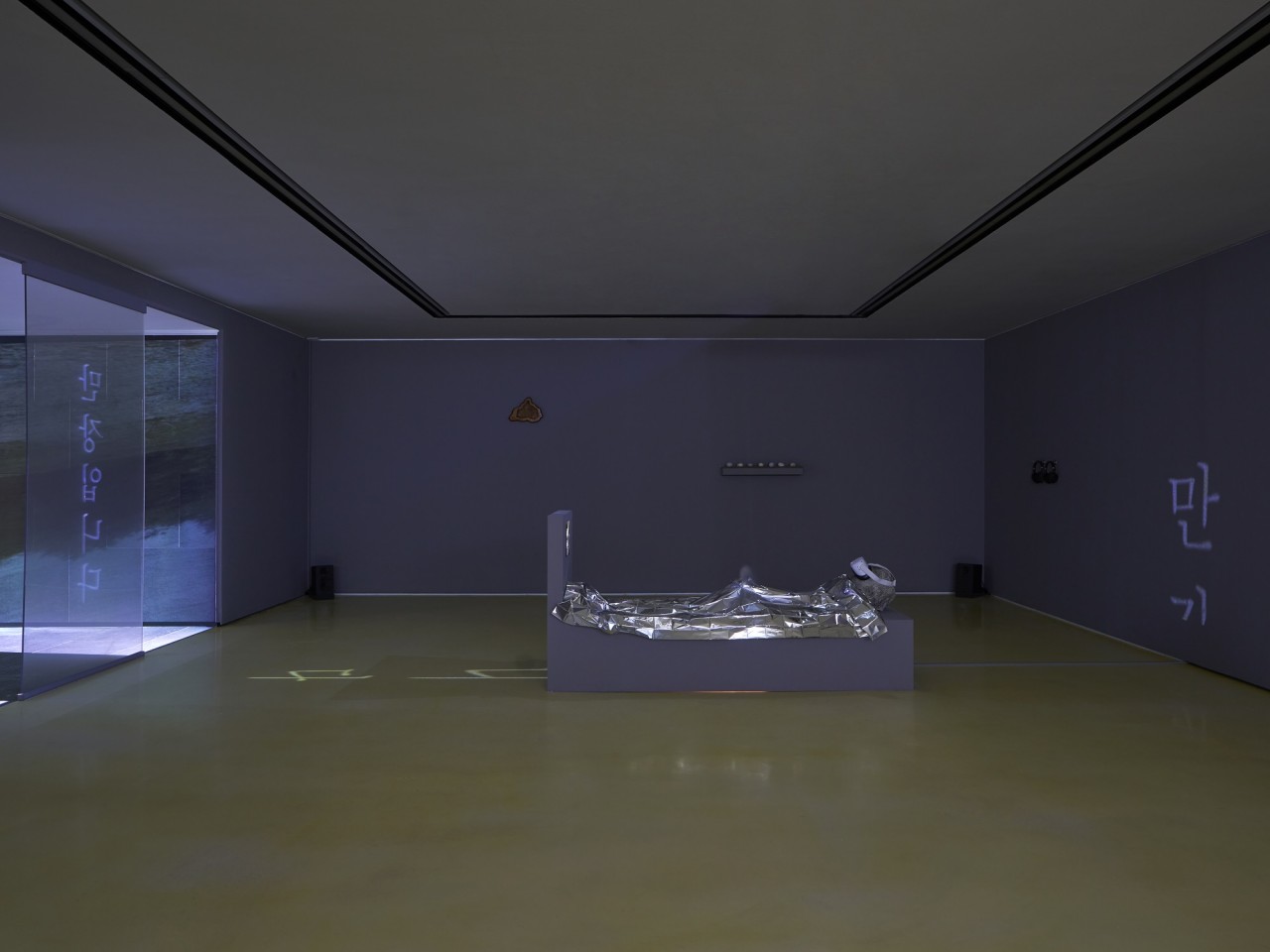
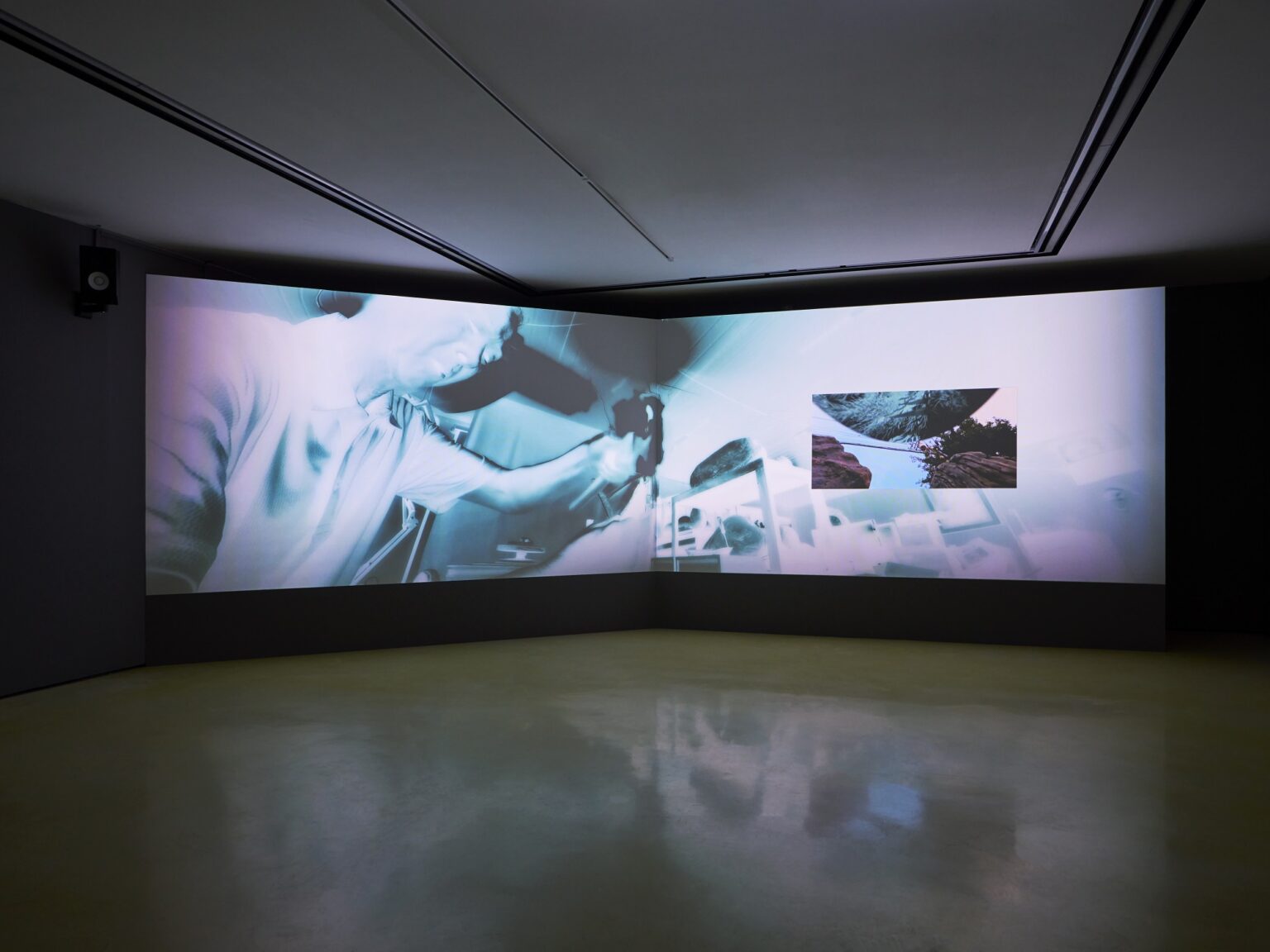
In another room, I put on the VR headset. The guide covers me with an emergency
foil blanket and begins the training. I prepare myself, take a deep breath,
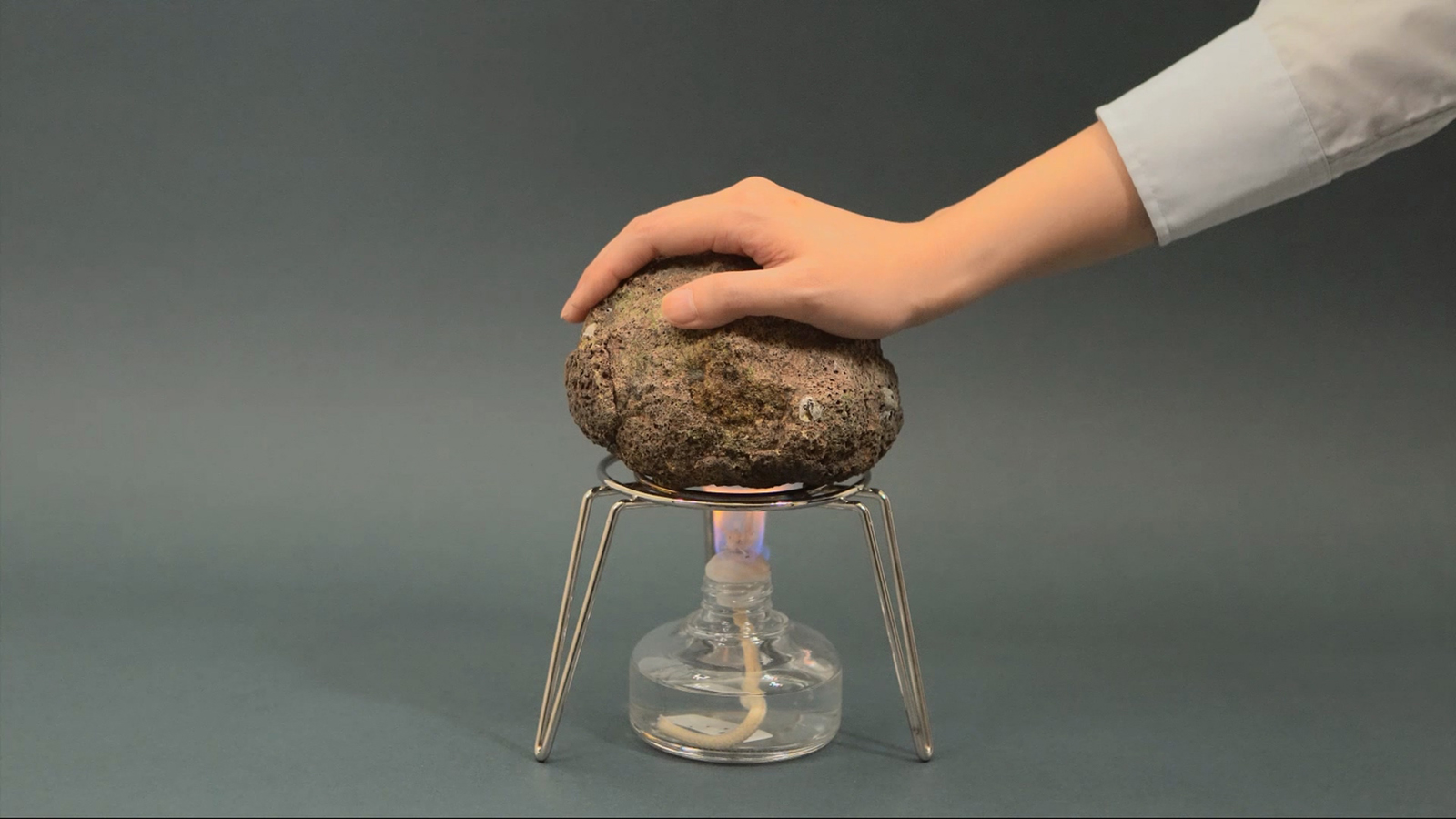
hold a warm stone in my hand, and lie down inside the foil. I prepare my mind,
take a deep breath, lie down and hold a warm stone inside the blanket. I
experience a journey of finding my grave, leaving it and returning holding a
cold stone. Throughout this journey I look around, turning my eyes here and
there, rising high into the sky and then falling. I am perplexed because I
don't understand. It seems that different scenes are overlapping and
intersecting throughout the video. Along with the repetition of this
phenomenon, the sounds stimulating my ears seem to leave a strong trace in my
mind that won't go away. I keep moving. No, I stay in one place all the time. I
am able to accept all these things. This is fun. This is fun. This is fun. For
me this is like a fun video game. However, someone else might have emotions
rising up while watching, or get lost in thought trying to grasp a logical
structure, or completely space out and fall asleep. You can accept it as it is,
but it may not be easy. For others, it might be remembered as an abstruse
story, an unpleasant incident. Of course, I even had the strange thought that I
surely wouldn't be able to fully experience all of this forever. Strange.
Strange. Strange. Strange.
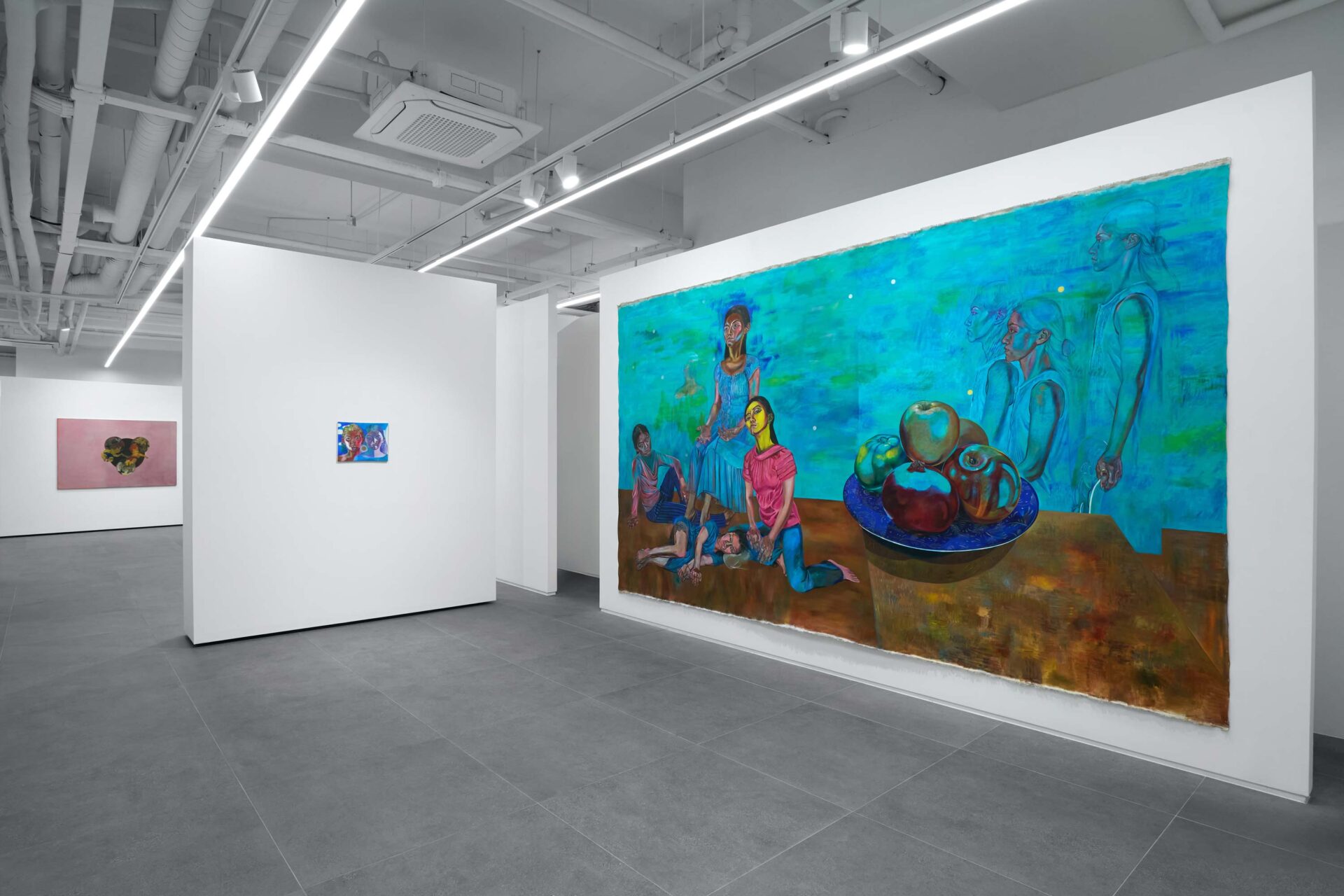
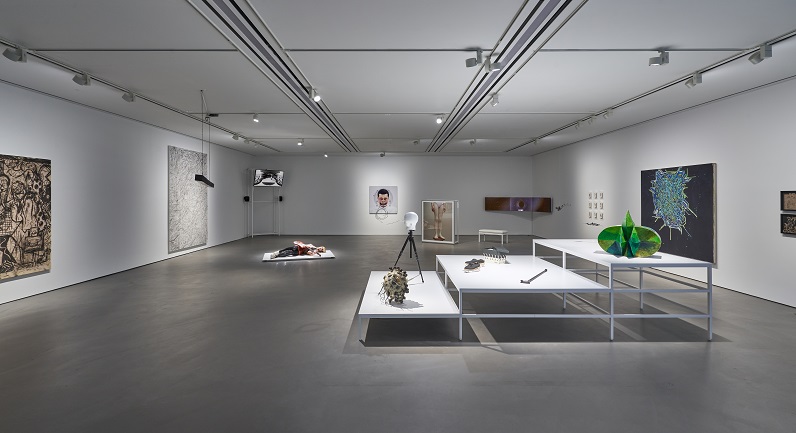
In the exhibition 《미련 未練 Mi-ryeon》, I begin to vaguely synchronize
the seeing of something from IM Youngzoo's perspective. Humans have not only
looked at things with curiosity, but also tried to see beyond their senses.
That's why she says we need to open our third eye, which we originally had but
has degenerated. What will we see when we open the Third Eye? First, we should
look at the title " 미련 未練 Mi-ryeon”. “미련” means a lingering mind that cannot
completely forget and is still attracted to something. This lingering means
that there is something unfulfilled between you and me. At the same time, it
also means that by resolving it, we can move to the next stage of the
relationship with a peaceful mind. Also, the second word of the title, "練," refers to the mourning clothes worn during the three-year
mourning period, so here “미련” means the state of not
having taken off the mourning clothes yet. "Mi-ryeon" seems to be the
names of the characters who appear in the video. The title she gave is
interpreted as a metaphor for the human condition of having experienced
something, but being in a situation that hardly seems to have happened, and the
inability to move on to the next or another stage. Why does she portray people
this way? She explores the mechanisms by which humans imagine and understand
other dimensions, paying attention to mysterious phenomena, unbelievable
stories, fantasies, hallucinations, research obsessions, past lives, and
self-awareness. The beginning of all these actions is seeing. In order to know
not only what is visible to their own eyes, but also what is invisible beyond,
humans have culturally and technologically created various cognitive devices.
For example, they have gathered evidence, traces, and clues to create stories
of religion, mythology, folklore, ghost stories, etc., and scientifically
developed and used technological devices such as microscopes, telescopes, night
vision, radar, and LIDAR sensors to transcend human vision and senses. As a
result, we have unknowingly created various boundaries and time-space. And
through the process of recognizing, accepting, rejecting, and confronting them,
we continue to move on.
This leads me to wonder if the process we discussed earlier really works, and
if, as she says, we really are capable of moving. When I think about it, if
that were the case, we'd probably live in a world of complete belief, without a
shred of doubt. Therefore, all of this may have started from the limitations of
human vision. Acts of interest to Im, such as imagination, meditation,
immersion, awakening, and jumping, have become ways of moving through space to
see something different and previously invisible over time. This is why she
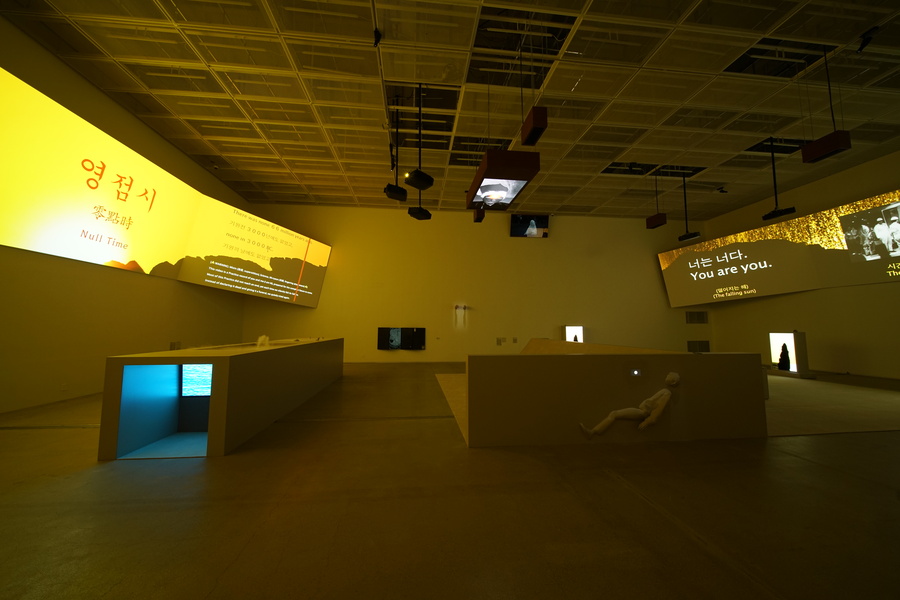
speaks of "축시," which refers to times when
things invisible to our eyes move to a different space-time. Thus, doubt in
trying to distinguish between reality and virtuality, or the genuine and the
fake, becomes another essential condition that remains unchanged with human
existence. Under this premise, it doesn't matter whether we see an object as
real, what it is, or whether it really moves. Instead, we should recognize
through which device we are looking and acknowledge that device. Therefore,
while I was watching 미련, she may have subtly instilled
in me a sense of movement by constantly looking at something through different
filters without actually moving from the spot. And because I'm already immersed
in that thought, the situation of finding my place doesn't feel like a
universal story that I'm randomly broadcasting, but rather a special song
calling out to me, moving "me" specifically.
Suddenly I take off my glasses. Everything looks blurry and suffocating. I
begin to doubt which is the real view - the view with the glasses or the view
without the glasses. Between the clear landscape seen through the glasses and
the blurry landscape seen with the naked eye, my eyes are being corrected to
see the clear side more vividly. But is this really something that needs to be
corrected? When I put the glasses on one eye, the images from both eyes overlap
and make me dizzy. Dizzy. Dizzy. This is just one of the many ways I end up
seeing through a filter! Ah, I get chills. Then wouldn't trying to adapt to the
blurry vision without glasses take me into a new dimension, like meditation or
opening a third eye? Stranger and stranger ideas come to mind. Now I think I
need my own training. First, I should practice seeing through as many different
filters as possible. Following this line of thought, I conclude that human
vision is always just an indirect, filtered experience, rather than a direct
experience. Then, isn't the "third eye" she's talking about not just
the concrete physical devices like VR headsets, telescopes, glass walls,
monitors, and projectors that constitute 미련 未練
Mi-ryeon, but also the myths, superstitions, legends, and religions that humans
have created - in other words, all the filters we have that reveal the movement
through space and time that she's been interested in all along? But there is no
definite method.
All of a sudden, it's like if I'm surrounded by a veil that makes things appear
and disappear. How long have we existed in this unchanging state, like the
ginkgo leaves that appear in the video? The unchanging appearance of the leaf
is both wondrous and alien. Similarly, the gadgets that we possess will not
present anything clearly and will continue to exist in general in front of us.
They will continue to be created. It's suffocating. Suffocating. Suffocating. I
can only believe that this is not something that traps me, but a space-time
that allows me to move to another veil whenever I want. Natural movement takes
practice. At the moment I realize that I am not really moving through
dimensions with my body, but that I am constantly teleporting momentarily
through different devices and perceptions. This is like the rotating body in
another video. Perhaps this thought could be dismissed as fantasy or an unreal
dream. What exactly does it mean to cross dimensions? Could the clearest form
of crossing dimensions for us be death? No one can tell us what happens after
death. Death, whatever it may be, is something that we will all reach one day,
and we will pass completely into another dimension. So the most certain
situation for us to go to another dimension is death. But I know nothing about
it. Nothing at all. Nothing at all. If death is both an end and a starting
point for another phase, we may have the opportunity to see something
completely different after death. However, we will continue to try to pass
through the space-time in which I exist without stopping, through some filters
as she does in 《미련 未練 Mi-ryeon》.
But if we fail, we must wait for a more certain opportunity called death. It's
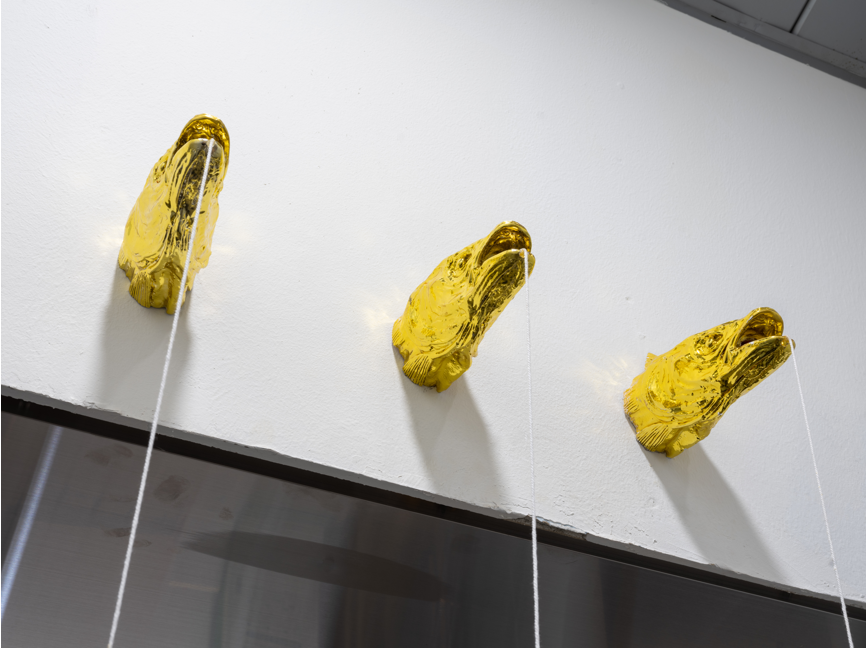
frightening and yet strange. Then suddenly the scene of calling a bird’s name while facing oneself comes to mind. This heartbreaking act
and sound of calling the name of a migratory bird - bizarre yet provoking
laughter, somehow sad and lingering, indescribable - resonates as an emotional
wave in connection with my current situation.
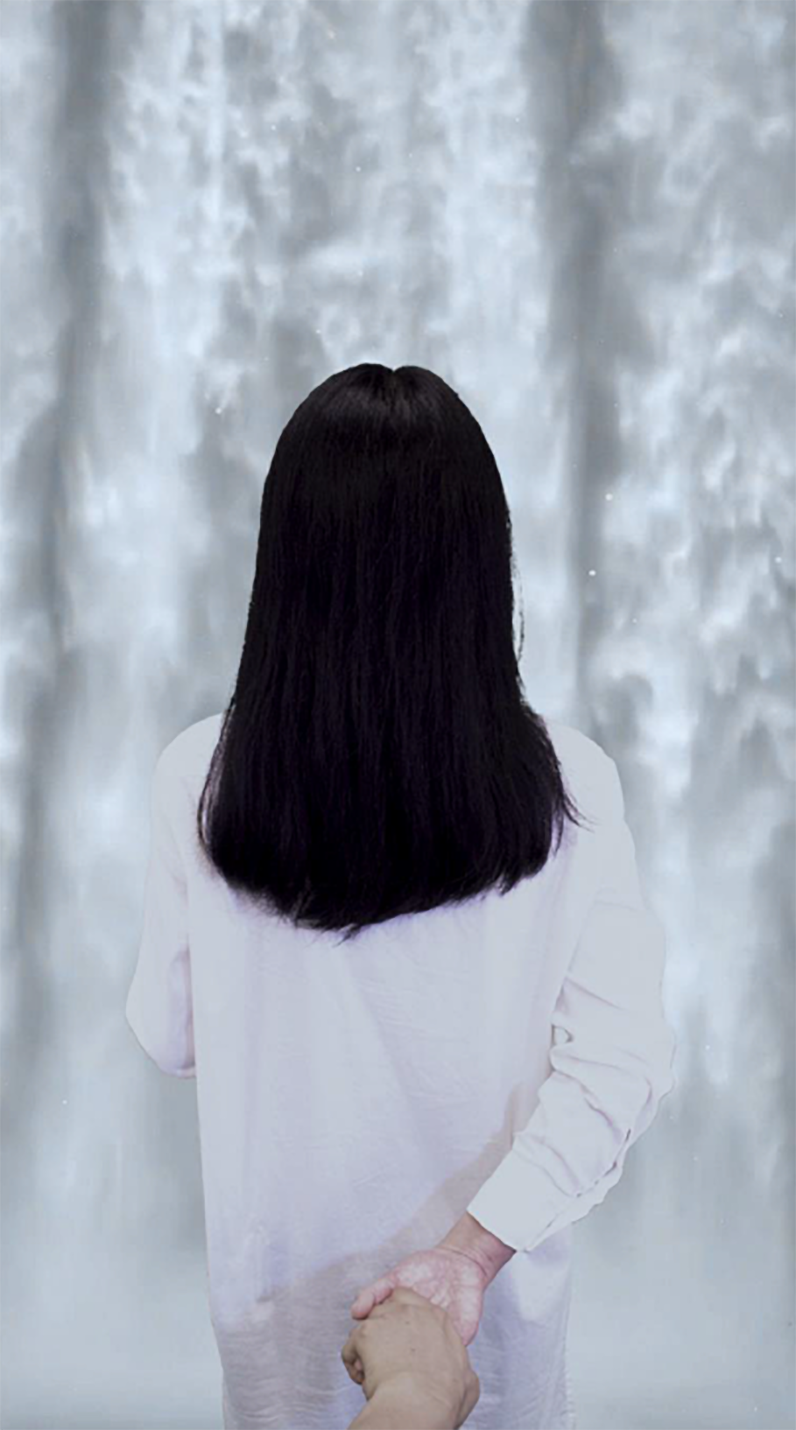
In the end, our act of seeing is similar to not knowing where the bird flying
far away disappears to, or only seeing someone's back. This is revealed by the
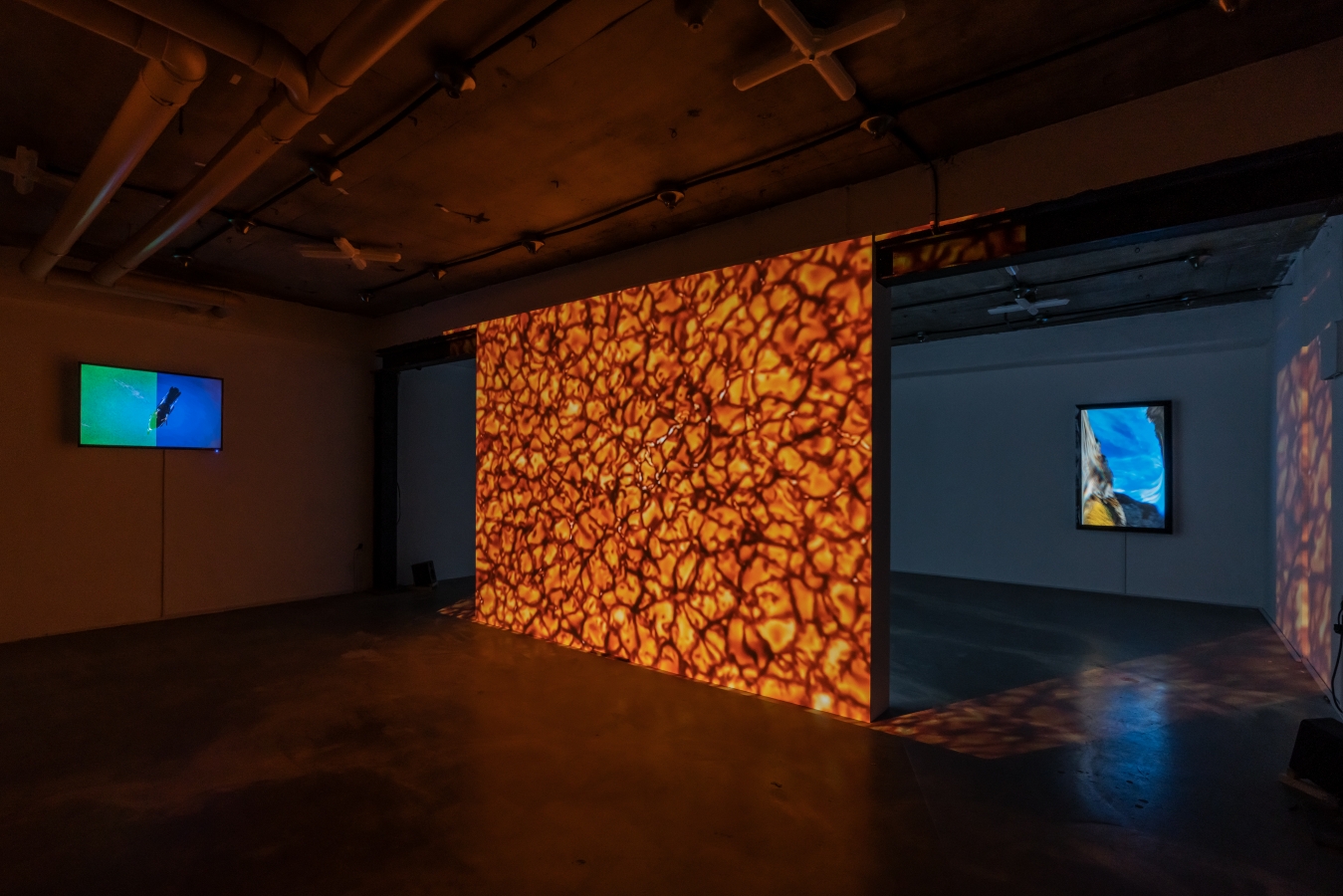
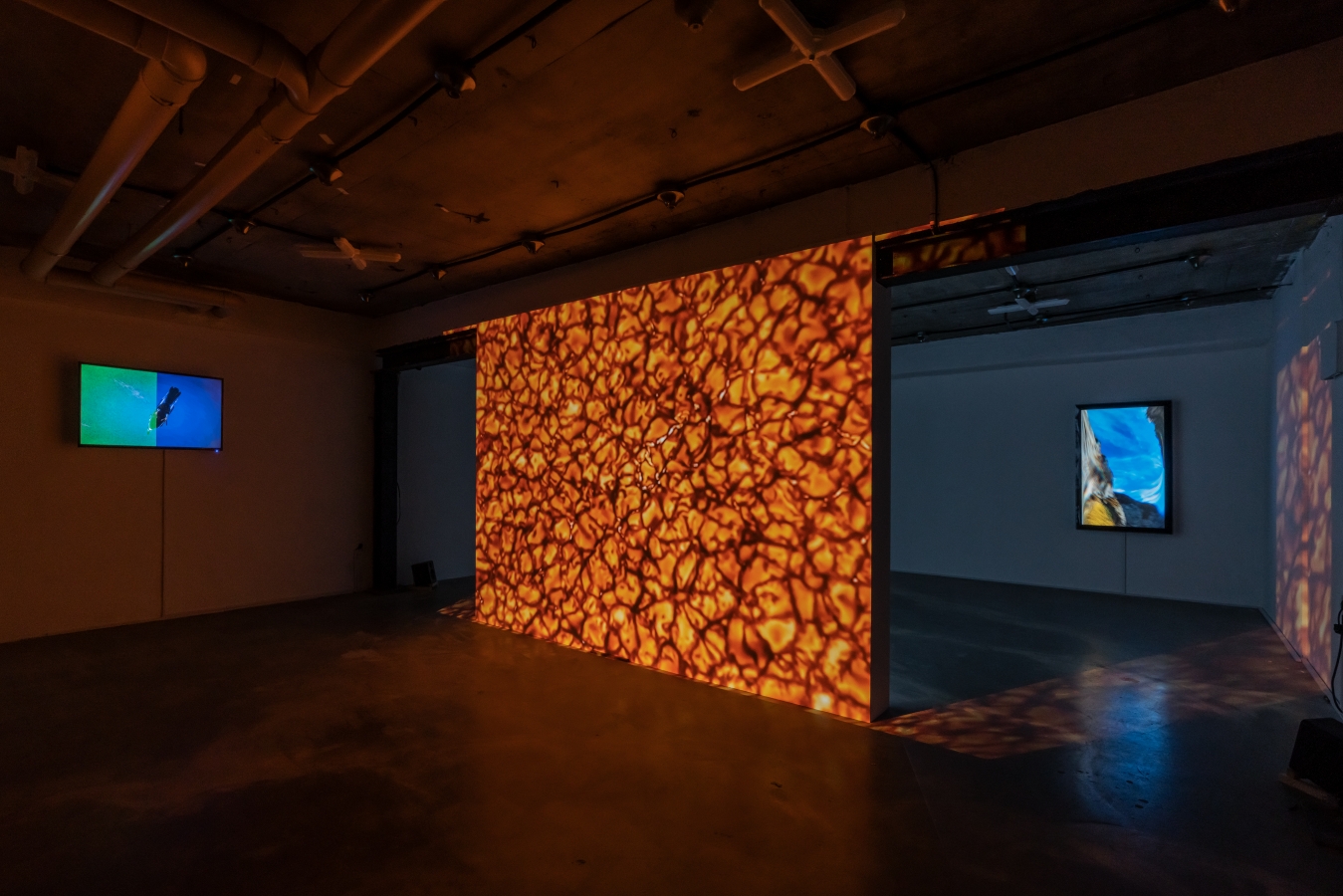
fact that all the videos in 《미련 未練 Mi-ryeon》 are precisely set to loop for an hour, the situations where we
cannot freely enter all the spaces, and the structures where the viewpoints
seen through the VR devices transition to other videos. Her installation approach
allows the act of seeing to be felt as a perceptual experience that is not an
intellectual understanding, but rather an obscure movement that defies external
explanation or definition - rather than knowledge. In contrast to this is the
movement of death in the future, which is certain to come. It is defined as an
empty space-time where nothing can be seen or felt. Until then, I resolve to
live a life of accumulating experiences where many things intersect through the
process of seeing and seeing and seeing again, using all available tools to the
fullest - sensory interactions, physical embodiment, expanded space-time,
dreams, reality, real or fake, whatever. Suddenly I find myself humming the
lyrics "come back to earth" from Bunny Girls song "Space
Trip". Now I have to go back to the beginning. The moment I make this
decision, I imagine that death will reset everything and allow me to see
completely new things in a different dimensional space-time. I discover a
desire welling up inside of me to reach that place.
Afterword
As I re-read my "Travelogue of 미련 未練 Mi-ryeon
" that I wrote, I have a strange feeling that I am caught in the intricate
web that IM Youngzoo has meticulously created. So I have to confess. In fact, I
did not write down everything I saw and heard. I have seen some things and
forgotten others. There were things I did not see, things I only felt through
light, and sounds that still echo in my ears. But I felt, I changed, and I am
still crossing over somewhere. So for you, this record will be another hole,
another trap, another entrance, another guide. No. No. No. It could be nothing
at all. I don't know. I don't know. I think of death again. Just as the writing
mixes past, present, and future tenses, since I have not yet truly experienced death,
nothing is certain. Until we reach that moment, we will still see something
through countless choices. But there will inevitably be a moment when we are
truly in motion somewhere. When that time comes, what kind of travelogue will I
write? Or...
Translator’s Note
1. The term "미련" used in the exhibition title
has subtle meanings and emotions that are difficult to convey in other
languages because it reflects the unique characteristics of the language and
culture. It was not translated in order to best preserve the original meaning
by using it as it is.
(미련: A lingering attachment or reluctance to let go of
something, even when it may be best to move on. It conveys a sense of emotional
difficulty in fully releasing oneself from a person, situation, or memory)
2. 축시 丑時: A term for the time period from 1 am to 3 am