"At
the Merz Museum, a group of 20 artists, primarily European, will present works
focusing on the human body—paintings, photography, and installations.
Meanwhile, the German exhibition, curated by ten different curators, will
present a large-scale survey of art history from antiquity to the present. A
curator who saw my work at the Venice Biennale invited me to participate in the
German exhibition. Interestingly, the Fukuoka Art Museum also approached me for
a solo exhibition, but I have yet to accept the offer—I am unsure whether I can
produce enough work to fill such a large exhibition space by 2001."
With
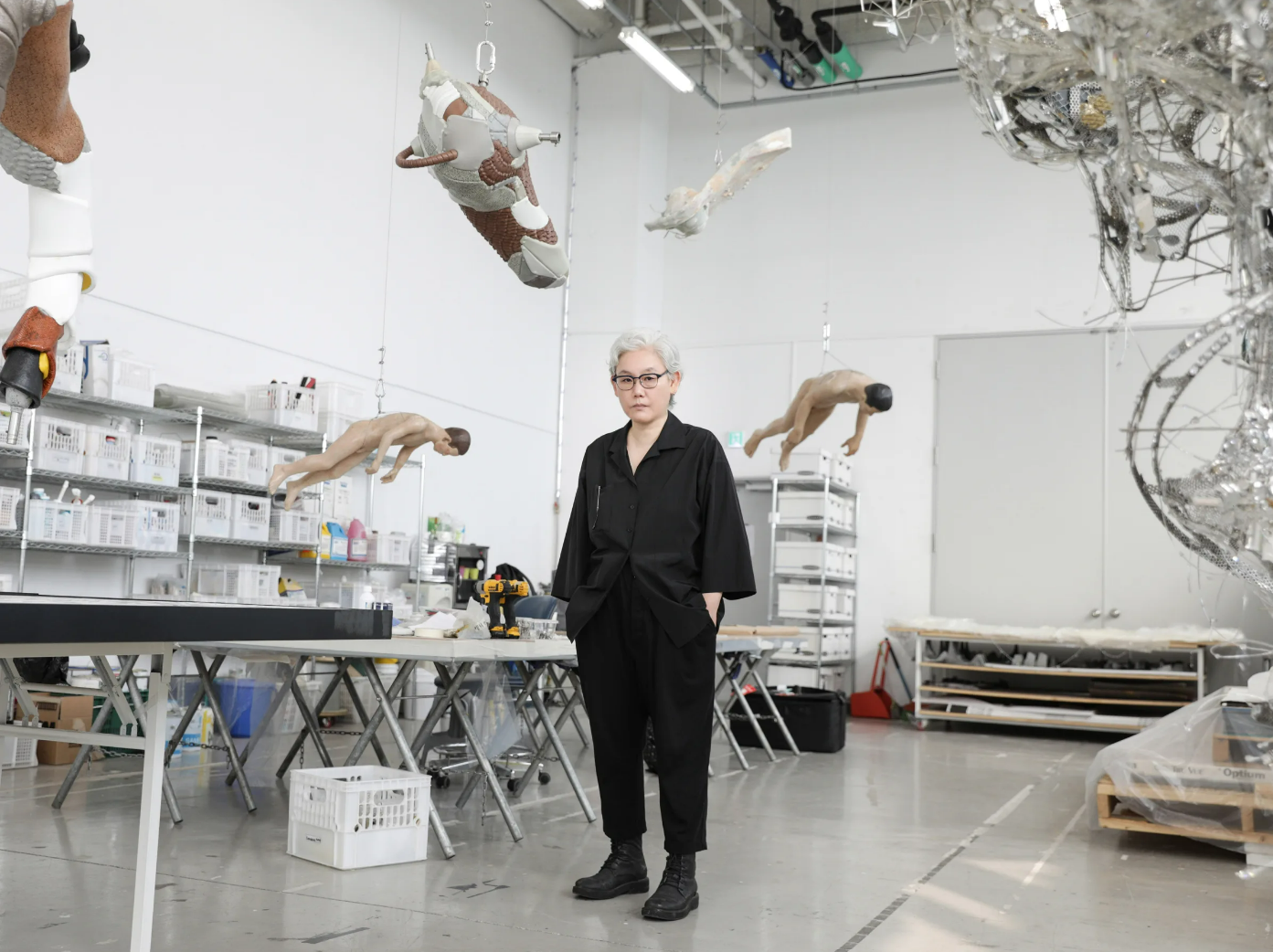
a schedule packed so tightly, she rarely steps outside her studio, which is
attached to her home in Seongbuk-dong, Seoul.
"People
often romanticize art, attributing it to inspiration or madness. But I
disagree. Art is the product of diligence and effort. I don’t believe in myths.
Sometimes, I disappoint myself—why am I not more persistent, why am I so lazy?
Right now, I am consumed with preparing for my upcoming international
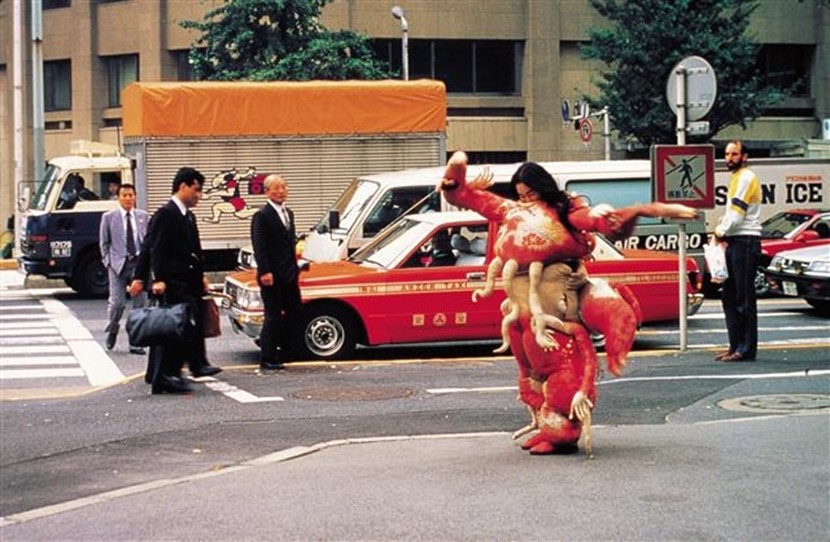
exhibitions, creating works such as Cyborg and Cyber Monster. Winning an award
at Venice gave me a sense of relief, and last summer, for the first time in
years, I allowed myself some rest. But now, I am making up for that lost
time."
Her
daily routine is disciplined. She wakes up at dawn to read, prepares and eats
breakfast, then works from 10 AM until evening. After cooking dinner and
eating, she unwinds by watching TV or videos, replenishing her creative energy.
Unlike before, she no longer teaches university courses, focusing entirely on
her artistic practice.
"My
ideas for new works come from books, comics, and films. Sometimes, I merge
different styles; other times, I create completely new forms."
Lee
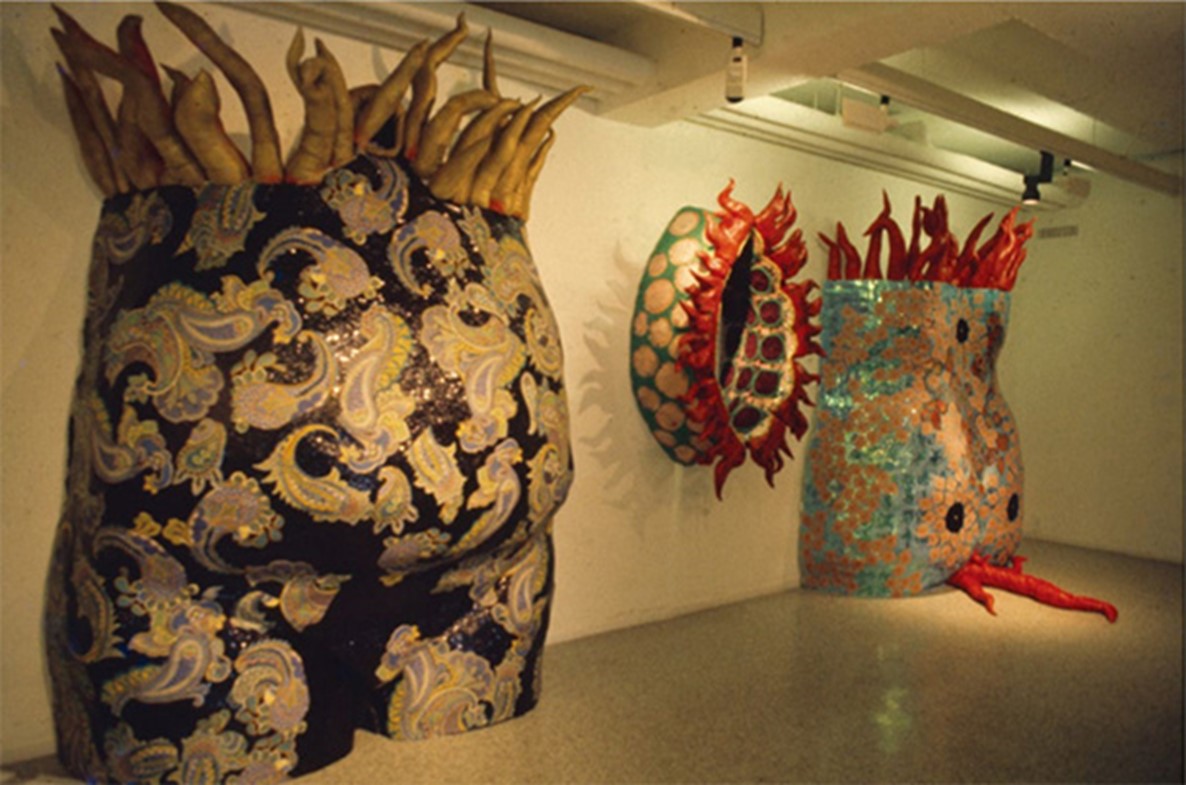
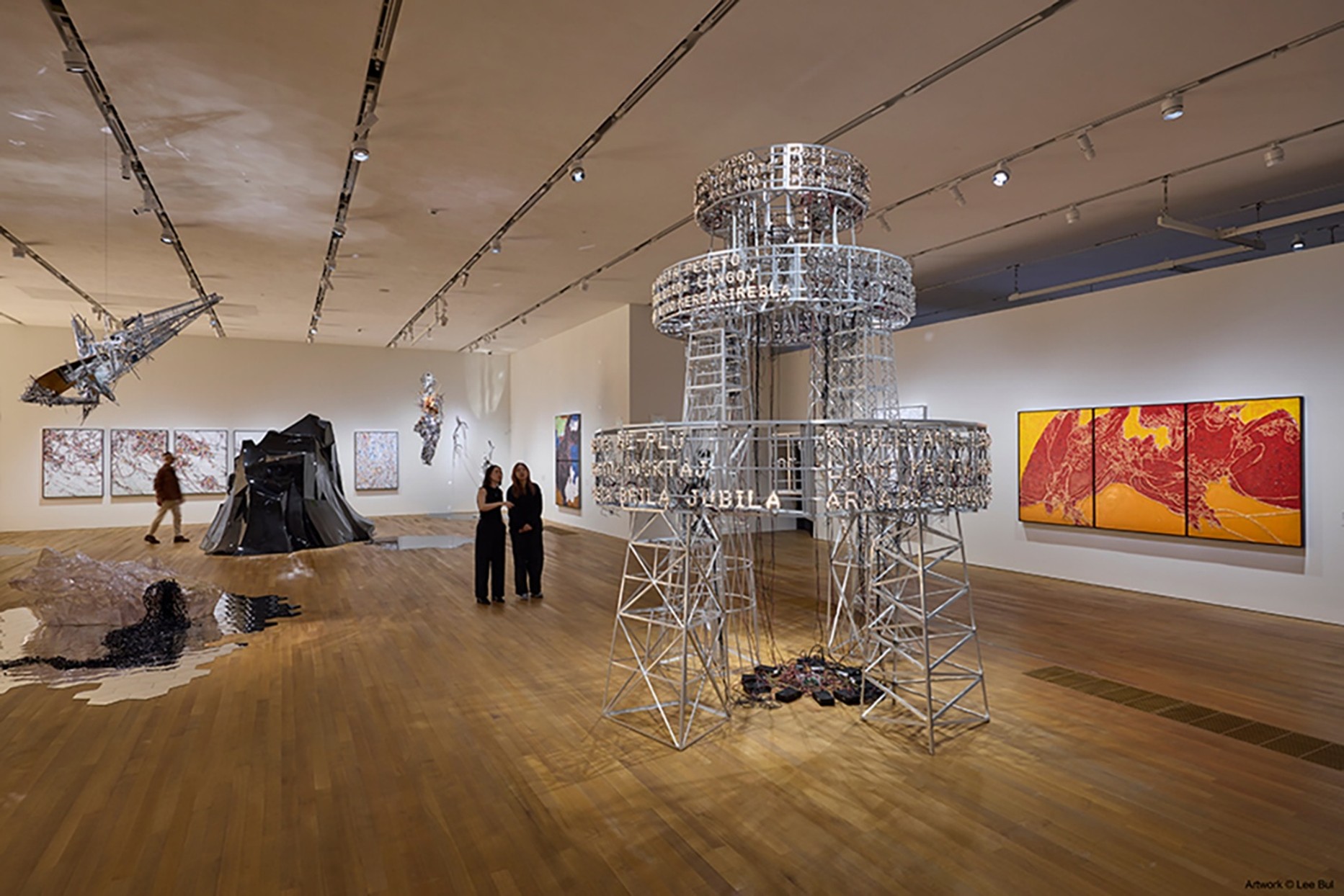
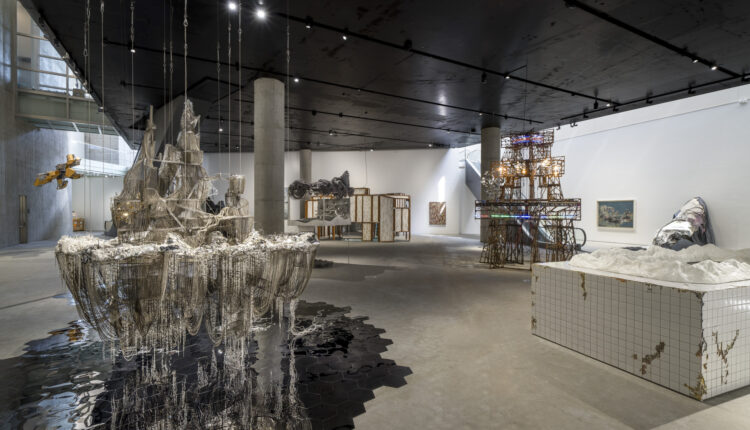
Bul's body of work is diverse, ranging from her Cyborg series—now considered
her signature style—to Karaoke, the work that earned her the Venice Biennale
award, and Majestic Splendor, in which live fish are sealed inside plastic
bags. Earlier in her career, she also performed radical works, such as breaking
chains while performing in the nude.
"My
work has often been categorized under 'civilization critique' or 'feminist
liberation.' While those interpretations are partially correct, I firmly
believe that no visual artwork can be fully and precisely explained through
language alone. Winning an award at Venice or entering the year 2000 won’t
fundamentally change my artistic approach. Instead, I see my work evolving
continuously along a trajectory, where reinvention and new ideas are essential.
Competing internationally requires a mindset akin to that of an
inventor—innovation is key."
Her
creative process begins with rough sketches, followed by rudimentary
sculptures. Then, she refines and adjusts the forms in an iterative process
that she describes as "tedious but necessary."
"Perhaps
due to my academic background in sculpture (Hongik University), my work is
labor-intensive and more physically defined compared to other installations. In
the past, I primarily used silicone, but these days, I work with
urethane."
Lee
Bul has built a reputation as an experimental artist, known for provocative
works such as her nude performances and installations using rotting fish. As
part of the generation that grew up immersed in visual media, she channels the
perspectives and emotions of contemporary 30-something artists. Having
navigated the politically turbulent 1980s, her work explores themes of gender,
power, and the politics of daily life. However, she does so with a playful
edge, making her critiques accessible to the public. Her practice aligns with
the evolving trends of global contemporary art, moving beyond traditional
painting into a space where invention and artistic playfulness converge.
Born
in 1964 in Yeongwol, Gangwon Province, Lee Bul graduated from Hongik University
and has exhibited extensively in Korea and abroad. She has shown her work at
major institutions such as the National Museum of Modern and Contemporary Art
(Seoul), Kumho Museum of Art, and Seoul Arts Center. Internationally, her
exhibitions have taken place at Kunitachi Art Hall (Tokyo), the Fruitmarket
Gallery (Edinburgh), Südwest Landesbank Forum (Stuttgart), an outdoor
projection in Rio de Janeiro, and A Space Gallery (Toronto). She held her first
solo exhibition at IL Gallery in Seoul in 1988 and later exhibited at Art Sonje
Center in 1998. In January 1997, she became the first Korean artist to be
invited for a six-week solo exhibition at MoMA PS1 in New York, where she was
hailed as a rising star in contemporary art.
Despite
her critical acclaim, she remains an independent artist, not affiliated with
any commercial gallery, and ironically, her sales figures do not match her
reputation. She laughs, "I do make collector-friendly works, but people
don’t seem to notice!"
Lee
Bul’s name has been a source of humor since childhood. Her father chose her
unusual name, leading to frequent teasing. "Lee Bul? Like a blanket? Are
you sure it’s not 'Dam-yo'?" she recalls people joking. Her siblings share
similar experiences—her younger sister, Lee Kyung, works in film, while her
younger brother, Lee Bang, is an interior designer. Despite the teasing, she
embraces her name, noting that it has strengthened her sense of self-awareness
and, ultimately, made her more memorable.
During
her university years, she dabbled in theater and music circles. "I was
curious about everything and had a lot of fun back then."
She
has never publicly revealed her husband's name, but she acknowledges that the
support of her younger husband, James Lee, has been an invaluable source of
strength in her career.