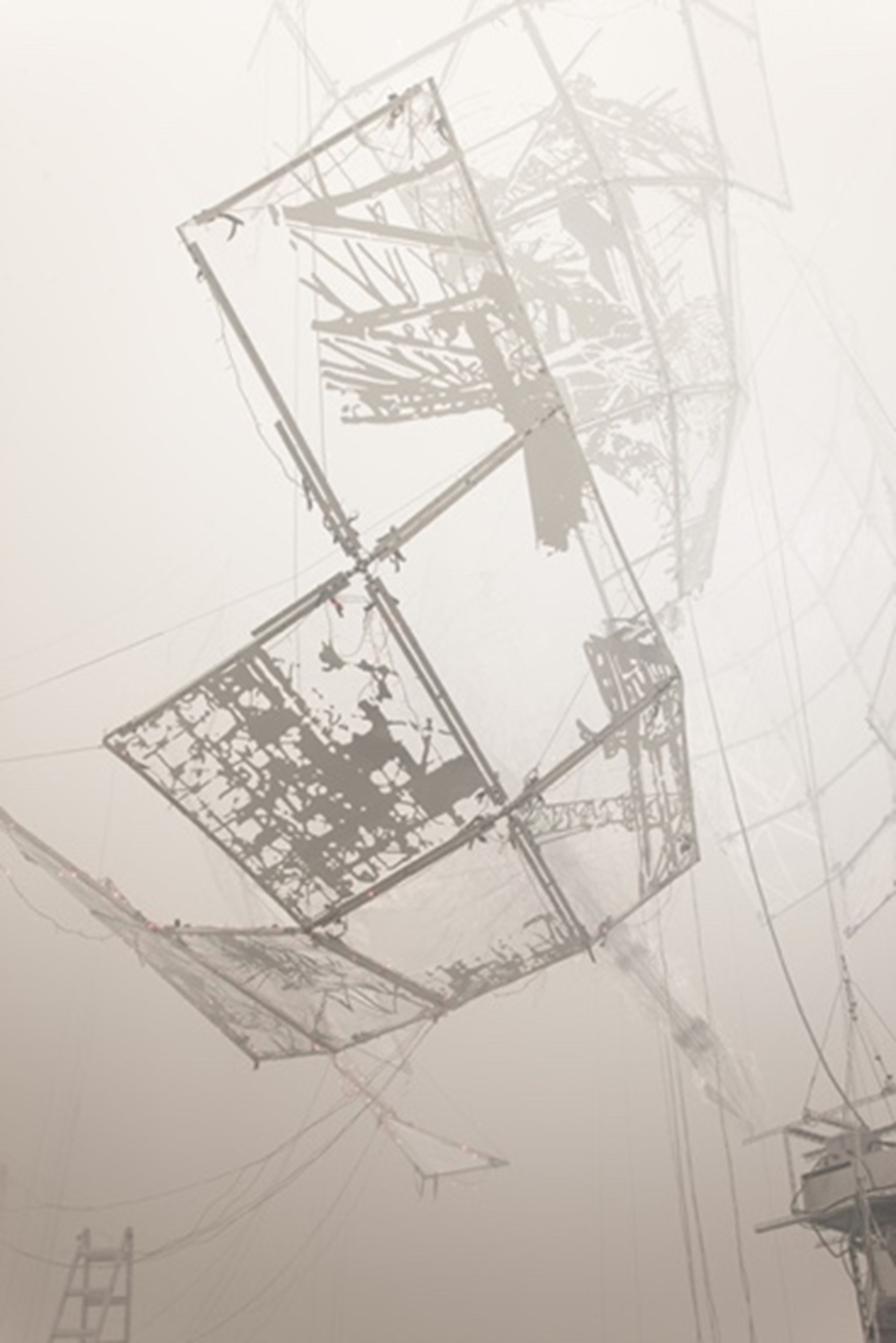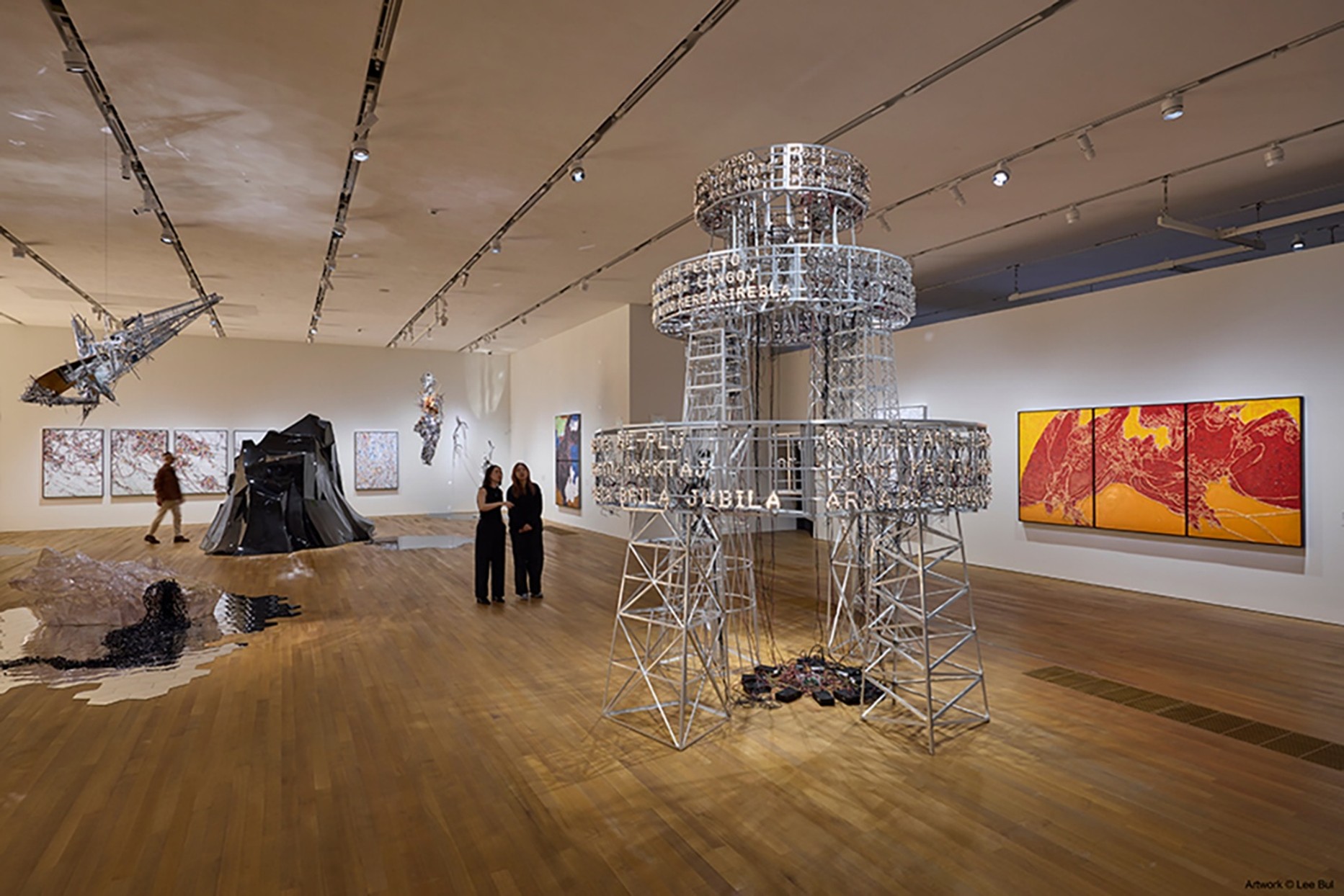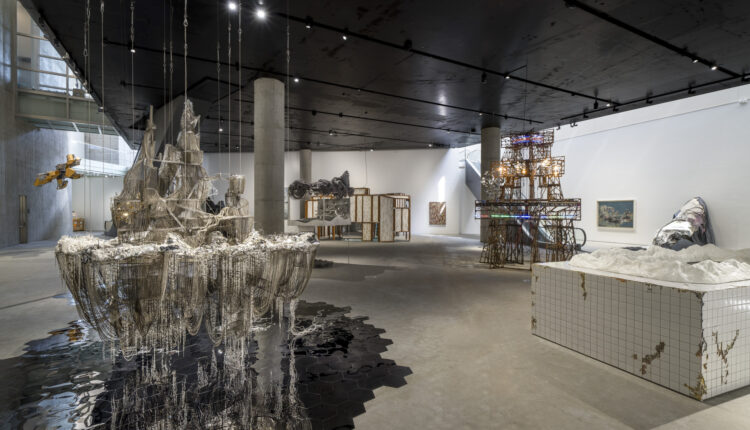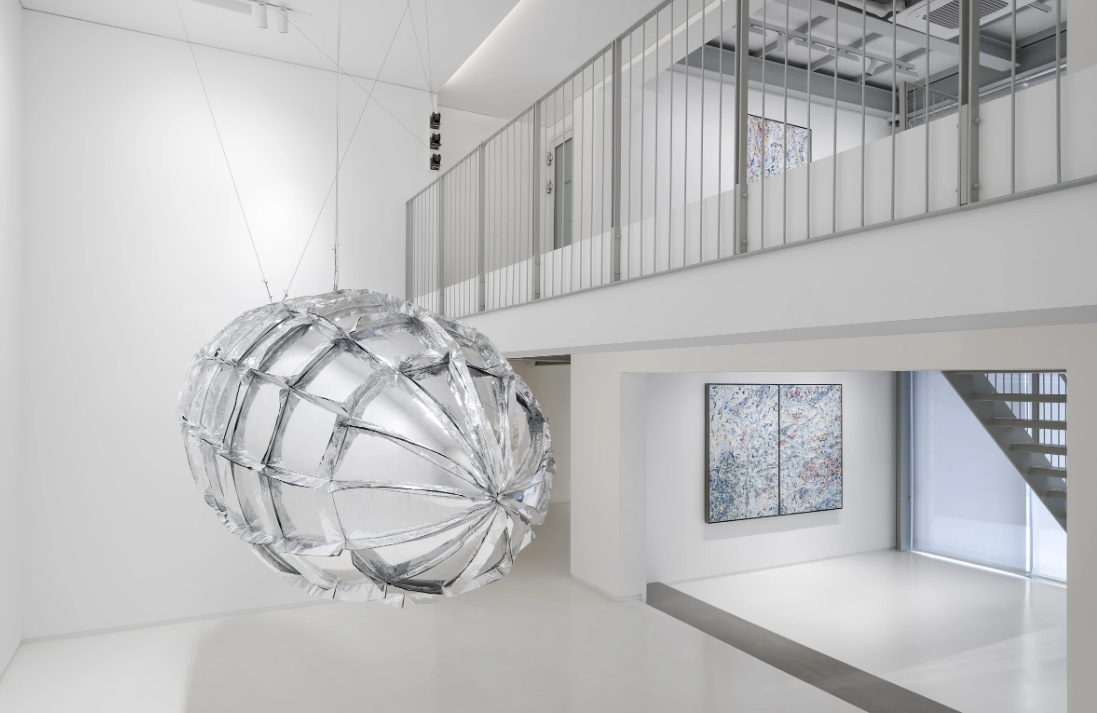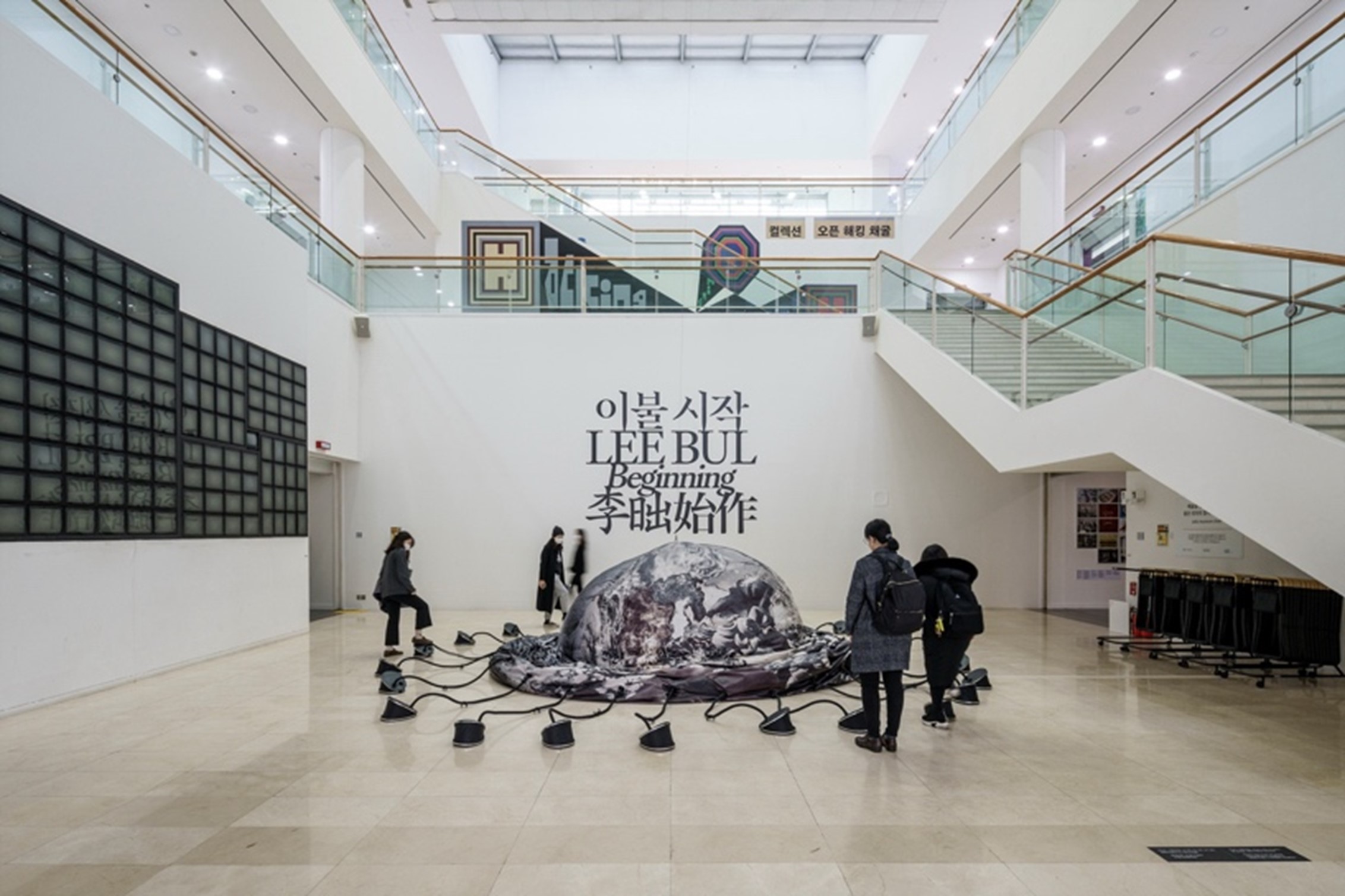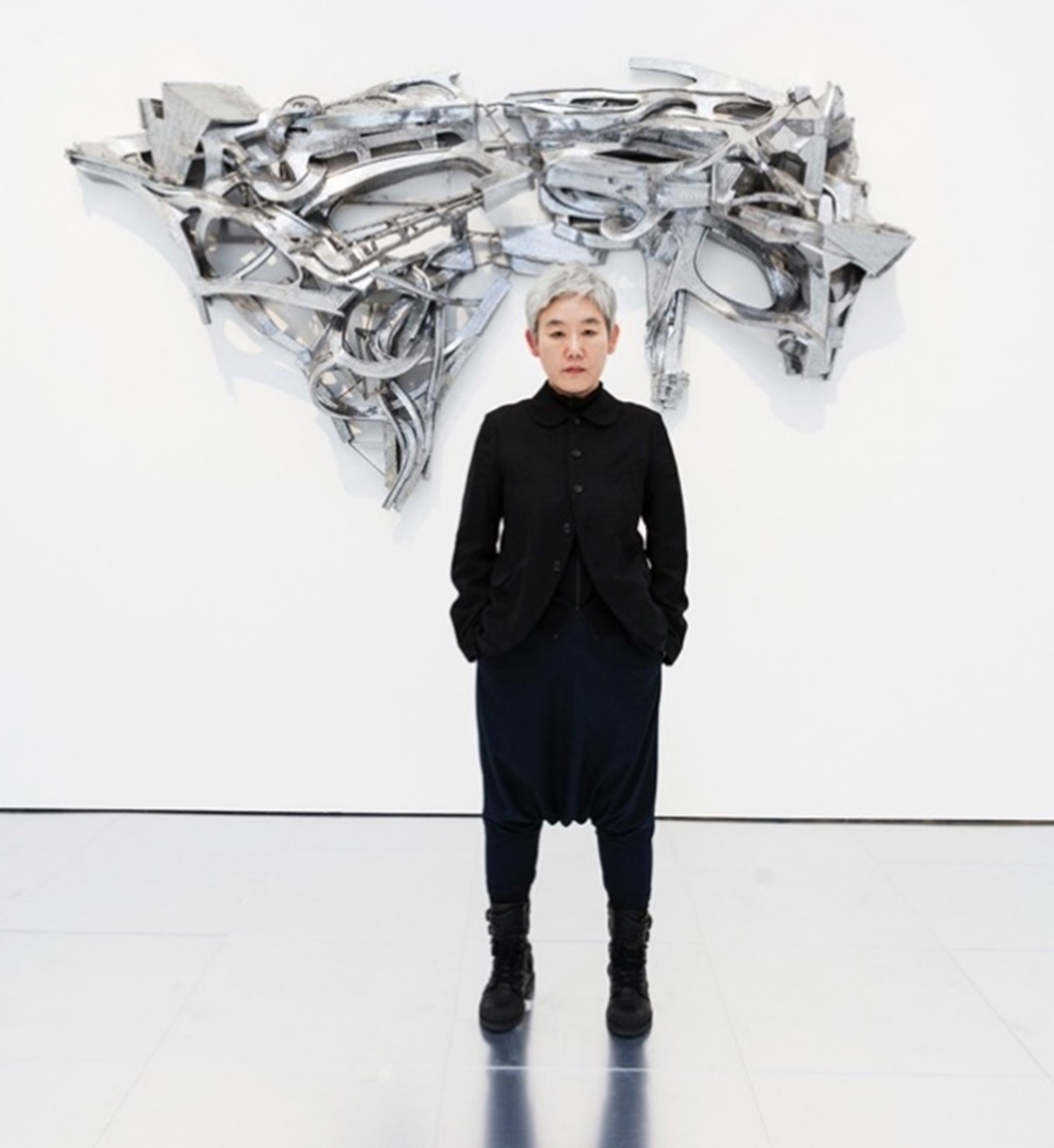

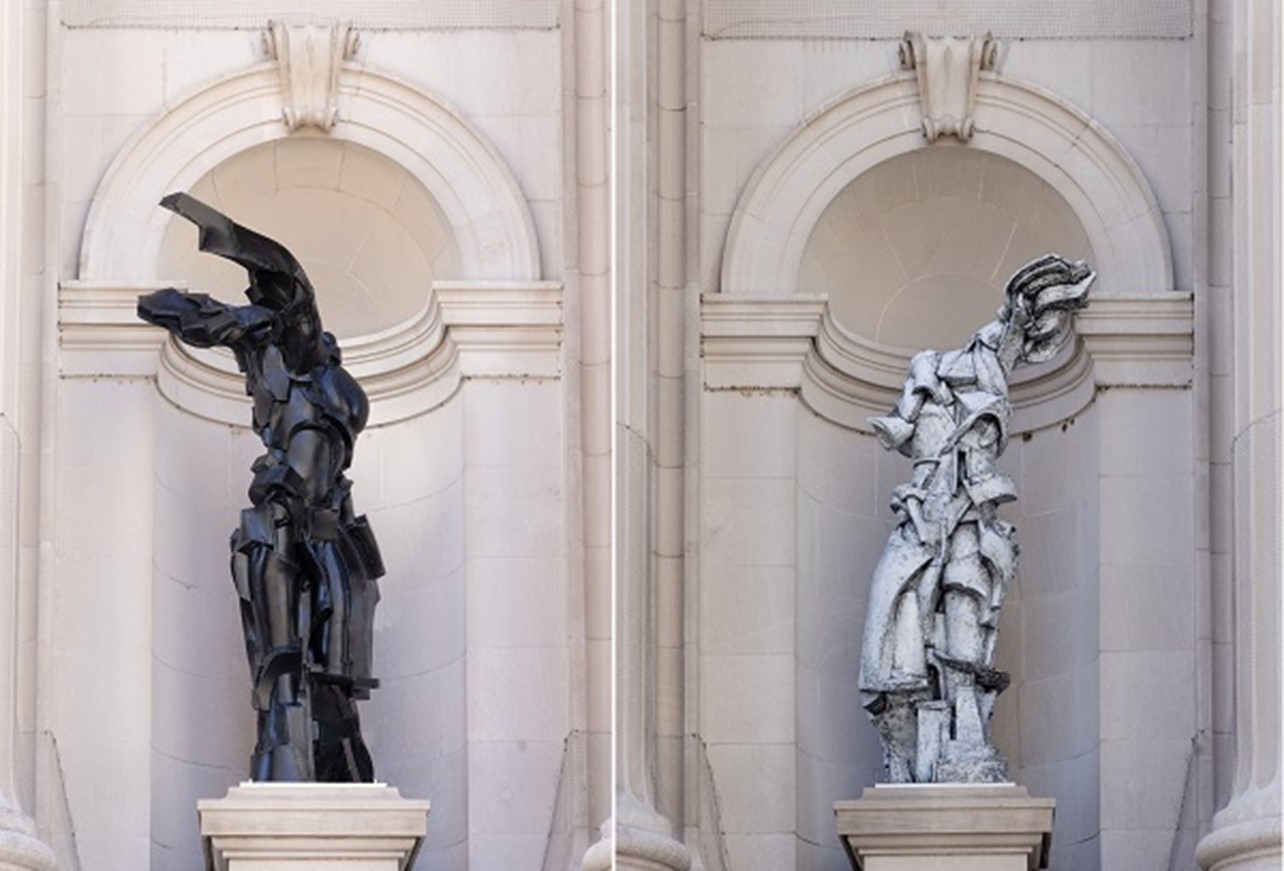
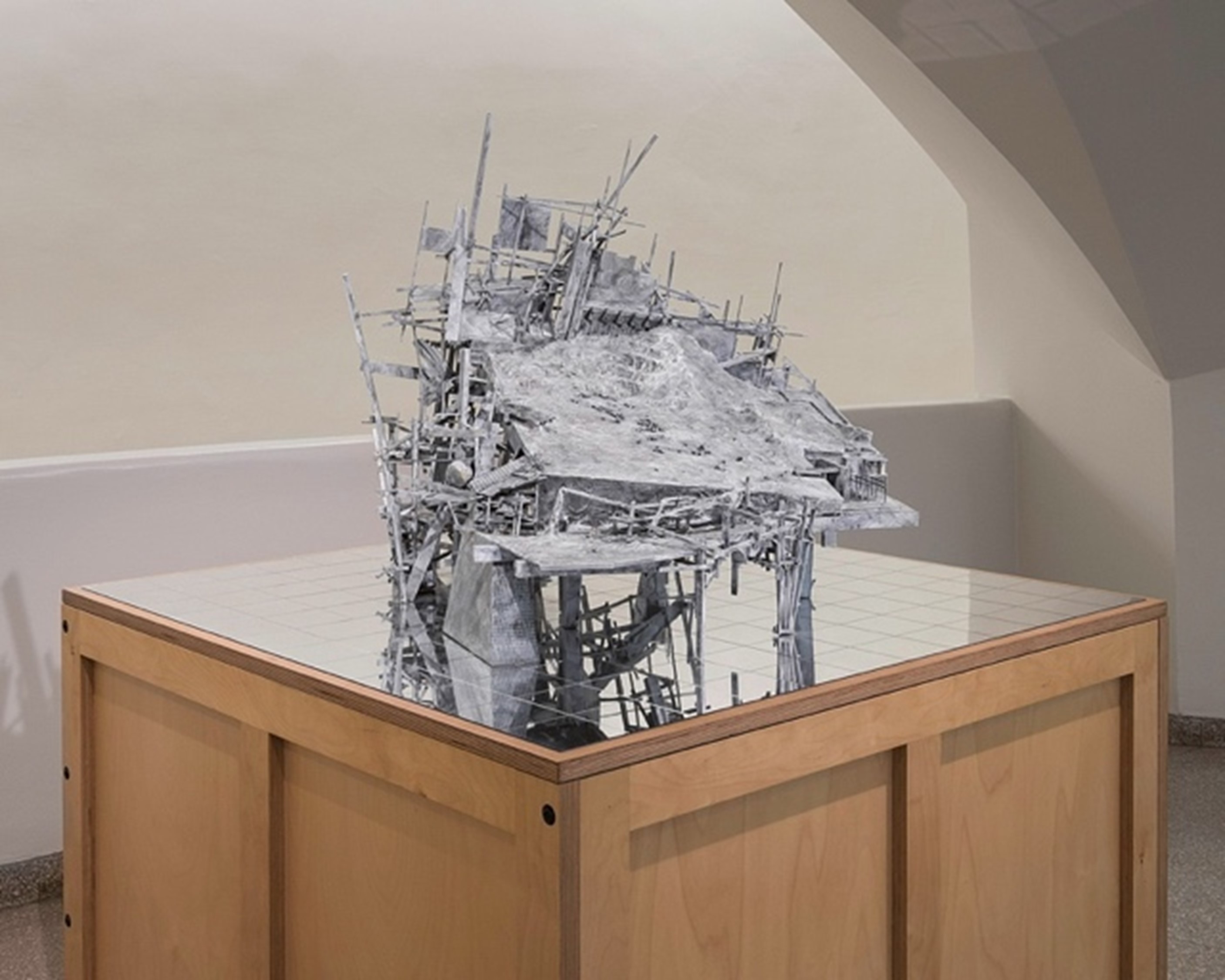
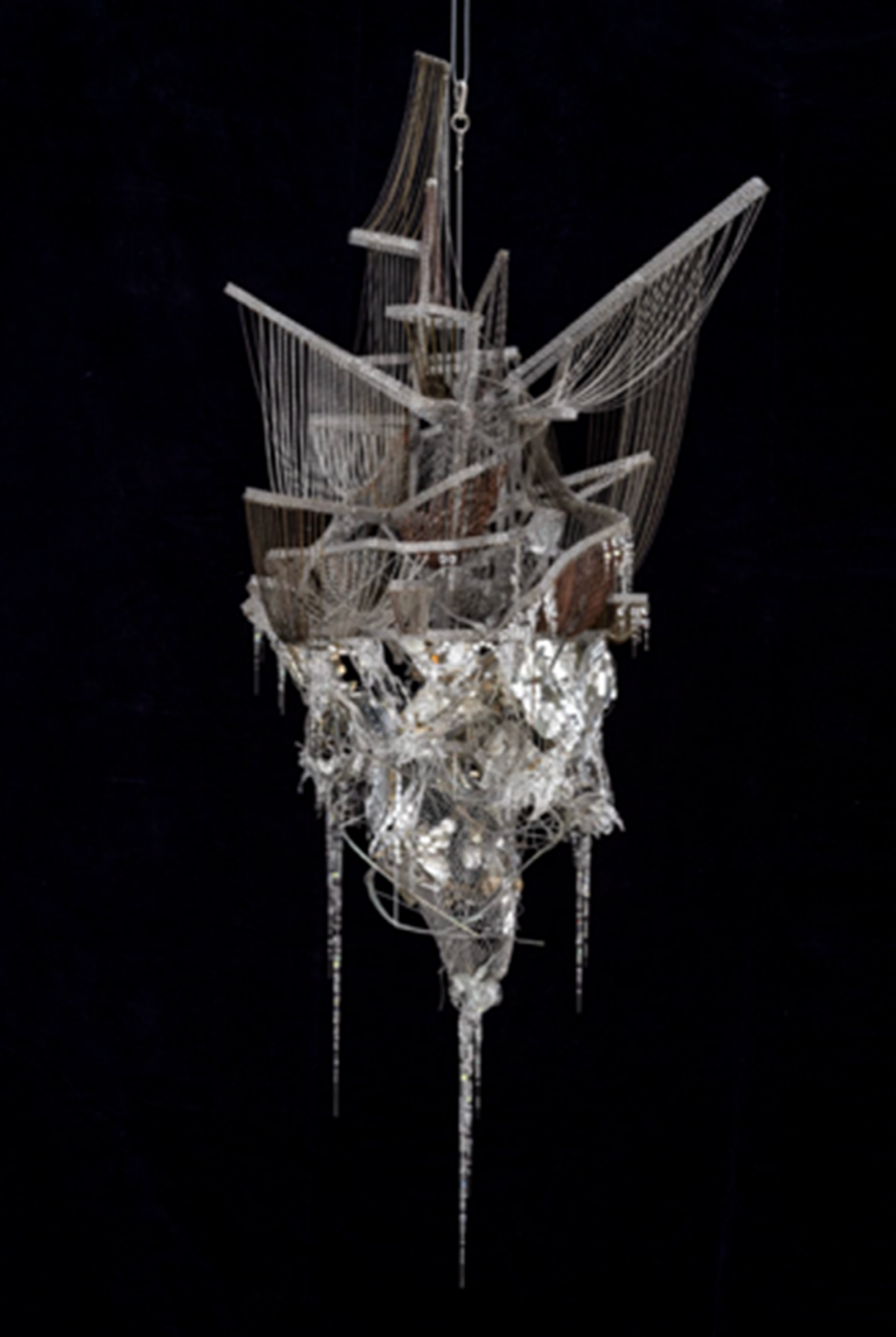
The installation view of Lee Bul's work presented at the exhibition 《Sunday Seoul》 curated by Museum.

The 1990s, just before the dawn of the new millennium, was a period of greater upheaval than any other fin de siècle. Art was no exception—this era marked a turning point that reshaped contemporary Korean art history. The origins of current artistic phenomena can be traced back to this period. This series was conceived out of the urgent realization that revisiting 1990s art before it becomes too historically distant is imperative. The series will focus on individual artists, as this approach effectively highlights the coexistence of diverse values that characterized the art of the time. At the same time, it serves as a testament that, even in an era that declared "the death of the artist," the artist is still very much alive. Some of the artists featured continue to be active, while others do not, but all will be reassessed in relation to contemporary art. In order to preserve the vivid perspectives of the time, previously written texts will sometimes be updated from a present-day standpoint. It is hoped that this series will provide an opportunity to view contemporary art within a historical continuum, deepening and broadening the scope of Korean modern art history.

In art history, the body has long been relegated to the periphery. Considered a mere tool for executing what was regarded as the "great intellectual activity" of art, the body was dismissed as secondary. Furthermore, the modernist trajectory of the 20th century, with its relentless pursuit of "the spiritual in art," effectively erased the body from the realm of fine art.

It was not until the decline of modernism’s spiritualism in the 1960s that the marginalized body began to reemerge as a subject of focus. No longer just a vessel for the intellect, the body—flesh and bone in its raw state, along with the various meanings inscribed upon it—became a key site of artistic inquiry. Performance art, which exposed the body itself or problematized its socio-political implications, exemplifies this shift. In Korea, similar developments can be traced back to the late 1960s. However, in the 1970s, the spiritualism of Dansaekhwa (Korean monochrome painting) and the social realism of Minjung Misul (people’s art) continued to push the body to the margins. It was not until the late 1980s, when global postmodernist currents took root in Korea, that the body became a central theme in contemporary Korean art. At the forefront of this shift was Lee Bul.

Lee Bul was one of the earliest artists to grasp that the body, both as a medium and a subject, could serve as a powerful sign—a site where multiple meanings intersect. Her soft sculptures of the body, her performances using her own body, her Cyborg and Monster series, and even her karaoke installations of the 1990s all functioned as a process of revealing the complex web of meanings inscribed upon the body. Through this, she effectively critiqued existing conventions. For Lee Bul, the body is a screen onto which discourses on gender, race, class, and even posthumanism are projected. It is not a transparent vessel that reveals an inner essence, but rather an opaque shell that reflects the various external gazes cast upon it.

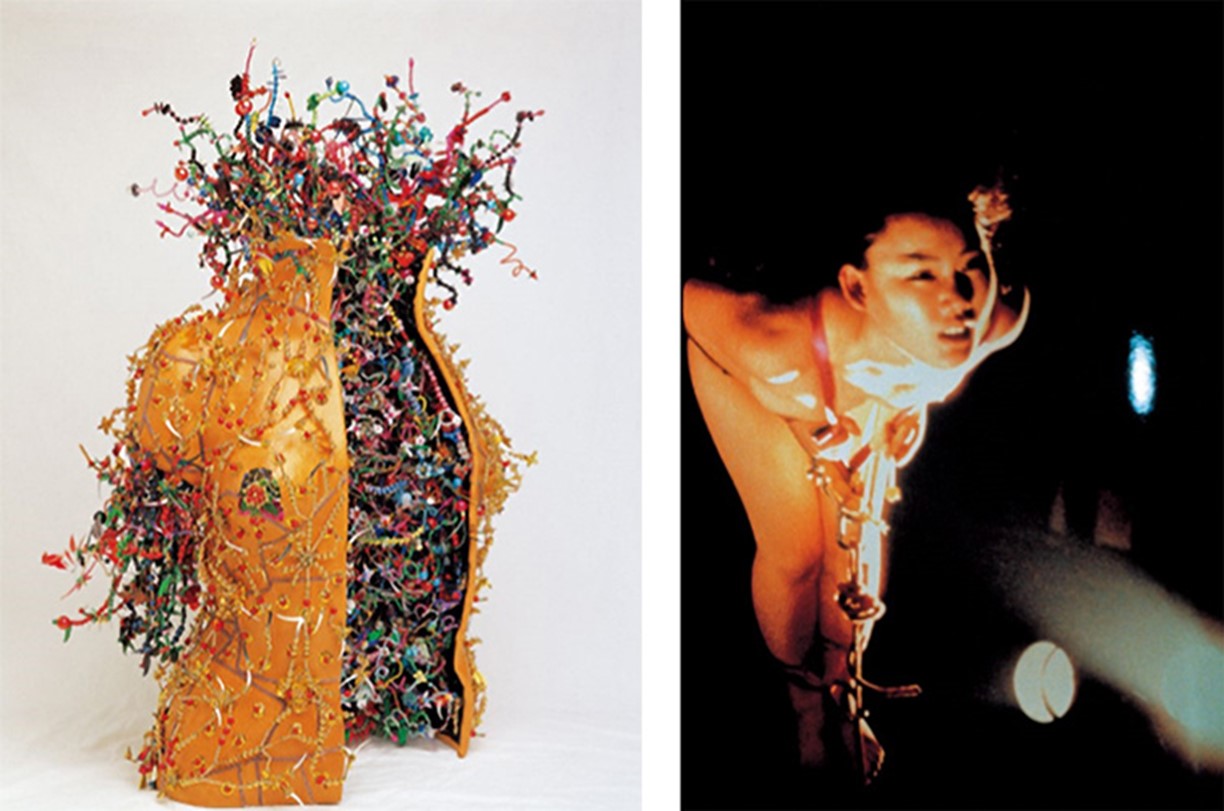
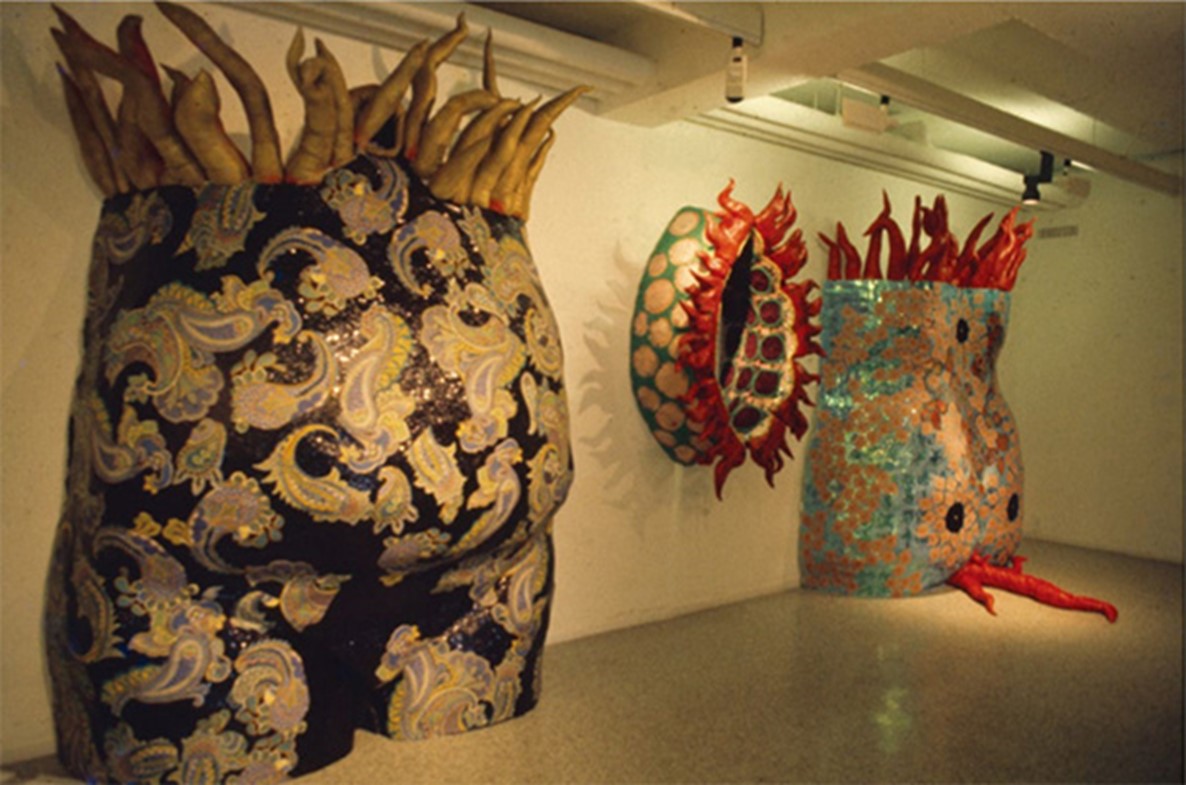
Lee Bul’s perspective on the body was evident from her early works, which quite literally exhibited the shell of the body. Examples of this can be found in the pieces she presented at exhibitions organized by the Museum artists’ collective (1987–1991). She created exaggerated, decorated surfaces of the female buttocks, adorned with intricate patterns and protrusions, transforming them into bizarre, alien forms. These distorted, grotesque bodies countered conventional perspectives on the female form—particularly the phallic-driven idealization of perfect bodily proportions and beauty. This approach aligns with the abject strategy, which, by exposing grotesque or fragmented bodies, resists Western modernist idealism, its underlying spiritualism, and its patriarchal foundations.

Furthermore, Lee Bul’s enormous, grotesque body forms evoke fear, heightening their subversive impact through the aesthetics of the grotesque. Her engagement with bodily distortion persisted in later works, particularly in 〈Plexus〉(1997), where a hollow, headless torso is covered entirely in sequins. Here, the contrast between the terror of bodily dismemberment and the dazzling ornamentation further accentuates the abject and grotesque dimensions of her work.

(Left) Lee Bul, Plexus 1997~1998, Leather, velvet, sequins, beads, 95×80×35cm ©Studio Lee Bul
(Right) Lee Bul, Abortion, 1989, Still from original performance ©Studio Lee Bul

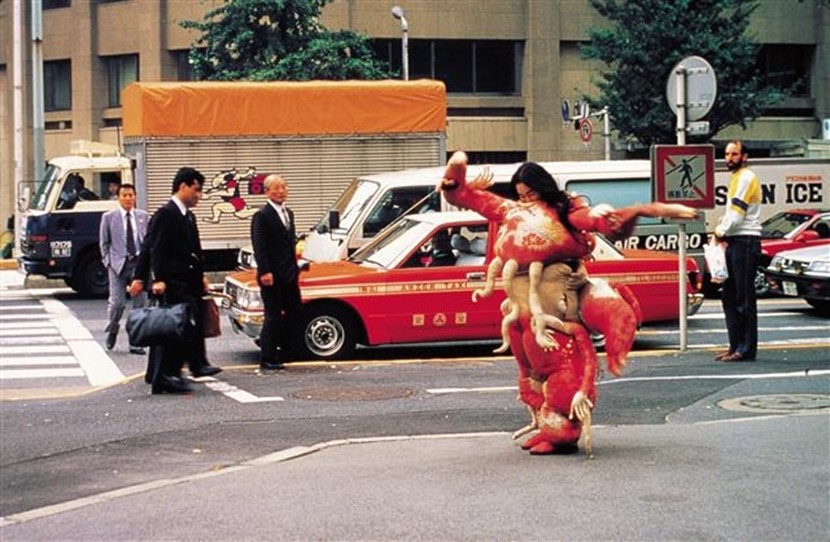
Lee Bul also transformed this shell of the body into wearable garments, donning them herself in provocative performances. Beginning with a 1989 performance in which she wandered across the fields of Jangheung in a grotesque outfit, she went on to stage similar performances in airports and on the streets of Seoul and Tokyo the following year. By becoming a monster herself, she actively embodied the grotesque aesthetic. Through these acts of exposing and transgressing the boundaries between human and monster, beauty and ugliness, mind and body, man and woman, she performed a gesture of defiance against all forms of binary opposition. It was a thrilling act of provocation, shattering the myth of the perfect body entrenched in art history, exposing the inherent violence within that myth. In doing so, she played the role of a shaman, overturning the established system through the body while simultaneously enacting a kind of ritualistic healing.

These performances exemplify how Lee Bul used her own body as a medium. Another performance, 〈Abortion〉 (1989), pushed this further by presenting her completely naked body without even the layer of clothing. The simple act of displaying a naked body in itself serves as a potent symbol of systemic transgression. Furthermore, in the 1993 iteration of 〈Abortion〉, she heightened this symbolism by suspending herself upside-down or presenting herself as a shackled slave with an iron collar. This aligns with global trends in performance art at the time, which encompassed autobiographical experiences and acts of bodily self-infliction, making it one of the most powerful feminist performances in the history of contemporary Korean art.

From 1991 onward, Lee Bul expanded her use of materials beyond the human body with the ‘Majestic Splendor’ series. In this series, she enclosed fish decorated with sequins inside plastic bags, displaying the gradual process of their decay—including the stench—as part of the artwork itself. By doing so, her work transcended the human body to encompass all living organisms, expanding into existential questions of life and death. The juxtaposition of the decomposing organic matter with the permanently shimmering artificial sequins created a striking vanitas allegory, confronting themes of transience and eternity. The sequins, commonly associated with low-cost jewelry and domestic labor, also alluded to women’s cheap and undervalued labor. When placed alongside the rotting flesh of animals, they evoked deeper tensions between nature and artifice, the ephemeral and the eternal—layering a critique of social inequality atop this philosophical dialectic.

One of the works from this series was exhibited at MoMA in 1997 but was promptly removed due to the overwhelming stench, leading to an international controversy. Ironically, this incident cemented Lee Bul’s status as one of the leading artists of her time. Through this series, she was recognized as a key figure in abject aesthetics, transforming biological decay and its repugnant odor into art. Furthermore, by incorporating the process of decomposition as an essential element of the work, she was also regarded as a process artist, making time itself an intrinsic mode of her artwork’s existence.

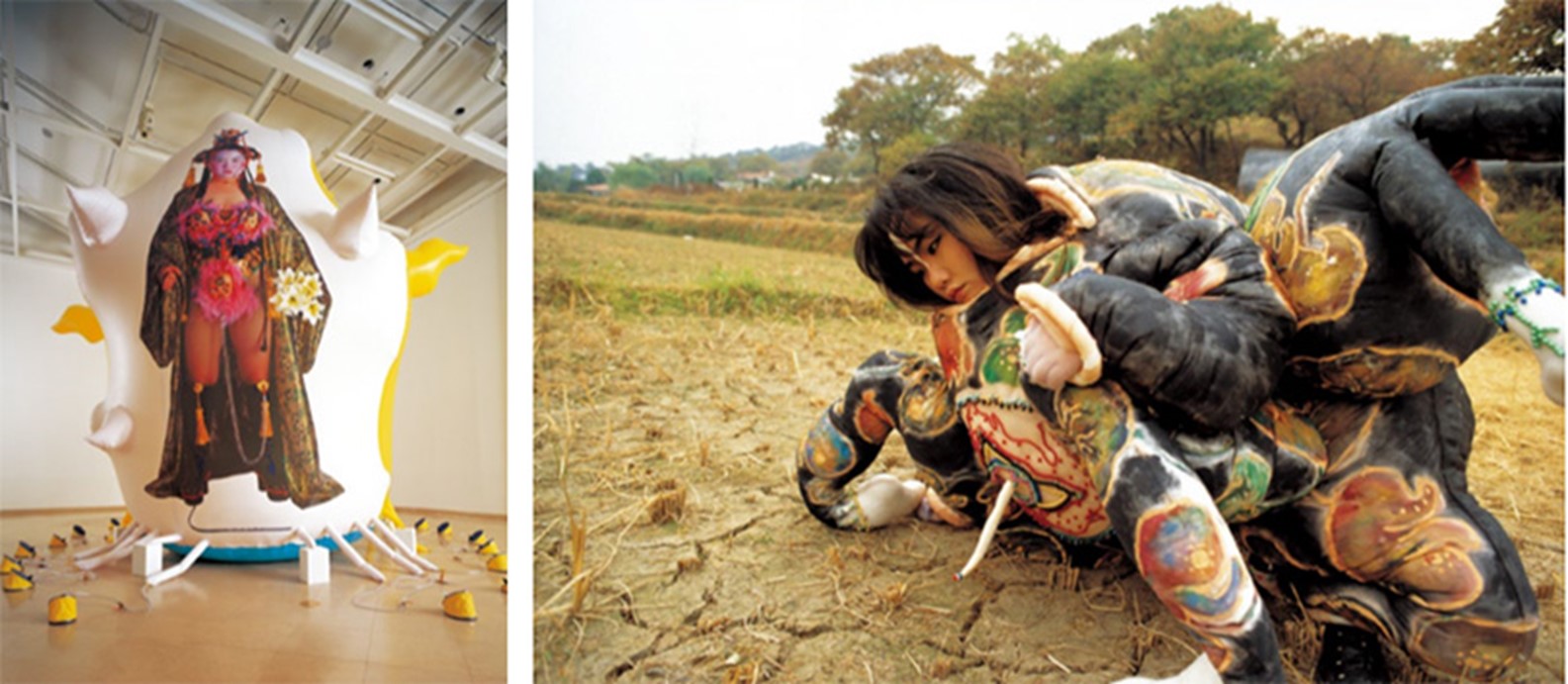
(Left) Lee Bul, Hydra (Monument), 2022, Photo print on vinyl, air pumps, 600(h)×450cm diameter at base 1998 Installation view, Rodin Gallery, Samsung Museum, Seoul ©Samsung Museum
(Right) Cravings,1989, Still from original performance ©Studio Lee Bul

Alongside these works, in 1994, Lee Bul began producing large inflatable sculptures featuring images of women printed onto them and displayed them in public spaces like commercial billboards. By 1996, she had replaced these images with her own likeness. Once again, the artist's body was used as the medium of her work, but this time, it was presented not as a physical entity but as an image.

She deliberately portrayed herself as the stereotypical Asian woman constructed through the gaze of Western men—yet, as the title 〈Hydra〉 suggests, she reconfigured herself into a provocative femme fatale figure. These images were then literally "inflated" into towering balloon sculptures, exposing the artificial and exaggerated nature of these visual constructions. The balloon, resembling a phallic symbol and repeatedly expanding and deflating, humorously underscored the intersection of feminism and postcolonialism.

Moreover, Lee Bul connected these critical discourses with popular culture, adding another layer of meaning. By displaying an image of a Westernized female warrior adorned with traditional Asian garments and accessories—akin to a commercial icon in a Third World city—she transformed it into a signifier of multinational capitalism and the hybrid culture it imposes on postcolonial societies.

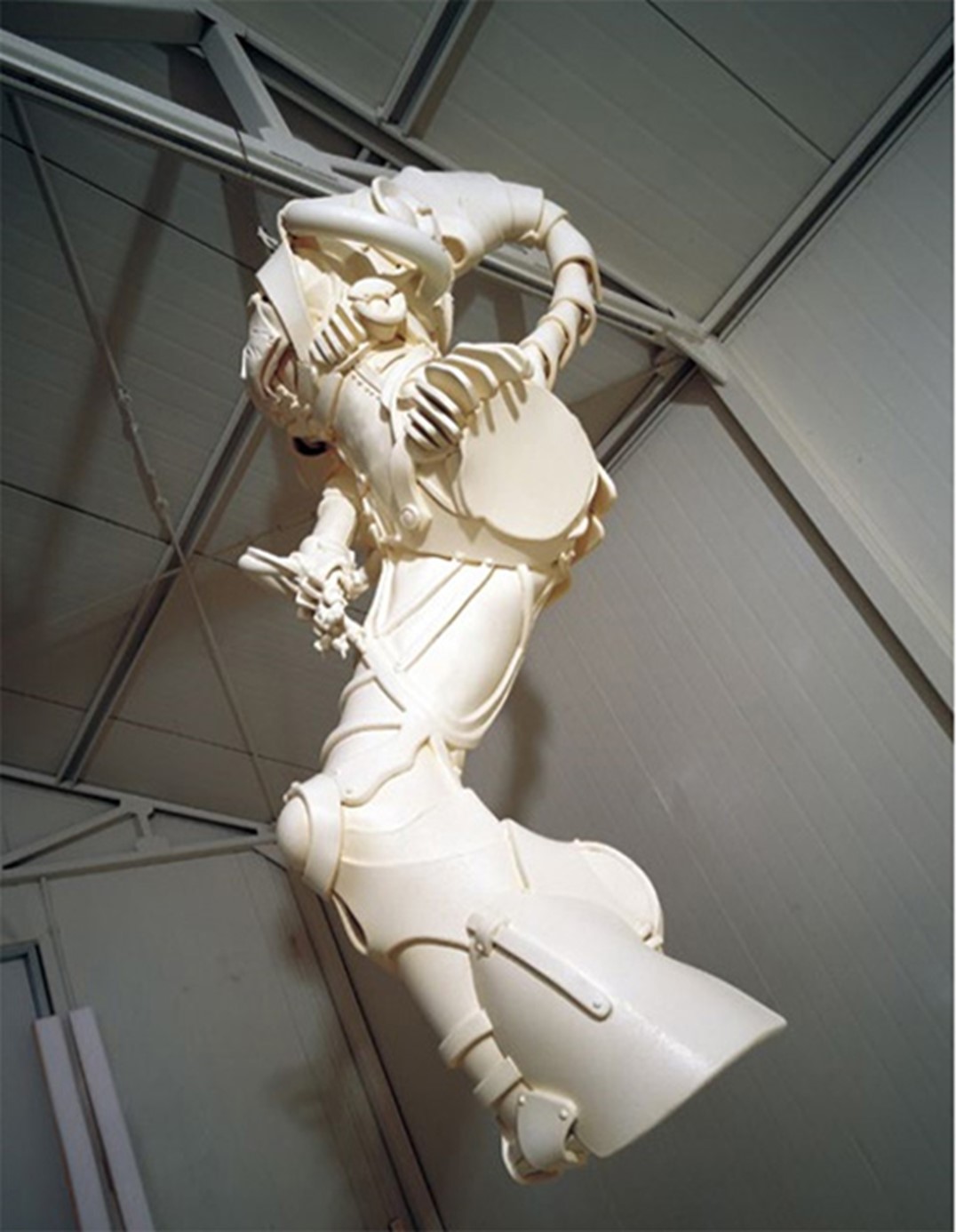
Lee Bul, Cyborg W5, 1999, Hand-cut polyurethane panels on FRP, urethane coating, 150×55×90cm ©Studio Lee Bul

The hybrid nature that connects East and West, mass culture and high culture, is also evident in Lee Bul’s 〈Cyborg〉 series, which she began in 1997. These cybernetic female figures, designed to resemble nearly perfect human forms, echo the imagery of female warriors in Japanese anime. By incorporating the concept of a technologically enhanced and flawless female body—specifically that of a young girl—she introduced feminism into the discourse of technological civilization. Furthermore, by employing anime, a cultural product of the East, she refined the discursive impact of her work.

Displayed on pedestals like Greek statues or suspended in the air as idealized forms of beauty, these bodies are, in reality, plastic assemblages, akin to robots—mechanized figures whose limbs are severed and incomplete. Through the fusion of technology, Western ideals of human proportion, and the body of an East Asian woman, Lee Bul exposes the constructed nature of the dominant Western male gaze that has shaped postmodern history.

Lee Bul’s Cyborg series immediately evokes Donna Haraway’s A Cyborg Manifesto (1985). The artist herself acknowledges familiarity with this text, and her works align with its ideas to some extent. However, Lee Bul’s Cyborgs are not a direct manifestation of Haraway’s vision. While Haraway frames cyborg hybridity as a path toward female liberation, particularly for women of color, Lee Bul positions cybernetics not as a tool for struggle, but as a starting point for critical discourse. Most significantly, as the Cyborg series’ incomplete bodies suggest, Lee Bul does not perceive cybernetics as an optimized tool, but rather as a subject of critique.

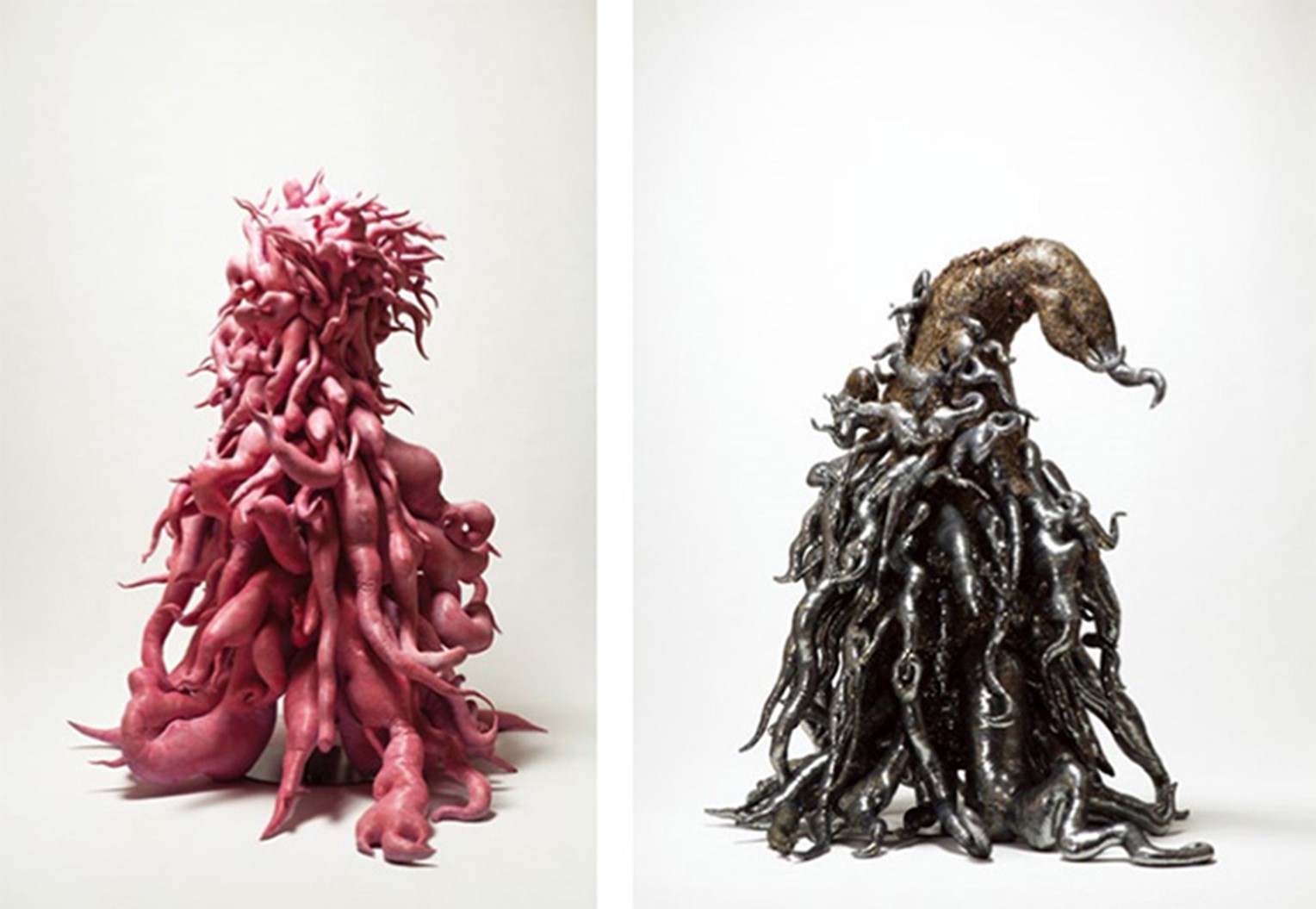
(Left) Monster: Pink, 2011 (reconstruction of 1998 works), Fabric, fiber filling, stainless steel frame, acrylic paint, 210×210×180cm ©Studio Lee Bul
(Right) Monster: Black, 2011 (reconstruction of 1998 works), Frame, acrylic paint, fabric, fiber filling, stainless steel, 217×187×171cm ©Studio Lee Bul

The creation of 〈Monster〉, which Lee Bul began in the same year she introduced her 〈Cyborg〉 series, affirms her "alternative" stance. These unnamed creatures, reminiscent of internal organs, tree roots, or branches, do not take the mechanical form of cyborgs but instead resemble living organic entities. Like cyborgs, the Monsters visualize the cybernetic space of the space age, yet they emphasize organic qualities rather than technological aspects. Resembling gelatinous extraterrestrial beings, they serve as a visual representation of cyber space, where flexible segmentation and interconnections occur.

At the same time, the soft, pulsating, and provocatively writhing pink and black Monsters evoke both desire and fear, revealing the dual nature of the male gaze. As their name suggests, they represent yet another version of the monstrous female figure that Lee Bul previously explored. Moreover, they symbolize a posthuman identity that rejects the myth of totality. Just as 〈Cyborg〉 embodied a body without organs, Monsters represent organs without a body—both resisting the well-defined contours of the human form that modernity sought to establish. As fragmented bodies, they constantly challenge boundaries between male and female, human and non-human, technology and nature. Through their unstable identity, they materialize the world of floating signs.

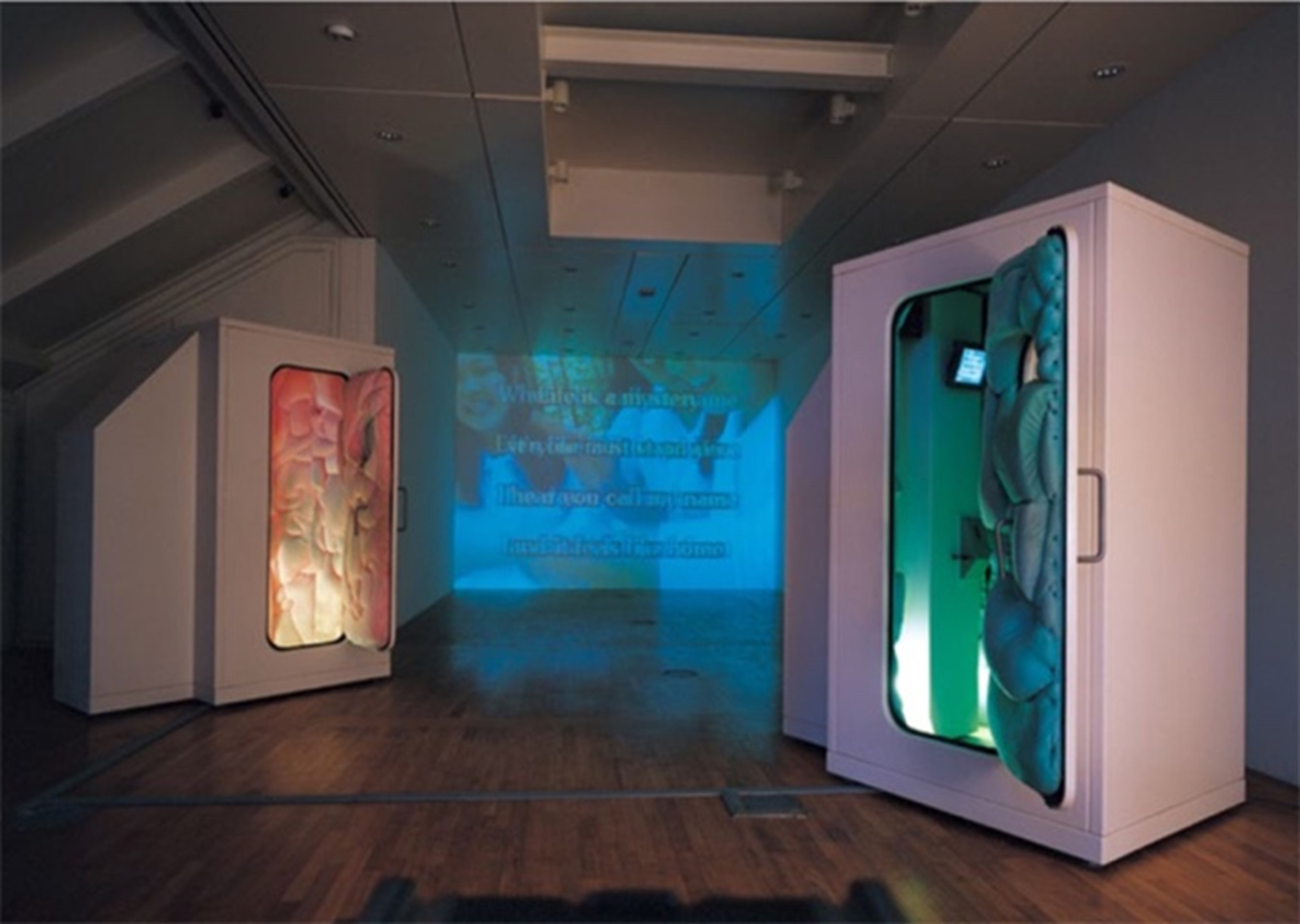
As Lee Bul continued exploring varied bodily forms, her work gradually converged with the technological body and its sensory experience by the late 1990s. The shifts initiated with the Cyborg and Monster series were further materialized in the karaoke installation she began in 1999. In this work, the audience enters a capsule-like body, where they watch moving figures on a screen and sing along. This piece reinterprets her earlier themes of technology and mass culture in a new interactive format. Here, the body transcends its material existence, manifesting instead through image and movement. In this virtual space, where anonymous figures come and go and a fake (kara) orchestra (oke) plays nostalgic songs, both the screen-bound figures and the audience transform into cyborgs—becoming part of the digital world, much like computer pixels that traverse space and time.

Gravity Greater Than Velocity I and II with video projection Amateurs, 1999,  Polycarbonate panels on steel frame, velour, electronic equipment ©Studio Lee Bul

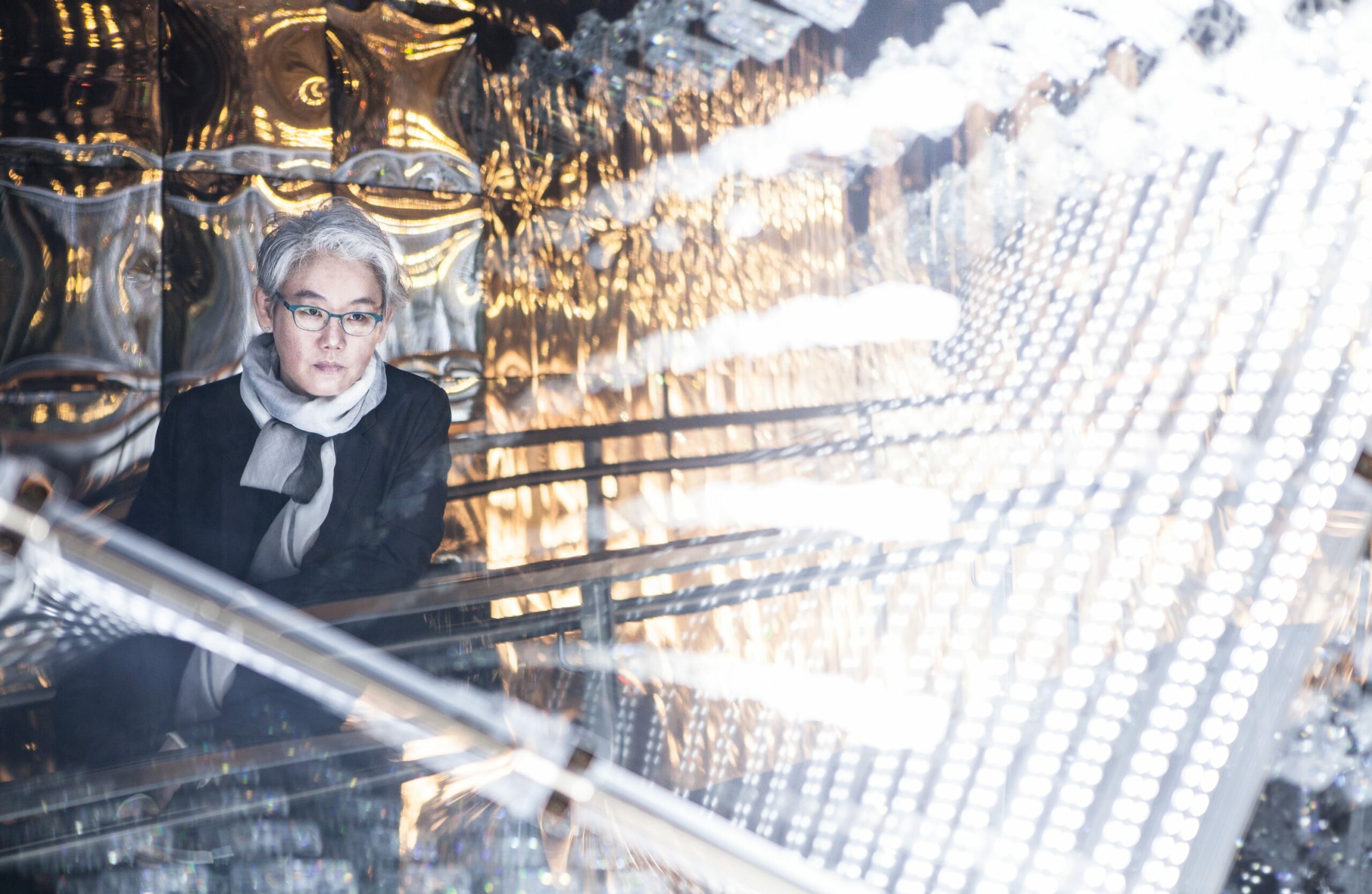
This work marked a turning point in Lee Bul’s artistic trajectory in the 2000s, as she began to critically reflect on the modernist ideology that gave rise to technocracy and the utopianism that underpinned it. Over the past decade, her work has evolved into ruin-like structures, built from glass panels, steel frameworks, and a variety of found objects, or expanded into deconstructivist architectural installations that encompass entire exhibition spaces. Here, the body—once a central motif in her practice—has transformed into a vessel, and further, into an ideology that shaped and contained it.

In these recent works, Lee Bul constructs a future urban landscape, where kaleidoscopic infinite reflections distort and fragment visual perception. Within this space, the disoriented crowd is evoked, lost in a setting where boundaries between self and other dissolve, and temporal sequences are disrupted. What remains is a dystopian inversion of the modern utopian dream—a technological ruin. This ruinous space is not merely a critique of modernist ideals; rather, it represents a paradoxical site where the extreme realization of modern aspirations leads to their own dissolution. It is, in essence, a postmodern topos—the site of a vanished dream.

Since the late 1980s, "the body" has been the primary thematic axis of Lee Bul’s work. Through various iterations—her own physical body, its outer shell in the form of garments, fabricated bodies like Cyborgs and Monsters, capsules, and architectural structures—she has continuously deconstructed and reconstructed the body, exposing the network of meanings inscribed onto it while simultaneously questioning those very meanings.
 
All of the bodies she has presented over the years function as opaque shells, reflecting back the external gaze rather than revealing an essential core. She persistently redirects our gaze to the body's surface, compelling us to confront the projections imposed upon it, while systematically negating the notion of an intrinsic, transparent self. By dismantling the material exterior of the body, Lee Bul enacts a radical deconstruction of subjectivity, embodying the contemporary discourse on "the death of the subject."

However, paradoxically, her emptied-out bodies remain saturated with meaning. In proclaiming the death of the subject, her work simultaneously heralds the birth of another kind of subject—one that is fluid, constantly negotiating its position within an ever-shifting network of meanings. This conceptualization of subjectivity serves as a crucial tool for dismantling both modernist ideologies and the phallocentrism they perpetuate.

Lee Bul’s approach can be understood as a political intervention through the body—one that diverges significantly from the politically charged aesthetics of Korean Minjung Misul (People’s Art). She does not merely foreground the body as a subject of inquiry; rather, she embraces craft techniques and decorative elements, invoking tactile and olfactory senses, and deploying abjection and grotesque aesthetics to disrupt the masculine, vision-centric political rhetoric that still dominates Minjung Art. Instead, she offers an alternative: a "feminine politics" of the body.

References