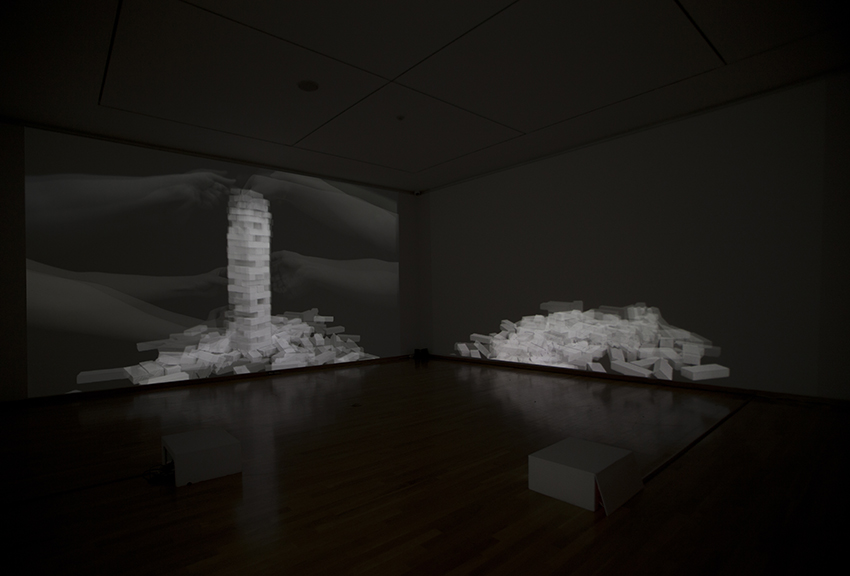
According to the parable of The Tower of Babel from Genesis 11:1–9, the single language that existed was divided into many, as a result of God’s denunciation of humans. After the Flood, humankind started building a tower with its top in the sky to challenge and confront God and nature. Through the process of this massive construction and urbanization, humans could achieve the single language and dominant power structure.
God’s wrath about the arrogance of humans resulted in the differentiation of languages, which evoked mistrust and created chaos among humans, scattering them as ethnicities with different conventions and cultures. The Tower was never accomplished and collapsed in the end, turning into a dystopian ghost.
Now we, their descendants, are building up another Tower of Babel by means of globalized circulation of dollars as the single language in our consumerist system. The repetition of this history seems to warn us that even globalization can collapse by unexpected natural disasters such as COVID-19.
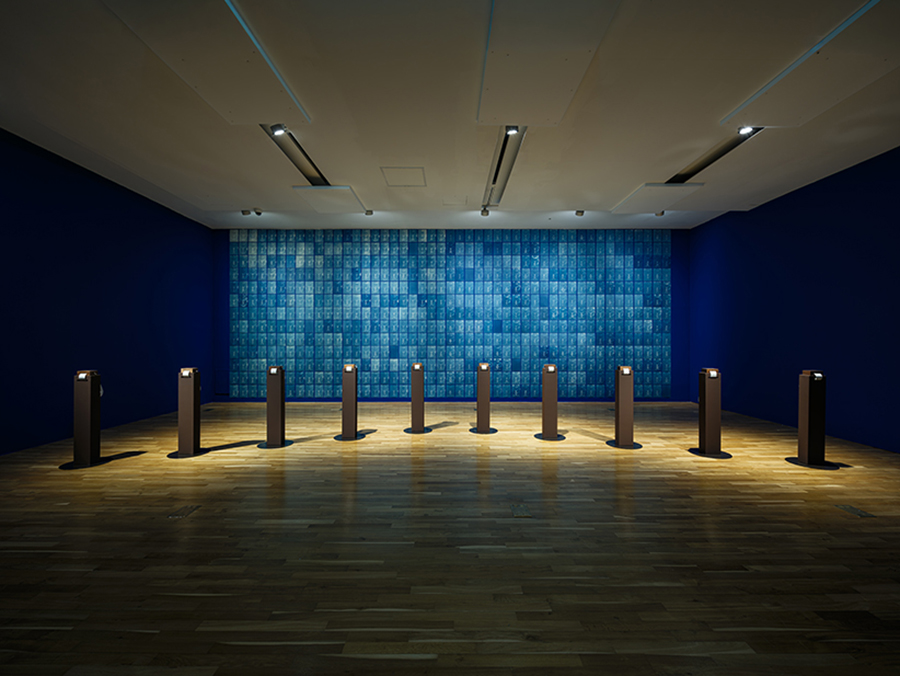
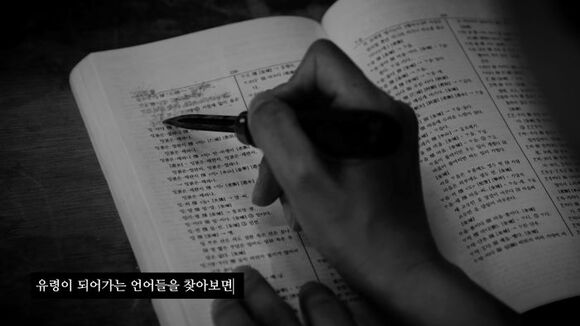
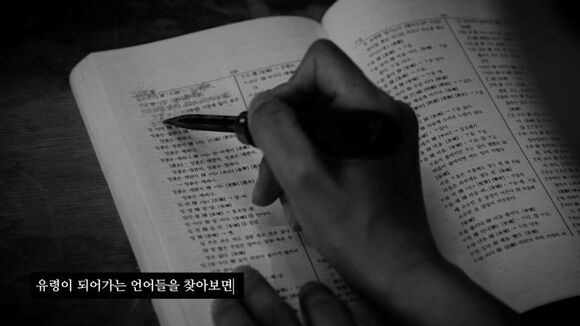
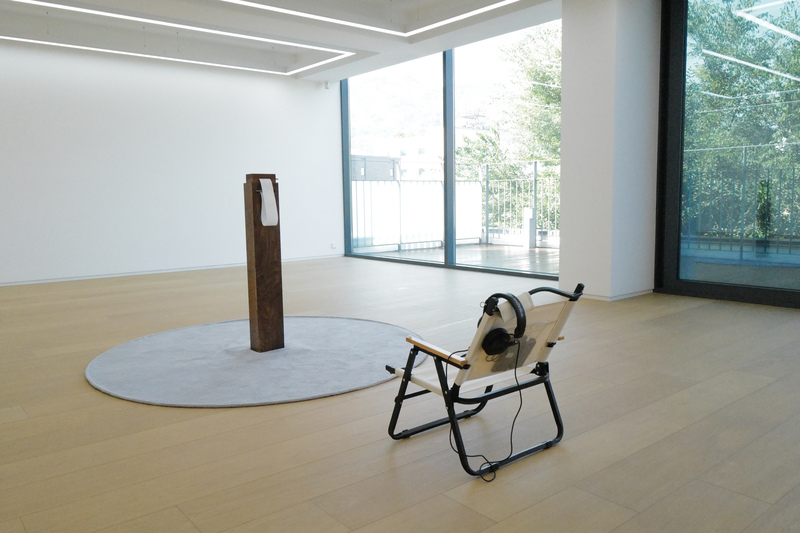
Memories Projects (2016–ongoing), a long-term project by artist Kim Woojin, mobilizes people’s memory affected by the extinction of specific languages and actions. Participating in residency programs located in South Korea, Taiwan and Japan, the artist could discover similar memories and experiences around learning and extinction of languages and non-languages. There, she started retrieving sociopolitical and structural factors that are linked to such phenomena.
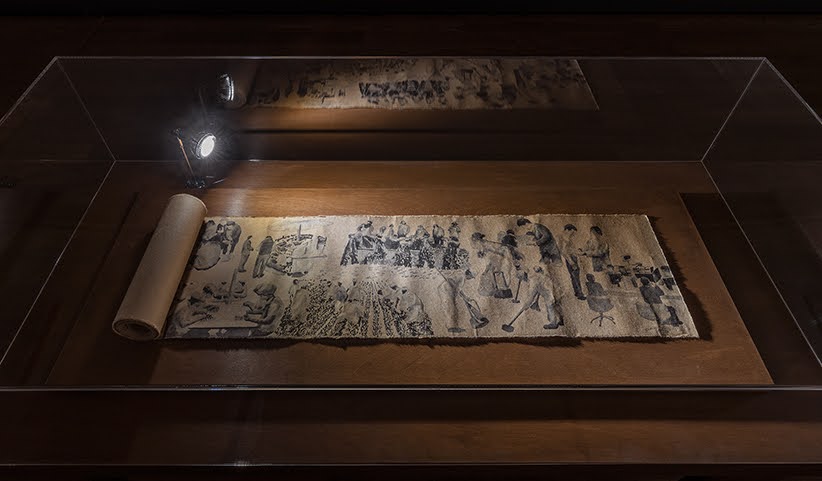
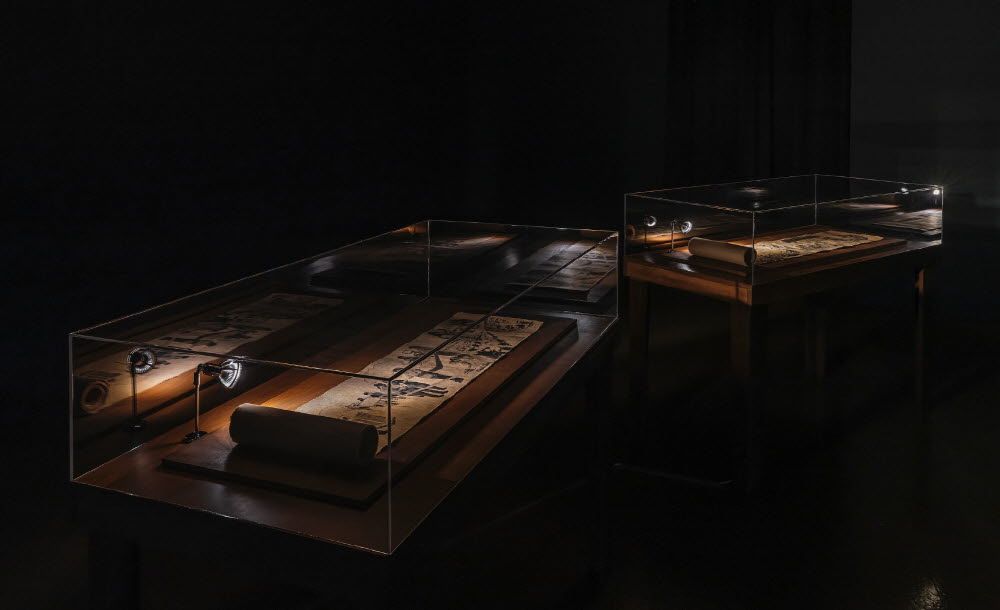
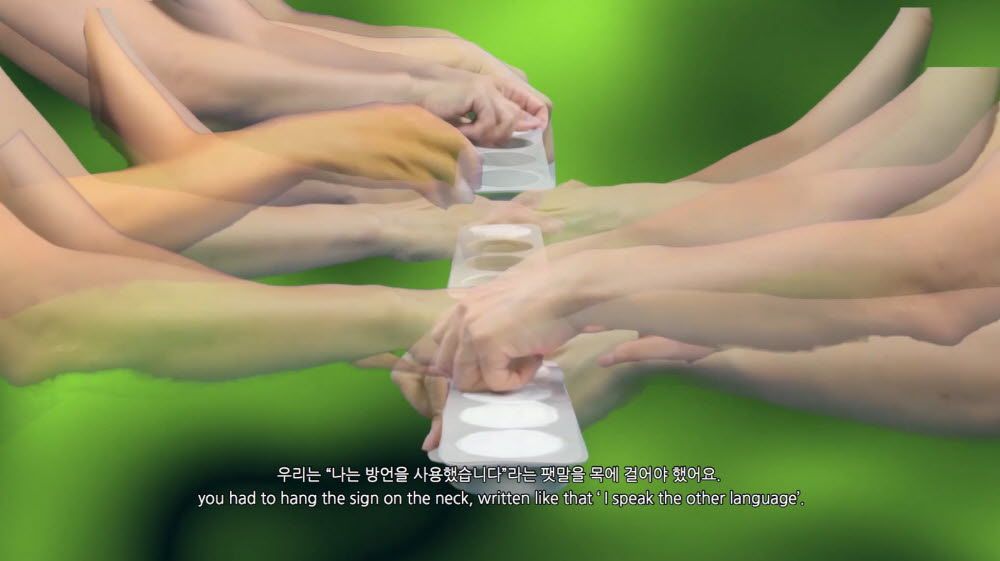
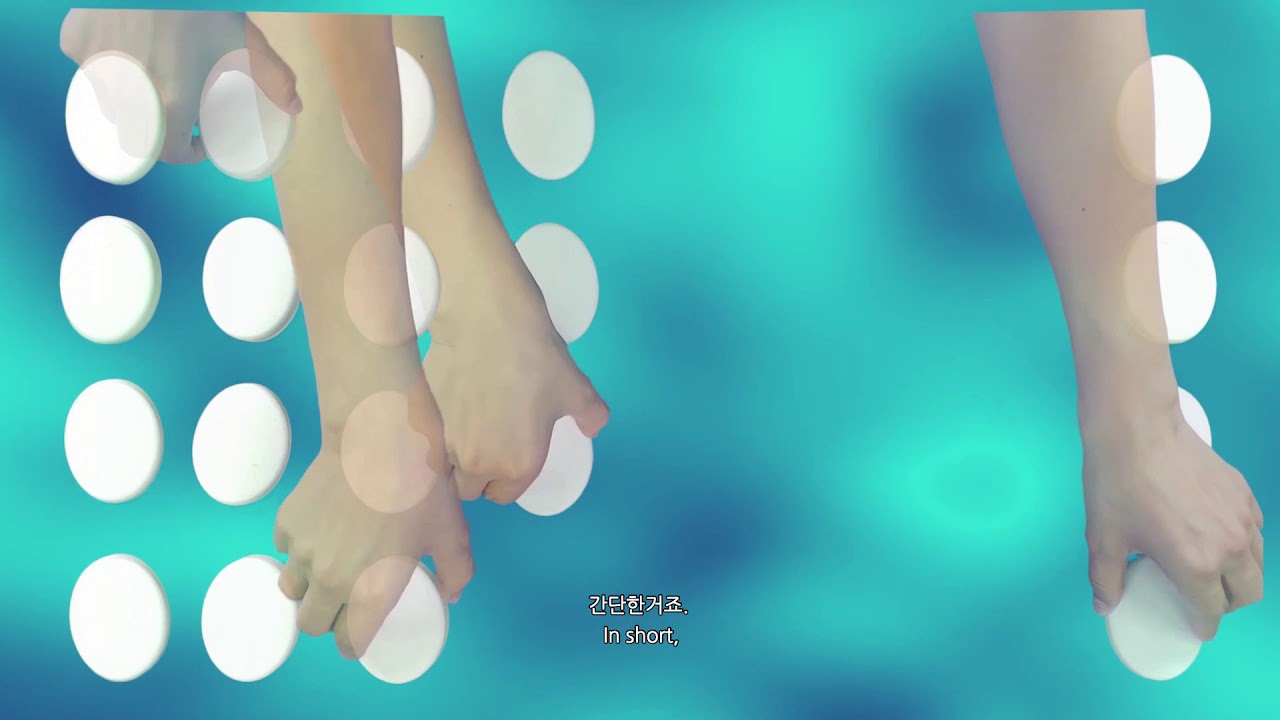
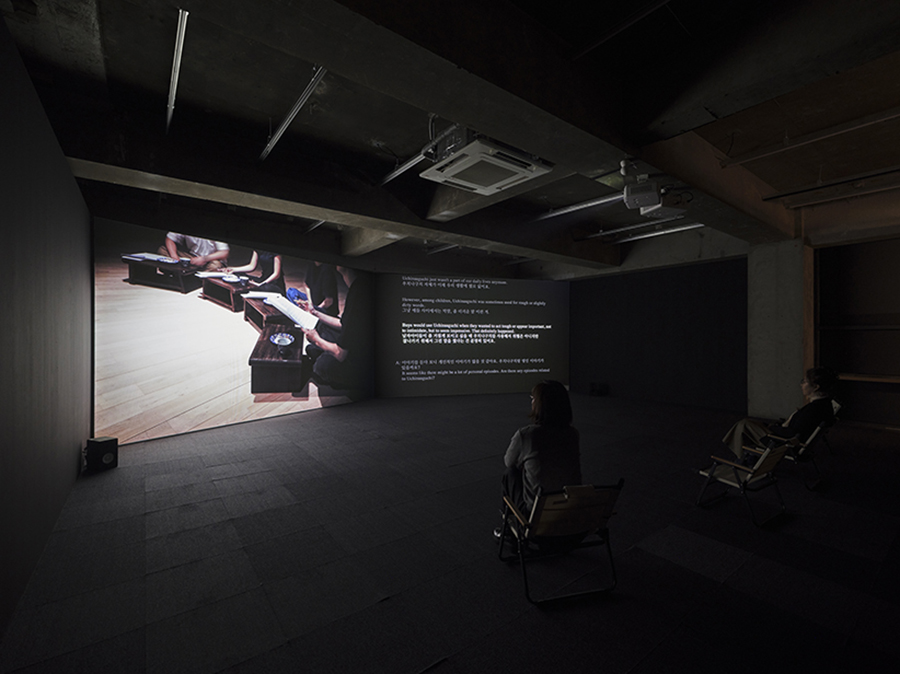
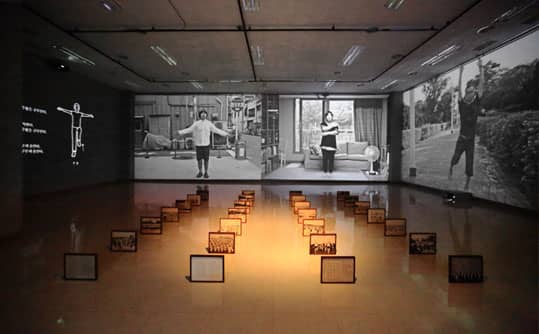
In the video Brave New Exercise Project (2015–2018), Kim recalls the memory of collective calisthenics such as the Korean National Physical Exercise, that are commonly present in every region in Japan, Taiwan and China as well. As analogous cases in East Asian nations that went under Japanese colonial rule, its collectivizing aspect is reconstructed in speedy cuts.
Through their shared memories, it investigates the process of making and the propagation of gymnastic exercises that had to be learned and integrated in daily life under a nationalistic governance. The interviews are set parallel to each other with non-linear times and spaces, to revisit learned collective movements of militarism suggested as moments of fictional déjà vu. By doing so, it exposes the imperialistic conspiracy from a postcolonial perspective.
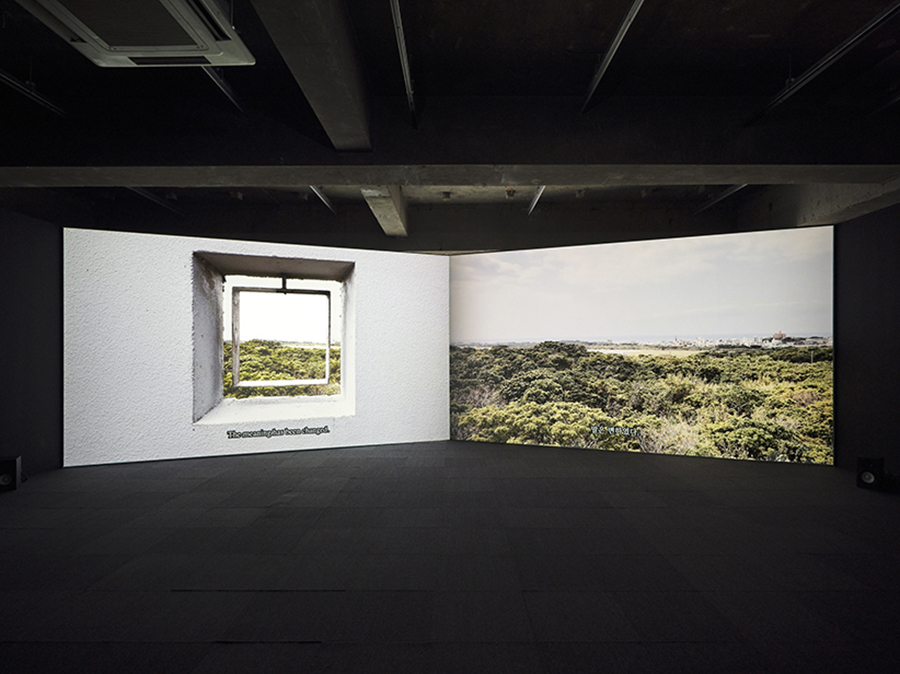
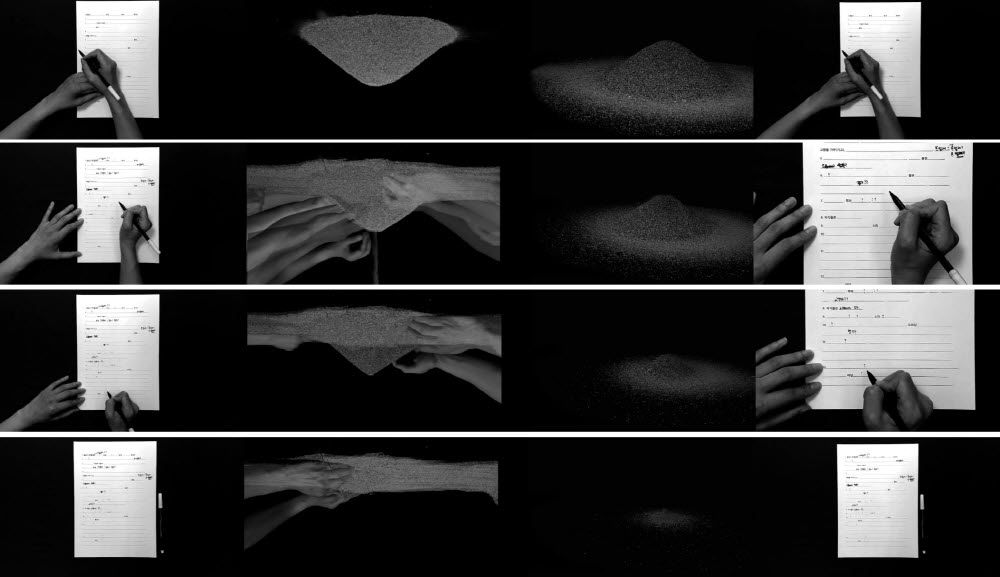
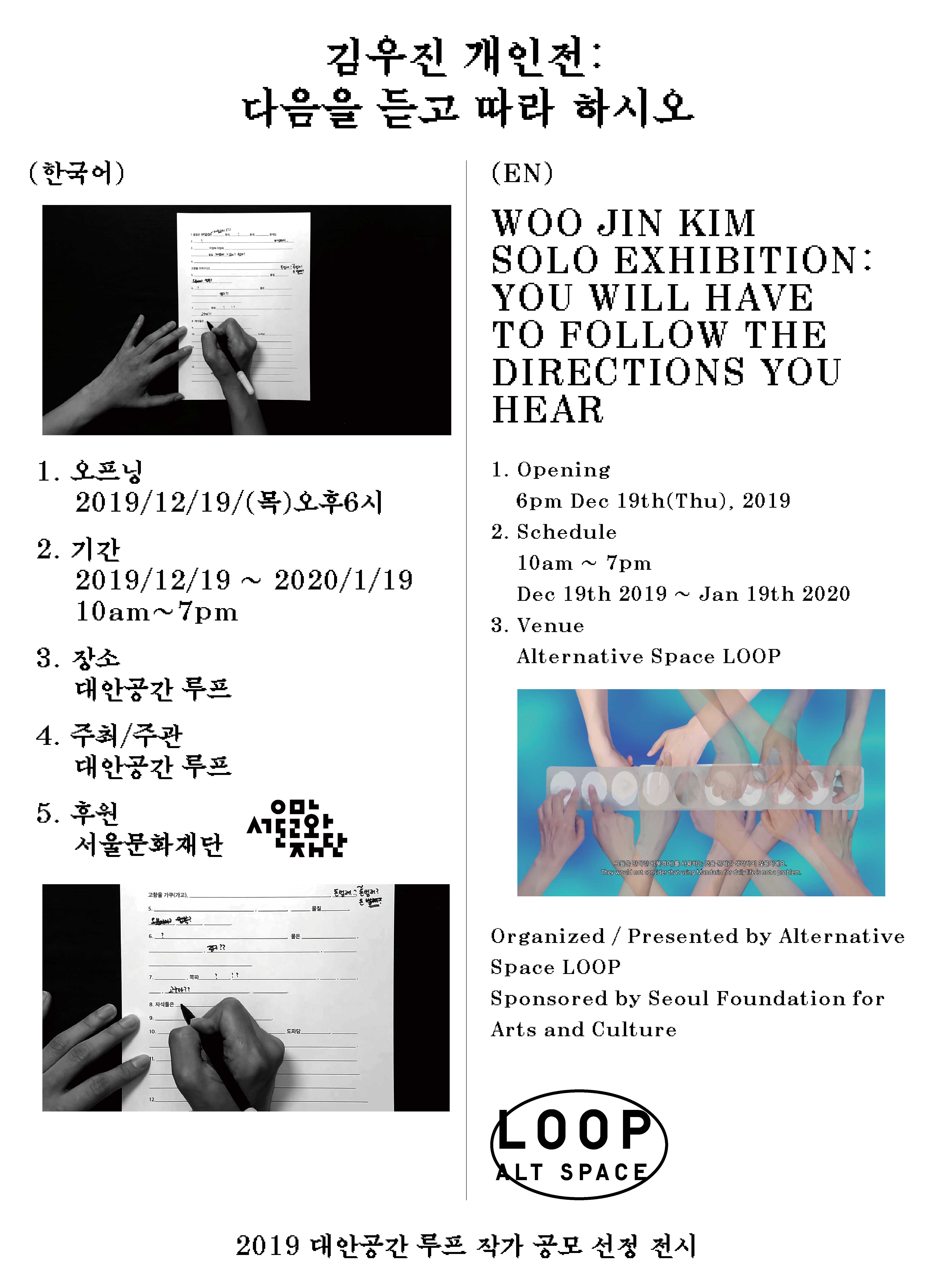
The artist specifically digs into incidents from East Asia and summons languages that gradually extinguished as a thing of history such as Cantonese in Taiwan and Hong Kong. In Part 3. You Will Have to Follow the Direction You Hear (2019), the artist stages a situation of training through dictation, where Koreans cannot understand Jeju language at all, as if it were a foreign or alien language.
In “the Third World” including Asia, a humongous amount of expenses has been invested in attempts of globalization. It went through processes of learning and systemizing by advocating languages of a single society, conventions and labor conditions as defined by governing powers. In South Korea as well, the extinction of Jeju language along with other dialects is in line with the disappearing process of folklore work songs, and haenyeo [women divers] as an occupation.
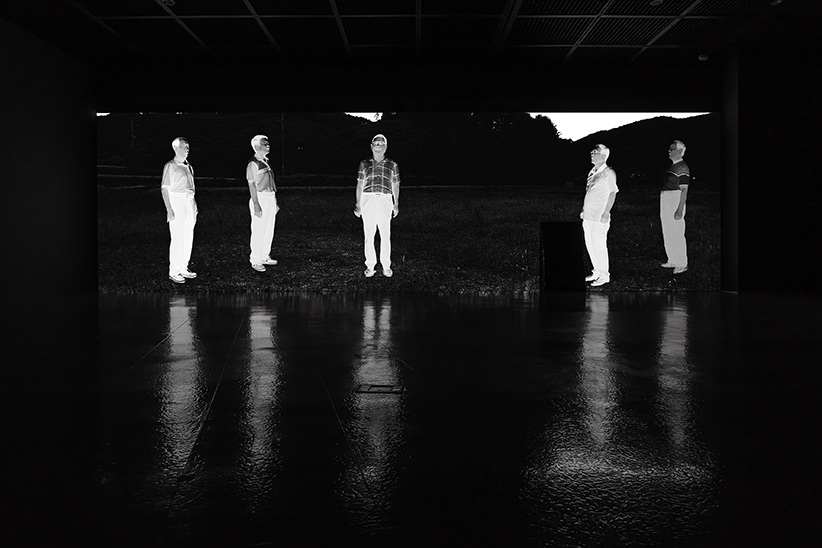
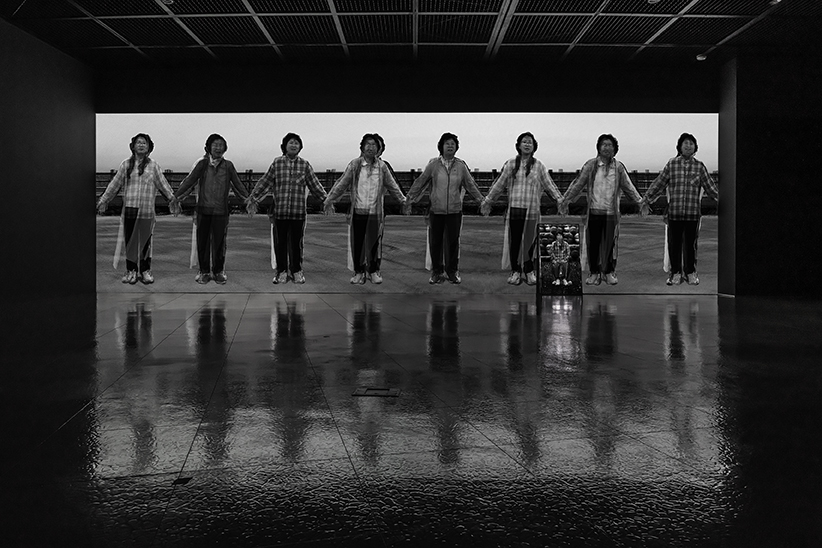
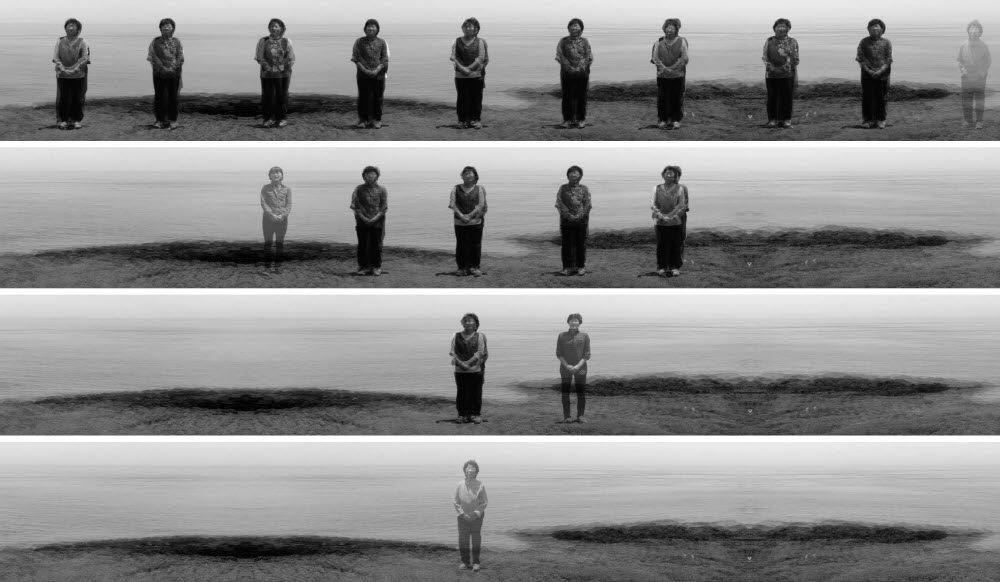
In The Perfect Harmony (2019), people of Jeju standing by the sea disappear one by one from the frame, while singing a lyrical work song. In the moment of darkness as all of them have disappeared, their perfect harmony vanishes as well and the ghost appears. Languages, occupations, and the value of life dissolve as a part of the modes of production and consumption following the design of contemporary society. This image of death either occurs accidentally or interferes deliberately to represent the concealed truth and manifests as a spectacle.
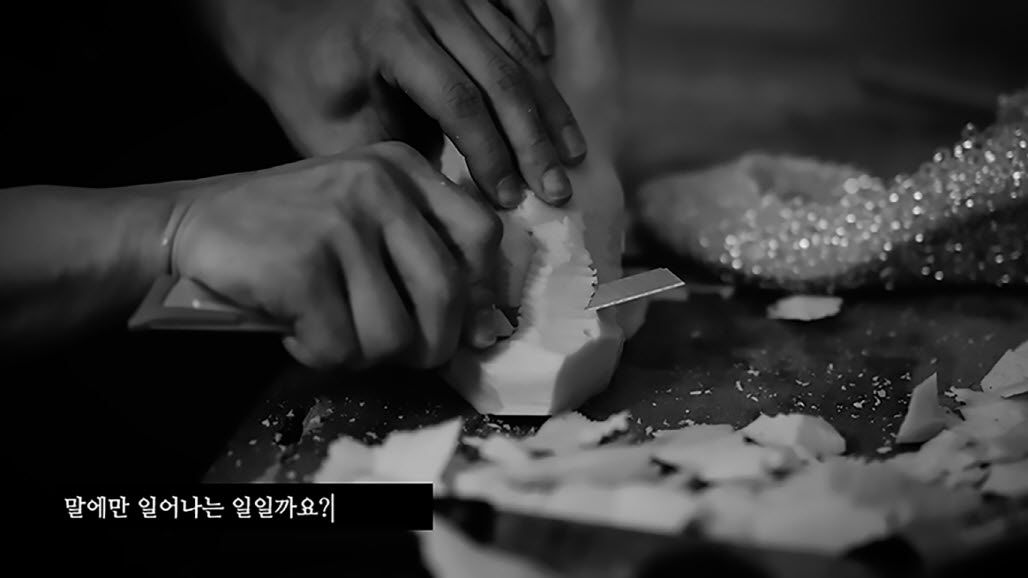
The artist renders individual memories and life traces around the endangered languages accompanied by a sense of remorse and gloom into digital effects of overlaying images, using fade-outs and eerie sounds. In order to assure the credibility and authenticity of the facts, she collected information and interviews from different Asian regions, which were compiled as references for representation and composed into a voiceover script. Paradoxically, the dramatic and spectacular video image covers the actuality of dystopia.
Her video language reveals the structural dynamics of specific global politics and societies and takes up a critical position toward it. At the same time, it blurs the dichotomy of the right and the wrong, as if ironically reminding of diversity, which ruptures centralized power embodied as the Tower of Babel.
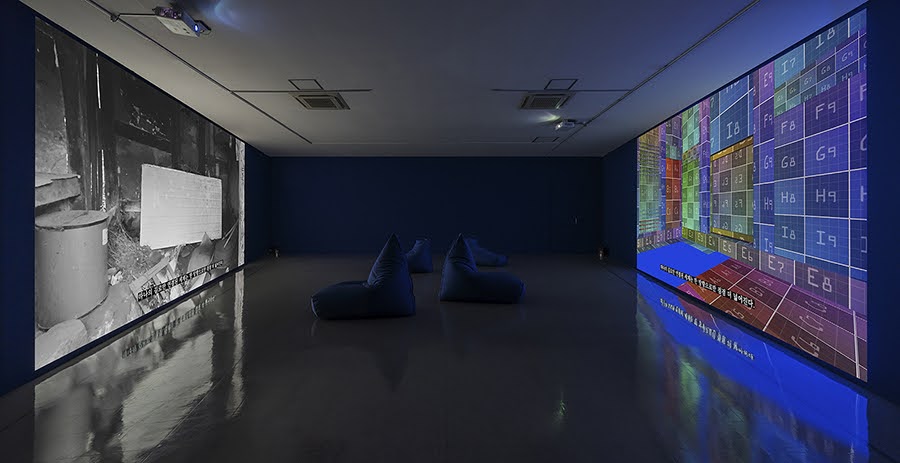
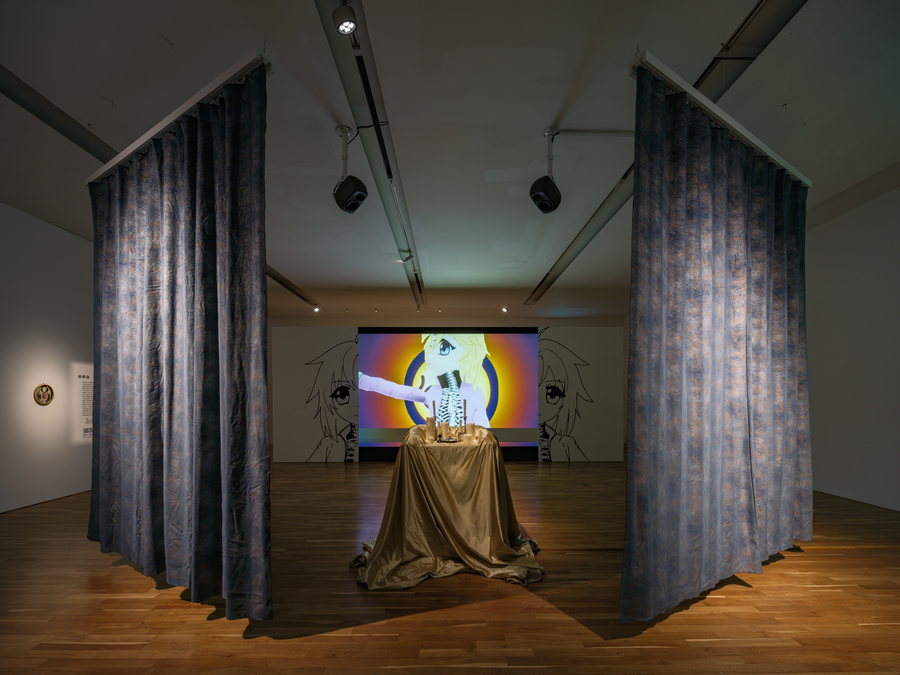
The ghosts in The Perfect Harmony are also apparent in Ghost, Sea and Mobius Loop (2022). The two-channel video is split on two sides centering the viewer. Reminiscent of persons who disappear one by one summoning the memory of endangered languages in Memories Project, it stages the disappearance of an abandoned house, digitalized, fading out into the sea of digital blue.
The old house in her hometown, abandoned due to migrations to urbanized areas, is scanned using architectural software CAD and simulated virtually to become dual in symmetry, then to dramatically sink into the sea, like how the unaccomplished Tower of Babel had collapsed. As the narrative information about the disappearance of Icelandic language from the digital network gets roughly coupled with the abandoned house which submerges into the blue of the digital sea, the ghost arises.
The video intensifies the melancholia of digital extinction and disasters that happen regardless of time and space as well as the disappearance of localities caused by urbanization. Instead of taking up the cinematic form of documentary or reportage, the artist presents a hallucination unlinked to the object of truth, accompanied by a ghostly mechanical voiceover.
By employing the extinction of languages as her subject matter, Kim looks into the dimension of individual experiences in relation to the mechanism of power within socio-historical background, rather than conceptually approaching the semantic layer of video language or highlighting the vigor of the medium itself. Moreover, the artist intends to confirm that “although [endangered languages and their memories] represent different nations and races, this common experience of loss binds [many parts of Asia] in a meaningful way.”
The disappearance of Jeju or Icelandic language, or migrations and abandoned houses that appear whether in urban centers or suburbs for example, might turn out as factors that shatter individual willingness and respect for life. The ghosts summoned by the artist are embodied representations of concealment.
While the videos unfold her critical consciousness, the artist herself, as a candid observer or dedicated interviewer, refrains from verifying the situations and keeps distance from them. Rather than reporting or criticizing a detailed fact or focusing on narrative verisimilitude, she seems to rather trust the aesthetic layer of video as a mimetic medium.