Pink is the color and clothing worn by the girl, created in the
male bourgeois culture. Pink connotes the girl, cute, bubbly, soft and naive,
and at the same time, foolish, vulnerable, harmless, immature and childish.
Pink symbolizes the girl’s ignorant happiness, and the pink girl is an empty
site which talks ‘about’ herself in the third-person social name, on behalf of
the first-person ‘I.’
The pink girl exemplifies how the imaginary ego works,
and sheds light on its fictiveness. And red shoves the girl into the cultural
identity of the bleeding female and reproductive woman. The periodic stripping
of the endometrium and the blackish or red blood that flows from the crotch may
be a biological phenomenon, but because this is contextualized in cultural meanings
such as pregnancy, marriage and childbirth, the transformation from girl to
woman serves male (human) centrism.
Like relapsing pain of a wound that has not
yet been healed, red directly connotes the otherness of the body while also
entering the symbolic language to humanize and tame it, as well as implying the
fragmentation experienced by women. The symbiosis of the body and others is
oppressively held in the cultural censorship of the color red, dripping, damp
and inauspiciously smearing. Menstruation is a disturbance in the empty space
within the body, in the uterus which is both an inside and an outside.
In the
cultural conditions where this blood, which is both the self and the other,
should not become visible or valued, the woman loathes herself and is
frightened of the possible periodic menstrual discharges. The unconscious state
of the woman who loathes and is disgusted with herself, is an evidence of the
fact that she perceives her body as an abject. The woman is incapable of
subjectification, which is essential to social life, even more so because of
this forbidden red blood that spurts out of her hole.
The woman struggle
speaking as a first-person subject as opposed to a third-person name, because
they cannot achieve their identity due to the disjunctive relationship with
their own body. A woman who lives in the symbolic system can thus yearn for or
contempt the pink girl and fear the connection with the red reality, while
operating as a part of reality that traverses across the symbolic system and
the hole that can never be stitched up. The woman is a hole, and it’s assumed
that it’s empty because it is a hole, but this is from where the red blood
spurts out.
And because that blood cannot be reduced to any other red matter,
it becomes a sign of something negative. The woman, equipped with a ditch where
the non-implanted and dead flow, or as the gutter herself, reveals what has
been oppressed, eradicated and eliminated by the male bourgeois culture through
her body. The woman (or her body) is an invisible other and a non-reproducible
absence in the symbolic system of the male cultural life. The woman is a lack
and a void, and thus a symbol and matter of the other who always comes to
declare death.
Then there is pornography, which indulges in the seemingly
harmless empty hole. While pornography here connotes the visual field of the
male bourgeois culture as a whole, this text first analyzes the ways in which
pornography consumes the female body as a genre. The pleasure in porn is
aroused by the unrestricted viewing of the female body or the hole with the
male look within a safe distance, or with the veil that covers the actual
eruption of death.
In heterosexual pornography, the woman is reduced to a hole
serving the ejaculation of the erect penis. In pornography, for those with a
cock or those who desire the male phallus, the woman has eyes but no
‘eyeballs,’ mouth but no teeth, and the oneness of the eyes-mouth-pussy
amplifies the pleasure of the voyeuristic look accompanied by the fear of
castration. In pornography featuring Asian women in particular, the female
becomes materialized with a missing face.
Pretty much a sex doll, these passive
women are just there to be pierced and penetrated. This analysis obviously
overlooks the diversity or difference in pornography because its purpose lies
in examining the generality of pornography as a genre, as Jang Pa’s interest to
redeem women in pornography through pink and red rests in engaging with
pornography not as an experience but as a structure.
For feminists and the
artist herself who regard pornography as text rather than genre, pornography is
for the most part an ideological device that affirms and assures the
worthlessness of women as a lack and absence, and the sense of shame imbued on
women by the male culture. The pornographic look is a temporary sedative to
tame the difference with others, because the other will always bring in
non-assimilable and non-reproducible remnant to subvert the gaze.
The
pornographic fantasy operates on the premise that the female holes and pussies
are empty, but women ‘know’/feel that, in the hole, the teeth that can devour and
swallow the penis and the blood of female/actual are ‘present.’ While the
pornographic look tries to understand the other as a subject of harmless
indulgence, the corporeality of the body of the other, which already always
reaches self-sufficiency (as chaos?), will arrive, threatening the look,
collapsing the distance, and disturbing the visibility of the symbolic
coordinates.
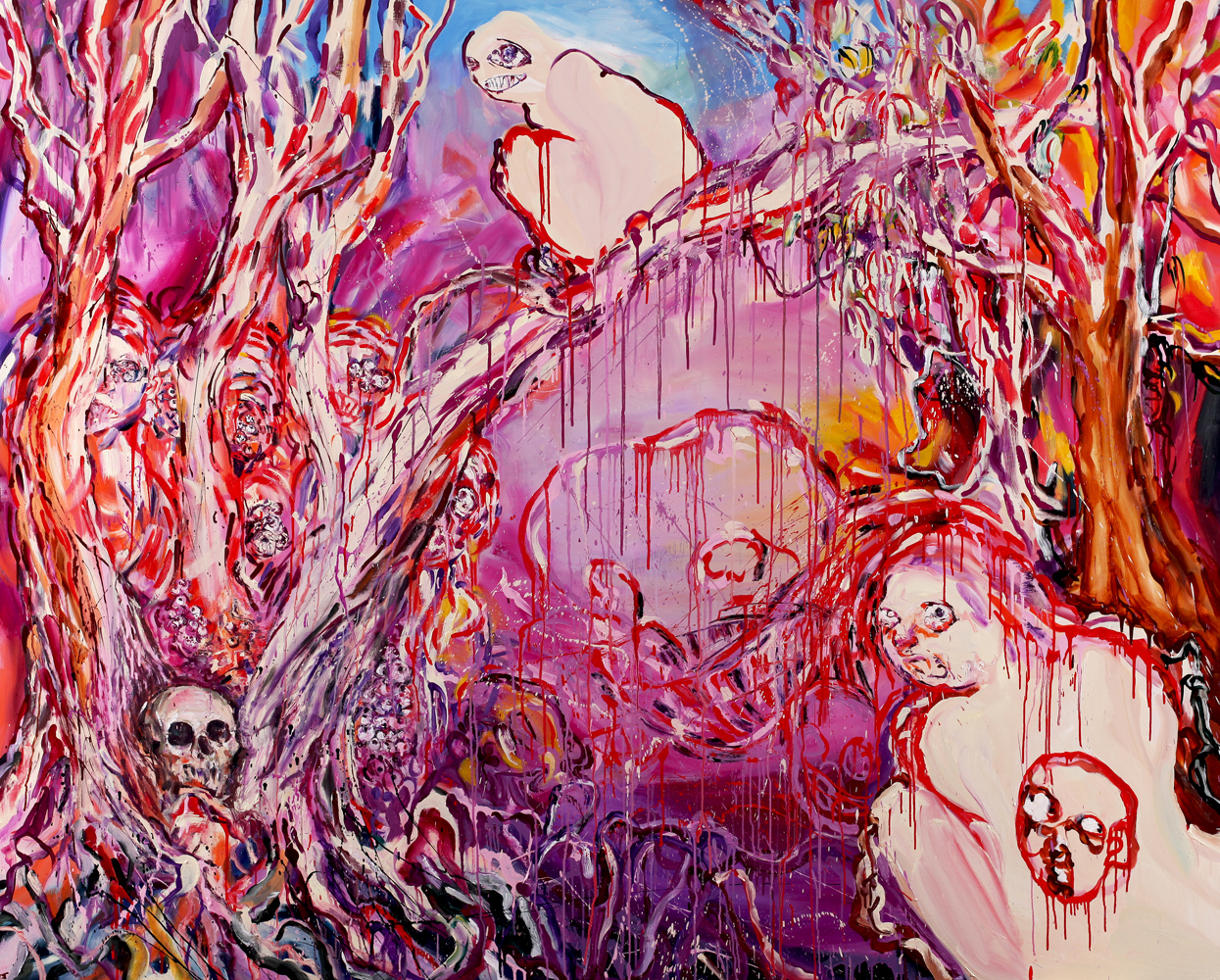
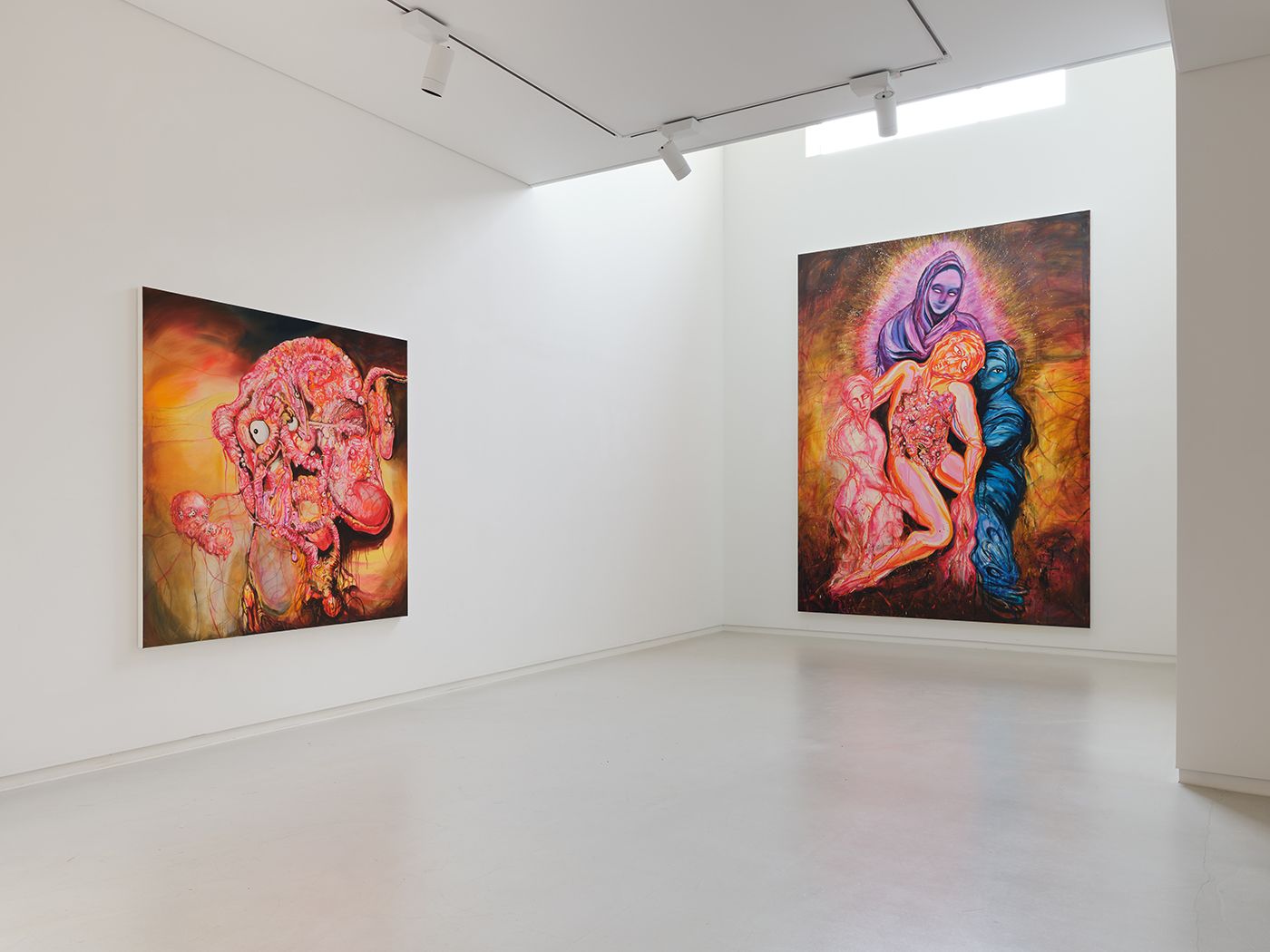
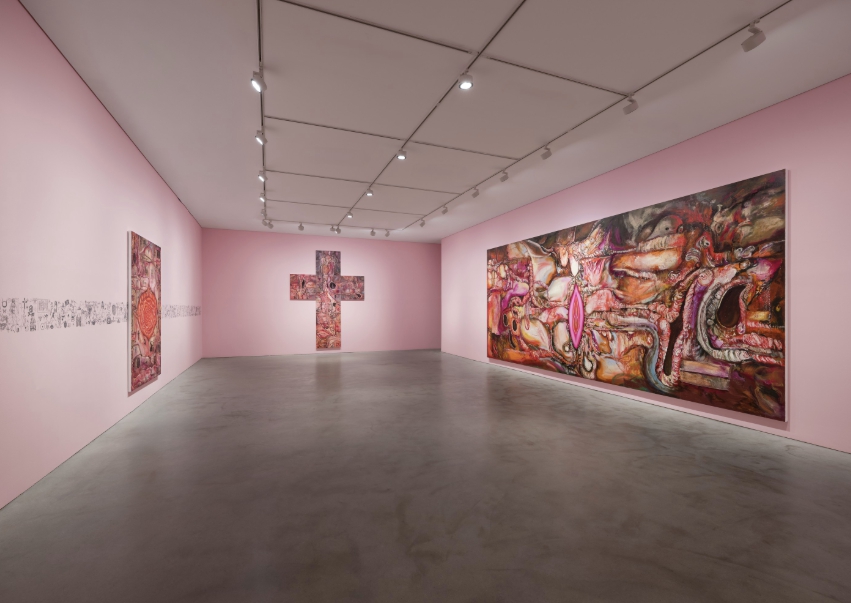
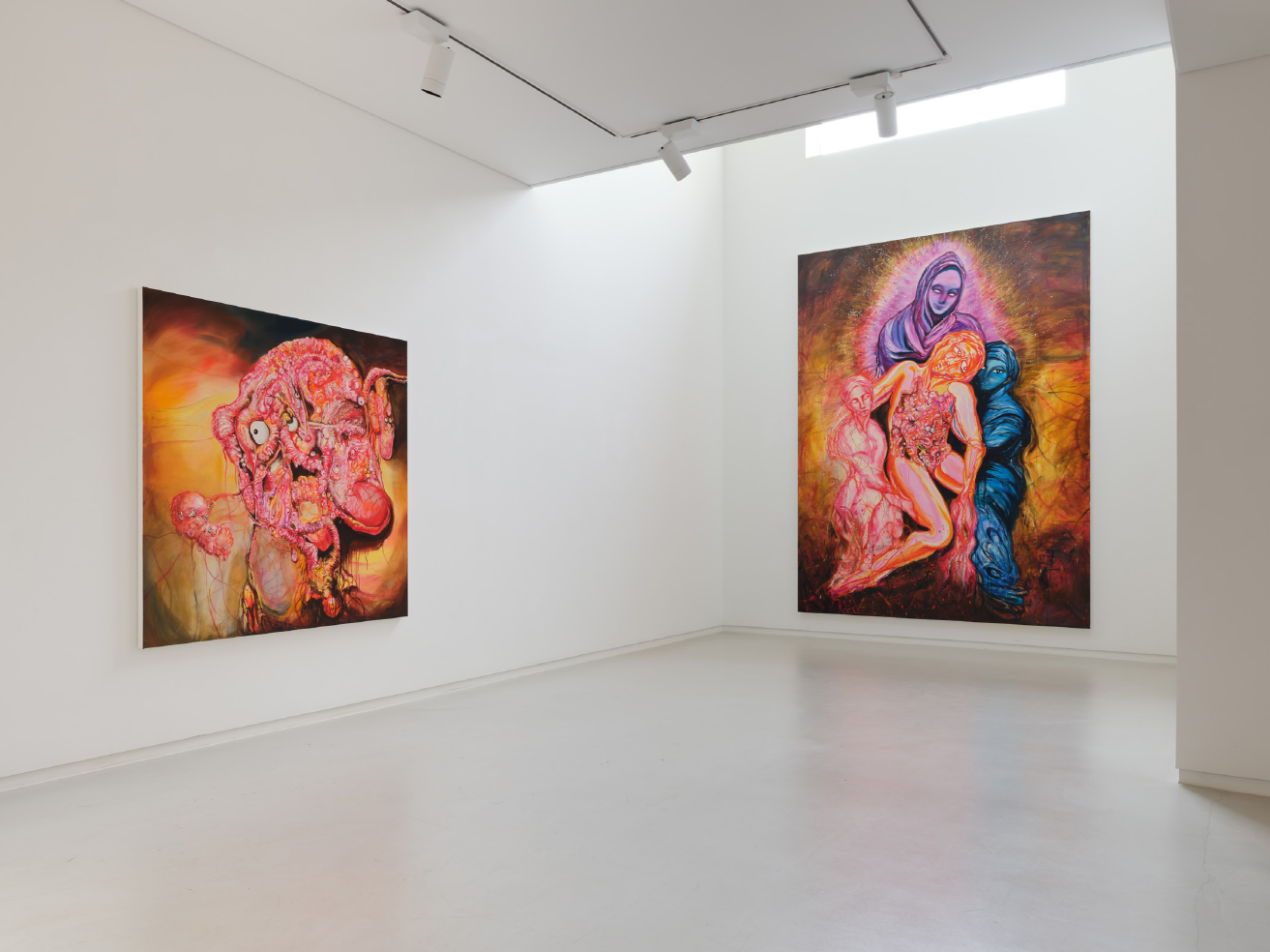
Jang Pa creates a cheerful, ominous and powerful ambience with
pink and red smeared onto her canvases, and presents to her girl-women trapped
in pornography, the violent desires and the freedom to escape. They take a
pornographic poise but break away from the control of the single gaze by
‘wearing’ the invisible premise of porn. One must be inside pornography to
subvert it. For women in pornography, not having personality or subjectivity is
not the problem.
Rather, in the pornography composition, what’s important is to
negatively portray the “female sublimity,” the “grotesque other,” and the
femininity as something which must remain invisible or should have been
eradicated. The key to this lies in revealing the difference from the inside
and leaving behind the gaze which already always disturbs the inside. In
pornography, the male watching it and the women being watched are equally
guilty.
The shame of the objectified woman will cause her to respond by
attempting to acquire personality or subjectivity, but this clashes with the
realization that there is no outside in pornography. Therefore, one should
suspect not only of the materialized object, but also the appeal for
subjectification and personification of women. They are in a symbolic
relationship which is inseparably intertwined.
As quoted by Jang Pa, this is a
“miserable world,” and “a world where everyone is bound to sin, and a world
filled with mumbles of self-justification validating one’s own sins that might
have caused misery in others, although they claim to have done nothing.”
Therefore, it is important to “move the axis of this world” as put by Jang Pa,
rather than simply moving the site.
A new world opens up by moving the axis, by
staging such overlapped, mixed and synchronous situation that is visible and
nonvisible, comprehended and incomprehensible, and represented but vanishing
from representation. Jang Pa’s mission to save her girl-women is thus to fill
their empty holes with threat, violence and humor. And by doing so, return
their representation-image into their smudged and faded color-sense.
Jang Pa never discards the pink girl. The pink girl is so
carelessly cheerful and therefore laughs lightly at all times. Not as a
depressive subject that arrives at the ontological subject of the first person
or carrying the impossibility of the subject, they sit at the place offered by
others, and thus ‘see’ pornography without depression or moral compassion of
tragedy. Jang Pa makes porn an excess by dragging the pink girl inside porn.
Pornography already breaks down, as the residue of the symbolic woman, who
cannot see porn properly and knows of no shame, trespasses. At the same time,
red as the woman’s bodily fluid and menstrual blood, charged with violence and
death, challenges the male look. The woman who periodically died, and the woman
who has a grave in herself are overlapped or replaced by the materialized
woman, fake woman, and woman of image.
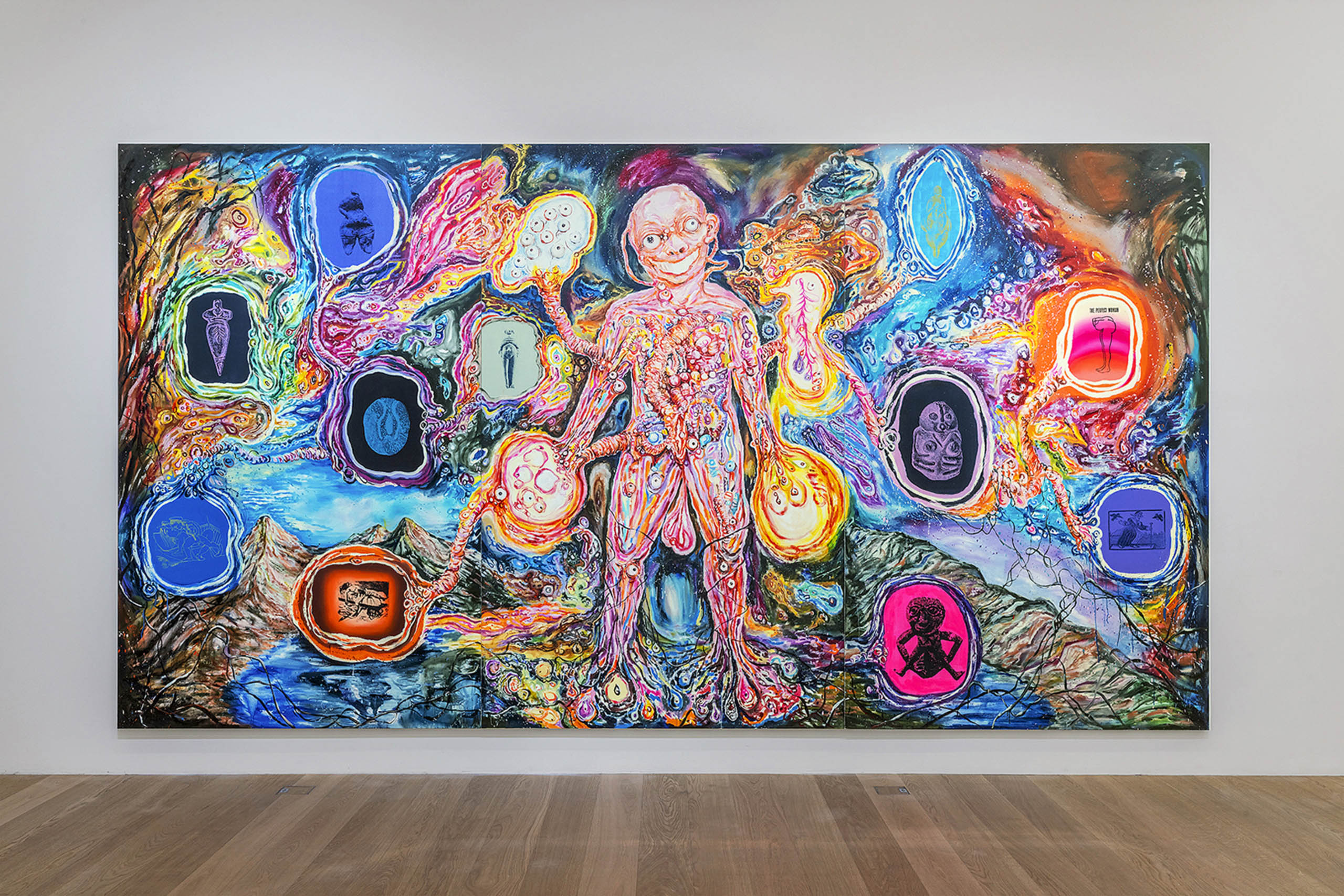
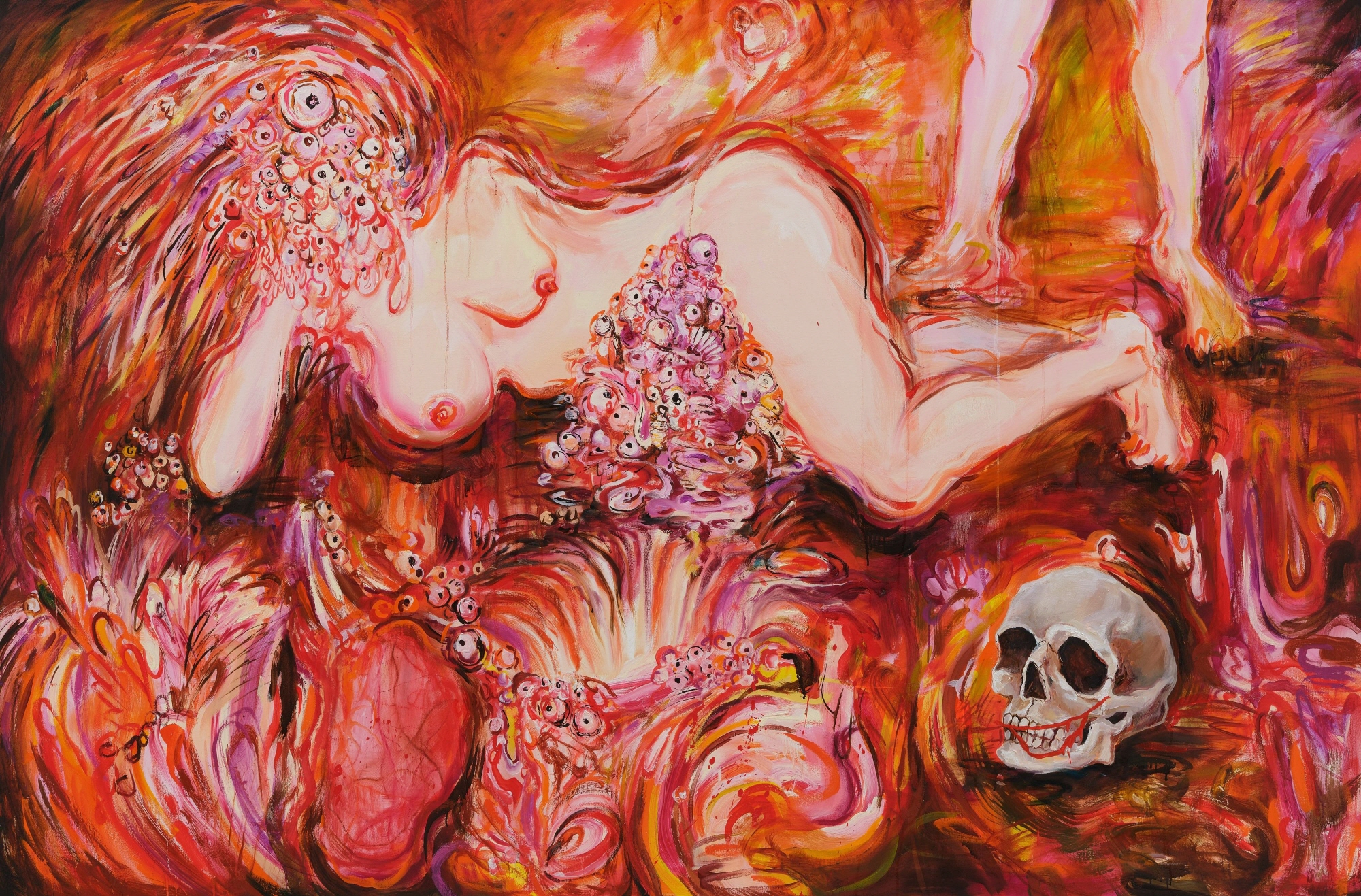
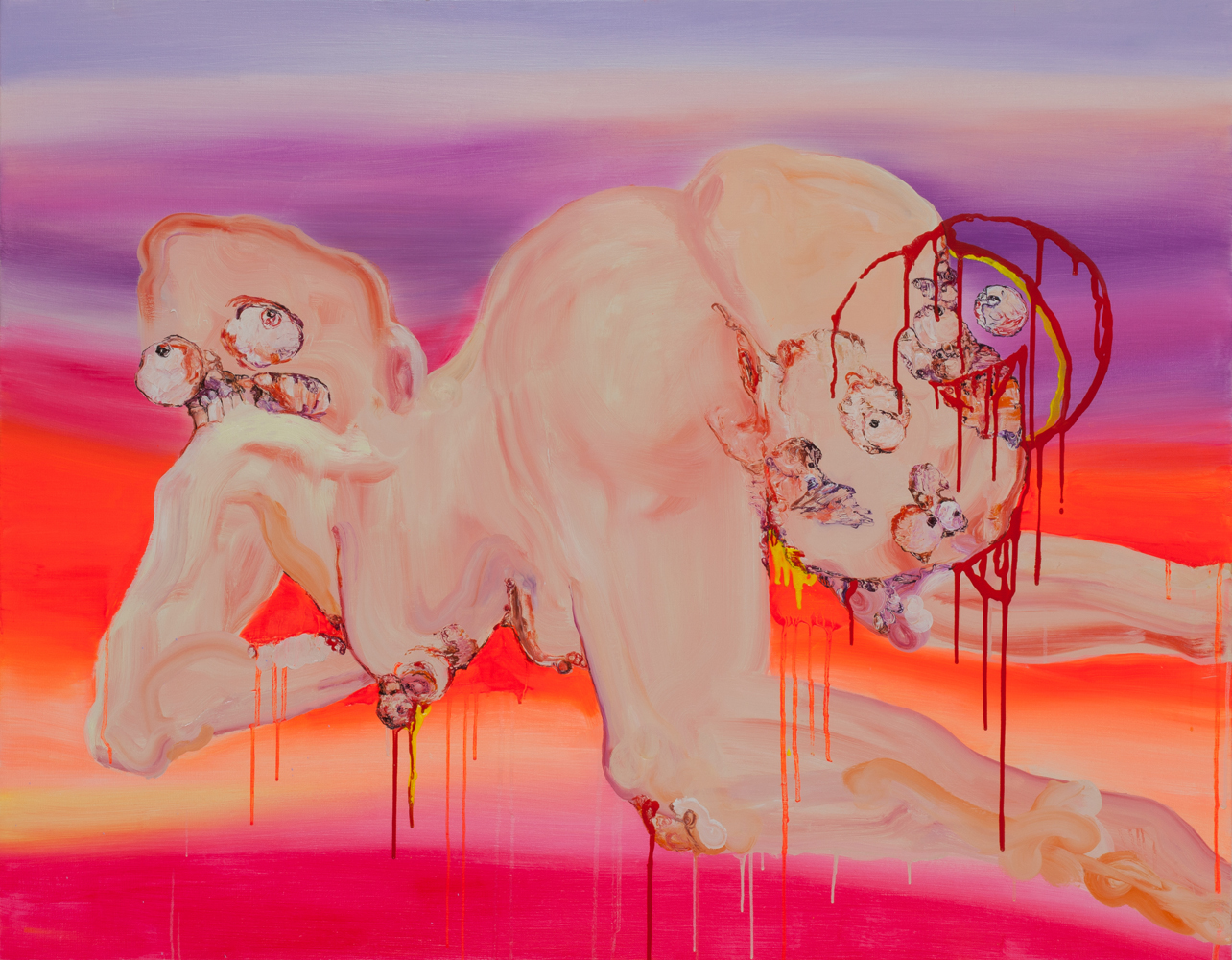
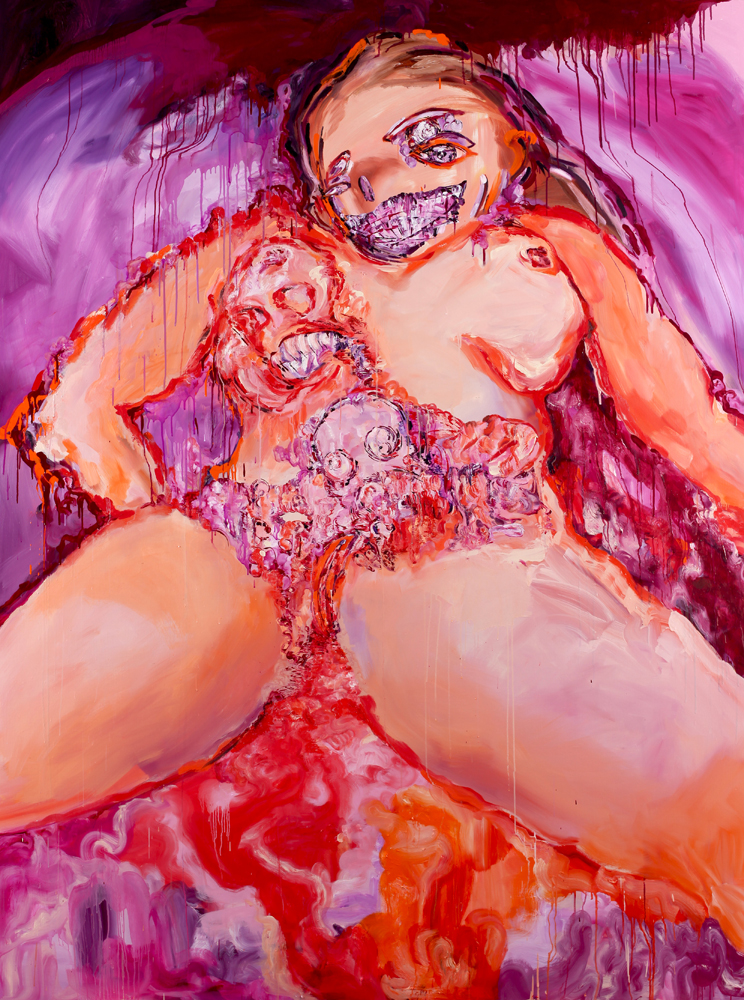
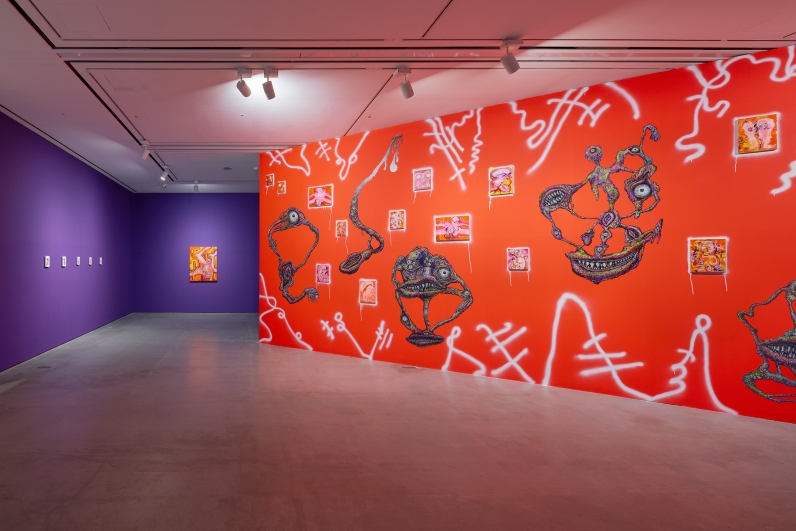
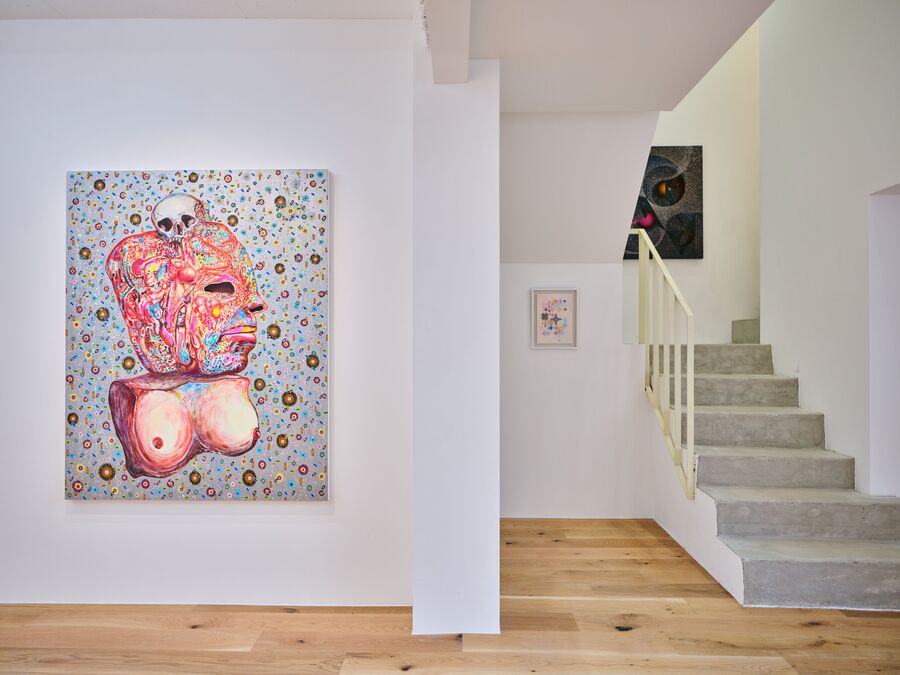
And what is presented are vagina
dentata, vaginas with embedded eyeballs or vaginas that speak and sing, as well
as mouths equipped with monkfish teeth that could tear or chew the penis into
pieces. A skull somewhere in the corner, taking responsibility of the hole or
the vanishing point that is essential to pornographic pleasure, makes the claim
(or joke?) that ‘this is pornography but not pornography.’
The titles which Jang
Pa gave to her works ― such as “faceless eyeballs,” women who “smile with their
teeth like a Cheshire cat,” women whose nipples are their eyes and the vagina
is their singing lips in Lady-X No.1, and the
unidentifiable pile, which could be a (non)representational surface of the
body, a pile or eyeballs, sprawled out guts or ruptured egg sac[1] ― enact the
outside of the morphological human body.
Although Jang Pa’s work is grotesque at first sight, and while
there may be those who are afraid of the body that collapses, crumbles and
decays, Jang Pa’s women and girls are pure, cheerful, firm and bold. There is
no room for self-pity, depression, sadness, or feelings of defeat. In her first
solo exhibition, Jang Pa confessed that she had witnessed the contemporary
phenomenon of the vicious cycle of violence in her own family.
Jang Pa has
since stated that now, “the morals of the modern being is to turn the
attention, away from herself to others and the community, to deliver stories
about others who are different from the self, try one’s best in such impossible
fantasy, and tolerate others, bear anxiety, and endure failure.” As
demonstrated by this statement, Jang Pa is accepting the ‘simplicity’ of
contemporary morals in which the experiences and confessions of first person
singular are expanded to that of the first person multiple.
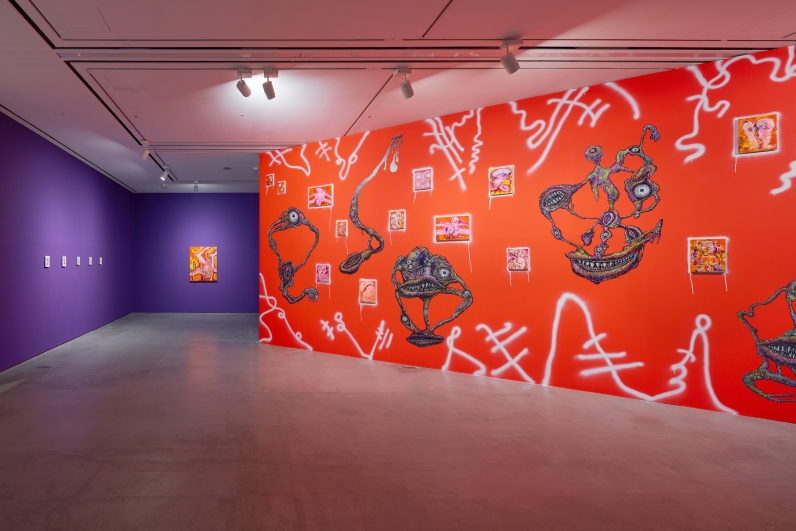
In the exhibition Brutal Skins, held at
DOOSAN Gallery Seoul, what seems to grab the attention is the monumental-scale
painting My Little Riot Girl. In this work, the
women-others whom Jang Pa attempts to redeem are women as imagery confined to
the formalist structure in Paul Cezanne’s work Bathers. ‘Bathing women,’ the
subject of Cezanne’s work until his death, goes through formalist modernism,
and is reduced to the concept of pure form and arrangement of colors and
shapes, and the materiality and flatness of the surface of painting.
Even though these bathing women, depicted by a male painter, are
erotic and sensual and rely on the voyeuristic look, they are not read.
Cezanne’s women, who are visible but hidden, exposed but ostracized, painted
but controlled, and desired but censored, are trapped in a triangular structure
of trees in the back. Jang Pa’s ethical interest lies in creating a field of
view where these confined and alienated women can survive.
There is a large
number of women concealed by Cezanne’s structure, and while the woman on the
lower right who sits with her vagina concealed and one leg bent, who is known
to symbolize Cezanne’s fear of castration, the woman on the right side of Jang
Pa’s painting sits with her legs open and vagina exposed. And what occupies the
center of the painting is the smile of Cheshire cat, left behind as the cat
disappears.
While Jang Pa’s painting from 2015 with the same title as the work
by Cezanne featured girls hiding or taking peeps towards the audience from
behind the trees, the girls in her 2018 painting have all crossed over to the
foreground of the painting. Jang Pa embraces her mob of girls as her ‘little
youngins’ and demonstrates her ethical reason to protect and take
responsibility for them.
The struggle of the girls who are committing violence on the
structure of violence instead of loathing themselves as mere holes may have
already been taken into the structure in that it can only find meaning and
justification within pornography and male order.
Jang Pa’s way of supporting the riot of the girls, taking place
here and now especially with the #MeToo movement in the past few years, is
realized through the strategy of bringing the girls together to sit in the
painting by a ‘master artist.’ Neither a representation of the current
phenomenon taking place, nor an interpretation of it, it has been expressed as
a feminist revision of the male art history.
The uniqueness of Jang’s position in feminist practice is related
to her continued engagement with painting, as radical female artists have
turned to a more democratic medium by rejecting the masculine hegemony of
painting. As a feminist painter, Jang Pa appropriates masterpieces in art
history or visualizes a pornographic structure, handling her paint like the
female menstrual blood rather than male semen, and letting red-hued paint flow
on the canvas to express the female flow rather than the male drip.
Moreover, Jang
Pa shakes the “axis” of painting, trying to create a tactile painting as
opposed to a visual one. As blatantly demonstrated in the ‘Fluid Neon’
series, the artist bypasses the fear of the female body by using neon colors,
which are “highly visible and give the effect of radiating light,” to express
the bodily fluid like menstrual blood.
Despite the pessimism that painting is already always masculine or
a masculine medium, Jang Pa attempts to visually and materially ‘perform’ the
female body, desire and gaze. Instead of re-enacting a positive imagery of
women, Jang Pa delves into the contaminated place of women in patriarchy and
discovers there the pink girl who embodies the innocent violence or naive
brutality that has already been shown in Art Brut paintings or paintings by the
insane or young children.
What is clear in Jang Pa’s works in the artist’s
intellectual and introspective realization is that, in rendering the cheerful
harmless laughter of women in red, any violent structure must be explored in
the place of the others who live within that structure. Jang Pa has clearly and
successfully concretized her ethical determination to take herself accountable
for others, as a painting and through the painting.
[1] “I couldn’t take it anymore. I took a pair of scissors,
slashed up her egg sac, and the chockfull of girls in it burst out laughing
through the severed mouth.” (Excerpt from the poem Madame Mackerel’s Wink by
Kim Min-jeong)