Jang Pa's paintings in this exhibition show the perversity and
visual pleasure of female sexuality, which she has been exploring since her
2015 Lady X series, expand and diverge into another
iconological and allegorical zone. The new works with titles such as Mama
series, A Common Woman series, and Man
from Earth, can be said to be works that more specifically and
stereoscopically reference and translate the art historical and cultural
symbols surrounding the shape of 'femininity', which has been the subject of
Jang Pa's research.
Laid out as an inverted exegesis and contaminated
hermeneutics, Jang Pa's canvas once again radiates primary colors of red and
grotesque figures. Yet the multilateral methodologies, ranging from medieval
religious iconography to shaped canvases without edges or straight lines,
provide an interesting opportunity to carefully re-examine the possibilities
and outlines of feminist painting that the artist Jang Pa is seeking.
The first thing that stands out in this year's new works is that
the Christian icons of Jesus and the Virgin Mary are directly referenced.
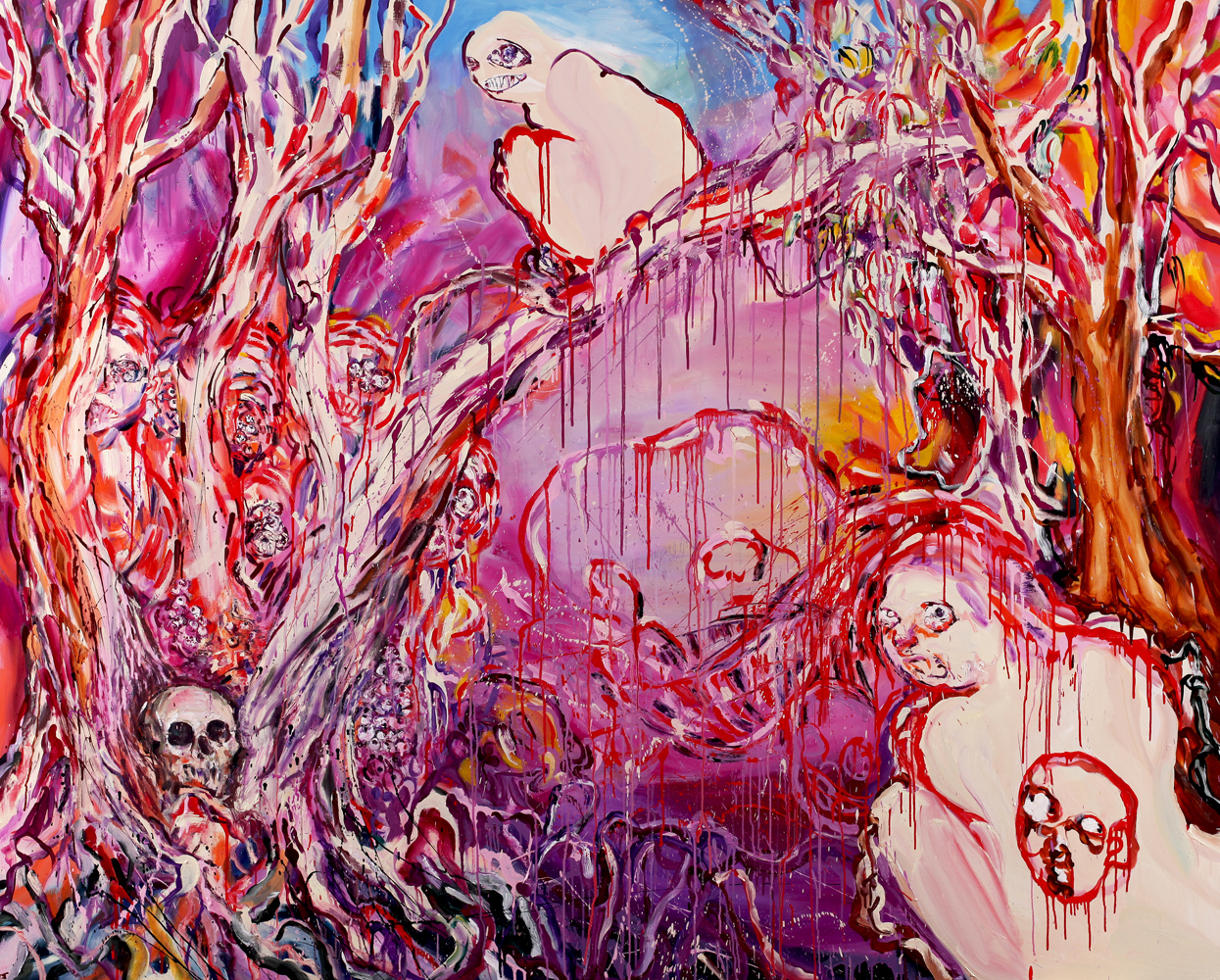
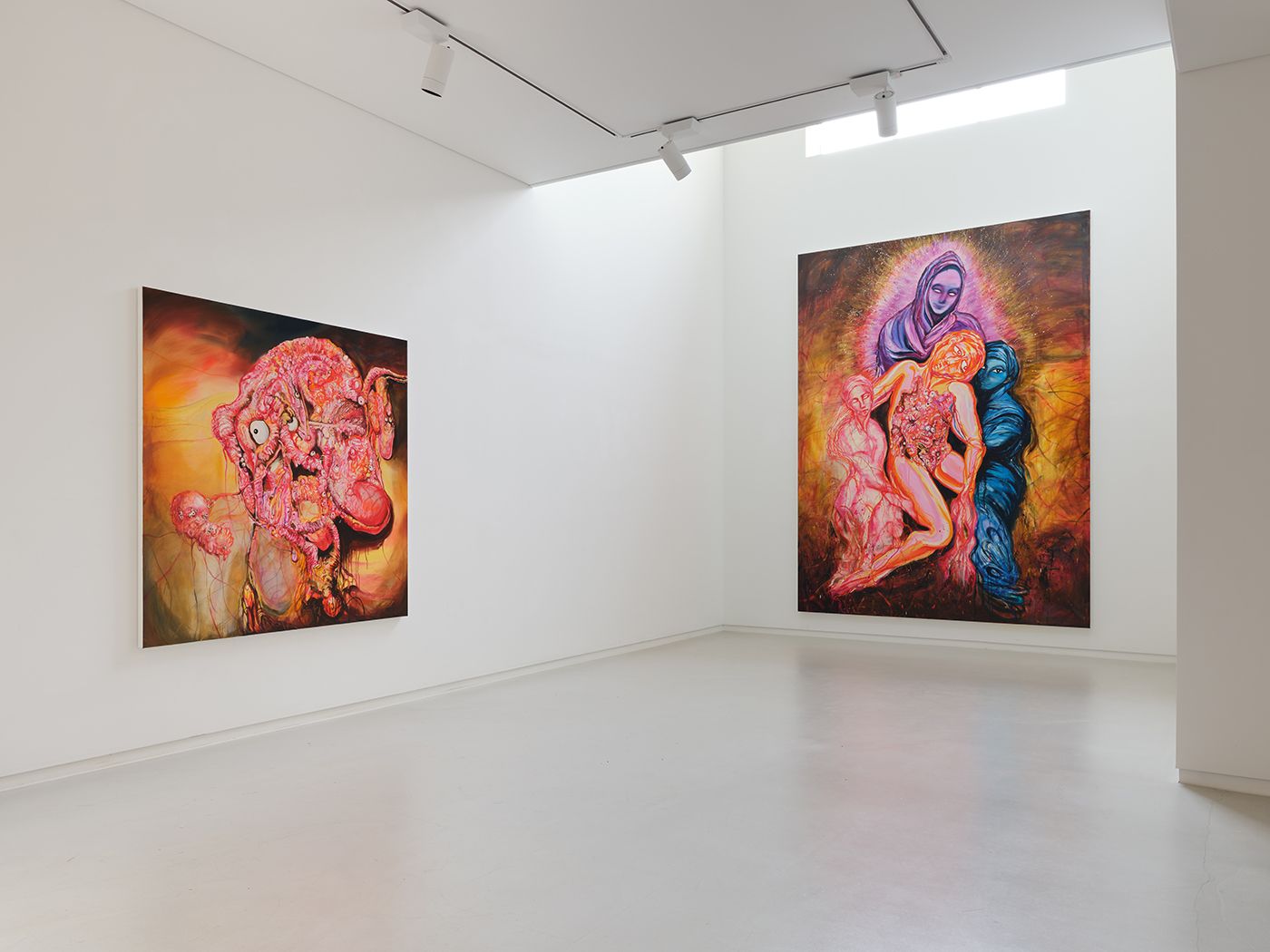
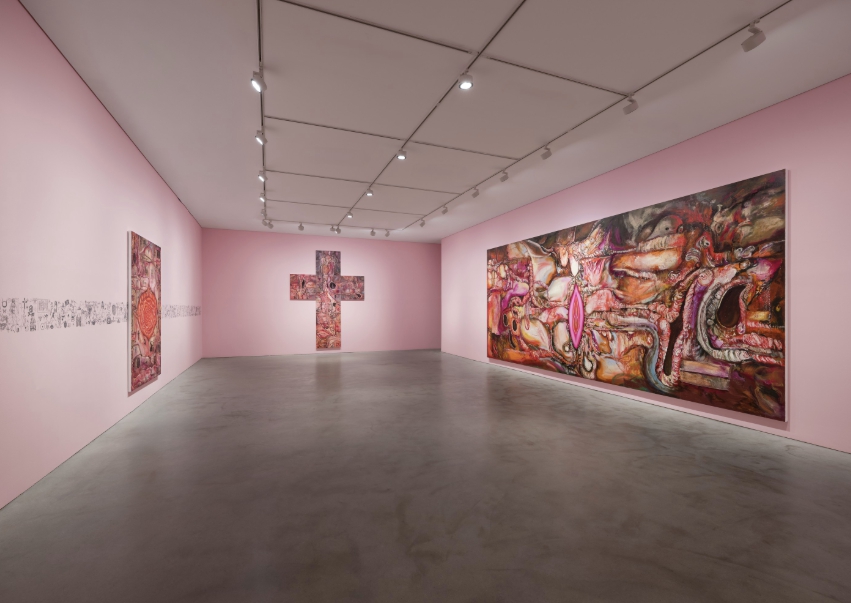
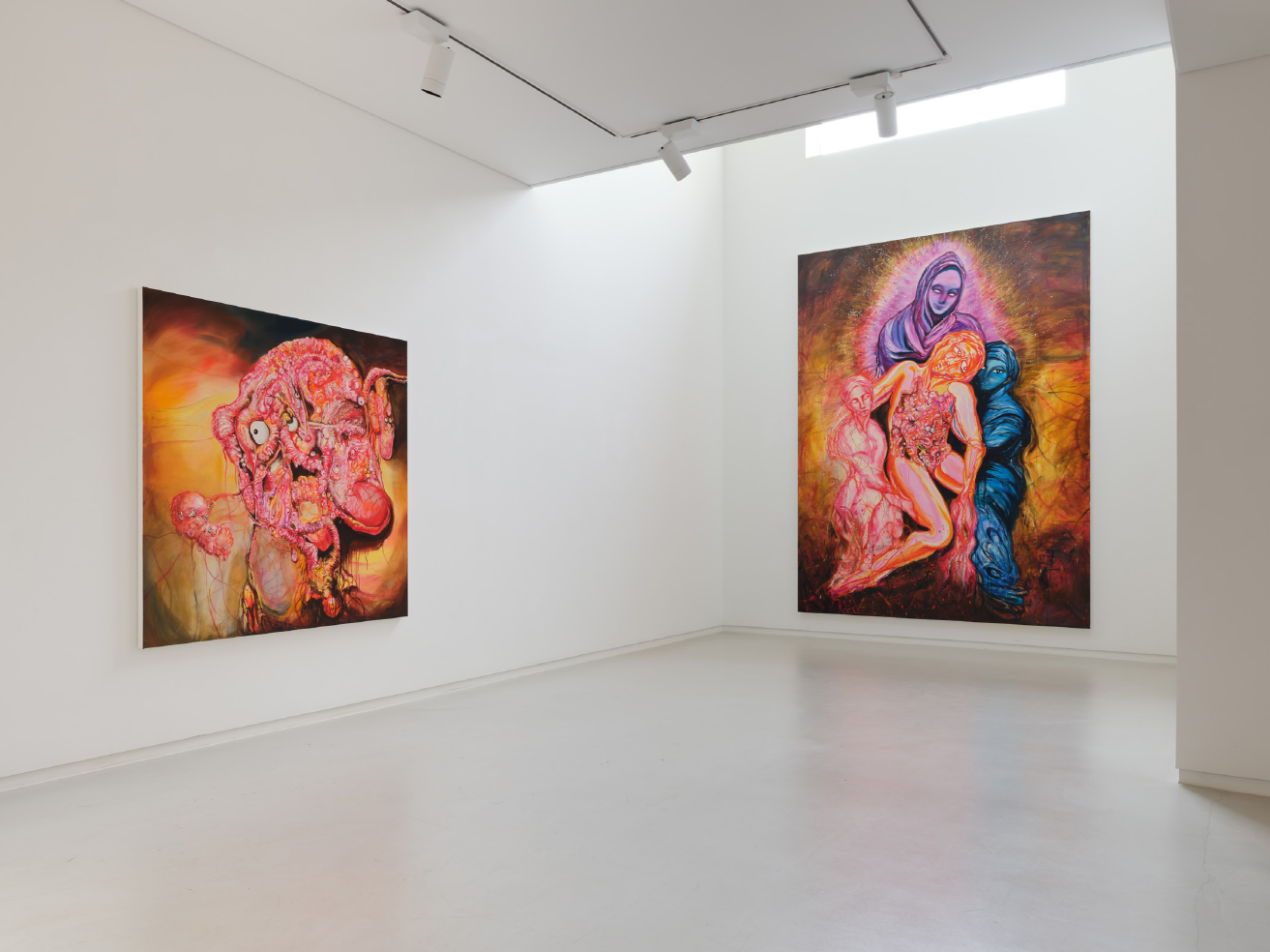
Painted on a large scale canvas over 2 meters long, Triangle of
Lamentation (2022) is an adaptation of Michelangelo's marble
sculpture The Deposition, also called 'the Bandini Pieta'.
The person in the center right behind the collapsing body of Jesus in
Michelangelo's unfinished pieta, which reveals the climax of the grievance for
the killing of god, is a biblical character named Nicodemus (who Vasari
considered to be a carving of Michelangelo's own face).
Unlike in other Pieta,
a dwarfed mother Mary supports the body on the left, while the woman supporting
him on the right with her cheek against his is Mary Magdalene. In Jang Pa's
painting, this triangular composition surrounding Christ is subtly rearranged,
and the form of colors and lines also creates another web of secret and
heretical meaning. From the abdomen of the helpless Christ, abject shapes that
Jang Pa had been painting thus far pour out like ruptured intestines.
‘Man-Nicodemus-Michelangelo’, who was at the apex in the triangular composition
that was a metaphor of the Holy Trinity, is not only of unknown gender, and
instead of being sad, has a smooth face like a mask with empty eyes and a
gloomy expression. Mary is connected with the figure of Christ in the image
itself where the bleeding paint and the blood vessels are vividly entangled
like a bloodshot membrane. Mary Magdalene is half shrouded in a dark, black-blue
color, and stares with piercing eyes, terrifying the viewer.
What is this
painting's original material? Is it a version of the Bible named the Gospel of
John, or the death of a man in AD 33, or Michelangelo's unfinished sculpture?
Jang Pa shakes and rearranges these three 'originals that are not originals',
and experiments how the paradigms of holiness and lowliness, birth and demise,
figure and ground, and sin and desire in the great historical symbolism, can be
re-established and re-contextualized through the sensibility of painting.
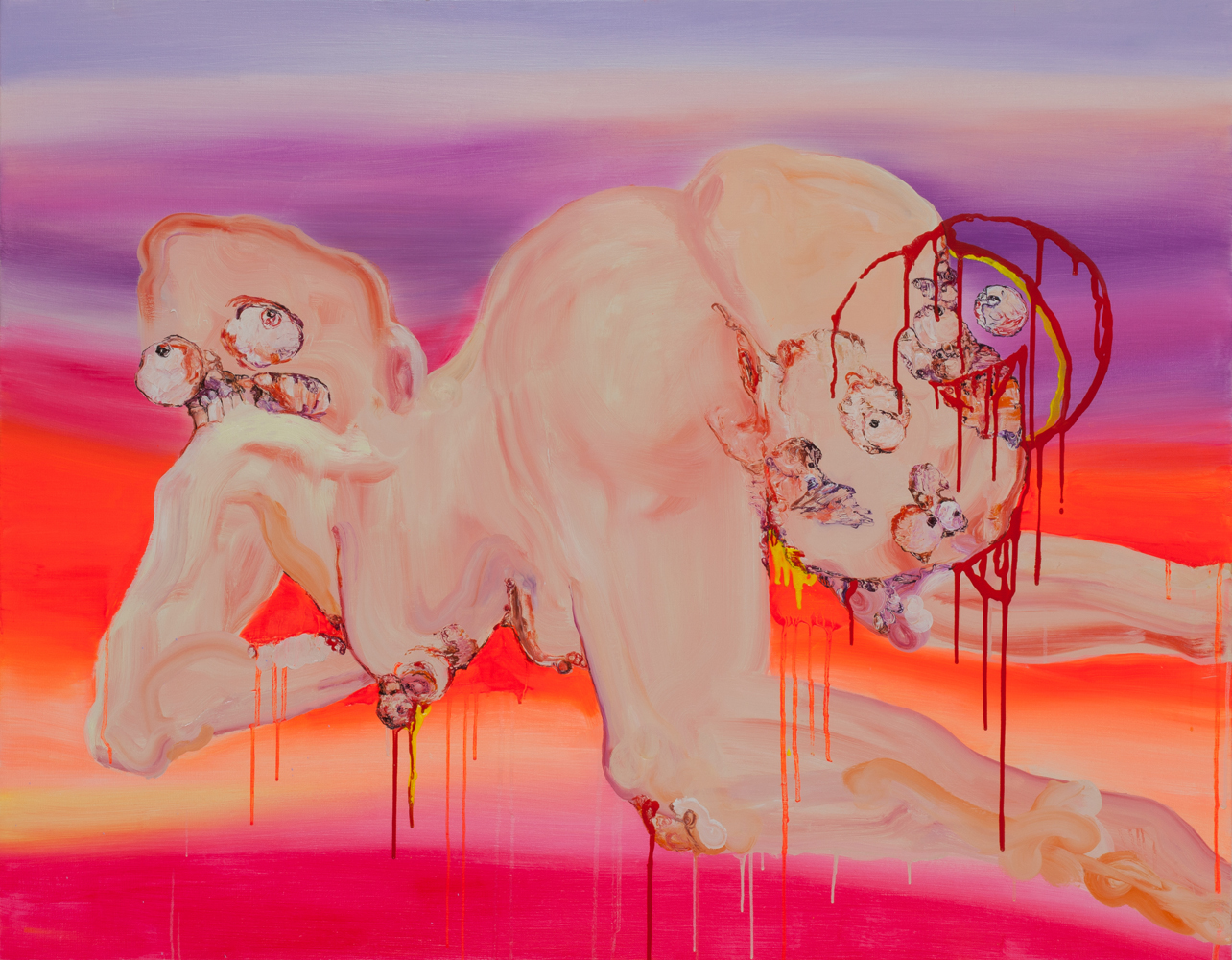
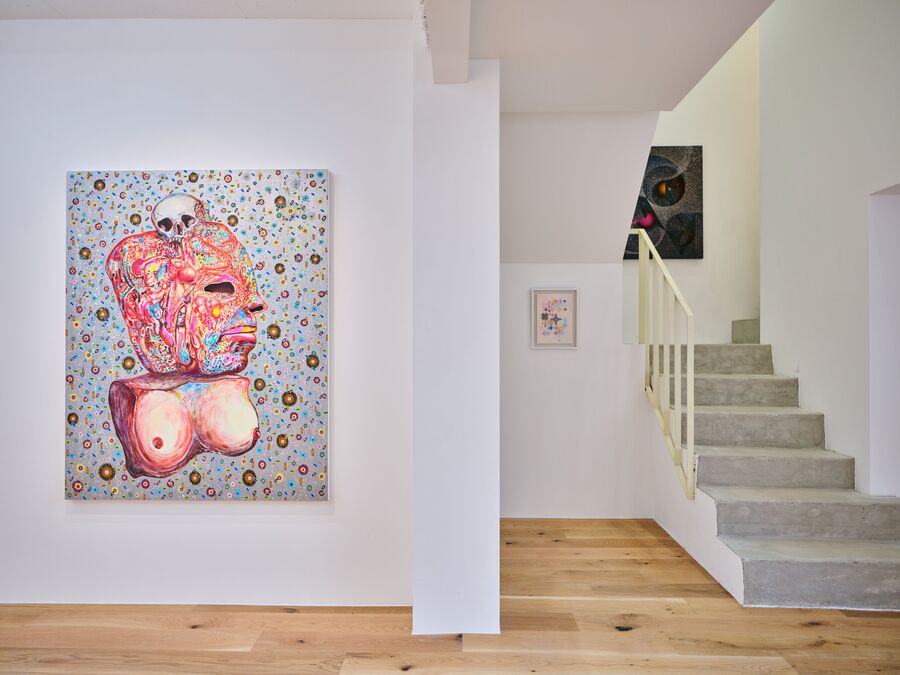
In A Common Woman Series, the iconography of
Virgin Mary holding baby Jesus is also splendidly and disparately embodied.
Through works of persistent research over the past two years, Jang Pa has been
digging into the historical stratum of female figures that have accumulated since
ancient times, while presenting archival works that scan through images of
‘misogyny’ on contemporary screens.
Above all, the Madonna and Child image and
the stigma of Jesus are the negative allegories of femininity that have been
imprinted in the holy signs, and are key icons showing how femininity and
motherhood have been disembodied in Christianity. Some may be aghast at the
provocation and intellectual prowess of the artist, who has labeled them
‘common woman’ and ‘a woman without qualities’ while appropriating these sacred
icons.
But these paintings that radiate lewd mystery and blasphemous play are
not an attack on religion itself, but rather an interrogation that reveals the
reality of masculine fear and fetish hidden inside the symbol of incarnation.
It is a scathing revelation that the symbolic system of Christianity was
constructed as an illusion that reversed the causality of woman, mother, body,
ground, and material, that the incarnation of Christ - ‘God who was made into
human flesh and died' - is merely a concave mirror of inverted image about the
fact that God was born from a woman's body.
In Jang Pa's canvas, the rough
brush strokes that depict the ghost-like form of mother and child and the
'holes' that emit light can be seen as a highly frigid hammering that smashes
such a mirror. The motherhood of the Virgin Mary, rising from the cracked and
shattered surfaces of this mirror, manifests an unknown eeriness, a kind of
ghastly coldness. The filthy, insidious and relentless form of Mary as both a
dangerous hybrid and dichotomy between a suffering/woeful mother and a
prostitute/bitch, is perhaps the most scathing counterattack to the maternal
ideology that has long been almost sacrosanct.
As is well known, Julia Kristeva, in 『Pouvoirs de L'horreur』,
referred as the abject, that which is separated and abandoned in order to
become a subject. This 'object that is not an object', which eventually becomes
the 'object' of primal oppression, is a process of separation from the totality
of mother prior to becoming someone, an attempt to deprive the mother of the
instance to becoming a subject, and an abominable boundary that can only be
revisited perversely. This is the fate of femininity that can only participate
in the symbolic system or the sacred order through a series of separations, not
just on the ontogenic level, but also on cultural and historical level.
As
uncleanness, filth, and blood must be purified through a sacrifice ritual, meat
and woman are linked as a pair. The mother is the place where, as a lump of
meat in which this fundamental shield activates, as a bleeding beast, and as a
source of contamination, the negativity that coexist in meat and women is
ultimately condensed. The 'Mother-Symbol', which culminates in the Virgin Mary
as a chaste vessel and benevolent mediator, is the method through which
civilized society — especially the Christian symbolic system — has tamed the
mighty power of reproduction whilst also neutralizing the fear of the body's
uncontrollability, thus absorbing and desomatizing a woman's body.
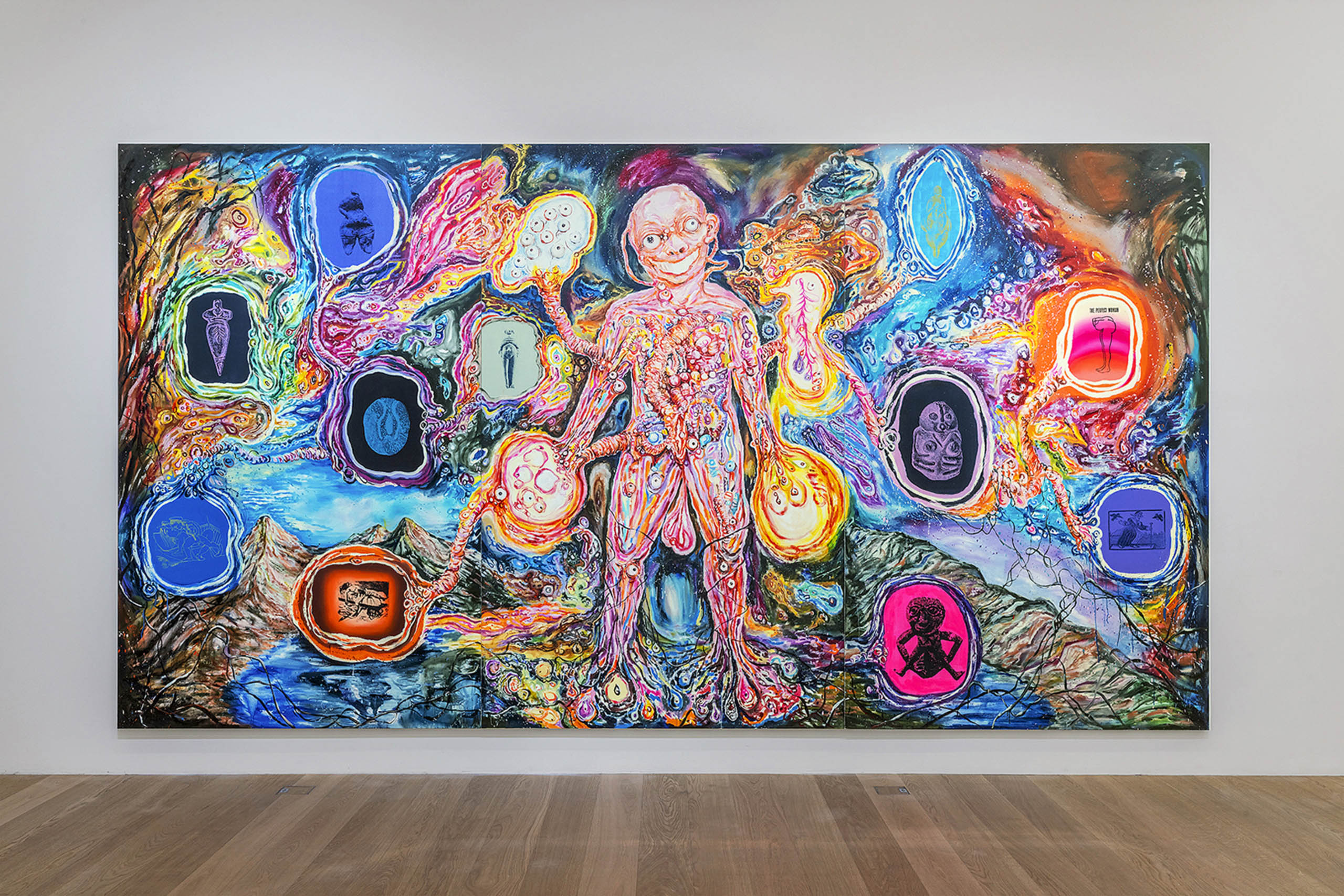
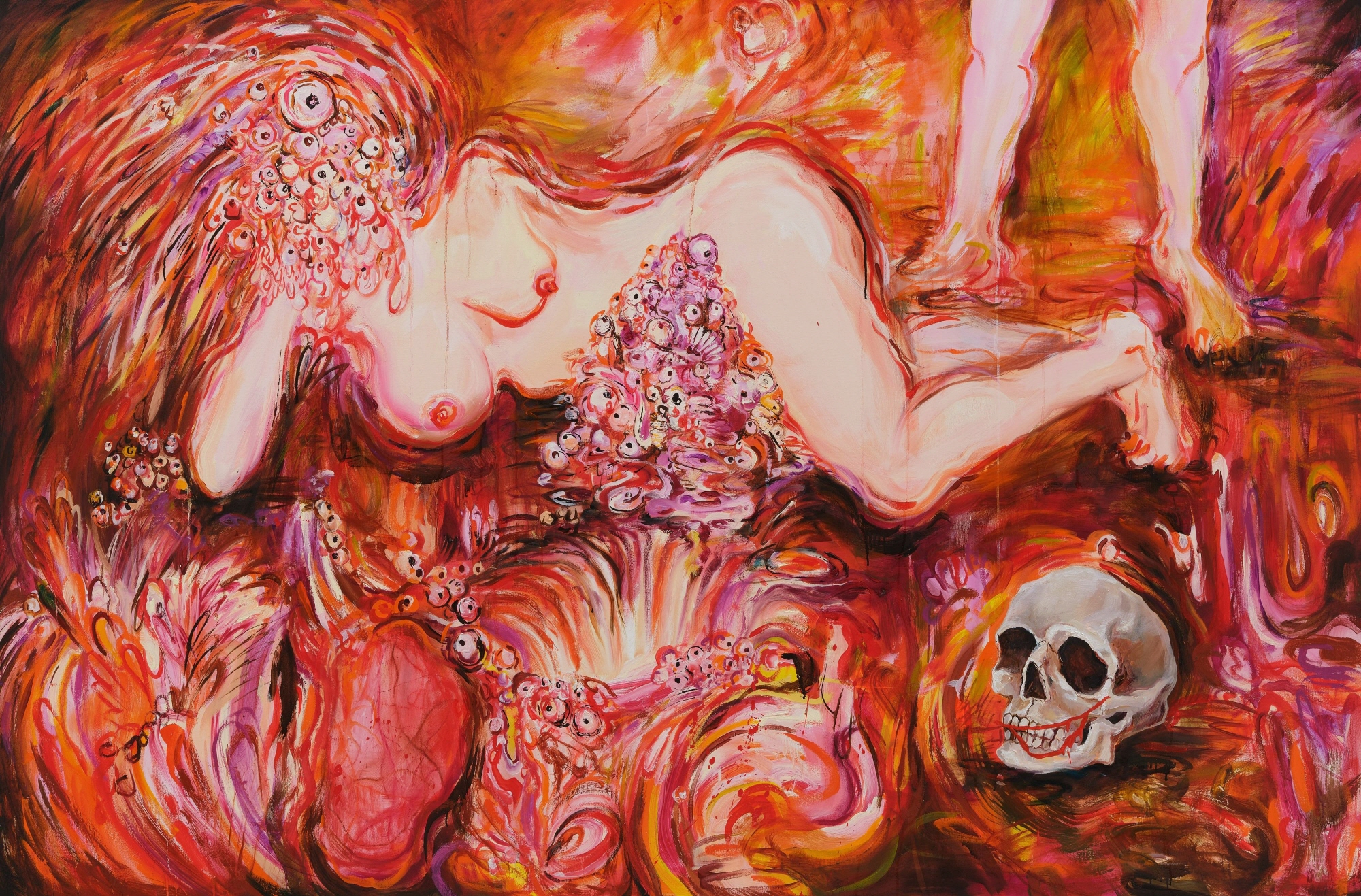
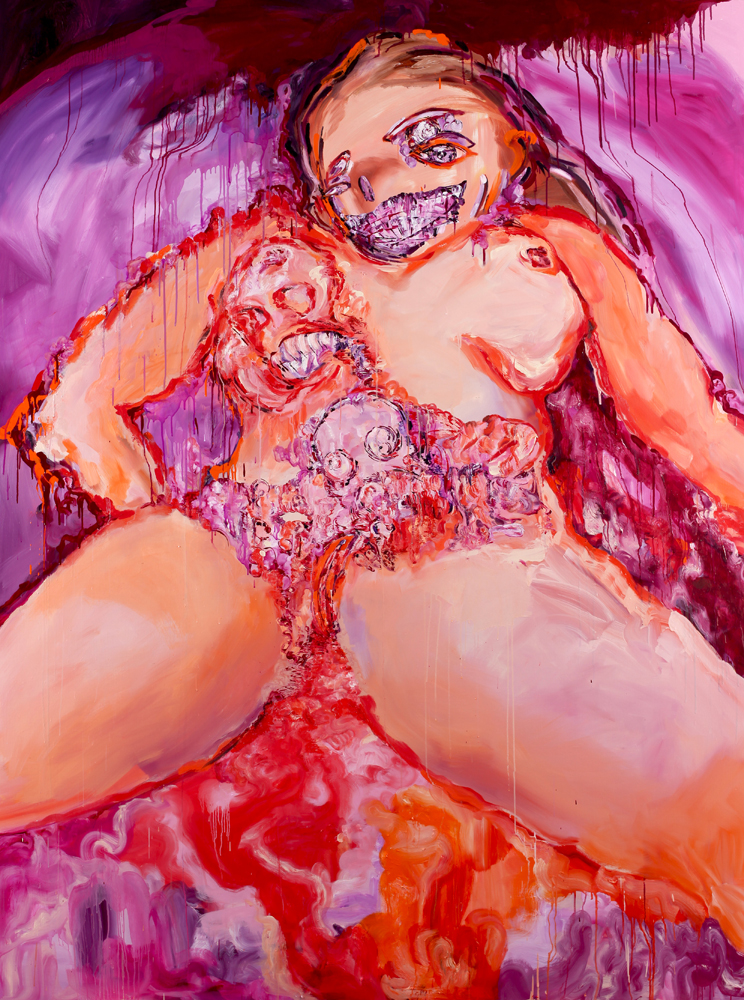
These works, which visualize the maternal points of fear and
abject by re-contaminating the Pieta, are another sluice opened up by Jang Pa's
female sexuality as an abject in the Lady-X series, and this
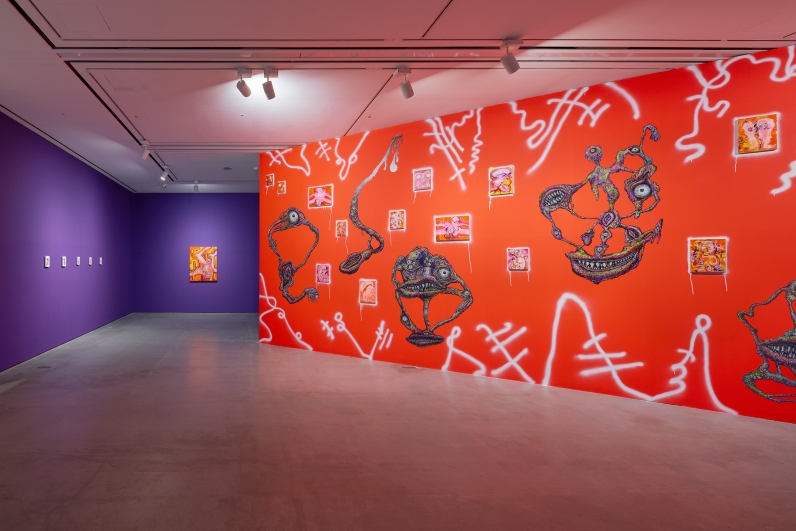
creates another zone of transgressive pleasure. Retaining the rough brush
strokes and compositional motifs of the Lady-X series, the Mama
series fill the canvas with images of monsters in which shapes that
are reminiscent of organs such as eyeballs, intestines, fetuses, and testicles
are heterogeneously entangled with each other, spilling over and falling out of
the skin and skeleton.
This disgusting, creepy, gloppy and proliferating
maternal corporeality that was named 'Mother', radiates dazzlingly intense
colors and a play of brutally innocent creation of form from the surface of the
painting. These paintings remove the shield of sublime and chastity, and
instead rapturously lays out the very entanglement and dynamism of contaminants
that should have been swept away through sacrifice rituals.
Jang Pa's strategy
of bringing the deified, mysticized, and ideologized motherhood down to earth,
while at the same time replacing the physical properties of the body that is
imprinted with disgust and fear with sensual pleasures of color and form, carries
out 'blasphemy as an irony'. It is a strategy in the rhetoric of materialist
feminist that Donna Haraway herself proclaimed at the opening of A
Cyborg Manifesto, a serious play and scathing humor that is bursting
with tension due to its seemingly constant demand for seriousness whilst
bearing both sides of incompatible contradictions.