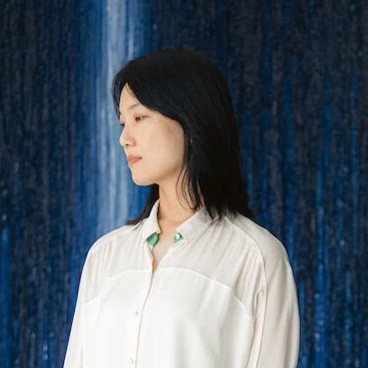
Doki Kim has developed an installation practice that allows viewers to experience invisible forces such as light, heat, and gravity through their senses. To this end, she employs a wide range of industrial materials and everyday objects, including LED displays, electrical wires, paraffin wax, plaster, concrete, and heaters.
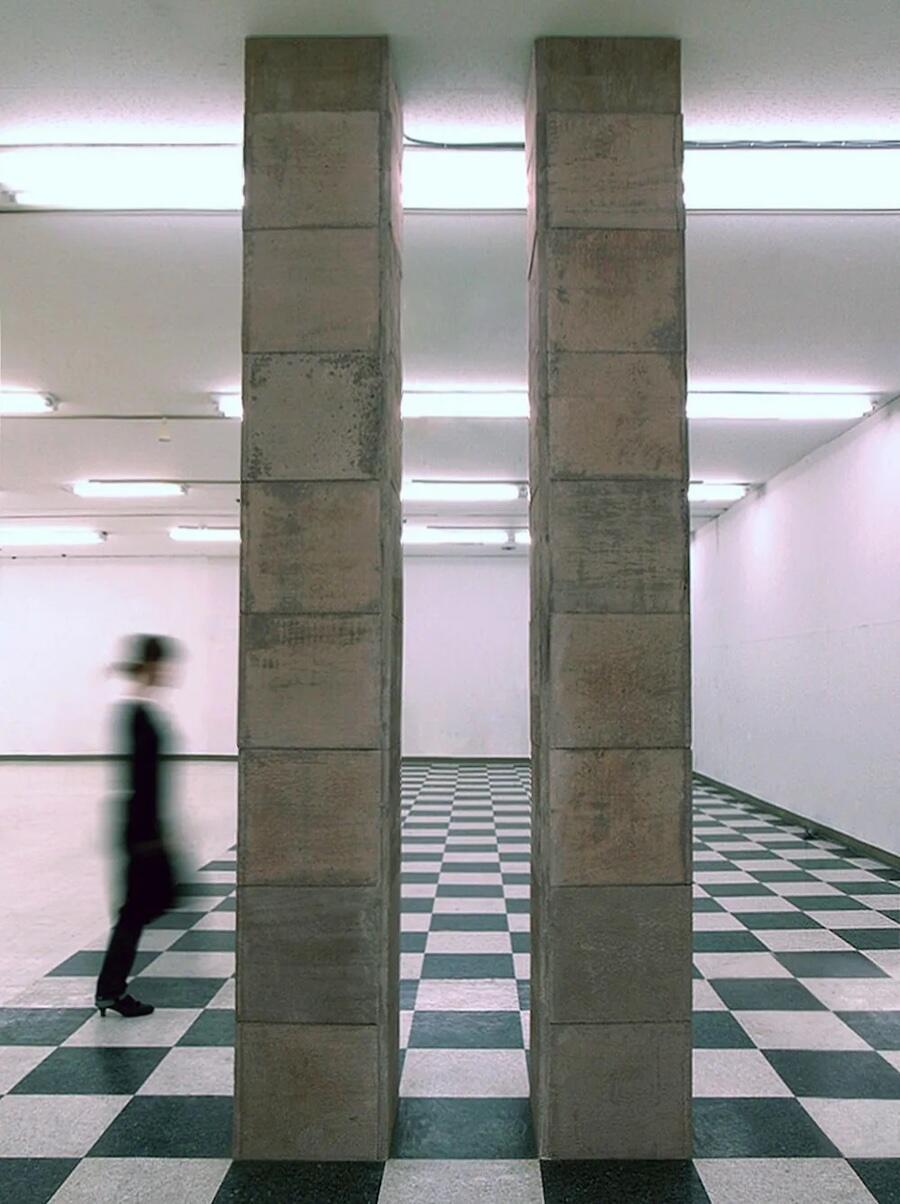
By closely examining their physical properties, Kim dismantles and recombines these materials, exploring new ways for them to function beyond their conventional purposes. In her early work A Single Pillar (2006), she embedded heaters within a concrete pillar to generate an invisible current of warm air, while Form of memory (2010) employed heat-sensitive panels and a thermal camera to produce images that appeared and disappeared in response to changes in temperature.
In these experiments, physical phenomena serve simultaneously as artistic materials and as means of transforming viewers’ perception. By disrupting the familiar functions of objects and expanding the possibilities of sensory experience, Kim invites audiences to encounter movements of the world that are ordinarily difficult to perceive.
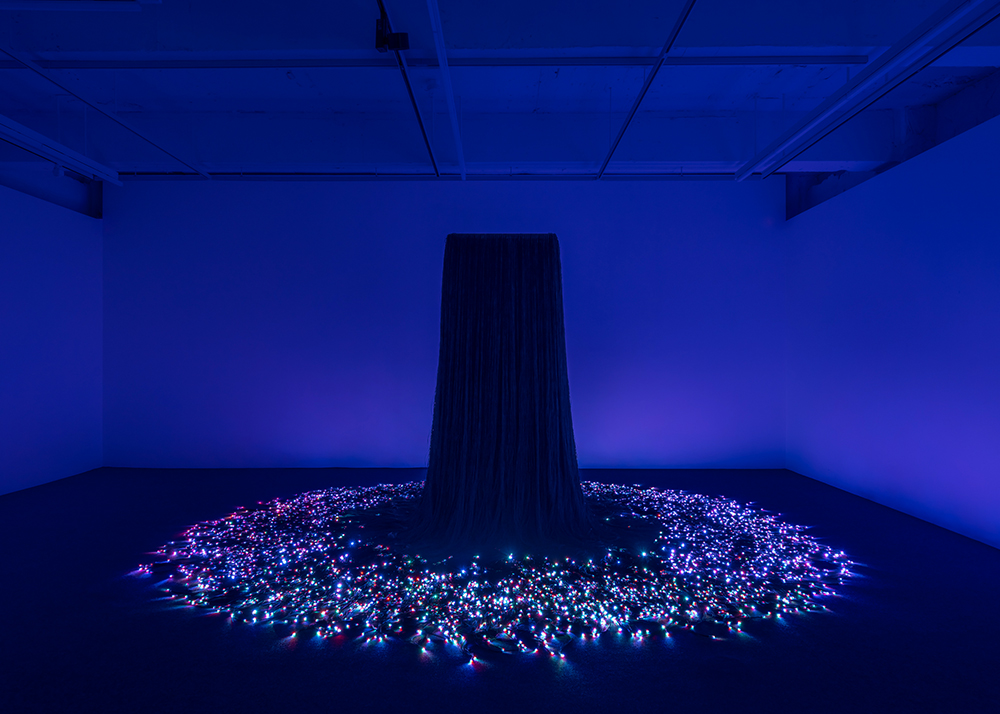
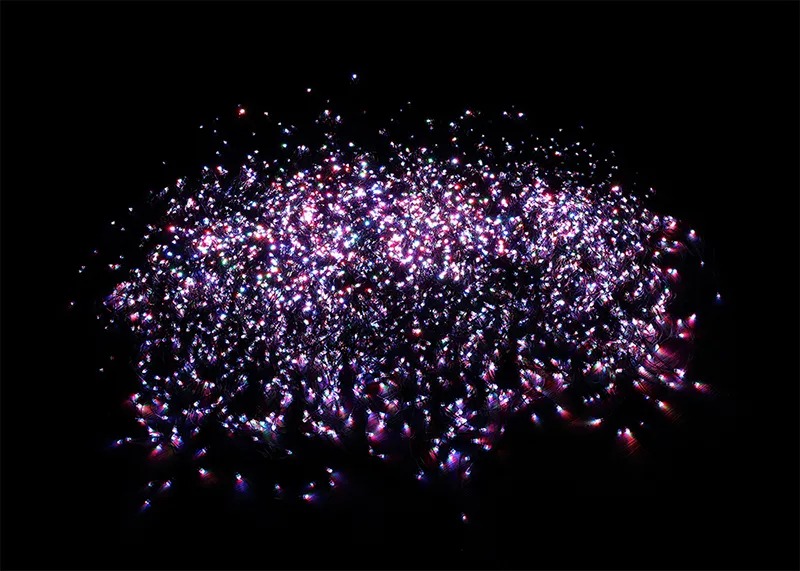
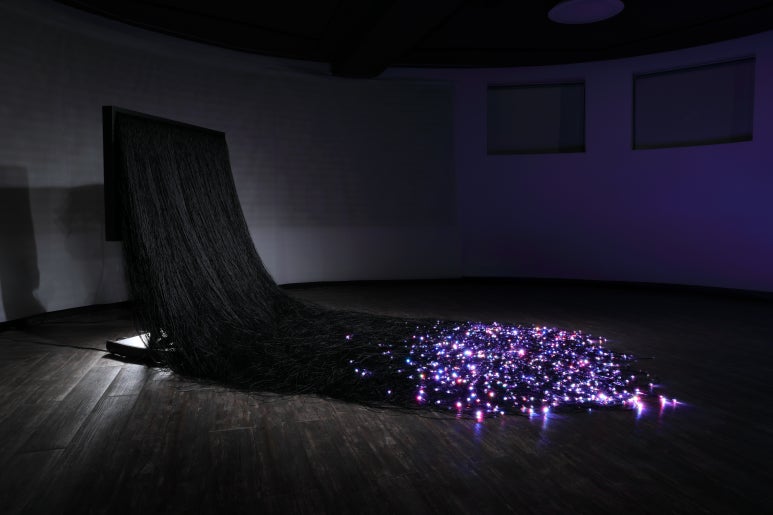
The dismantling of the fundamental structures of moving-image media reveals a distinctive aspect of Kim’s sculptural language. In Quantum Dream (2018), she separated the individual pixels of an LED display and reconnected them with electrical wires, transforming the video image into the movements of individual points of light.
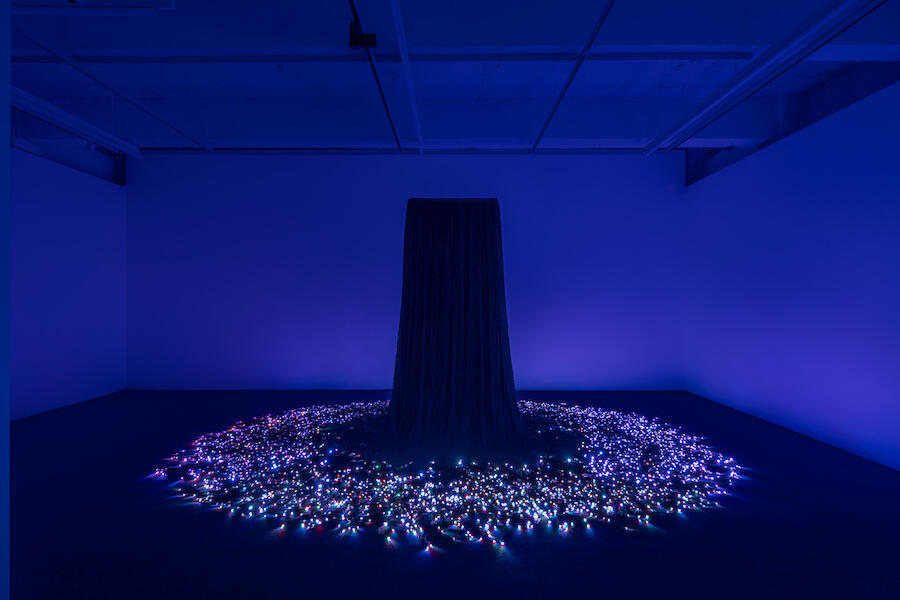
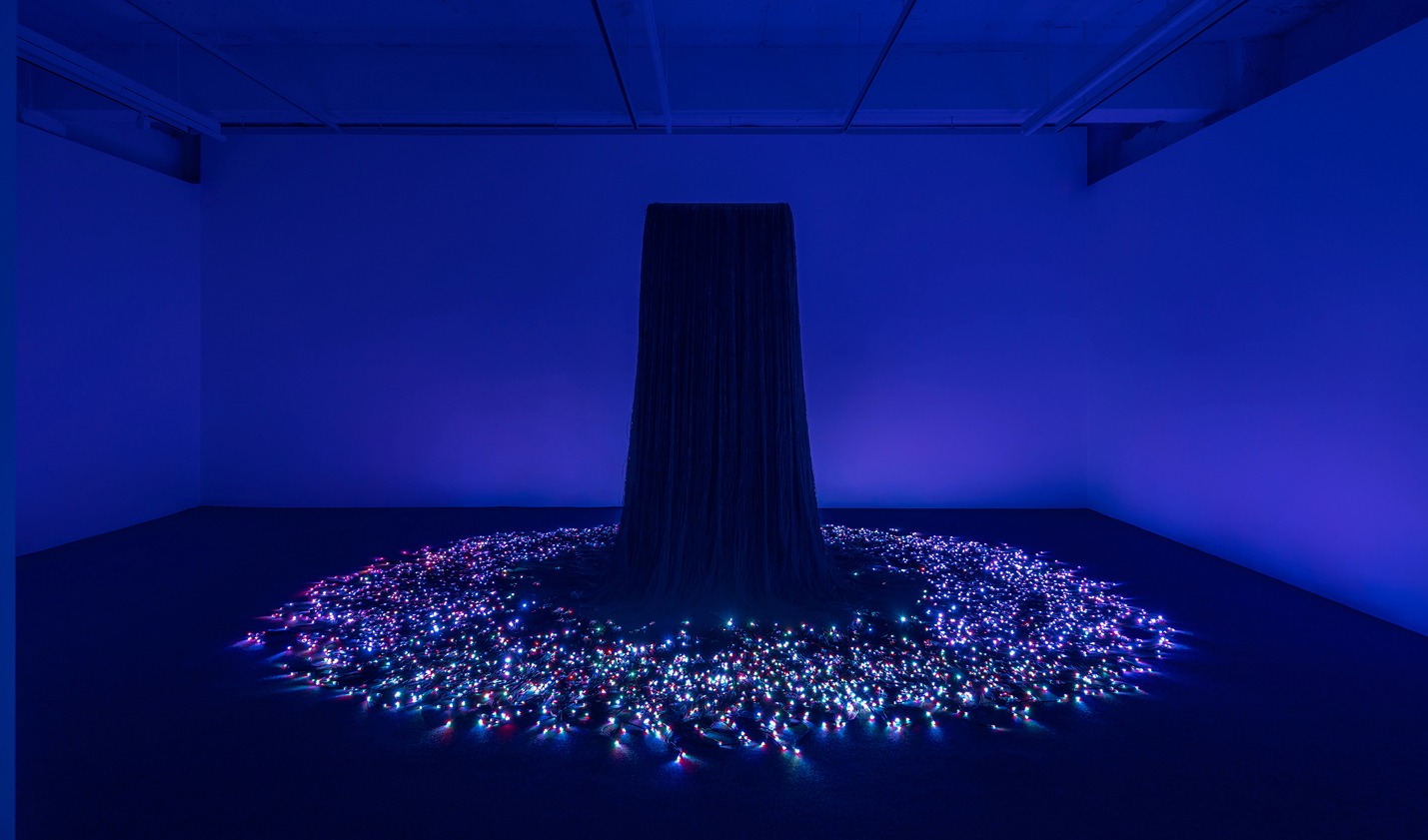
Images and sounds evoking significant moments in human life, including birth, marriage, and death, intersect with the irregular flickering of dispersed pixels, disrupting conventional narrative continuity. This experimentation continued through A Scattering Time (2019) and Blue Hour (2023), culminating in Umbra (2024). In Umbra, a rectangular LED structure and countless pixels arranged in a circle across the floor generate a stream of light, dispersing the moving image to the point where its original form becomes difficult to recognize.
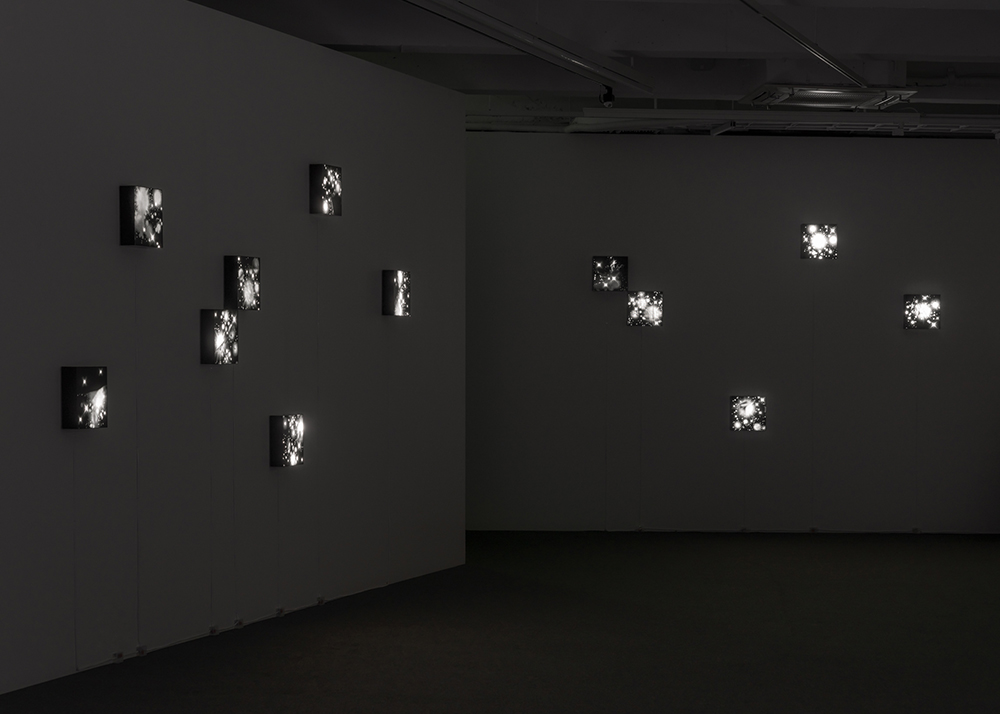
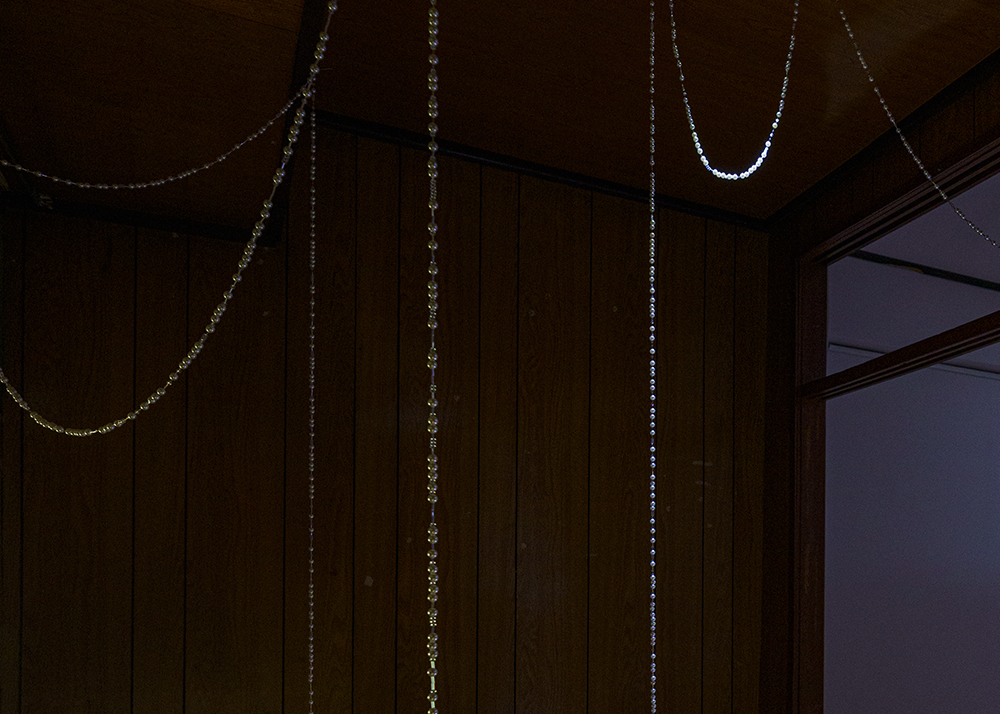
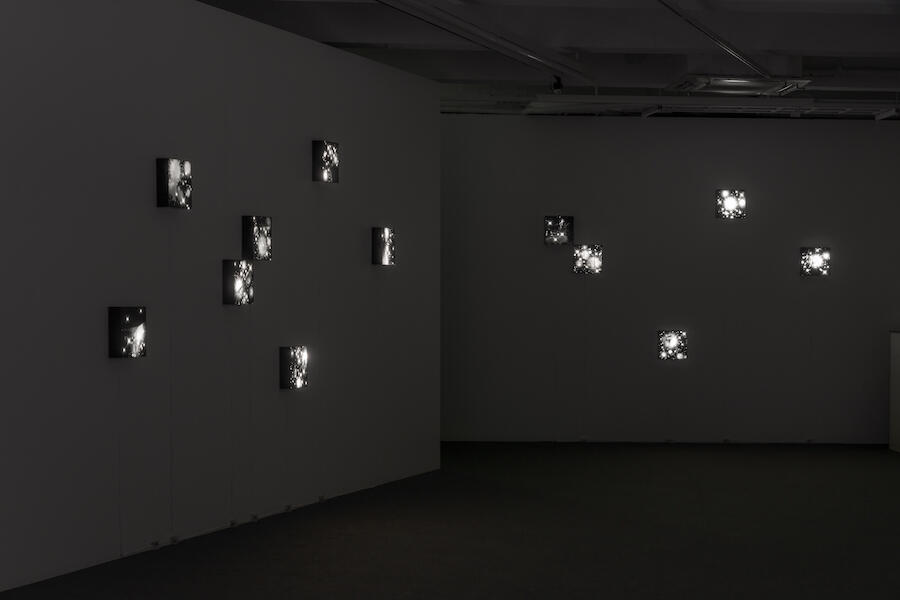
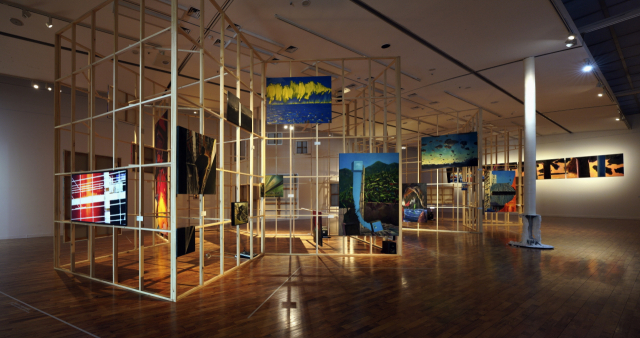
Meanwhile, Partial Solar Eclipse (2024) intermittently reveals scenes from nature and everyday life through LED modules positioned at intervals throughout the space. Images of an apple’s surface resembling a planet or flames evoking the cosmos unsettle the viewer’s perception of the scale and identity of familiar objects. Through the spatial expansion of the screen’s flat structure and the physical disassembly of images, Kim develops a formal language that moves fluidly between moving image and installation, abstract light and tangible objects.
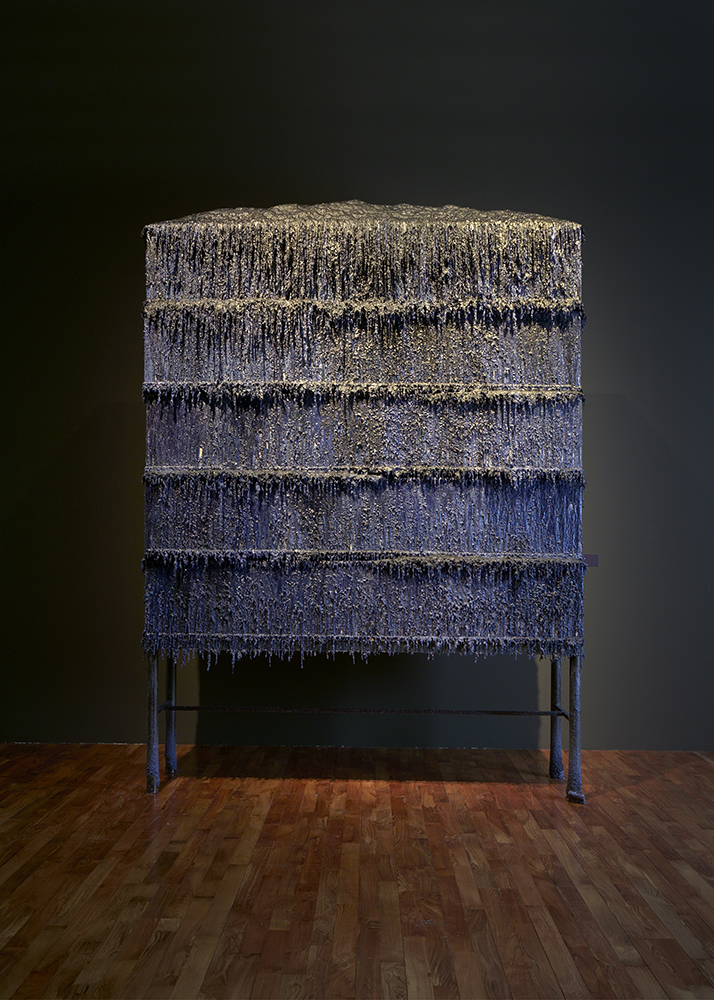
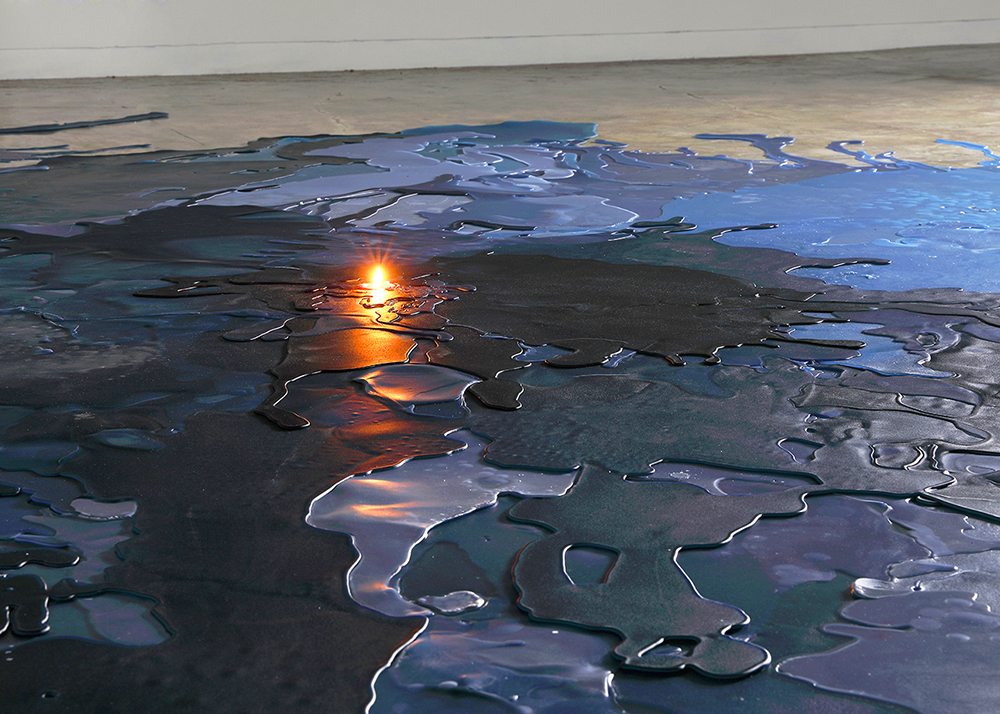
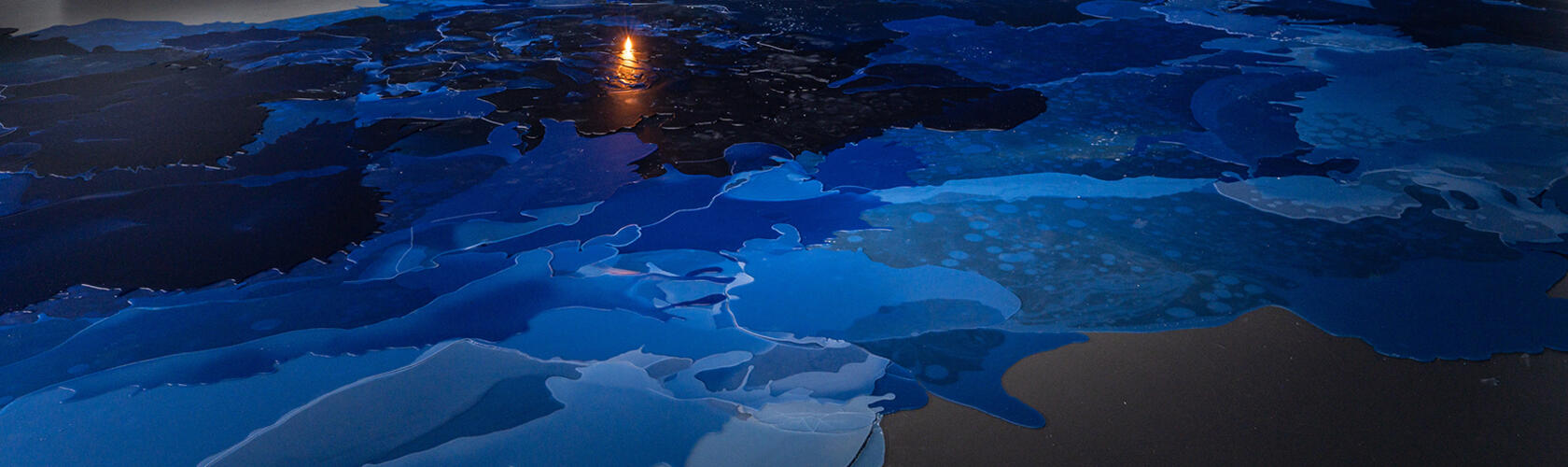
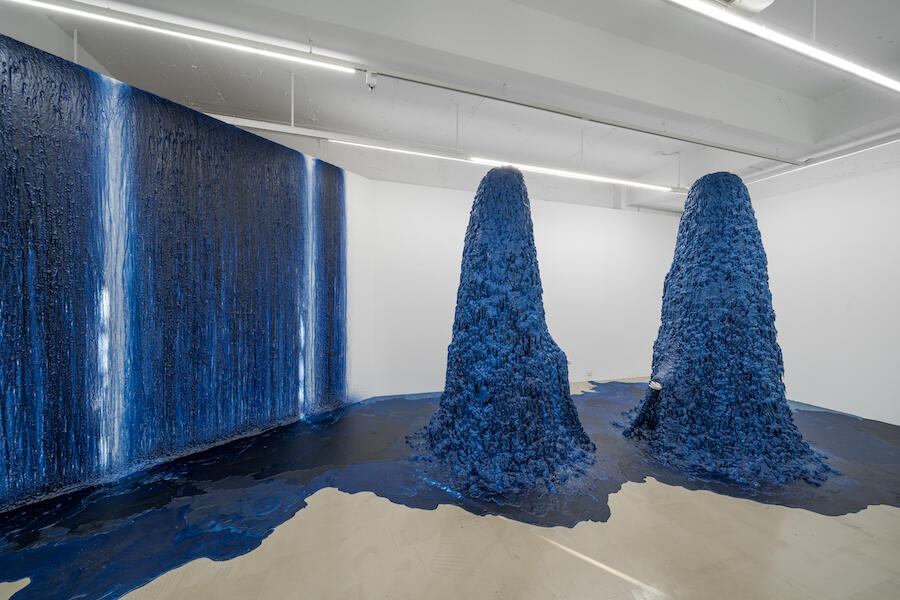
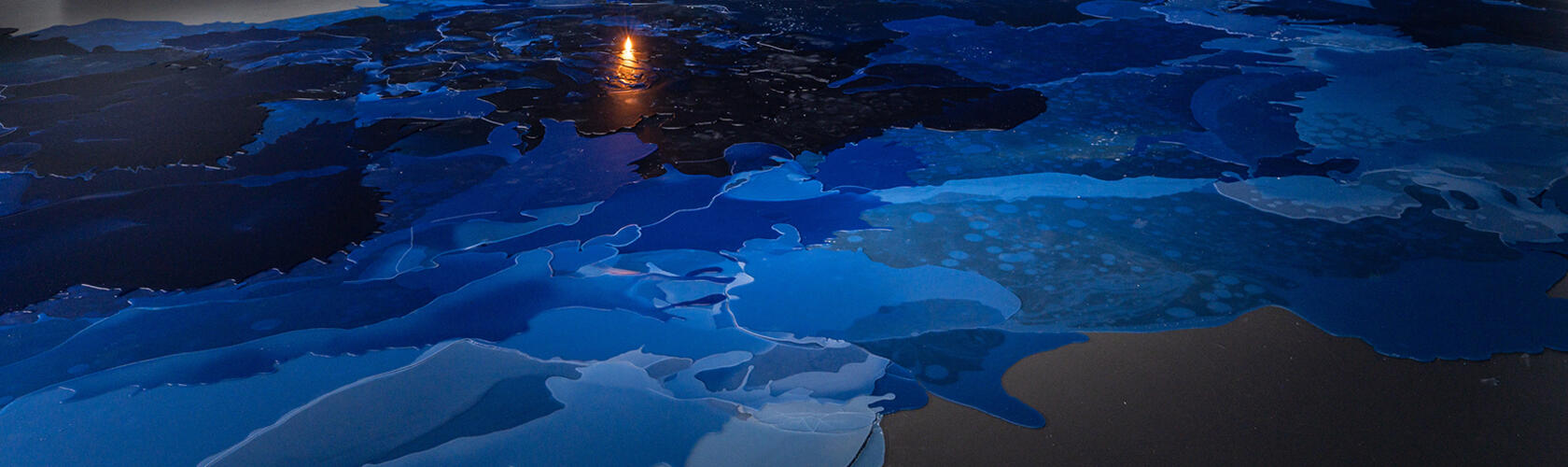
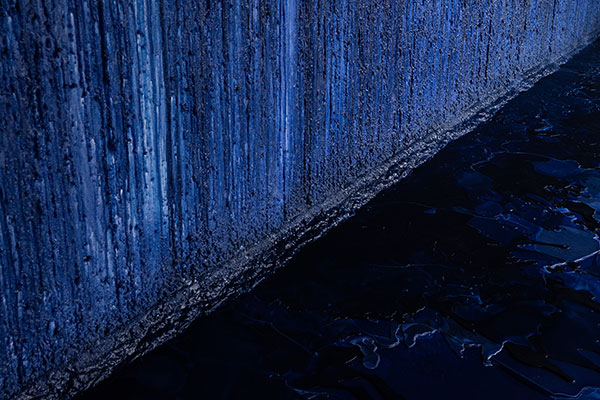
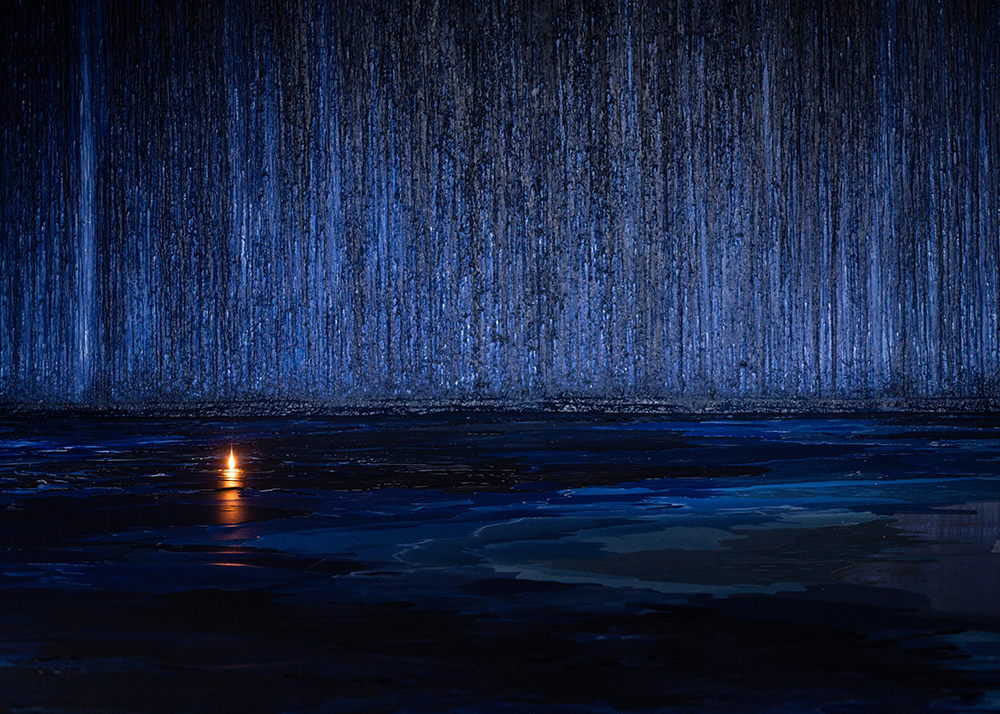
In her works involving paraffin wax, the transformation of material in response to heat and the repetition of physical processes play a central role. Heated paraffin melts and flows before solidifying again as its temperature decreases, leaving visible traces of gravity, viscosity, and the passage of time upon its surface.
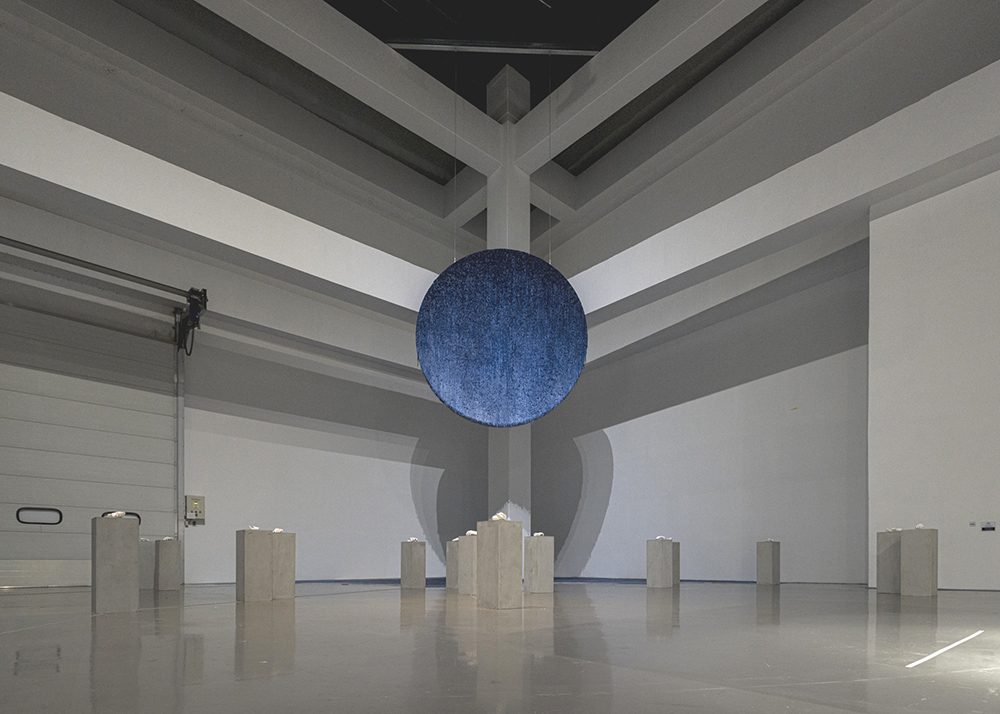
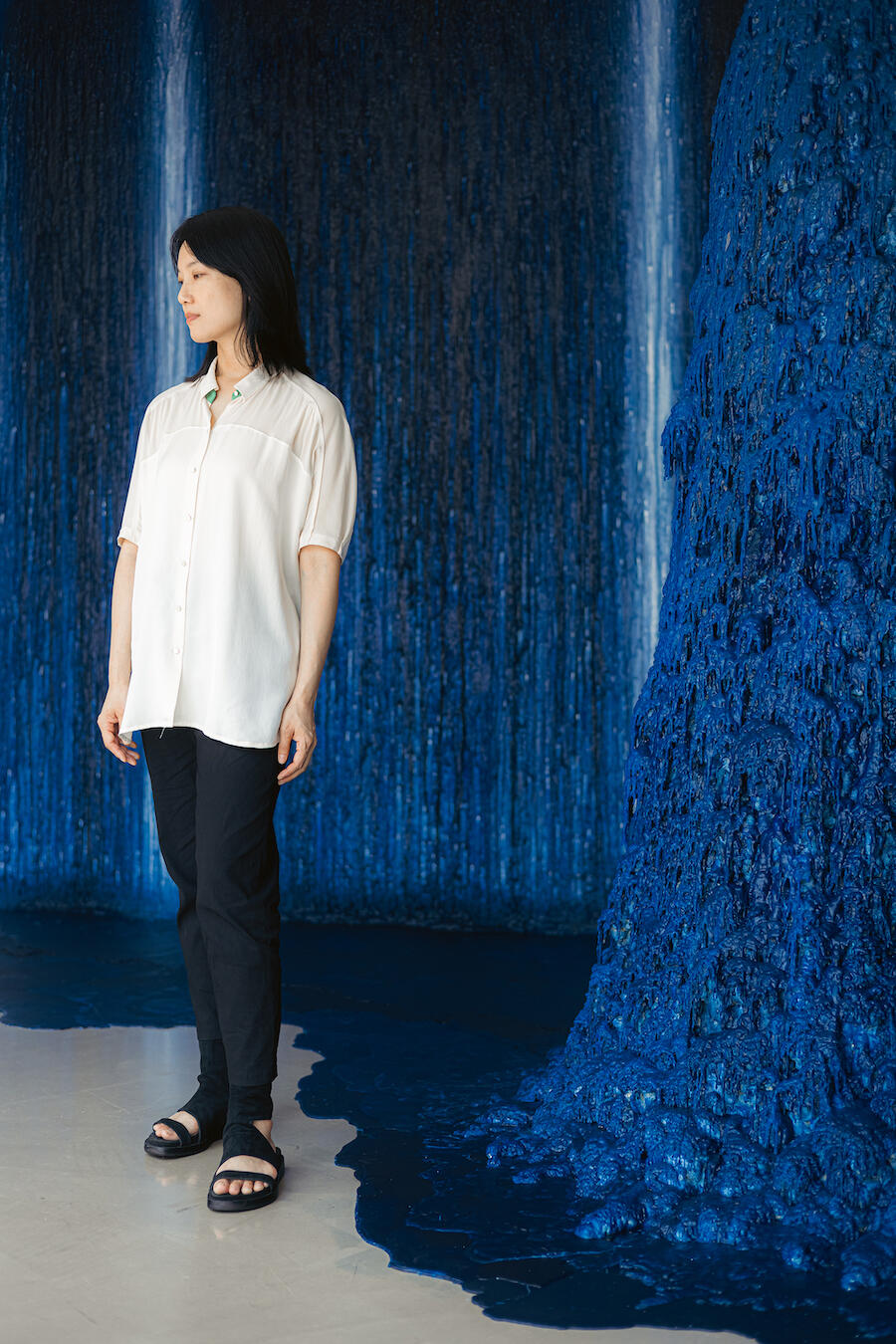
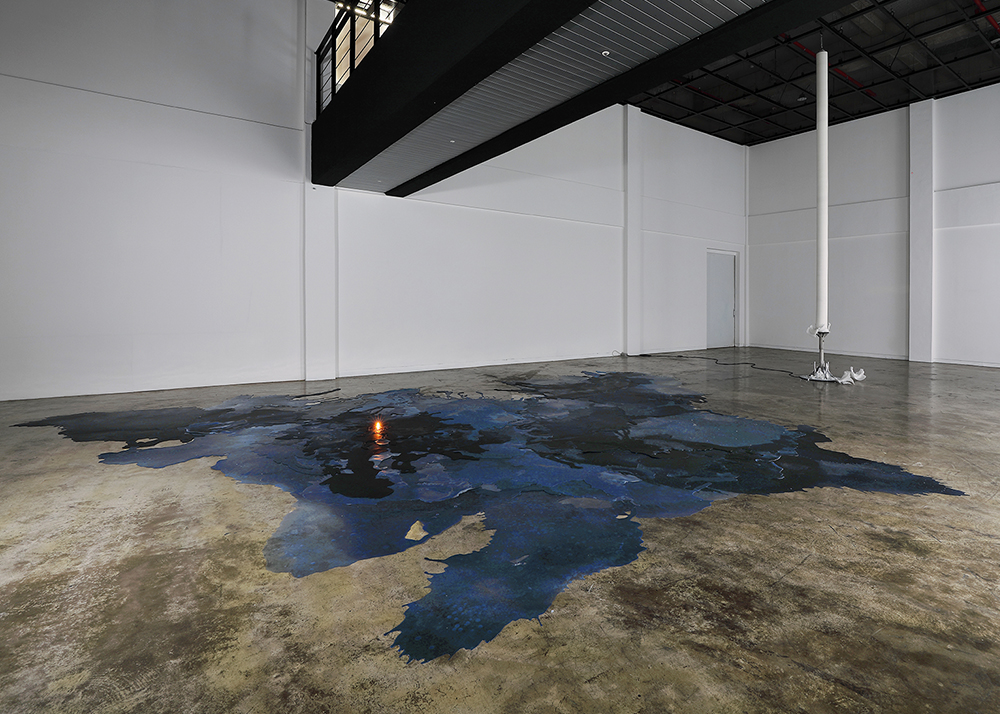
Kim exploits these properties by repeatedly applying paraffin to structures and spaces, gradually building volume and texture. The traces of wax covering the coffin in Cover with the Night (2023) and the monumental circular structure of Song of the Night (2025) reveal the processes through which material flows and accumulates.
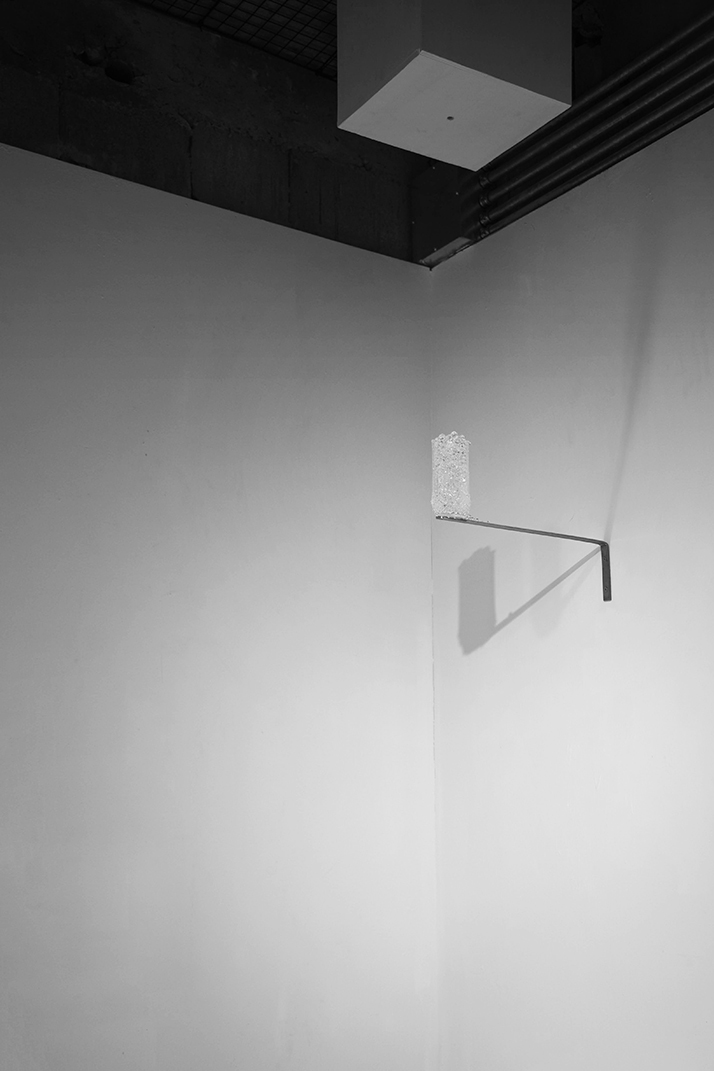
In Requiem (2025), a heated steel plate was designed to descend under its own weight, gradually melting a column of paraffin and allowing the work’s form to change over the course of the exhibition. Unexpectedly, the melted paraffin solidified and began supporting the column again, eventually preventing the steel plate from descending further. Kim embraces such contingencies arising between carefully planned procedures and the independent behavior of materials, incorporating the possibilities of forms and transformations generated by matter itself into her practice.
Exhibition spaces and viewers’ bodies also play integral roles in Kim’s installations. She adjusts the scale, arrangement, and sensory intensity of her works according to the dimensions and architecture of a space and the paths through which visitors move. In Our Cold Time (2022), a sensor triggered the release of powder whenever a visitor entered a particular area, allowing successive footsteps to accumulate as material traces over time.
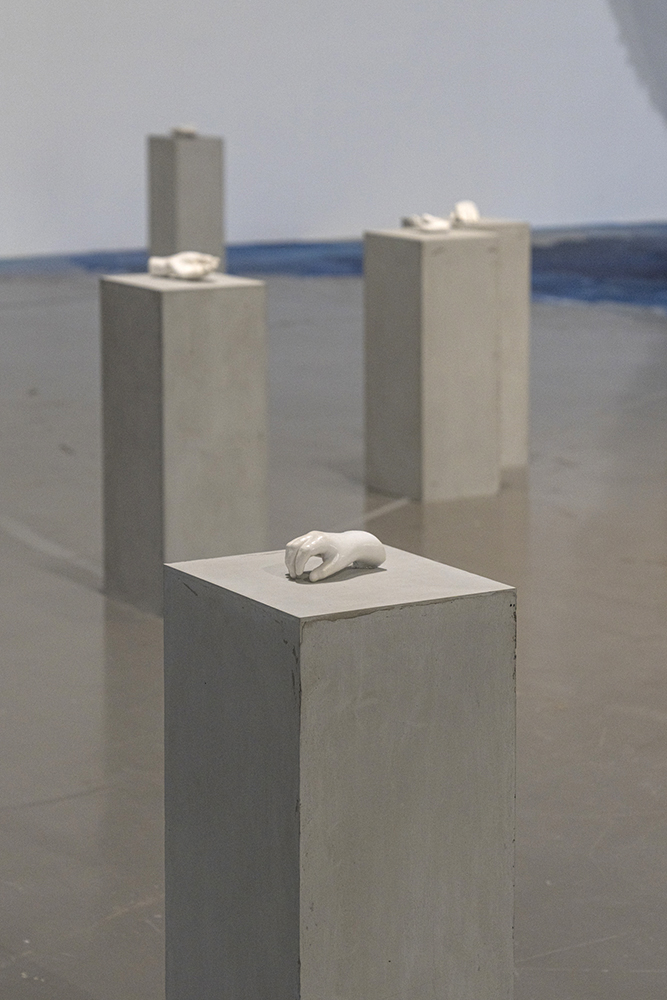
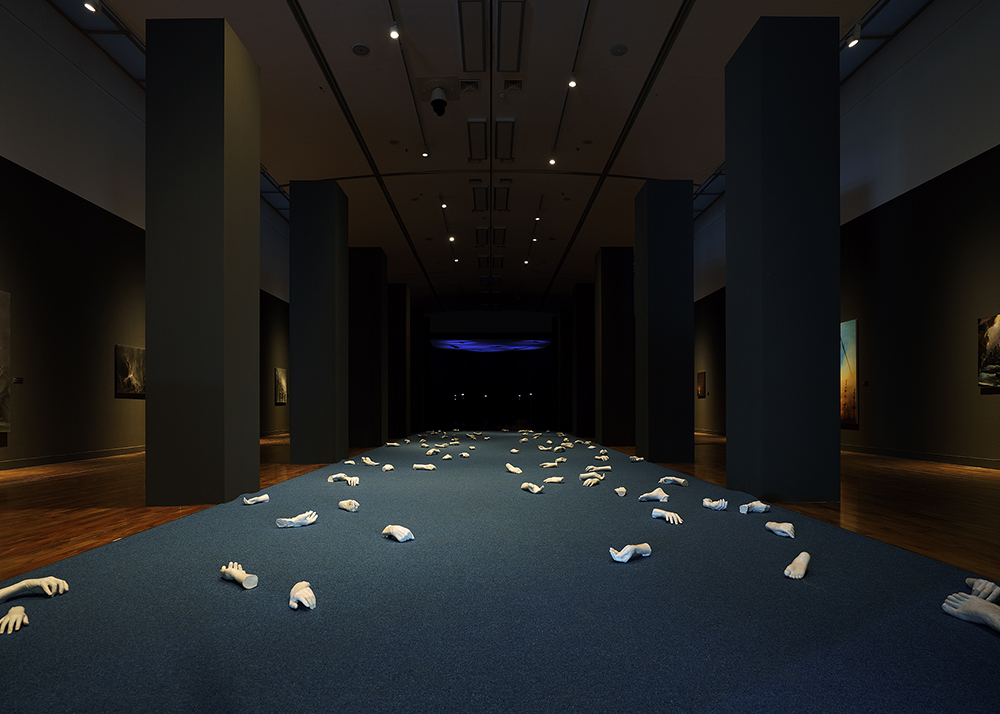
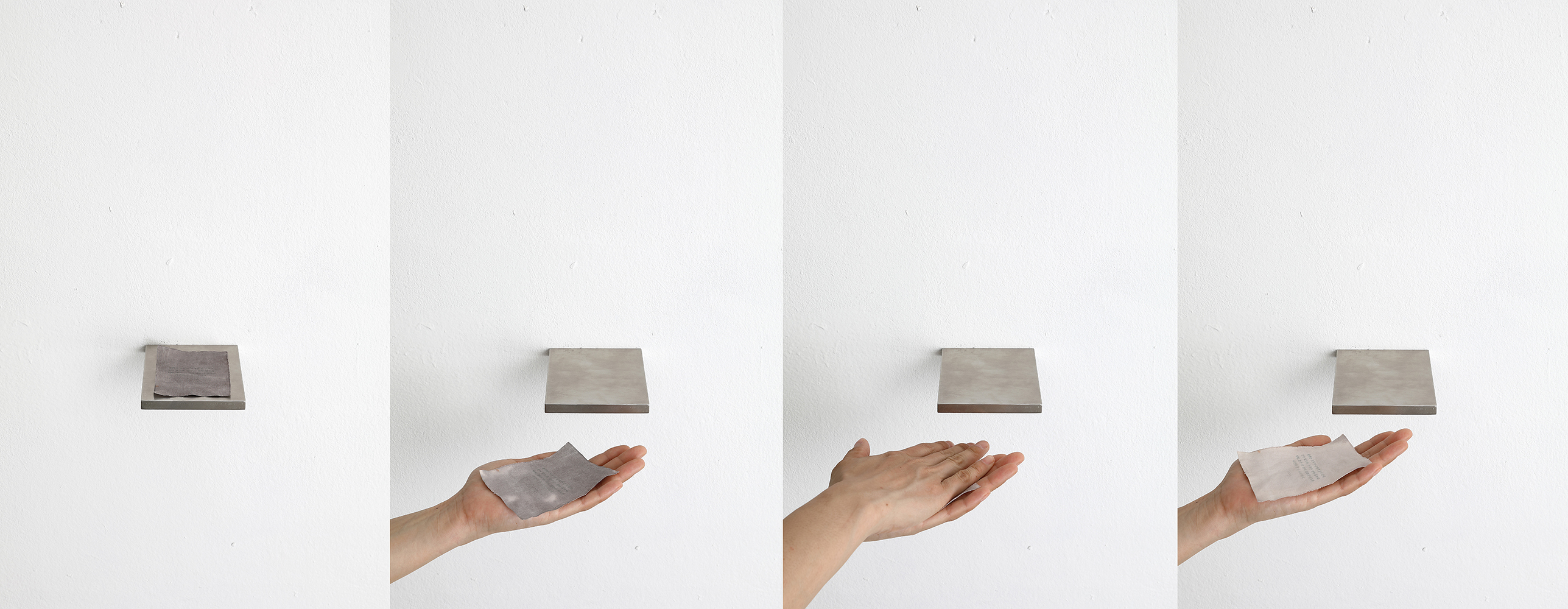
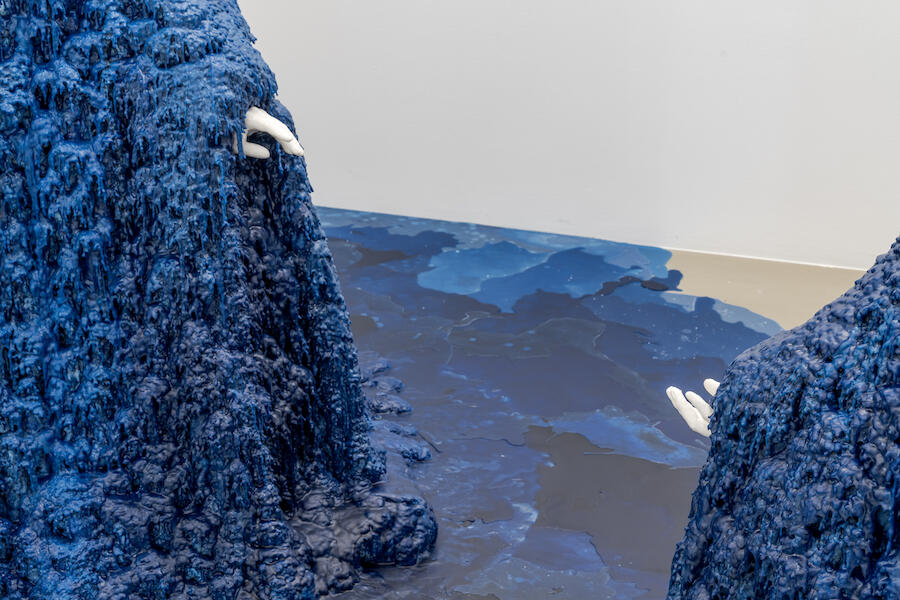
White Shadows (2023) and White Voices (2025), composed of casts taken from people’s hands, contain heating elements that allow viewers to experience warmth through direct contact. In the exhibition 《Seeing with Ten Fingers》 (2025), Kim arranged the hand sculptures beneath the monumental paraffin structure of Song of the Night like a constellation, bringing the intimate sensation of bodily warmth into proximity with an overwhelming sculptural form.
Canon (2025) similarly emphasizes the participation of visitors, who enter the installation, make physical contact with its elements, and interact with one another. Kim’s practice thus combines vision, touch, bodily movement, and the passage of time, calling for active sensory engagement. Through the reciprocal relationship between material transformation and embodied experience, invisible forces and the connections between different forms of existence become tangible.