In
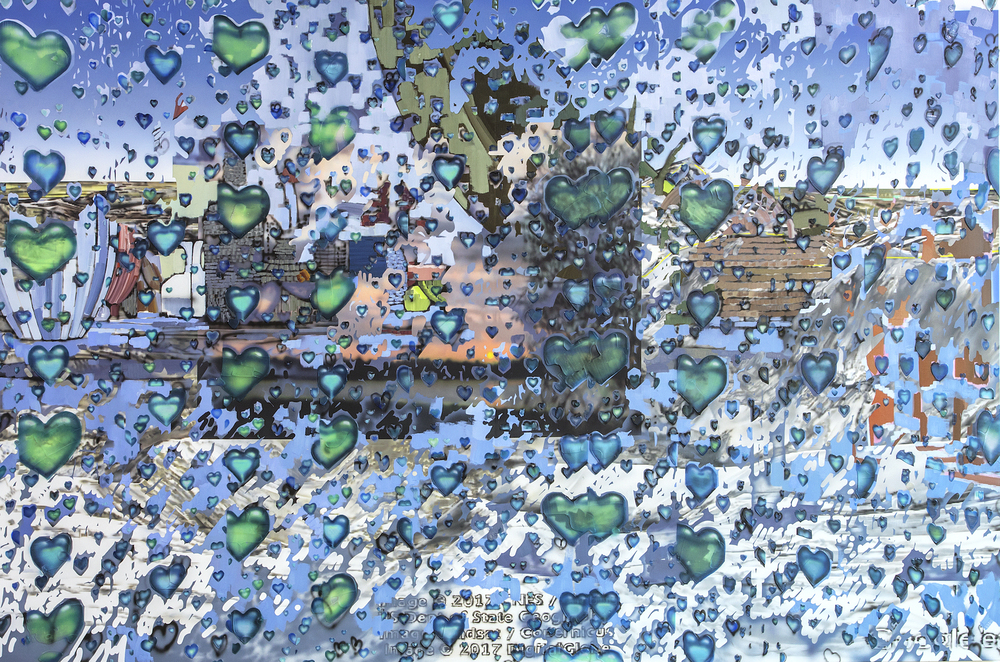
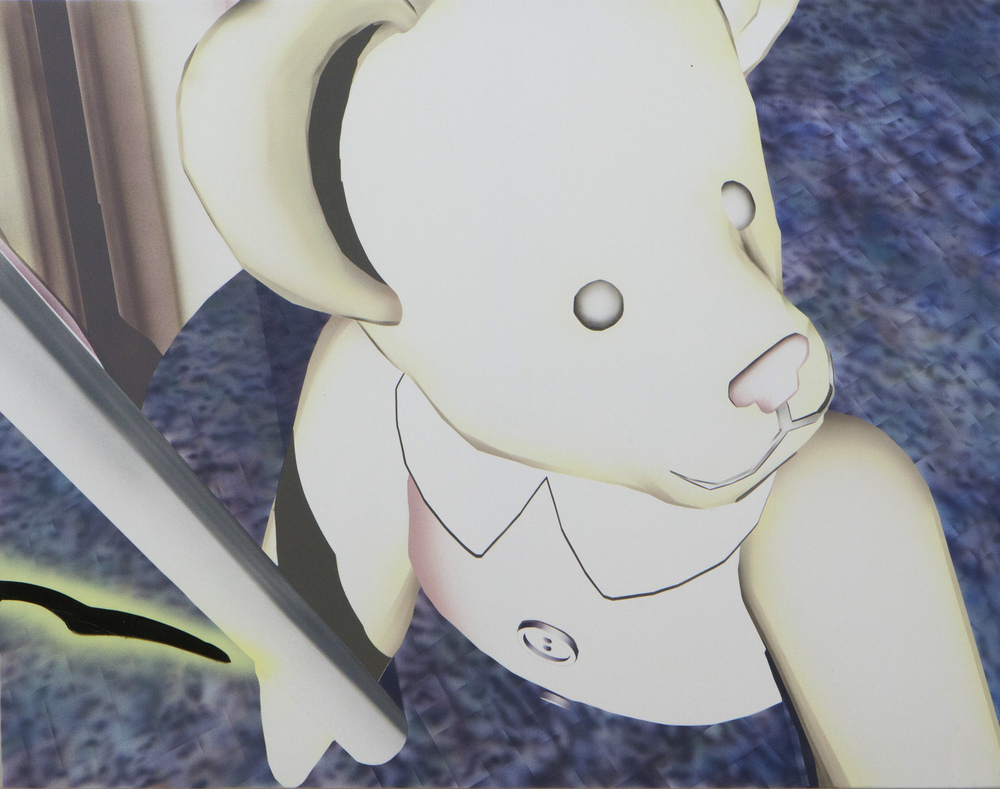
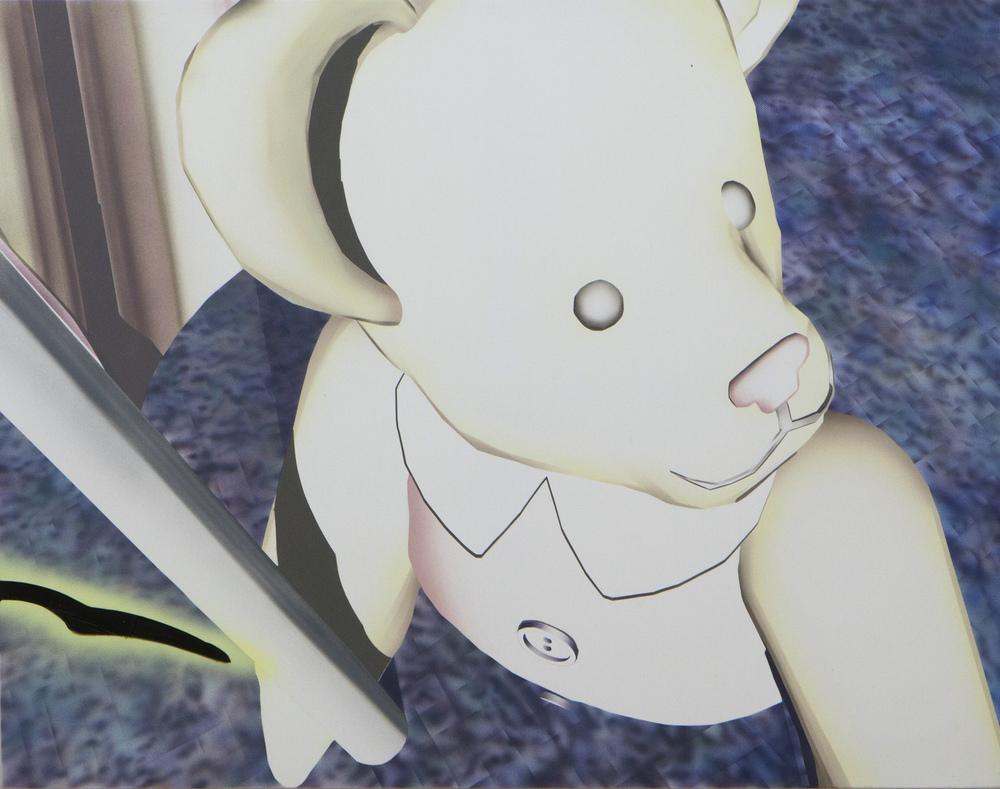
the early days of her career, Heemin Chung was known for obtaining materials
from open sources online, rearranging them primarily using 3D modelling
programs, and then recontextualising them as classical still-lifes and
reproducing them in paintings. The methodology of Chung’s early practice is
similar to that used by many of her contemporaries but, crucially, her interest
lies in the immateriality or fictitiousness of this sense of still life, rather
than the digital imagination. She regarded the pixelated digital still life as
a kind of virtual image and built a layer of double illusion by transferring it
to the canvas using a translucent medium. Since virtual images lack
three-dimensional depth, reproducing them in different mediums can create a
sense of dissonance with the body which is led by synaesthesia. A remark by the
artist, who felt that she was ‘sceptical about making objects into images,’ is
an insight that reveals this mismatch of bodily coordination. From this point
on, Chung began to introduce a thickness to her work.
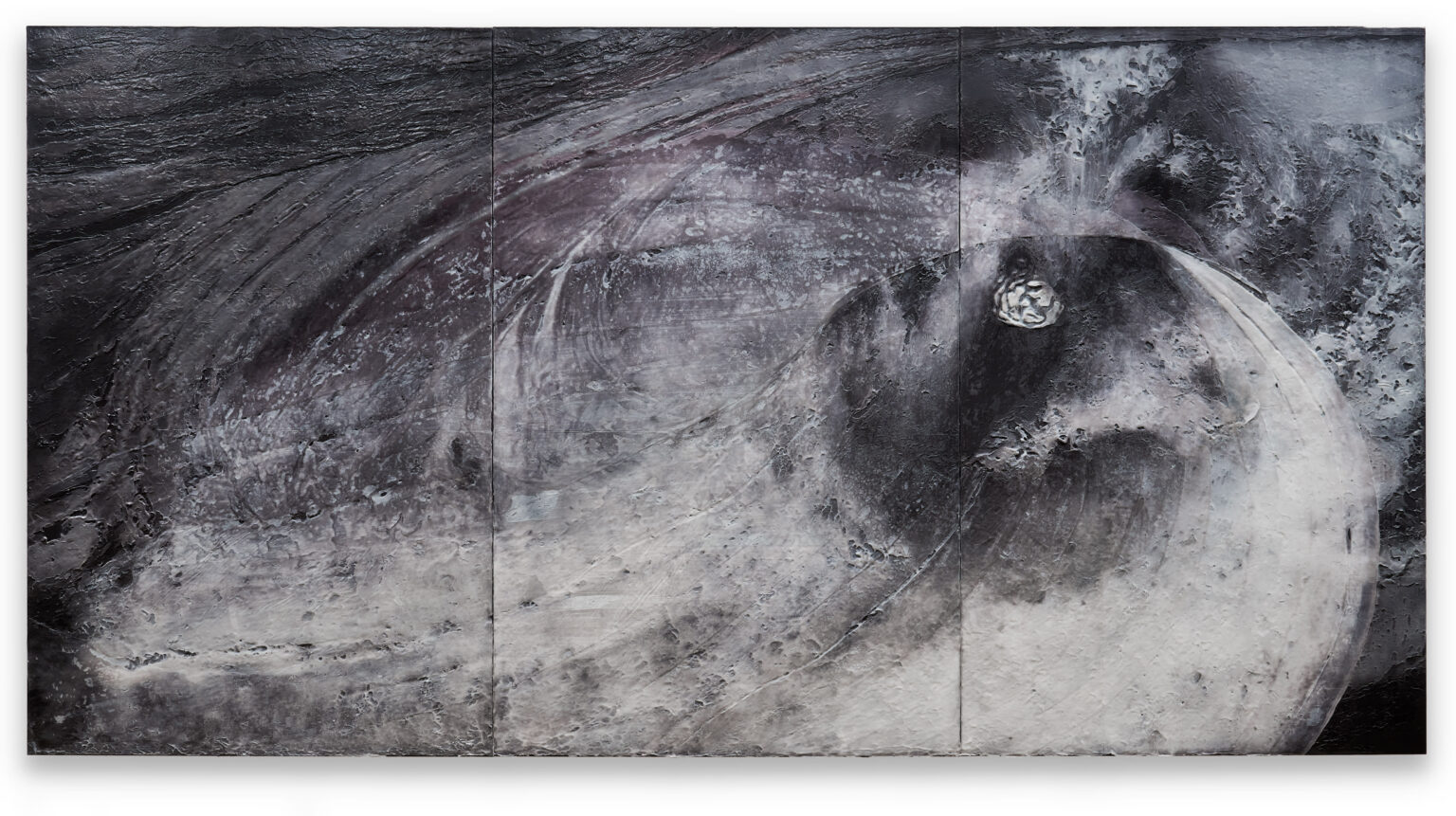
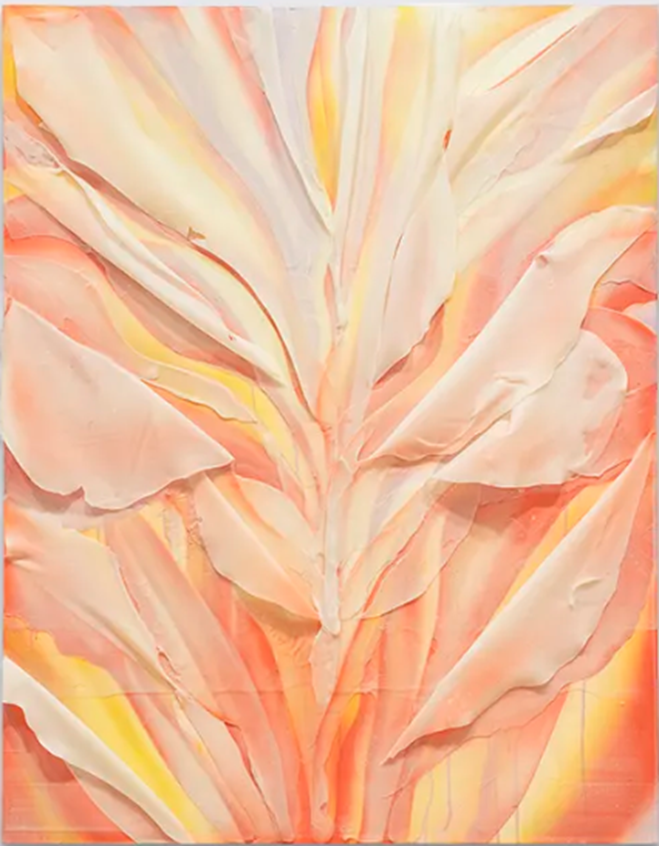
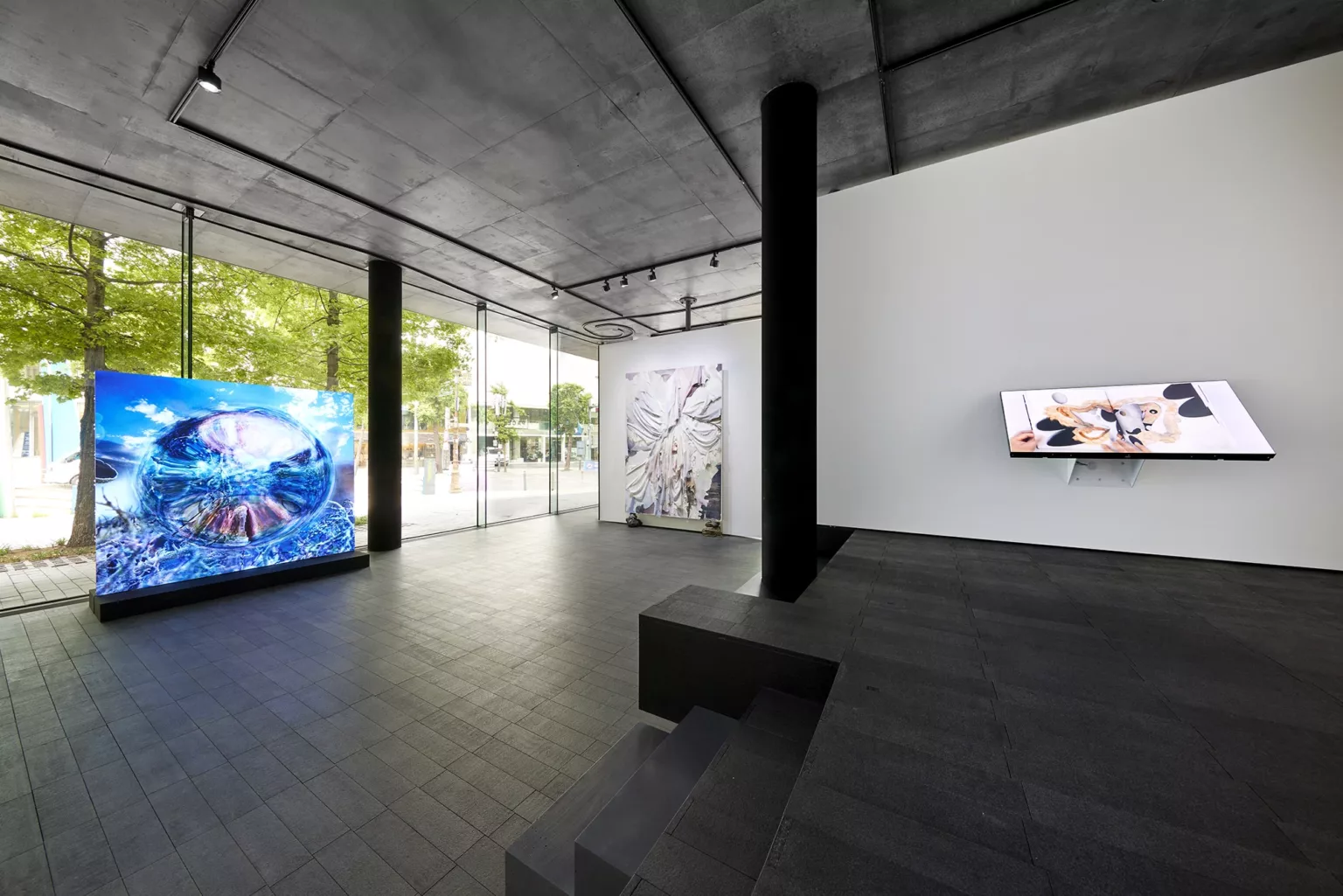
Around 2020, Chung's paintings transformed into reliefs with volume and
materiality. It should be noted that this change occurred during the global
pandemic, when most people had to communicate only through mediated images in
their homes. The enormous influence of the environment of the time must have
consequently influenced the artist's concerns and thoughts. The 'sensory
inconsistency and resulting depression' she experienced served as an
opportunity to change the canvas from flat surface to material and action. She
came to pursue a state in which the work becomes an object beyond an image and
a volume, and in which the work itself becomes an action and a world, rather
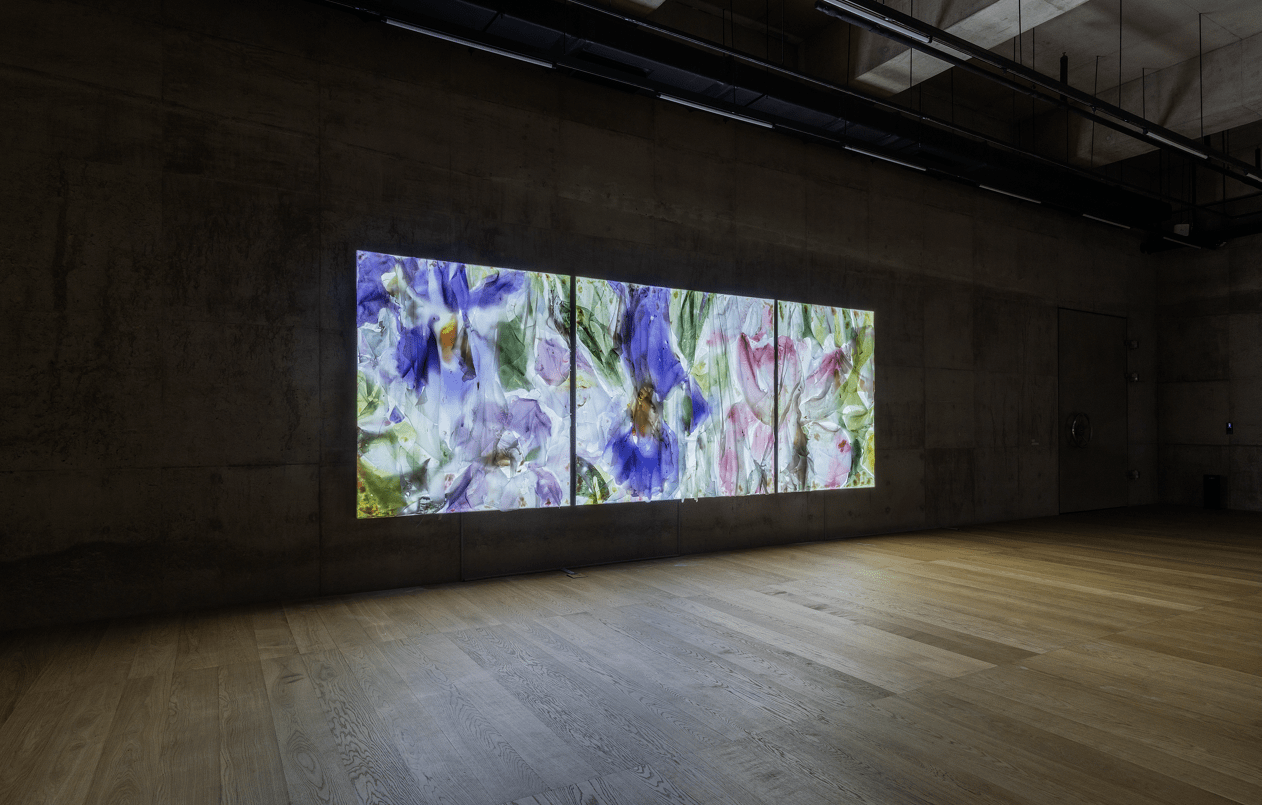
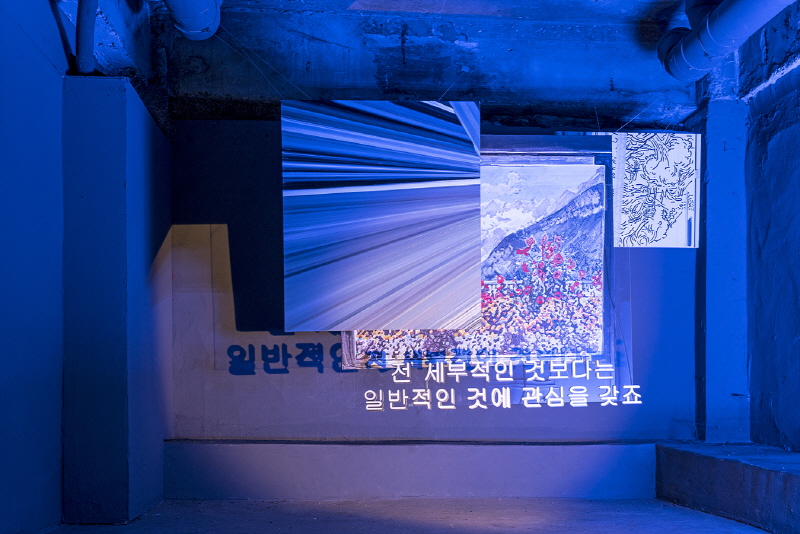
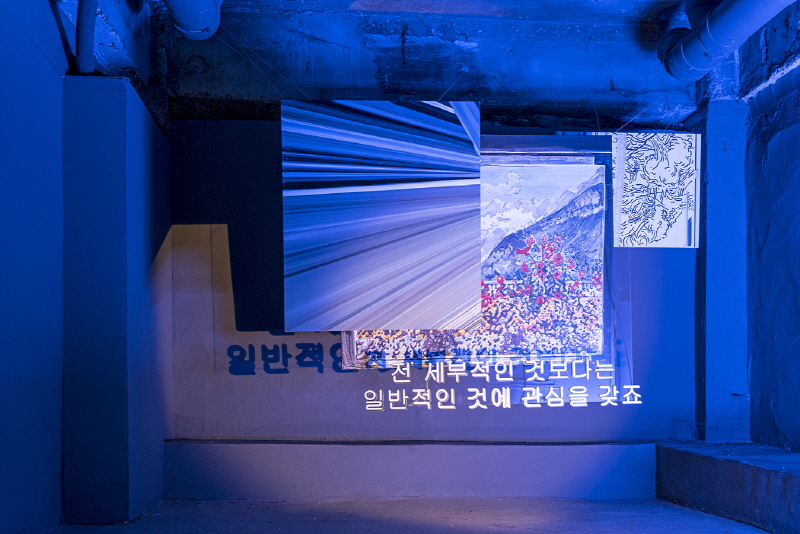
than a mediated plane. To do so, Chung experimented with various materials and
techniques, including not only canvas supports, but also installations using
various materials, video, and VR.
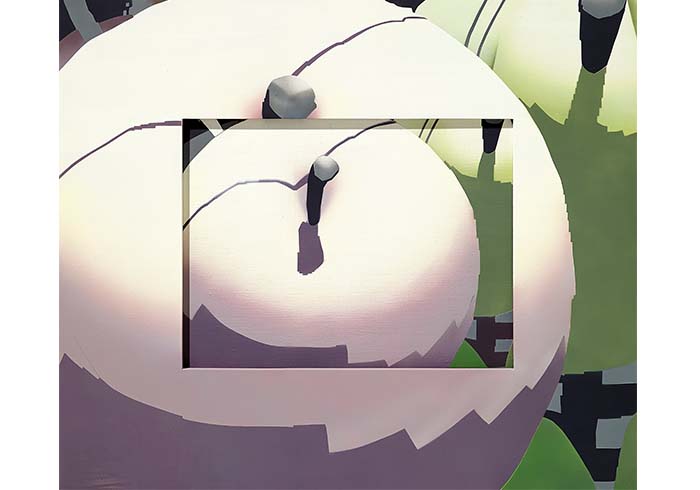
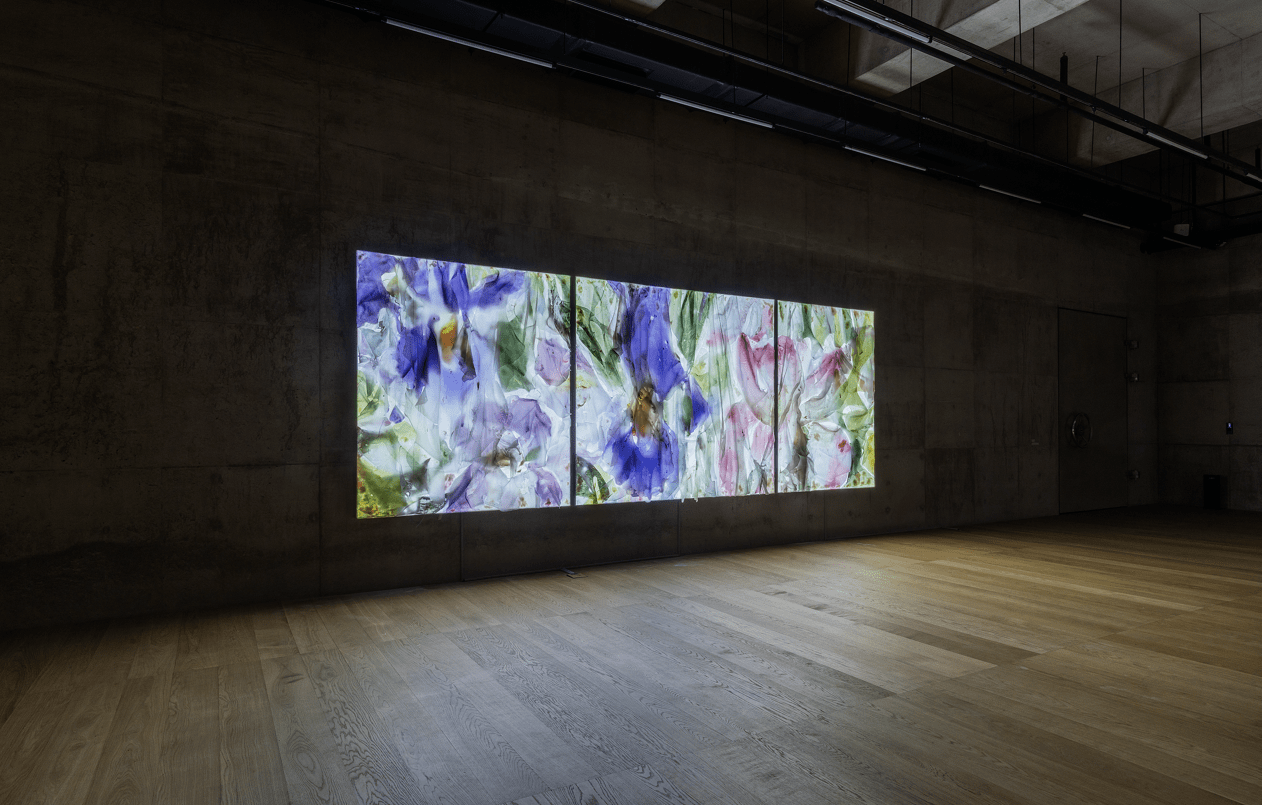
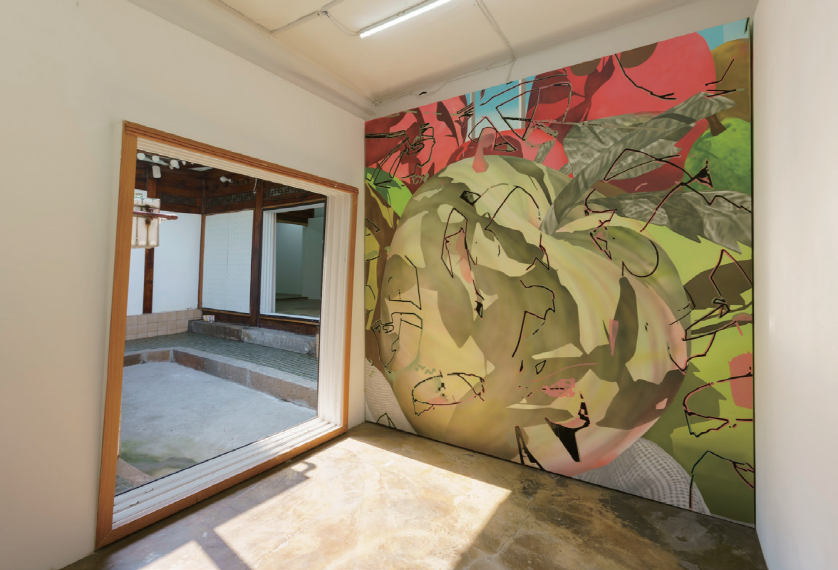
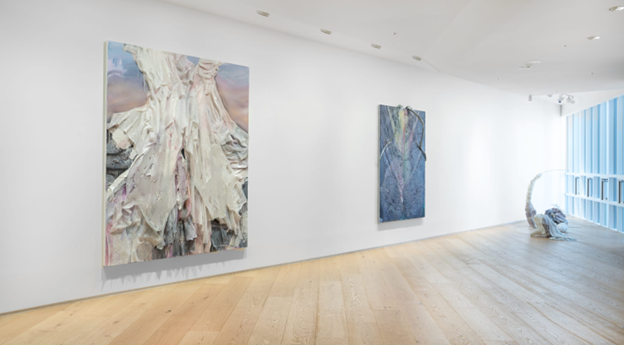
Chung shifted the direction of her work and began to paint partially enlarged
objects, mainly flowers, with a sense of volume. To create an optical illusion
of three-dimensionality in her paintings, she employs a rather complex process
including image synthesis, transfer printing, the selection of pigments mixed
with acrylic paint, attachment and detachment of gel medium, and retouching of
the drawn image. Instead of predetermined outcomes, Chung focuses on the
creation process itself, leaving the backgrounds atmospheric, and omitting
details while highlighting essential parts. As a result, her paintings take on
a broader and thicker meaning, as if the physical thickness of the materials
corresponds to the interpreted thickness of meaning. By piling materials
complexly on the canvas and collapsing the familiarity of form, Chung's
paintings allow for the intervention of the various senses and interpretations
of the viewer.
The new work presented in this exhibition is inspired by the story of Echo in
Greek mythology. Echo falls in love with Narcissus, who possesses boyish charm
and masculine beauty. Echo is punished by the gods and cannot have a normal
conversation with Narcissus, only repeating the other’s words. As Echo watches
Narcissus fall in love with himself and die, all that remains is her voice and
bones, which eventually turn to stone. Echo, who was deprived of the privilege
of using language and her ability to communicate, and Narcissus, who was so
obsessed with his own beauty to the degree of being unable to emotionally
connect with the outside world, both face death. Unlike Narcissus, however,
Echo leaves traces of being felled and hardened through the process of turning
from bone to stone. Traces of Chung's intention to paint flowers also exist in
the story that inspired this new work.
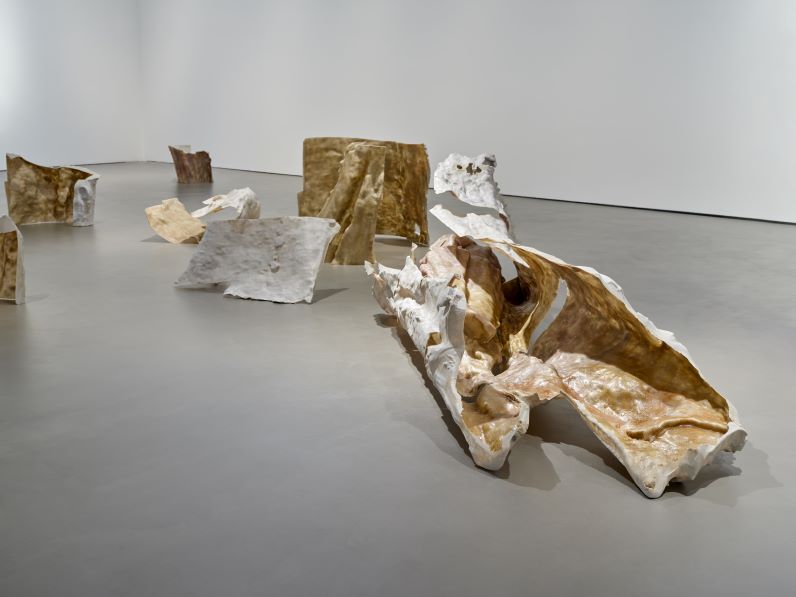
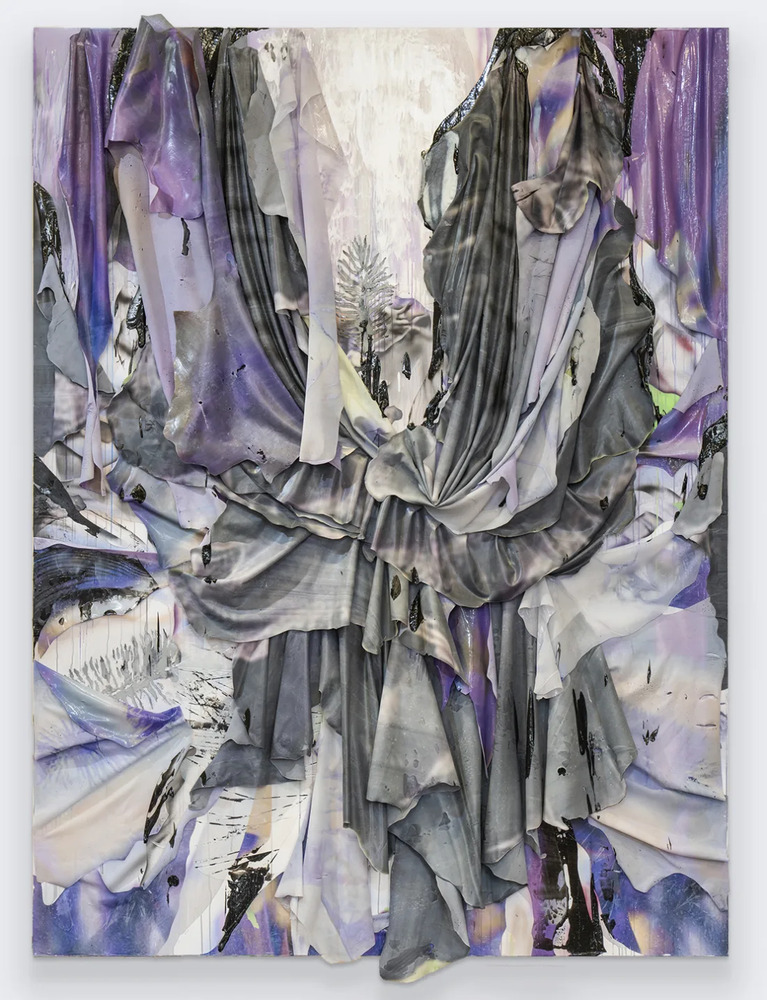
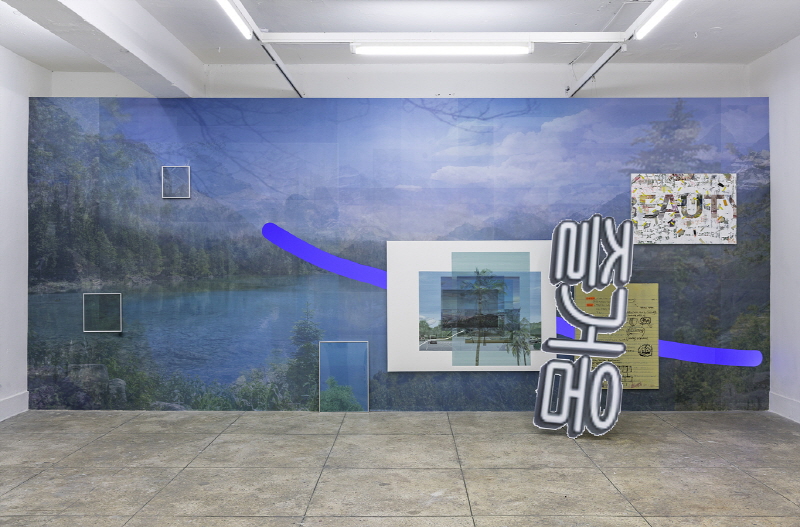
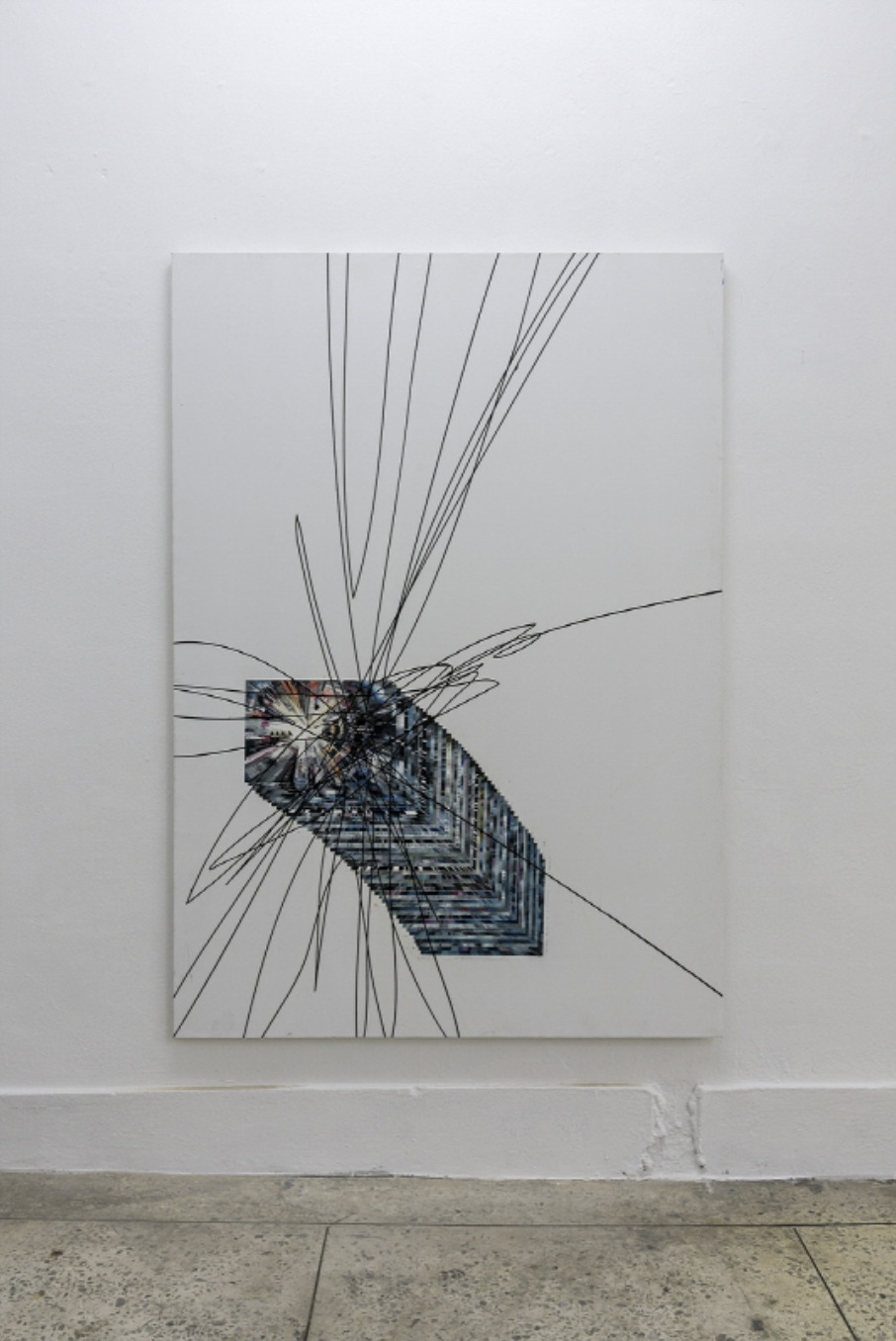
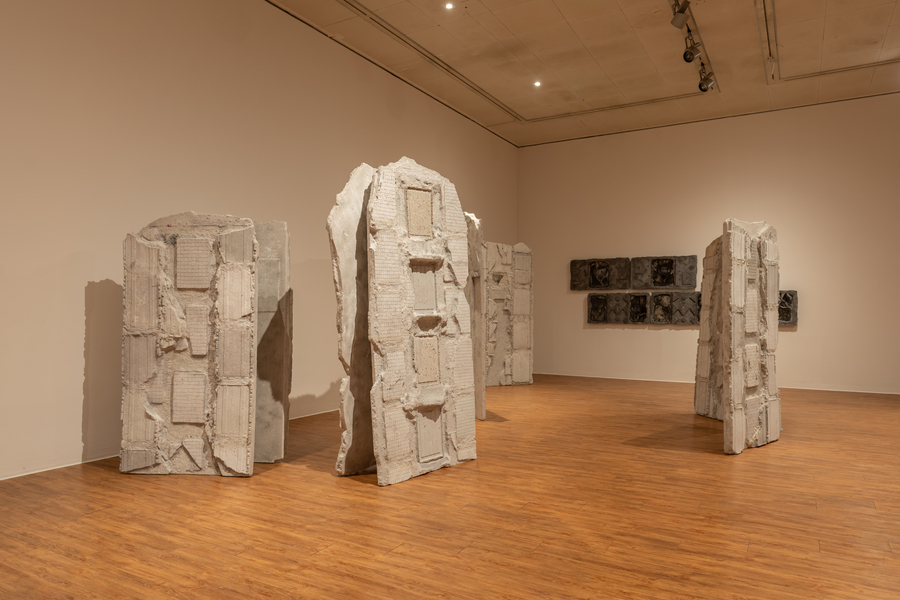
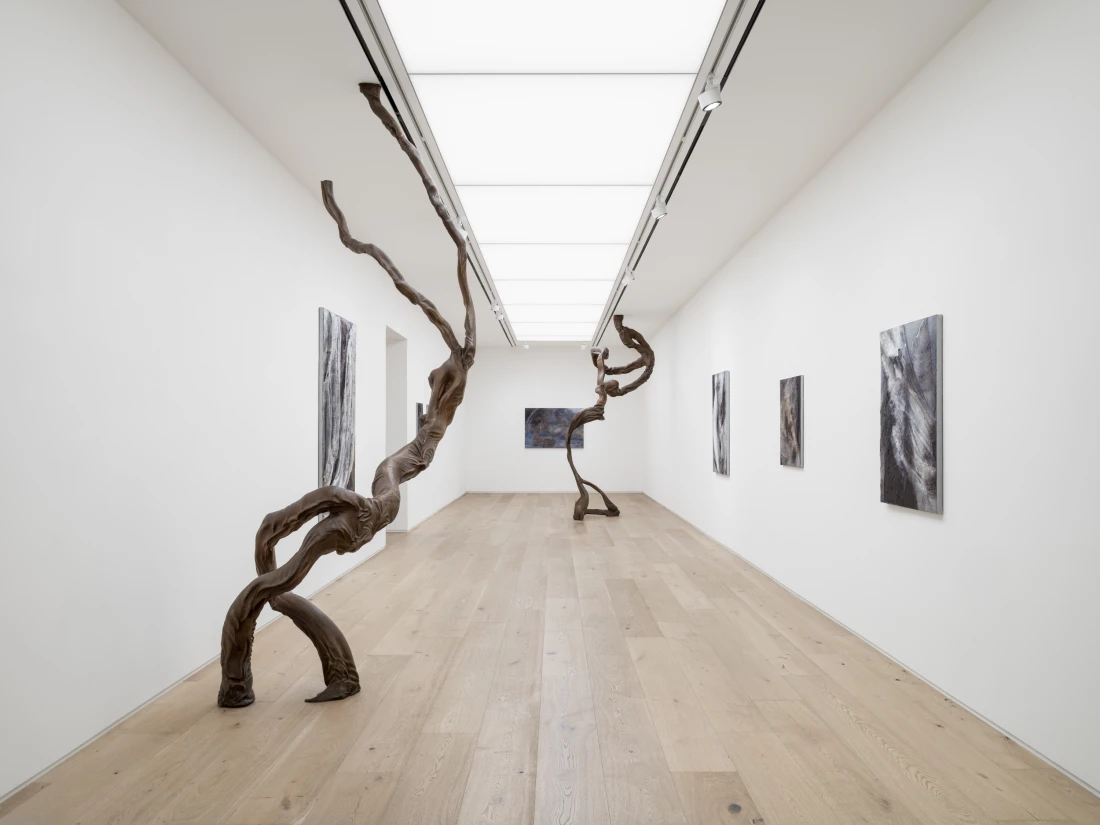
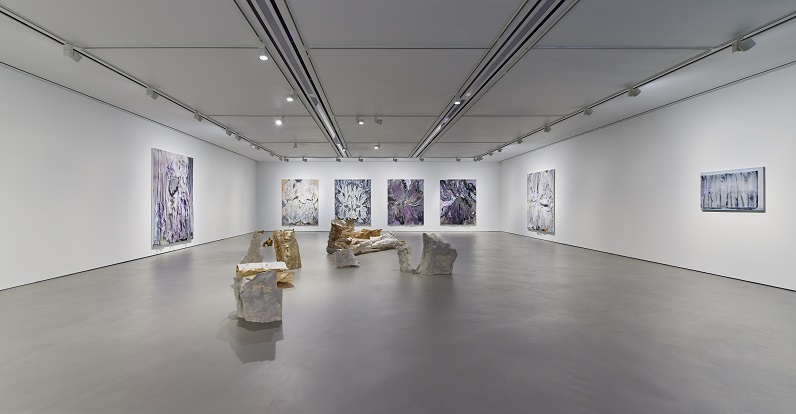
Chung's latest work uses this allegory of Echo to explore the fundamental and
ontological limitations of communication. She excavates images of natural
objects from the digital world, 3D prints the images, and superimposes the
outputs on flat surfaces, the forms reminding us of the shape of an empty husk
with only bones and stones remaining. Chung calls the process of printing 3D
objects on transfer paper and overlaying them on canvas or paper 'echoing'.
What is noteworthy is that her use of the myth of Echo in her work serves as an
allegorical methodology, exploring the properties of her paintings rather than
informing thematic elements. It is a conceptual route used to explore the
essential properties of ever-changing objects. This echo resonates in the
thickness given to the canvas, inviting the viewer's gaze to enter a new
dimension of imagination.