Looking through the history of Western art, one gets the sense that the human “body” remained a major artistic concern for a very long time. To represent the human form as something more perfect and ideal than the actual body in reality, and thereby to create works imbued with consummate beauty—by the Renaissance, humankind had achieved this goal with remarkable success. And even afterward—as art has always done—the human body continued to be represented through the changing eras, movements, experiments, and perspectives of artists.
There is hardly anyone unfamiliar with The Creation of Adam by Michelangelo, one of the defining artists of the Renaissance. Adam appears at the moment of the “Creation,” when the world itself comes into being, rendered in a noble pose with an immaculate and perfectly composed body. Auguste Rodin, often described as the first modern sculptor, also seems to have been deeply impressed by the “body” of Adam in Michelangelo’s work.

In his own manner, seeking to express natural human emotion and appearance rather than idealized beauty, Rodin created Adam. Instead of smooth skin, the figure exposes contorted and uneven musculature; instead of an elegant pose, its inner condition is laid bare without restraint.

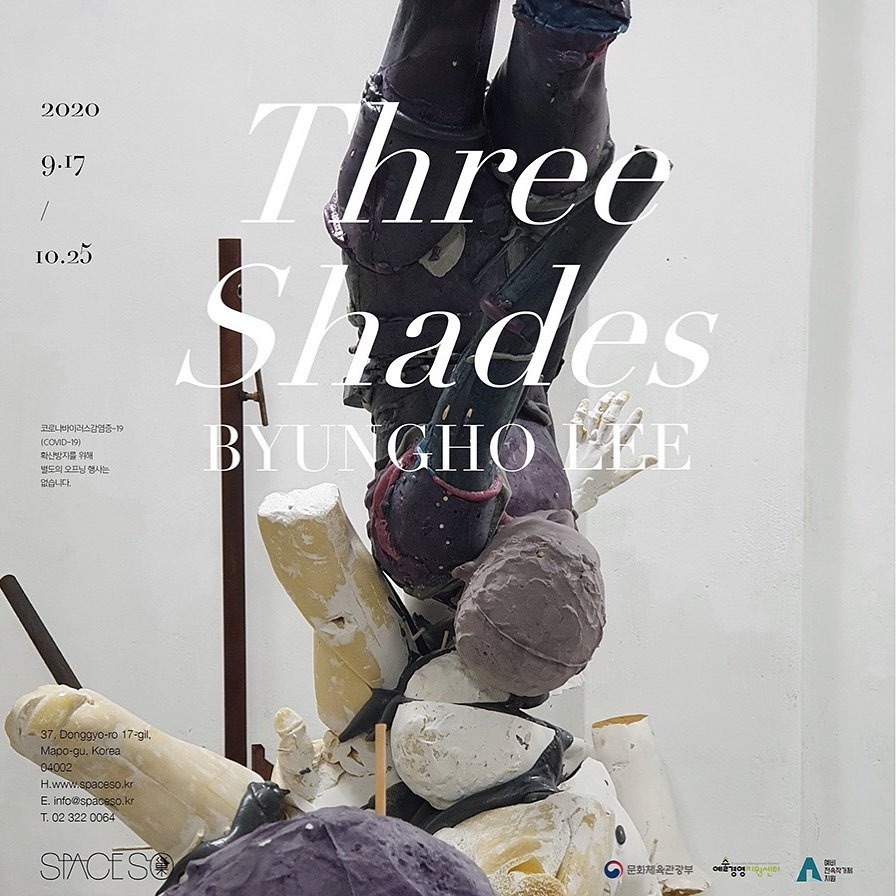
And then I encountered the work of another artist who had taken up “Adam,” a motif symbolizing both the human body and the first human being. It was at Lee Byungho’s solo exhibition 《Three Shades》, which opened at SPACE SO on September 17.

Another characteristic of Lee Byungho’s 'Anthropometry' series is its reference to various works from the history of sculpture. In particular, the prototypes of the two works that form the central axis of this exhibition follow the pose of Rodin’s Adam, repeatedly appearing through processes of transformation and variation.

Just as the “Adams” referenced in these works recur throughout Rodin’s own oeuvre and are combined to form Three Shades, Lee’s own Anthropometry-Adams “following Adam’s pose” become Following Adam’s Pose and Two Shades, together completing the exhibition 《Three Shades》.

- From the exhibition preface


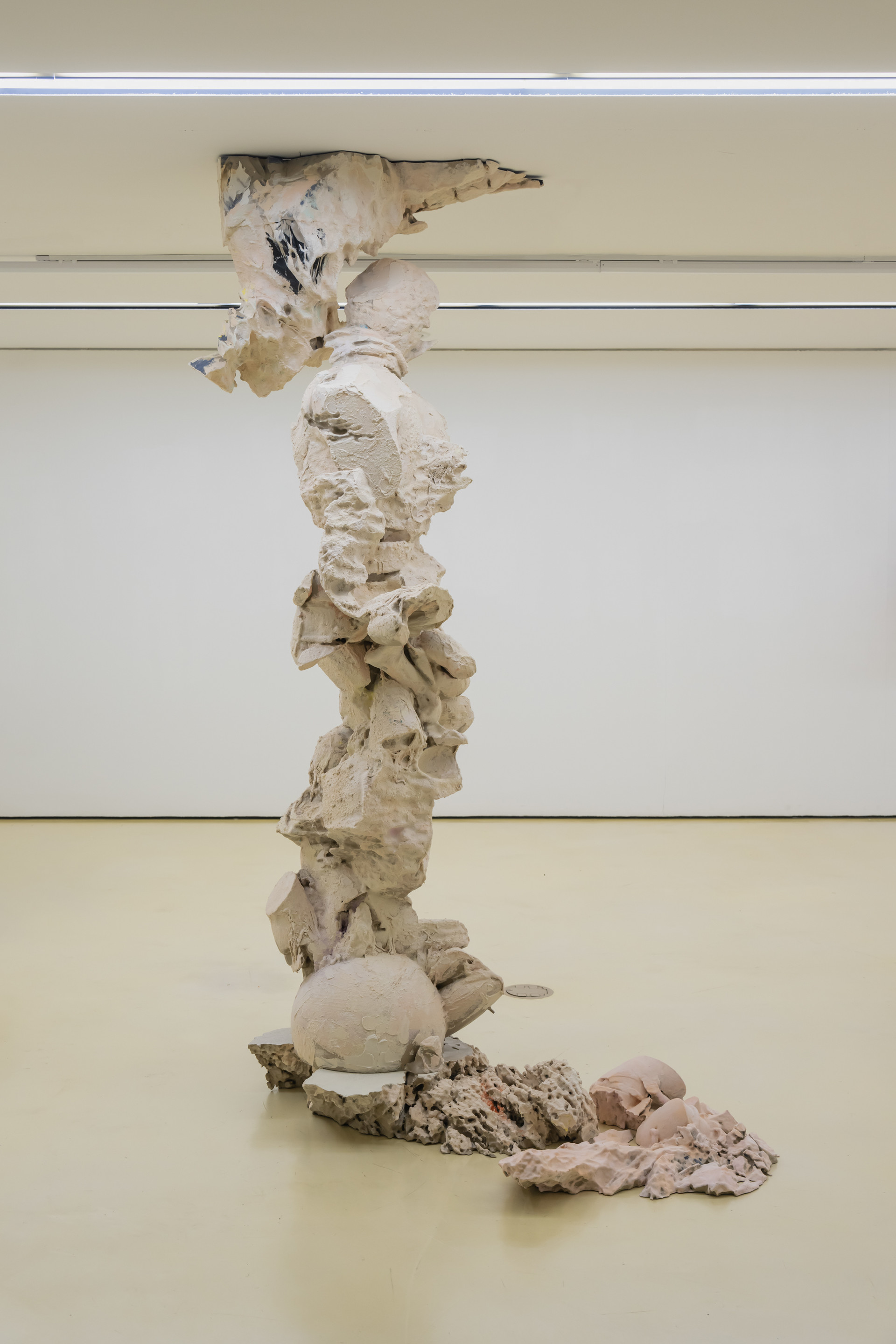
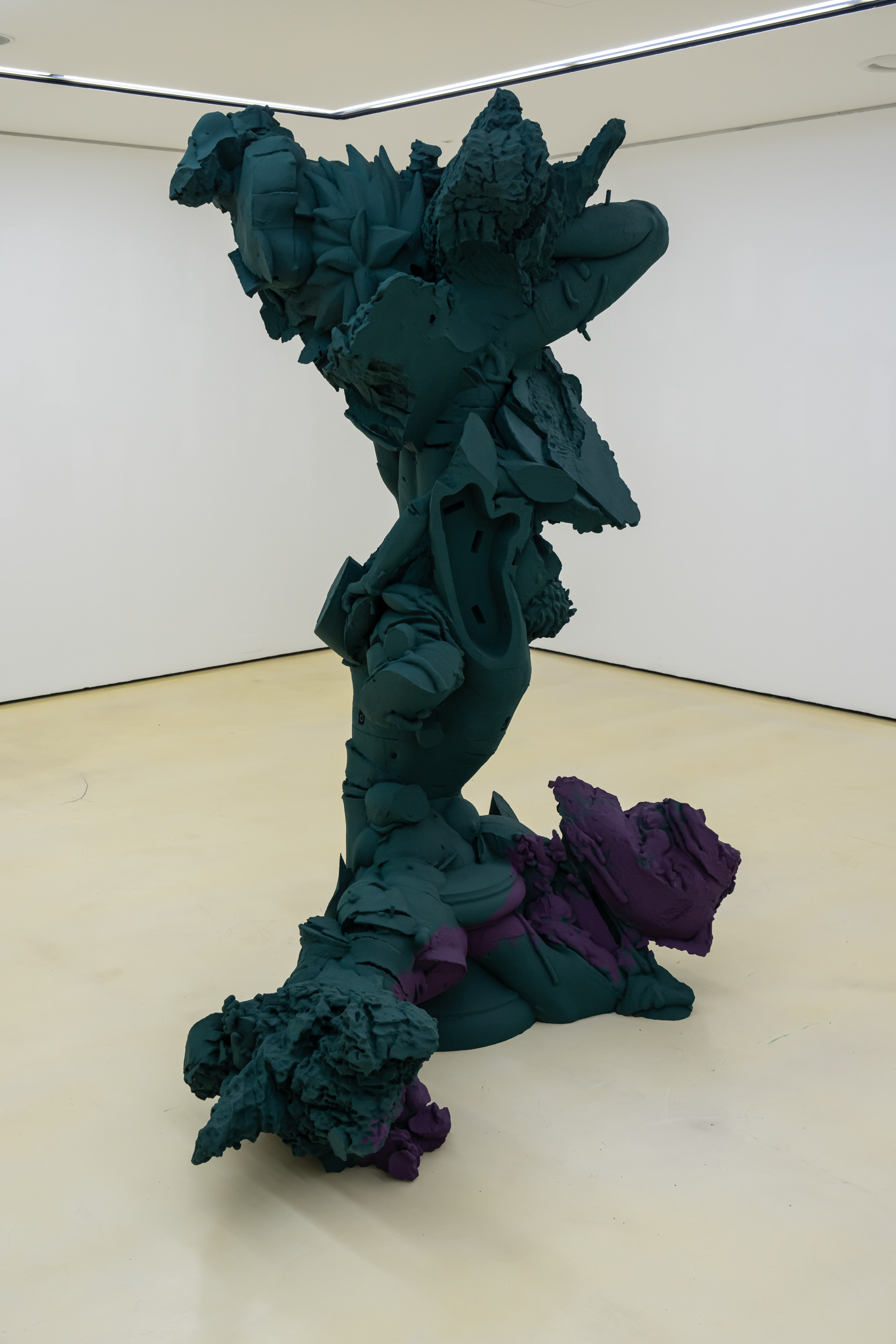
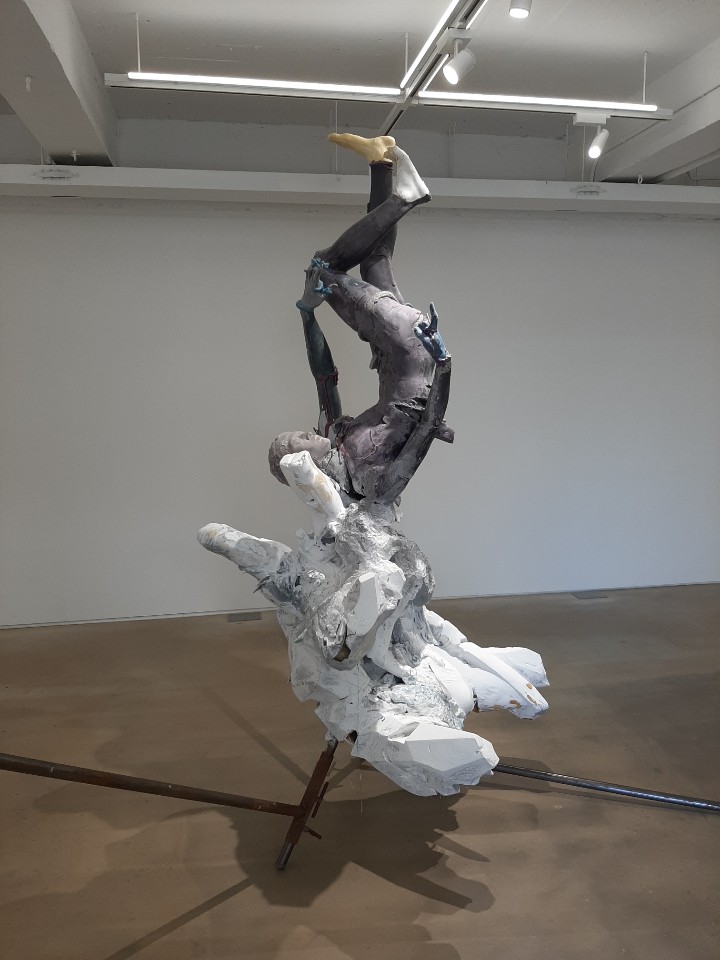
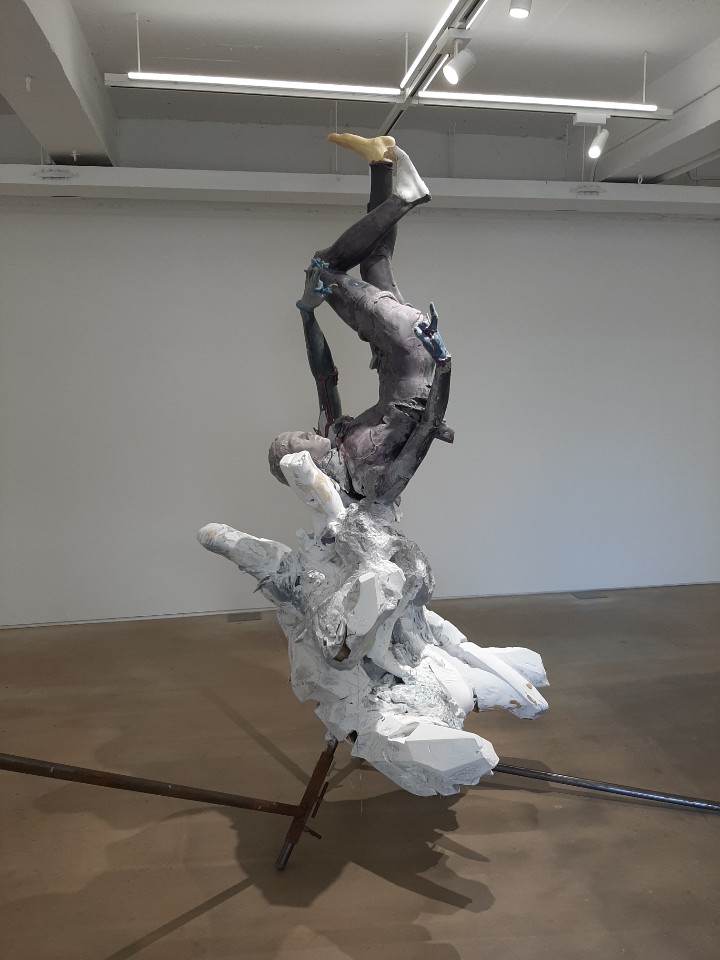
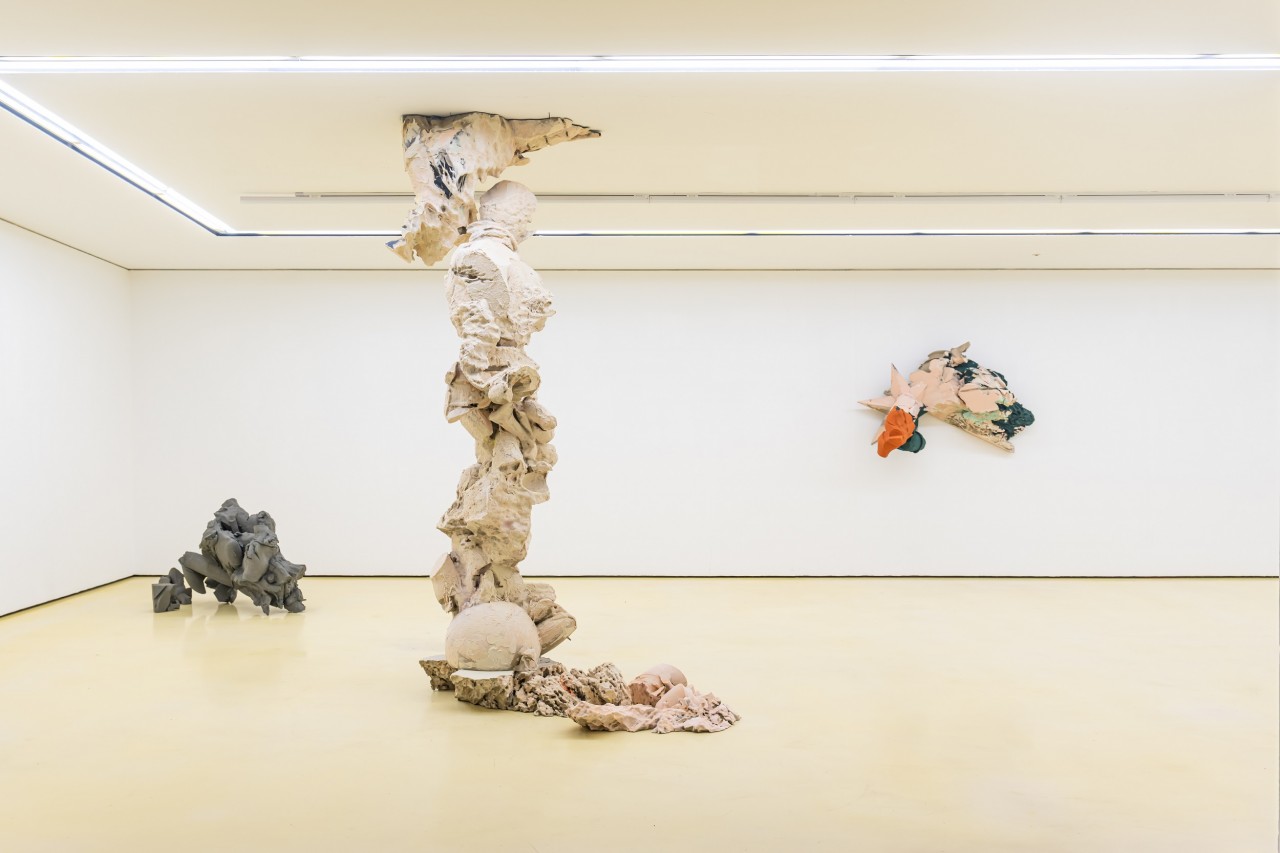
Lee Byungho, Following Adam's Pose, 2020, Polyurethane, wood, wire, iron, plaster, 235 x 285 x 240 cm © Lee Byungho

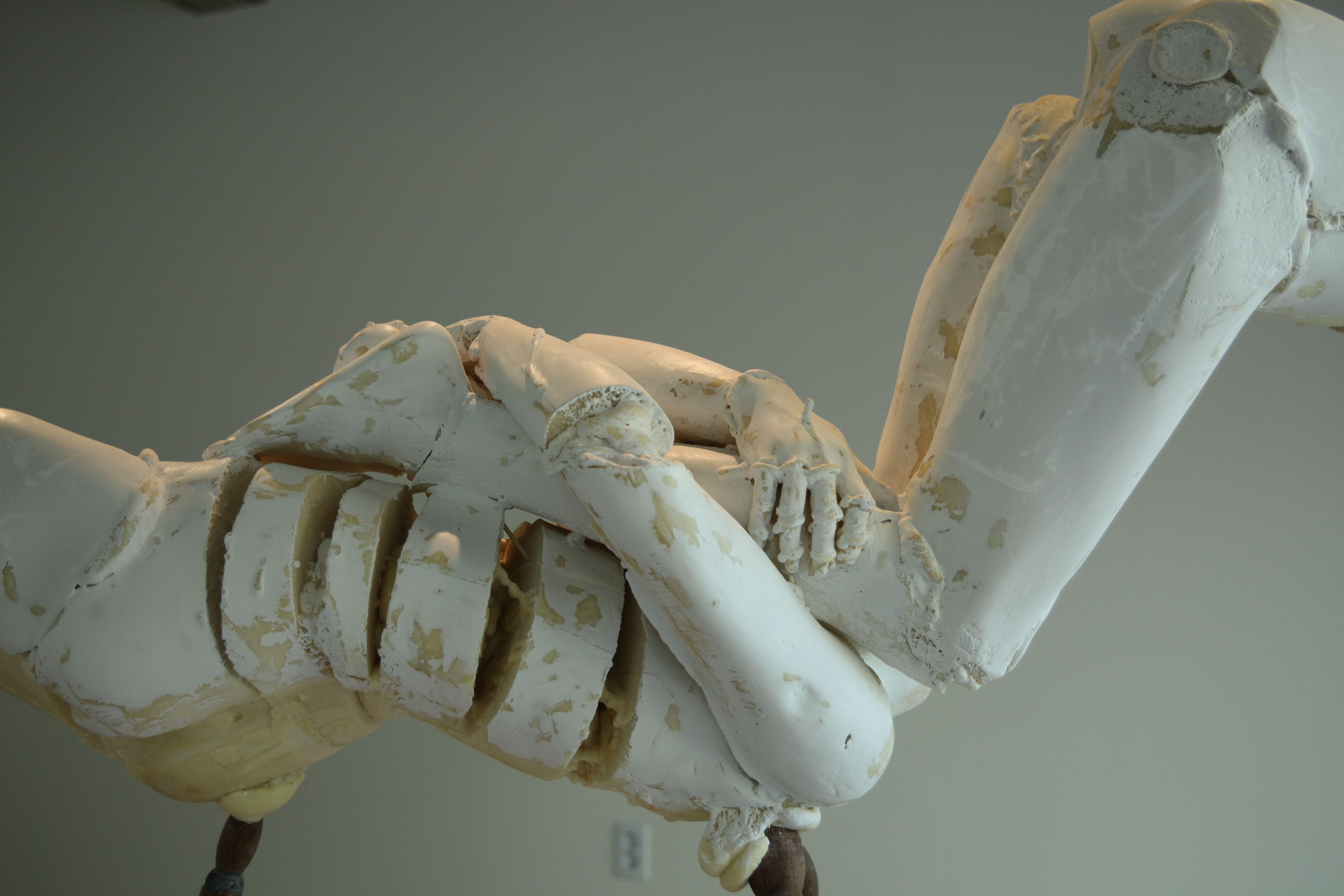
Upon entering the exhibition space, the first work one encounters is Following Adam’s Pose, occupying the center of the room. If the Adams we have seen until now have represented complete beings announcing the beginning of humanity within a solid world created by God—human figures possessing, at the very least, bodies in a finished state—Lee Byungho’s Adam seemed instead like one suddenly born into chaos before the world itself had yet been fully created.

It was as if the figure had emerged before it was ready. Lee’s “Adam” was neither lying securely nor standing upright under its own strength. Rather, it was positioned upside down, barely supported at the shoulder blades against a twisted form.


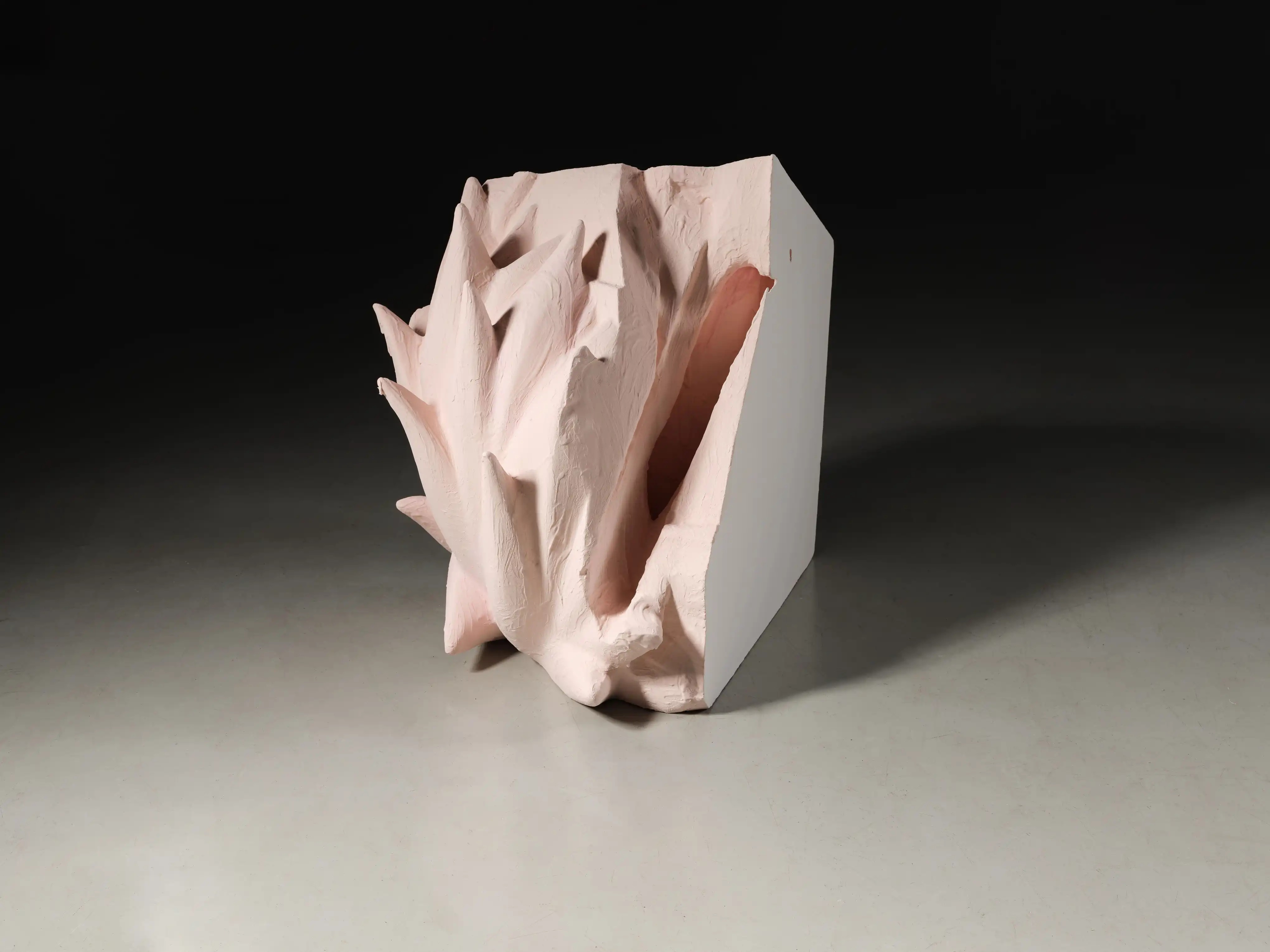
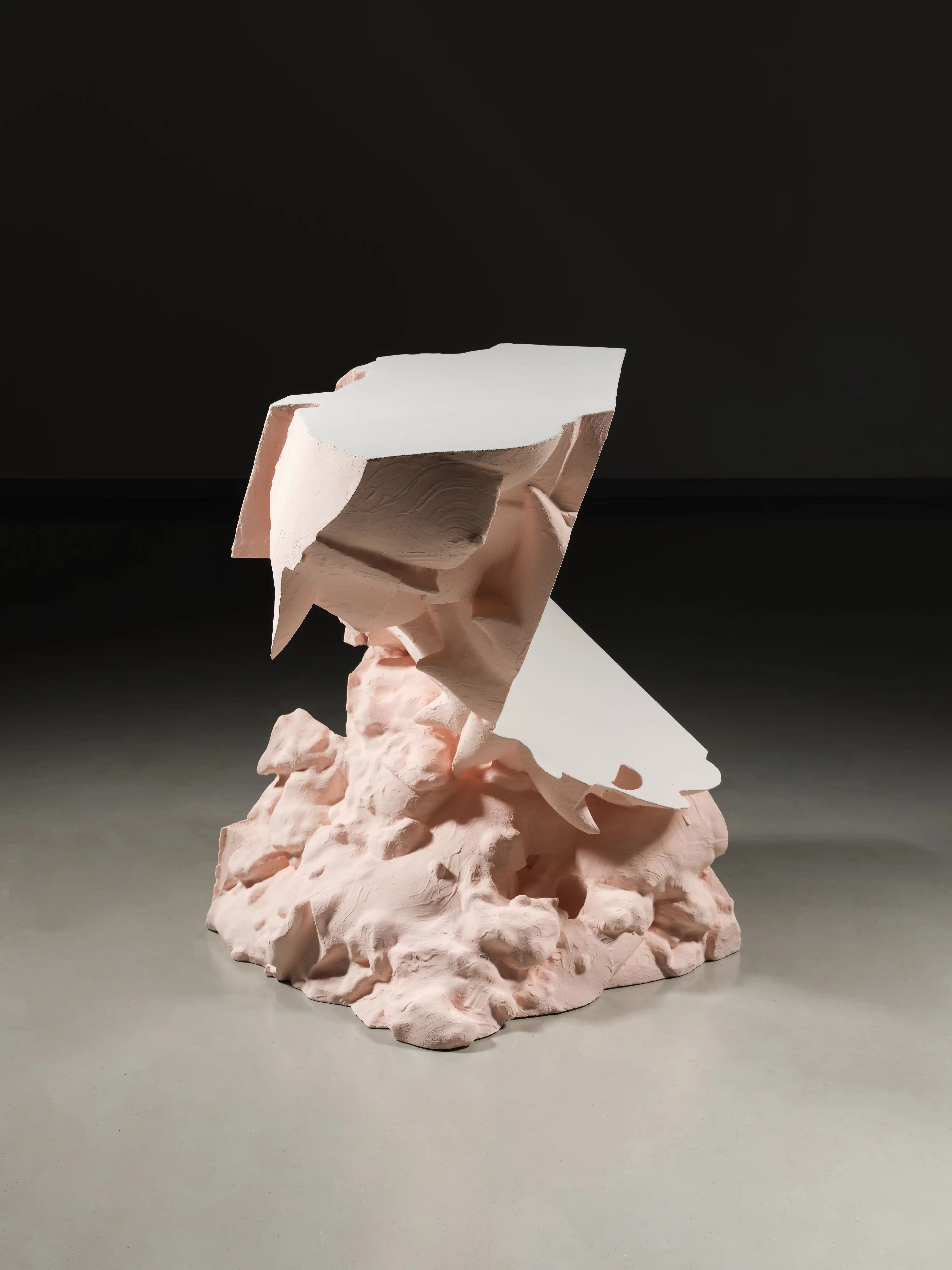
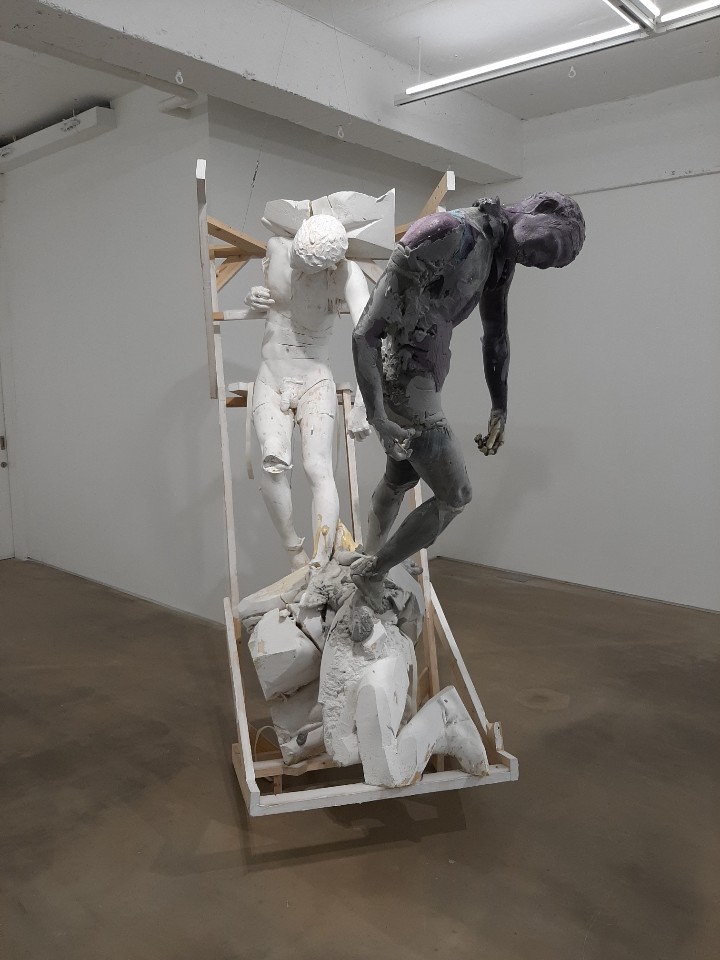
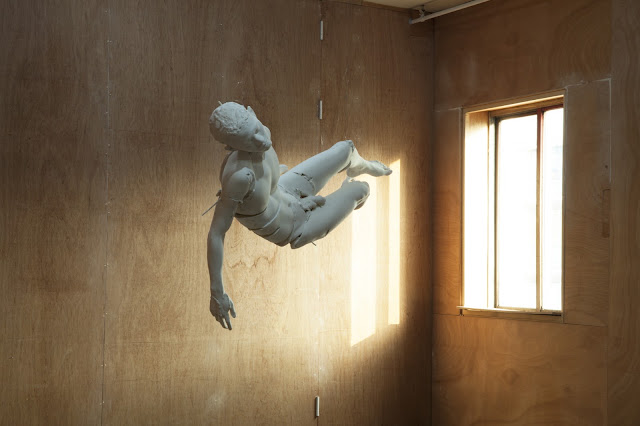
Lee Byungho, The Two Shades, 2020, Polyurethane, wood, wire, plaster, iron © Lee Byungho

Perhaps a great deal of time had already passed over it, perhaps it had been worn down after rolling through rough terrain, or perhaps it had been born only through materials barely layered upon one another. Covered in achromatic tones across its rough surface, Following Adam’s Pose appeared profoundly hollow. It seemed entirely devoid of vitality.

At the same time, however, the way it was supported by reinforcing bars extending outward from the sculpture, positioned upon a mass whose form was difficult to identify, and barely holding itself together while still maintaining “Adam’s pose,” conveyed a sense of trembling and tension.

It is incomplete. If there is some standard of completeness by which all things might be measured, Lee Byungho’s sculptures may be understood as bodies that have not yet reached it, bodies that remain in progress. Twisted, cracked, and fragmented without ever being contained within a complete form, these works create the impression that they still require more time, more labor, and more material.

Lee’s sculptures exist while embracing emptiness and all those portions that remain incomplete and vacant. It may sound contradictory, but they exist as completed works precisely in a state of incompletion. To borrow the words of the exhibition preface, they are “not presented as ‘final’ completed works, but as ‘temporarily completed’ states paused along the way toward indeterminate transformations whose endpoints remain unknown.”


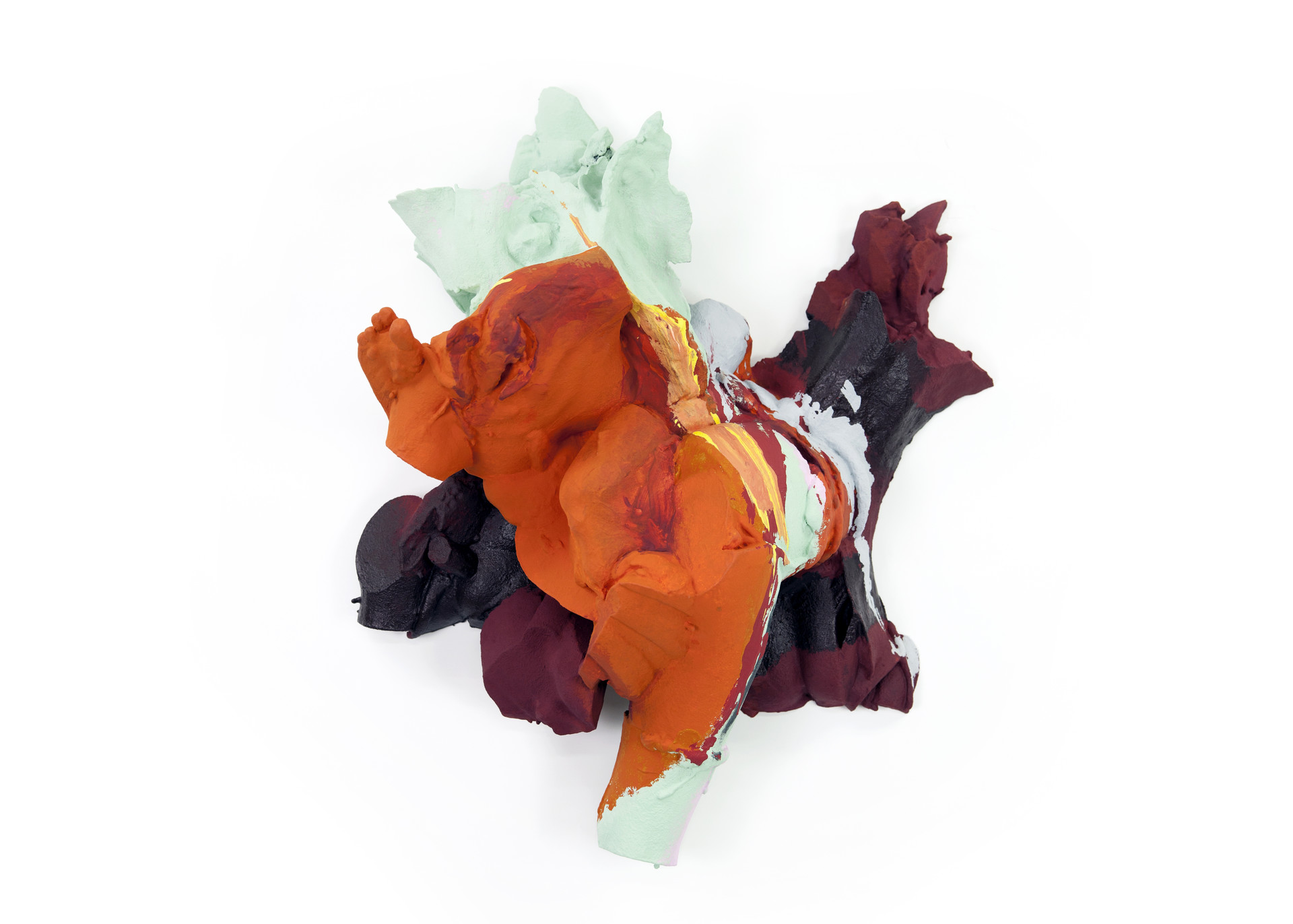
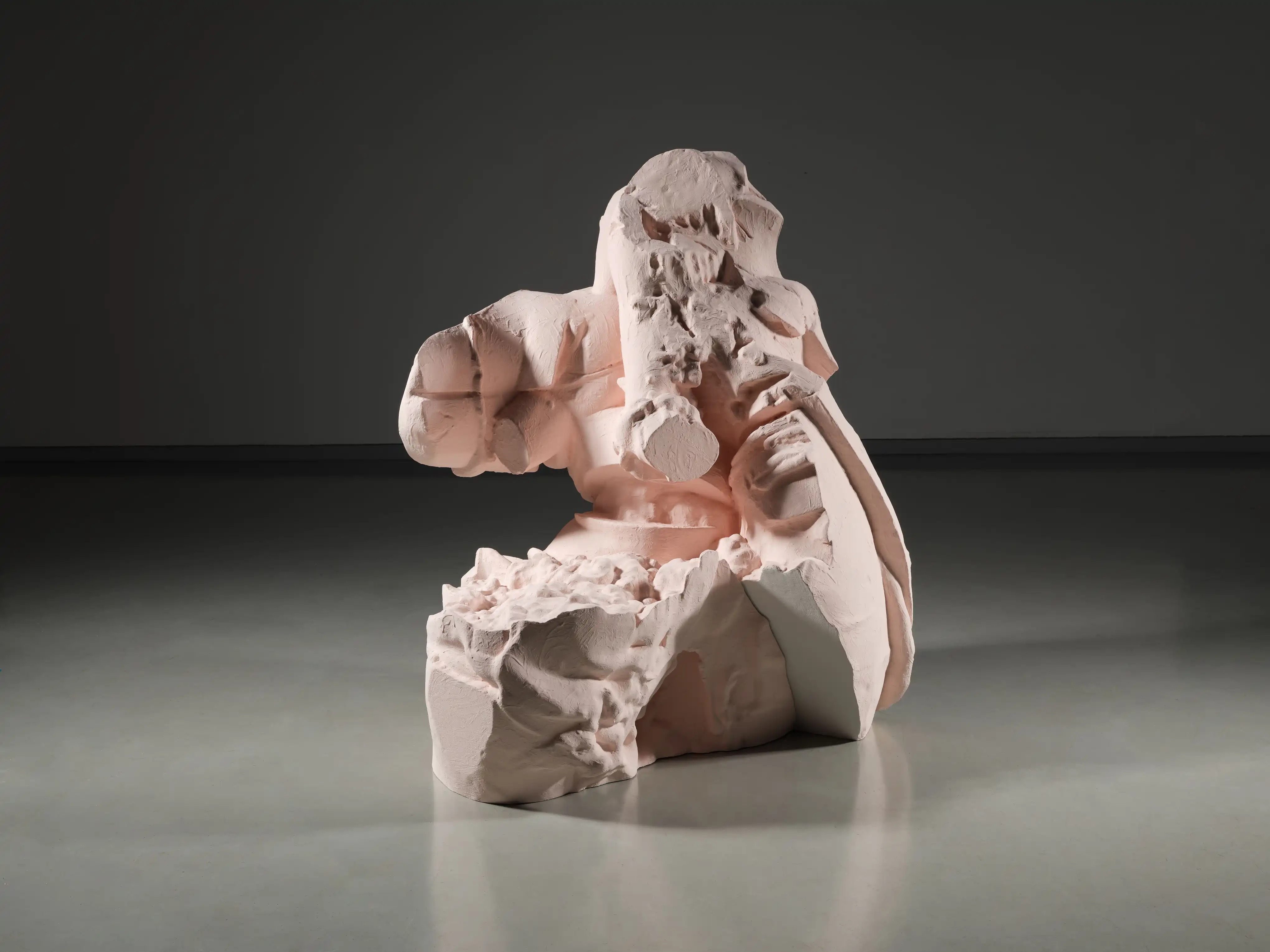
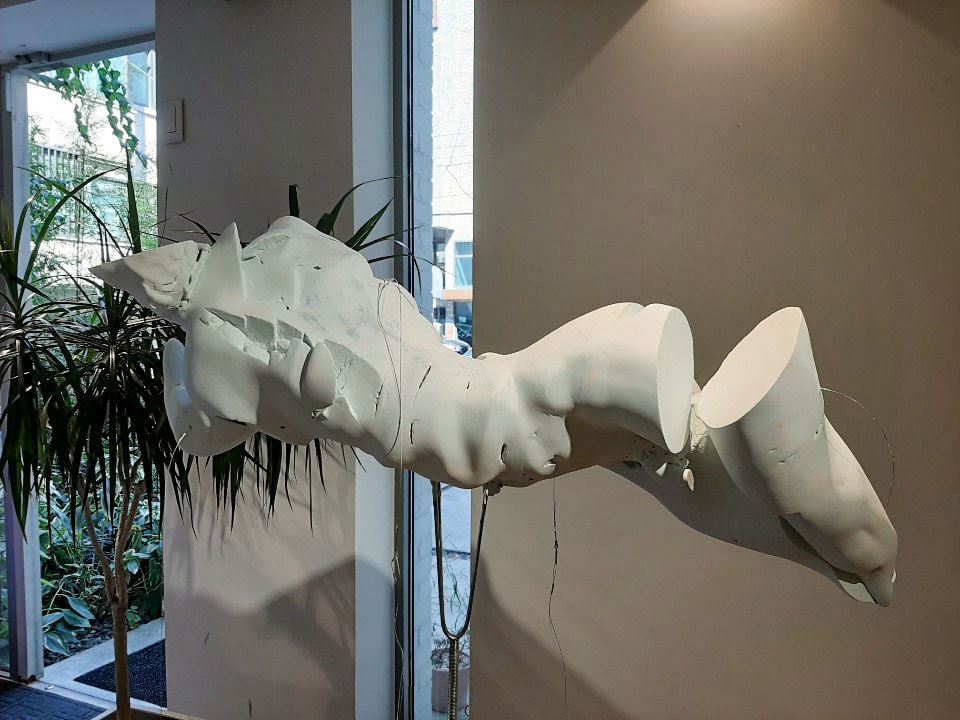
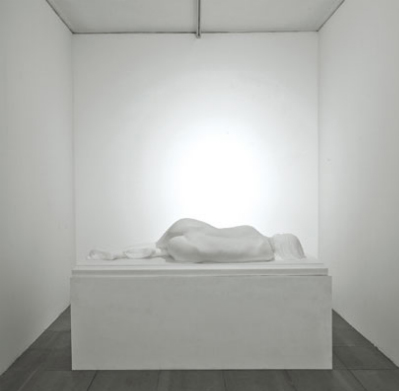
Lee Byungho, Torso, 2020, Colored plaster on sculpture, 40 x 110 x 35 cm © Lee Byungho

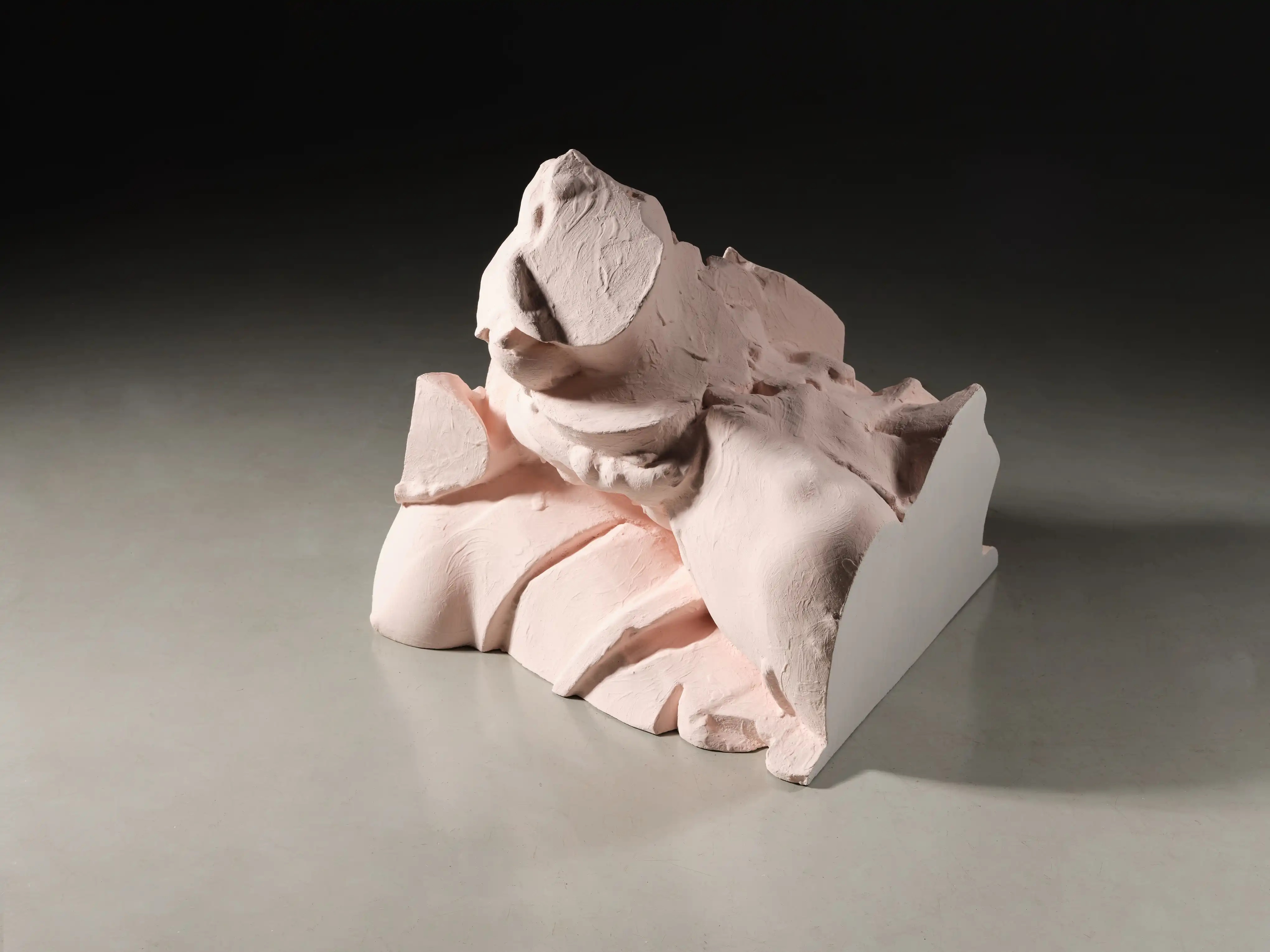
The Torso encountered at the end of the exhibition route somehow felt familiar despite being seen for the first time. The cord attached to the sculpture and hanging loosely from it seems to suggest that the work had once been displayed suspended somewhere. Its appearance—as though a portion of a once-complete sculpture had been roughly sawn off and removed, or repeatedly struck by tools—resembled the “white masses” that formed parts of Following Adam’s Pose and Two Shades.

These were fragments that had once been sculptures themselves, only to become supports for other sculptures, placed beneath new forms so that they could barely remain standing. If so, there is no way of knowing when, or as part of what other sculpture, this Torso might reappear under a different title.

Lee Byungho’s working process—the way existing works transform and migrate into new ones—and the manner in which the works encountered earlier had been created began to come faintly into view. That realization itself made the quiet tremor produced by the incompleteness, or still-unfolding state, of Lee’s works more clearly perceptible. The works encountered in this exhibition retained the possibility of moving endlessly toward other forms and conditions, only to appear again at some later point in another temporarily suspended state.

I find myself imagining how Lee Byungho’s “Adams” might appear in the future. In many art history books, artists who have expressed the human body with distinction through their own artistic worlds and their works are often described in terms such as: “By representing the human body, they reveal human emotion, passion, and suffering.”

If the “Adams” of earlier artists could be understood as vessels intended to contain and express the human interior, then Lee Byungho’s “Adams” seem instead like fragments that once sought to become such vessels, yet never fully did. Fragments that could have become any number of vessels continue to interlock with other sculptural fragments and emerge anew, yet they never form a complete vessel.

Perhaps that is precisely why they remain empty. At the same time, that emptiness suggests that they may continue to combine with still other fragments and appear again in entirely different forms.

References