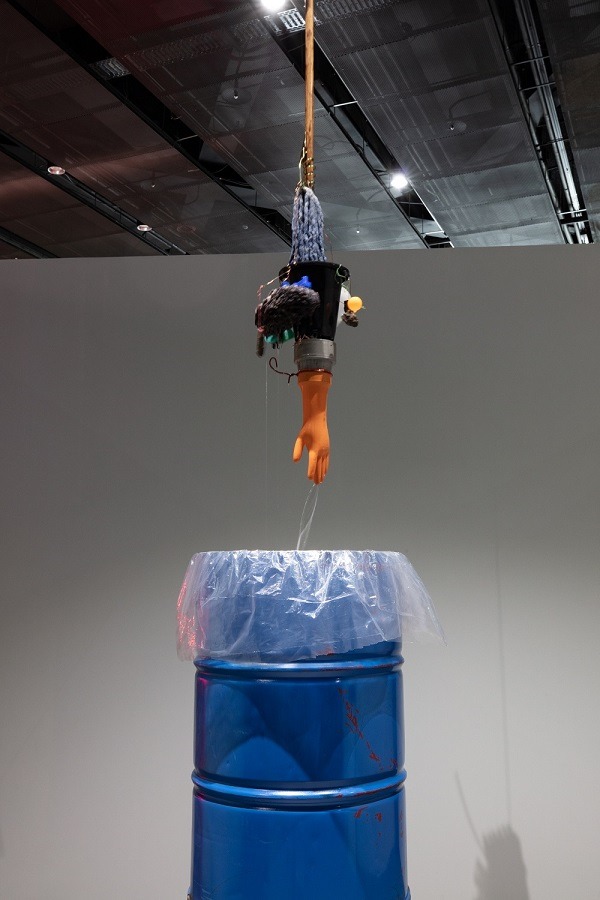
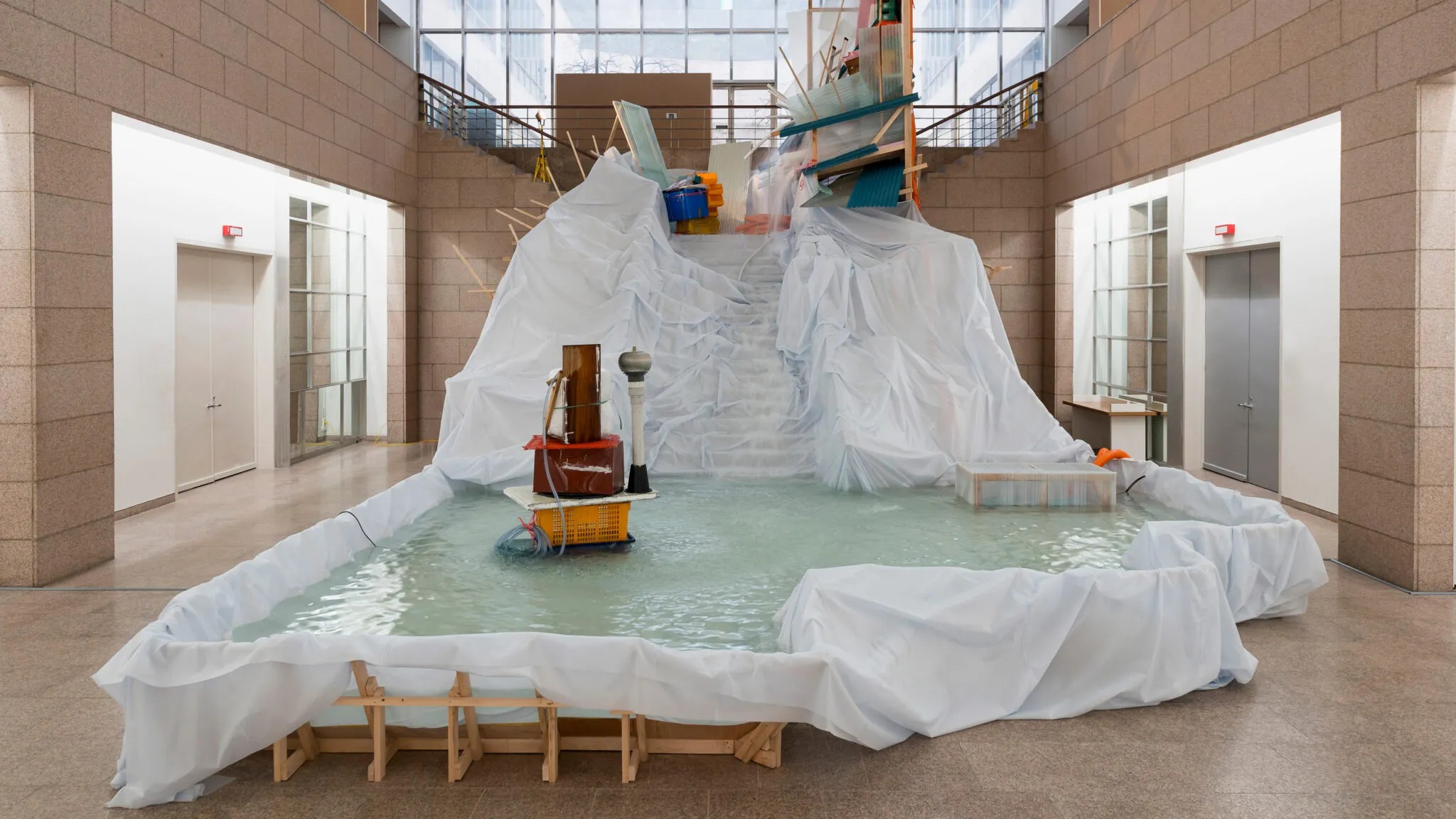
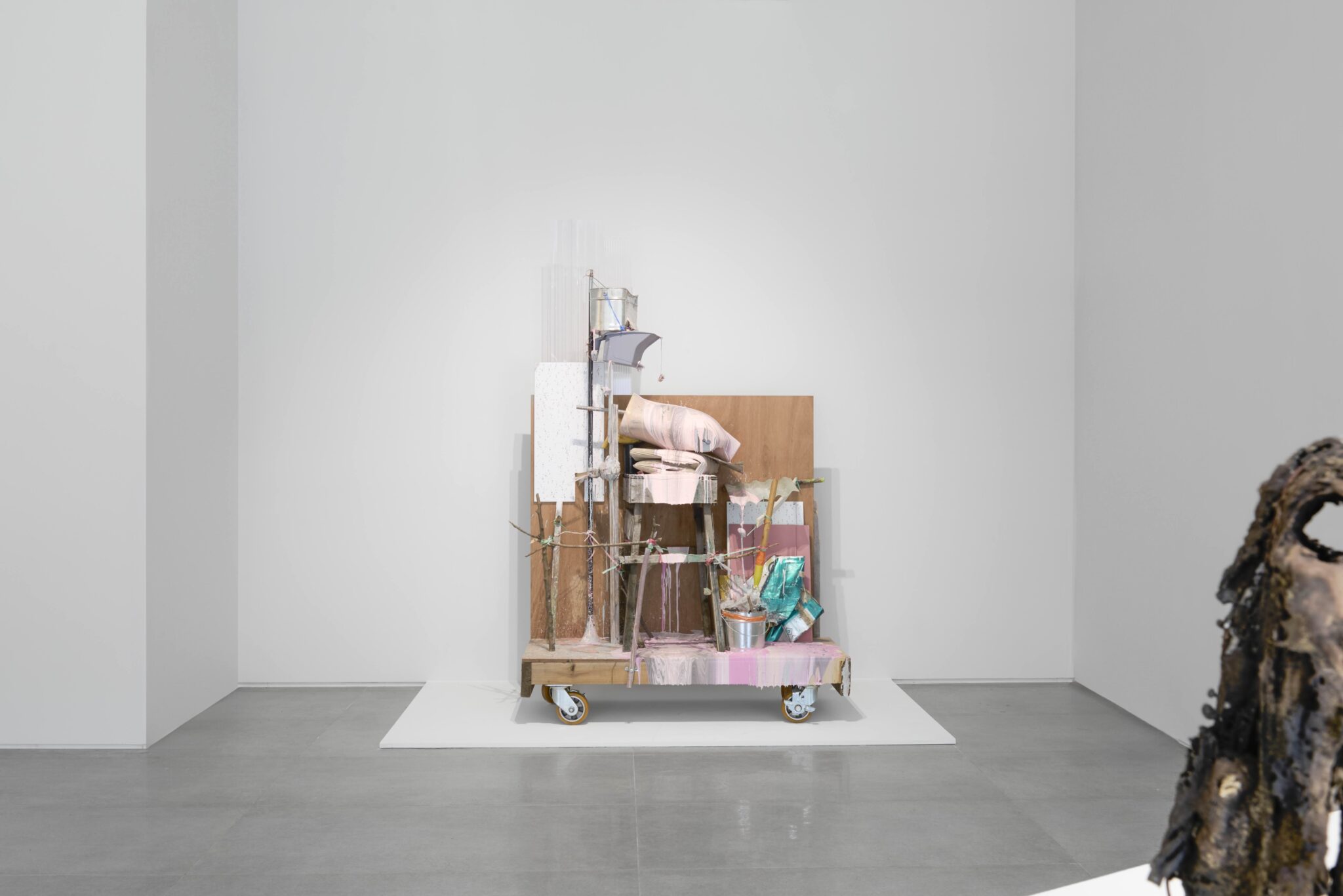
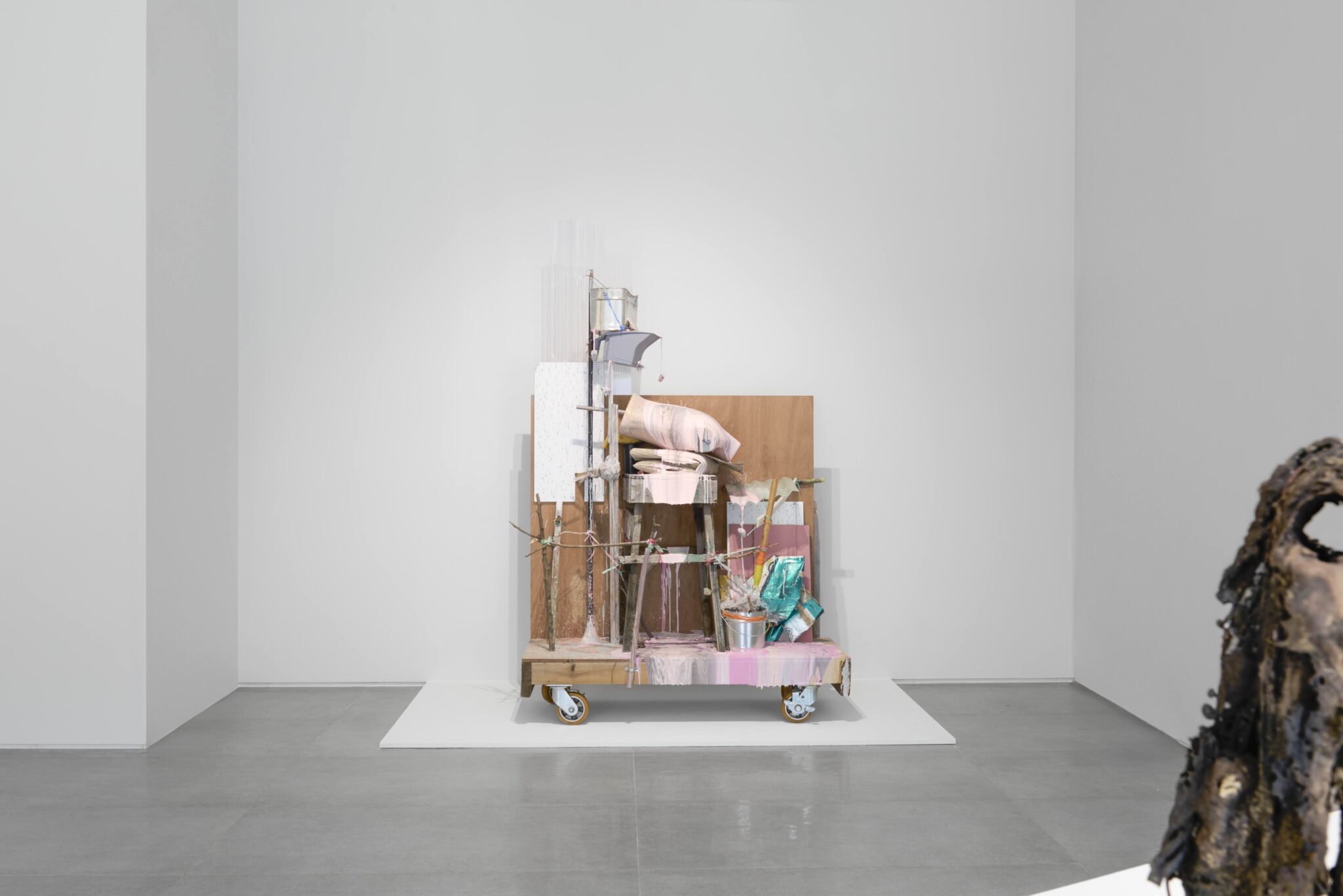
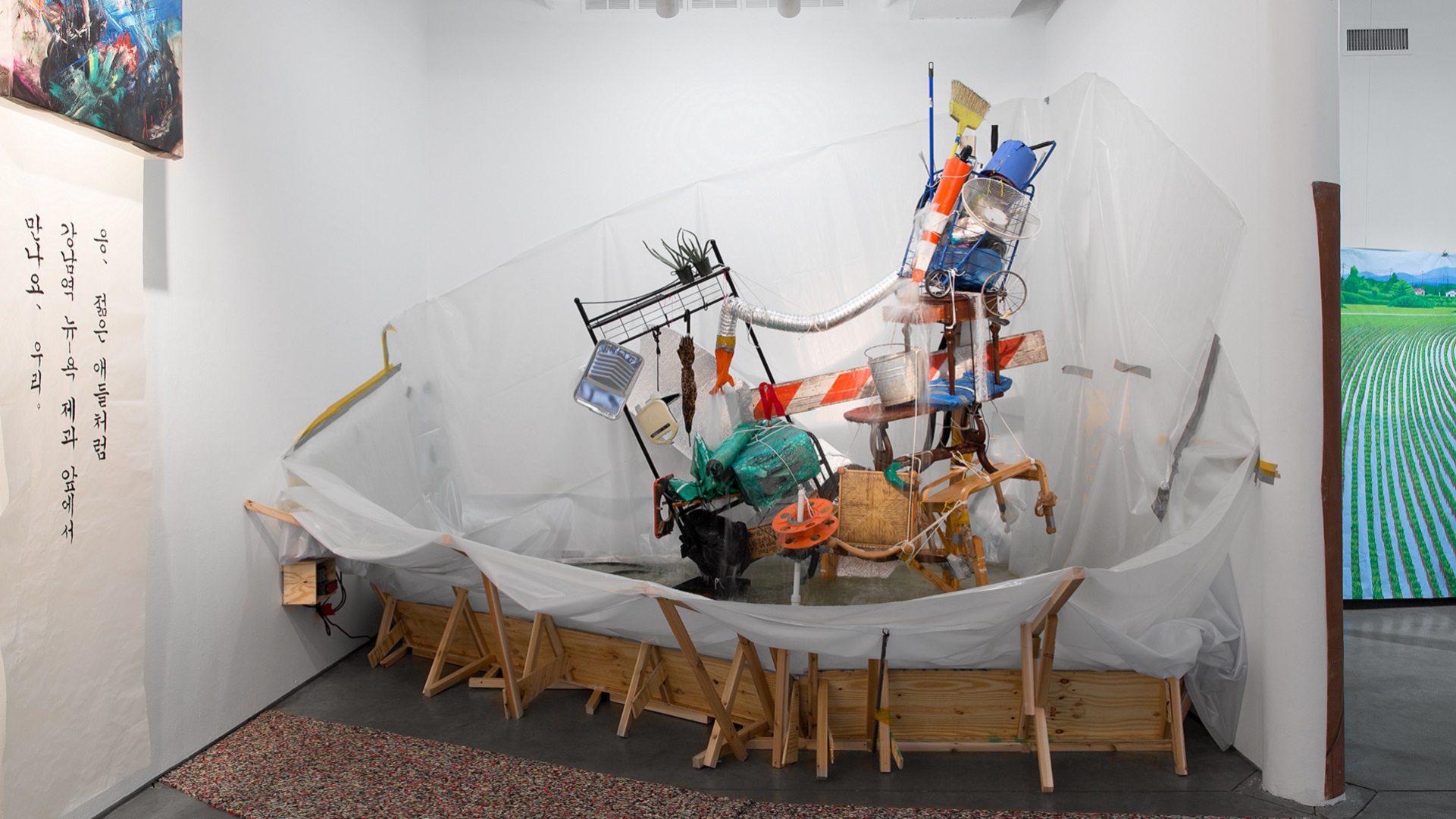
Kwon Yongju’s early practice developed through installations that actively employed the material qualities and arrangements of objects collected from everyday life and sites of labor. Discarded materials, tools, tarpaulins, ropes, and pumps—objects not originally produced as art materials—were stacked, tied, covered, and assembled into precarious structures, sometimes incorporating circulating water so that their conditions changed over time.
In the ‘Waterfall’ series, heterogeneous objects are held in unstable balance while water flows across them, with murky water and the gradual growth of algae becoming part of the work over the course of an exhibition. Traces of use and provisional modes of assembly function simultaneously as formal elements and as means of conveying the instability and strategies of survival observed in workplaces and urban life.
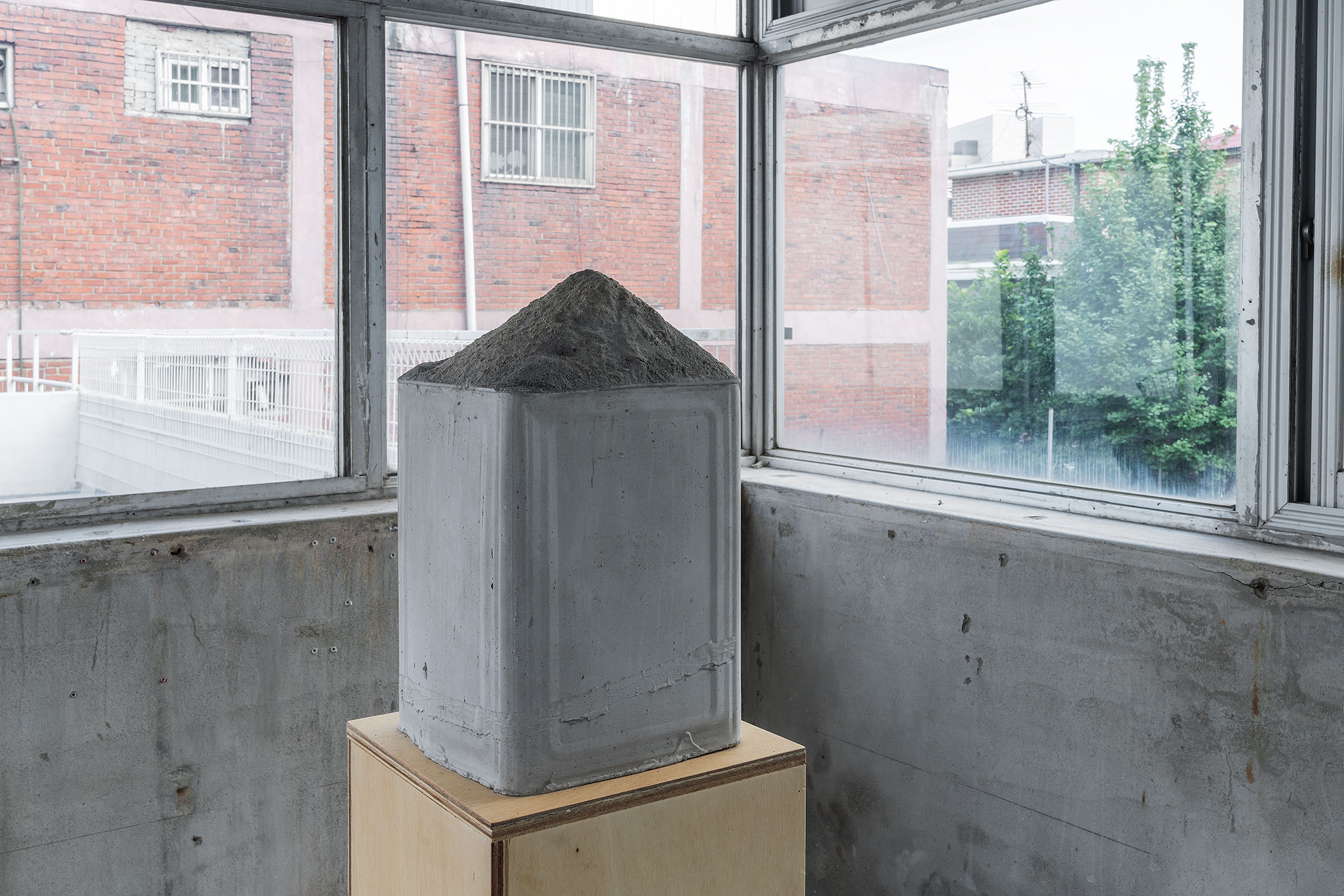
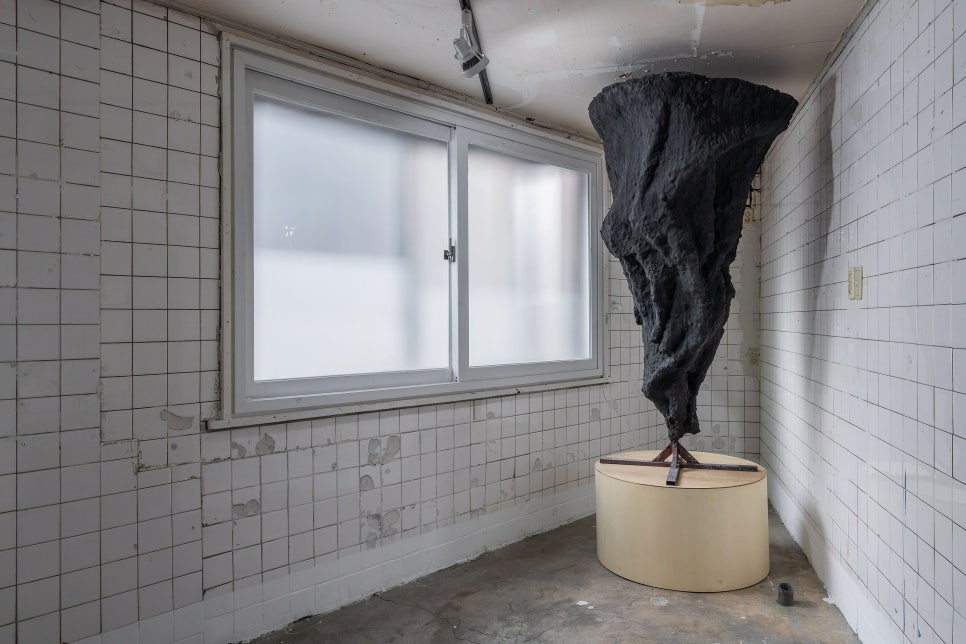
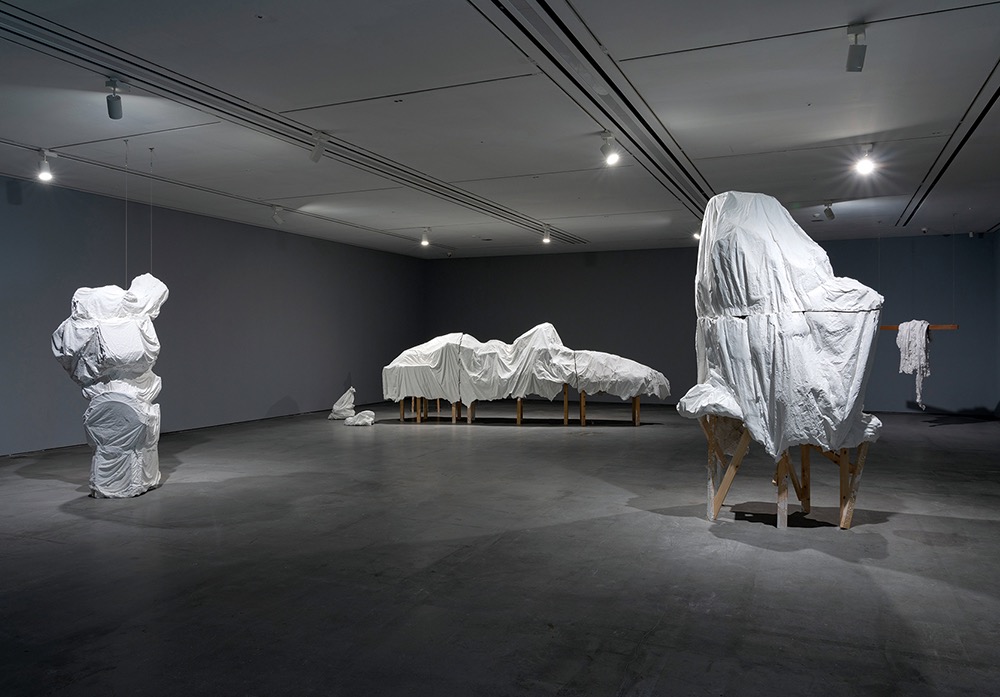
Around 《Casting》 (2018), Kwon shifted from installations that directly exposed found objects toward sculptures in which forms were reconstructed through casting. By covering assemblages of objects and structures with tarpaulins and casting them in plaster, he concealed the objects themselves while retaining their volume, weight, contours, and surface traces.
Materials of different colors and textures became unified within white plaster, compressing the dense visual information of his earlier installations into sculptural masses and surfaces. The objects thus became both the physical sources that determined the sculpture’s exterior and hidden structural causes embedded within the cast.
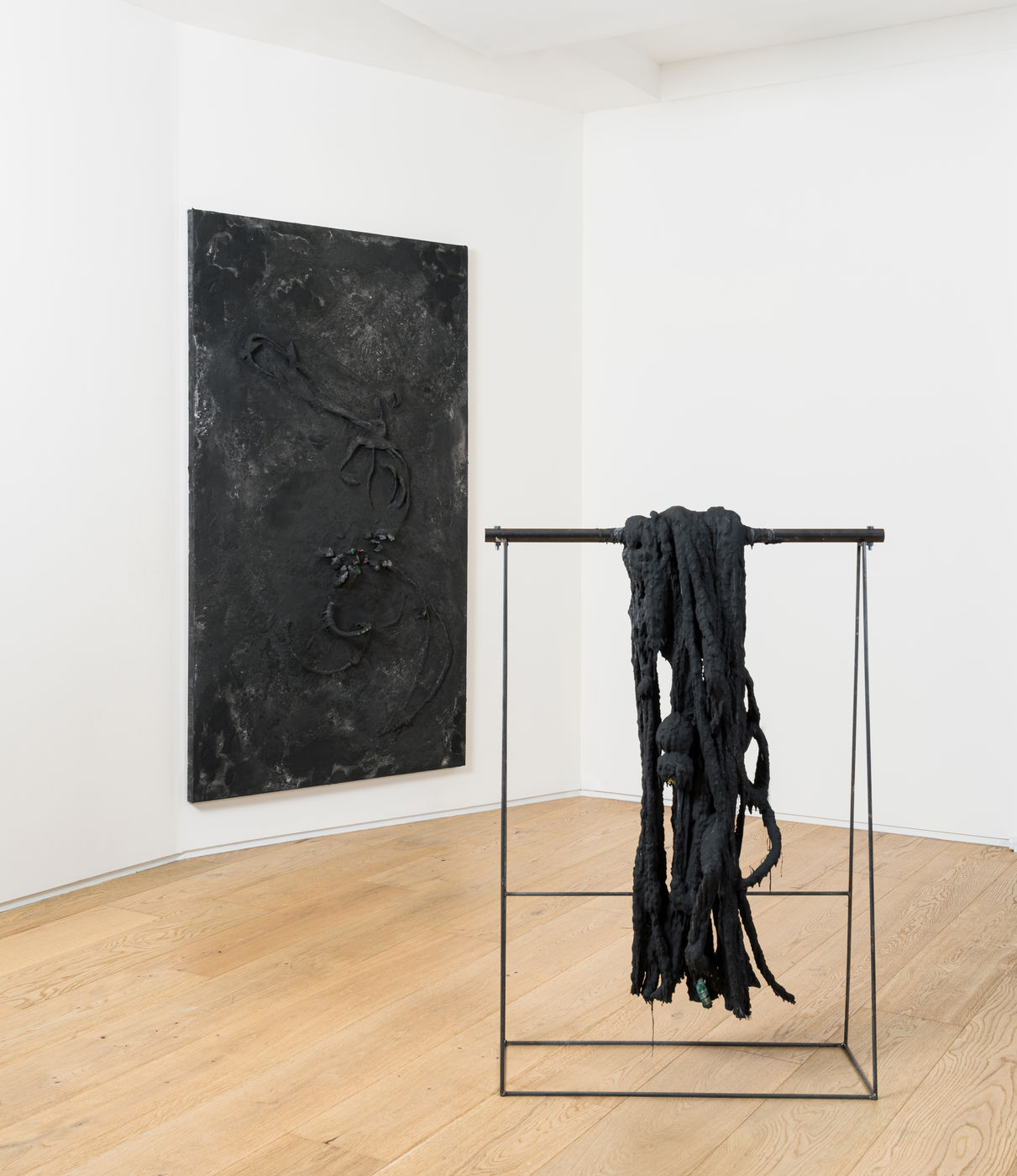
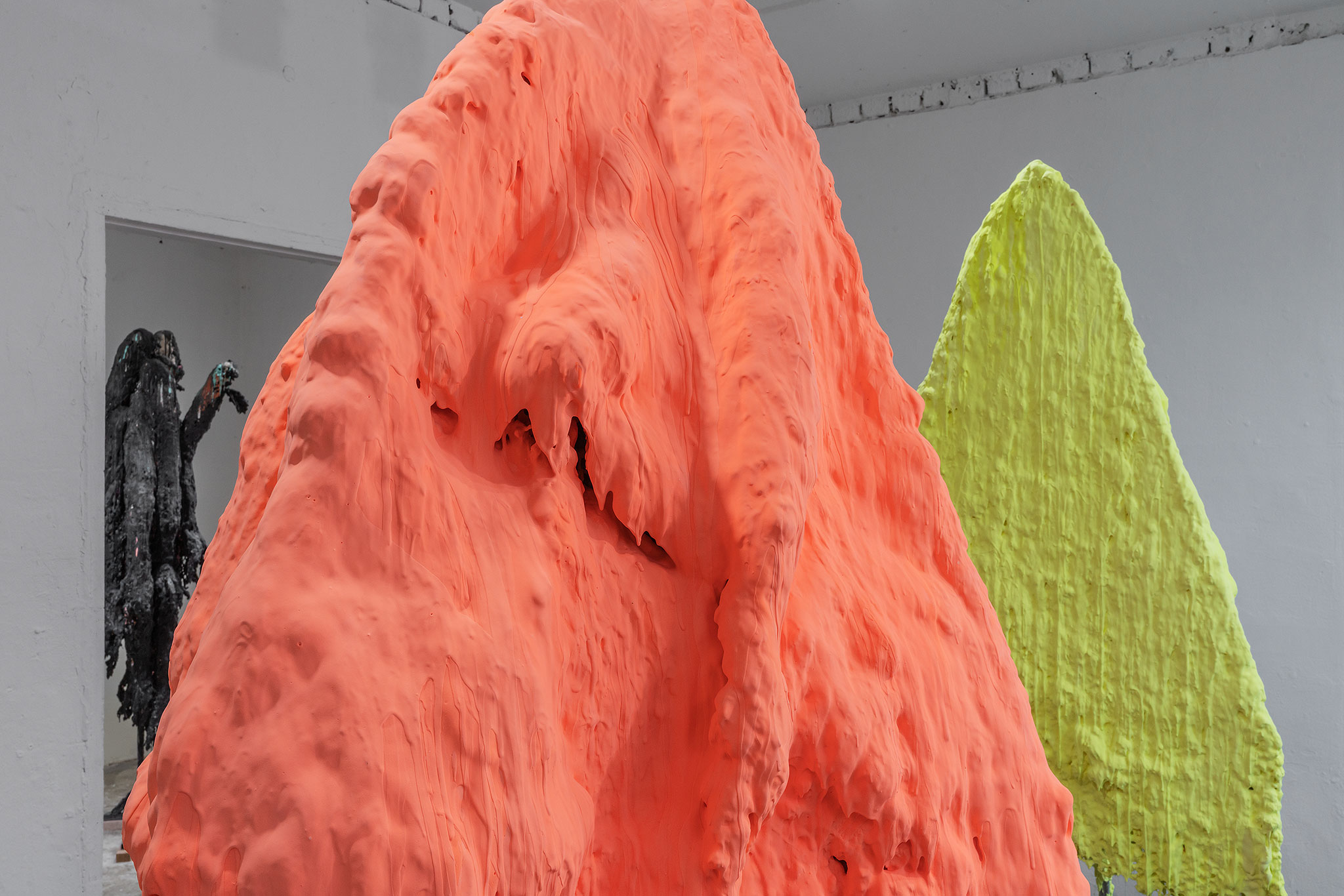
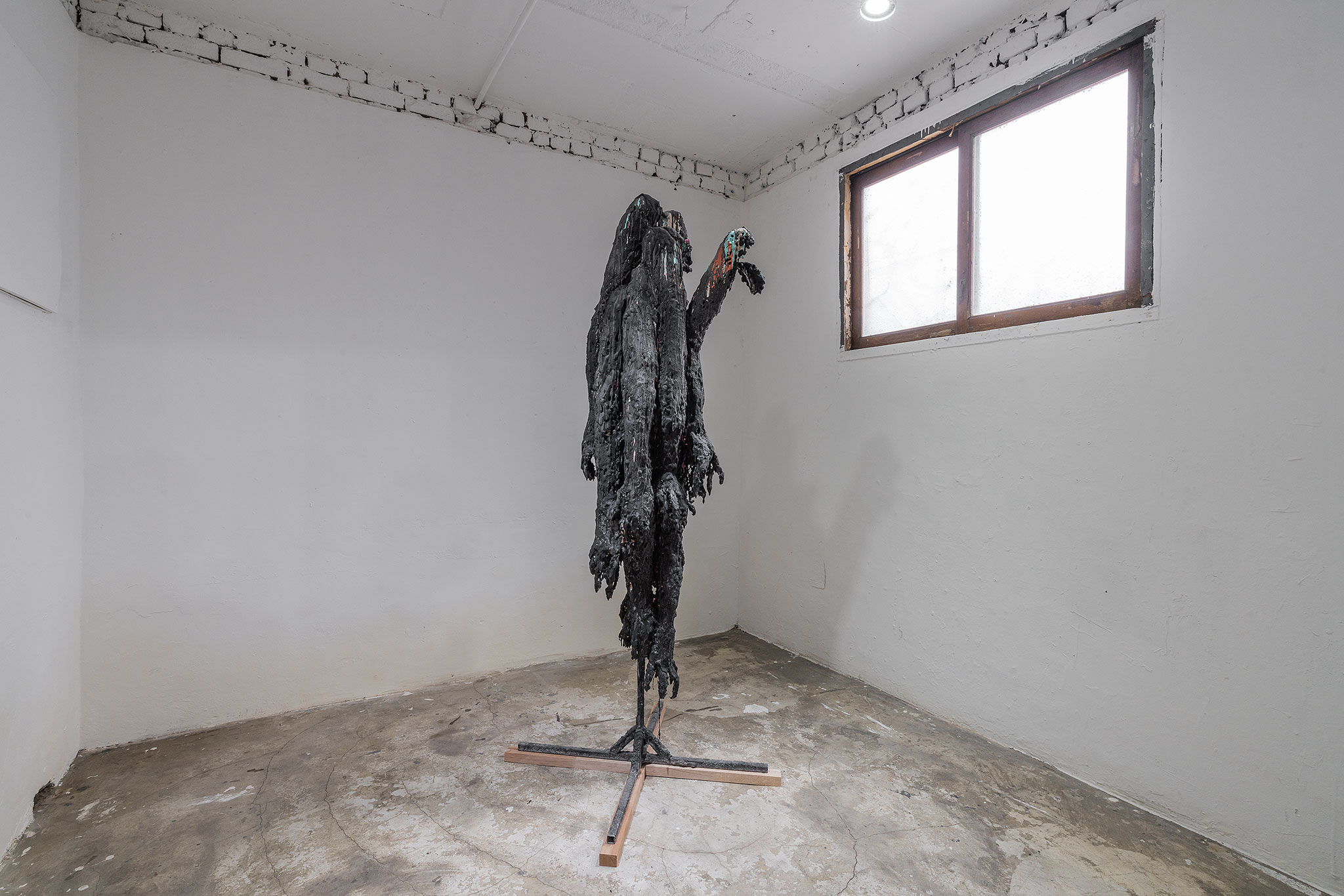
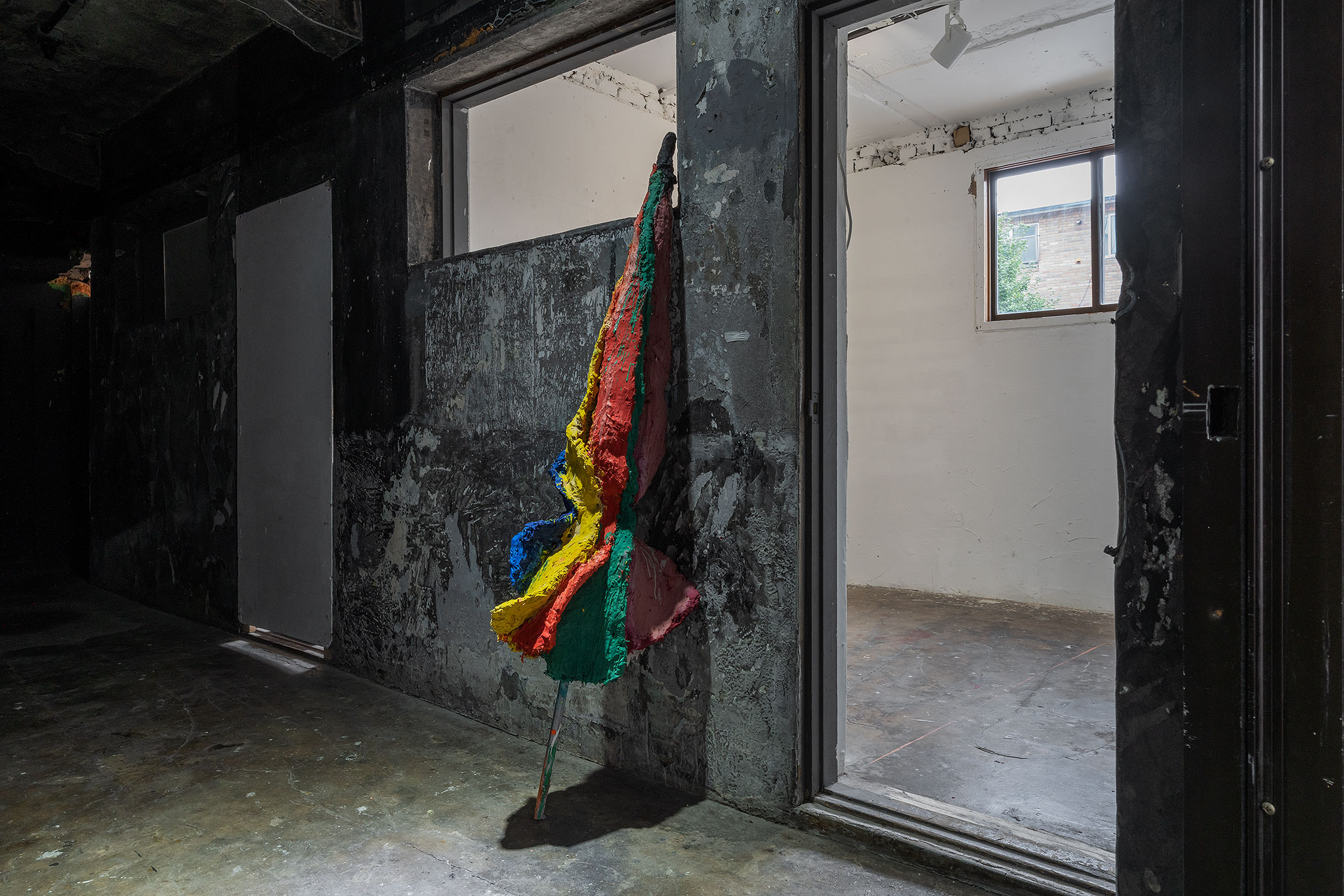
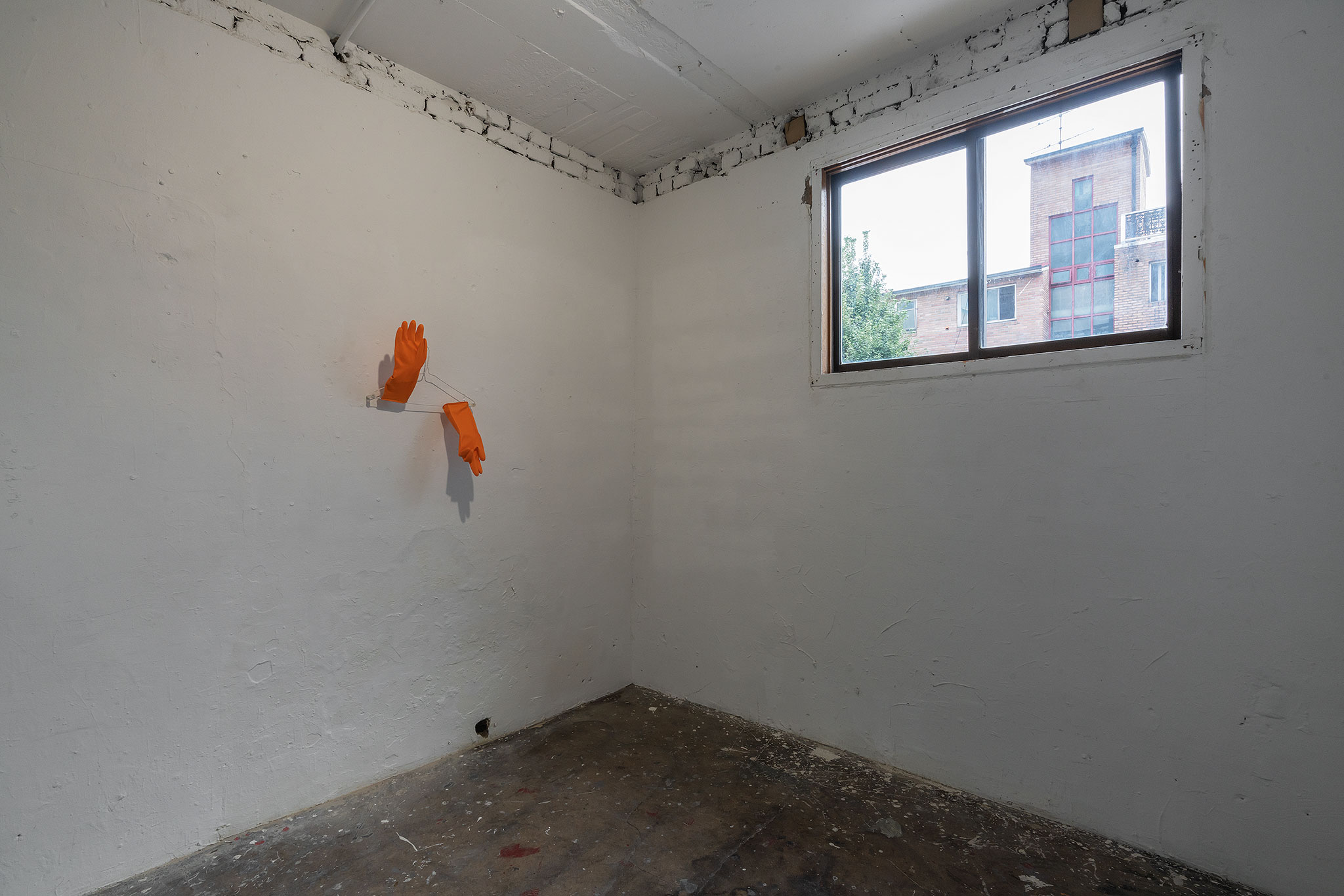
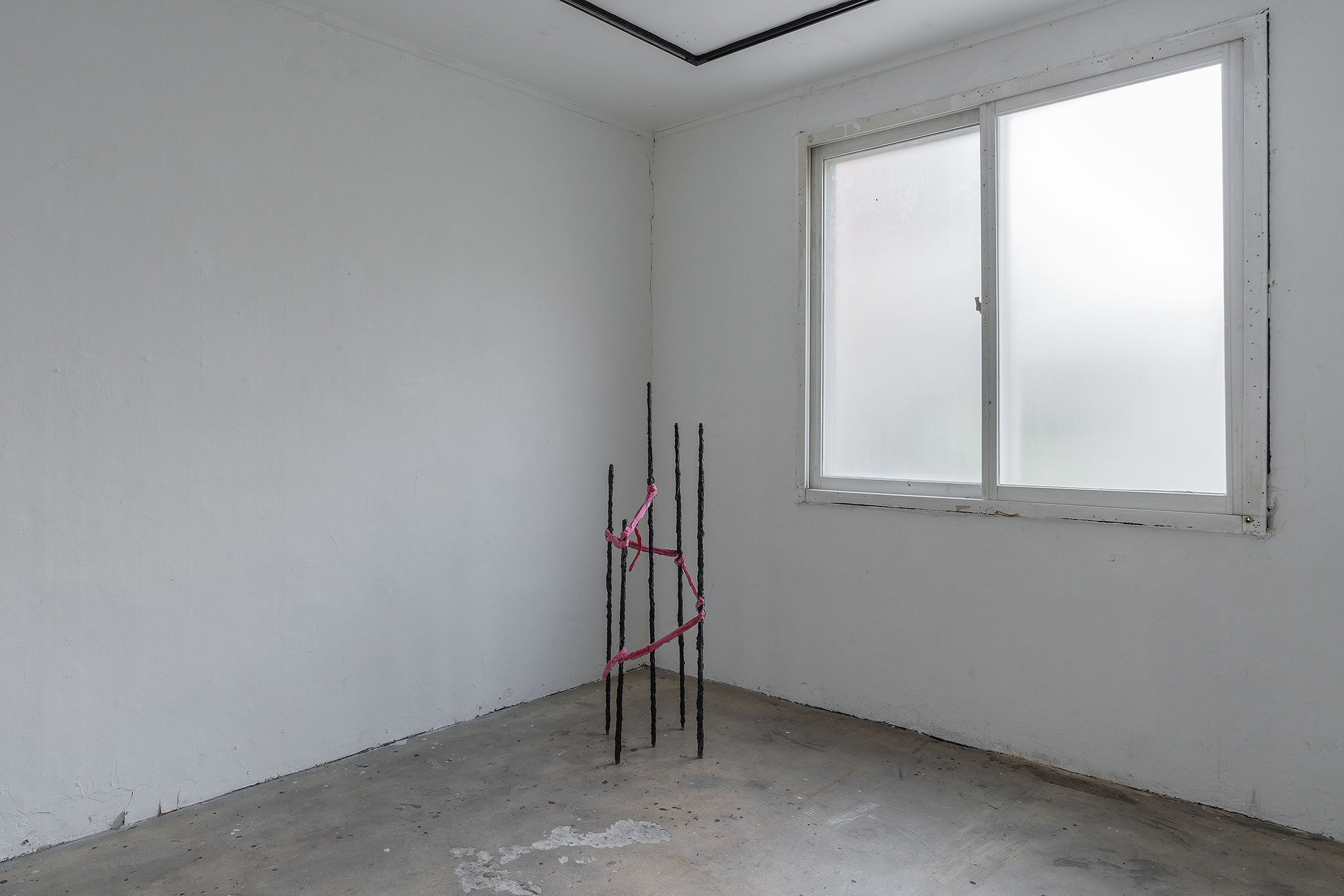
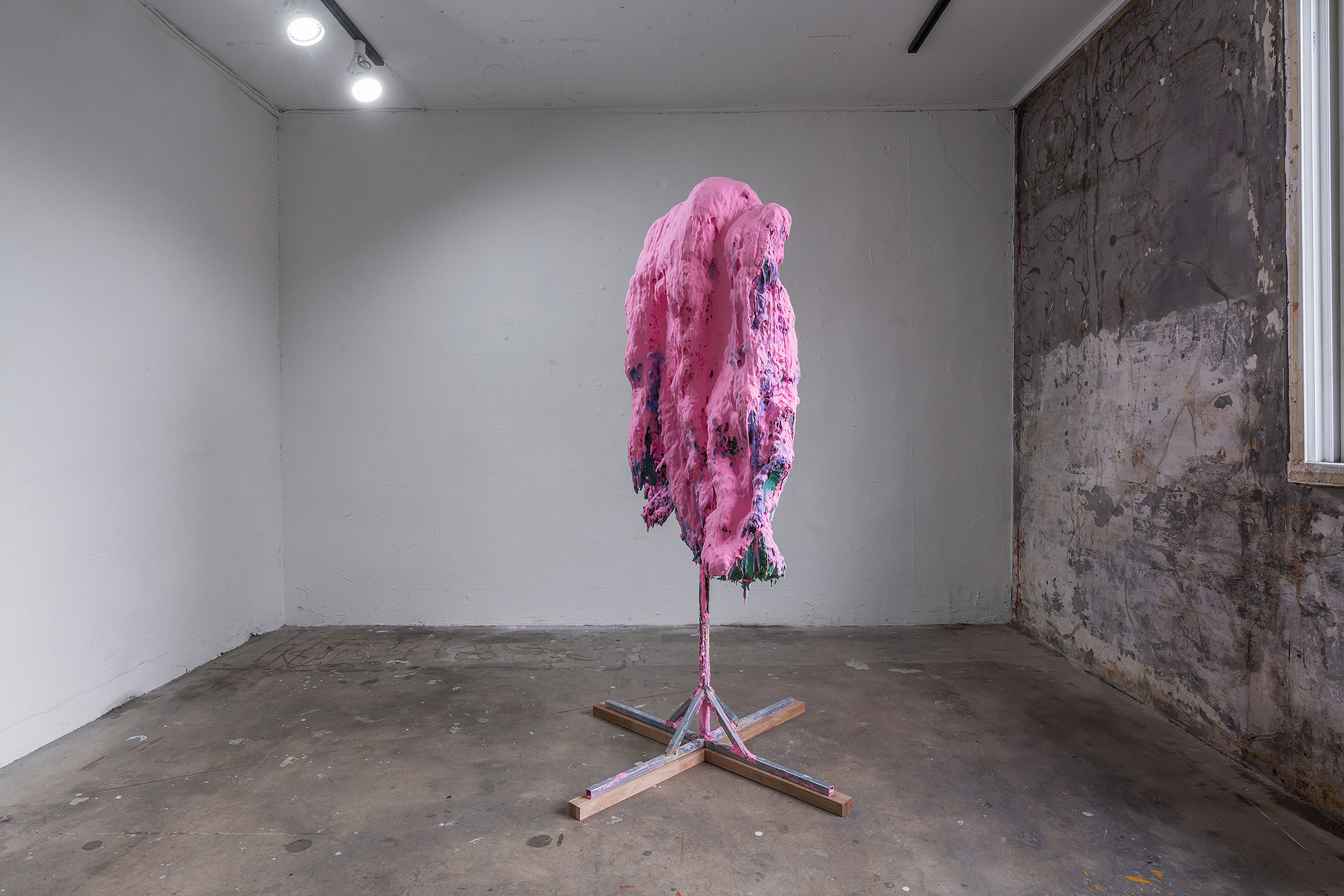
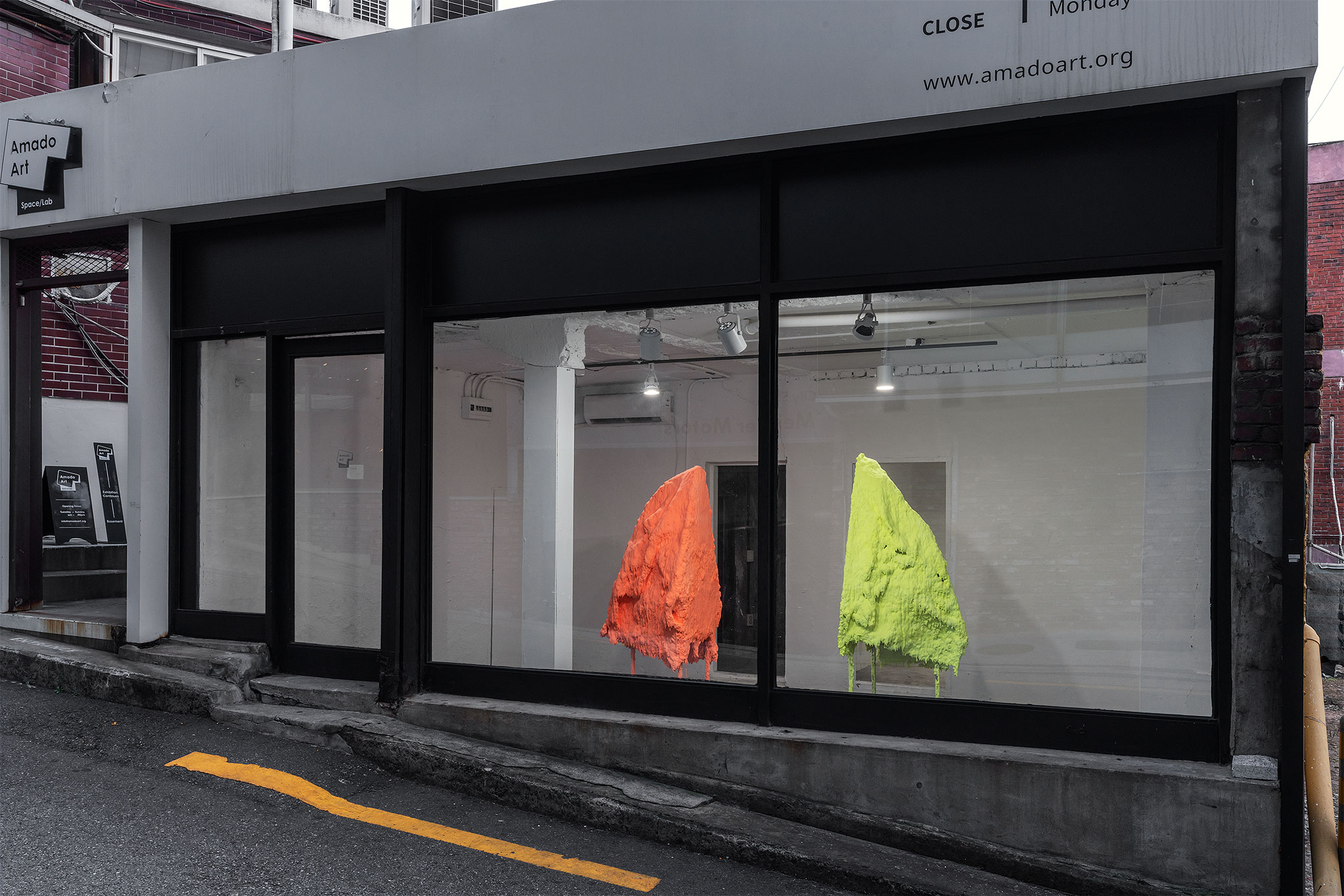
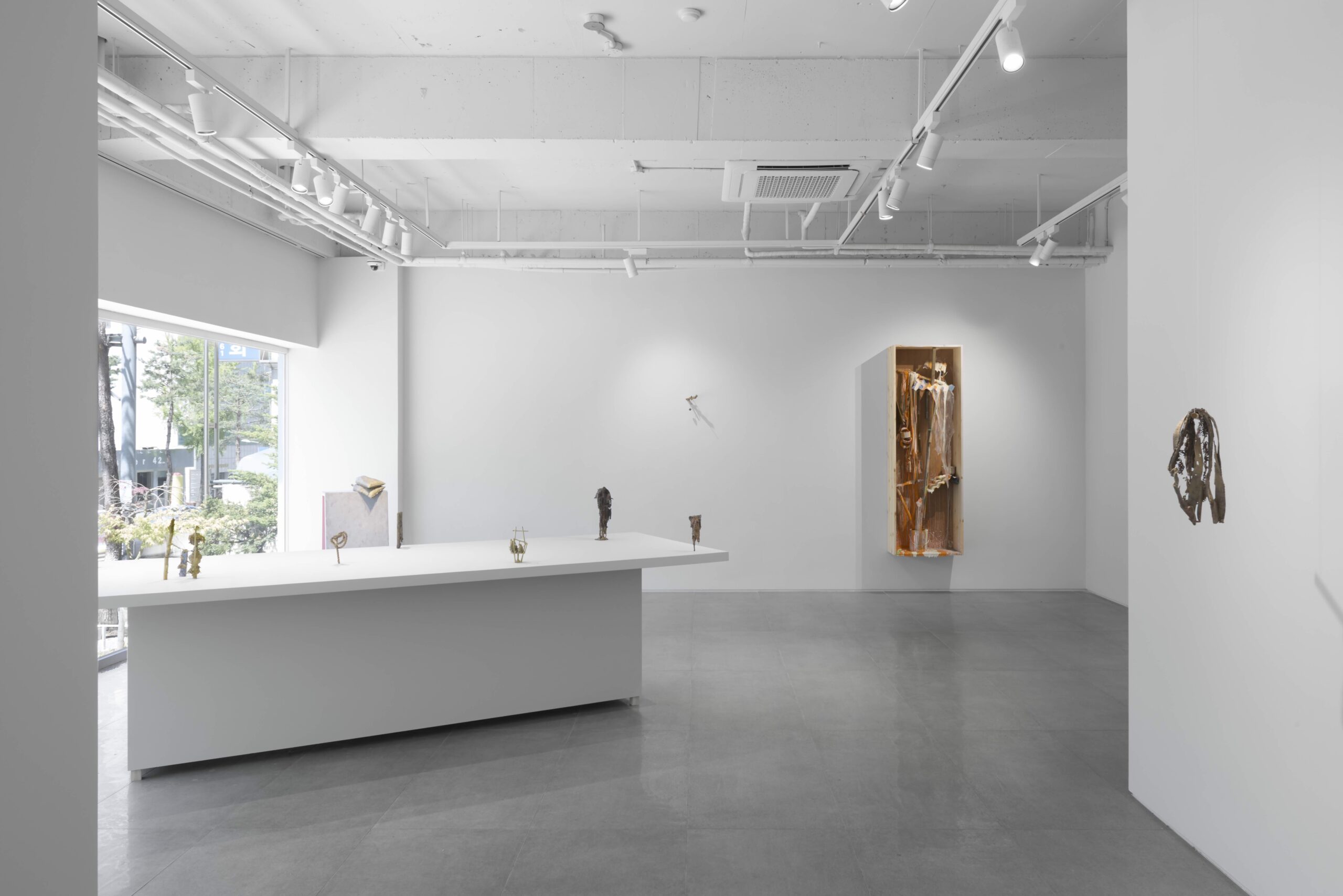
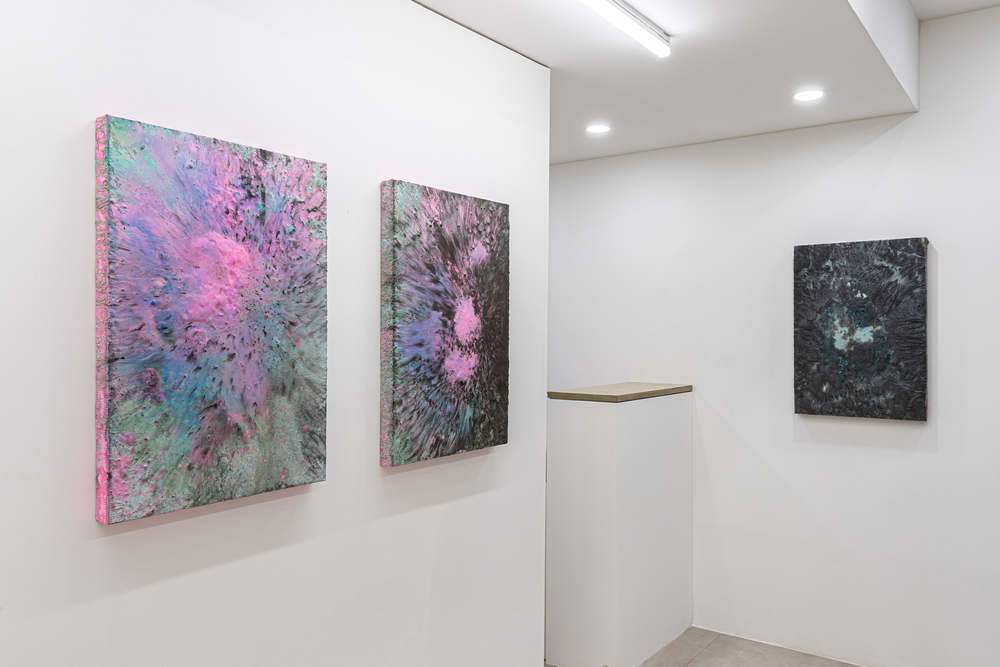
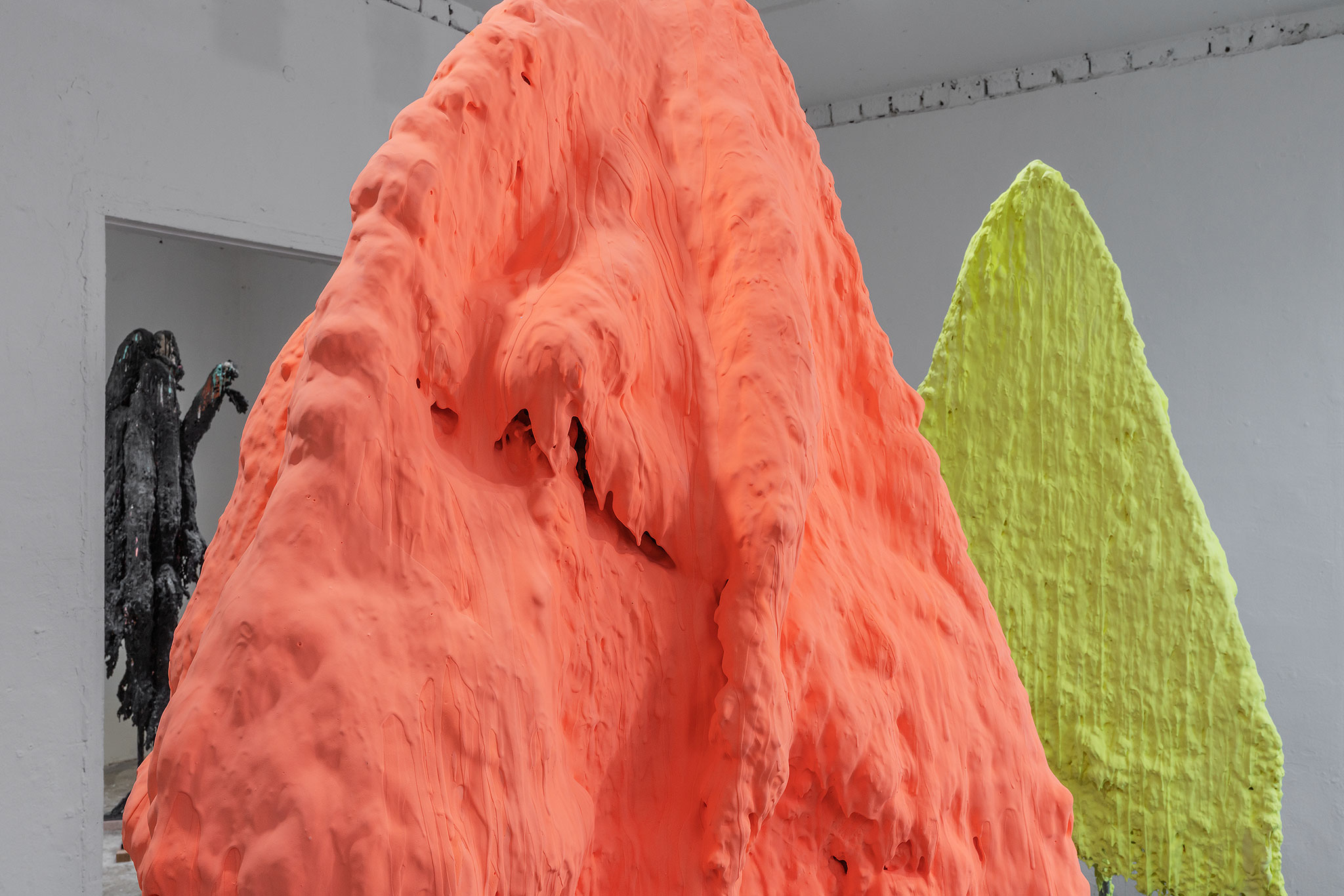
From 《Portal》 (2022) onward, Kwon has pursued both the reconstruction of scenes found in reality and more extensive transformations of form. Some works preserve the outlines of everyday objects such as parasols, sling belts, ropes, and rubber gloves while translating them into different materials; others begin with steel-pipe armatures whose forms are altered through repeated applications, pouring, and spraying of plaster and pigment. These experiments became more concentrated in 《Pigmentary Sculpture》 (2024).
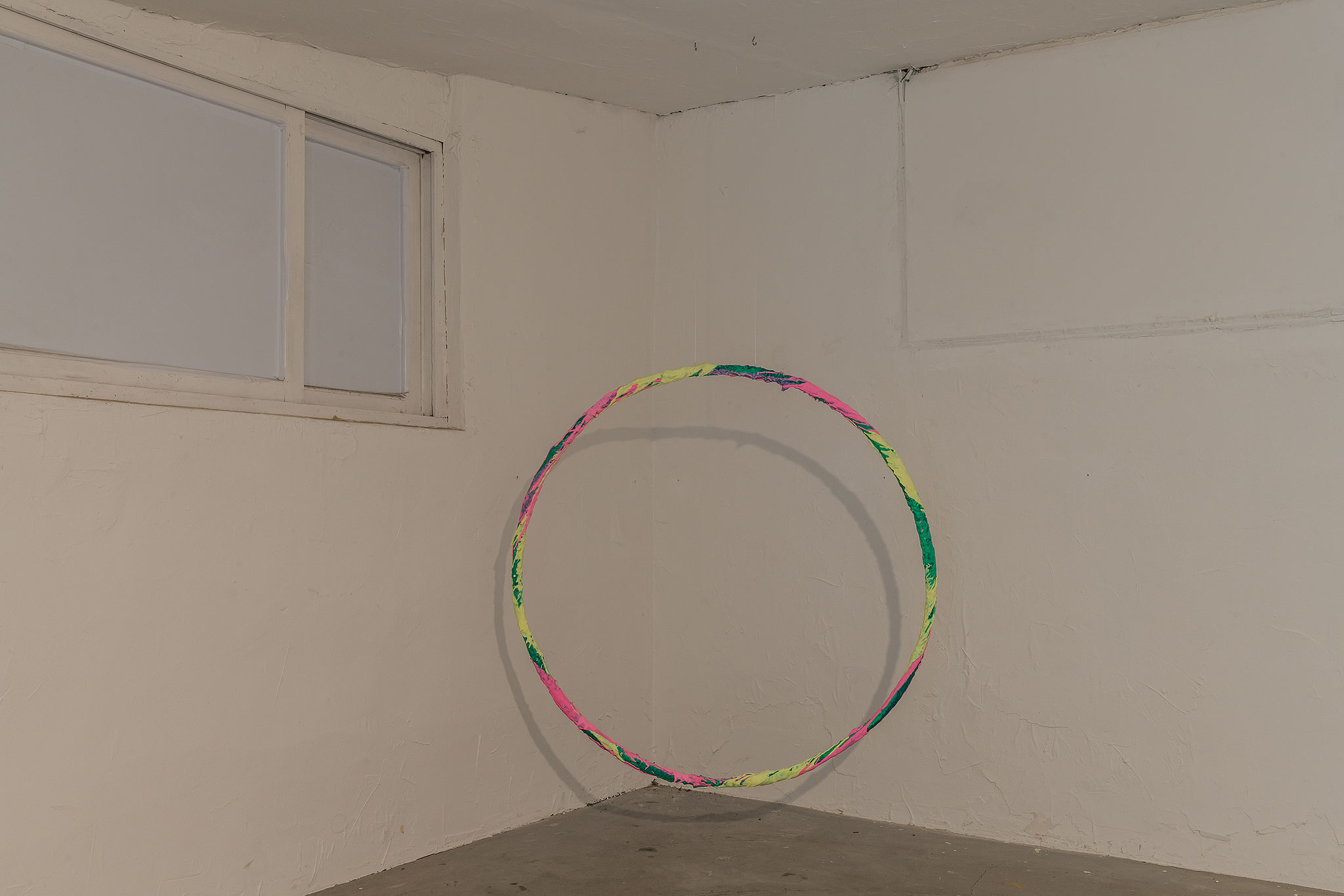
Through repeated accumulation and irregular mixing of iron oxide, copper pigments, and plaster, color ceases to function merely as a surface property and instead generates volume, texture, and form. Understanding pigment itself as a minute three-dimensional substance, Kwon explores how sculpture can emerge through the accumulation and interaction of materials.
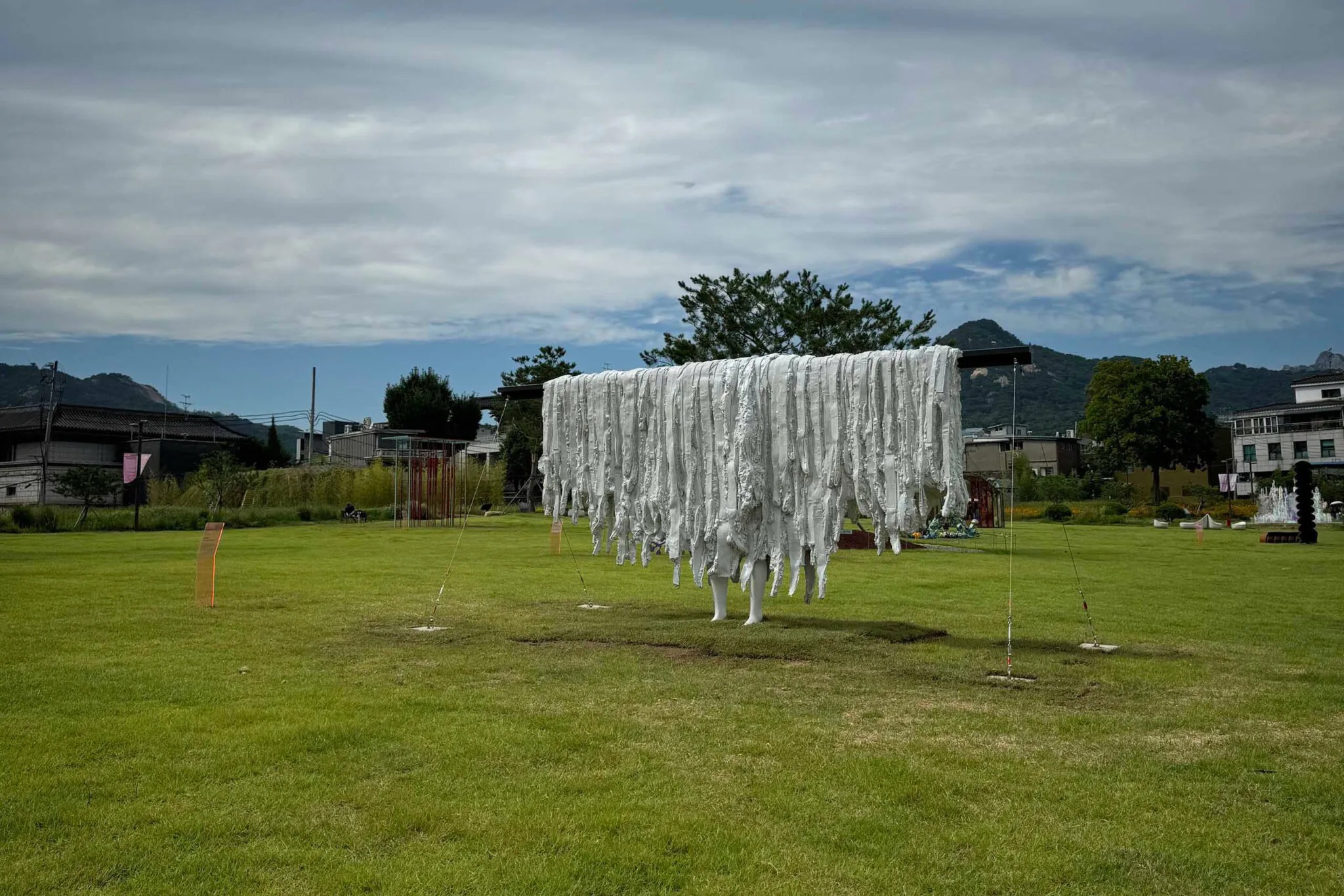
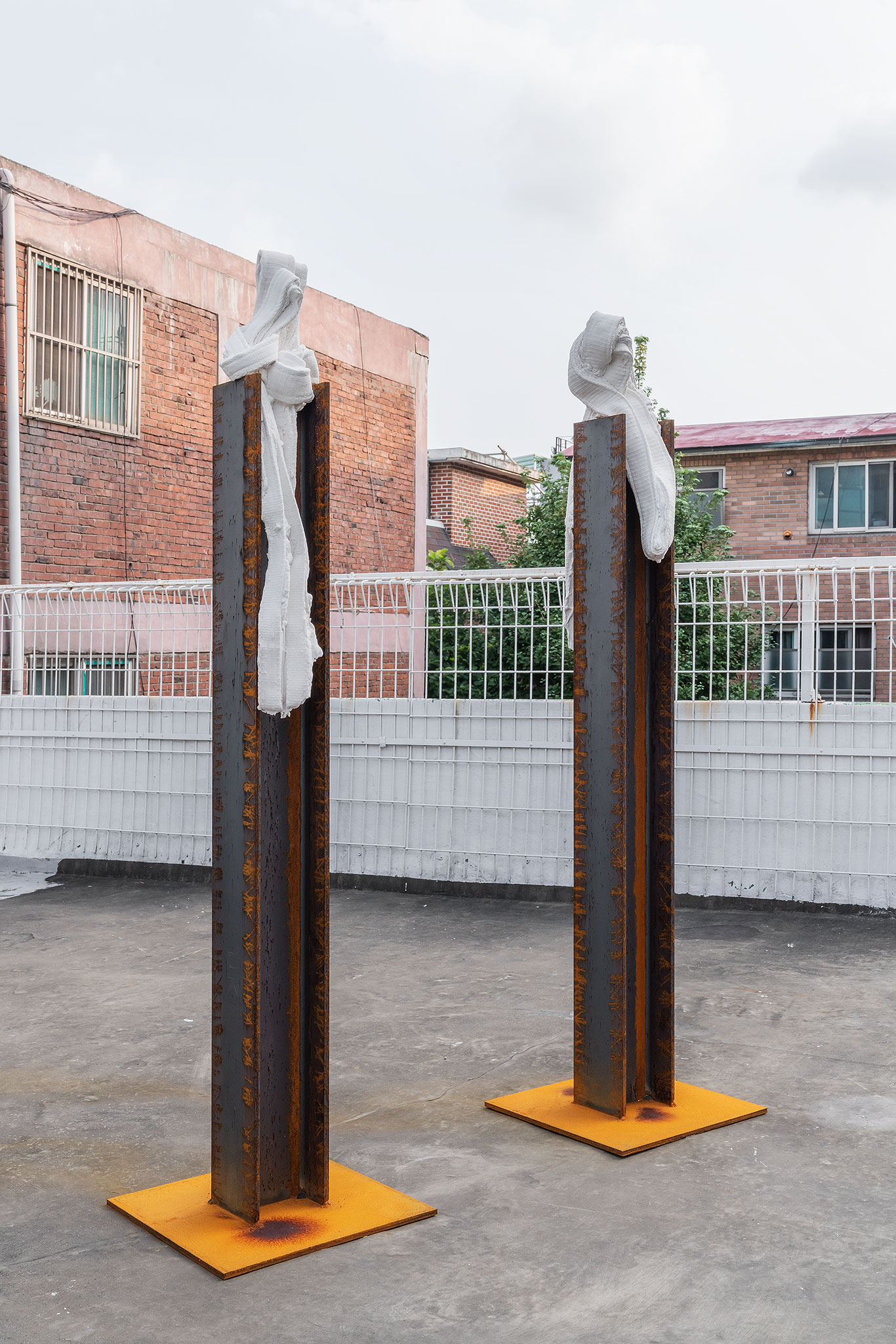
Recent works have expanded into outdoor sculpture, FRP fabrication, and bronze casting, while increasingly incorporating deviations produced by materials and technical processes. Sling Belt & Others (2024) translates the forms of the earlier sling-belt works into a large-scale outdoor sculpture through FRP casting over H-beam and steel-plate structures, introducing human legs beneath the accumulated objects and making the worker’s body more explicit.
In 《Sprue》 (2026), mold abrasion, the expansion of molten metal, and the casting channels that are normally cut away become integral conditions of the work. By observing and accommodating transformations that occur during fabrication, Kwon brings the finished form into relation with the physical processes and residues that make it possible.