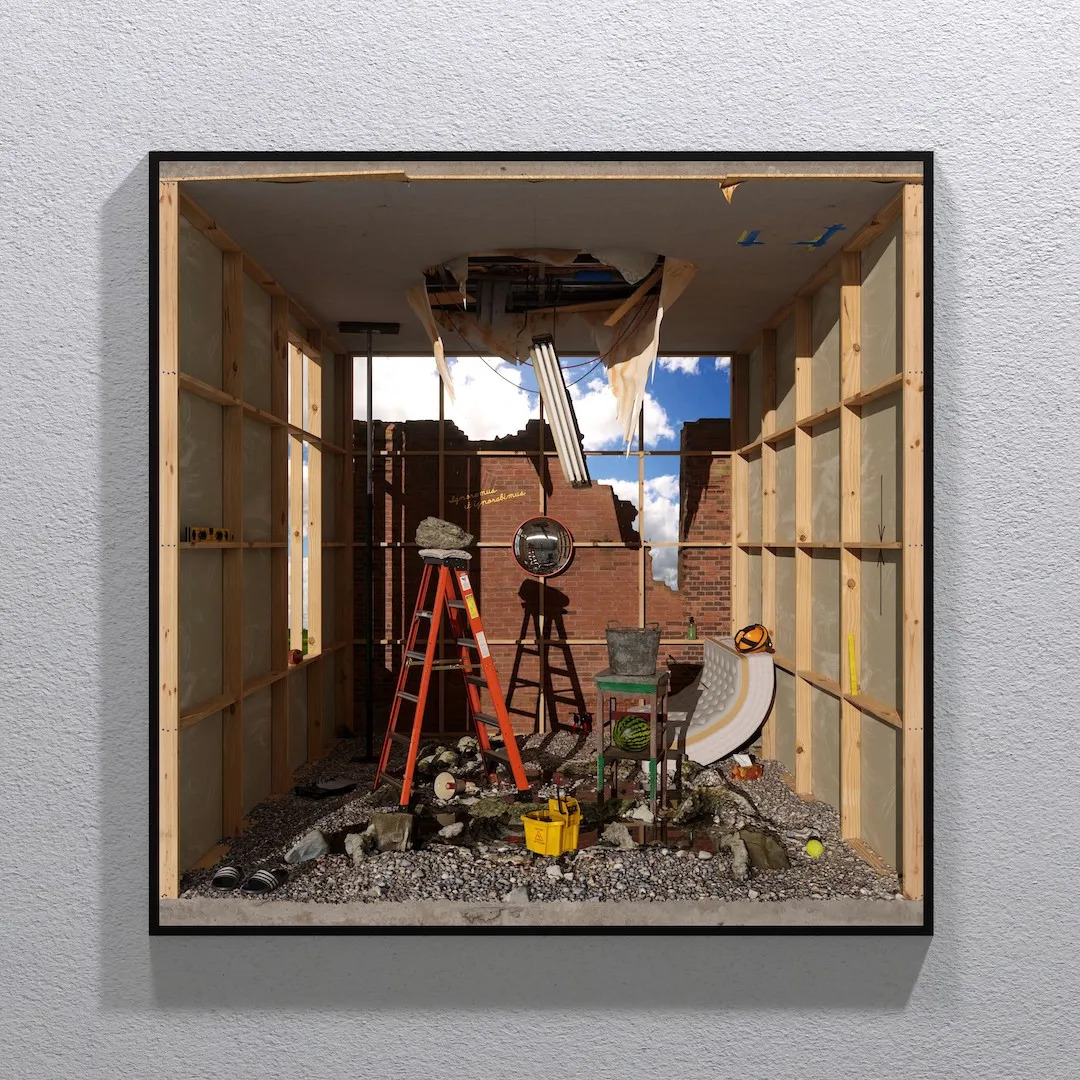
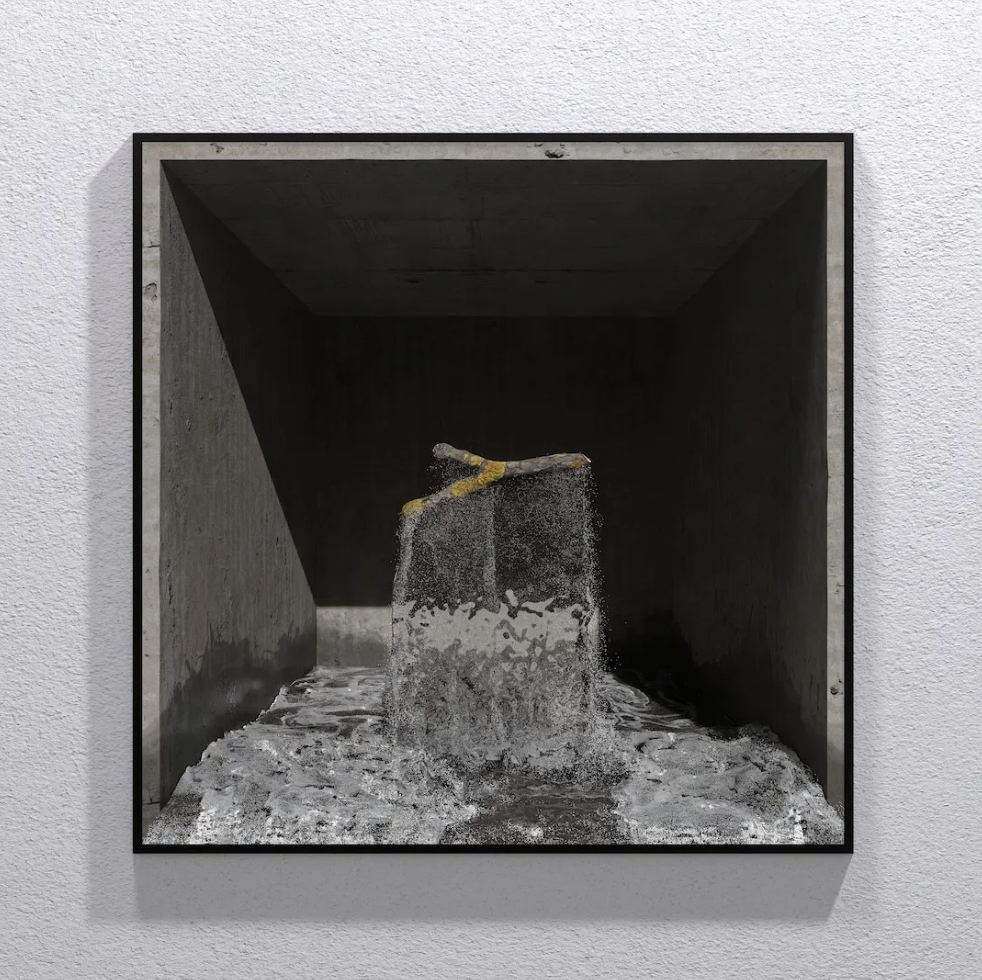
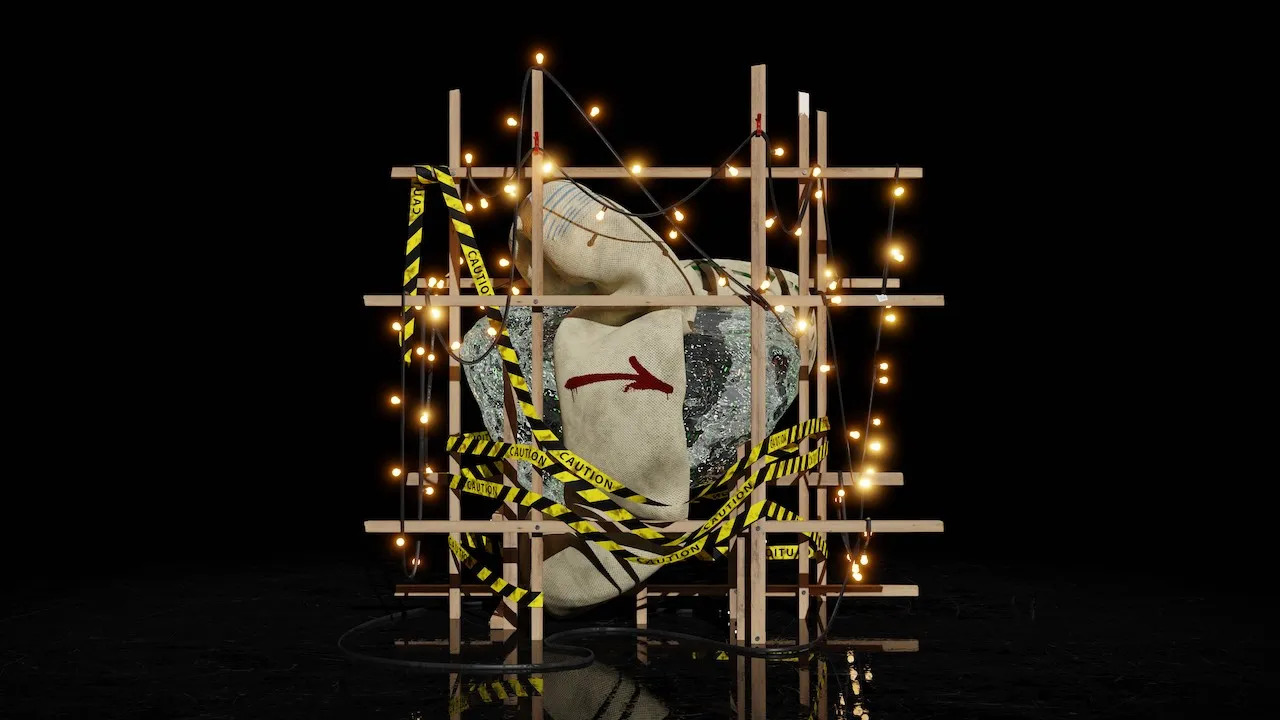
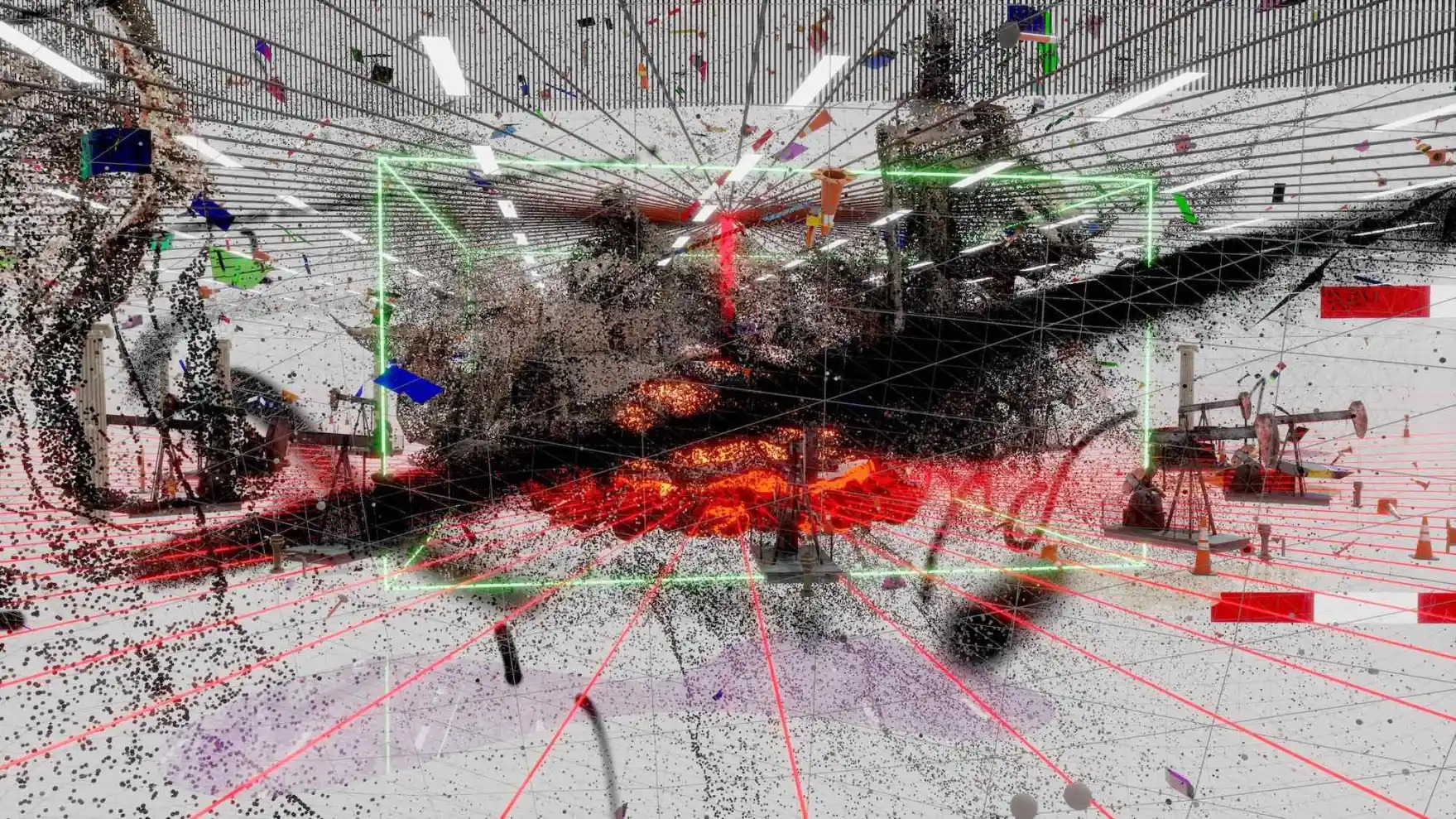
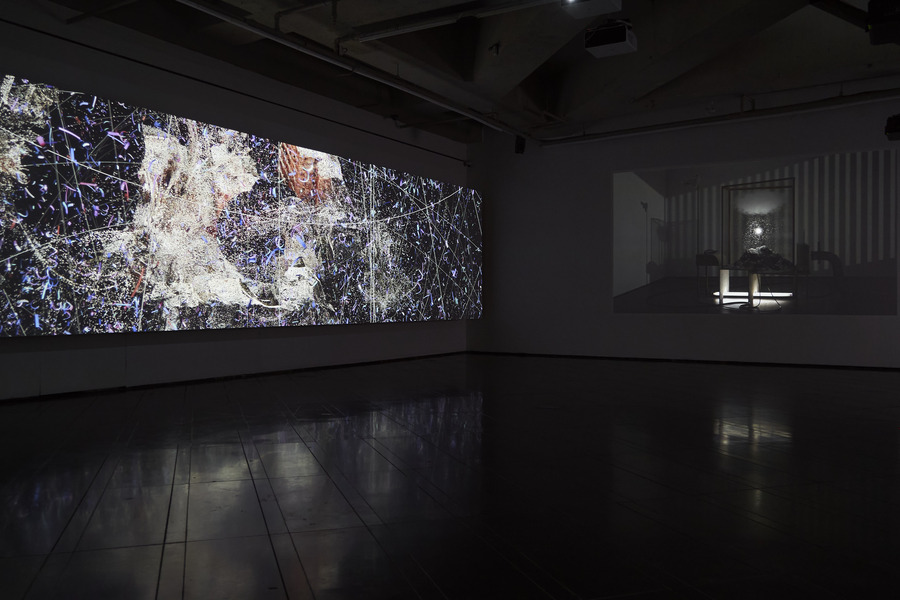
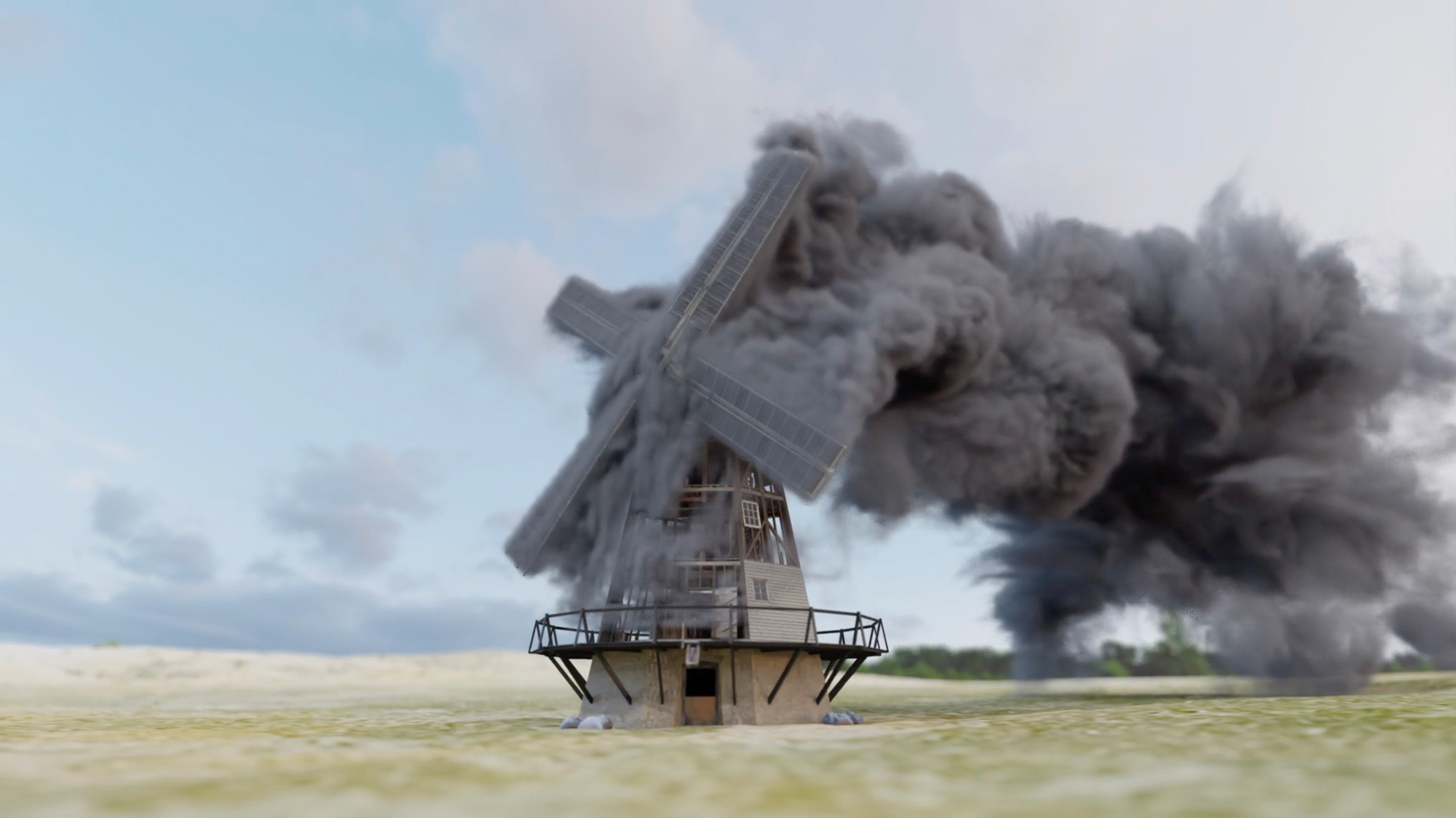
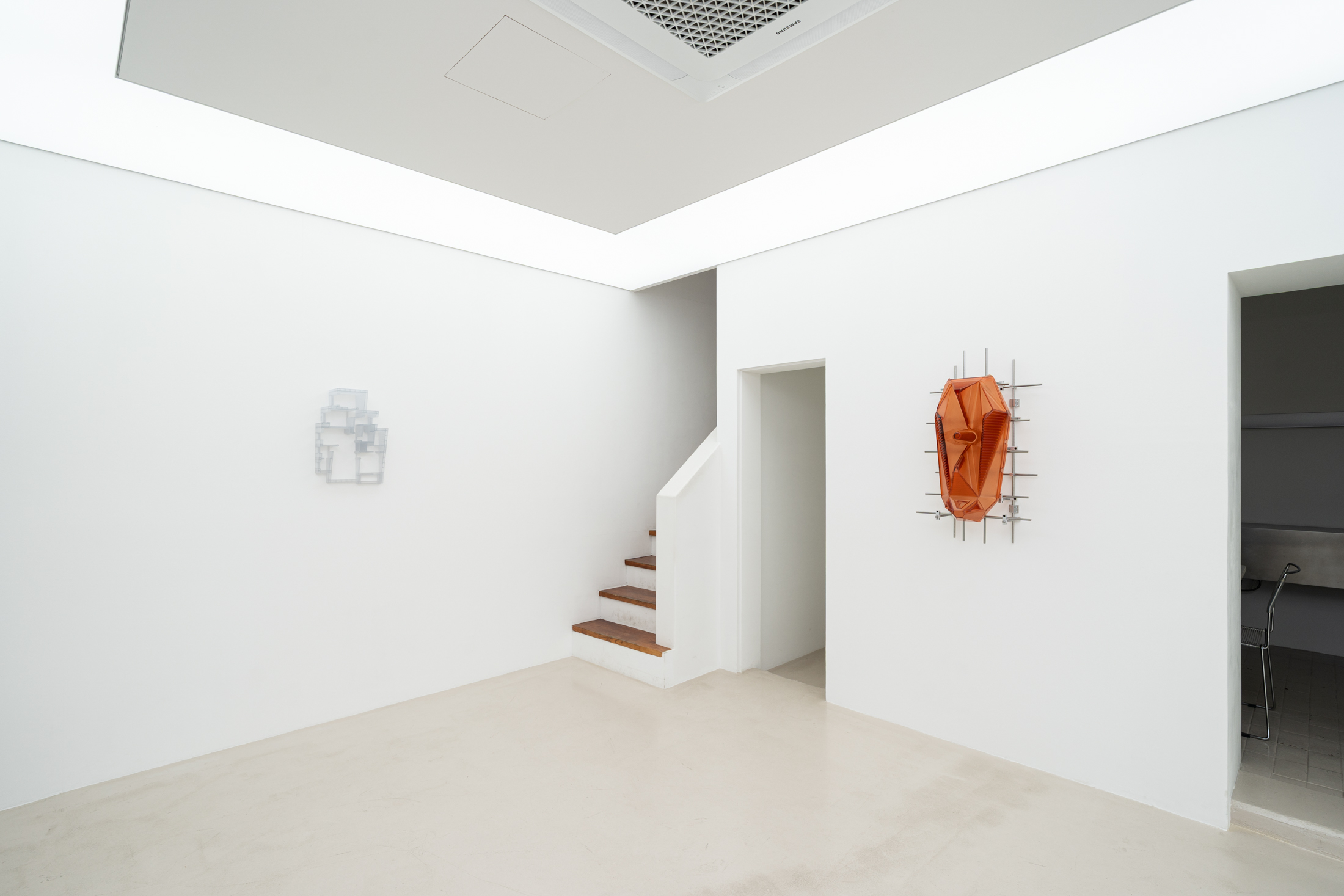
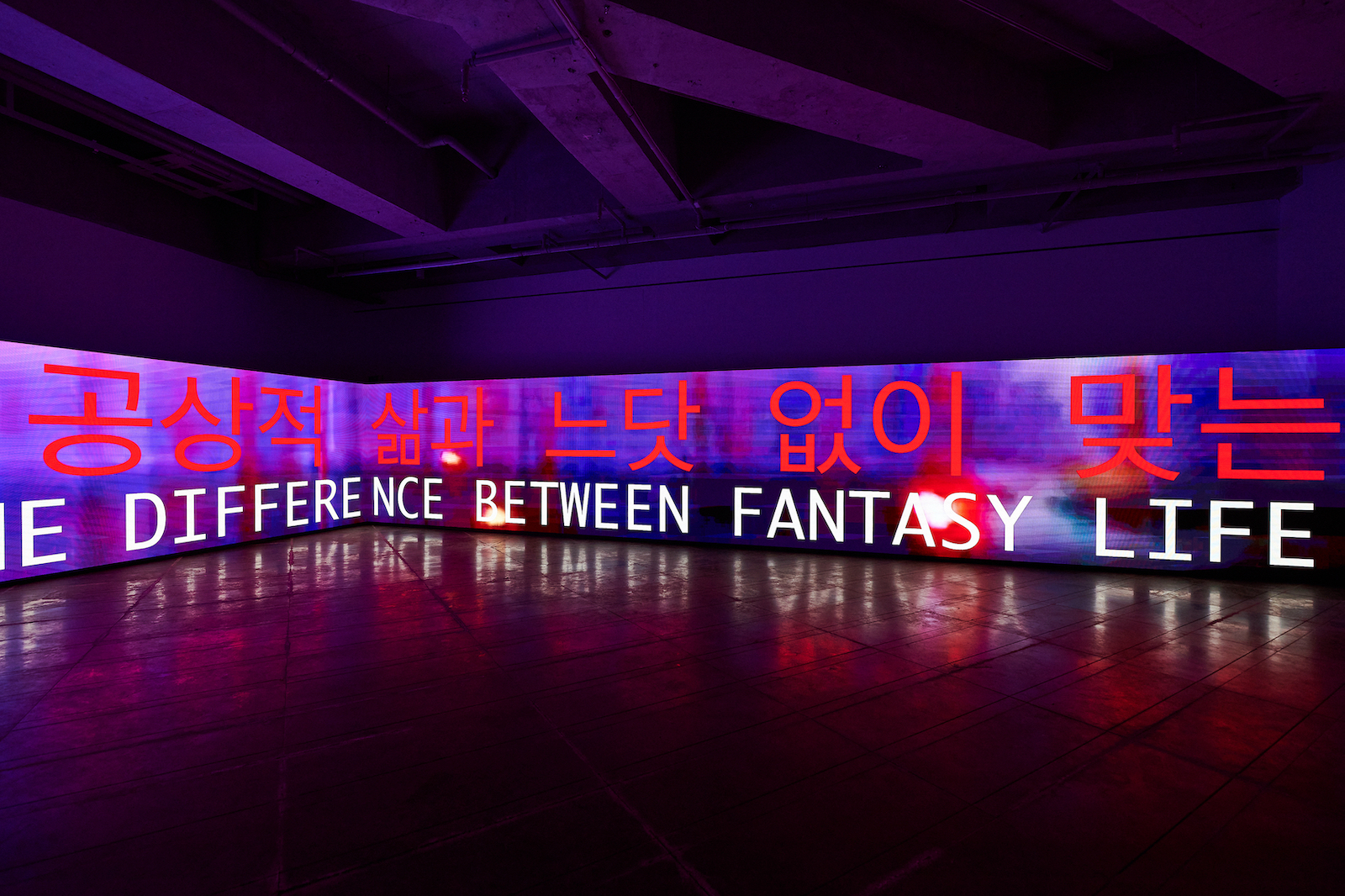
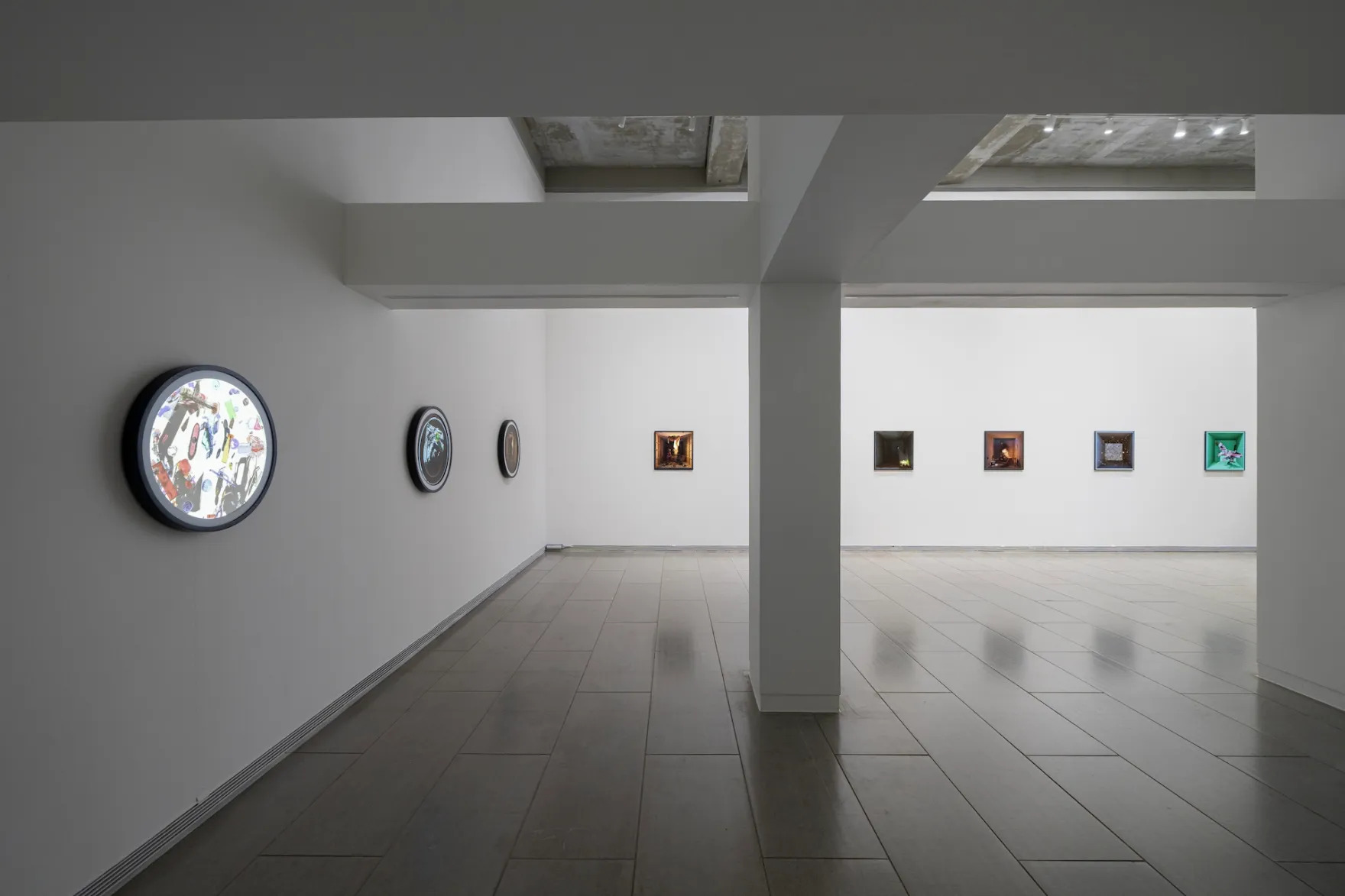
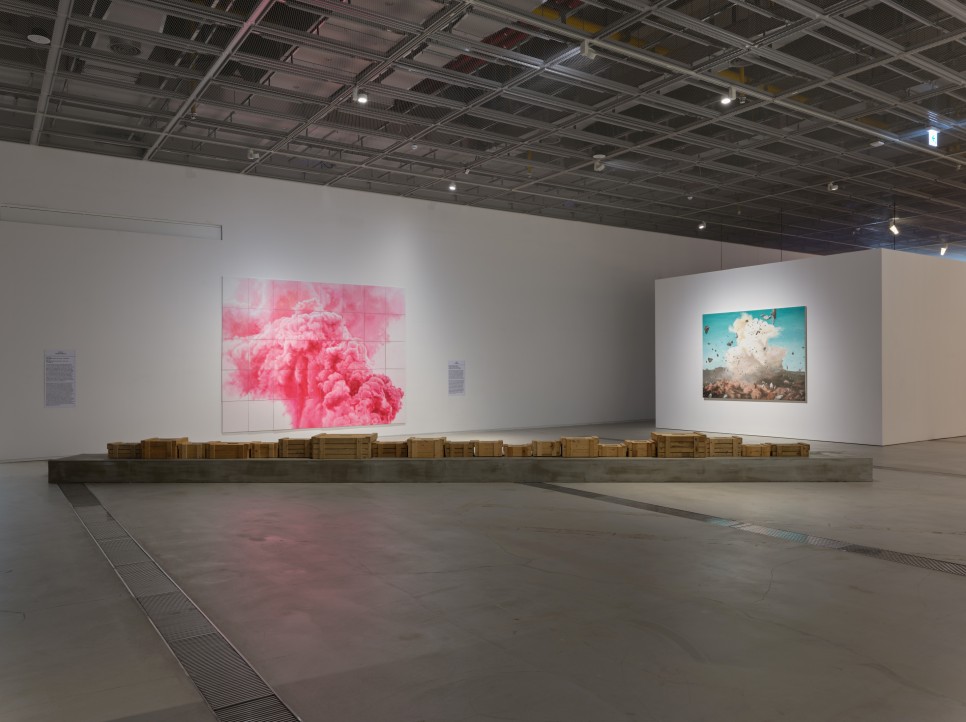
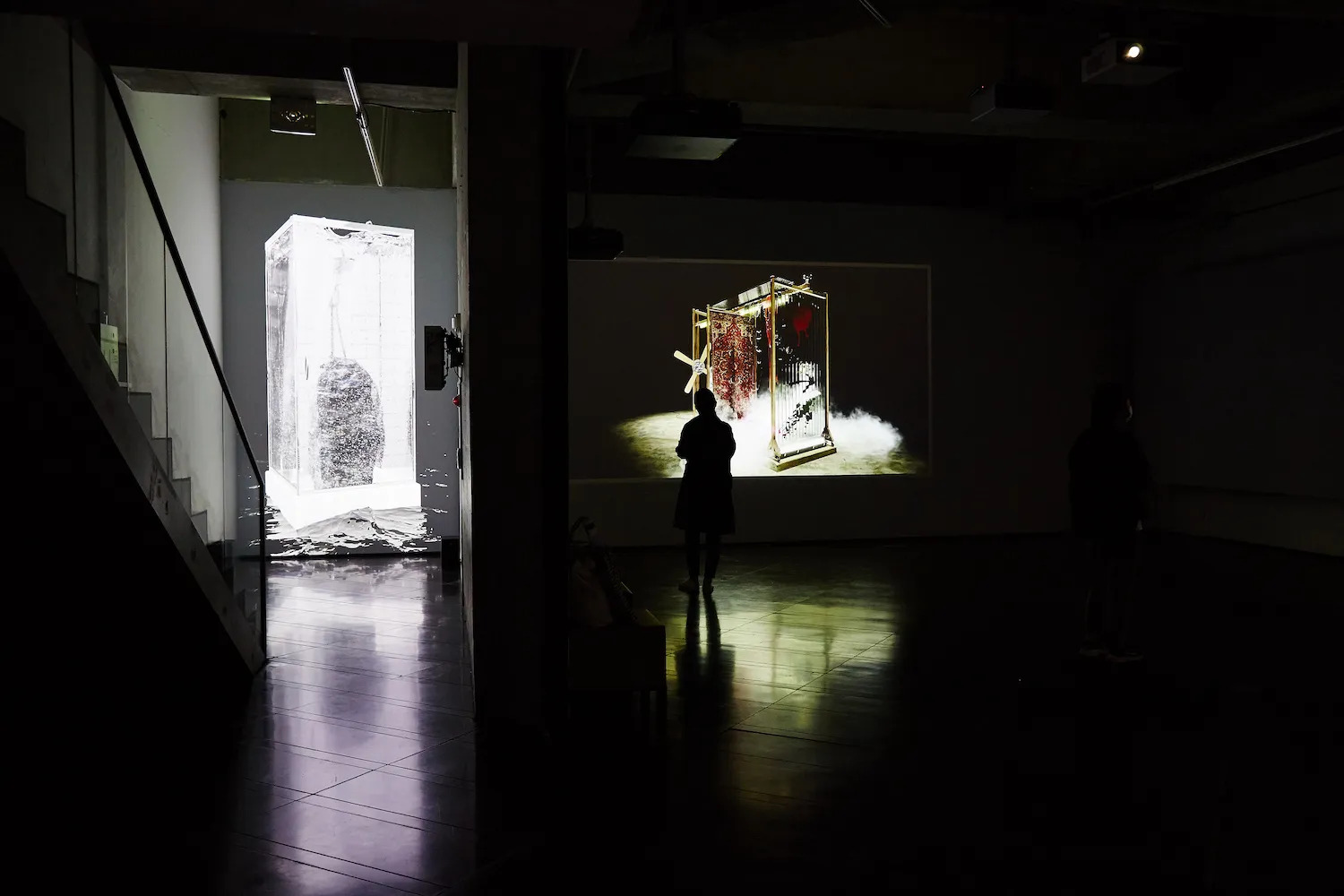
Selected through Alternative Space LOOP’s 2021 open call for artists, Jaehun Park’s solo exhibition uses 3D computer-generated imagery to construct a landscape of contemporary capitalism entangled with war, tragedy, and desire under the keyword “real-time limbo.” Here, the virtual may initially refer to an imaginary territory that exists independently of physical or historical spatiotemporal indexicality.
In Park’s practice, however, the question of the virtual is embedded, prior even to the level of content, in the form of 3D digital technology through which the work is created. The form of media technology mediates and embodies the intra-action between virtuality and reality across every layer of the work: its production process, its resulting images, and the viewer’s phenomenological experience.
3D Vanitas
To begin with, fact and fiction are already intertwined in the production method of 3D modeling. 3D modeling measures the surface of an object and replaces it with a point cloud in virtual space. Because it is impossible to scan every point on a surface, this process inevitably includes a fictionalizing operation that fills in missing areas through estimation.1)
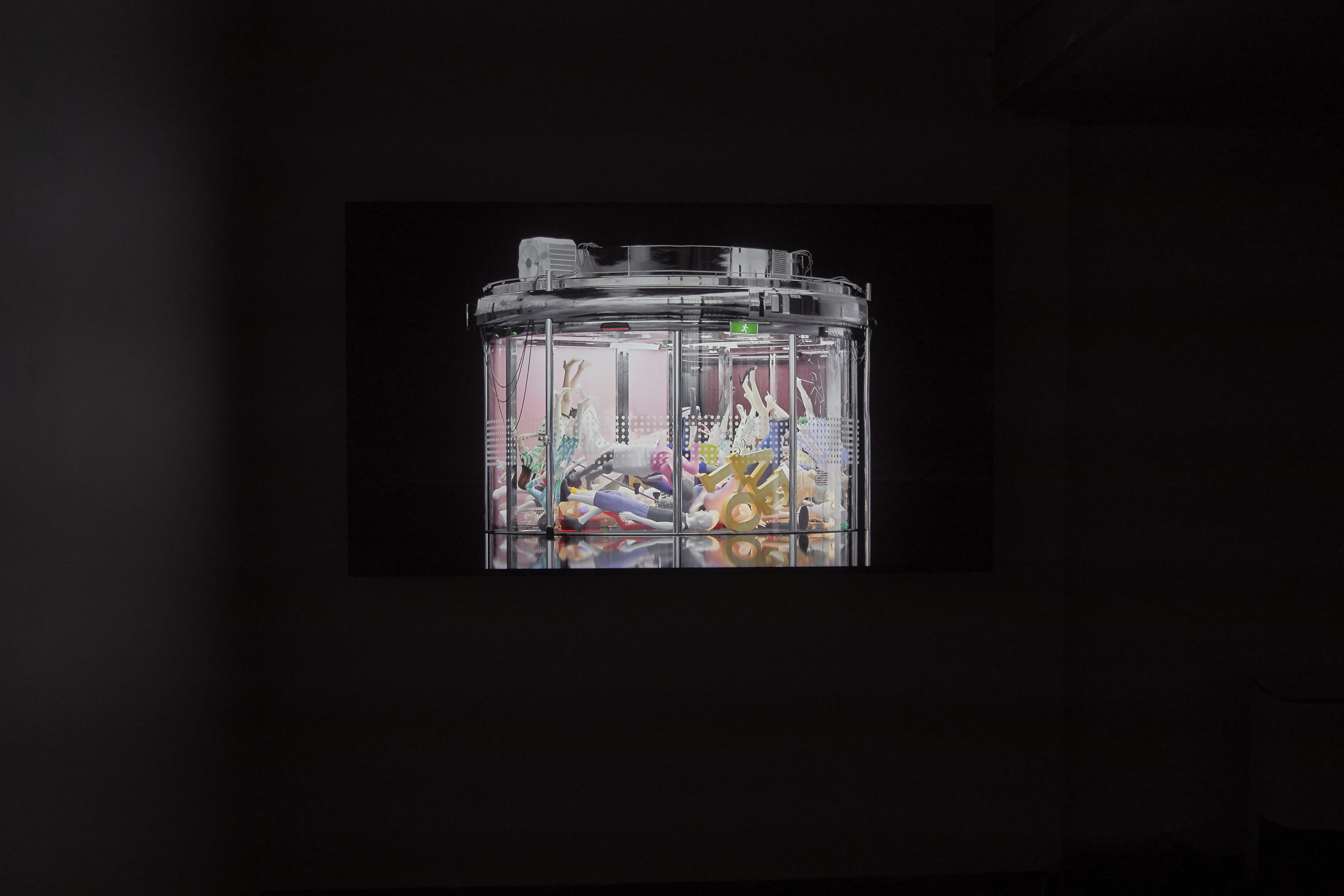
The process of measuring a real object, reducing it to a set of data, and then realizing it as an immaterial image on a screen entails a peculiar dimensional shift in which three dimensions become one and ultimately end in two. Considered from this perspective, Revolving Door(2019), produced by 3D modeling the revolving door of De Bijenkorf department store in The Hague, is less a faithful realistic copy of an actual object than an uncanny hybrid in which the virtual and the real are entangled.
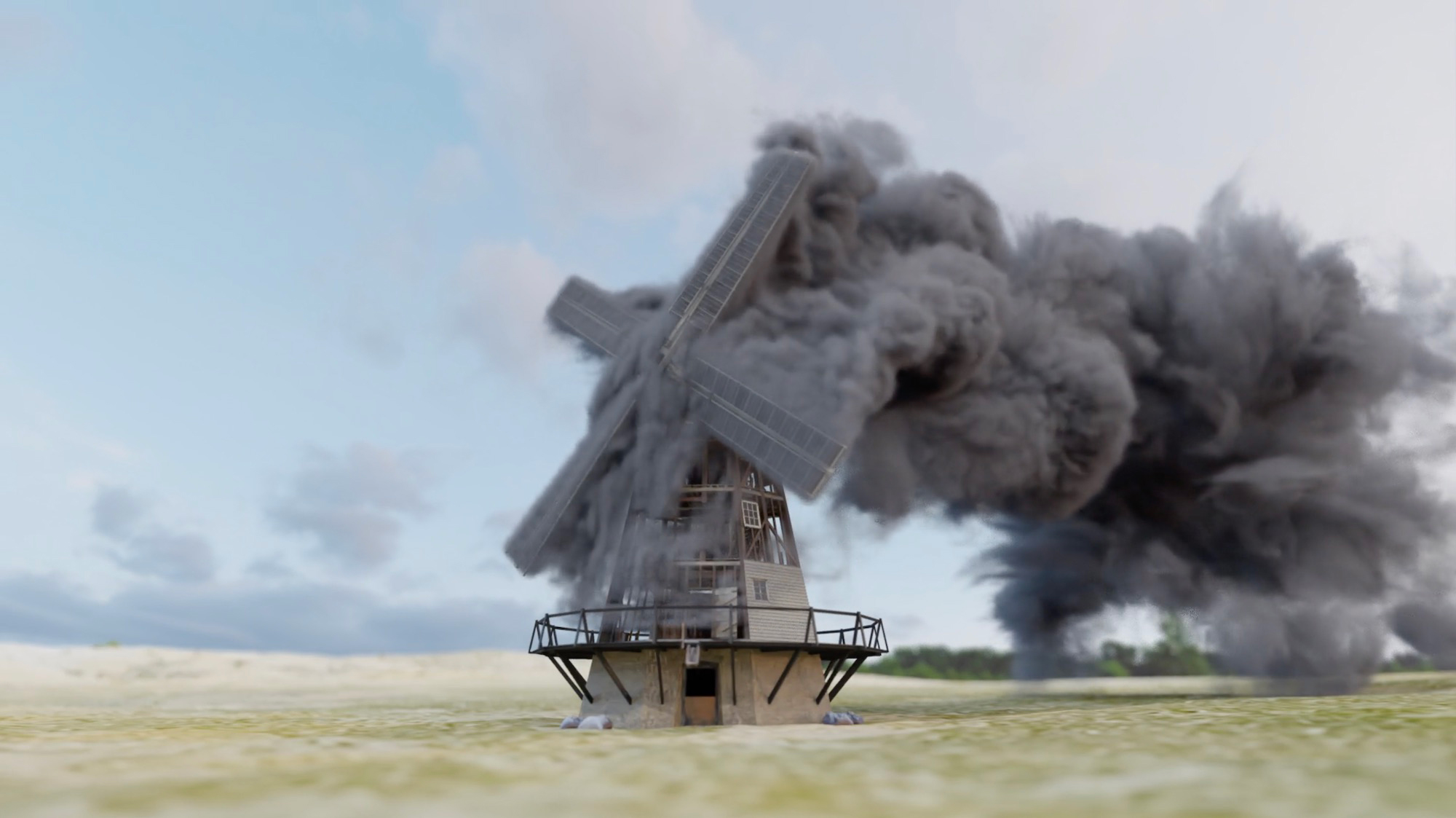
The artist likewise aims for an intermediate zone between naturalness and artificiality in the construction of his moving images. On the surface, the works appear realistic. Mannequins rolling around in response to gravity, impact, and rotational force; shadows reacting to changes in light; waves moving in familiar ways—all encourage viewers to accept what they see as natural without much thought.
Yet what is simultaneously sensed are angles and movements impossible to perceive with the naked eye. No camera or drone appears within the work, yet the images are mechanical from every angle. A camera viewpoint moving farther and farther from a showerhead in the exact opposite direction of falling water, or sequences freely zooming in and out, stopping, then rotating in the opposite direction, belong not to human vision but to a machinic gaze.
The viewer cannot help but perceive this play of ambivalence. Moreover, what stands out most immediately in the encounter with Park’s work is the peculiar materiality of the image. Although hyperrealistic in appearance, the textures of the objects feel too artificial to be mistaken for reality, strongly foregrounding the fact that these are “synthetic” images.
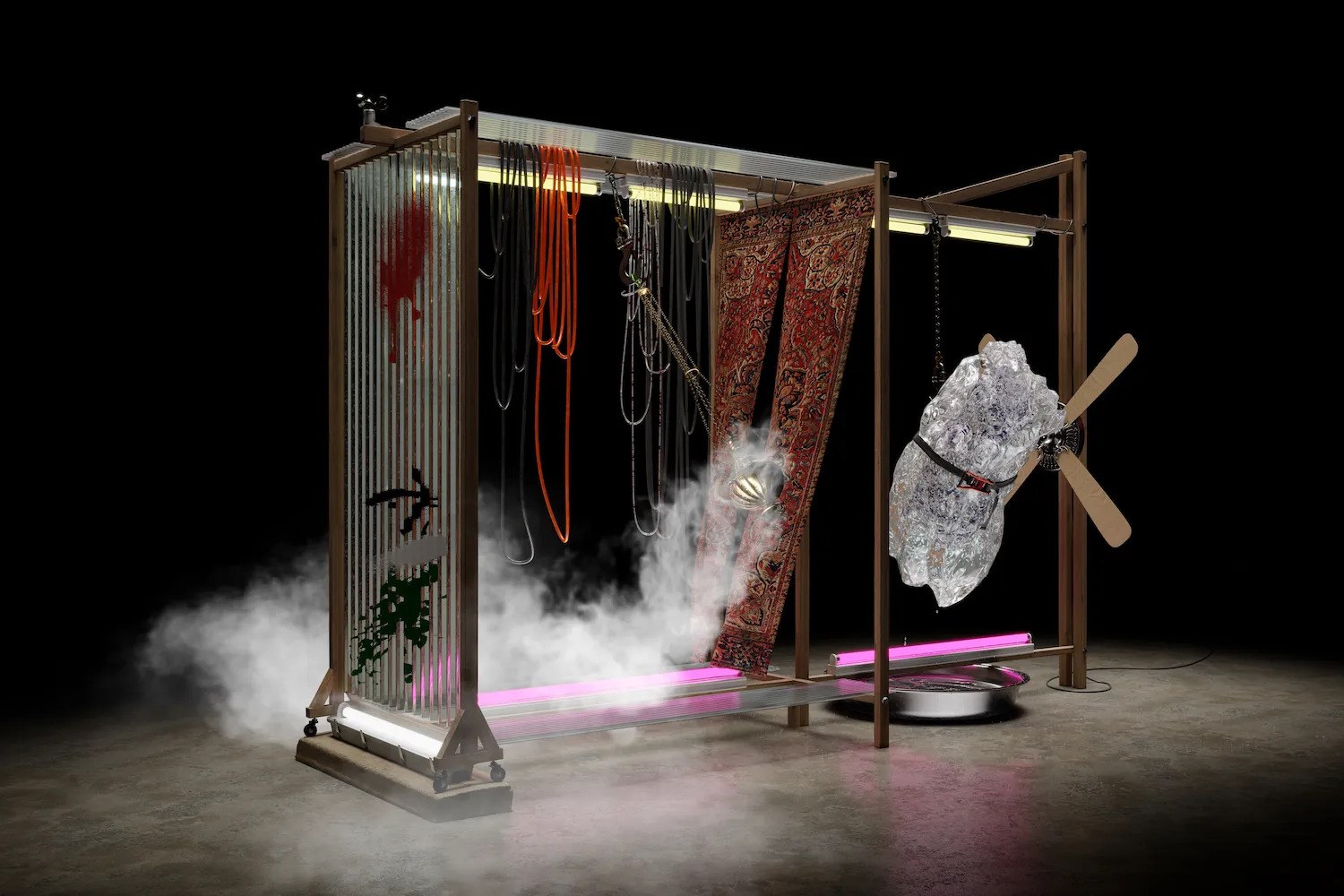
The liquid in Shower Room(2019), viscous and heavy rather than watery, and the solid in Ritual for the Night(2021), which melts transparently yet resembles glass more than ice, embody the emergence of images generated within the abstract space of data, independently of the real. Once severed from nature, an image can no longer be representation no matter how closely it resembles its referent. This is how the contemporary trompe-l’œil becomes at once familiar and strange.
The unreal/realistic images Park creates form an authentic portrait of contemporary life within a new nature generated by numbers. At least half of what we now call nature is a data matrix. The tactile materiality that makes an image appear real is in fact an illusion produced through vision, and in that sense a kind of optical deception.
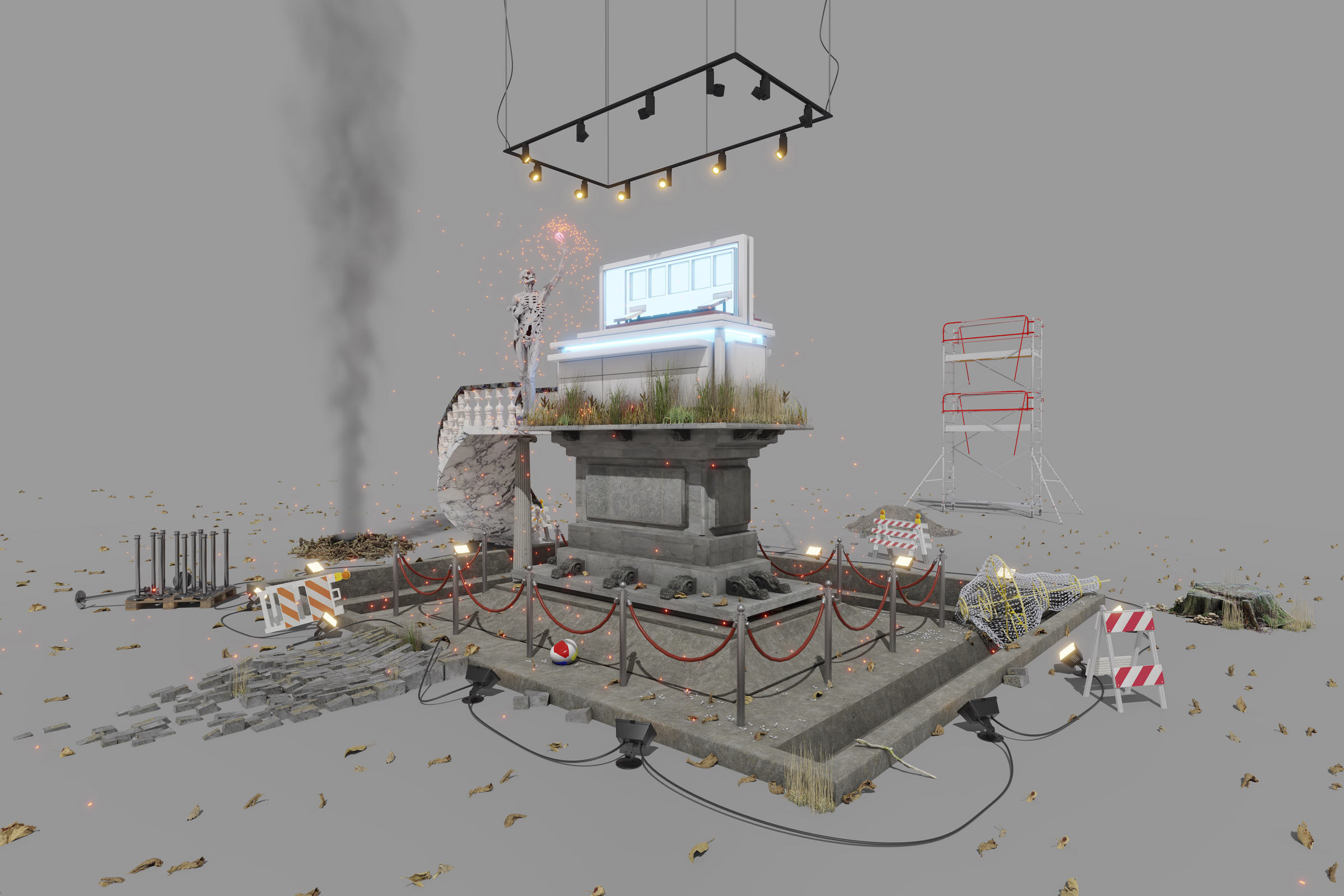
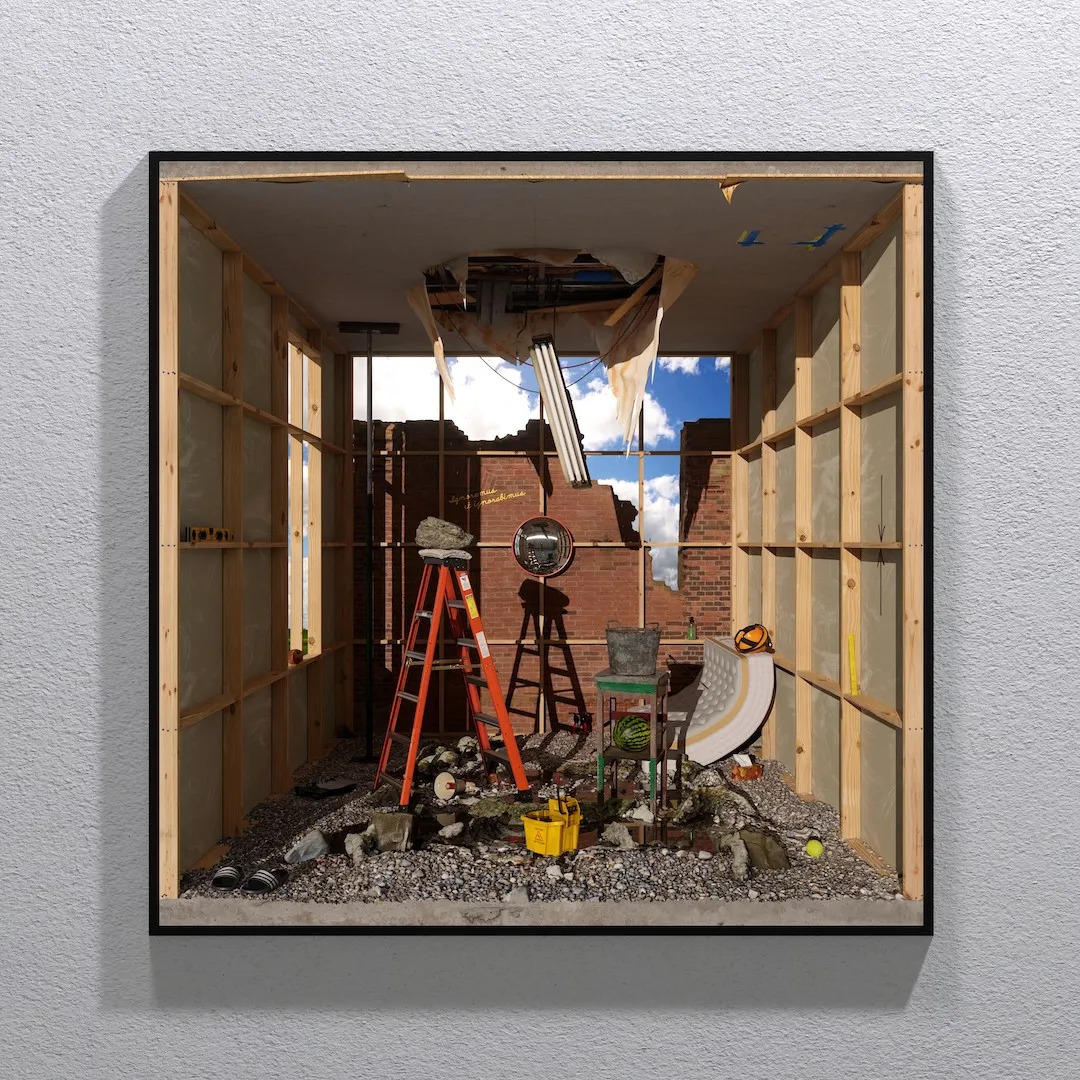
One interesting analogy is that Park’s work recalls, in several respects, the still-life tradition of the Netherlands, where he resides. Like vanitas still lifes, which reached extraordinary heights of artificial likeness through vivid depictions of expensive flowers, tableware, and rare foods while simultaneously exposing the futility of such splendor, Park’s 3D animations possess a hyperrealistic appearance more intense than reality itself.
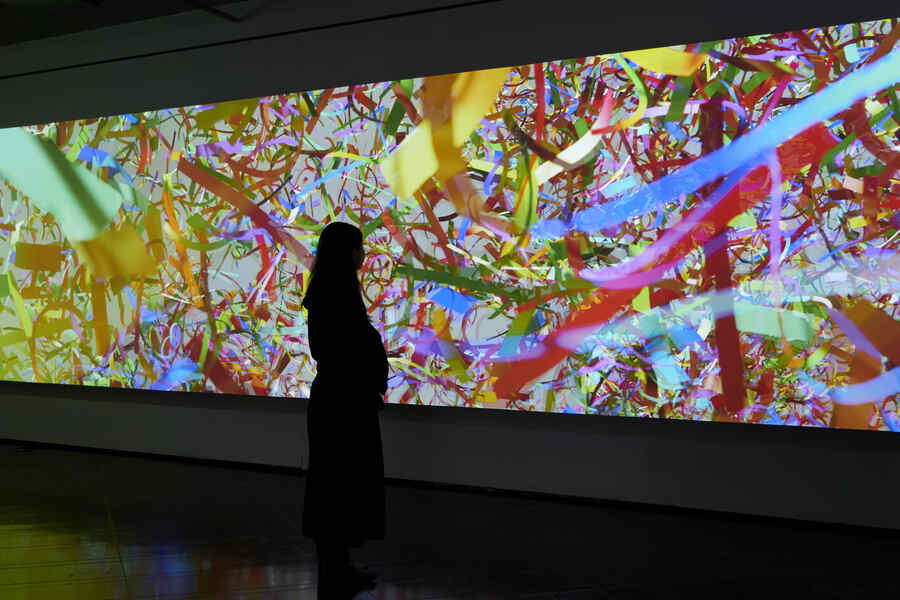
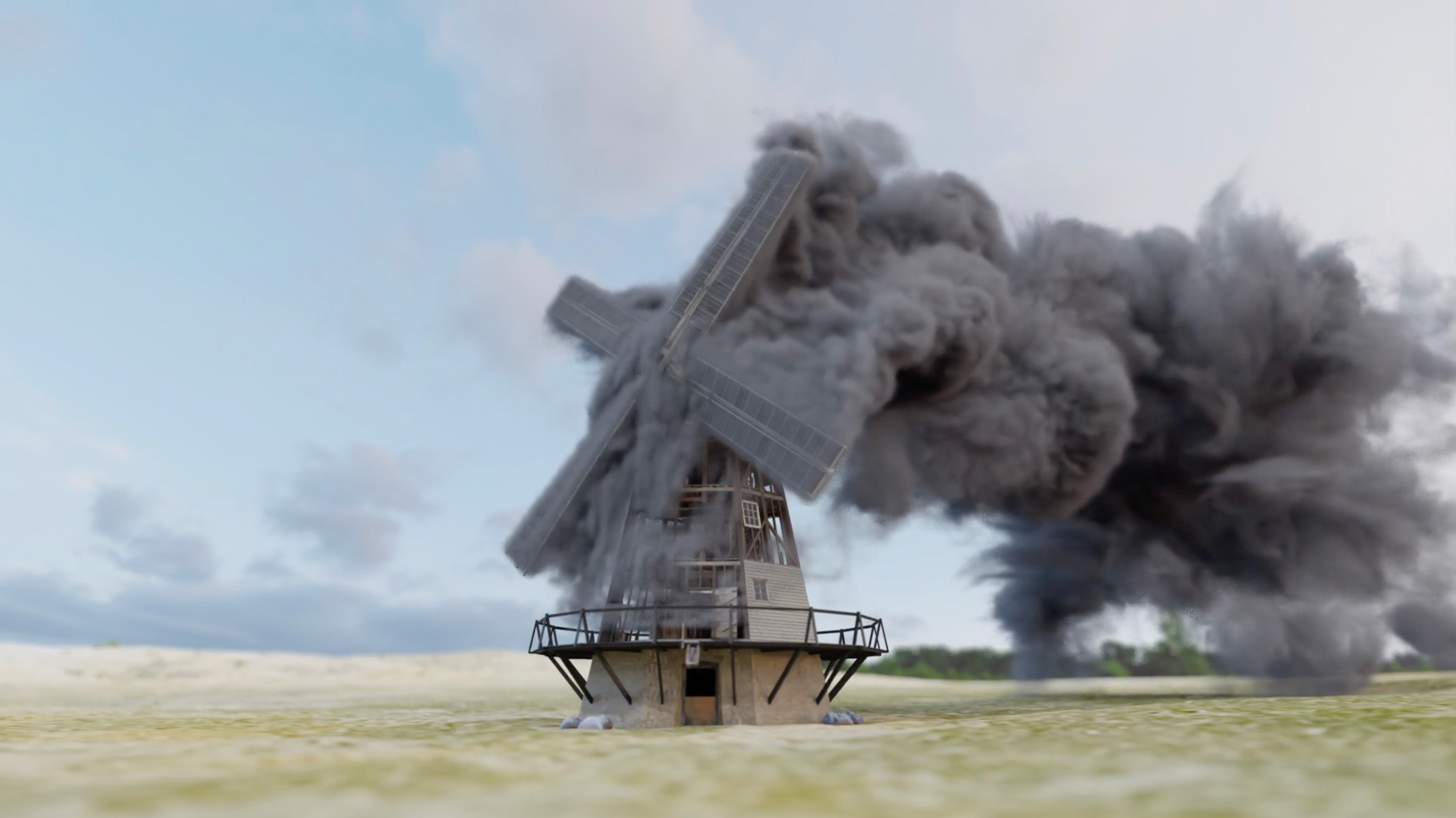
At the same time, they contain allegories of the contradictions of contemporary capitalism: tanks holding radioactive water from the Fukushima nuclear disaster, the bombing of Palestine, plastic panels used in refugee shelters, and paper confetti from large-scale sporting events. Park meticulously sculpts this new reality, in which tools themselves have become nature, using software and a mouse.
A Square within a Square
While Park experiments with the interweaving of virtuality and reality within the image itself, the exhibition 《P Hung a Painting》, curated by Pilkyun Baek, diversifies the platform of exhibition-making and physically blends virtual and real space. The “P” in the title functions as a metaphor for both ourselves and the contemporary media environment, in which we move between online and offline worlds while simultaneously inhabiting multiple parallel realities.
P refers to the object of the exhibition, Painting/Picture; the six exhibition Platforms; the curator as Prosumer, both consumer and producer of commercial technologies; the offline exhibition venue, Paradise Shopping Center; and the temporal condition of the Present, in which non-face-to-face online platforms have become widespread.
Because art traditionally places great weight on materiality, both in the artwork as an object and the exhibition hall as a physical space, online exhibitions have generally been regarded as supplements or temporary alternatives to offline exhibitions even during the COVID-19 pandemic, when remote platforms became unavoidable.
For this reason, constructing an exhibition about virtuality around painting—the most traditional of old media—is unexpected from the outset. The curator uses the mise en abyme, or “picture within a picture,” as the point of contact between painting and virtuality. The hypermediated world in which we use multiple black screens at once—computer monitors, smartphones, tablets, and televisions—and move between numerous windows within a single device while multitasking is effectively a digital version of the “picture within a picture,” composed of frames layered one inside another.
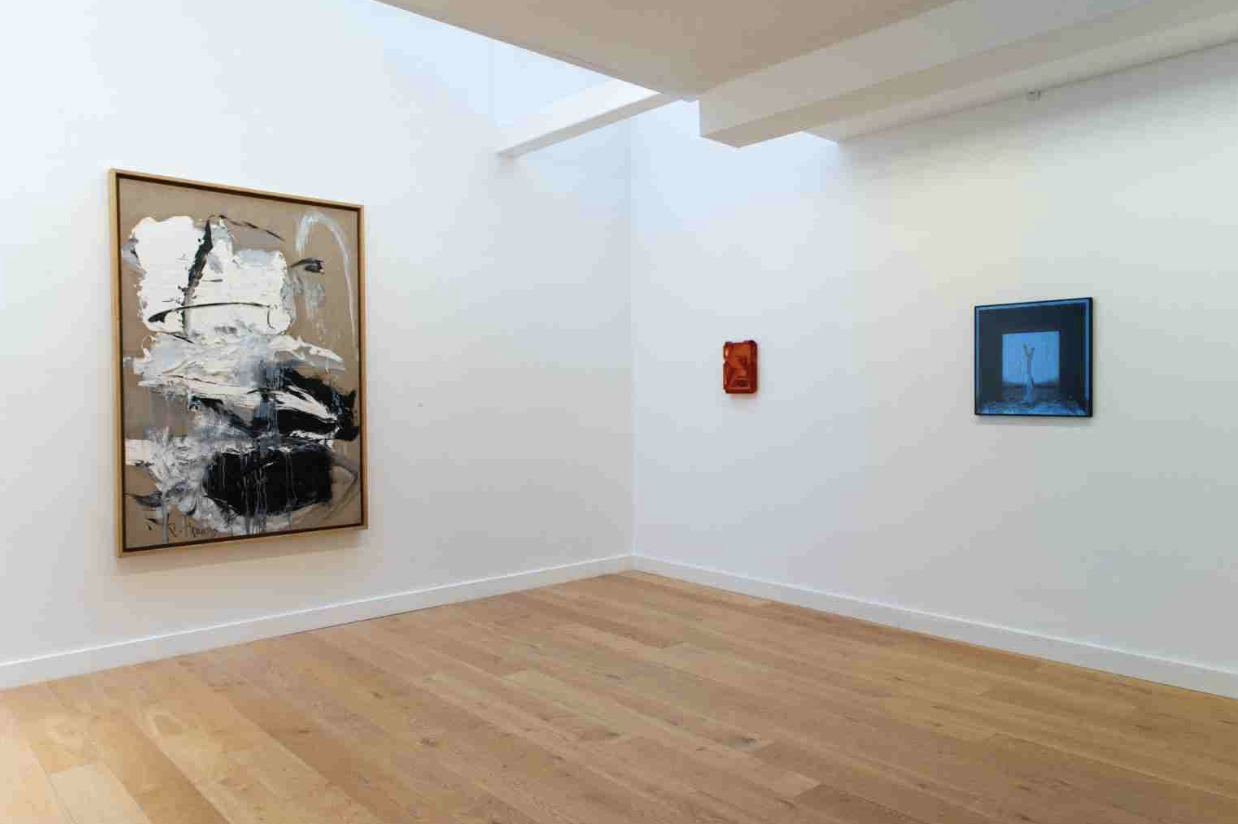
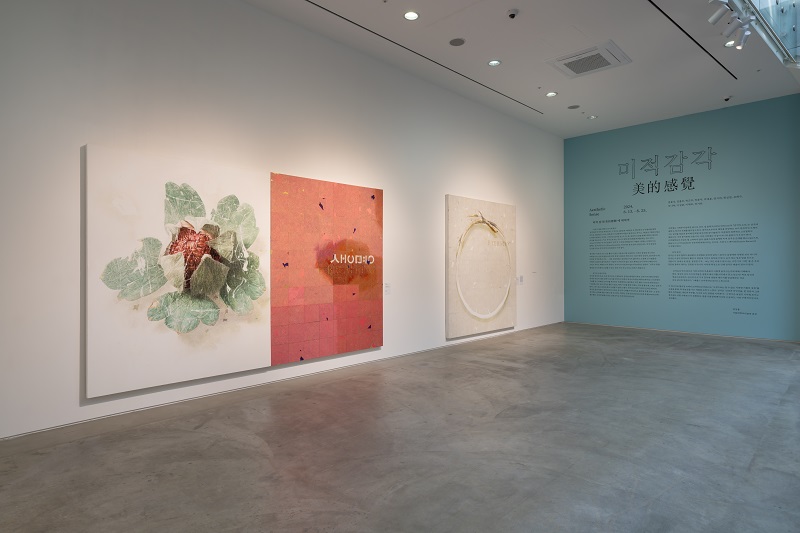
Baek overlaps the media environment, in which numerous devices, images, and platforms coexist, with self-referential meta-painting. Twenty-one paintings spanning generations, careers, techniques, and genres all share the common feature of containing another image within the image. Interestingly, the offline exhibition space emphasizes the physical presence of both viewer and space on one hand, while repeatedly erasing the material reality of the exhibition through its display and viewing methods on the other.
Three lighting devices placed in the exhibition cast viewers’ shadows onto the paintings, reminding them of the bodily presence involved in direct viewing. The placement of works according to physical conditions such as window positions and platform heights likewise reflects an attempt to acknowledge the materiality of the space.
Yet the works bear no captions, meaning that visitors must access Google Drive or Instagram through installed tablets to discover whose works they are viewing. Matching information from the online space with physical objects offline, almost like solving a hidden-picture puzzle, resembles the experience of synchronizing one’s body with a map application.
Moreover, the way completely different paintings are hung in rows at identical heights and intervals without any obvious classification recalls the indiscriminate arrangement of images in Google search results. This nonhierarchical chain of images gives the offline gallery the characteristics of online space.
The offline exhibition is only one among six versions of the exhibition. On Instagram, YouTube, Mmm, ZEPETO, and Matterport, the exhibition changes according to the characteristics of each medium. Instagram shares compressed files and indexes, functioning as a pamphlet for the exhibition. YouTube offers an indirect experience of the performance of a model who encounters the exhibition as the viewer’s avatar.
Mmm allows the scale and position of paintings to be reset according to the proportions of characters, while ZEPETO allows participants to play with the works as components of the space and interact with exhibition elements alongside other users. Matterport provides a 3D-scanned online viewing room based on the physical exhibition space and, like YouTube, functions as another form of documentation.
Photography liberated artworks from uniqueness long ago, yet the physical exhibition space has rarely escaped its one-time nature. In this respect, 《P Hung a Painting》 is a rare and bold attempt to reposition the offline exhibition as simply one among several parallel metaverses. If Park reveals the reciprocal penetration of virtuality and reality, in which each supplements and stands in for the other, Baek realizes through digital platforms a methodology of simulation in which one image continuously transforms into another.
This ambitious curatorial project applies the meta-perspective of standing before a mirror and perceiving both mirror and reflection simultaneously to both the exhibition and the works themselves. It deserves an emphatic “Like.”
1)Hito Steyerl calls this process “objectifiction.” Hito Steyerl, “Ripping Reality: Blind Spots and Wrecked Data in 3D,” in Duty Free Art: Art in the Age of Planetary Civil War, Korean trans. Hyejin Moon and Hongki Kim, Workroom Press, 2021, p. 230.