“In short, the present is already the future.”1
Jaehun Park’s practice is grounded in research. His research moves across history, science, civilization, anthropology, and literary studies, encompassing events that actually occurred, scientific hypotheses, mechanical devices, cultural representations, and numerous other objects and phenomena, large and small, that constitute the world.
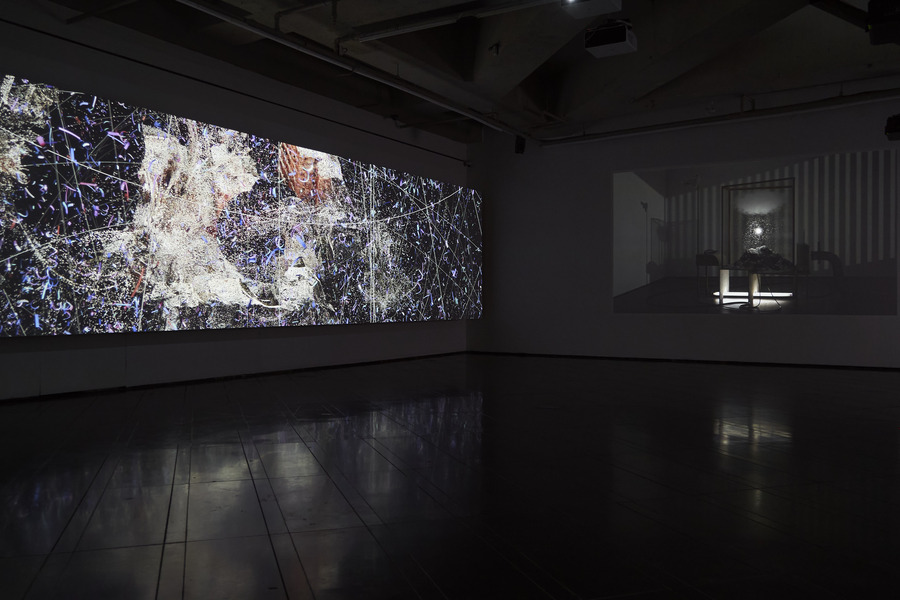
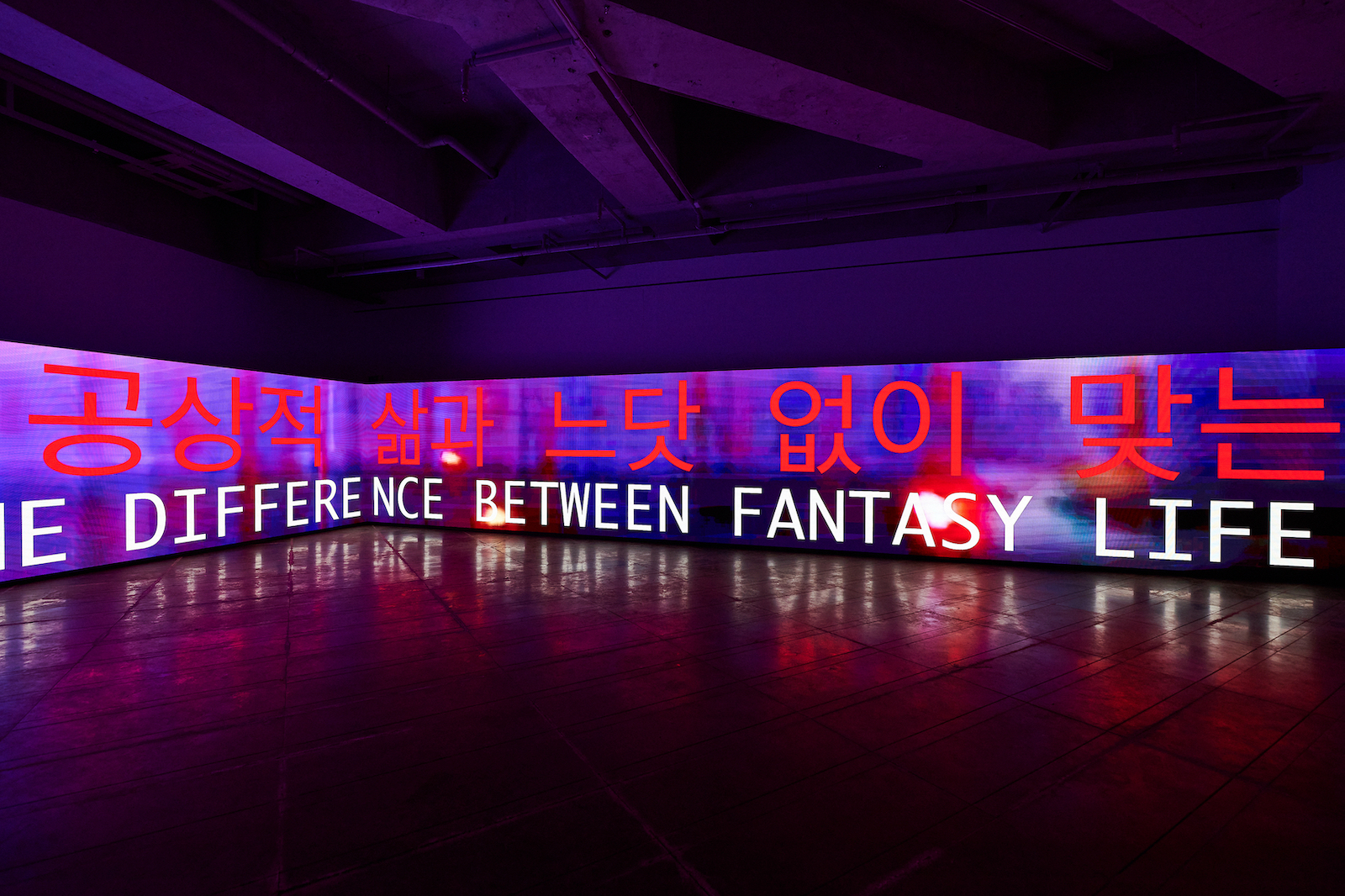
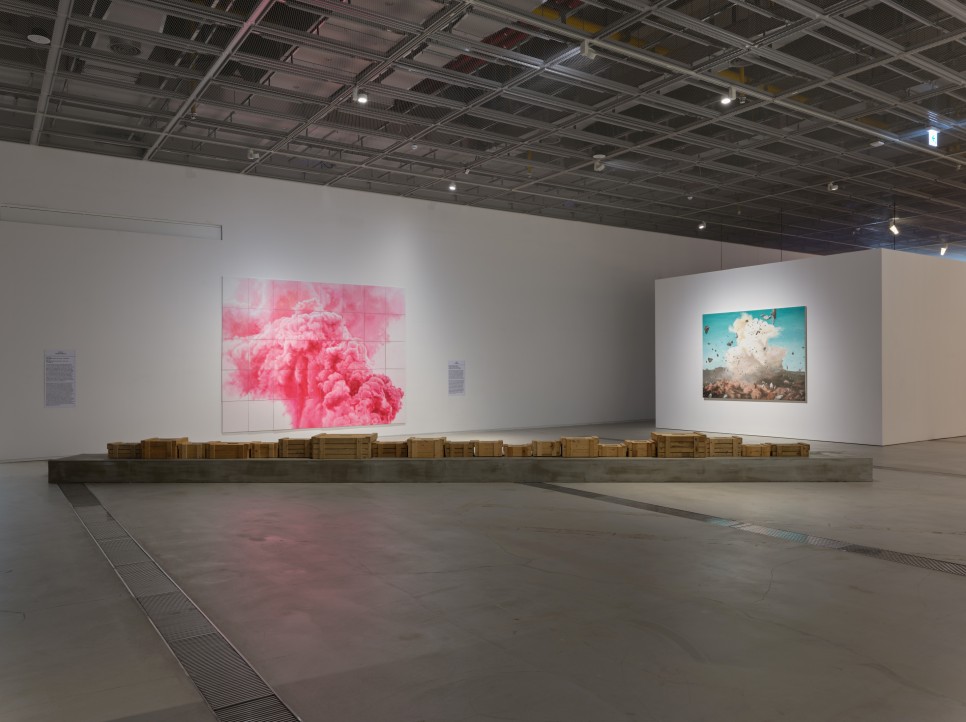
The exhibition 《Real-time Limbo》(Alternative Space LOOP, Seoul, 2021) asks, from multiple perspectives, what has brought about the complex phenomena experienced globally by people today. Above all, the point of departure for the work is Walter Benjamin’s essay “Capitalism as Religion” (1921). In this text, Benjamin draws attention to the relationship between Protestantism and capitalism.
He saw religion as parasitic upon capital, an issue that remains both sensitive and highly significant today. The reason is relatively clear. Looking back at history, religion, in both East and West, often served as a model for the state system.
Yet the persistence of premodern phenomena even after the emergence of modern states founded upon popular sovereignty is something that deserves reconsideration. In South Korea during the Yushin era of the 1970s, for instance, the head of state was elevated to an almost divine status. Even today, scenes in which national leaders are virtually deified are not particularly difficult to encounter.
The desire for success substitutes for an absolute faith that is difficult to overturn. Through research, Park gathers data on signs that represent capital or science and technology transformed into religion. His sources range widely, from natural objects such as primitive stones to news footage, numerous conflicts, advanced mechanical devices, cultural products, remnants of the Cold War, religious relics, hypotheses in physics, and artificial satellites.
These references function as signs representing particular periods and places, and through them Park uses 3D animation to examine how capital, as an ideology constitutive of modernity, has produced such an urgent and deeply rooted form of belief. His data is primarily sourced from open-source material on the internet, and he adds further work to these shared resources to give them greater vitality.
Capturing the Signs of Modernity
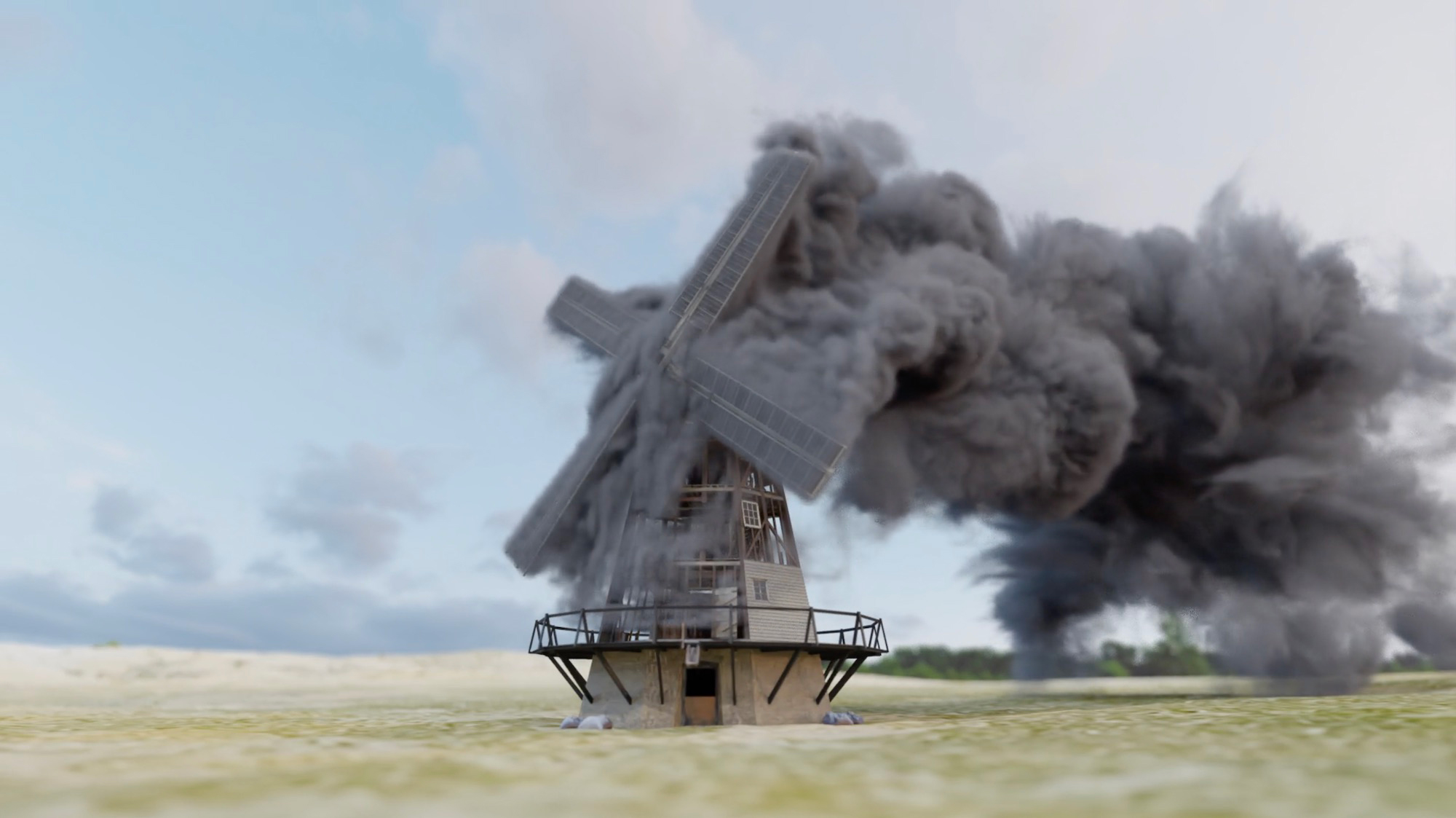
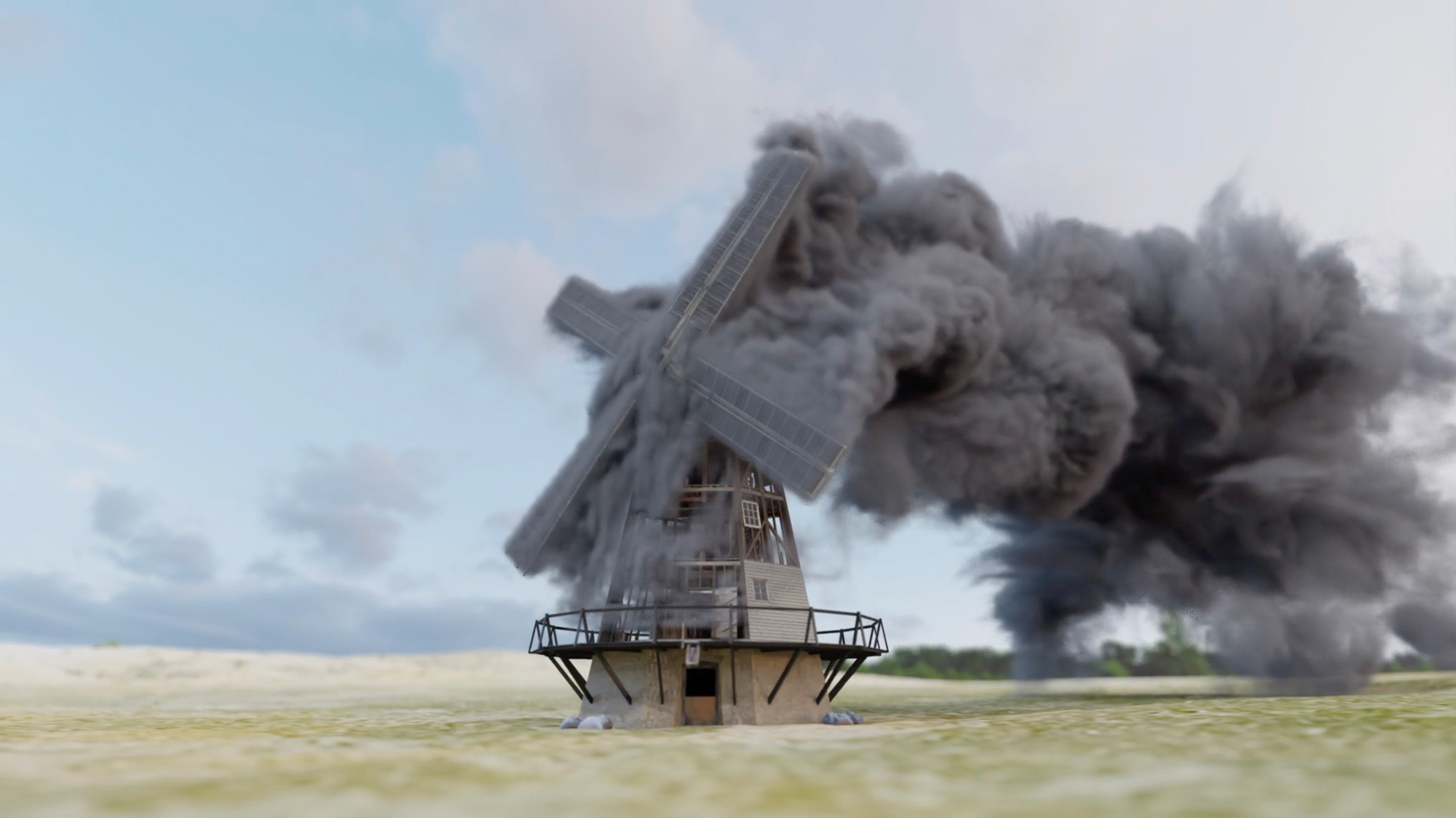
Dark gray smoke rises from a windmill. Overheated Windmill(2020) presents the windmill, a symbol closely associated with the Netherlands, as an emblem of capitalism rotating without rest. The windmill is an entropic device that converts the force of wind into mechanical energy in order to overcome geographic limitations. Since the sixteenth century, the Netherlands has continually reclaimed land, using North Sea winds to pump water out of low-lying areas, and through this process its present territory was gradually formed.
The expansion of Dutch territory was an urgent national project. As is well known, the Netherlands is also considered the first country to establish the foundations of a modern capitalist economy through the creation of the Dutch East India Company. Yet this history is shadowed by colonial domination, and in 2020 the Dutch king issued an apology to Indonesia for the country’s colonial past.
Through the motif of the windmill, Park touches on multiple dimensions of modernity. By entwining territorialization through land reclamation, the prototype of a capitalism based not on labor but on stocks, colonialism and decolonization, and transnationalism, he reveals the cultural-studies foundation of his practice.
On the Boundary(2020) unfolds past and near-future scenes from the moment when the leaders of North and South Korea met at the boundary marker in Panmunjom. Across the Korean Peninsula, divided by ideological conflict, all manner of objects—from traces of war to remnants of state violence—rush past like marks of trauma. The history of violence is also the history of humanity, an aspect of human nature that cannot be concealed.
World history narrates the development of humankind as an uninterrupted movement toward progress, attempting to fix historical evolution as though it were a law of nature. Yet the ethical packaging of increasingly evolved forms of violence merely proves that humanity may already have arrived at an impasse.
Global culture now wages wars without weapons inside digital networks. Constantly renewed view counts, subscriber numbers, visitor figures, and real-time global rankings produce invisible forms of violence. The more views a video of a disaster receives, for example, the more its violence risks being reduced to spectacle.
Devices for Consumption
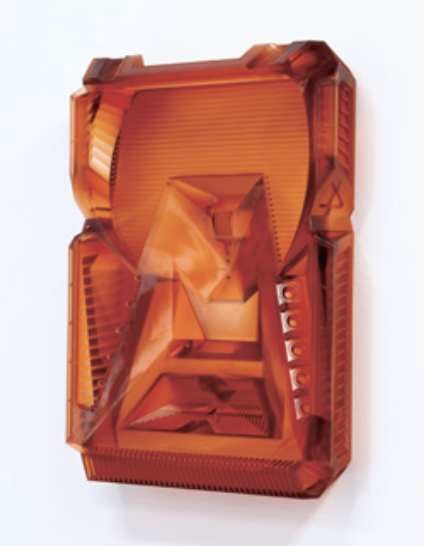
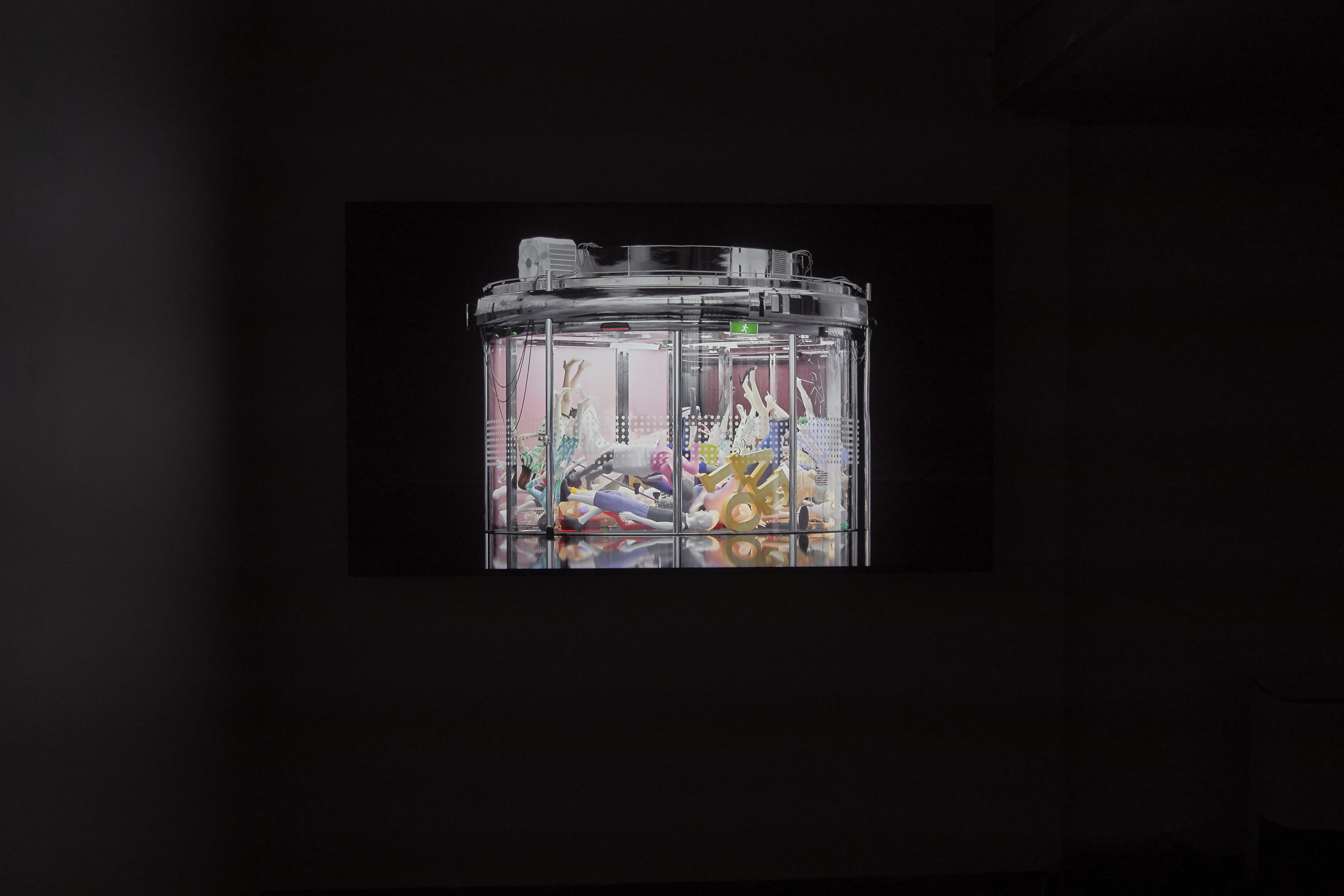
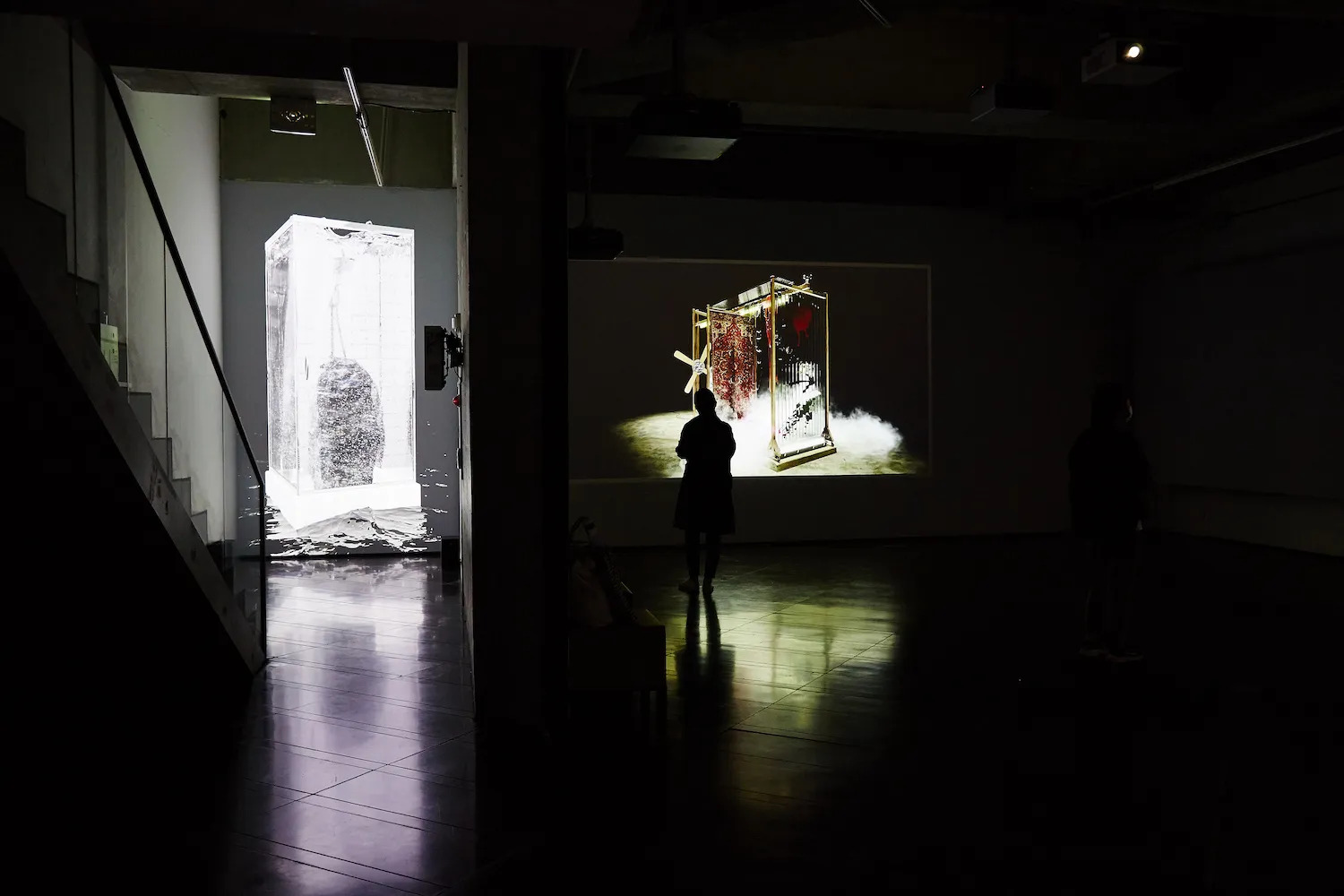
Revolving Door(2019) and Grand Altar(2020) are works that metonymically connect capital and religion. Revolving Door was produced as a 3D model based on the revolving door of De Bijenkorf department store in The Hague, the Netherlands. This device, consisting of transparent circular doors divided into compartments that regulate the passage of people, is said to have been invented in 1888.
The late nineteenth century was a period in which public facilities rooted in industrialization were being built throughout cities. Park’s way of observing the world recalls Benjamin. Rather than stopping at the somewhat conventional use of visual signs, he precisely measures actual objects, generating not only realism but also multiple layers of cultural-anthropological meaning.
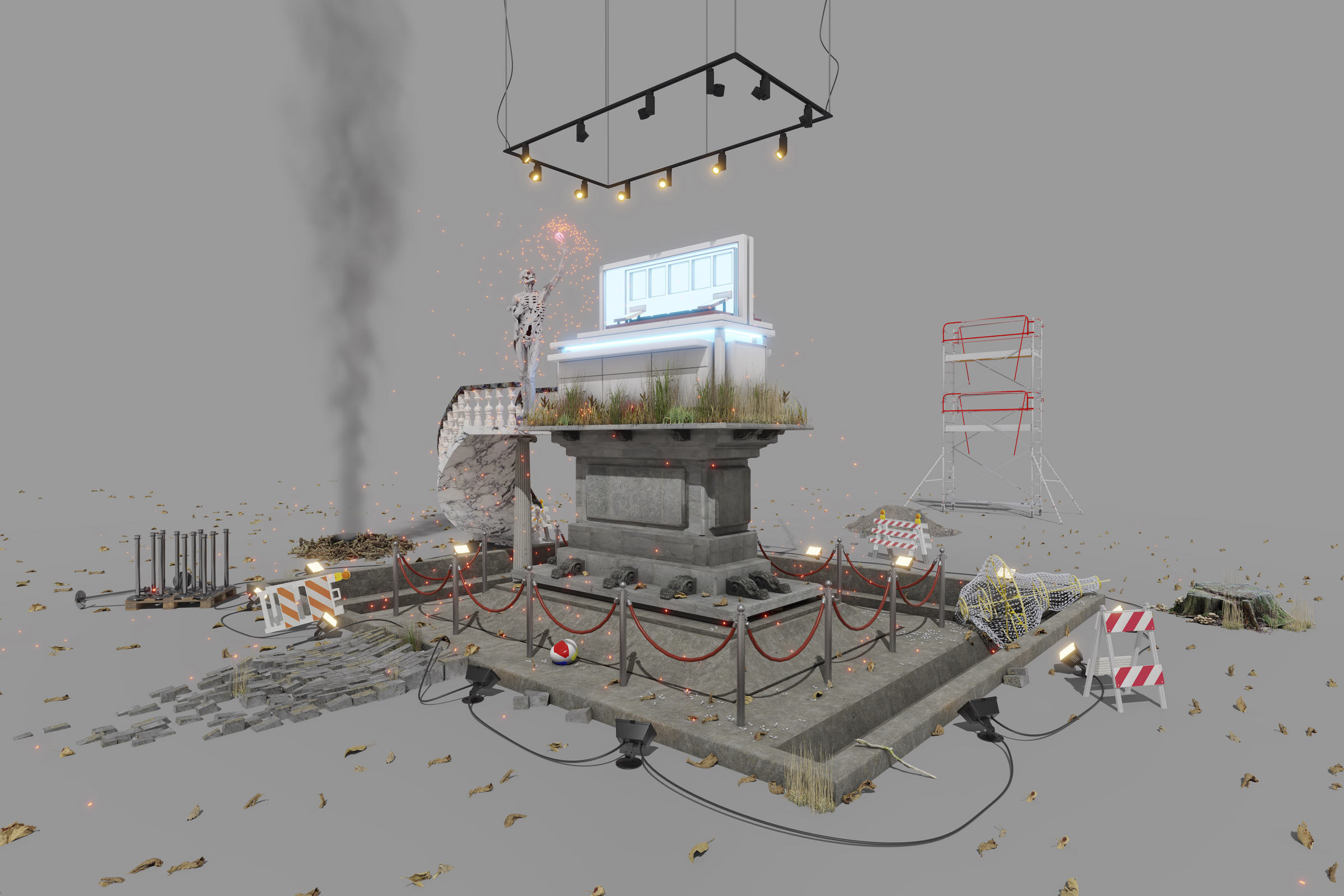
The revolving door is filled with mannequins, substitutes modeled after human beings. A structure that should normally function as a passageway instead traps the mannequins like a cliché from a horror film. Here, Park reenacts the violence of capitalism as a transparent and fashionable scene. The revolving door thus becomes an overheated grinder. Grand Altar, meanwhile, is a 3D-modeled work based on measurements of an Estée Lauder display counter. The department store resembles a cathedral of commodities representing modernity.
Shopping may be understood as one of the most fervent modes of faith, and capital as a religion driven by an inexhaustible passion for consumption. Park transforms the display case, a quintessential apparatus of consumerism, into an altar and places beside it a figure based on the marble transi sculpture Transi de René de Chalon(1547) by Ligier Richier, a follower of Michelangelo, depicting a decaying corpse. Sparks of unknown origin fly from the altar; branches burn beside it, and the surrounding environment appears as disorderly as a construction site.
Leos Carax’s film Holy Motors(2012), an homage to cinema, asks how the film industry was once able to encounter the spirit. The “holy motor” is both a metaphor for cinema and an implication of the end of the internal-combustion-engine era. It also suggests the transition toward a digital age in which filming no longer requires a traditional camera, while expressing a kind of nostalgia for film cameras.
The film has an autobiographical quality, presenting multiple forms of cinematic life through Carax’s cinematic persona, Denis Lavant. Lavant plays both a successful CEO and a performer endlessly transforming into new characters.
At someone else’s command, he spends the day repeatedly becoming a beggar, monster, assassin, green-screen actor, and other figures. At the center of this allegorical trajectory across film history appears the interior of La Samaritaine, France’s first department store. Opened in 1870, it was a place where the most luxurious and expensive goods of the era were sold.
Commodities functioned as excellent medals standing in for social status, at a time when photography and cinema were beginning to infiltrate daily life. Photography was a medium that revealed the world anew, while cinema appeared as a magical phantasmagoria reproducing reality as it was. Carax has a fondness for anagrams.
In the final scene of Holy Motors, when the light of the letter “o” goes out, “Holy Motors” becomes “Holy Motrs,” which can be rearranged into “Holy Morts,” or “holy dead.” This recalls All Saints’ Day. Although it is now more commonly associated with Halloween, one account suggests that frightening costumes developed as a way of protecting the living body from resurrected spirits.2 Holy Motors asks whether we are witnessing the resurrection of cinema or an era after cinema’s death.
At the film’s conclusion, a limousine garage appears. The limousines are lined up, the lights go out, and silence descends. After a brief pause, the headlights switch on and the limousines begin speaking among themselves. Though this may look like a surrealistic expression, cars today are no longer merely machines. With artificial intelligence installed, they increasingly resemble moving computers capable of communicating with people and other objects. How long, then, can the boundary between nature and the artificial remain intact?
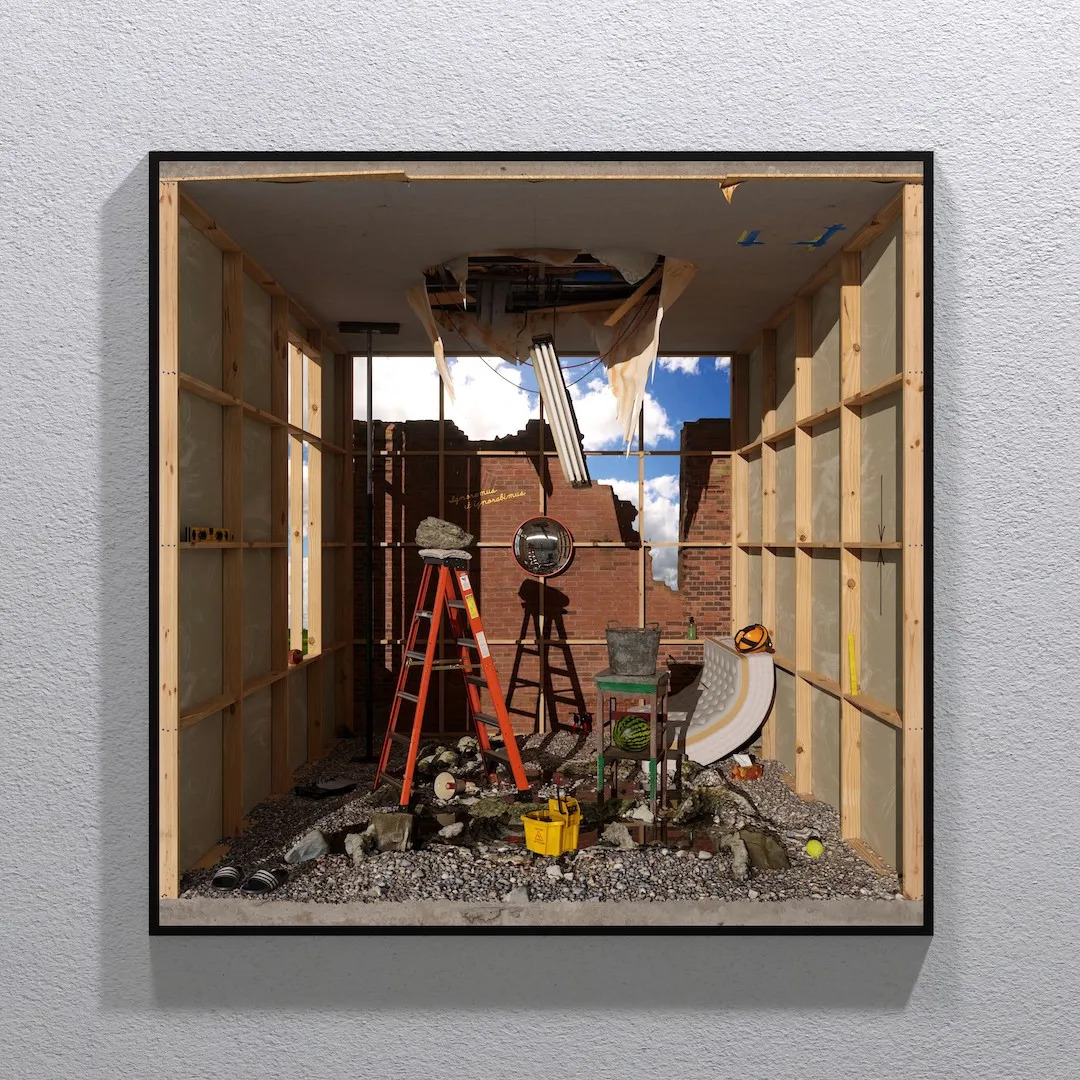
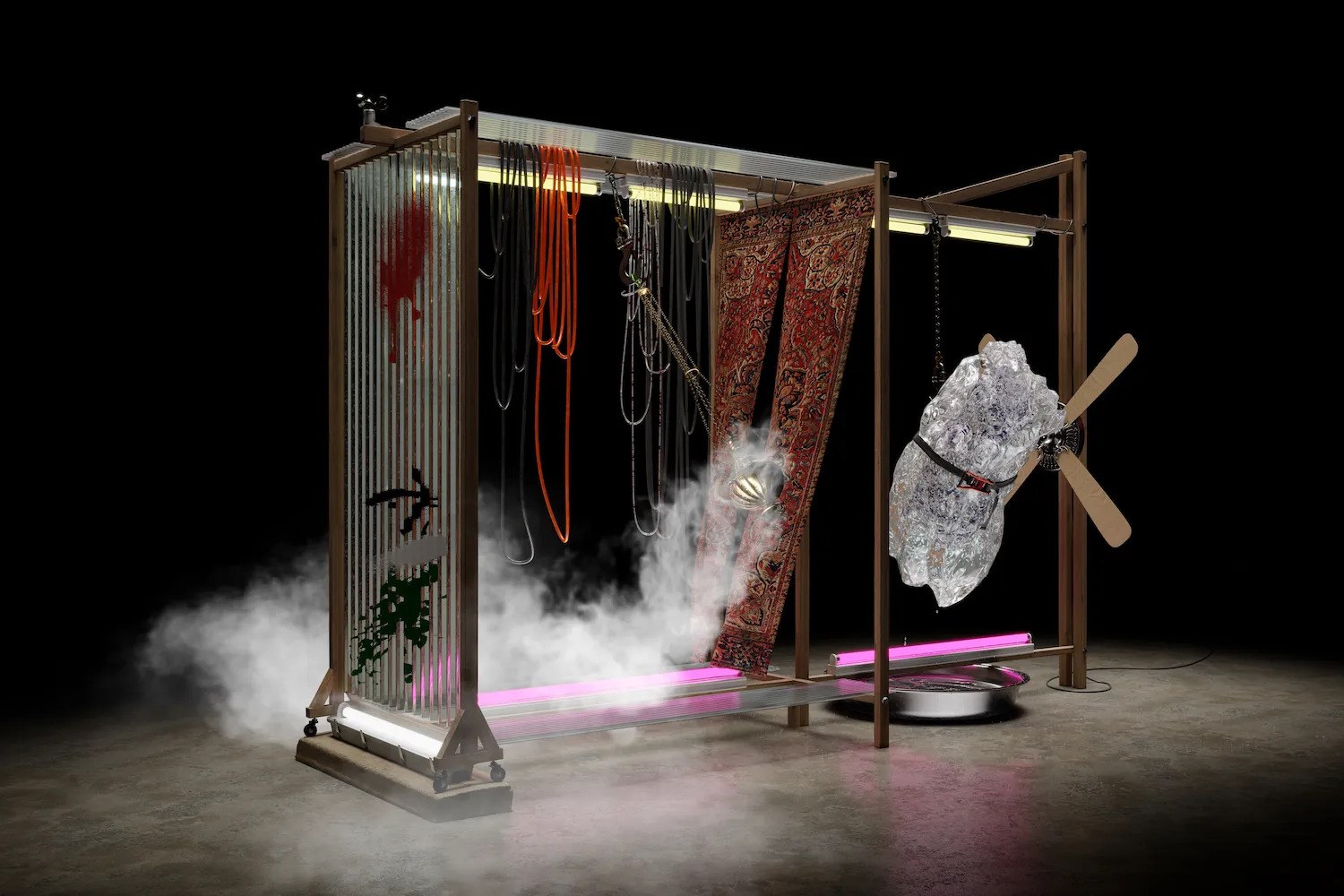
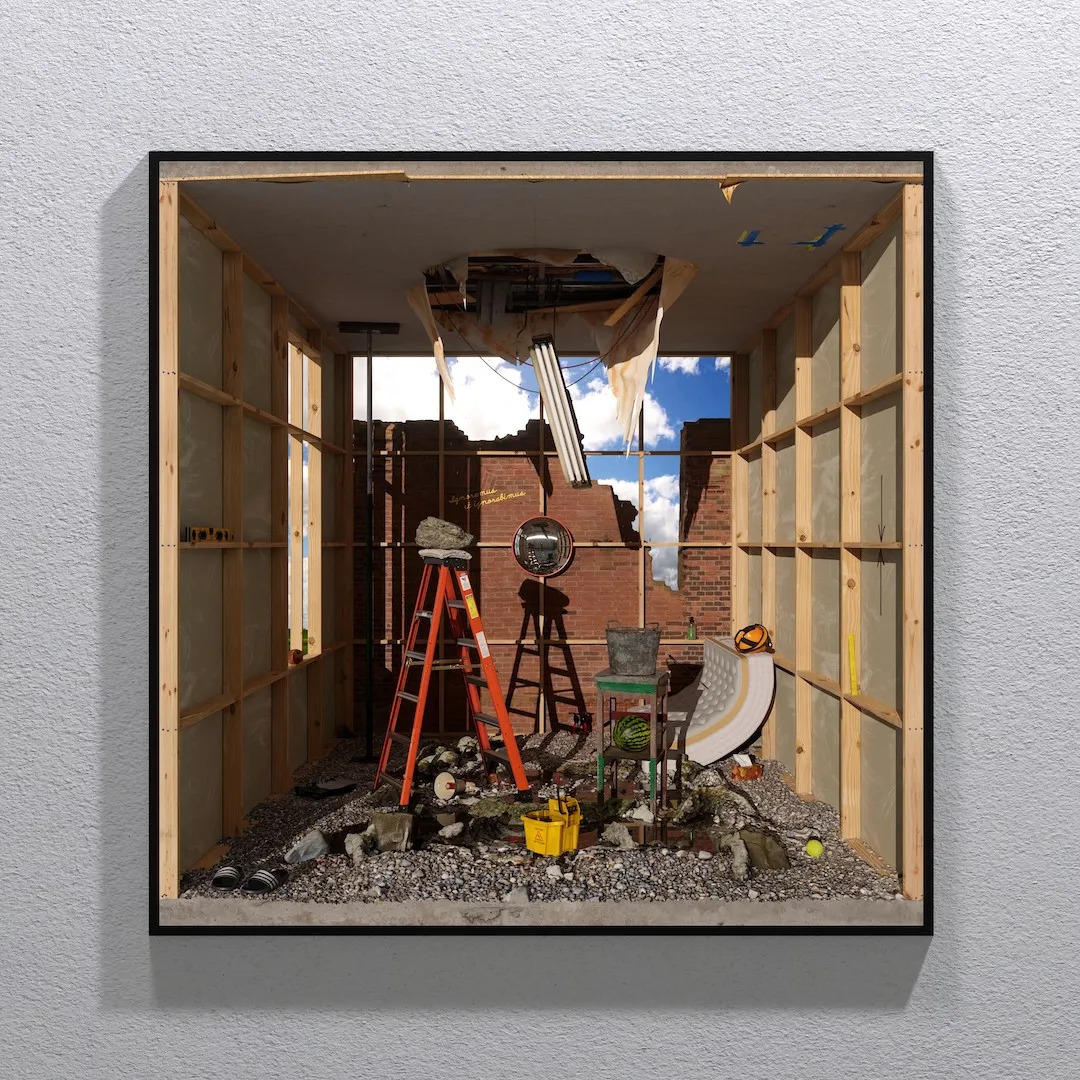
Captured Nature(2021) recalls René Magritte’s surrealist paintings. Around a cube containing captured clouds, day and night, temperature, and weather repeatedly change. When temperature-control technologies were invented during the development of New York, buildings could be constructed without regard for climatic conditions. One natural consequence was that working conditions no longer needed to change even in extreme summer heat.
Perspective of the Virtual World
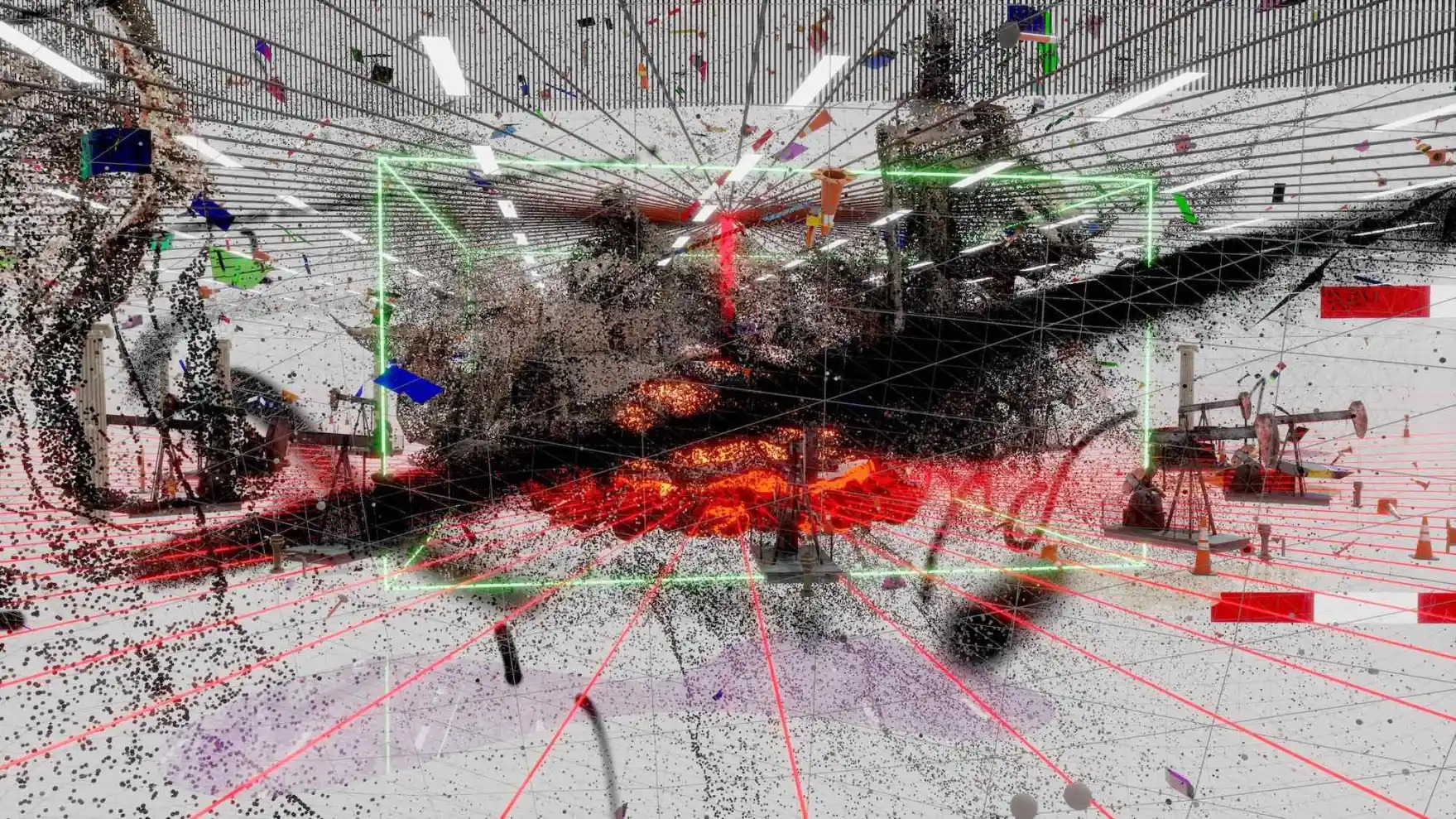
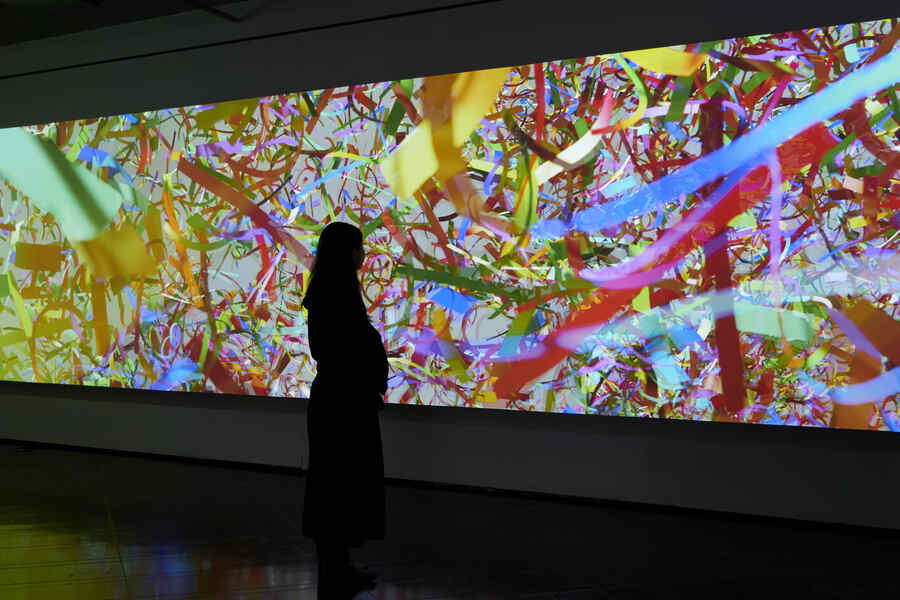
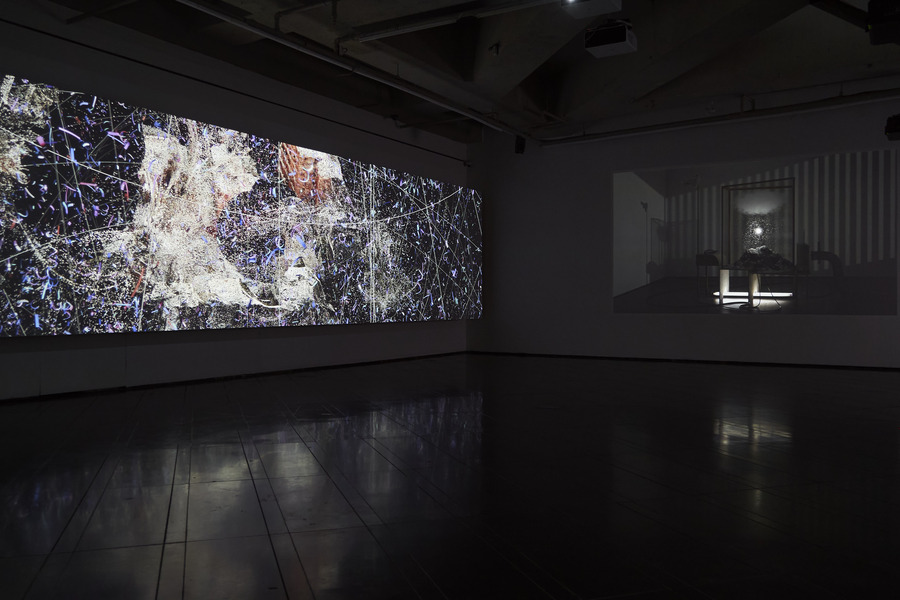
Event Horizon(2021) is a video work composed of five chapters. Beginning with questions about the origins of humanity, it moves through an imagined future of Fukushima, simulations of actual war, and finally beyond an artificial realm produced through capital and science, where fireworks erupt.
Park retrieves scans of real stones lying dormant in the open-source archive of a geological research center and places them in a newly constructed virtual space. The stones are not the only silent things. A scene imagining the near future based on location data for contaminated-water tanks visible in satellite imagery of the Fukushima nuclear power plant appears almost like a dialectic between nature and civilization.
Contemporary warfare is carried out through virtual space. Park reconstructs bombing sites in Aleppo, Syria, and Palestine using photogrammetry, then converts these scenes into the movement of fine particles through point clouds. Cell-like particles, spacecraft-like objects, and reconstructions of bombing sites intersect, repeatedly generating and dissolving devices and forms, past and present, virtuality and reality.
The paper confetti cannon that closes the work is traditionally used as a stage device signifying victory. Park sees this mechanism, which amplifies the joy of triumph, as a device that produces useless waste. Yet humanity has always devised rituals for transitional moments involving life and death, joy and sorrow.
Ritual gives form to processes in which life and death, spirit and matter intersect. Park seems to view critically the mechanisms that demand ever greater stimulation simply to produce further stimulation. This raises the question: in an age in which ritual has disappeared, what might take its place?
Through meticulous research, Jaehun Park avoids blindly criticizing reality. Instead, using clues and references, he produces 3D animations that examine expanded capitalism and the unrestrained ideology of neoliberal economics. The absurd relationship between religion and capital is already a familiar subject, but Park revisits this old question through highly specific clues, precise measurements, and digital technologies, repeatedly asking what the essence of life might be.
Few people today are unaware that modern religions deeply embedded in everyday reality often follow the logic of capitalism. The gap between religious faith and ordinary life frequently becomes a source of satire or leads to the recognition that human beings are inevitably contradictory.
The birth of modernity may represent the beginning of a new order, but it is also a period in which stable outlines and arrangements of life collapse. Some scholars understand the present as the end of a long modernity, while others see it as the beginning of a world beyond modernity. Park’s perspective, developed from Walter Benjamin and layering futuristic time with ancient time, appears to form part of his process of constructing his own episteme.
Episteme, a concept introduced by Michel Foucault, refers to a mode of knowledge through which a particular moment in the formation of a society, culture, or civilization becomes intelligible. Park’s work should therefore be understood as a practice of knowledge that crosses and connects history, philosophy, civilization, and cultural difference in order to consider how the world is constituted and how its absurd realities might be understood.
1.Arif Dirlik, Global Modernity, Ecolivres, 2016, p. 14.
2.Jean-Marc Lalanne, “Holy Motors: conquérant et inventif, un film génial,” Les Inrockuptibles, July 3, 2012. Accessed November 6, 2021.