Ⅰ. Face
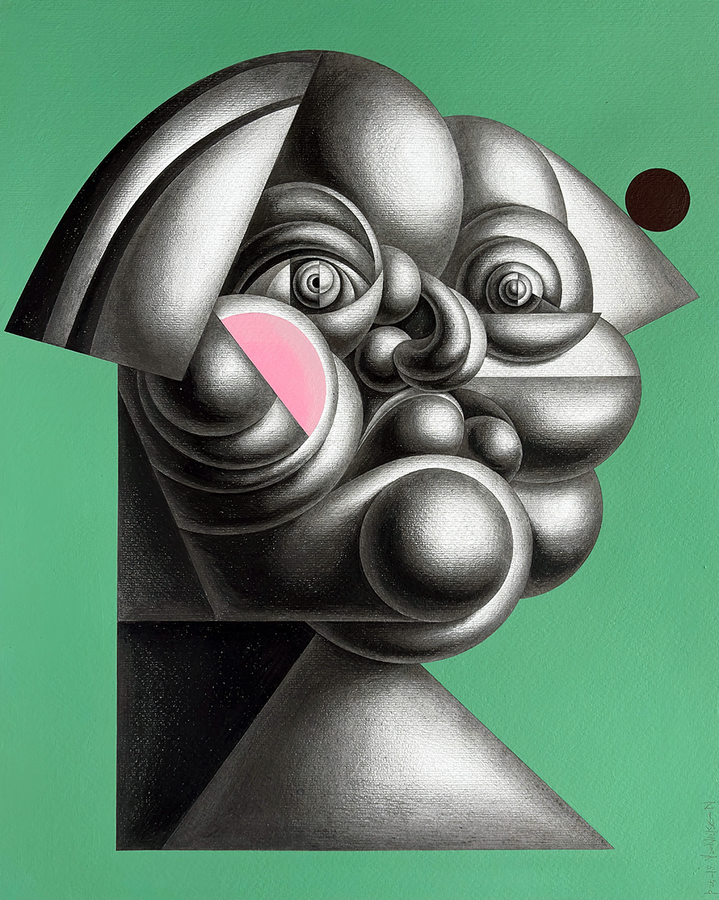
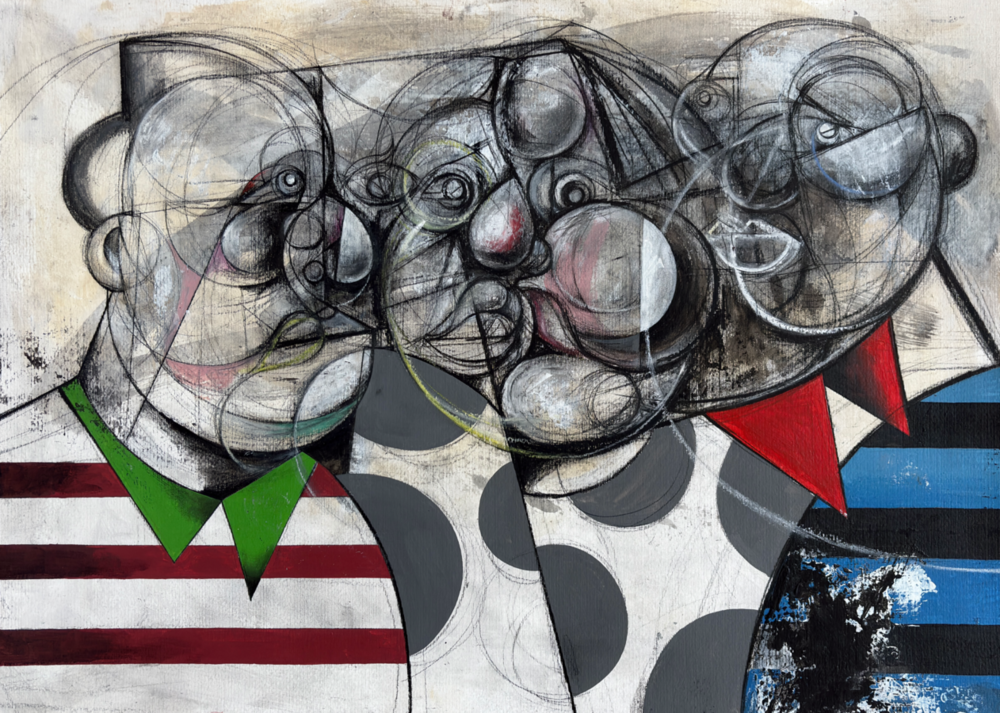
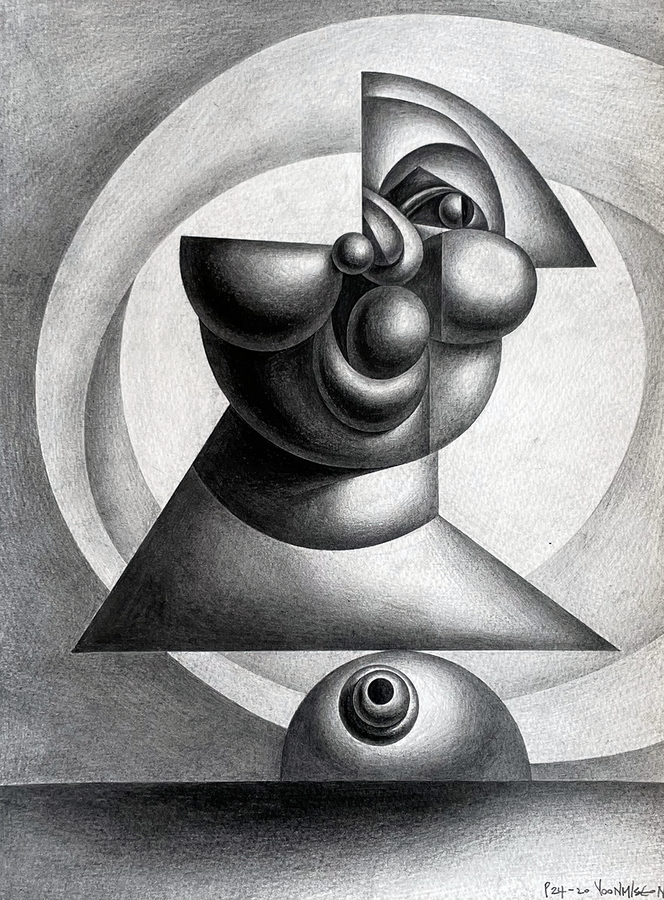
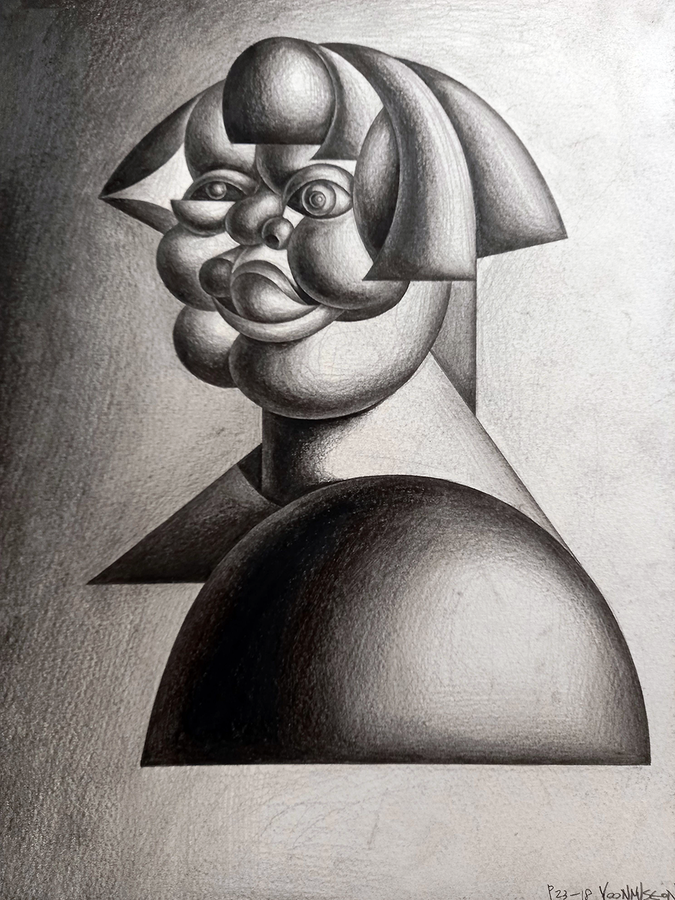
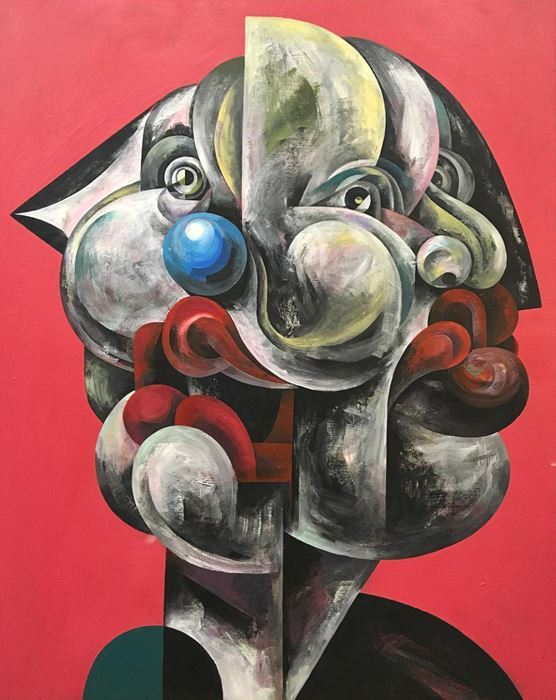
I do not know what to call this face. Composed of a dozen or so geometric forms, it might at first appear to be a portrait influenced by Cubism, yet there is an elusive quality embedded in its pictorial style that resists such a definitive reading. Even the number of shapes, which at first seems roughly countable, becomes difficult to determine precisely because of the ways they overlap and intertwine.
I therefore find myself attributing a vaguely anxious, almost personal quality to the divided planes that constitute the face and to the form that emerges as those planes swell into skin, loosely attaching themselves like awkward lumps. It does not simply “appear” differently according to several possible directions of view, from one side or another; rather, it seems to be actively “making” its own facial impression and expression, distorting its muscles, dividing its features, and fitting its bones together.
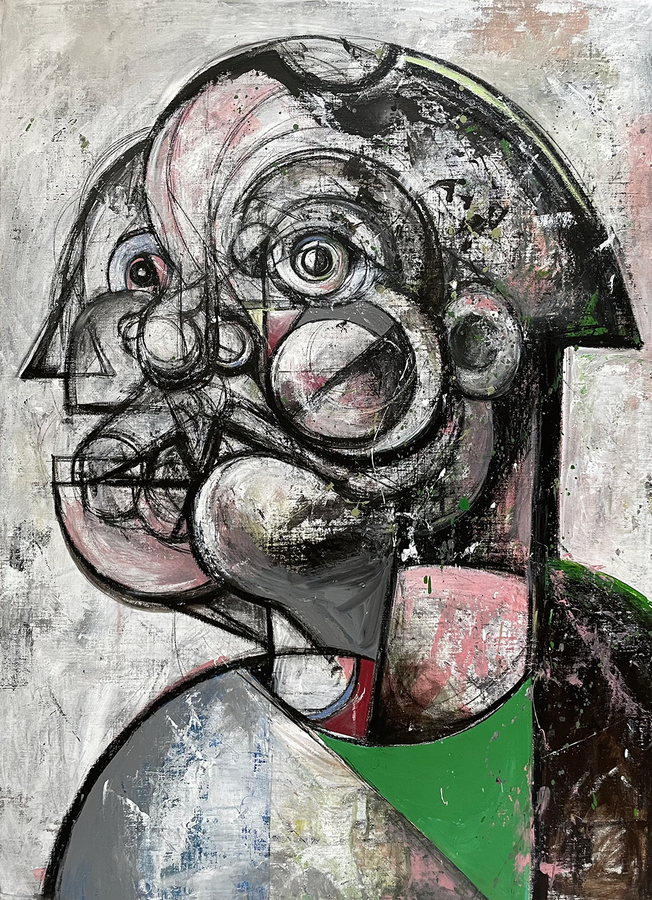
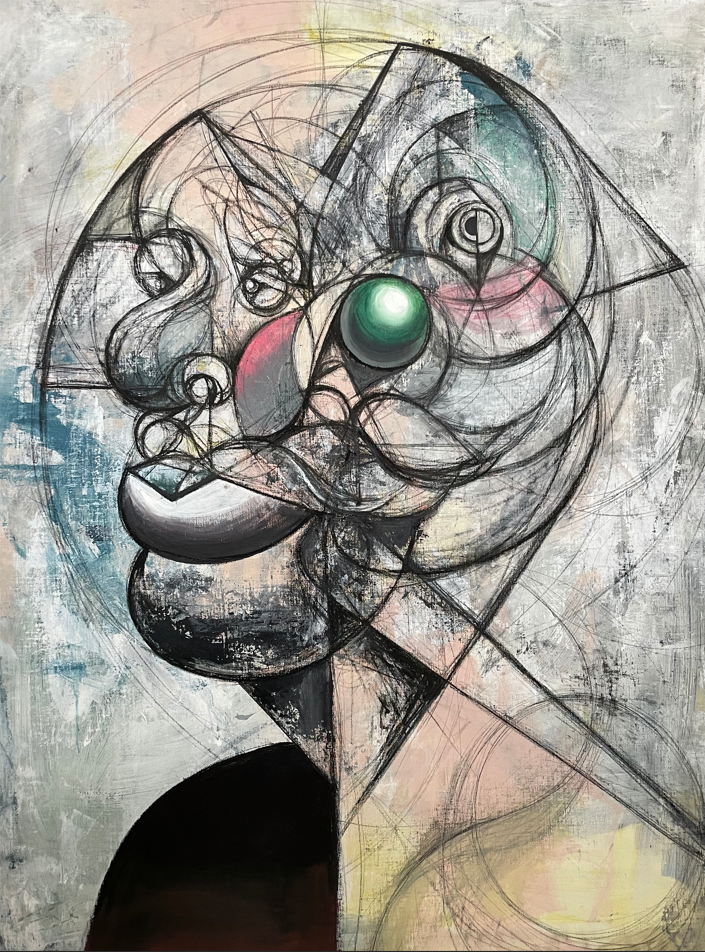
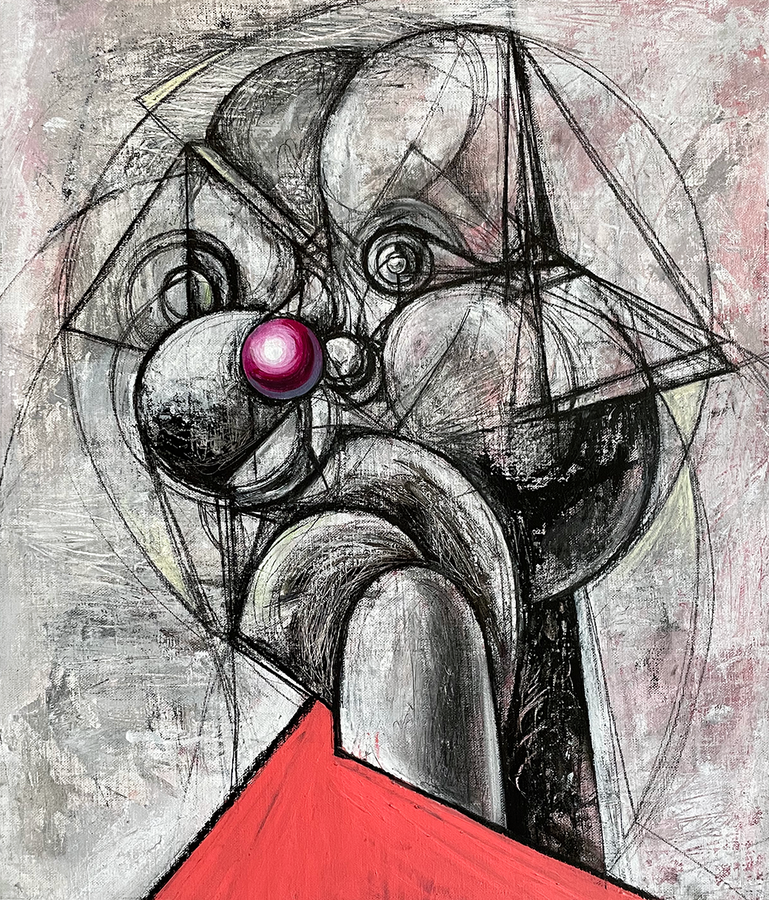
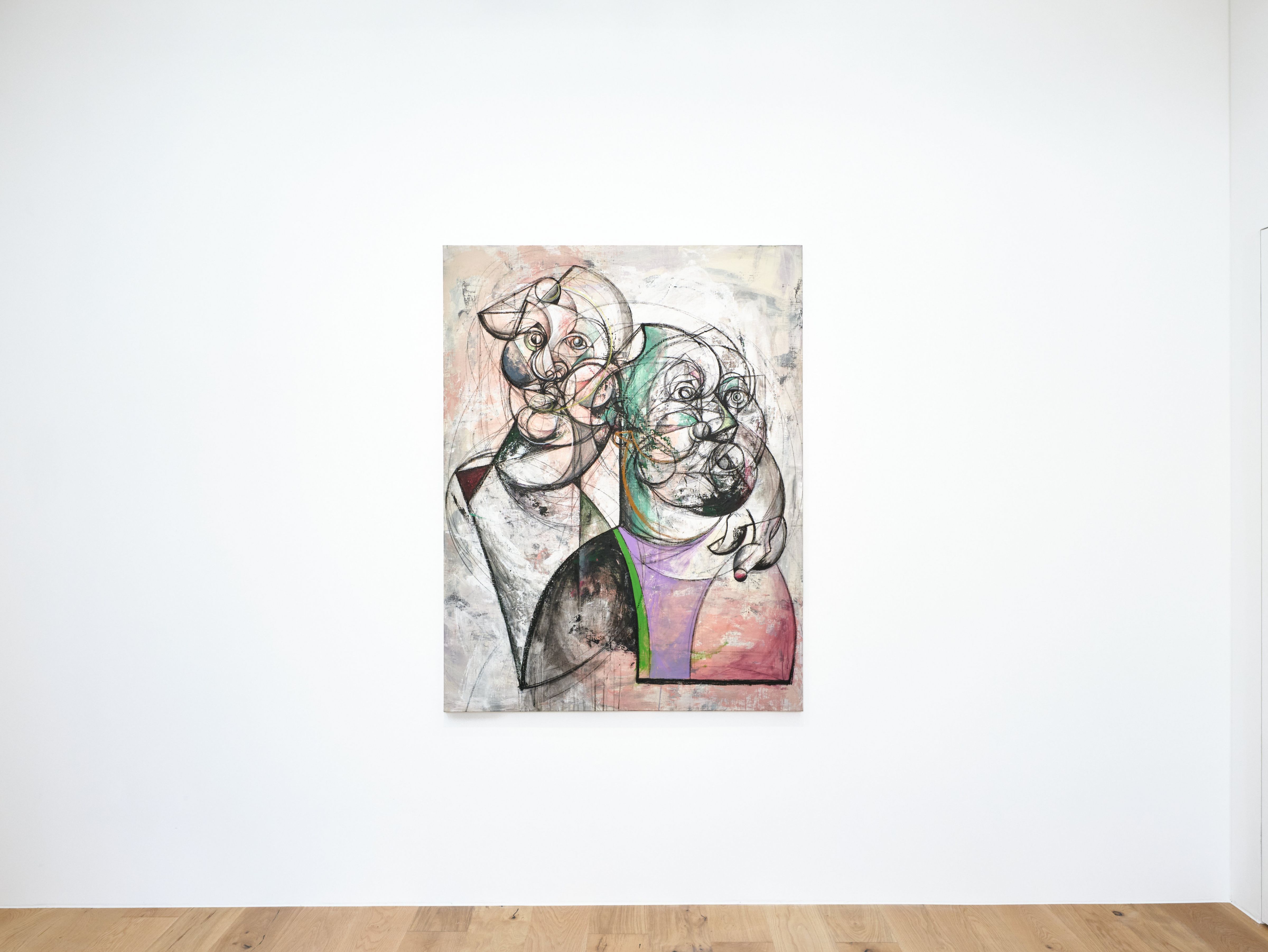
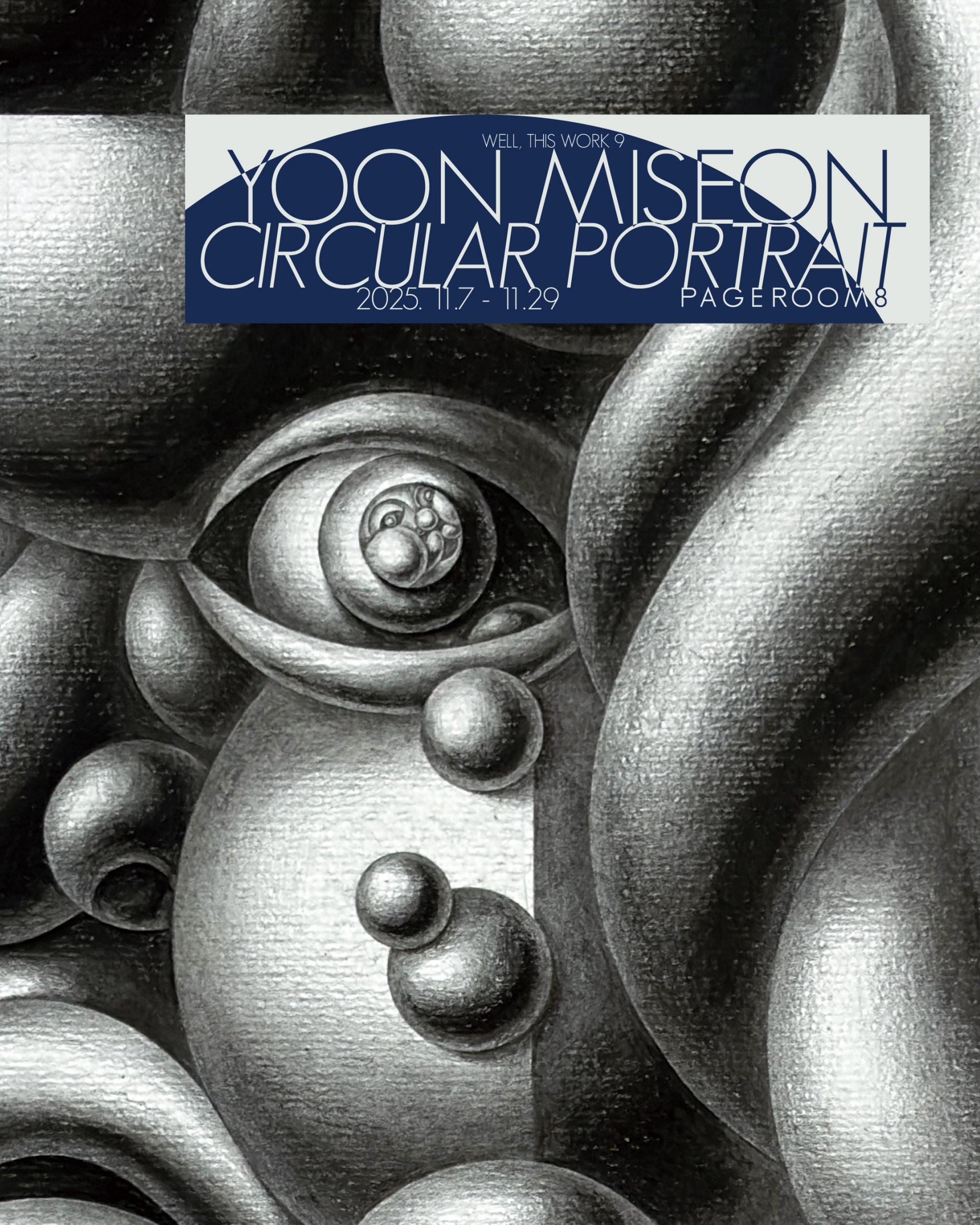
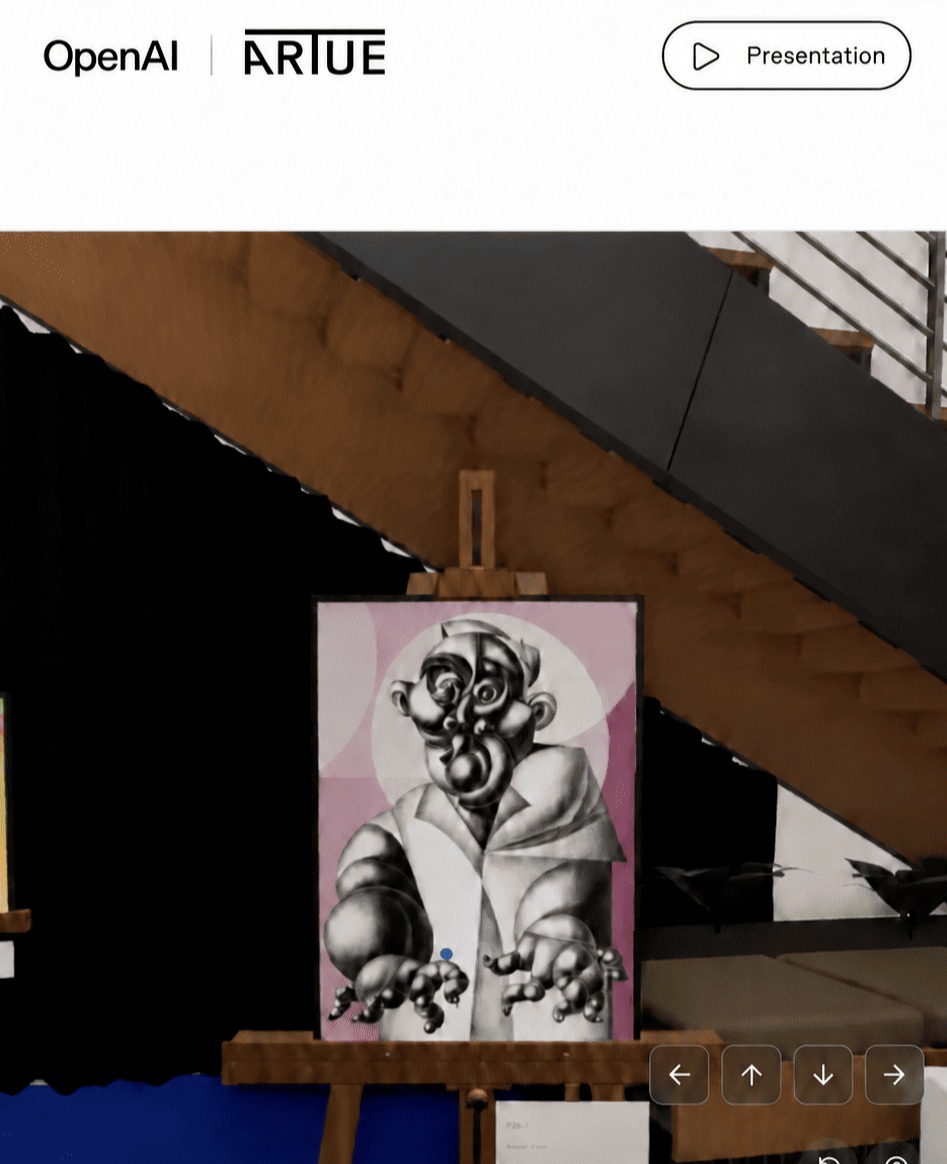
An abnormally rising cranium, eyeballs that protrude outward or sink deeply inward, a monstrously bent nose, sharply puckered lips, projecting cheekbones, and layers of chins...... All of these elements establish their own contours through a dazzling, almost vortex-like rhythm. At the same time, on a flat sheet of paper or canvas, they are also mathematical assemblages governed by extremely simple formal principles. A face that throws itself into a dizzying and frenzied aesthetic condition, only to meticulously organize complex configurations of lines and shifting spatial structures.
The face. This is the kind of face the artist draws. In some places, a black pupil is split apart as if sliced with a knife; elsewhere, spirals repeatedly emerge like whirlpools beginning to sprout from the depths of a dark cavern. Beyond them, lines and acute angles rise like waves, erecting separate pillars, tracing semicircles, shooting upward into straight lines, then suddenly bending and overturning to generate a face resembling a mutable architectural terrain.
At moments, optical illusions reminiscent of Op Art pass through the image, but such an interpretation is soon denied by the appearance of patterns that dismantle regularity. The face exists with a complexion that is rigid yet heavy like concrete, its range of tone and texture extremely restricted. It recalls the gray-toned figures that Fernand Léger realized through the stylization of Tubism, yet rather than reproducing specific parts of the human body, it remains closer to an aggregate of geometric masses faithful to the tonal effects of pencil drawing.
The formal language that appears and disappears across the face, spreading and then dissolving, is highly volatile and impulsive. Yet it is intriguing that the whole still reads as a face: an expression can be inferred, a sense of balance maintained, and a certain visual stability achieved. The face seems to distribute the volume and weight of its lumps upward, downward, left, and right, sustaining a kind of order. But what does it mean that these strange facial features are black?
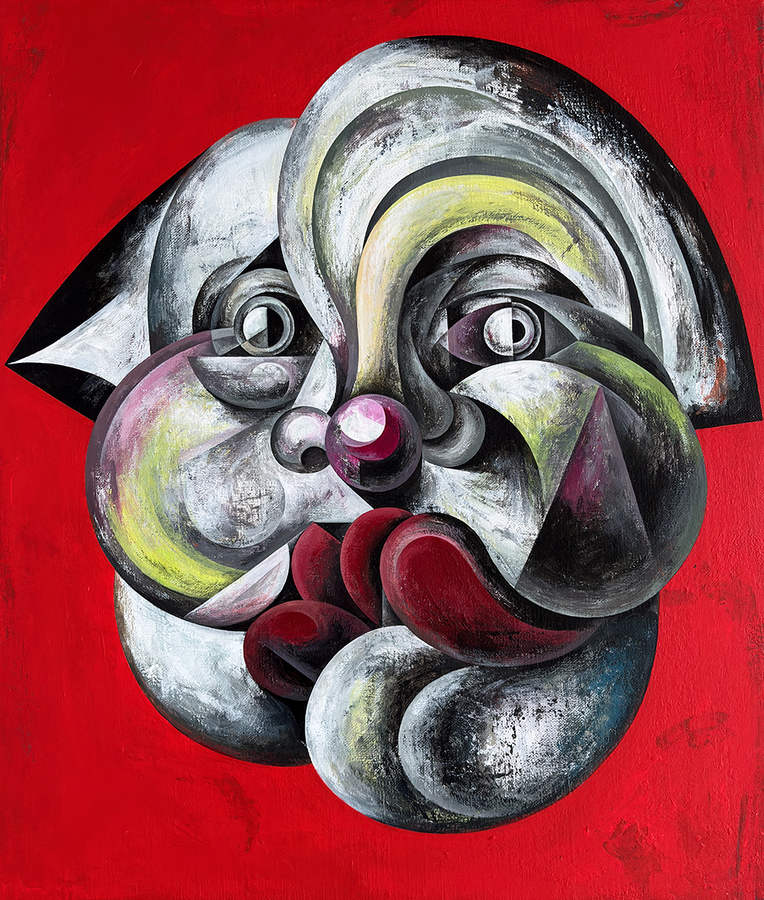
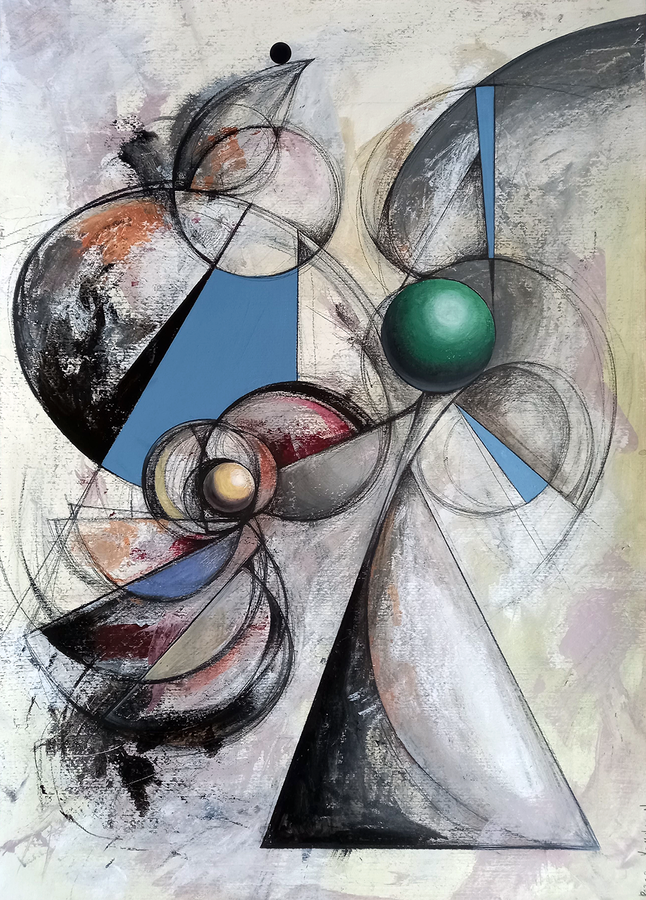
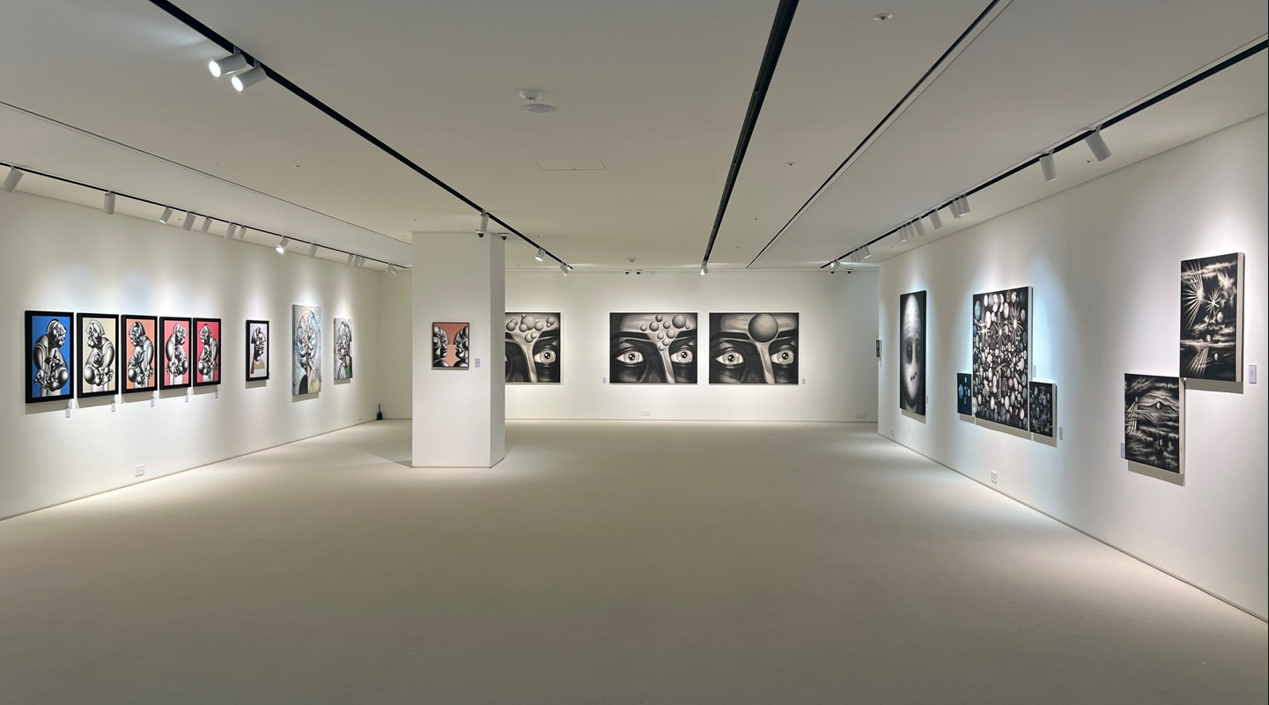
Although color occasionally appears in the series of faces the artist has continued to produce, even then it does not function as the color of skin. Applied in acrylic only to small areas designated by the artist, the color refuses to become a depiction of living flesh. Otherwise, these limited colors are generally flattened into the background of the painting. In other words, the face of this figure is, for the most part, black.
It rejects color and relies solely on shifts in light and shade, contrasting its fragmented internal parts through differences in value. Like a black statue casting off its own shadow, one black form copies and generates another, and at times absorbs it. Within the face designed in this way, the viewer encounters an endless black ensemble. Gradations move smoothly through countless tonal stages.
In contrast, there is also a meticulous precision that never trespasses across the contour boundaries between planes. It is impossible to know whether these forms are expanding their lives across the face or contracting toward extinction. There is only an ongoing variation of protrusion and recession.
Compared with the faces of the Mannerist artist Giuseppe Arcimboldo, assembled from multicolored fruits and still-life objects, the faces here share a similar illusionistic logic yet feel colder and more desolate. This black face is not a visual association derived from the tangled forms of living organisms; rather, it originated as abstraction and is completed grotesquely through the interweaving of conceptual images themselves.
The artist has woven this entanglement with clarity through pencil and fine brushwork. It consists of a mixture of flat and three-dimensional polyhedral forms, gradated grayscale shading, and collage-like structures resembling a Möbius strip, which together give the interior of the face a fantastical sense of space and movement.
Each face adopts a different pose, carrying an enigmatic yet remarkably dense impression. Including the achievements of Pablo Picasso, the works can also appear to appropriate, on several occasions, memories inscribed in art history and relocate them within the contemporary present. Given that the artist continues to render similar faces differently each time, one cannot overlook the possibility that this practice constitutes a persistent exploration of the self-image pursued throughout the artist’s entire life.
Ⅱ. Face to Face
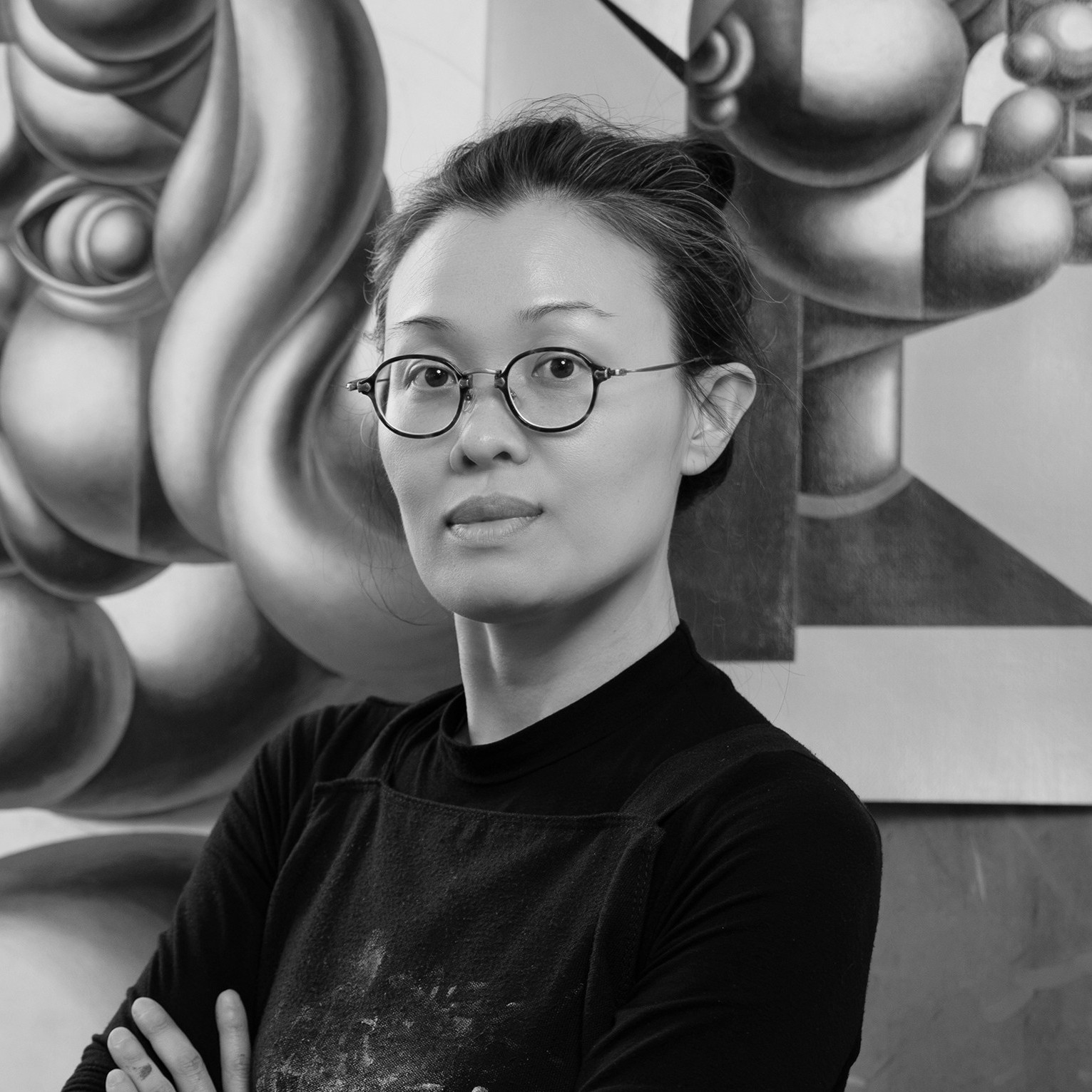
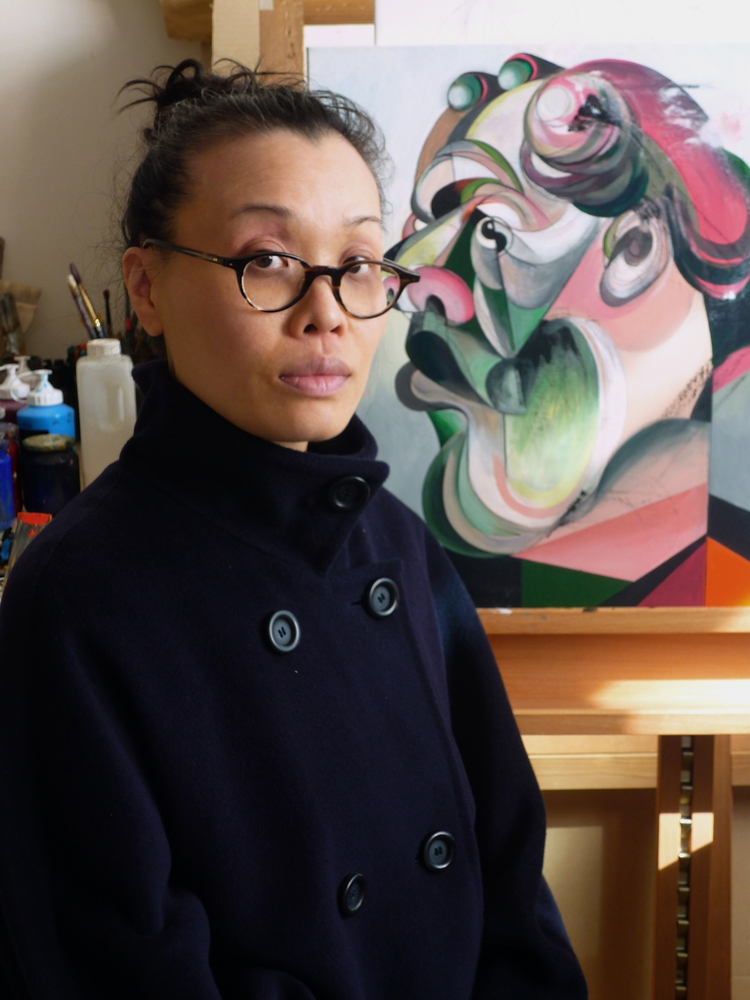
One day, that face must have been born. Artist Miseon Yoon (b. 1979) remembers that it was around 2017. By then, she had made her debut in the art world in 2009 after participating, at the recommendation of an acquaintance, in the two-person exhibition 《Stories that deliver clothes that deliver stories》 at Workroom Window Gallery, and had continued to gain recognition through her textile practice. It was also the year when both mental and physical burnout came over her in waves.
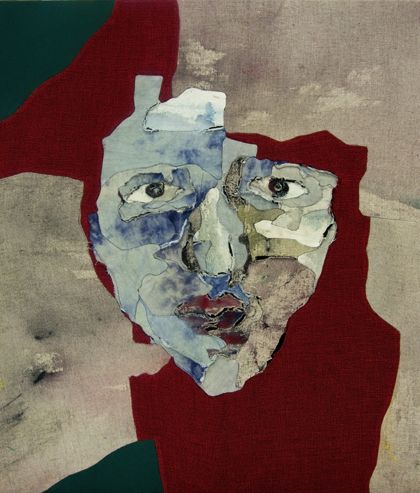
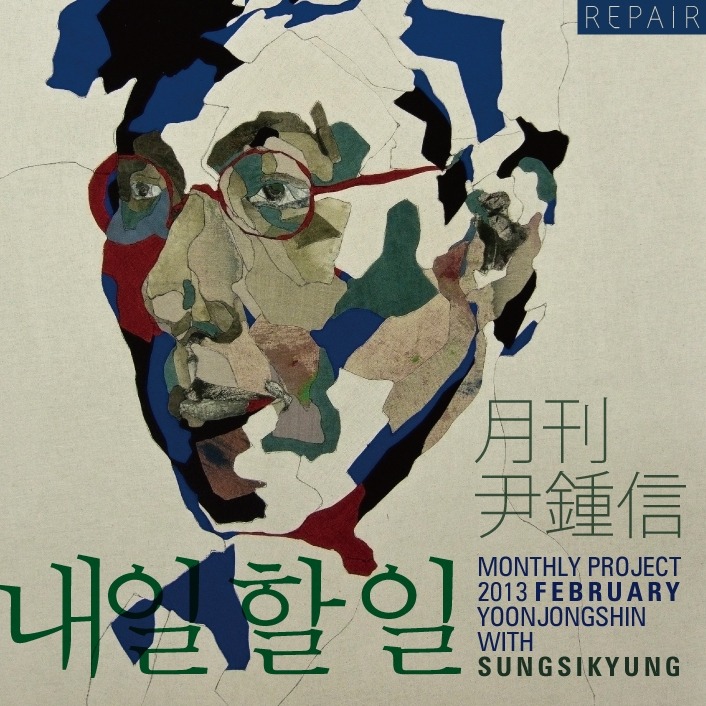
After majoring in Ceramic Art and Textile Art at university, Yoon ran her own design business in Seoul before becoming a full-time artist following her first exhibition and devoting herself to fabric art. Her works depicted specific individuals by cutting and assembling pieces of cloth like a mosaic. This practice was influenced by her years as a designer, when she created draped silhouettes solely through three-dimensional cutting without patterns and gave garments unique identities through labor-intensive patchwork that required considerable time.
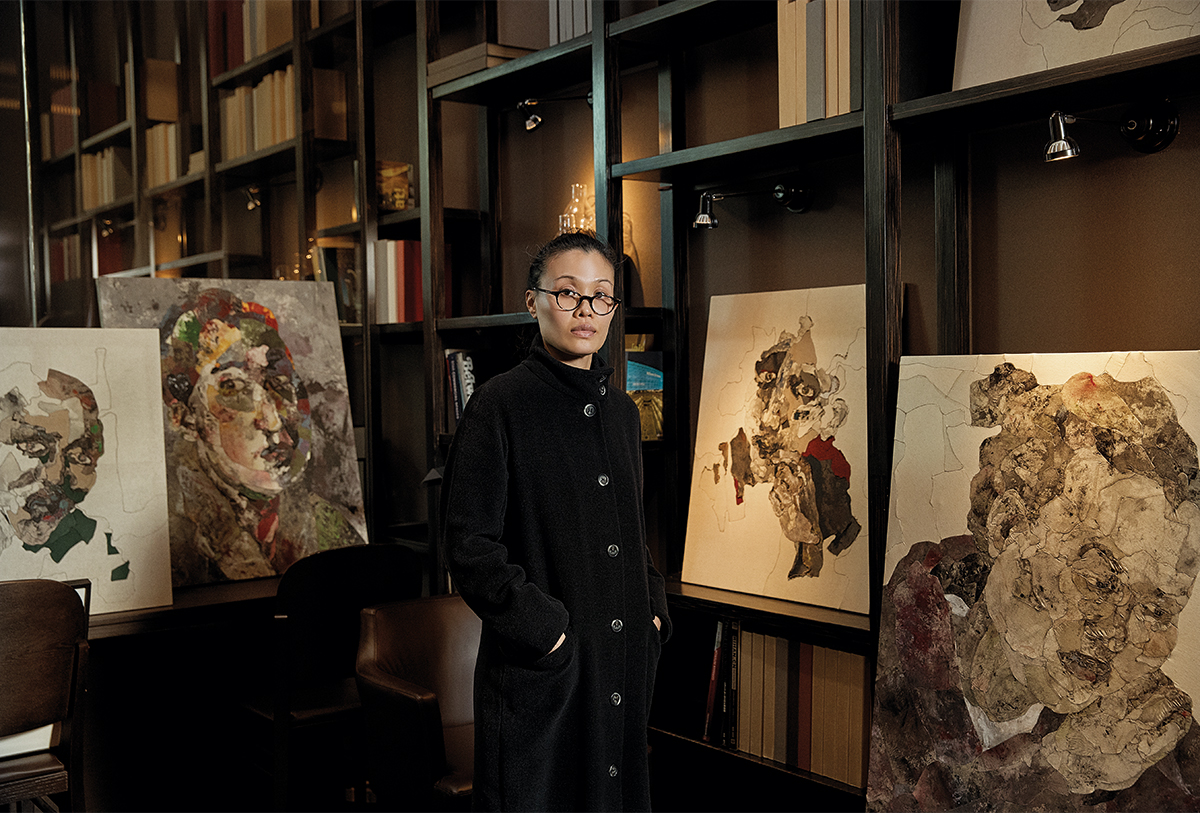
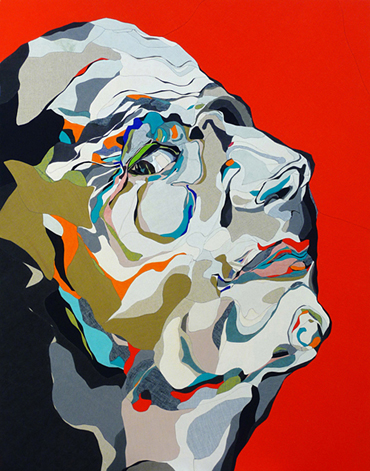
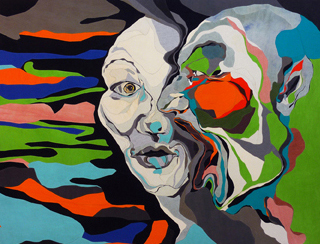
She sometimes portrayed masters she admired, such as André Masson, Francis Bacon, Louise Bourgeois, and Marina Abramović, but most of her subjects were figures featured in World Press Photo. The faces of people forced to surrender themselves helplessly to the suffering caused by war, disease, and famine, as captured by documentary photojournalism, came vividly into the artist’s view at the time.
Their images were then stitched together from pieces of dyed fabric. Specific narratives and backgrounds were omitted, leaving only faces and fragments of bodies reconstructed from collections of irregularly cut cloth, yet the devastation and desolate atmosphere of the original images seemed to have permeated the works.
Identifying and projecting herself onto these figures, conversing with and consoling them, the artist continued cutting fabric into irregular shapes, joining the pieces, ironing them flat, and pulling them taut, as if drawing out similar wounds of her own, confronting them, punishing herself through them, and expelling them. At the time, her work cultivated an expressionism steeped in darkness, recalling Edvard Munch or Oskar Kokoschka.
The stitching precisely connected each section, yet the use of distorted colors along wavering contours psychologically traced the figures’ harrowing states of existence. As though their twisted, weakened, and desperate conditions had been inscribed into every stitch, the connecting lines of thread that bound the fragments together appeared precarious and somber. Before the yellowish cotton cloth, this was the image the artist, acting as its self-appointed creator, so intensely wished to face and collide with.
Following her 2017 solo exhibition 《Face to Face》 at Noblesse Collection, the artist entered a long five-year hibernation. It was a period of exhaustion that felt as though every immune function in her body had collapsed. During the first several months, she had shaved her head, and severe inflammation spread across her skin. Around this time, the face that appears in her work today began to emerge.
No longer able to handle the industrial sewing machine and iron because of pain in her shoulder joint, she instead picked up a much lighter pencil. Rather than a needle that pierced dense, deep holes into fabric, she simply drew on paper, following the fluid directions indicated by gray graphite lines. The weight of her previous works, which seemed to embody and circulate self-inflicted pain, began to move lightly and extend outward through basic and unrestricted line drawing.
A third kind of face began to appear—not the faces of painters she had admired, revered, and paid homage to, nor the faces of those confronting circumstances of unavoidable suffering that she had wished to overcome, even through direct confrontation. At first, there were numerous indistinct lines; these gradually became fewer but darker, occupying their own areas in the forms of triangles, cones, and other geometric shapes, while elements defining the head and expression also began to settle into place.
Initially rendered in multiple colors, the works gradually established more specific roles and boundaries for the areas in which color would be used. In this way, the present-day “face” emerged. Although the materials shifted from fabric and thread to paper and pencil, the methodology of assembling multiple fragments into a coherent whole remained a consistent feature of her practice.
Ⅲ. Persona
One day, Miseon Yoon encountered a bob-haired woman within her paintings and came to call her affectionately “Bob.” What this figure, gradually shaped through the struggle between collision and stability, might signify becomes somewhat legible when viewed through the trajectory of the artist’s own life.
She can be understood as the outcome of a process through which Yoon sought balance within an arduous practice; as a visible afterimage of an inner world condensed by wounds experienced since childhood; as an embodiment of the desire to overcome and grow, refined into an act of will; and ultimately, as a persona created by the artist.
Following ‘Bob,’ the artist also brought forth a face she calls the ‘Devil.’ “Created” may not be quite the right word, but in any case, the face of the ‘Devil’ did begin to appear within one of her series. The ‘Devil’ has goblin-like horns protruding from its head and, at times, even a tail. It may hold within its mouth a long bud-like form rising like a tongue, or carry it in its hand.
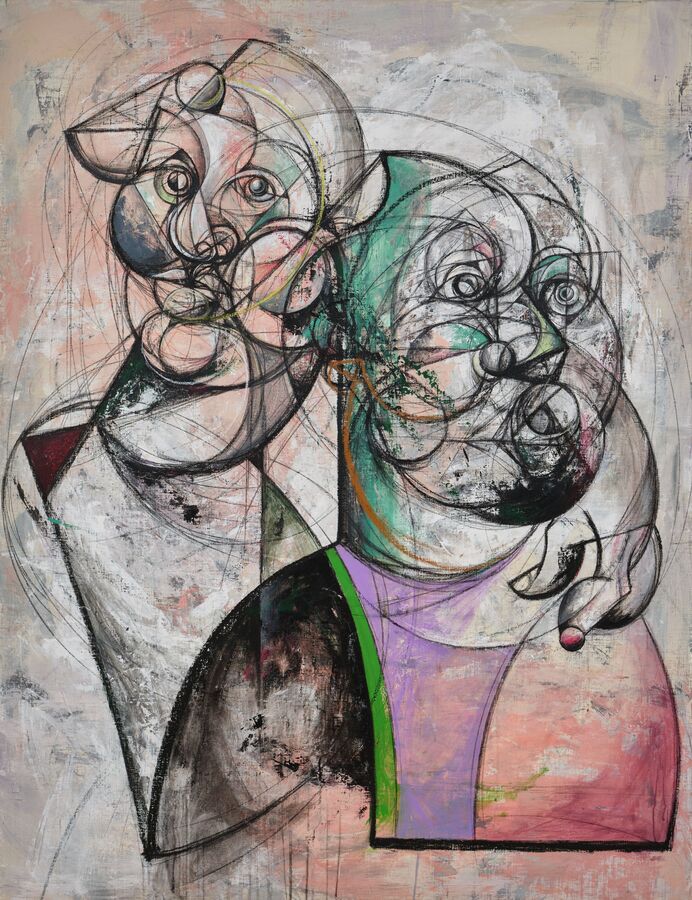
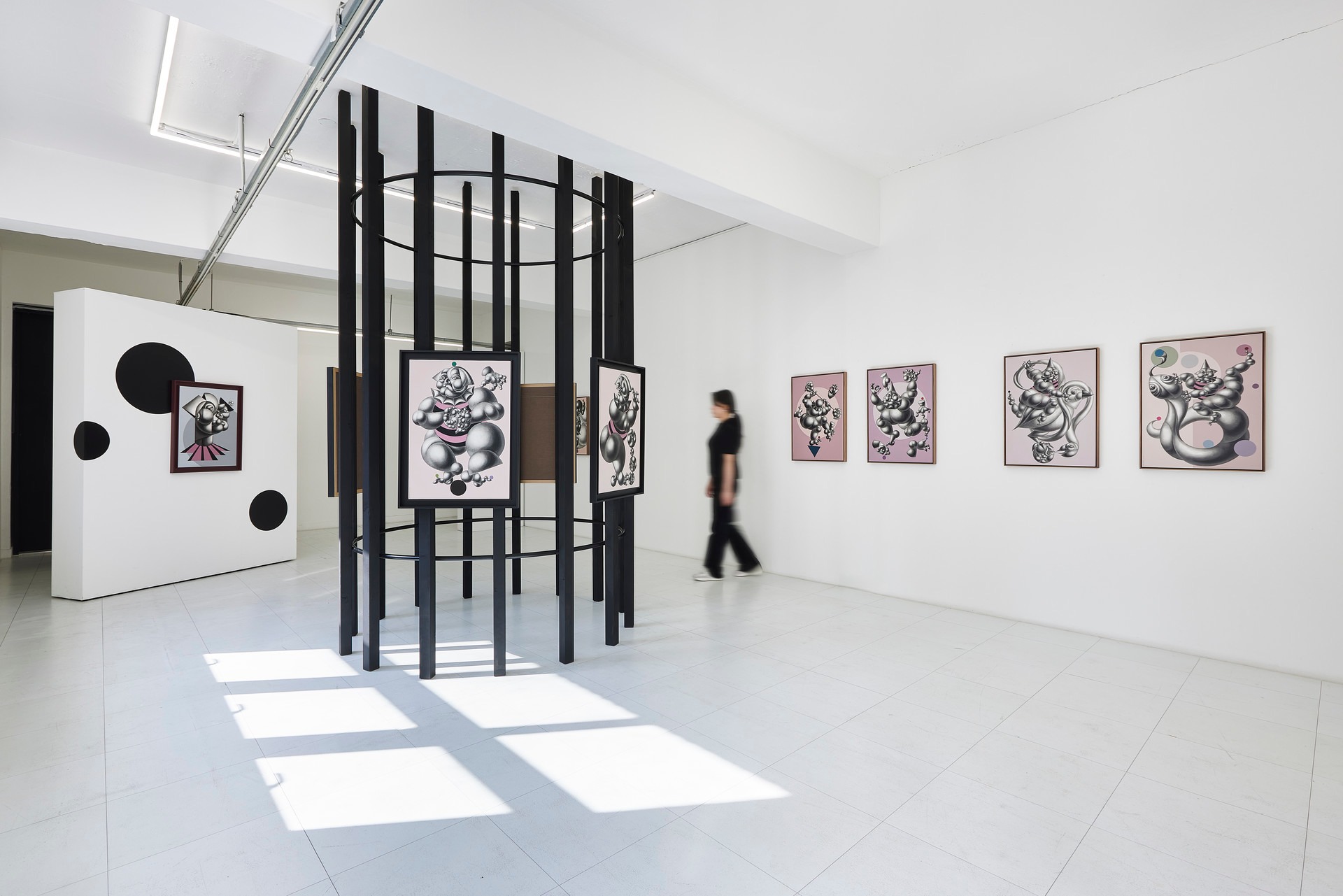
At times, the ‘Devil,’ assuming the role of aggressor, appears together with a ‘Victim,’ the weaker counterpart. The muscles, fingers, and joints of the toes that form their bodies seem animated and sprouting with life, yet, like those of the black faces, they are simplified into flat or three-dimensional geometric forms, organically joined, and geometrically dramatized.
Unlike when Yoon used fabric as a means of representing real individuals, her treatment of abstracted characters incorporates fictional narratives inflected with mythic imagination as well as her own sense of humor. Compared with her textile works, these paintings employ color, planes, and spatial depth in broader and more layered ways.
One can also see the artist adjusting the creative territory she can resolve according to her own terms, first disrupting and dismantling the image, then establishing and ordering it according to rules of her own making. Yoon recalls growing up under the pressures of a strict family environment and competitive entrance-exam education, spending much of her life withdrawn and passive.
What she reached and achieved after releasing her long-suppressed inner self through ‘Bob’ seems to be a territory of creation made possible by free will, while the process of constructing her own principles and rules appears to function as a long-desired space of liberation. The artist also experienced a sense of release in the ‘Devil’ series, in which she projected her own philosophy through contrasts and conflicts between good and evil, and at times through playful movements between them. What kind of catharsis might this be?
Ⅳ. Flower Bud
Miseon Yoon has repeatedly drawn faces, yet she says she does not want to establish a fixed formula. Rather than following a standardized scheme, she hopes to follow profound emotion and psychology. Her current paintings emerge only after countless lines and shapes are drawn, erased, and finally determined. The consciousness that strives and struggles intensely toward something has become both a central theme throughout her practice and a foundation of her life.
The formal language that has become the artist’s signature, and the style through which she has found principles for living, still carries anxiety, yet appears far more stable than before. Without entirely rejecting the melancholic and vulnerable background from which it emerged, her practice is gradually finding its place by accepting and embracing its limits through resistance and communion.
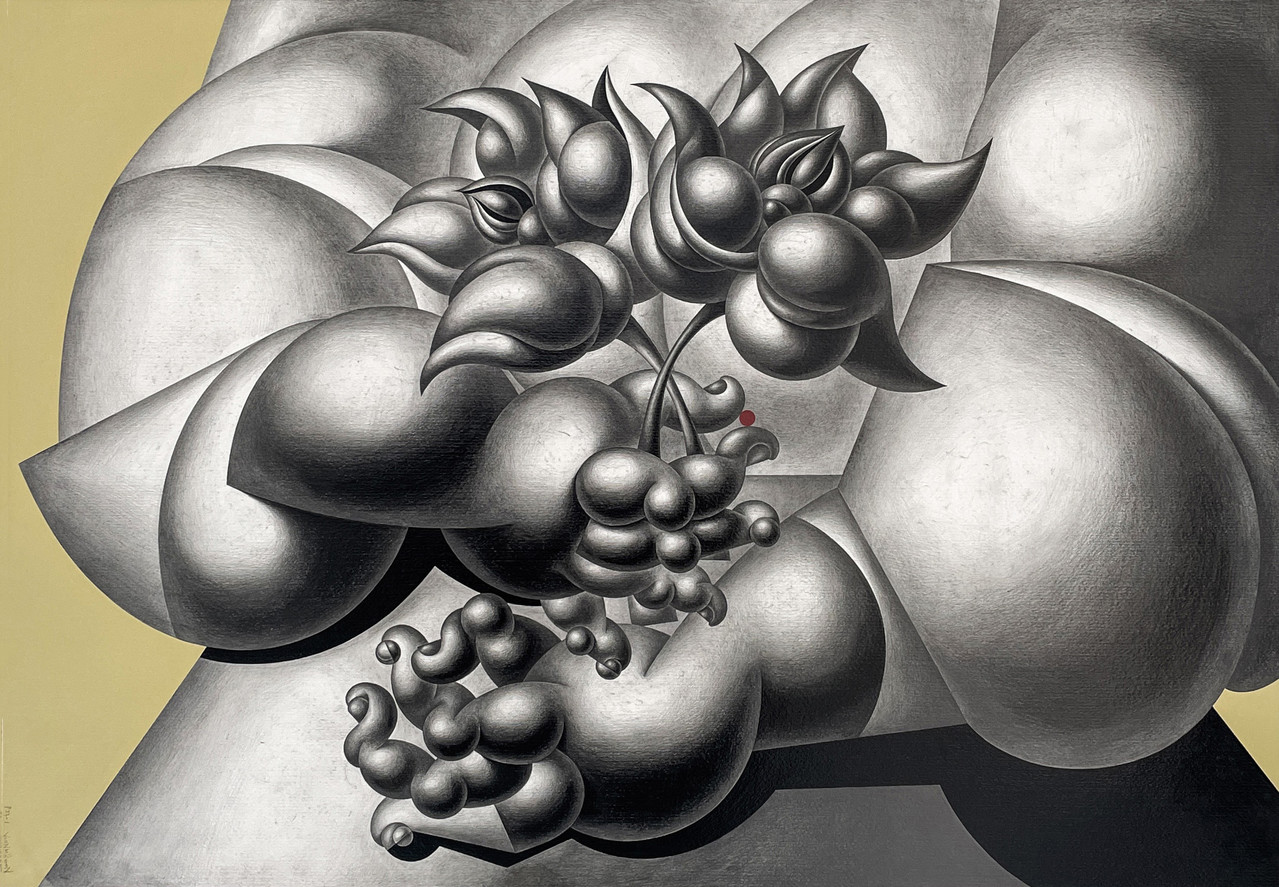
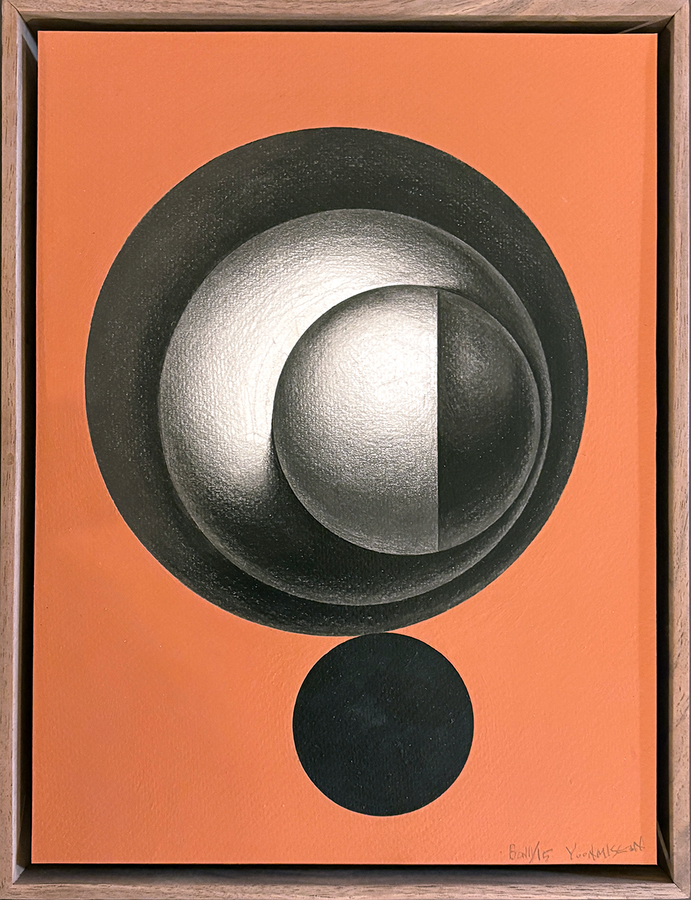
Could this present form be likened to a “sphere (ball)”? Across ‘Bob,’ ‘Devil,’ and the ‘Plants’ series—including flowers that appear alongside these figures or as independent still lifes—the recurring element is precisely the sphere.
With its symmetry and sense of completeness, it occupies a distinct presence within otherwise irregular, dark, and disordered compositions. In gloomy and anxious scenes, it introduces gentleness and stability; in flat and rigid compositions, it provides emphasis and tension. Appearing either flattened or three-dimensional, it functions as a point of balance within a world seeking equilibrium.
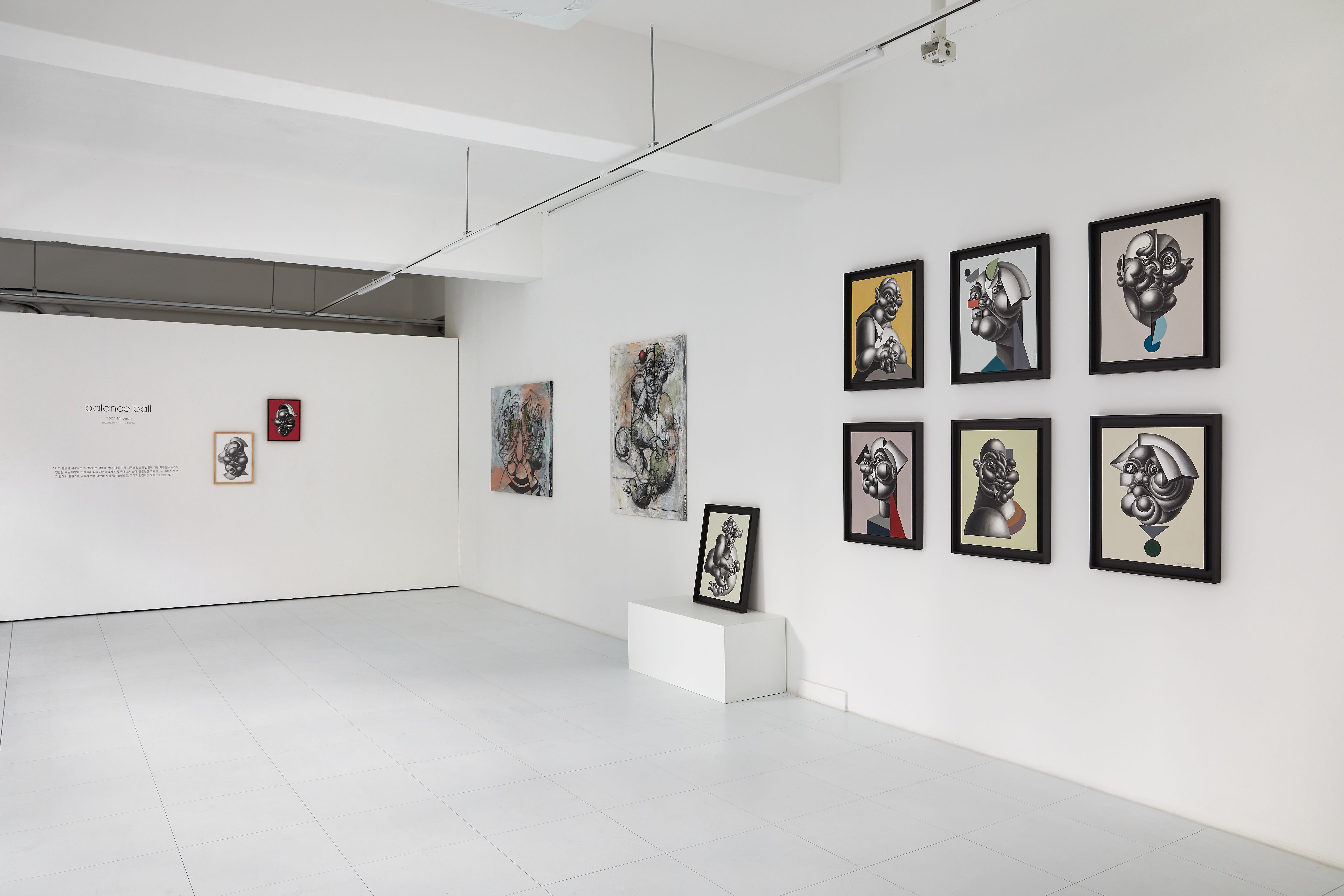
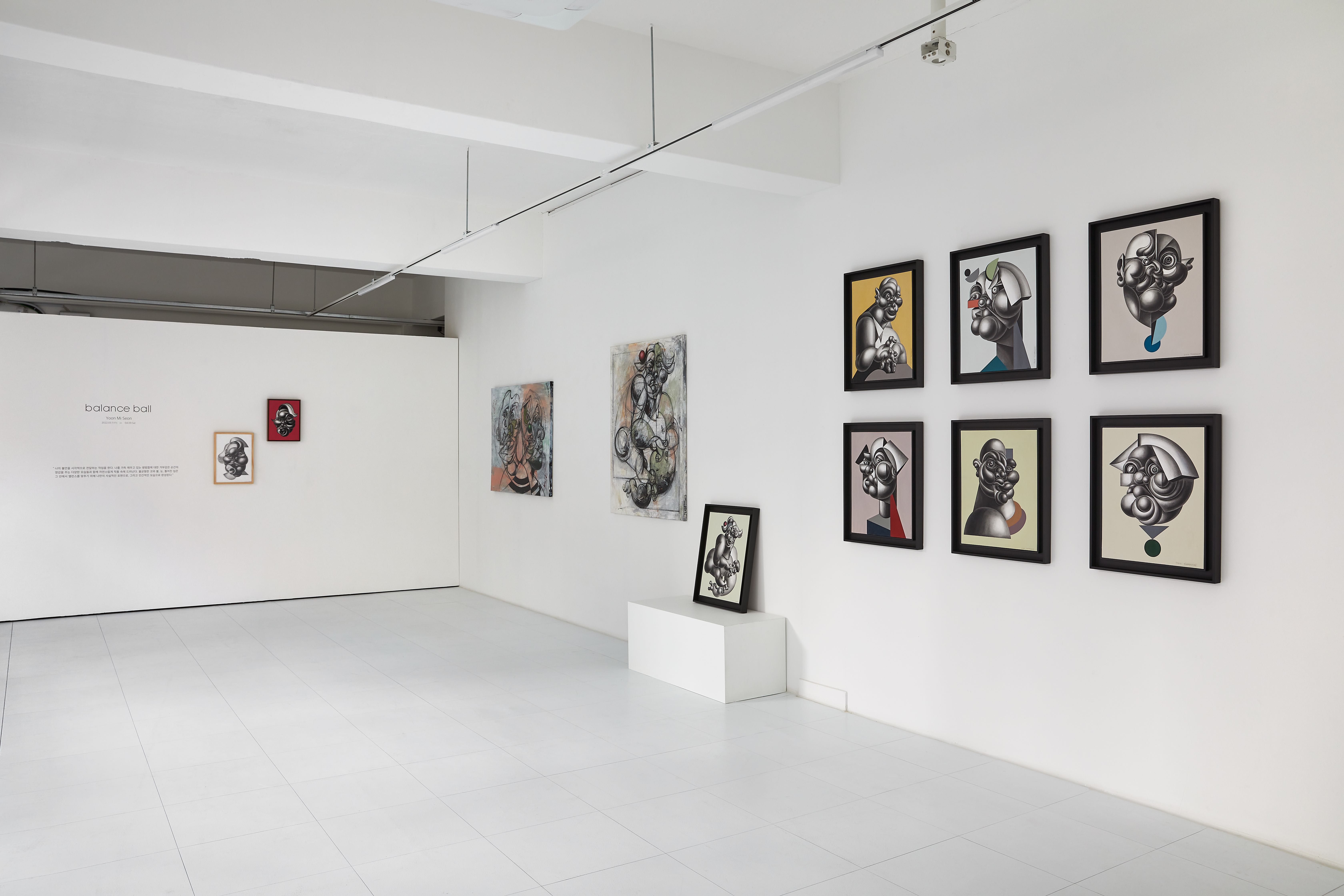
In 2022, when she resumed exhibiting after a five-year hiatus, Miseon Yoon titled her solo exhibition 《Balance Ball》 at GALLERY KABINETT. There, she presented numerous faces from ‘Bob’ and ‘Devil,’ as well as subjects extending into the ‘Plants’ series, seeking to establish a center among forms that could be both pointed and rounded. In the spring of 2023, the artist continues to enact this belief almost daily in her Ilsan studio.
In Yoon’s work, I now see a vision in which scars, twisted and knotted like accumulated resentment, gradually unwind in reverse and begin to bloom like flower buds. Across countless days, layered faces encircle one another, accumulating into the swelling volume of a knot, mingling, protruding as though about to be expelled, and becoming increasingly refined upon the surface.