LEE: This is a question I ask everyone at the beginning of an interview. What is your earliest memory related to art? It does not necessarily have to involve drawing or studying art.

Beom: The scene that comes to mind now is from when I was in the second or third grade of elementary school and we went outdoors to sketch. Instead of drawing the landscape, I drew Star Wars. My teacher asked me why I had drawn something like that, saying it was imaginative drawing rather than sketching from life, but I did not have any particular answer. I think I simply wanted to draw it.

I majored in art education at university, but after graduating I did not become an art teacher or immediately begin working as an artist. Through an acquaintance, I started working as a manager at a gallery café. Most of the customers were artists, and I think the things I saw and heard about art while being around them accumulated naturally over time.

About three years later, when the café was about to close, I began to think that I should try making art myself. So I used the money I had saved while working to rent a studio and began painting. Since I did not start my artistic career immediately after graduation, my debut came relatively late.

LEE: How old were you when you first decided that you wanted to attend university to study art?

Beom: I first started studying art in my second year of high school. I originally wanted to join the drama club, but there was no drama club at my school, so while looking for something similar I joined the art club, and that eventually led me to university. Because I majored in art education, I studied various genres, including Eastern painting, Western painting, and sculpture, through my second year.

In my third year, I chose my specialization, and in my fourth year I completed a teaching practicum. During that practicum, however, I realized that a career related to education did not suit me very well. In the end, once I removed “education” from art education, what remained for me was art itself.

LEE: After choosing art, what was the first work you made, and what was the first direction your practice took? I imagine it must have been exciting, but perhaps also daunting.

Beom: Even before I stopped painting—that is, before the period when I worked as a café manager—I had a habit of writing down my dreams every morning. Dreams tend to disappear quickly, so at first I could barely jot down a few words. But as I continued recording them, the entries gradually became longer, almost like stories. I became able to write down whom I met, what happened, what I did, and how the dream ended.

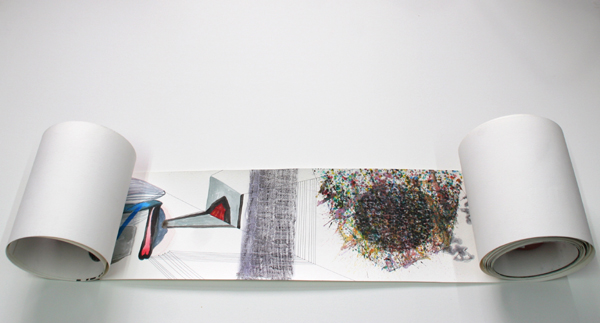
I kept up that habit even during the period when I was not making art. When I eventually returned to my practice, it was natural for me to begin with those dream journals. They were the richest source material I had, and they were also connected to my earlier work. At first, if I felt that I had ruined a drawing, I would tear it up very easily. So I began drawing every day, as if writing a diary, on a nine-meter-long sheet of paper that I could not simply tear apart. From that point on, I began to focus seriously on these diary drawings.


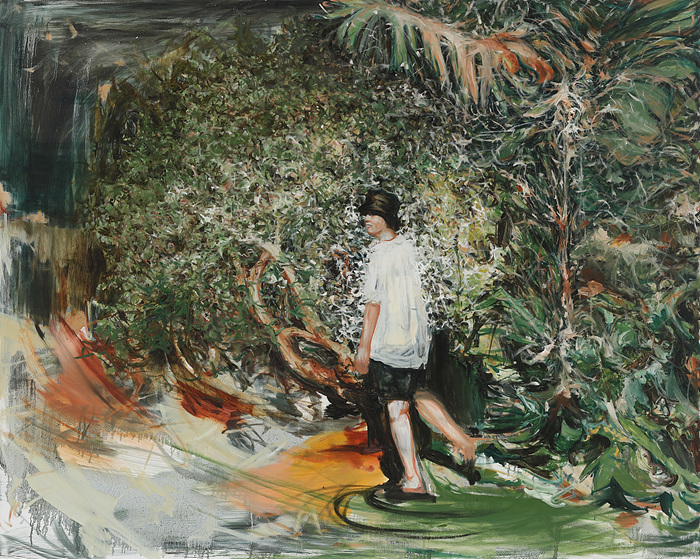
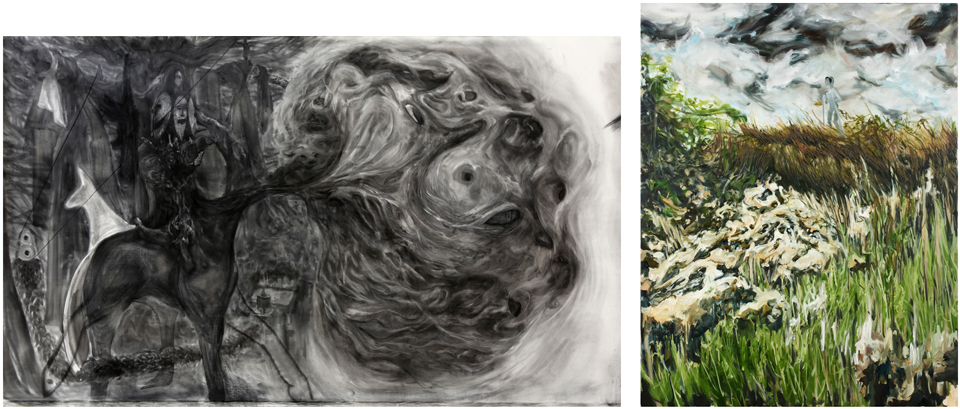
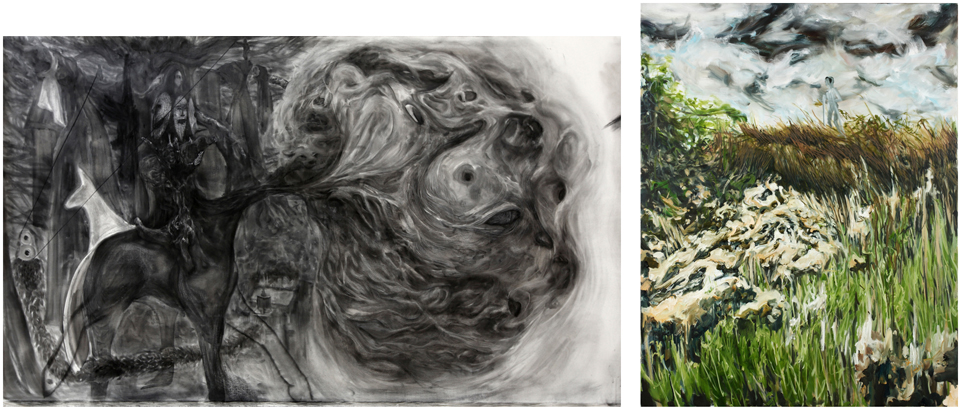
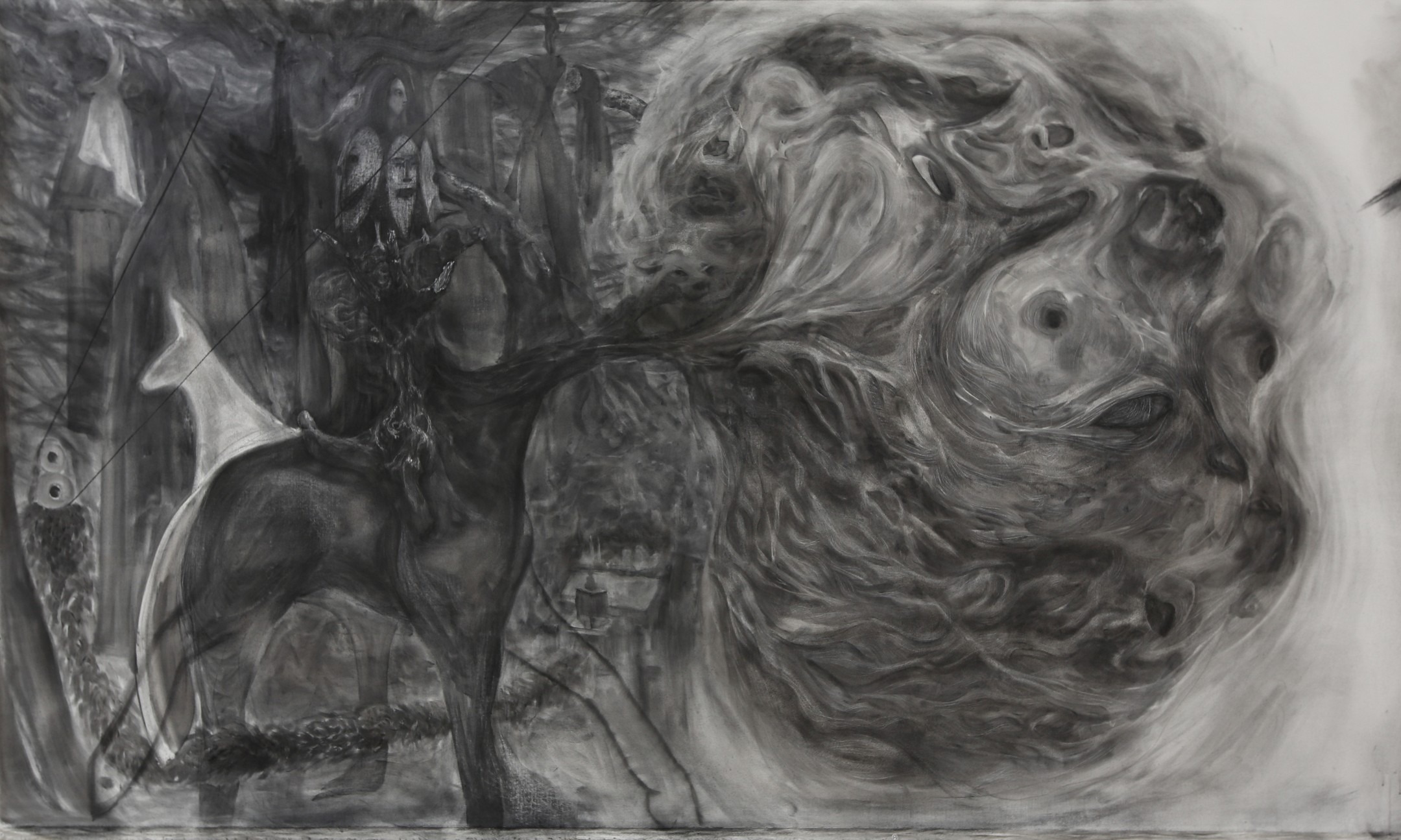
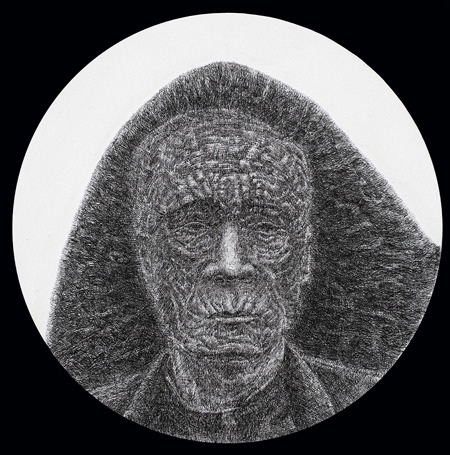
Beom Jinyong, False Prophet, 2014, Charcoal on canvas, 140 x 830 cm / Landscape, 2015, Oil on canvas, 117 x 91 cm © Beom Jinyong

LEE: What prompted you to start keeping a dream journal?

Beom: About three months before I enlisted in the military, I had a particularly memorable dream. I usually do not remember my dreams very well, but this one remained unusually vivid. I was riding in a gondola-like boat in Italy and passing through the central doorway of a cathedral. Inside, strangely out of place, pagan statues stood along both walls.

That image stayed with me for a long time, and afterward I began occasionally recording dreams or images that came back to me. After completing my military service and returning to university, I started writing them down with the thought that these records might eventually be used in my work or graduation exhibition.

LEE: Did you use oil paint in your early work as you do now?

Beom: At first, I was rather impatient, so I mainly used acrylic paint because it dried quickly. But once I began working with oils, I found that they allowed for a much wider range of expression and that the material itself had a strong appeal. From around 2013 onward, I have worked primarily in oil, while also continuing with pen drawings and charcoal works.

LEE: Your early works in particular have a very dark atmosphere. Did you also paint frightening dreams? People sometimes say that dreams reflect one’s psychological state at the time.

Beom: I did have frightening dreams quite often. But rather than fear or darkness, I think the overall mood was closer to melancholy. The anxiety I felt when I was first beginning to paint was probably reflected in the work as well.

LEE: You do not seem like the type of artist who plans everything systematically before beginning a work.

Beom: I do not think I am someone who plans everything systematically in advance. Of course, there is a general flow or direction, but the actual work often changes continuously while I am painting.

An image I had in mind at the beginning may move in a completely different direction during the process, and there are many times when the painting suddenly comes alive in an unexpected area. So rather than deciding on a finished result beforehand, I tend to work by continuously making judgments and responding within the process of painting.

LEE: Do you also work that way with large-scale paintings? I wonder whether that increases the risk of ruining them. Is the composition also improvised? When an artist says they simply paint, or paint without a plan, that does not mean they are not thinking or making judgments. Except in very unusual cases, artists are always thinking about countless things while painting and making. What I mean is a relative degree of chance and improvisation.

Beom: While working, there are sometimes forms that emerge by chance or parts that initially look like compositional mistakes. But if I feel that those elements work within the painting, I tend to keep them and continue from there. I think the painting gradually approaches completion as those moments of chance and judgment continue to accumulate.

So I see improvisational composition as an important part of my process as well. To explain it in terms of how I work recently, I begin by referring to photographs and sketching out a rough form. The work may start out looking similar to the photograph, but I do not reproduce it exactly. As I work, I keep adding lines, shapes, and other elements that attract me in the moment.

Colors and forms gradually fill the surface in response to those lines and to the overall flow of the painting. As this process repeats, there comes a point when the painting somehow feels complete. Of course, not every decision is entirely accidental. Which lines I leave, and which colors and forms I use, are ultimately the result of both my personal preferences and my judgments about the painting.


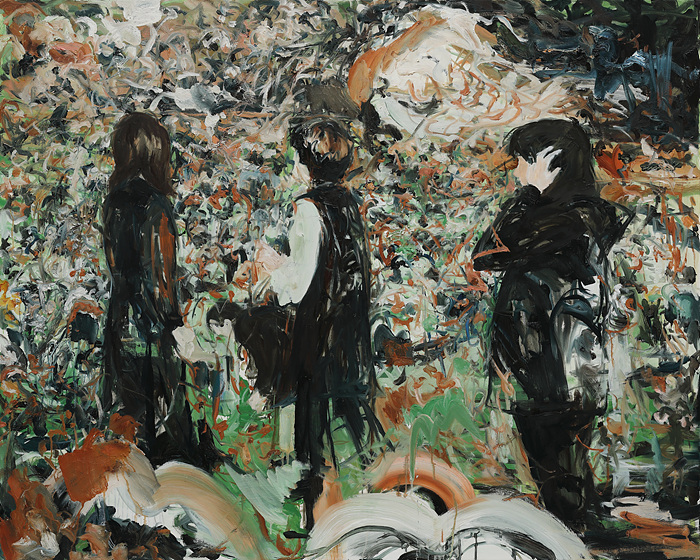
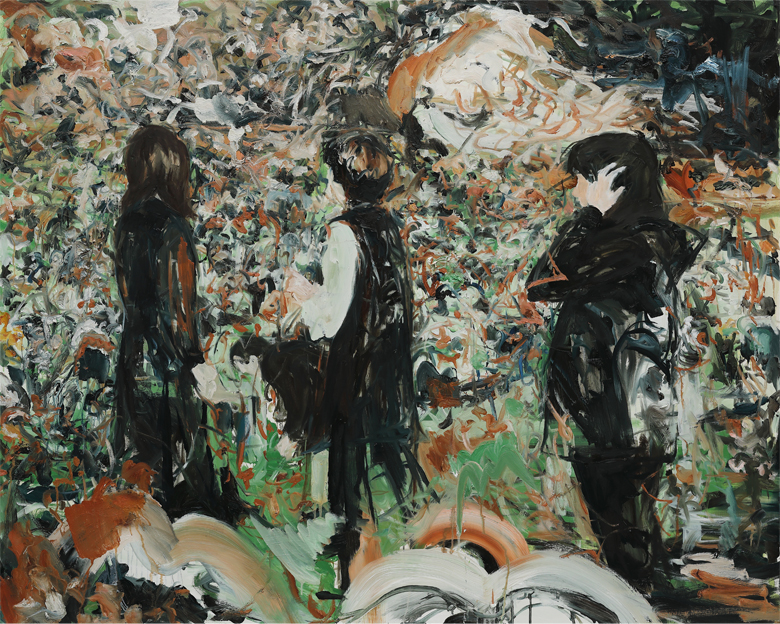
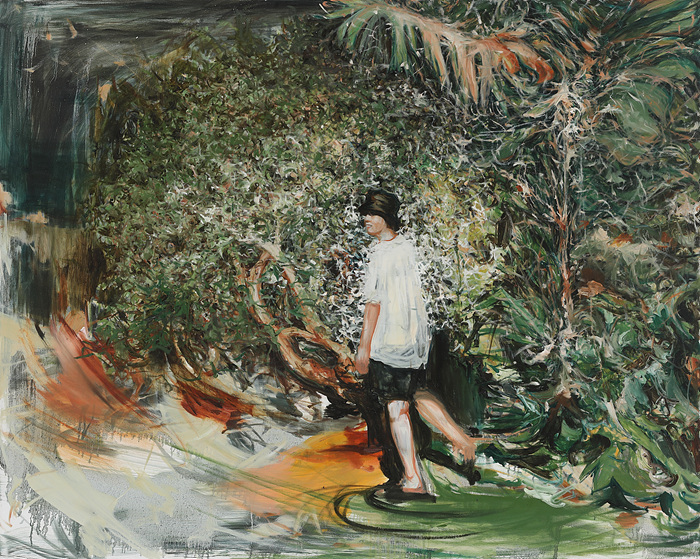
Beom Jinyong, A Flower Bed of Crows, 2020, Oil on canvas, 130 x 163 cm © Beom Jinyong

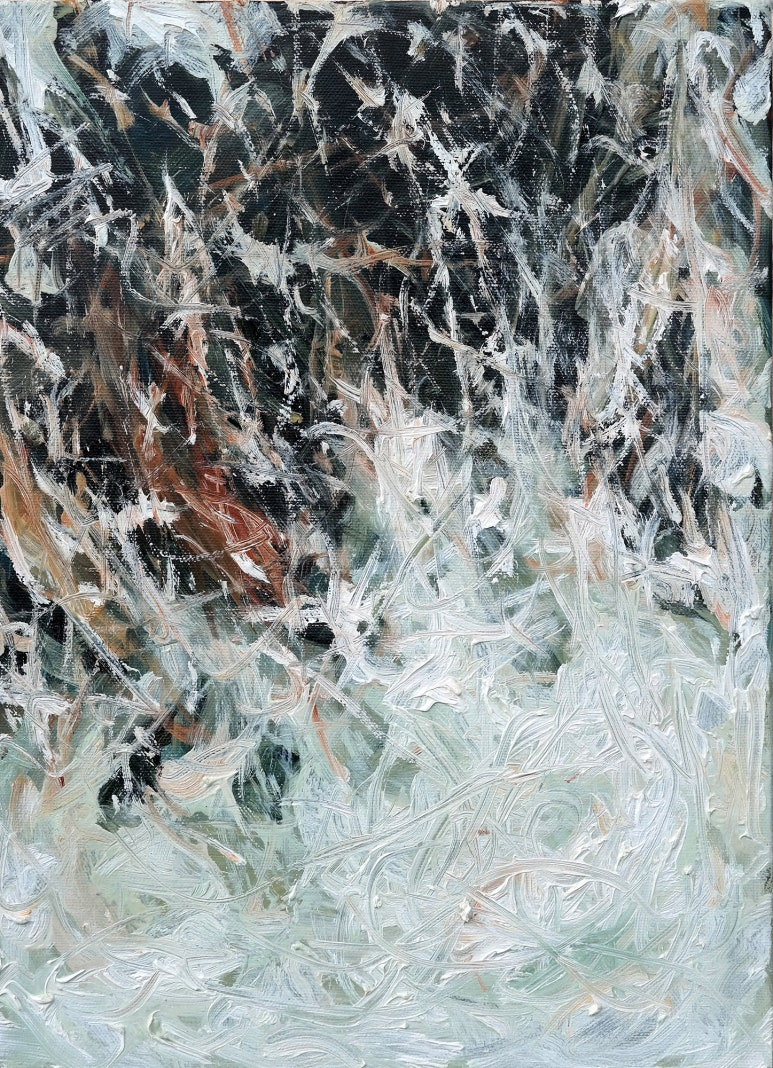
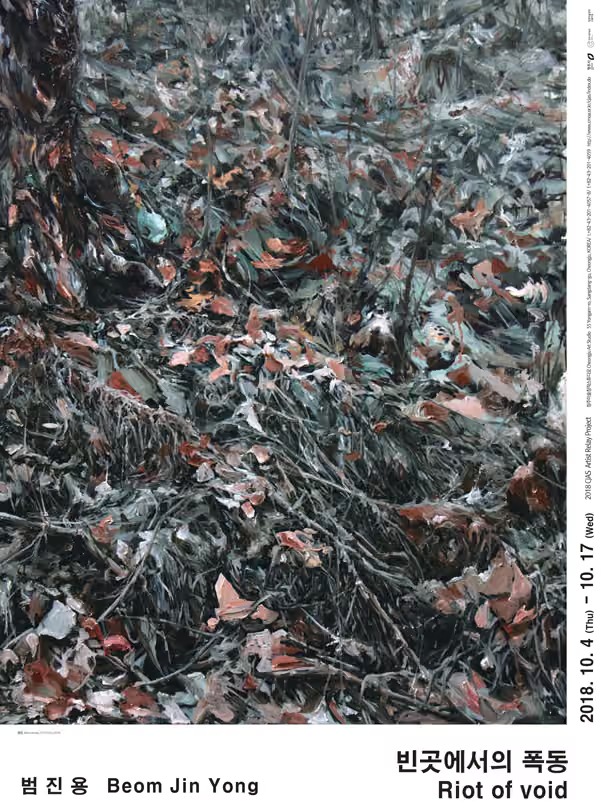
Beom: There were two periods when landscapes and figures coexisted within the same picture. The first was when figures or events from dreams appeared intermingled with real landscapes. Then, from around the end of 2015, my interest gradually shifted toward abandoned places in reality and the grasses growing within them. The second was the period after 2019, when I was transitioning from landscape painting to figure painting.

At that time, three strands existed simultaneously: works with figures in landscapes, works consisting only of landscapes, and figure-centered works. At present, I am continuing both more abstracted figure paintings and figure paintings that remain relatively close to representation.

LEE: When you paint based on dreams, I am curious how much of their content you reveal. Even if fragmented, dreams can still contain stories.

Beom: It depends on the work. Sometimes I feel that revealing the content helps the painting, while at other times I think it is better to keep it hidden. As you said, dreams can sometimes unfold like long narratives, while at other times only a very brief scene remains.

There are also cases when I remember only an atmosphere or sensation without any specific content, and these different elements can become mixed together and lead into a work. I may put a single dream into one painting, or overlap several dreams with similar directions to create a single image. A particular figure or object may also be separated from its original story and used almost like an independent image.

LEE: Since they are dreams, perhaps everything could even be contained within a single picture. After all, the paintings do not reproduce the contents of a dream exactly or turn them into a complete narrative, so rendering them within a single painting might allow for even greater imagination. But some of the works you have been showing seem to evoke the atmosphere of religious painting. Most of the paintings are also quite large. Have you preferred large-scale works since the beginning of your practice?

Beom: I did not consciously decide from the beginning that I should make large paintings. But as I continued working, the paintings gradually became larger. In fact, I found small paintings more difficult, and I rarely produced small works that I liked. So there were times when I painted on a large surface and then cut out only the sections I liked and re-stretched them as separate canvases.

I was often told that my early works looked like religious paintings. That was probably influenced by the environment around me. There was a monastery, a church, and a Buddhist temple near my home, and from childhood I naturally grew up hearing the temple bell at dawn, the church chimes in the late afternoon, and the sounds of Mass and hymns coming from the monastery in the evening. I never consciously thought much about it, but I think those atmospheres remained in my work without my realizing it. For the record, I do not practice any religion.

LEE: Whether landscapes or figures, many of your paintings are based on photographs. Do you select only photographs that you have taken yourself? And since the source images are not collected online but are photographs taken either by you or by people around you, I imagine that most of the figures who appear are people close to you.

When you explain your works, there are also many cases in which you were present in the situation depicted. Because of that, a strong sense of being there, at that particular time and place, seems to come through. This raises another question. To what extent do you think your own emotions or thoughts enter the work?

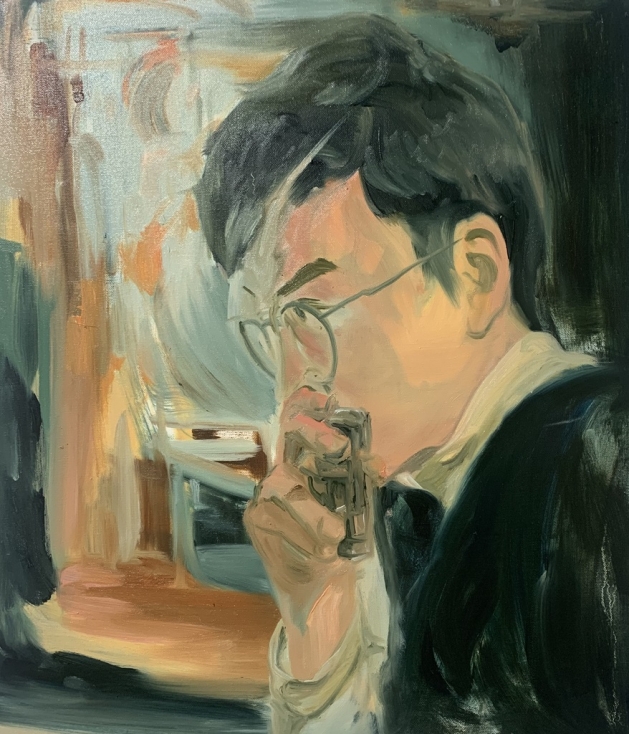
Beom: Some of the photographs are ones I took myself, and in the case of portraits, some were taken and sent to me by people around me. I may refer to images collected online, but it is difficult for them to become the starting point of a work. The image has to be of a place I actually passed through, people I was with, or a scene located within a very close radius of my own life before it can enter the painting.

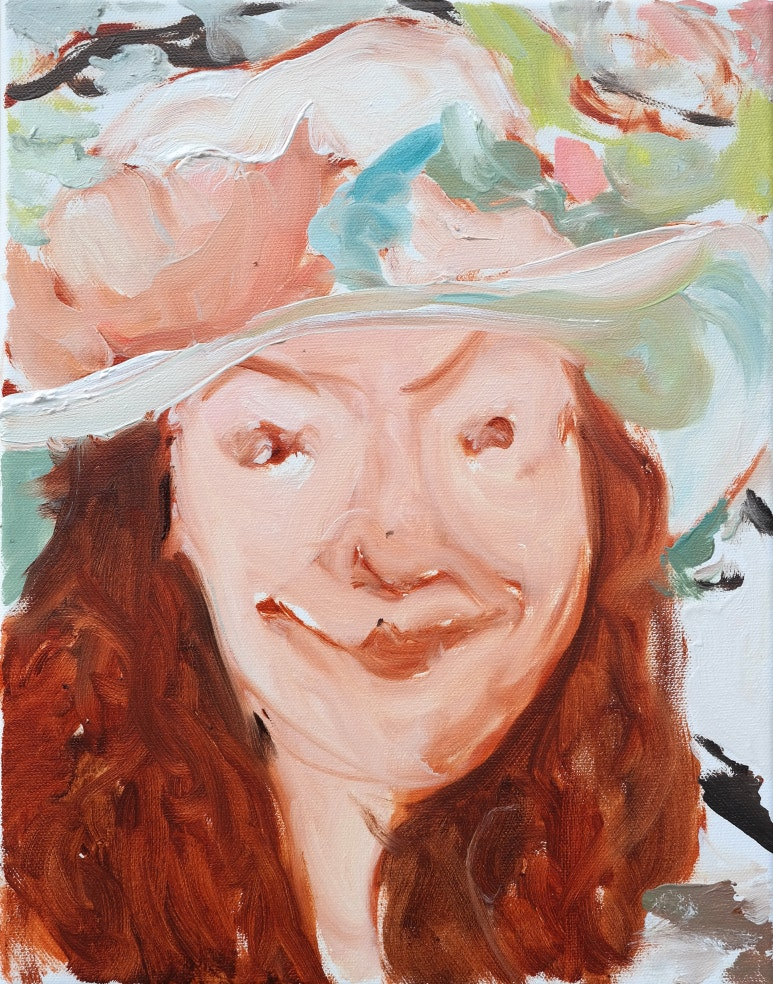
That is why most of the figures are people around me. These are not extraordinary events but ordinary moments from everyday life, and perhaps for that very reason they remain with me longer. That does not mean I record those moments exactly as they were. As the work develops, memory and emotion intervene: some parts become blurred, while others grow stronger. So reality and memory, observation and imagination, are all mixed together in the work.

LEE: Quite a few artists working in painting or sculpture have told me that their work is moving toward abstraction. As we have been talking, I have come to feel that, in some respects, your attitude toward subject matter resembles that of painters working during the transition from the nineteenth century into the early twentieth century.

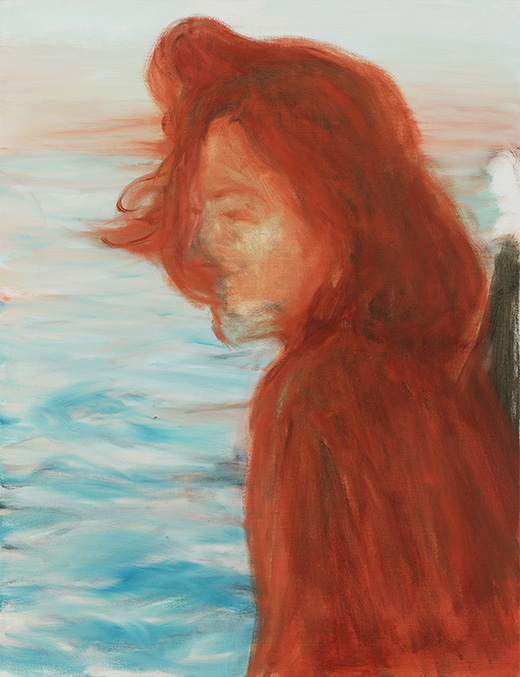
Beom: I think painters from that period were also trying to capture not simply an accurate depiction of the subject before their eyes, but things like the air or light of a particular moment, memory, and sensation. I am likewise more interested in the atmosphere that remains with me when I look back on a scene, or in the sensation that something was alive, than in the figure or landscape itself.

Because of that, the image may sometimes become blurred; certain parts remain while others disappear. Rather than saying that I am moving entirely toward abstraction, it feels closer to constantly moving back and forth between scenes from reality and hazy memories. I do not know whether my work will become more abstract in the future or move in a direction where figuration becomes more pronounced, but at the moment my paintings are in the process of searching for an order or structure that feels more desirable and convincing to me.



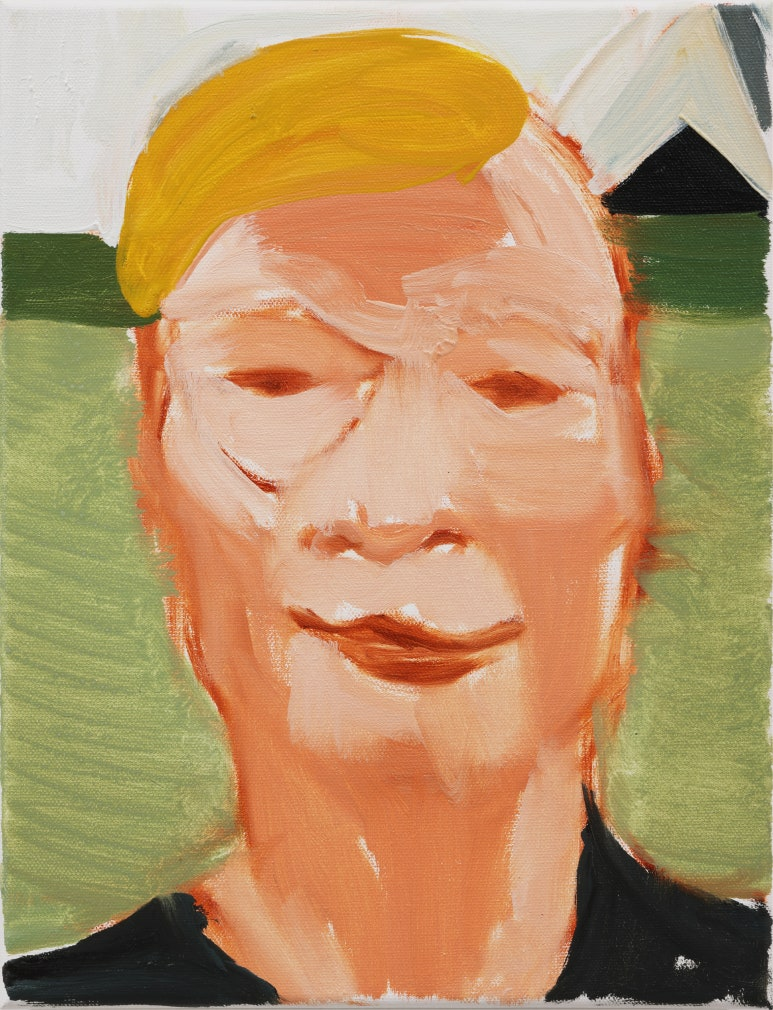
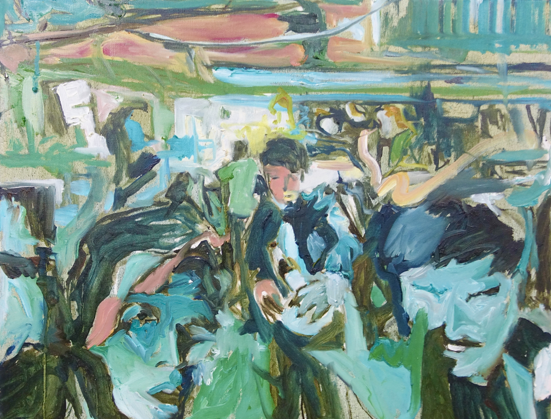
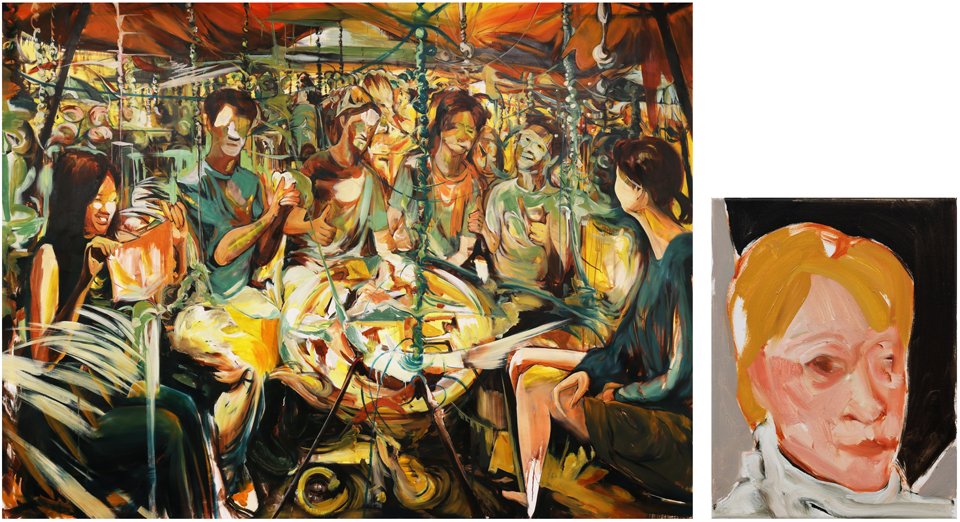
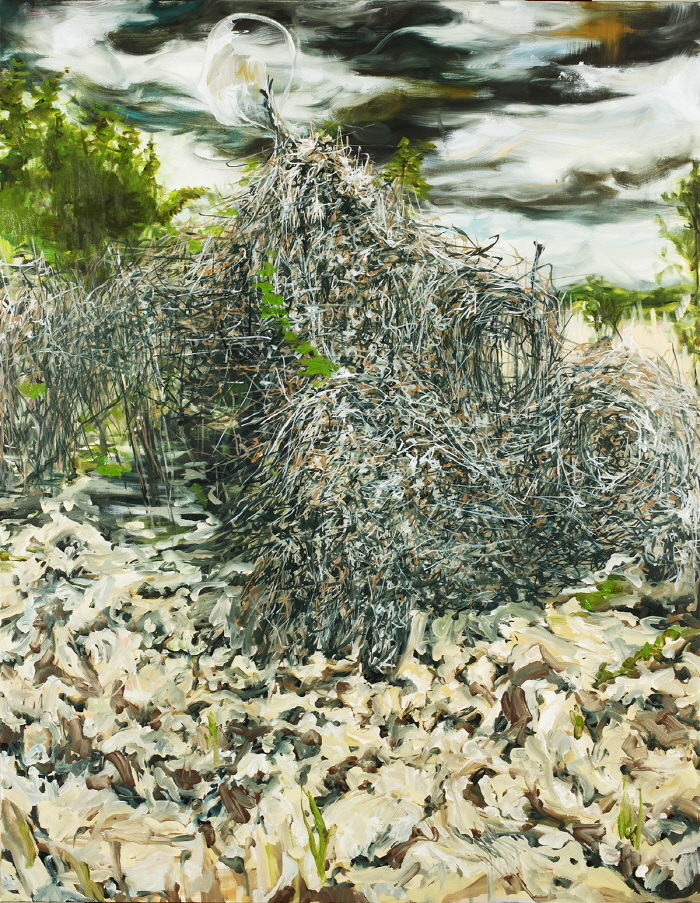
Beom Jinyong, Perfect Circle, 2025, Oil on canvas, 240 x 330 cm / A Figure, 2026, Oil on canvas, 27.3 x 34.8 cm © Beom Jinyong

LEE: Your paintings are based on photographs, but you do not reproduce the situations, the figures and their arrangements, or the colors in the photographs exactly as they are. If that is the case, would it not be possible to paint from any photograph? And yet you choose moments that you personally experienced. If you broadened the range of photographs you use, might you not find images with more interesting visual structures or situations?
Beom: Of course, I think I could find images that are more visually interesting or more striking. But in my work, photographs are not simply source material for composing an image. The places where I actually was, the people I spent time with, and the air and atmosphere of that day all continue to accompany me while I work.

If I used images with which I had no connection, I might be able to make more dramatic or polished paintings. But I am more interested in the lingering sensation of a moment that remains faintly after it has passed than in creating an extraordinary scene. That is why I continue to return to scenes I have actually experienced.

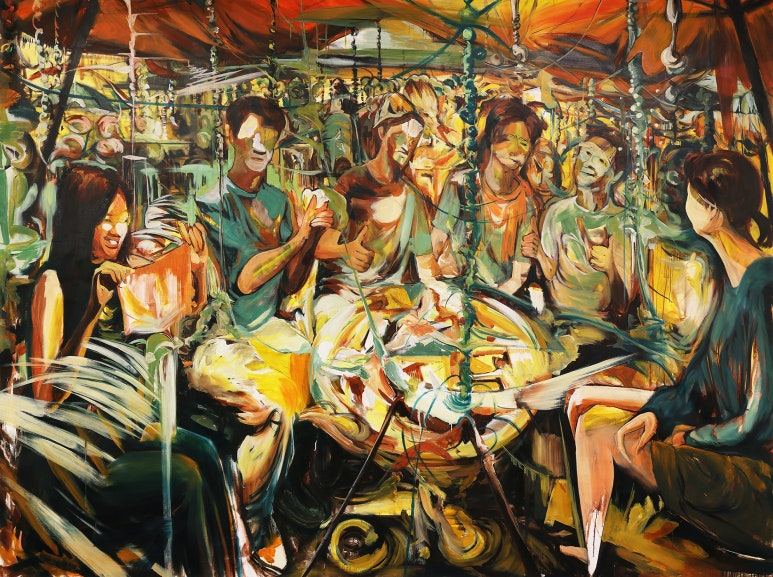
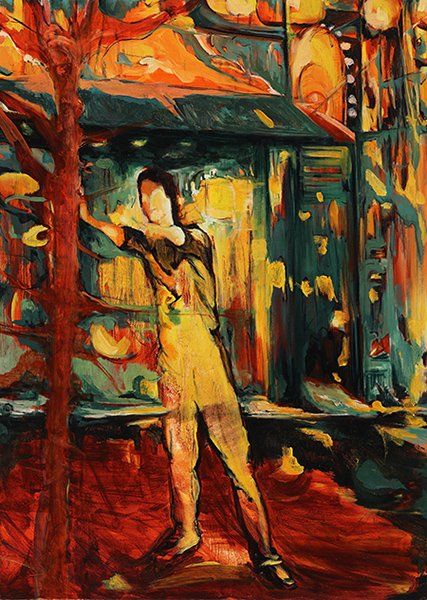
LEE: When conducting interviews or writing, I tend to be cautious about referring to specific art movements or artists, but some of your works bring German Expressionism to mind. There is a strong sense of expressiveness in the brushwork and lines. Even though the colors convey light and energy, the paintings remain dark. There is a lively, bustling atmosphere, yet the expressions and overall mood of the figures can also feel dark and eerie.

Beom: I think that is probably because what I paint and the way I want to express it happen to fit together. Even when there are groups of people, bright colors, or strong brushstrokes, what remains within the image is not necessarily a purely joyful or clearly defined emotion. I think real memories are like that too. A moment may have been filled with laughter and conversation, yet when you look back on it later, it can somehow feel unfamiliar or lonely. I am interested in that kind of ambiguous sensation.

LEE: How much attention do you pay to the sides of the canvas?

Beom: As I work, traces of paint dripping or spreading naturally appear, and I consider those to be part of the working process as well. Rather than something I deliberately stage, they are closer to traces that remain as a result of painting. I think I am more drawn to a surface where those marks and disruptions produced in the process of painting coexist, rather than one that is completely neat and resolved.

References