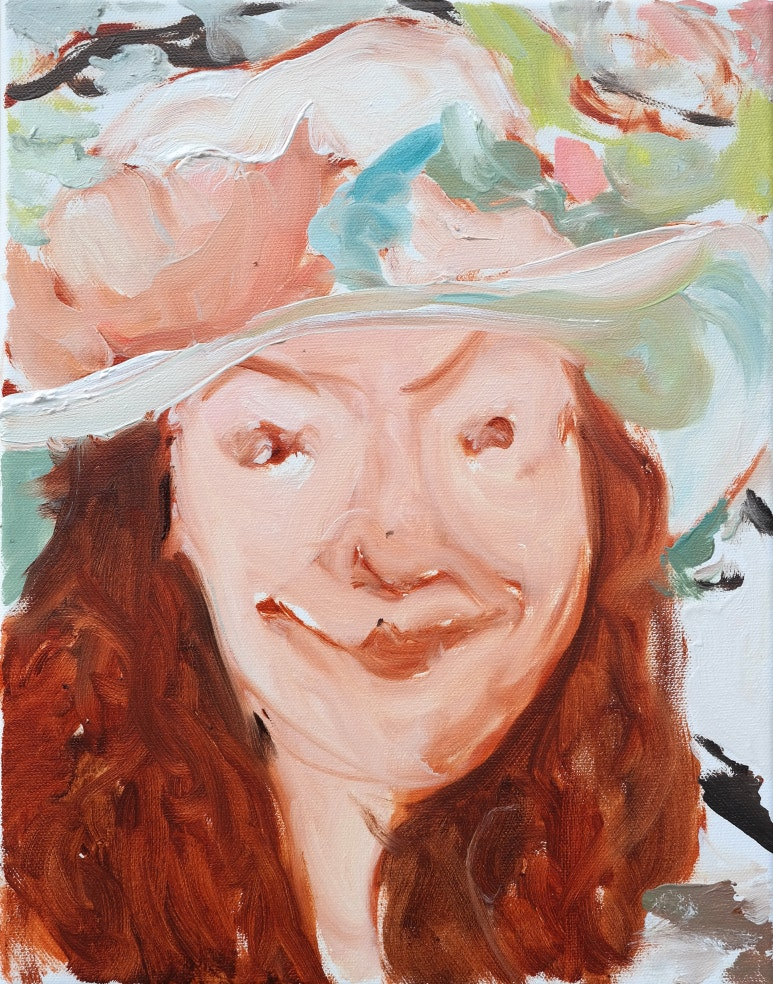
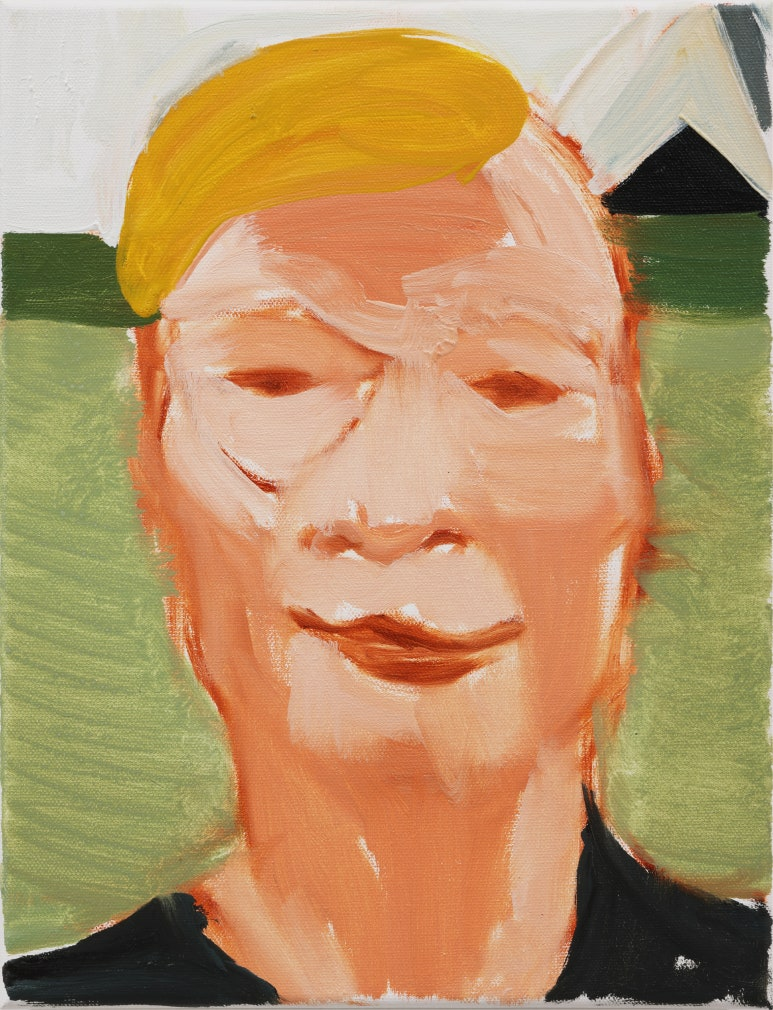
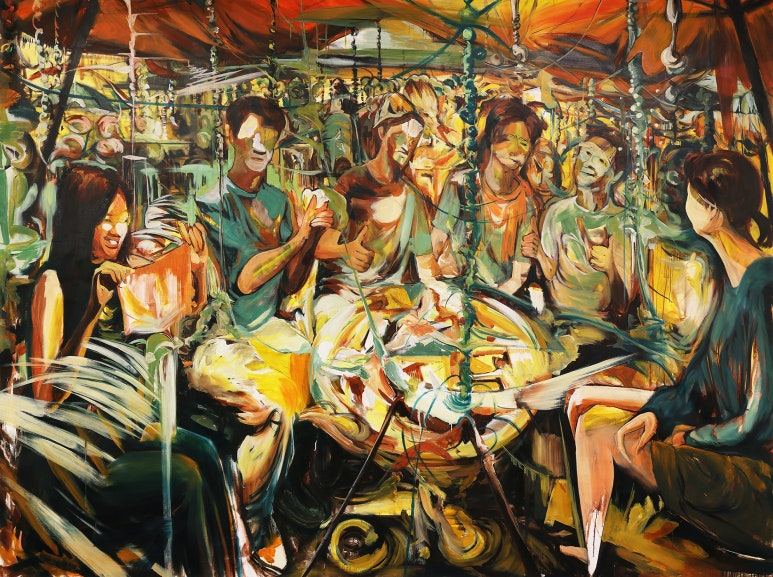
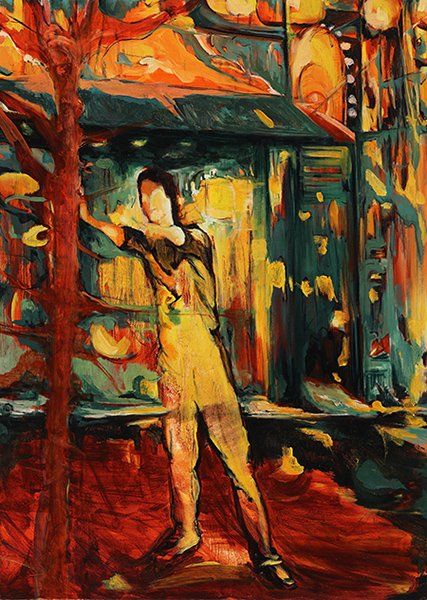
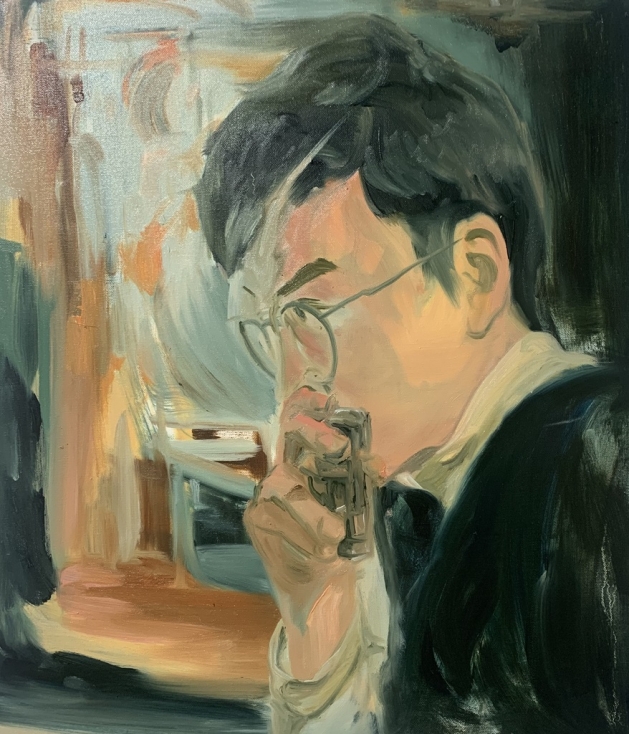
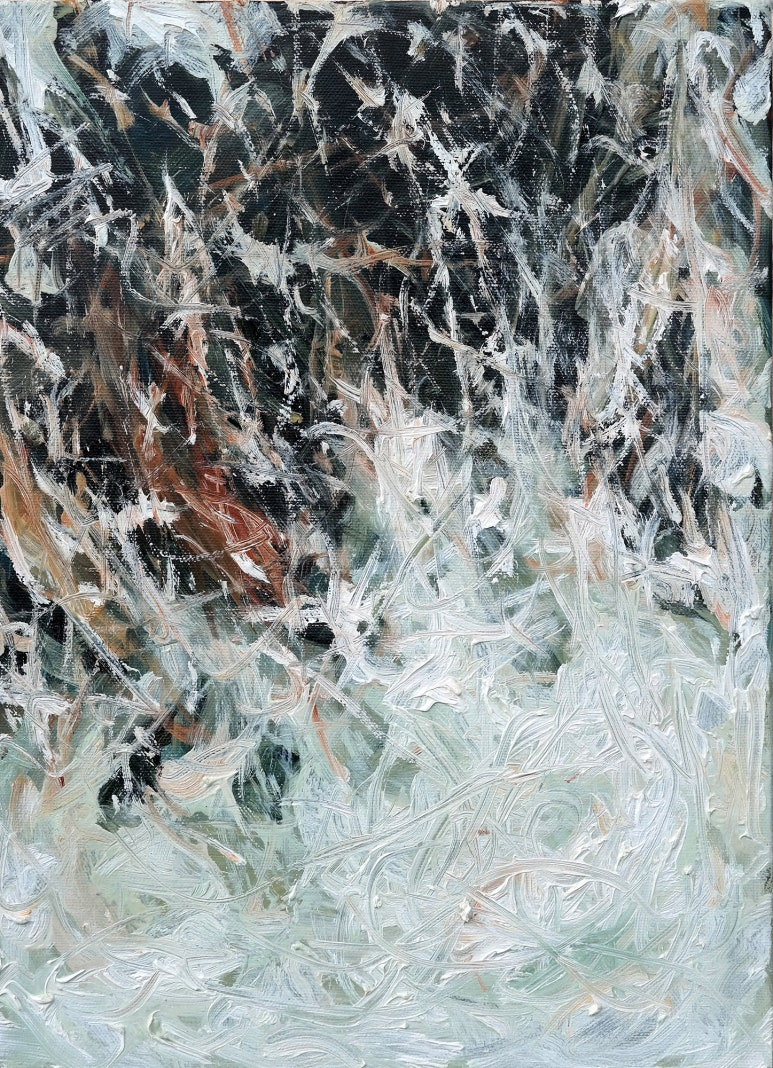
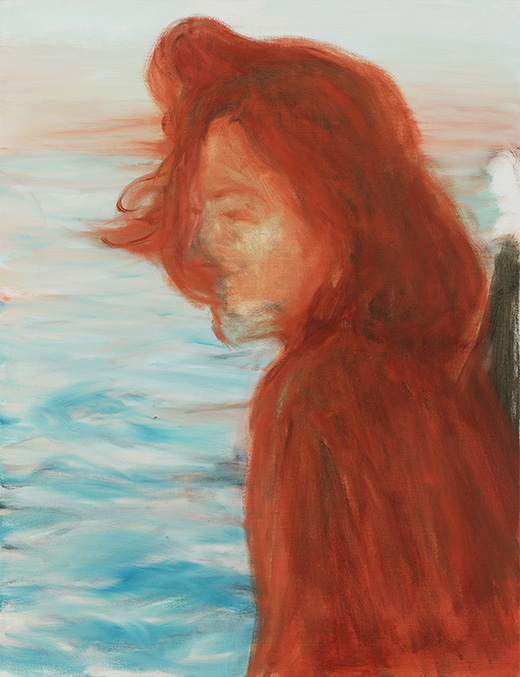
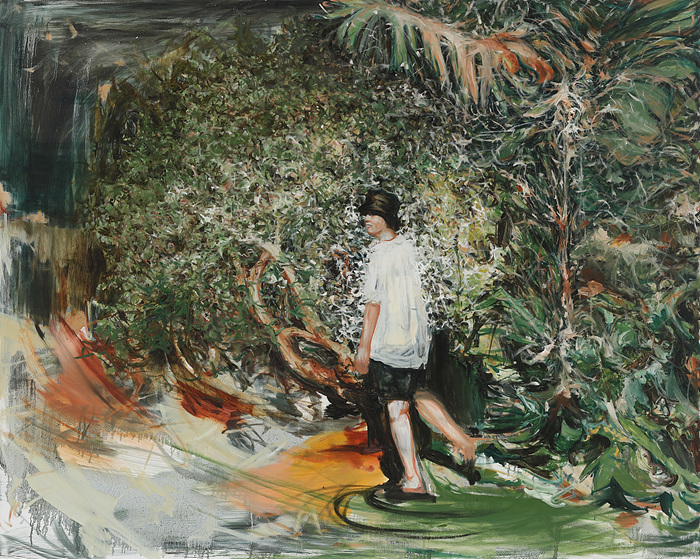
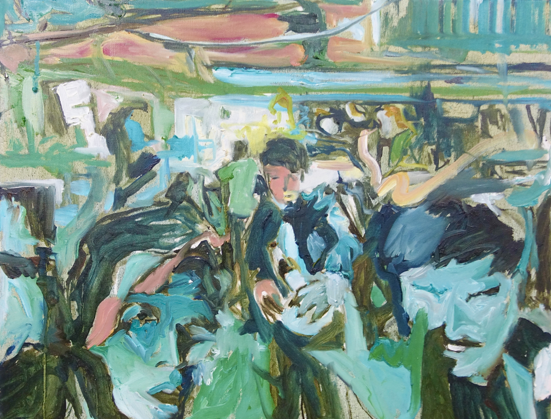
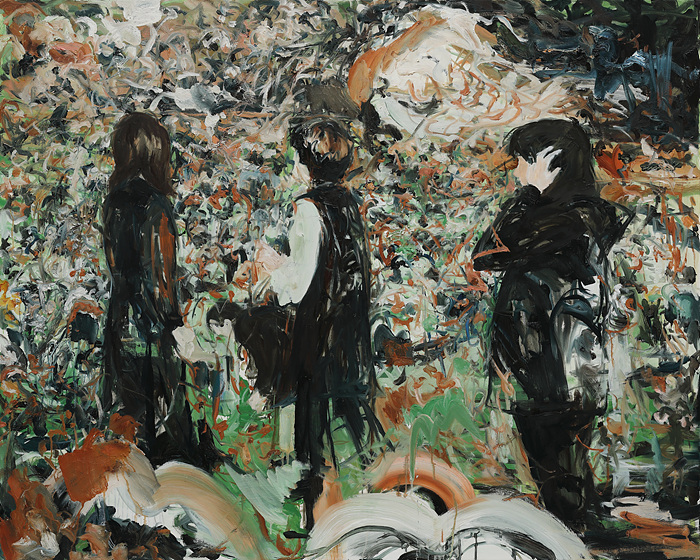
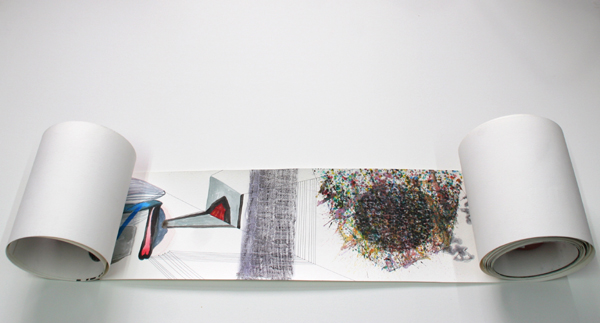
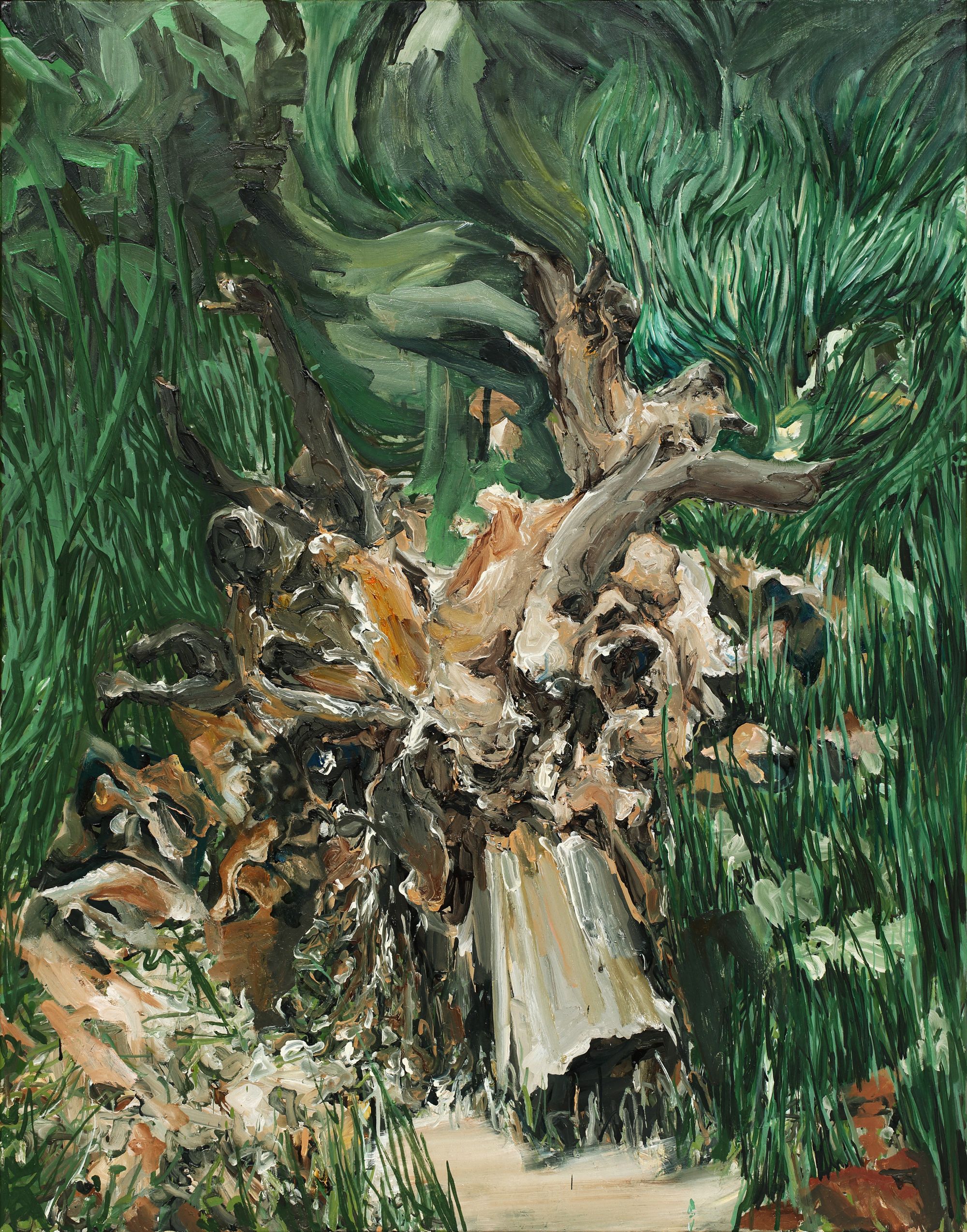
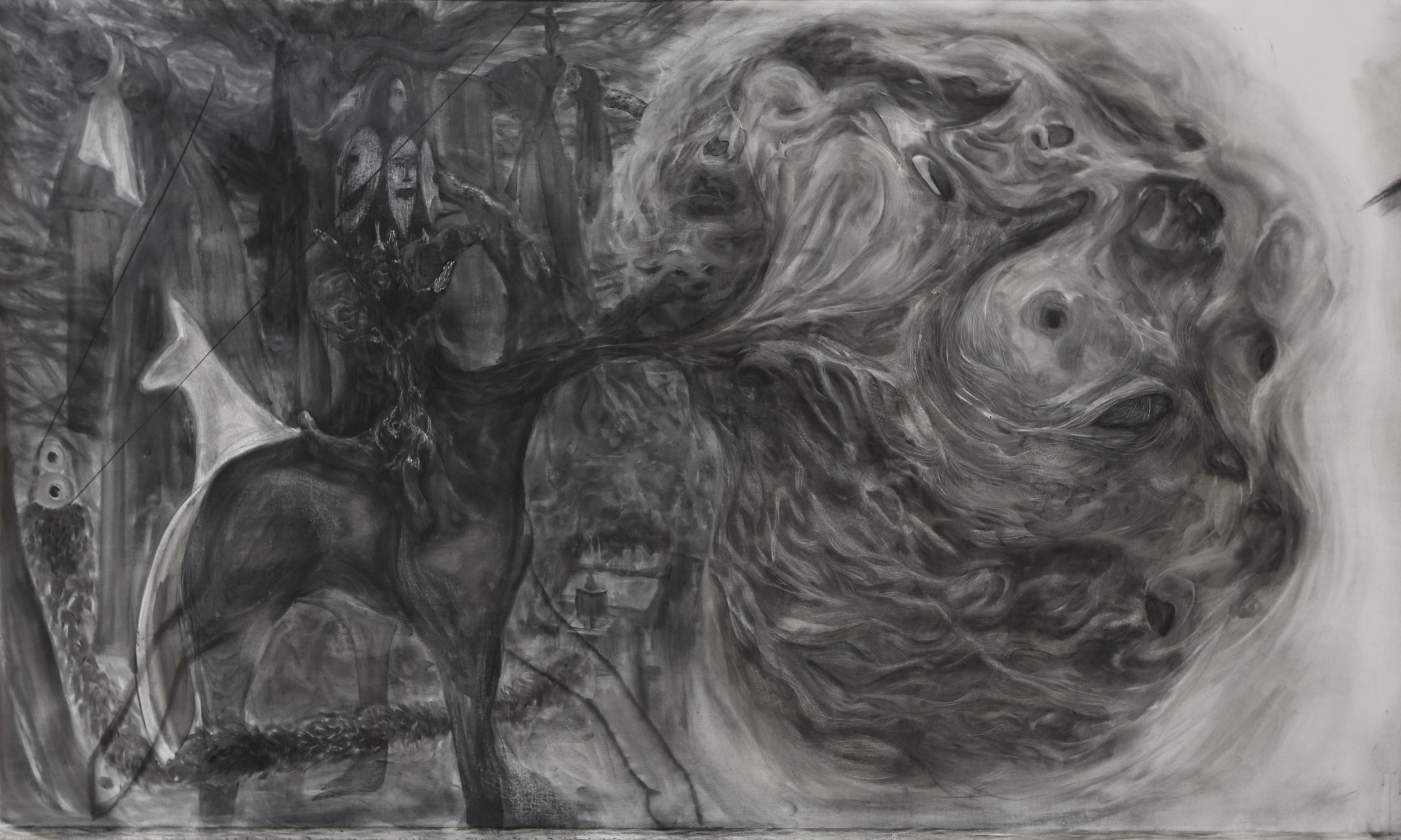
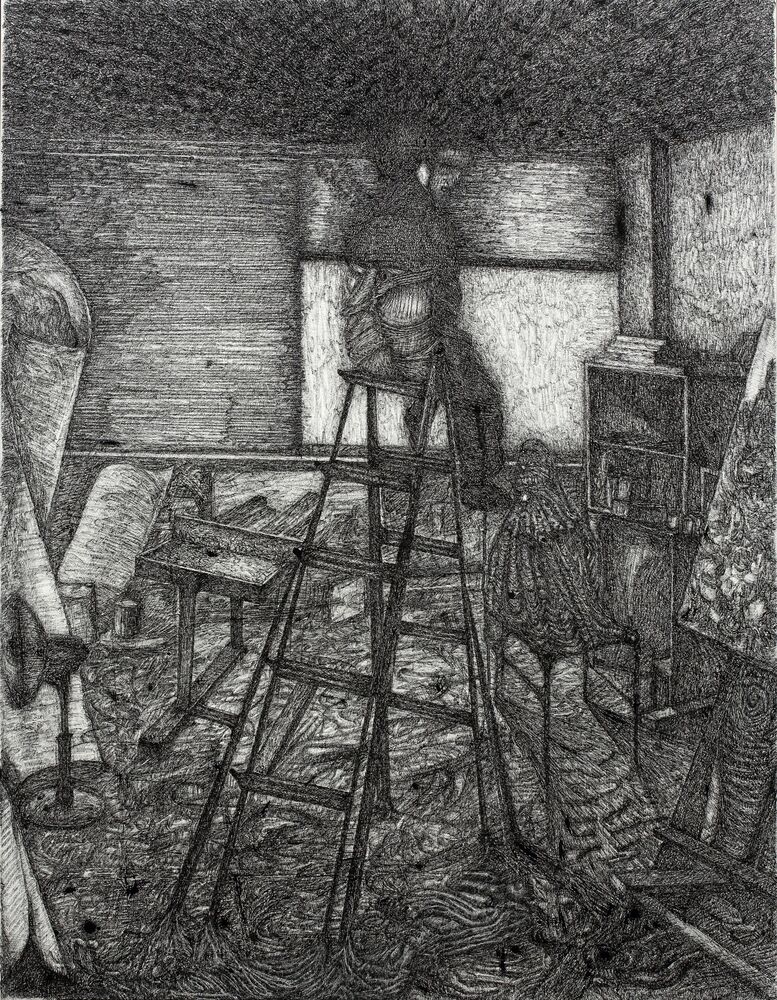
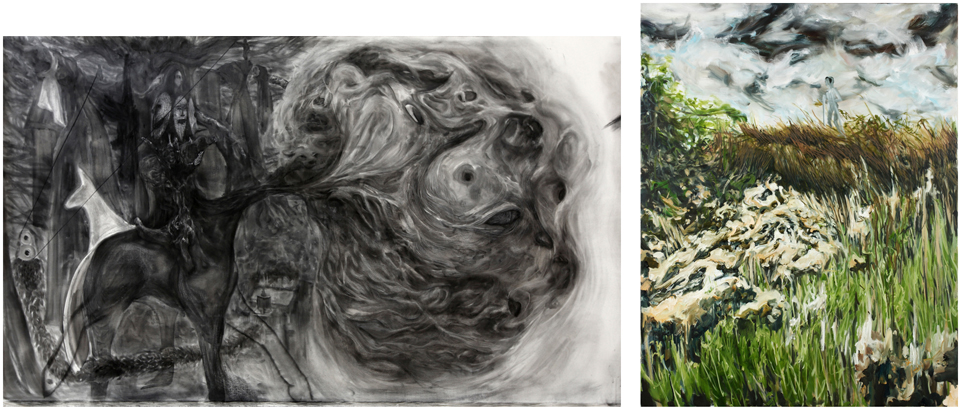
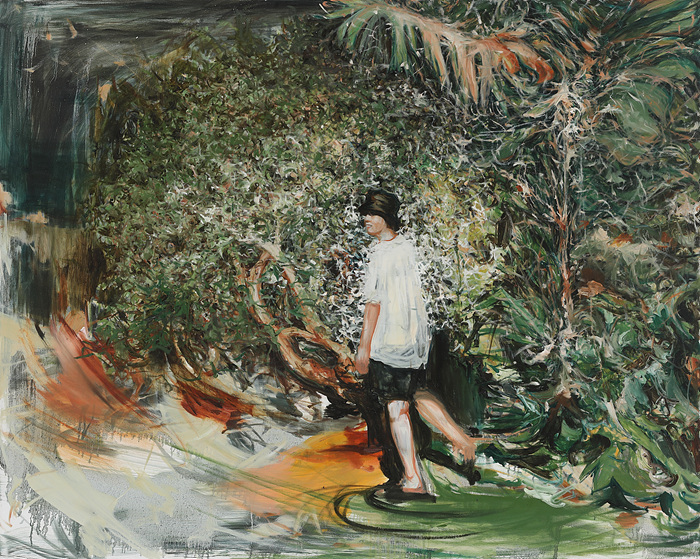
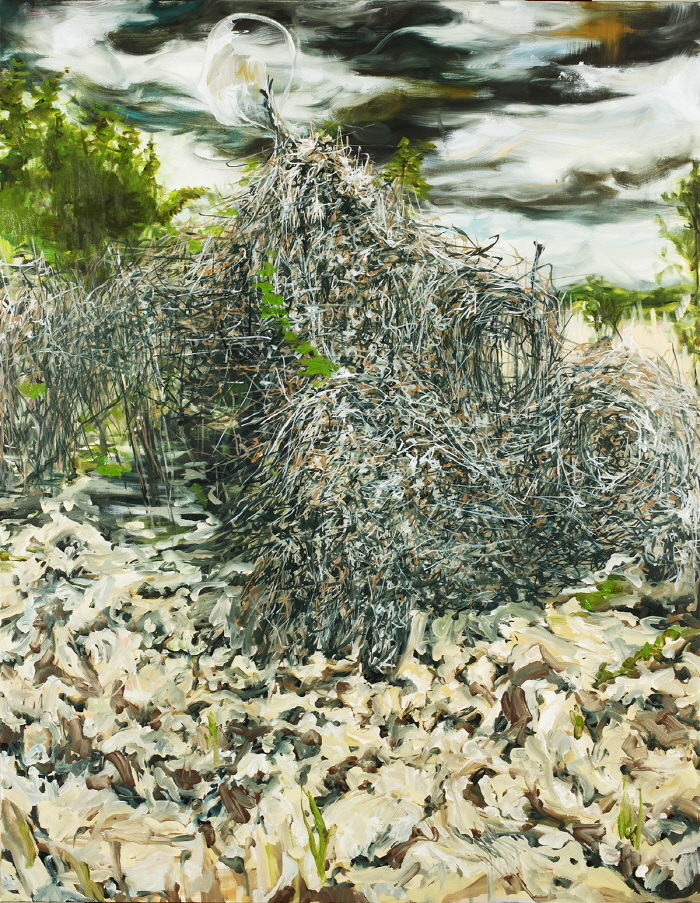
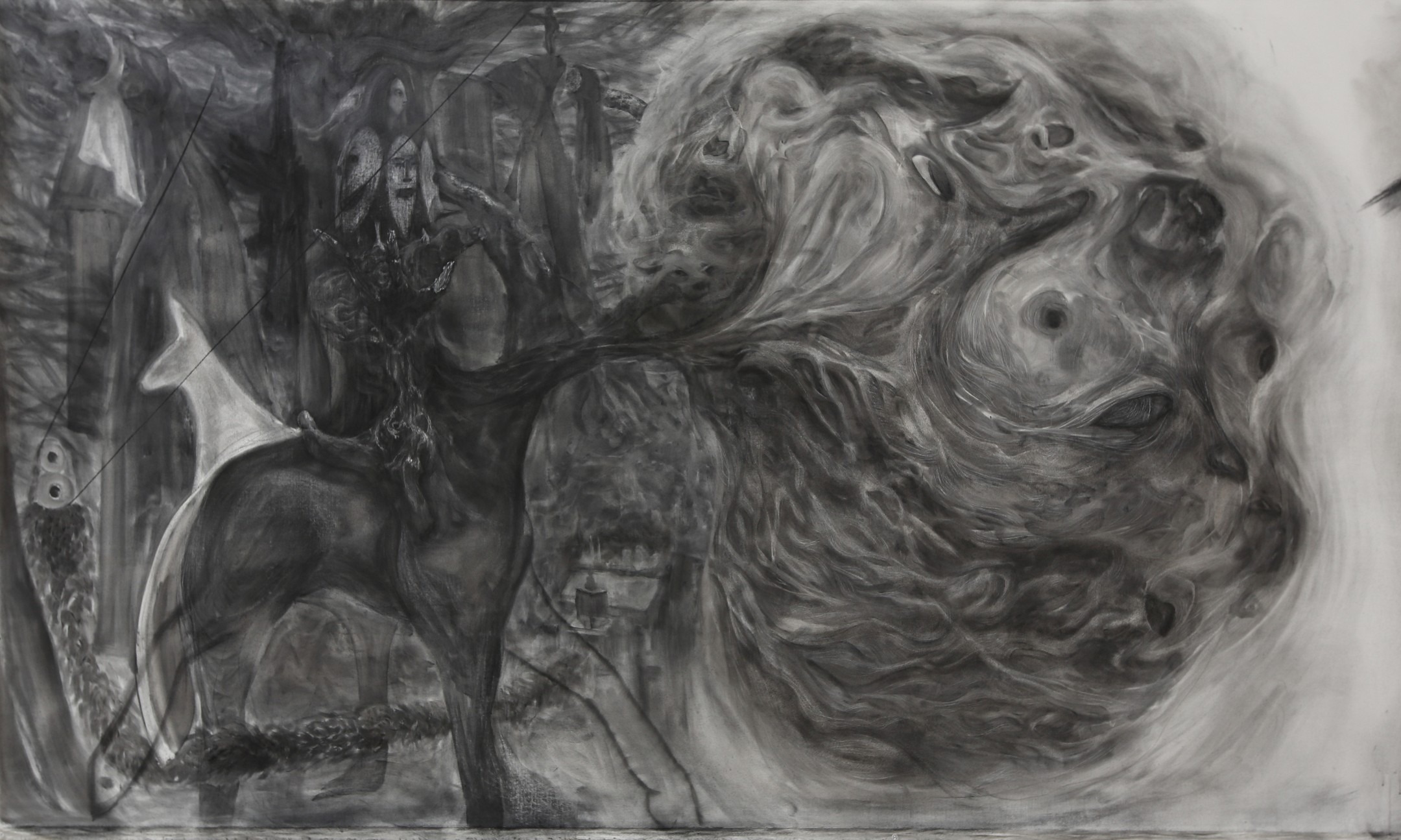
This is precisely why the artist’s practice of representing dreams in a dream journal and then adapting them into paintings is meaningful. The original dream itself opens up a narrative different from reality, or one that has not yet been realized within it, while the representation and adaptation of that dream open yet another narrative, a narrative marked by difference.
In other words, to represent and adapt a dream may be to open a repository of narratives; it may be to unleash repressed and latent narratives; it may be to summon other and differing narratives through freely shifting hyperlinks, thereby expanding existing ones; and in this way, it may ultimately be to open a hypertext that continually opens and closes in every direction.
Repressed narratives and latent narratives? Dreams have been described as the indirect fulfillment of repressed desire. They have also been described as the punishment of desire. A dream is a fabric of narrative woven from desire (or temptation) and punishment, the ego and the superego, the alter ego and the father (the one I must kill), as warp and weft.
Hyperlink? Hypertext? Hyperreal? Dreaming is an act that opens a hyperreal world. I move toward desire, while reality—or rather, the institution, which itself is another name for the father—represses it. Desire is thus linked to reality, comes from reality, and is derived from reality. As that desire is repressed and submerged, reality becomes distorted. Why, then, does reality repress desire?
Or put differently, why does reality generate desire in the first place? Reality must keep at its margins a necessary measure of desire, anxiety, and repression. It does so in order to offer up a scapegoat to anticipated violence whenever problems arise within reality—and thereby to maintain the stability of the system.
Desire thus crosses the boundary between ontology and sociology, encompassing both the stability and the instability of the system. In other words, institutions repress desire in order to preserve systemic stability, while repressed desire in turn becomes a spark for revolution. Perhaps, then, the dream is a panorama of desire that may itself constitute true reality, a world more real than the real world, and therefore a hyperreal world.
The narratives represented by dreams are at once familiar and strange: familiar because dreams imitate or reflect reality, and strange because reality is rearranged and reconstructed within them. In this way, dreams move beyond the real world and open onto the hyperreal.
Let us return once more to the dream story with which we began. As the artist himself explains, the people who appear in his dreams are in fact incarnations and embodiments of his unconscious. In other words, the people climbing the iron tower are the materialized forms of dark, fearful, difficult, and uncomfortable moments.
The striking woman with dark circles under her eyes and a body as thin as paper—the protagonist of this narrative, so to speak—is the externalization of both fear and temptation.
Fear and temptation? Desire and punishment? That woman (the mother) was originally my lover (the Imaginary). When the father intervened, I relinquished my lover to him (the Symbolic). Even so, she remains my lover within my mind (the Real). This is precisely why the woman evokes fear and temptation, desire and punishment, simultaneously.