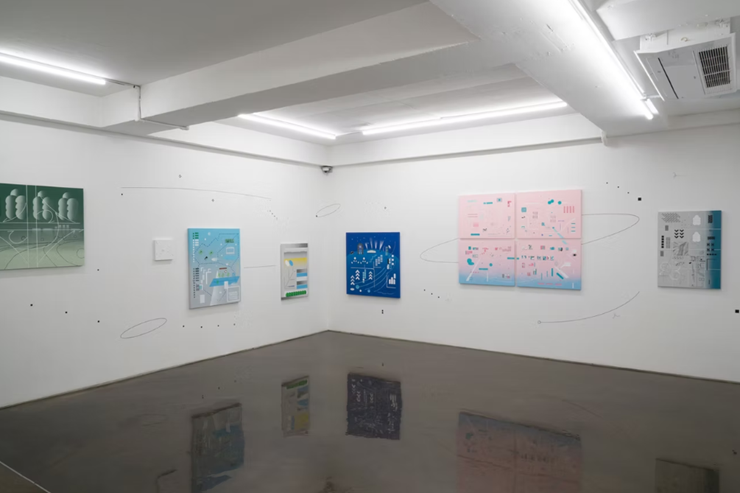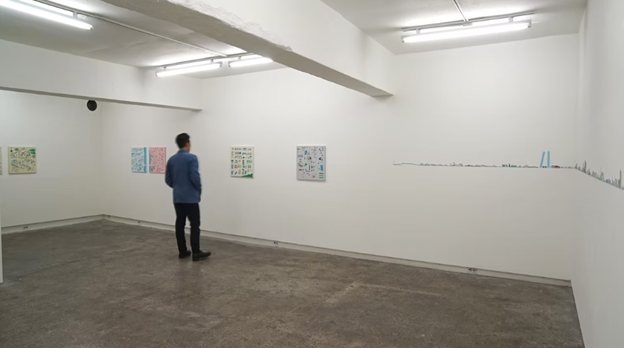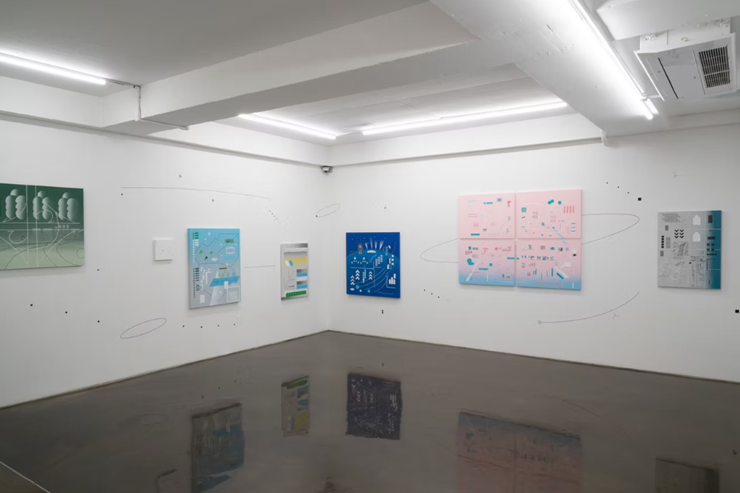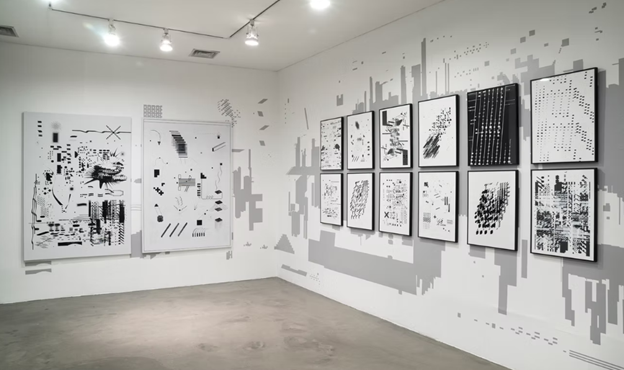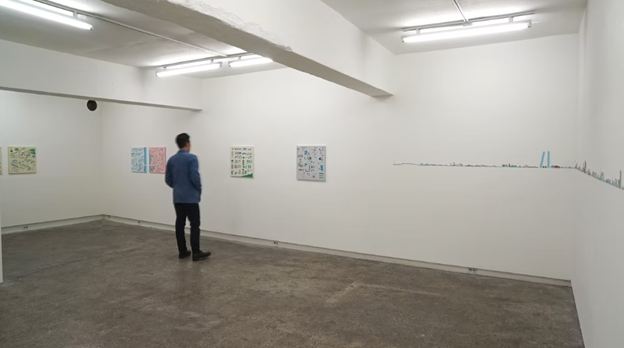


Installation view © Space Willing N Dealing

Space Willing N Dealing presents "POI (Point of Interest),” a solo exhibition featuring new works by Chu Mirim that explore digital imagery through its most fundamental unit—the pixel. In an era overflowing with information, the artist uses pixels as a tool to understand the smallest units of the landscapes closest to her.

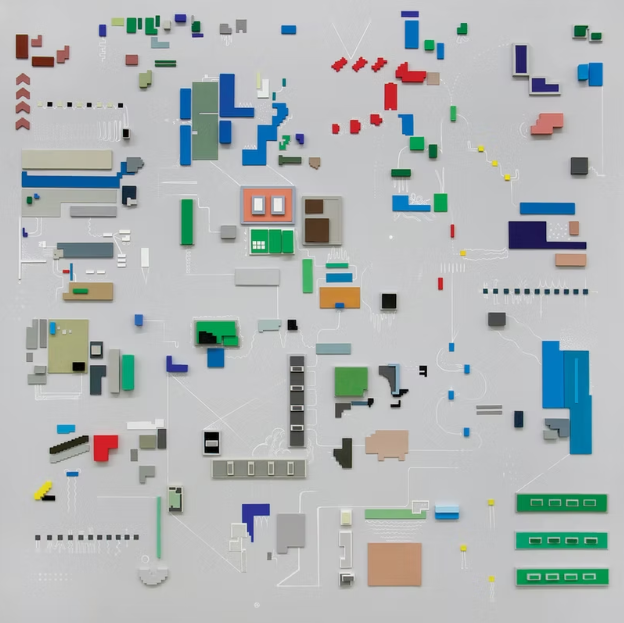
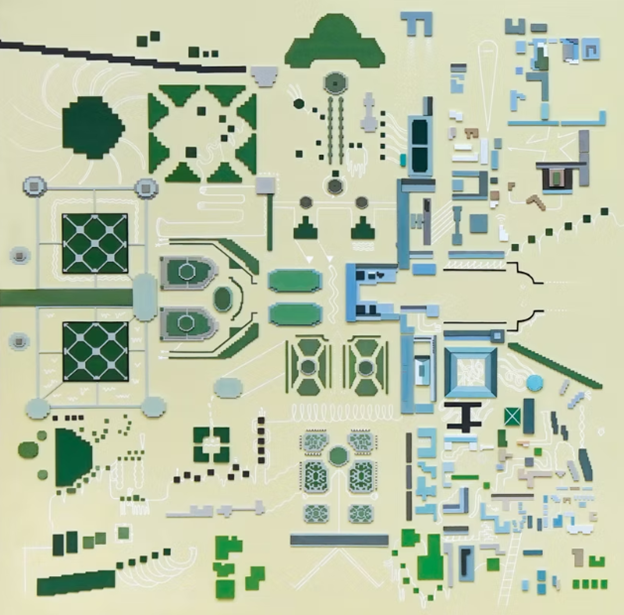
The exhibition title, "POI (Point of Interest),” refers to specific locations such as buildings or shops on digital maps provided by web programs like Google Earth. In this exhibition, the artist selects the cities she has lived in—Seoul, Bundang, Paris, and Versailles—as her POIs. These locations are reimagined through an unfamiliar perspective—the artificial eye of a satellite—and then subjected to a pixelation process, resulting in both two-dimensional and installation-based works. By going beyond the dictionary definition of the pixel as the basic unit of a digital image, the artist seeks to create a new map where memories of real experiences and digital landscapes coexist.

While urban landscapes may seem stark and impersonal to some, they provide the artist with a sense of familiarity and comfort. Through the satellite’s vantage point, she captures the geometric and abstract beauty of cities—scenes that appear both distant and aesthetically compelling. The exhibition reflects how memory and nostalgia are no longer collected in analog ways but instead exist as digital files that are stored and shared. For Chu, this represents a new way of accessing personal memories.

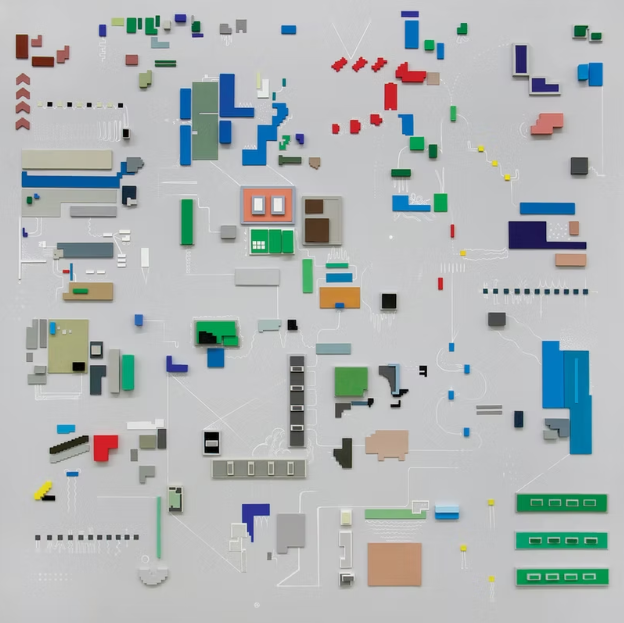
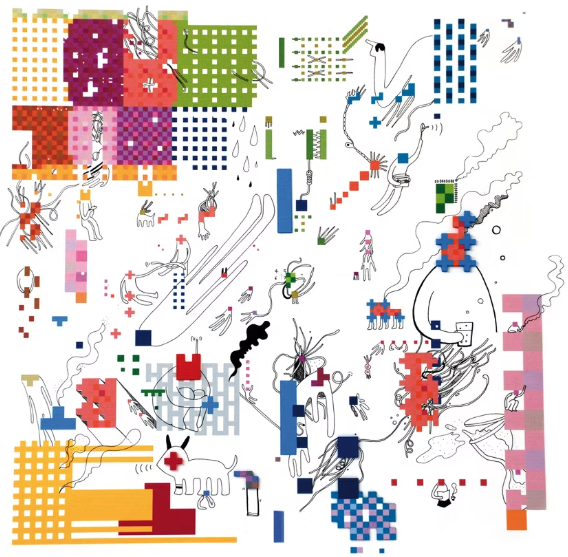
Chu Mirim, Yangpyeong-Dong, 2014, pen, acrylic, paper block, glue on paper panel, 50x50cm © Chu Mirim

At the core of her practice, the artist reconstructs the cities she has lived in by layering sheets of paper, expressing both her nostalgia and the unique sensibilities of the digital age. Paper, as a medium, neutralizes the cold and rigid nature of digital technology, offering warmth and softness as a counterbalance. Each city is distinguished by its own color palette, while structural characteristics—such as the radial layout of Paris, the geometric order of Versailles, or the repetitive building arrangements in Bundang—reveal the subtle cultural differences that remain visible even from a satellite perspective.

Chu Mirim’s memories of these cities manifest as drawn lines resembling movement paths across the layered paper landscapes, encapsulating her personal impressions and recollections. The free-flowing lines establish a sense of balance with the pixelated structures of the urban grid. Additionally, large-scale wall installations made of felt and nonwoven fabric integrate all the cities she has lived in, merging them into a singular, unified landscape. The 50x50 cm cityscapes created on a flat surface are expanded and transformed into sculptural objects, prompting viewers to experience the shifting perspectives of individuals living within vast urban structures.

References