ThisWeekendRoom is pleased to
present "Partners Desk," a two-person exhibition
featuring Chu Mirim and Hong Seung-Hye, running from April
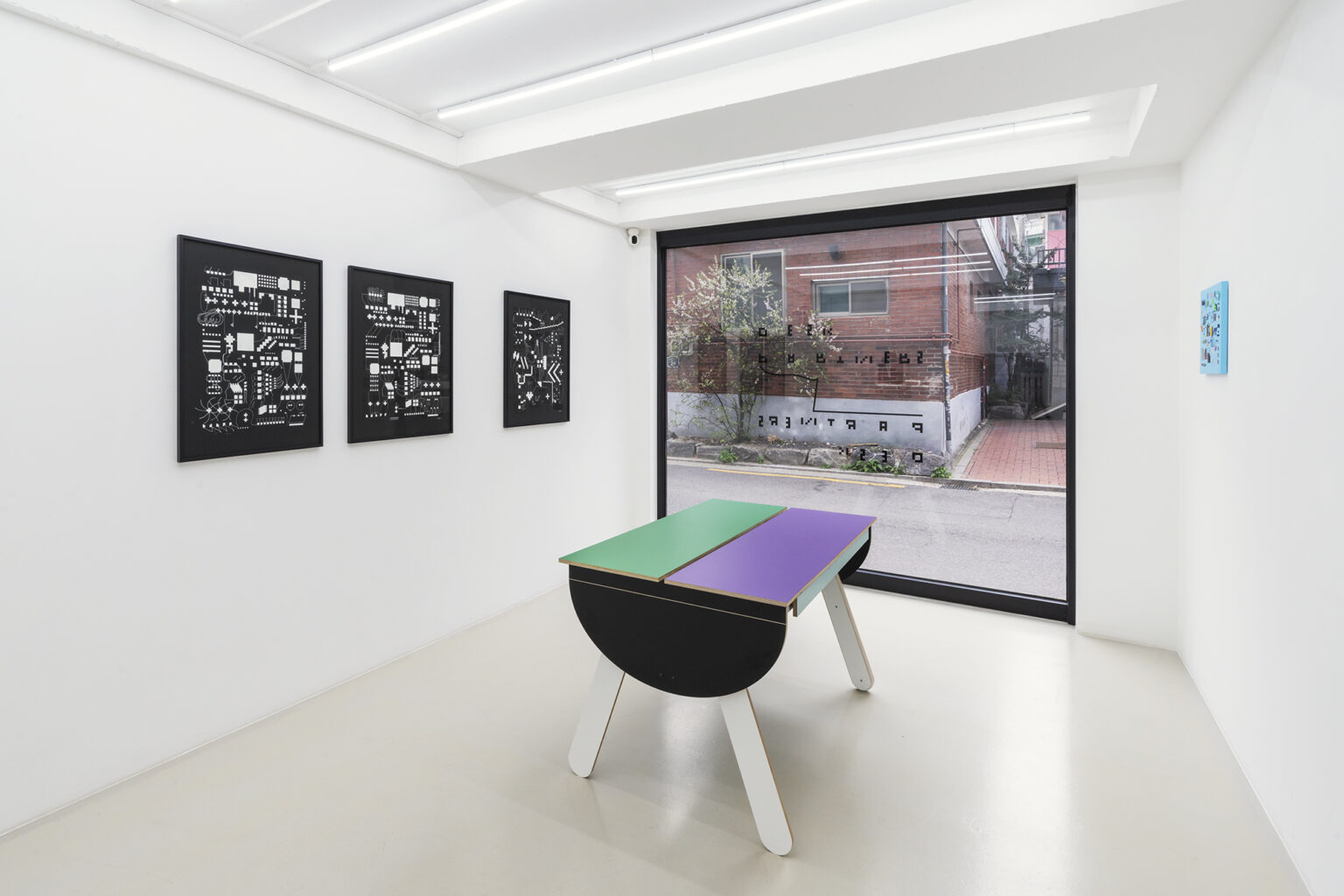
12 to May 18, 2024. The exhibition title, "Partners Desk," refers
to a face-to-face desk where two individuals sit opposite each other. It
metaphorically represents the artists positioned at either end of the desk,
observing each other's interests, identifying similarities and distinctions,
and shaping a temporary convergence or intersection within the given space.
Rather than merely highlighting
the artists' shared concerns and visual similarities, the exhibition delves
into their differences, emphasizing the subtle disparities in their artistic
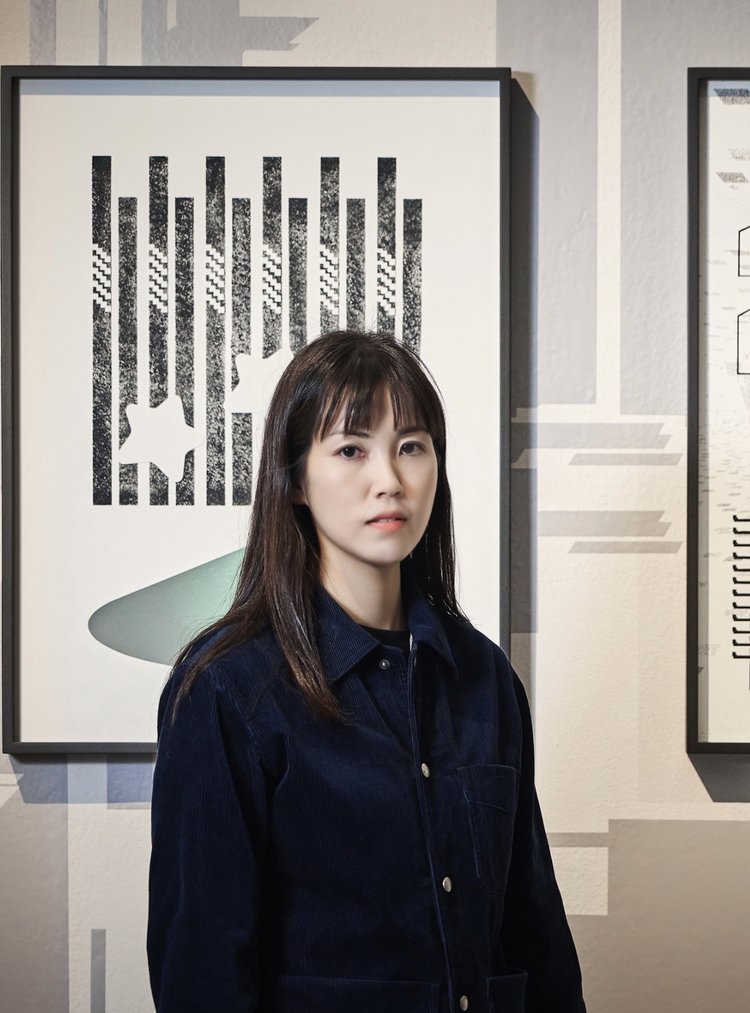
perspectives and methodologies. Both Chu Mirim and Hong
Seung-Hye derive their visual language and physical experiences from urban
environments, integrating these influences into their artistic practices.
However, they embarked on their careers at different times, and each artist
uniquely merges micro and macro perspectives to dissect the structural
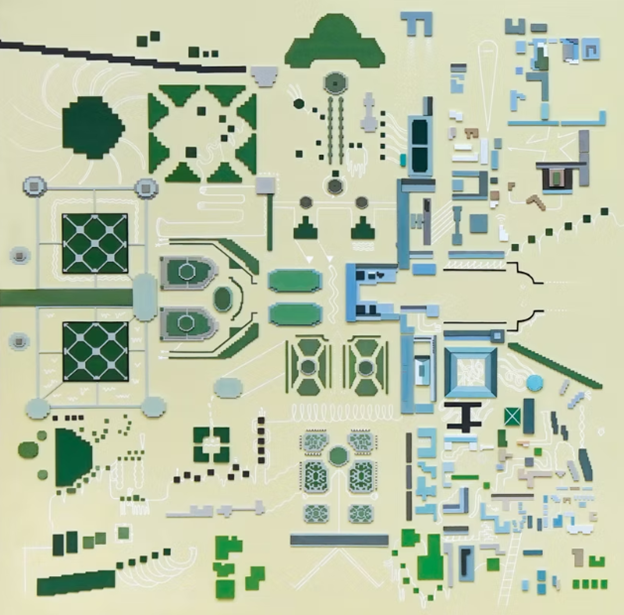
complexities of cities. While Chu’s work applies the logic of digital
image production to reality, transforming it into a form of visual
art, Hong’s practice extends the meta-experimentation of painting
into urban environments by incorporating the conditions of computer editing
programs. Their distinct starting points and trajectories inform their
respective approaches.
These differences become
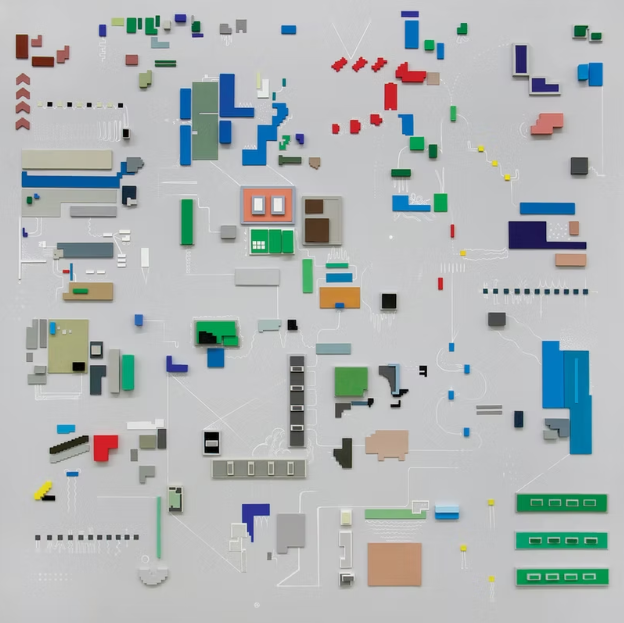
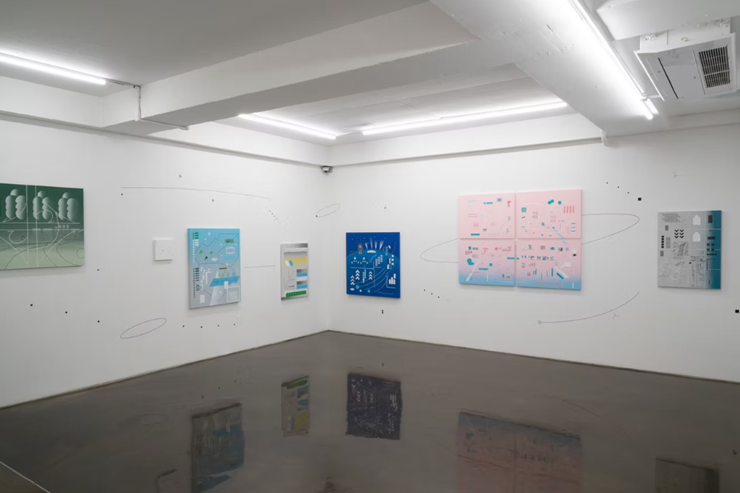
particularly evident in their recent works. Hong’s pieces feature
reflective elements that capture external forms, intentional voids that allow
external shapes to enter, and an assembly-based logic where the composition
remains variable depending on its placement and arrangement. In
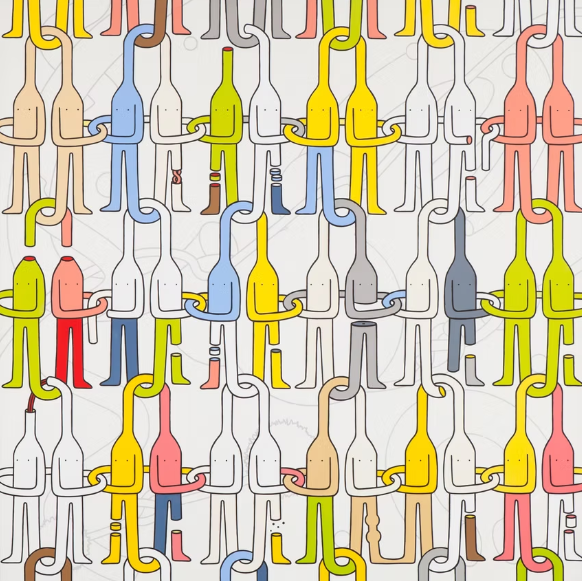
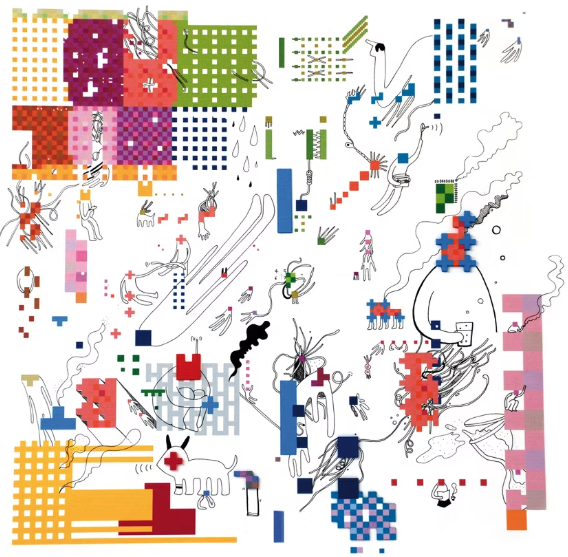
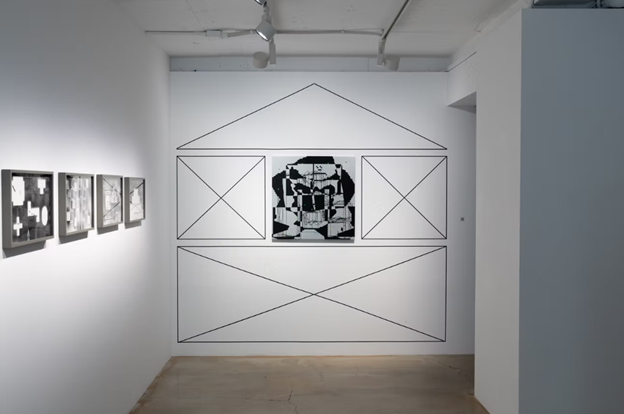
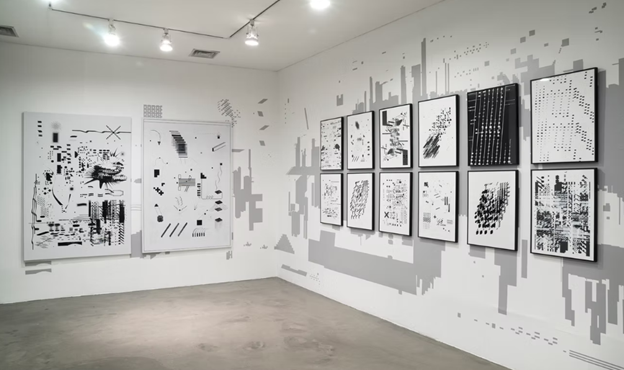
contrast, Chu actively integrates the characteristics of media
editing environments into the visual arts. Her approach involves retrieving and
manually modifying digital images stored as copies or applying mask functions
of various shapes onto meticulously hand-drawn pen illustrations, effectively
reshaping their contours. Despite these distinctions, a common artistic
methodology emerges between the two—both artists repeatedly utilize image
fragments from one work across different mediums, reassessing their roles and
relationships to suit each specific environment.
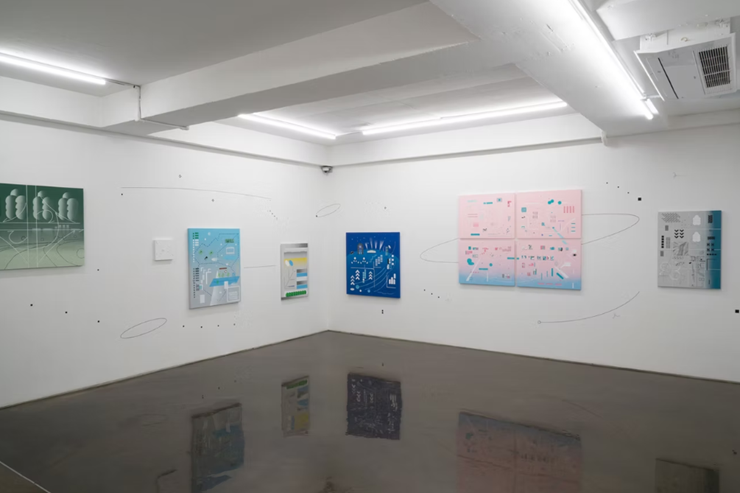
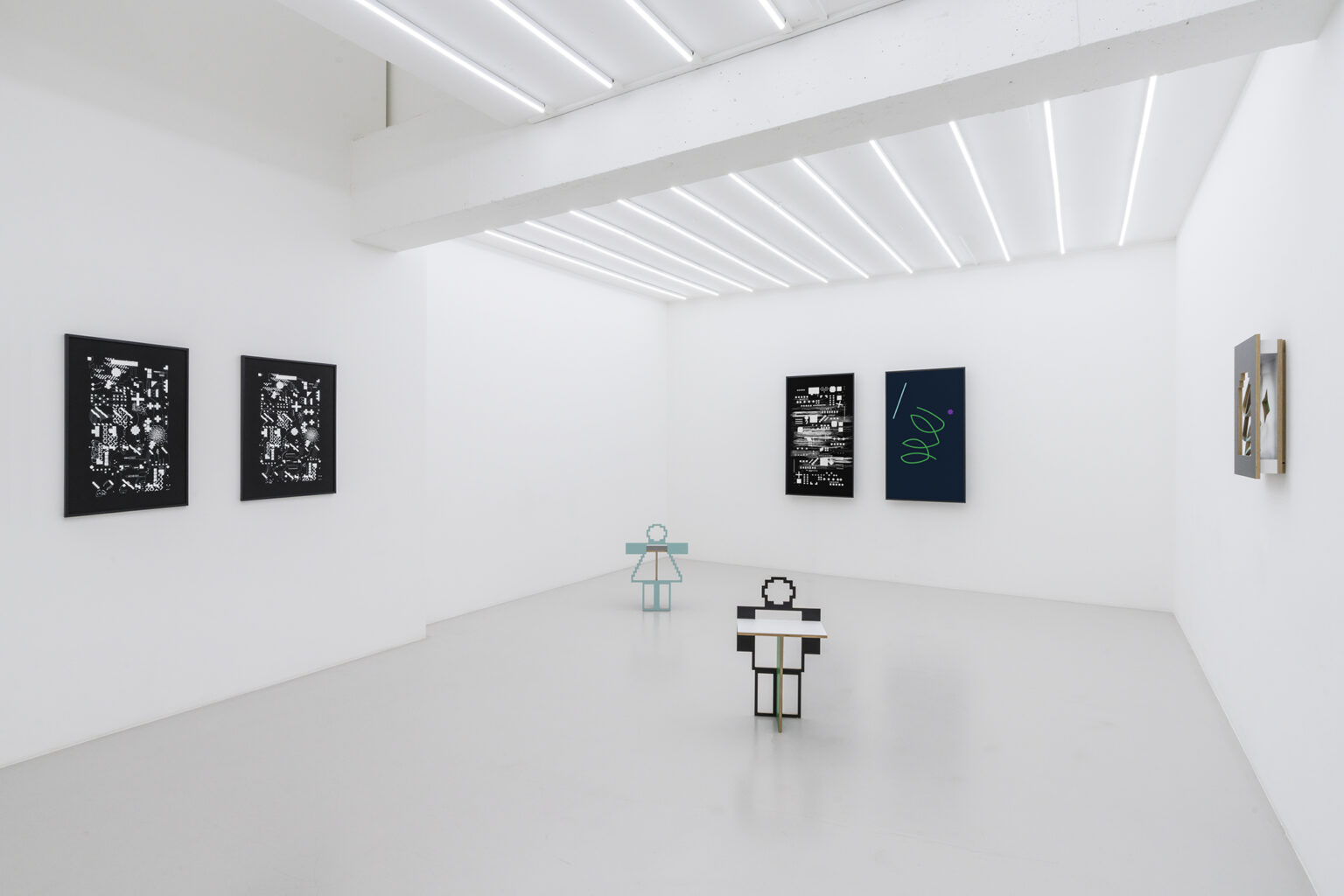
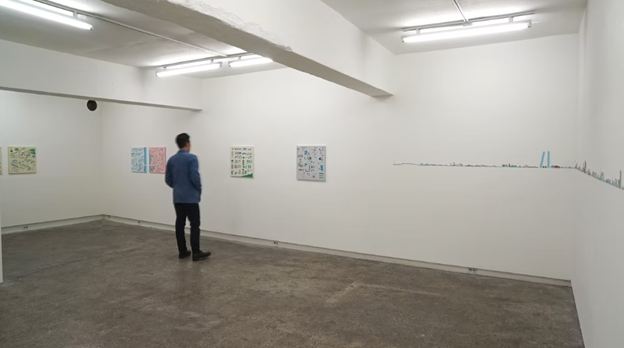
Within the exhibition space,
their works establish a dynamic interplay, attracting and repelling each other
in a rhythmic engagement. At certain moments, one artist’s form dominates,
while at others, the opposite occurs. The works interact through phases of
convergence and divergence, synchronizing into a distinct rhythm. Rather than
presenting a fixed, conclusive arrangement, the exhibition unfolds as a gradual
dialogue between the two, evolving organically through moments of exchange,
resistance, and reinterpretation. In this sense, the exhibition serves as a
metaphorical "desk"—a space where meanings are negotiated,
reshaped, and continuously explored by the artists and the audience alike.