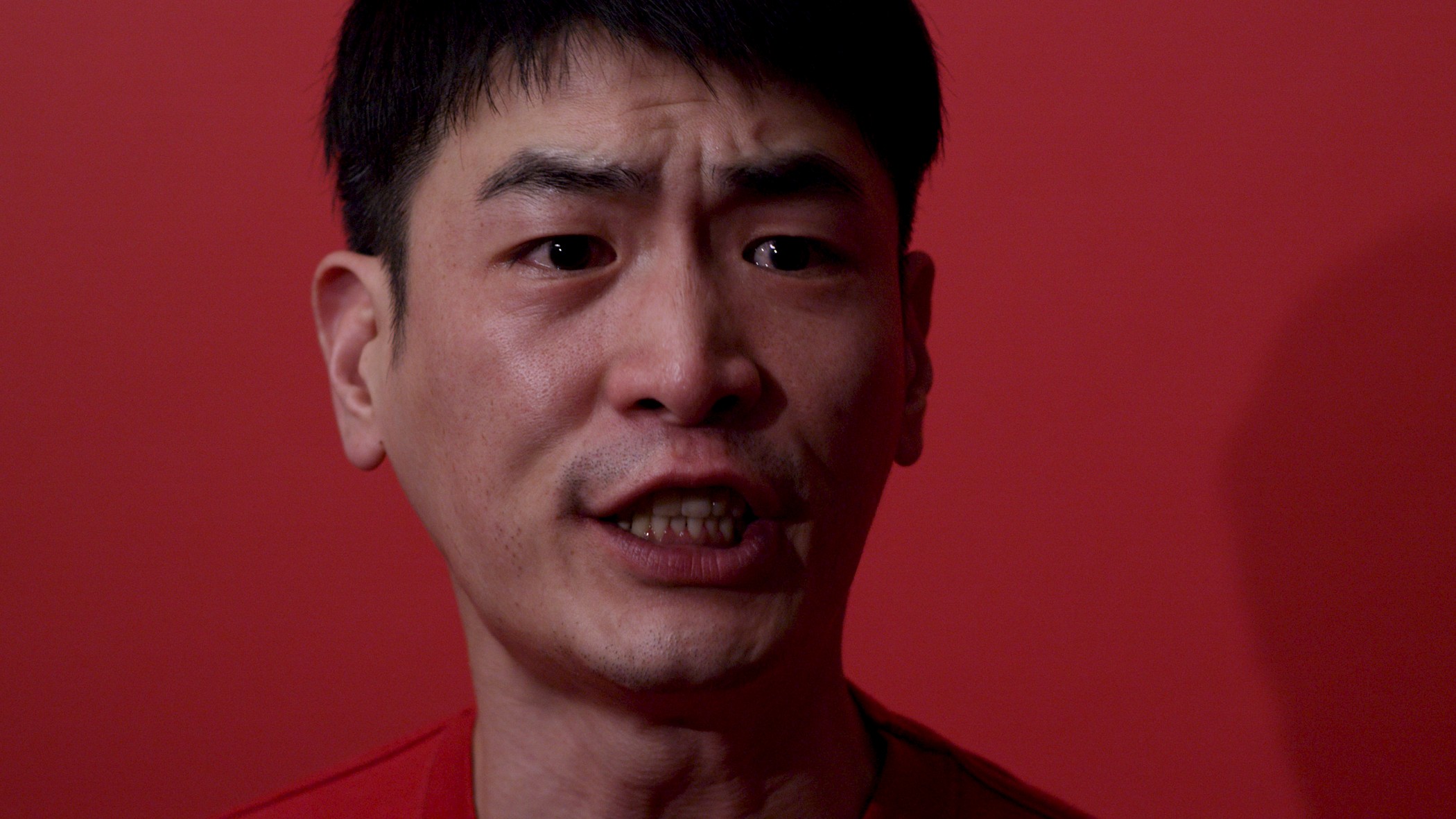
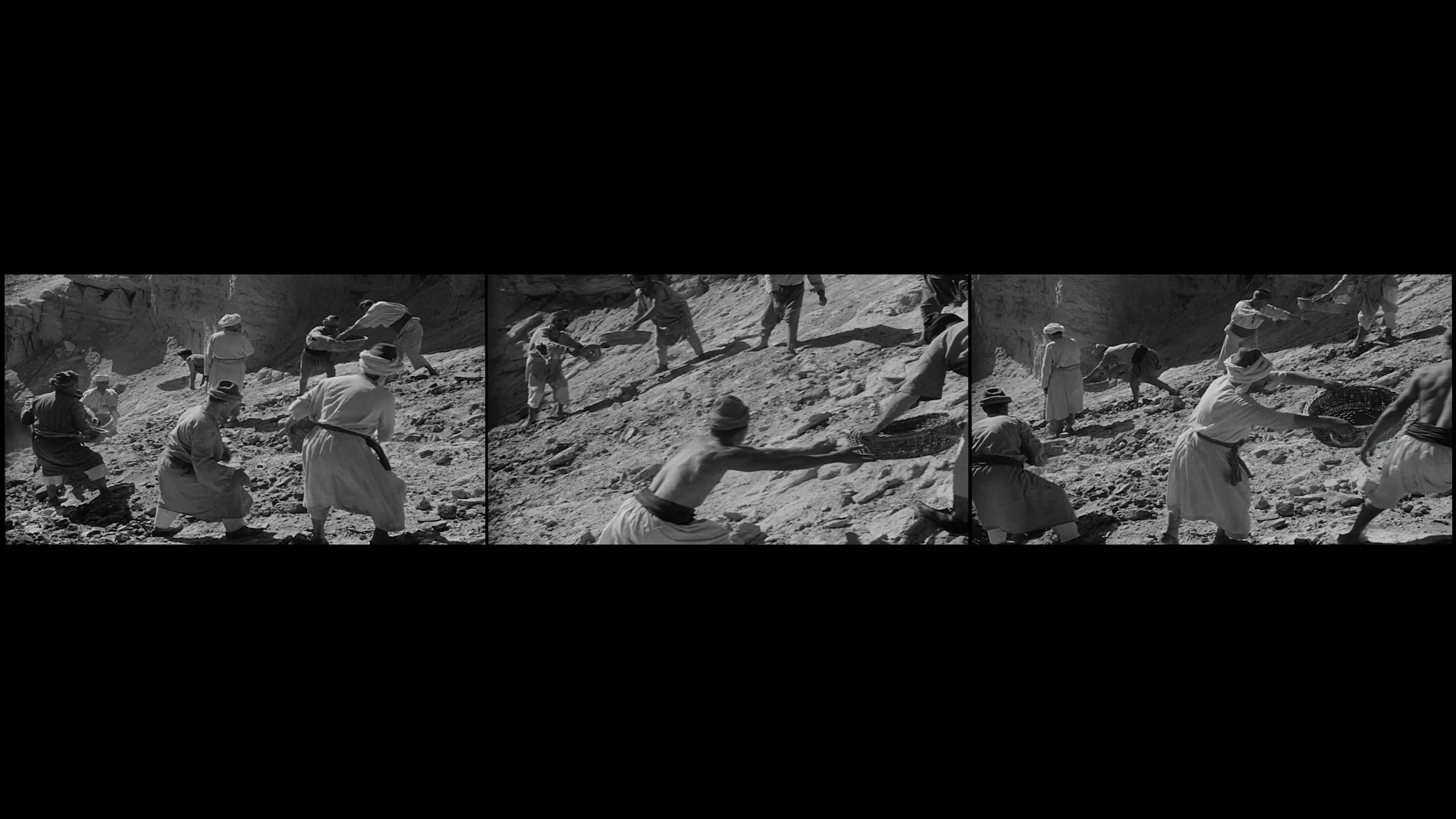
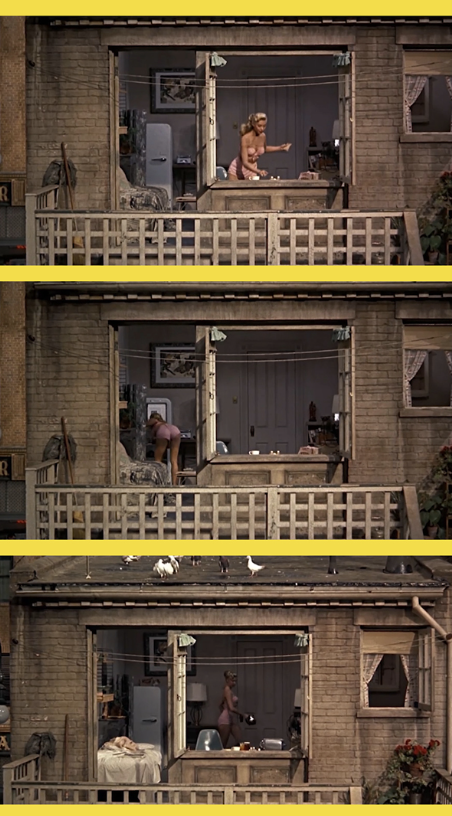
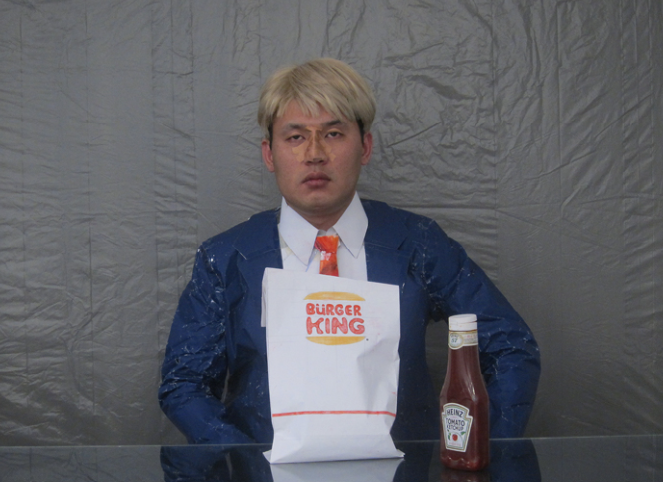
5. The most conspicuous recurring expression in Lee’s portfolio, as reconstructed at the 2025 juncture, is the phrase “does not~.” He consistently emphasizes that he “does not correct or optimize,” and that what matters is not “how completely it has been restored.” What is preserved instead are errors and malfunctions. The diverse media Lee has drawn upon merits discreet consideration here.
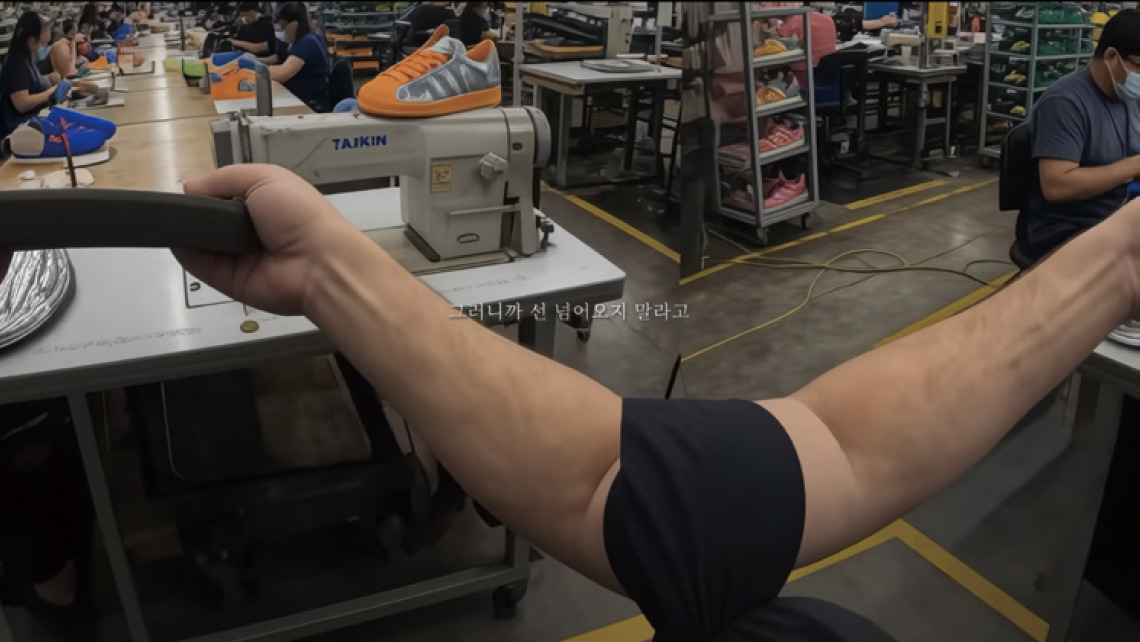
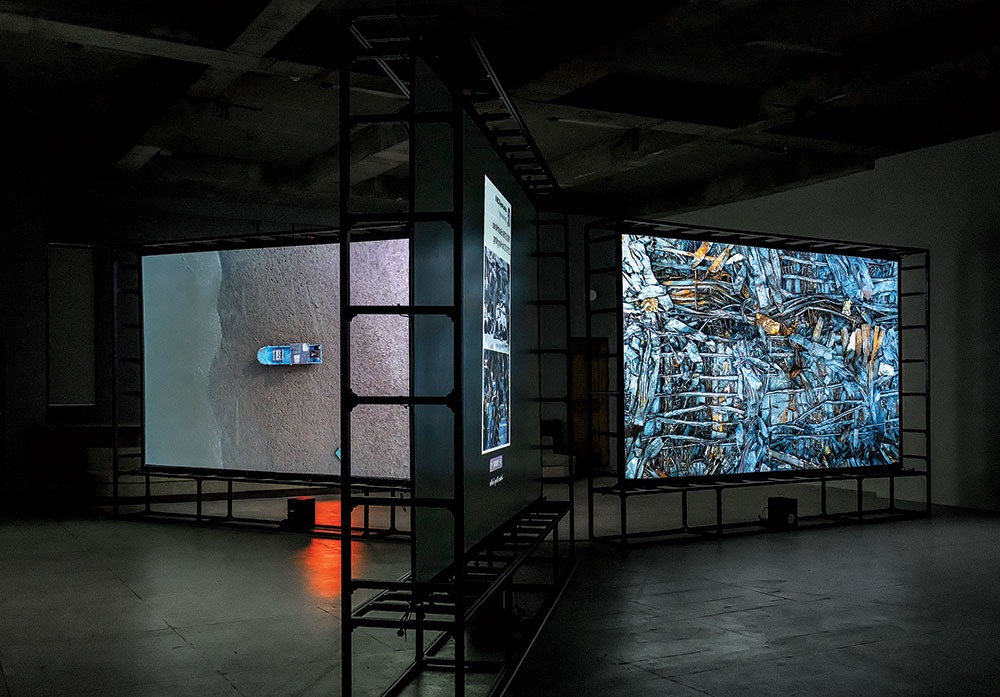
Consider the series of technologies ranging from drone (Die Resistenz), motion capture (Dumb Dummy Dumb-Dom), photogrammetry (To Be Determined), AR (Plant Apples and Get Avocados), game engine (Because: Surrounded by Three Dimensions, 2024), and generative AI (In Writing “Hurrah for Freedom”: Cinema and History). In line with our ongoing discussion, these various devices all ‘malfunction.’
Still, these errors, failures, and malfunctions have been with him from the very beginning. As the title Die Resistenz suggests, to be sure, Lee once regarded the malfunctions of the drone and other devices as mechanical ‘resistance’ working against his own intentions. But now he leans toward the view that this reading was itself a ‘misreading.’ The ‘breakdown’ in question is redefined not as the machine’s ‘resistance’ but as an event that occurred during the process where protocols embedded in the drones competed with human commands.
For Lee, this logic applies to the ‘hallucinations’ produced by AI as well: these are no longer regarded as ‘malfunctions’ but as the products of a proper ‘functioning’ or operation in accordance with the algorithm built into the system. As the 2019 exhibition title 《Olwookeok–geogguro geogguro》 amply suggested, letters written backwards or voices distorted by backward masking can also render visible the distinction between ‘functioning’ and ‘malfunction’ as something self-evident.
Nonetheless, as Untitled—Perfect Moments eloquently demonstrates, the fact that people could not tell the difference between accelerated and decelerated time already carries within it the possibility that the distinction between the reversible and the irreversible, between normal operation and malfunction, may not be as self-evident as it seems.
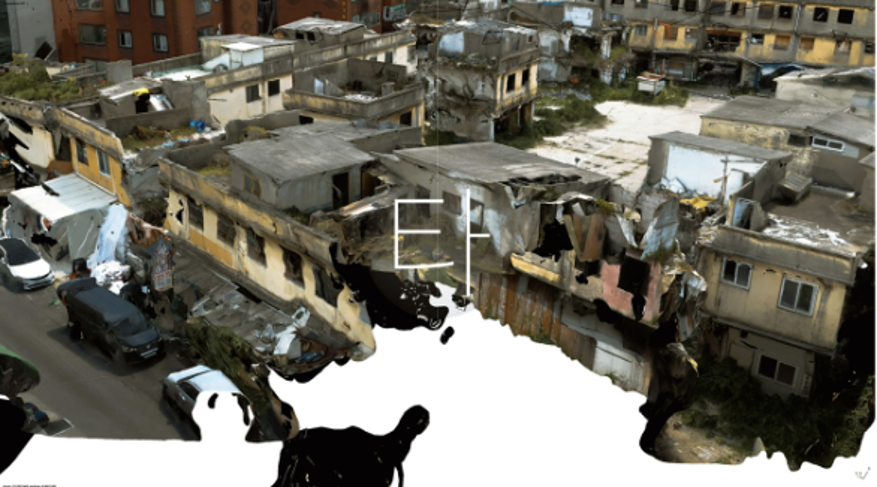
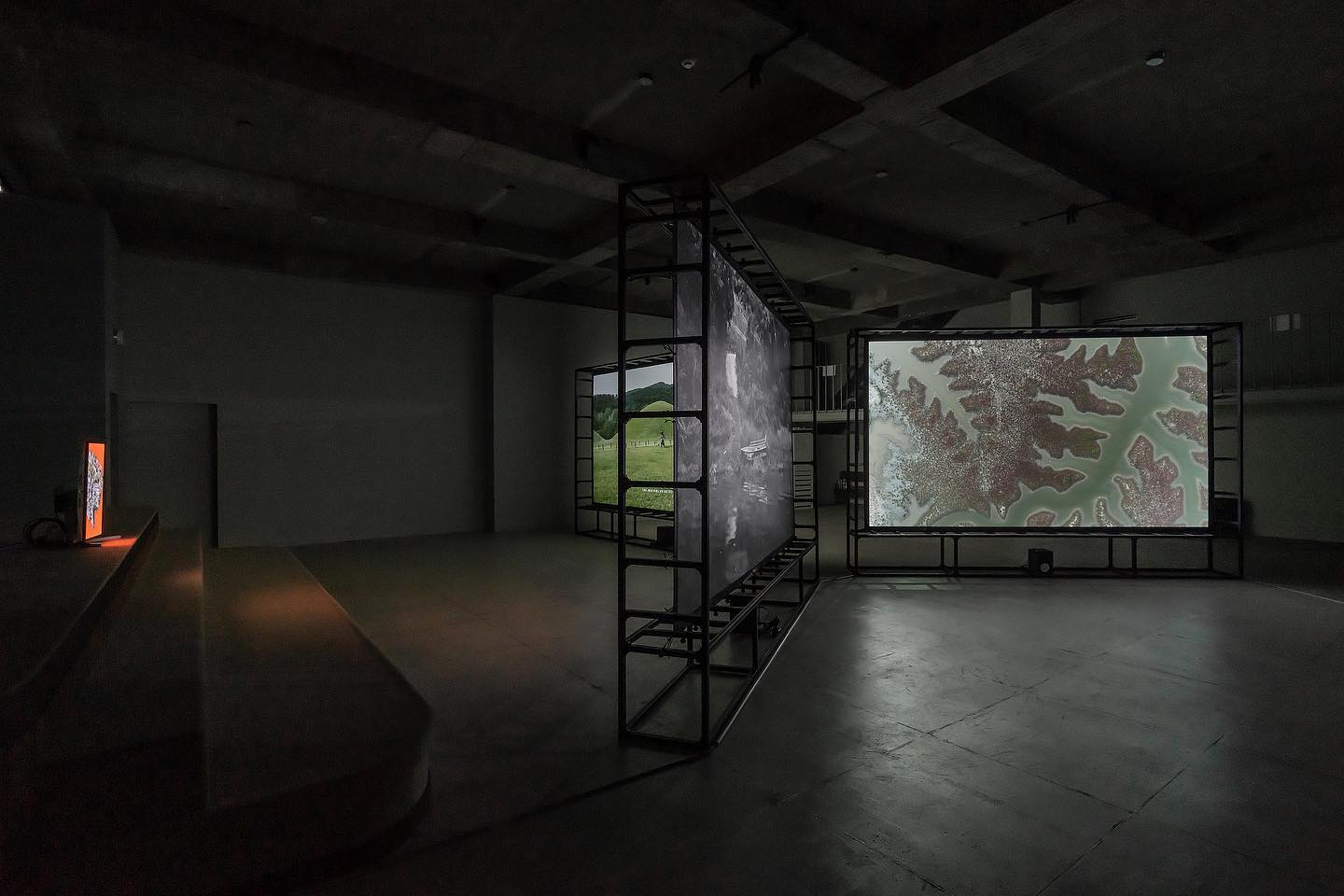
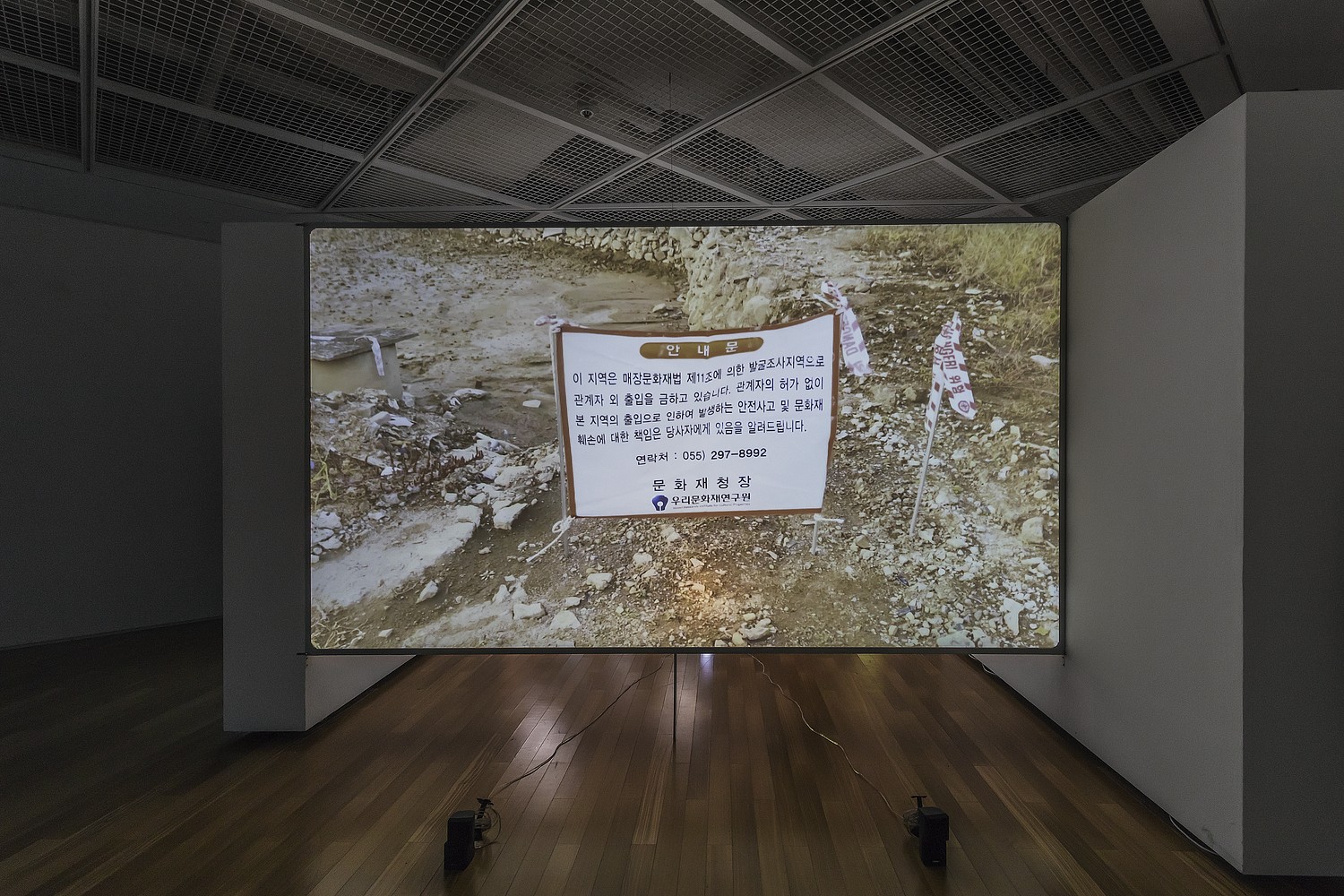
His most recent works explicitly foreground this new way of reading. 《Loops of Algorithmic Karma》 (2024) consists of three works: To Be Determined, Because: Surrounded by Three Dimensions, and Plant Apples and Get Avocados. To Be Determined constitutes a practice of remembering and mourning the deaths and suffering of the ‘comfort women,’ based on data recorded by visiting and documenting the Berlin Statue of Peace, which faces pressure for removal, day after day. But the fragmented 3D mesh created by photogrammetry is never fully restored.
And Plant Apples and Get Avocados literally states, ‘planting apples and getting avocados.’ Although designed to summon a virtual monument through the spatial coordinate tracking algorithm of AR technology, the output varies each time, even when the same location and action are repeated. Certain elements fail to appear, or are replaced by unrelated objects. Measured against the proverb “you reap what you sow,” these amount to nothing but unambiguous instances of ‘malfunction.’ Yet by refusing to correct them, the artist renders visible the immanent limits of the AR tracking algorithm.
The most recent example of ‘planting apples and getting avocados’ is In Writing “Hurrah for Freedom”: Cinema and History. Even when asked for the face of a Korean man from the mid-to-late 1940s, the AI outputs a Western face and persistently refuses the artist’s prompt calling for a suspended fire order. The default villain is not the Japanese, but the German army.
Lee does not raise an explicit critique regarding the limitations of artificial intelligence or engines that exhibit such ‘bias.’ For instance, he does not expose the background or ownership relationships of AI technology as Kate Crawford did in Atlas of AI, nor does he call for improvements in poor labor conditions and acts of environmental destruction.9
Instead, Lee underscores that “given a condition, the system produces the most ‘fitting’ result within that condition,” and draws a line by stating, “In other words, in current work, there is no longer a distinction between normal and abnormal, or between malfunction and normal functioning.”
In his terms, “what this indicates is not the system itself, but the gravity operating the system today.”Could this conclusion be regarded as a fatal weakness in his work? Does saying there is “no distinction” between “normal and abnormal,” “malfunction and proper functioning,” amount to a counsel of surrender, urging us to simply accept the given reality?
In this sense, Because: Surrounded by Three Dimensions is intriguing. By overlaying assets from Korean commercial films about naval battles of the Imjin War onto game engine simulations, Lee raises the question of whether the conditions of Joseon, or Korea, which is ‘surrounded by the sea on three sides,’ constitute an “unavoidable geopolitical fate.”
Although waves are twisted and gravity is reversed by artificially inputting values exceeding parameters, these malfunctions are revealed as constructs of the technical language of statistics and simulation. Does this mean that “fate” does not exist? Is there no algorithm that cannot be overcome? In the sense that we live in a world where even death- an example of the limits of irreversibility- has become a reversible phenomenon? If so, why was it that the artist could not eat “ketchup”? Between a nation’s geopolitical position and an allergic reaction to cucumbers or peaches, which is the more powerful algorithm closer to “destiny”?
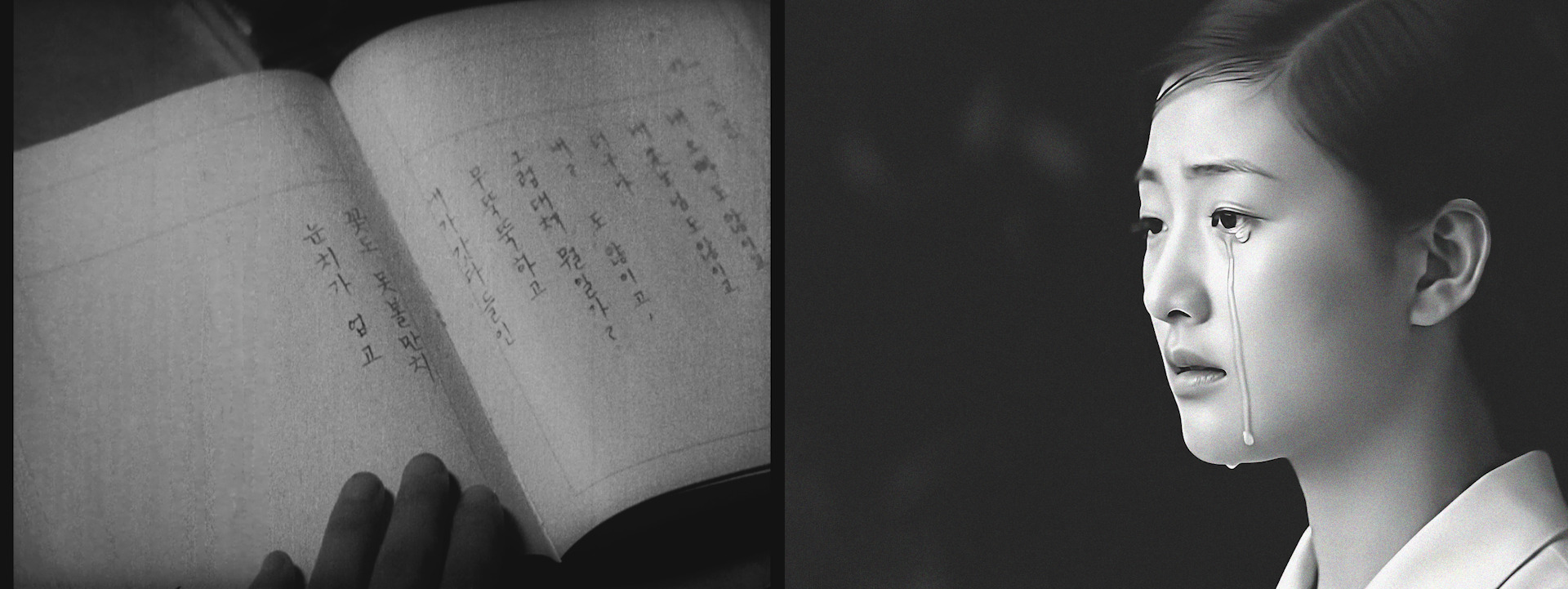
Equally illuminating is his latest work using generative AI, In Writing “Hurrah for Freedom”: Cinema and History. Hurrah for Freedom, made just after liberation, underwent a series of censorship and re-edits on account of its director’s pro-Japanese collaboration and the lead actor’s defection to the North. Ultimately, only a 50-minute segment survived in a tattered state. Connecting an AI respirator to the ragged body, the artist wrote:
It follows how the freedom promised by generative models—“anything can be created”—diverges from and overlaps with the freedom invoked by the film in the immediate post-liberation period. It also follows how the vacancy produced by the lead actor’s defection is erased again, now through automatic content filtering and data bias.
In Writing “Hurrah for Freedom”: Cinema and History places these two eras of “freedom” onto the same procedural surface—generation and recomposition—and tracks how past censorship and present-day bias repeat and mutate under contemporary technical and media conditions.
And in one scene, the audience hears—in Korean and English—the sentence: “No image can defy the gravity of the latent space.” On the split screen, three characters are visible, sharing obvious resemblances and subtle differences. First, the man delivering the line stands precariously in the arms of a nurse behind him, clutching his left arm as if wounded in both instances.
Behind them stands an officer wearing what appears to be a German military uniform, and all three are in a forest. Once this basic composition is established, the differences become clear. First, the wounded man and the nurse on the left screen are white, whereas the two on the right screen are Asian. More precisely, the nurse on the left screen is female, but the nurse on the right screen has the face of a man wearing a female nurse’s uniform. It would generally be difficult to see a ‘transgender’ character fitting for a film made in Korea in the mid-1940s.
What is interesting in this respect is the German officer shared by both screens. He appears as a white man in both screens and is the only one among the three characters who maintains visual consistency. As Lee points out, this is both a preposterous outcome and an inherent limitation of the generative AI datasets available to him in mid-to-late 2025. This is in the sense that the reason World War II is ultimately remembered as a U.S. victory over the German army is a product of history, in which countless films have expanded and refined the former’s dichotomy of good and evil.
6. Can all of this be said to be nothing more than “gravity”? Does rendering a system’s gravity visible suggest the possibility that the gravity itself might change? Or, like the weight that the concept of “gravity” itself holds for the Earth and humanity, is it something given as a kind of ‘fate’? In the earlier essay already mentioned, I wrote that in Lee’s oeuvre history is “stuck awkwardly between tragedy and farce.”
This “awkwardness” or unease could be a limitation of his works but also its honesty. Yet when Marx twisted Hegel to say “history repeats itself, the first time as tragedy, the second time as farce,” it was also a question asking about the possibility of action within historical repetition. Does Lee’s “gravity” close that question, or open it differently? Is the algorithm of gravity also reversible?
In Philosophical Investigations, Wittgenstein writes: “It is not possible that there was only one time when someone obeyed a rule,”10 and adds: “It is not possible that there should have been only one time when a report was made, an order given or understood, and so on.” 11 For him, “To obey a rule, to make a report, to give an order, to play a game of chess, are customs (uses, institutions).”12
That is to say, to the philosopher, an algorithm is a “custom” exposed to the possibility of change. In a related passage, he also writes: “The machine seems already to contain its own mode of operation,” which means that, “If we know the machine, everything else- that is the movements it will make- seem to be already completely determined.” And then he adds:
We talk as if these parts could only move in this way, as if they could not do anything else. Is this how it is? Do we forget the possibility of their bending, breaking off, melting, and so on? Yes; in many cases we don’t think of that at all.13
To what extent, then, are algorithms for Lee capable of “bending, breaking off, melting”? Can even a firmly frozen algorithm evaporate or melt like ice cream?
The question, strange as it is, is not his alone to answer and, in that peculiar sense, the past, present, and future of the work he has refined demands the attention of many more with keen eyes and ears. If, as Klee says, art truly “makes visible,” then rendering visible what was an invisible algorithm suggests that “[machine] can, after all, also move quite differently,” just as AI continues to insist in various domains in ways that cannot be reduced to mere ‘hallucination.’
1. The irony of maintaining and preserving one’s status through antagonistic relationships, independent of intent, is found across various fields, disciplines and history. While such evocation often reinforces cynicism toward all criticism and resistance, confronting the power of bondage that contains even hostile movements is precisely the foundation of fundamental thought and critique. cf. Erik Olin Wright, Class Counts: Comparative Studies in Class Analysis (Cambridge: Cambridge University Press, 1997); Lim Jie-Hyun, “The Antagonistic Complicity of Nationalisms: On Nationalist Phenomenology in East Asian History Textbooks,” in Contested Views of a Common Past: Revisions of History in Contemporary East Asia, ed. Steffi Richter (Frankfurt: Campus Verlag, 2008), 205–222. 2; Michael Burawoy, “For Public Sociology,” American Sociological Review, Vol.70 (Feb. 2005), 4–28; Peter F. Drucker, “Science and Industry, Challenges of Antagonistic Interdependence,” Sciences, Vol.204, No.4395 (May 25, 1979), 806-810.
2. cf. Paul Virilio, Polar Inertia (London: SAGE, 1999).
3. Hartmut Rosa, Alienation and Acceleration: Towards a Critical Theory of Late-Modern Temporality, trans. Kim Taehui(Seoul: Elpi, 2020), 56.
4. “Human flaws or limitations… In fact, they are virtues and individuality”, Son Suk-hee’s Questions 4, MBC News April 15, 2026, https://www.youtube.com/watch?v=GVyMqldFQU4. cf. Kim Ji-hwan, “Hesitation Absent in AI”, Kyunghyang Shinmun, April 20, 2026.
5. Lorraine Daston, Rules: A Short History of What We Live By(Princeton: Princeton University Press, 2022), 85.
6. Gregory J. Chaitin, Conversations with a Mathematician: Math, Art, Science, and the Limits of Reason(London: Springer-Verlag, 2002), 44.
7. Rules, 8.
8. Ibid., 271.
9. Cf. Kate Crawford, Atlas of AI: Power, Politics, and the Planetary Costs of Artificial Intelligence (New Haven: Yale University Press, 2021).
10. Ludwig Wittgenstein, Philosophical Investigations, rev. 4th ed., trans. G.E.M. Anscombe, P. M. S. Hacker, and Joachim Schulte (Malden, MA: Wiley-Blackwell, 2009), 87(§199). Emphasis original.
11. Wittgenstein, Philosophical Investigations, 84 (§193).
12. Ibid.
13. Ibid.