“What we can read in Rilke’s books is that the better we make distinctions, the more mistakes we commit.”¹
— Vilém Flusser
It is necessary to begin by reconsidering the word ‘generation’ itself. We readily use the term ‘generative artificial intelligence,’ yet strictly speaking, whether technically or aesthetically, it does not generate something entirely new. At this point, however, saying that the term is incorrect no longer carries much meaning. Are the two traditional methodologies of creation—poiesis and mimesis—not gradually losing their distinction?
The division between these two concepts even seems to be dialectically sublated. Of course, some may still wish to argue that humans, unlike artificial intelligence based on large language models, possess an original methodology of generation.
Yet artificial intelligence is, from the outset, a mimesis of human mechanisms, and although it remains incomplete, forecasts that the so-called singularity is not far away still seem valid. In the limited time remaining before us, we will need to think deeply, from truly diverse perspectives, about the problems arising between humans and technology. This exhibition should also be considered as one facet of such reflection.
Texts and images generated by humans also reflect structures, just as those generated by machines do. Of course, artistic creation can encompass reflection on the very structures through which it is produced, but it would be difficult to deny that artistic methodologies themselves are also composed of particular codes. At the microscopic level, there is the question of how an image is formally constructed.
Consider today’s media environment, in which it has become natural to enter a command such as “Draw an apple in a Cubist style” into a generative algorithm. More important than this, however, are the epistemic categories surrounding art that extend beyond the visible level. This is an entirely different problem from distinguishing a puppy from a cupcake. Even humans themselves have difficulty determining what art is.
There are issues to be considered through aesthetic concepts such as the readymade or the infrathin, as well as questions that operate at the level of recognition by institutions and discourse.
As the many debates already unfolding around art institutions demonstrate, the problem of technological generation in art is not simply one of identification; it is deeply discursive and political. Under these conditions, artistic practices that employ generative algorithms based on large language models as a medium can fundamentally be understood as attempts at meta-cognition regarding the issues surrounding technology and art today.
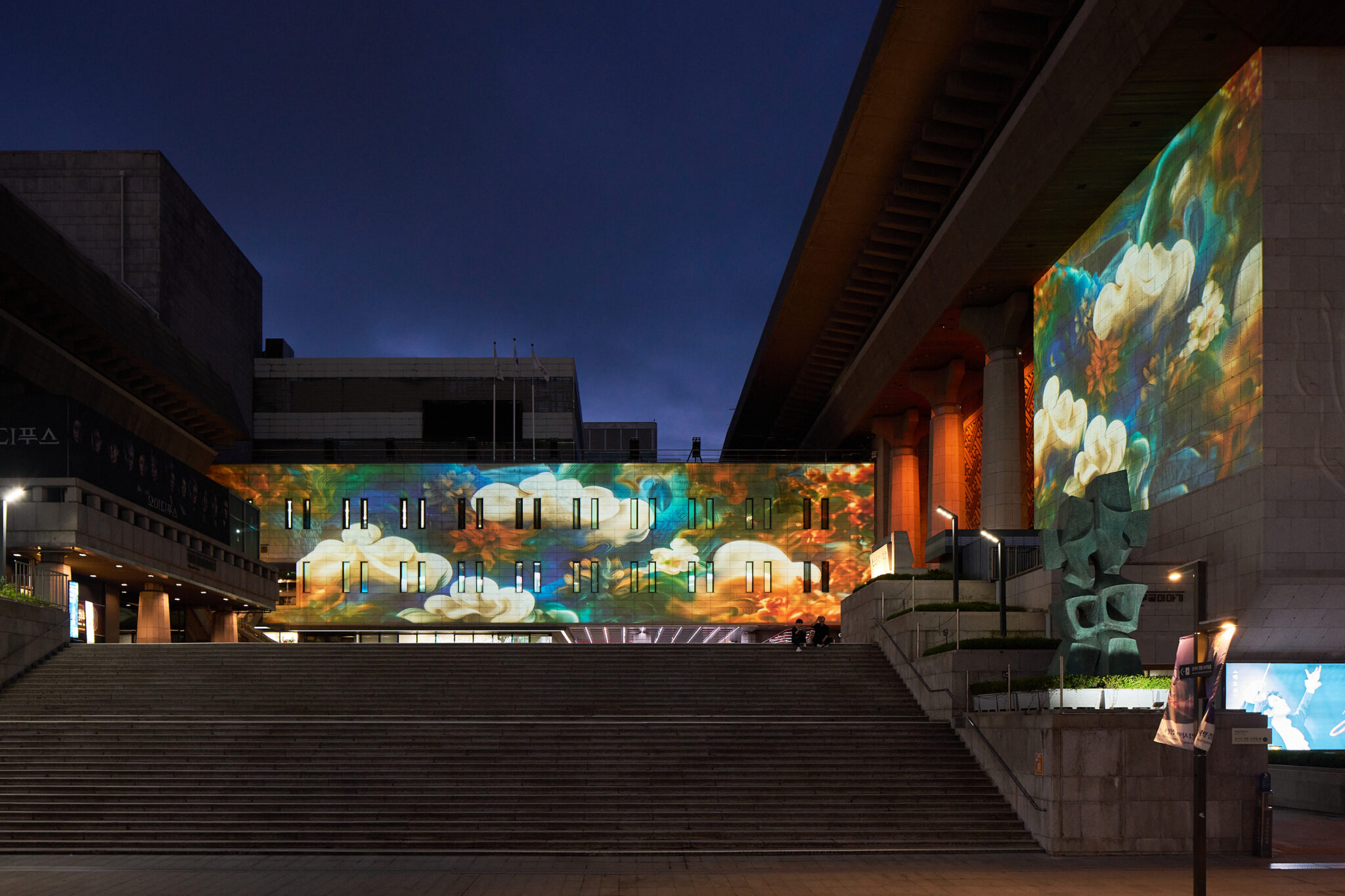
As the title 《Decoding the Phenomenon》 suggests, it may be possible to work backward from images and texts produced through the training of massive datasets and inductively analyze how the world has been coded. To decode something, one must know how it has been coded. Because large language models are based on data accumulated by humans, it would not be an exaggeration to say that they reflect the structures of the world itself.
Such issues have often become visible precisely through various errors. Consider the problems revealed by errors such as overfitting in algorithms based on large language models. In the early days of image-generative models, when prompted to output an image of a “salmon,” they would sometimes generate images of red slices of boneless salmon sashimi swimming through water.
Because the image data associated with the word “salmon” overwhelmingly contained food imagery rather than living fish, an error occurred in the training data. For a time, images of red salmon sashimi swimming upstream were circulated almost like memes mocking generative AI. Yet such incorrectly generated images seem, in some respects, to function more artistically than images produced smoothly and naturally. Errors reminiscent of Magrittean Surrealism are artistic in themselves, while at the same time revealing certain ruptures within a world constituted through data.
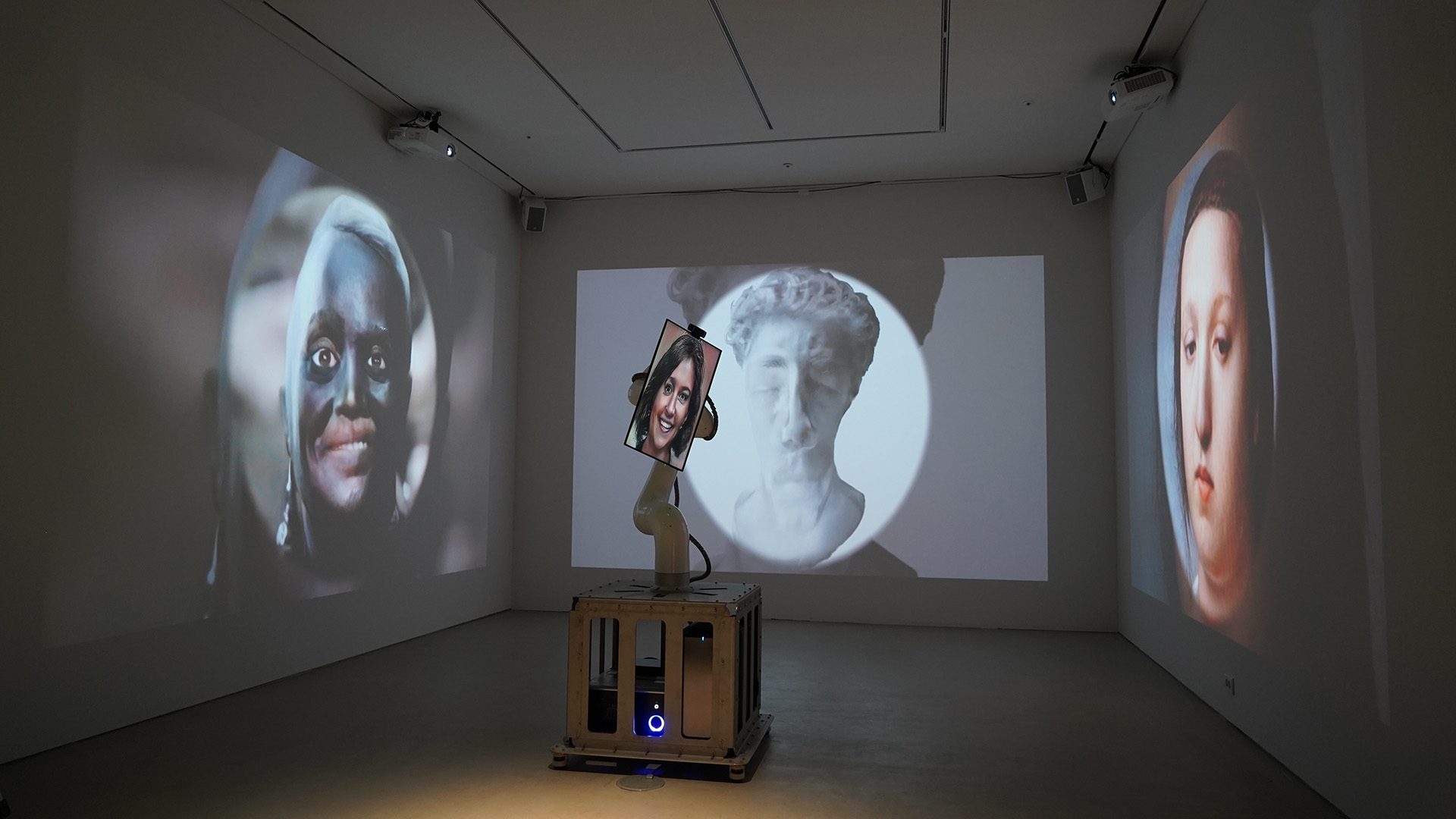
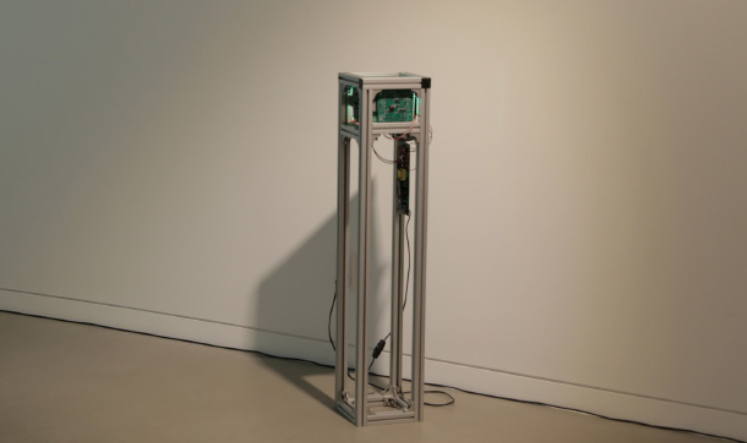
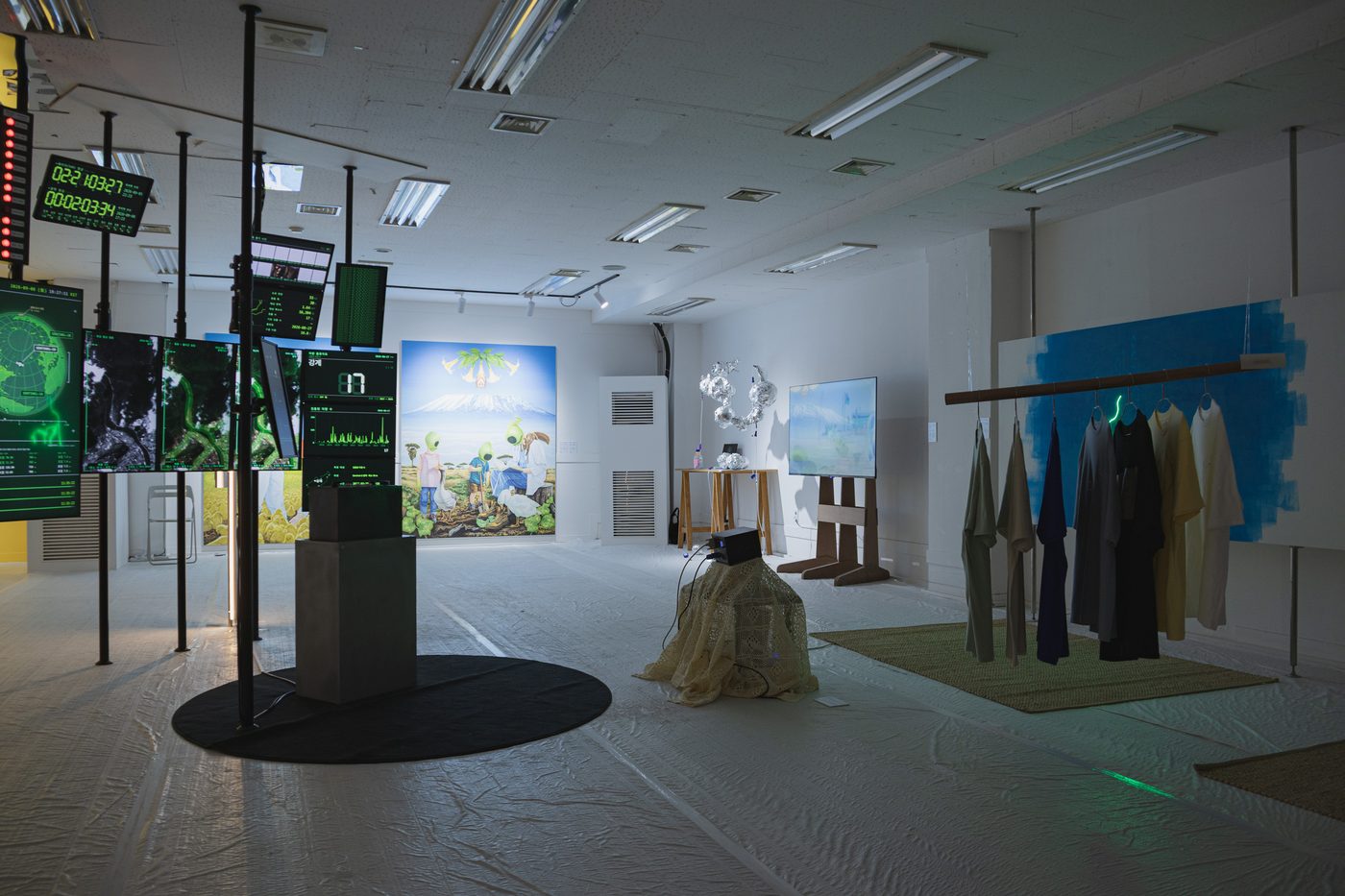
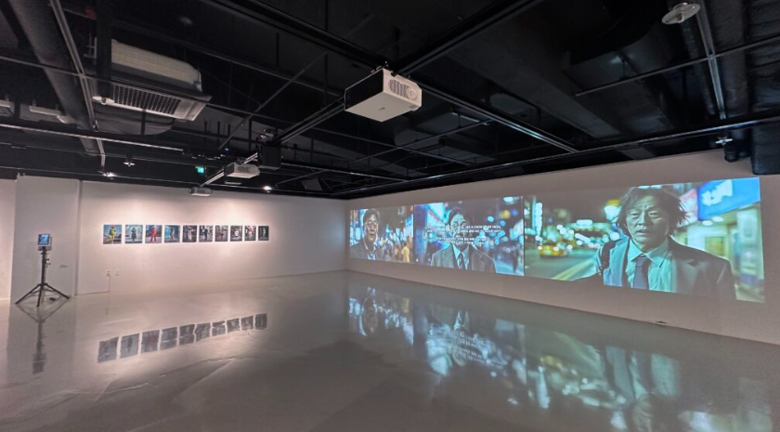
By working with large language models on an artistic level, Youngkak Cho produces such ruptures throughout his practice. Transitive Sentences of Phenomenal Reason, presented in this exhibition, is a three-channel video based on aphorisms generated by artificial intelligence. Aphorisms are generally understood to contain human wisdom and insight accumulated over long periods of time.
The aphorisms similarly produced by AI after training on various forms of data are fabricated combinations of data, yet through them we may still reflect on something or arrive at a realization. From an anthropocentric perspective, the fact that one might reach genuine reflection through fragments of data that possess no depth whatsoever strangely cuts across the binary opposition between human and machine.
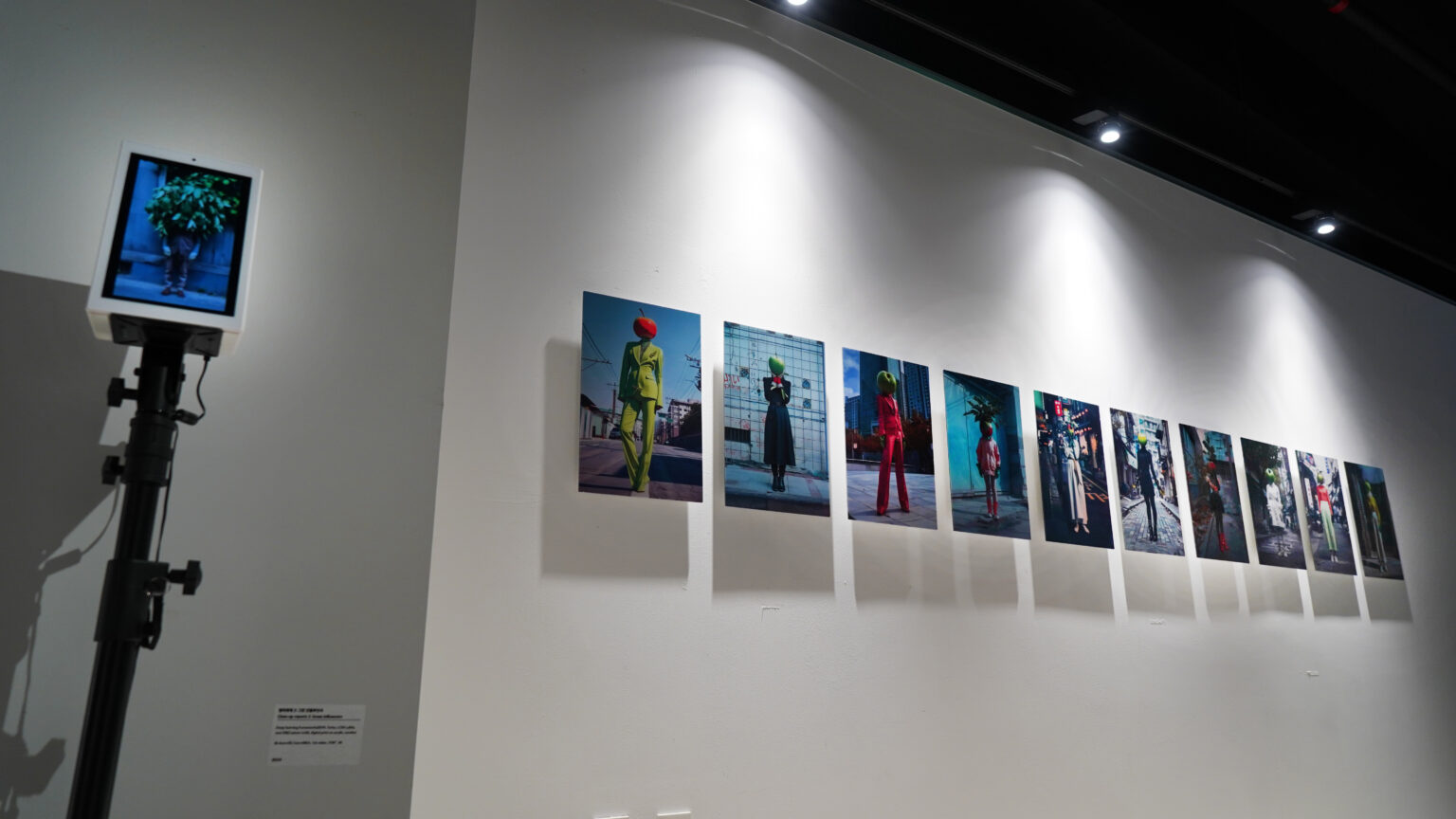
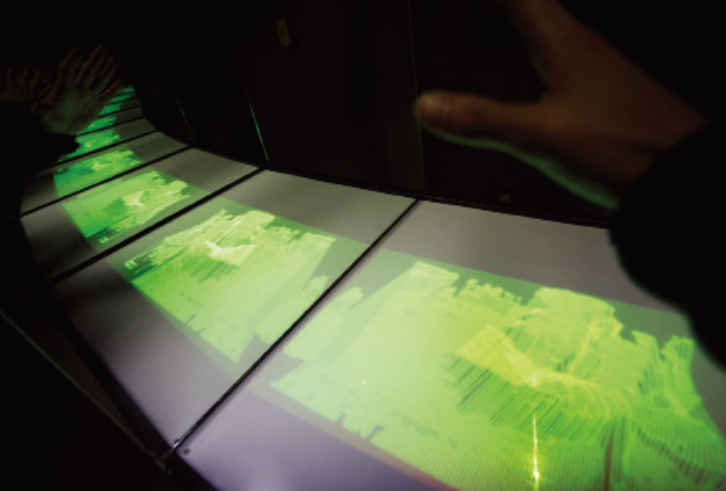
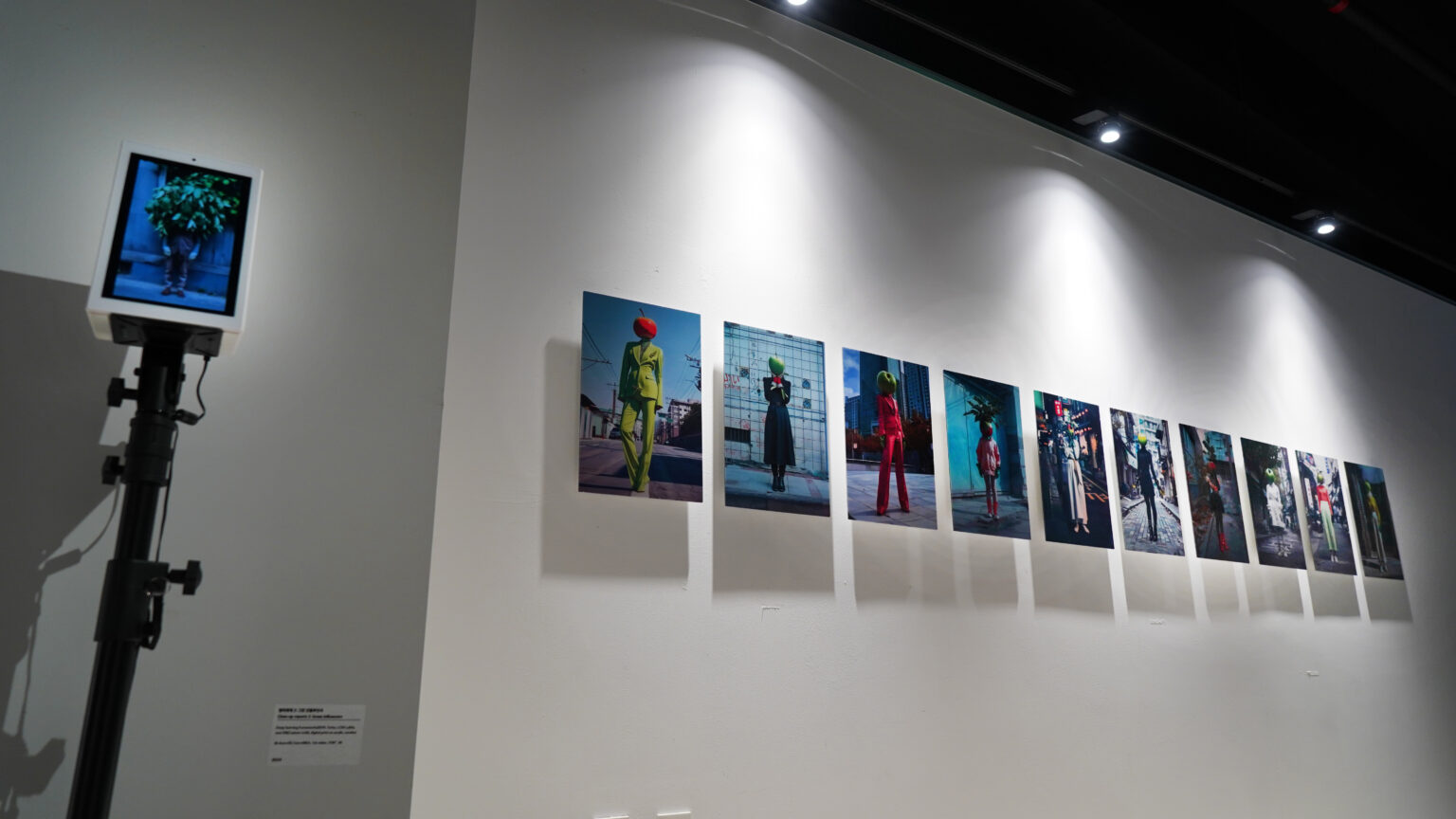
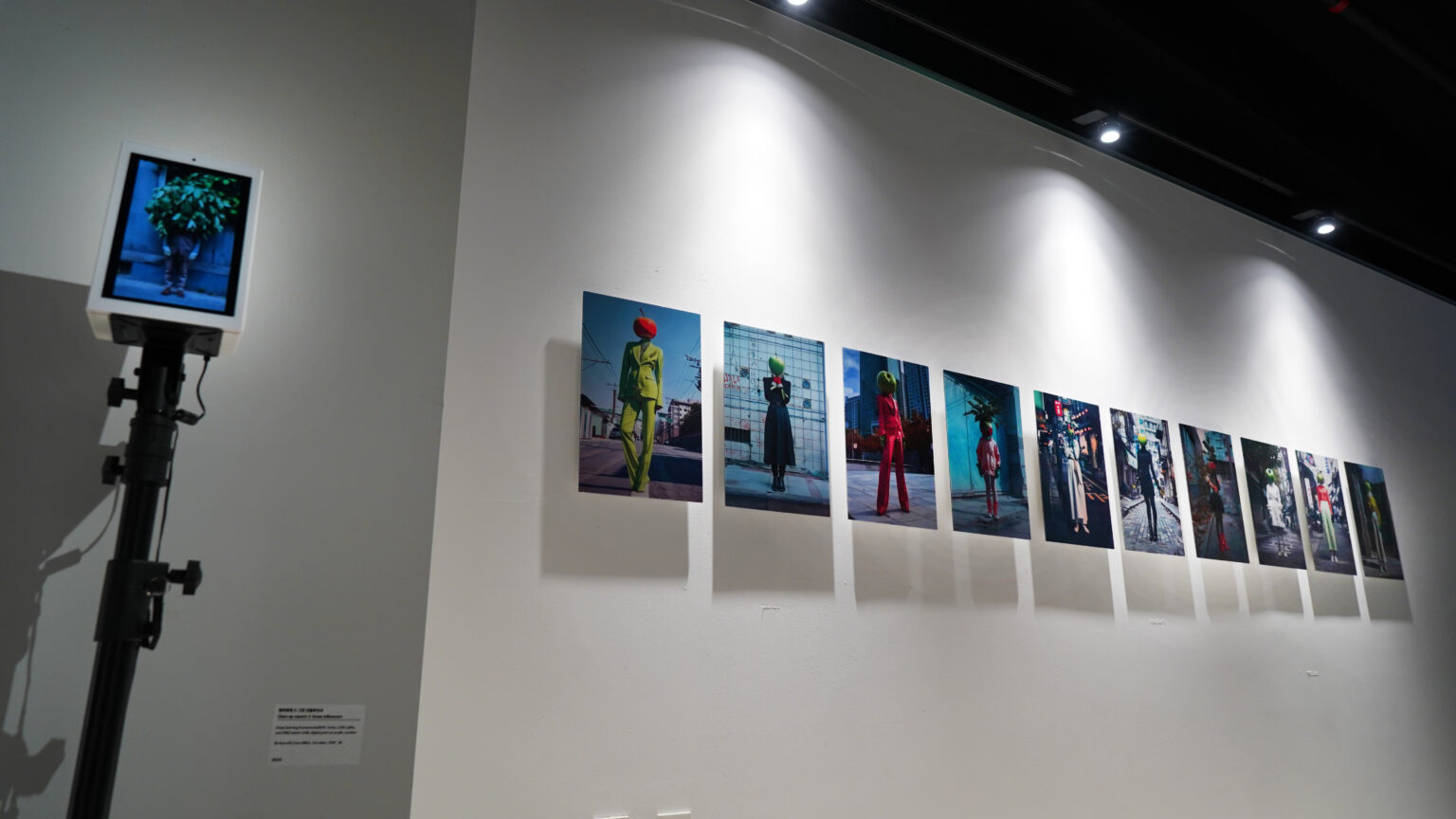
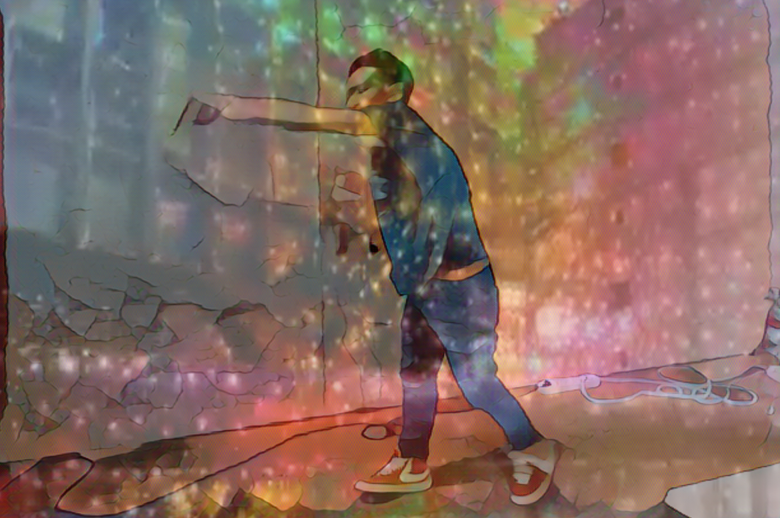
In a similar context, the images in Close-up Reports 2: Green Influencers were generated on the basis of so-called feng shui painting, rooted in the superstition that hanging certain images in one’s home will bring good fortune. By overlapping feng shui theory with contemporary consumer culture, these images anachronistically mix superstition with data-driven technology, making visible another kind of rupture.
Technological systems are generally regarded as rational and cold, yet human beliefs—no matter how unfounded—are translated in curious ways and continue to operate even within the world of data.
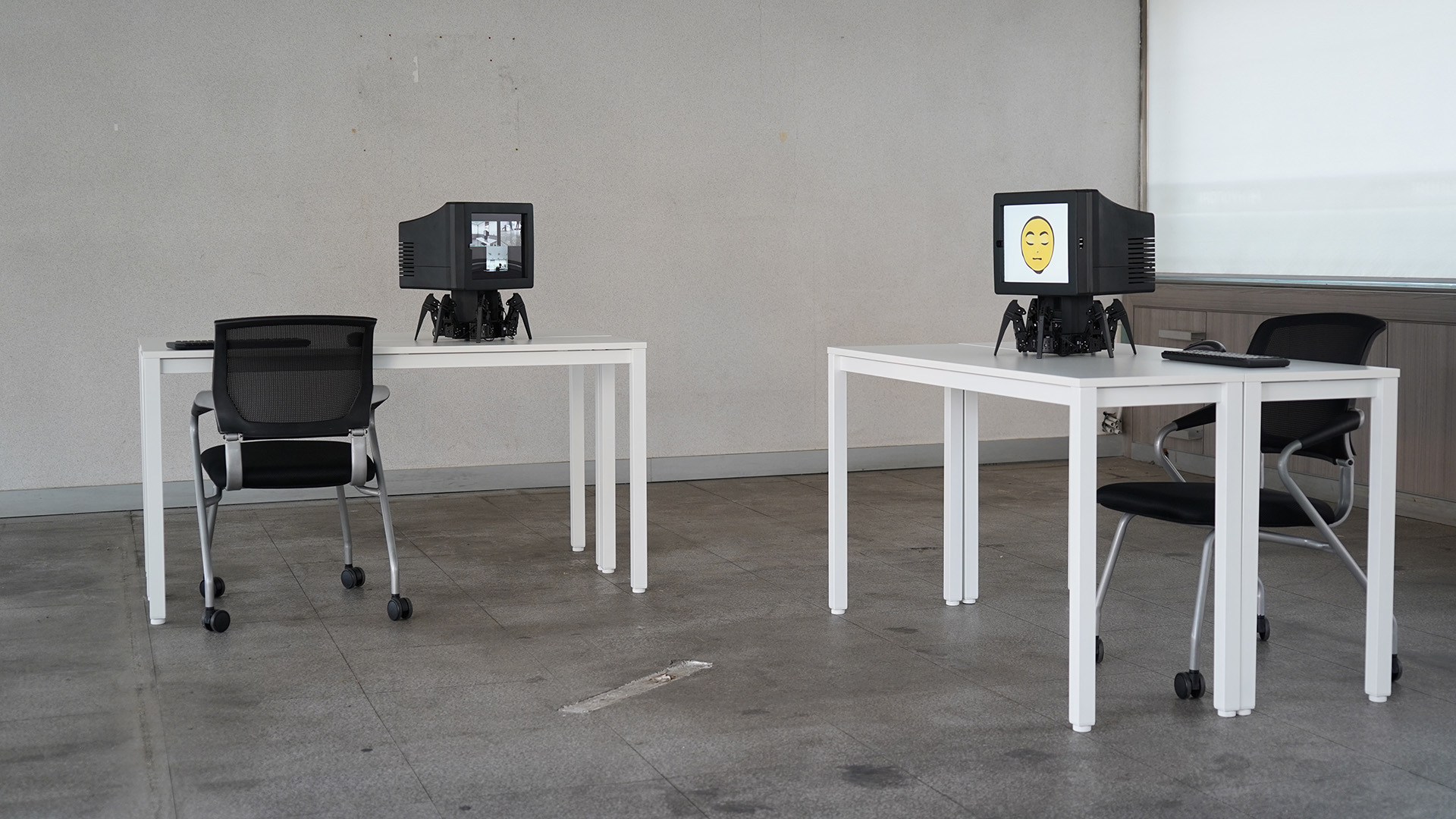
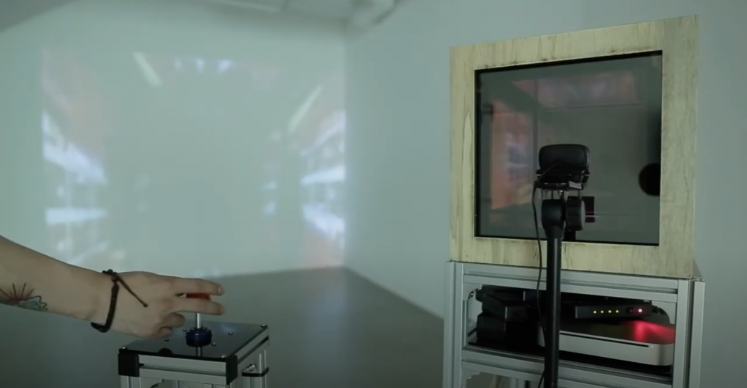
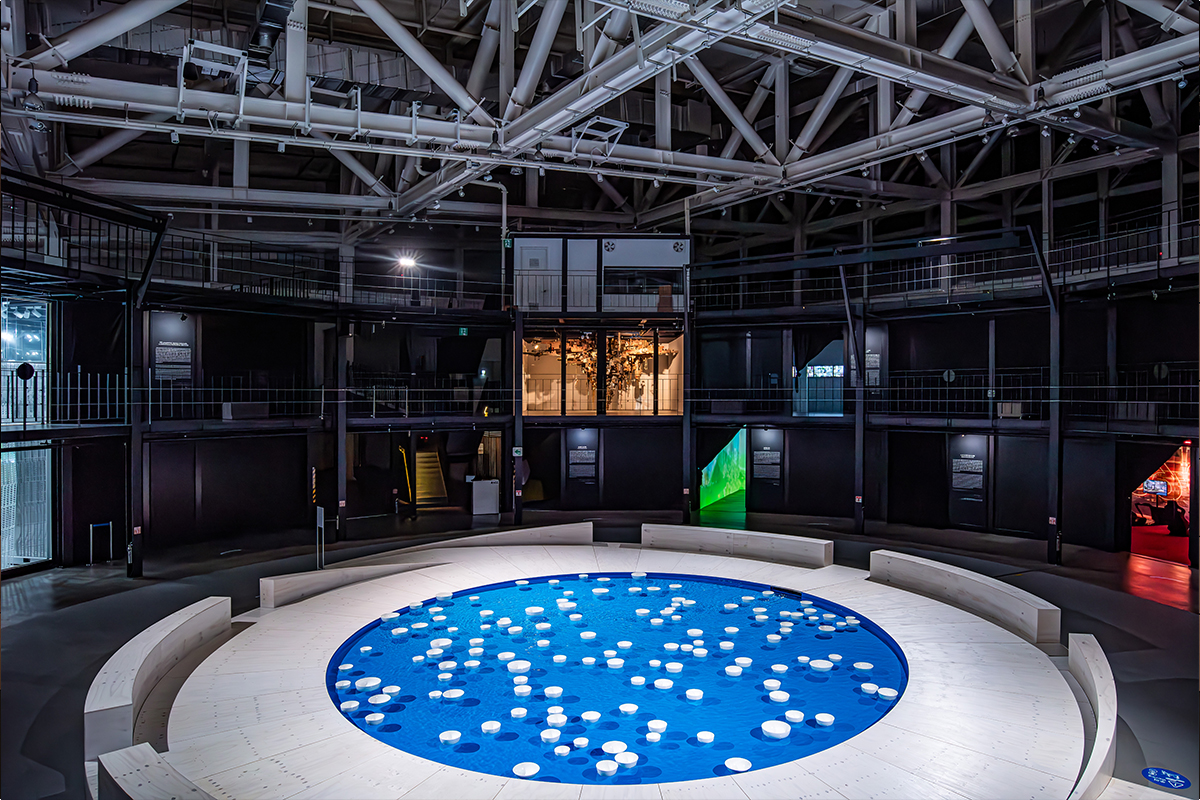
Dialogue Box unfolds delivery boxes, objects that have become utterly ordinary within an increasingly accelerated society of mobility. These moving boxes, which unbox themselves while unfolding stories and images, appear to represent the structure through which the digital world and the physical world are interconnected.
As mobility systems become increasingly advanced, the distance between images on digital interfaces and actual material objects continues to narrow. We already live in a world where one opens a delivery app, taps an image of food on the screen, pays simply by showing one’s face, and soon finds the food placed before one’s eyes.
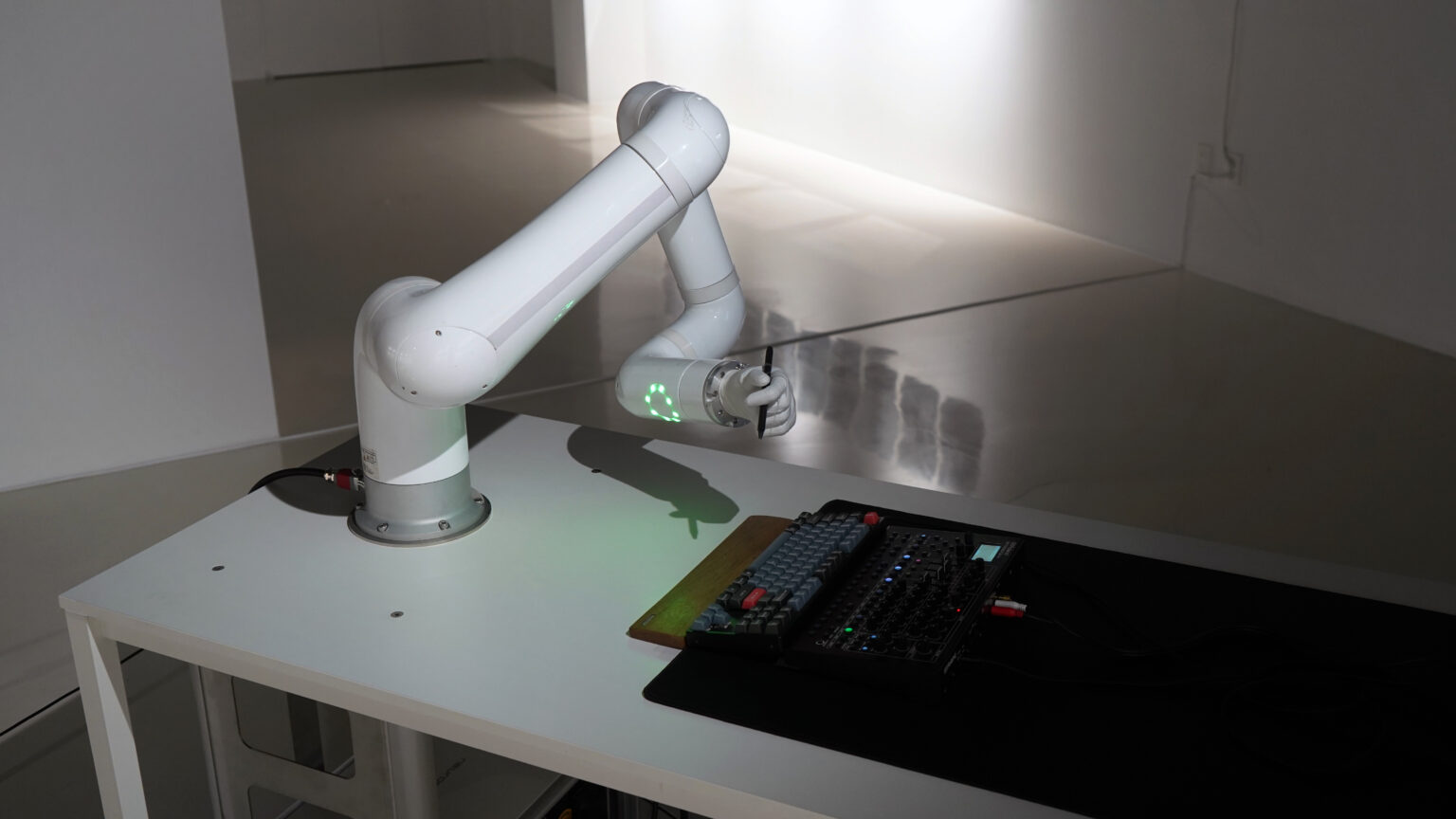
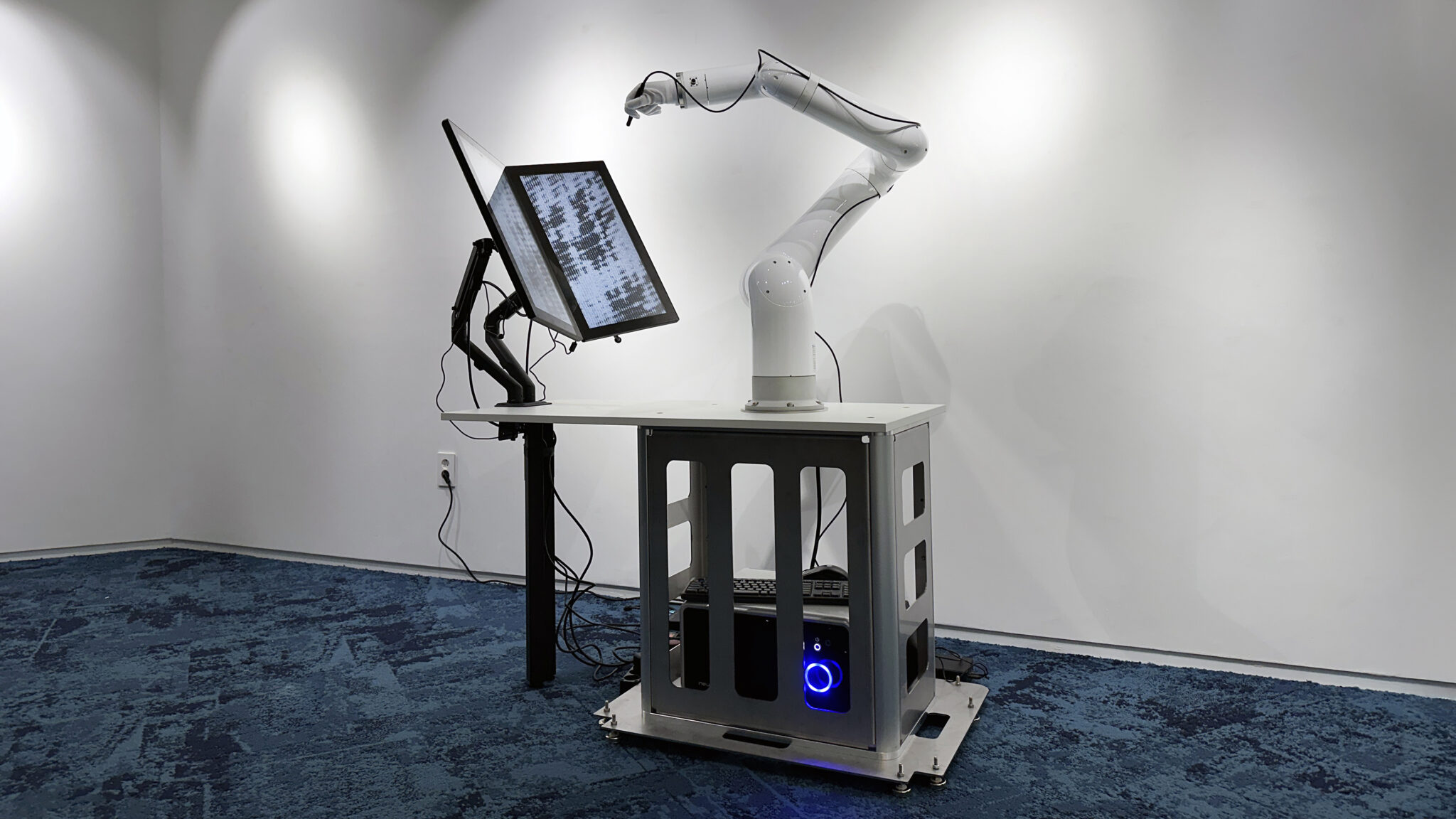
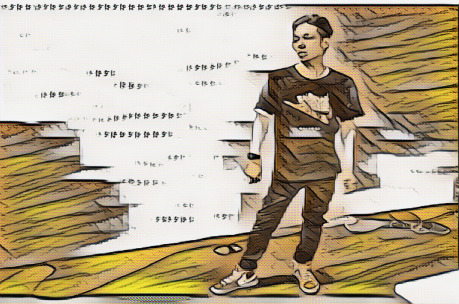
In Full-time Employee, this issue is explored at a more fundamental level, as the work addresses changes in the relations of production that form the material foundation of our society. Social change at the level of production relations, in what is often called an automated society, is completely reorganizing class relations between human capitalists and human workers.
In a capitalist society based on artificial intelligence, the forms of labor available to human workers may gradually disappear. Before long, workers may be reduced to remaining solely in the role of consumers, in order to prevent capitalism from destroying itself and to avert crises of overproduction. We already live in a world where cutting-edge capitalists such as Elon Musk advocate universal basic income, an agenda once associated with the radical left.
In this way, Youngkak Cho constructs mechanical linguistic systems that expel multilayered problems concerning humans and technology into the realm of phenomena. The machines produced through these systems show a world flattened and translated through data and artificial intelligence, while simultaneously providing artistic occasions through which that world can be reflected upon in three dimensions.
Here, both induction through the decoding of phenomena and deduction through artistic intuition operate at the same time. Coding and decoding, deduction and induction: different aspects of the world are traced simultaneously through these processes.
The crucial point is that the (de)coding taking place here does not appear as an Enlightenment project that seeks to reveal truths ideologically concealed within the structures of data. Enlightenment fails when there is nothing left to enlighten. In the virtual phenomena generated through data, what lies behind them has already been turned inside out. What meaningfully appears before us is, rather, the phenomenon itself.
Perhaps the ruptures through which we can reconsider the world do not emerge by fully deciphering the codes that constitute it, but instead at the points where strange phenomena—experienced as exceptional errors—are generated. They may be unreadable in the present, or perhaps unable to function properly within the present time. As Walter Benjamin once suggested in discussing the task of art, it may be necessary to reconsider “the creation of demands that can only be fully satisfied later.”
¹ Vilém Flusser, 『Does Writing Have a Future? (Die Schrift, Hat Schreiben Zukunft?)』, translated into Korean by Yoon Jongseok, Munye Publishing, 1998, p. 153.