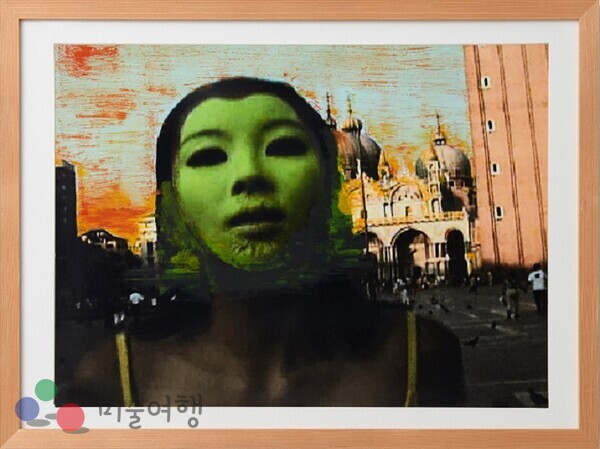
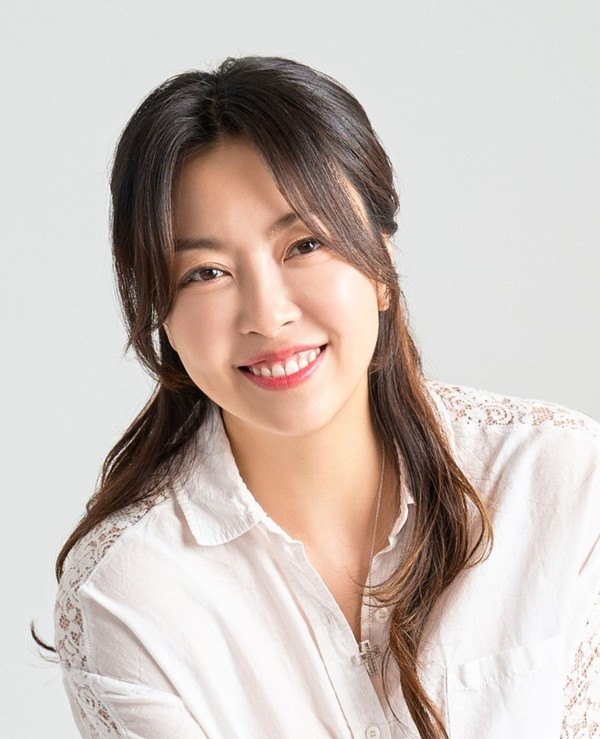
At the 2003 Venice Biennale, Starya Hee-seung Sung, an “uninvited artist,” staged a performance using a surveillance camera installed in the Romanian Pavilion in the Giardini.

kinema ikon, a Romanian experimental art collective participating in the 2003 Venice Biennale, deliberately installed surveillance cameras in the Romanian Pavilion while raising the question, “Who is the author in art?”

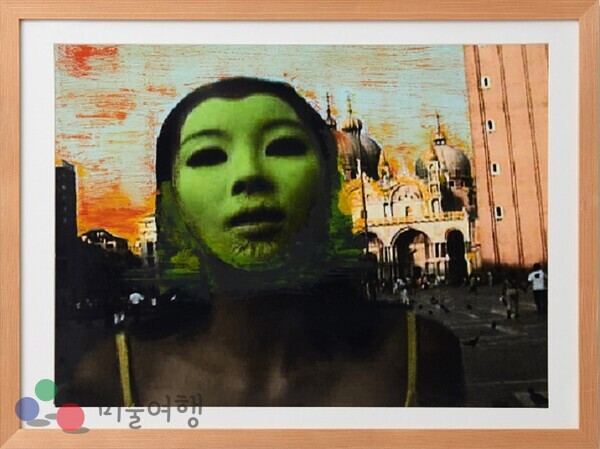
Recognizing that surveillance cameras, conventionally installed for security and monitoring, could instead function as a medium for interaction with viewers, Sung painted her face yellow, put on a yellow bikini, and performed in front of the camera by running and doing calisthenics known in Korea as “National Gymnastics.”

Nancy Lang, who had been performing in Piazza San Marco wearing a red bikini, joined Sung’s performance at the Romanian Pavilion. The scene of Lang playing the violin while moving in and out of the space together with Sung was captured in its entirety by the surveillance camera.

Perhaps conscious of the immense influence Harald Szeemann—who served consecutive terms as artistic director in 1999 and 2001—had exercised over the conception and execution of the exhibitions, to the extent that it could almost be described as a “curatorial dictatorship,” Francesco Bonami, artistic director of the 2003 Venice Biennale, chose 《Dreams and Conflicts: The Dictatorship of the Viewer》 as the Biennale’s theme.

In this respect, kinema ikon and Călin Man, commissioner and curator of the Romanian Pavilion, presented interactive works employing multimedia technologies such as computers, television monitors, and projectors. Their approach reflected an intention both to question established exhibition conventions at the Biennale and to propose new modes of exhibition-making.

Unexpectedly, however, an “uninvited” artist appeared and staged a performance, an intervention that must also have been a welcome development for the Romanian artists. They saved the footage recorded by the surveillance camera onto a DVD and gave it to Sung. Despite its indistinct image quality and visibly broken pixels, the footage subsequently became the work Uninvited/Invited.


Starya Hee-seung Sung, Piazza San Marco, 2003, Paint on digital pigment print, 50 x 40 cm © Starya Hee-seung Sung

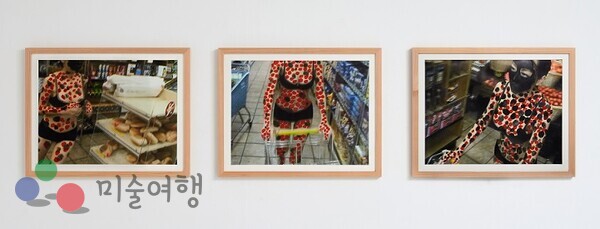
By intentionally intervening in the work of others and, through that process, transforming herself into a participating artist, Starya Hee-seung Sung raised questions about the relationship between creation and communication. In New York, she likewise sought to bring art into everyday life through her “uninvited” performances, carried out in front of surveillance cameras installed in Korean-owned supermarkets in Manhattan and Brooklyn.
Such performance art, conceived as a form of intervention, can be understood not only as dismantling the boundary between artist and audience, but also as posing renewed questions about the very meaning of art’s existence. Seeking to give visual form to the concepts of the ego and superego, Sung staged a performance in 2005 in which viewers poured water over her body in an action reminiscent of a religious ritual, thereby questioning the meaning of salvation.
That same year, she participated as an artist-in-residence in an exchange program between New York University (NYU) and Beijing Film Academy (北京电影学院), where she performed the act of shaving her head.

The act of shaving one’s hair can signify atonement and repentance, and in Buddhism may also represent renunciation of secular life; yet it can also be imposed by a community as a form of social punishment and expulsion. Sung’s head-shaving performance can be interpreted as an expression of determination toward the rebirth of the self, and it was undoubtedly an act that required a decisive commitment.
The performance remains open to all of the interpretations described above, while it can also be read as an attempt to respond bodily to the rapidly changing urban environment Sung witnessed in the lead-up to the 2008 Beijing Olympics. In 2019, through a seven-day performance in which she publicly created work for one hour each day over the course of a week, Sung sought to reveal that the process of making the invisible visible was itself an extension of her artistic practice.


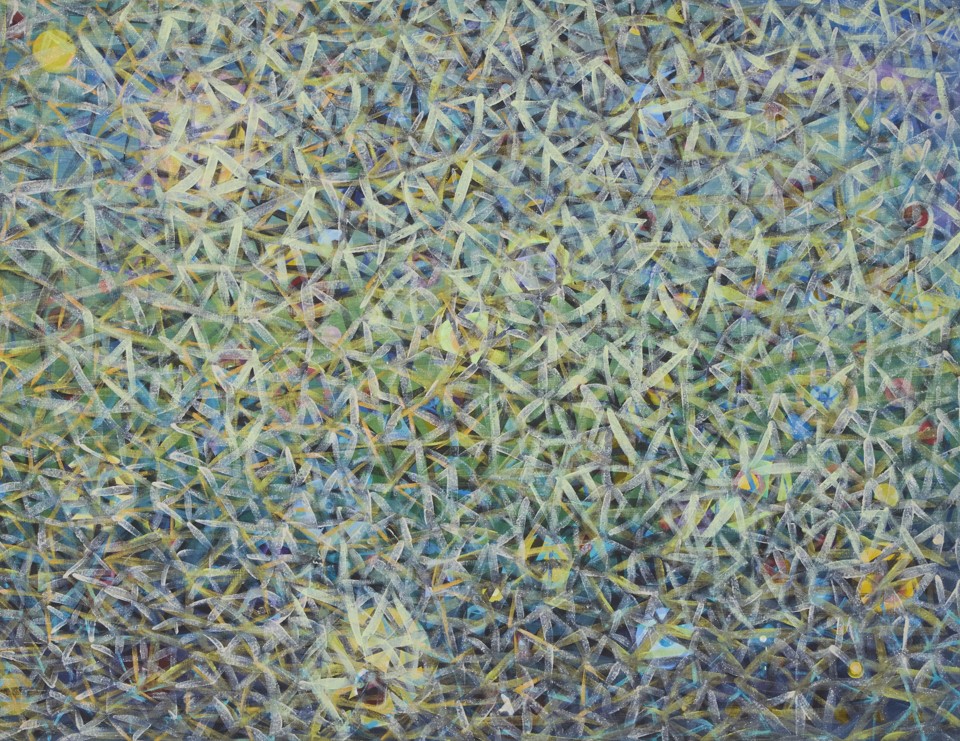
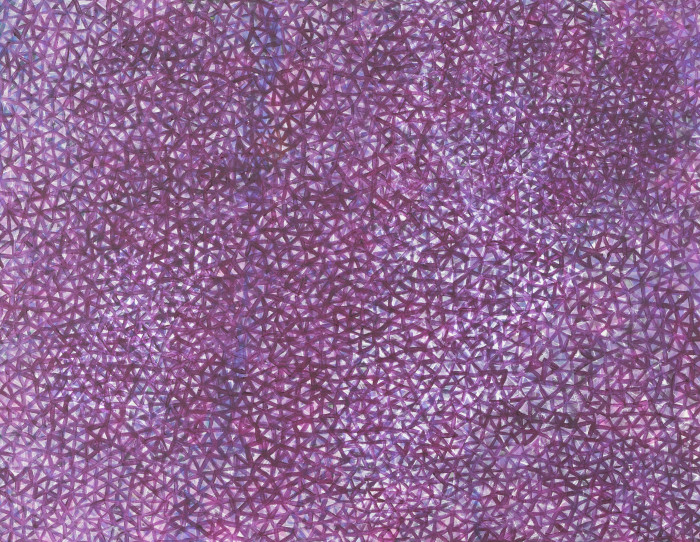
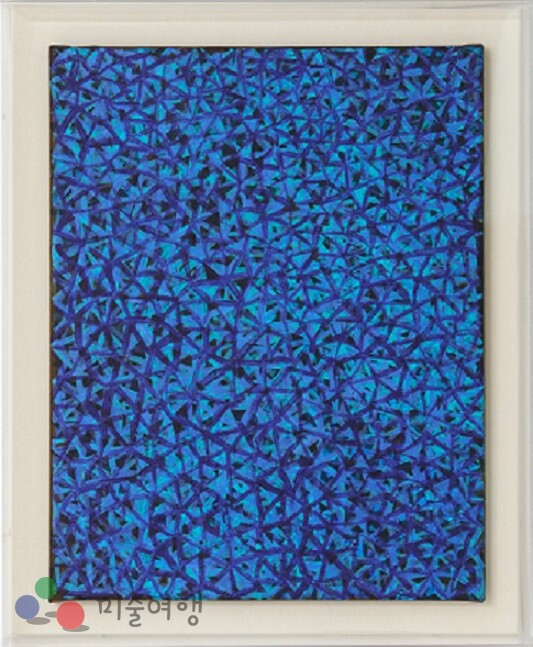
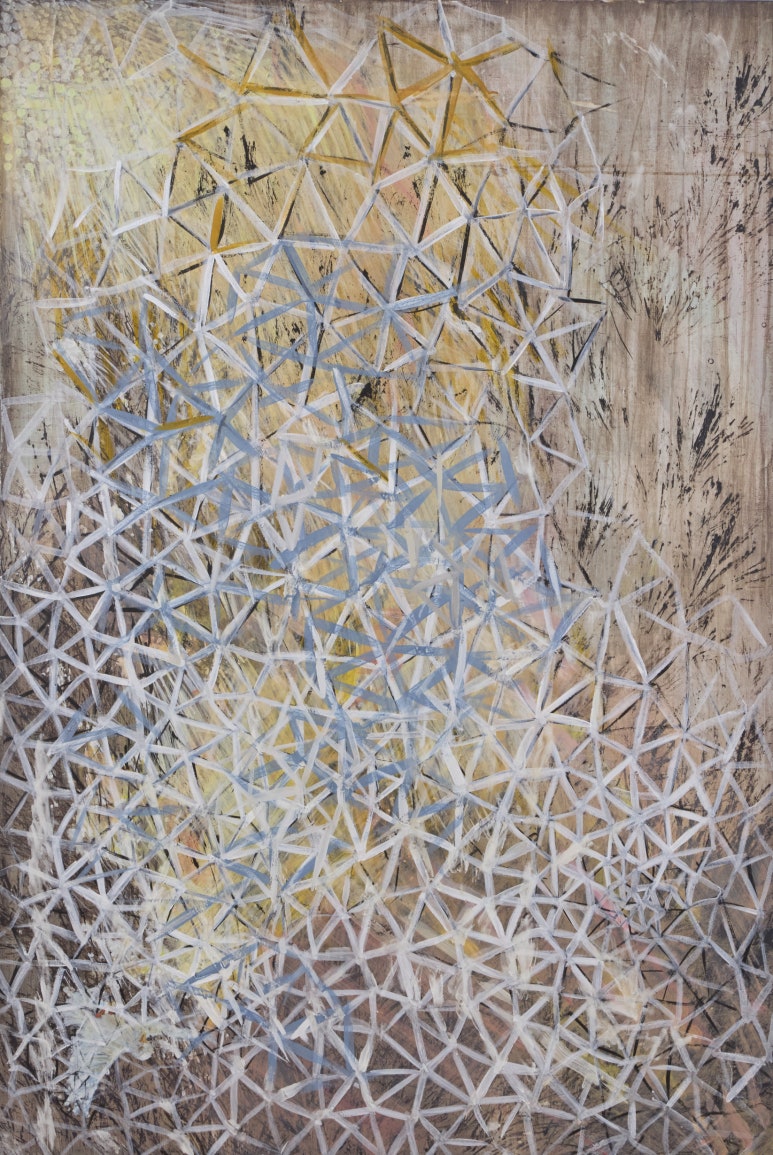
Starya Hee-seung Sung, Early summer-1, 2022, Acrylic on canvas, 31 x 42 cm © Starya Hee-seung Sung, Courtesy of Zaha Museum

◈ Into Which Universe Might the Triangle I Drew Be Born as a Star?

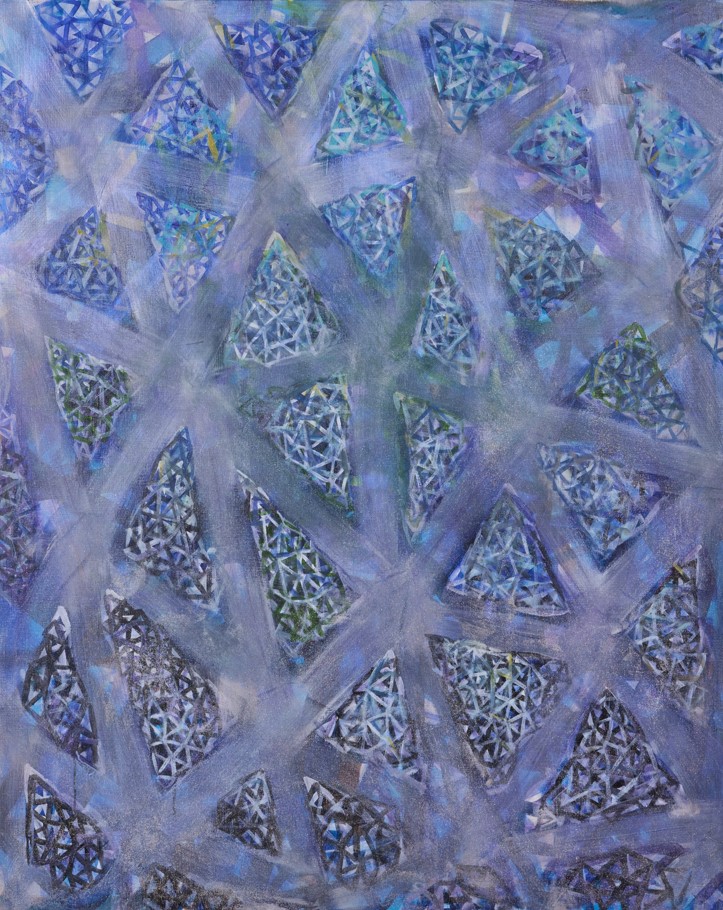
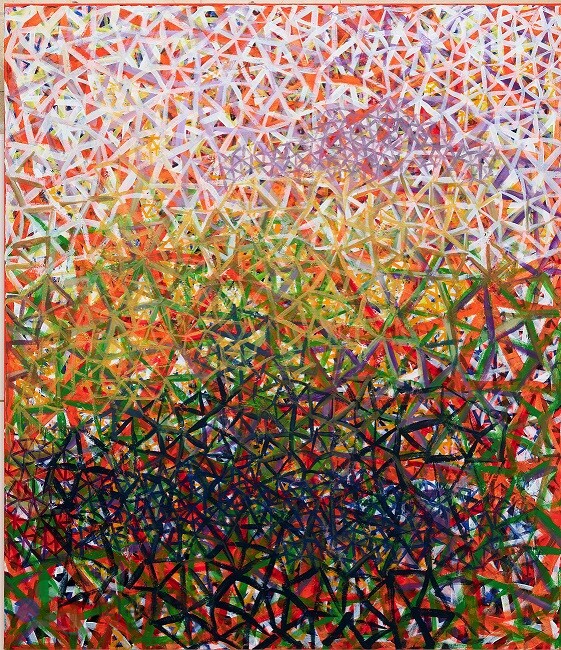
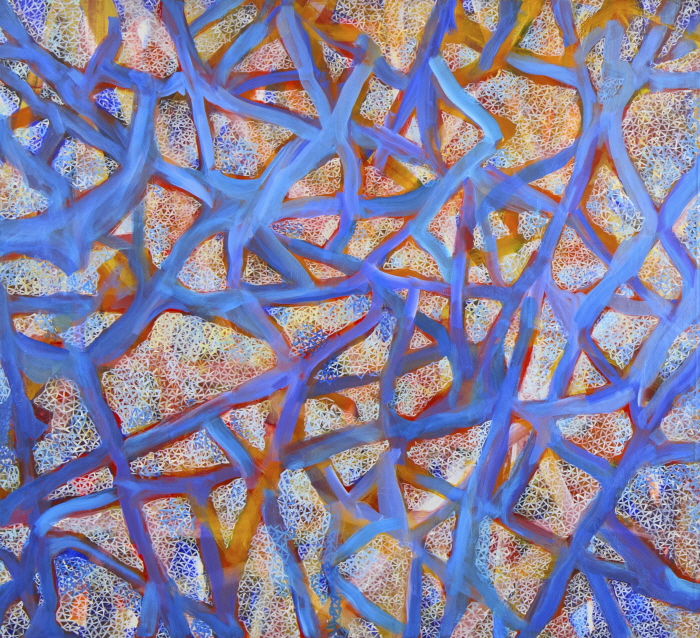
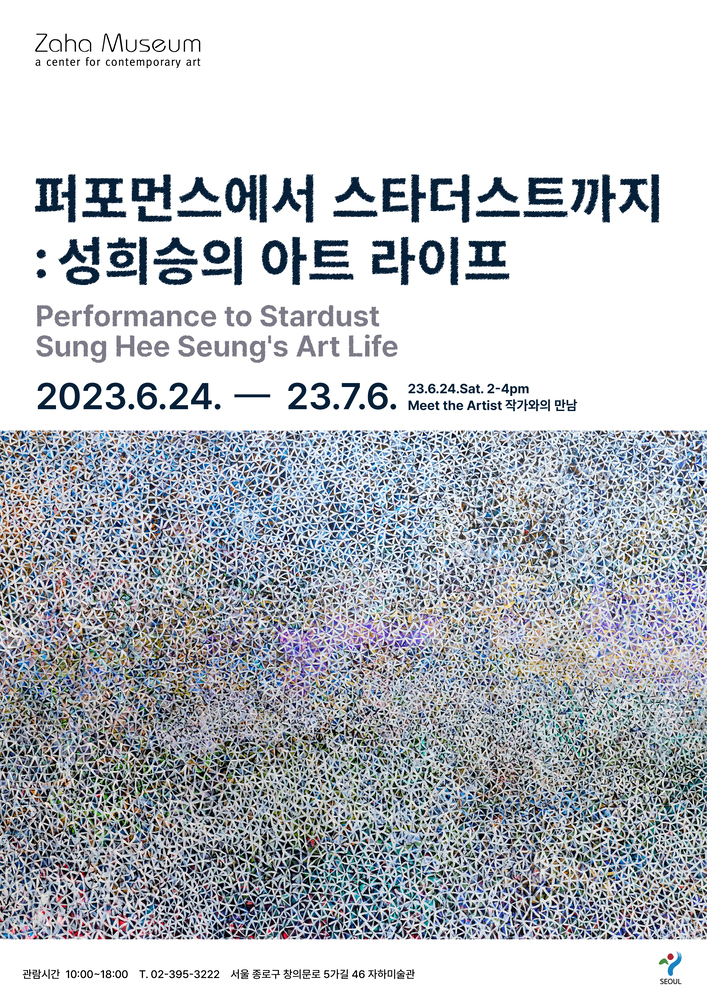
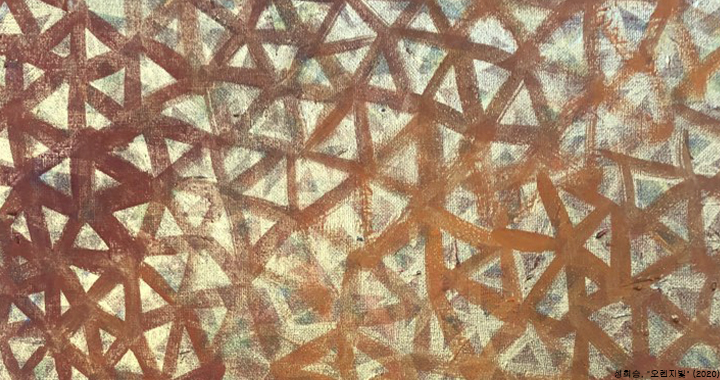
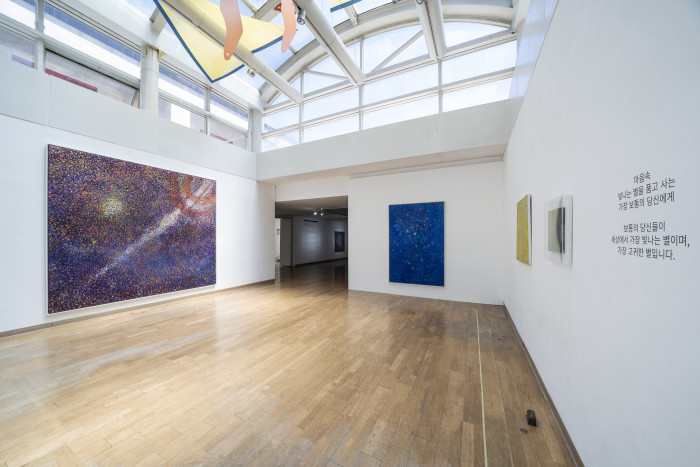
Beginning with a small triangle, Starya Hee-seung Sung’s work demonstrates how points and lines come together to form shapes and how the addition of color can transform a two-dimensional plane into a space capable of encompassing everything from the inner mind to the cosmos. Countless accumulated lines flow across the pictorial surface like capillaries, forming an all-over painting through processes of convergence and expansion.
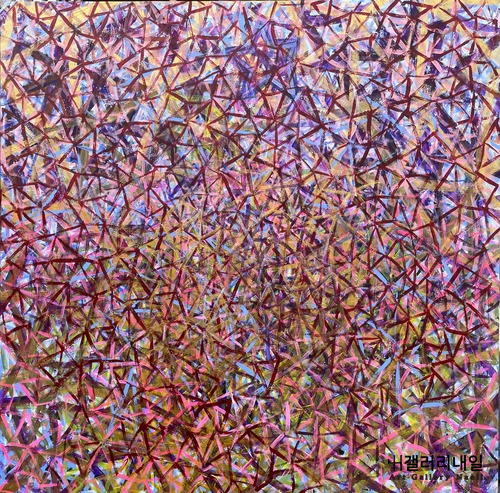
Her paintings evoke a realm of memory organically interconnected like neurons and synapses, a map of the mind, an organism composed of innumerable cells, or a vast nebula filled with cosmic foam and gas.
Looking at her work, one is suddenly reminded of Kim Whanki’s Where, in What Form, Shall We Meet Again?. Few would be unaware that the title was taken from At Evening, a poem by his friend and poet Kim Kwang-lim. Just as the poem reads, “Among so many / one star looks down upon me / among so many people / I look up at that one star,” the countless dots in Kim Whanki’s paintings bring stars to mind.

Those dots may have been the stars Kim Whanki saw each night over the sea off his hometown of Sinan, or they may have been the lights of the metropolis visible from his studio in New York. Kim Whanki’s stars are characterized less as dots than as small fields of color, built up through repeated layers of diluted paint containing a large amount of medium. Because these blue fields densely fill the entire surface, the resulting painting ultimately appears as an all-over composition.


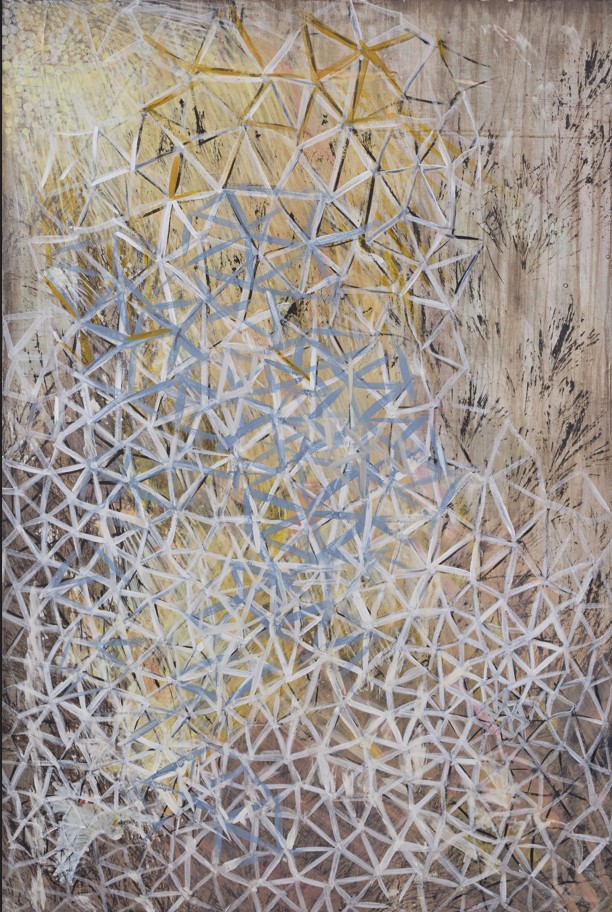
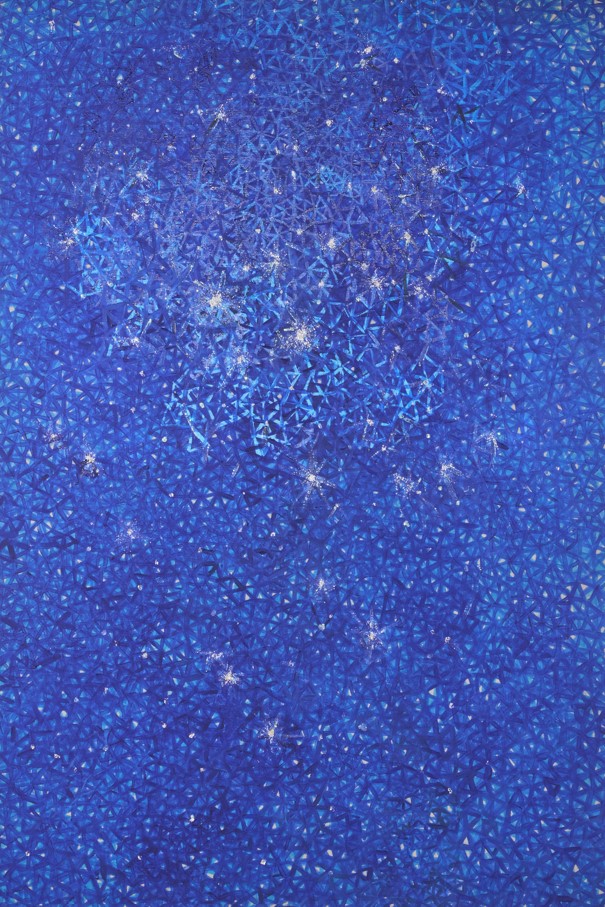
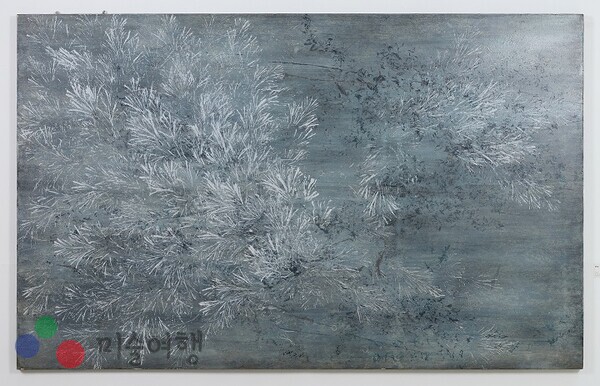
Starya Hee-seung Sung, Humidity, 2003, Acrylic on canvas, 260 x 162 cm © Starya Hee-seung Sung

All-over painting is often discussed as a characteristic commonly associated with Abstract Expressionism. Its roots, however, can be traced back to reflections on the very nature of painting itself.

Maurice Denis, a member of the Nabis—an artistic group formed in Paris in the late 1880s whose name means “prophet” in Hebrew—and an admirer of Paul Gauguin, wrote in his 1889 essay “Definition of Neo-Traditionalism”: “Remember that a painting, before it is a battle horse, a nude, or some anecdote, is essentially a flat surface covered with colors arranged in a certain order.”


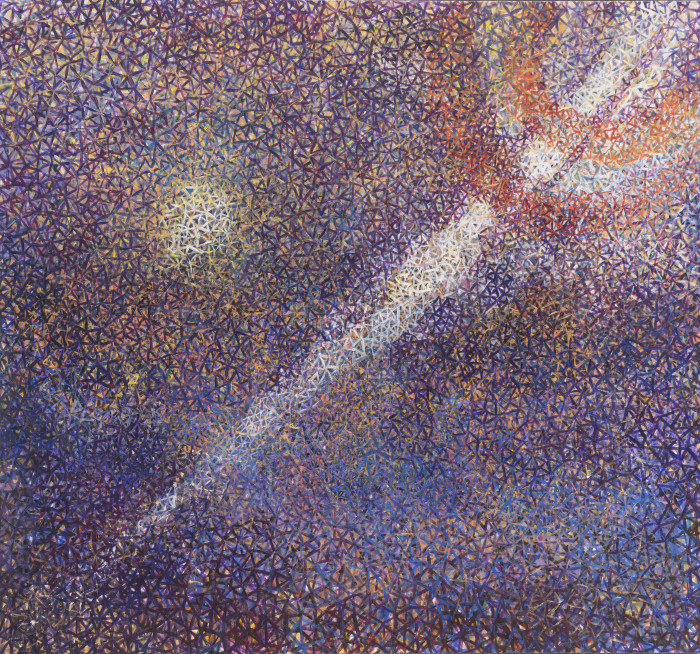
Starya Hee-seung Sung, Universe #200802, 2020, Acrylic on canvas, 151 x 130 cm © Starya Hee-seung Sung

In fact, the fundamental formal and plastic elements of painting are point, line, plane, form, and color, and the space they create is itself a flat surface. Although forms may represent or evoke specific objects, painting is essentially a plane on which a “feast of form and color,” constituted through lines, unfolds.

Regarding Houses at L’Estaque, a work that became a point of departure for Cubism, Georges Braque emphasized that they were not actually houses but forms and colors painted on canvas, arguing, “The painter thinks in terms of form and color. The painter’s aim is not ‘to reconstruct an anecdotal fact,’ but ‘to construct a pictorial fact.’”

Upon seeing the work, Henri Matisse reportedly described it to the art critic Louis Vauxcelles as “bizarreries cubiques” (“strange cubes”), and Vauxcelles, taking note of the phrase, subsequently coined the term “Cubism” for Braque’s new style.

Later, Clement Greenberg, wary of totalitarian regimes such as the Soviet Union, Nazi Germany, and Italian Fascism, further refined the arguments he had developed in “Avant-Garde and Kitsch” in his subsequent essay “Towards a Newer Laocoön,” and later applied this framework to postwar American painting in “American-Type Painting.”

In “Modernist Painting,” Greenberg formalized his theory of formalism by arguing that “flatness” constituted painting’s defining condition. Yet although Greenberg wrote in “American-Type Painting” that Mark Rothko’s monumental canvases seemed to be composed of pure, translucent light with indistinct yet perceptible boundaries, and that their forms appeared to breathe and possessed the power to draw the viewer in, Rothko himself stated, “I am not an abstractionist. I am not interested in relationships of color or form or anything else. I am interested only in expressing basic human emotions—tragedy, ecstasy, doom, and so on.”

A similar position can be found in Barnett Newman, one of the leading figures of Color Field painting. His interest lay not in abstraction as a formal mode, but in the “sublime”—that is, in a new art that was “romantic and exciting” while at the same time possessing the quality of a kind of “revelation.”

There is no doubt that painting is constructed through formal elements. Yet if these alone are taken as the criteria of criticism, one encounters the problem of having to remain silent about the content and meaning of a work, as Clive Bell did.

In 1966, when Minimal Art was entering its full-fledged phase, Frank Stella, almost as if reiterating Braque’s earlier statement, remarked, “My painting is based on the fact that only what can be seen there is there. It really is an object. (…) What you see is what you see.” To me, Stella’s famous phrase, “What you see is what you see,” sounds striking, yet at the same time it can also seem like an irresponsible tautology or a meager and strained form of evasion.


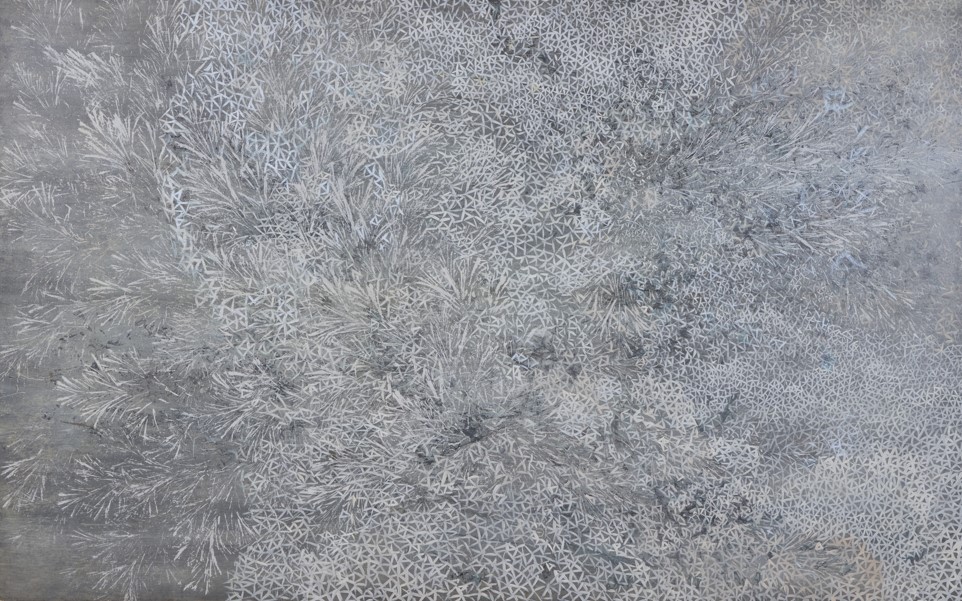
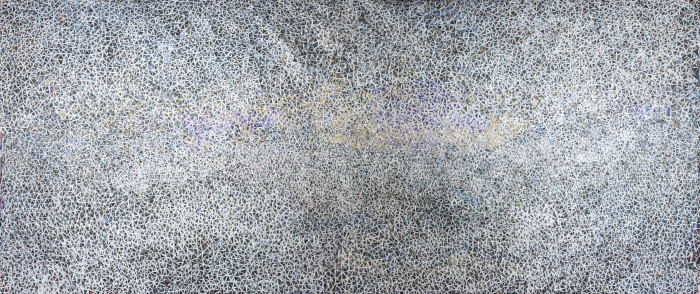
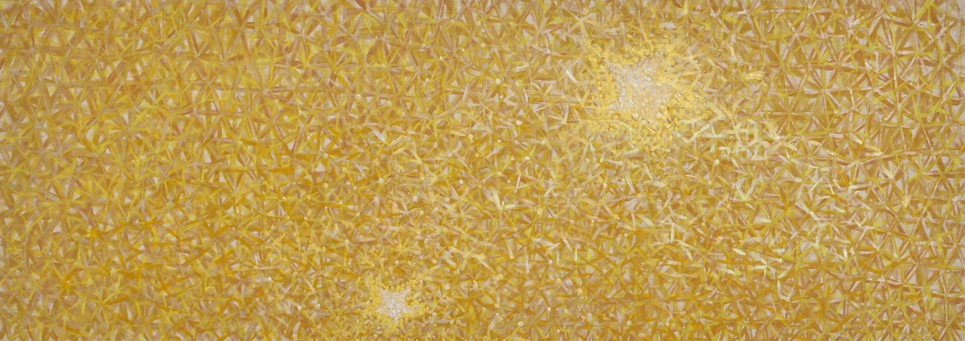
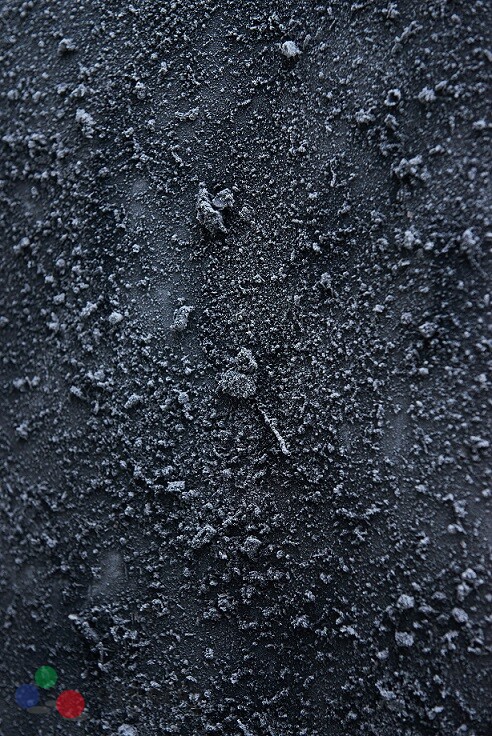
Starya Hee-seung Sung, Stardust, 2023, Ash from mountain fire, 143 x 111 cm © Starya Hee-seung Sung

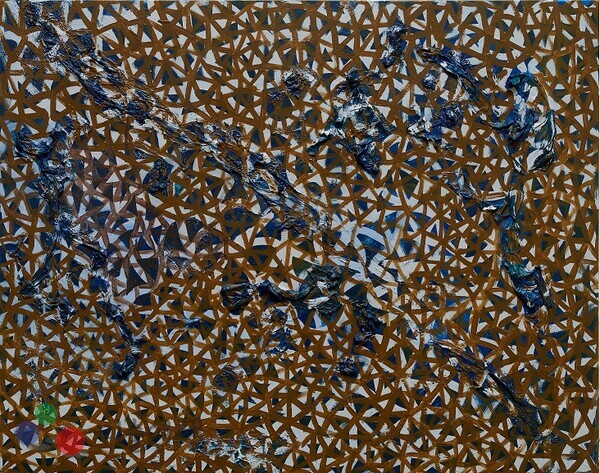
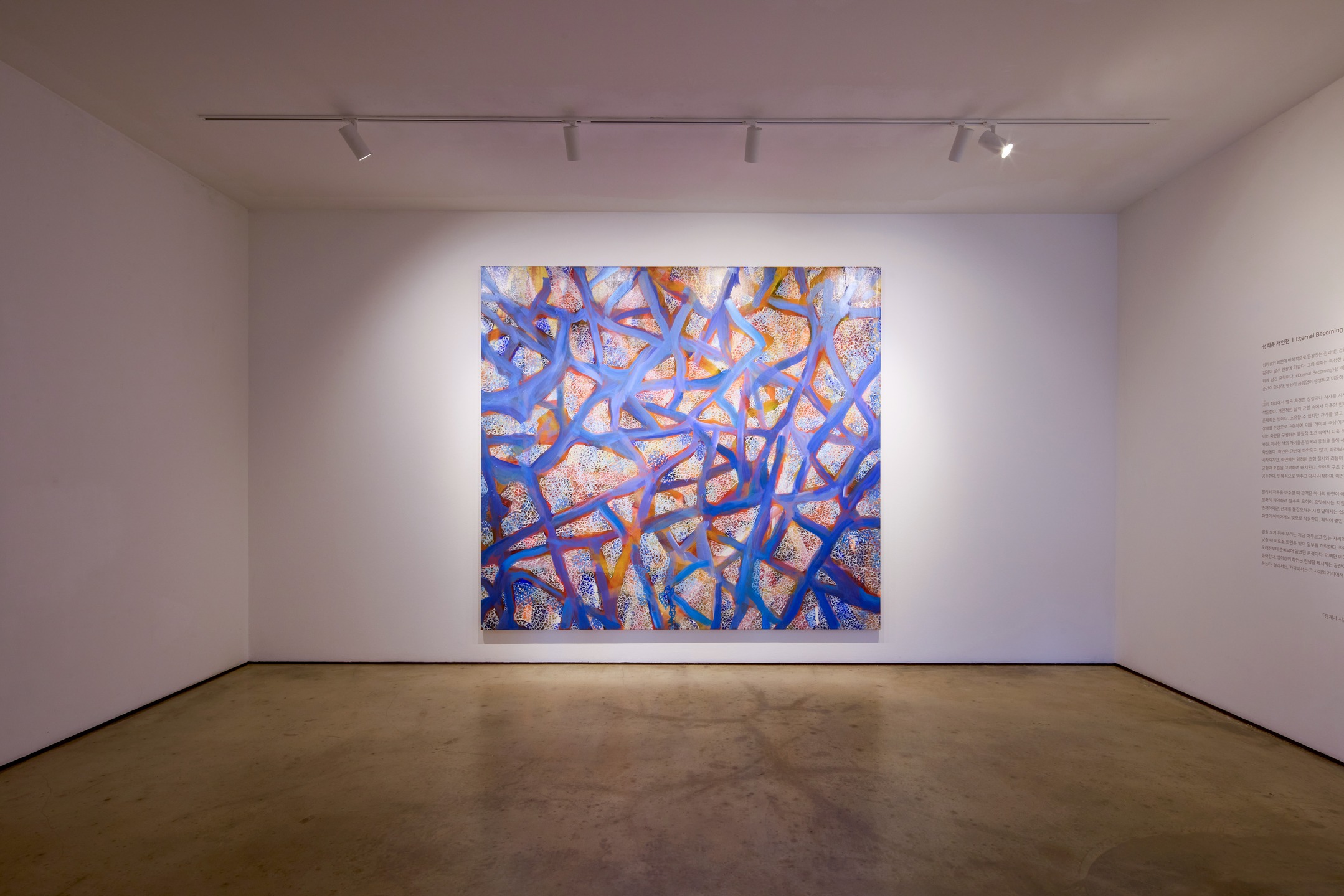
Starya Hee-seung Sung’s works, created through the repeated drawing of countless triangles as though weaving the surface, appear at first glance to be all-over paintings. Yet on closer inspection, density and looseness coexist within them, and the space is not closed but open.

This open space is a gap through which our gaze and breath may slip, and a zone of possibility that invites the two-dimensional plane to expand into three-dimensional space. Across this field, star-like forms gleaming like shooting stars occasionally traverse the surface.

In some cases, the lines she draws both divide forms and connect them, like the leading of stained glass. Looking at them, I am reminded of Half Moon, a children’s song I sang in my childhood. Regrettably, the Milky Way in the blue sky, the little white boat, the cinnamon tree, and the rabbit may exist only within the song, yet even so, one cannot give up such romantic imagination.


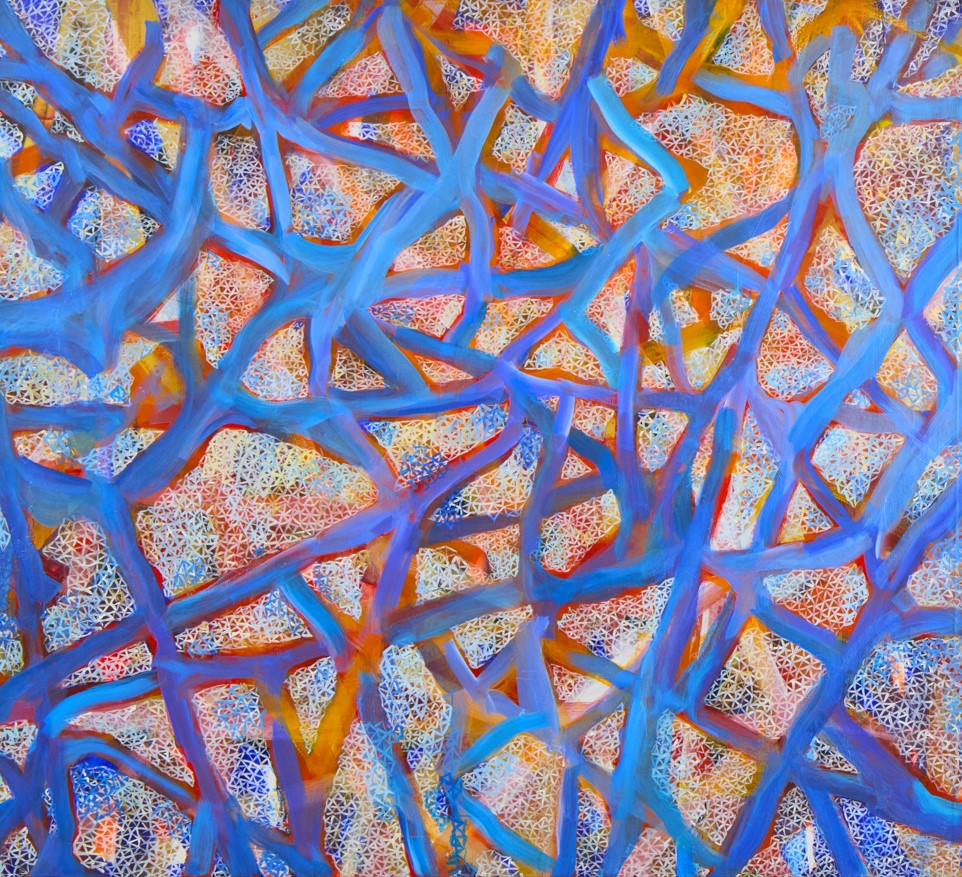
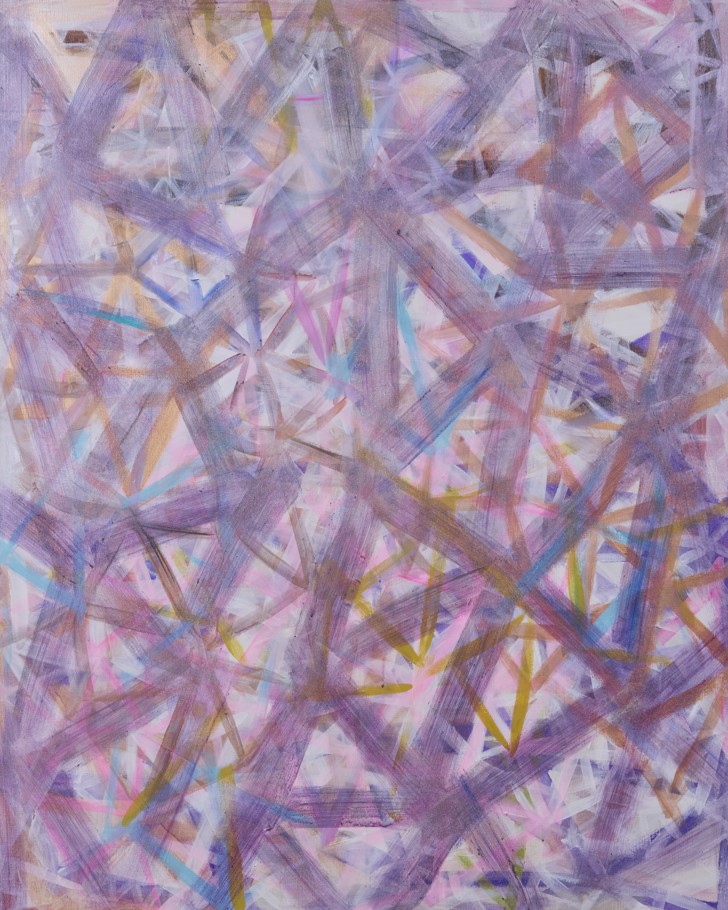
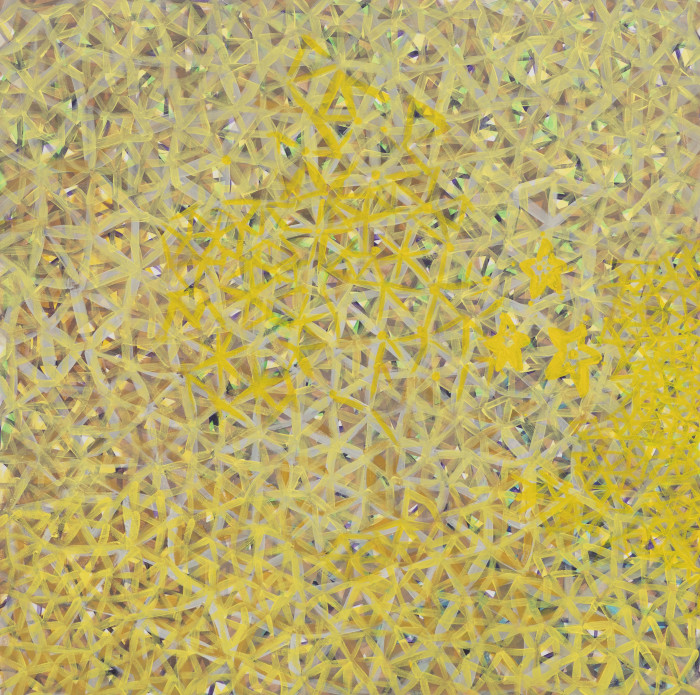
Starya Hee-seung Sung, Universe #212003, 2021, Acrylic and Korean paper on canvas, 73 x 90 cm © Starya Hee-seung Sung

Just as the blue in Kim Whanki’s works evokes the deep indigo of the sea off Sinan, a single line drawn by Starya Hee-seung Sung undergoes repeated accumulation and expansion, forming a dense thicket, while the rhythm of layered lines, together with color, is perceived as giving rise to a galaxy.

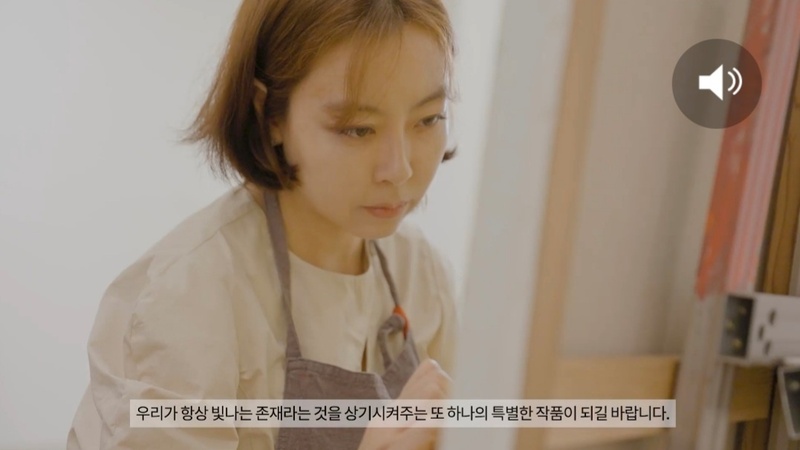
In cities dominated by artificial light, we can no longer see the brilliantly shining stars in the night sky that we once saw in childhood. Her paintings awaken a nostalgia for those lost stars. In this sense, they can be understood as representations of an inner world in which memories have accumulated layer upon layer, as well as expressions of longing for an unknown world toward which one wishes to journey.

Like the cosmos itself, revealing the spectacular birth and death of countless stars, her vibrant pictorial surfaces invite the imagination to dwell within them. To look at the work is to experience the pleasure of traveling among those stars.

Into which universe might the single triangle she has drawn be born as a star?

References