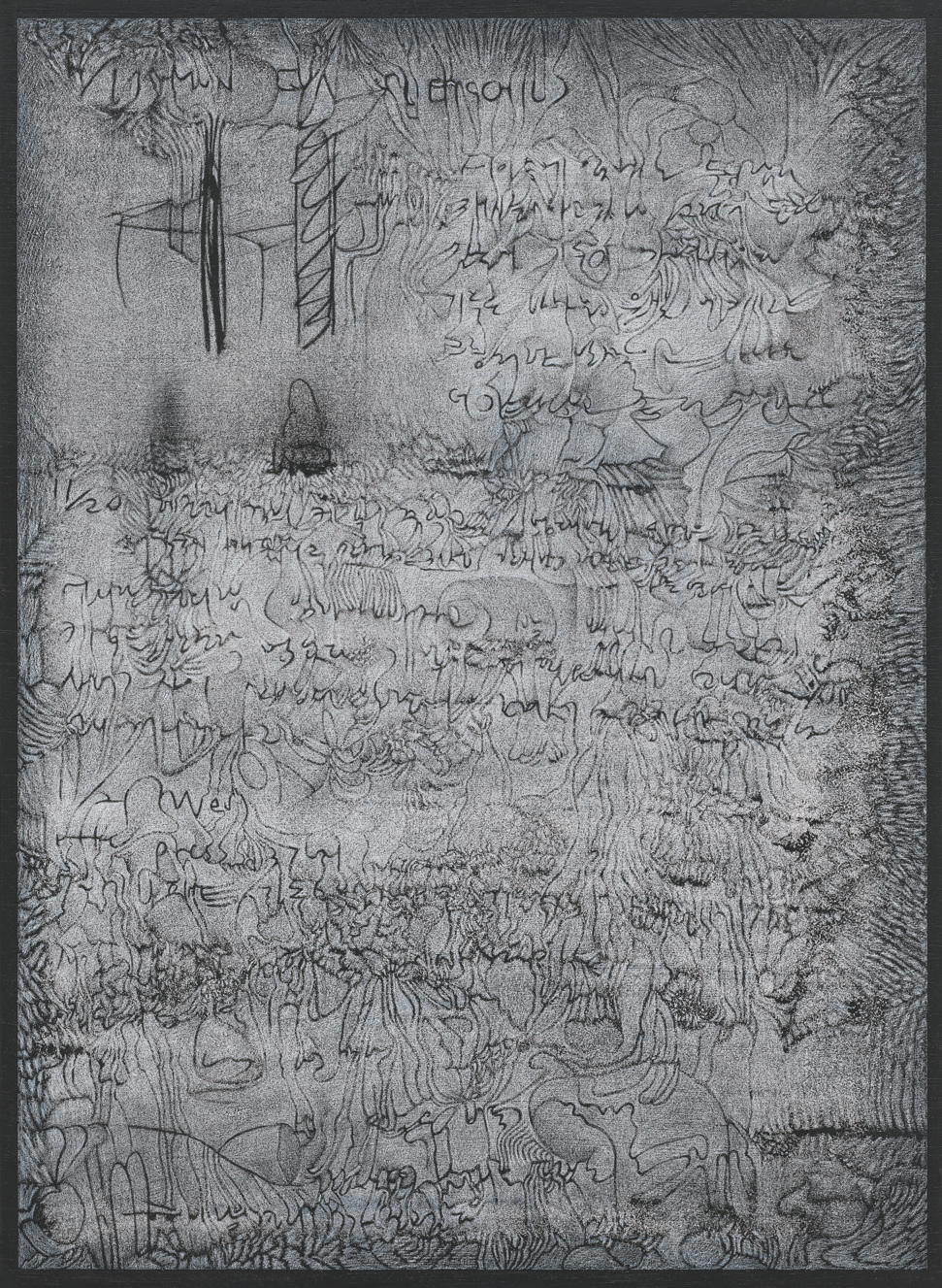
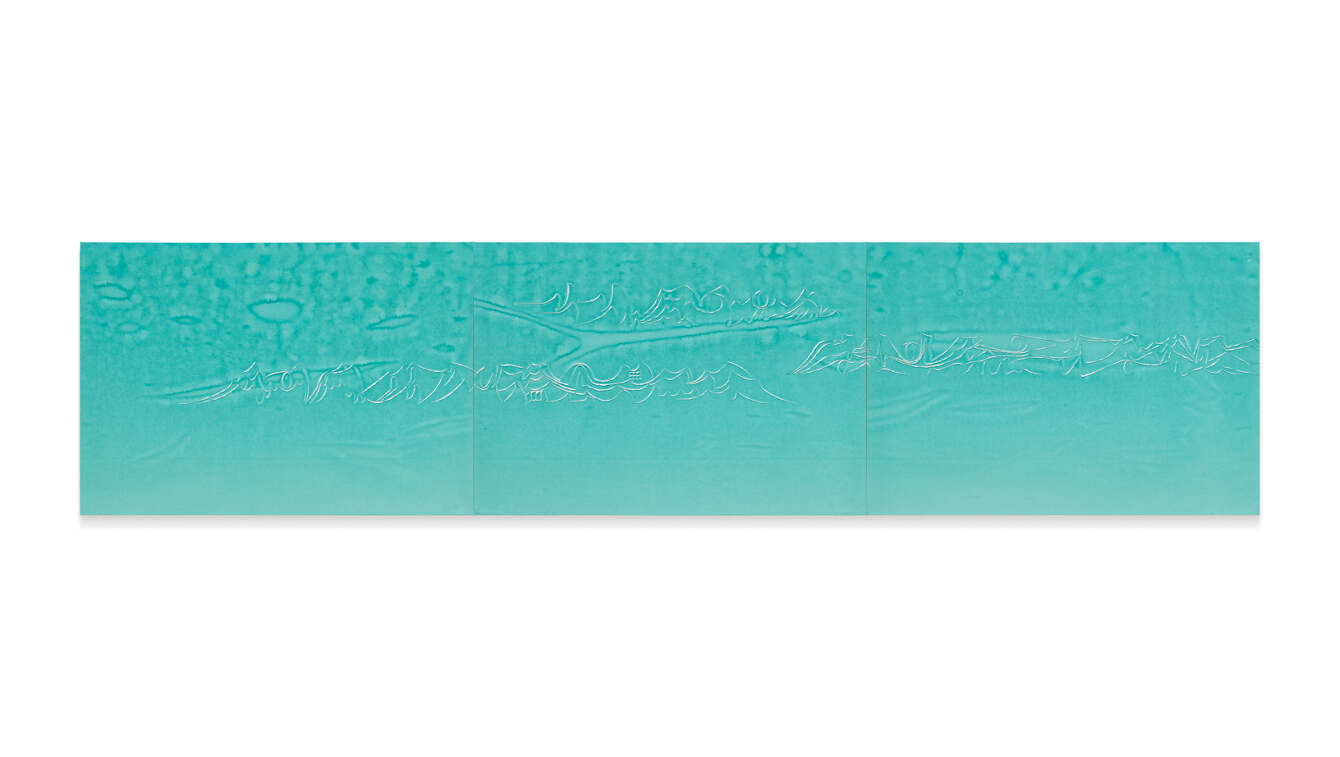
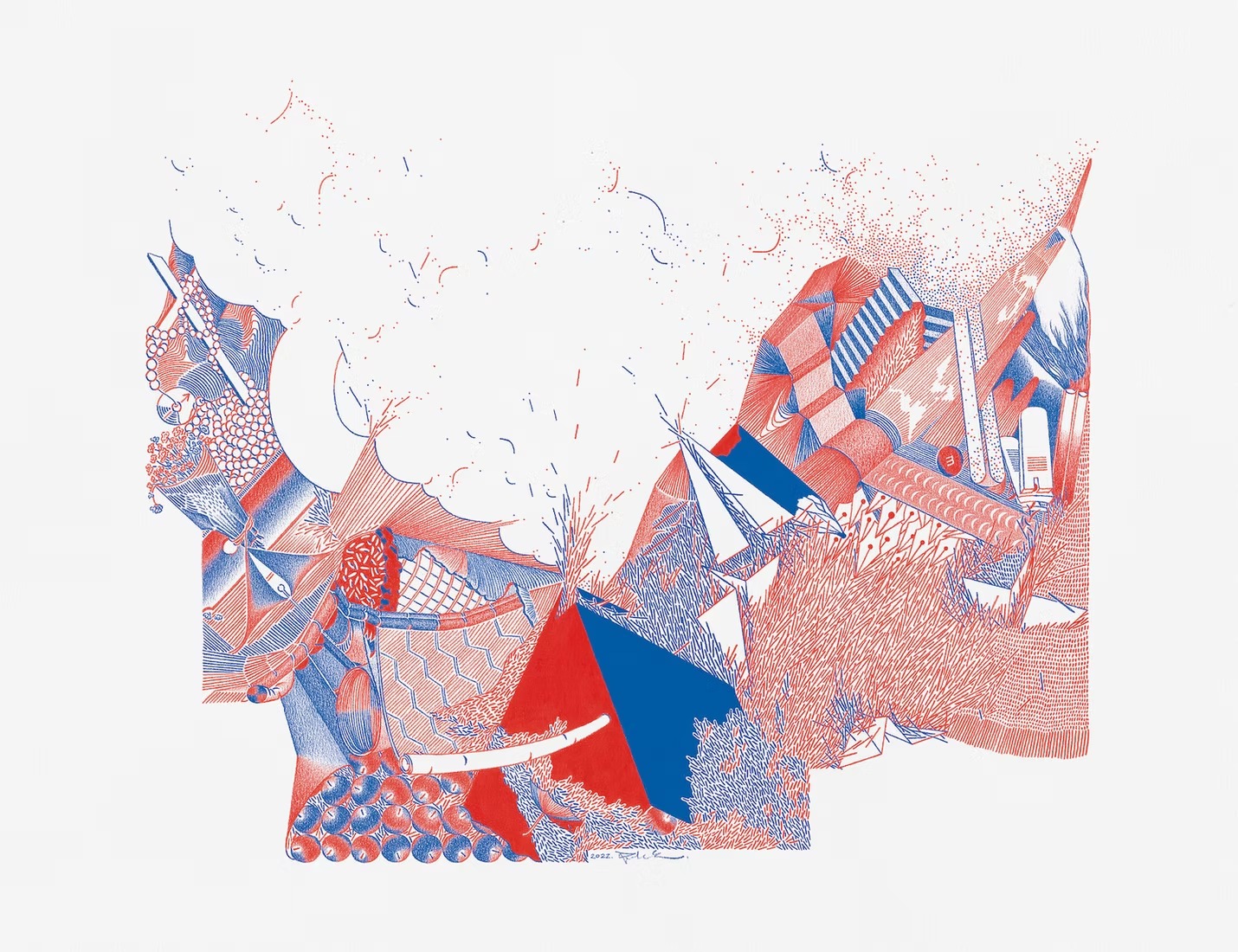
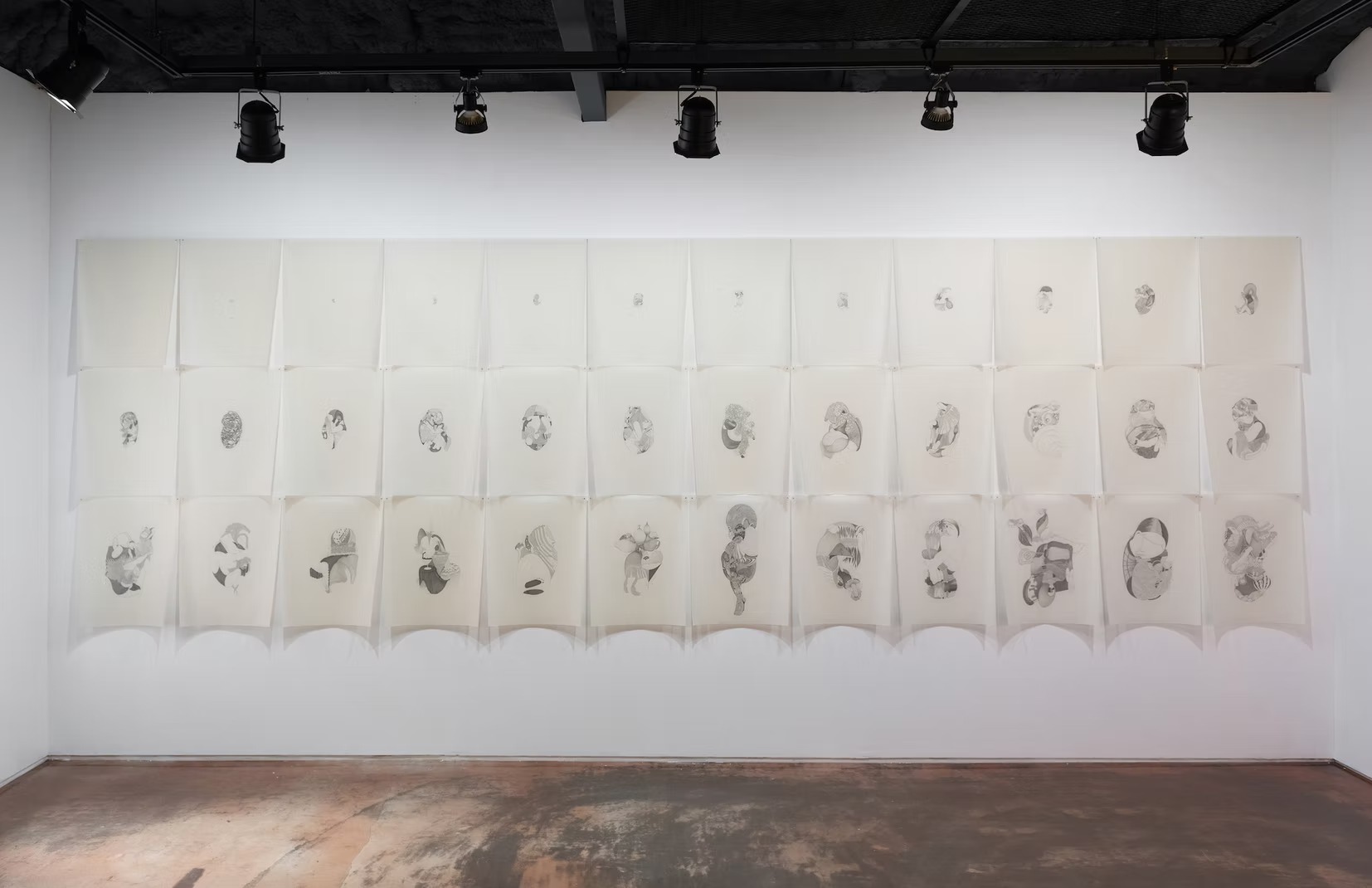
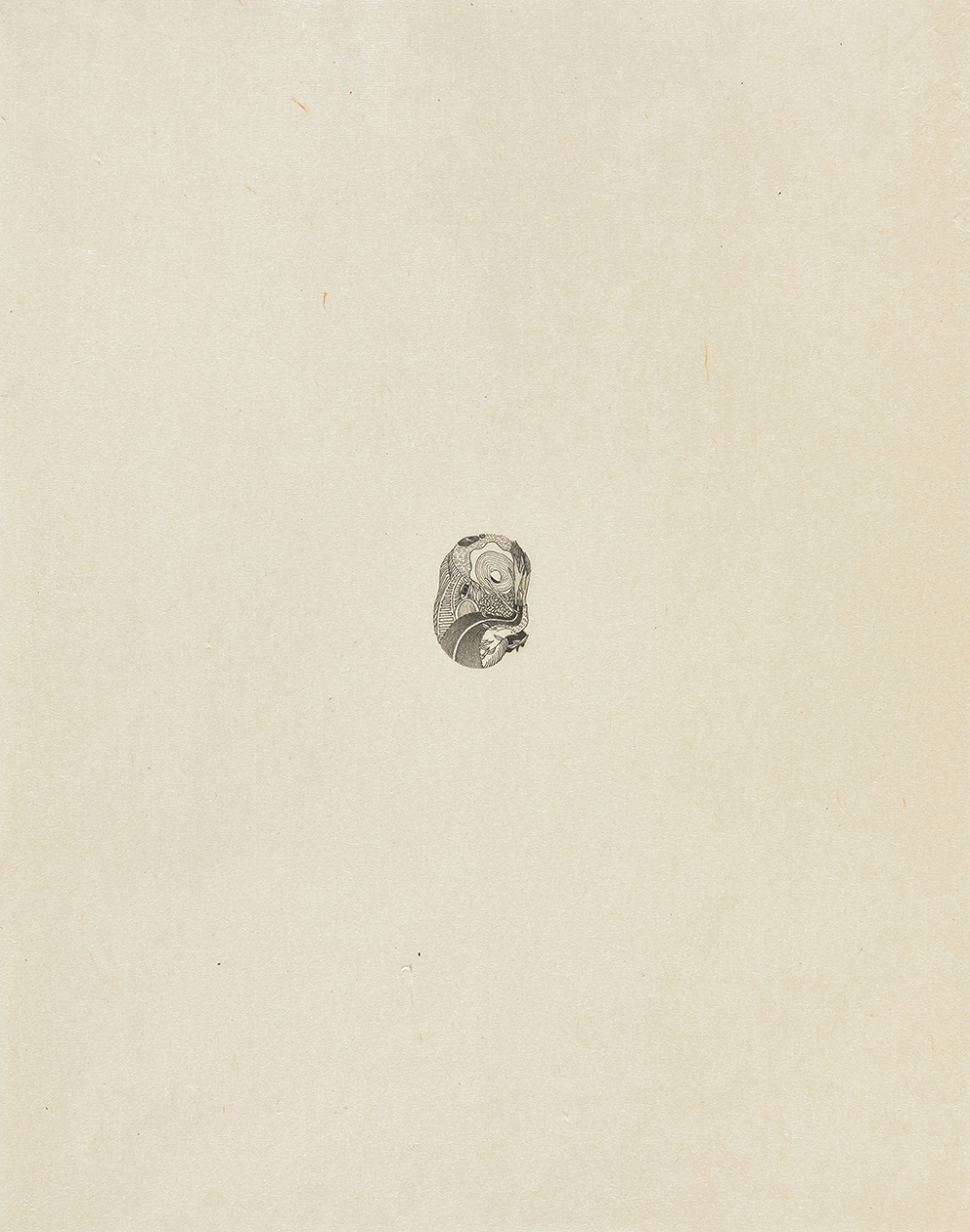
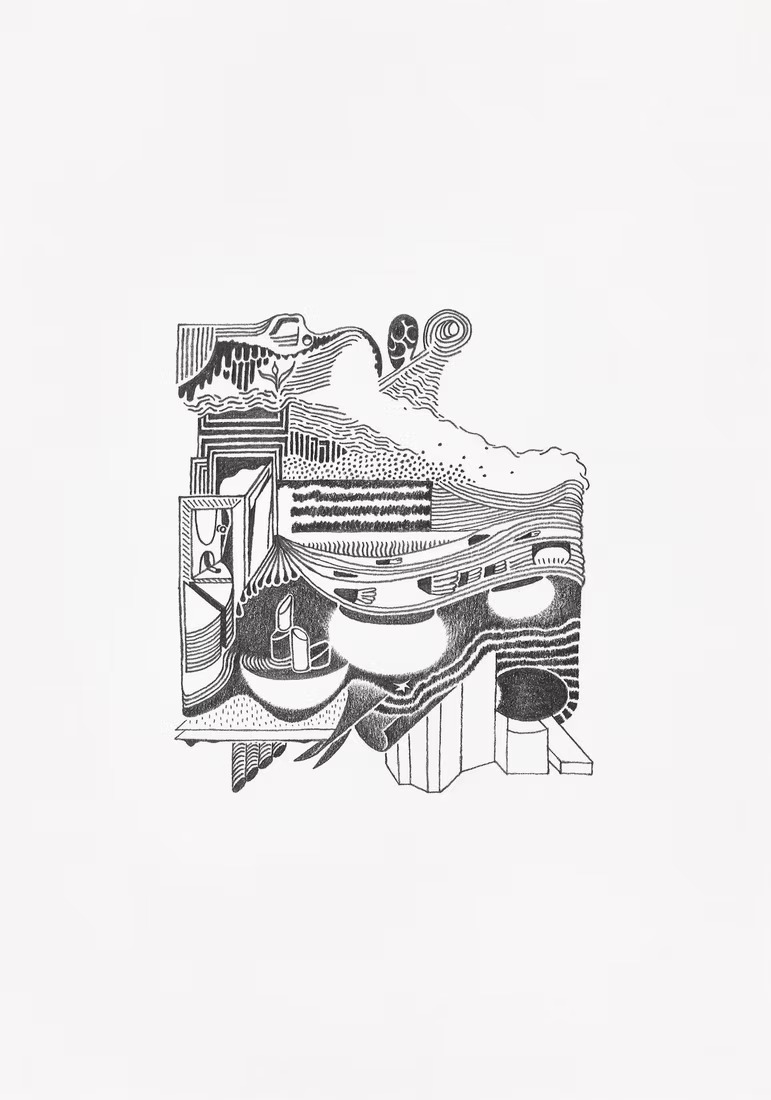
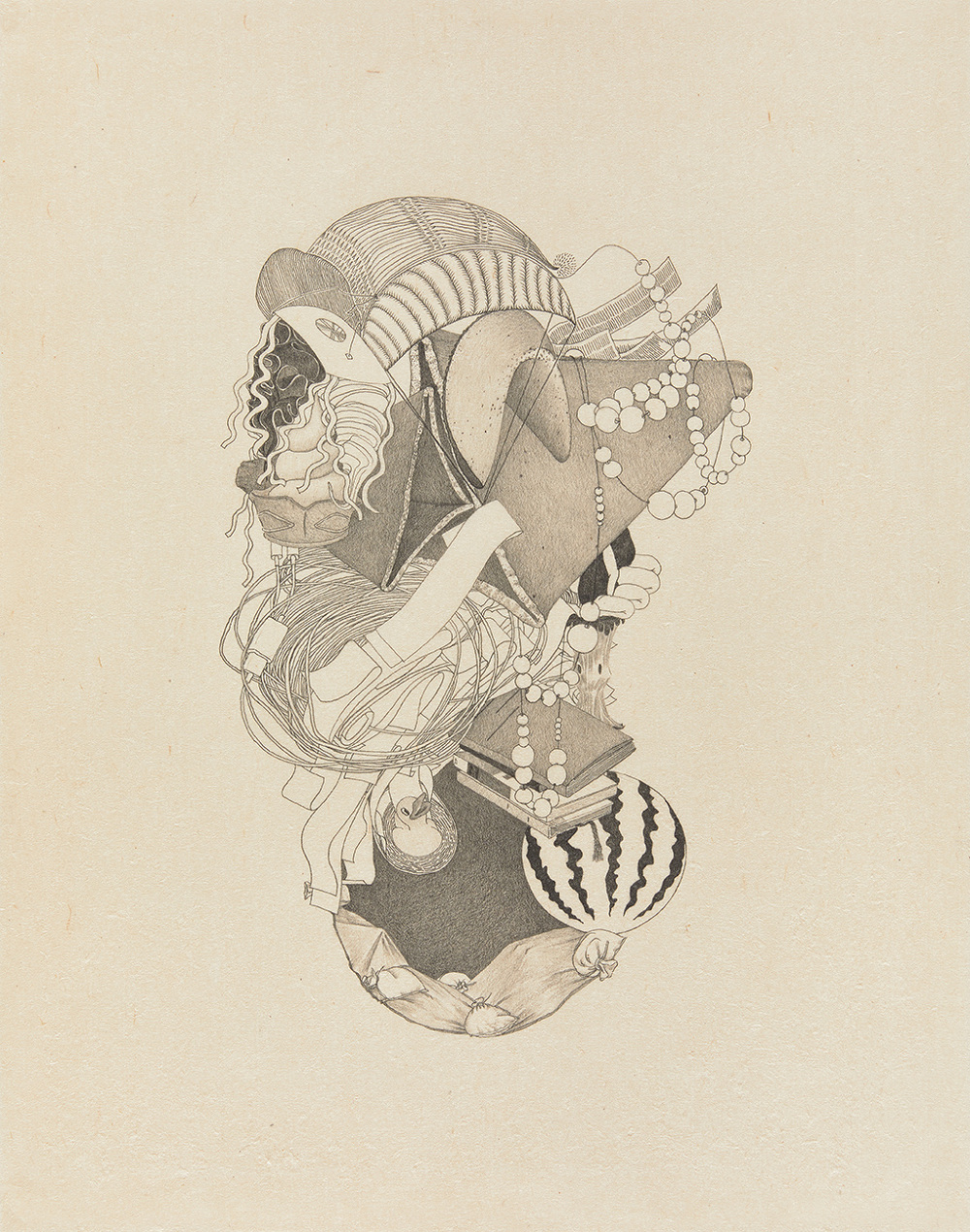
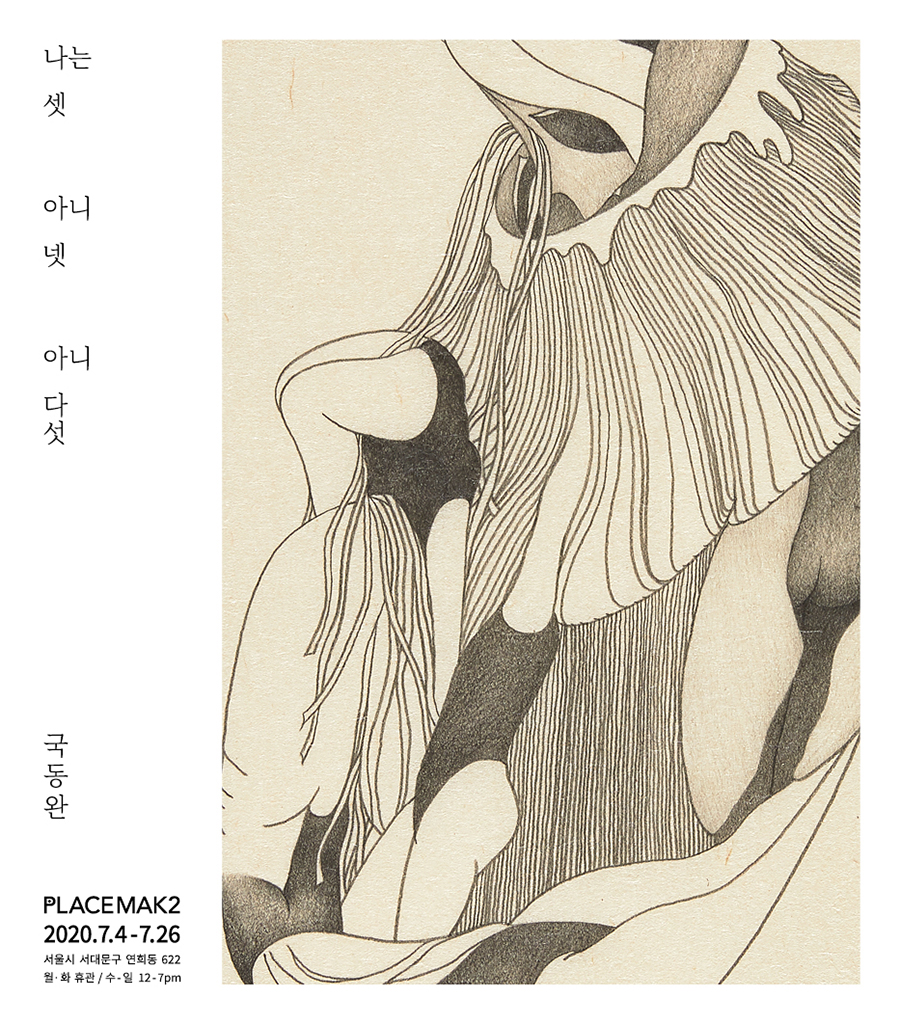
Dongwan Kook, I Am Three or Four or Five: Week 0, 2020, Graphite on hanji, 44 x 56 cm © Dongwan Kook

Dongwan Kook sought to record dreams, took the experience of pregnancy as a subject, and attempted to approach the events of April 16, 2014 through her own mode of mourning. Relying on nothing other than her own hand, she also sought to focus on the moment when the workings of the mind are expressed at the extremities of the body.

This process involves a determination to capture an experienced event in some form at the very moment when it has not yet been rendered into language. Rather than searching for a plausible explanation, Kook attempts to grasp the traces of thoughts, words, and emotions that inevitably reveal themselves.
The method of “free association” employed for this purpose—an aesthetic form that might also be described as “automatism”—provides the underlying framework for Kook’s practice as a whole. As with the language of “automatic writing” explored in Surrealist literature, it extends an attempt to transcribe arbitrarily proliferating signs without restraint, in the hope that what lies behind what is uttered—the deeper strata of desire and emotion—might reveal itself directly.
Yet on the pictorial plane, where unrelated images jostle and overlap to eventually constitute a book, what becomes visible is not a raw mass of reality unconsciously disclosed. Rather, what is exposed is a structure of meaning that actively interprets that reality—an event.

Rather than embodying the deconstructive freedom often expected of visual imagery, Kook’s work paradoxically affirms itself as both a sign with indexical qualities and a constructed structure in its own right. The following text focuses on the linguistic force of construction that runs throughout Kook’s practice, examining in particular her 2020 work ‘I Am Three or Four or Five’, which was also presented in a solo exhibition of the same title.


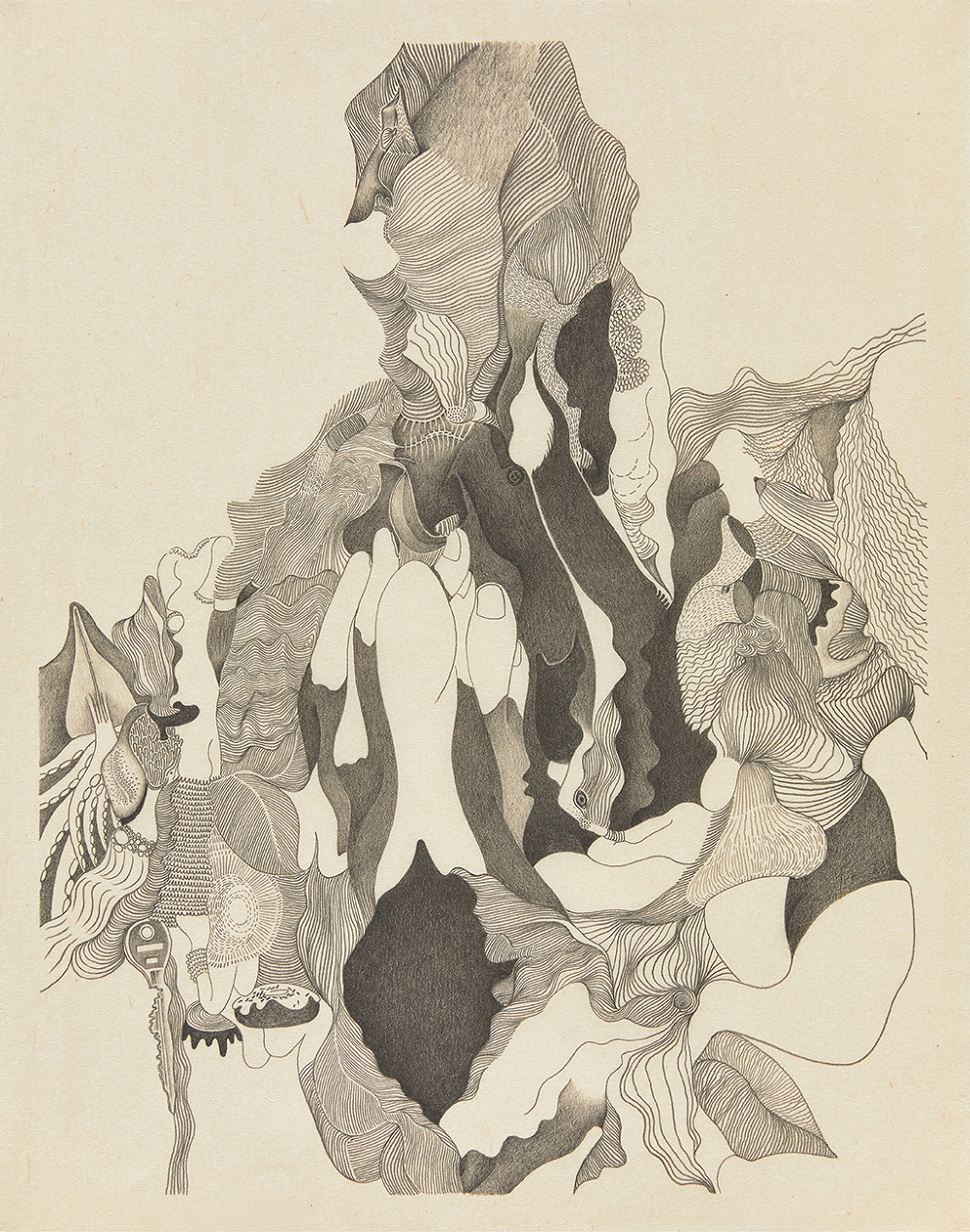
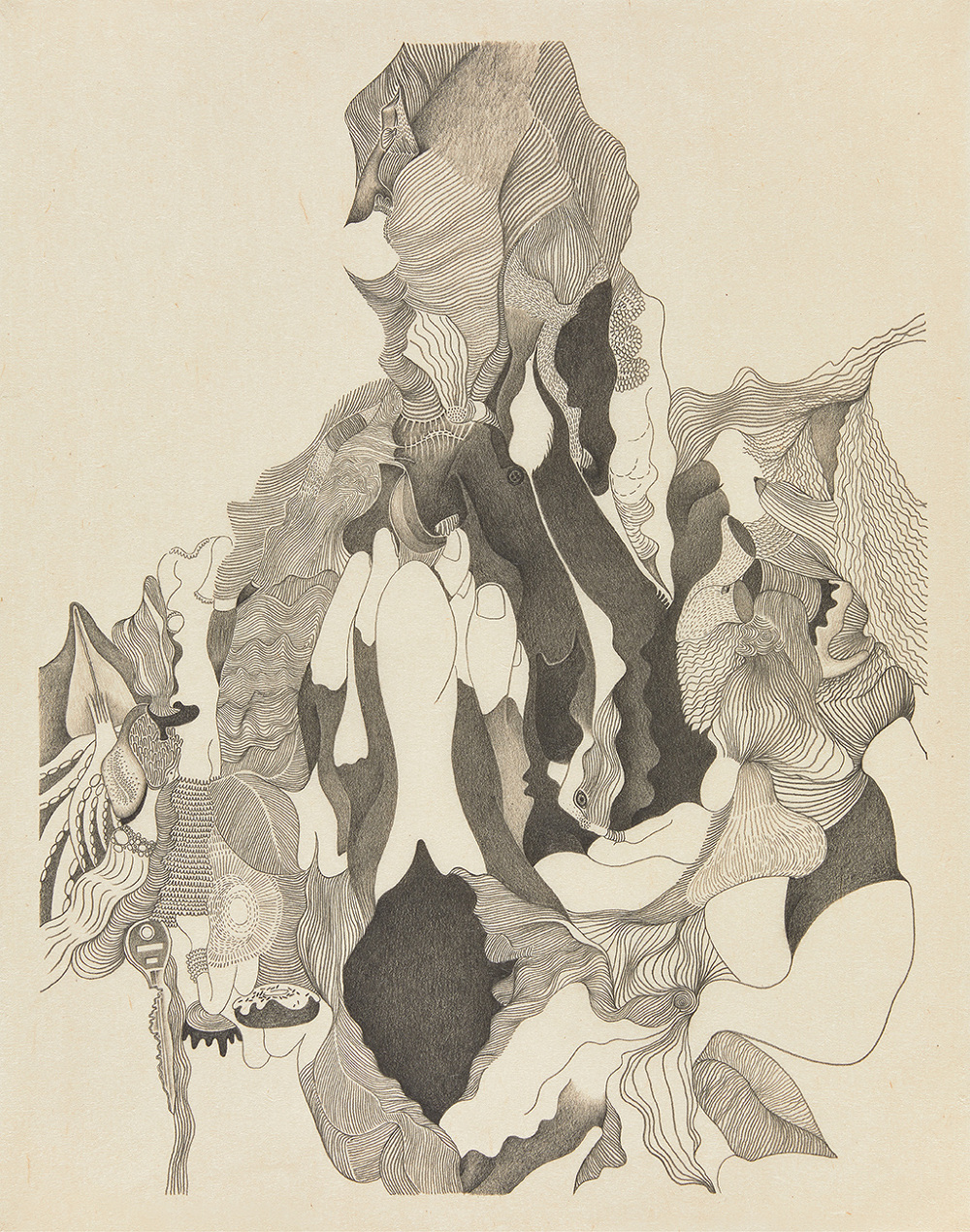
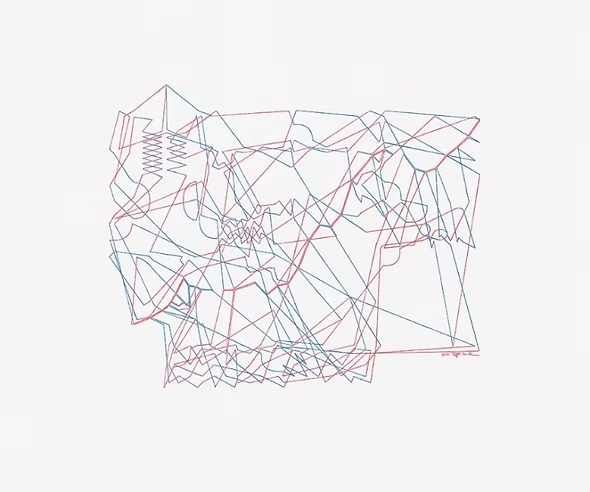
Dongwan Kook, I Am Three or Four or Five: Week 1, 2020, Graphite on hanji, 44 x 56 cm © Dongwan Kook

1. Transcription: Violating Automatism

'I Am Three or Four or Five' is a series of drawings centered on the fetus in the womb, in which the artist transforms the formation and development of the fetus—as an event occurring within the female body—into visual images. The forty-one drawings begin with the state of a menstruating woman (the period the artist designates as “week 0”) and proceed week by week, tracing the fetus as it changes over time. (The same work develops into poetic texts paired with each drawing, as well as a publication incorporating both the drawings and the texts.)

While the work takes into account the actual size of the fetus and refers to photographs of fetuses (both human and nonhuman animal), it also draws upon and reconstructs several heterogeneous images, making its method closer to collage.

At the same time, the artist immerses herself thoroughly in her own experiences and memories while engaging in associative processes of the self, and it is distinctive that she relies on drawing as the formal device that makes this possible. For Dongwan Kook, drawing is a form grounded in the primary friction between pencil, paper, and the artist’s hand, and one that makes full use of its capacity to unfold at a relatively rapid pace.

This form functions as a device through which she can obtain the responses, phenomena, and results of “association” immediately, rapidly, and without filtering. (In the case of the text, its conspicuous physical combinations of words and freely shifting line breaks indicate a form closer to verse.) As mentioned above, this approach resonates with the Surrealists’ practices of automatism and free association.

Surrealist automatism was first attempted in literature. Its point of departure was a new literary project that sought to engage in play on the surface through the unrestricted proliferation of signifiers themselves rather than through meaning, and thereby to reach the unconscious. What remained unresolved was whether this could also be applied to visual language.

Put simply, the question arose as to whether the visual image was an appropriate medium for automatism. Unlike written language, which operates through a system structured by chains of signs, visual images already lack a presupposed network of meaning; the question, then, was whether, under such conditions, it was possible to find a (pictorial) image or form capable of escaping meaning—or whether such a form would itself once again have to be deliberately devised.i

Returning to Dongwan Kook, although she adopts “automatism” as a formal method, her practice occupies a somewhat different position from the Surrealist problem described above. Rather than employing “free association” and “automatism” in order to arrive at purely visual images—forms existing in a state liberated from meaning—Kook begins images from written language or brings them to a conclusion through language, thereby entering a world structured by networks of meaning and linguistic construction. In other words, the images and words she transcribes violate the very purpose of “free association” or “automatism.”

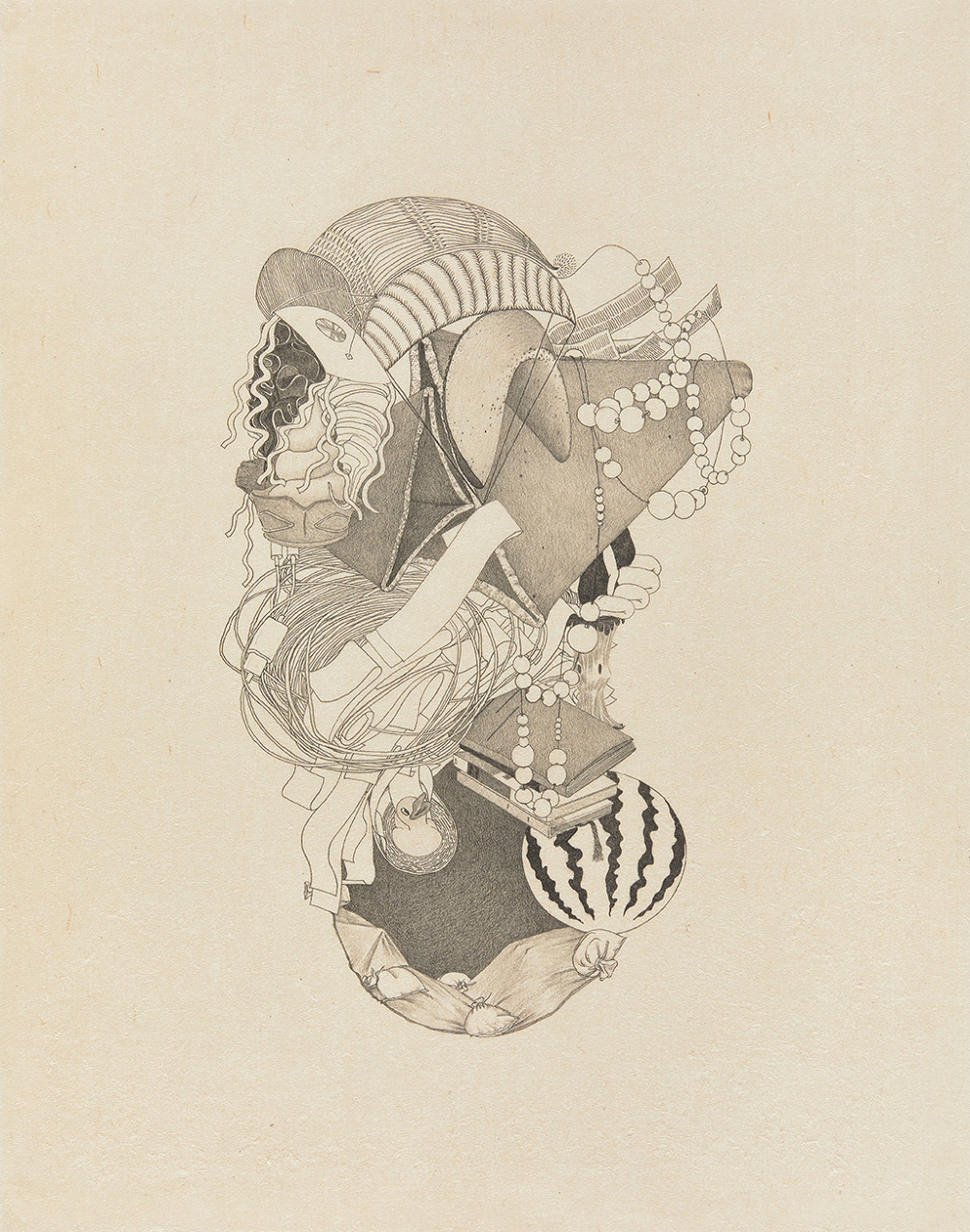
In short, the images Dongwan Kook produces affirm their own linguistic capacity for construction as signs, transforming and constructing the image into a system. The resulting structure is then faithfully unpacked once again through written language. In 'I Am Three or Four or Five,' the image of the “fetal body” is collaged from signified images that point toward meaning—simple outlined forms of animals and objects functioning as modules. Each module operates within the context of the form of the “fetal body” and ultimately belongs to a narrative structure that the artist unfolds through text in a poetic manner.

The same appears to be true of her practice of recalling dreams through associative processes in the form of text and images. Likewise, in the drawings from 2011–2012 that translate specific sentences into images on a flat surface, Kook’s interest lay not in the infinite proliferation of signifiers stripped of meaning, but in preserving the semantic structure and narrativity of the sentence through the image.


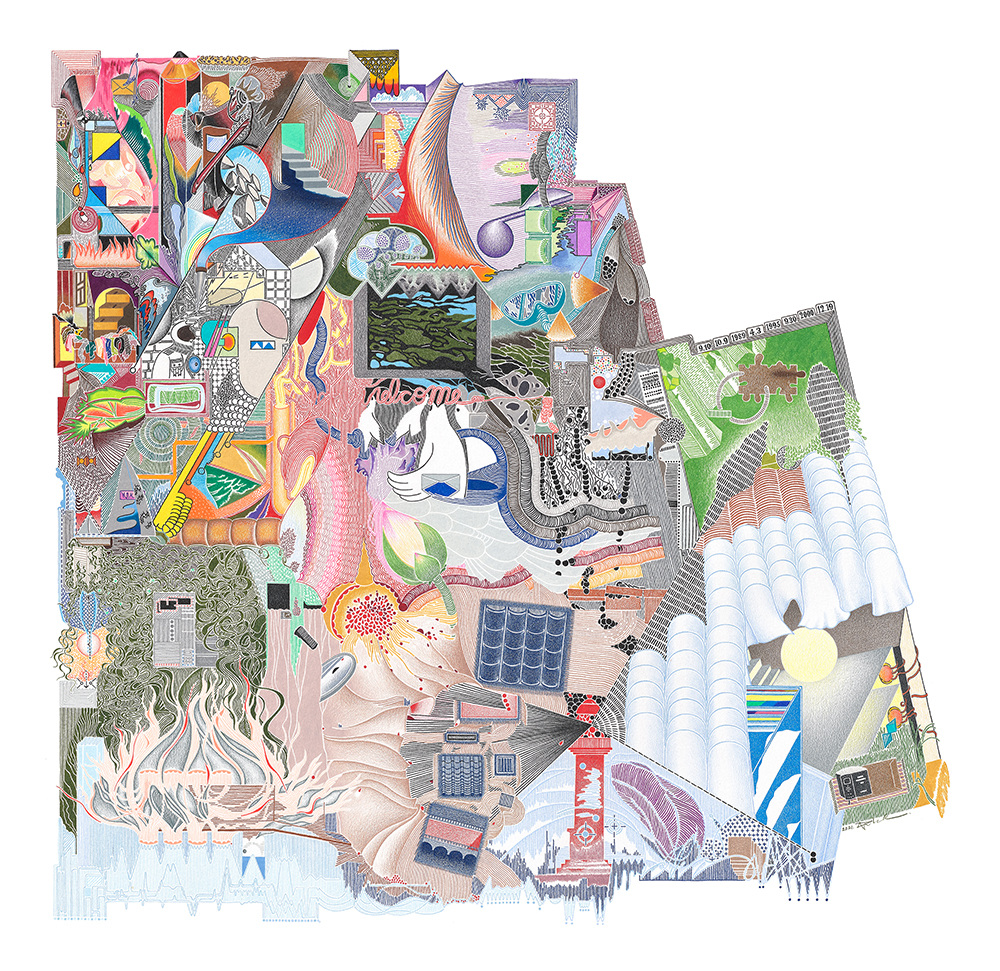
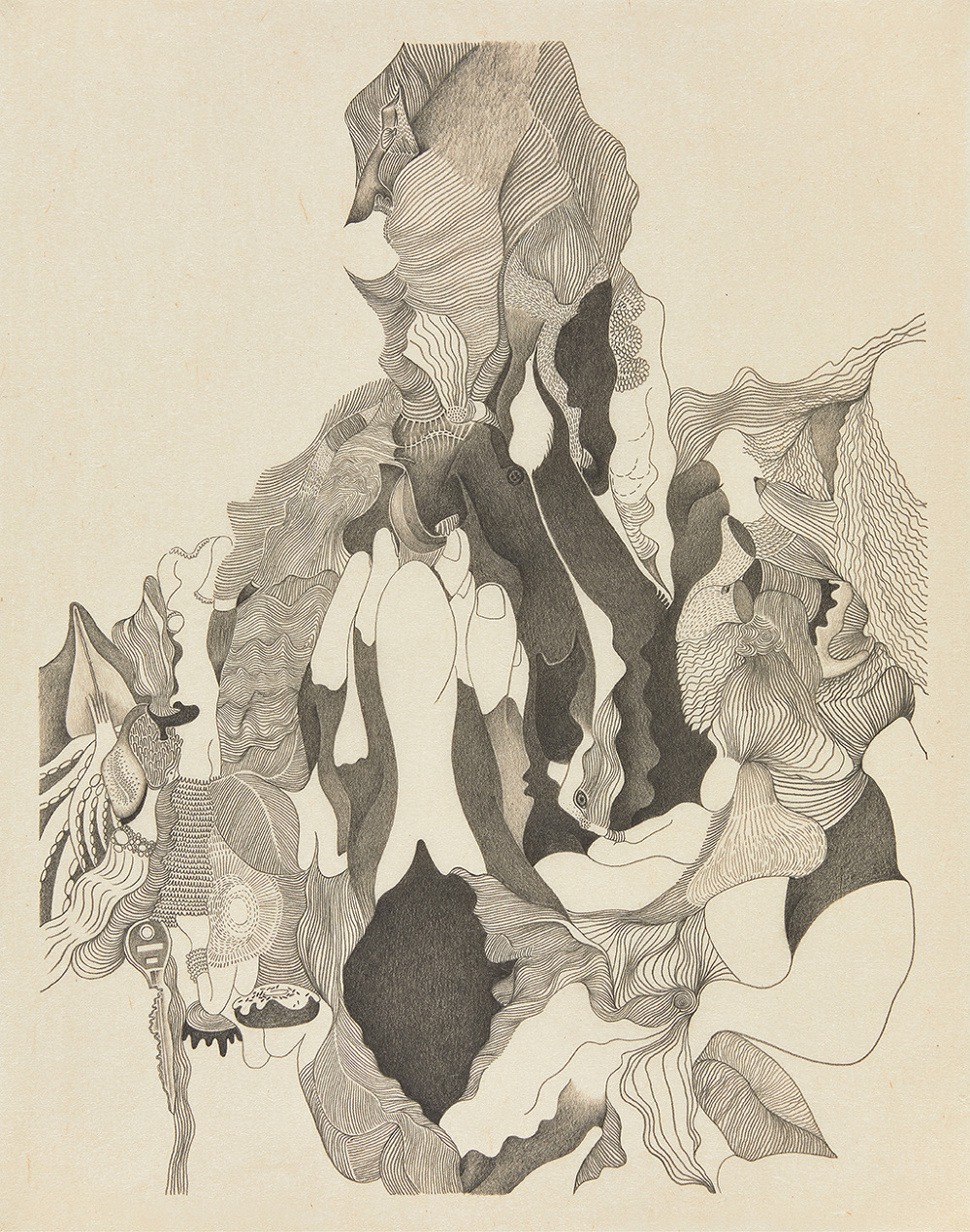
Dongwan Kook, I Am Three or Four or Five: Week 15, 2020, Graphite on hanji, 44 x 56 cm © Dongwan Kook

2. The Body Made by the Mind

In 'I Am Three or Four or Five,' each individual drawing can be said to depict a certain body, and yet, in fact, it does not. In these images, which presuppose both the body of a woman carrying a fetus and the body of the fetus growing within her, what is it that we actually see? Despite the clearly delineated human forms and the strong suggestion of a body that sheds blood once a month, what appears before the viewer is neither particularly corporeal nor flesh-like.

The 44 × 56 cm paper size was chosen to accommodate a form corresponding to the actual size of a fetus. Yet the fetus’s actual size may not, in itself, be especially important here. What these drawings seek is not the real; they do not evoke the presence or physical dimensions of their subject, but instead approach it on a more conceptual level.

Lines, indexical signs, and surfaces take the place of flesh or existential volume. Even when certain curves suggest the flesh of an organism, they call to mind only simple life forms such as sea anemones, rather than giving the figure any substantial volume as a being.

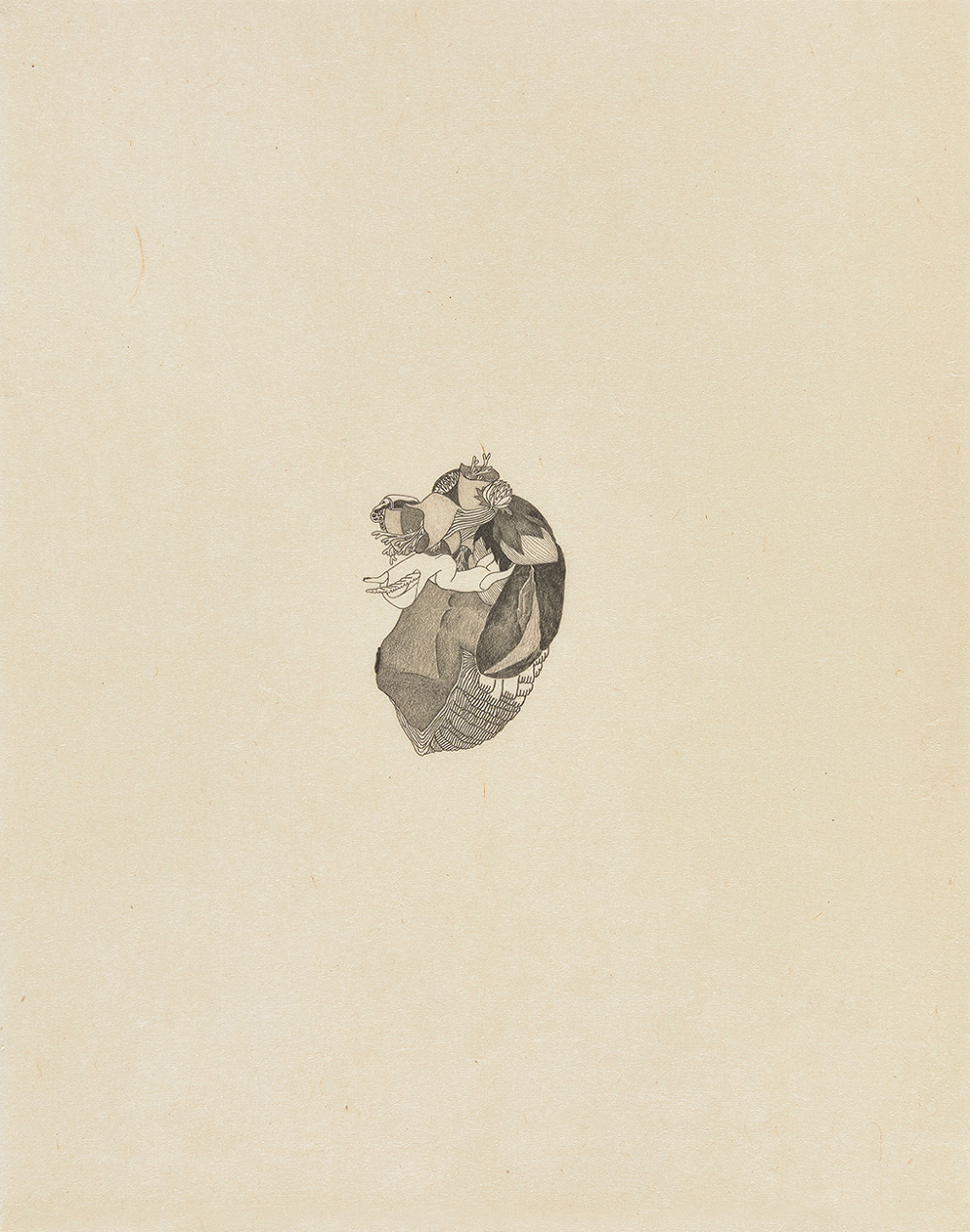
Particularly striking in drawings nos. 10, 15, and 35 are shell-like images resembling fossils, which seem to preserve the fetus’s formation and emergence as if in a specimen, metaphorically suggesting a state accessible only through memory. In effect, what the artist is drawing is not the body itself, but the very process of remembering and reconstructing it through language.

'I Am Three or Four or Five' is a map of the mind that recalls and constructs, after the fact, what has been imagined: states of mind and the pulsations of one’s own body. Although this drawing series begins with memories of pregnancy and childbirth and places the body at the center of its structure, it in fact diverges from the actual body. Instead, it concentrates on the mind as it follows its own logic. The artist has said that the work began with her own desire to have a child and with the process of intellectually understanding that desire.

Dongwan Kook’s attention moves from the mind toward the body; rather than the body itself, her concern lies in visualizing images of memory and the mind. Ultimately, these images, composed as shell and skin, address a mind that precedes the body, combining visual image-modules constructed as signs of the mind.


Dongwan Kook, I Am Three or Four or Five: Week 40, 2020, Graphite on hanji, 44 x 56 cm © Dongwan Kook

3. Images Unpacked

The fetus—a body within the body that has not yet acquired a face and has not yet been exposed to the field of vision through which a face is seen—can secure the reality of its body only on the level of the mental image. Shapes resembling a “candle,” “drops of candle wax,” “grains of rice,” “black pumps,” “a wet dog’s nose,” “castanets,” and “a black swimsuit,” as well as branches extending arbitrarily, seeds scattered at random, and forms that are at once sprouts and wrinkles, are asserted as bodies, yet they remain situated on the symbolic horizon of signs.

35 ii
Black eyelashes among leaves swept by the wind
Behind them, seeds sway in the wind
The fallen seeds lie neatly arranged
Two overlapping ears become a deepened lake
Dark clouds surge, becoming a black mountain through the rain
(omitted)

Within a framework similar to that of recording dreams, Dongwan Kook immerses herself in the process of “unpacking” reality and events. In other words, she attempts to locate meaning where meaning appears absent and to construct a symbolic system from it. She seeks to render visible even the depths of an invisible world and to affirm her own language within it. Forms visually refined by this impulse come to depict bodies covered in the shell of memory, while adhering closely to language.

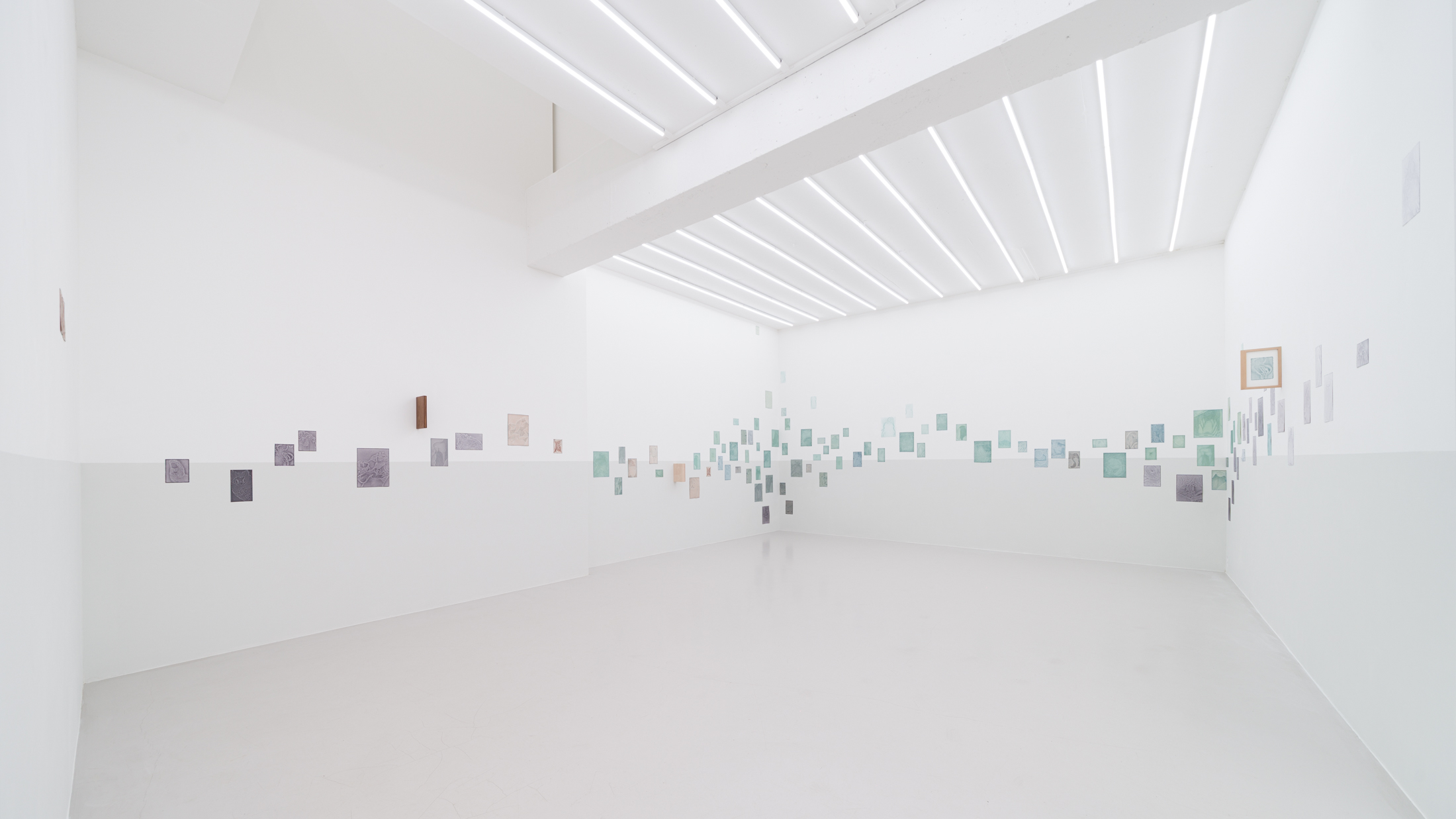
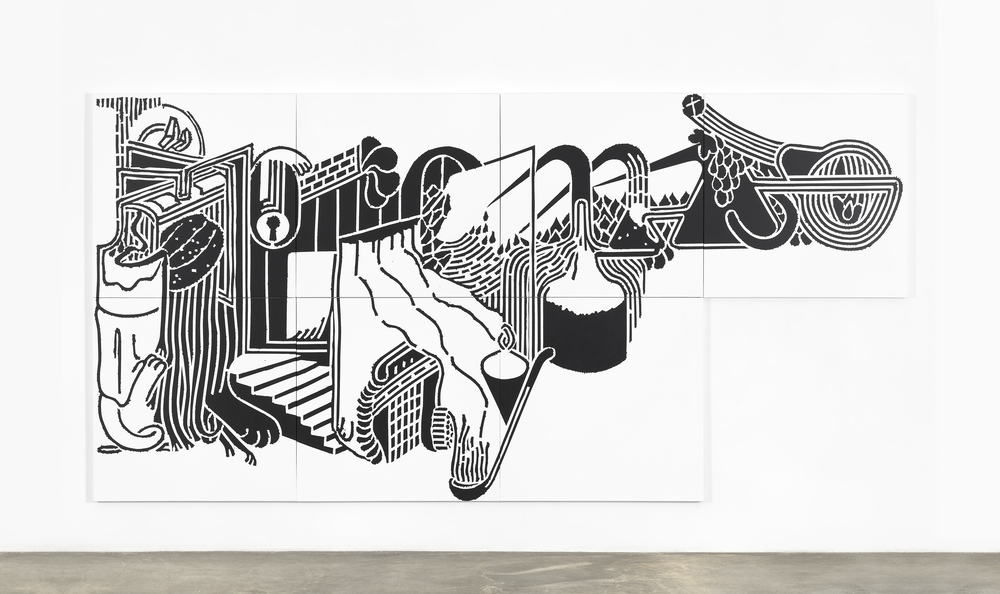
Finally, it is necessary to point to the moment when the artist once again dismantles the resulting work as a linguistic construct. This can be seen in the series of collage panels in 'I Am Three or Four or Five', in which individual sections of the drawings are disassembled and similar motifs selected and grouped together. At first glance, these motifs do not appear indexical and cannot easily be reduced to meaning; the process instead involves identifying meaning once again within simple visual representations.

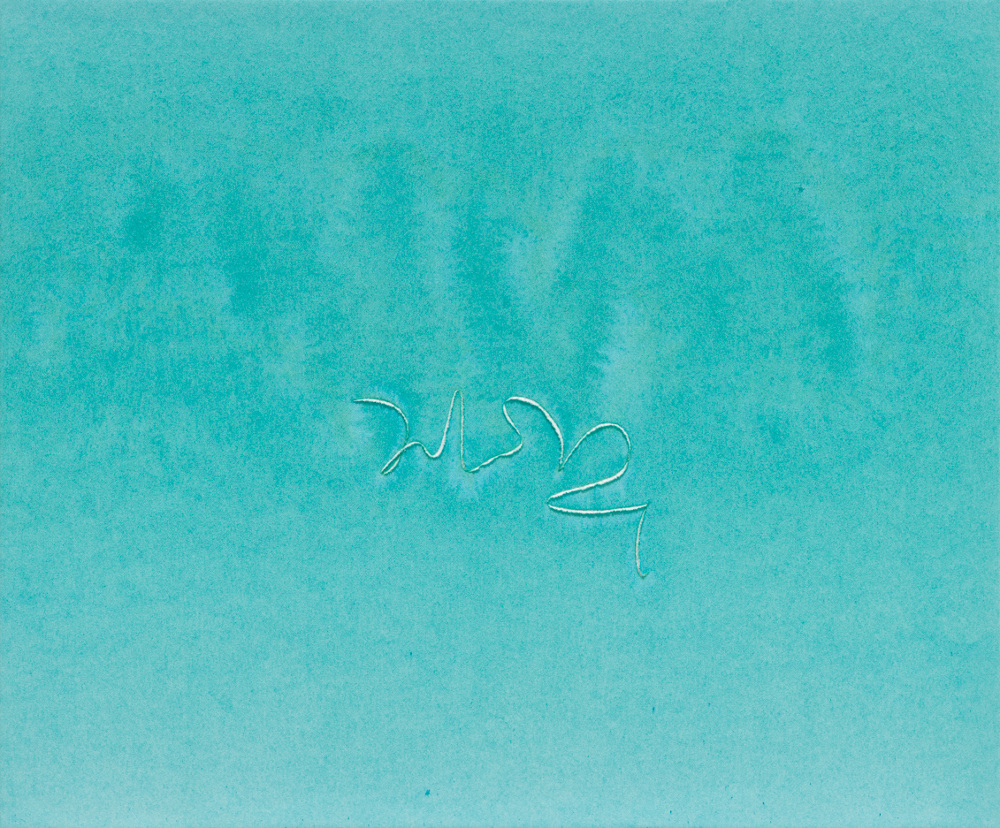
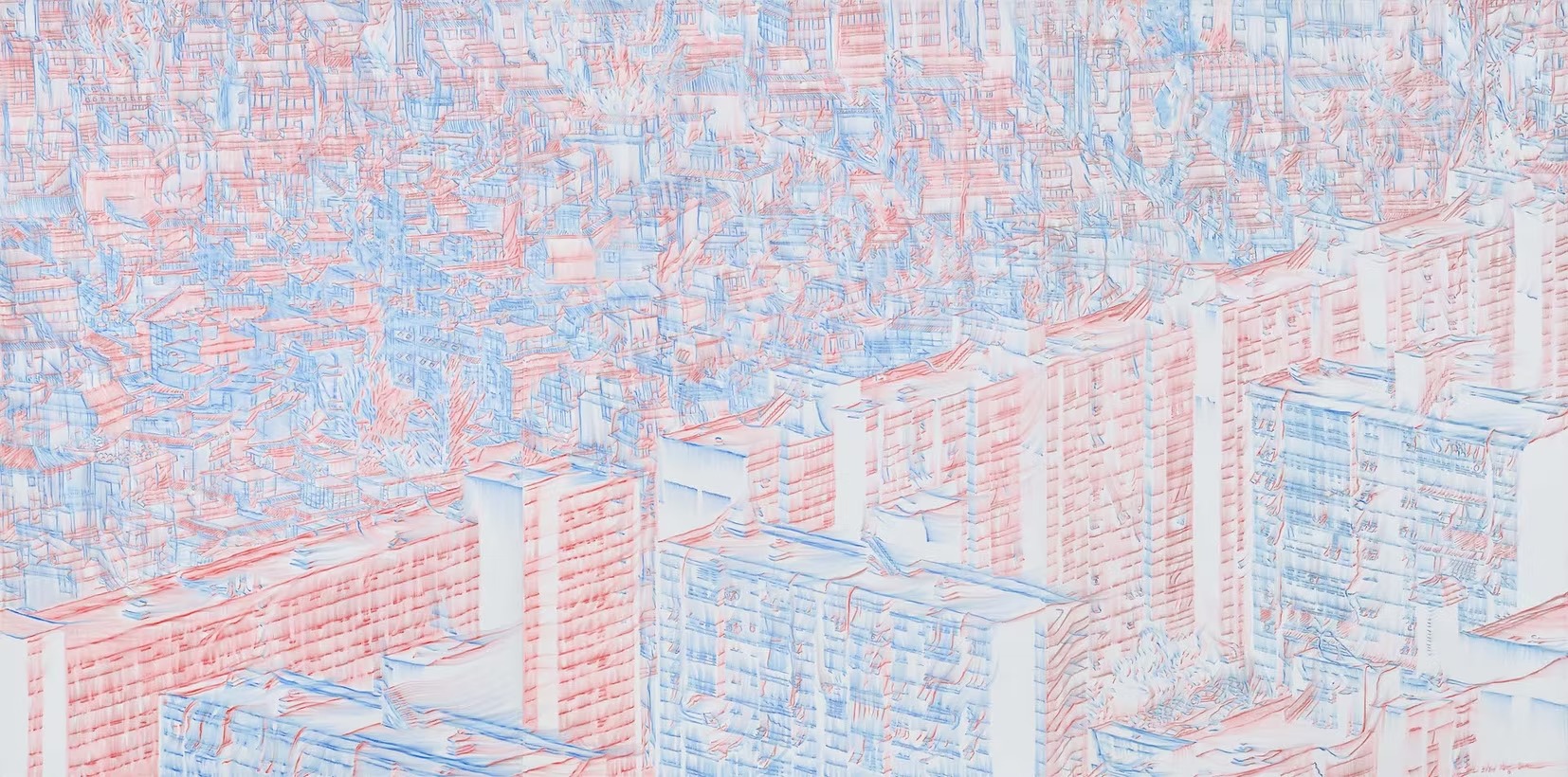
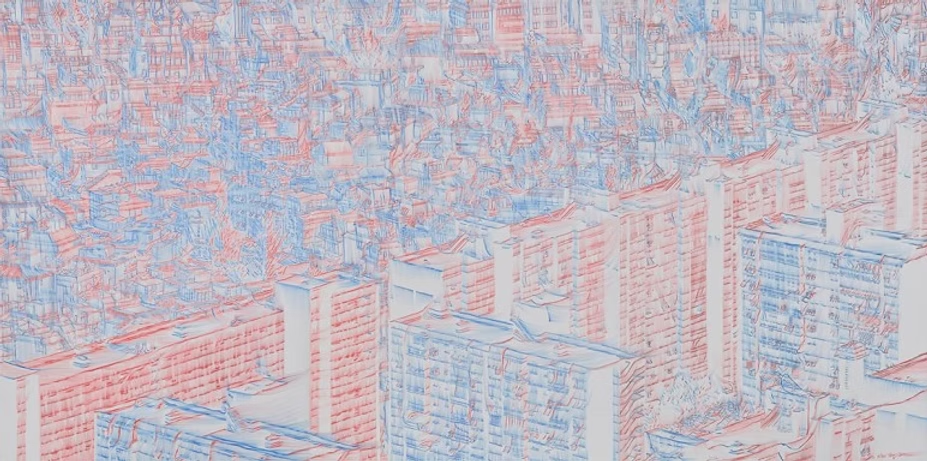
Irregular lines that, unlike written signs, do not presuppose a network of meaning are structurally broken down in order to confirm that they had, in fact, been forming particular indexical signs. I see a similar logic in Kook’s recent practice of enlarging a detail from her own work and transferring it onto canvas. Although this method of “magnification” ultimately produces an abstract pictorial surface, its underlying principle likewise involves dismantling an apparently meaningless total field of images into segmented units of language.

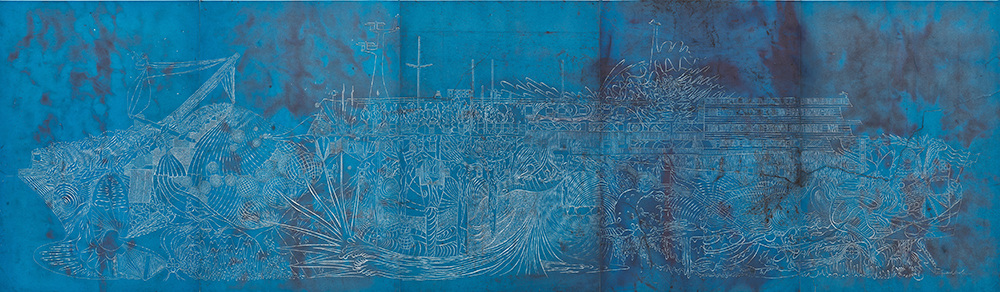
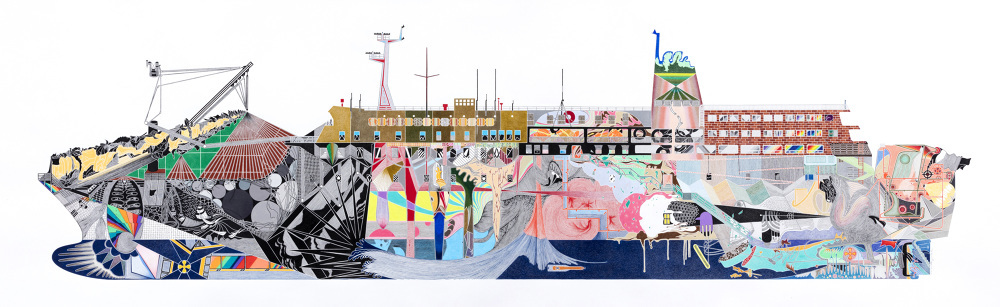
From the collages based on A Ferry, to the '900x Magnification Series', which enlarges details from Decalcomanie Life, and finally to the collages of 'I Am Three or Four or Five', Kook’s method of grouping and unfolding particular motifs under name-signs demonstrates a process through which units of the image, understood as a construct, are authorized as linguistic signs.

Why, then, did the bodily form developed from week 0 through week 40 need to be dismantled, and why did the resulting fragments of motifs need to be reassigned to higher-order categories resembling an archival classification system? One possible answer is that, for Dongwan Kook, the image was structured from the outset less as organic flesh or as a deconstructed state of the unconscious than as “language.” Through rapid drawing and the efficient use of the aesthetic forms of automatism and free association, the artist is, in effect, confirming and constructing her own linguistic system.

References