Transecting female corporeality (1) Bone and Wrapper: Moving Body Fragments
This article is a “supplemental” article for “feminine things” and “representation of woman,” which have been explored by young Korean women artists relative to the global #MeToo movement in the mid-2010s and the reboot of Korean feminism. The goal of this article will not be the mapping of the lineage of Korean feminist art. Rather, the article will focus on the points that are taking form or have been omitted in the discourse of feminist art made visible recently.
In the various discourses of posthumanism, ecology, and material turn, the feminist map of meaning regarding the human body is becoming ever richer. In particular, within the global network and media environment, the female body is exposing increasingly paradoxical points where the desire for capital and affirmation intersect.
On these points the aesthetic realization and discourse in Korea seems to have largely remained blind. Nevertheless, following the 2010s there is clearly an emerging trend of work that examines the paradoxical and complex nature of womanhood as found in the work of young Korean women artists.
Beginning from this perspective, this article seeks to discuss corporeality as a domain of female desire, labor, and emotion as manifested in art. Corporeality is, in this respect, a peculiar word. It is, on one hand, a reference to the body, in particular the female body. However, it is not a reference to the biological body itself (not that there is such a thing), an affirmation or declaration of feminine characteristics so emphasized by essentialist feminism in dichotomous gender discourse.
Our bodies are at the same time biological as well as “bodies as images,” described with social cultural oppression and signs, and “changing bodies,” which explore not only trauma and pain but also a certain type of desire that has not been verbalized. And so, the approach to female corporeality in this article is close to the idea of “corporeality” as arrangement (an assemblage that, in conjunction with representational economies, cross-penetrates, comingles, and transmits affects between individuals)1 as suggested by Jasbir K. Puar.
It is based on Simone de Beauvoir’s woman as a “one is not born, but rather becomes, a woman,”2 and Andrea Long Chu’s “female” as a shared domain of paradox and denial, where “everyone is female and everyone hates it.”3
1. Bone and Wrapper: Moving Body Fragments
Hal Foster has stated that one of the temporal characteristics of the three-dimensional sculptures and installations that emerged in the 2000s is that they are “precarious.”4 Of course, in contemporary art practice, sculpture has evolved past the formativeness that boasts purity of medium—such as marble, wood, and bronze—and technical proficiency. It has shifted away from solo pieces and completed forms and has taken on fragmented, environmental forms.
Now contemporary artists bring to the museums en masse, as if it is the calling of their time, everyday objects and trinkets as well as industrial media such as building materials and objects that are almost waste items. The precariousness suggested by Hal Foster is a term selected to transcend mere critique of form, of dominant styles, and distill how social and political sensibilities function in art.
The term precarious sculpture, exemplified by Thomas Hirschhorn and Isa Genzken, primarily refers to the incomplete state and limited permanence of the works themselves. But more importantly, it refers to the crises of the people portrayed by these artists, and the ethical element of art that responds to these “vulnerable” faces.
If deformity, instability, and hybridity, the characteristics of contemporary sculpture, are interpreted as a response to temporal sensibilities and biopolitics, then what mappings of the senses, what responses to reality can be interpreted from the work of young Korean woman artists? I would like to bring up a few characteristics that emerge from the sculptures like fain constellations. The description will start from the bone and end with snowman.
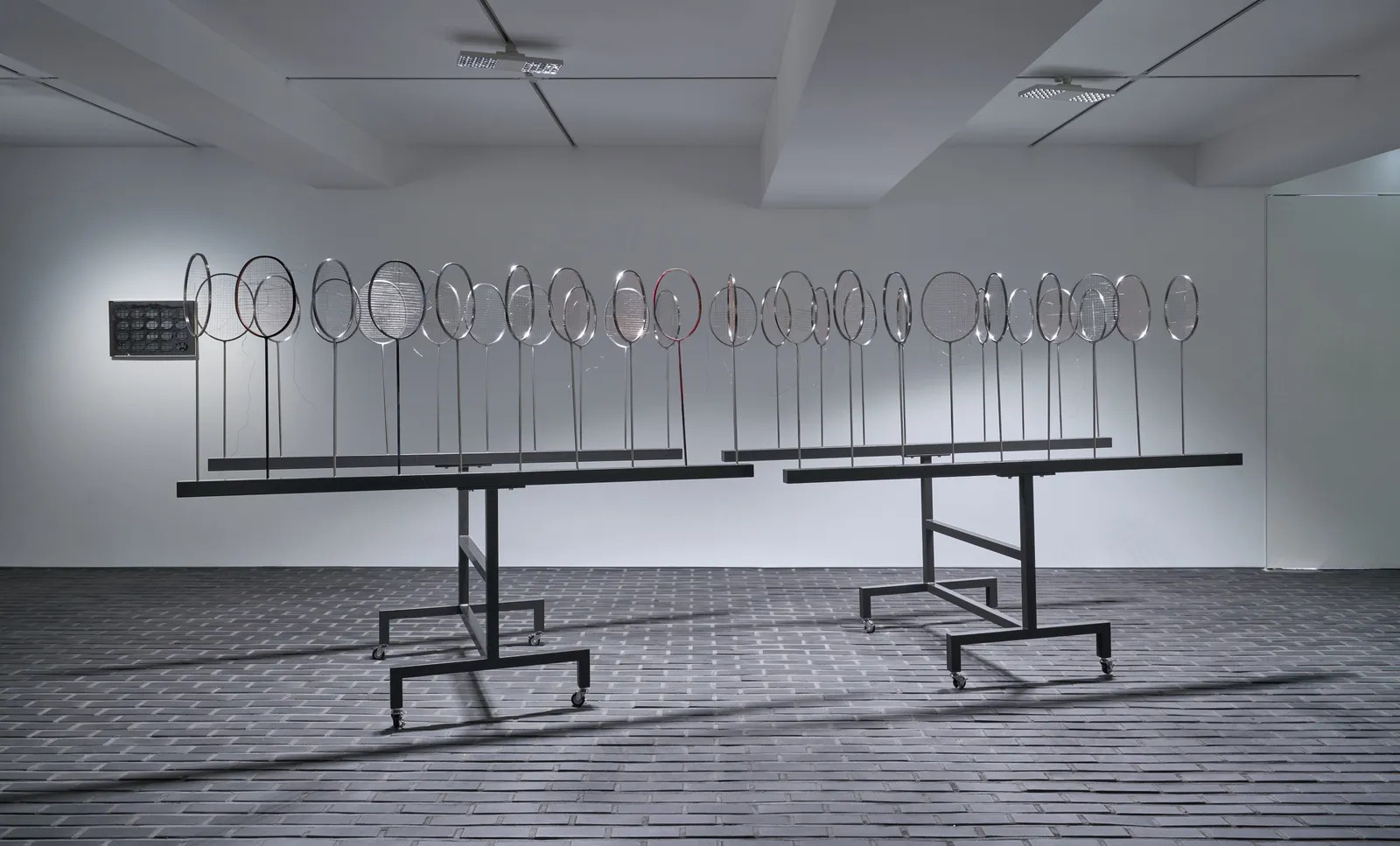
Lee Mire, who currently resides in Amsterdam, works in Korea and the Netherlands, creates kinetic sculptures that are activated by means of motors and pumps. Her sculptures use diverse industrial media such as iron, concrete, plaster, ceramics, fabric, and silicone to develop a coarse and bizarre physicality.
In particular, the fluids that either penetrate or drip down the sculptures evoke the sense of a grotesque mechanical life form, a “flayed” organic machine. What is clear is that the particular emotions radiated by her sculptures, such as sadness, sorrow, pain, and sympathy, are derived from a series of motility, such as rising and falling and suction and ejection, rather than similarity of form.
In hindsight, when considering Lee’s earlier works around mid-2010, the motility of the bones, the framework, was more evident. Lee, who has gone on record as saying, “I want to create sculptures with bones,” has produced large sculptures with rotating limbs and vertical motion, such as Things with Bones (2016) and Support, Lubricate, Rotate and March (2017).
These motions generally evoke a sense of emptiness and effeteness, and they produced rhythms that were at times comical and sorrowful. In summary, bones for Lee were not support systems that sustained a structure, but rather a series of fulcrums and matrices for motion. These motions take on a more organic nature after the introduction of glycerin, lubricants, and fluids.
As time goes on however, these liquids, rather than performing a functional role of facilitating smooth motion, manifest the viscous and revolting texture of bodily fluids. The fluids that drip down the hanging sculpture, in tandem with the motions of the pump, represent the form of an organism as well as that of “abjection.”
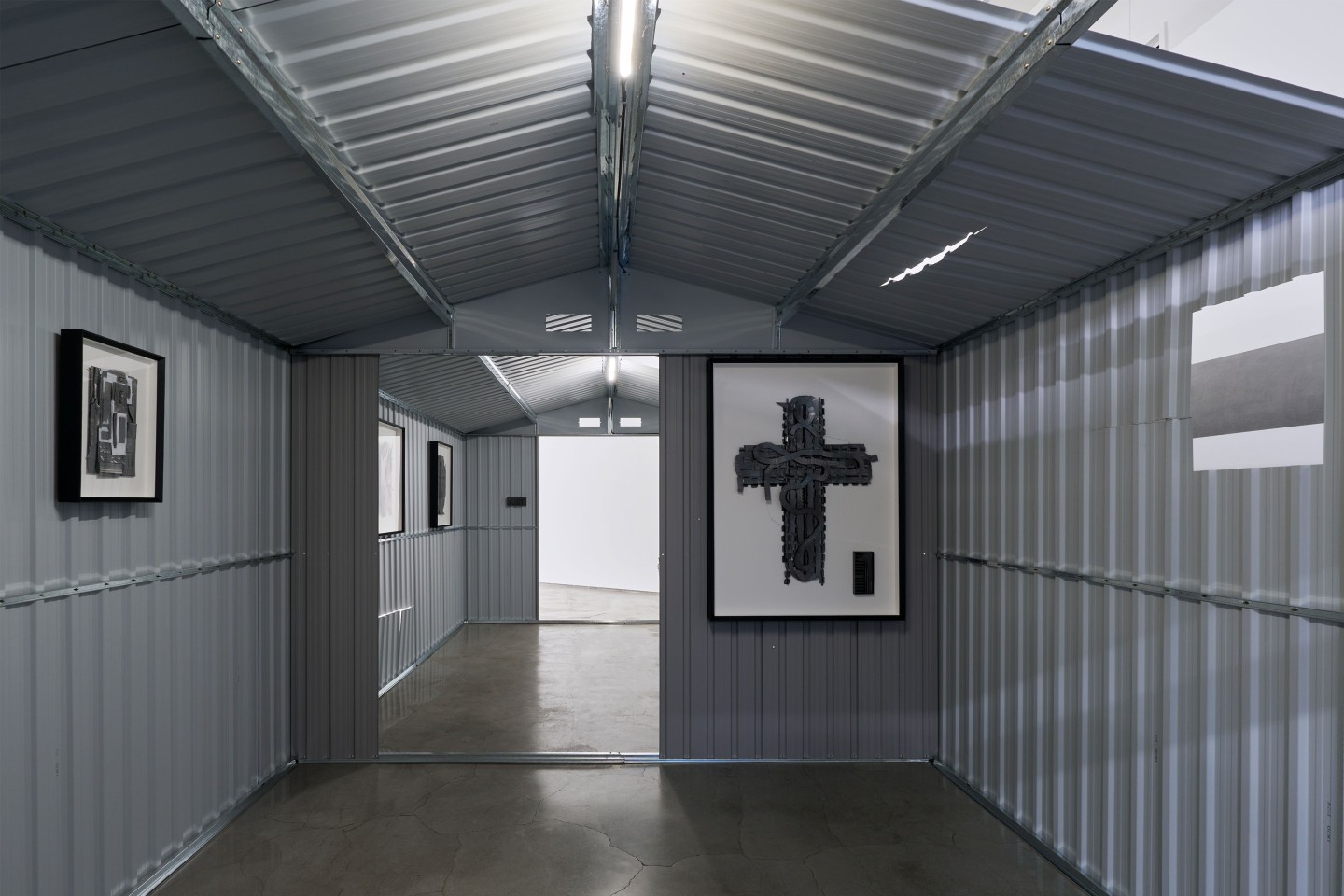
In 《Carriers》, Lee’s solo exhibition in 2020, she demonstrates, in explosive manner, the materiality, motility, and affect that she started to explore within her previous large-scale sculptures. She transformed “abjection sculptures” into a landscape. Within a secret space where a second-hand wooden mold is used to create a spiral “curtain”—this of course evokes the imagery of a womb—there are two sculptures where hoses are connected to the ceiling that drip fluids.
Below, industrial wires, ropes, and chains are covered with tattered vinyl and string and constitute a single body lying prone. Titled Horizontal Forms, the sculpture contrasts with the static sculptures made of concrete and cement, creating a dramatic scene. As Yeonsook Lee describes vividly, “the regurgitated, flowing, viscous fluids” therefore “bring life to the abject texture of femininity,”
However, these serve as a reminder of a form of sorrow charged with “descending grief” and “a foreboding sense of irreversible events (death),” and they broke the “existential regurgitation” that Sartre spoke of.5 We find this void, this distance, in the writing of Bataille: “nothing tangible or objective brings ·on our feeling of nausea; what we experience is a kind of void, a sinking sensation.”6
What sustains the hanging sculpture of Lee are ropes fastened to the ceiling, hoses that appear to be circulation systems, and scaffolds. That is to say, the “bones” disappear and the entanglement of veins, internal organs, and limbs are what support the form that constitutes the body. Of course, this is reminiscent of Gilles Deleuze’s “body without organs,” but it more directly invokes the image of offerings and sacrificial rights and the other, who are like half-dead spirits.
These convulsive bodies are skinned and skewered ones that will not die. But at the same time, we remain cognizant of the fact that the sculpture is comprised of cold mechanical devices. As such, Lee’s work does not simply evoke a sense of the uncanny, the bizarre, or the despairing but rather the dual sensibility of violence, of fear and allure. Much the same, the reference to the “skinned” shaman in 《Carriers》 is a metonymic device of extreme sensibilities.
In her 2022 solo exhibition held in MMK Frankfurt, titled 《Look, I’m a Fountain of Filth Raving Mad with Love》, she brings in coarse and heavy industrial media, including steel, concrete, and cement. The end effect is that of an industrial site. A primordial, anti-civilization aesthetic of dirt and feces is created through a rough, sparse spatial structure that borrows from Frederick Kiesler’s Endless House: a concrete mixer that continuously rotates, with a gaping, black mouth; and lines of poetry by Kim Eonhee that are inscribed upon the concrete molds that cover an entire wall.
Spheres hang like grapes, and the maw of the concrete mixer is silent. Bearing the void of abyss, there are holes that must compose the inside by swallowing up the outside. Where 《Carriers》 adopted the “vore” fantasy as a starting point, these holes remind us that we are both excreting beings as well as “devouring beings” (Melanie Klein), and violent agents.
Lee also opens up the inner wall of the devouring agents (the exhibition always leads the viewer inside to observe the sculpture from within), and she forces a confrontation with crimson stained desire and uncertainty, pain, and sorrow in a sordid and alluring manner.
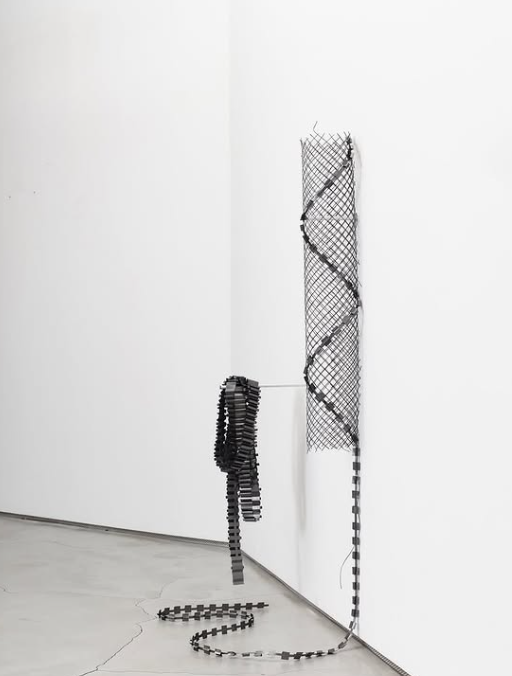
Yoon Jiyoung wrote the following line in the exhibition space for her 2021 solo exhibition, 《Yellow Blues》: “bones that are naturally regarded as being inside sometimes exist on the outside.” For Yoon, “bones” are structures that “define” the identity of an organism or object, and she believed that such a structure could exist on the outside rather than the inside.
That is to say, the internal, fundamental, defining impetus that determines the shape of the exterior can in fact be an external force that drove the formation, crystallization, and change—a introspected exterior, an internalized exterior.
In Alas, showcased in 2015 solo exhibition 《A Single Leg of Moderate Speed》, the abstract sculptures hang from entangling ropes that cross the entire space or they are drawn tight. The objet serve as weights or supports, and they are at the same time reminiscent of biological organs as well as serving as a scene that depicts social networks. Yoon has stated that she wishes to depict a certain “attitude” with such sculptures that serve as metaphors for the human body. An example might be “the sacrifice of one large entity to save many.”
She wishes to “reveal how much external force” is necessary to maintain a form that is believed to be stable and whole. The traumatic event involving the Sewol ferry and the #MeToo movement are the reasons why Yoon decided to express her concerns and perspectives as a member of society through the form and dynamic of installation.
But in Yoon’s sculptures, with the push and pull that occurs in the context of precarious balance and palpable tension, there is the emotions of the vulnerable individuals—who sacrifice, persevere, and rise within the social dynamic of power—that establishes a powerful mood, rather than there being an emphasis on social roles.
Yoon’s work appears to tend towards the body and “wrappings” as cross-sections of interconnectivity between individuals. The unprecedented pandemic has led to a tangible sense of the possibilities of interconnectivity between individuals. And Yoon produced abstract sculptures that are both singular wholes and multiple pieces as a reflection of herself, a person who suffers from constant illnesses, and as a response to the existential conditions of contemporary Asian women. In particular, the sculptures often involve the use of silicone.
Often used in costume makeup and plastic surgery, silicone is reminiscent of human skin. When it reaches 36 degrees Celsius, the spherical sculpture, In the Still of the Night, changes its color and is reborn as a warm planet that the audience can embrace. And then it becomes the body of the tattoo that strikes back at patriarchal mythology through Leda and the Swan. The various cuboid sculptures in 《Yellow Blues》 cast off their silicone wrappings and take on the wrappings on one another.
Yoon’s sculptures, having undergone intense labor involving mold-making and casting, become alternative beings that exist only as masks or animated husks, bodies that have lost their purpose in the trade between the actual substance and the wrapping, or the loss of each other. This is then reminiscent of a potential body (particularly the female body) that repeatedly sheds skin or only maintains a temporary form.
Above all, because the wrappings do not fit the body, they appear absurd and are stretched so thin that they tear apart. And in so doing, it reminds us of the narcissism, despair, and the external (social) pressure that people project upon skin.
Elizabeth Grosz has said that the body is both a physical reality but it is at the same time an ”image” formed from the various interactions that result from when an agent acts in the environment. This idea of “body image” becomes a component and capacity to perform certain actions comprising underscored with various emotive and libido related perspectives.
The experience of agency for this body is then mediated and connected to the relationship established with the bodies of the others.7 The “wrappings” of Yoon reveal not just an analogy of skin, but rather the quality of the “body image” as a medium and its interconnectivity; the reality of a body that projects both the external and the internal.
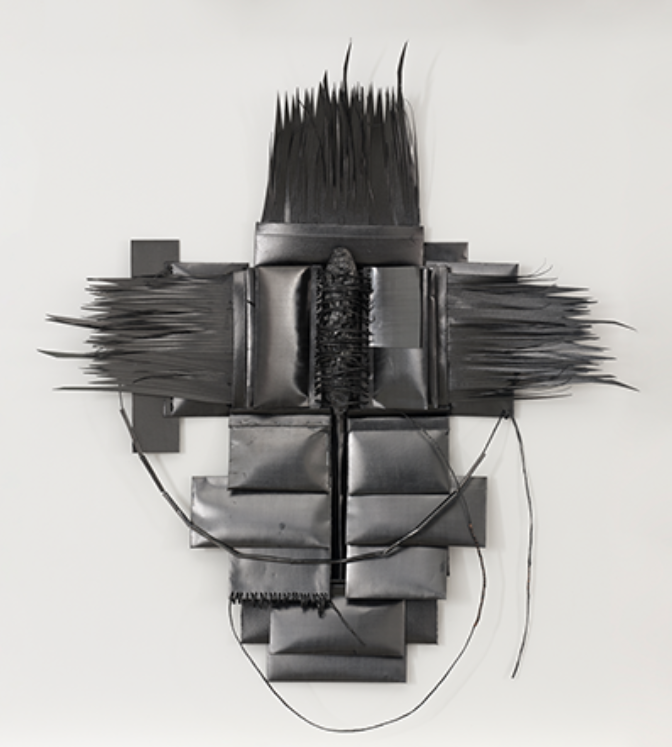
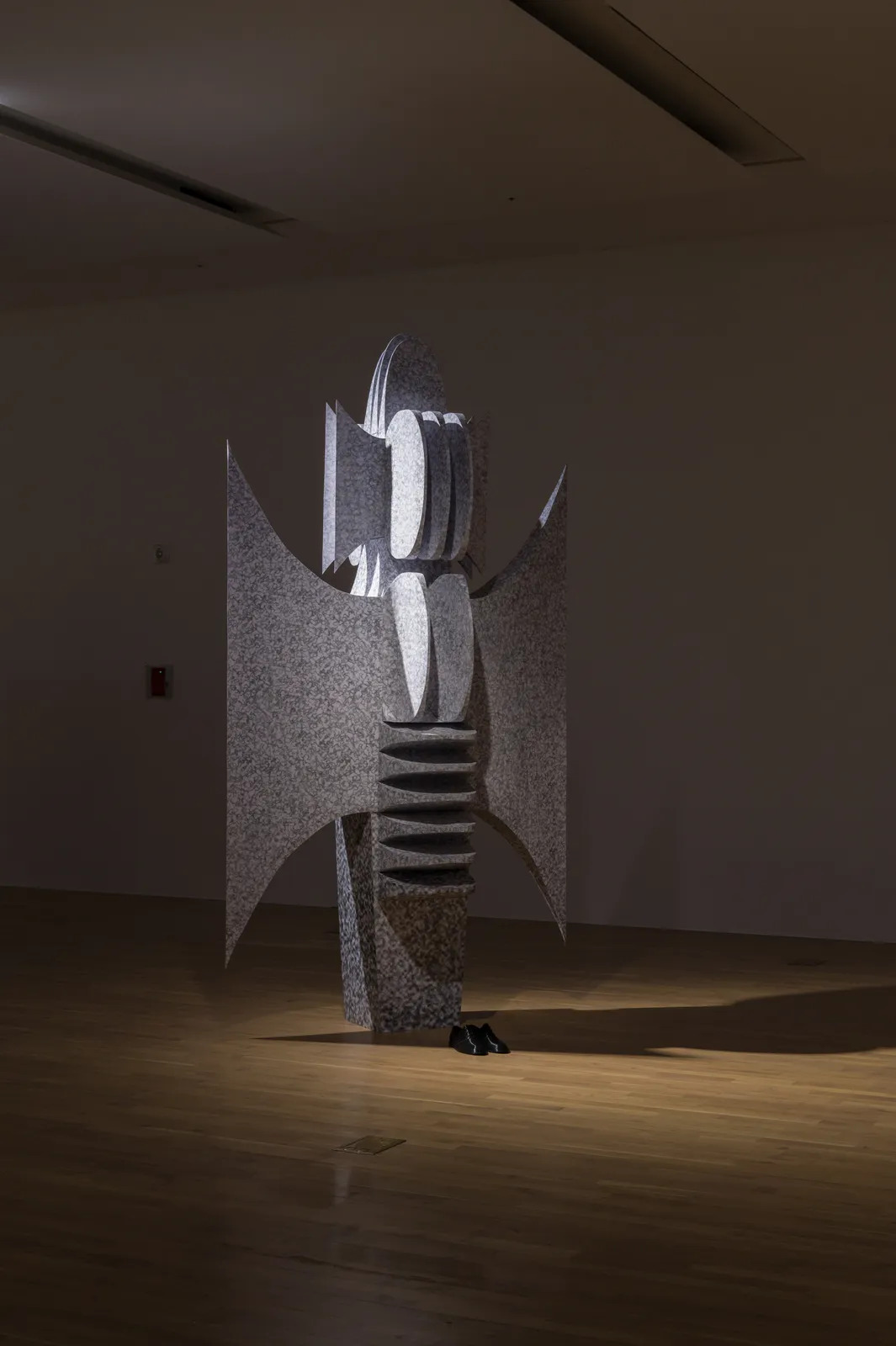
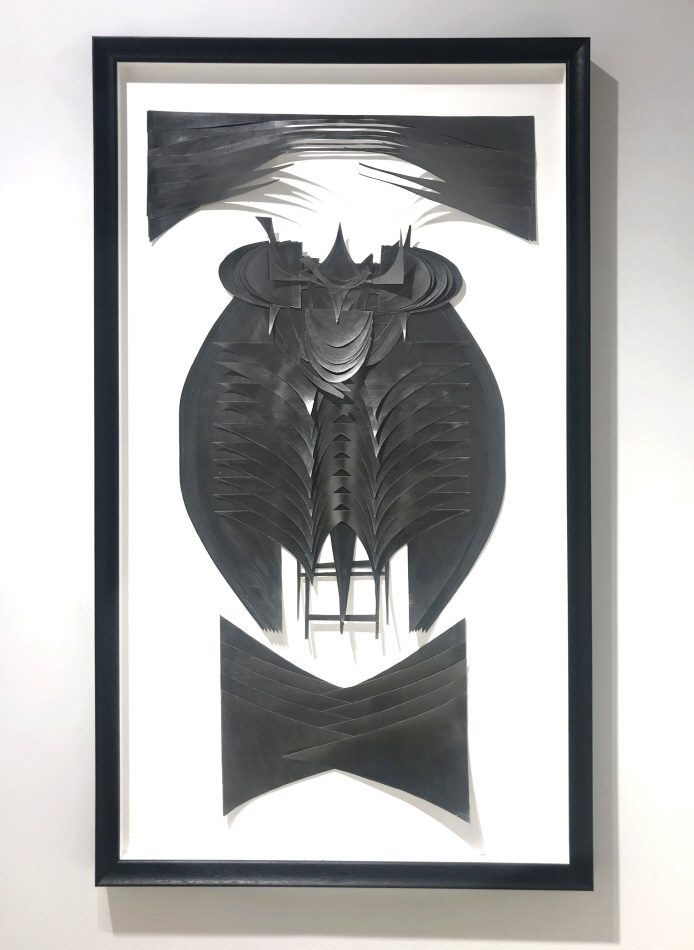
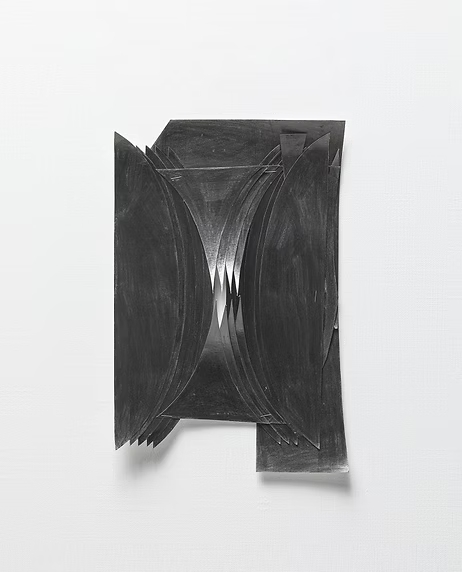
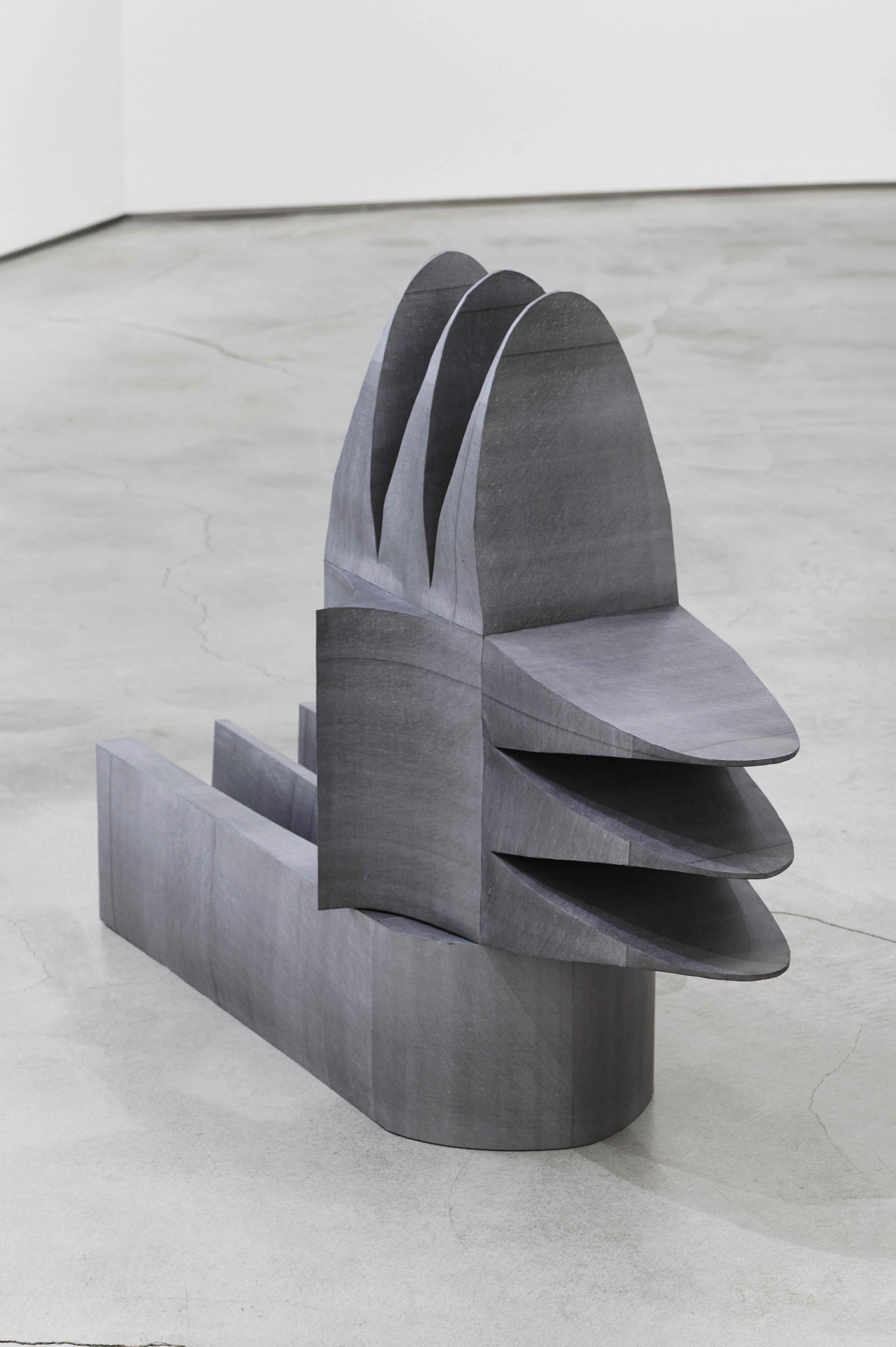
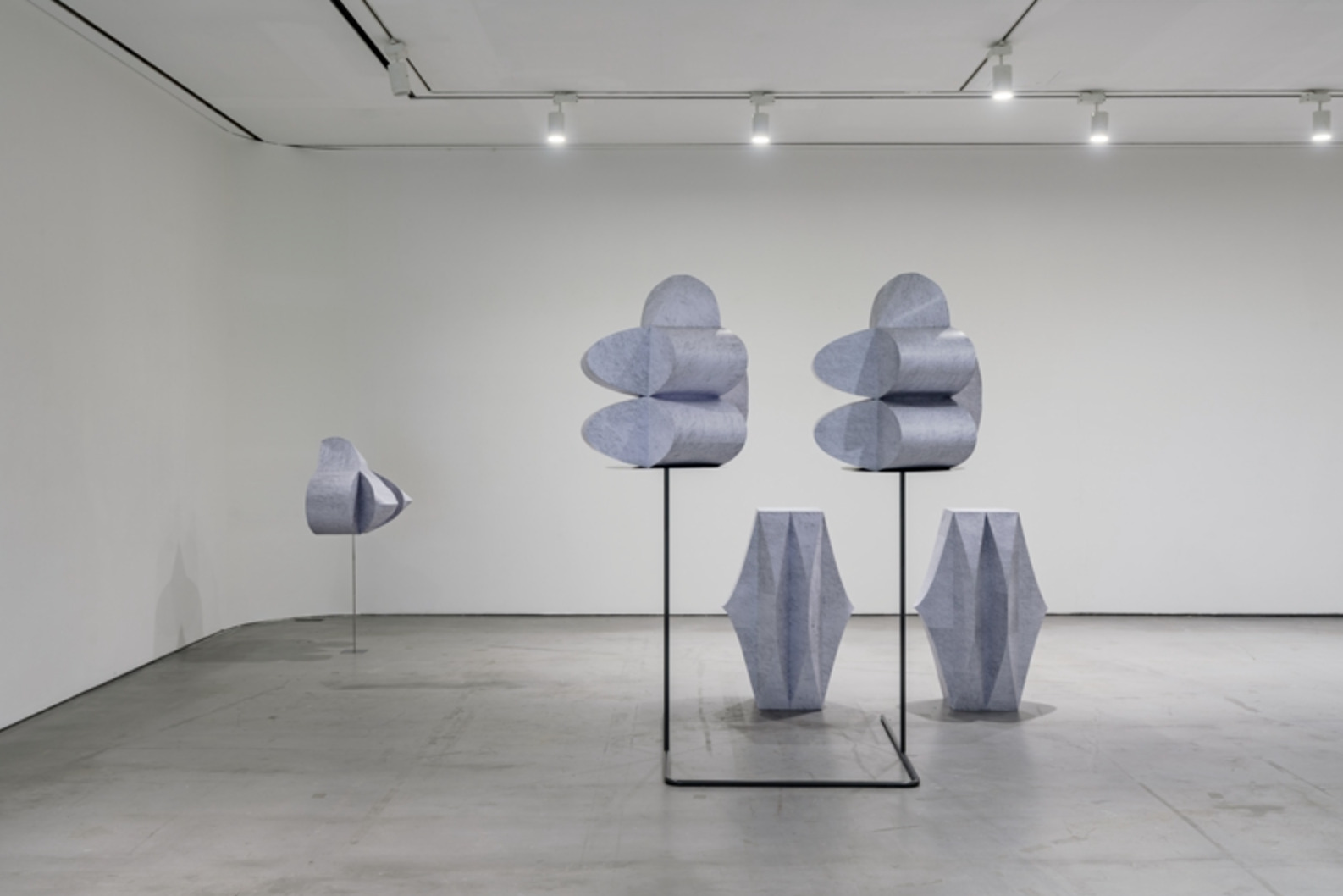
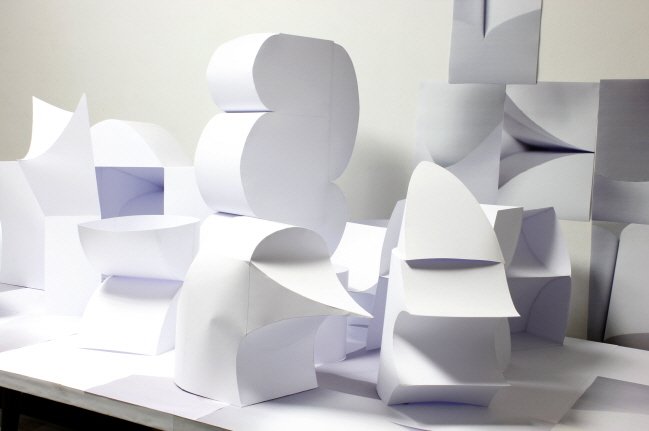
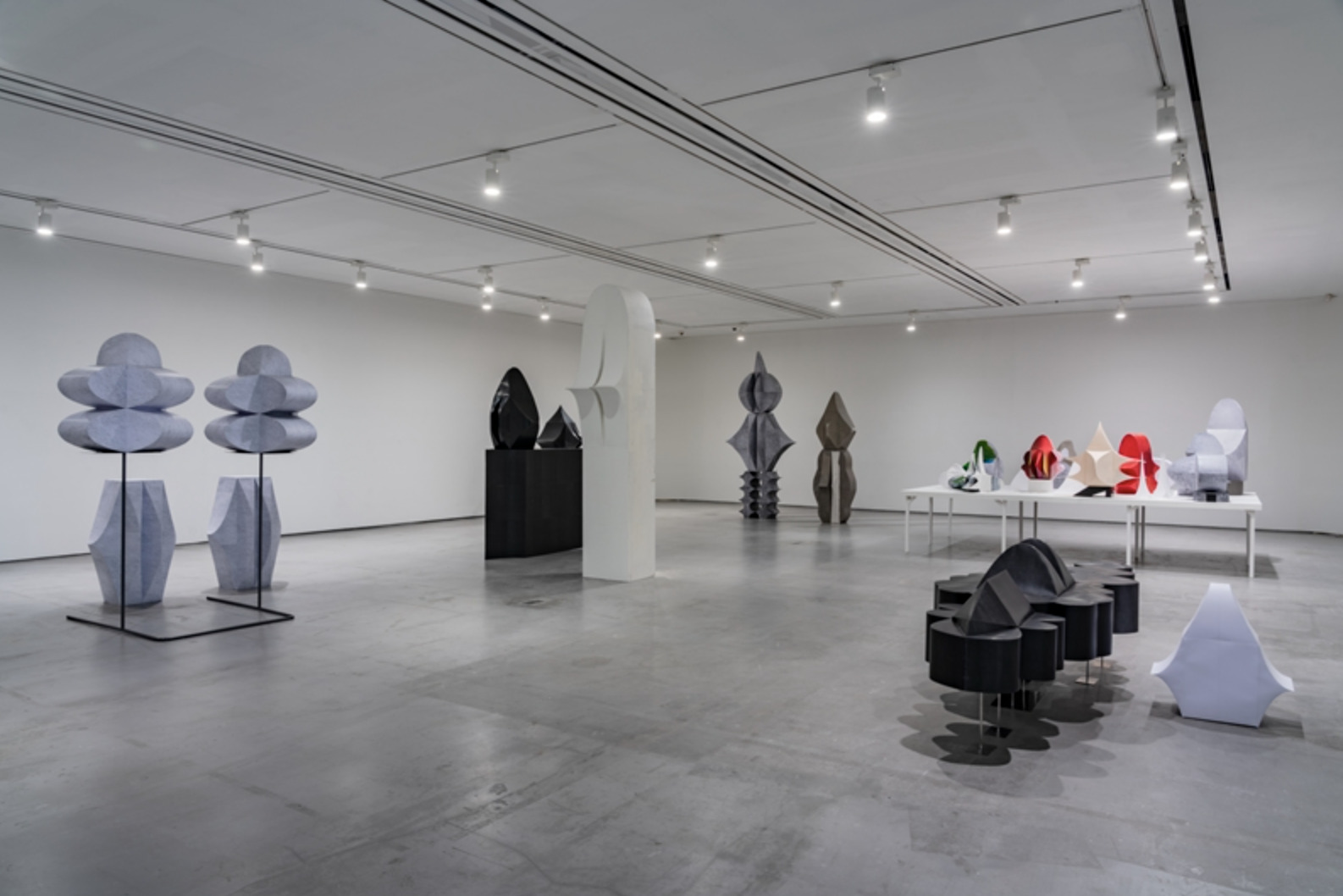
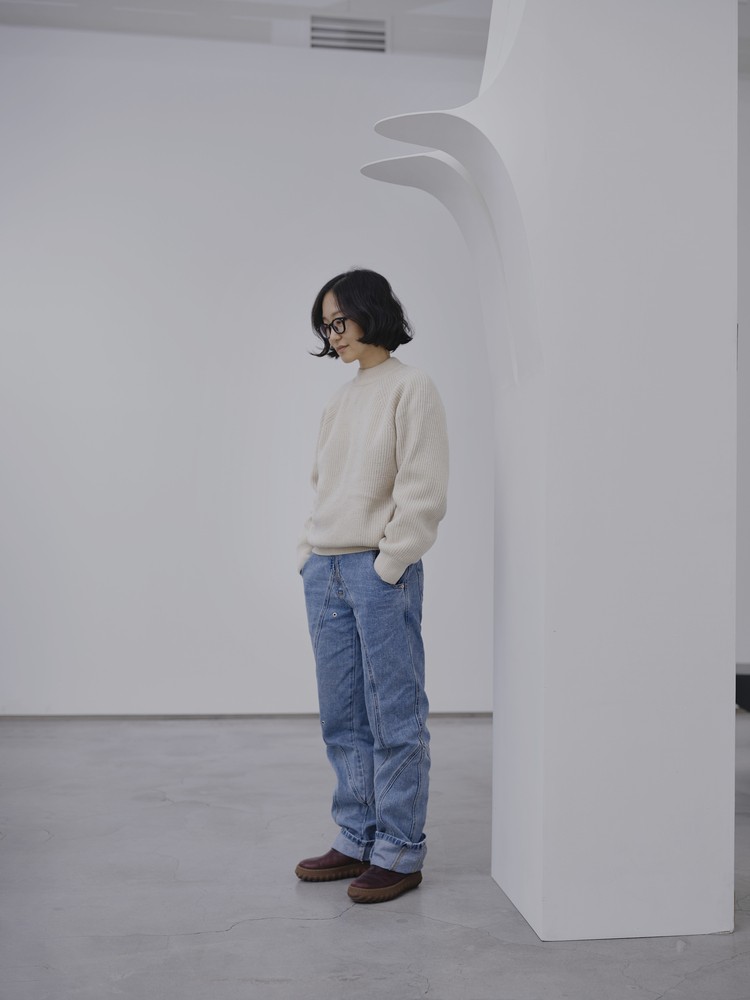
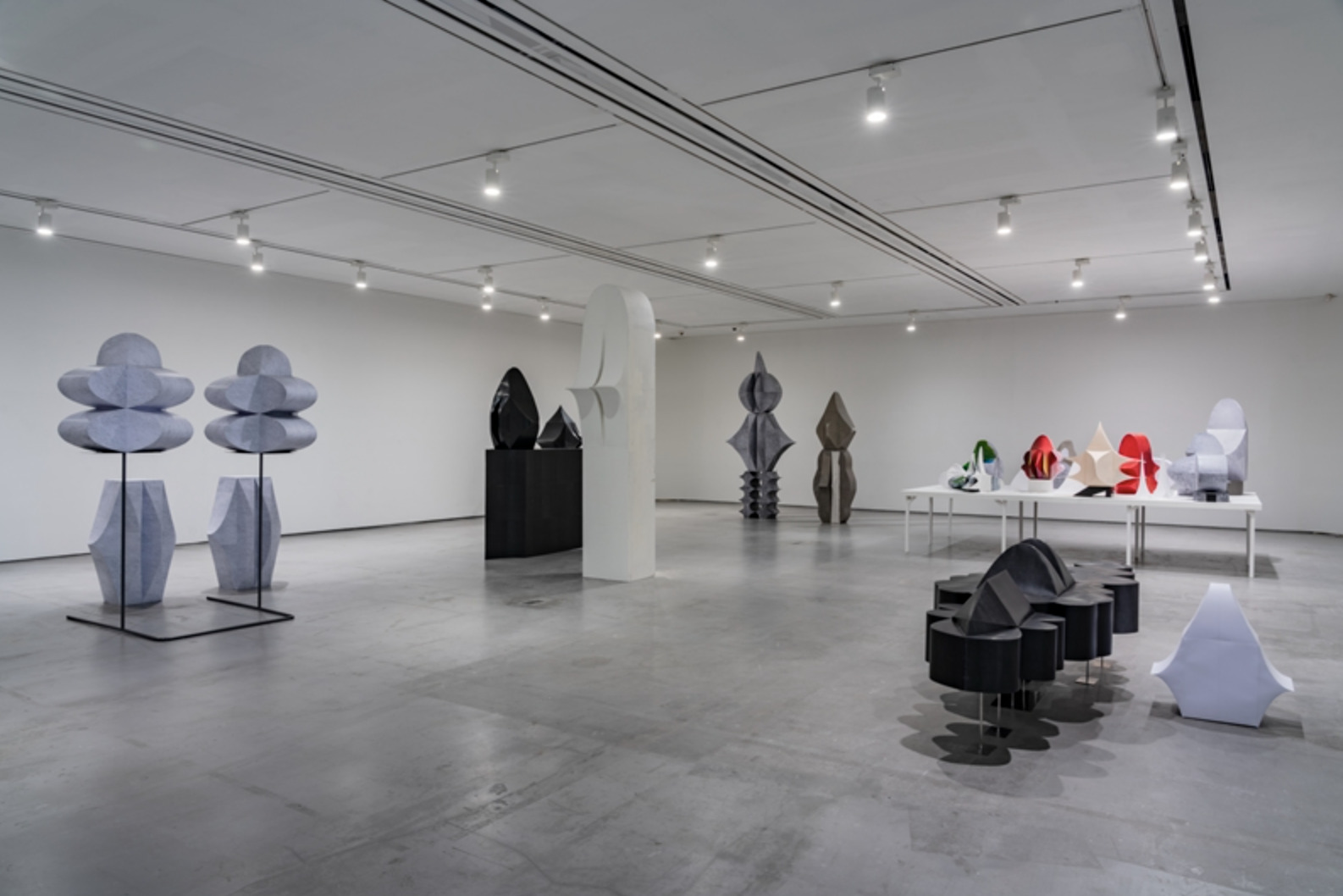
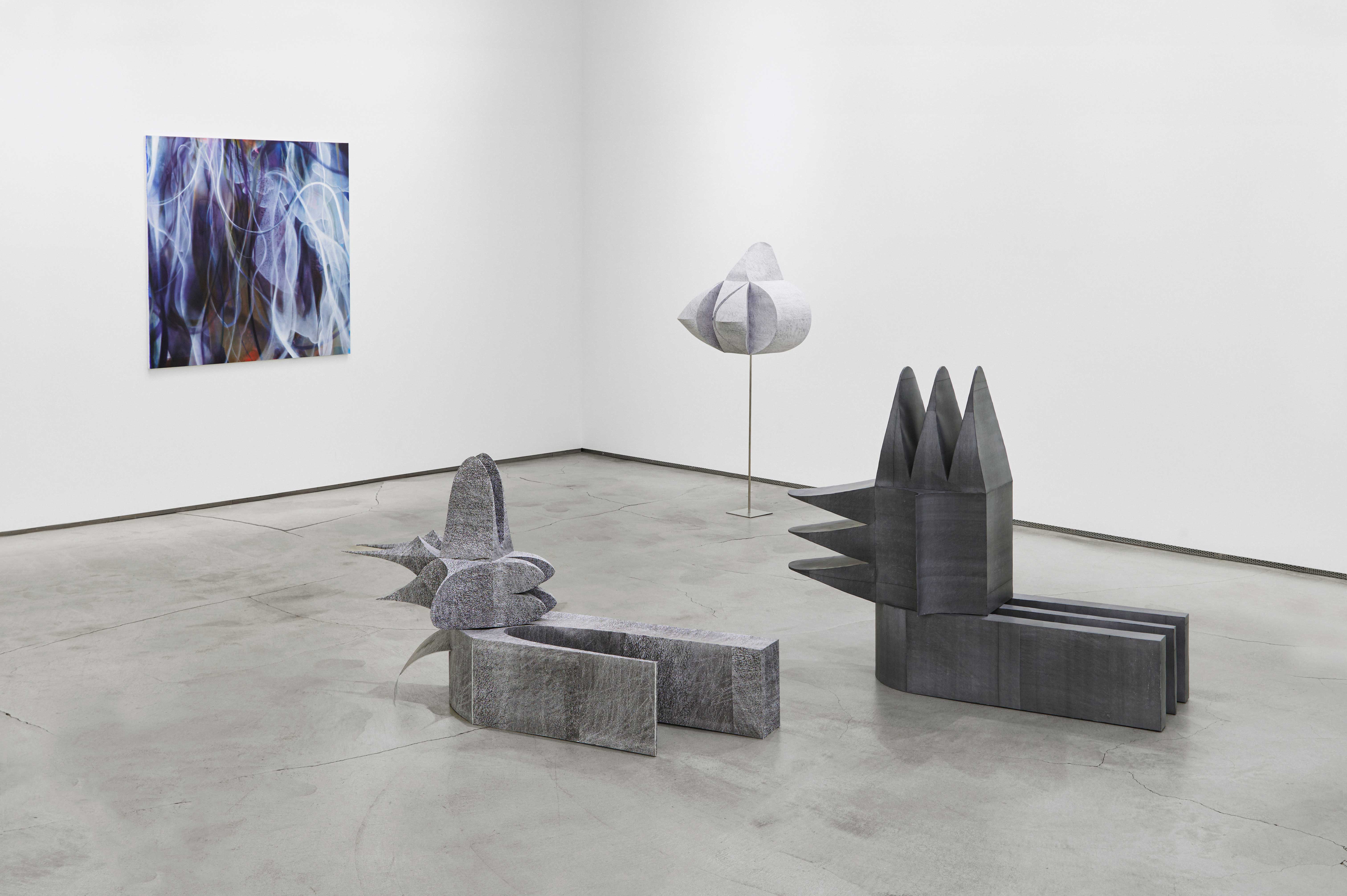
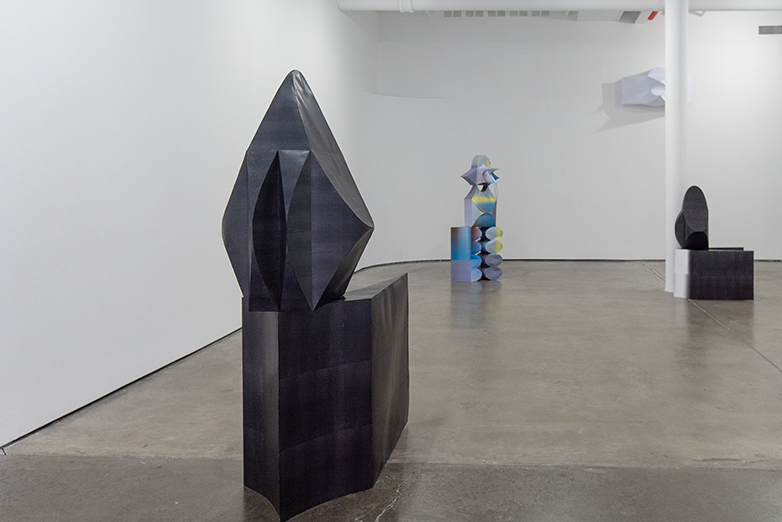
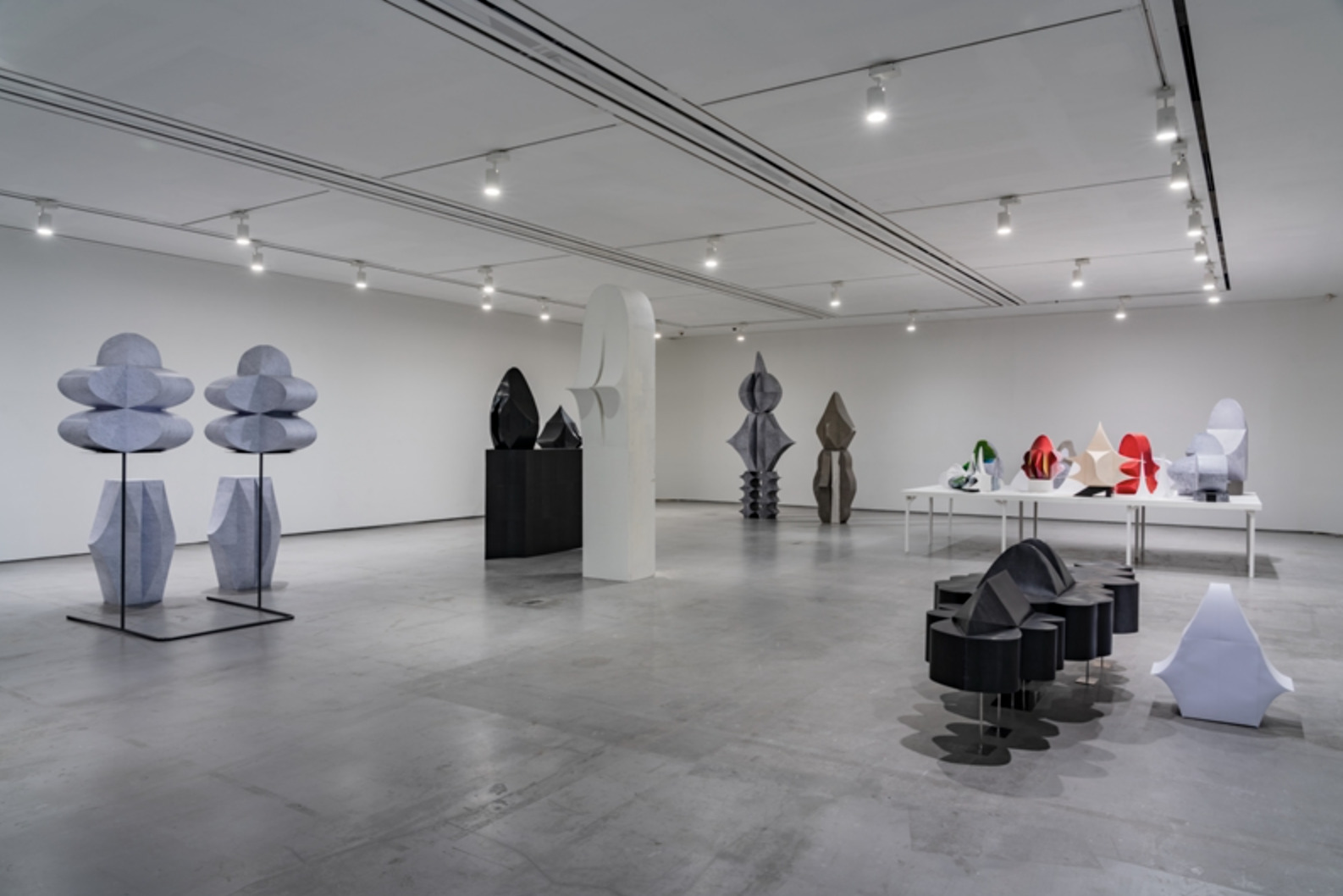
But what if there is a body that comprises only wrappings or a shell? That is, a body that comprises only skin, without bones. The reality of such a body is found in the sculptures of Hwang Sue Yon. Hwang’s paper sculptures, which began to properly emerge in 2017, follow the curves and lines of cloth patterns cut by cloth-cutters, and the paper pieces are then put together.
These sculptures therefore do not originate from materiality of medium, as in past sculptures, but start with the pattern. This is also a demonstration of the shift in thinking on model-making for upcoming sculptors that is caused by computer graphics and 3D printing. The desire to create a three-dimensional object out of a flat plane, or to create a three-dimensional object from a plan, is therefore another key element of this work. But that does not mean that the sculptures are meticulously planned, intentional products.
The fragility of paper as a medium hampers and frustrates the simulated end-form of the sculpture, and the possibility for perfect adhesions and aesthetics. Hwang’s sculptures relish in displaying such ephemerality and incompleteness, and thus linger between, as the artist puts it, “fragility and strength, lightness and weight, and harshness and value.”
The paper sculptures are titled Flower Person, Soft Head, Fly, and White Bird. They appear as cute animal characters, and there are anthropomorphized instances as well. This non-human ecosystem transitions into more diverse forms, adding to and taking away from certain characteristics in Hwang’s 2019 solo exhibition Humming Head. In so doing, her work appears to reach a series of end forms.
A single design is used repetitively, recreating identical forms that are transformed slightly. Hwang describes the process as follows: “I have always desired ‘form,’ but in hindsight what I desired was a mechanism by which form can be expressed.” This means that Hwang’s interests do not lie in expanding upon an ecosystem full of imagination.
That is to say that these sculptures are based on simulations and models while at the same time betraying them. They demonstrate what Gilbert Simondon describes as the mechanism of individuation, the positioning of those parts that diverge as a result of encounters with spontaneity, semi-stable events in formation.
Hwang’s sculptures take a peculiar joy in constantly betraying the human (or more precisely “phallic”) desires of programming, expansion, and completion. From a sculptural perspective, they appear to be characterized by a suspicion and defiance of materiality. Materiality determines the appropriate use of the object, and the strength and weight of the materials of the object determine the form best suited for the object’s purpose.
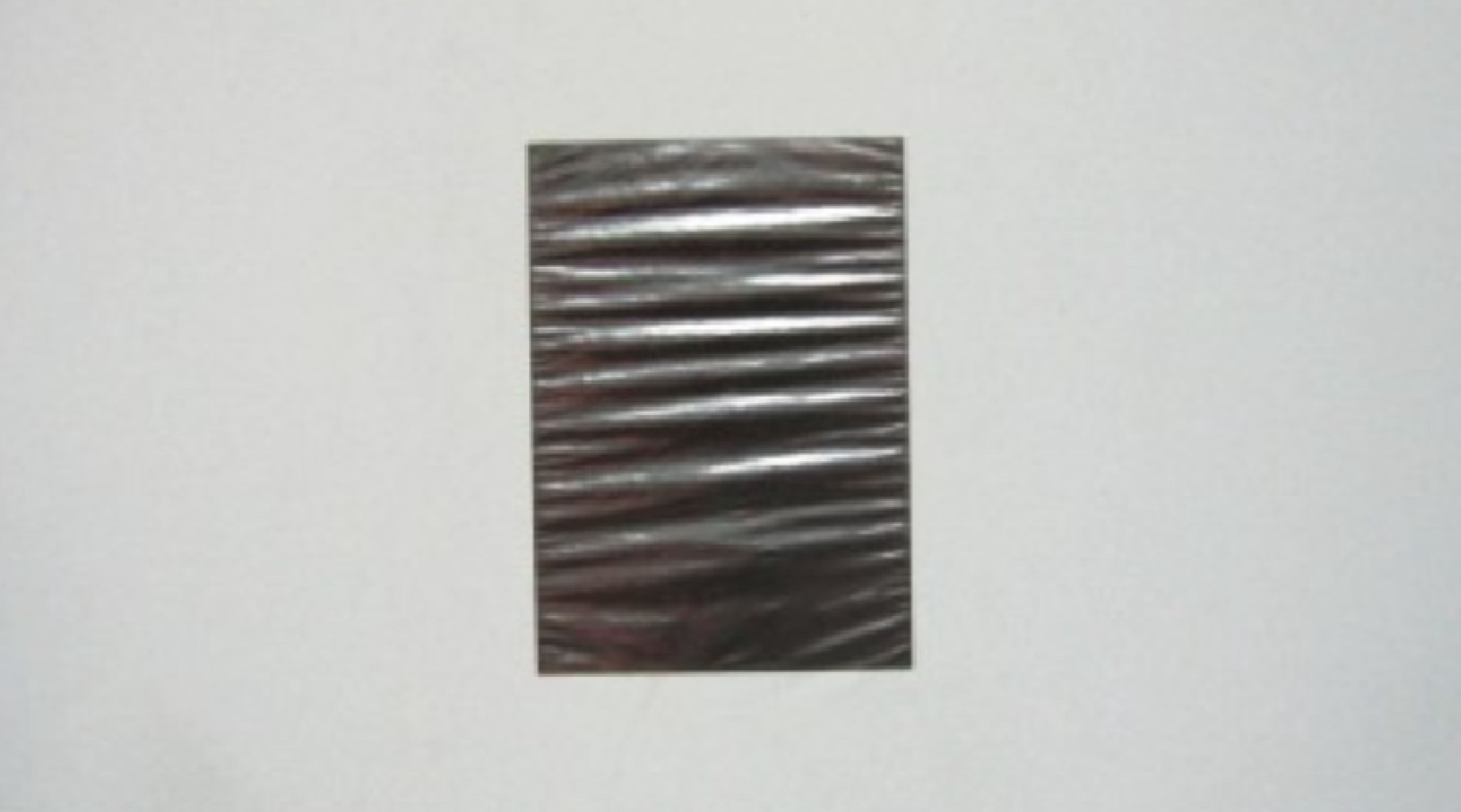
But Hwang’s defiance—splitting yellow rubber bands into sand-like pieces, pouring glue on the sand to harden them, and hardening aluminum foil sculptures—adhere to methodologies that clash with the material characteristics of the medium, go against the nature of the object (or what is regarded as such).
This methodology, having extended to paper sculptures, can perhaps be considered a process of desiring what cannot be had in hand of recognizing failure and embracing what shrivels and will eventually disappear. One might say that she is continuously creating snowmen. Despite such a light weight and ephemeral volume, for a day these creations become hardened, bright entities.
But the moment one desires for these to be firmer, to be longer lasting, the snowmen break apart. Her sculptures are therefore a farce, based on their haphazard and incomplete parts that temporarily support and interconnect with each other.8 But the strength of such humor is to make light of those things that appear strong and complete. At the same time, it also shows that the futility and emptiness of apparently weak lives can in fact be powerful and beautiful.