Hwang Sueyon (b. 1981) has explored the relationships and transformations that emerge through the encounter between the materiality of materials and her own body, expressing them through sculpture. She focuses on unfamiliar physical phenomena that arise as she uses her body to stroke, touch, and rub various materials found in her surroundings.


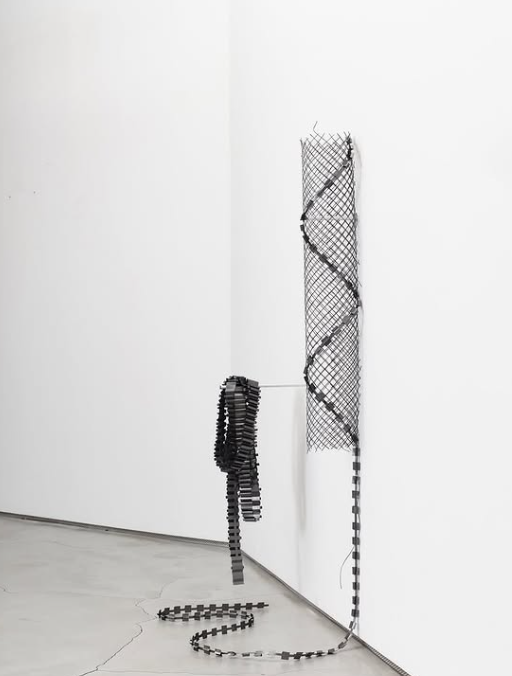
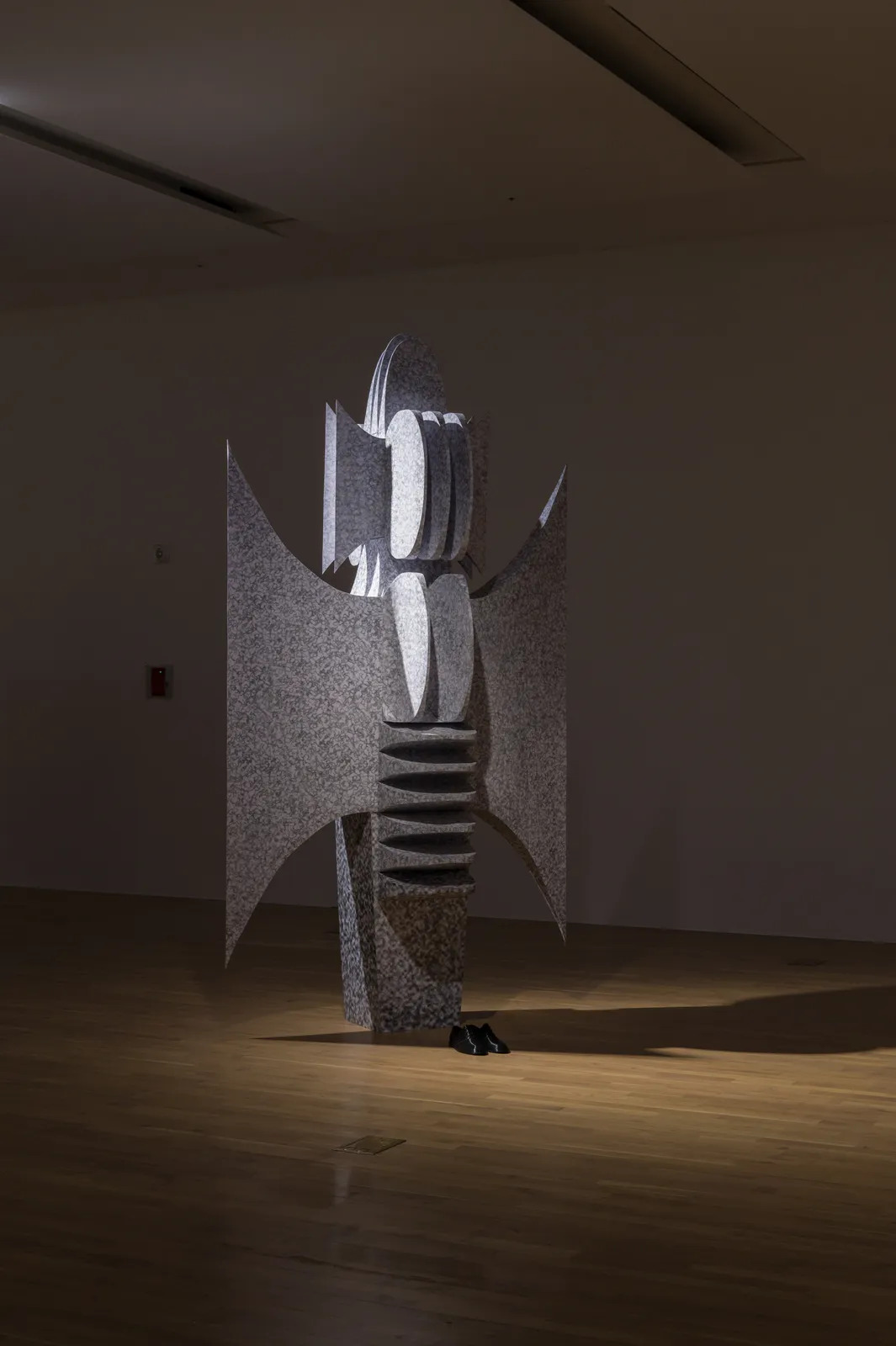
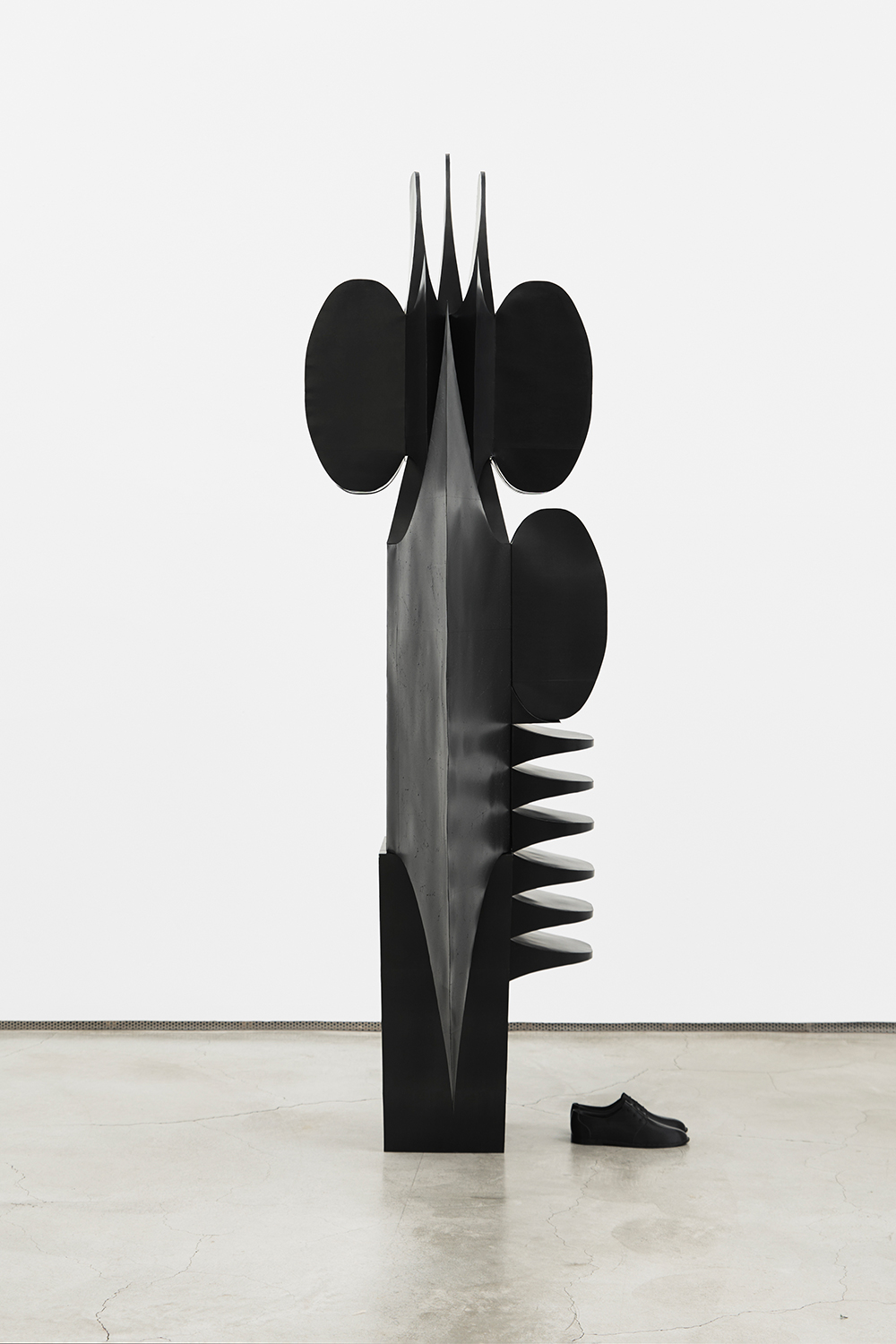
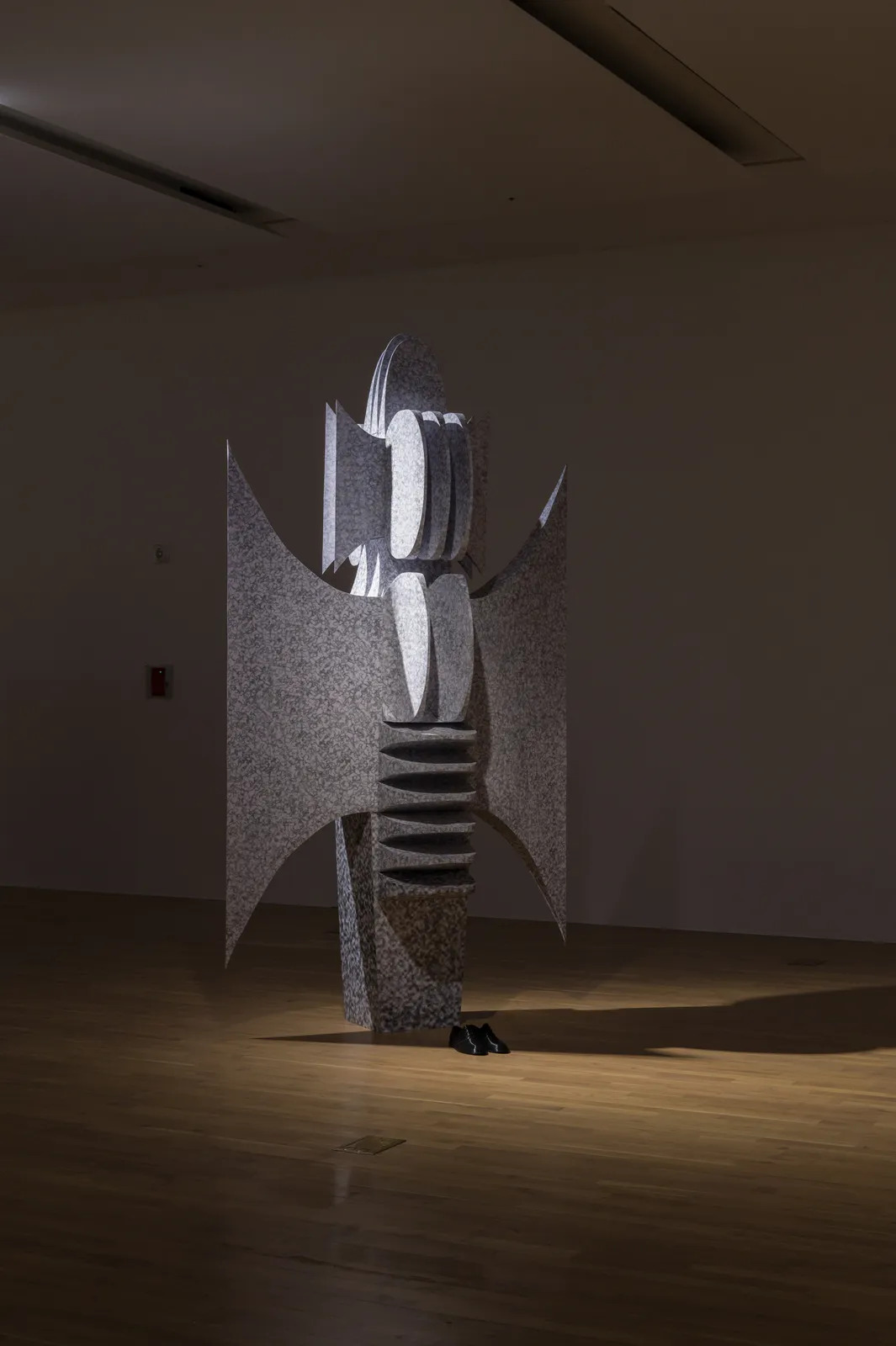
Hwang Sueyon, Black Effector, 2023, Printed paper, effect spray, glitter, 3D print lighter and shoes, 240x109x78cm © G Gallery

Hwang Sueyon has spent years exploring a range of materials, including paper, foil, and sand, creating sculptures in which the inherent qualities of each material and traces of time naturally emerge. She approaches her works as entities equal to herself, engaging with them through an attitude of observing, understanding, and ultimately accepting their vulnerability.
 
Through physical actions, she observes how materials change, accepting the states they reach through this process and bringing her own actions to a halt when she determines that no further intervention is necessary.
 
Thus, in Hwang’s practice, the artist’s actions do not simply transform materials in one direction. Rather, the process of adjusting and eventually ceasing her actions in response to the materials’ reactions and changing states plays a central role.


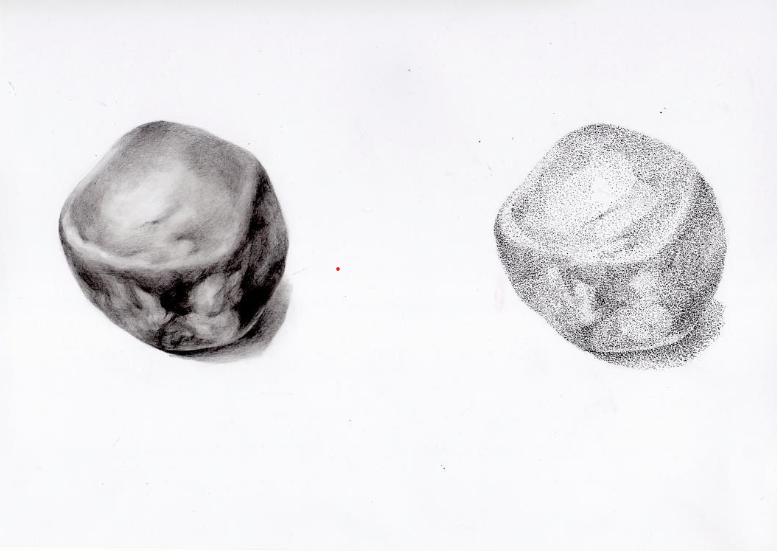
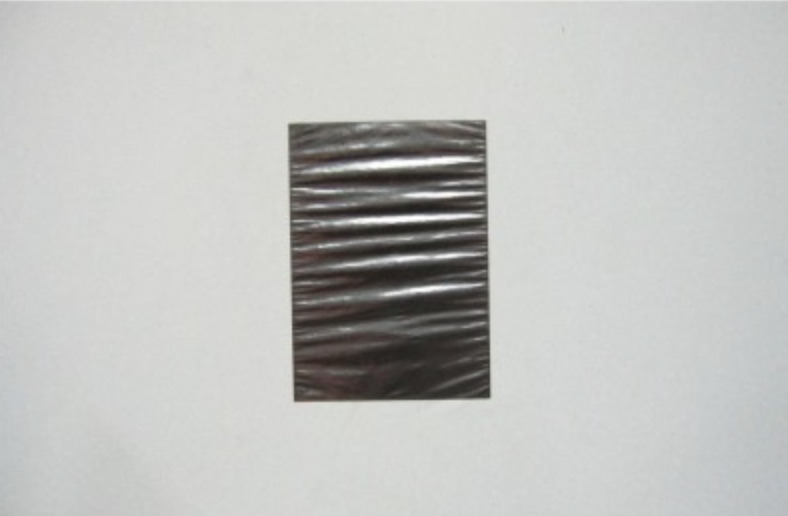
Hwang Sueyon, A4 Drawing, 2008, Pencil on paper, Dimensions variable © Hwang Sueyon

From her early practice, Hwang Sueyon has explored materials as a point of departure, imbuing each work with its own distinct sensibility and character while creating sculptural forms that depart from the materials’ conventional properties or take on unusual forms.
 
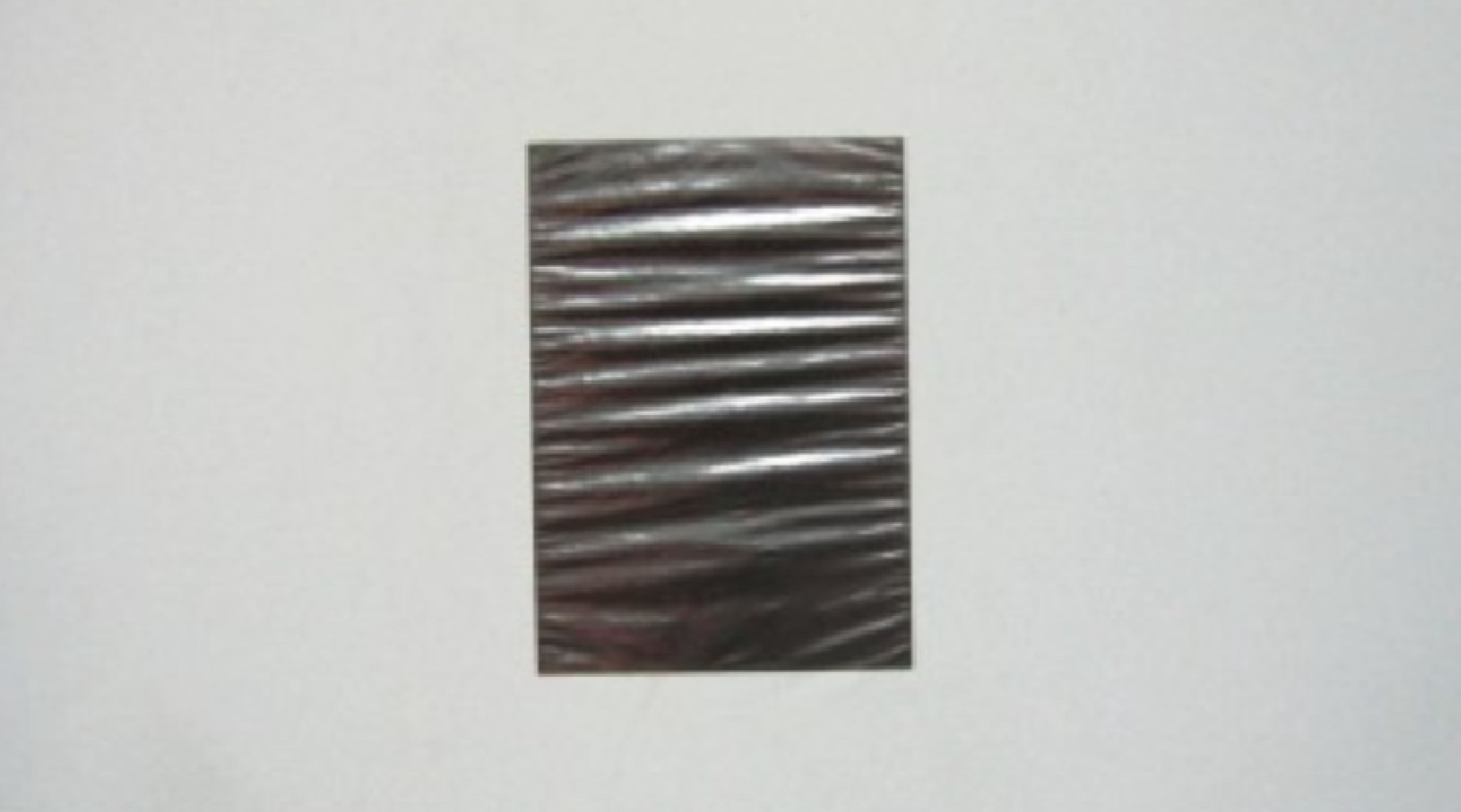
For example, in her 2008 work A4 Drawing, she repeatedly covers standard A4 paper with pencil, transforming its texture and mass through this repetitive physical action.


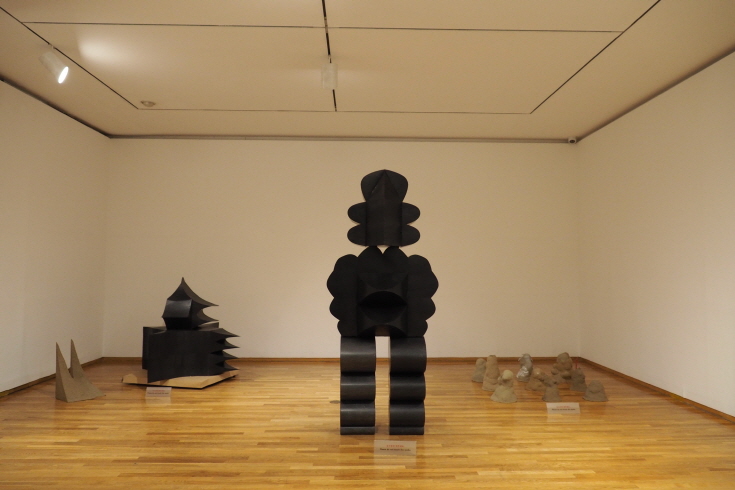
Installation view of 《Spinning Egg》 (Kumho Museum of Art, 2017) © Kumho Museum of Art

Her 2017 solo exhibition 《Spinning Egg》 at Kumho Museum of Art consisted of works that emerged from a persistent exploration of the fundamental properties of materials such as sand, aluminum foil, paper, rubber bands, and pastel, transforming them through sculptural processes.
 
Hwang repeatedly performed actions such as striking, kneading, and drawing on these everyday materials. For instance, she crumpled and hammered thin, lightweight aluminum foil into solid masses (Harder, 2014–2016), while pouring adhesive over sand, whose natural tendency is to scatter, to create solid and weighty forms (Heavier, 2016).


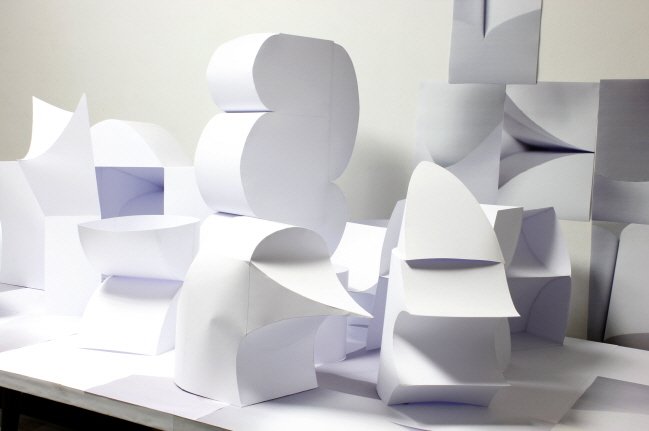
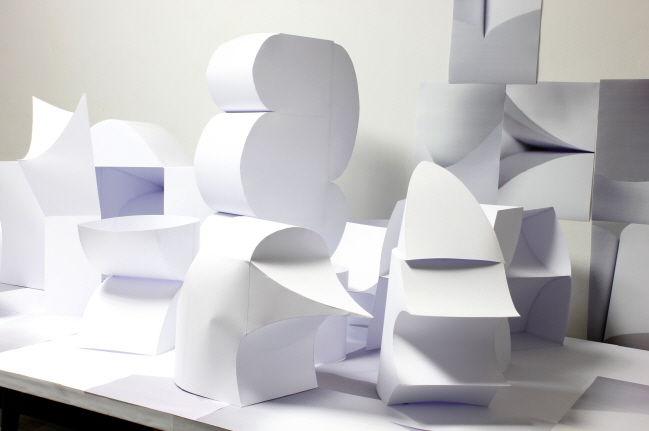
Hwang Sueyon, Material table3. Paper Face, Paper Body, 2016 © Hwang Sueyon

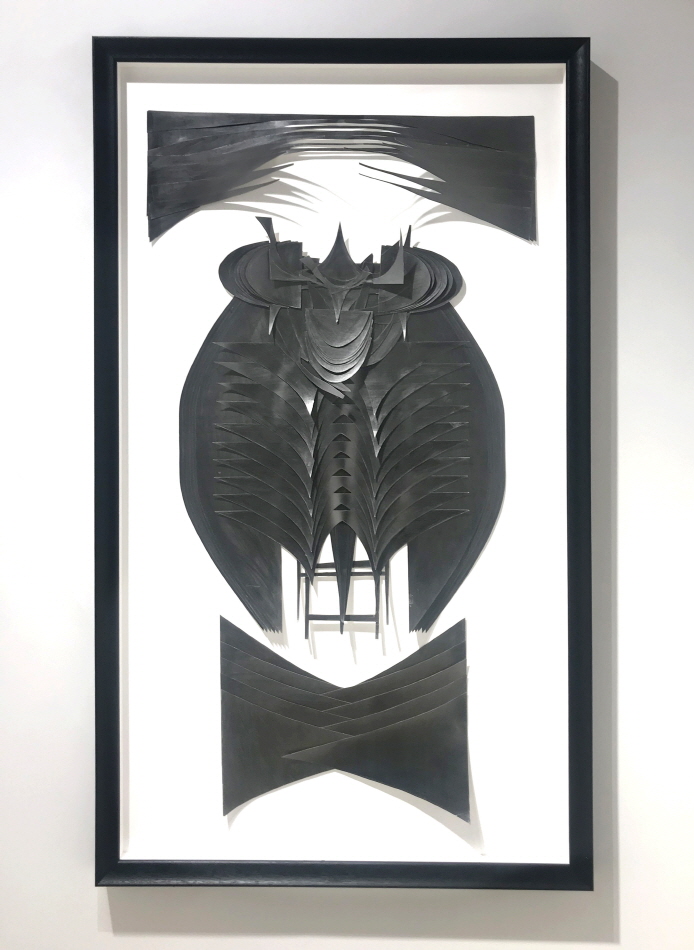
Meanwhile, Hwang’s paper sculptures are made using curved pattern rulers traditionally used to cut fabric for garments fitted to the body. Even when she uses these rulers to create drawings and assembles them into three-dimensional sculptures, she completes the works without overriding the inherent properties of paper.
 
The forms derived from the curved rulers thus incorporate the lines of the shoulders and the contours of the armpits, combining supple, fluid lines with straight edges such as the sharp sides of paper.
 
Through this process, Hwang’s works layer and invert traces of the body and the surfaces of materials between solidity and fragility, giving volume to flat sheets of paper before repeatedly returning them to the state of a surface or outer skin.


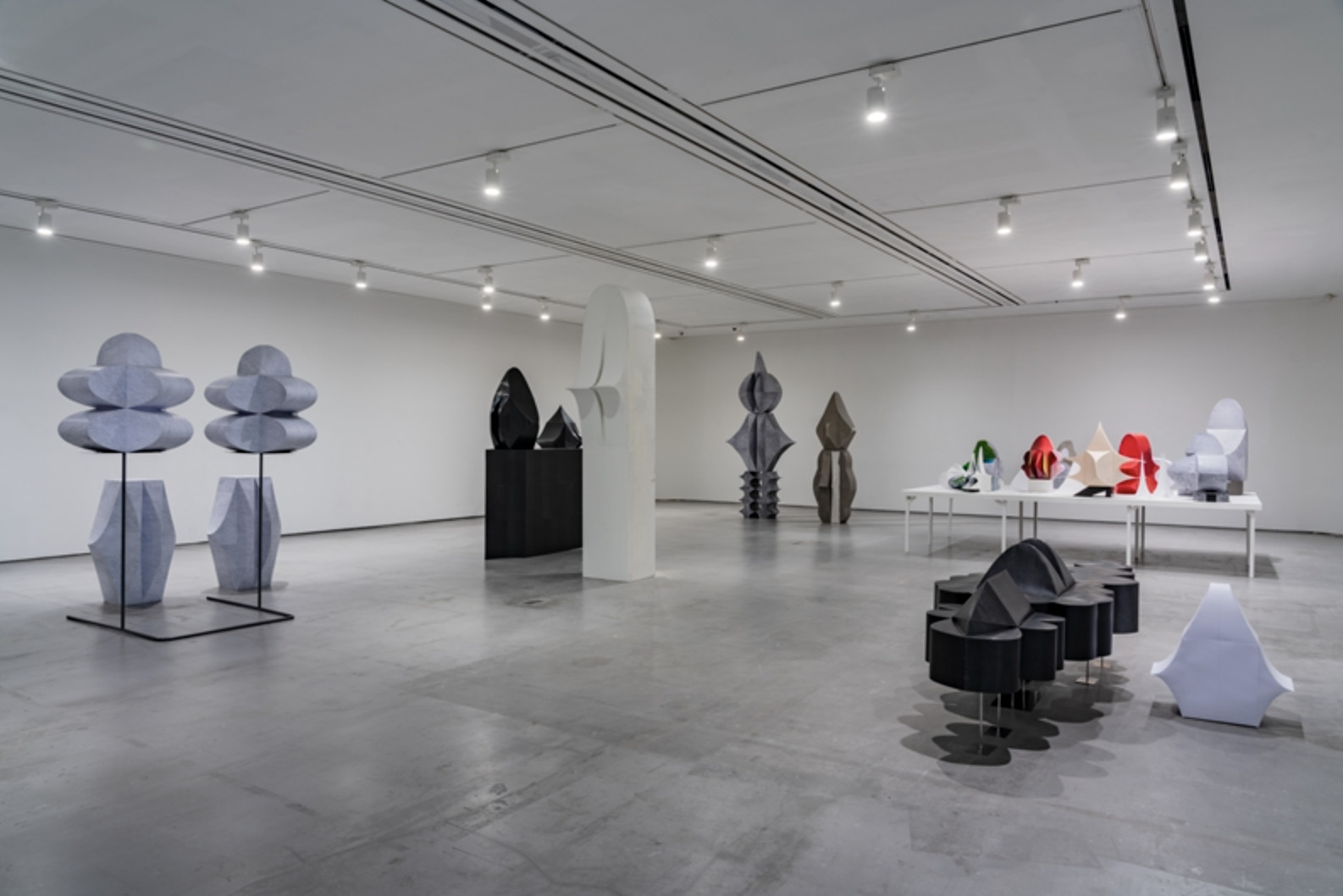
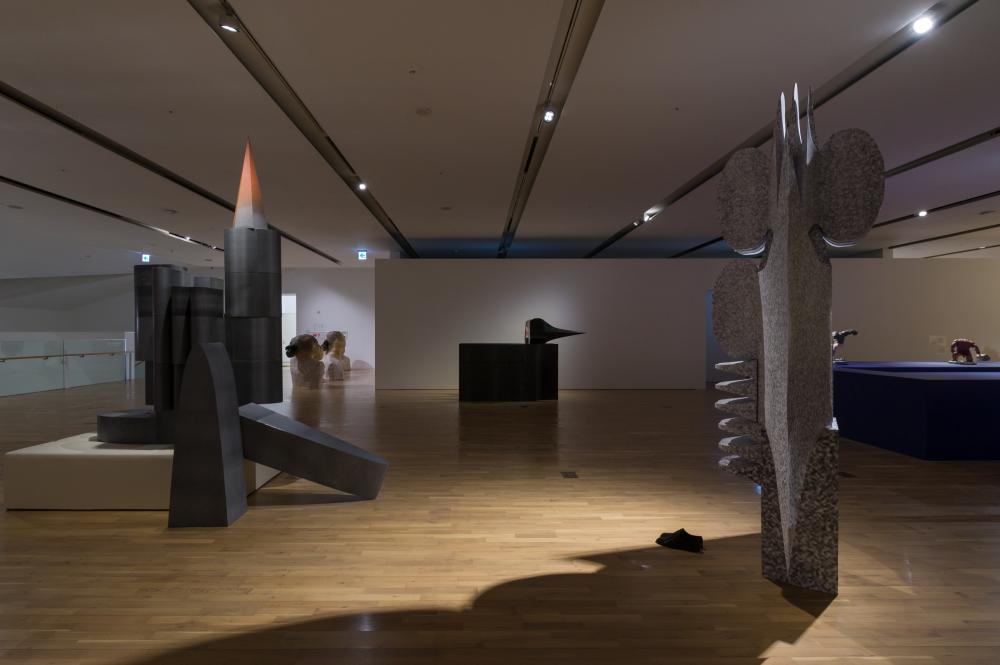
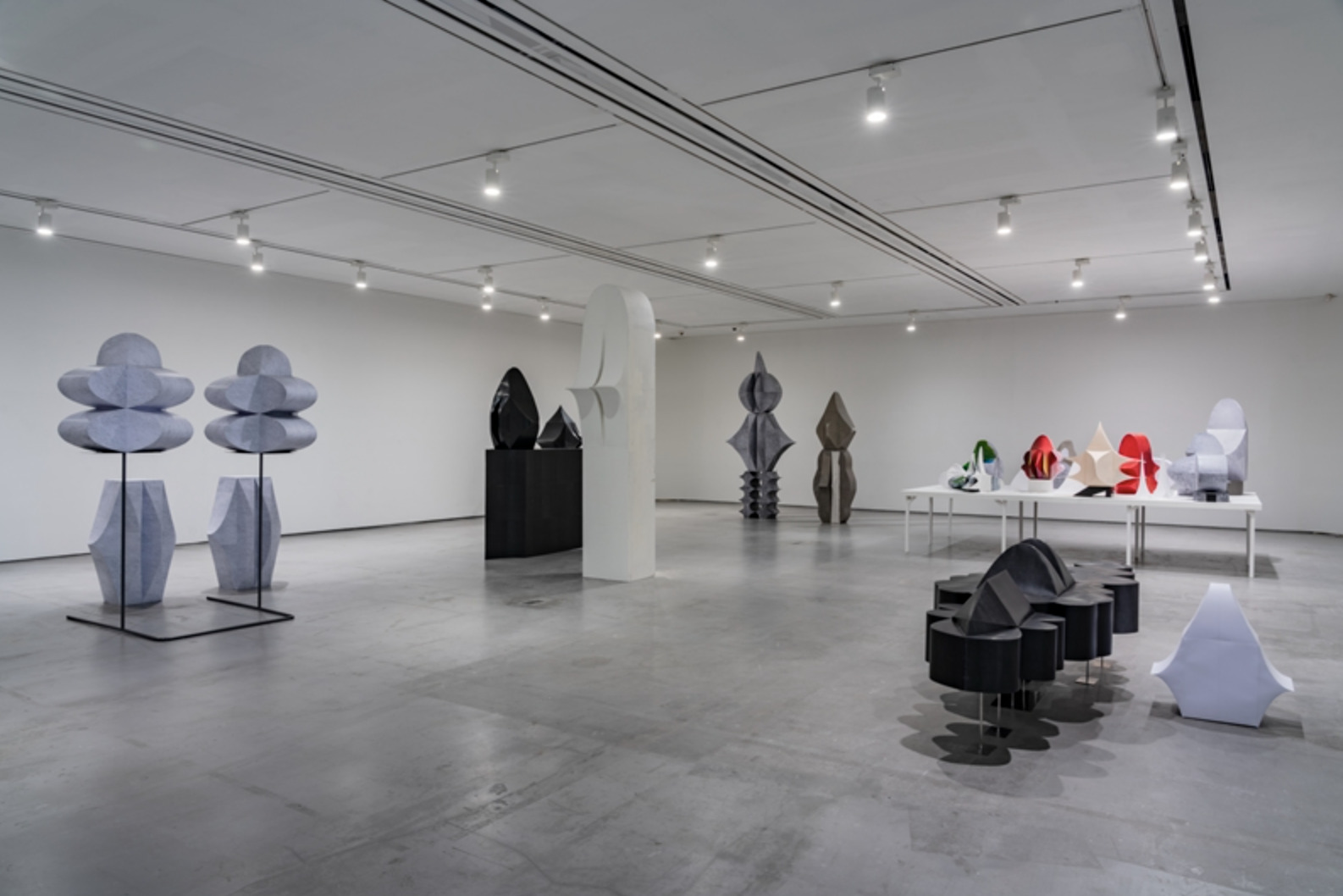
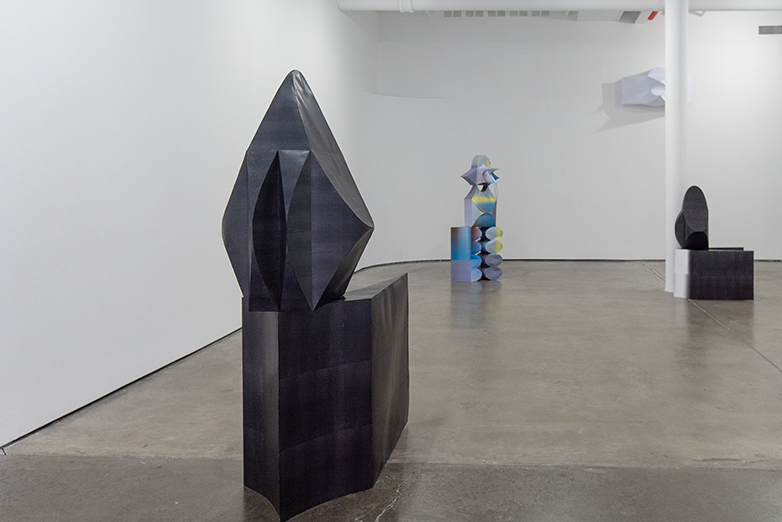
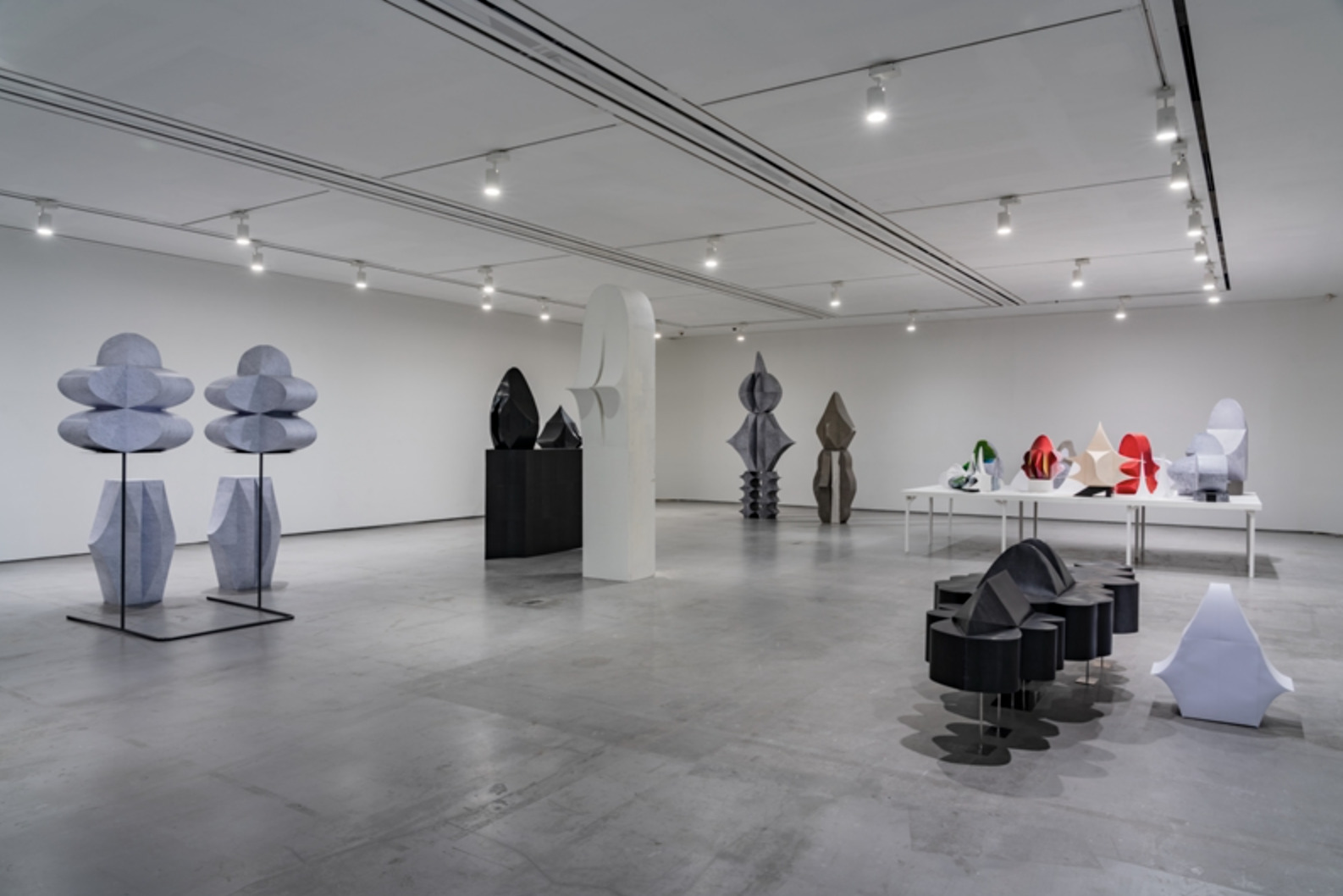
Installation view of 《Humming Head》 (DOOSAN Gallery, 2019) © DOOSAN Gallery

Furthermore, her 2019 solo exhibition 《Humming Head》 at DOOSAN Gallery revealed how her earlier paper sculptures had evolved and transformed, almost as if they were undergoing a process of evolution. Hwang created ‘paper faces’ and ‘paper bodies’ using paper, a material that can be bent, folded, and crumpled.
 
Within predetermined volumes, the forms gradually took shape through the processes of cutting, folding, and joining the paper, eventually becoming faces that, like living organisms, each possessed a distinct character.
 
Made using pattern rulers originally intended for tailoring garments to the human body, the paper sculptures came to resemble human bodies, and as they continued to be produced, they gradually began to resemble one another in form.


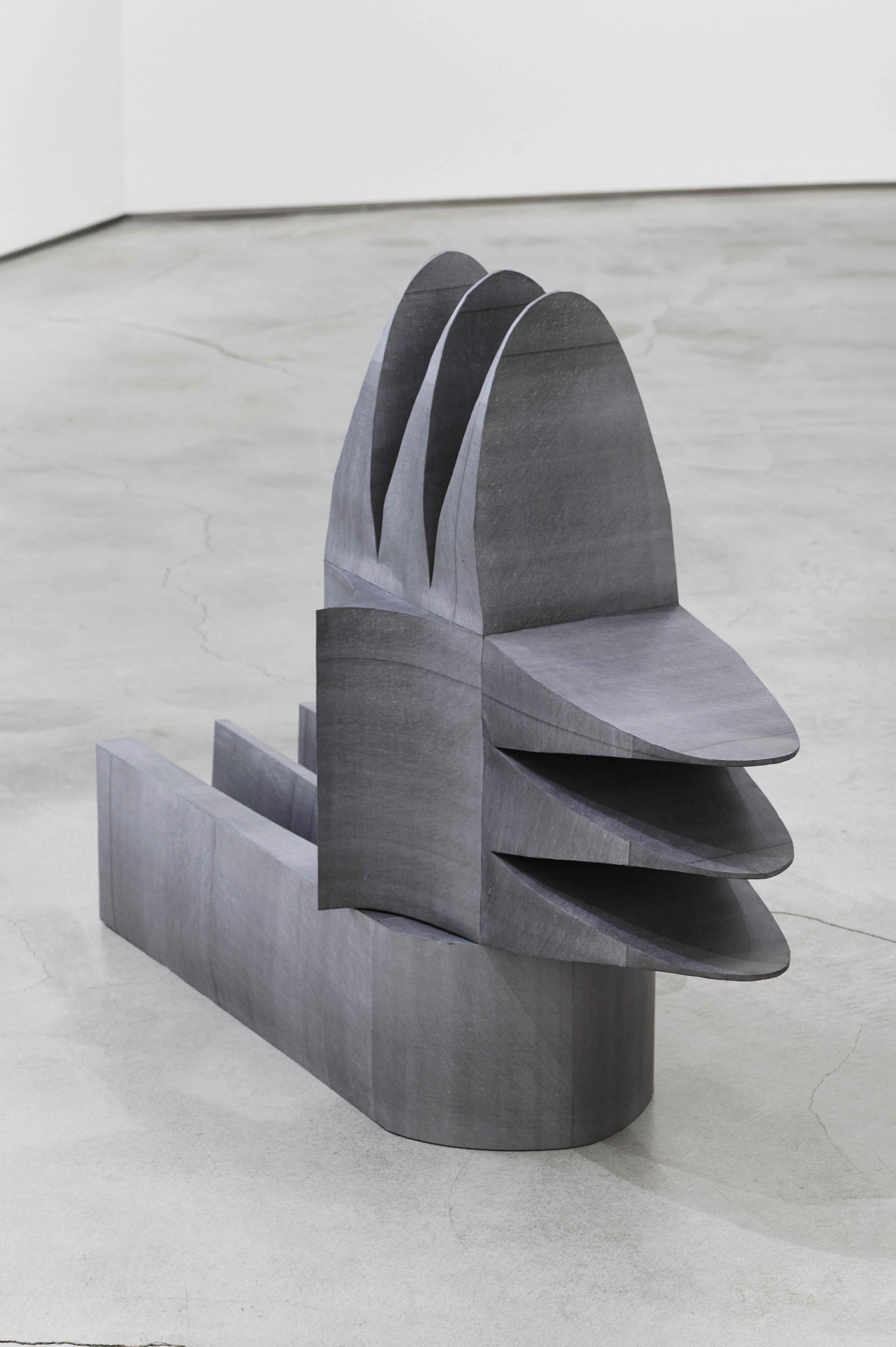
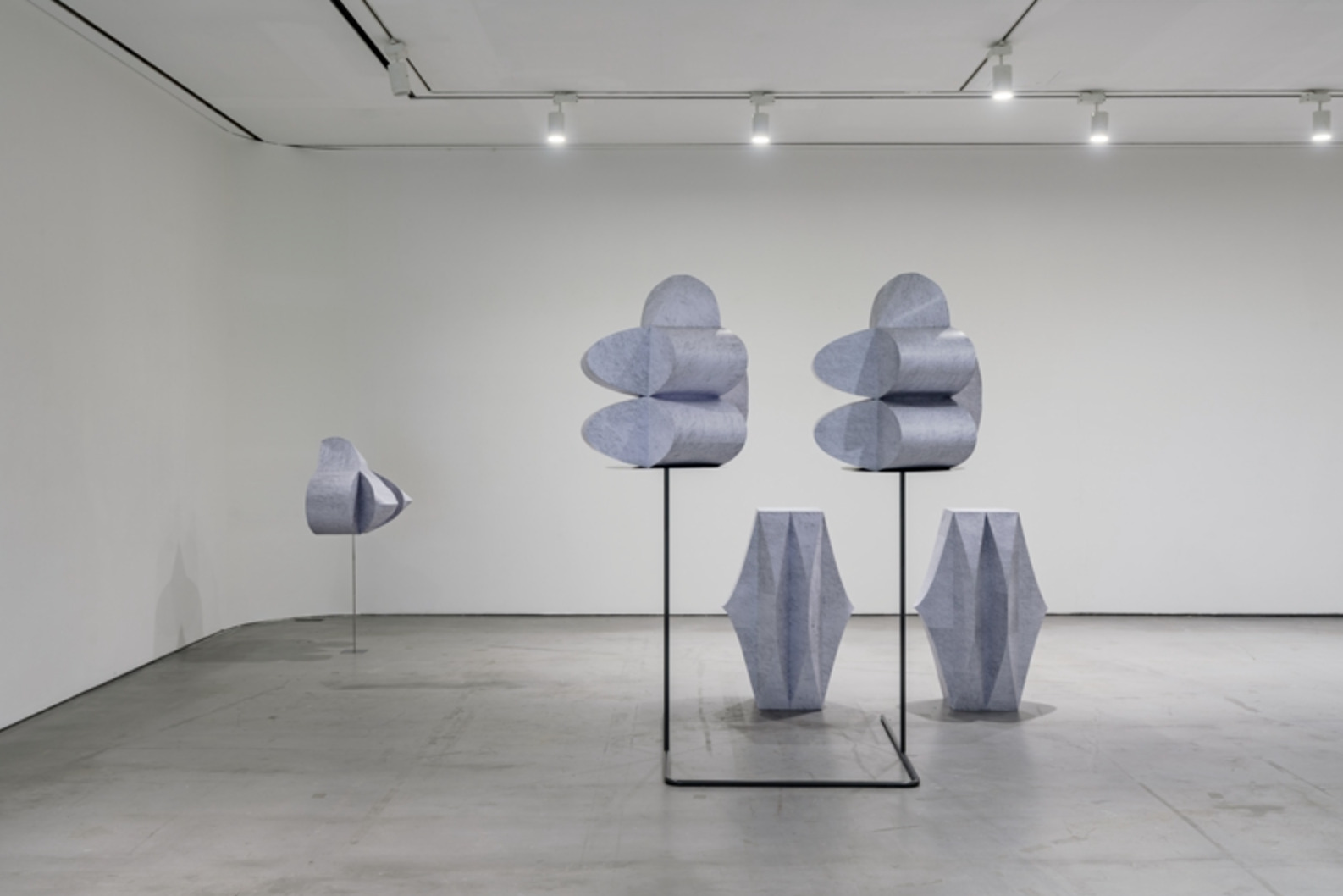
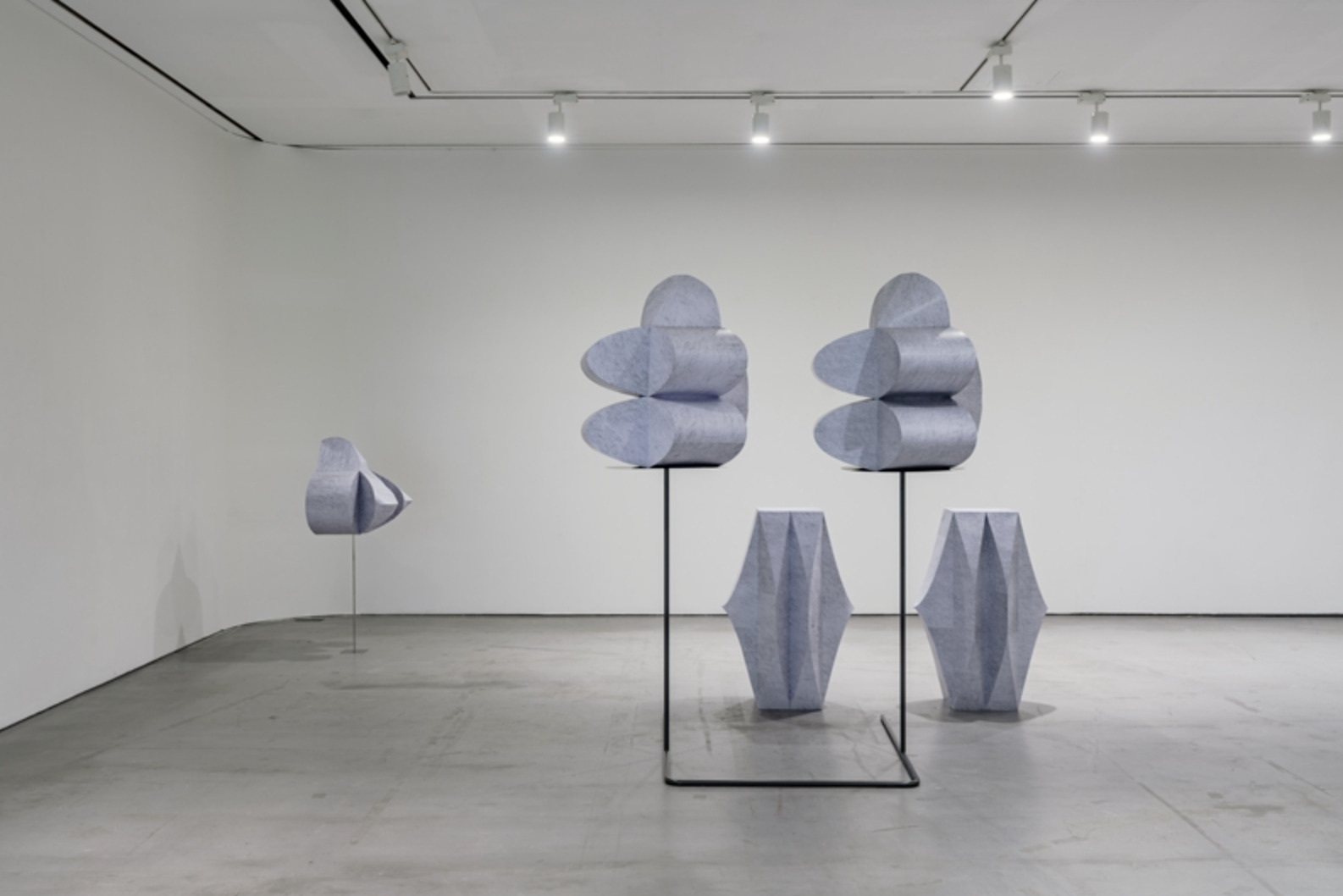
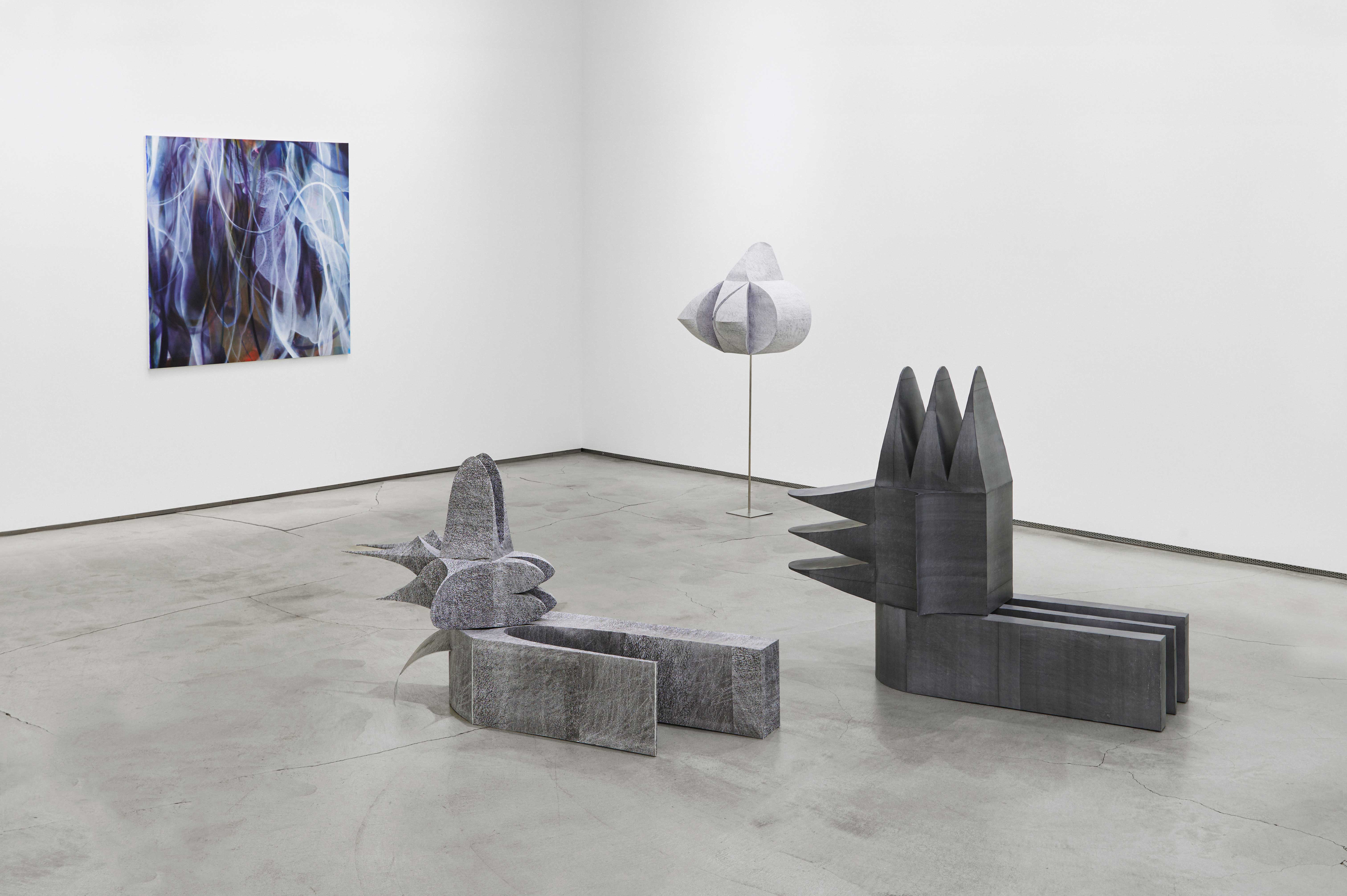
Hwang Sueyon, (left) Lazy(head) / (right) Two sculpture with two cloud, 2019, Print, stainless steel / Print, iron, 62.5×52×60cm /173×130×207cm © DOOSAN Gallery

In 《Humming Head》, the paper sculptures continued to evolve, taking on increasingly diverse forms and distinct characteristics. Some pieces of paper grow in height, while others change their bodies into a more solid ones, as if they attempt to overcome the fragile nature of paper, while maintaining their form.
 
Big ones, small ones, wide ones, thin ones — various forms of "paper bodies" and "paper faces" resemble one another: their left sides resemble their right sides, like eyes and noses resemble one another.
 
Similar to a family, or a new species, pieces of paper that are quietly interconnected invite the viewers to consider the similarities and differences in each one of them, amongst the group of paper forms.


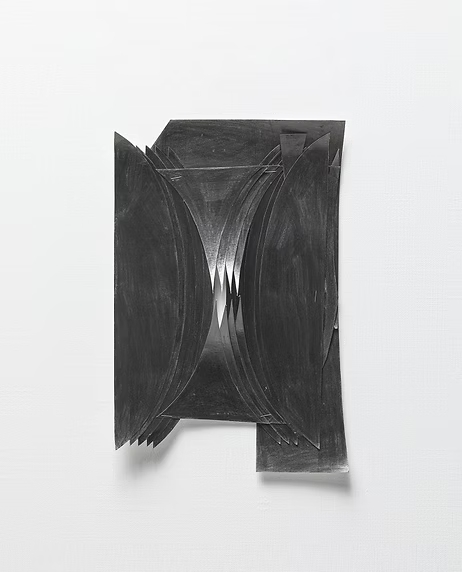
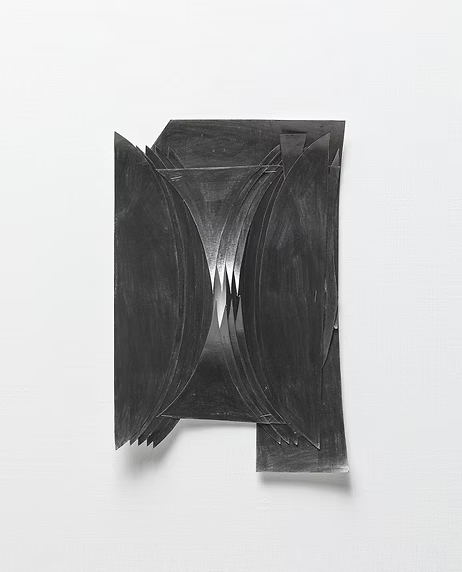
Hwang Sueyon, Melting Point, 2020, Graphite, paper, stapler, 29.6x19cm © nook gallery

In this way, Hwang Sueyon has continued to explore how the materiality of ‘paper,’ a familiar material, changes and takes shape through its relationship with the body. Her series of paper sculptures, which has developed through an ongoing exchange between two-dimensional and three-dimensional forms, later shifts toward flattened forms that shed their previous sense of volume in the ‘Melting Point’ (2020–) series.
 
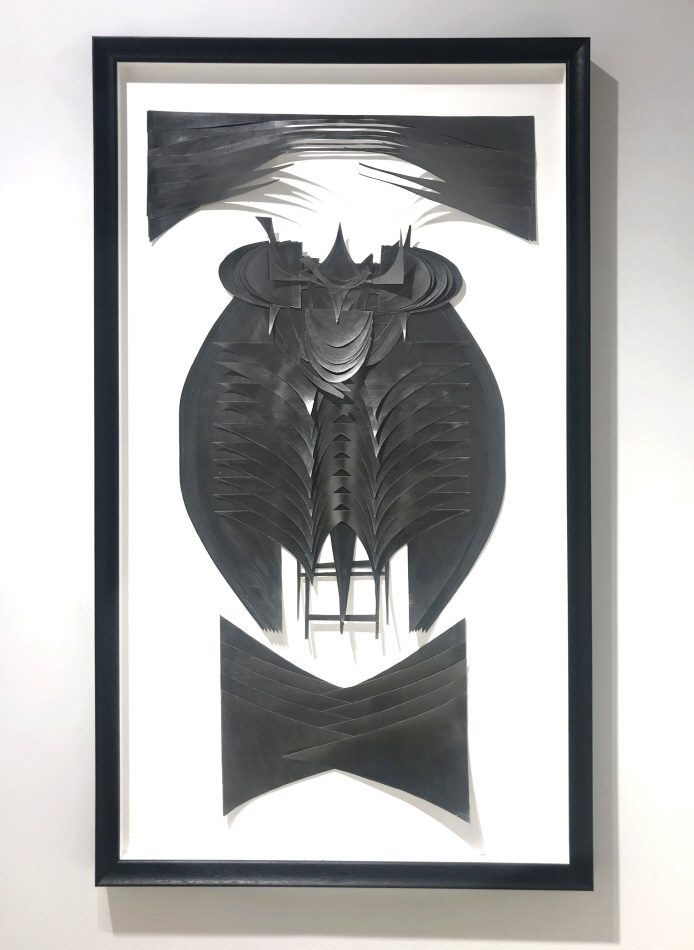
The solid or voluminous forms of her earlier works reappear as pencil drawings and paper collages on sheets of paper. The drawings, in which the sense of volume appears to have disappeared, depict the moment when forms that were originally three-dimensional melt down and settle onto a flat surface. Hwang has said that, while making the pencil drawings, she imagined things ‘melting into rounded forms.’


Hwang Sueyon, Melting Point, 2021, Graphite, paper, 130x74cm © Hakgojae Gallery

Meanwhile, the paper collages, made by layering multiple sheets of paper, were created by imagining a state of ‘flattened containment.’ The artist’s interest in a cyclical process in which something is filled through absence and then disappears again is condensed in the title “Melting Point”.


Hwang Sueyon, Effector, Fisher 1, 2, Sofa Rat, 2022, Installation view of 《Sculptural Impulse》 (Buk-Seoul Museum of Art, 2022) © Seoul Museum of Art

Meanwhile, at the 2022 group exhibition 《Sculptural Impulse》 at Buk-Seoul Museum of Art, Hwang Sueyon presented three ‘paper body’ sculptures that function as individual yet interconnected masses: Effector (2022), Fisher 1, 2 (2022), and Sofa Rat (2022).
 
This series of sculptures was inspired by Pieter Bruegel’s The Parable of the Blind (1568). Composed of three large masses, the ‘paper bodies’ are structured so that parts of one can be fitted into another as though they were parts of a body.
 
Joined together as a single mass, they appear unable to break free from one another, creating a landscape in which the interconnected bodies seem to move toward an unknown future.


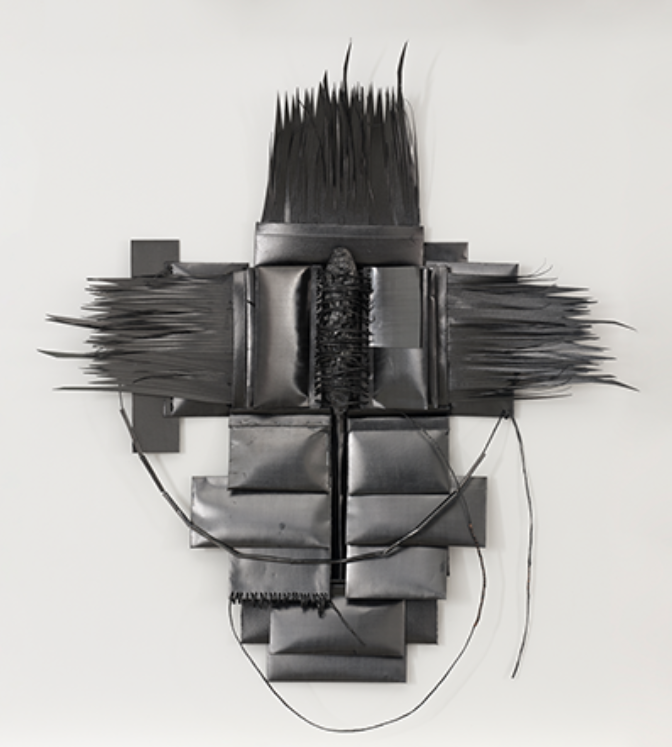
Hwang Sueyon, Effector, 2022, Printed paper, effect spray, glitter, 280×150×87cm © Hwang Sueyon

As discussed above, Hwang Sueyon has used pattern rulers designed for tailoring garments to the human body to establish bodily scale and gestures as the basic units of her forms. She then attaches paper to a framework according to a set of rules, creating hollow ‘paper bodies.’ In the process of constructing flat and lightweight paper as three-dimensional forms, she has transformed the internal structures traditionally associated with sculpture.
 
In this work, she introduces further changes to the materials and structure by incorporating wood in parts of the framework and using printed image data as the ‘skin.’ Hwang sees the image of thin paper standing against gravity and tension while carrying the absence of a ‘hollow body’ as revealing an inherent conflict within the body, which she seeks to make visible through the structural composition of the sculpture.


Installation view of 《Magma》 (Arario Gallery, 2024) © Arario Gallery

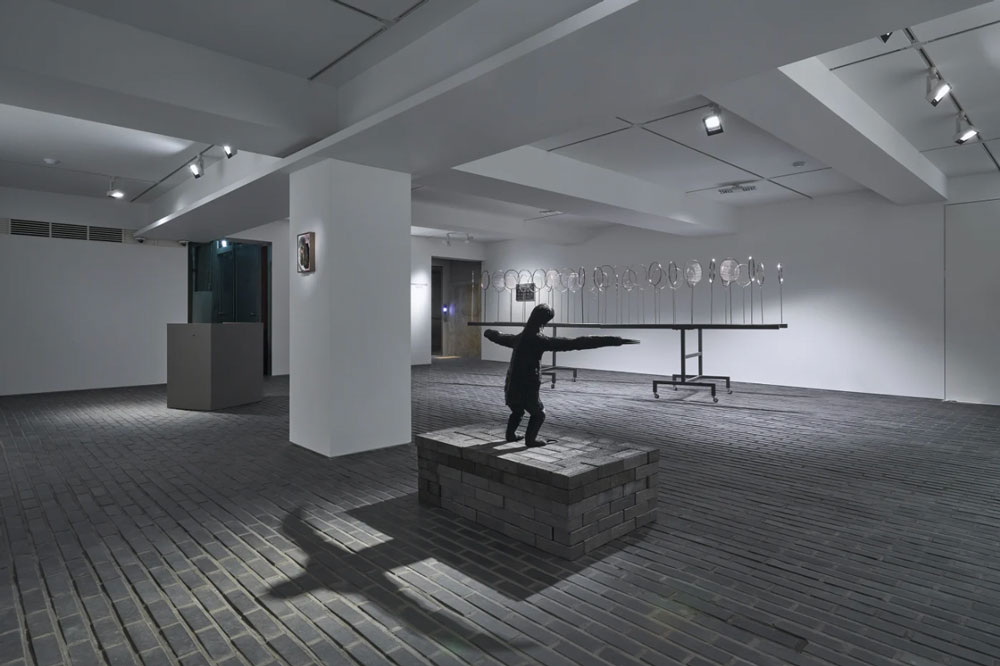
Meanwhile, in her 2024 solo exhibition 《Magma》 at Arario Gallery, Hwang Sueyon presented works that reinterpreted social media short-form content as a form of bodily performance.
 
The short-form images that are readily encountered in everyday life existed for the artist as countless fluid possibilities. Among them, she was particularly drawn to videos showing the processes through which various objects in the world are made.
 
Hwang intervened in these moving images, extracting sculptural elements from them and translating them into three-dimensional forms. In this process, her body intervened through acts of imitation, while the forms and properties of the objects featured in the short-form videos were transformed into new sculptures shaped by her personal experiences and interpretations.


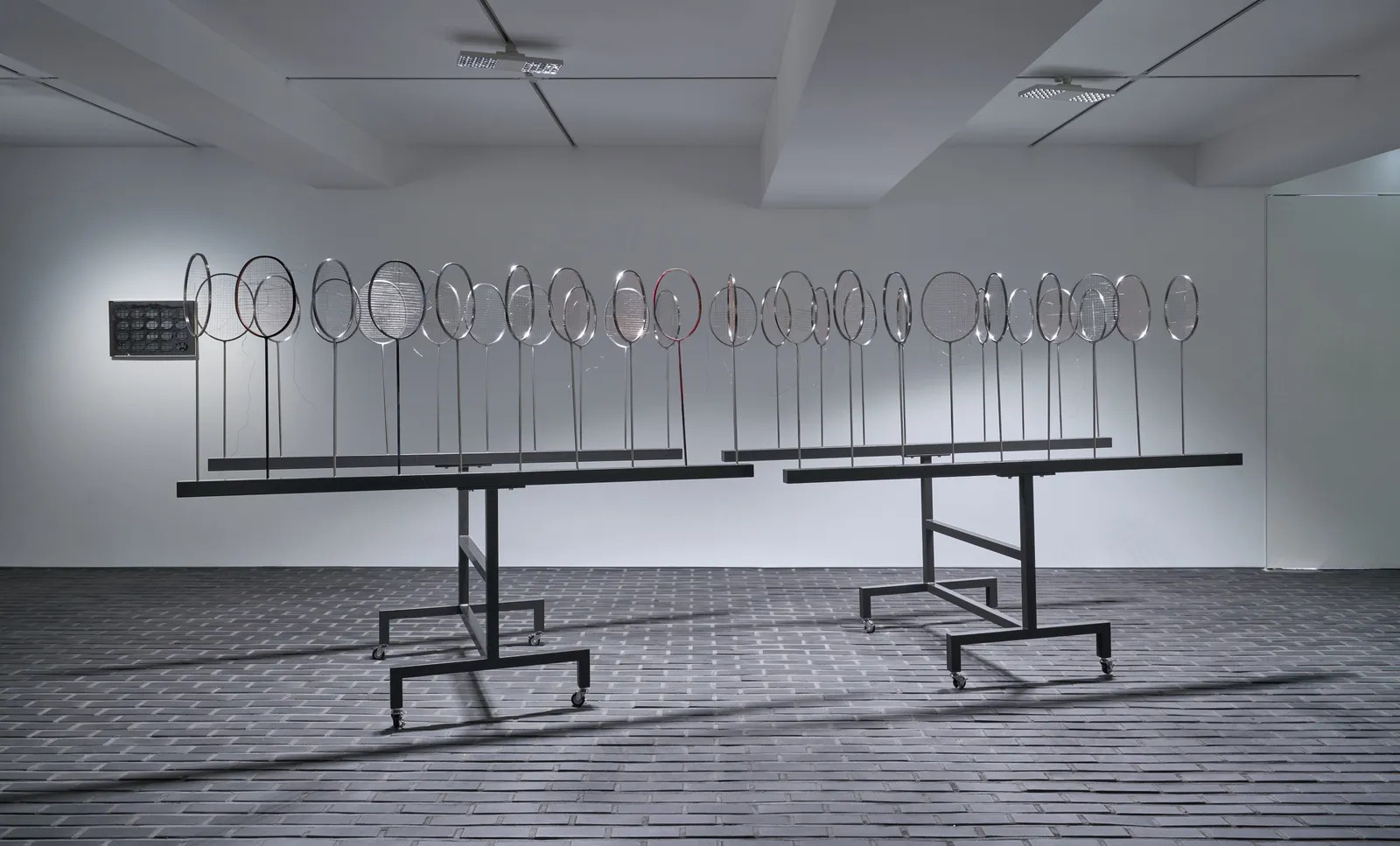
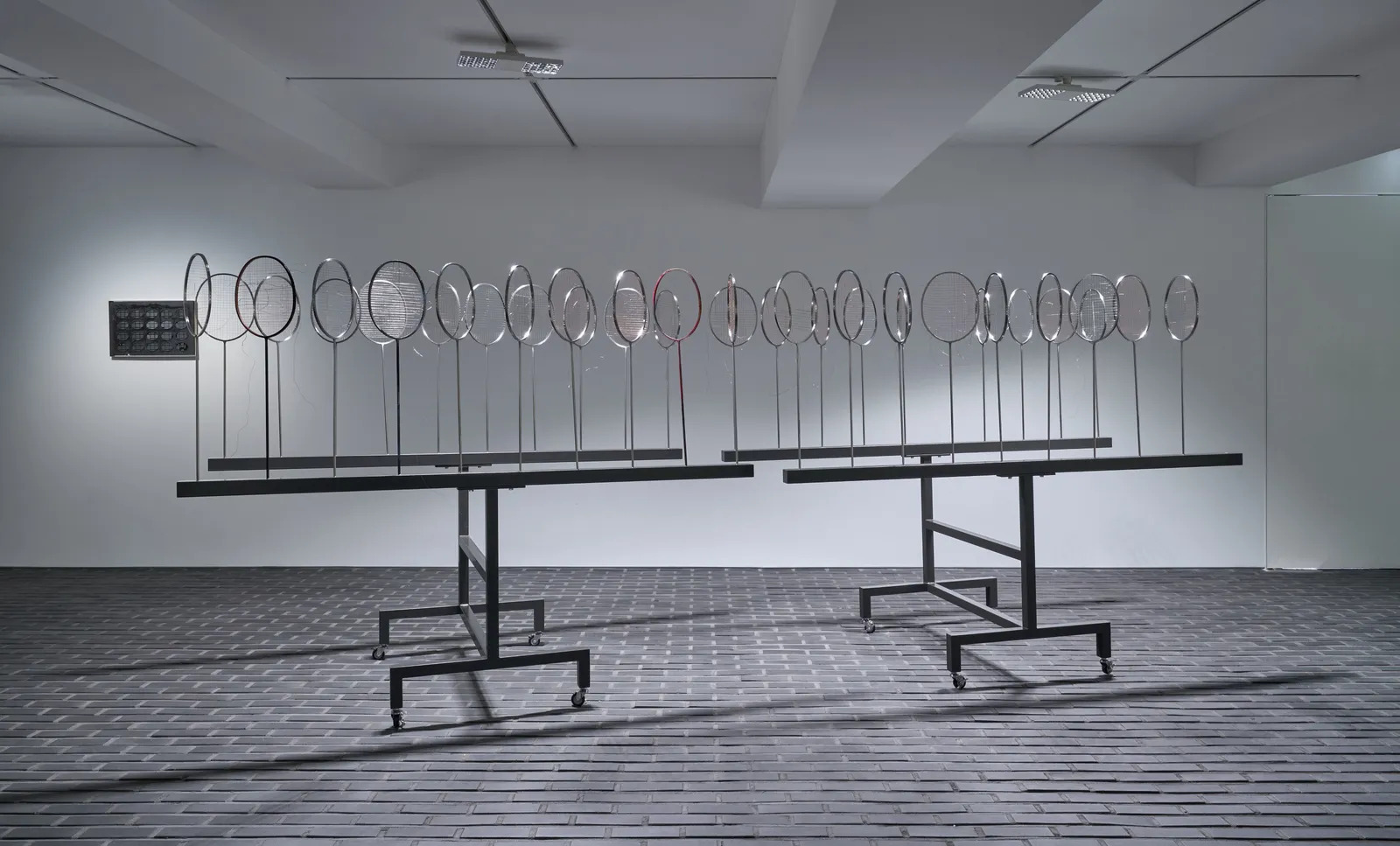
Hwang Sueyon, Bad Racket “…”, 2024, Stainless steel, wire, 157x200x90cm (2pcs.) © Arario Gallery

For example, Bad Racket ”…” (2024) was inspired by a short-form video documenting the production process of a badminton racket and created through Hwang’s own reenactment of that process. As she introduced her own sculptural considerations and unexpected attempts along the way, the resulting form came to resemble the original while remaining distinctly different from it.
 
Meanwhile, the flat sculptures comprise two series, one centered on die-cut molds, tools used to cut and shape products, and the other using clay as its primary material. The ‘Die-cut Mold’ series places die-cut molds on Jesmonite and incorporates acrylic medium, coating materials, and other substances, creating spatial configurations that traverse the boundaries between three-dimensional and two-dimensional forms and allow them to interpenetrate.
 
In a similar context to the three-dimensional sculptures derived from short-form videos, this work abstractly expands the fluid productivity of die-cut molds as prototypes for cutting and production by introducing new material properties to them.


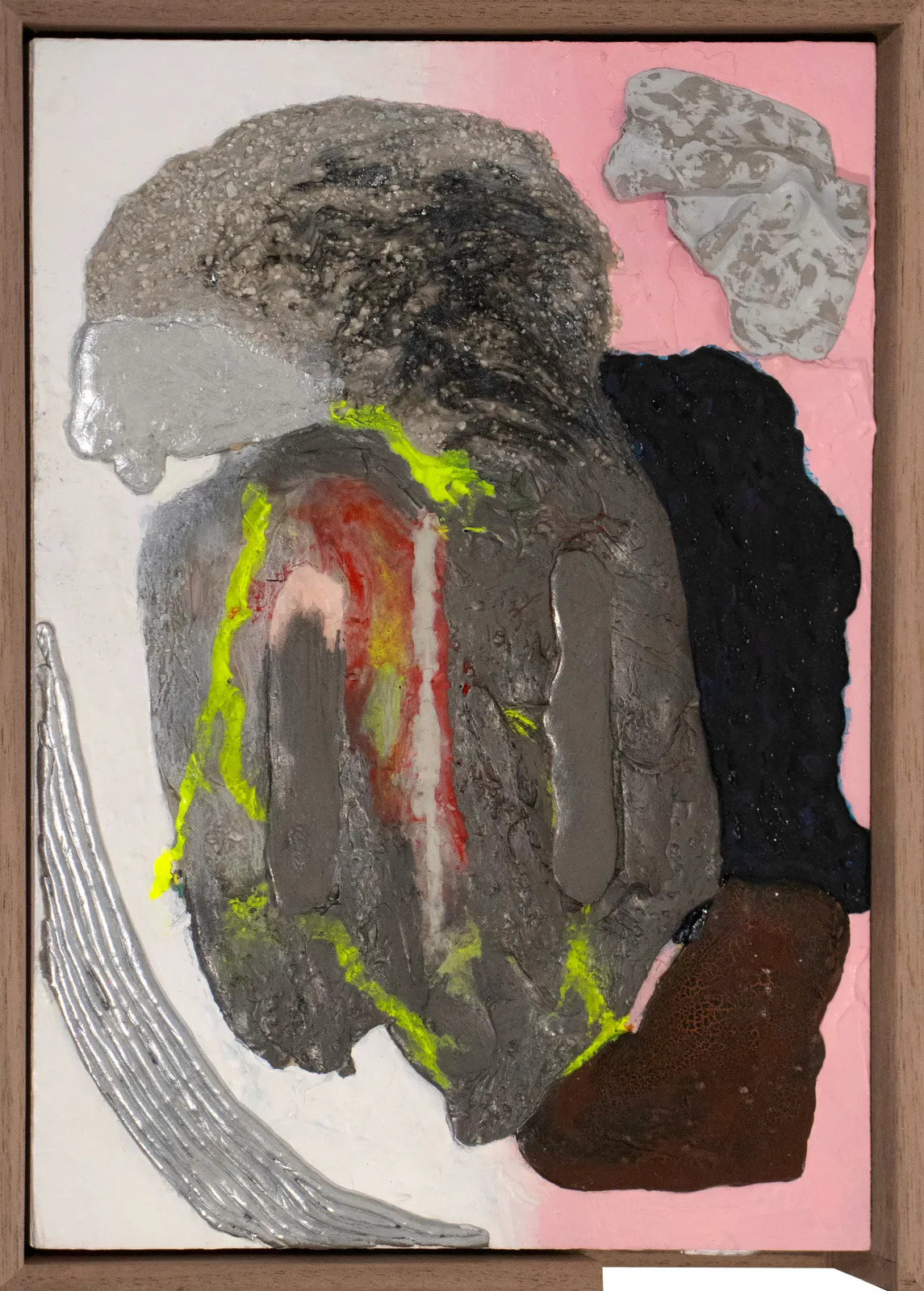
Hwang Sueyon, Rat, 2023, Acrylic on wooden panel, clay, acrylic medium gel, graphite, 25.7x17.7cm © Arario Gallery

Another series, ‘Clay Mind’, consists of sculptures that explore pictorial qualities through clay. Making use of the material’s characteristic softness, Hwang creates a physical phenomenon in which the tactile qualities of surfaces that are pressed and rubbed, along with the traces of her sustained physical engagement, are directly revealed on the surface.
 
At the same time, the layering of clay brings pictorial and sculptural elements into coexistence, while juxtaposing the material’s physical solidity with its visual fragility. Through these contrasts, the works amplify a distinctive sense of visual pleasure arising from their heterogeneous qualities.


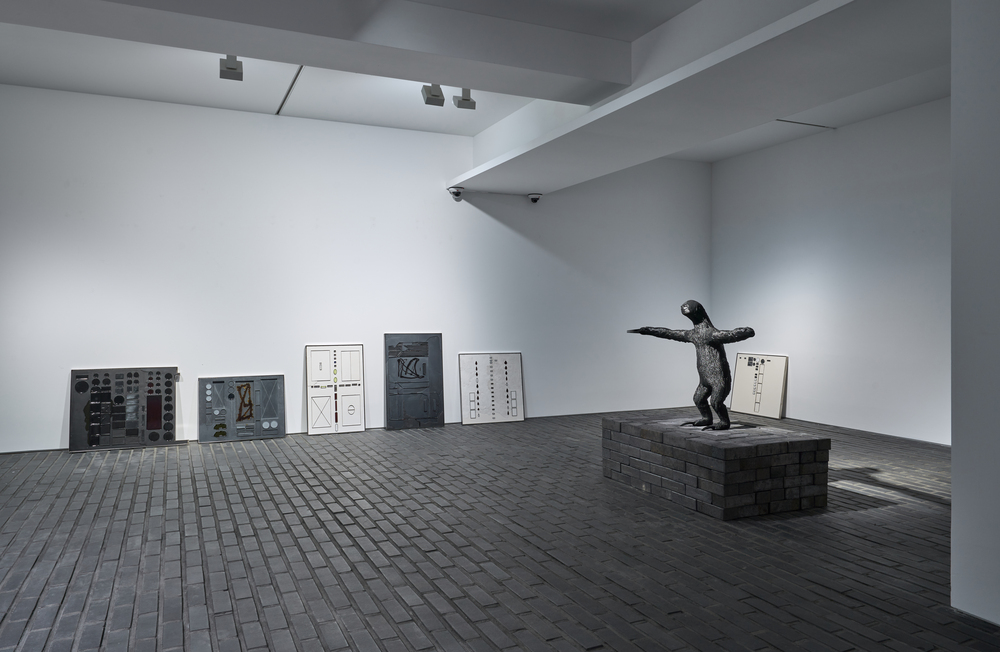
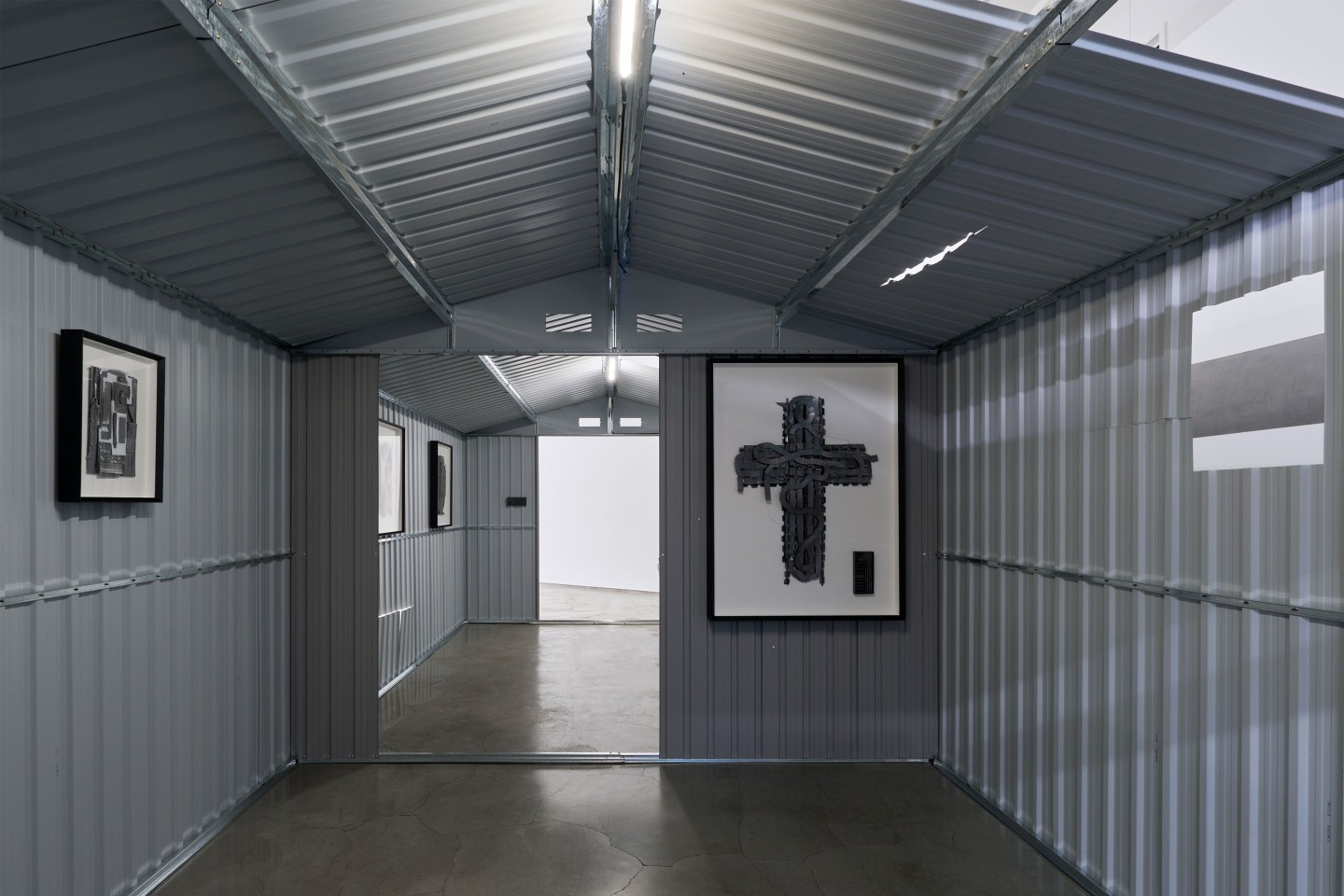
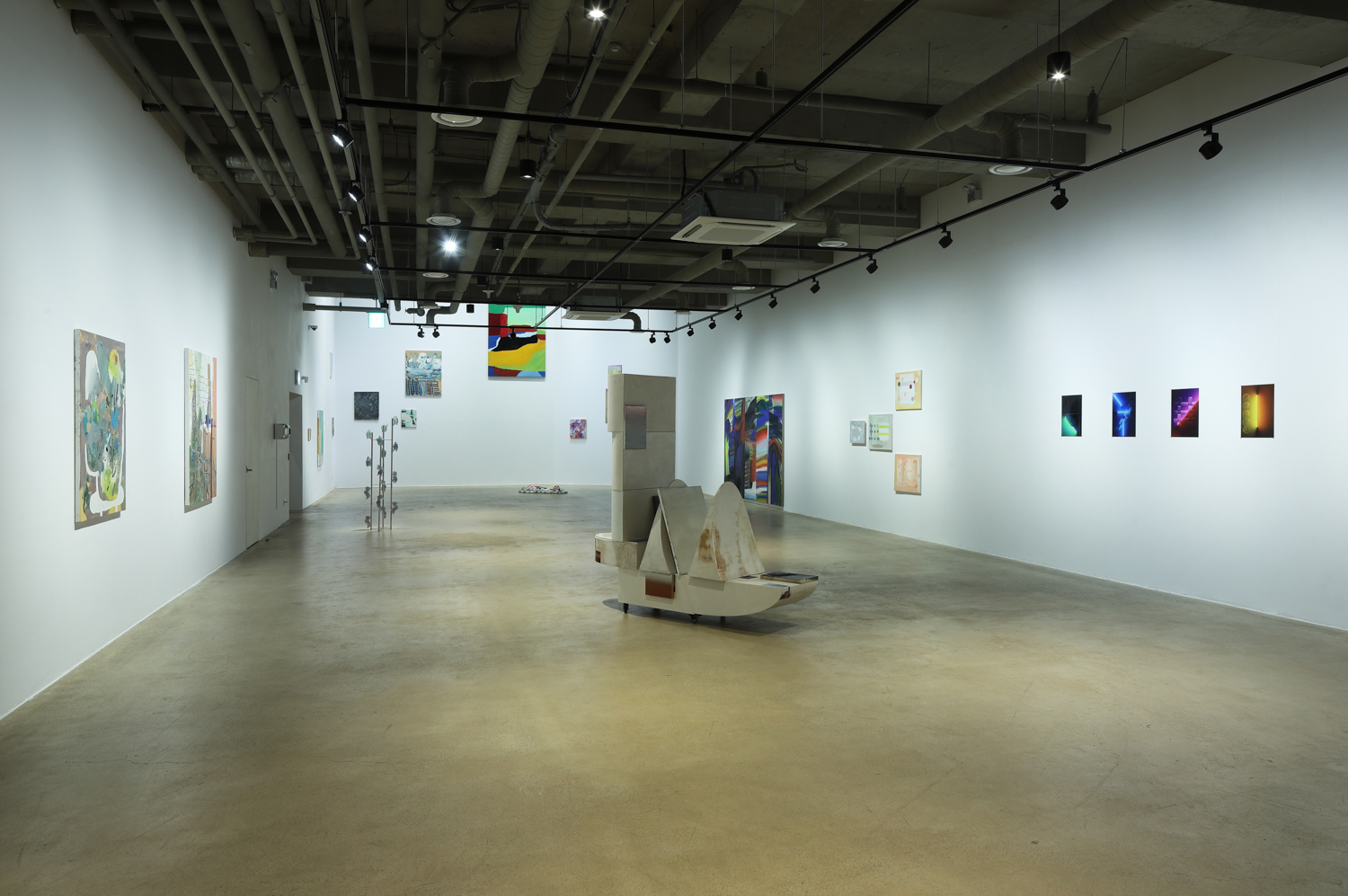
Installation view of 《Pastel, Bullet, Beautiful Fingers》 (G Gallery, 2024) © G Gallery

In this way, Hwang Sueyon has continued her sculptural experiments through an ongoing process of wrestling with, understanding, and accepting materials. By physically experiencing the properties of materials, she approaches her practice from a biological perspective while incorporating subtle emotions observed in everyday life, thereby expanding the contemporary possibilities of sculpture.

"For me, making is about understanding the ways in which something can exist and the conditions that make its existence possible. When the body comes into contact with the ground, friction inevitably occurs, both physically and socially, making the experience tactile and setting a force into motion.
 
Rather than starting from the essence of sculpture, I look at sculpture from the outside, considering the conditions that allow something to become sculpture and the points at which my own intervention takes place." (Hwang Sueyon, from an interview for 《Magma》 at Arario Gallery)


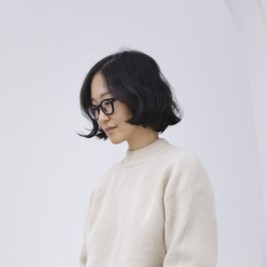
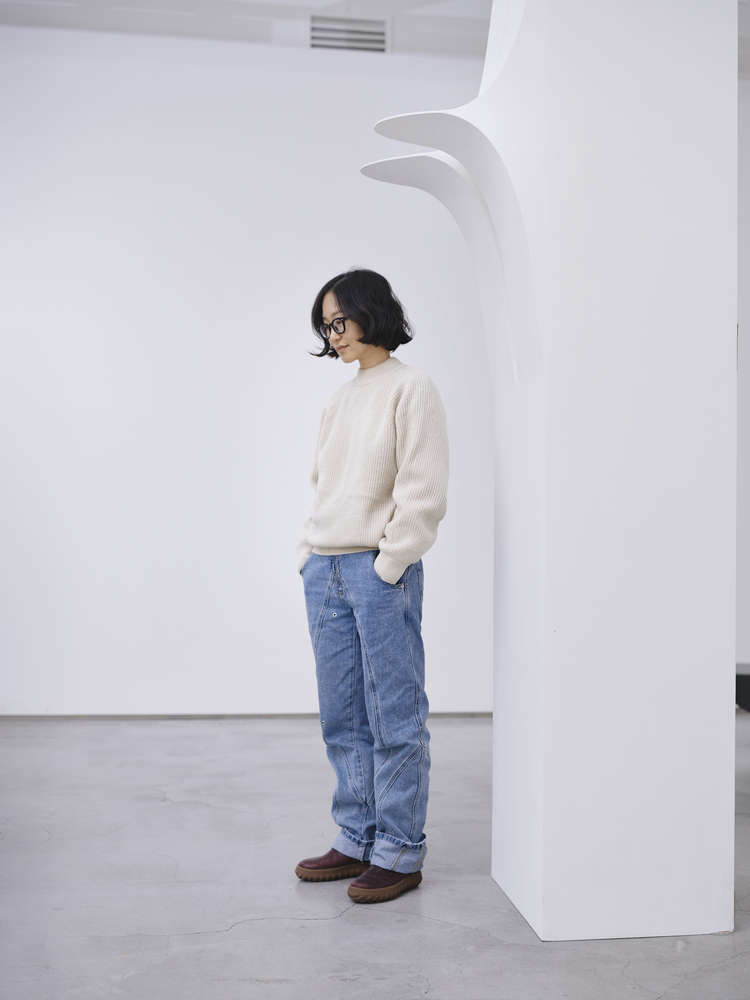
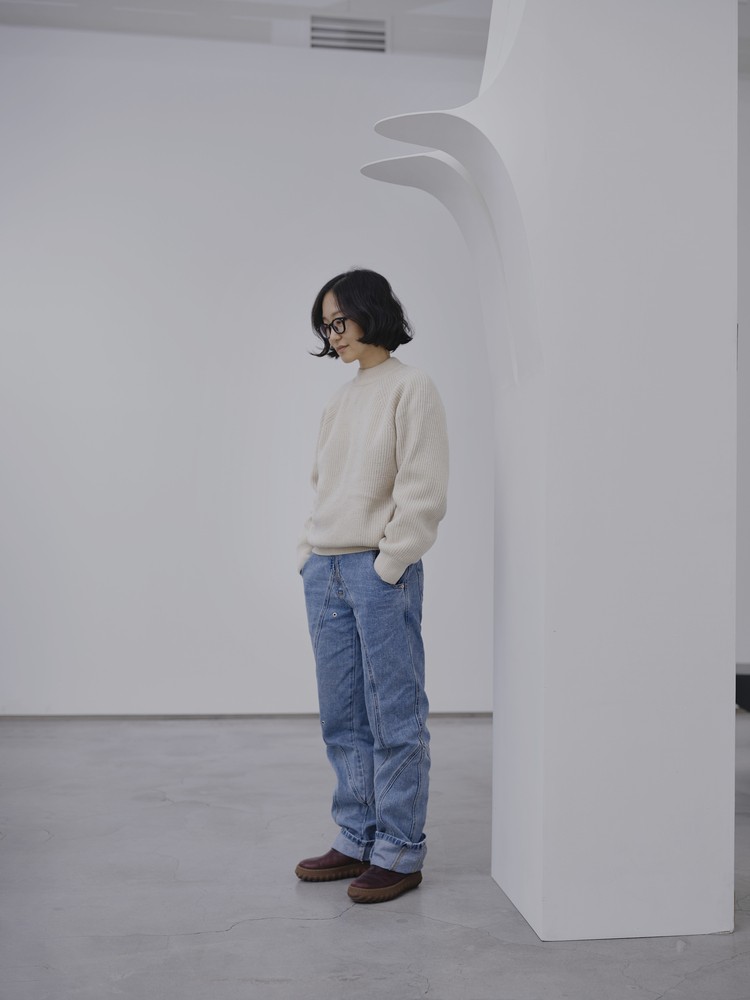
Artist Hwang Sueyon © Kiaf SEOUL

Hwang Sueyon graduated with a B.F.A. and M.F.A. from the Seoul National University of Science and Technology's Department of Fine Arts. Her recent solo exhibitions include 《Pastel, Bullet, Beautiful Fingers》 (G Gallery, Seoul, 2024), 《Magma》 (Arario Gallery, Seoul, 2024), 《Parts》 (Hakgojae Design | PROJECT SPACE, Seoul, 2021), among others.
 
She has also participated in numerous group exhibitions, including 《Comedy》 (d/p, Seoul, 2026), 《Provisional Forms》 (CYNC, Seoul, 2026), 《Where We Are Mirrored》 (Wooran 1, Seoul, 2026), 《Approximation》 (Whistle, Seoul, 2023), 《Sculptural Impulse》 (Buk-Seoul Museum of Art, Seoul, 2022), 《Dwindles to a Point and Vanishes》 (Art Sonje Center, Seoul, 2021), and 《Young Korean Artist 2019: Liquid Glass Sea》 (MMCA, Gwacheon, 2019).
 
Hwang has participated in residency programs including the Nanji Residency (2021) and DOOSAN Residency New York (2019). Her works are held in the collection of institutions including the Seoul Museum of Art.

References