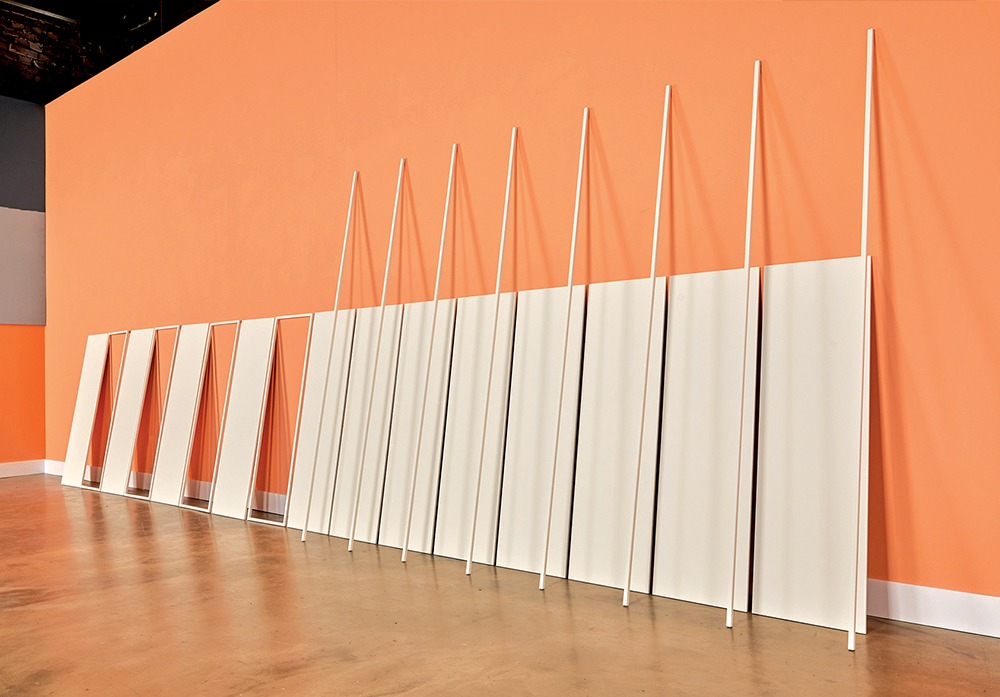
Choi Taehoon’s sculptures have long been regarded as experiments that examine the conditions through which sculpture as a medium comes into being. As an artist who “explores the possibilities of sculpture in earnest through sculptural interpretations of readymade objects,” his work has also been described as part of “a younger generation at the forefront of Korean sculpture, heralding the return of sculpture.”
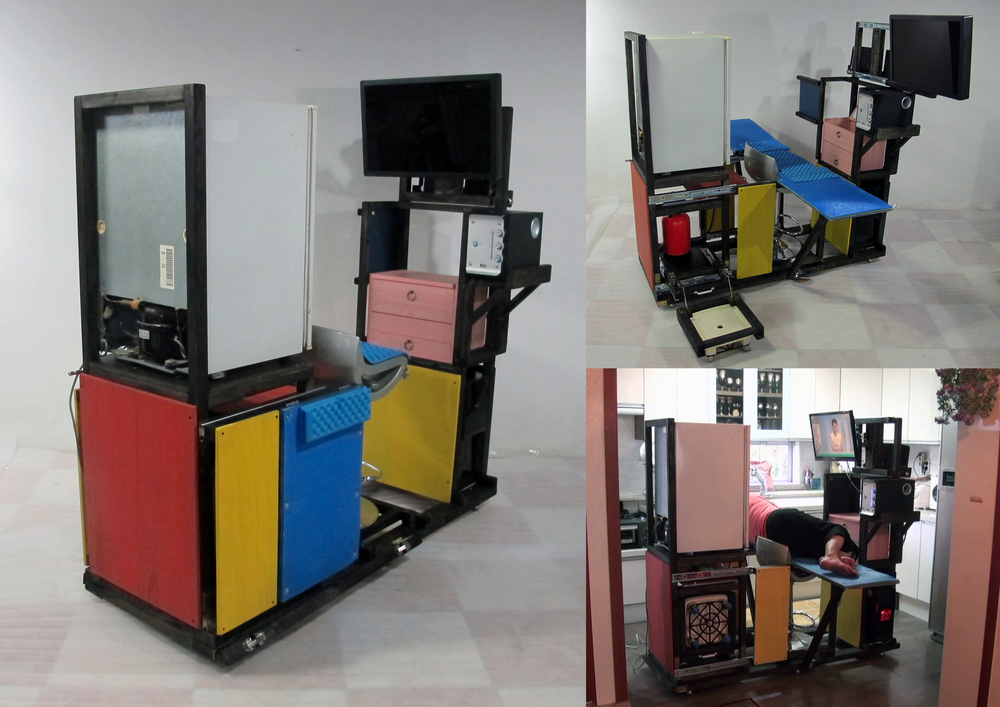
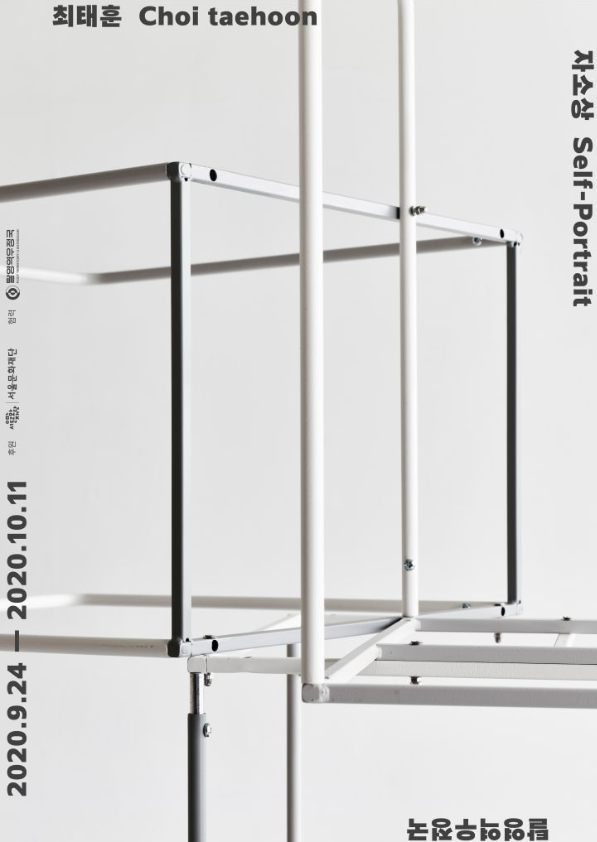
His practice, which retrieves the creative value of sculpture’s ultimate ‘uselessness’ from mass-produced products designed for specific purposes, has undergone several distinct turning points over the years. Beginning in 2013, Choi produced hyper-functional object-sculptures such as Mother’s Multitasking Device, in which existing household objects were excessively combined.
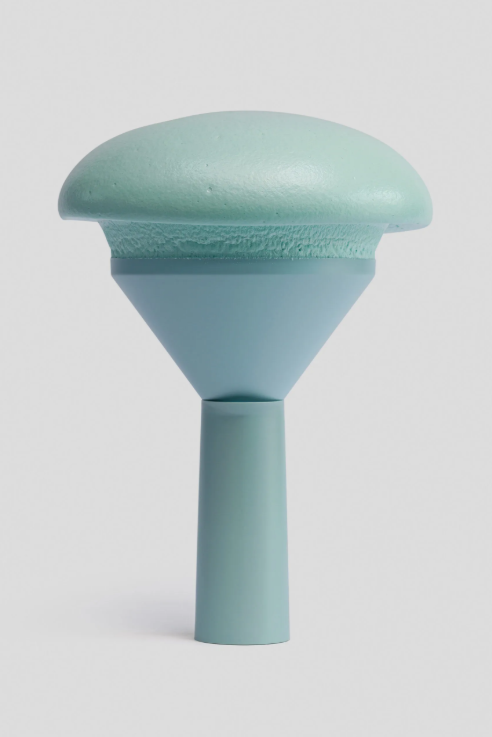
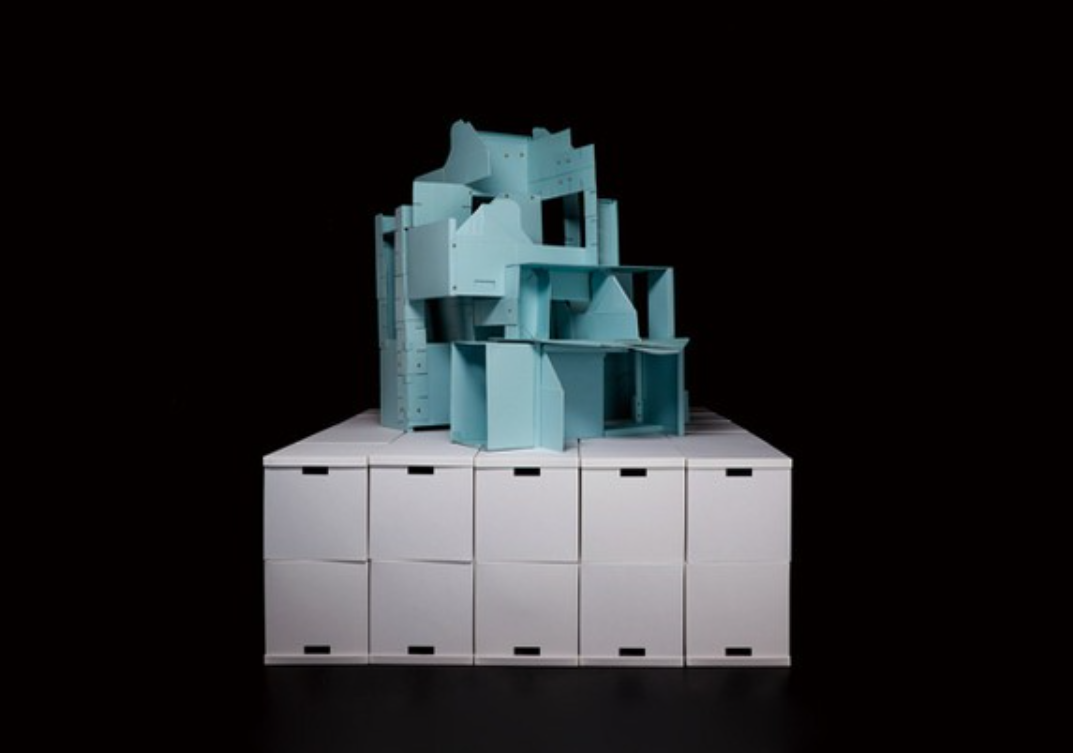
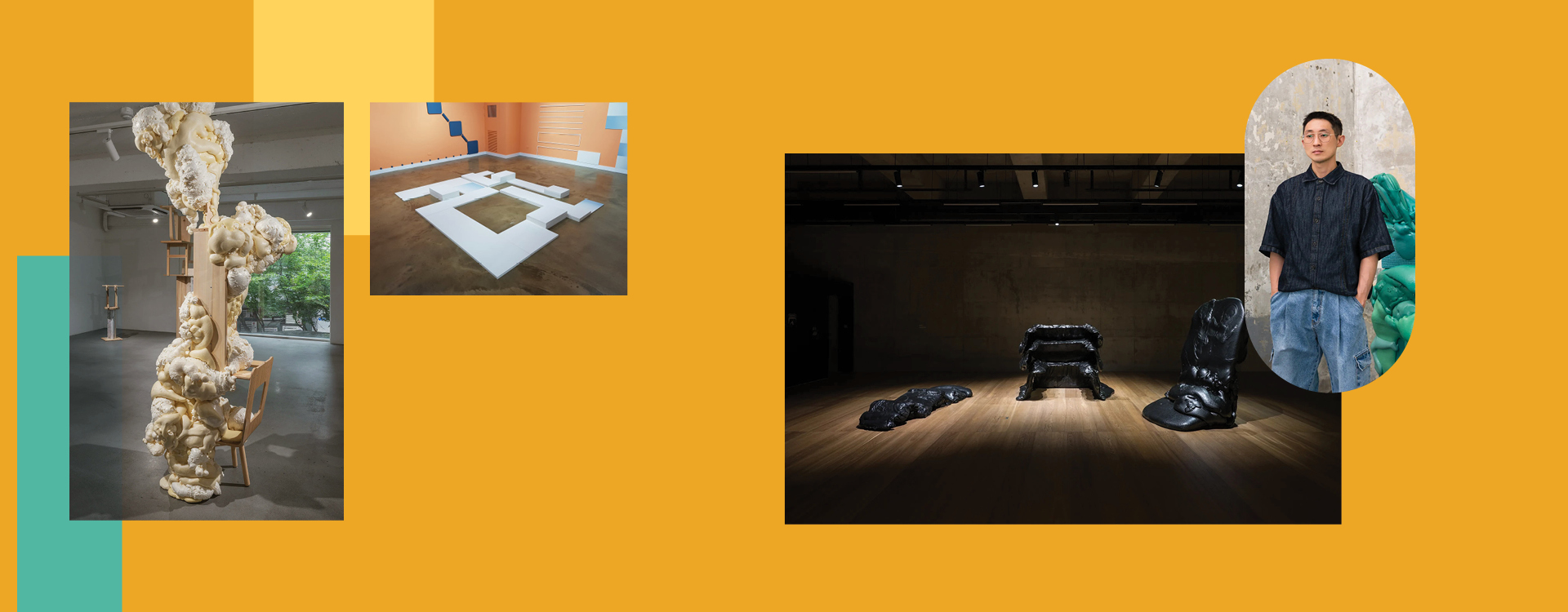
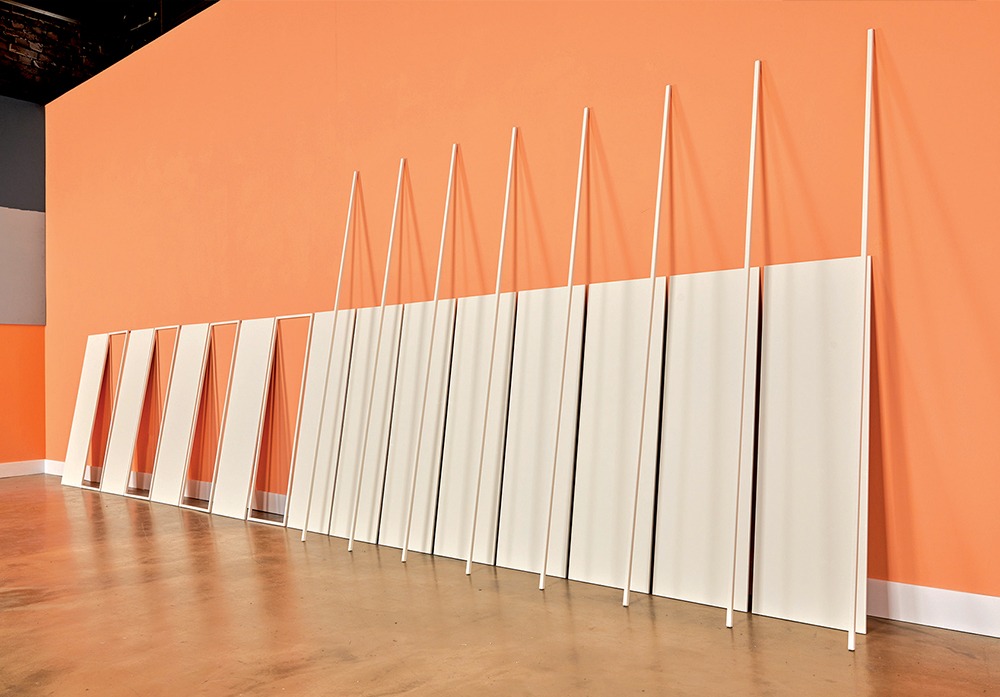
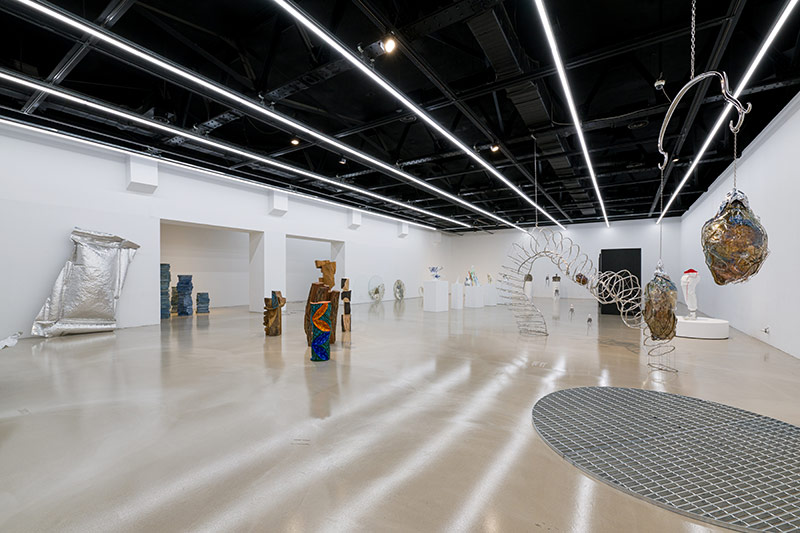
Extending this interest, his 2018 solo exhibition 《Form Follows Form》 presented sculptural experiments in productive transformation—or “liberation”—through what he called “DIY hacking,” in which mass-produced products such as IKEA furniture, marketed around the idea of DIY assembly, were converted into artworks.
The “minimum conditions” and self-imposed rules of DIY hacking were as follows: “① It must stand on its own. ② It must look different from every direction. ③ Its degree of finish must remain consistent from all viewpoints. ④ The object must not be reprocessed through cutting, bending, or other alterations.”
By adopting “the grammar of the forms and distribution systems of ready-made products” while betraying the intentions of that grammar, these ‘hacked sculptures’ move back and forth between the similarities and differences of products and artworks, revealing the overlapping state of the two as aesthetic objects.
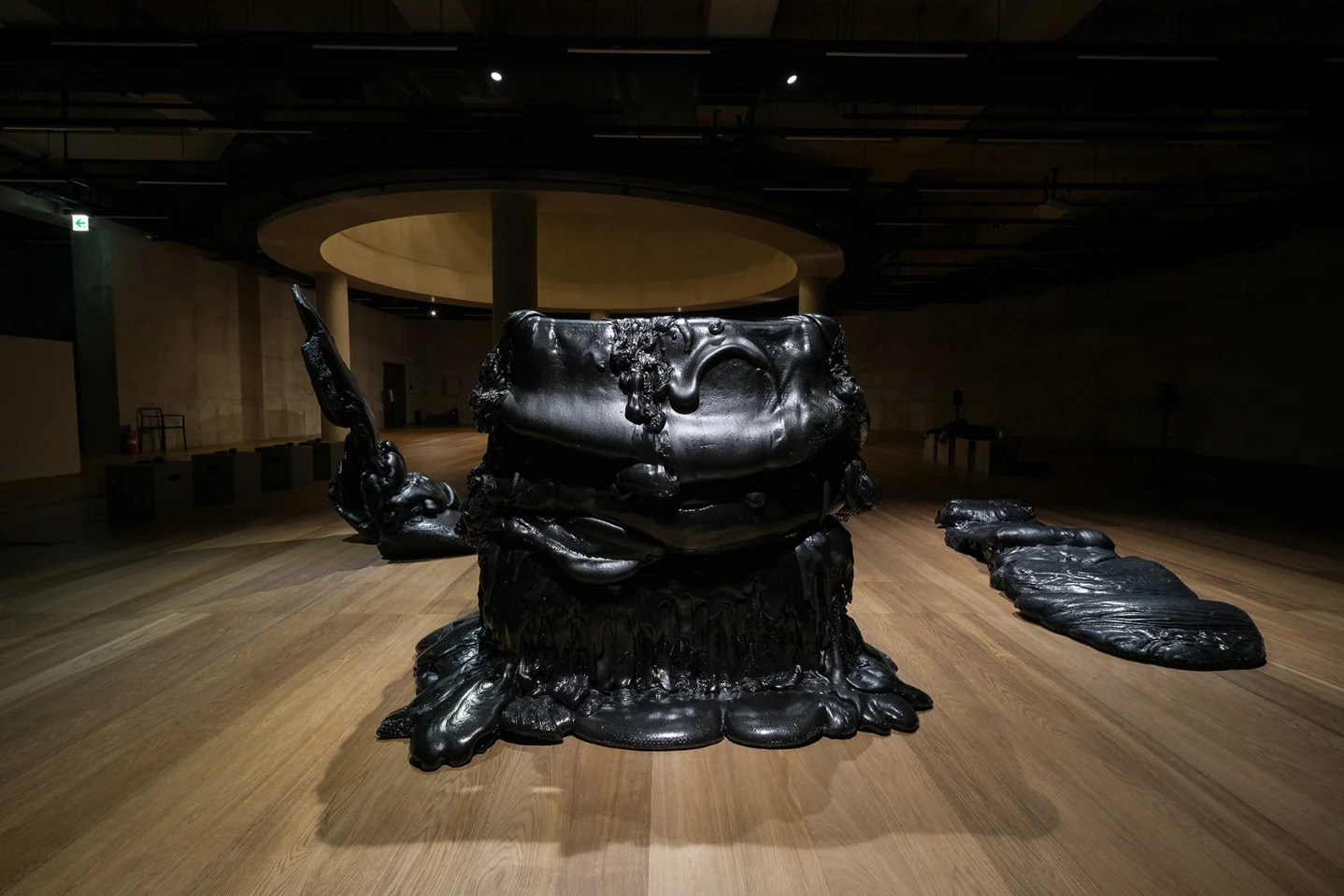
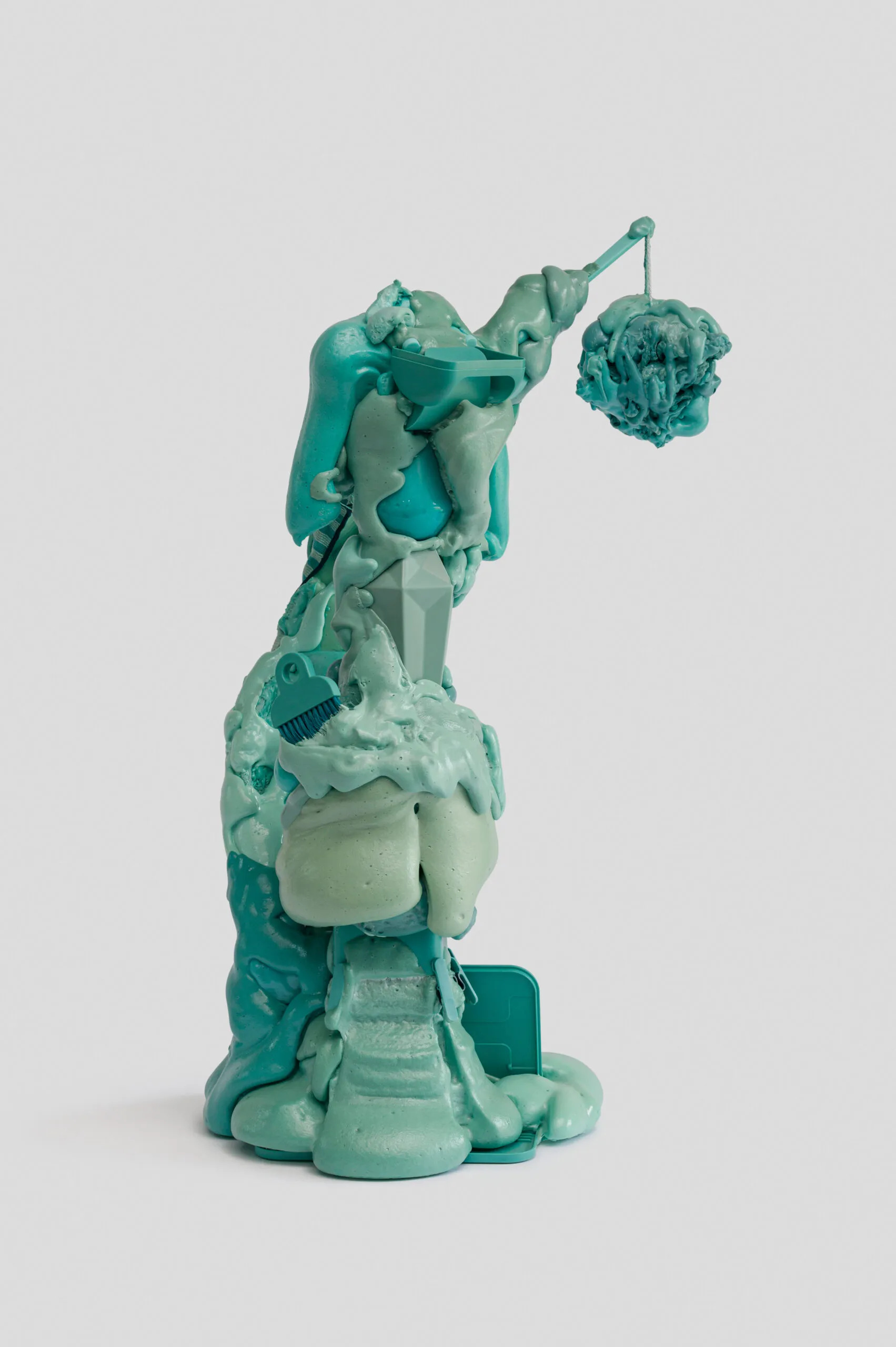
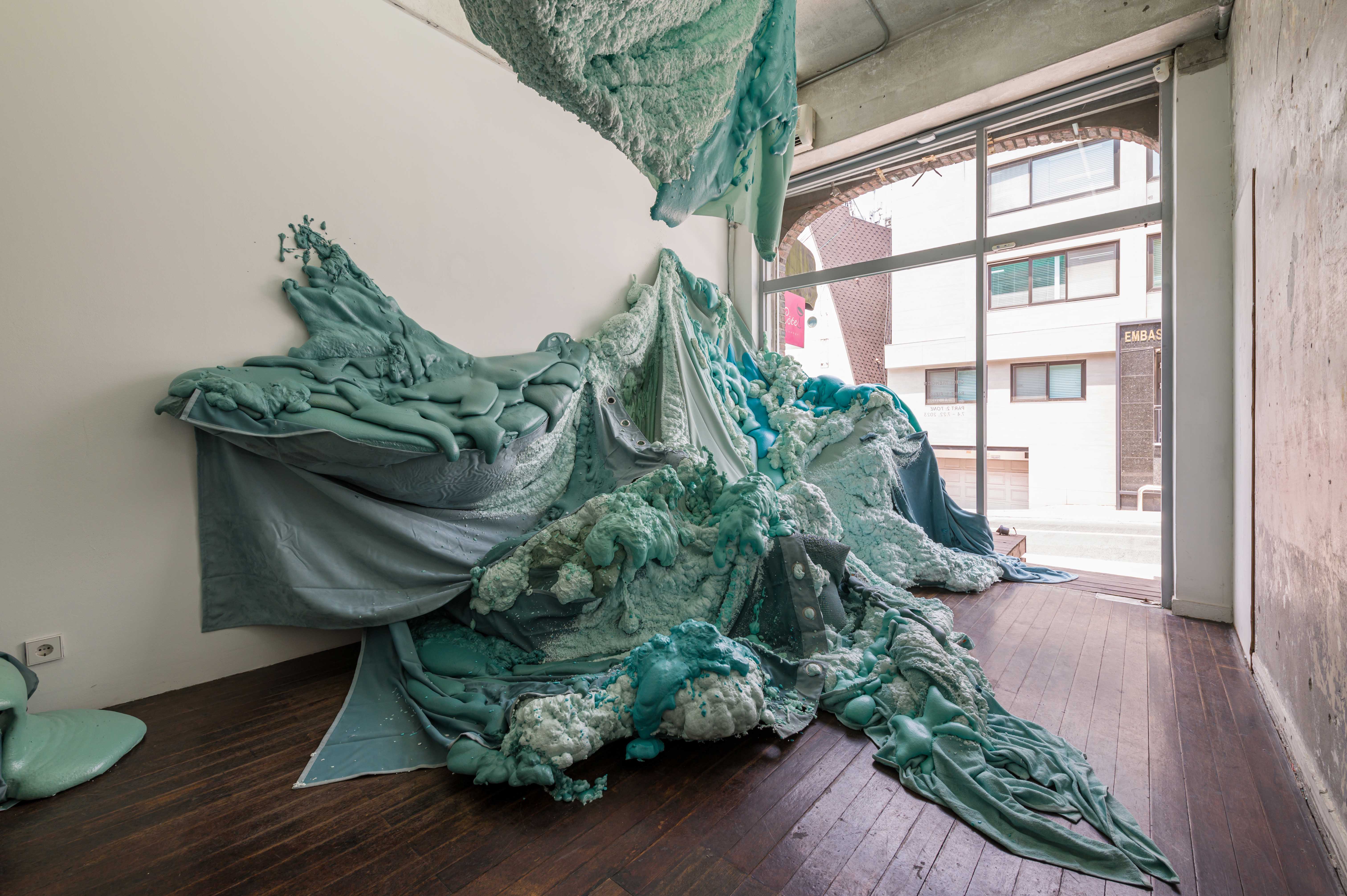
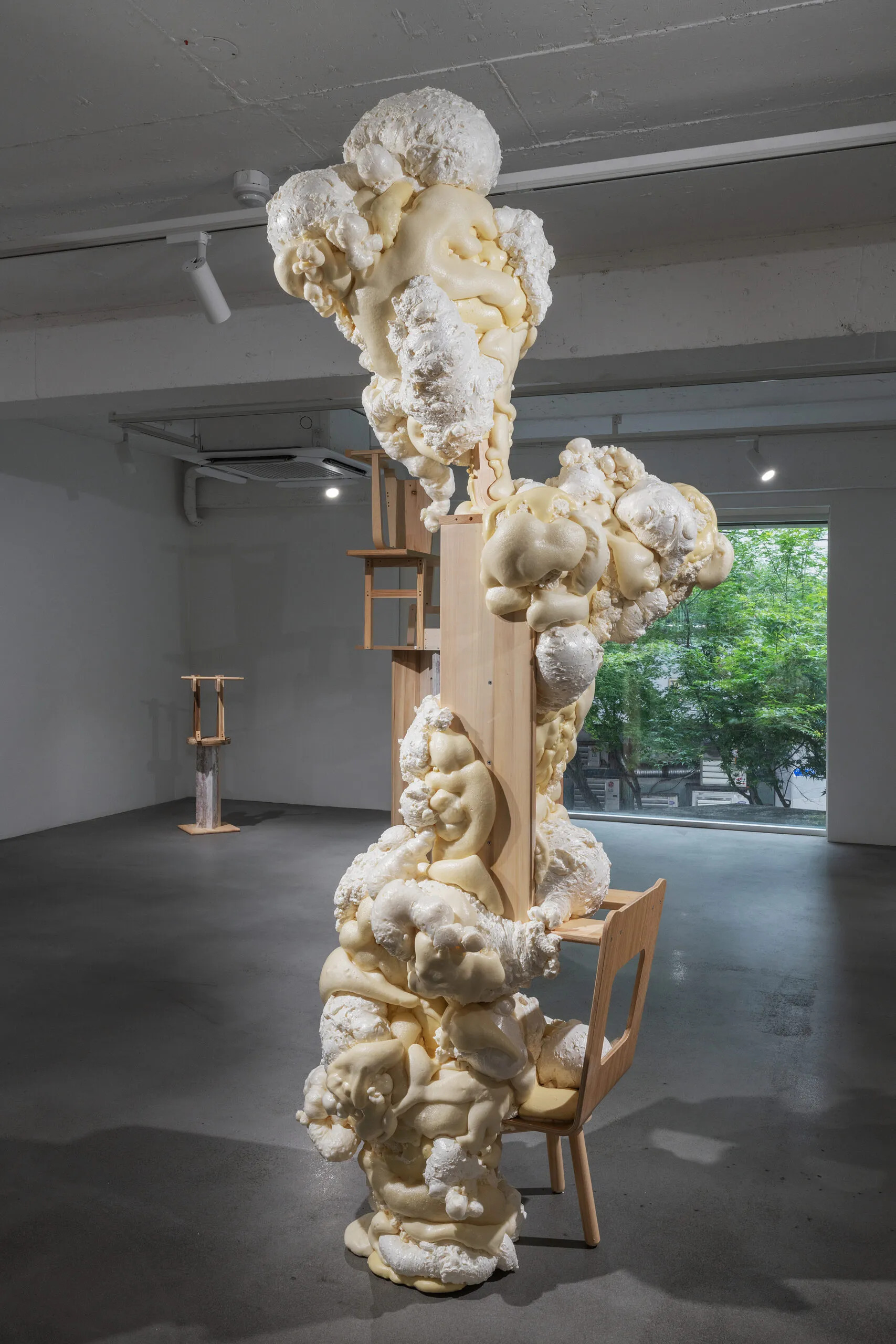
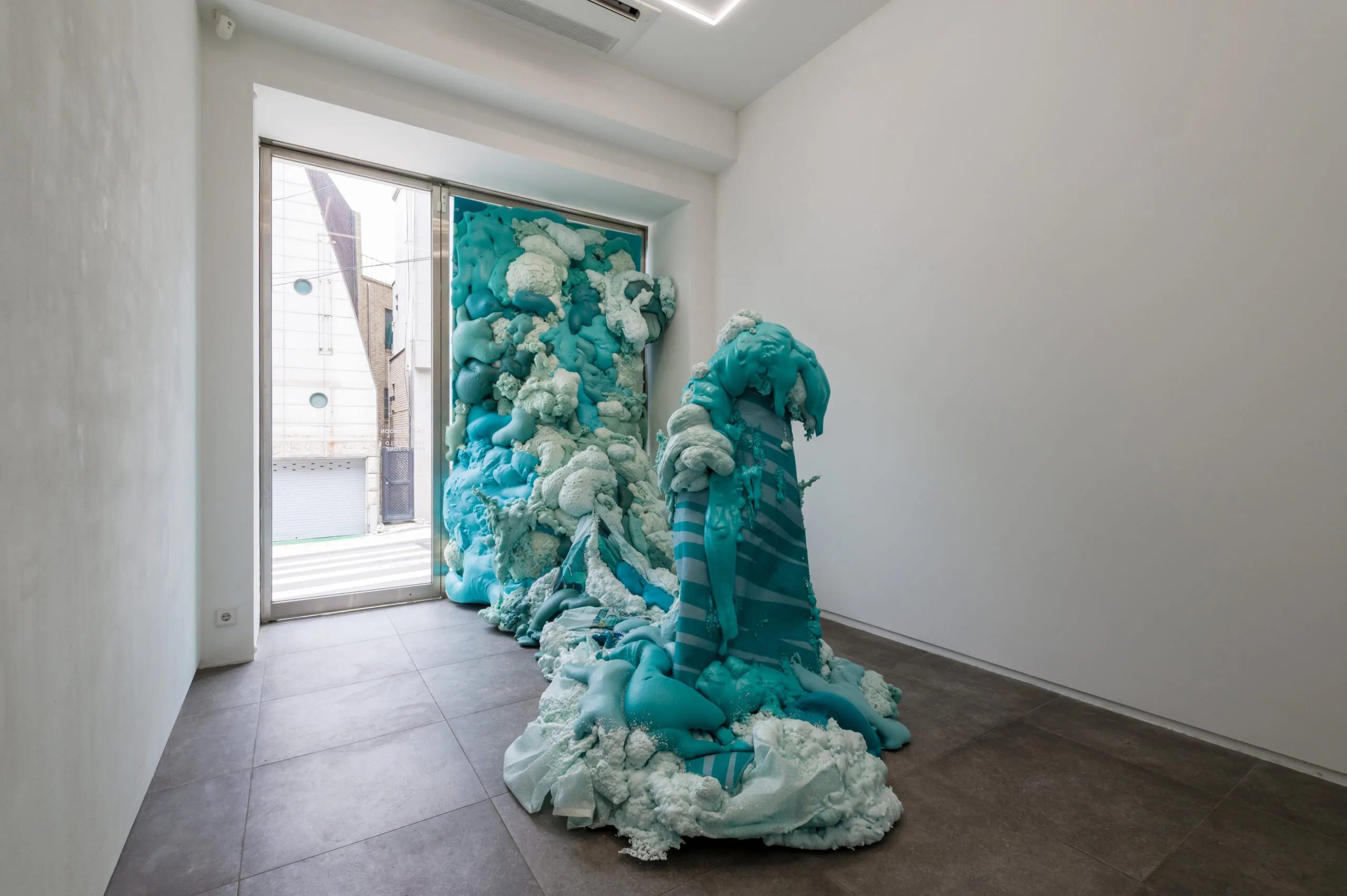
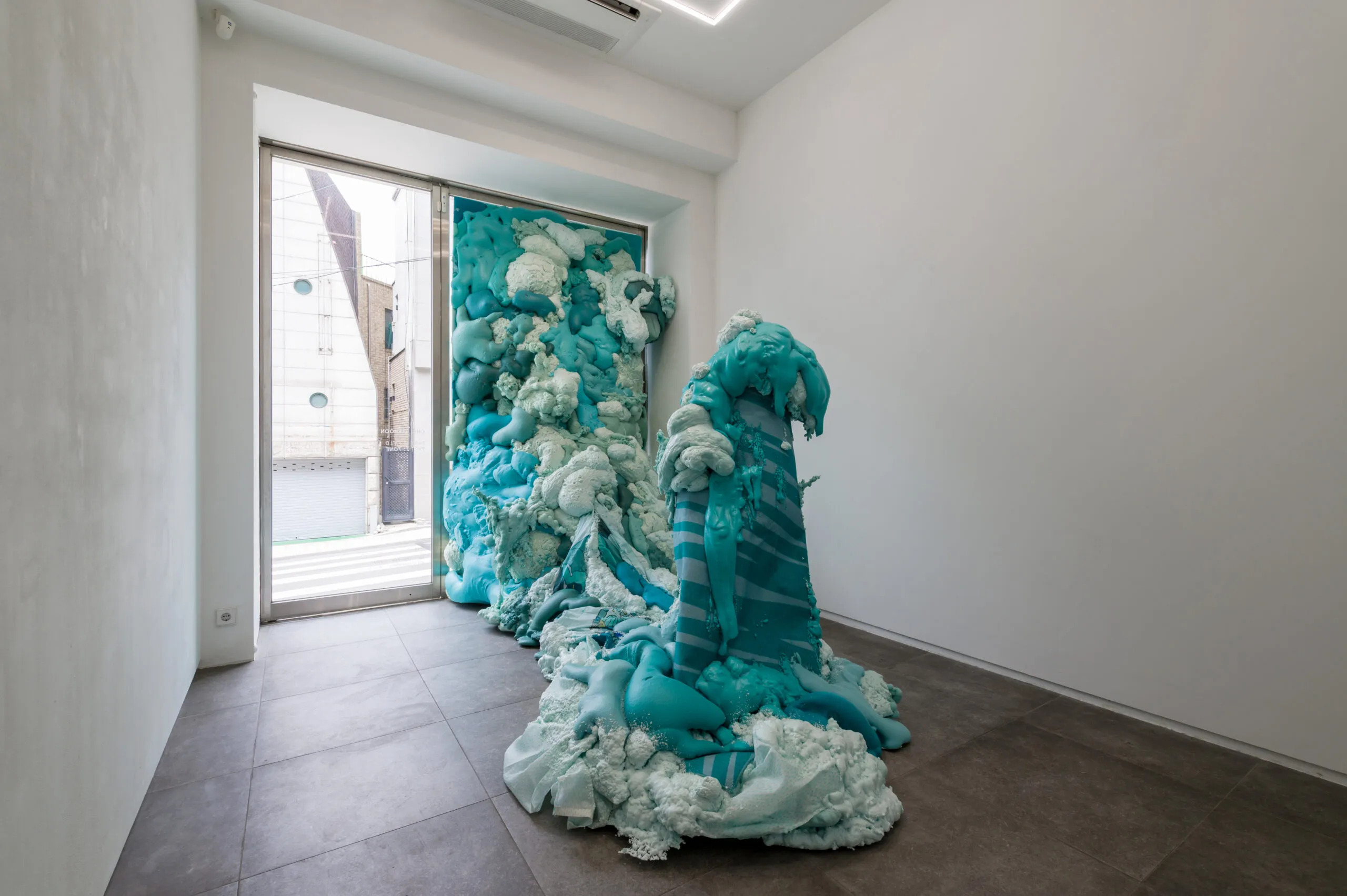
From 2021 onward, however, Choi shifted toward the ‘SAL’ series, a form of “modeling that imagines beyond functionalism” through heterogeneous combinations of disparate objects and materials. In particular, in 《FIELD》, the first part of a two-part solo exhibition held in 2023, he made extensive use of expanding urethane foam, commonly employed as an architectural interior material, to create an artificial nature that seemed to swell by using the exhibition space itself as a host.
The “will” and “vitality” inherent in urethane foam led the artist to embrace “contingent yet quasi-autonomous forms” that emerged naturally through the material’s stages of curing. Compared with his earlier works, which followed rules and logic, this shift in some sense transferred control of the production process almost entirely to the material. It is also reflected in his statement that “these days, I begin my work more intuitively.”
Perhaps Choi Taehoon, both as an artist and an individual, experienced chance encounters and chemical reactions with changes and transitions arising naturally in life—much as IKEA furniture and urethane foam form hybrid combinations like an “alternative family.” One example would be the way his curatorial and production work on 《ZIP》, an exhibition concerning women and sculpture/sculptors, led to the idea for the ‘Support’ (2025) series presented in 《Saengsaeng Hwahwa: Hwadu》.
Through his role as curator of that exhibition, Choi came to recognize the importance of the various agents involved in exhibition production and the fact that the exhibition as an end result depends upon the invisible, peripheral, and reproductive labor of these agents—that is, its ‘collaborators.’ It is a moment in which the center, the exhibition-result, exchanges positions with the periphery, the collaborative process.
An exhibition, an artwork, or a result can never ‘stand upright’ or even exist without those elements that are sacrificed(!) on its behalf—an arrangement that also happens to be one of sculpture’s oldest structural principles. Yet this perspective is not an entirely new discovery; it connects directly to Choi’s long-standing interest in process.
He has already stated, “What matters in my work is not realizing a particular form, but the process itself.” His attempt to reveal process rather than final form through the work recalls the movement known as process art, associated with artists such as Robert Morris. Emerging in opposition to Minimalism’s emphasis on completed, factory-made objects, process art positioned natural factors—including the inherent properties of materials and physical laws—as essential principles in the formation of an artwork.
In his 1968 text “Anti Form,” Robert Morris advocated for “the visibility of process,” arguing that an artwork could only become “positive” through the exploration and use of means such as “tools, methods of making, and the nature of materials,” rather than through an idealized end. From this perspective, the chance connections, combinations, and ‘collaborations’ between mutable materials such as wax, felt, plastic, and urethane foam and improvised actions such as “cutting, hanging, and dropping” create the conditions in which a work can be understood as “making itself.”
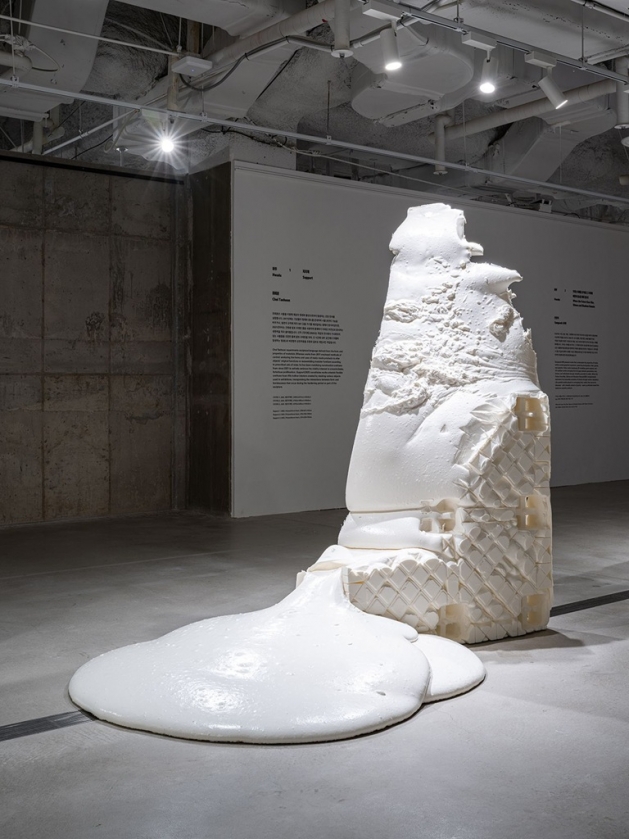
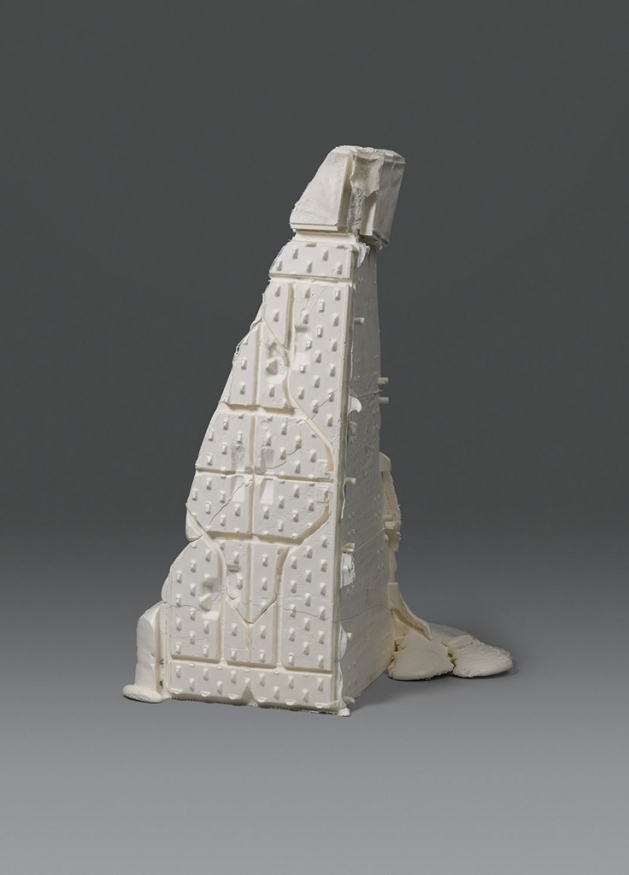
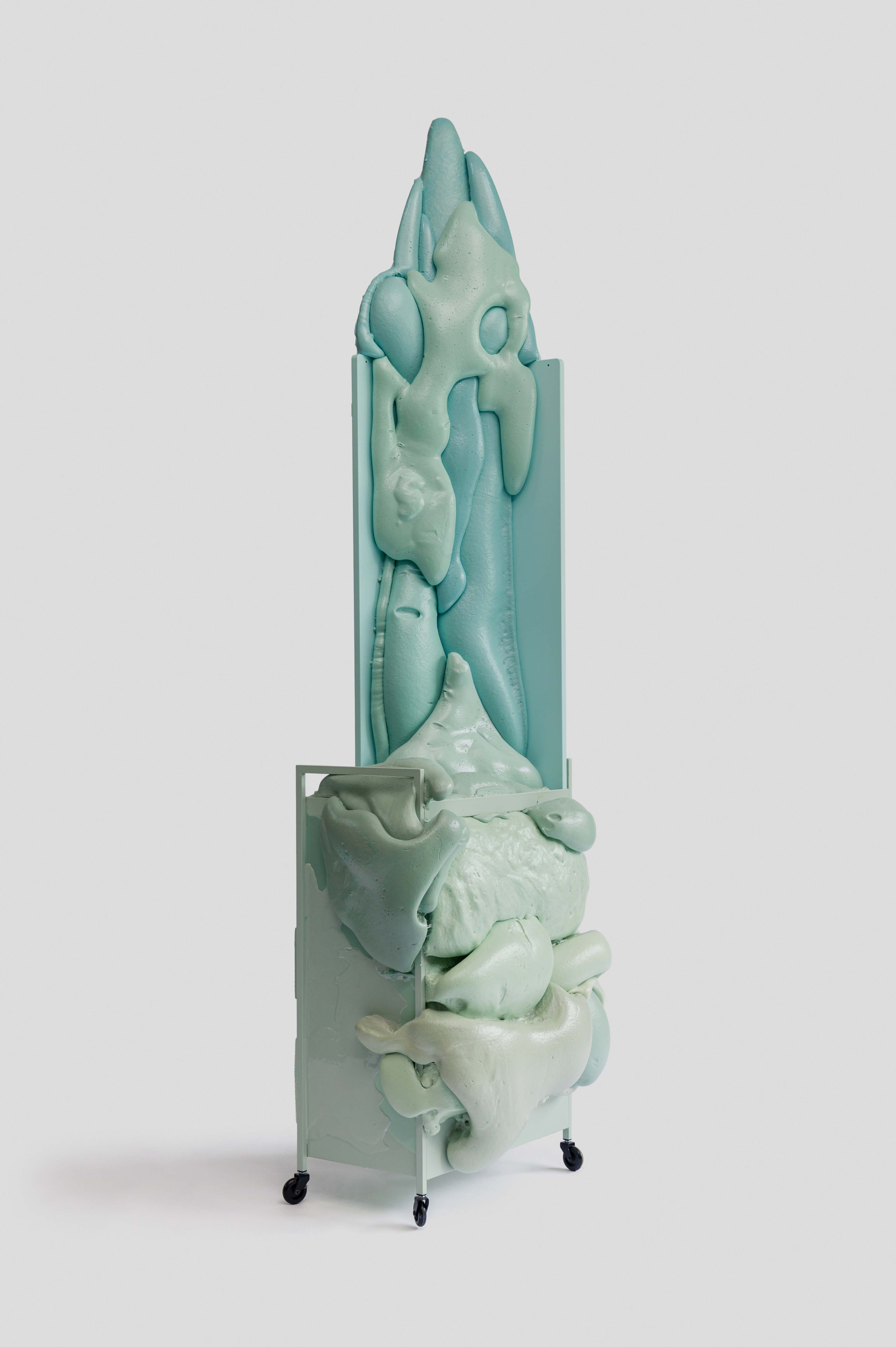
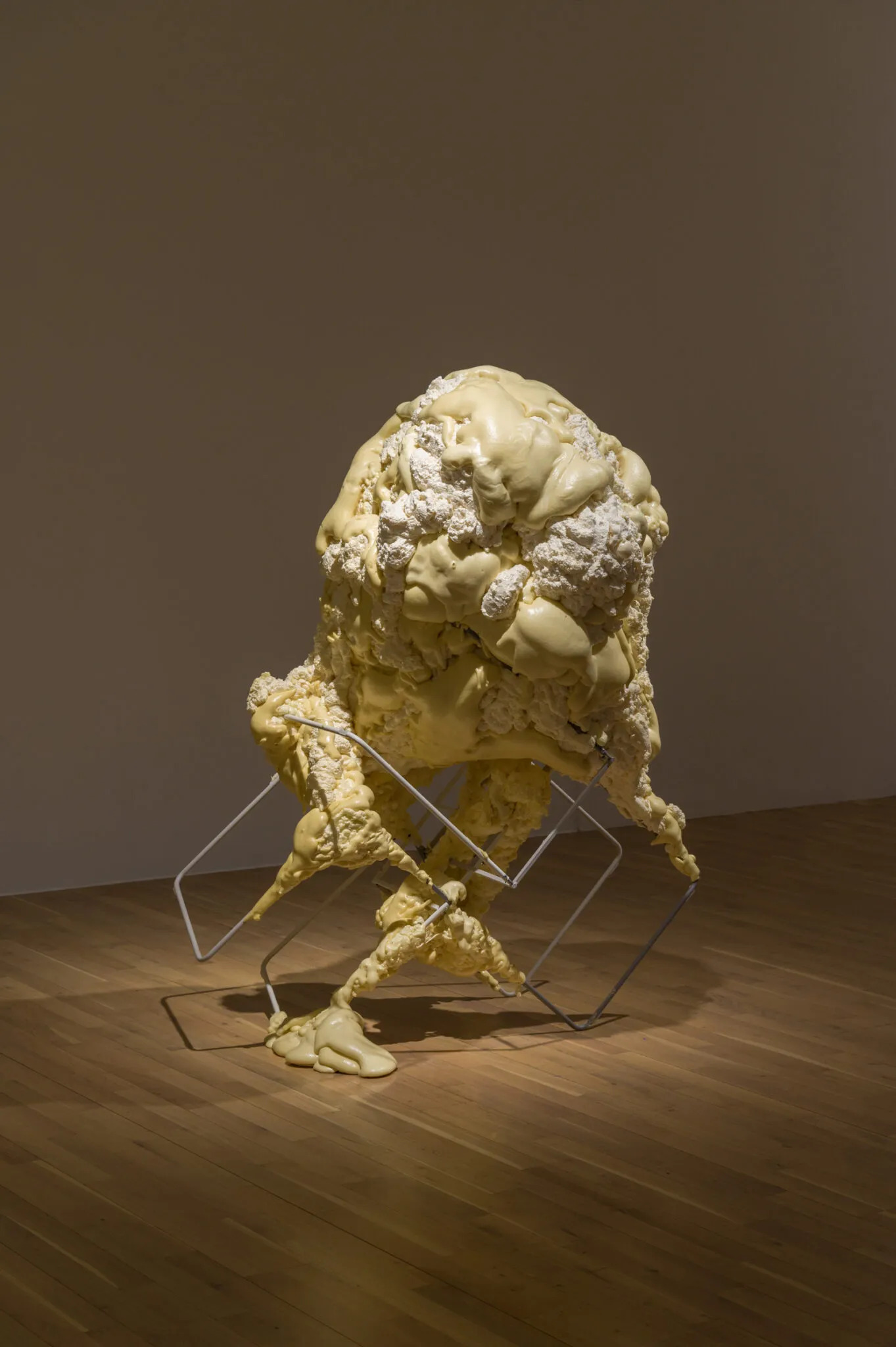
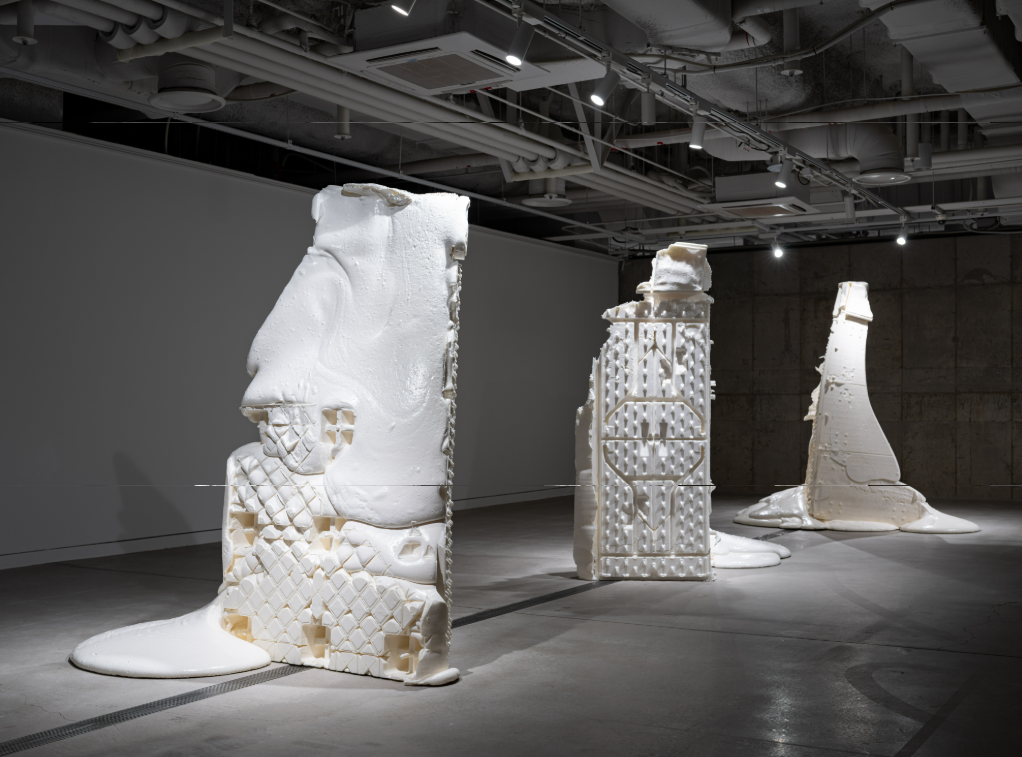
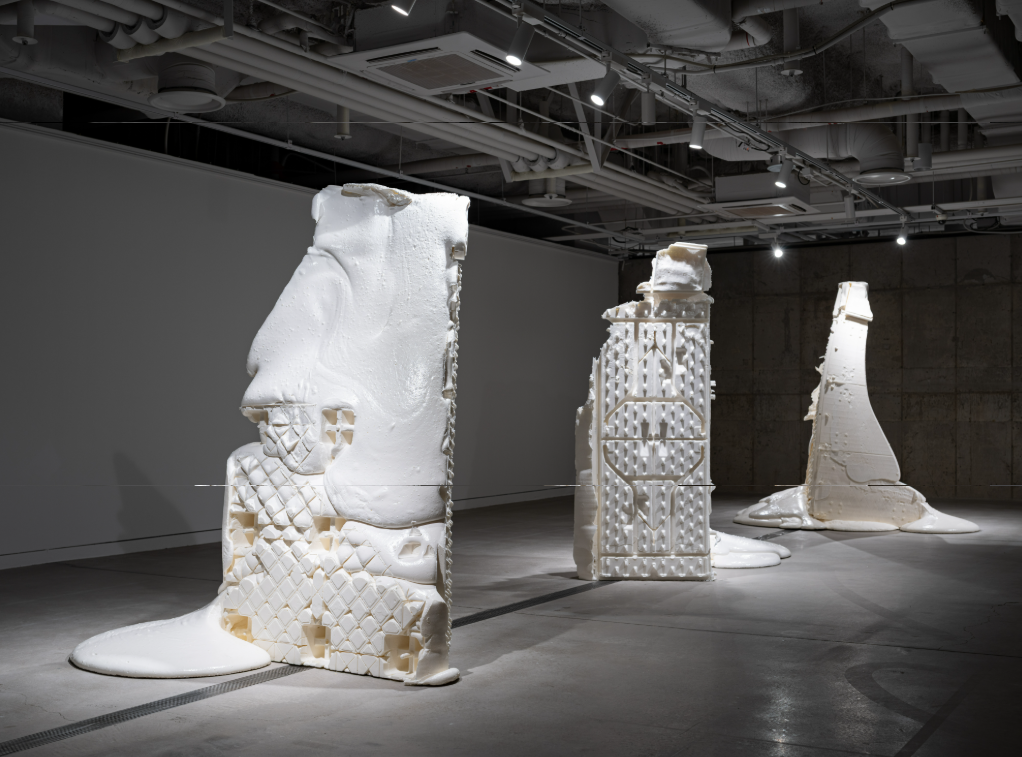
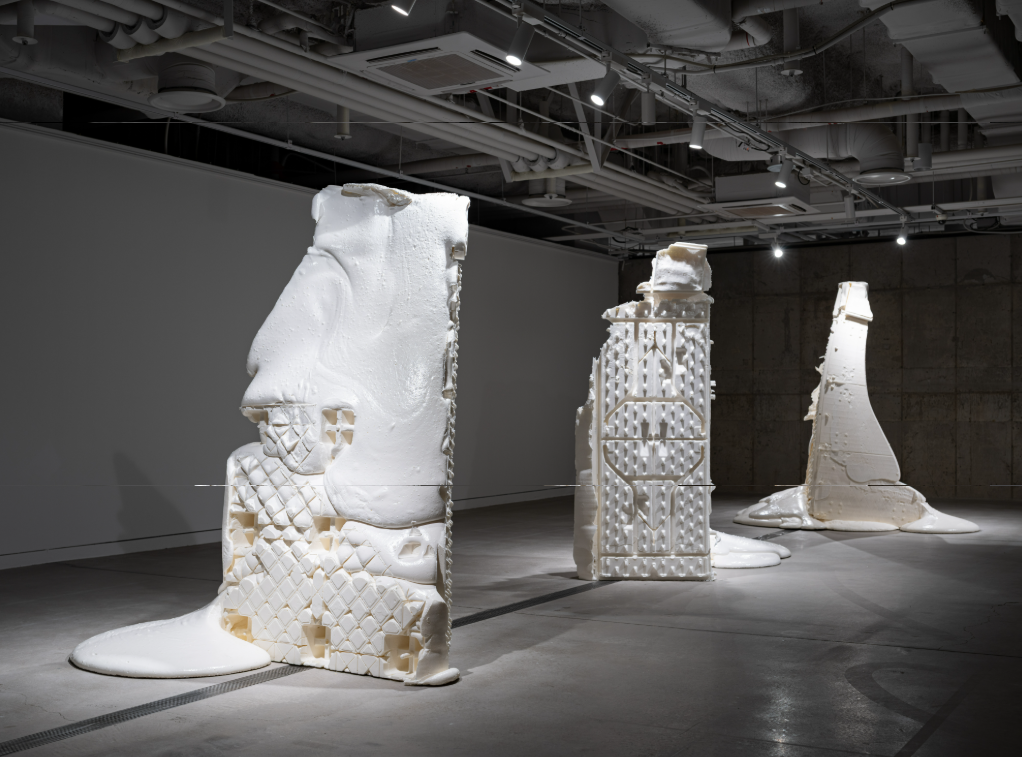
Now let us turn to the ‘Support’ series. Choi’s white, bent sculptures, which stand only ‘halfway’ upright, are made using tools that the artist ordinarily employs in his studio—his material collaborators—as molds, with liquid flexible urethane poured from above in a process of ‘pouring.’ This technique recalls the three-dimensional paintings of Lynda Benglis, an artist often associated with process art who sought to discover and excavate nature within the artificial medium of sculpture.
Unlike the additive techniques of disassembly and reassembly found in Choi’s earlier ‘SAL’ series, the ‘Support’ works rely solely on the physical properties of their material and on a form of ‘inevitable contingency’ generated through the mutual entanglement, interaction, and contact of heterogeneous relations. Liquid flexible urethane is notoriously difficult to handle because it rapidly swells as if exploding during the molding stage and then cures into a soft state resembling “sponge and rubber,” making the final form difficult either to predict or control.
What can be considered in advance are merely the conditions—such as mixing ratios and appropriate temperature—that allow the material to fully realize its own possibilities. In this process, the artist retreats into the position of a ‘collaborator’ who creates and coordinates the surrounding conditions.
In a sense, this is a decision to demote himself to a means within the artwork. He makes himself equivalent to the everyday objects of studio labor—“tables, ladders, carts, pallets”—tools that may not seem exceptional but are indispensable to the production of the work. In other words, there is an identification with peripheral, invisible, and impersonal entities.
As the artist has clearly explained, these tools possess an ontological condition in which they remain “unseen” because they are “shed during the final process” of producing the “result,” functioning merely as ‘supports’ for that result. Furthermore, in contrast to a distinctive material such as urethane, which openly asserts itself and becomes the physical, material, and medium-specific foundation of the work, tools dissolve into the time and space of the working process and remain as a kind of ‘vanishing mediator.’
In Choi Taehoon’s sculptures, their absence is temporarily captured and exposed to the world through object patterns imprinted indexically onto the surface of the sculpture and through the volumes of urethane that overflow through gaps in the molds before hardening. The sculptures resemble white, soft monuments made to remember and mourn them—pitiful and endearing at once.
Choi Taehoon has consistently pursued sculptural experiments that question the boundaries and distinctions between product and artwork, artificial and natural, center and periphery, exterior and interior, while reversing their respective positions. Through these new works, and through the analogy of ‘collaborators,’ he articulates more clearly his relational orientation and attitude toward both human and nonhuman agents. Among the many turning points that may appear along the path ahead, this seems a particularly significant one—especially in a life lived in the company of sculpture.