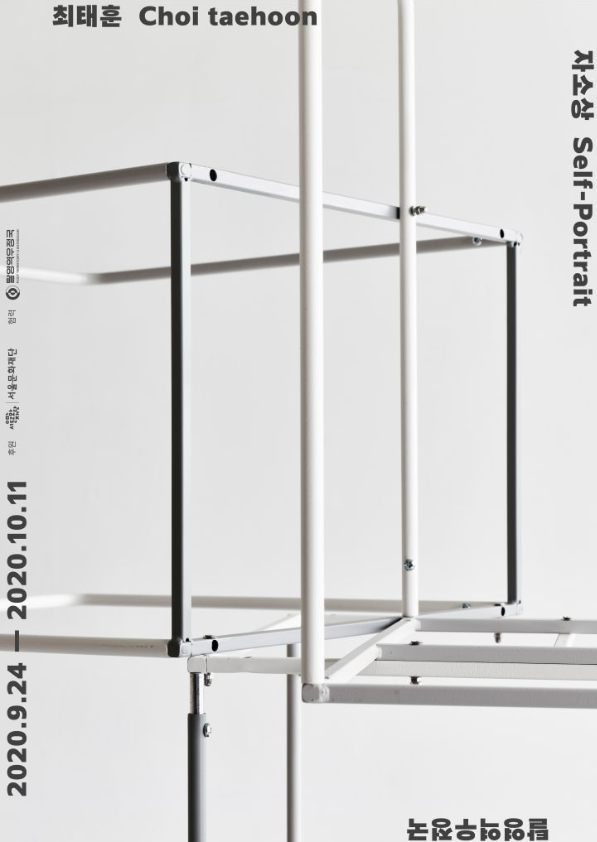
Choi Taehoon (b. 1982) has explored the possibilities of objects beyond the logic of conventional use and function by intervening in the relationships and forces that operate between objects and humans. Moving beyond the purposes and functions assigned to objects for human convenience, his practice seeks new forms of reciprocity and reconfigures our relationship with objects through sculptural practice.


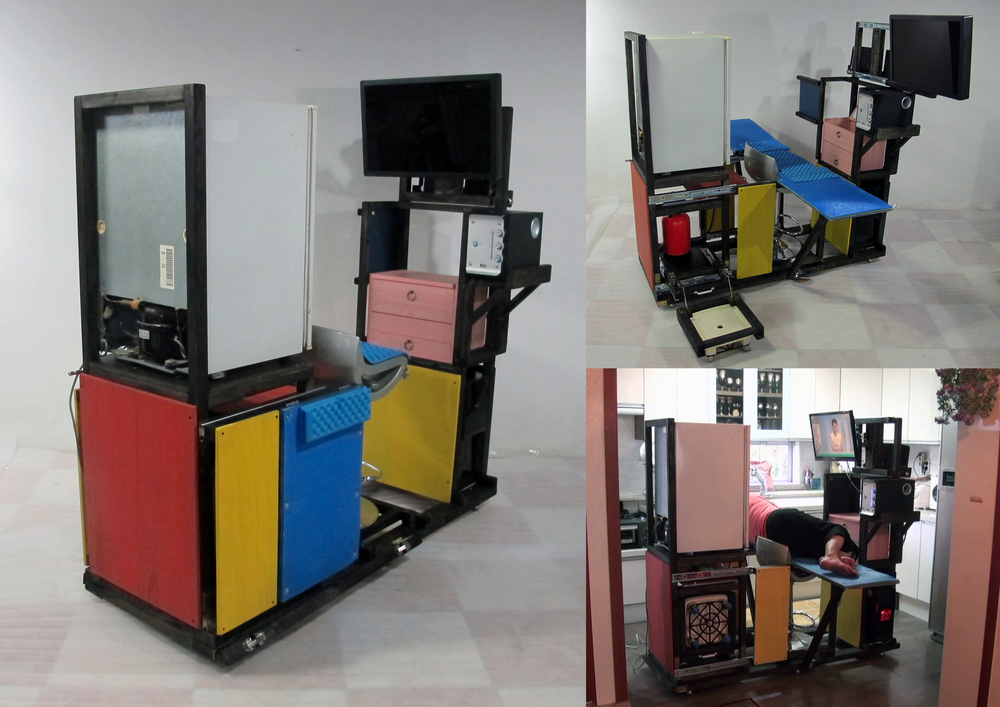
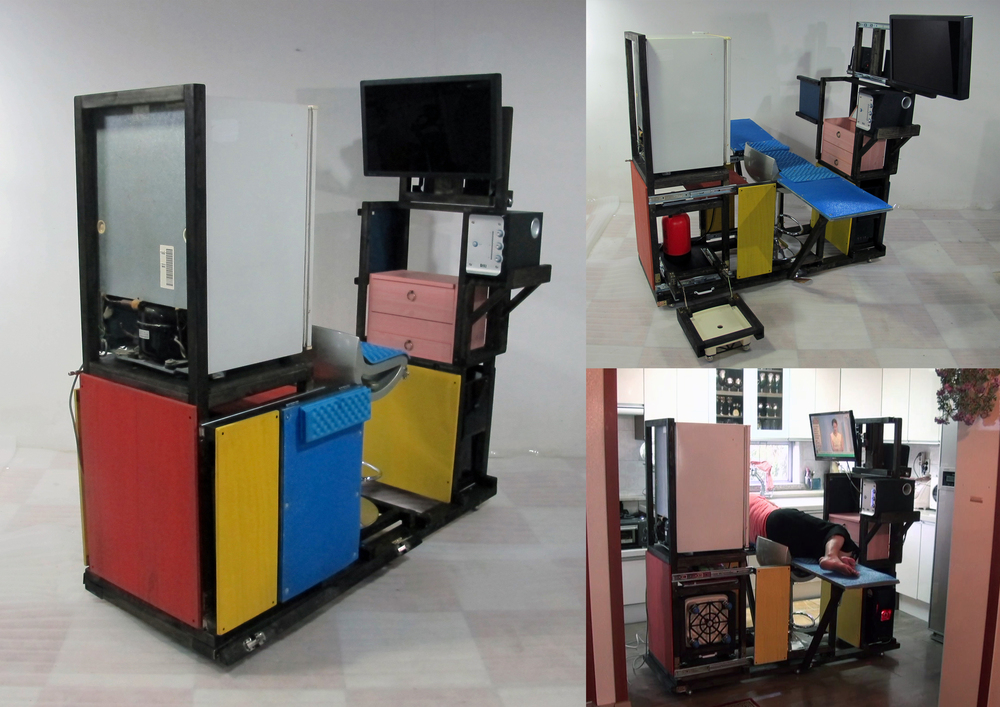
Choi Taehoon, Mother’s multitasking device, 2013, Preservative-treated wood, plywood, mini refrigerator, computer, monitor, speakers, swivel chair, casters, dressing table, mat, Dimensions variable © Choi Taehoon

Drawing on the sculptural sensibility of building up masses by attaching and removing clay, Choi Taehoon directly touches and feels the objects that surround him in everyday life, revealing the forms and possibilities latent within familiar things.
 
In his early practice, Choi presented sculptures that transformed everyday objects such as wastebaskets, dustpans, and brooms. For example, in his 2013 work Mother’s Multitasking Device, he combined various household objects, including a mini refrigerator and a computer, to create a hyper-functional object sculpture.


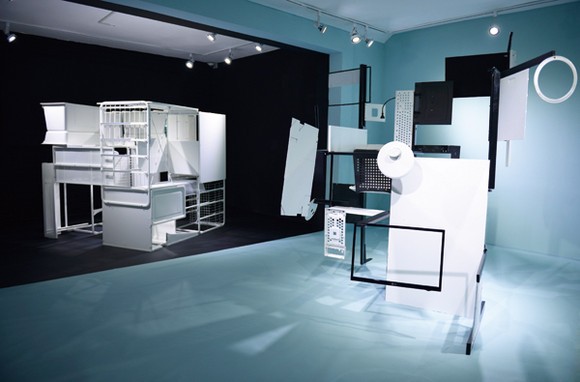
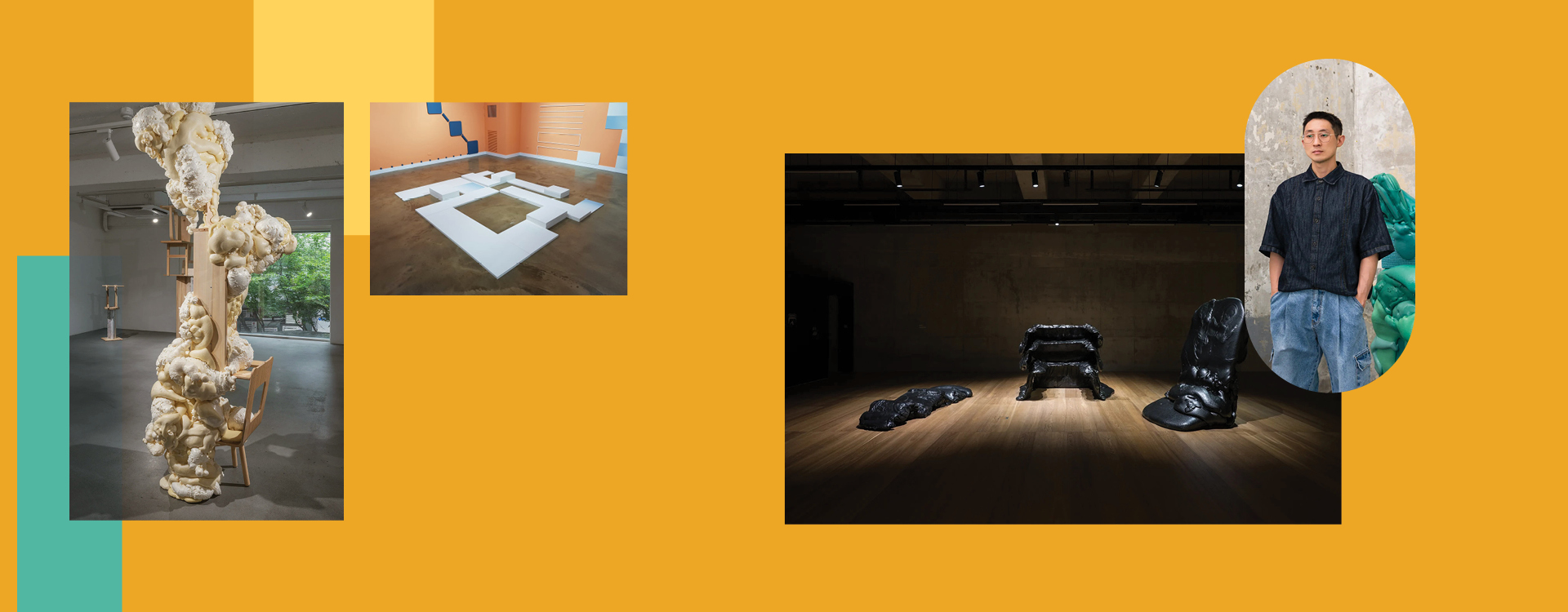
Installation view of 《Form follows from》 (Studio 148, 2018) © Choi Taehoon

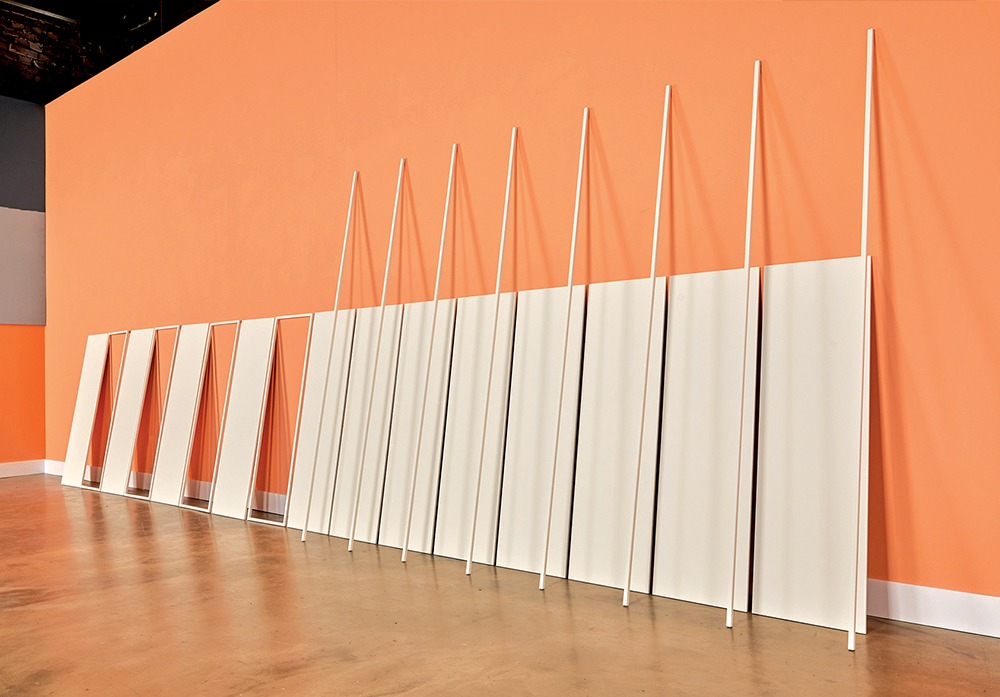
This de-functionalized approach to objects was further developed in his 2018 solo exhibition 《Form Follows from》 through what he calls “DIY hacking sculpture.”
 
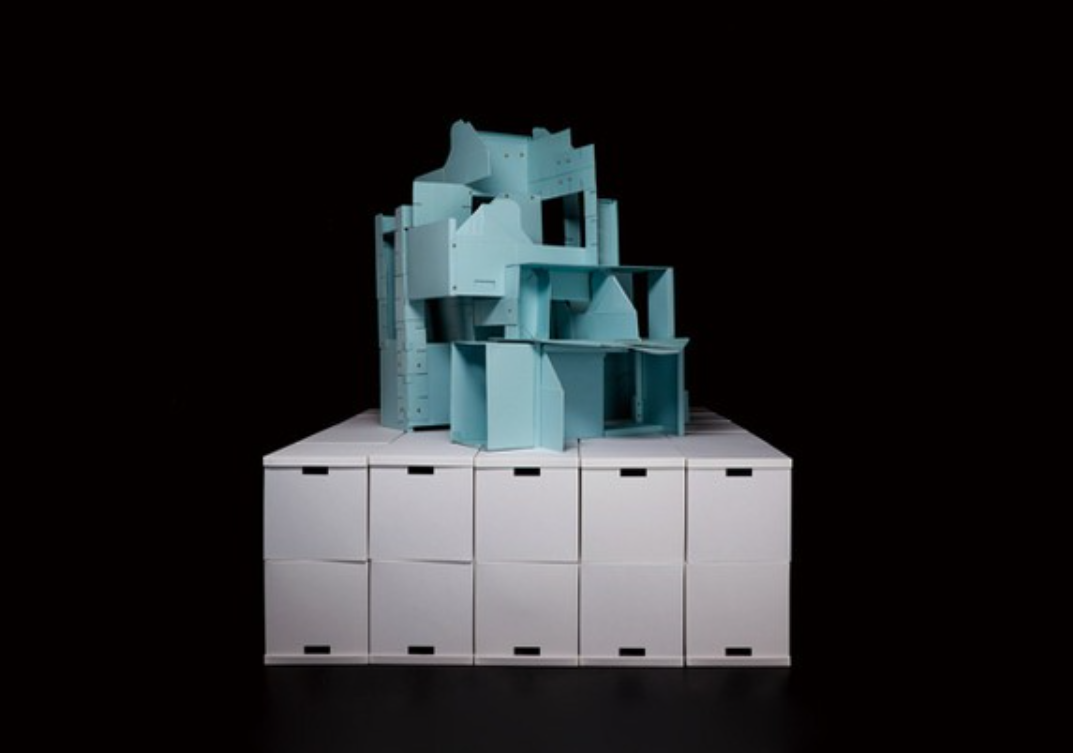
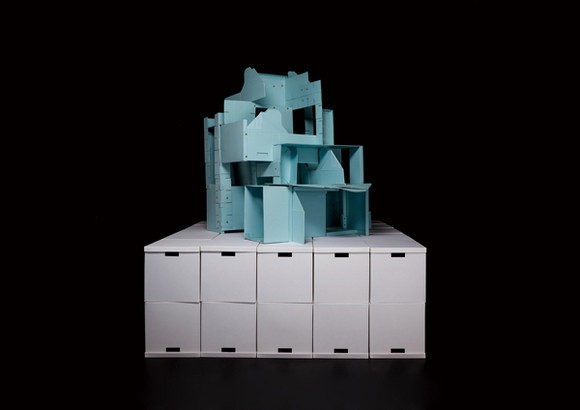
Rather than using DIY mass-produced products such as IKEA furniture as intended, Choi Taehoon selected inexpensive DIY products as materials. He then arbitrarily combined the units of DIY furniture rather than following their assembly instructions, experimenting with ways of “hacking” the objects’ conventional uses.


Choi Taehoon, TJENA Composition, 2017, TJENA DIY storage box, 175x175x160cm © Choi Taehoon

His “DIY hacking” practice is guided by the following rules: first, the object must be able to stand upright on its own; second, its form must differ from every direction; third, its level of finish must remain consistent from every viewpoint; and finally, the object must not be further processed, such as by cutting or bending.
 
Constructed according to these rules, the object sculptures are neither newly created artworks nor fully intact products, but instead occupy a space where familiarity and unfamiliarity intersect.
 
Drawing on their own experiences, viewers could look at these objects, whose structures appeared both familiar and strange, and retrace the ways in which their forms had been constructed and the processes through which they came into being.


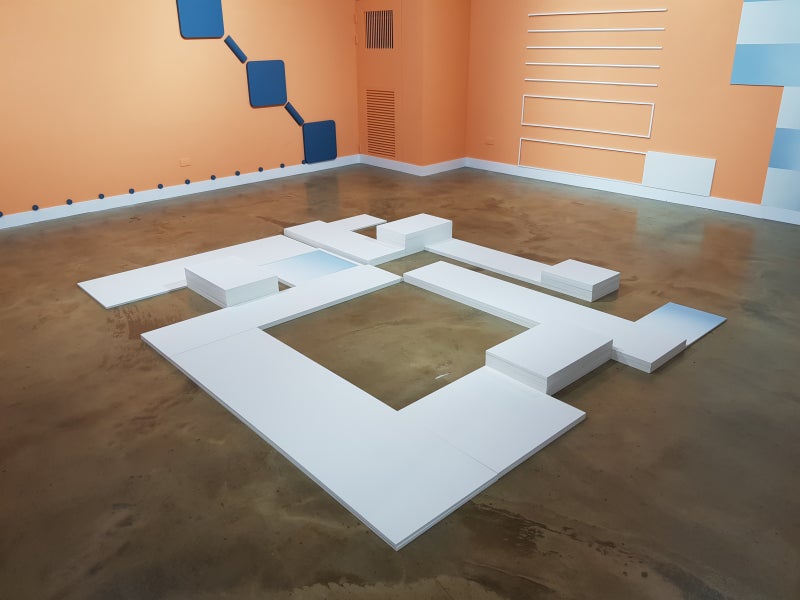
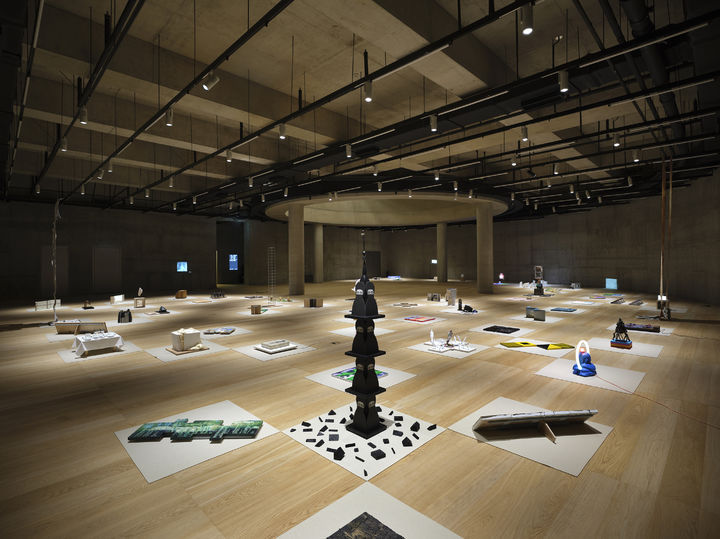
Installation view of 《South Korean Ensemble》 (SeMA Storage, 2019) © Seoul Museum of Art

Having reinterpreted the sense of agency espoused by the DIY industry through the language of sculpture, Choi Taehoon presented a “showroom” that sculpturally reconstructed contemporary lifestyles in his 2019 solo exhibition 《South Korean Ensemble》.
 
The exhibition brought the (non-)experience of IKEA Place, a smartphone application that allows users to virtually arrange furniture within a simulated space, into the physical exhibition space.
 
The artist used the application to create his own showroom and arrange various pieces of furniture within it, then produced replicas of the furniture based solely on the information provided online and presented them as artworks in the actual exhibition space.


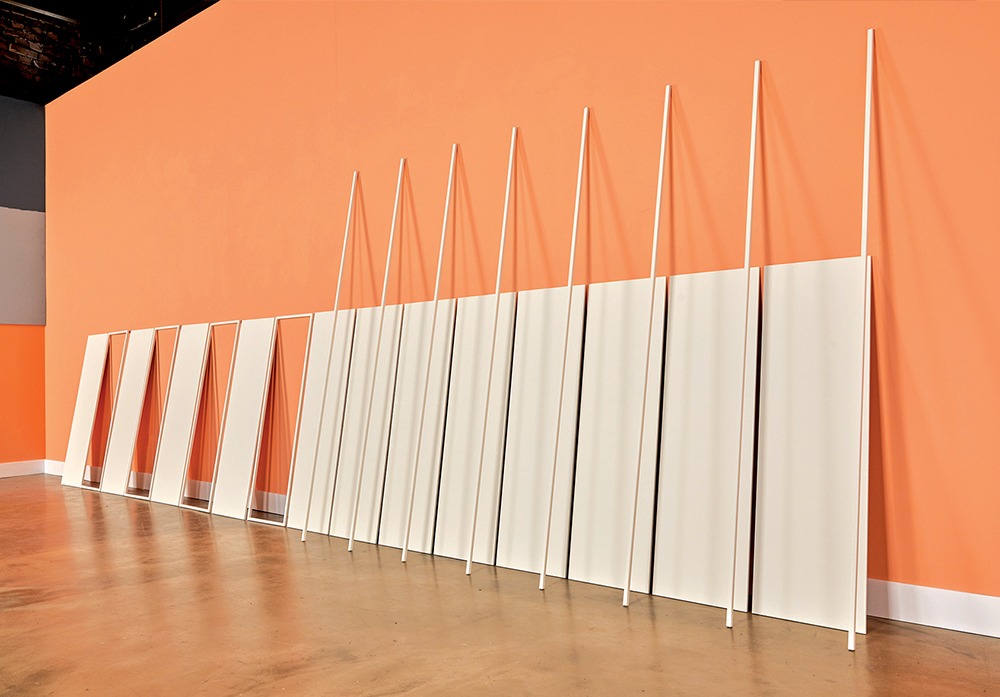
Installation view of 《South Korean Ensemble》 (SeMA Storage, 2019) © Seoul Museum of Art

This was an attempt to directly incorporate into the exhibition the ways in which objects are experienced and perceived within a digital environment. Rather than experiencing physically existing furniture firsthand, the process of understanding and reconstructing objects solely through images and information revealed, through the concrete setting of the exhibition, how our ways of perceiving objects and the world have changed.
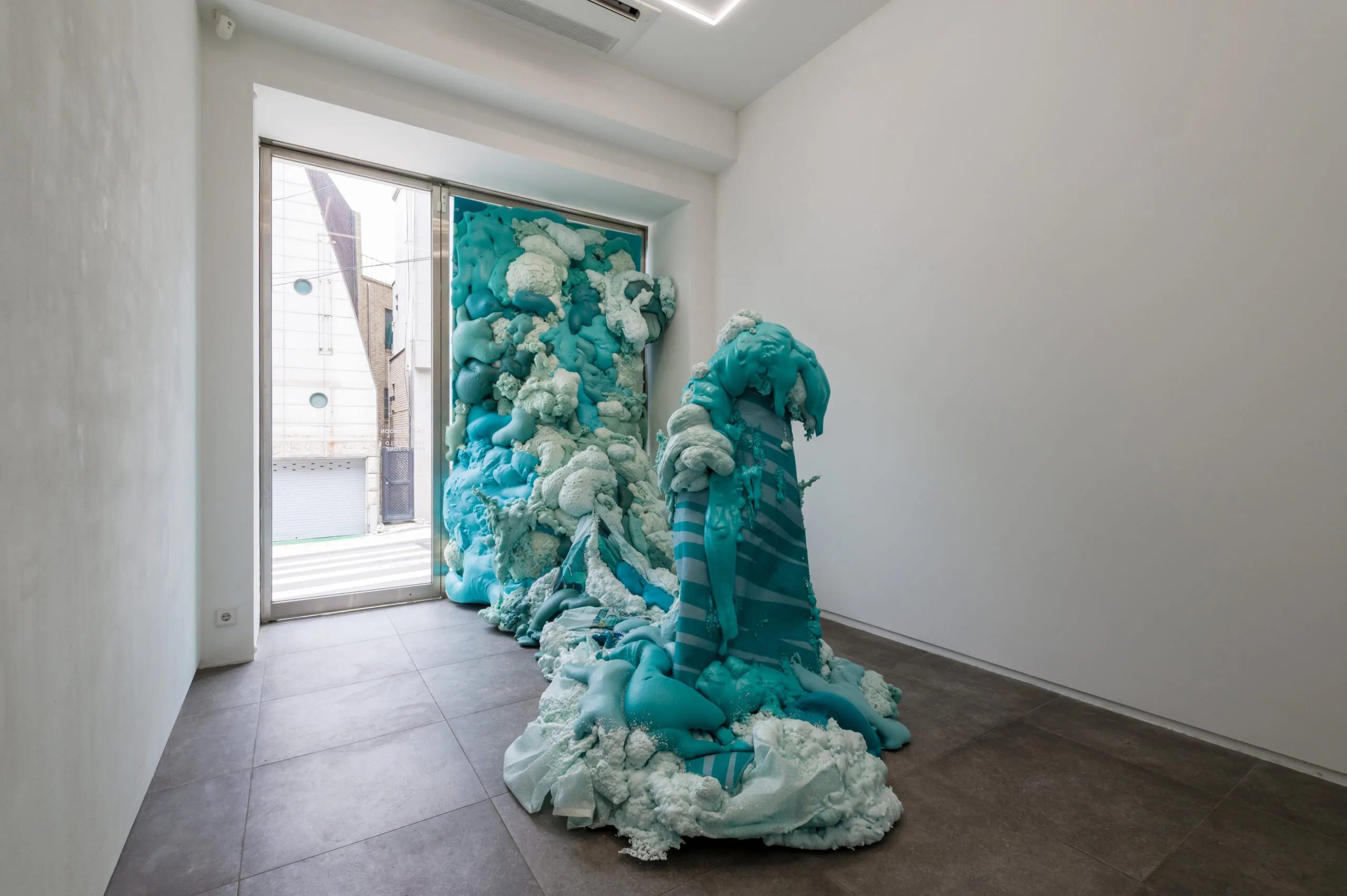

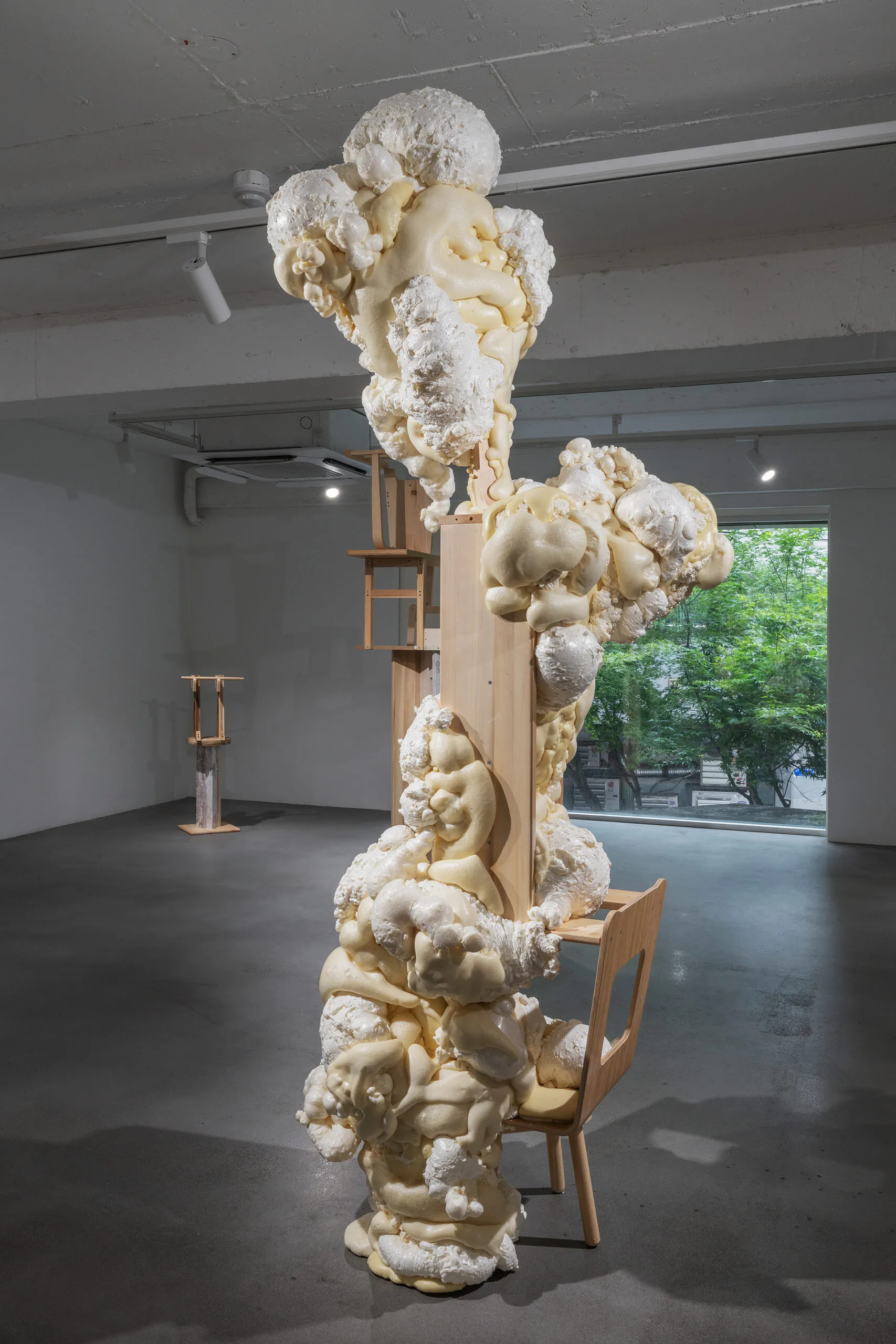
Choi Taehoon, SAL-Wood Type 2, 2022, Wood (wall-mounted shelf, stool), urethane foam, 250x110x90cm. Photo: Junyong Cho. © Choi Taehoon

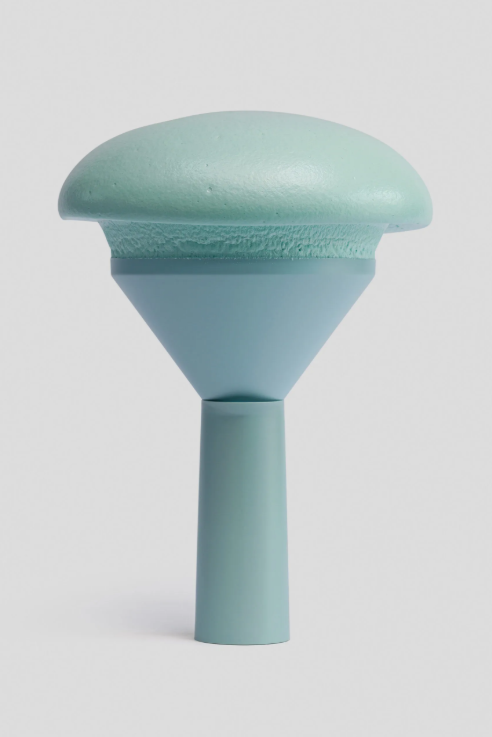
Meanwhile, beginning in 2021, Choi Taehoon began developing ‘SAL’, a series of sculptural works that “imagines sculpting beyond functionalism” through a process in which heterogeneous objects and materials come together and determine their own forms.
 
Through ‘SAL’, a name that refers to the body’s flesh in Korean, encompassing the skeleton, skin, and muscles, he sought to develop a new sculptural language that grows organically by attaching new flesh to itself.


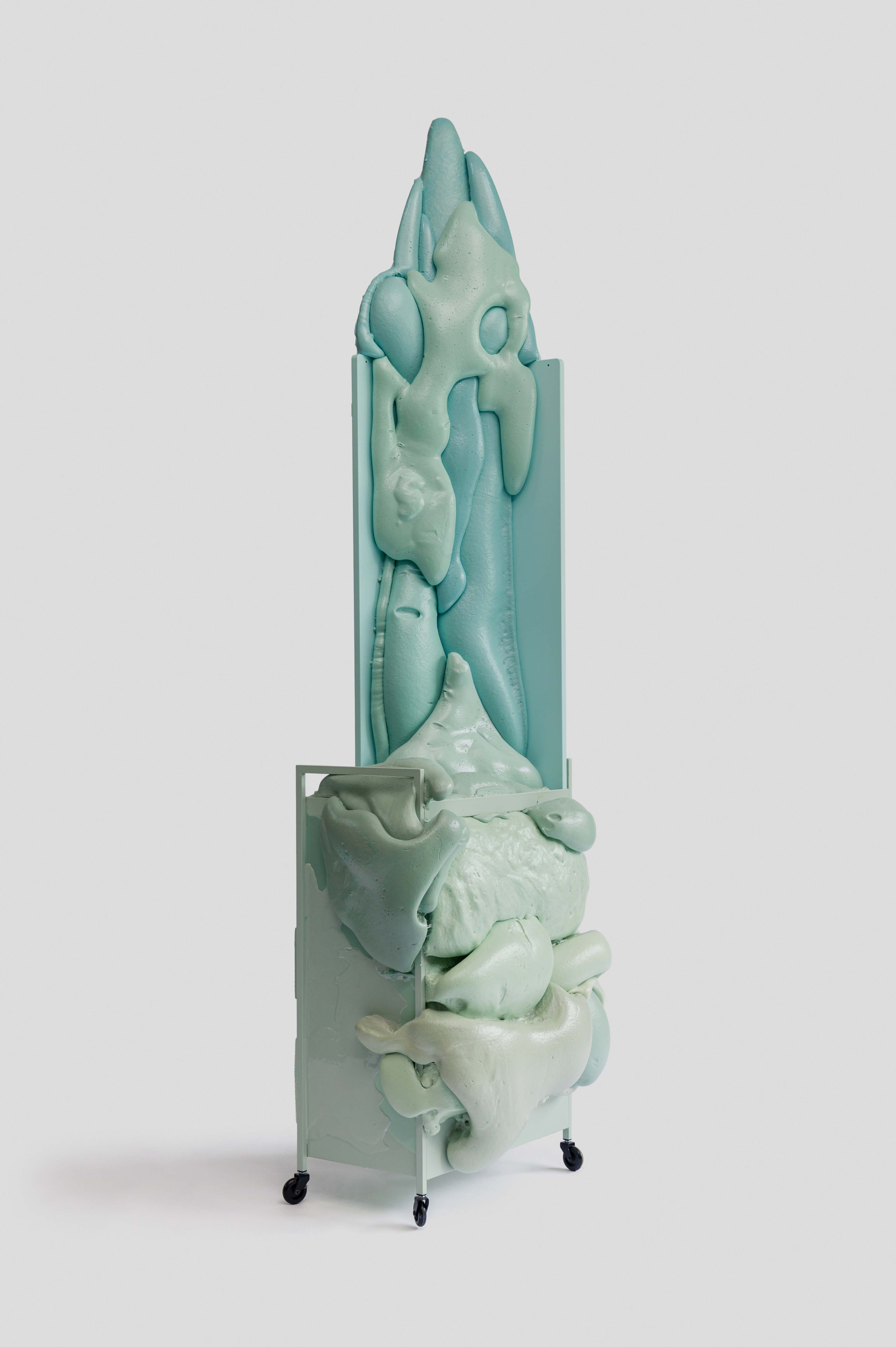
Choi Taehoon, SAL-Self-Portrait 1, 2022, Metal nesting tables, urethane foam, 160x100x85cm, Photo: Jinsol Kim. © Choi Taehoon

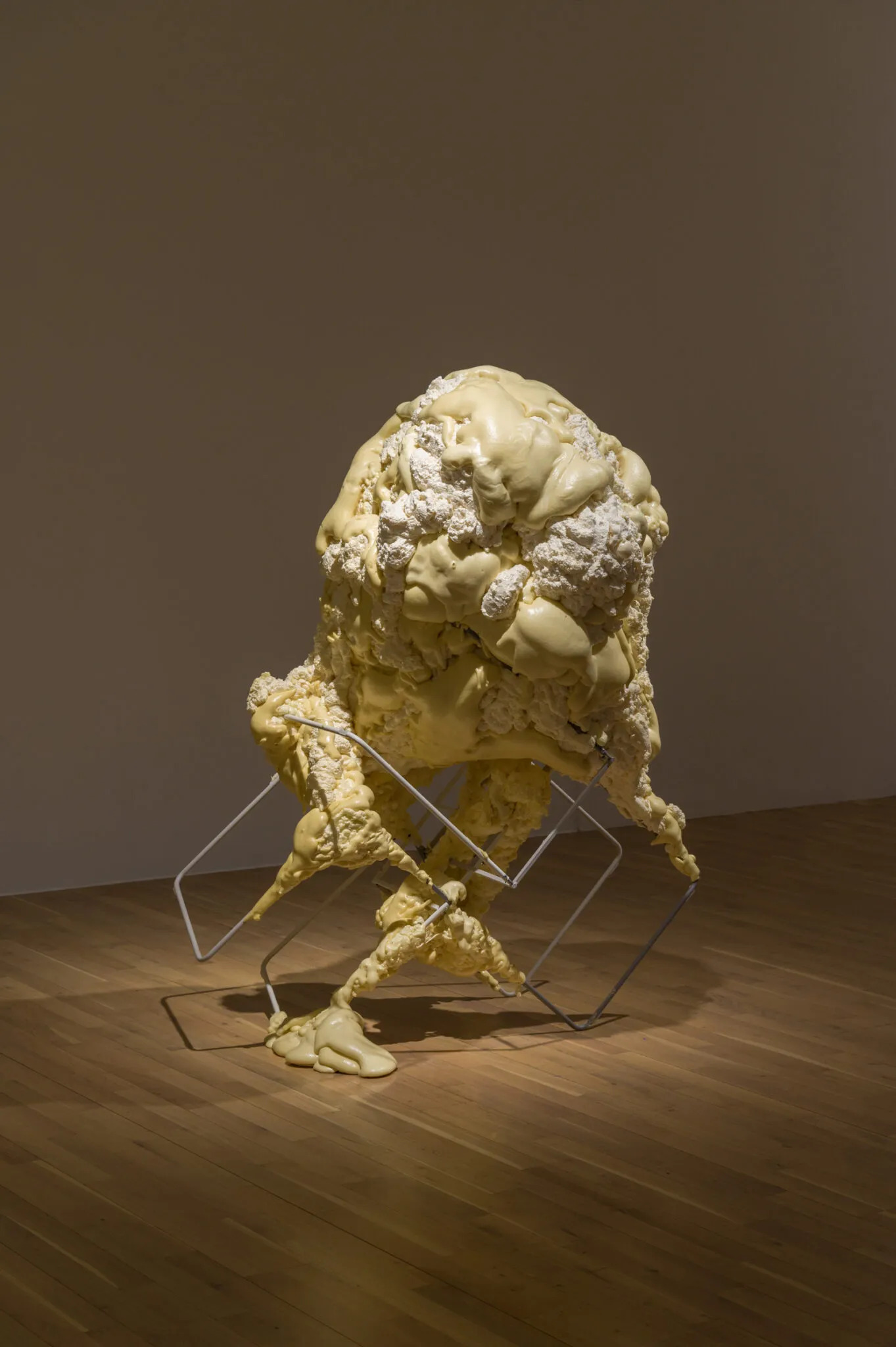
In this practice, the artist uses architectural polyurethane foam as the material for “flesh.” In the ‘SAL—Self-Portrait’ (2022) series, he constructs a framework from IKEA nesting tables and metal shelving, then applies polyurethane foam to create the body of the sculpture.
 
While his earlier hacking sculptures were attempts to reconstruct arbitrary yet logical forms based solely on the forms of mass-produced objects, excluding their functions, the ‘SAL—Self-Portrait’ series goes a step further by imagining sculpture as a self-generating entity that seeks to become independent of the functions and forms of objects.


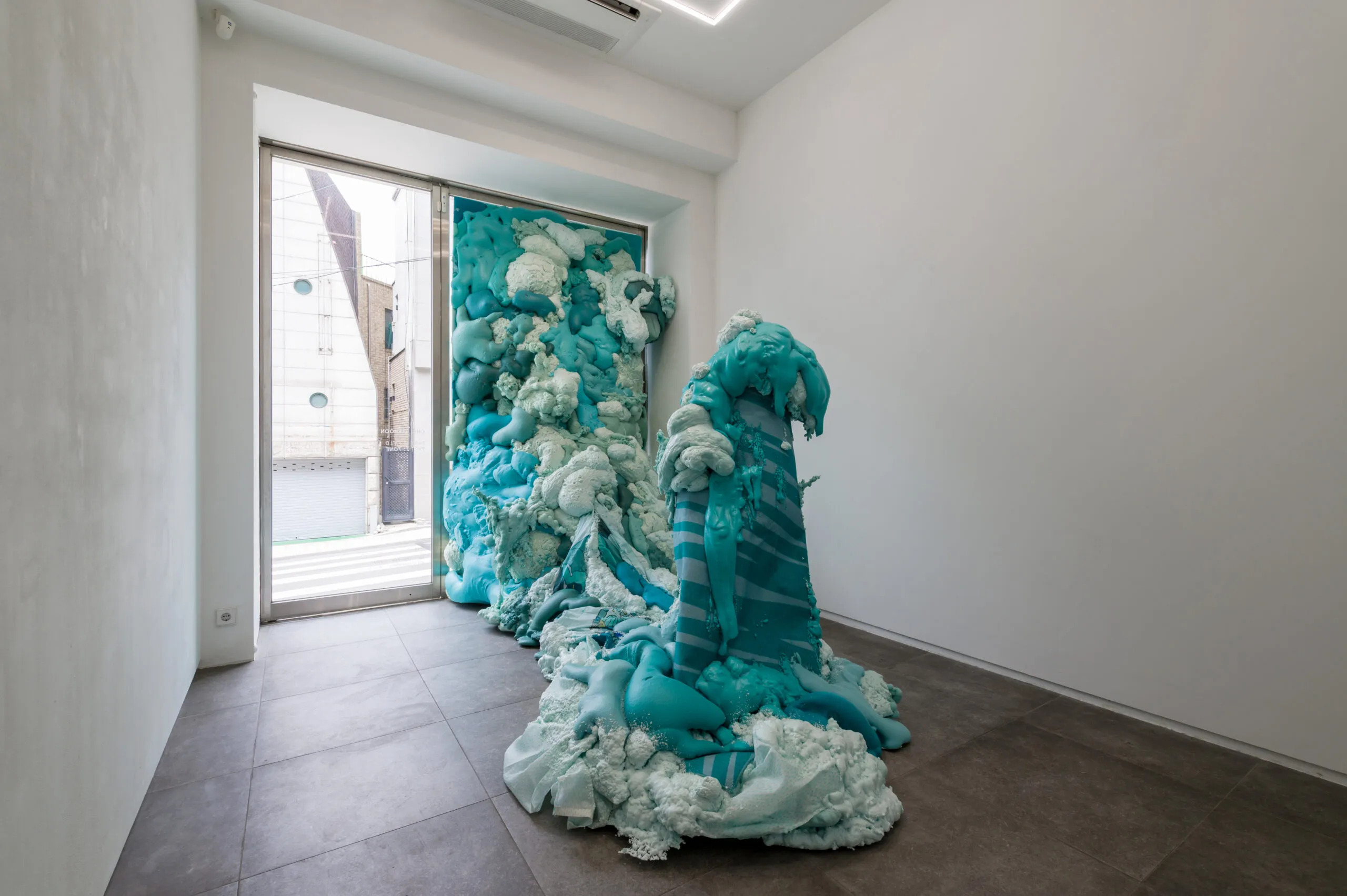
Installation view of 《Sculptural Impulse》 (Buk-Seoul Museum of Art, 2022). Photo: Jinsol Kim. © Choi Taehoon

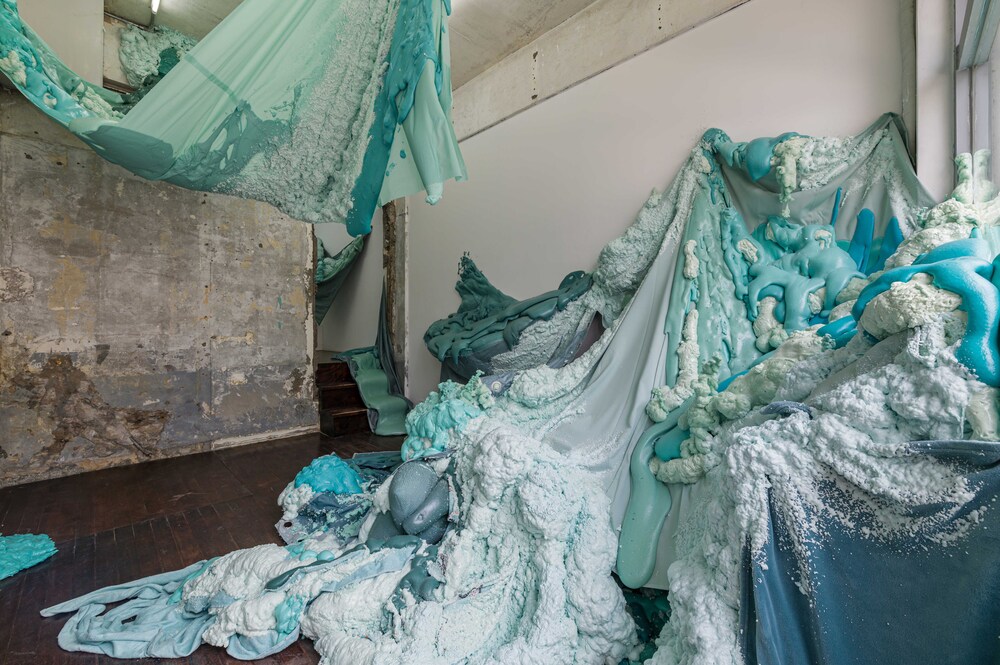
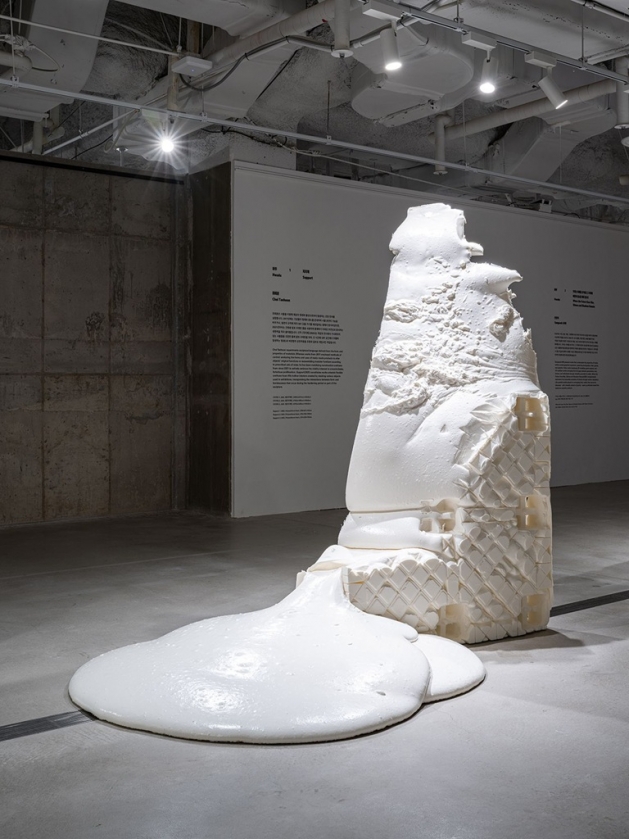
These works resemble organisms that grow of their own accord. In particular, SAL—Self-Portrait 5 (2022), presented in the special exhibition 《Sculptural Impulse》 at the Buk-Seoul Museum of Art, features flesh made of polyurethane foam extending into the exhibition space and connecting with the wall.
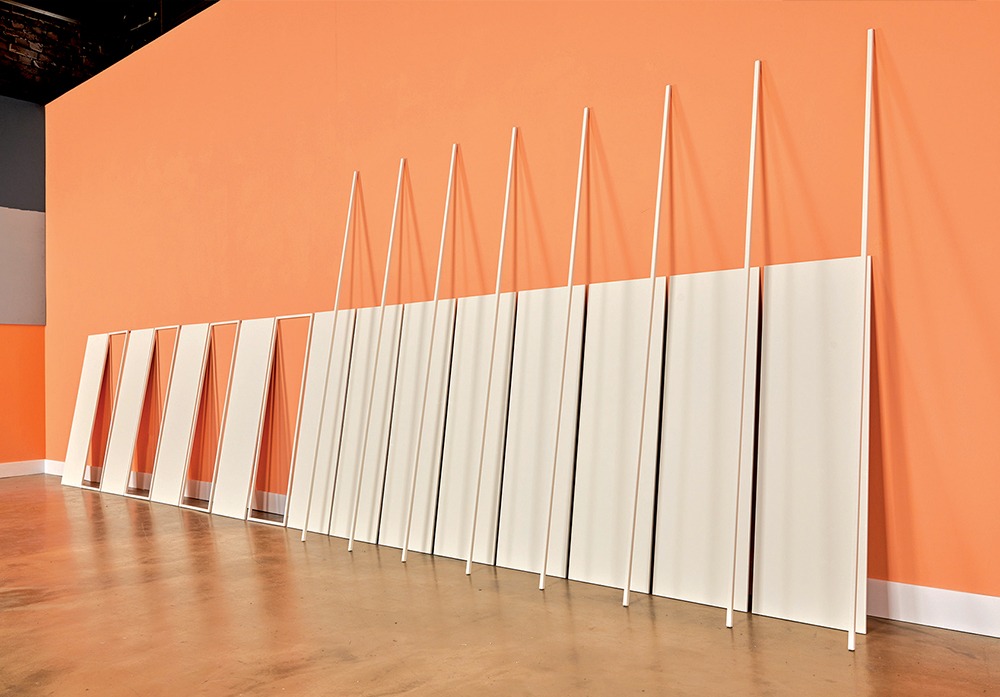

 
It can be seen either as flesh sprouting from an object and spreading into the exhibition space, or as a process through which the sculpture emerges from the space itself.
 
Rather than aligning itself exclusively with either bone or flesh, organic or inorganic matter, structure or form, or figuration or abstraction, the work gives form to a point of growth within sculpture that encompasses all of these elements.


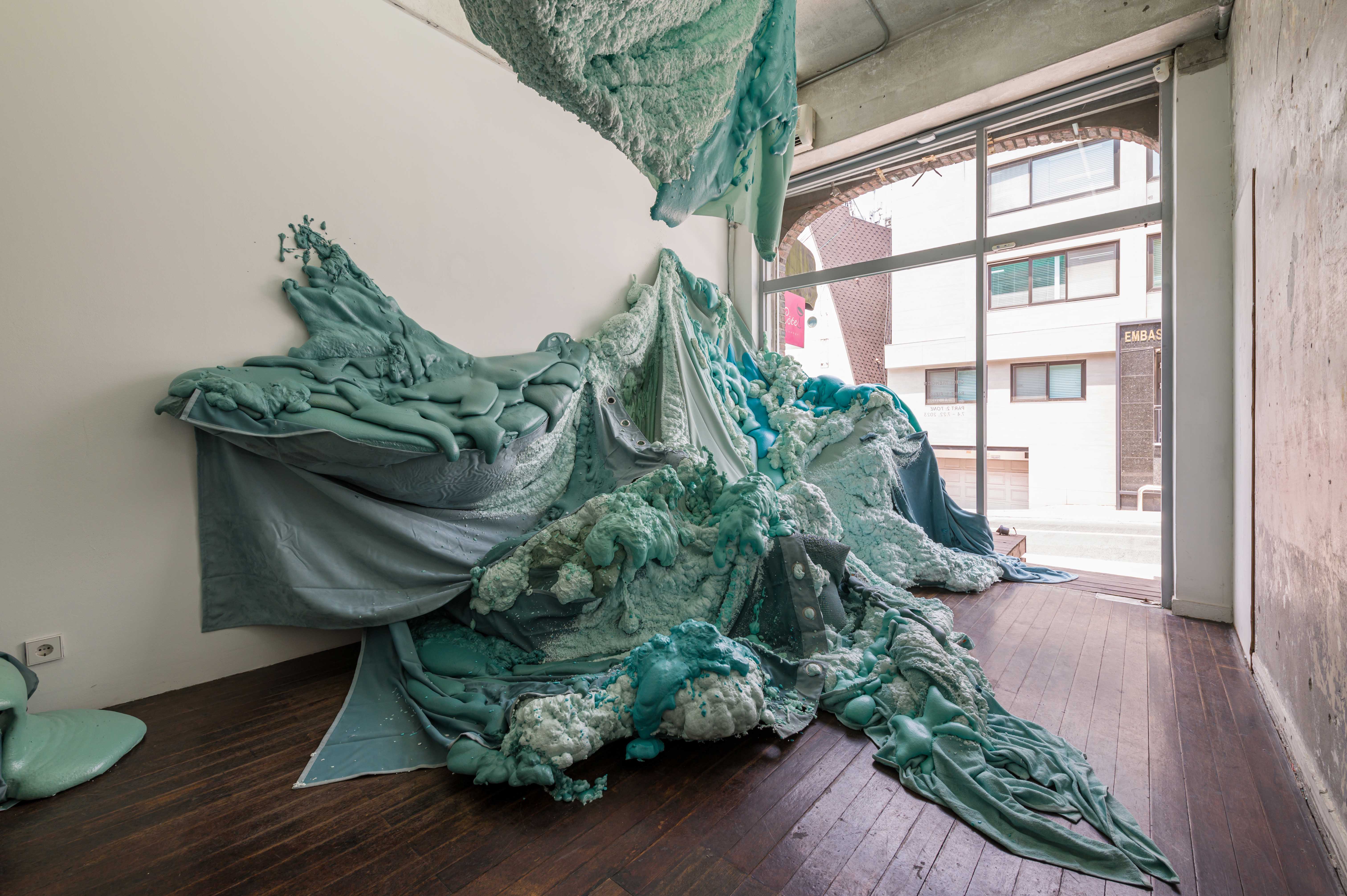
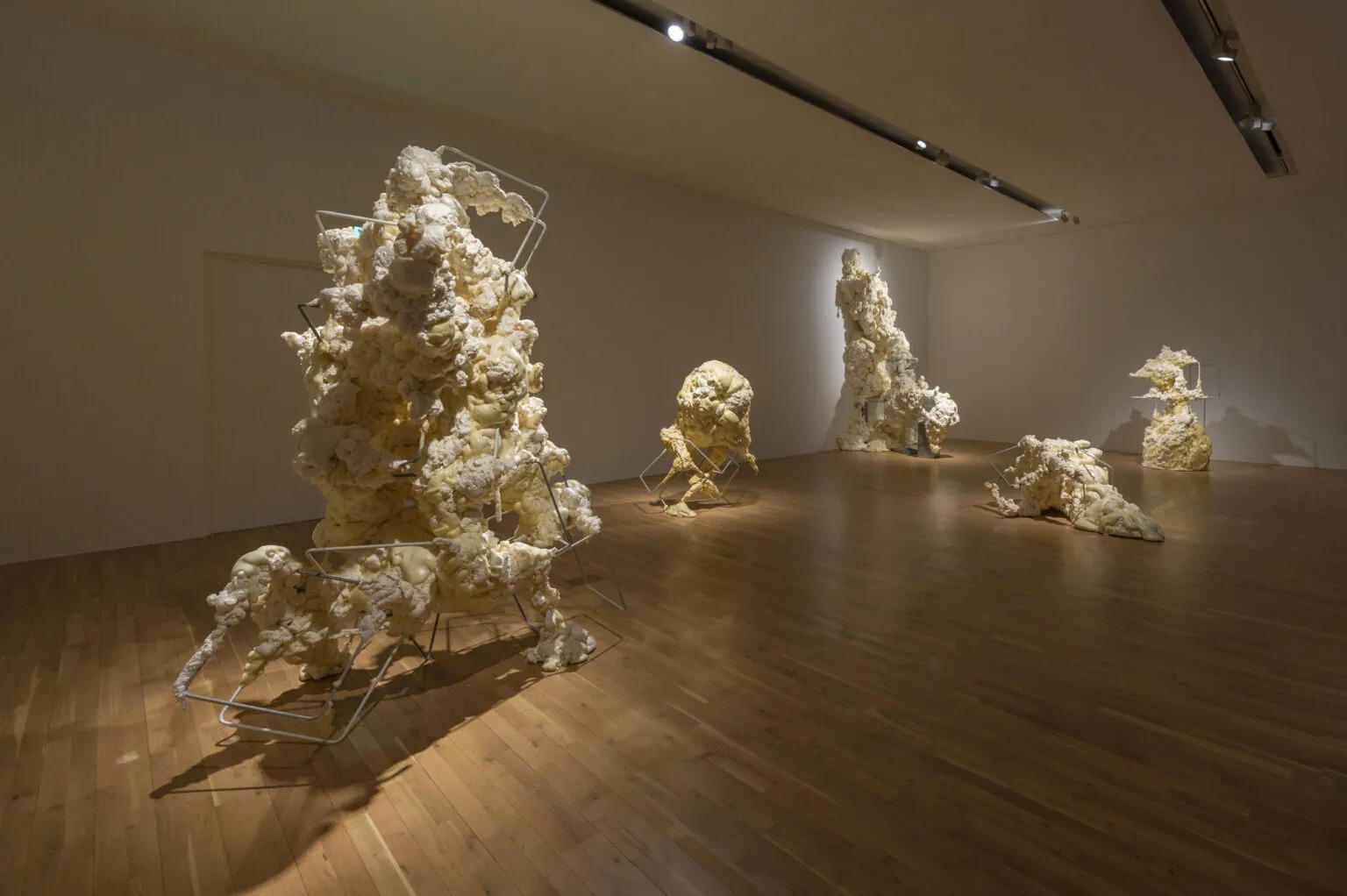
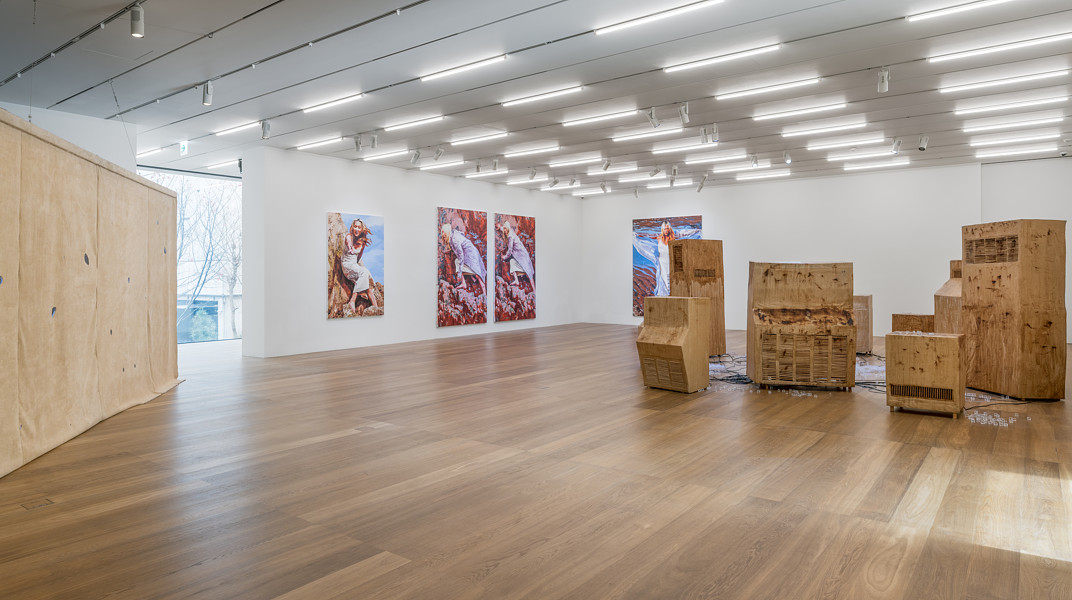
Installation view of 《FIELD》 (P21, 2023) © P21

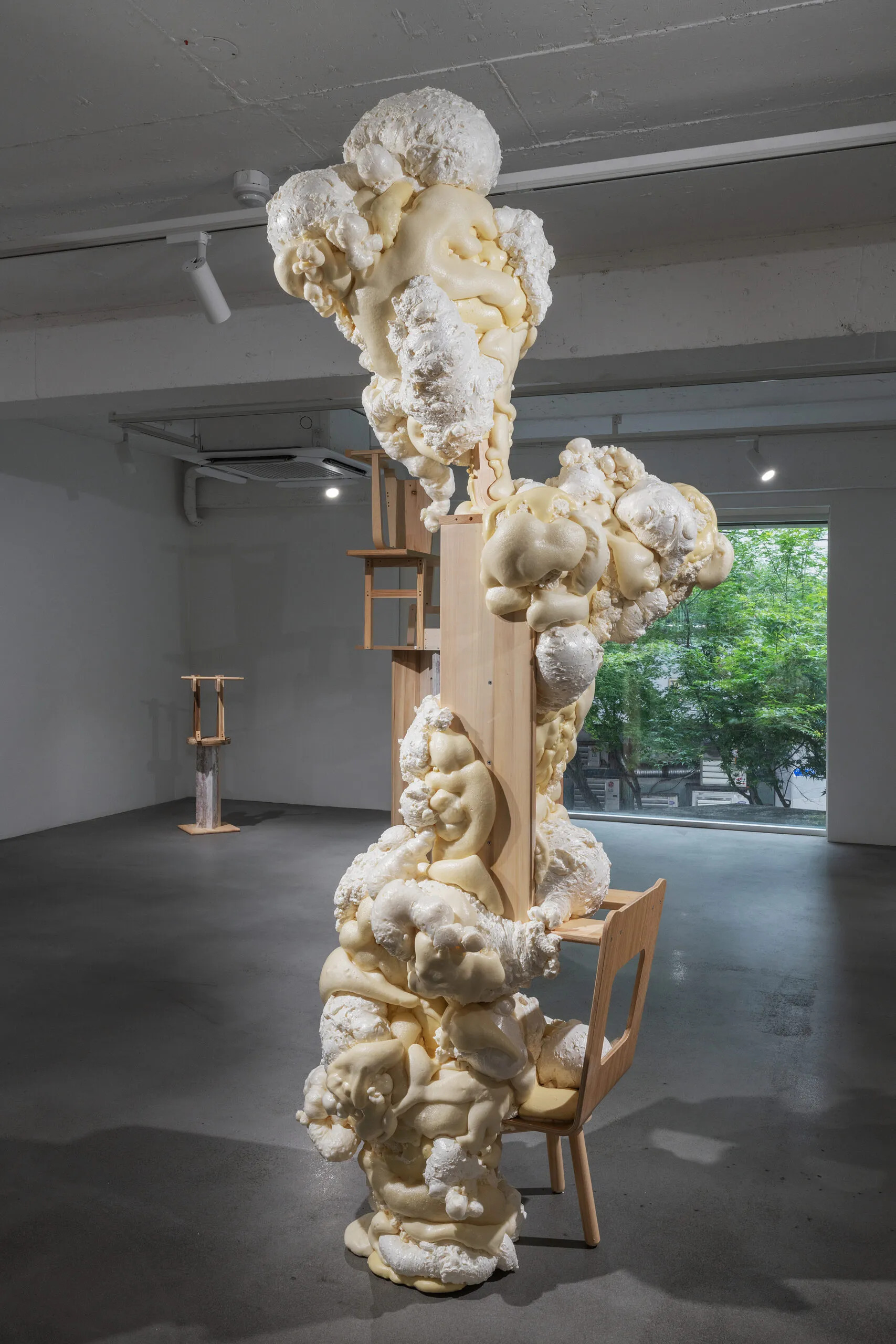
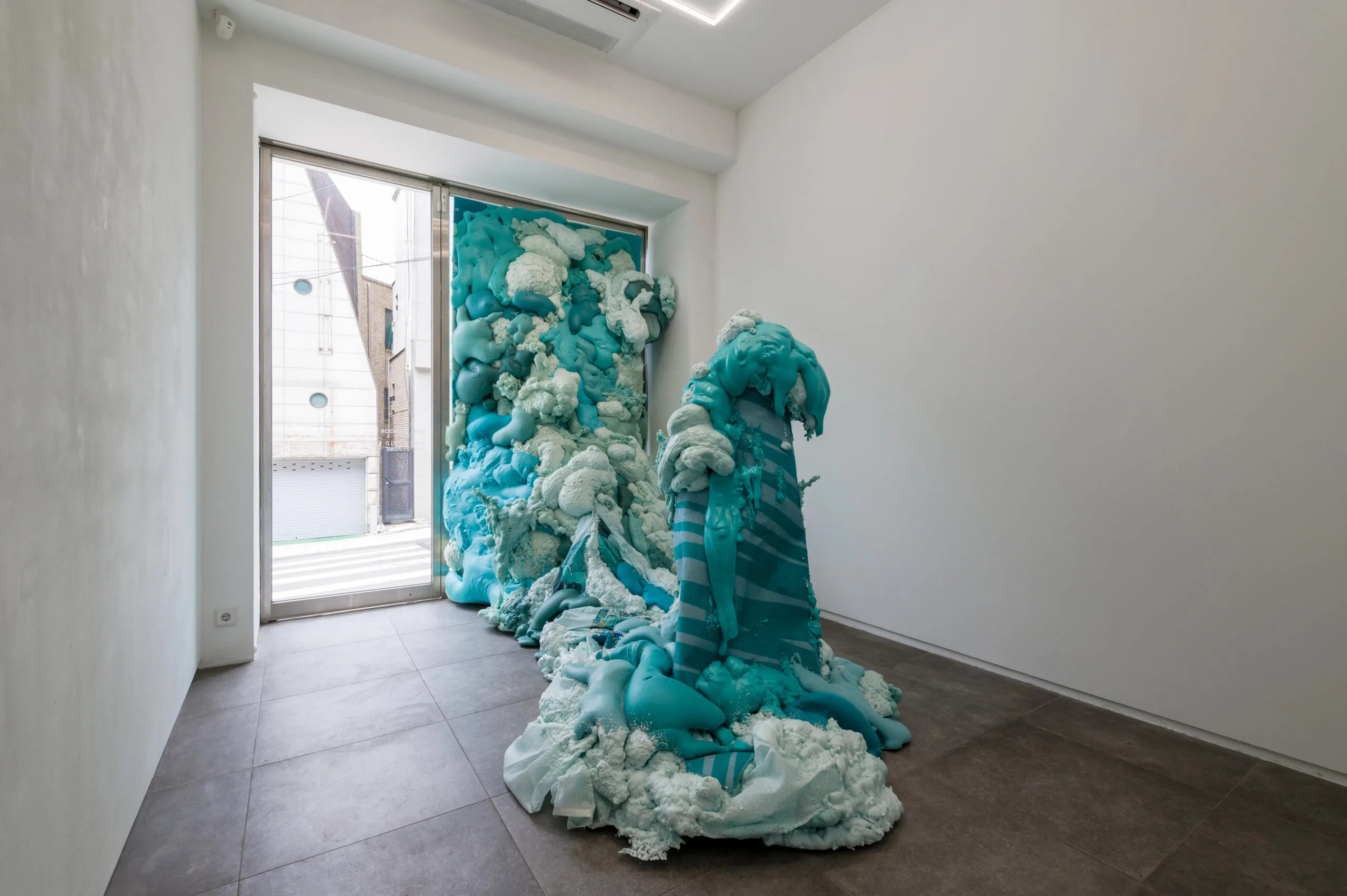
This organic expansion of sculpture is further amplified in 《FIELD》, the first part of Choi Taehoon’s two-part solo exhibition held in 2023. Using the traditional sculptural technique of applying clay to a central armature to build up a form, Choi transformed the entirety of Galleries P1 and P2 into a monumental sculptural work, using the exhibition space itself as its framework.
 
Covered in the uneven, irregular forms of polyurethane foam, the exhibition space created a scene that seemed as though it had been consumed by a giant organism.


Installation view of 《FIELD》 (P21, 2023) © P21

The liquid polyurethane foam used by the artist begins to cure as soon as its components and pigments are mixed. As it expands, it rapidly swells and solidifies, multiplying in unpredictable ways.
 
Due to these material properties, the final form of a work cannot be determined solely by the artist’s intentions. Rather than controlling the movement of the material, the artist observes its transformation and expansion, waiting for it to shape itself. Accordingly, in his practice, the process itself takes precedence over producing any predetermined form.


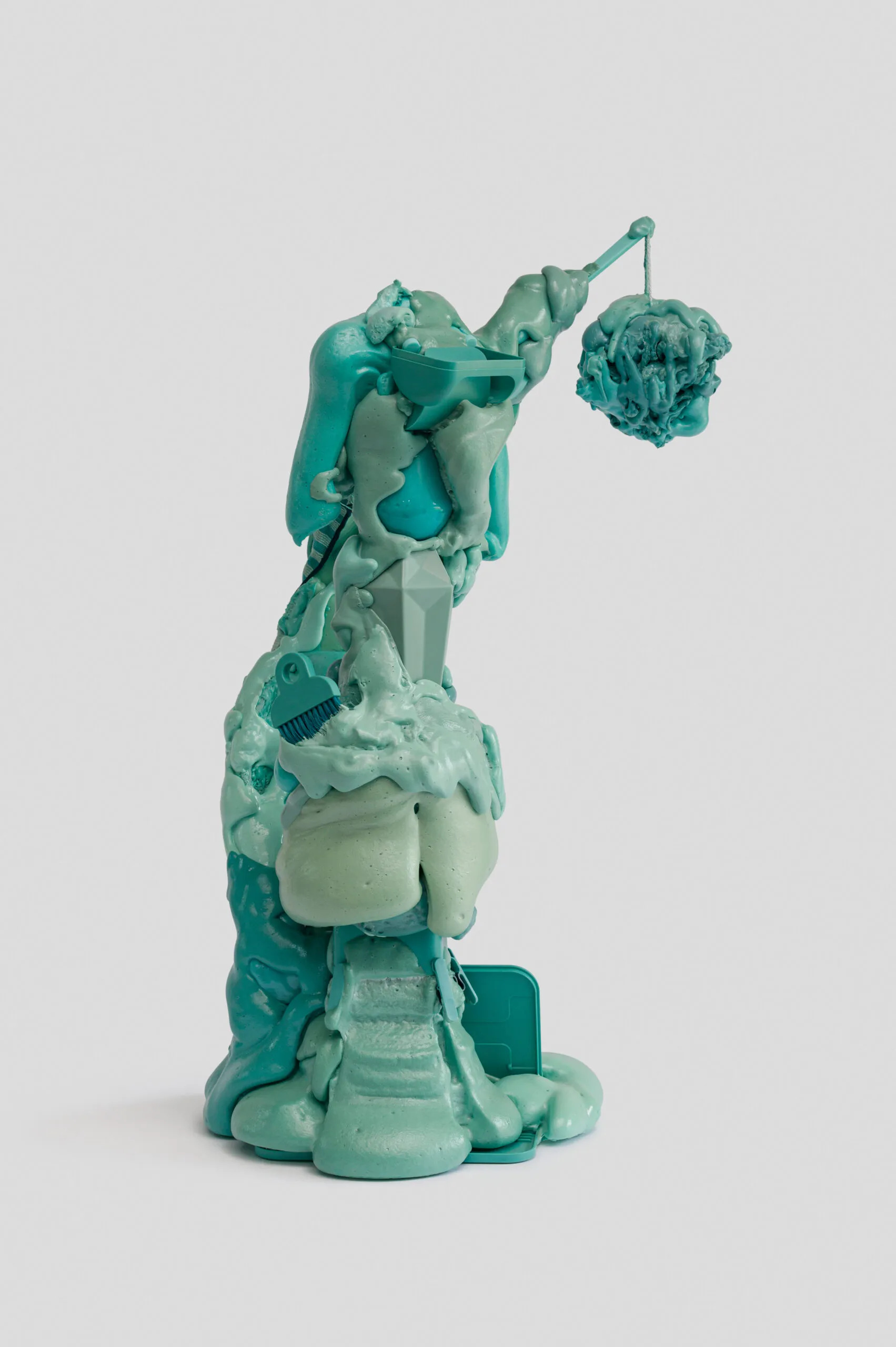
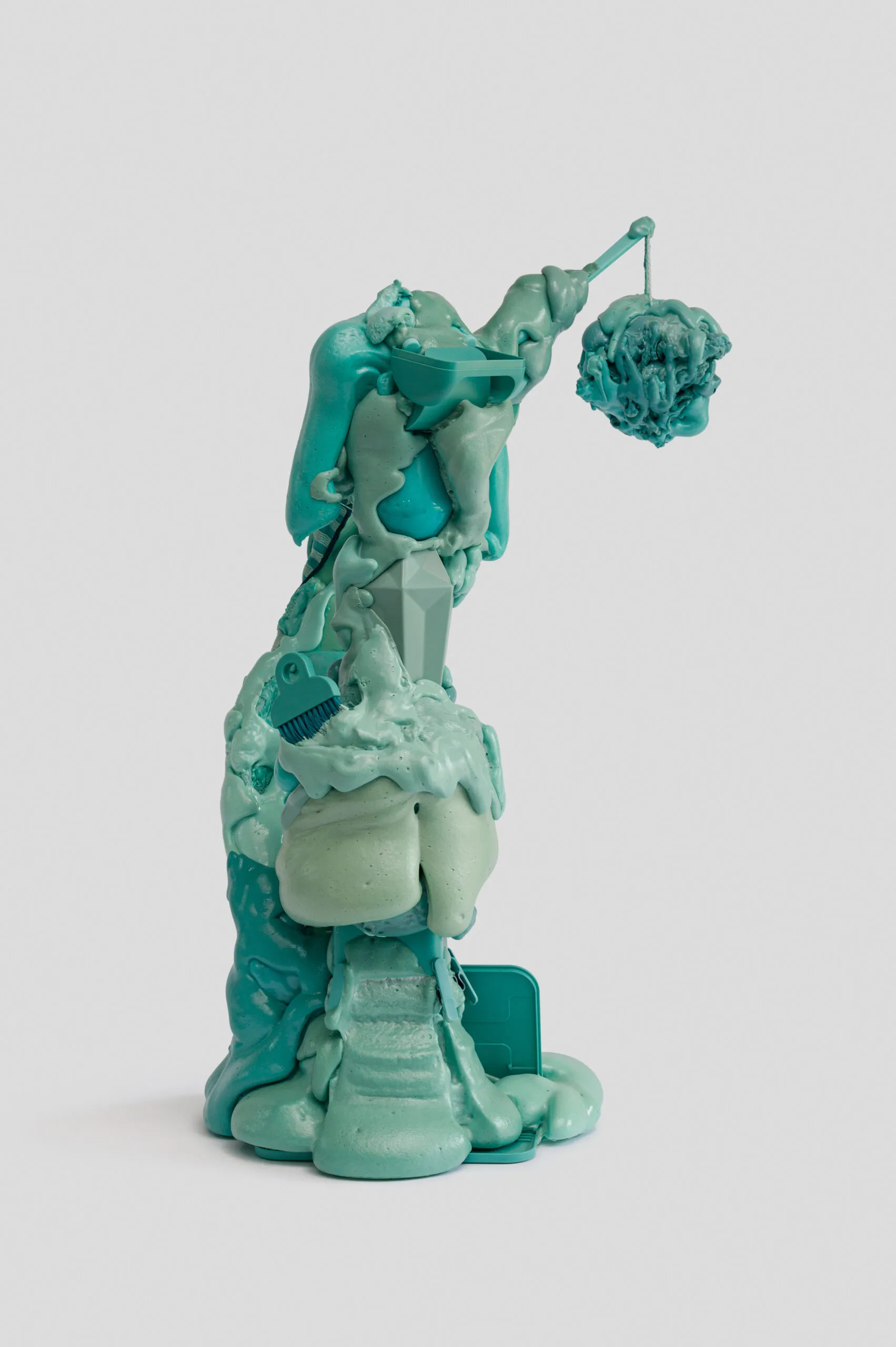
Choi Taehoon, SAL-Tone 3, 2023, urethane foam, glass cups, spoons, forks, clothespins, cleaning brushes, wastebasket, storage containers, vase, book stand, towel, shower sponge, 91×60×40cm. Photo: Jinsol Kim. © Choi Taehoon

Meanwhile, the second part of the exhibition, 《TONE》, consisted of relatively small freestanding sculptures that together formed the exhibition space. Choi Taehoon arranged heterogeneous objects with no apparent connection to one another according to similar color tones, bringing them together like an “alternative family.”
 
Objects of diverse kinds that would not ordinarily come into contact with one another due to their different functions in everyday life were connected through the adhesive properties of polyurethane foam and reconstructed as a single assemblage.


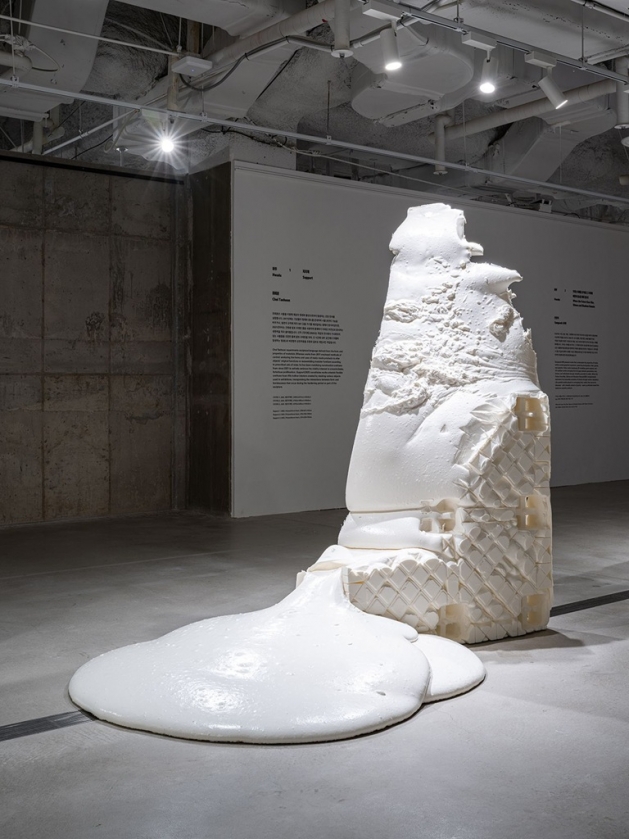
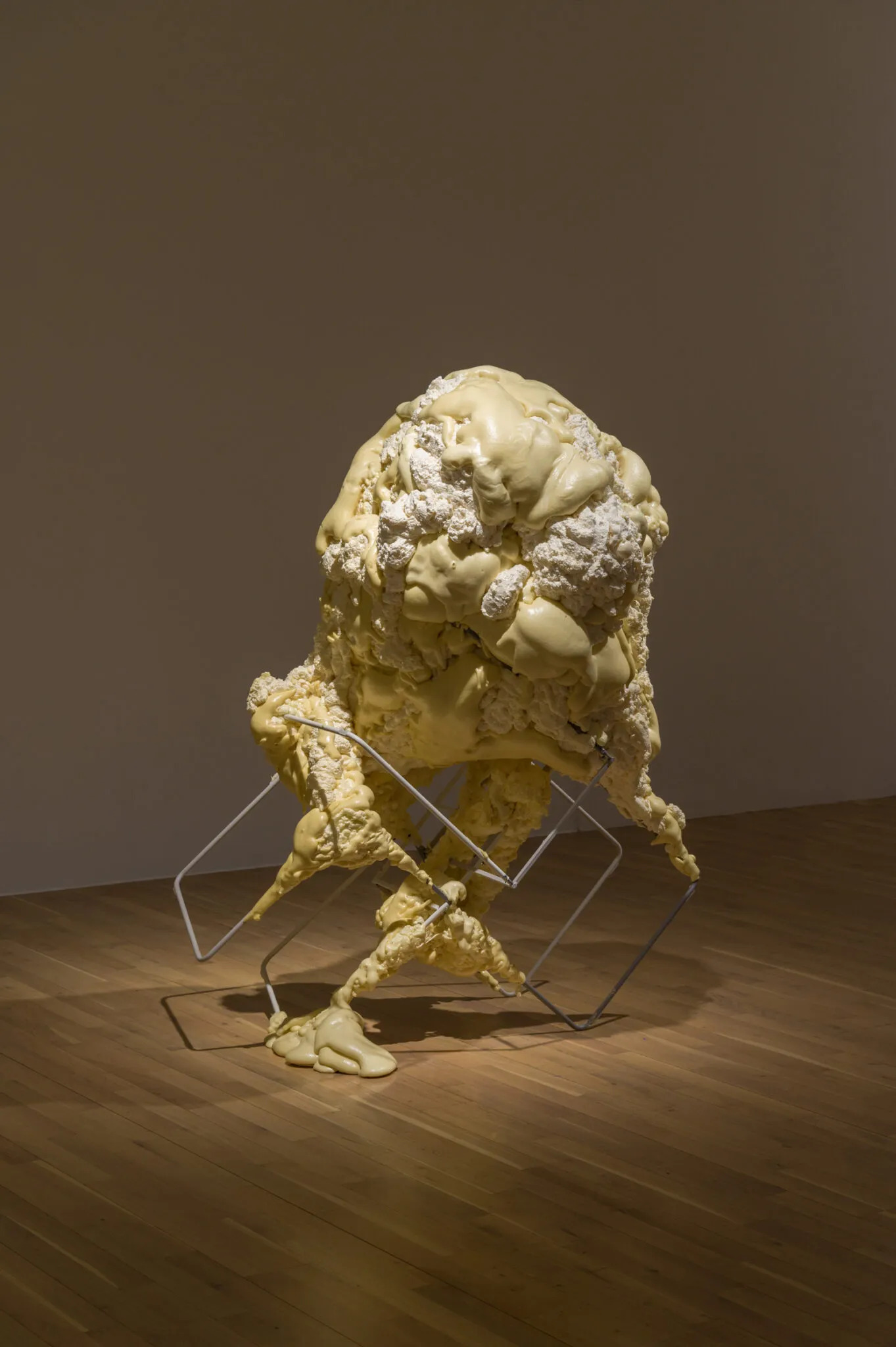
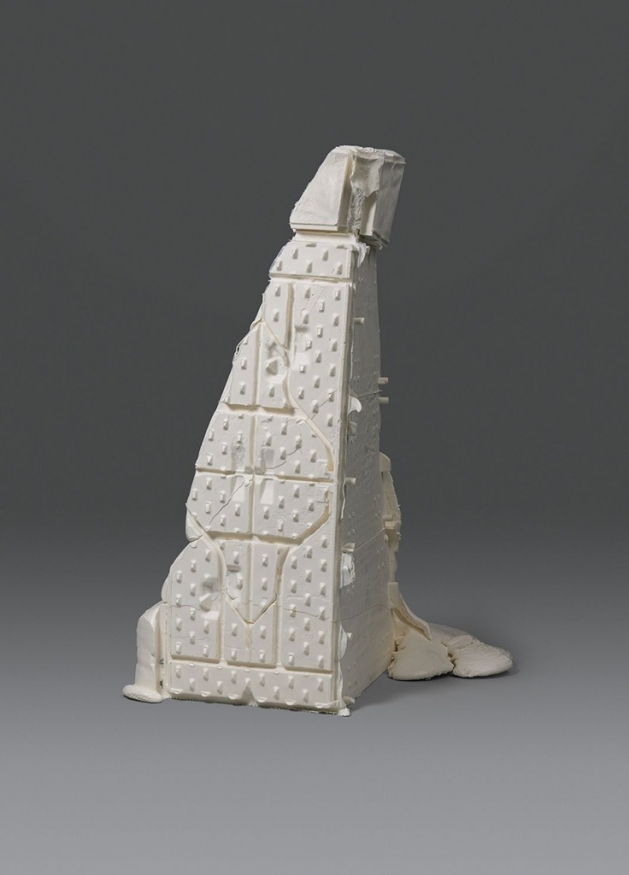
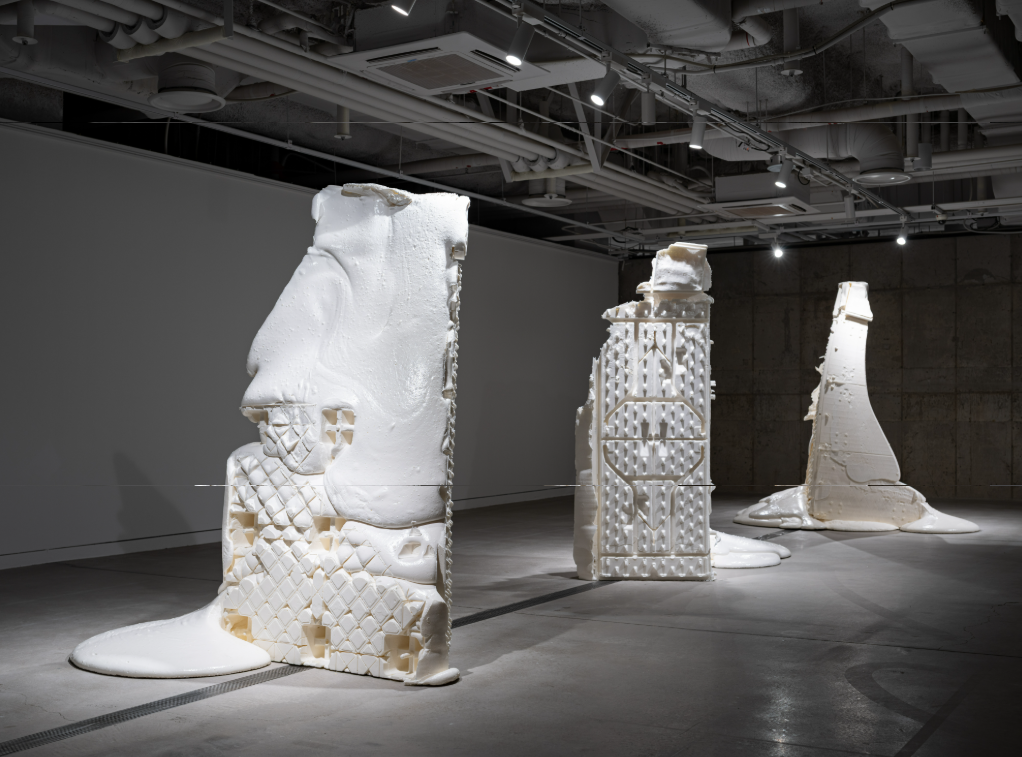
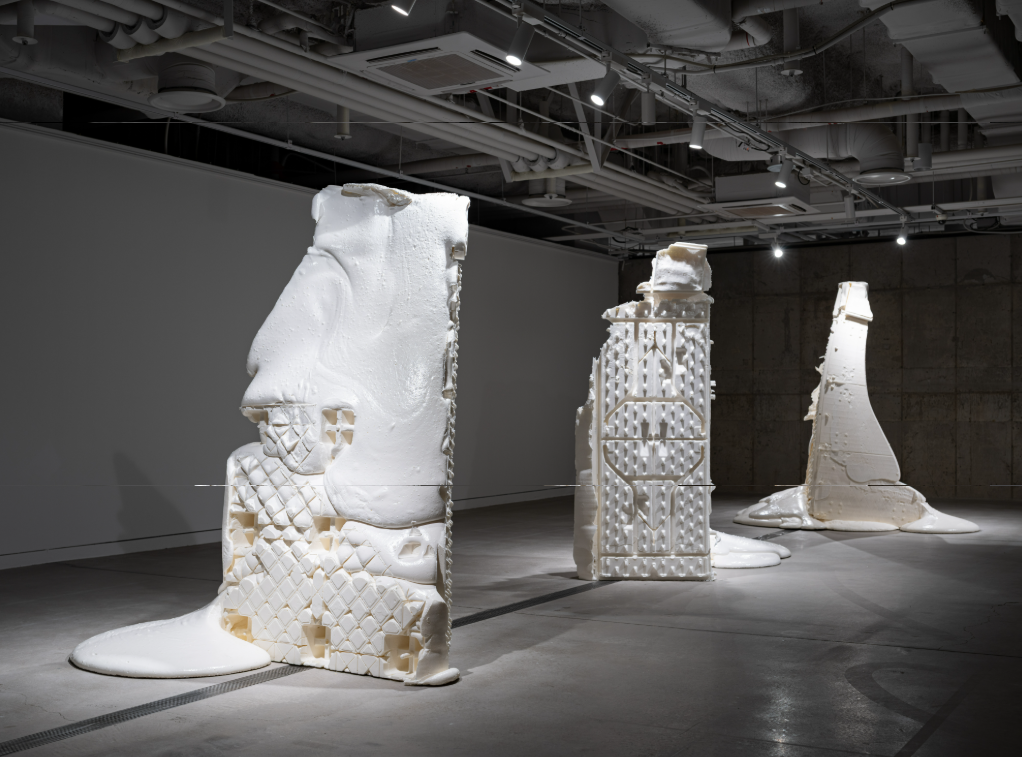
Choi Taehoon, Support 3, 2025, Urethane foam, 207x220x142cm © Choi Taehoon

Meanwhile, ‘Support’, a series begun in 2025, starts with objects that play an important role in the production of artworks and exhibitions yet often remain unseen. Tables, ladders, hand carts, and pallets are nonhuman collaborators that support the sculptor’s creative activities.
 
Through ‘Support’, Choi reveals, through the language of sculpture, how these objects connect the various elements of the artistic ecosystem—including the artist and the work, the studio and the exhibition space—in an organic network.
 
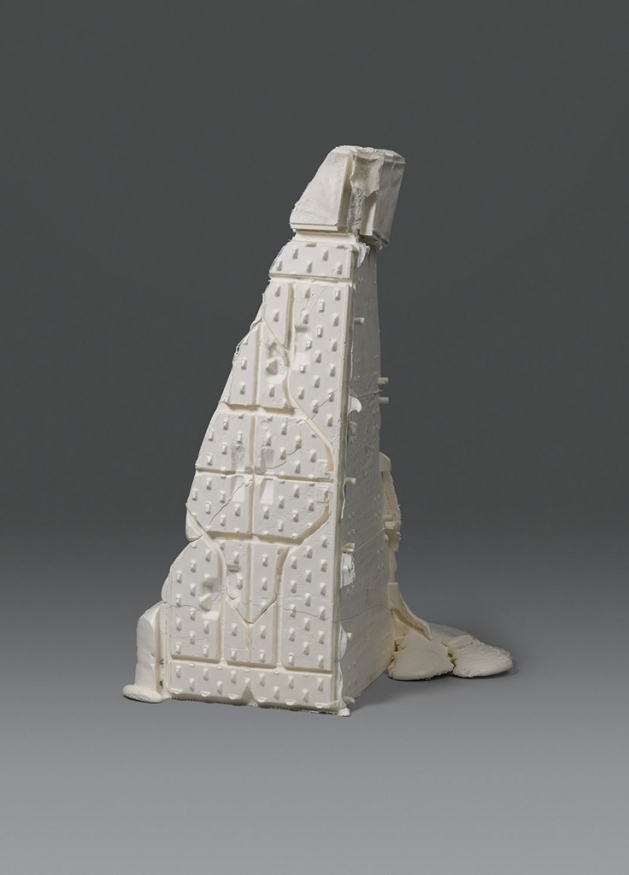
Looking at the working process, the artist first connects the objects he uses himself to create a mold-like structure, then pours soft polyurethane foam into the interior space to cast its form. In this process, the polyurethane fills the interior while simultaneously escaping through the gaps between the objects that form the mold, giving sculptural form to the interior and exterior as a single entity.


Choi Taehoon, Support 2, 2025, Urethane foam, 230x247x143cm © Choi Taehoon

Casting is a technique for transferring an original form into another material. The mold serves to connect the original form to its cast result, but is ultimately removed during the final stage of the process. The objects used in ‘Support’ likewise function as molds, eventually being detached from the sculptures.
 
The completed sculptures bear negative impressions of the objects’ surfaces. These imprints metaphorically reveal the collaboration of countless entities that play their respective roles out of sight while connecting with one another.


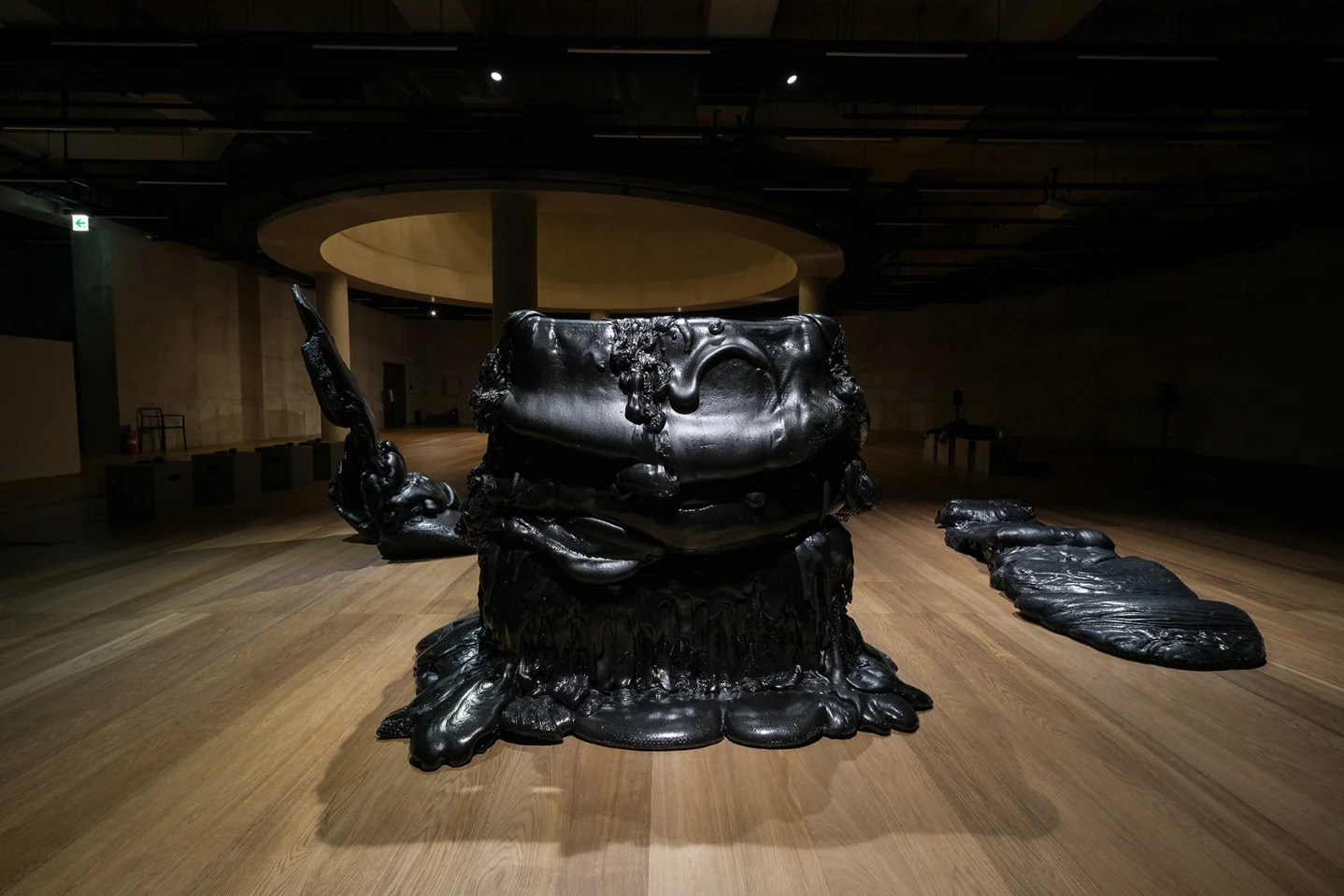
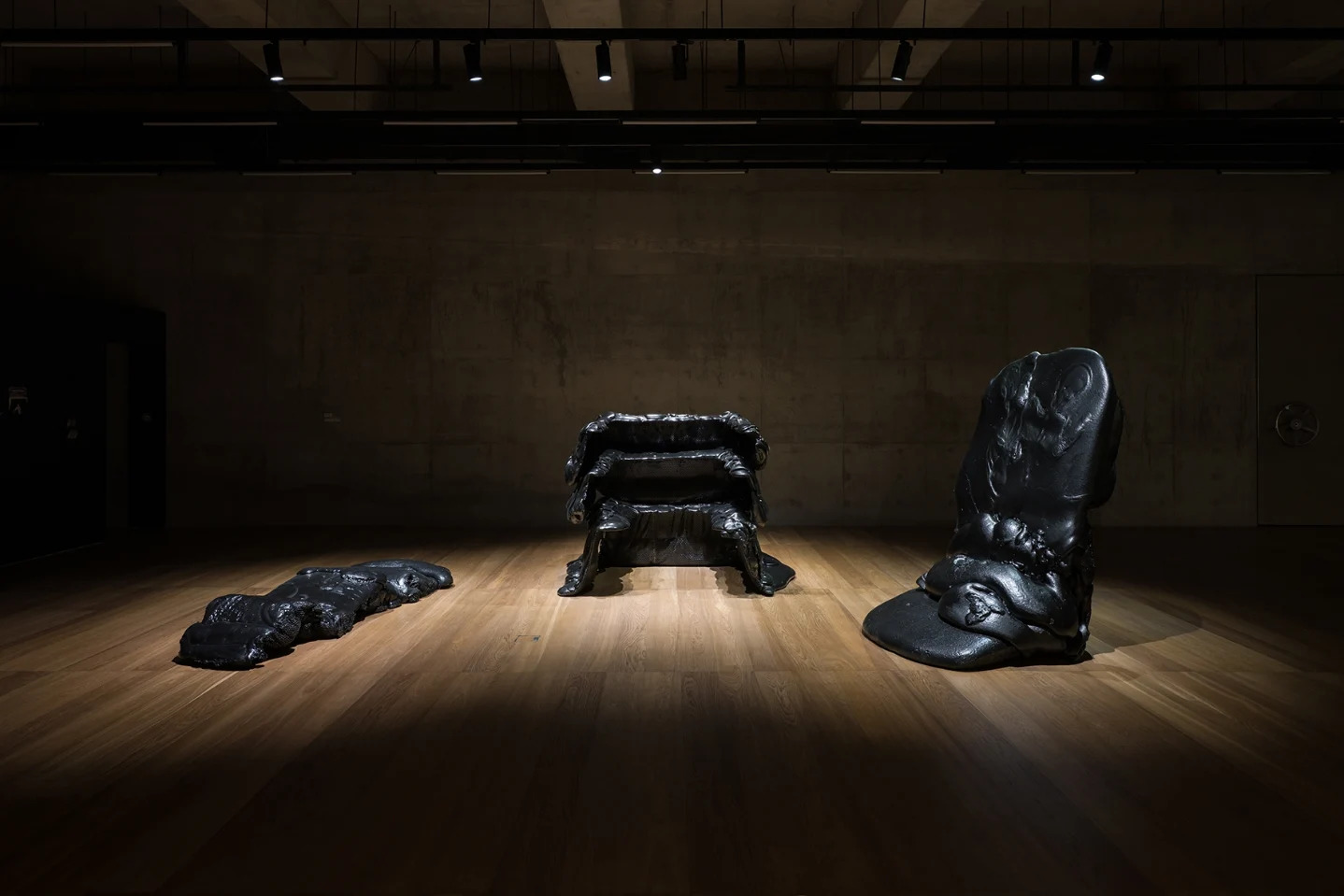
Choi Taehoon, ‘Guardian’ Series, 2025, Installation view of 《The 25th SONGEUN Art Award Exhibition》 (SONGEUN, 2025) © Choi Taehoon

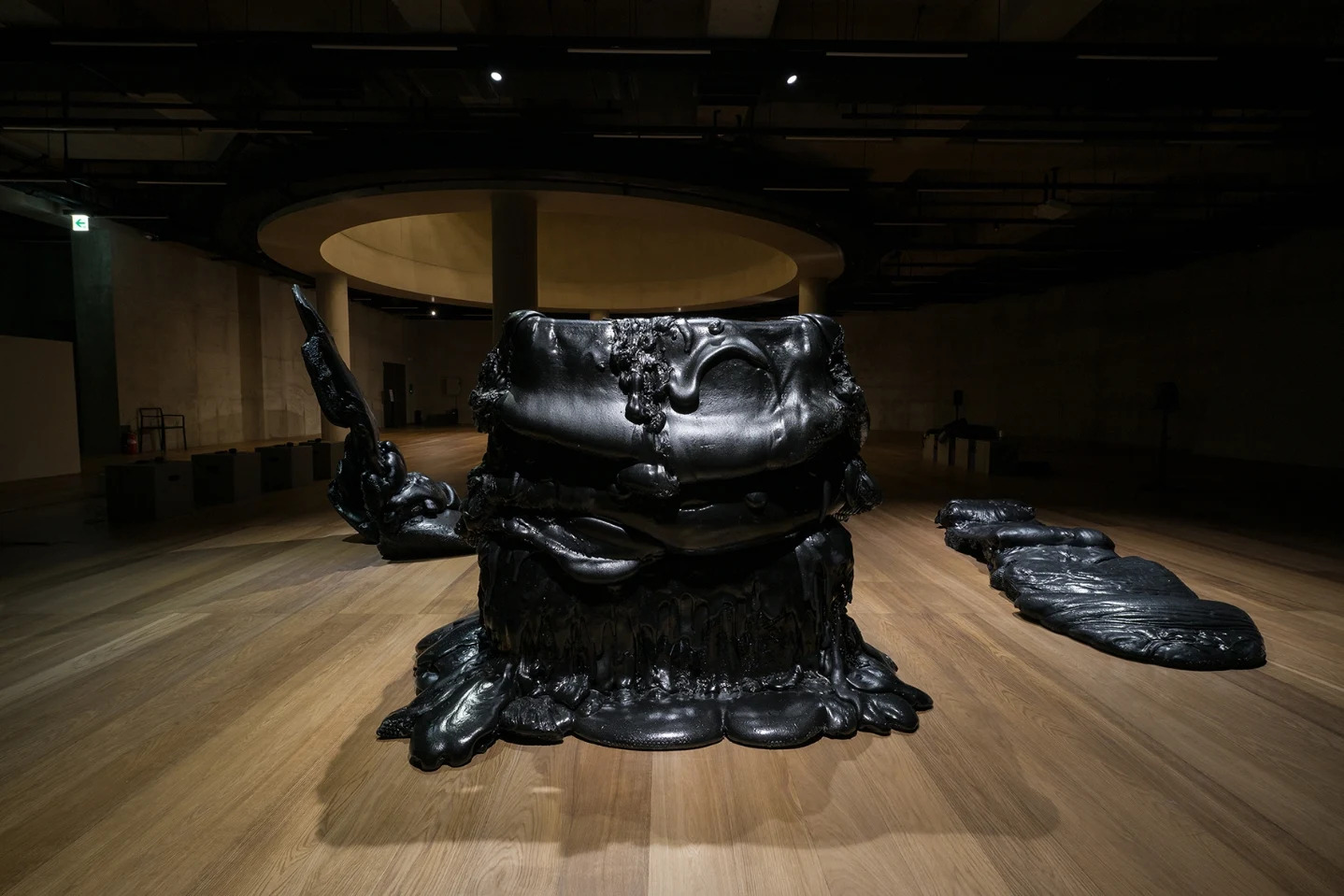
Furthermore, ‘Guardian’, a series begun in 2025, reveals the process through which objects that safeguard the artist’s creative life interact with his own body.
 
At the moment when the polyurethane foam swells and begins to cure, the artist gives the objects mobility by pushing a handcart or folding up a table, while the resulting counterforces and the dynamics of an irregular environment generate the sculpture.
 
In these works, the material and the objects become active participants, entering into a collaborative relationship with the artist.


Choi Taehoon, ‘Guardian’ Series, 2025, Installation view of 《The 25th SONGEUN Art Award Exhibition》 (SONGEUN, 2025) © Choi Taehoon

In this way, Choi Taehoon has explored the possibilities of sculptures that emerge organically and autonomously, liberating everyday objects from the social meanings and functions assigned to them through the act of turning them into sculpture.
 
The organic expansion of objects liberated from their users raises questions about the boundaries between products and artworks, the artificial and the natural, the center and the periphery, and the exterior and the interior, while suggesting the potential of nonhuman objects as subjects within the language of sculpture.

“As I turned objects into sculptures, I felt that I was liberating them both formally and semantically. It was as if I were changing the fate of an object destined to become a piece of furniture into that of an artwork. Looking back, I think I wanted objects to ‘grow on their own,’ with a language of their own.” (Choi Taehoon, Artist’s Note)


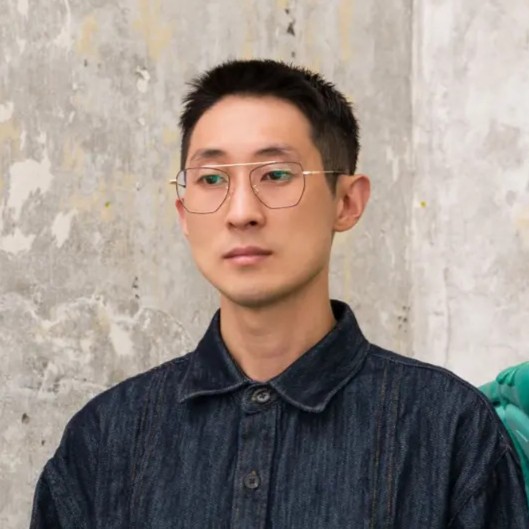
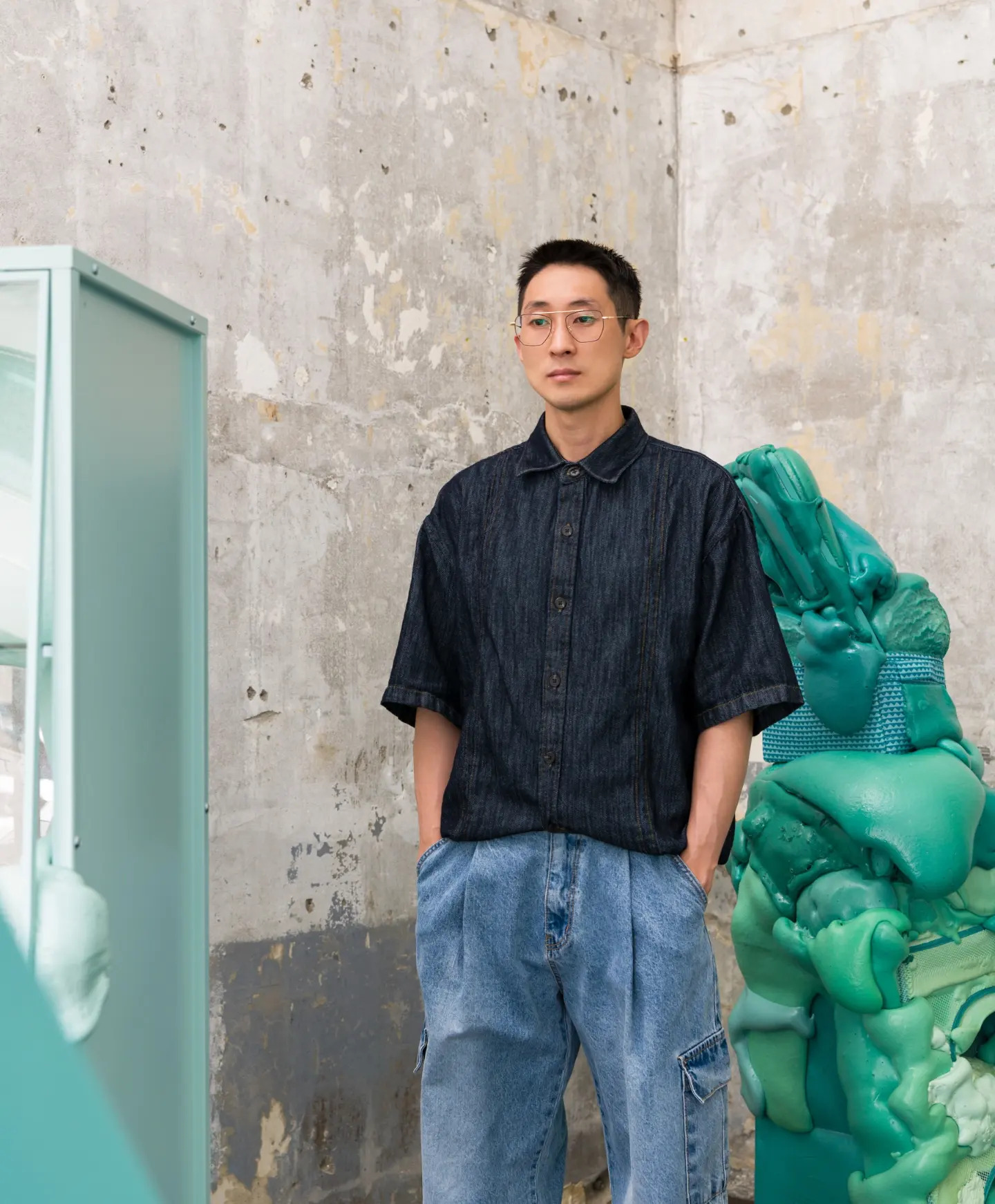
Artist Choi Taehoon © Choi Taehoon

Choi Taehoon received his BFA in Sculpture from the University of Seoul and an MFA from the same university. His recent solo exhibitions include 《TONE》 (P21, Seoul, 2023), 《FIELD》 (P21, Seoul, 2023), 《Wood Type》 (GCS, Seoul, 2022), 《SAL》 (Ohsisun, Seoul, 2021), 《Self-Portrait》 (Post Territory Ujeongguk, Seoul, 2020), and 《South Korean Ensemble》 (SeMA Storage, Seoul, 2019).
 
He has also participated in numerous group exhibitions, including 《SONGEUN × Unboxing Project: Generative Forms》 (SONGEUN, Seoul, 2026), 《The 25th SONGEUN Art Award Exhibition》 (SONGEUN, Seoul, 2025), 《ZIP》 (ARKO Art Center, Seoul, 2024), 《Framer》 (Shower, Seoul, 2023), 《Sculptural Impulse》 (Buk-Seoul Museum of Art, Seoul, 2022), and 《Injury Time》 (Museumhead, Seoul, 2021).
 
Choi Taehoon has been selected as an artist-in-residence at Gapado Artist-in-Residence (2023), Seoul Art Space Geumcheon (2019), and the MMCA Residency Goyang (2016–2017). He also served as the lead curator of 《ZIP》 (ARKO Art Center, Seoul, 2024).

References