Kim Donghee (b. 1986) has created works that respond to the architectural structures of exhibition spaces, non-exhibition spaces, and commercial spaces, intervening in the spatial perception experienced by those who enter and view them.
 
He creates and installs tangible and intangible structures that embody the numerous contexts imposed upon a space as a kind of layer, emptying out the constructed space and guiding viewers toward new architectural experiences within it.


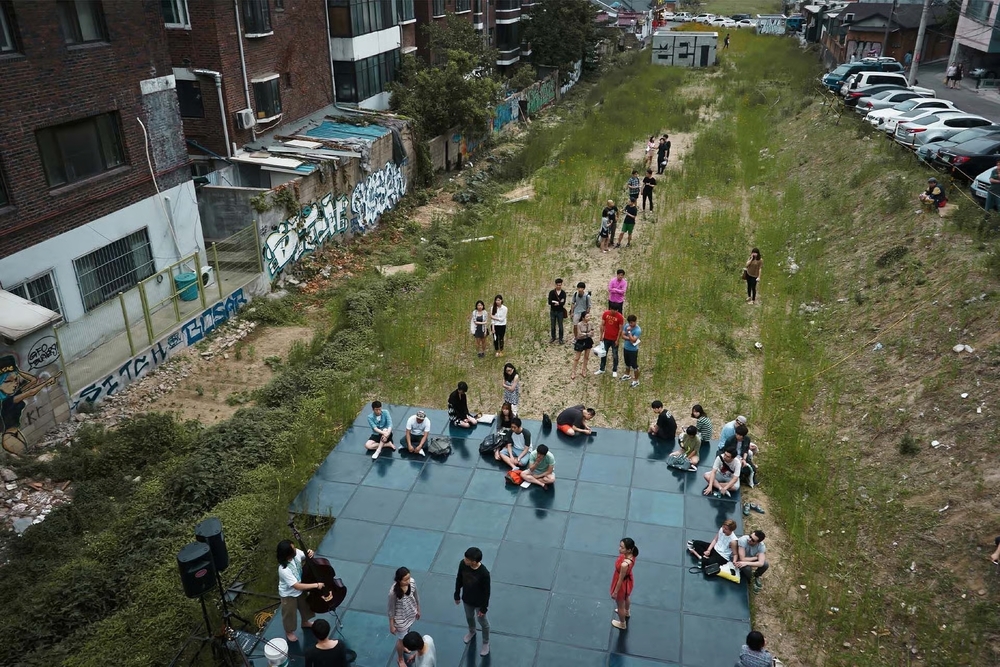
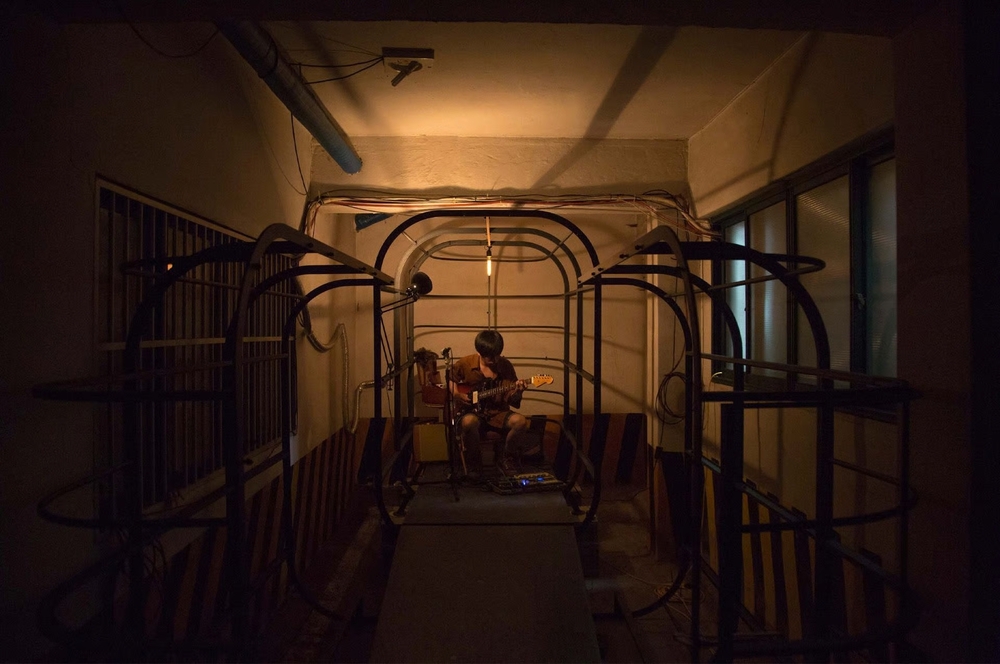
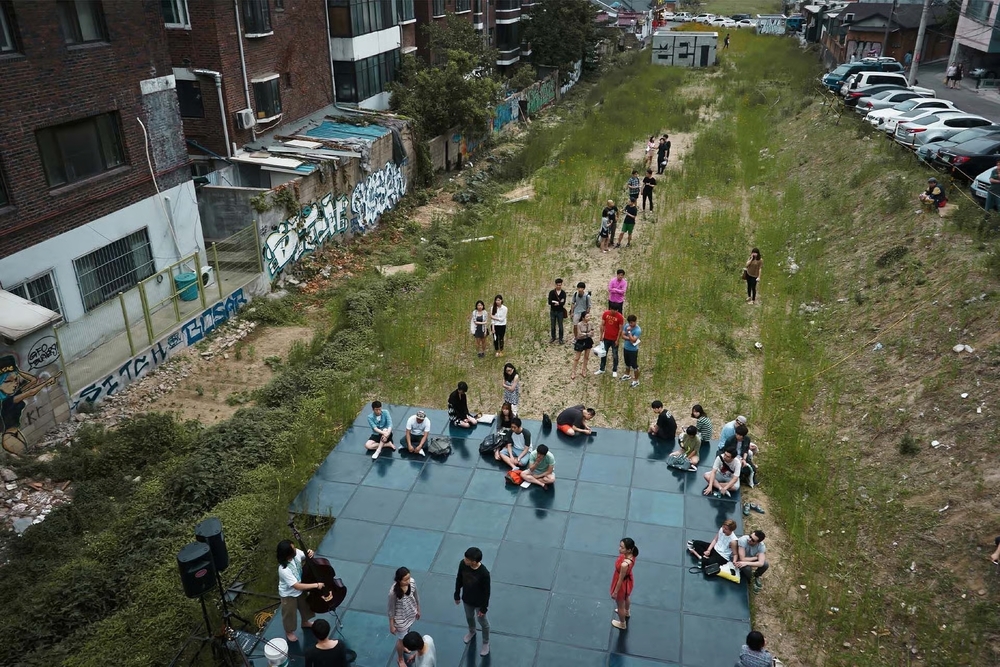
Kim Donghee, House of Dispersed Layers_The House x INstadio movement x Zorba, 2014, performance by INstadio movement, sound by Zorba © Kim Donghee

Beginning with his first solo exhibition, 《House of Dispersed Layers》 (2014), Kim Donghee has developed and transformed his practice through a process of separating and articulating the conditions of each project, guided by three key concepts: space, platform, and collaboration. Through this process, he has continually developed new skins, skills, and configurations.
 
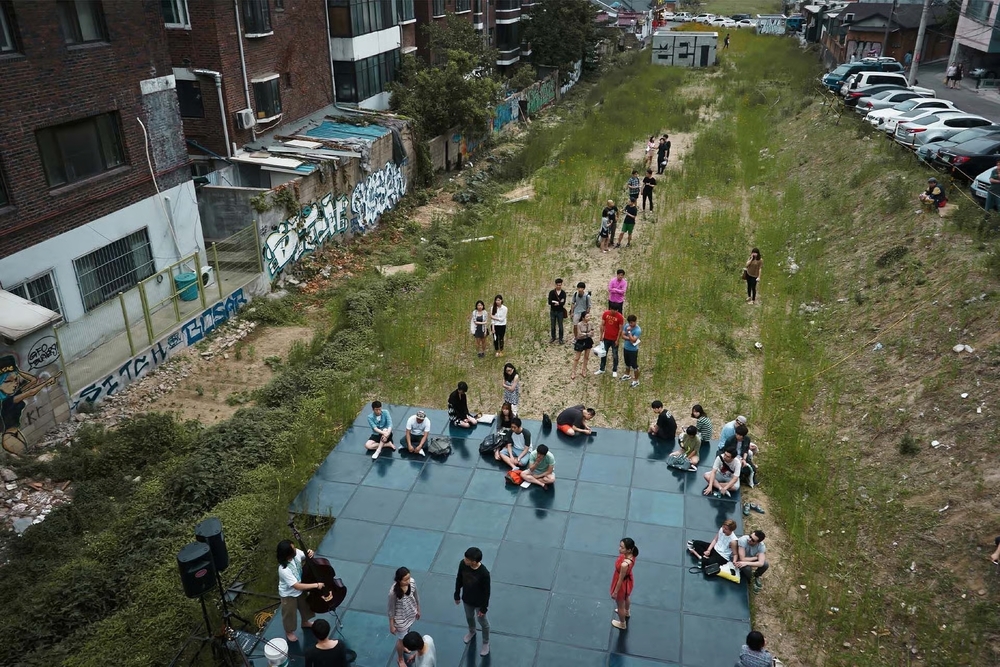
《House of Dispersed Layers》 was a project that sought out abandoned spaces or places overlooked and unrecognized in everyday life, temporarily opening them up for collective use and appropriation through “direct” encounters with their owners, rather than through conventional contractual relationships.


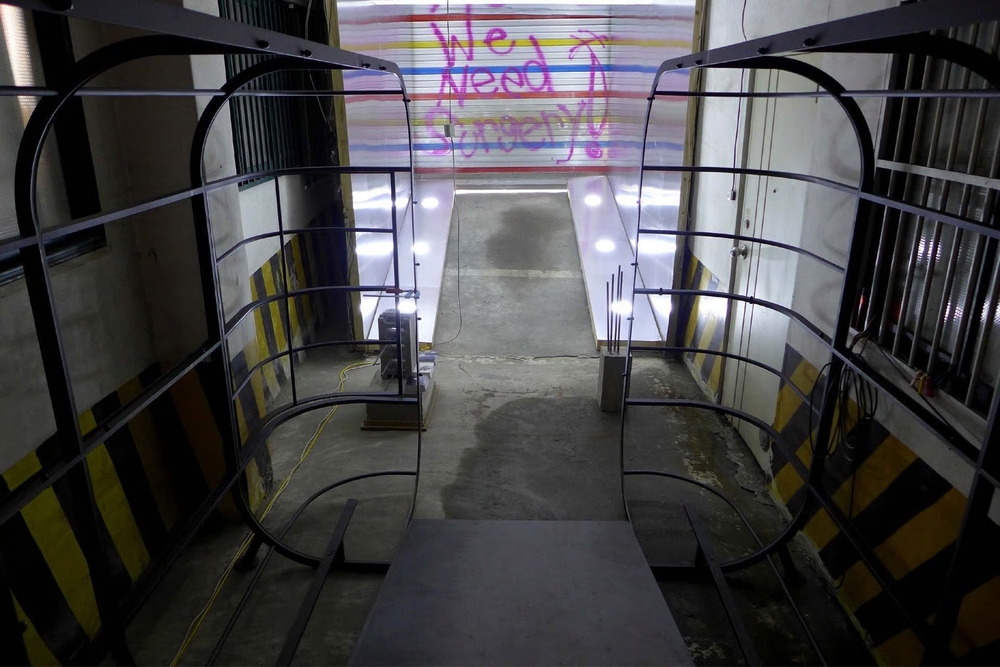
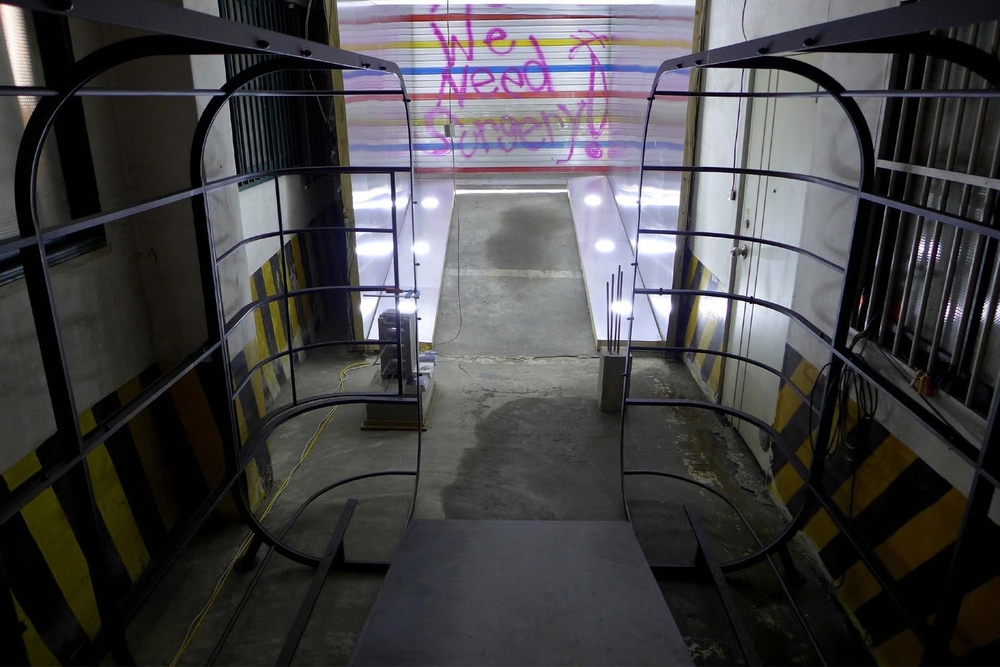
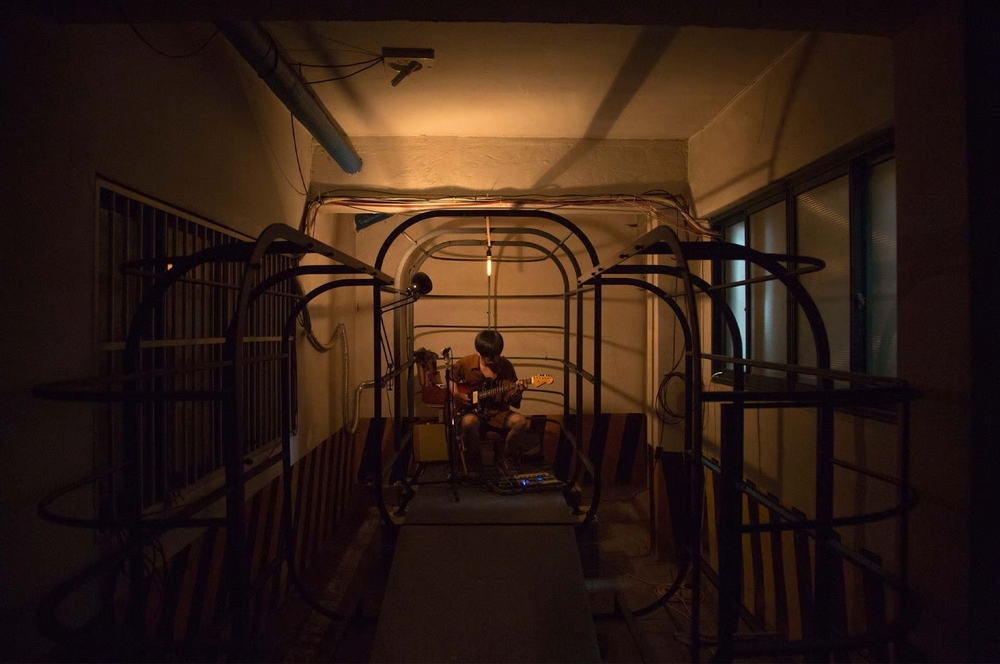
Kim Donghee, House of Dispersed Layers_Garage x 103 in Garage, 2014, Site-specific installation © Kim Donghee

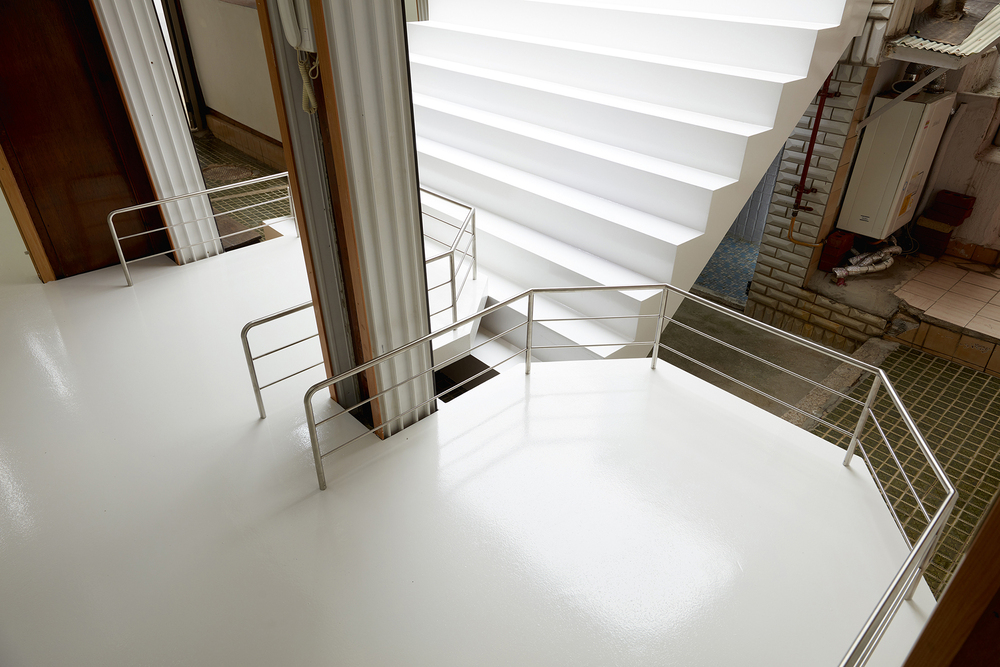
The exhibition took place across five spaces in Seoul’s Seogyo-dong, Donggyo-dong, Sangsu-dong, and Changjeon-dong neighborhoods. These included an abandoned railway site beneath a bridge, an apartment complex shelter, an emergency exit, the rooftop of a stairwell building, and a parking lot in a neighborhood of studio apartments.
 
In collaboration with various artists, the project developed different forms of installation structures for each site, transforming these spaces into fields where new events and encounters could emerge.


Kim Donghee, House of Dispersed Layers_Garage x Leuuuco, 2014, Sound performance by Nam Hyun, site-specific installation © Kim Donghee

The artist then worked in alignment with the “Nascent Spaces(신생공간)” movement, which took place in Seoul from 2014 to 2016. Some of his works transformed spaces to enable fresh usage, creating platforms for displaying other art pieces.
 
He also presented works that distorted the floor plans and the physical presence of established art spaces to which he was invited. Kim promptly adapts to the context of the materials and spatial conditions in which he works, transforming them to facilitate artistic and human activities, as well as adjusting the visibility of his contributions in various roles.


Installation view of 《3 Volumes》 (Audio Visual Pavilion, 2017). Photo: Sangtae Kim. © Audio Visual Pavilion

In 2017, Kim Donghee presented 《3 Volumes》, an exhibition project that used Audio Visual Pavilion in Tongin-dong as the pedestal for a new work. Rather than dismantling or erasing the physical structures of the space or the traces of footsteps and gazes left behind within it, he chose to add and overlay structures of his own design.
 
First, the artist categorized the elements used to transform the existing gallery space and selected three of them. He then layered these elements onto a drawing and merged the layers to create volume, developing the work through a process of accumulation and transformation.


Installation view of 《3 Volumes》 (Audio Visual Pavilion, 2017). Photo: Sangtae Kim. © Audio Visual Pavilion

As a result, a monumental spatial sculpture was installed on the 119.7-square-meter pedestal, activated through the process of viewers physically entering and moving through it.
 
Structures such as stairs, balconies, walls, mirrors, passageways, window frames, and plants, detached from their original functions, connect and collide with one another through the movements of viewers, forming new relationships. By walking, stopping, looking, stepping over, or climbing, viewers activate the work through their own actions.


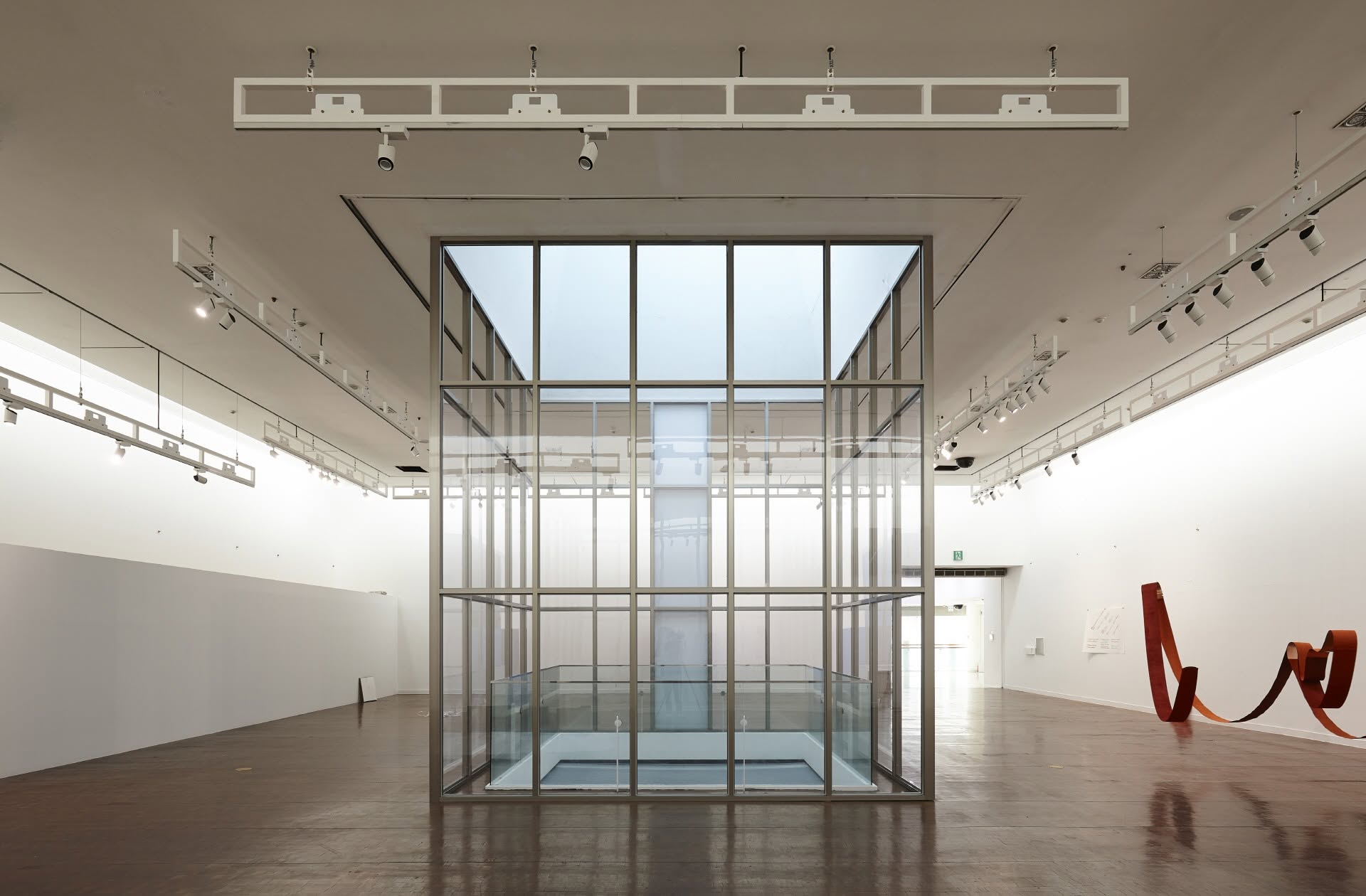
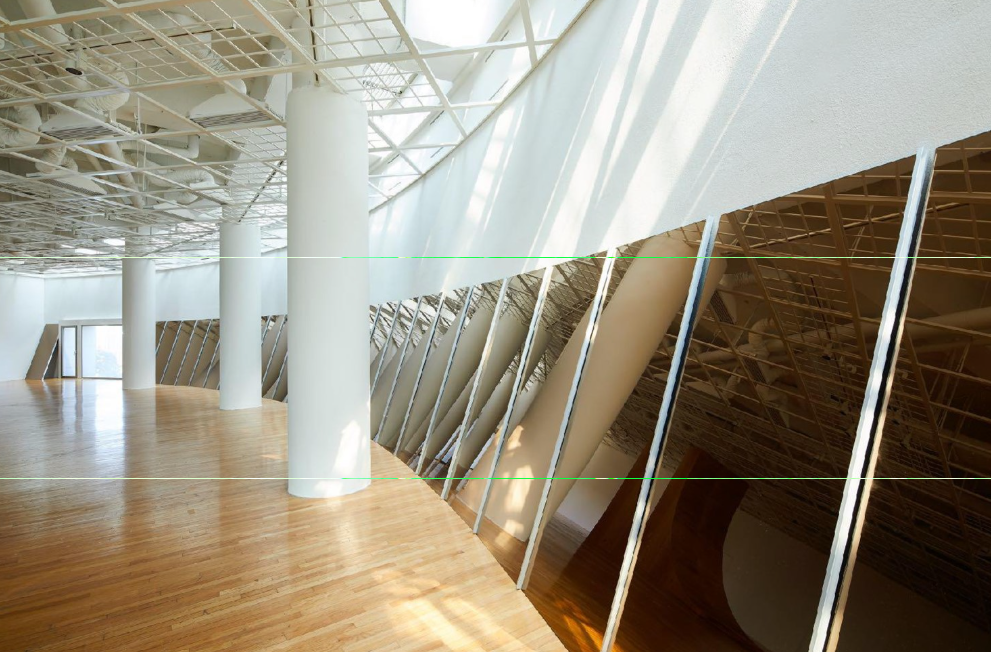
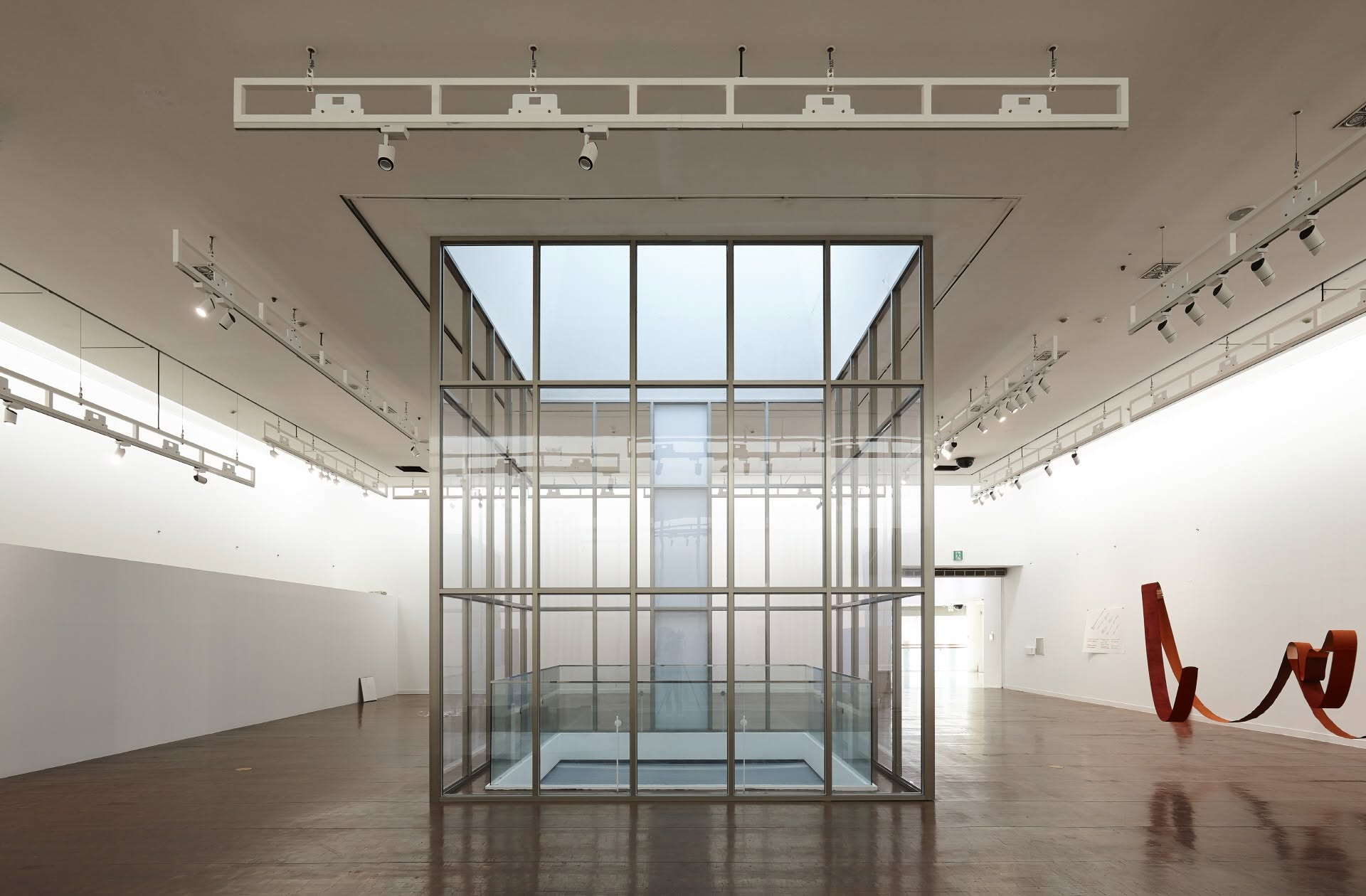
Kim Donghee, Sequence Type: 1, 2020, installation, aluminum, polycarbonate, 494×494×555cm © Seoul Museum of Art

In this way, Kim Donghee standardizes systems by adding and overlaying structures of his own design, thereby organizing variable conditions into structures.
 
His spatial production—through which he reconfigures the relationships between odd numbers, basic geometric forms, and the pedestal and the main body—invites others to enter and exit the space, allowing them to experience the relationships between the layers established by the artist through the technical use of their own bodies.
 
Extending this approach, his 2020 series ‘Sequence Type’ draws on existing architectural structures and the tangible and intangible elements embedded within them to construct new spatial sequences.
 
The first work, Sequence Type: 1, was created in response to a structure featuring three windows in the existing space. In Sequence Type: 2, transparent columns were installed beneath the building’s high clerestory windows, allowing viewers to directly experience the changing patterns of light entering the space and the shifting reflections cast onto the structures over the course of the day.


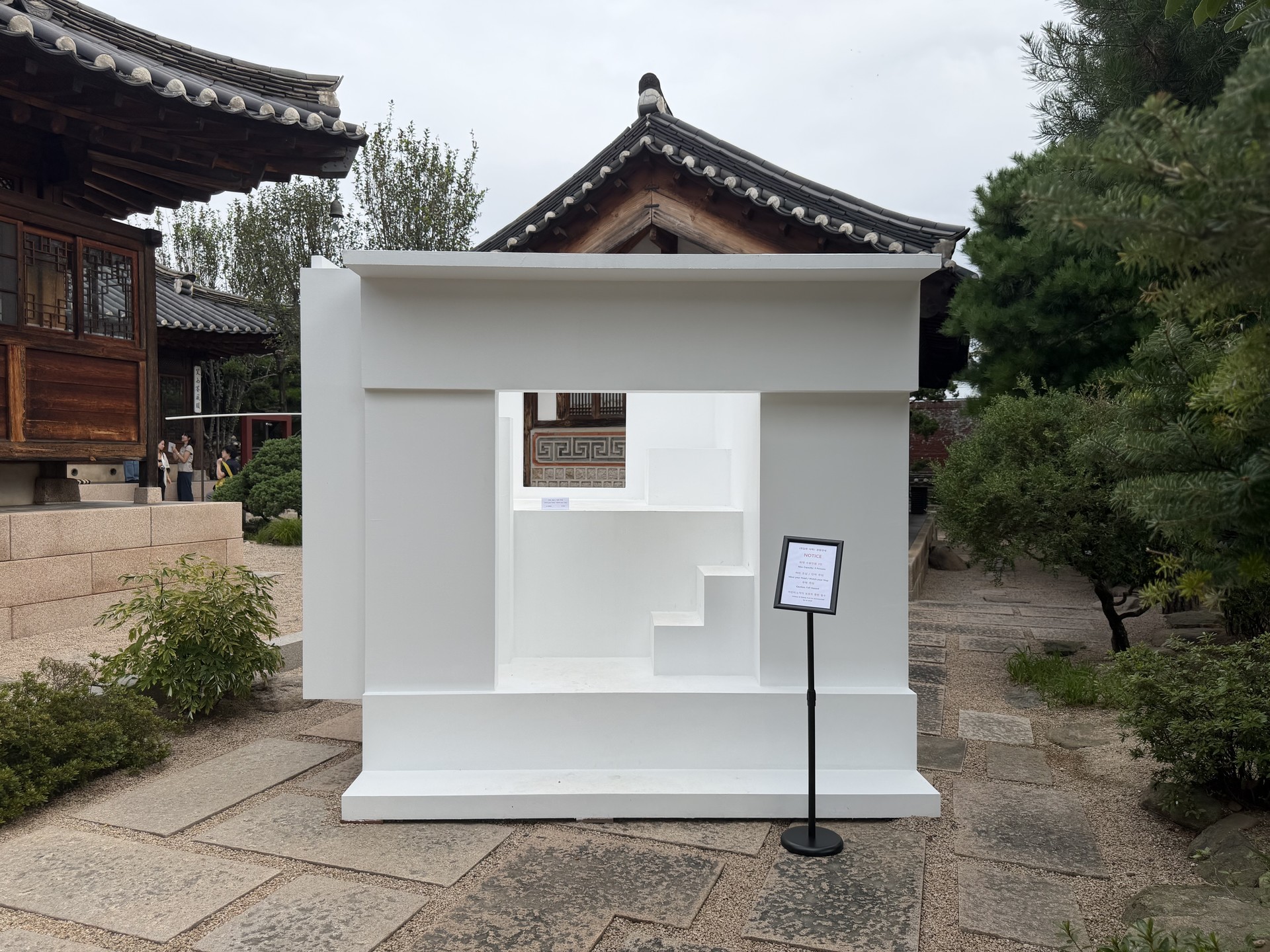
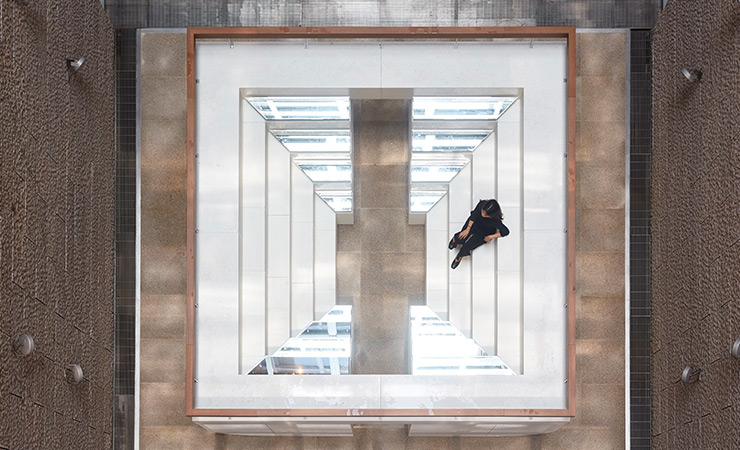
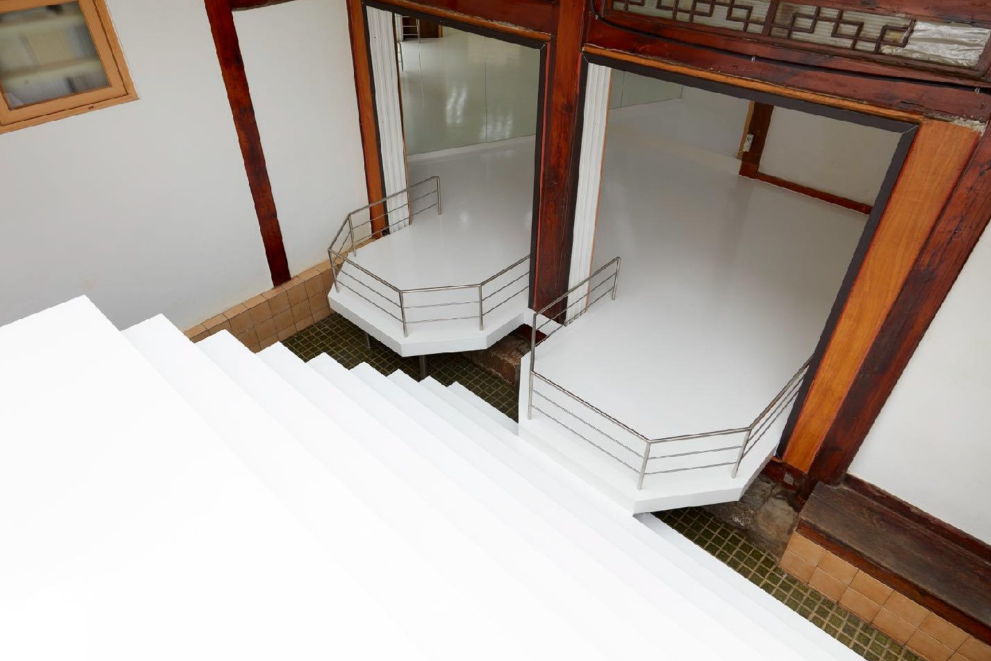
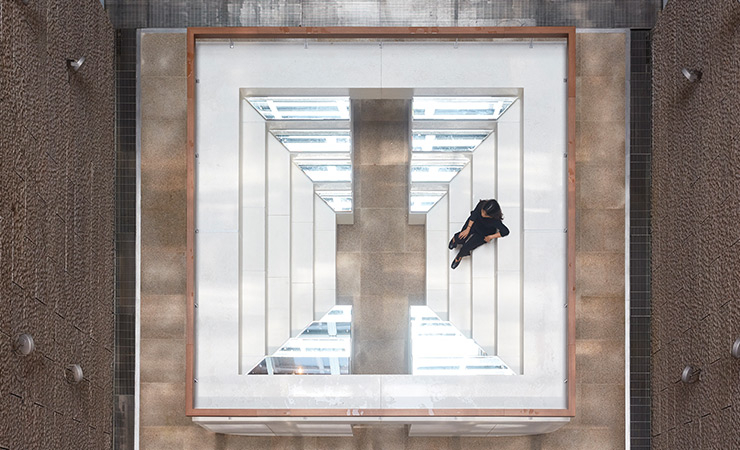
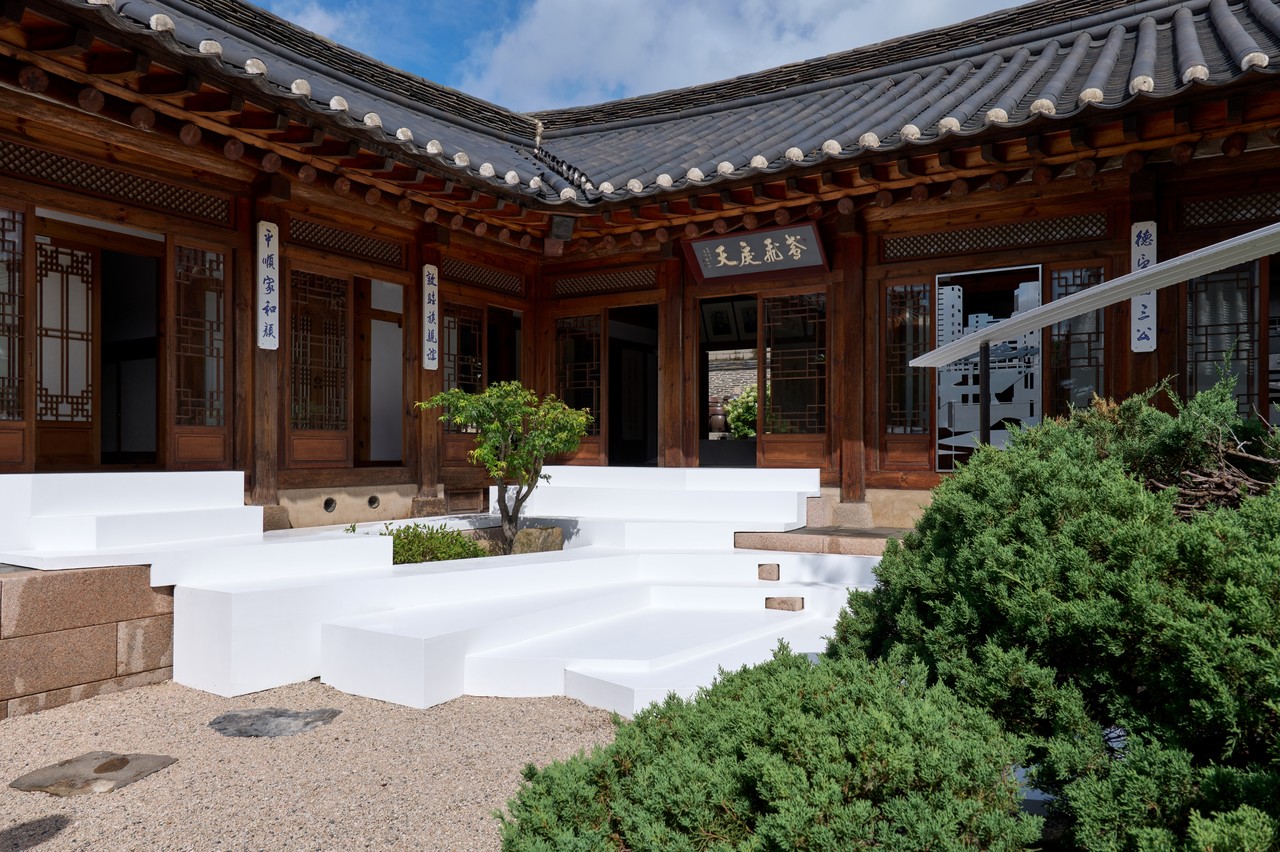
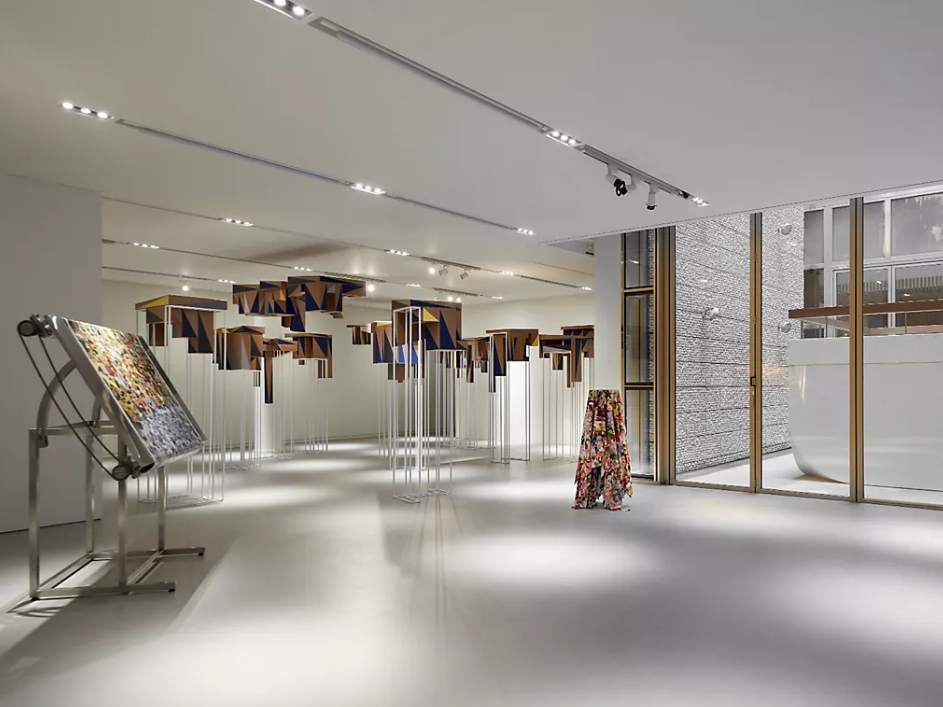
Kim Donghee, Sequence Type: 3, 2020, Plywood, waterproof coating, stainless steel, interior film, silicone, 450x450x(h)220cm © Kim Donghee

Meanwhile, Sequence Type: 3, presented in the group exhibition 《Elsewhere》 at Atelier Hermès, consisted of a sequence in which viewers moved from the exhibition space into the courtyard, climbed onto the work, and looked up at the “sky” of the courtyard.
 
The work was an inverted structure of interior and exterior, created through an analysis of the spatial relationships connecting the interior of Atelier Hermès, its passageways, and the courtyard.
 
By interweaving interior and exterior spaces into the viewer’s path—from the exterior of the building into the exhibition space, through the courtyard outside the exhibition space, and finally into the structure itself to look up at the sky—the work induces a sense of visual and perceptual disorientation.


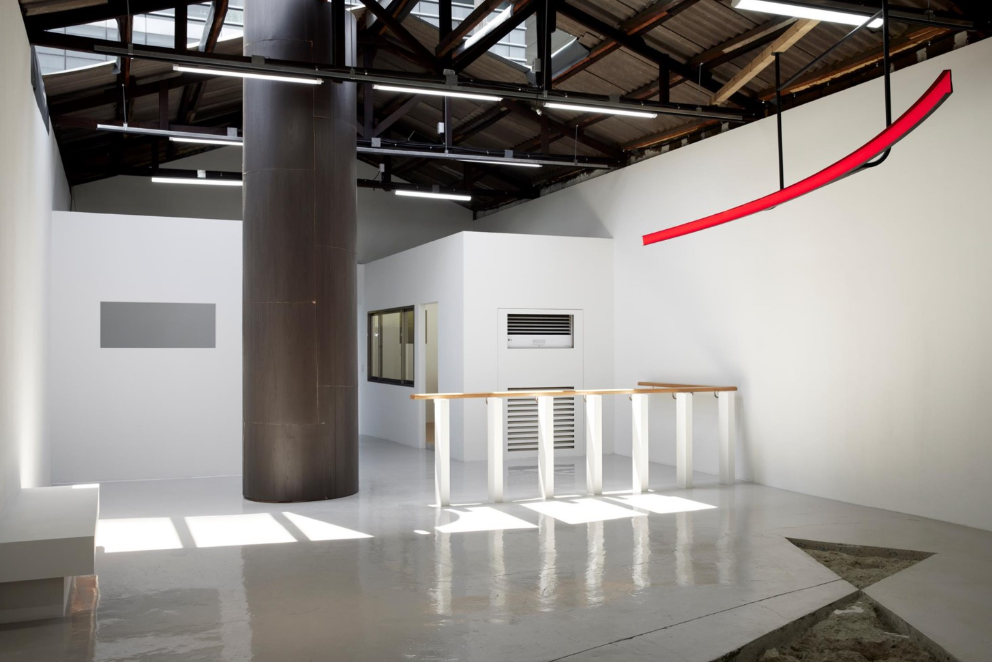
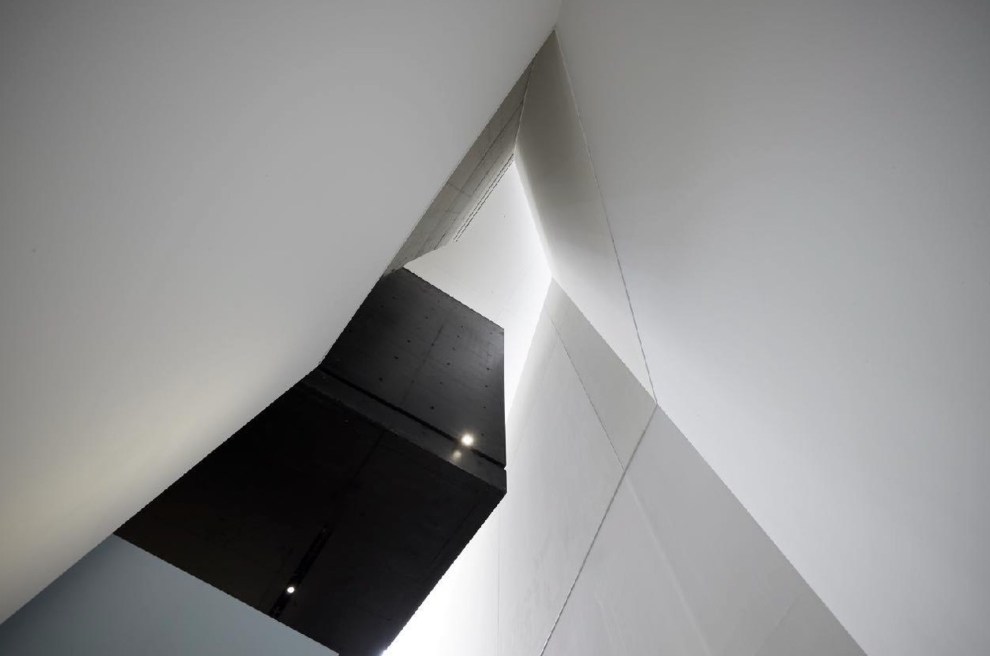
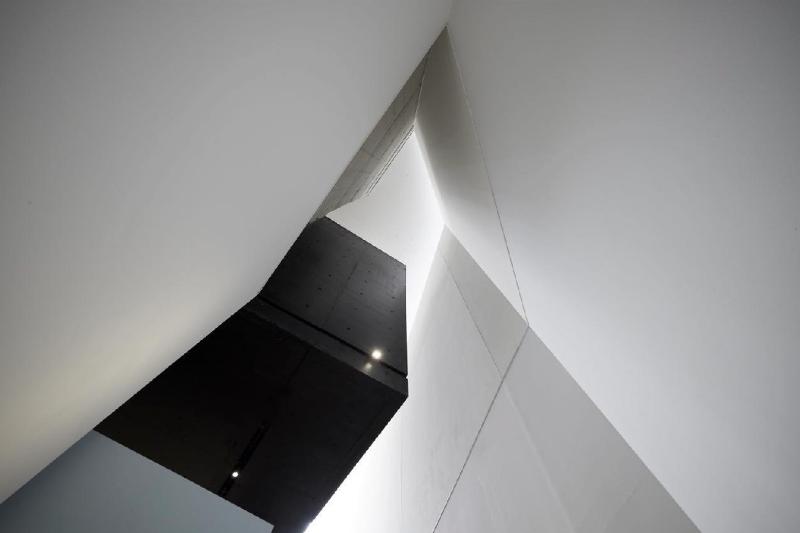
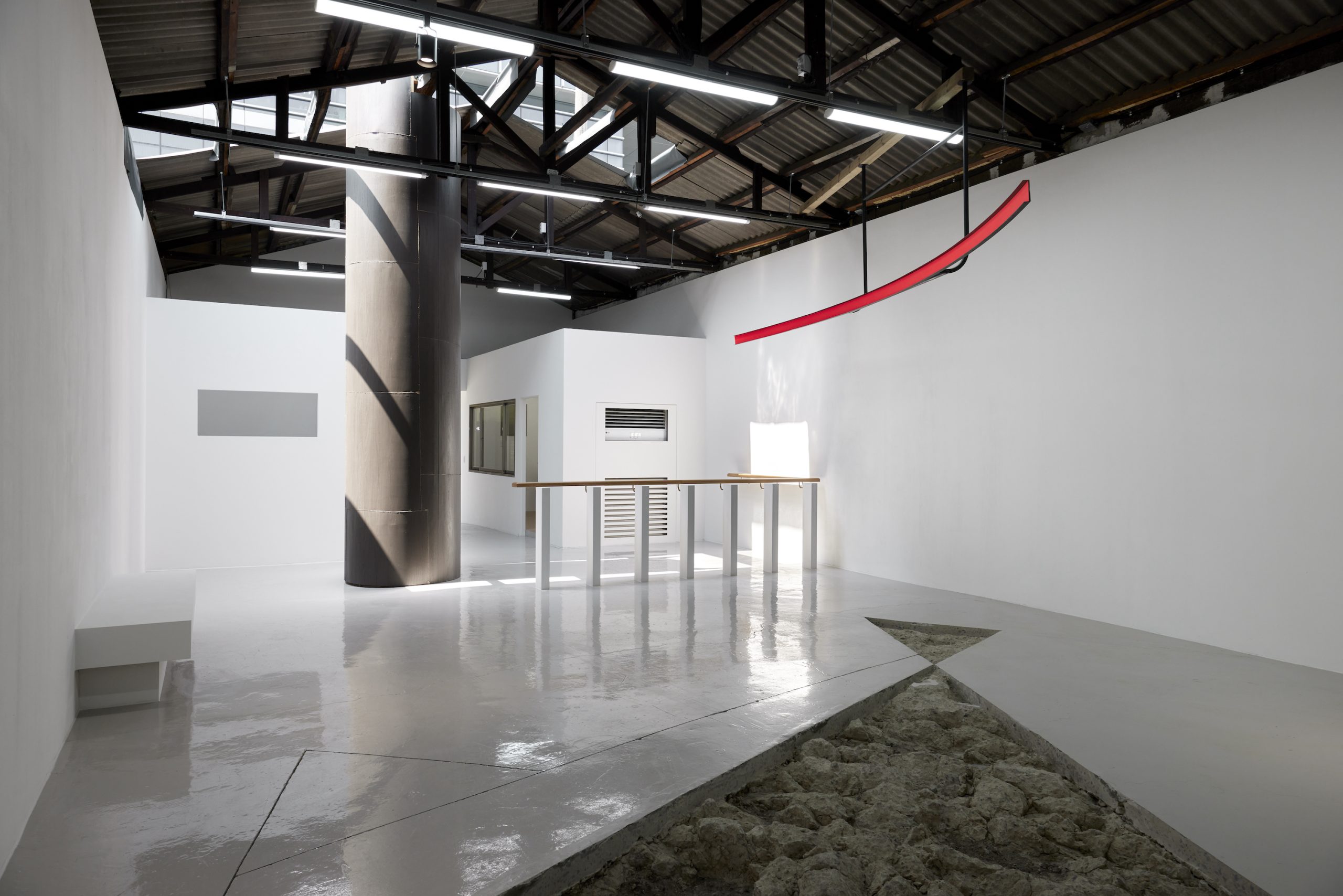
Kim Donghee, Reverse Mountain, 2022, Exhibition wall, black column, bench, handrail, lighting, marking, path, place registration, video in web, roll blind operation on time, about 1014㎡, Variable size © Kim Donghee

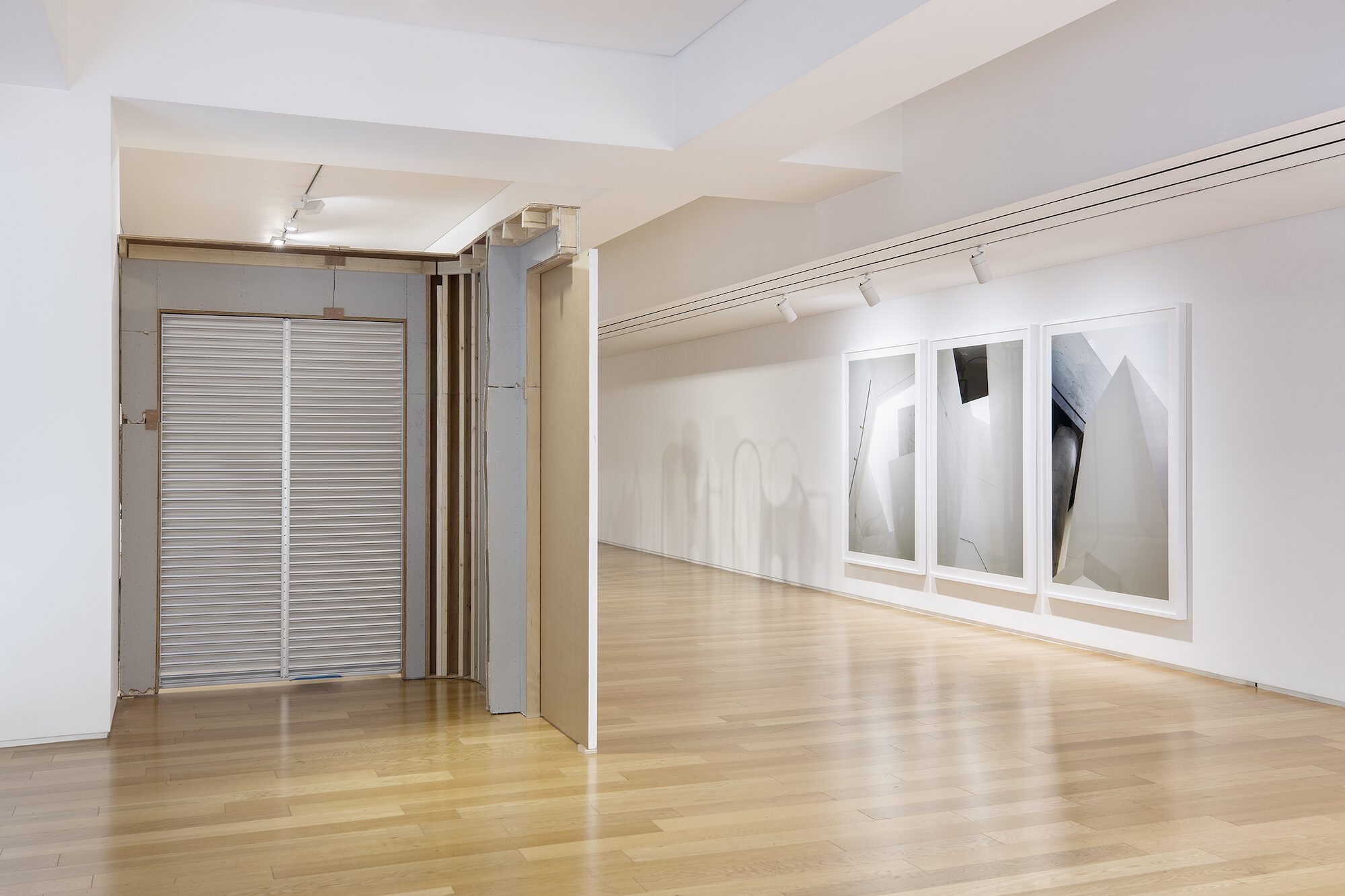
Reverse Mountain (2022), presented in the 《Art Spectrum 2022》 exhibition at Leeum Museum of Art, is a work that intervenes in various elements of the exhibition space, including its architectural conditions, temporary walls, light, and circulation, to create new ways of experiencing the space.
 
The artist revealed the previously concealed ceiling and altered the position and angles of the temporary walls, transforming the exhibition space into an unfamiliar landscape. Moving and pausing among the structures, viewers are encouraged to perceive the space anew.
 
The work also incorporates the museum’s social media channels and blinds programmed to operate at specific times. In doing so, it takes the form of a fluid sculpture that continually changes in response to various tangible and intangible elements, including natural light, information, and the movements of viewers.


Kim Donghee, ‘Portable Storage’ Series, 2022, Installation view of 《Kak》 (HITE Collection, 2022) © Kim Donghee

Meanwhile, for the 2022 exhibition 《Kak》 at HITE Collection, the artist brought part of Hall1, his studio and exhibition space in Seonyudo, into the HITE Collection space.
 
The ‘Portable Storage’ (2022) series, in which a fragment of an existing space intervenes in a new environment after being removed from its original context, temporarily transplants a portion of one space into another. Once relocated, these spatial fragments connect to the structures or surfaces of the new space, taking on a sculptural function that influences its overall appearance.


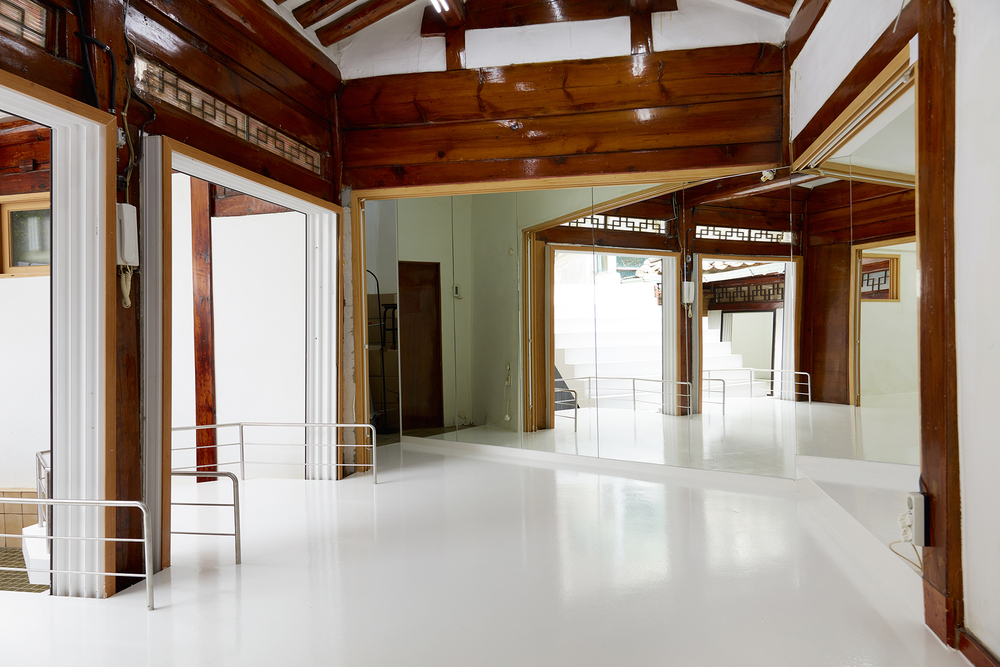
Installation view of 《Hall 2》 (Hall 1, 2023) © Kim Donghee

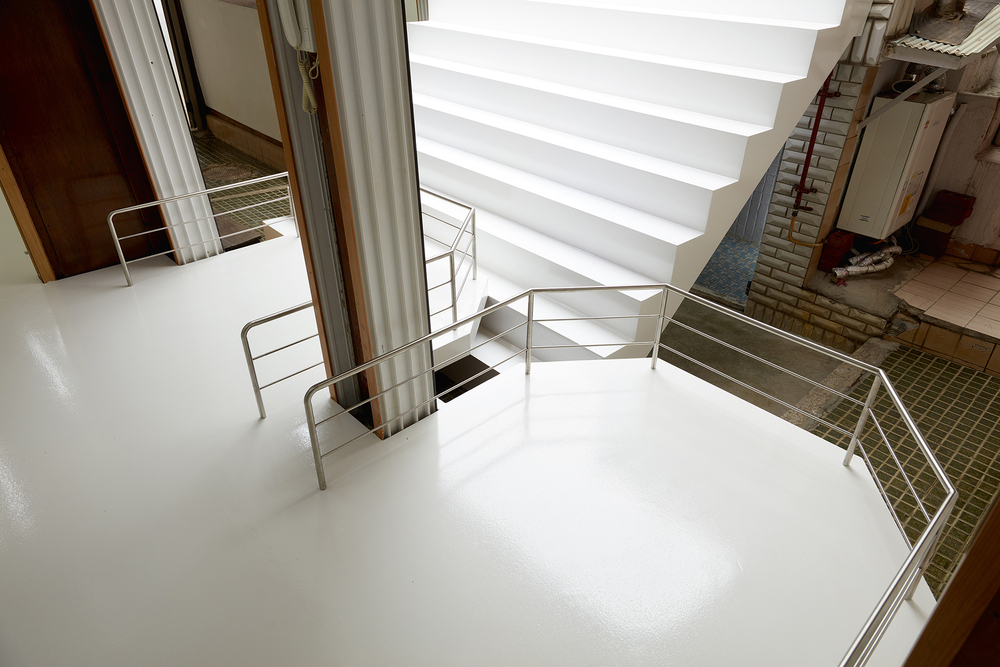
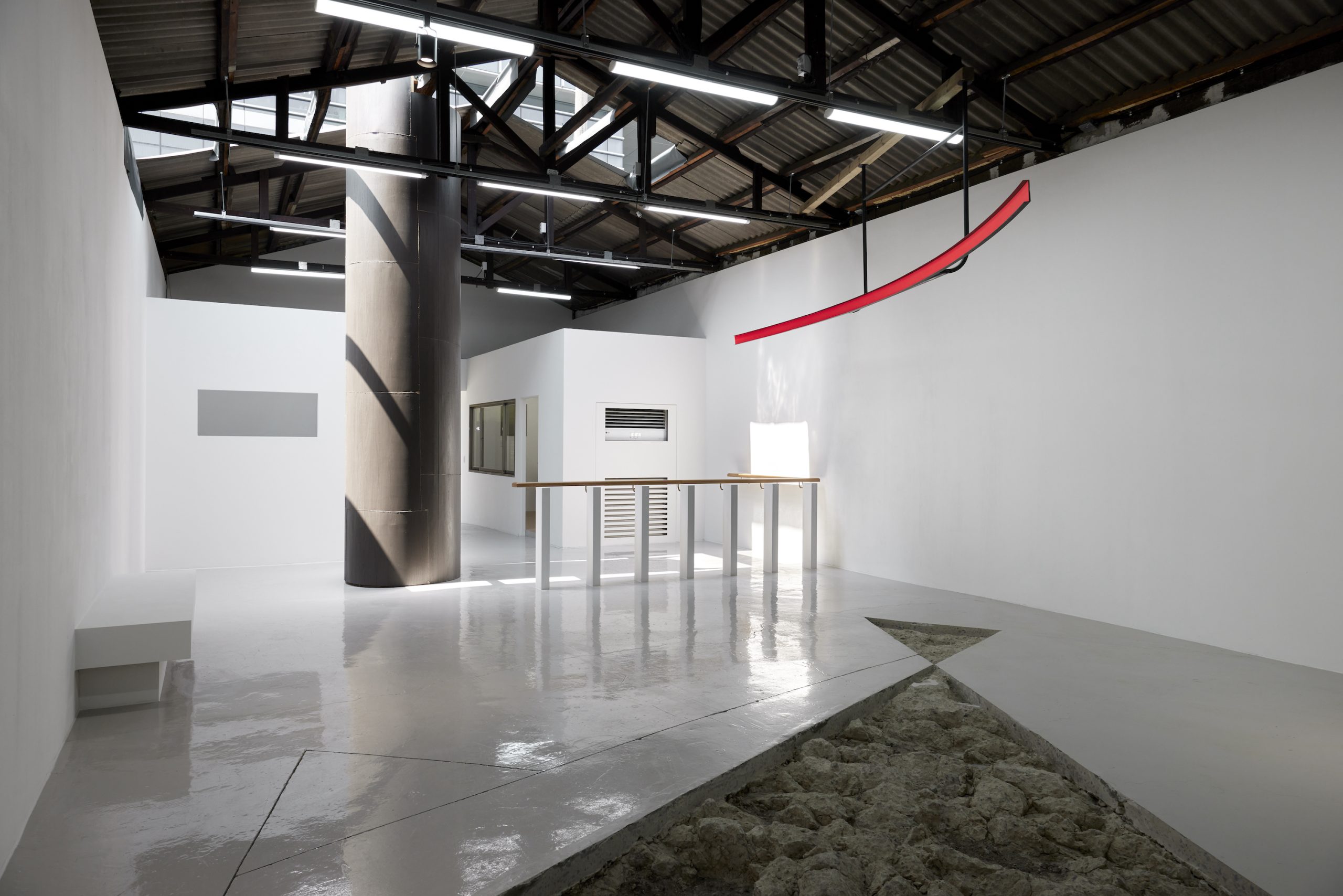
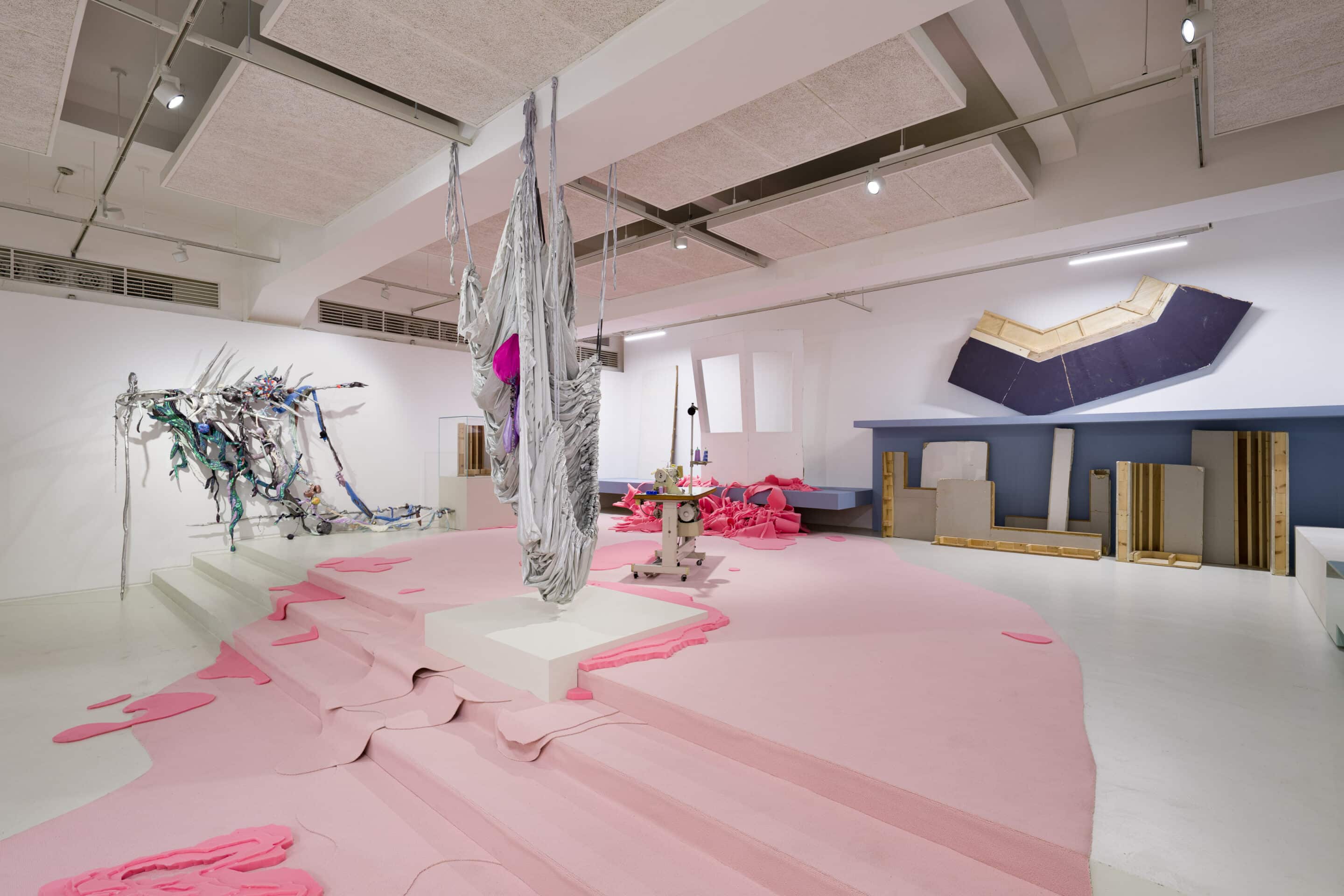
Meanwhile, the 2023 solo exhibition 《Hall 2》, held at Hall1, revisited the architectural traces embedded in the existing space and the spatial context through which it has gradually been transformed into a white cube. The exhibition took place in Hall1, a space converted from a building formerly used as a factory and warehouse.
 
With its original architectural traces—including brick walls, a slate roof, and rusted beams—still intact, the space cannot fully function as a white cube. Nevertheless, throughout its use as an exhibition venue, these conditions have been set aside in favor of treating the space as an environment designed for comfortable viewing of artworks.
 
Based on these architectural conditions, Kim Donghee sought to reconfigure the relationship between space and viewers by constructing a new space, “Hall2,” on top of the existing Hall1.


Installation view of 《Hide Edges》 (YPC Space, 2025) © YPC Space

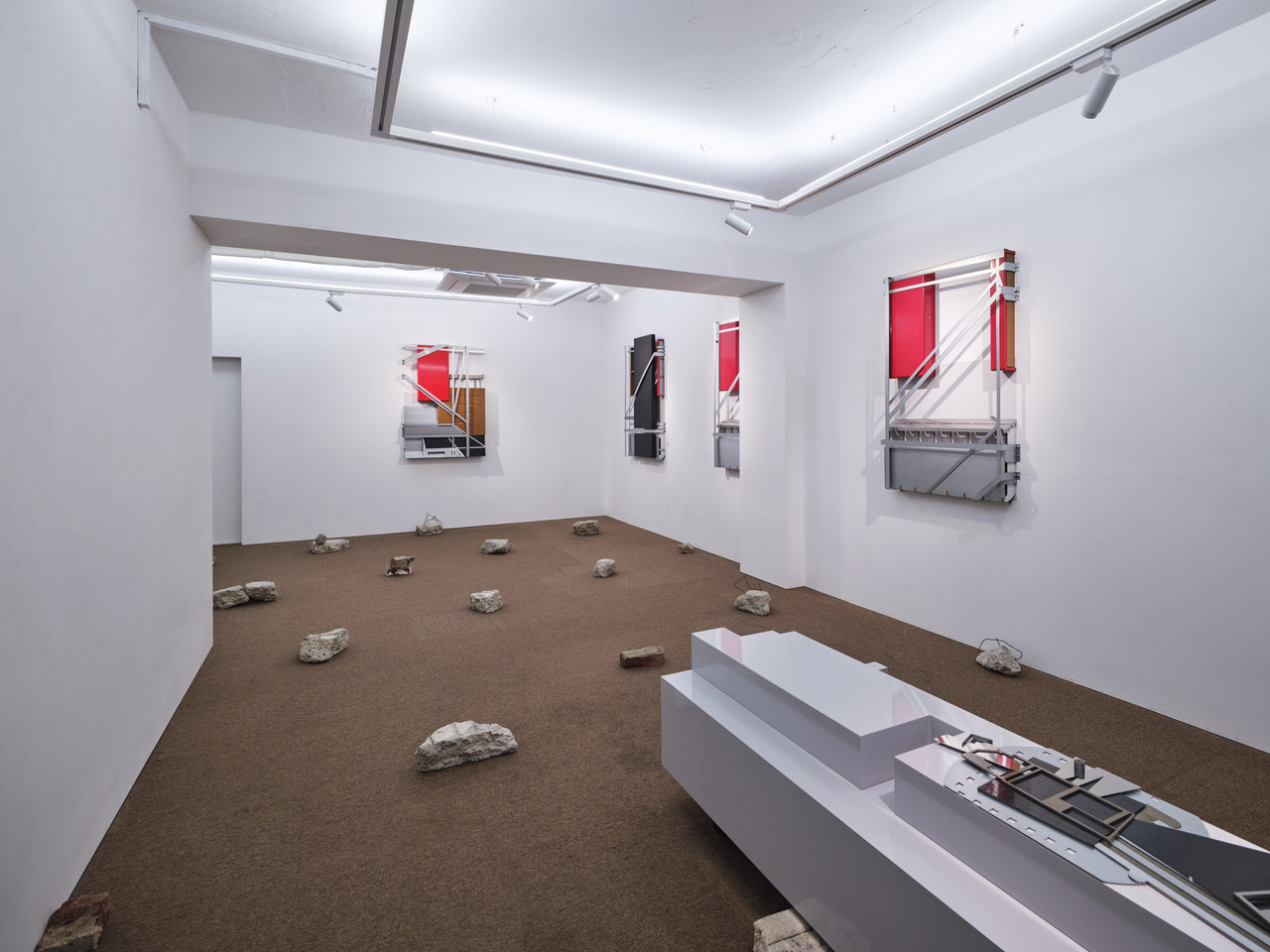
Meanwhile, in his 2025 solo exhibition 《Hide Edges》, Kim Donghee overlaid the large-scale installation Dockings (2024), created by transforming and recombining elements from his previous works, onto the new space of YPC Space as a single layer.
 
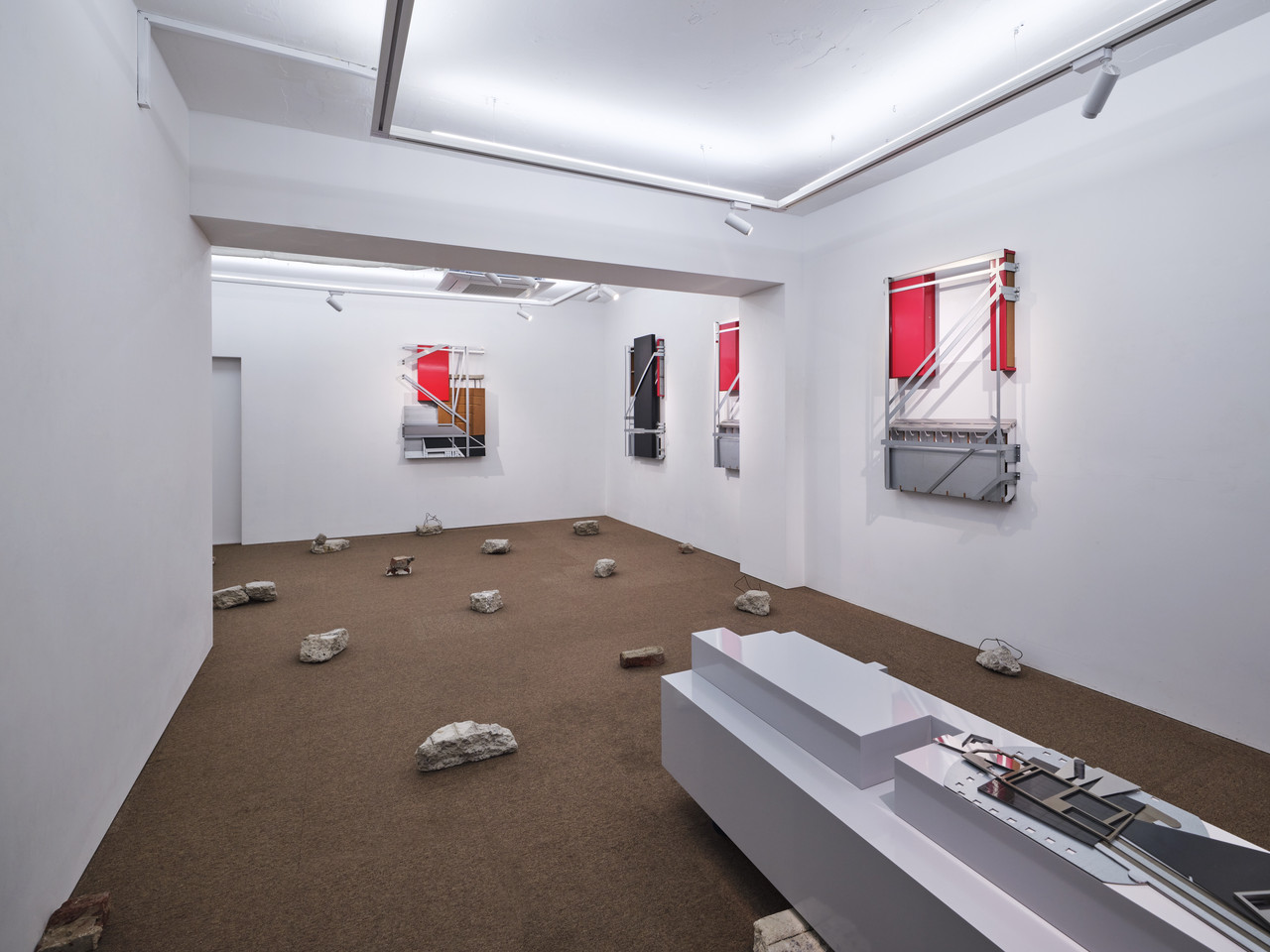
Kim Donghee overlaid YPC Space onto the SketchUp file of his existing work *Dockings at the same scale, then set virtual windows according to the number and dimensions of the windows actually open in the physical space. By observing what could be seen through each window, he explored the relationship between space and viewpoint.


Installation view of 《Hide Edges》 (YPC Space, 2025) © YPC Space

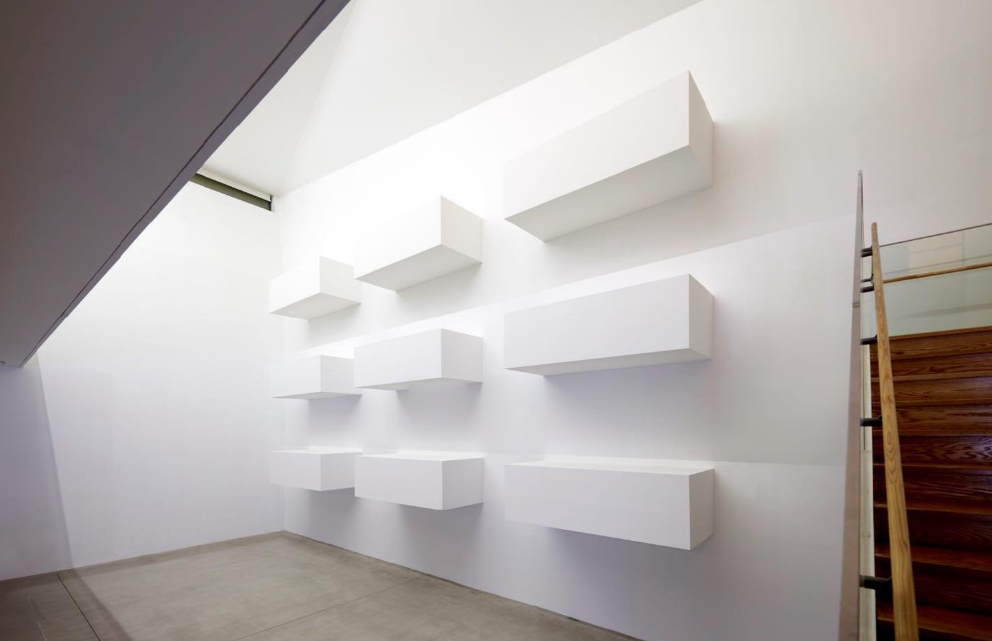
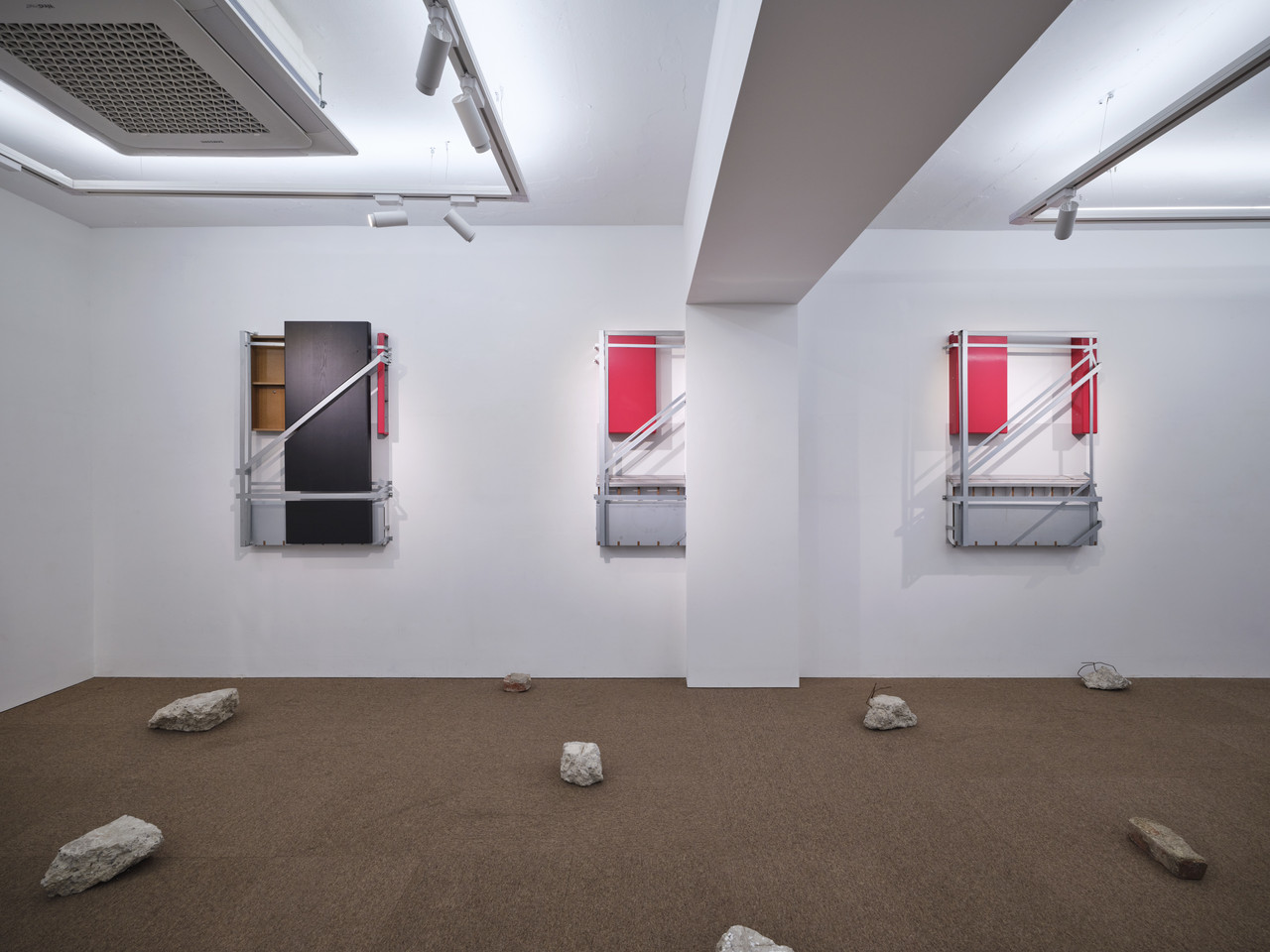
The artist “examined the subtle shifts in viewpoint between the window and what is seen through it, adjusting the angle of vision to extract the optimal scene.” He then rendered the selected scenes as reliefs using various materials, including wood, steel plate, and high-gloss surfaces.
 
The four planar works mounted on the wall traverse the distinct layers of drawings, architecture, and autonomous artworks, fixing a particular viewpoint as a single scene. Here, the drawing is no longer a potential blueprint but becomes a tangible structure in its own right, while the physically realized architecture becomes a temporary manifestation of that drawing.


Installation view of 《Hide Edges》 (YPC Space, 2025) © YPC Space

From this perspective, “Hide Edges” integrates the act of looking at the urban landscape through actual windows with the process of using windows as filters through which different environmental elements and layers of time accumulate.
 
The process of observing how elements designed according to different conditions overlap within a single space, and discovering new forms created as one layer intersects with or cuts through another, suggests infinite possibilities for combination and variation.


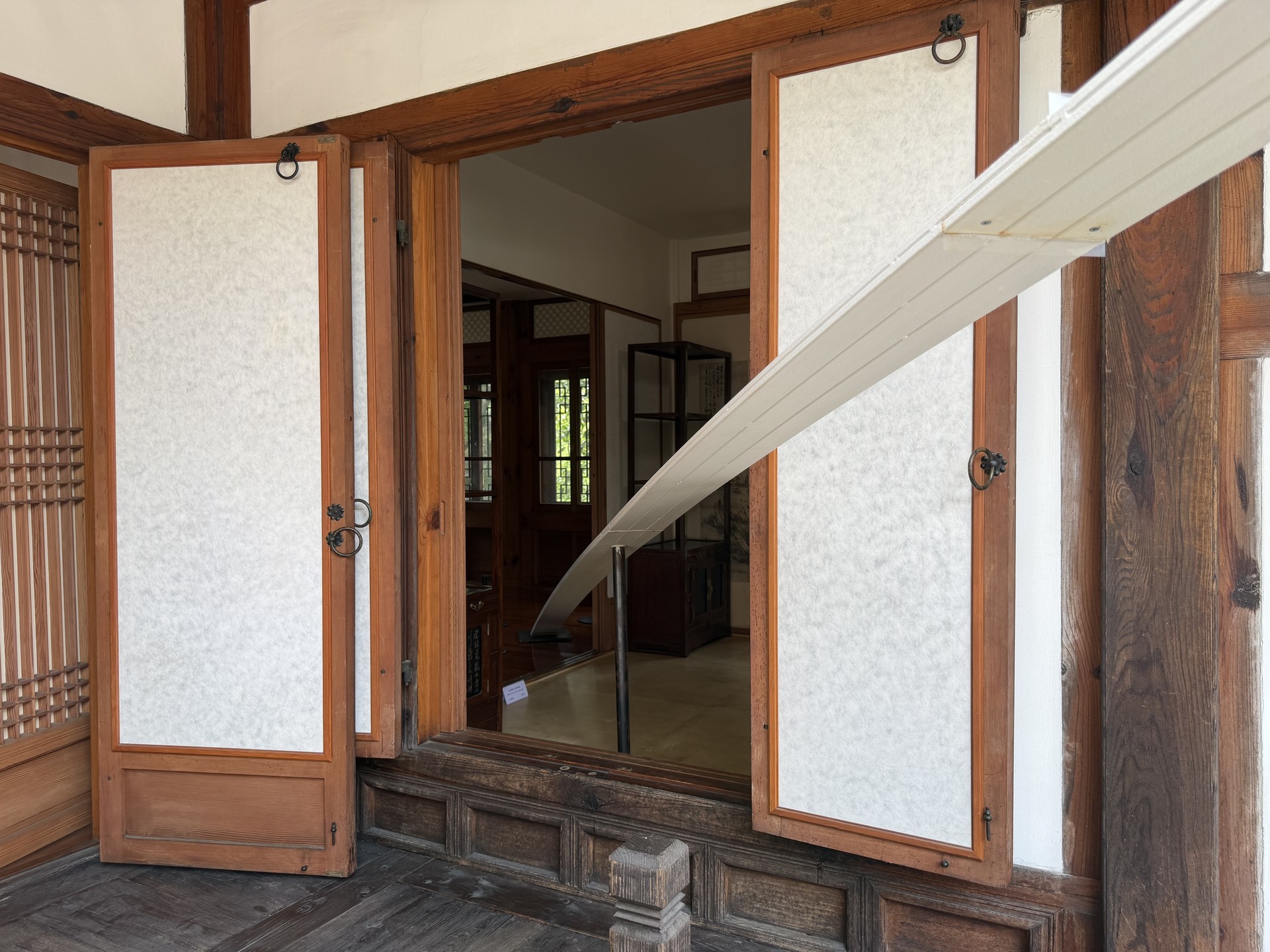
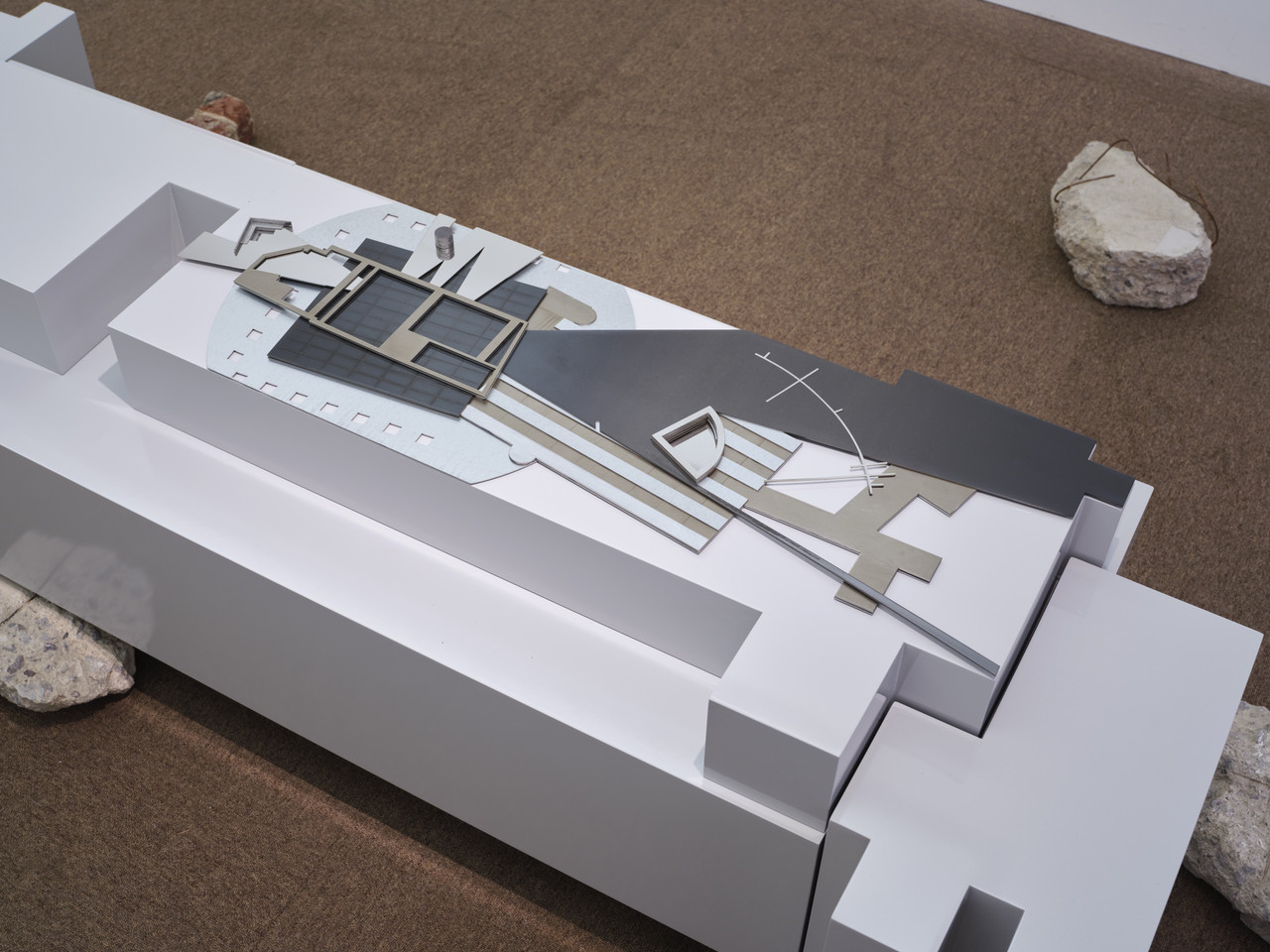
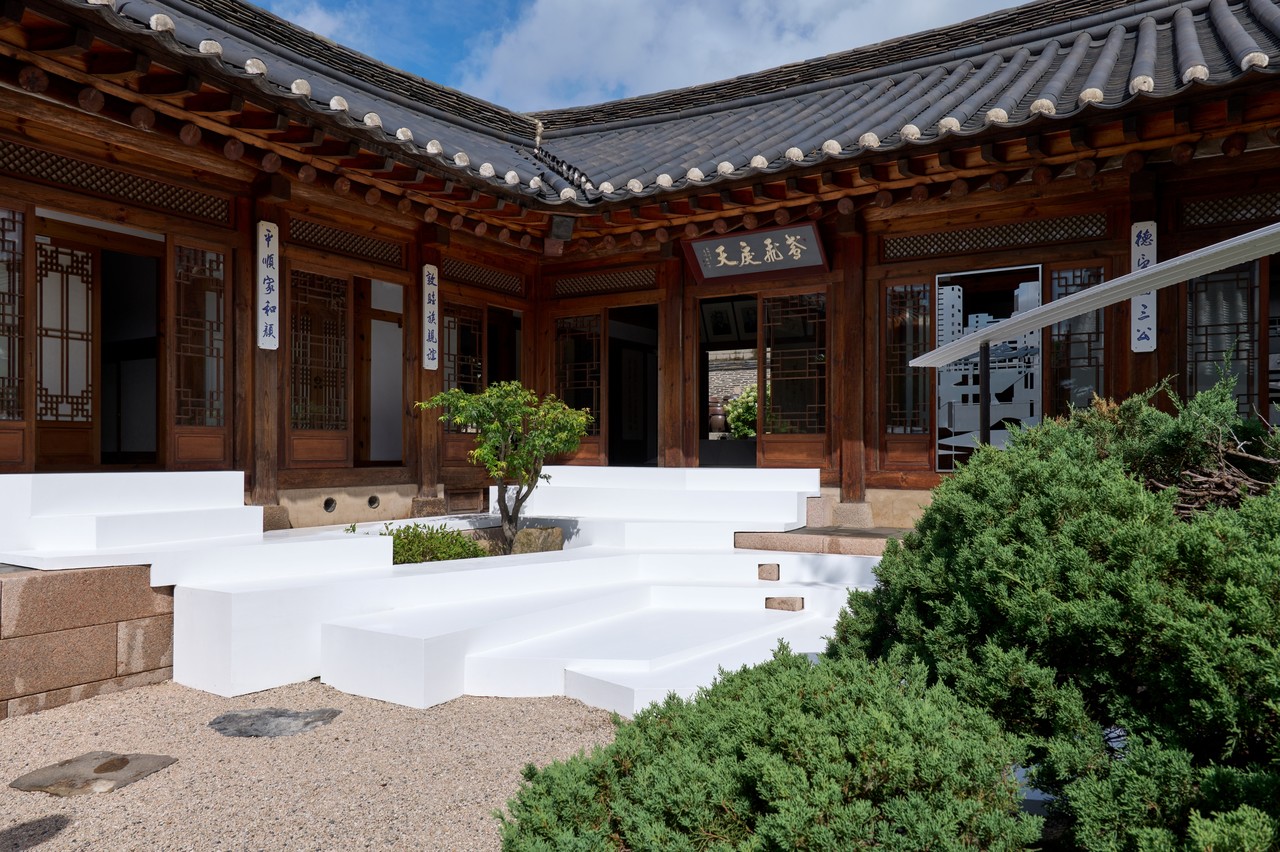
Installation view of 《A House, Arrived Again》 (House of Woonkyung, 2026) © Woonkyung Foundation

In this way, Kim Donghee has explored various possibilities for experiencing and perceiving space by moving through spaces with different contexts and adding and overlaying structures of his own design. In his practice, space functions not as a fixed backdrop but as a constantly changing field where the artist’s interventions, viewers’ movements, and surrounding environmental conditions converge.
 
Through this process, Kim enables artists, curators, and viewers to form a temporary community, experiencing space in their own ways and physically engaging with its multiple invisible layers.

“I first identify moments in a space that I find compelling and then construct structures that allow those moments to be realized. (…) Through the structures, I consider how viewers move through the space and what kinds of scenes they encounter. The season and weather are actually different for each exhibition, and I think that is natural.” (Kim Donghee, interview with AVP Lab)


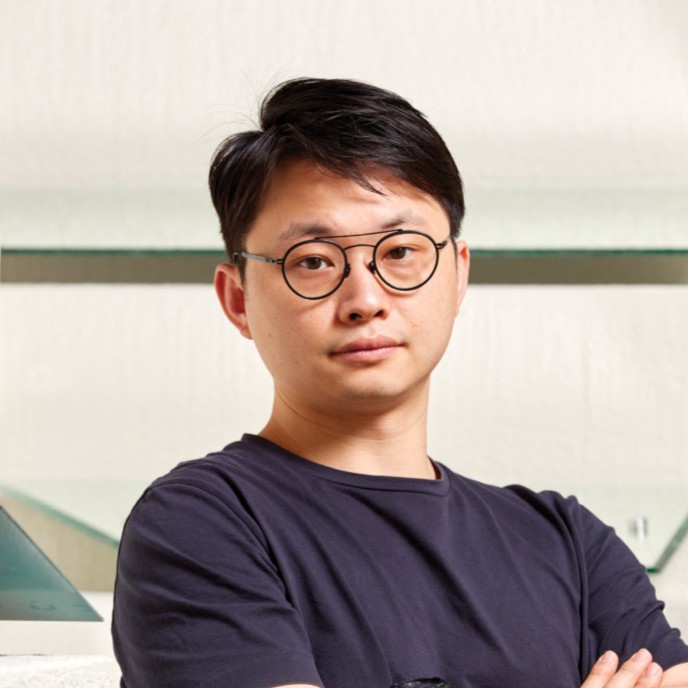
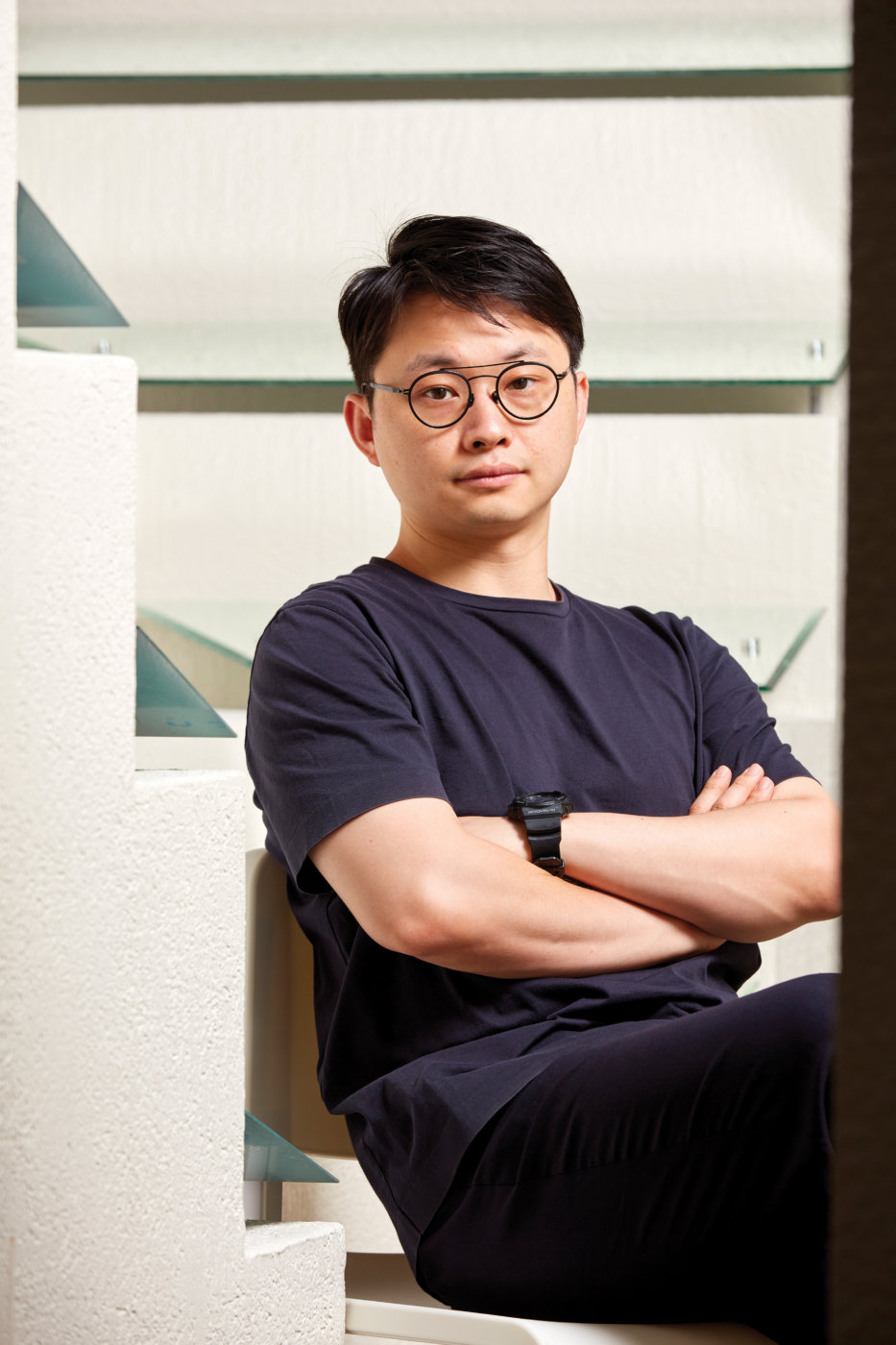
Artist Kim Donghee. Photo: Sangtae Kim. © Fondation d'entreprise Hermès

Kim Donghee received his BFA in Printmaking from Hongik University and his MFA in Fine Arts from Seoul National University of Science and Technology. His recent solo exhibitions include 《A House, Arrived Again》 (House of Woonkyung, Seoul, 2026), 《Hide Edges》 (YPC Space, Seoul, 2025), and 《Hall 2》 (Hall1, Seoul, 2023).
 
He has also participated in numerous group exhibitions, including 《Off the White: Folds and Watchtower》 (Ilmin Museum of Art, Seoul, 2026), 《Reconstructing Sequences》 (National Asian Culture Center, Gwangju, 2024), 《Post Media and Site》 (Busan Museum of Contemporary Art, Busan, 2023), 2022 Busan Biennale 《We, on the Rising Wave》 (Busan, 2022), 《Kak》 (HITE Collection, Seoul, 2022), 《Art Spectrum 2022》 (Leeum Museum of Art, Seoul, 2022), 《Short Circuit》 (Taste House, Seoul, 2021), and 《Elsewhere》 (Atelier Hermès, Seoul, 2020).
 
Kim Donghee runs PROP SEOUL, an organization that plans, designs, constructs, and executes a range of spaces and interactive programs, including theater spaces and exhibition design. He was also awarded the Porsche Frontier Award in the Visual Arts category at the 2nd Seoul Art Award for 《Hall 2》.

References