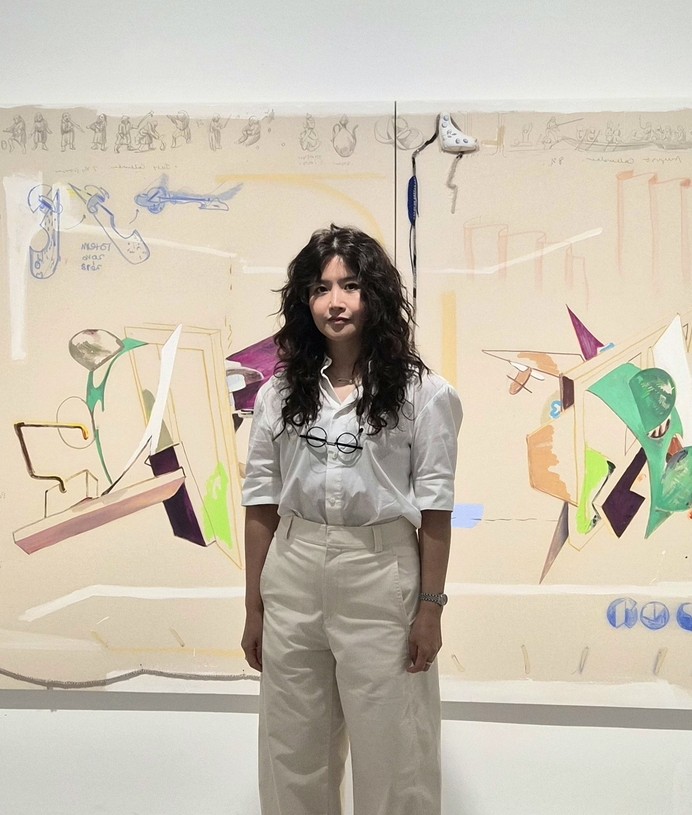
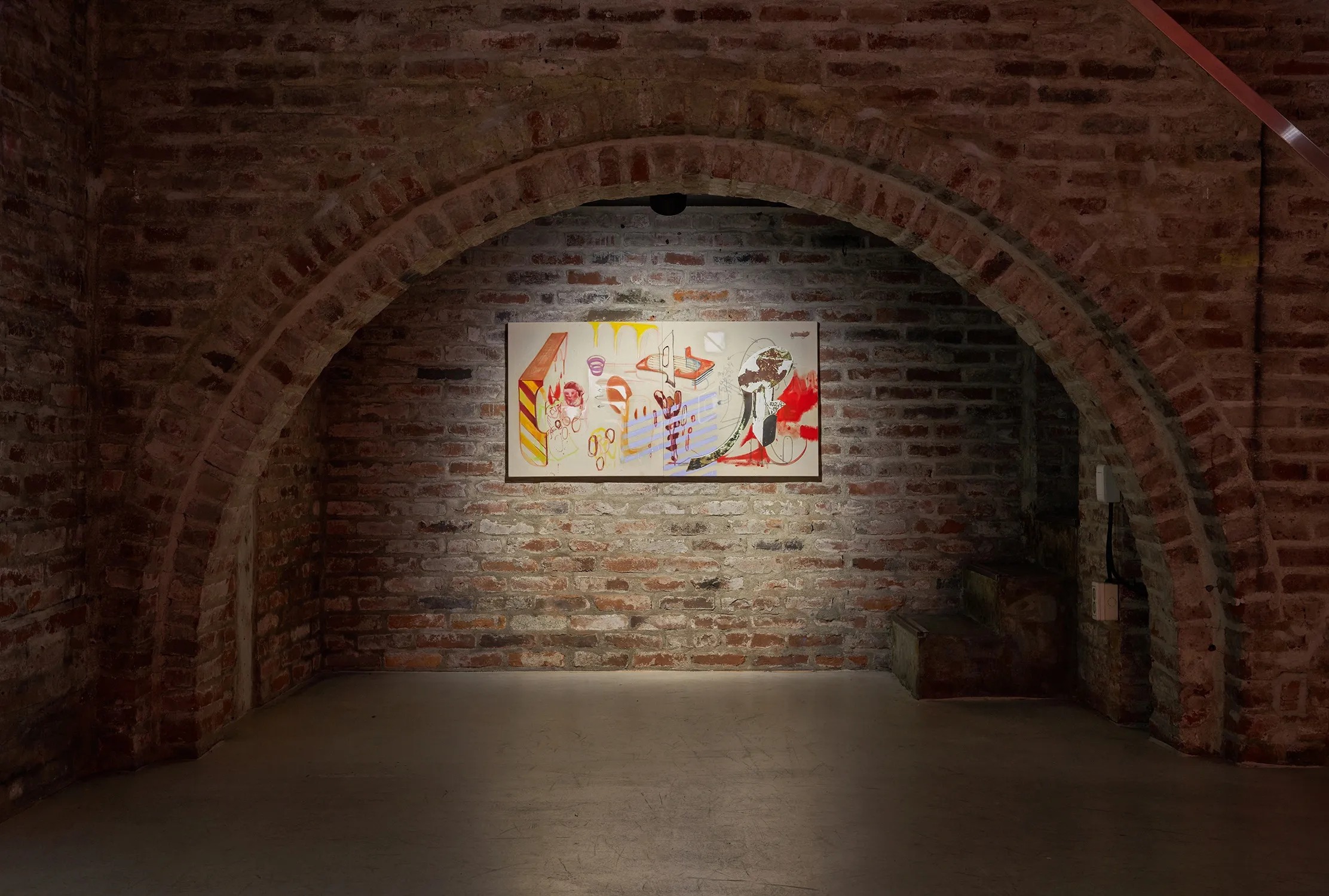
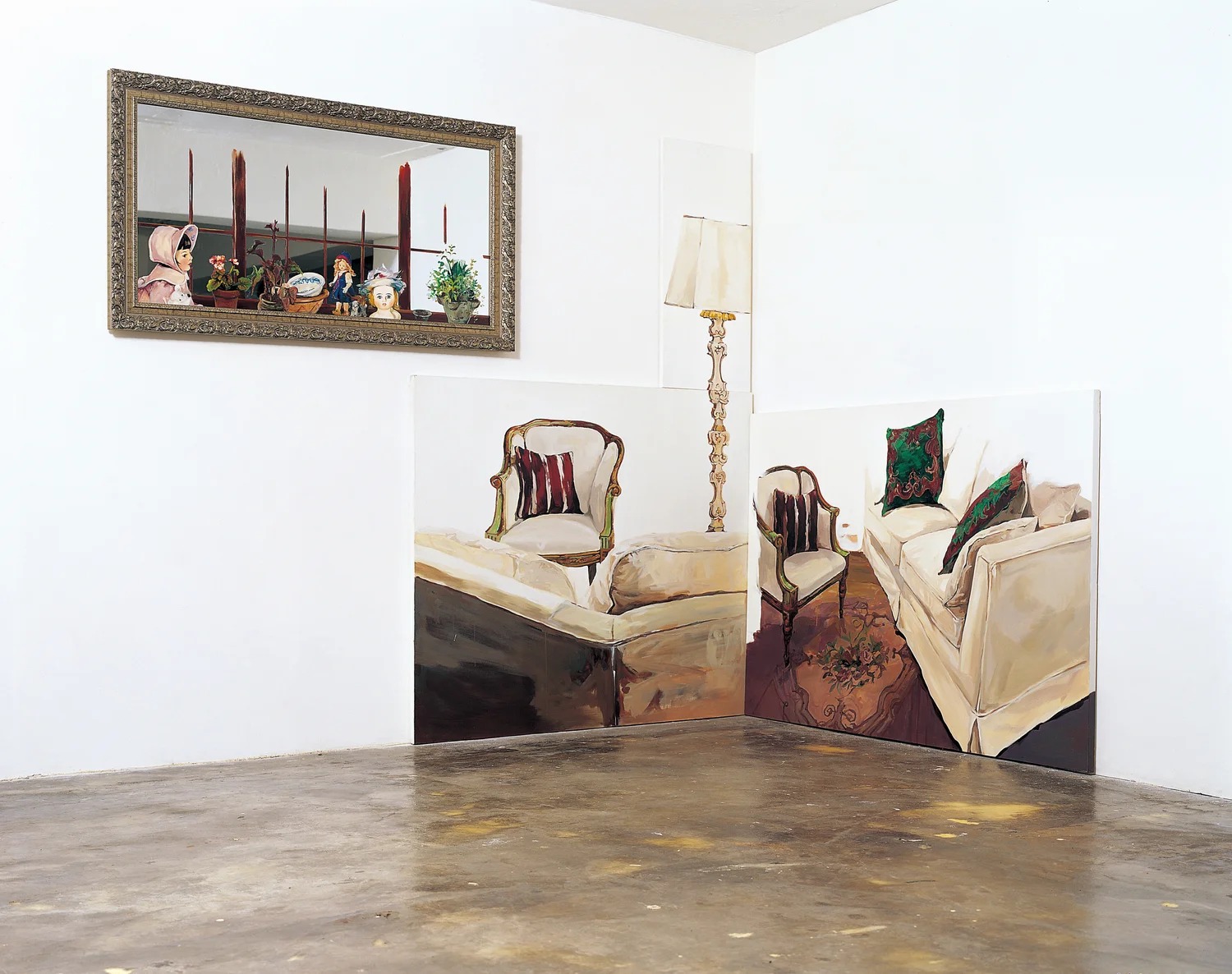
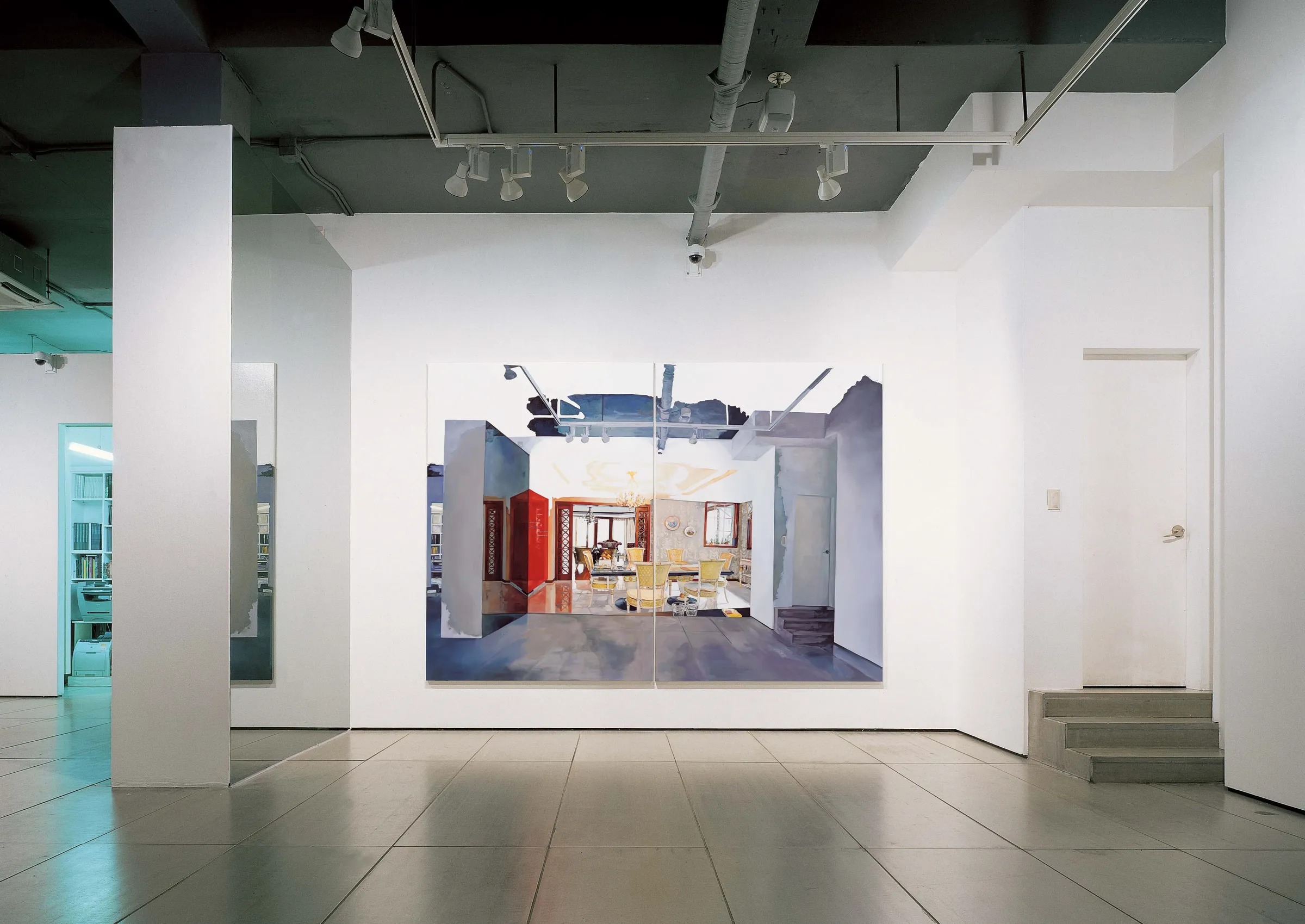
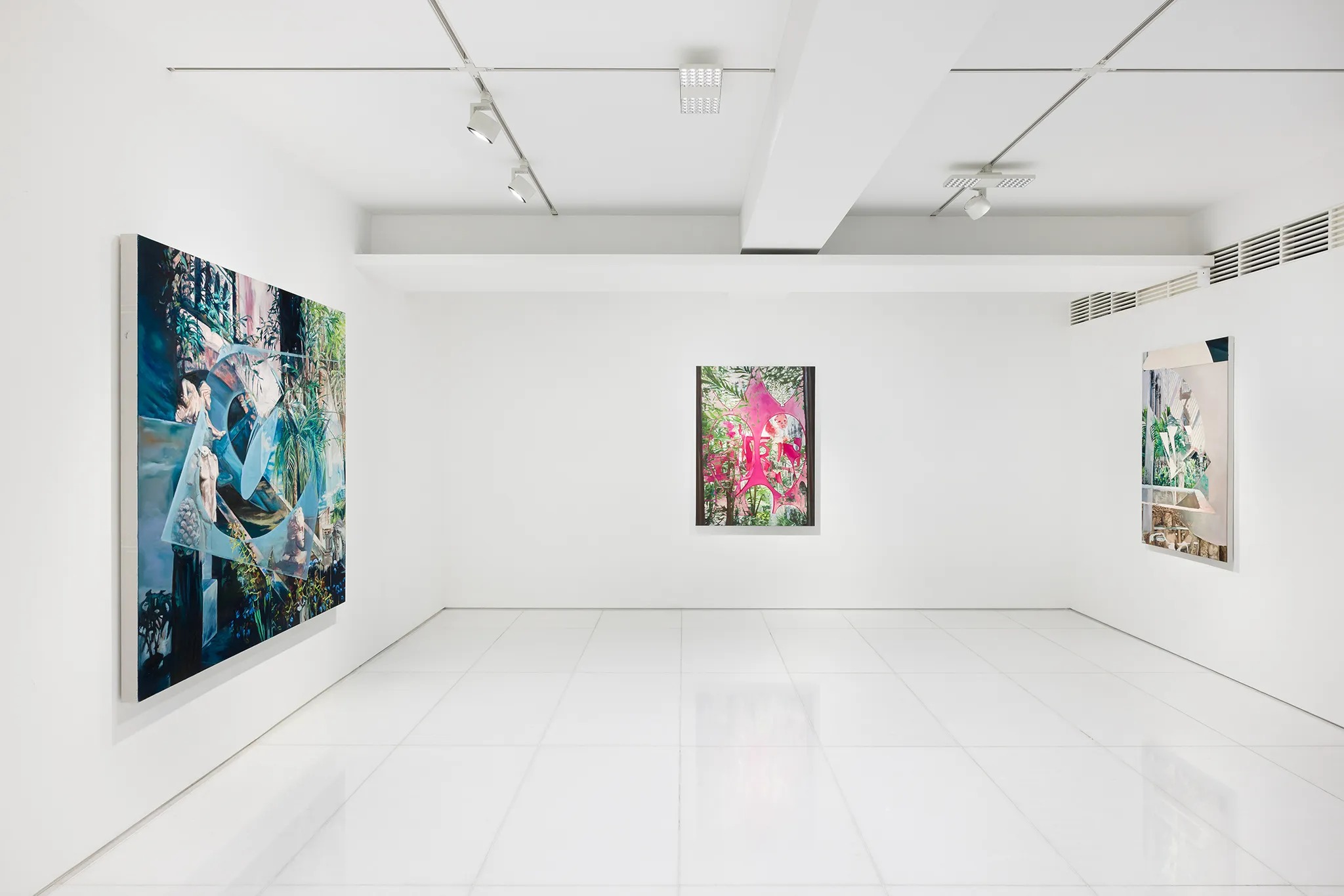
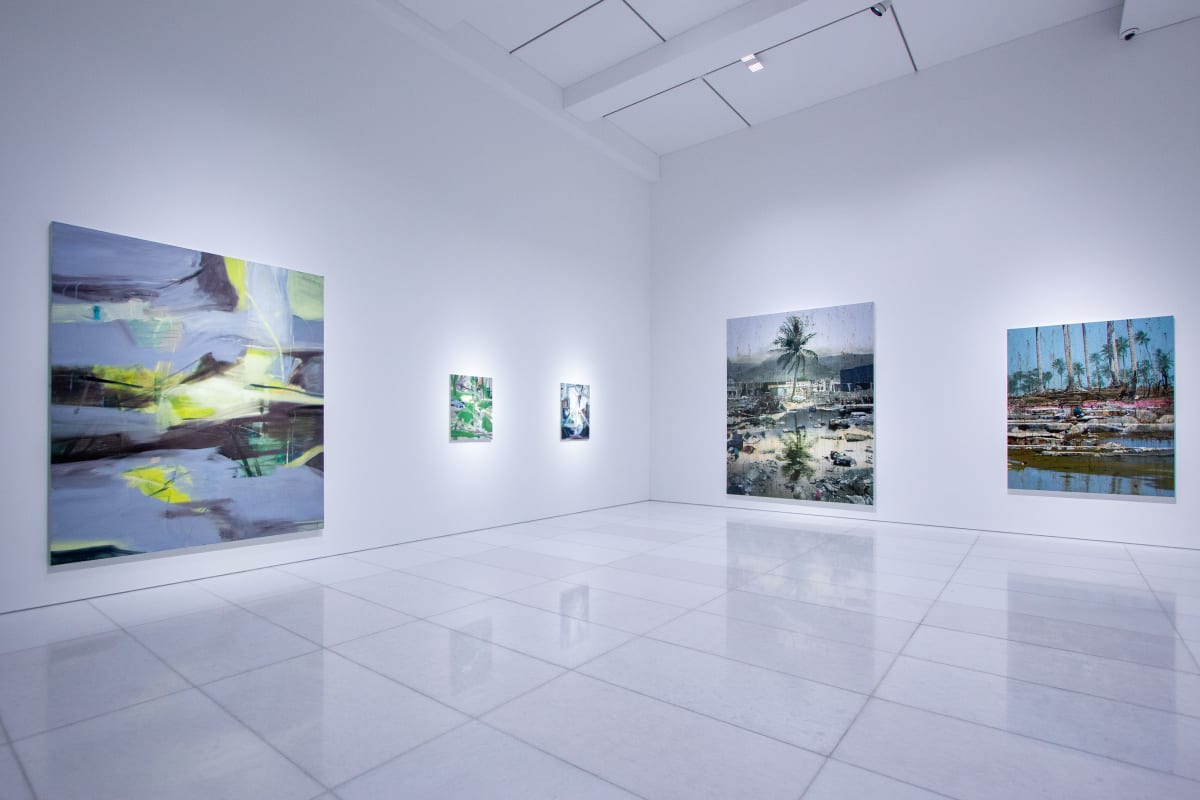
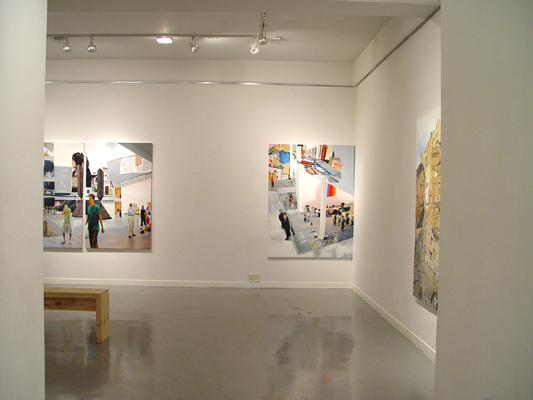
Installation view of 《Red Scene》 © ARARIO GALLERY

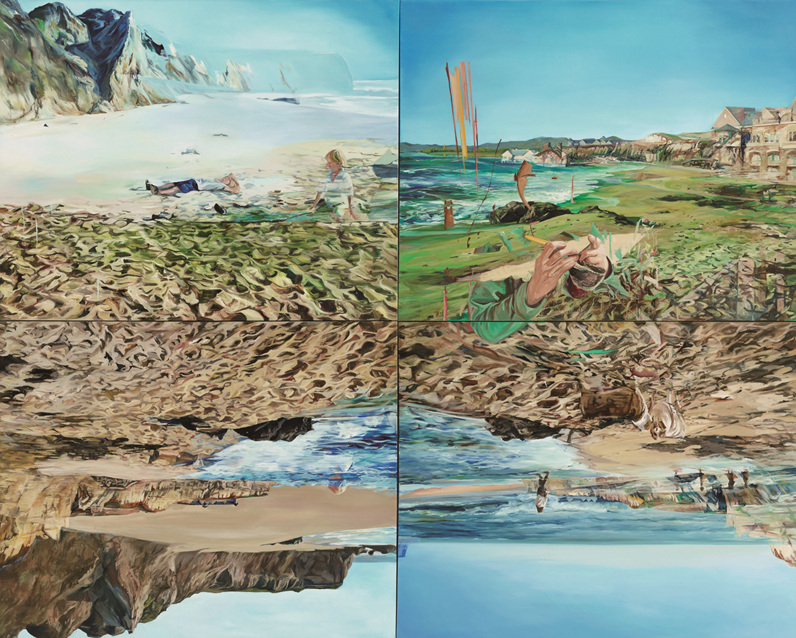
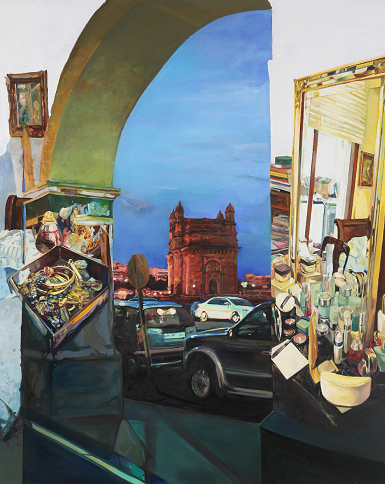
LEE Jihyun has long created paintings by layering her memories of places she has visited or personally inhabited with images derived from those memories, demonstrating how extensively the layers of imagery and narrative contained within a single painting can be hybridized and expanded.

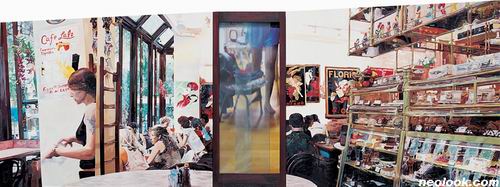
She combines images of public places such as museums, cafés, castles, and historic sites with images of private spaces, objects, and memories, juxtaposing the familiar with the unfamiliar and constructing painterly narratives by expanding and traversing time and space in multiple directions.

She has also depicted a kind of composite space formed through the merging of memories between places that exist and places concealed from our perception. Her paintings remind us that the flow of consciousness is not linear. The process by which fragments of memory connect, intertwine, and become woven together is often realized on the canvas through multilayered structures, window- or frame-like compositions, and representations of reflective surfaces.

These painterly devices function not merely as formal elements, but are organically connected to both the causes and outcomes of her practice. Enduring the difficult years of the pandemic over the past two or three years, LEE seriously considered how she might sustain her artistic practice, and continued to strengthen her painterly sensibility by working simultaneously or cyclically across painting, drawing, and doll-making.

In particular, a group of paintings that began with memories of her mother’s kitchen—a space filled with childhood memories and nostalgia—came to be known as the 'Red Scene' series. Initially inspired by images reflected on the red surfaces of furniture, 'Red Scene' gradually developed, over the course of the series, into both a device and a metaphor capable of abruptly summoning forgotten memories of the past into the present.


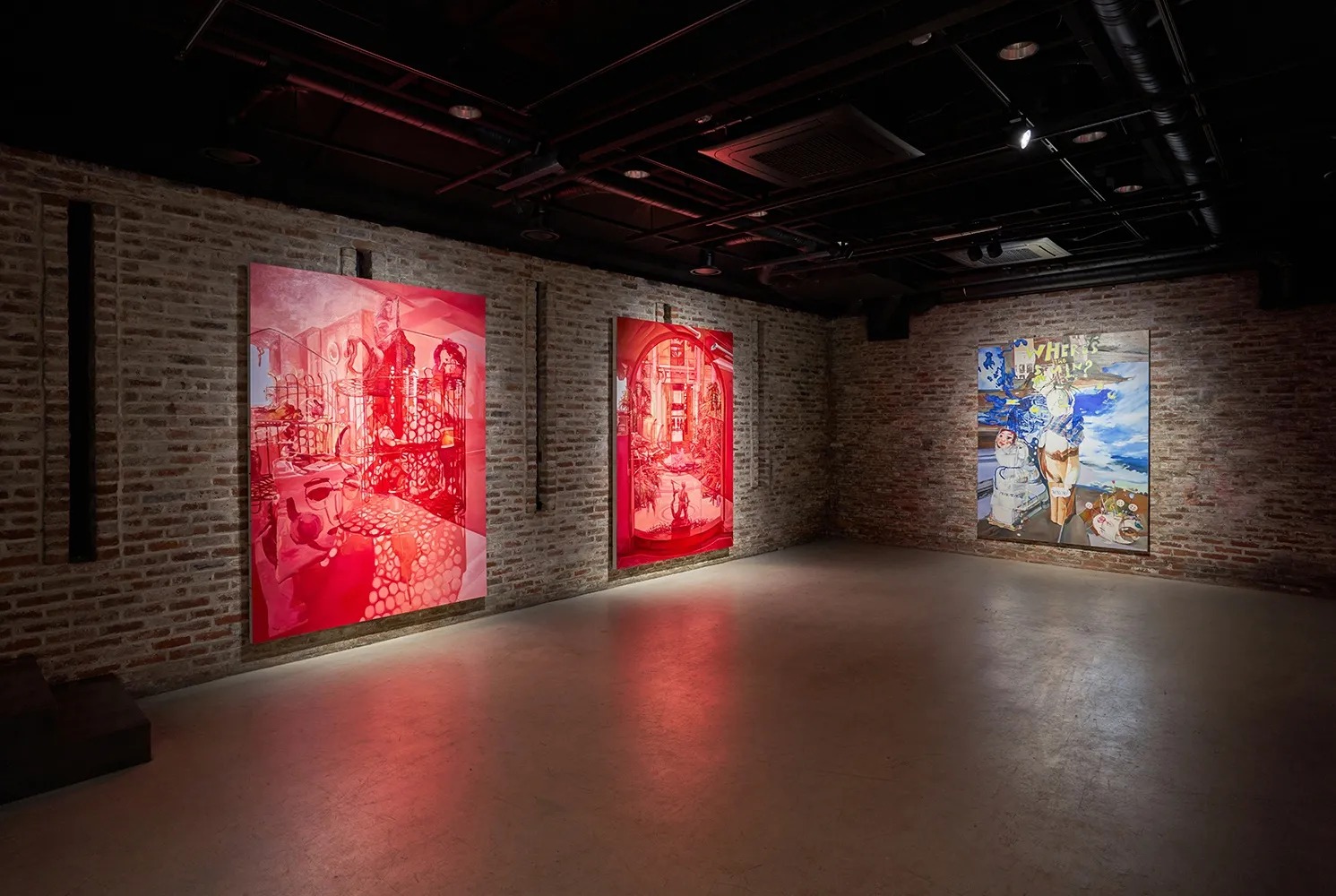
Installation view of 《Red Scene》 © ARARIO GALLERY

1. 'Red Scene'

From early in her career, as seen in her signature series layering the Colosseum with a dressing table, LEE Jihyun has used multilayered painting to “reflect a plural structure of perception formed as the gaze and consciousness move from one dimension to another.” In doing so, she has sought not merely “to explore unknown dimensions hidden in secrecy, but to reveal the very fact that our consciousness itself is composed of countless multiple layers without beginning or end.”

The artist’s method of inserting one space into another or introducing another picture within a painting remains within the tradition of Western painting. Although the spaces within her compositions are structured through multiple layers, they still open onto an expansive spatial field while rendering figures and objects with considerable specificity.

As a result, even after the images have fused into a single pictorial plane, the possibility of tracing the logic or plausibility behind their superimposition is never entirely removed—as though the viewer might peel back several layers of the painting and eventually arrive at the default layer beneath them. This is particularly evident when the position of the witness to the scene is situated outside the picture plane.

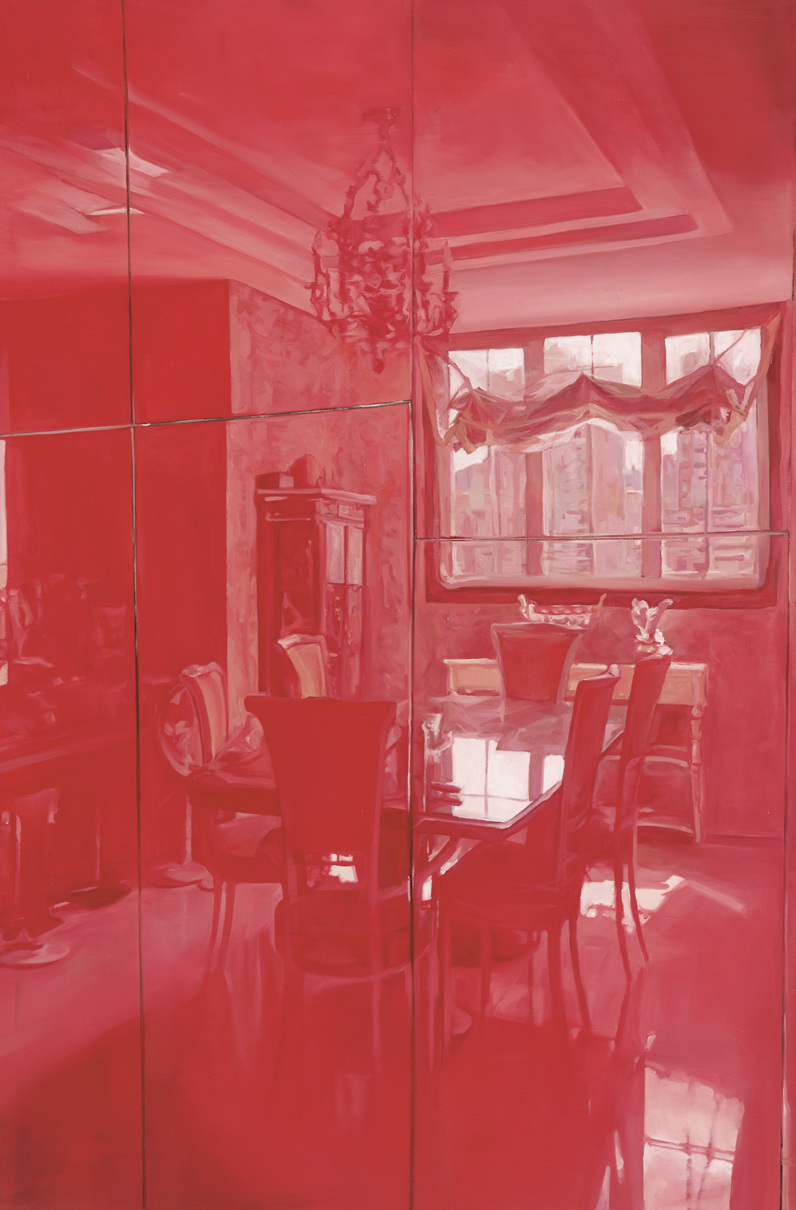
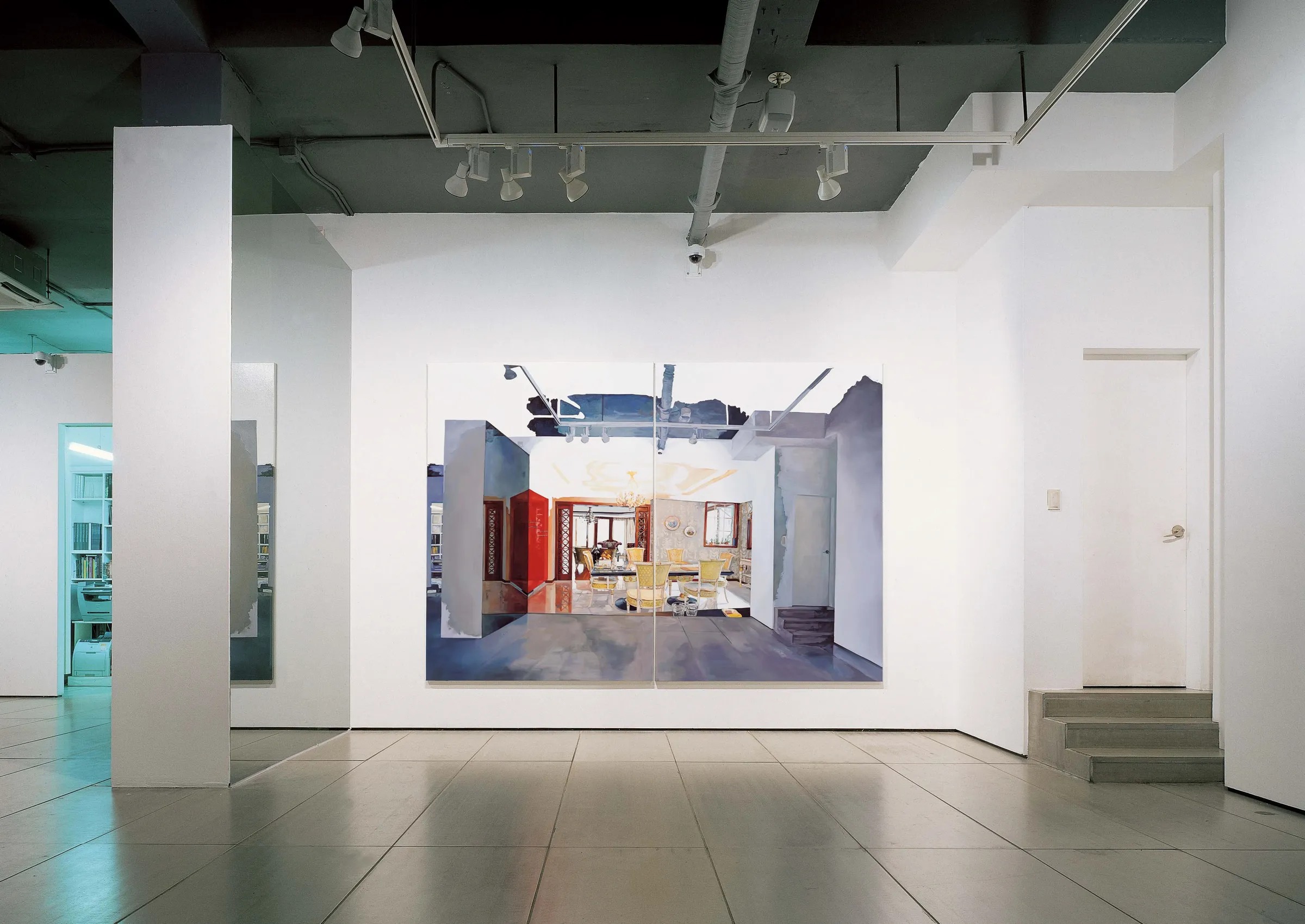
Her first Red Scene (2012) depicts a perfectly arranged dining room, with several intersecting lines allowing the viewer to infer that the scene is largely a reflection on the glossy surfaces of the kitchen furniture. Created from memories of her mother’s dining room, furnished with red-paneled kitchen cabinets, the painting was initially understood, around the time of its first presentation in 2012, as one of the artist’s ongoing explorations of layered spaces, particularly those toward which she felt a sense of nostalgia.

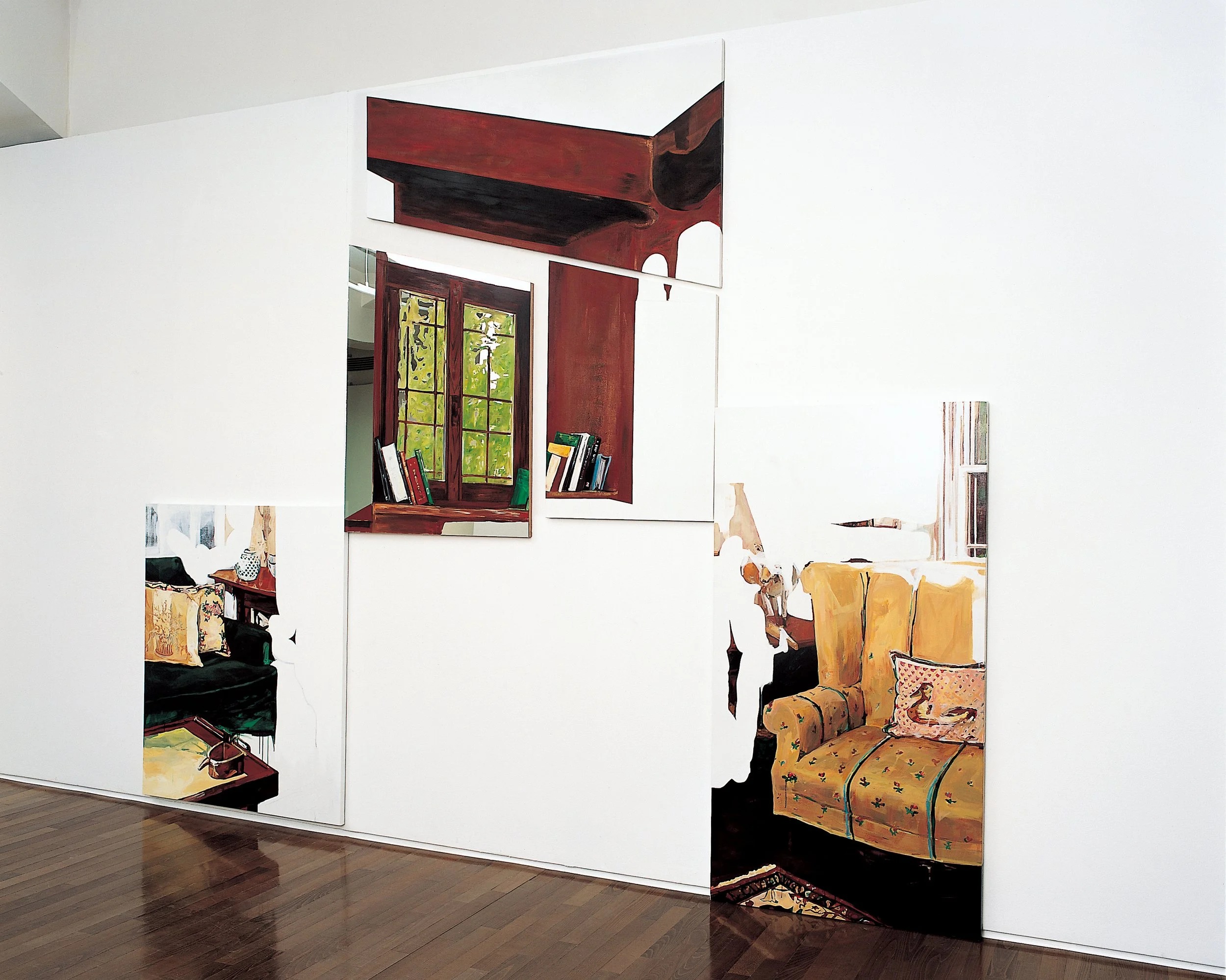
LEE subsequently returned to the 'Red Scene' series several times. Rather than simply layering new memories onto remembered spaces to create environments where altered memory and consciousness coexist, she developed relationships in which one painting points toward another or opens up new painterly possibilities. Because the ways in which these paintings refer to one another need not be unidirectional, their imagery becomes looser yet more intricate and increasingly abundant.

The first Red Scene (2012), which projected the artist’s memories of her mother’s dining room, was followed by Red Scene – Avon (2015), in which memories of the artist’s own dining room are juxtaposed with the earlier scene. The table in the first painting is empty, with no one seated around it, yet the seamless, reflected image conveys that its objects and space are deeply familiar to the artist.

In the second painting, however, all of the figures are positioned within a window frame, as though the artist feels a strange distance from those dining at the center of the composition. The implied witness to this scene therefore appears isolated, as if looking into the interior from beyond the window.

The artist’s remark that “the more I added to the canvas, the emptier the canvas seemed to become” suggests that the warm conversation and clatter of tableware around the table recede ever farther from the witness observing the scene. At the deepest point of the composition is a window flooded with white light. This window becomes a central scene in Threshold – Bird Mobile (2012–2013), linking the painting to another work and becoming a passage into yet another world.

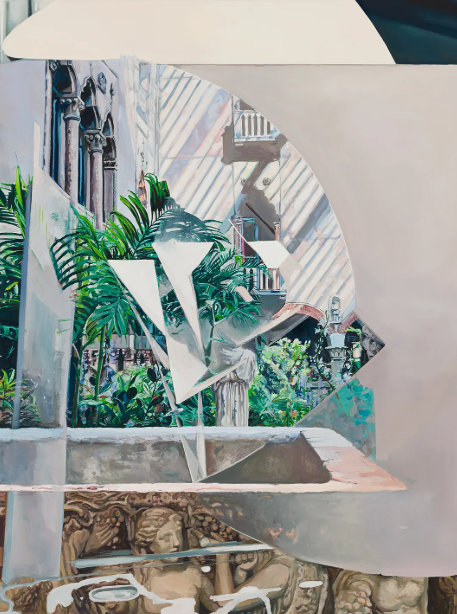
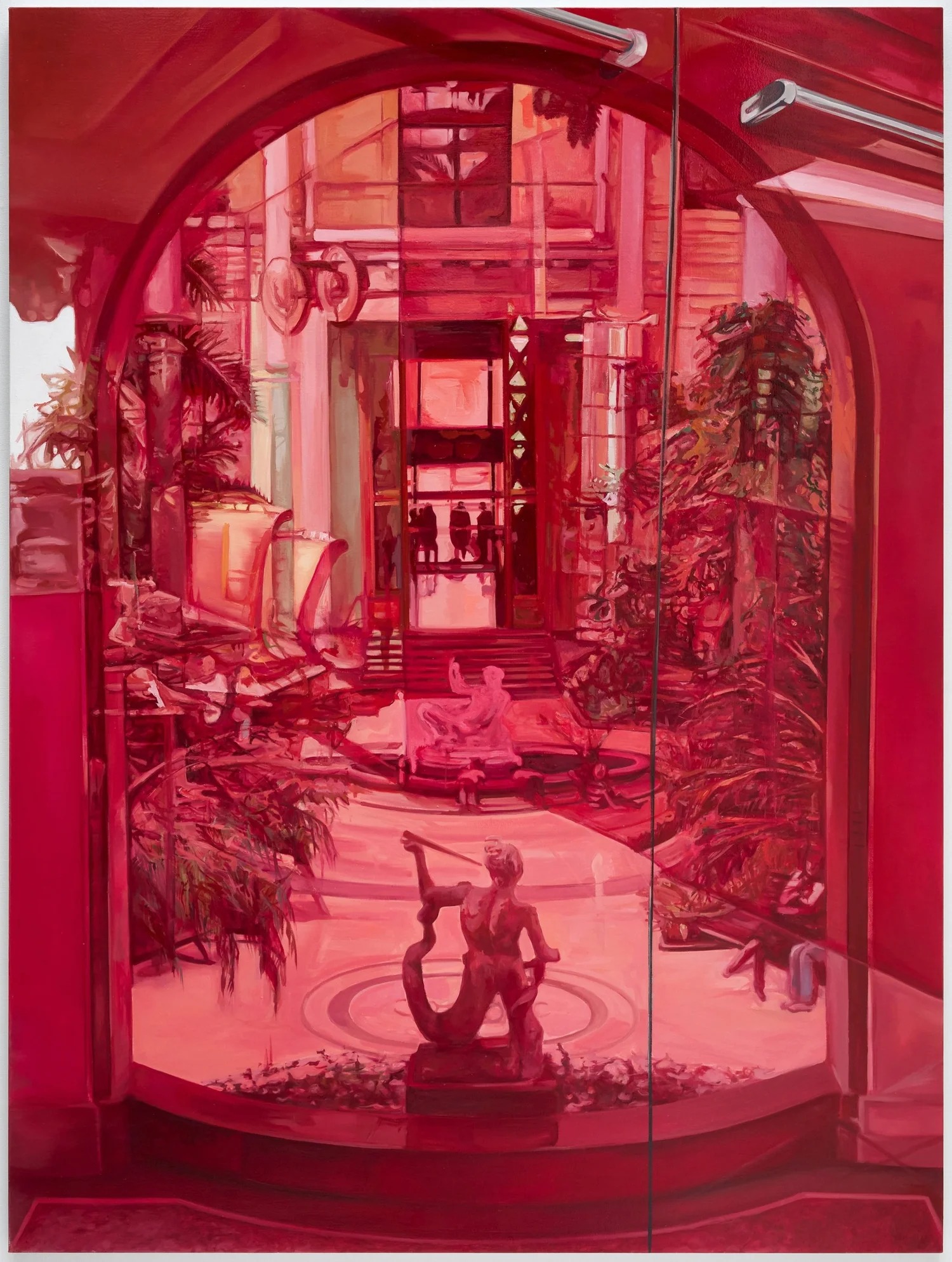
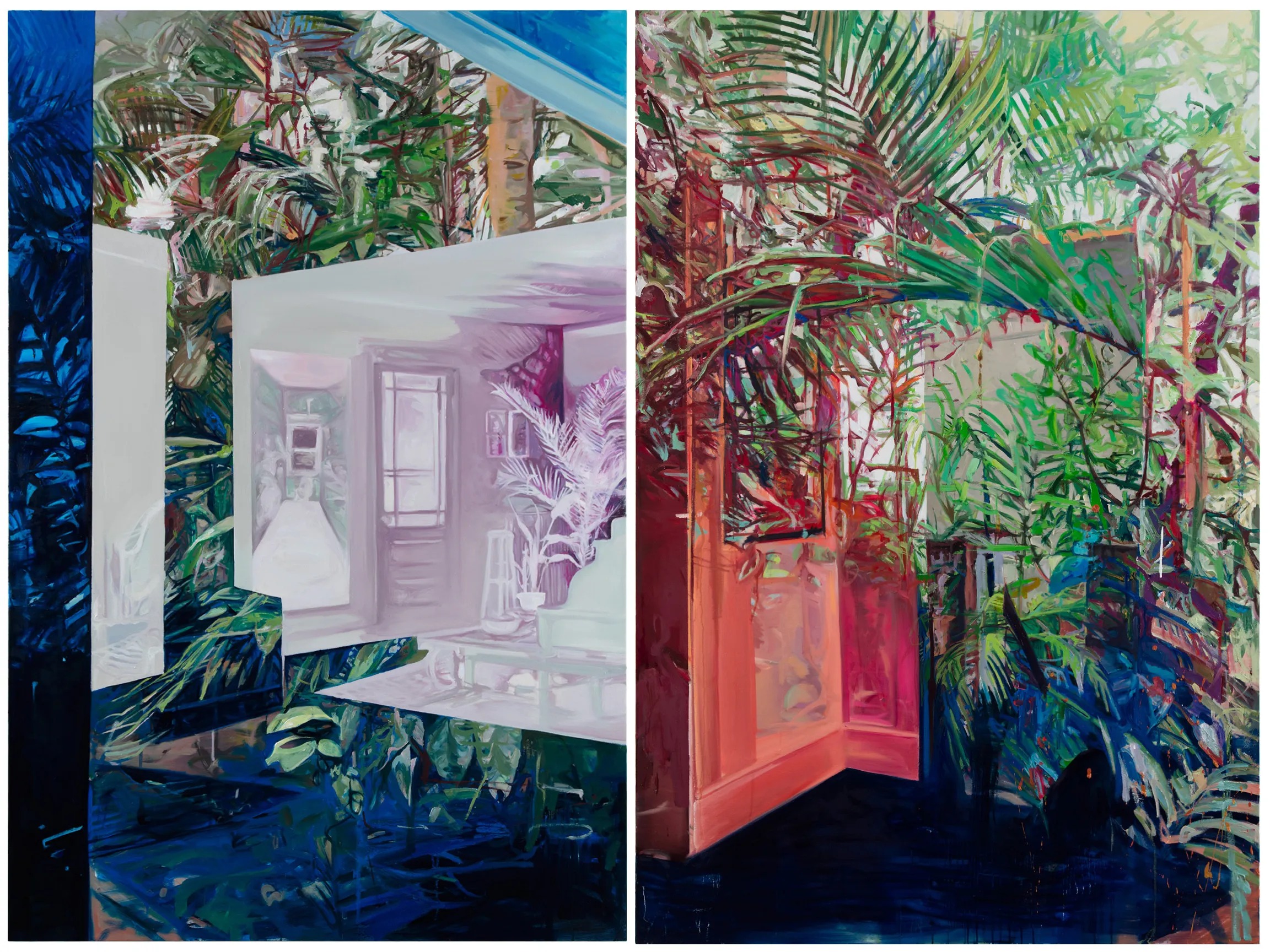
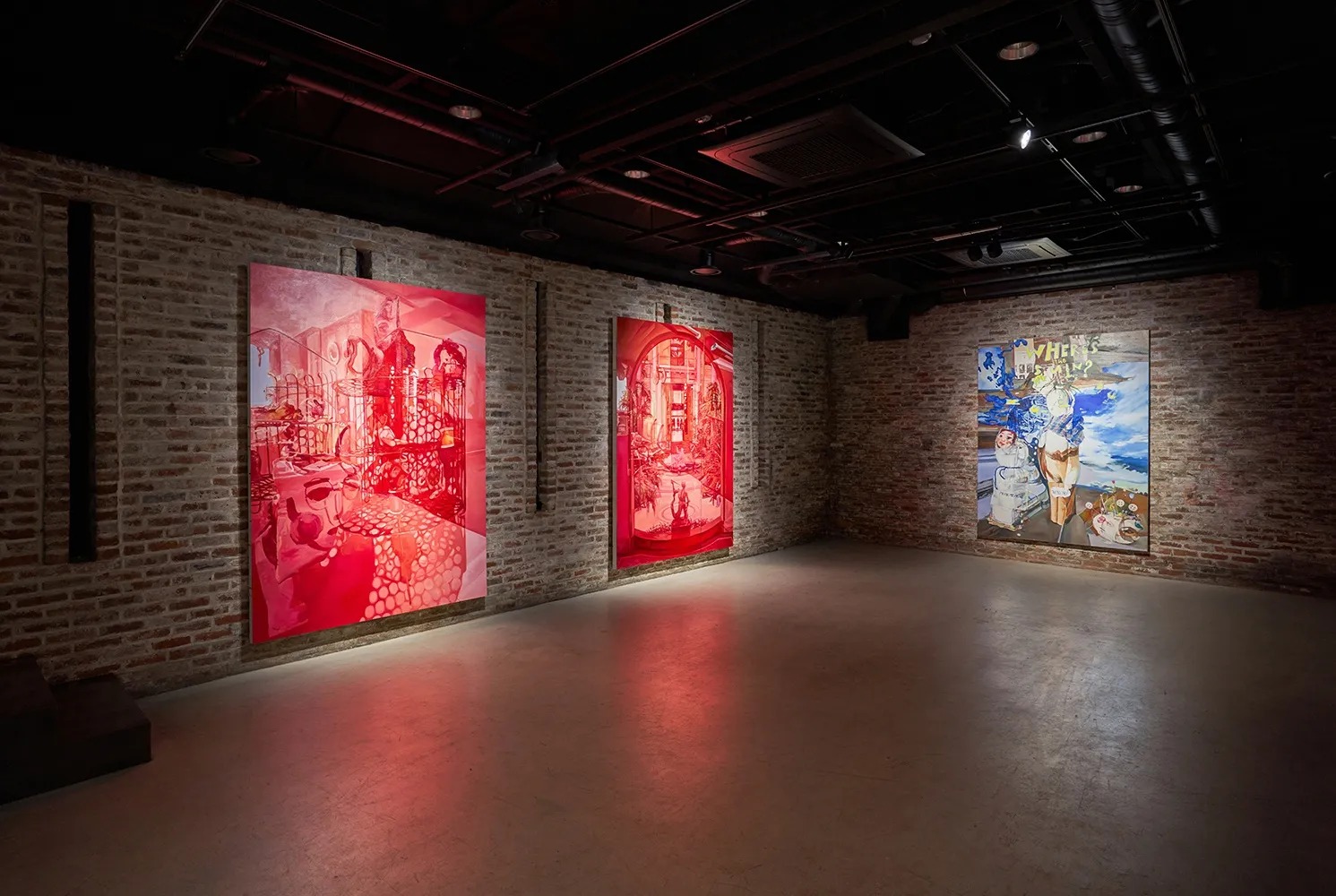
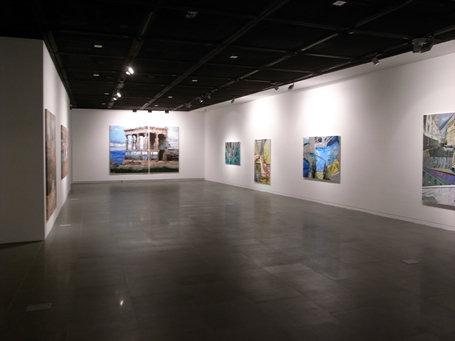
Red Scene – Glyptotek (2020) projects the artist’s memory of visiting the Glyptotek museum in Copenhagen onto the surface of red cabinetry. Faint traces of a dining room flicker across the work, but the more clearly defined image is that of the museum’s interior garden. The site itself has the character of the public spaces—tourist attractions, museums, and cafés—that LEE Jihyun frequently explored in her early work.

Within the space unfolding beyond the rounded arches are architectural elements such as columns and stairs, sculptures, plants, and people standing or seated. Although the composition contains numerous elements, the artist boldly divides the canvas and constructs a wide range of variations within the red palette, creating a sense of openness despite the painting’s predominantly monochromatic red tonality.

In particular, while the museum interior seems to penetrate into the picture plane, the cabinet surface onto which the image is projected is positioned diagonally, extending the viewer’s gaze beyond the canvas. Red Scene – Parts (2020) and Red Scene – Cage 1 (2020), painted around the same period, feature domestic objects, personal items, and collections from the artist’s everyday life.

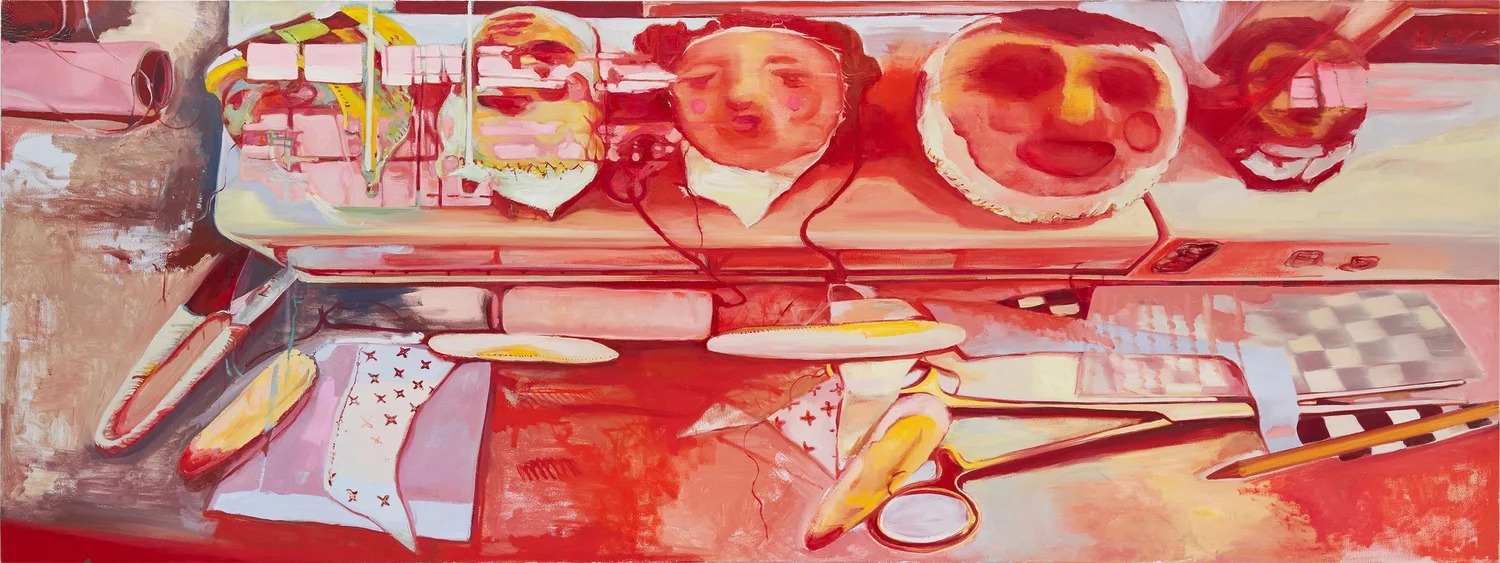
Most notably, fragments of the faces and bodies of cloth dolls appear throughout these works. The dolls belong to a collection handmade by the artist using the sewing machine depicted in the paintings. They serve as motifs within the works, while their treatment in watercolor also closely relates to the artist’s large-scale paintings on canvas.

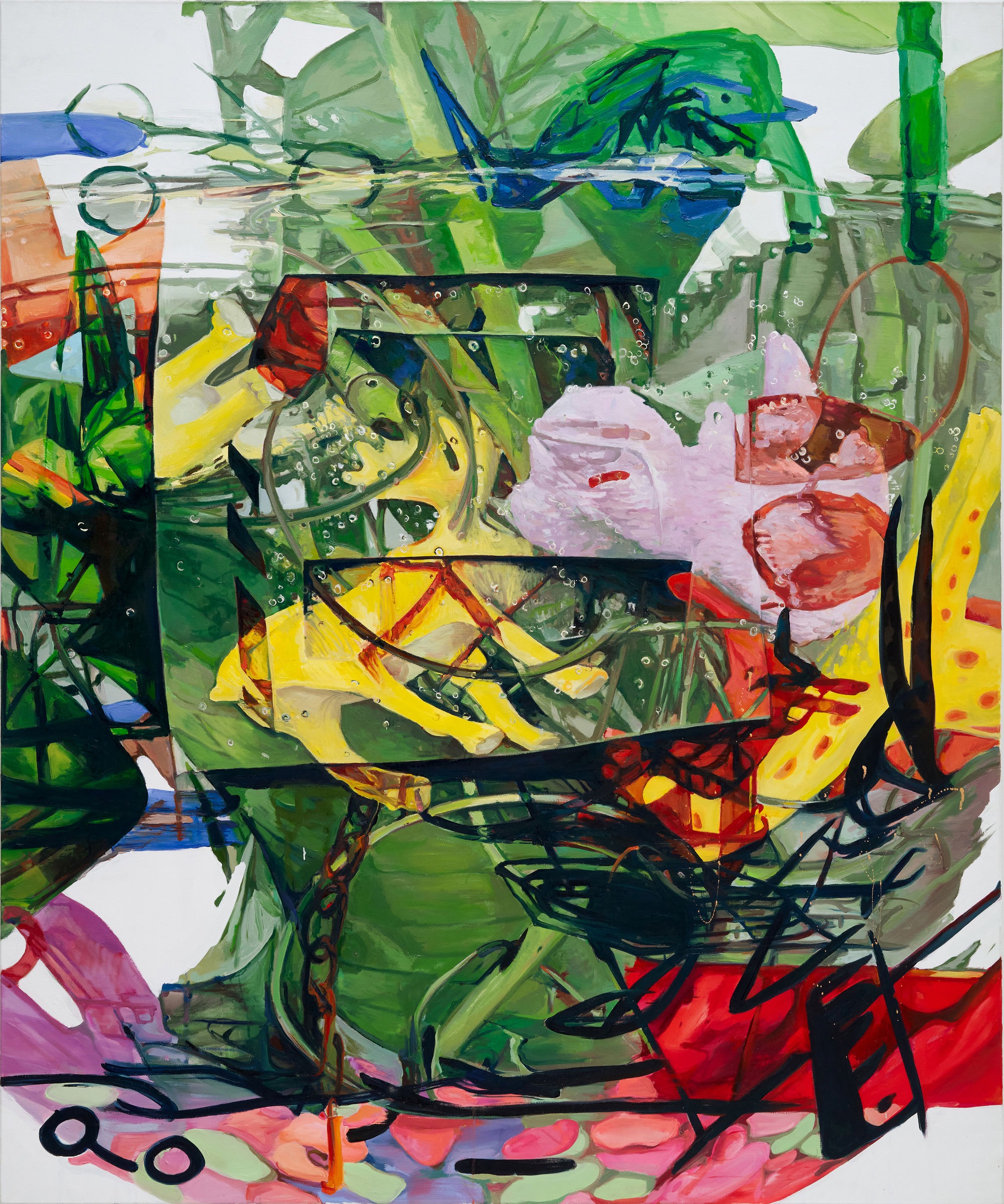
The cage depicted in Red Scene – Cage 1 and Red Scene – Cage 2 (2021–2022) is an object that the artist actually uses as a dollhouse at home. One of her neighbors reportedly uses the same type of object as a rack for cooling cookies. Its original function, however, was as a test-tube carrying rack used in laboratories in the early twentieth century.

After finding its way into the vintage market as an antique object, it came to be repurposed according to the needs of individual owners. Red Scene – Cage 1 reflects the artist’s use of this rack as a dollhouse in her home. In Red Scene – Cage 2, however, the sculptural qualities of the cage itself appear to take precedence over its functional context as a dollhouse situated within a domestic interior.

The artist enlarges the cage until it nearly fills the entire canvas, concentrating less on the dolls and objects inside than on depicting the overlapping and intersecting metal framework of the cage and the frame of the cabinet. The bulging cylindrical form also seems to play an important compositional role on the canvas.

It draws the viewer’s gaze deep into the picture while simultaneously pushing the image outward, creating a viewing distance that makes the viewer feel as though they are standing directly in front of the painting. The role played by the cage in Red Scene – Cage 2 is assumed by the arch in Red Scene – Glyptotek. Both paintings are distinguished by arches and cylindrical forms that nearly fill the picture plane, creating contrasting viewing distances between foreground and background.



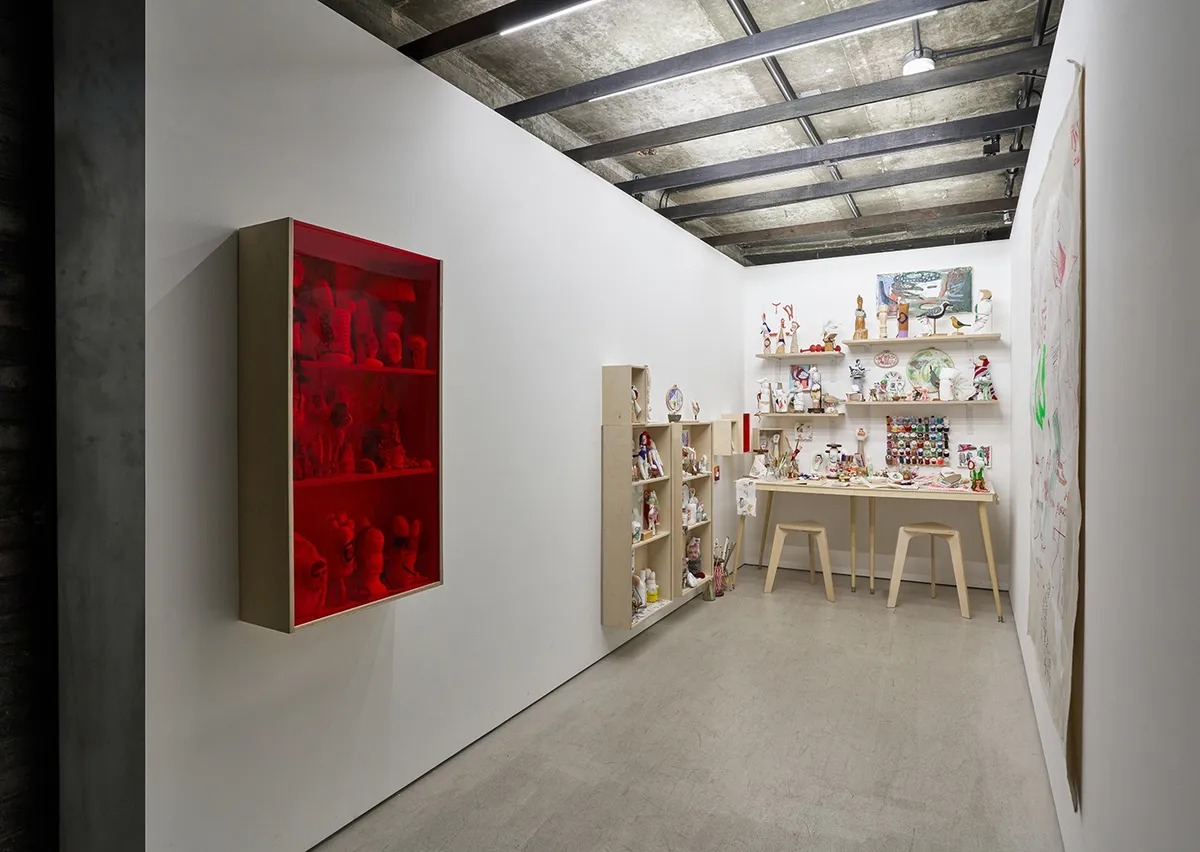
Installation view of 《Red Scene》 © ARARIO GALLERY

2. Fantasma

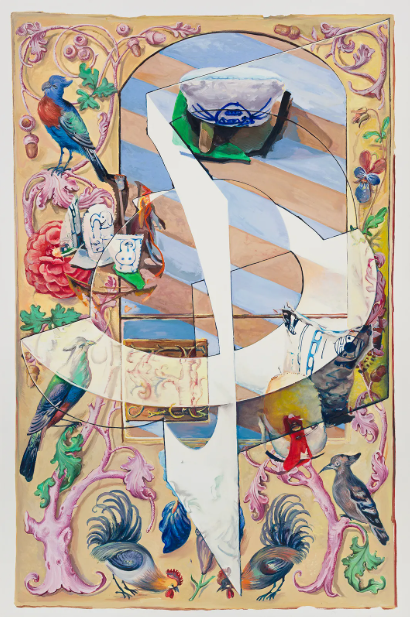
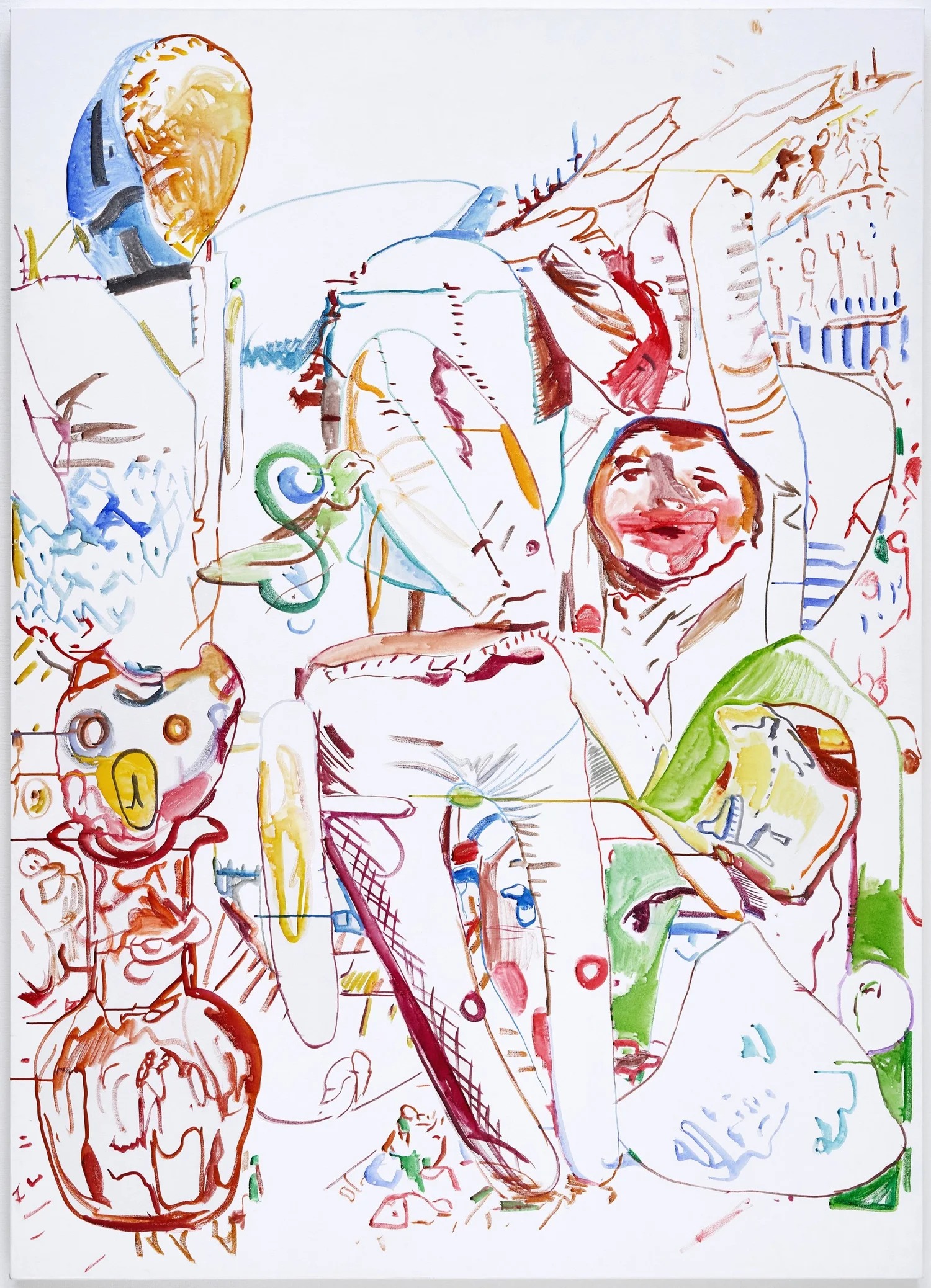
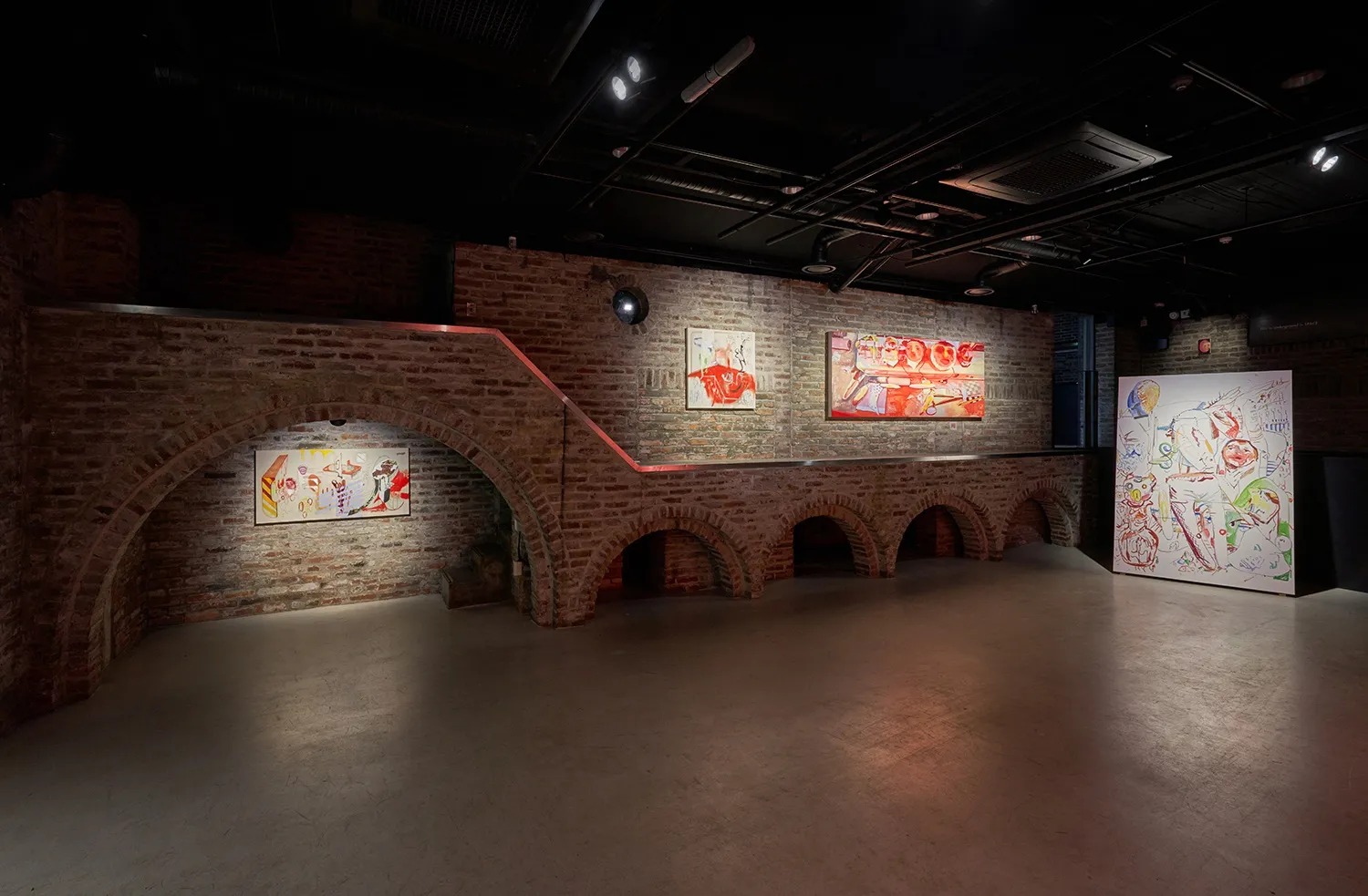
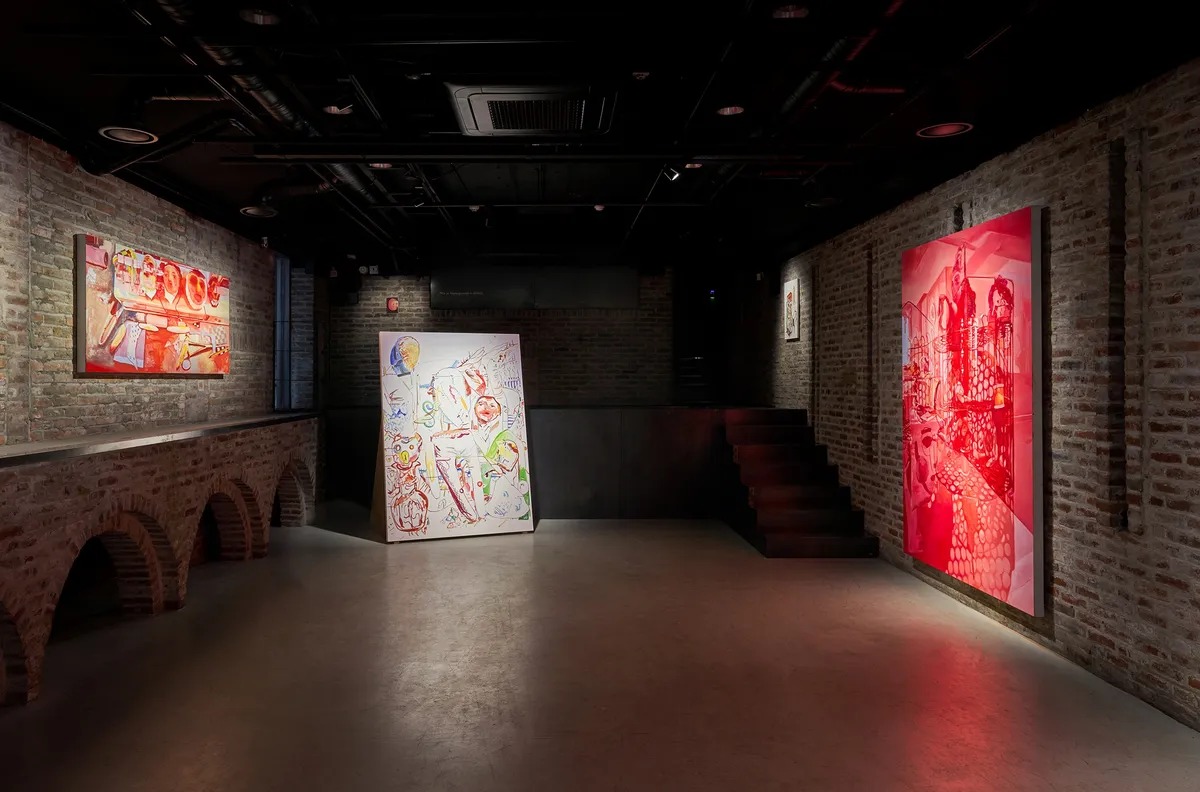
LEE Jihyun first presented the 'Fantasma' series around 2012–2013 in her solo exhibition 《Threshold》. 'Fantasma' is a series of small paintings that condense and reveal the artist’s process of thought. She has described these works as sketch-like paintings, or image essays, made almost like notes on a nearby easel in order to capture thoughts that arise while she works on time-consuming large-scale paintings propped against the wall.

In other words, she quickly paints ideas as they surface, in an almost unfiltered state. No matter how swiftly one moves to record a thought, however, that thought inevitably leads to another in the meantime, and for that very reason the hand is urged to move quickly, without hesitation. These raw, painterly drawings are not works developed through prolonged observation, but concise records of images based on fleeting memories or ideas, broken down into individual motifs.

As these motifs expand into large-scale paintings, the images begin to coexist in more subtle and flexible ways. Rather than remaining confined within the boundaries of a single canvas frame, one painting connects to and exchanges inspiration with another, opening up possibilities of circulation and regeneration through which new paintings can emerge.

As a woman artist balancing pregnancy, childbirth, and childcare, LEE Jihyun has in fact faced limitations on both the time and space available for her practice. During the pandemic over the past two or three years, travel and mobility beyond commuting between home and studio became difficult, and when the harsh weather of the northeastern United States prevented her from reaching the studio, she had to devise ways of working at home.

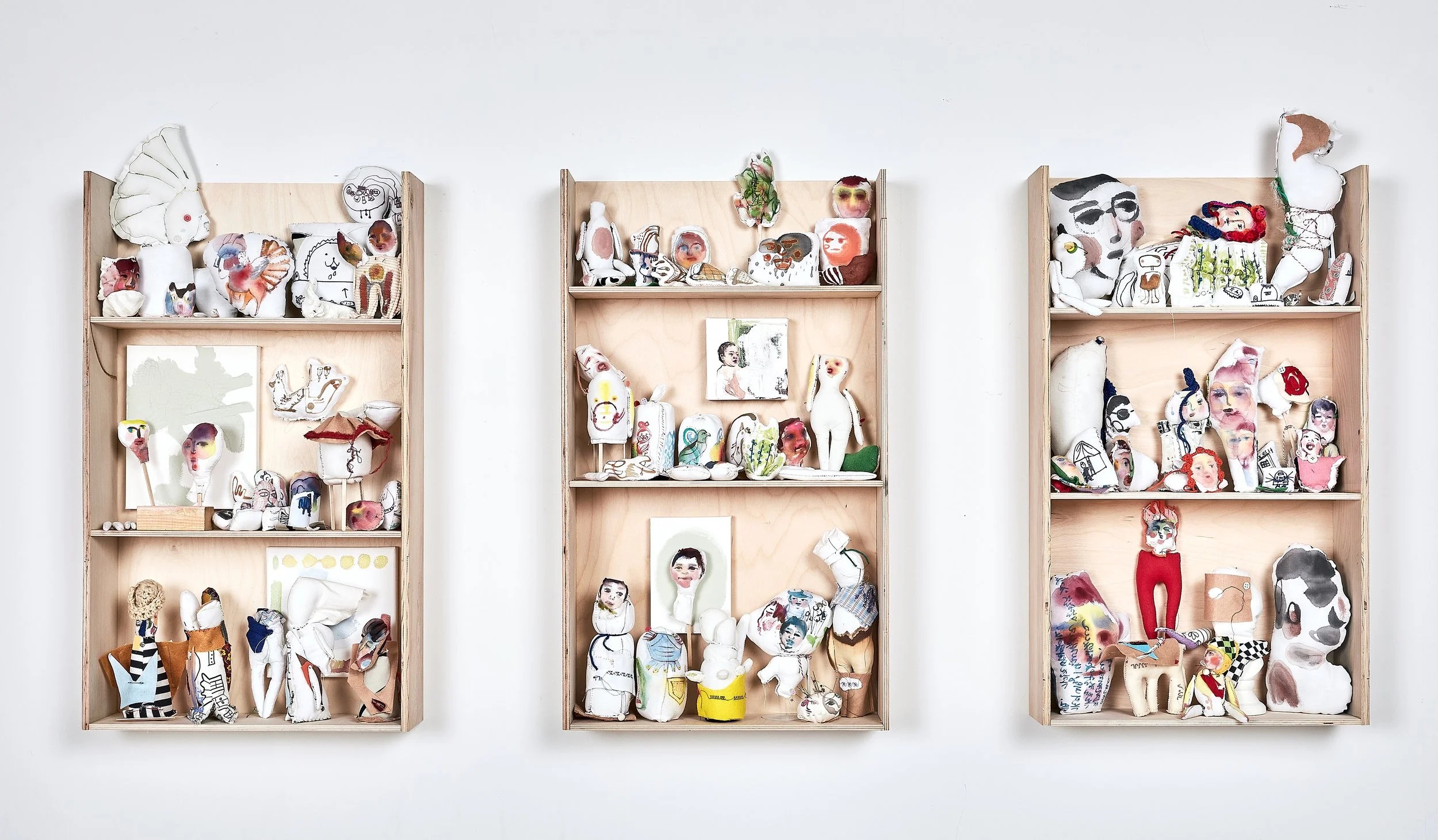
The artist recalled the handmade cloth dolls her mother had made for her as a child and, as if retracing childhood memories, began drawing simple images on fabric and making dolls, a practice she has continued for more than a decade. Made by sketching simple eyes, noses, and mouths with water-based markers or paint on scraps of fabric or unbleached cotton, then filling and sewing them with stuffing, these dolls are not designed as complete, fixed bodies.

Their heads, arms, and legs can instead be attached and detached and reassembled in different combinations. Together with small objects such as glass bottles and dishes that the artist has collected over time, they have gradually become an important part of her collection. Her dolls can appear strange: two heads may be joined together, limbs may be mismatched, or their appearance may change depending on how they are combined with various objects.

Yet, much like creatures that might appear in Jorge Luis Borges’s Book of Imaginary Beings, there is no need to trace their origins. Their bizarre and implausible forms instead offer a distinctive sense of playfulness, and they soon reappear as motifs in her paintings, carrying this sensibility into her painterly practice.

For example, Red Scene – Parts, which presents a bird’s-eye view of the artist’s sewing workspace, depicts several doll faces as if actual fabric faces had been attached to the surface. In particular, the effect of paint bleeding into unbleached cotton is rendered with striking realism. The dolls the artist played with as a child had features drawn in water-based marker that would often blur when touched by moisture resembling tears, and the painting evokes just such an effect.

For the artist, doll-making is also a form of tactile drawing. The unbleached cotton she uses is soft, almost like touching human skin, while the cushioning of the stuffing feels warm and comforting, giving her a sense of reassurance when she holds the dolls in her hands. She arranged these dolls together with objects she had collected over time on several shelving units, forming her own collection, and covered some of the display cases with transparent red acrylic.

When these red display cases are compared with the 'Red Scene' paintings, the red acrylic cover partially obscures or distorts the actual colors of the dolls inside and the drawings on their surfaces, while also visualizing how an image appears when suffused with an overall red tone. Most importantly, the display cases establish a connection to the paintings by allowing viewers standing before them to indirectly experience the kind of reflected scene that originally appeared on the surface of the furniture in the artist’s mother’s dining room, which served as the setting for the first 'Red Scene'.


Installation view of 《Red Scene》 © ARARIO GALLERY

3. Re-portal

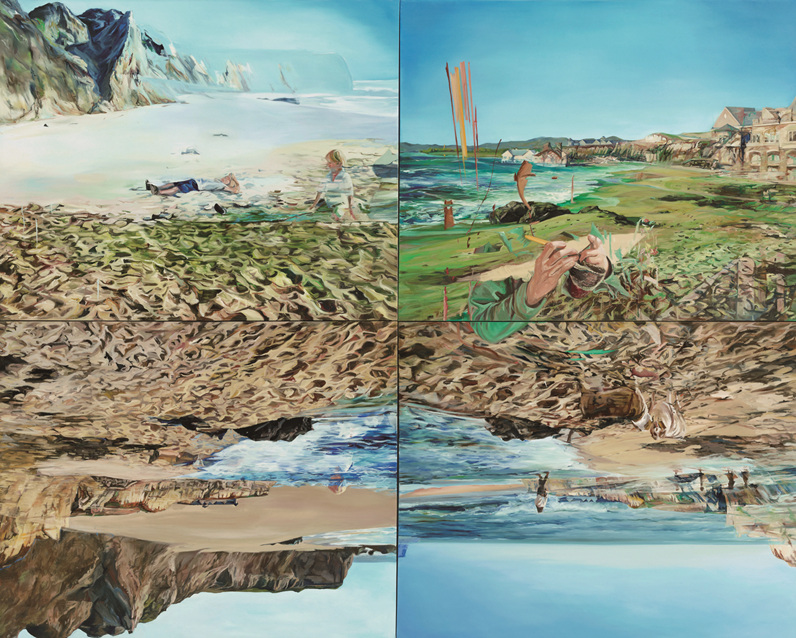
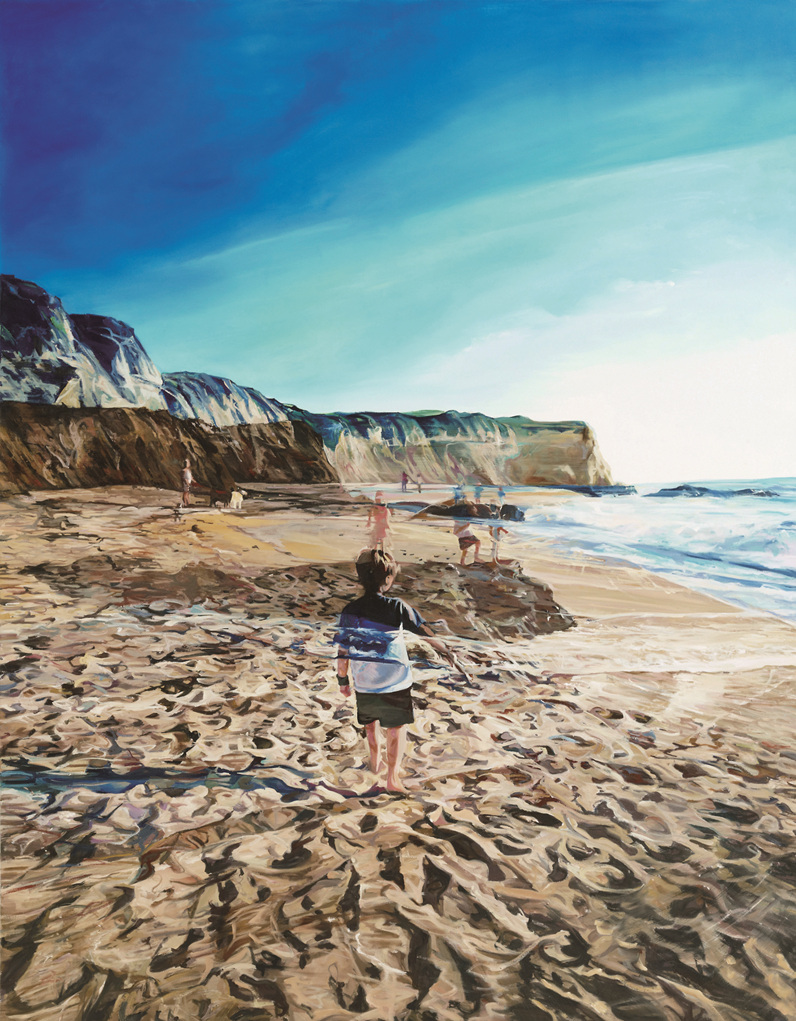
LEE Jihyun says that by painting a memory and then overlaying it with another, it is possible to create a new memory. Because memory can never remain pure, but is subject to distortion and manipulation and is therefore formed subjectively, she suggests that her paintings may become a way of superimposing new images onto memories of the past to contain a “future memory.”

Such paintings may bring back unpleasant memories, but in doing so, they can also lead her to newly understand events from the past that had once seemed incomprehensible, transforming worries and anxieties into a state of calm and stability.

In 2018, the artist presented Re-portal (2017–2018) as her graduate thesis work. The installation brings together painting, video, a wooden structure, soft sculpture and objects, moving image, and sound. LEE has said that since childhood she has been drawn to objects that serve multiple functions at once, and that she enjoys objects with many layers and functions, as well as imagining the possibilities of what they might become.
The overall structure of Re-portal was designed to evoke a spacecraft or time machine, while its interior was constructed as a small fortress or hideout using familiar domestic objects and materials. In one part of the work, the artist’s son recounts a dream in which he entered a computer. Once inside, he traveled in the belief that there must be a hole, or “portal,” through which he could escape.

Inspired by her son’s understanding of a “portal” as an exit, LEE titled the work Re-portal to suggest an opening through which one can both enter and leave. Underlying the work is also her hope that Re-portal might serve as an entrance through which viewers could understand not only materials that reveal her personal perspective as a woman, daughter, and mother, but also those that evoke childhood memories and family.

For LEE Jihyun, whose childhood was filled with curiosity and a desire for exploration, daydreaming served as an important window and passage into other worlds. Re-portal, therefore, needed to function not only as an entry into that passage, but also as an exit leading toward another world. She hopes that viewers will project their own memories, thoughts, and experiences onto the work; in doing so, each viewer may construct an individual narrative and, through that process, come to understand the artist’s own story.

Indeed, LEE herself seems to project her memories and fantasies onto the works of others. She has said that she enjoys and frequently reads the writings of Sartre, Kafka, and Borges. She is drawn to Bachelard’s celebration of reverie and has also applied Jung’s theories to her own understanding of the unconscious.

She has cited these thinkers and writers in her thesis, and Borges’s The Garden of Forking Paths in particular had a considerable influence on Re-portal. The narrator of Borges’s story explains a novel written by his ancestor Ts’ui Pên: whereas in most novels a character confronted with several possibilities chooses one and rejects the others, in Ts’ui Pên’s novel the character chooses all of them simultaneously.

Thus, every possible ending occurs, and each ending becomes the starting point of yet another divergence. As noted earlier, LEE Jihyun’s 'Fantasma' consists of small paintings made like notes on canvas to capture thoughts as they arise while she works on time-consuming large-scale paintings.

'Fantasma' therefore not only provides clues that allow her painting to pursue further possibilities, but also records every memory and reverie without letting any of them slip away, allowing every ending to occur while simultaneously turning each into a new beginning. Like Ts’ui Pên’s novel, it becomes a painterly motif that branches endlessly toward an infinite number of conclusions.


Installation view of 《Red Scene》 © ARARIO GALLERY

4. Where’s the sun?

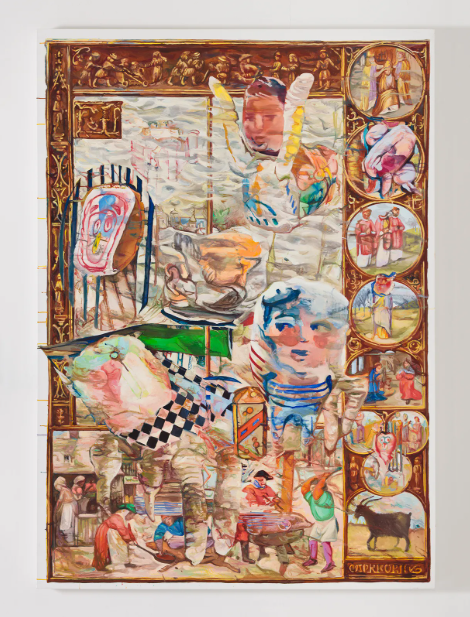
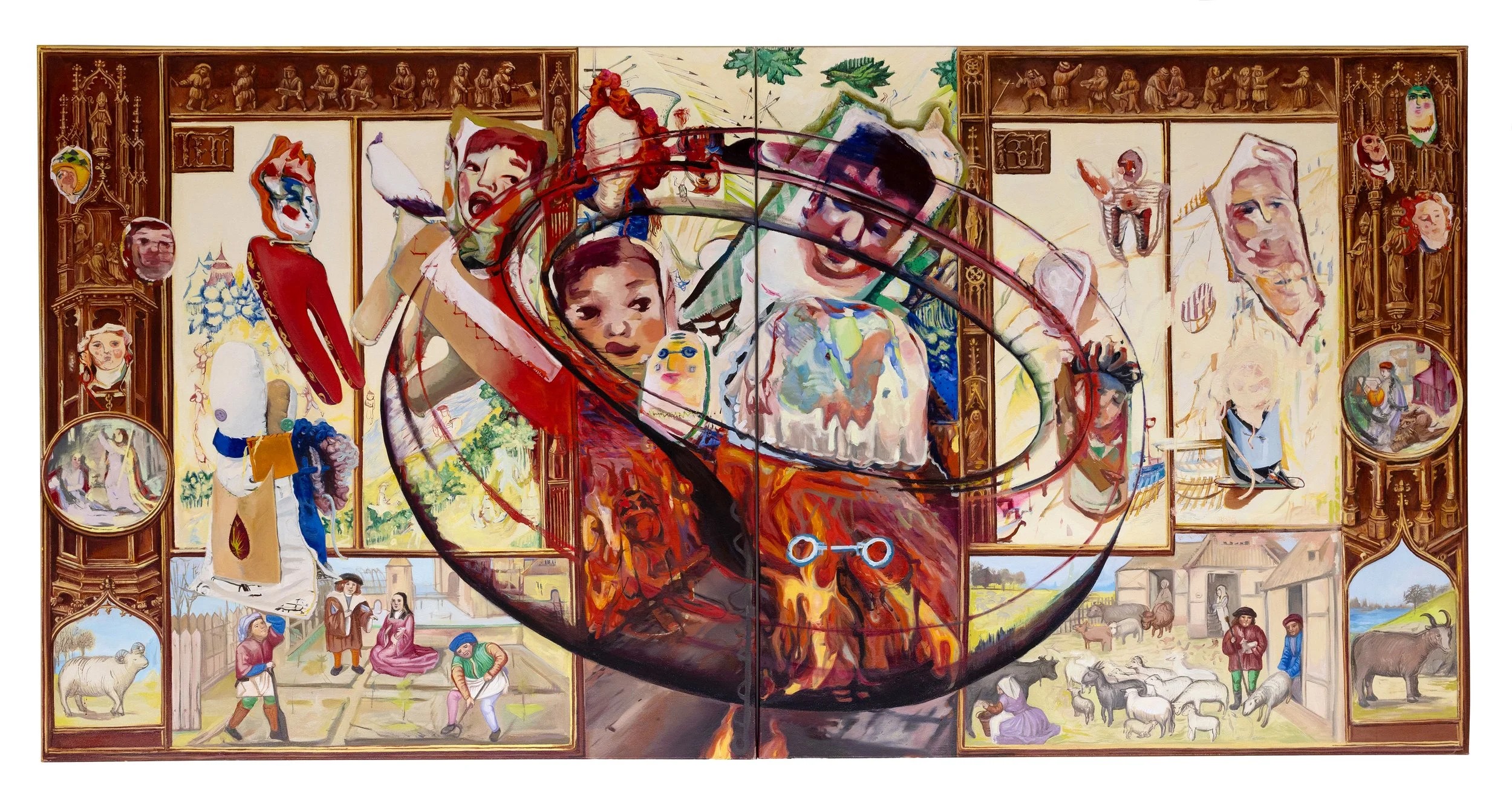
Summer Garage_Kronborg (2020) began with a conversation the artist had with her son at the height of the pandemic. A garage is always a damp and gloomy place, in stark contrast to the almost resentfully bright summer sky, much like the spiral stone staircase of Kronborg Castle had been such a place charged with that very atmosphere.

For the artist, the pandemic arrived as a sudden, damp gloom within the midst of familiar things, and she paradoxically revealed this unfamiliar melancholy through the bright summer sky, familiar dolls, and her son’s doodles and drawings. The large doll standing at the center of the painting is ‘Coffee Man,’ one of the artist’s handmade doll figures.

One day, without realizing there was still coffee left in the cup, the artist stuck a doll she was making into it. By the next morning, the doll, stained and dried by the coffee, looked striking in itself, and thus Coffee Man was born. Although the Coffee Man doll is small enough to fit in one hand, once transferred onto canvas it became almost life-size.

Above it, the phrase “Where’s the sun?” and the small drawings were taken from doodles the artist’s son had left in his mother’s notebook. In the painting, the son’s question appears almost like a line spoken by Coffee Man. The photograph faintly visible beneath that phrase is presumed to show portraits of the actors who have played Hamlet, on view at Kronborg Castle.

Through memories of visiting Kronborg Castle in Denmark during the depressive period of the pandemic, together with Coffee Man and her son’s drawings and doodles, the artist completed this painting by joining them within a single image. From the viewer’s perspective, no logical connection can be found, yet this painting is clearly another scene called forth by the artist’s memory and one association leading to another.

“The King is dreaming now. Do you know who about?”

“Nobody can guess that.”

“Why, about you! And if he left off dreaming about you, where do you suppose you’d be?”

“I don’t know.”

“You’d be nowhere. Why, you’re only a sort of thing in his dream! If that King was to wake, you’d go out—bang!—just like a candle!”

—Lewis Carroll, Through the Looking-Glass (1871)

In Book of Dreams, Borges’s collection of dream narratives from across times and cultures, he included the episode of the Red King’s dream from Lewis Carroll’s Through the Looking-Glass. The excerpt Borges selected, “The King’s Dream,” is only a few lines long, yet it creates a situation in which the sleeping Red King and Alice simultaneously become beings within each other’s dreams, making it impossible to determine who is whose apparition.

Like facing mirrors, they infinitely reflect one another. As I considered not only LEE Jihyun’s 'Red Scene' series but also her recent works, this passage came to mind. One work becomes the mirror of the next, or the window to another; images circulate, overlap, transform, and regenerate without end, forming relationships of reflection, transformation, and circulation.
LEE Jihyun, the creator of all these stories, is at once the Red King and Alice, endlessly layering dream upon dream and overlaying memory with new images to produce new memories and new images. The Red King and Alice exist within each other’s dreams, generating apparitions, as if they were beings inside the infinite imagery produced by two mirrors facing one another in endless reflection.

As I bring this text to a close, it seems fitting to think of LEE Jihyun and her painting in terms of the relationship between the Red King and Alice. Yet if dreams are not real, how are we to understand the idea that “you” can exist only in a dream? What does it mean to say that you are merely an apparition in a dream?

In the end, all of this is a story about feeling something said not to be real as though it were real. LEE Jihyun does not doubt this, but captures it in painting—as something that exists even if it cannot be seen, vividly alive in dreams and on the painted surface.

References