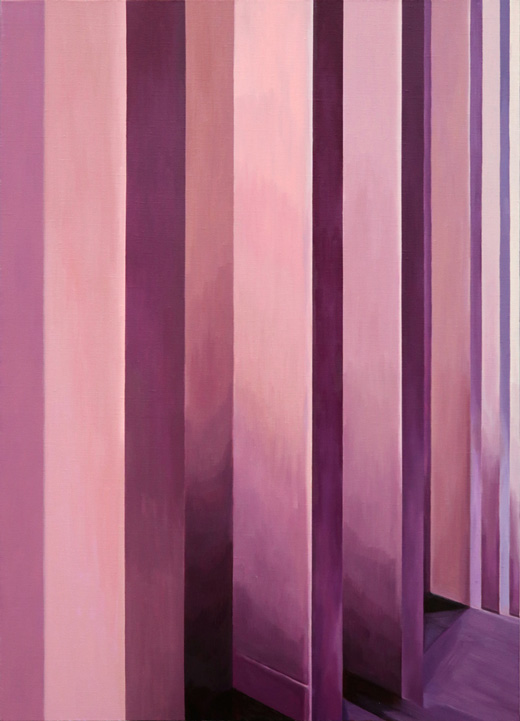
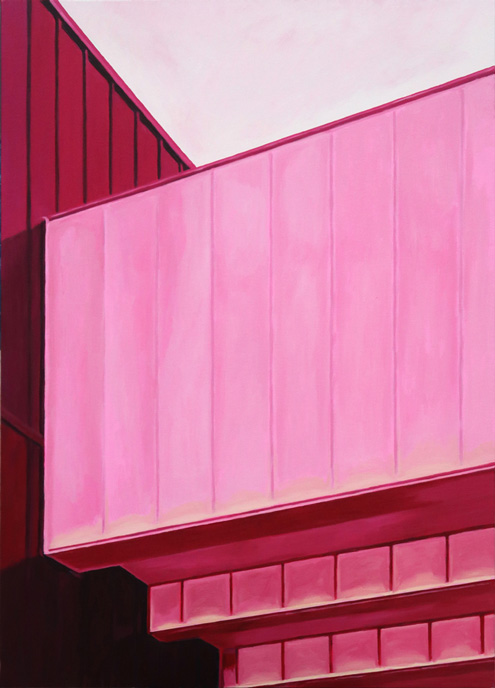
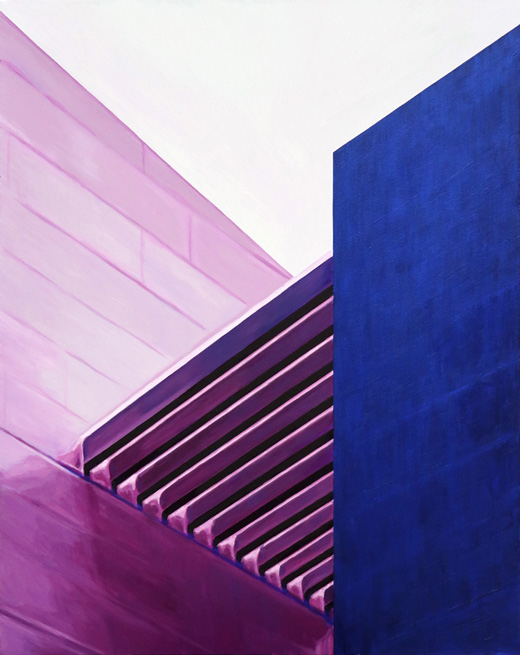
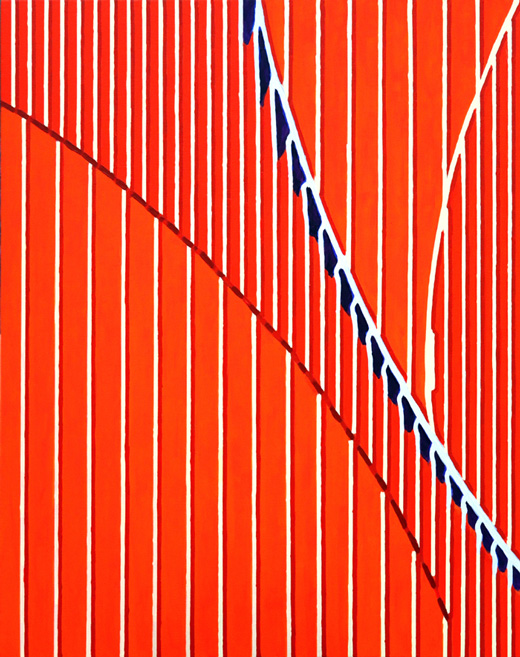
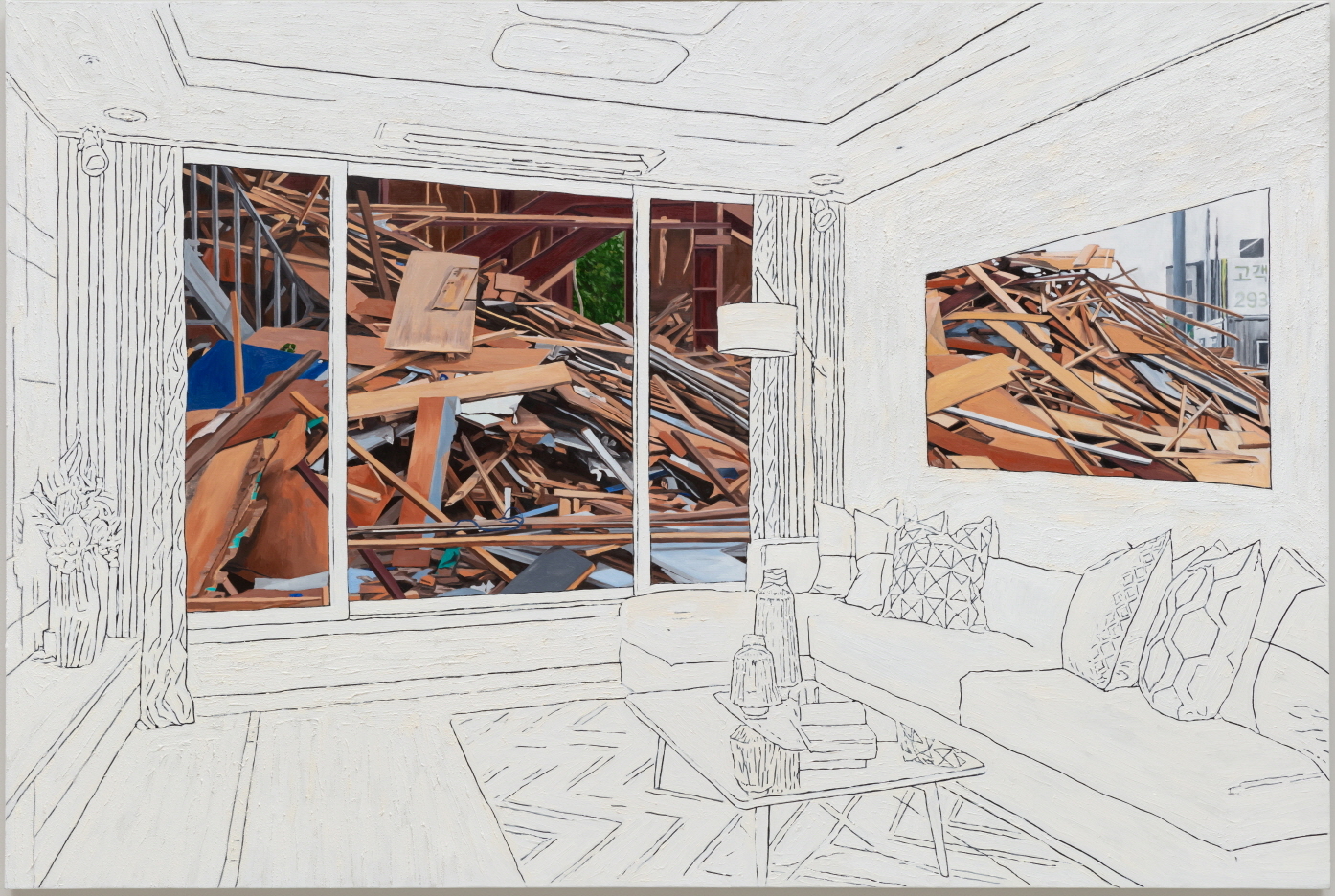
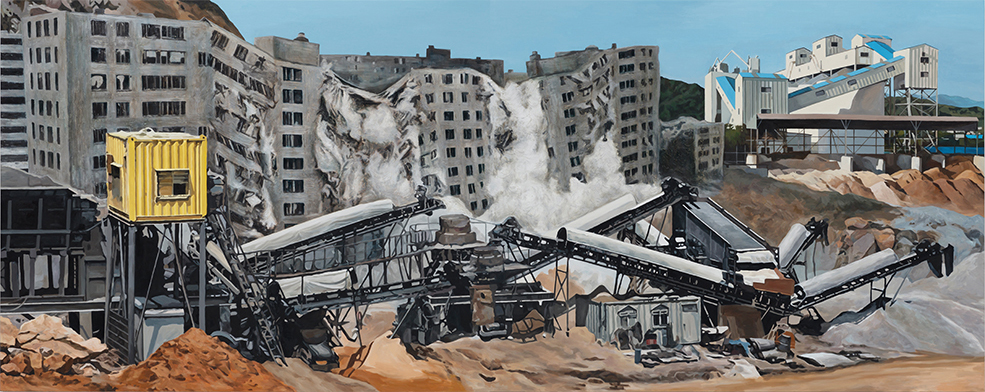
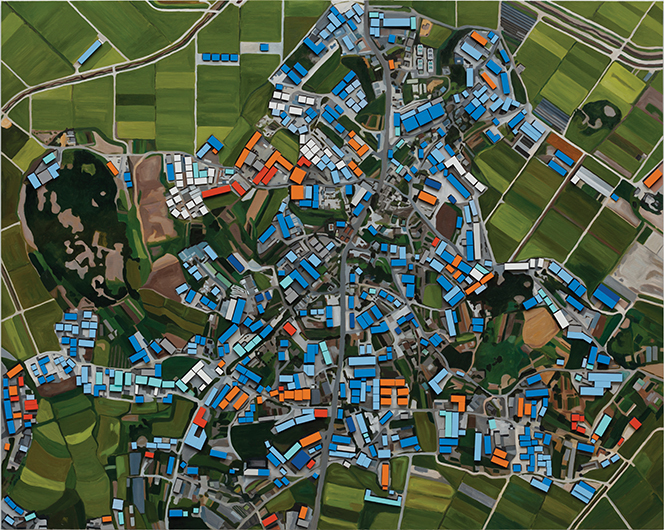
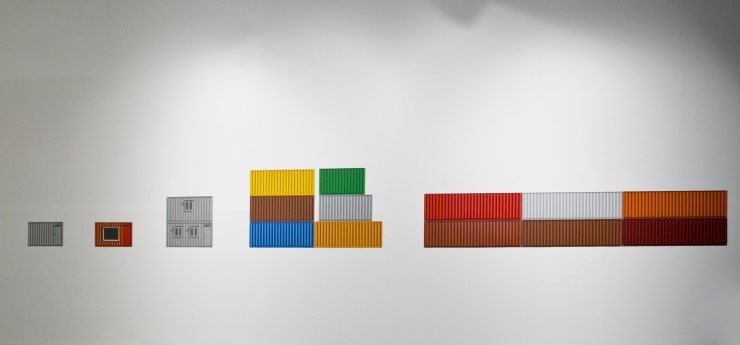
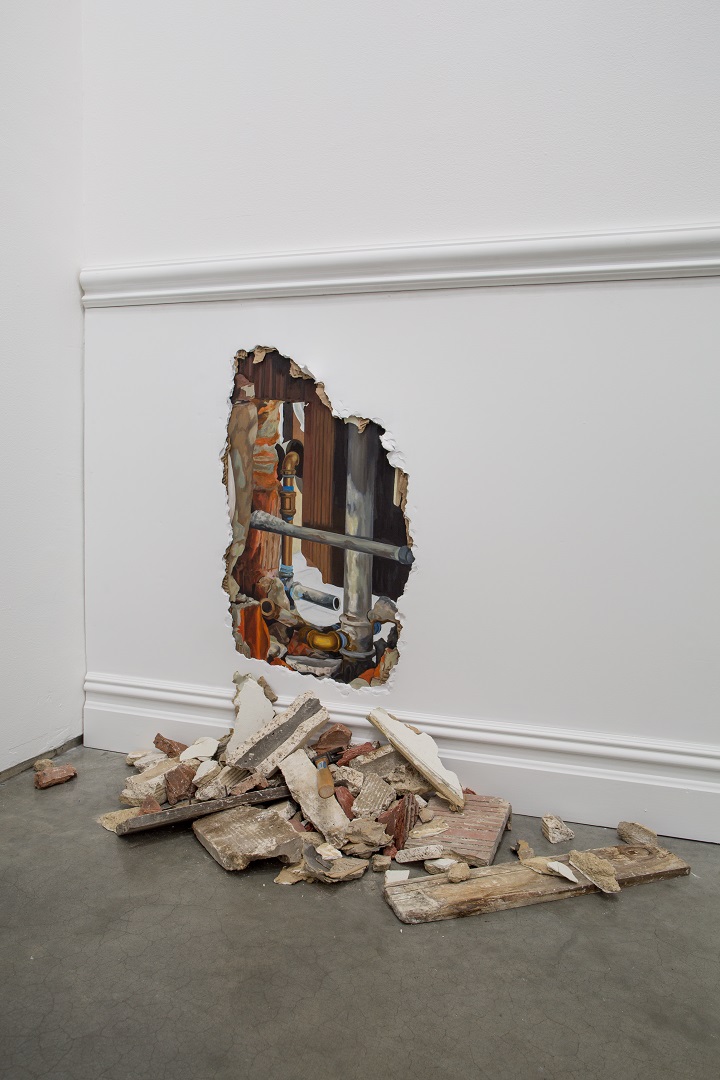
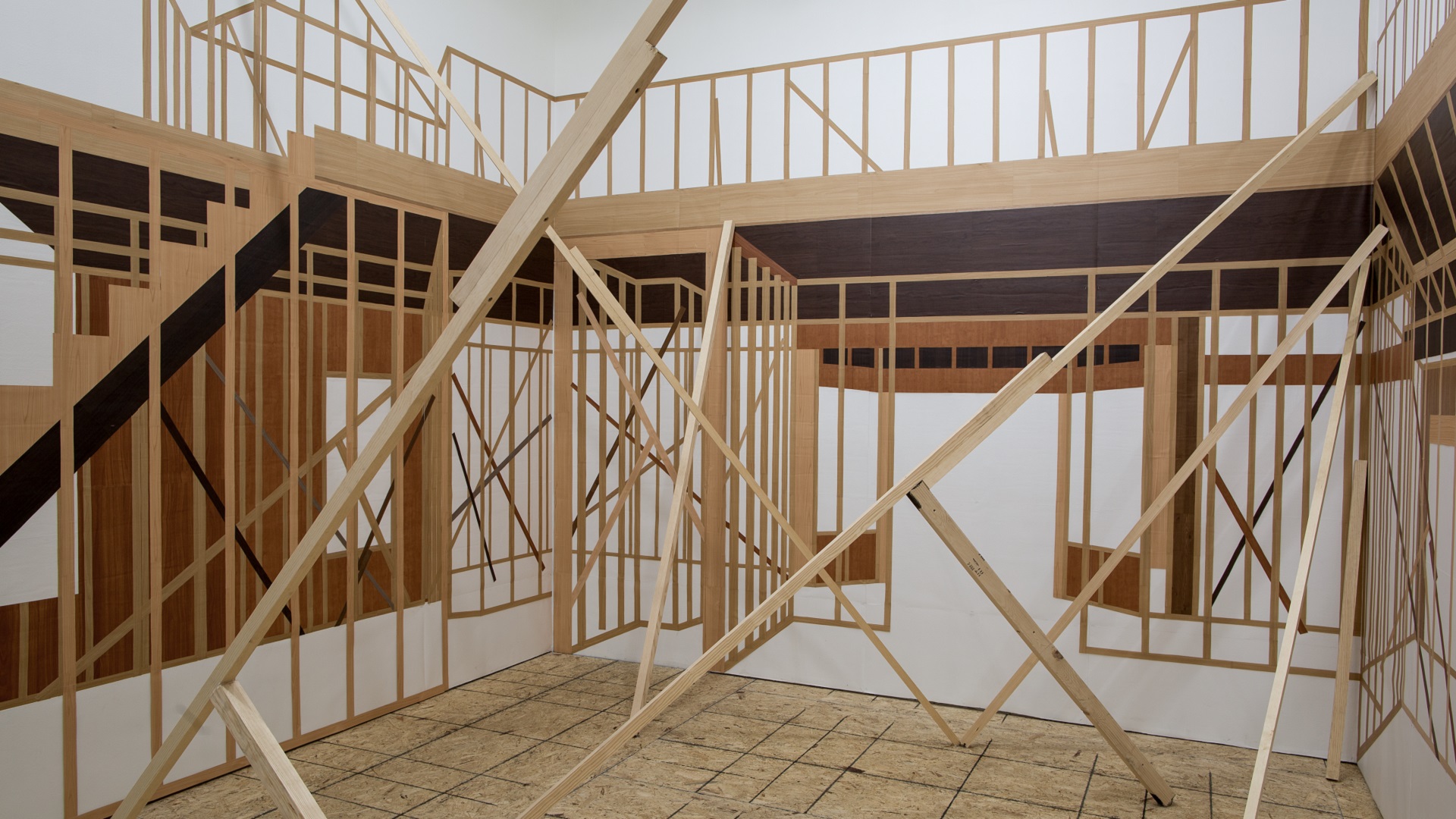
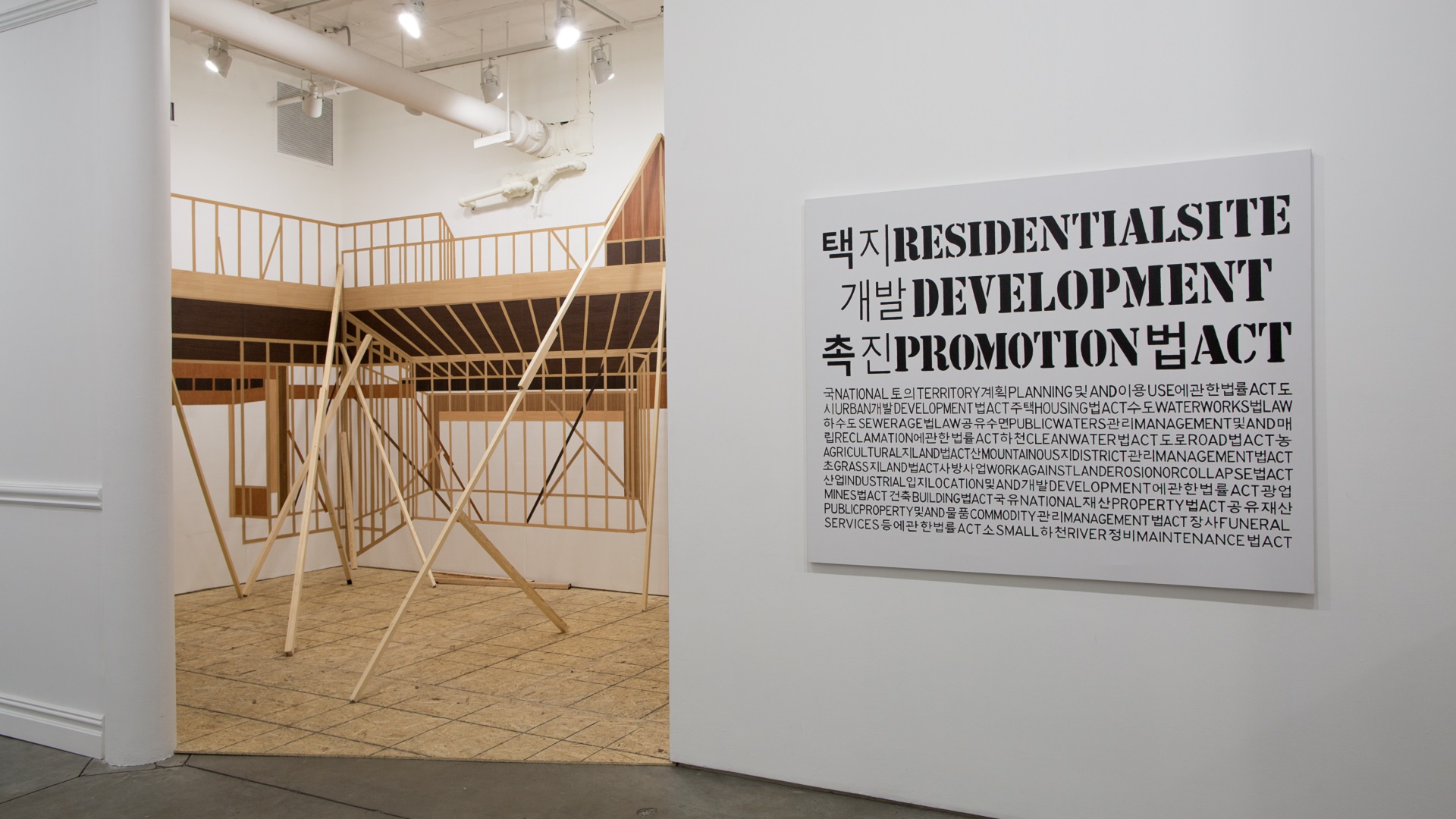
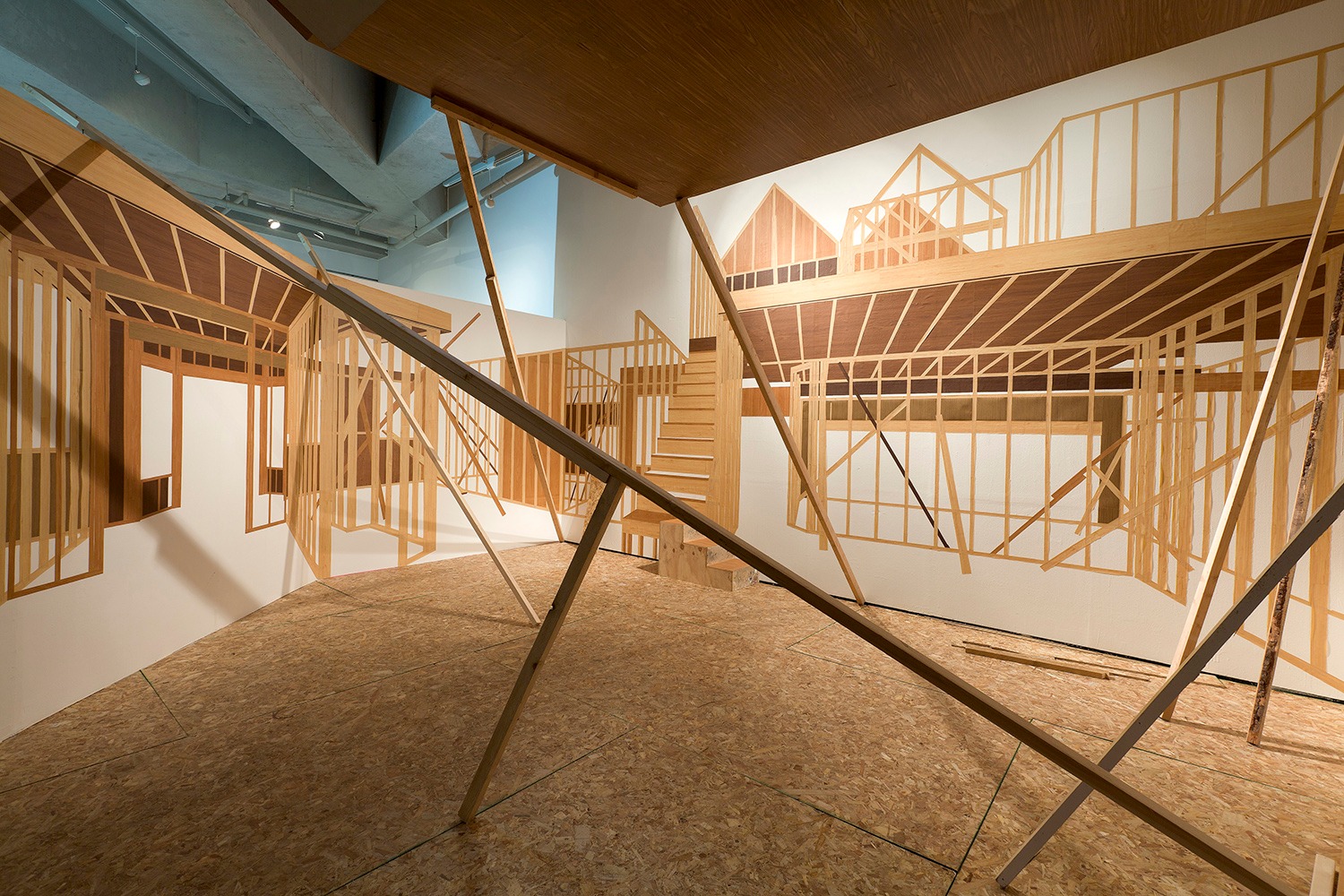
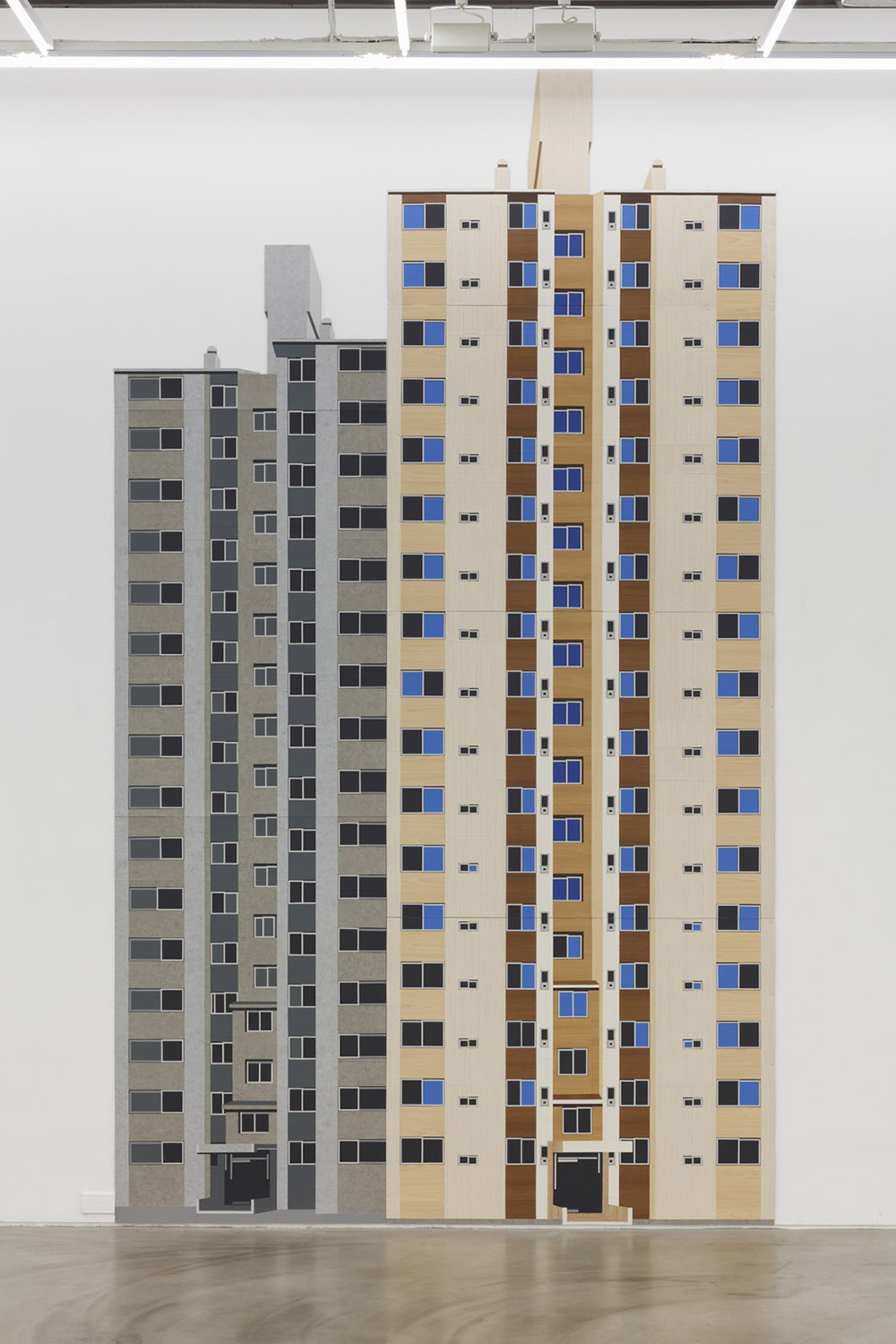
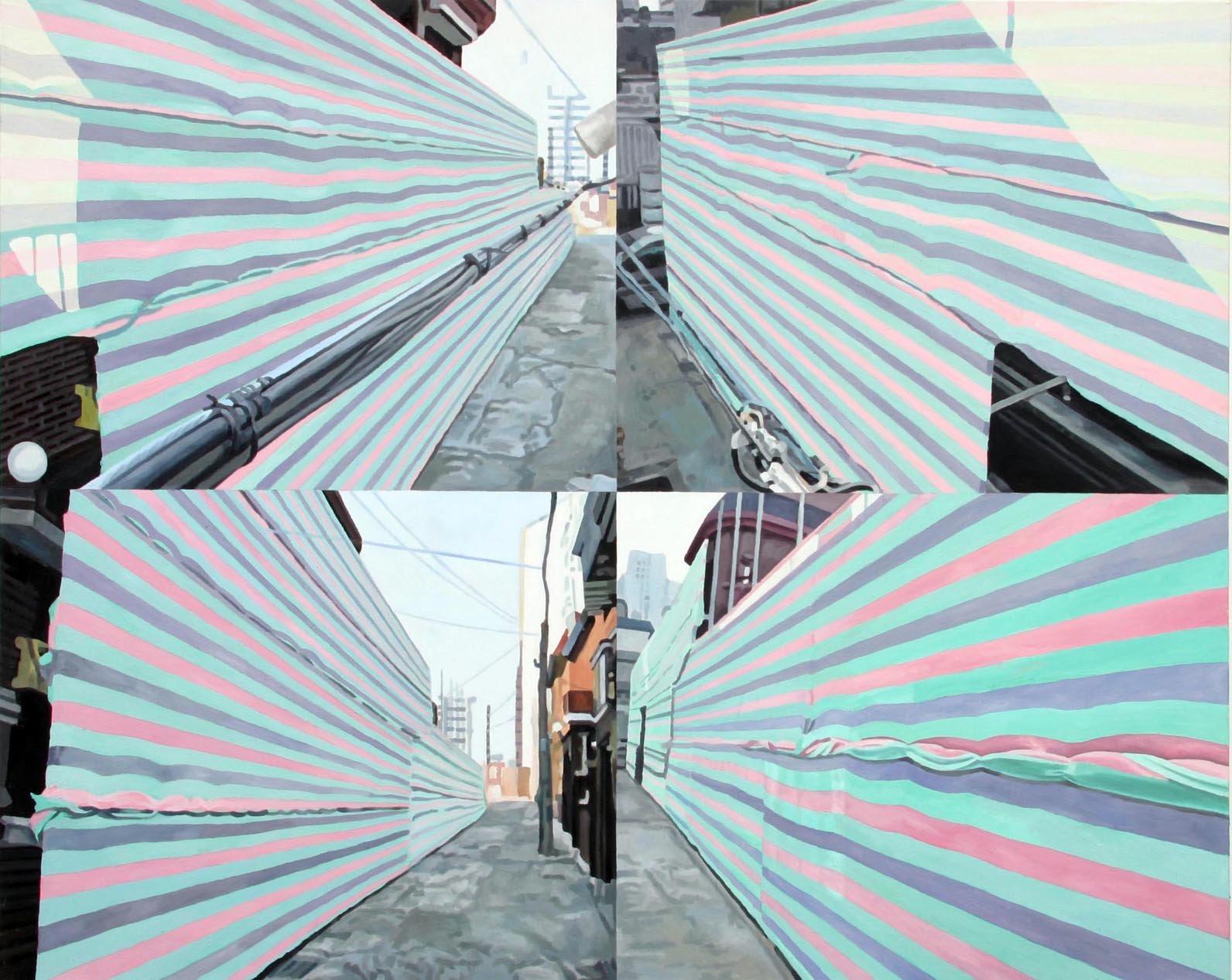
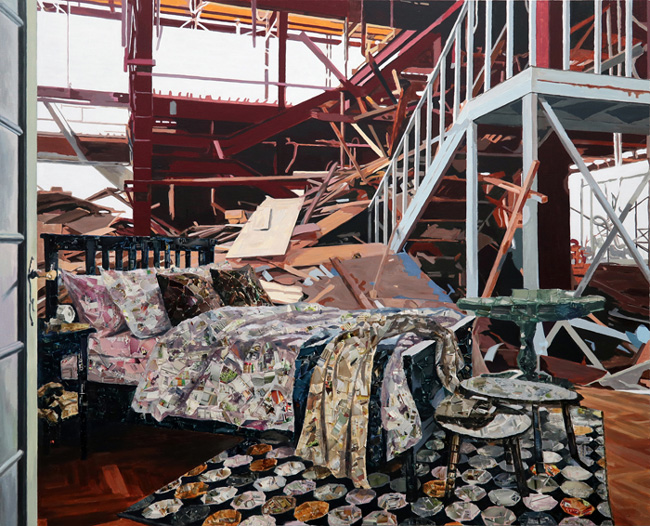
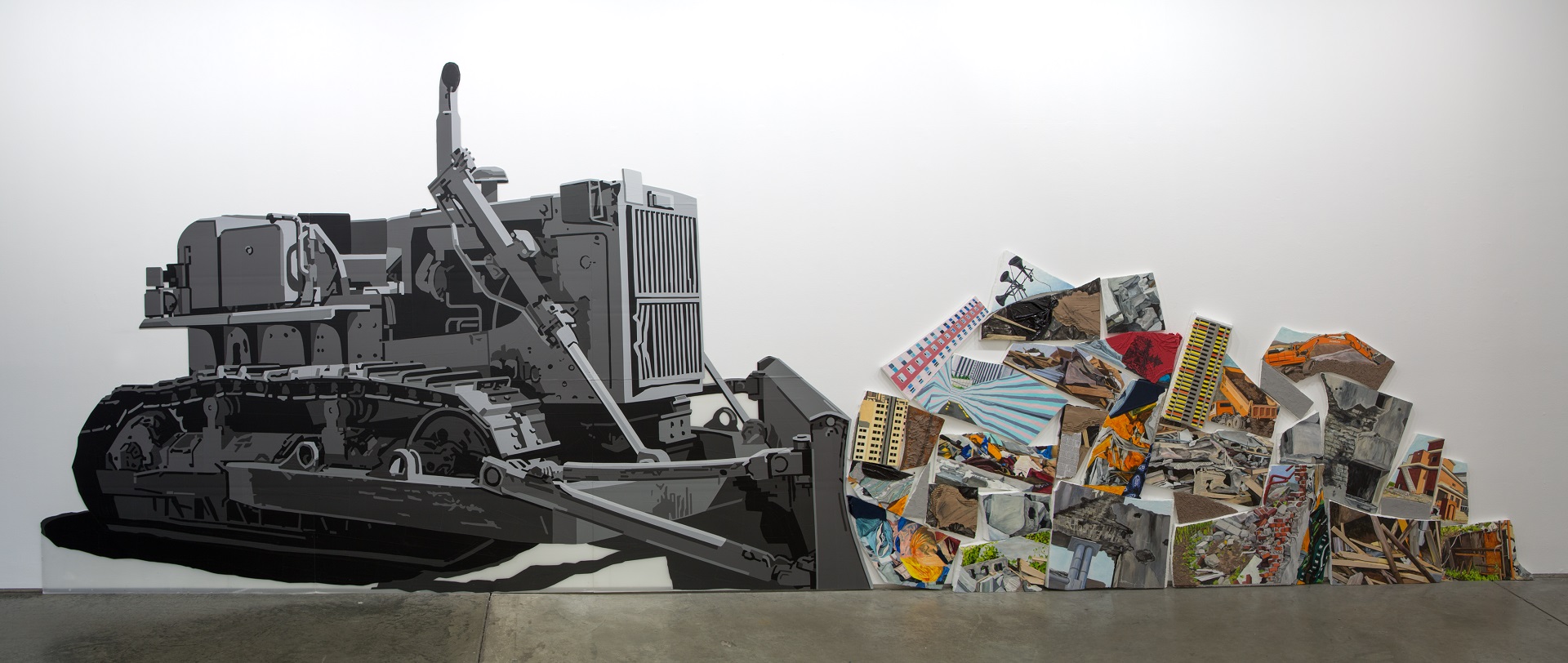
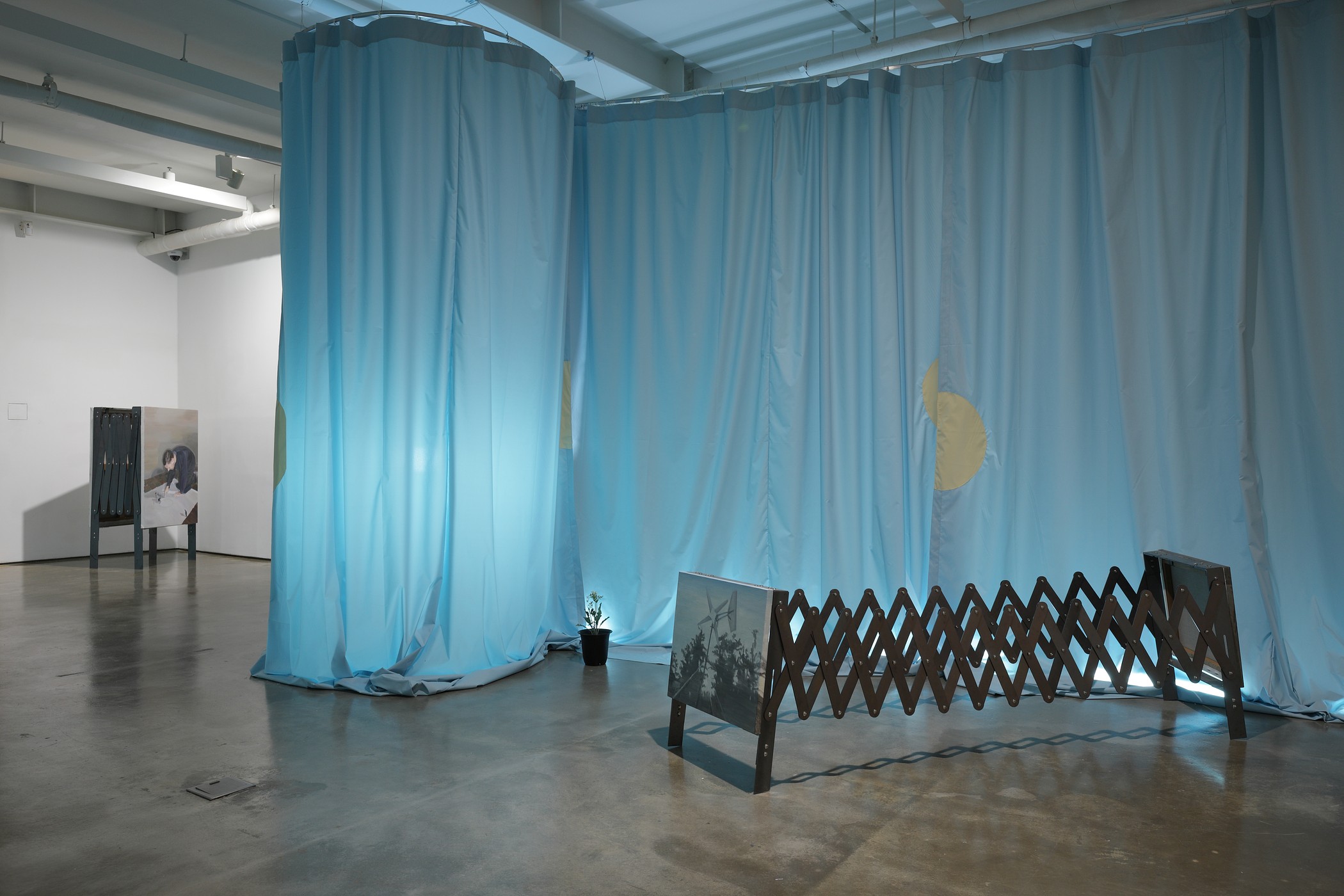
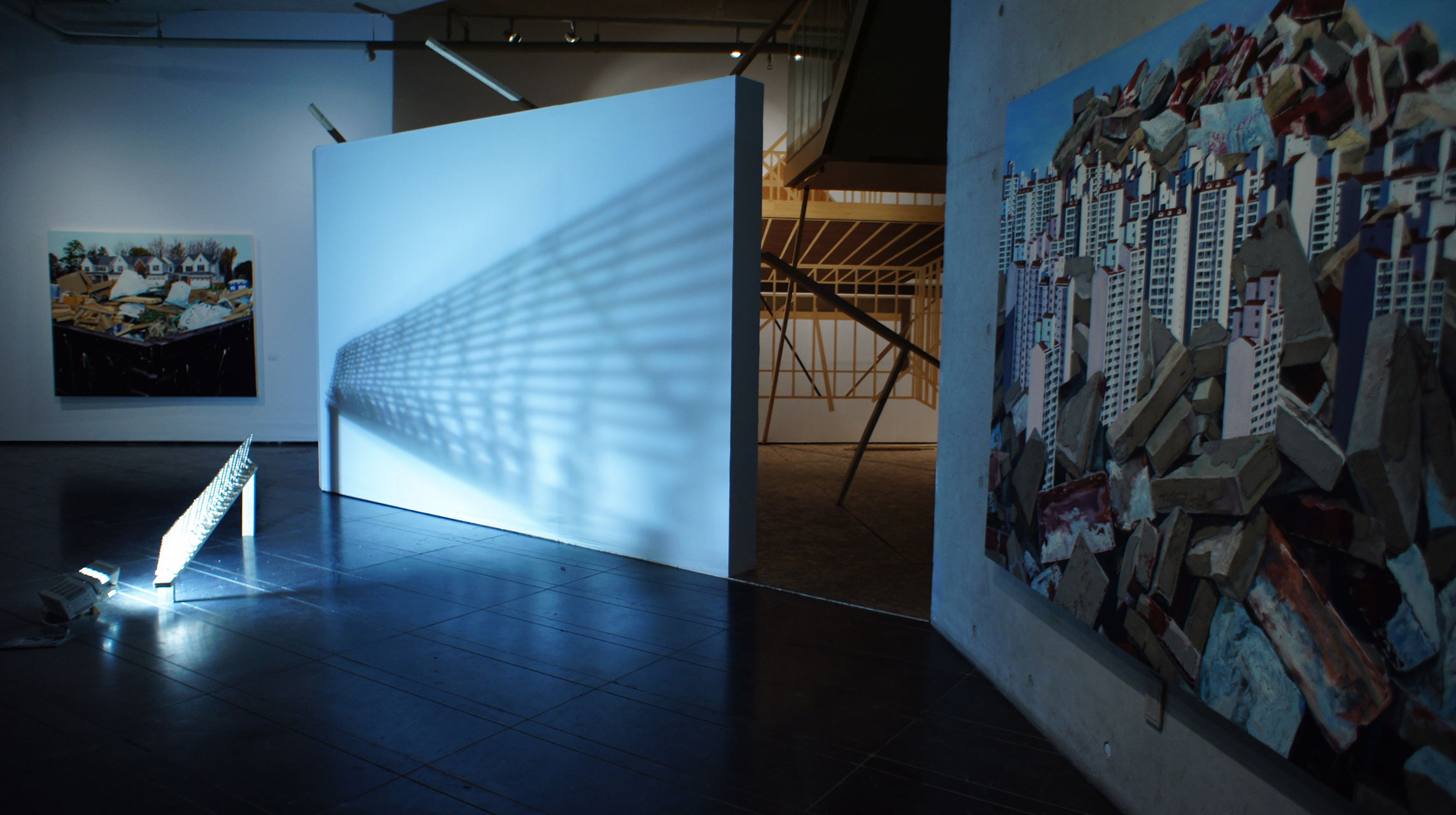
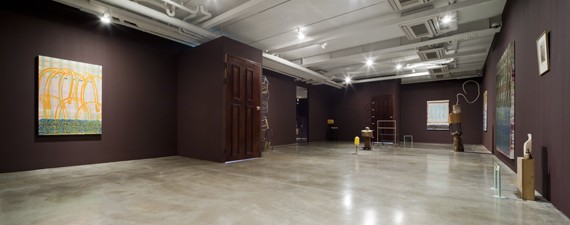
Although the social landscapes of the two countries differed in scale, there was little fundamental difference between them. As demonstrated by mass-produced American timber-frame houses built according to Fordist principles and Korea’s large-scale apartment complexes, the question is what is produced when the most stable earthly dwelling—the extension of the human body itself—begins to turn over as rapidly as the cycles of production and consumption governing other commodities.
Kim’s work demonstrates that such cycles of production and consumption reproduce both ruins and uprooted lives. Yet she does not simply cast a critical gaze on these social landscapes from the position of an outsider or stranger. Her works neither merely express subjective impressions of unsettling urban landscapes nor reproduce an absurd social reality.
Rather than expression or representation, they generate structures corresponding to the structures the artist has discovered. Kim’s distinctiveness lies in her ability to capture what is generated even amid mass destruction elevated to the level of production.
Her experience of living in various places and incorporating regional research into her work allows her to extract the commonalities of what is generated amid destruction. Through individual investigations of the various regions to which she temporarily belonged, she discovers the most singular within the most common, and “the most common” within “the most singular” (Negri).
For Kim, the common and the singular are not opposing categories. Successfully bringing together commonality and singularity is one of art’s perennial tasks. Distinctive products that make maximum use of given conditions to achieve functionality are at once seemingly primitive and universal.
The objects that attract Kim’s attention and frequently become materials for her work share a common characteristic: they are made from inexpensive, readily available materials by people without specialized skills. Even in different regions, when people encounter similar situations and conditions, the ways in which such objects are produced tend to resemble one another. These works by anonymous makers, simply fashioned in response to necessity, inspire admiration, and Kim directs her attention toward objects created to meet one need or another.
Art, too, needs a common language akin to that possessed by distinctive objects that emerged organically from particular circumstances, rather than existing as arbitrary decoration or excess that could just as easily take one form as another. Yet the dimension changes once such objects are incorporated, whether as ends or means, into a mechanized system of mass production.
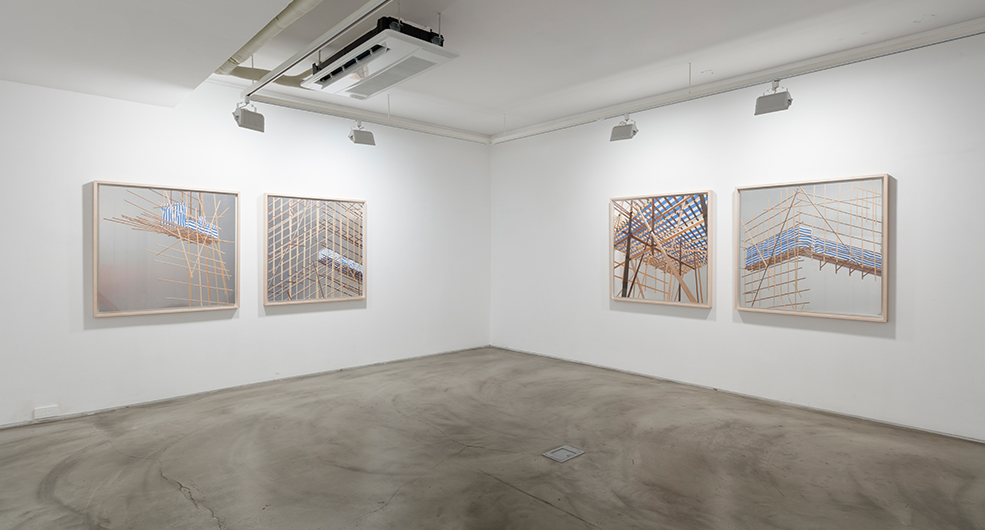
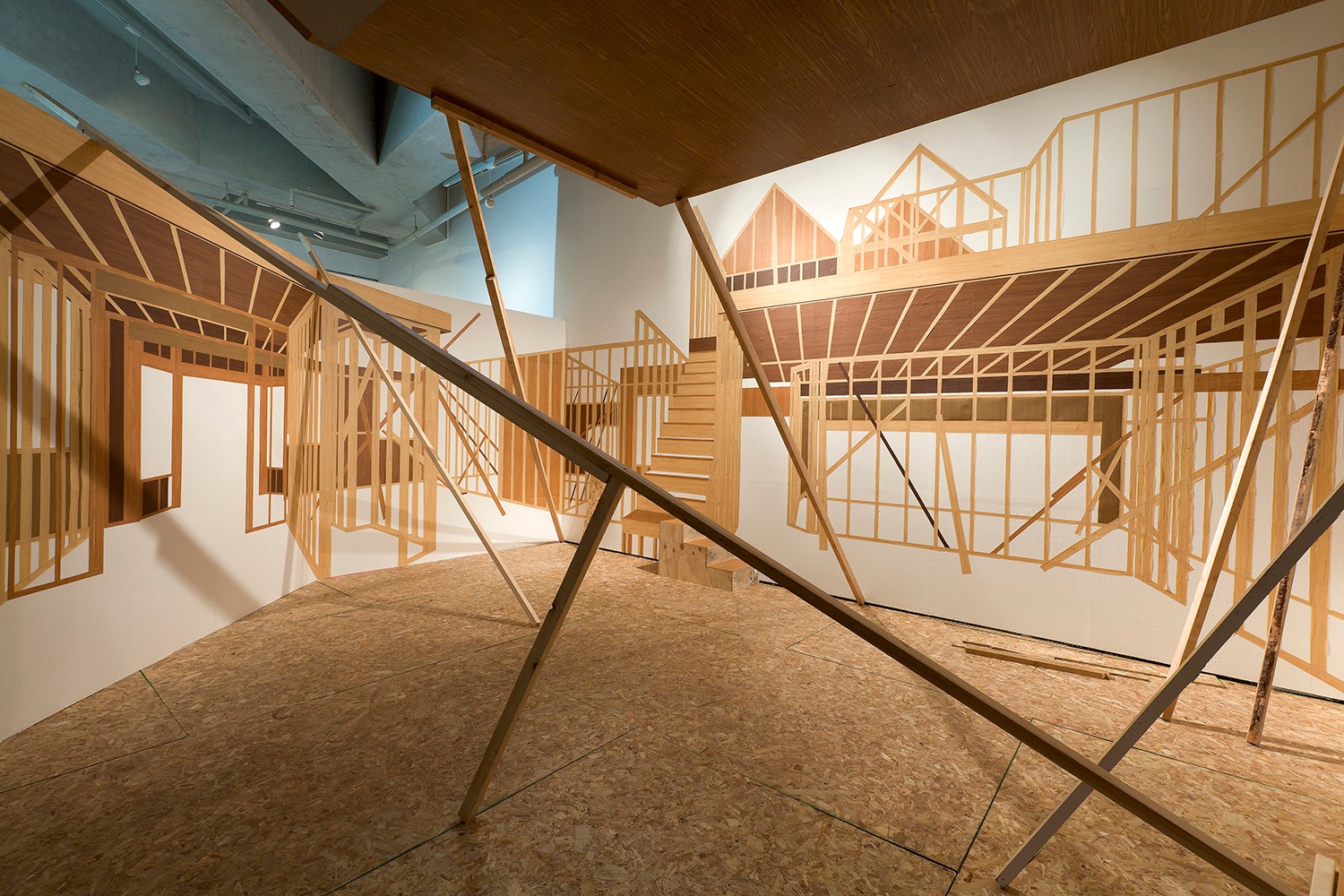
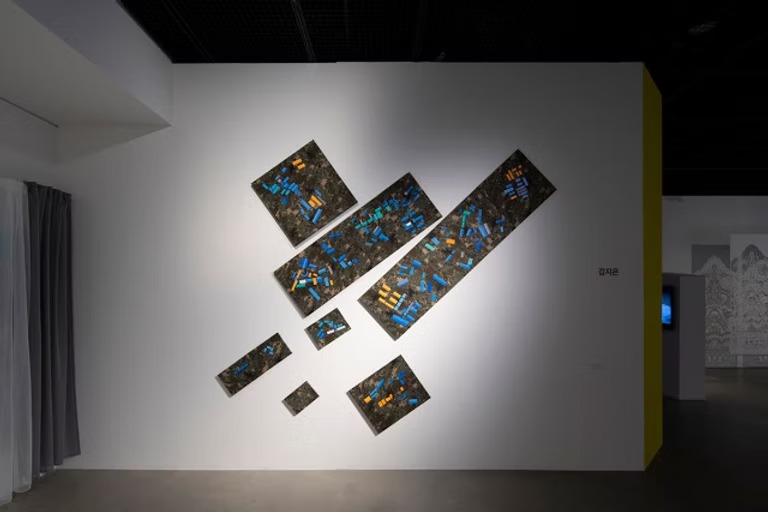
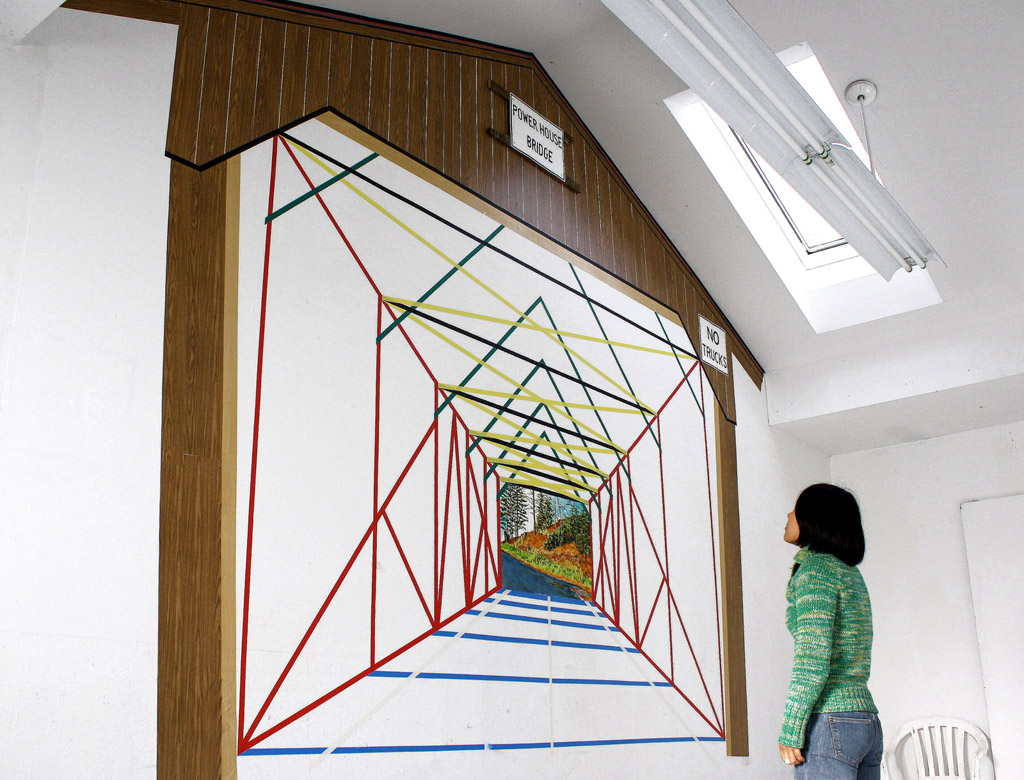
Materials that frequently appear in Ji Eun Kim’s installations, such as timber battens and adhesive sheets, are commodities and building materials produced through standardized systems of production; by bringing them to the foreground, she highlights things that are ultimately destined to disappear in the service of an ordered structure.
Loosely assembled from impermanent materials with predetermined lifespans, these constructions offer a structural image of modern life. Detroit, the first city in which Kim lived in the United States, serves as a prefiguration of the present and future of the city and is imprinted across many of her works as a primal scene in which utopia abruptly turns into dystopia. Detroit is a city that exemplifies the distinctive phenomenon of suburbia, in which the urban periphery continually expands while the city center becomes hollowed out.
The United States, a car-centered society occupying vast territory and drawing on major resources from around the world, is also the country that produces the greatest amount of waste. It presents a vision of capitalism’s future that has already begun to arrive for us as well, as the distance between abundance and destruction grows ever narrower.
After completing her studies and participating in short-term residencies across the United States, Kim continued to add new works within a consistent framework: whenever she settled in a place, she researched it thoroughly and produced work in response to that location. She finds architecture to be the object in which traces of human life are most strongly inscribed.
For Kim, architectural style is itself a style of life, and a city is shaped by the dreams held by its community. Whether in a vast redevelopment zone where traces of previous lives have been swept away by decisions imposed from above, or in a picturesque village where local history has been carefully preserved through communal agreement, such dreams are the products of collective desire.
Accordingly, whenever she enters a town, she identifies a building that typifies the condition of the place, conducts extensive preliminary research in local libraries and elsewhere, and only then begins to make the work.
Kim’s work is concrete rather than conceptual, yet she never begins from a vague impression. Each work contains the experience and research accumulated in a particular place. Knowing that she will soon have to leave, she attempts, during the time she has there, to engage as deeply as possible with the unique characteristics of the place and to conduct a serious dialogue with it.
The results, which grasp the essential features of a place within a short period of time, reveal just how persistent and rigorous that dialogue has been. Her way of thoroughly internalizing a place makes nomadism feel less like aimless wandering or escape than like an active form of forward movement. In 2011, she presented in Korea several years of nomadic life and practice in the United States—what she herself called ''Hermit Crab-ism''—and thereafter continued to investigate locality through residencies across Asia, binding these experiences together through the universal language of art.
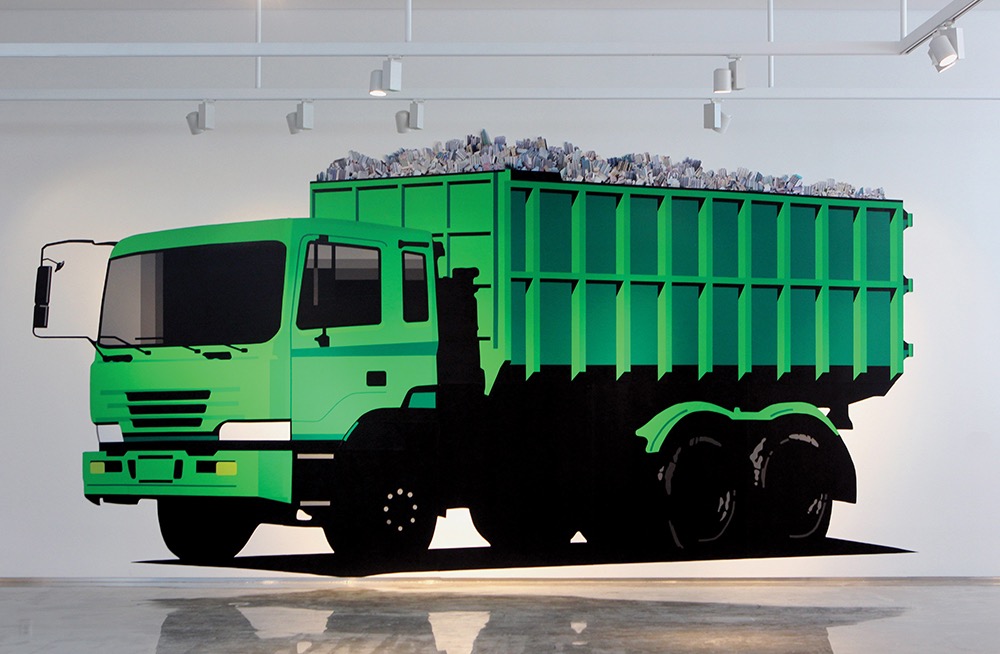
She likewise considers the inevitable reasons behind the seemingly placeless, nationally indeterminate urban landscapes commonly found throughout Asia. During her residency at SeMA Nanji Art Studio, she traced, through related novels, the vanished history of people who had survived by treating the landfill as a marketplace for all things, and transformed refuse collected from Nanjido into symbols of the social conflicts frequently seen in redevelopment districts.
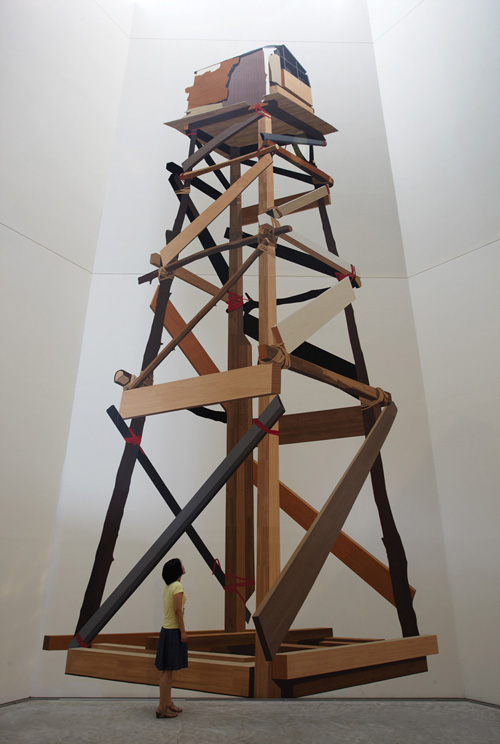
The monumental bamboo scaffolding and watchtowers recently shown in Leeum’s 《Art Spectrum》 were made using primitive and traditional techniques and were products of making use of the conditions at hand. Rather than simply conforming to nature, they embody a kind of primitive functionalism that achieves the maximum effect with the minimum amount of material.
They are also transitional objects that can never entirely disappear even in an age of advanced technology, yet must themselves disappear once they have fulfilled their assigned functions. How powerful are such simple objects when compared with art that merely remains without being used—not that art must possess some straightforward utility, but rather that it must be used as art, through acts such as communication.
Can art, like these objects, stand firmly on its own within reality? Kim is interested not in nature but in structures and buildings made by humans. Yet human figures do not appear in her works. Instead, through artificial structures, she presents the products of human beings responding to their natural and social environments.