Shinae Kim (b. 1984) is interested in how form and information generate one another. Through installation and drawing, Kim continues to explore ways of giving form to the diverse relationships among the information that exists within a given space.


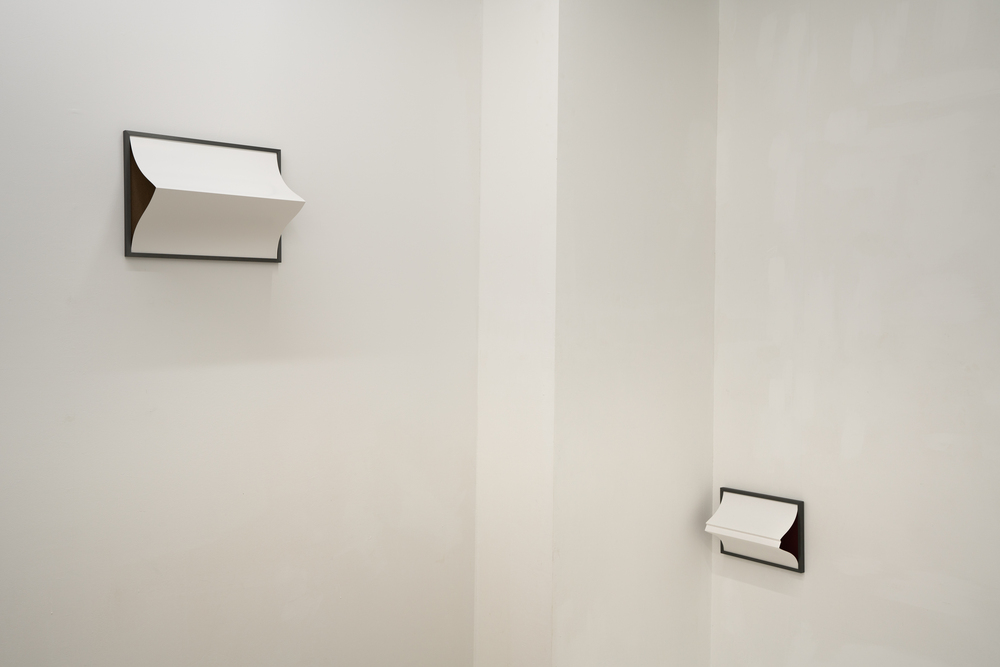
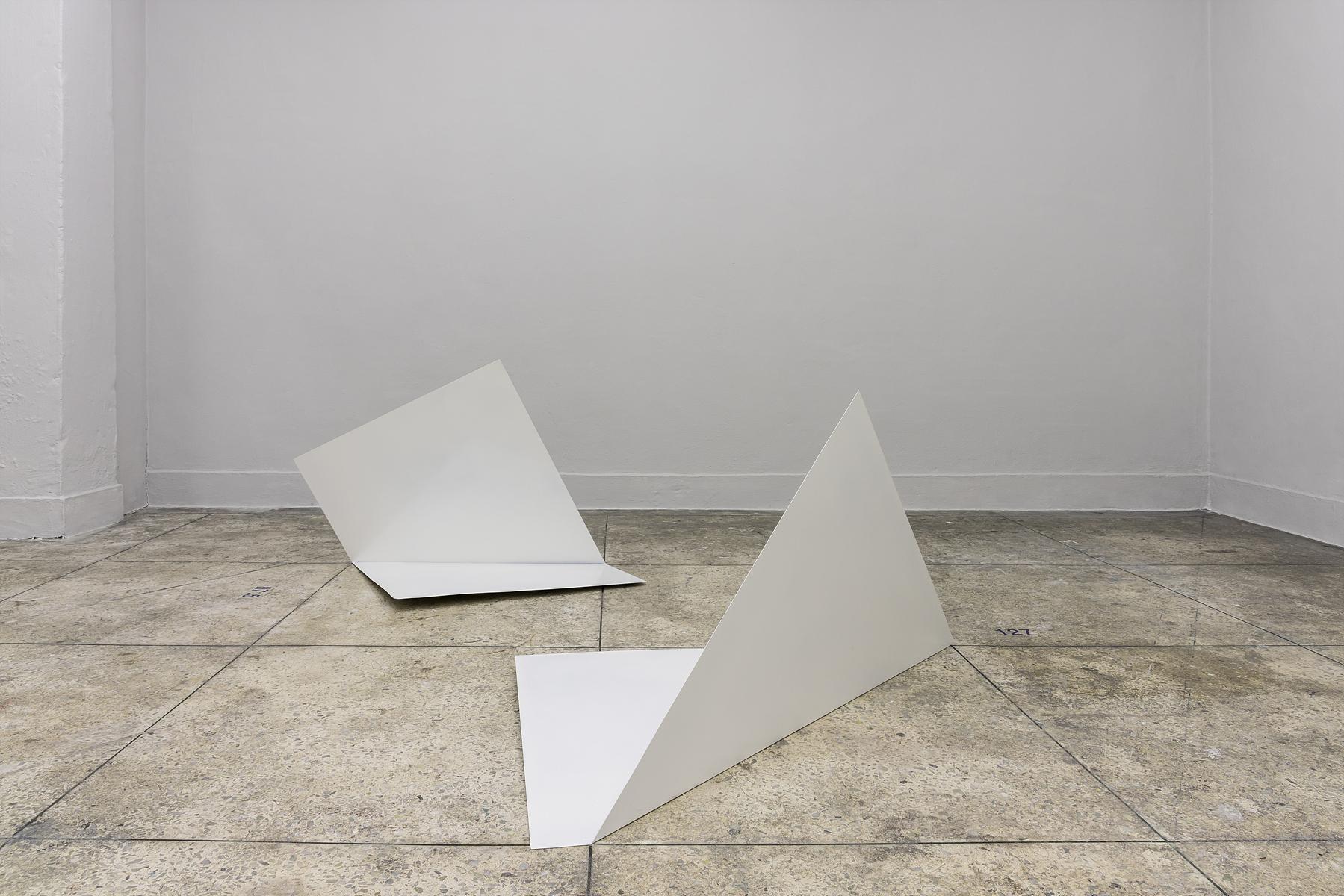
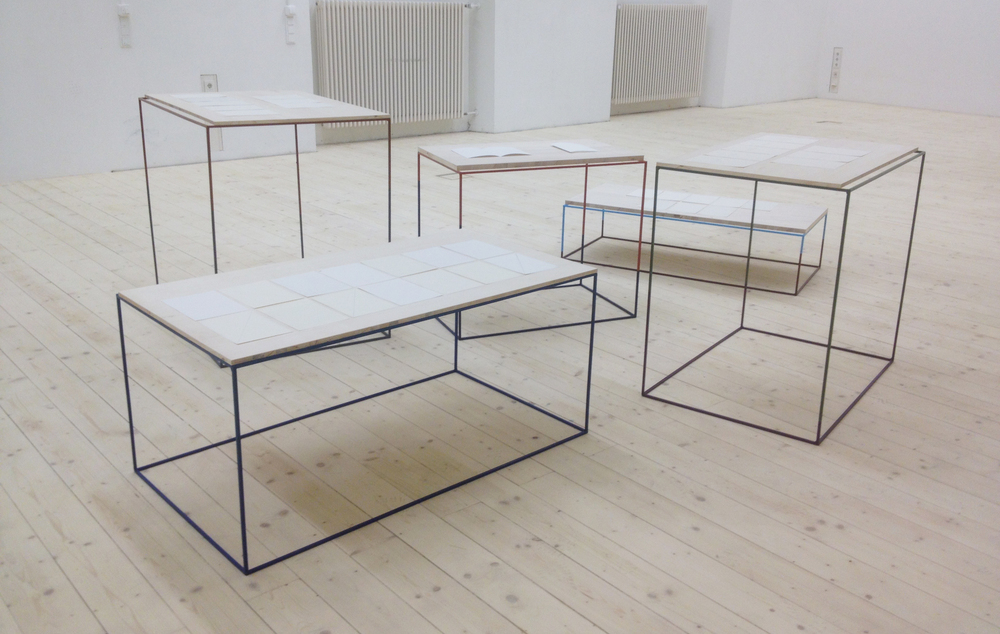
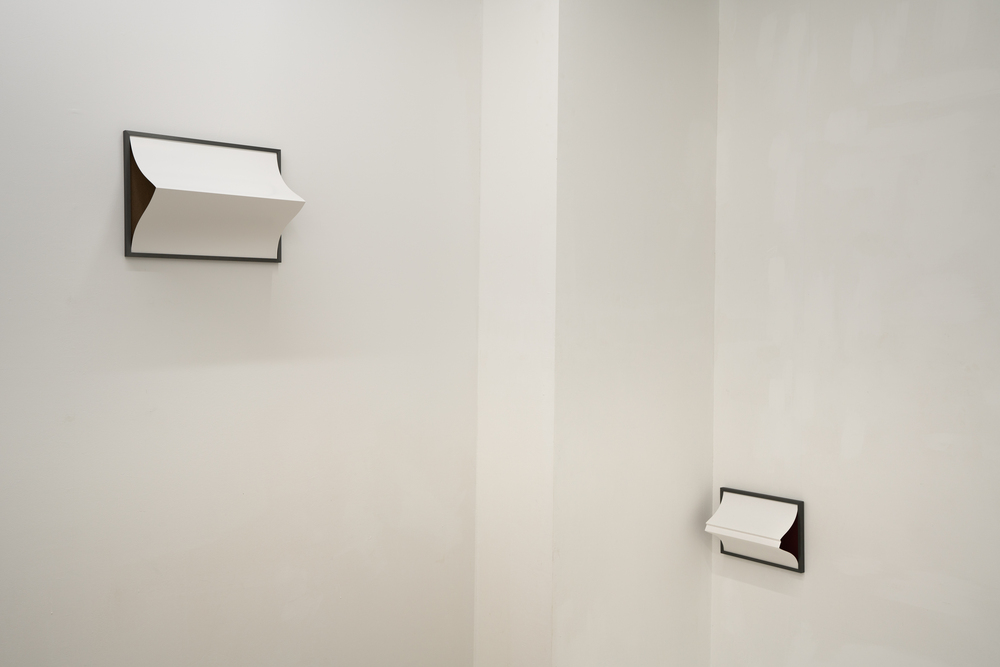
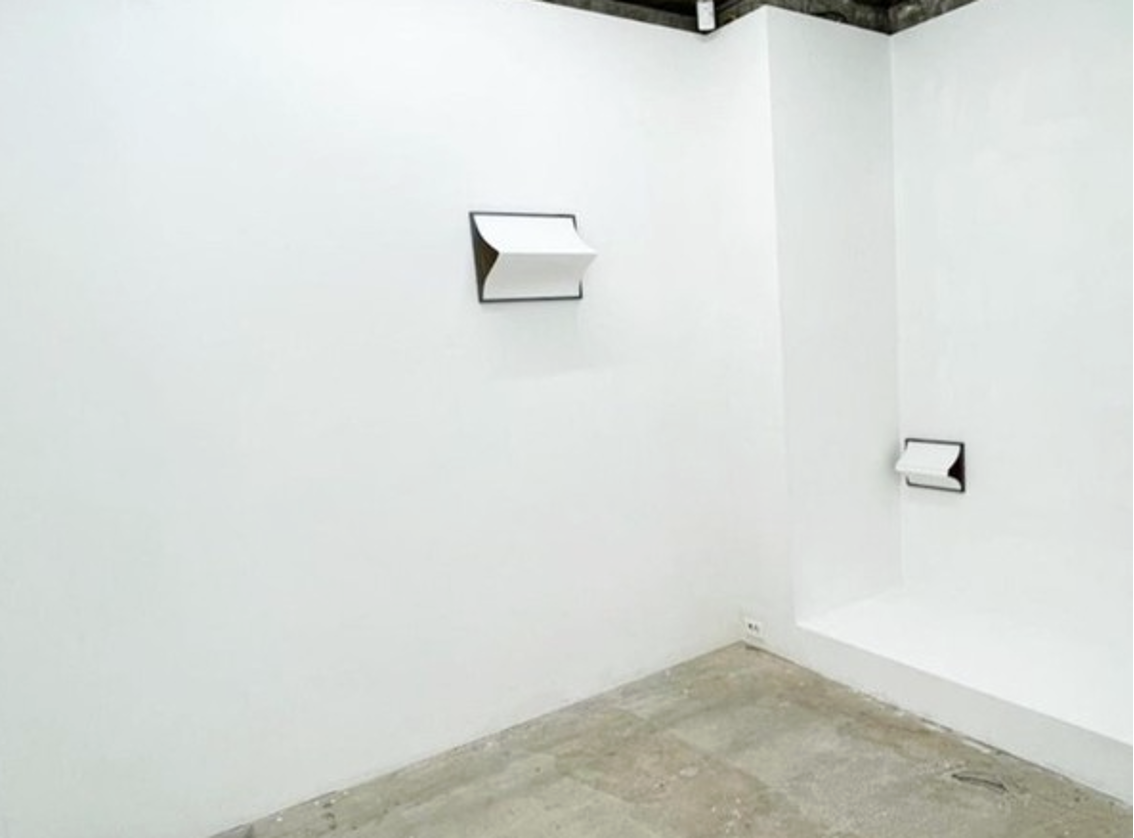
Shinae Kim, Arpeggio/broken chord, 2015, Metal, lacquer, acrylic pins, A7 – 4A0, edition of 3 + 1AP © Shinae Kim

Shinae Kim’s practice begins with an understanding of the essence of form not as a fixed shape, but as the information that constitutes it. Accordingly, in Kim’s work, form is neither independent nor absolute; rather, it becomes a temporary event that emerges through relationships.
 
Kim has brought the fundamental elements of art—point, line, and plane—as well as basic concepts for describing space and dimension into her framework of perception, translating everyday spaces into a new visual language.
 
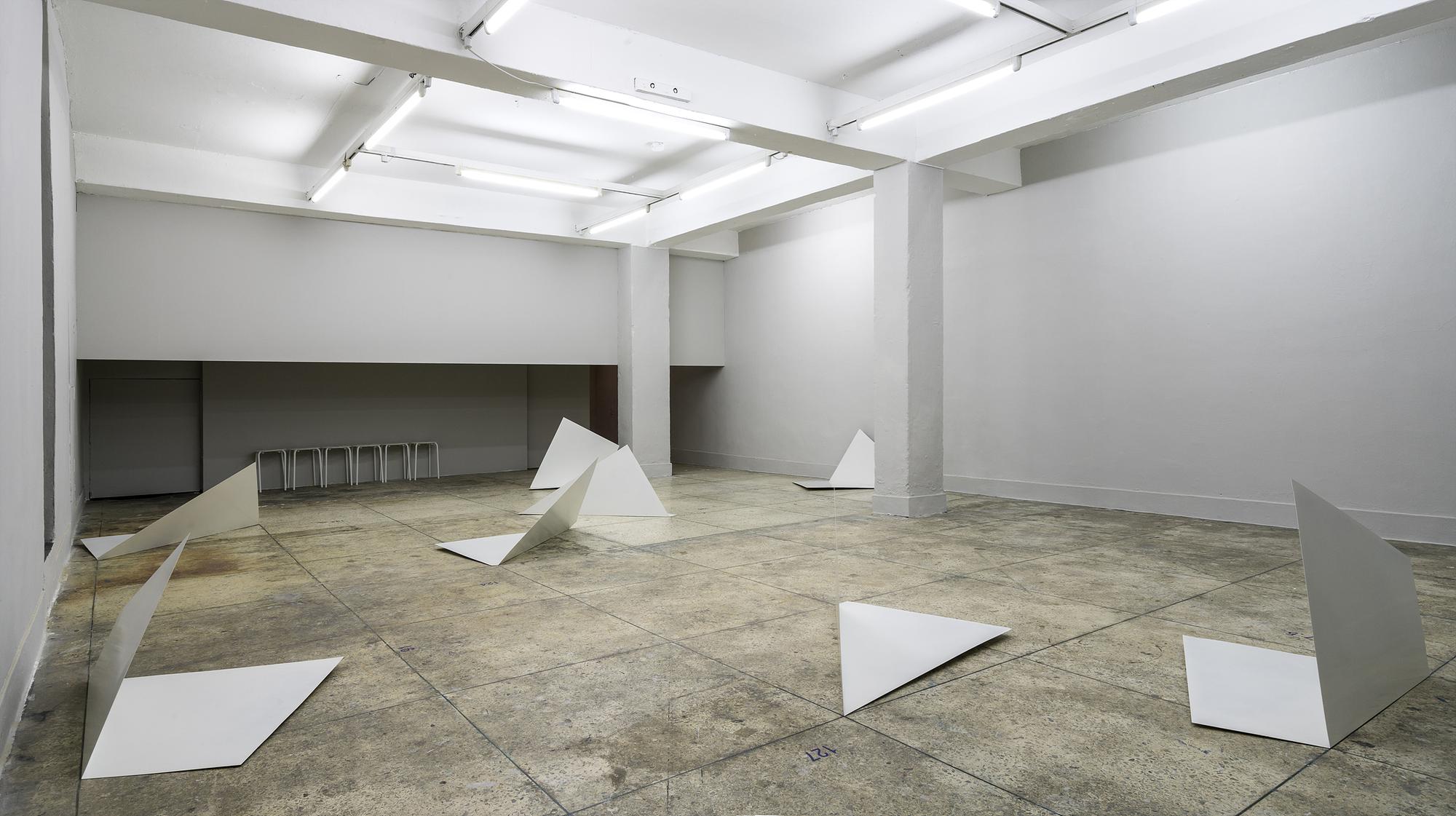
Her first solo exhibition, 《Upsidesidedown》 (Project Space Sarubia, 2015), focused on the “line” as something that emerges like an event at a boundary.


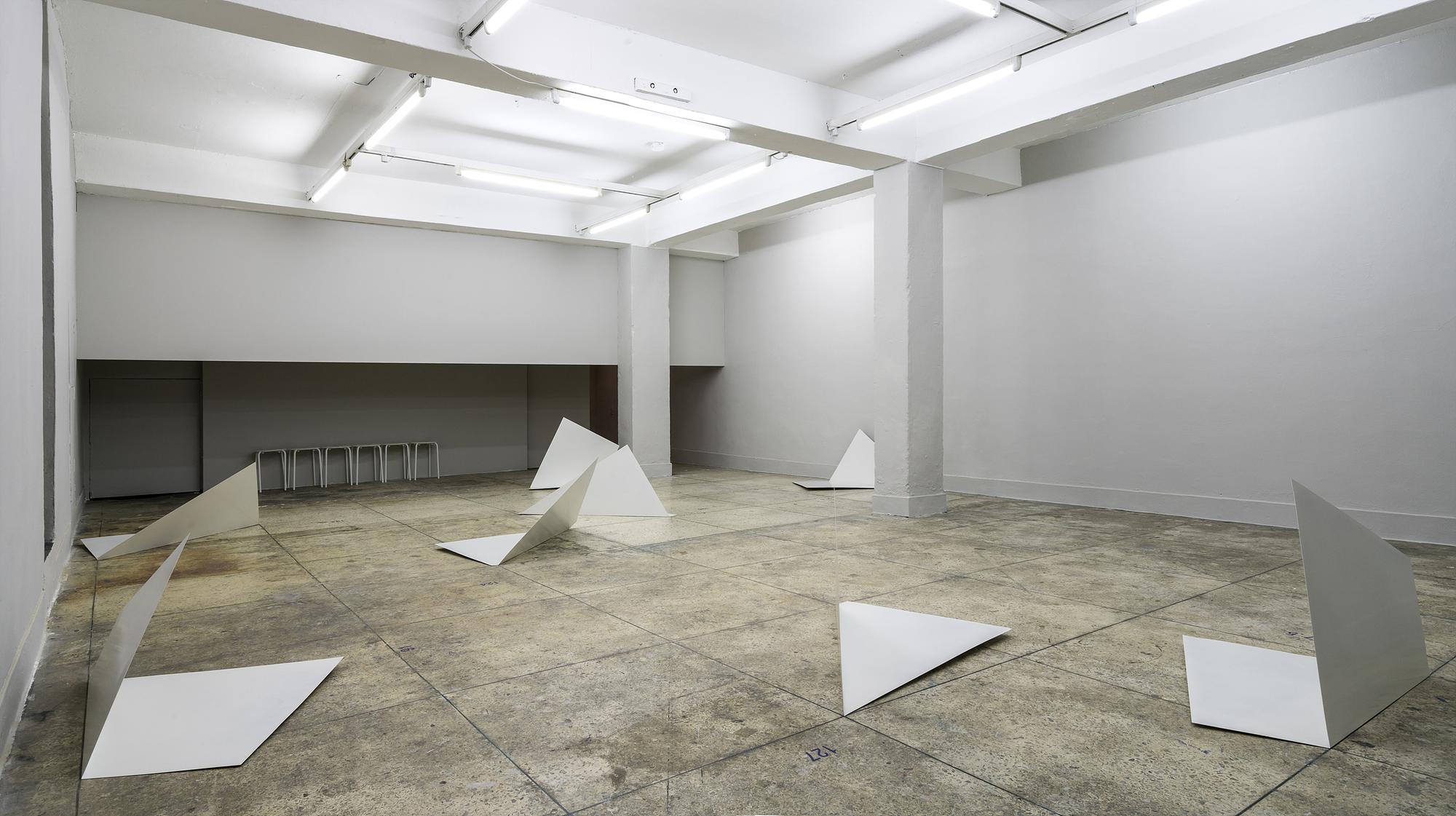
Installation view of 《Upsidesidedown》 (Project Space Sarubia, 2015) © Shinae Kim

The lines that emerged within the exhibition space functioned as a kind of device for transforming and prompting a renewed perception of our experiential space. Kim developed a series of drawings using the lines revealed by the grid formed by the continuous flooring of the exhibition space. Here, the lines record the lengths of a slightly distorted planar grid, while drawing directly onto the two-dimensional surface of the floor.
 
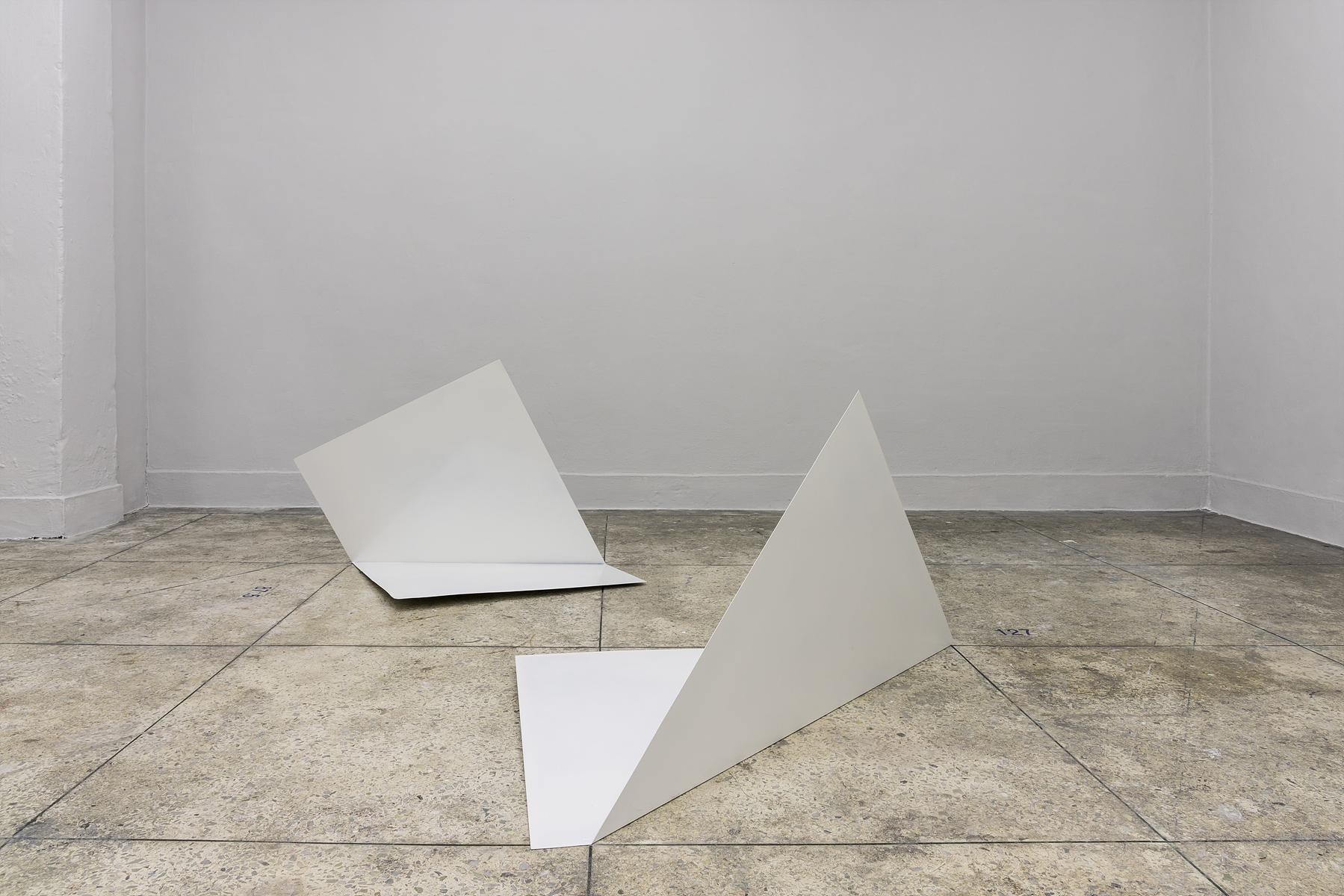
Meanwhile, the folded plates possess physical volume within three-dimensional space, becoming sculptures in their own right. They mark a point and moment of perception in which different events simultaneously occur across two dimensions.
 
In this way, Kim positions viewers at the starting point of a shift in thought by enabling them to perceive another dimension of space within a familiar environment, thereby bringing the gap between these dimensions into awareness.


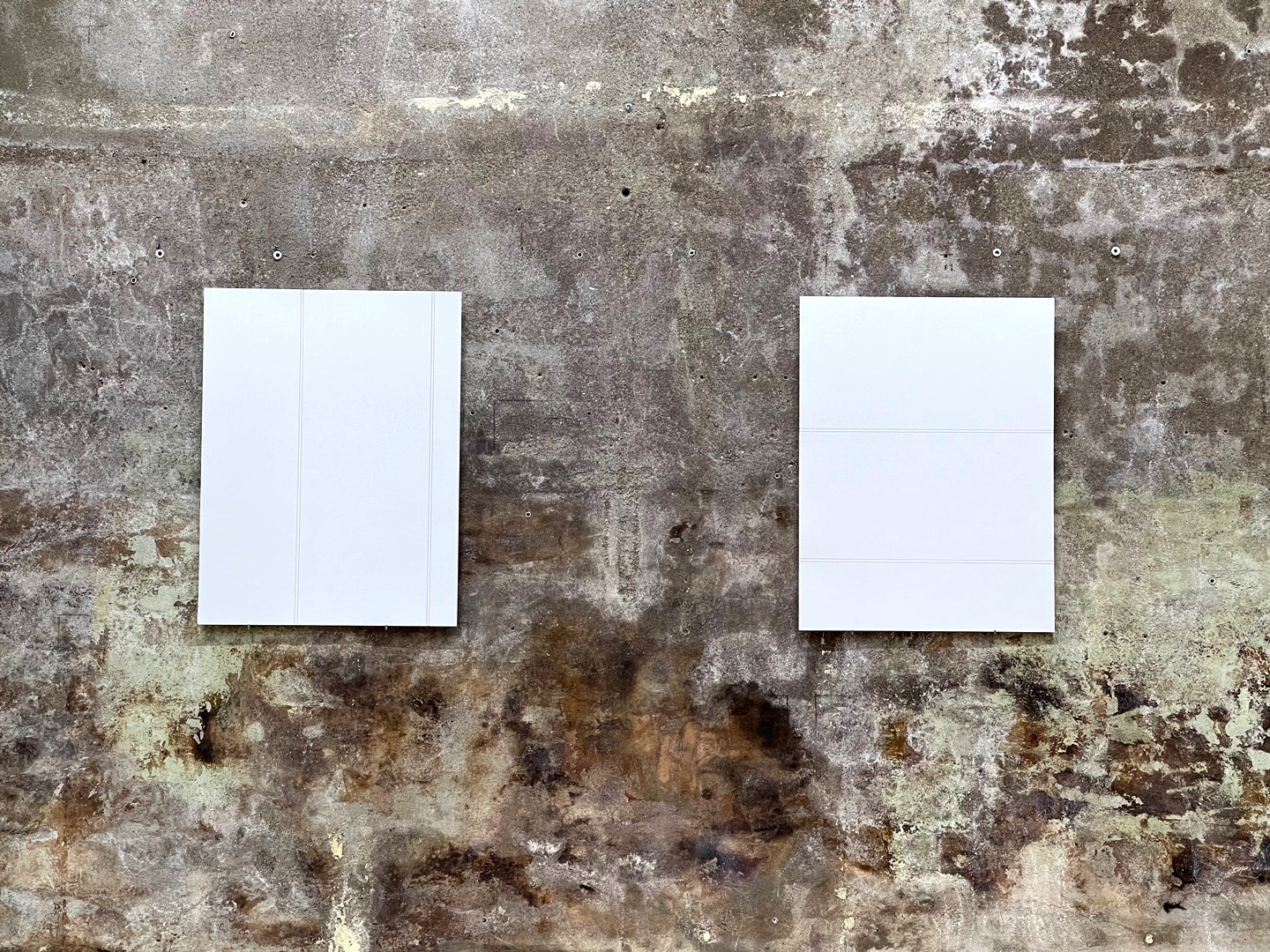
Shinae Kim, slightly out of tune, 2015, aluminium board, one board: 636 x 939 mm, Junji(korean paper size) © Shinae Kim

Thus, in Kim’s work, the line is not something that is drawn, but rather an event that emerges from the relationships between planes, like the edge where two walls meet. Such events are generated and disappear in relation to the surrounding space, remaining in a state of constant potential transformation.
 
In this process, the act of viewing transforms the visual space beyond the physical space into a spatiotemporal realm of phenomenological experience.


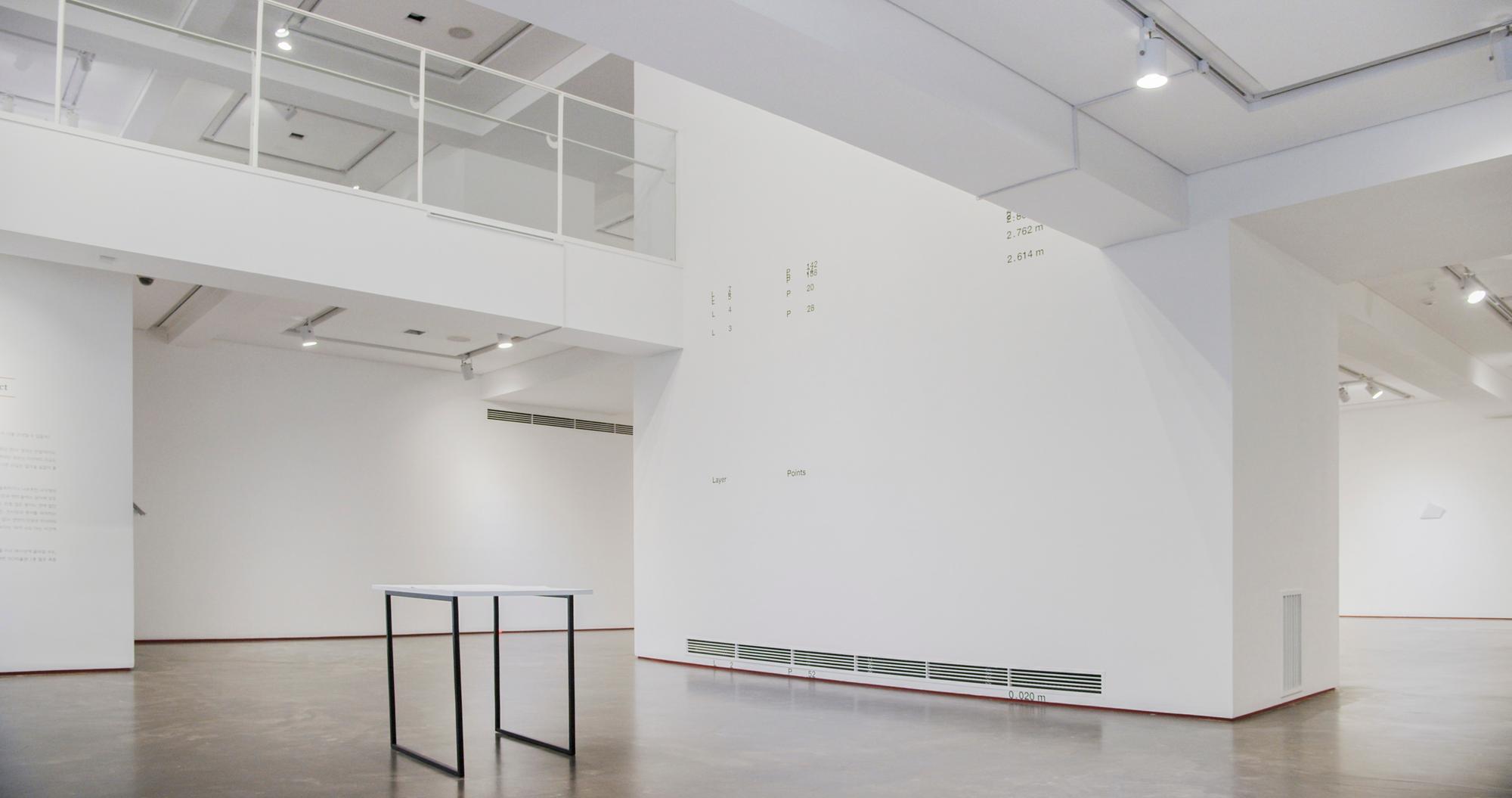
Installation view of 《Not Just Tiny But Abstract》 (OCI Museum of Art, 2019) © Shinae Kim

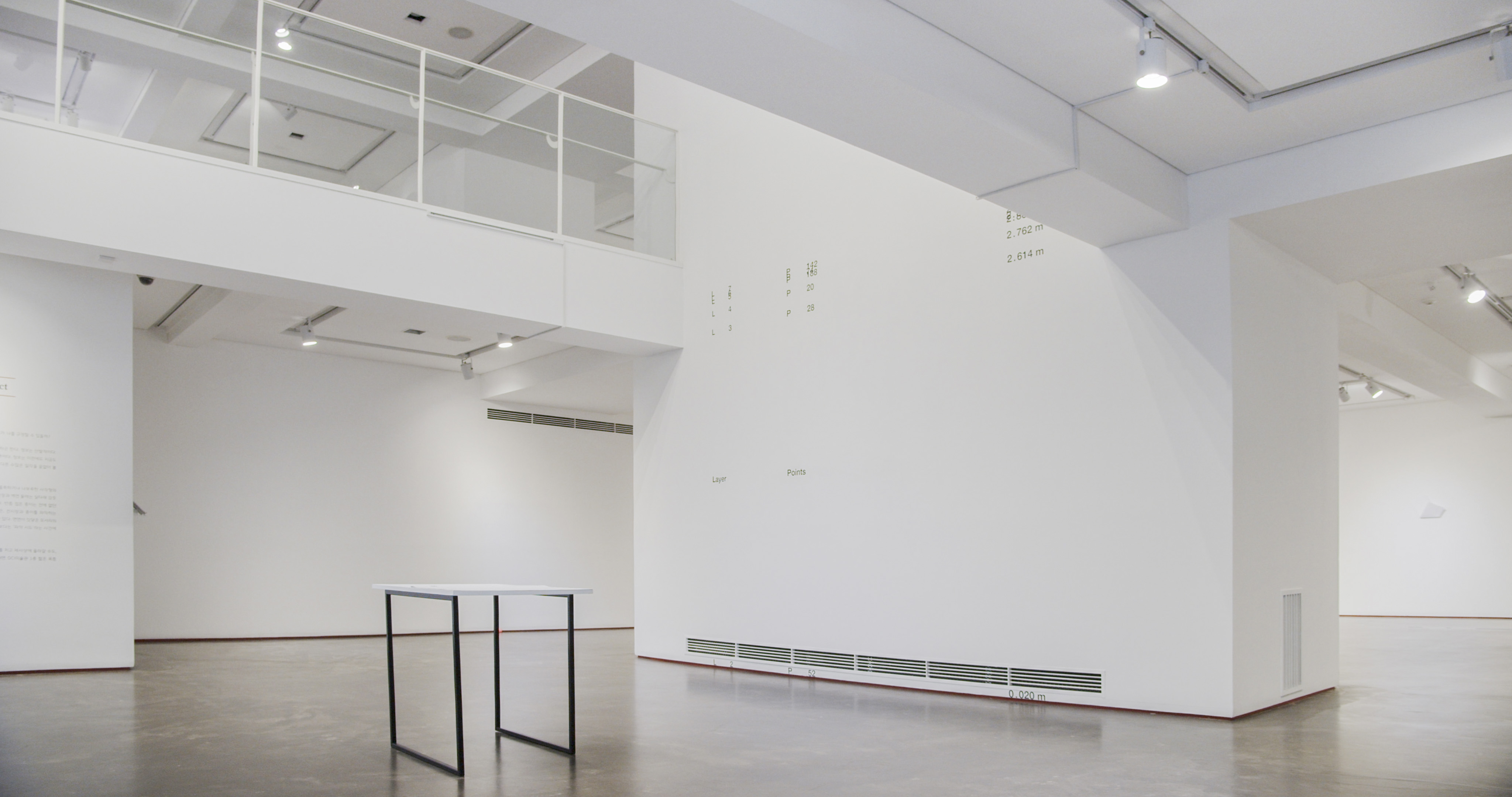
In her 2019 solo exhibition 《Not Just Tiny But Abstract》 at OCI Museum of Art, Shinae Kim sought to explore the meaning of space and the nature of information by revealing the process of condensing “space”—a fundamental subject of artistic inquiry—along with the vast amount of information associated with it, into an extremely concise formal language.
 
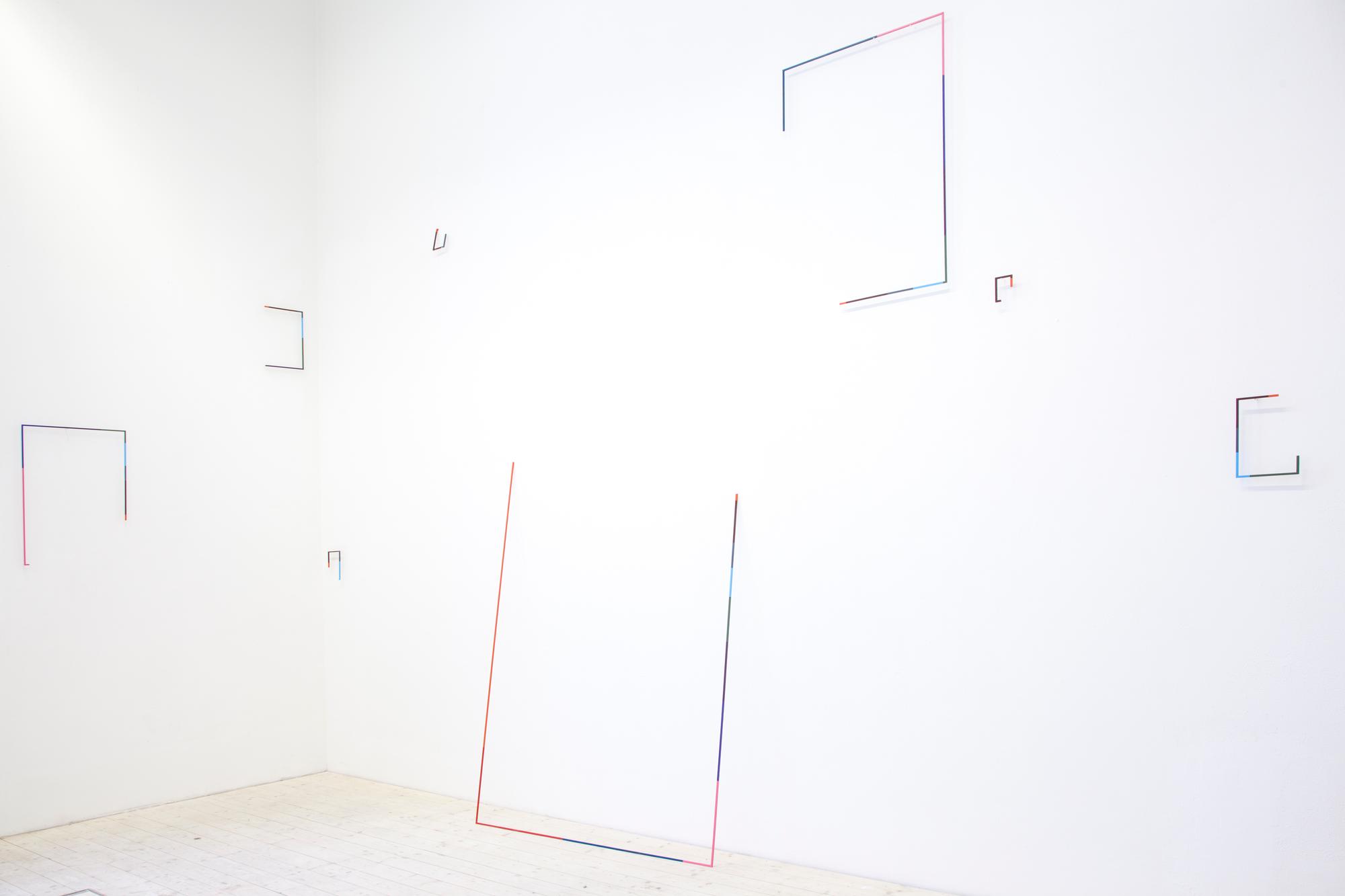
For the exhibition, Kim selected a number of details from the wealth of information comprising the exhibition space—including its area, height, the number of sides, the lengths of its edges, the locations and number of vertices, the color of the walls, the floor finish, and the ceiling material—and used them as the basis for her work.


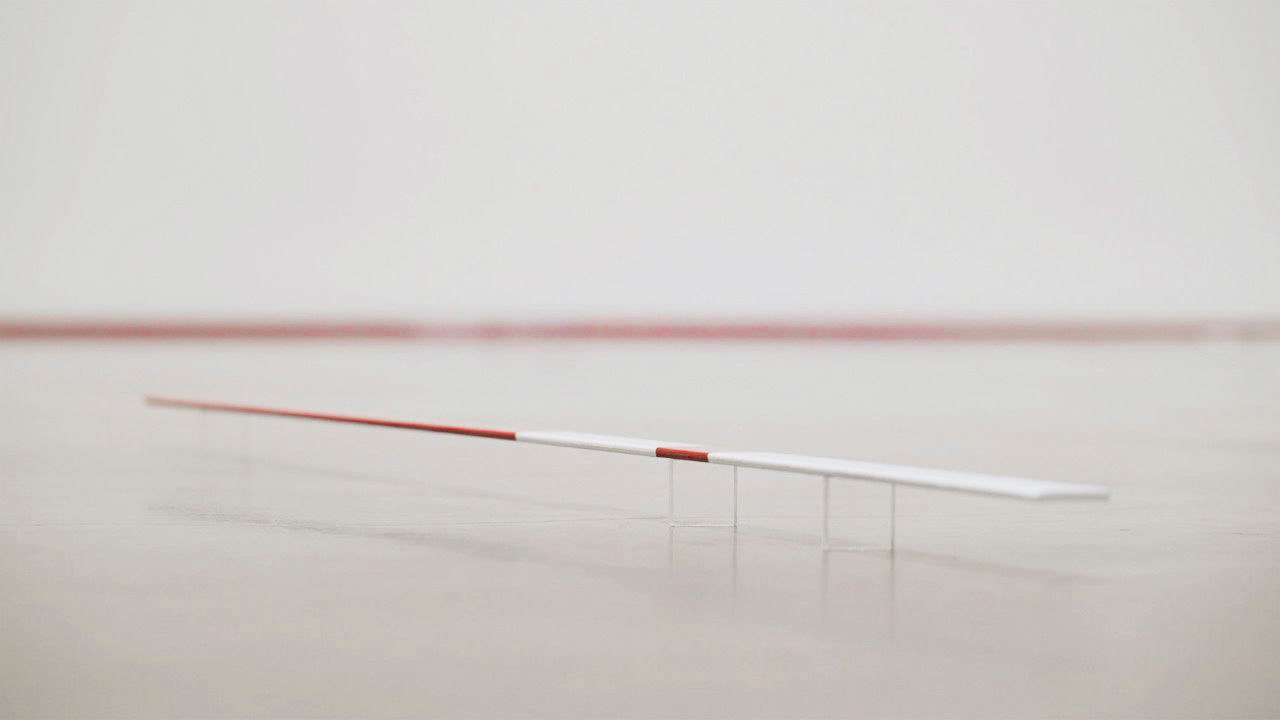
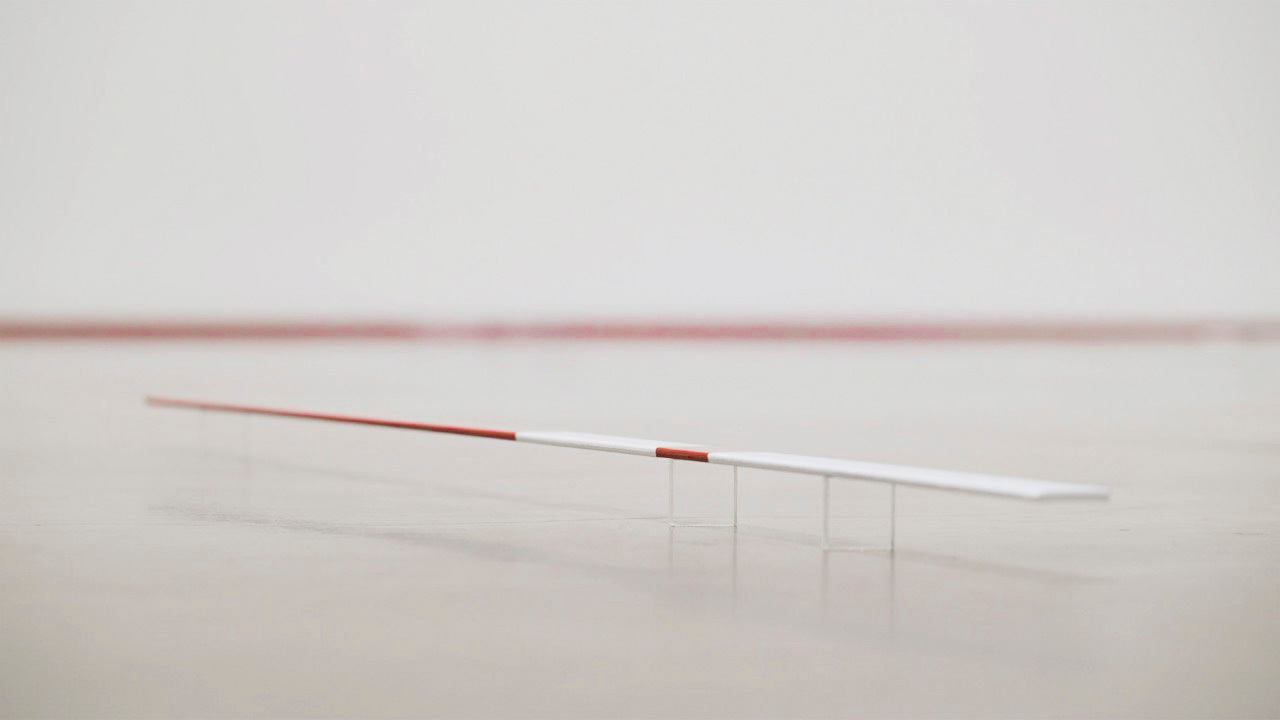
Shinae Kim, Scene 9, 2019, Installation with seven coloured stainless steel line, the divided information of the floor plan © Shinae Kim

First, Kim divided the first-floor exhibition space into several layers and perceived it as a combination of several rectangles, some elongated and others more compact. She then straightened out the perimeters of these rectangles and transformed them into steel rods.
 
The individual sides of each rectangle, as well as the points where they intersected with other rectangles, were translated into joints along the surfaces of the rods. The rods were then colored according to the numerical measurements of the perimeters, with length values serving as color values.
 
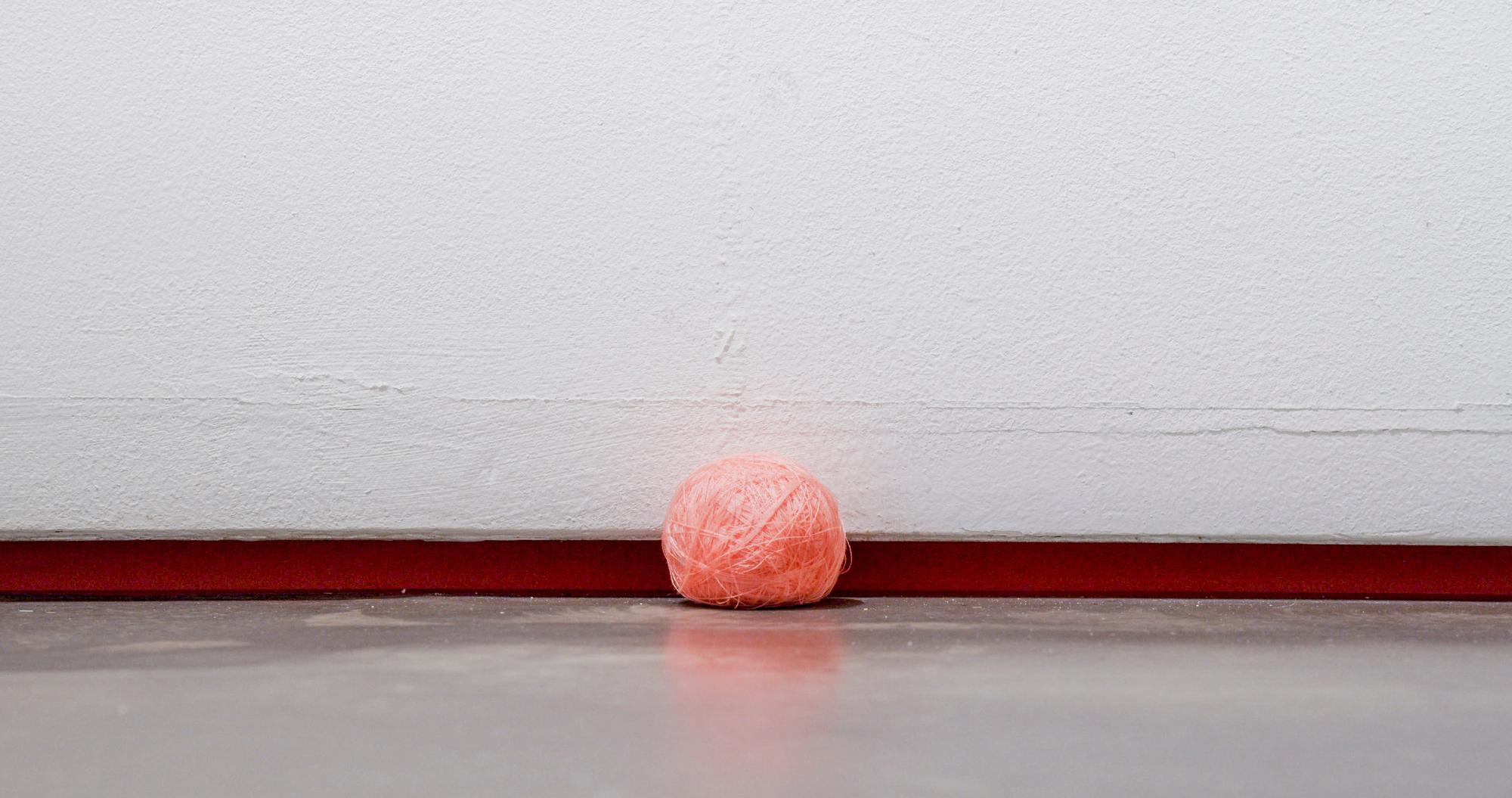
The artist also meticulously accumulated and added together the perimeters of the museum’s ceiling and walls, reducing the numerous straight lines that constitute the space to a single numerical value: their “total length.”
 
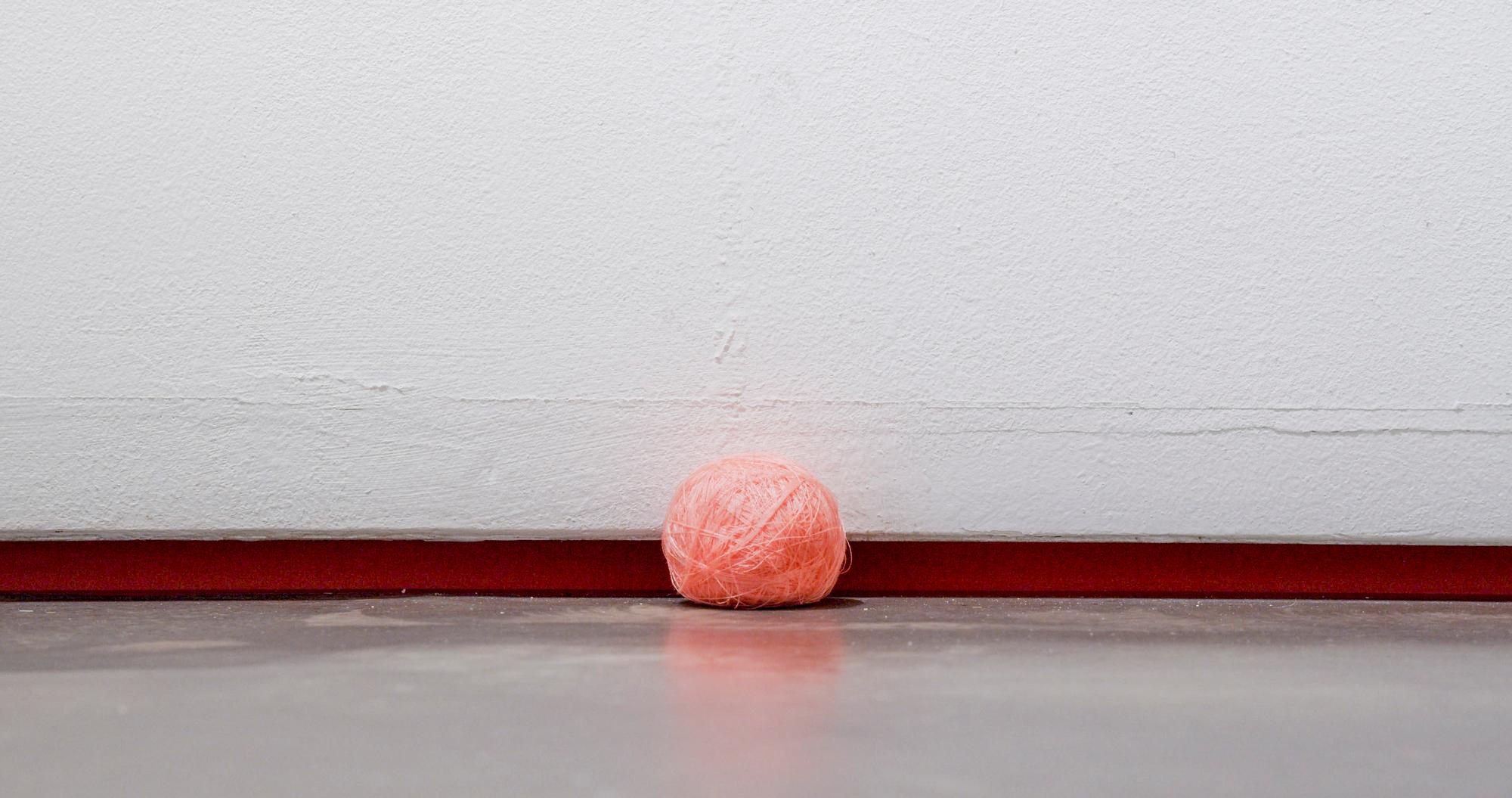
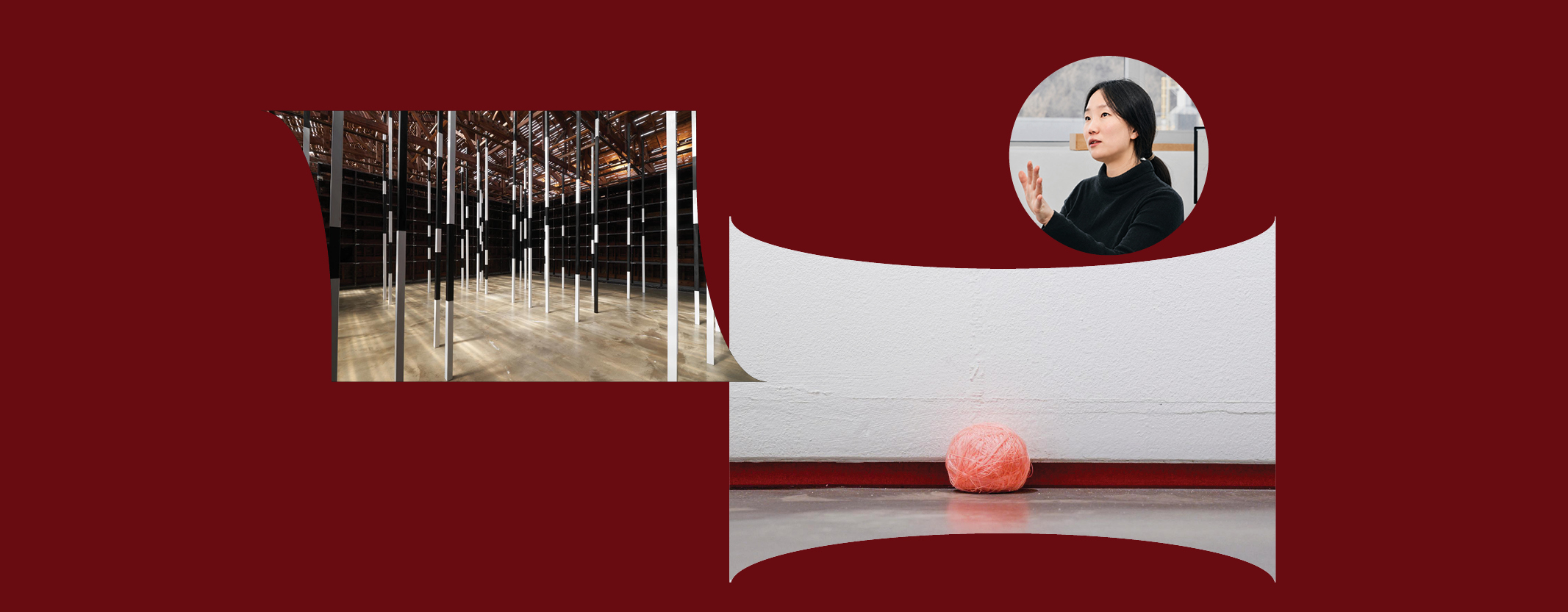
This value was then materialized and given form as a small skein of intensely colored thread of the same length, which was gently placed in a groove at the corner where the exhibition wall meets the floor.


Shinae Kim, Scene 5, 2019, Thread, 824.69 m, the all added length of the edges in the museum © Shinae Kim

The information the artist extracted for this exhibition was all obtained through her own direct measurements. At the same time, however, these numerical values cannot fully define the museum’s actual space.
 
Rather than being inherent properties of the museum space itself, they are closer to relationships between one object and another, between the elements that constitute an object, or between an object and the subject attempting to apprehend it.
 
Accordingly, works based on variable and non-absolute information can change in countless ways depending on the subject, time, context, object, and numerous other factors. Ultimately, information is less a matter of content than an “event”—something akin to an “attempt to apprehend.”


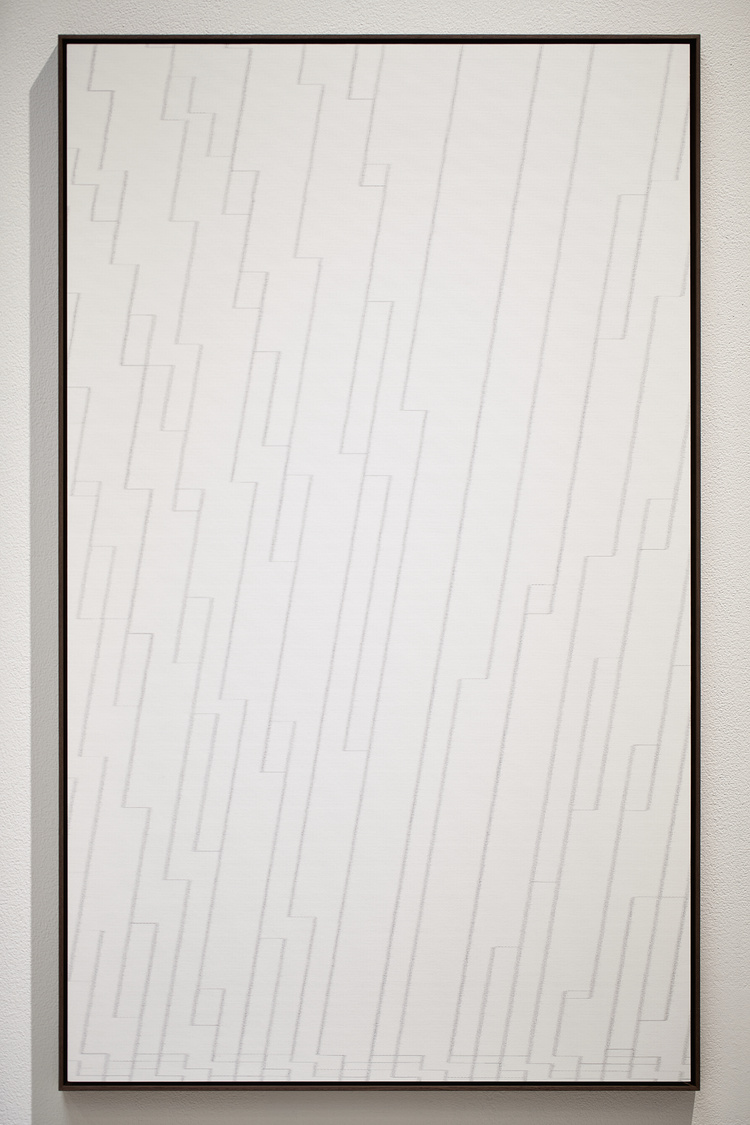
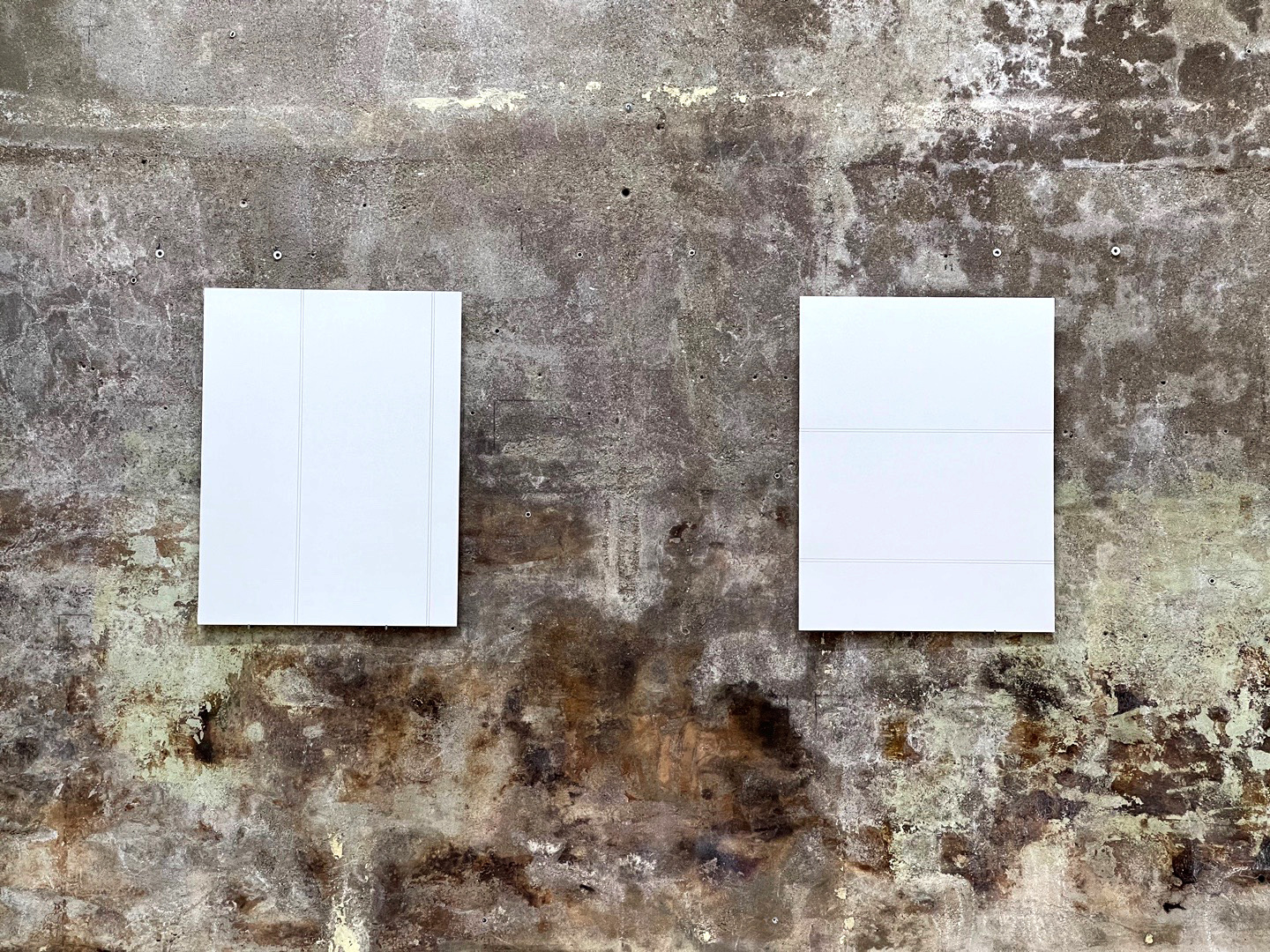
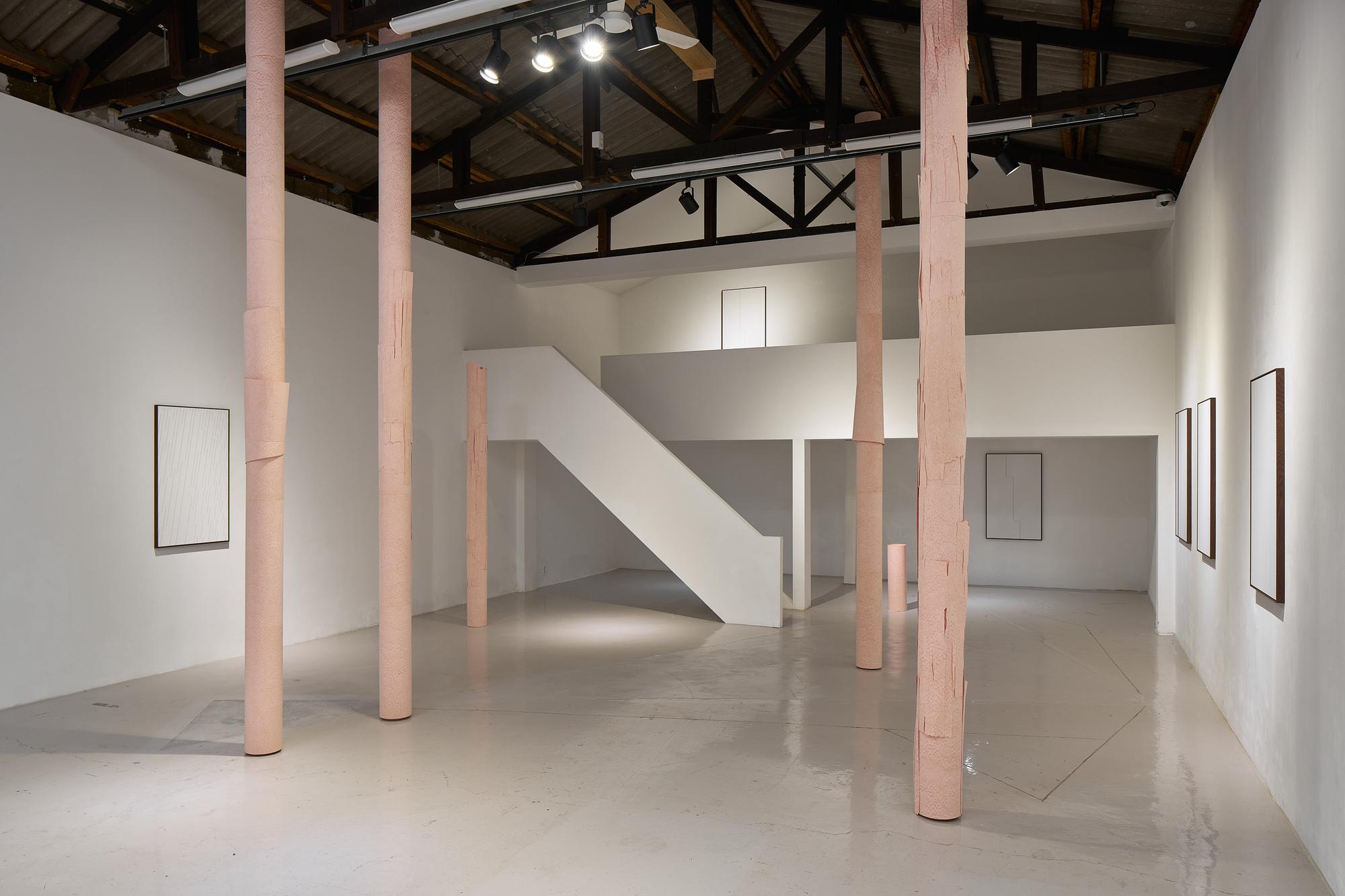
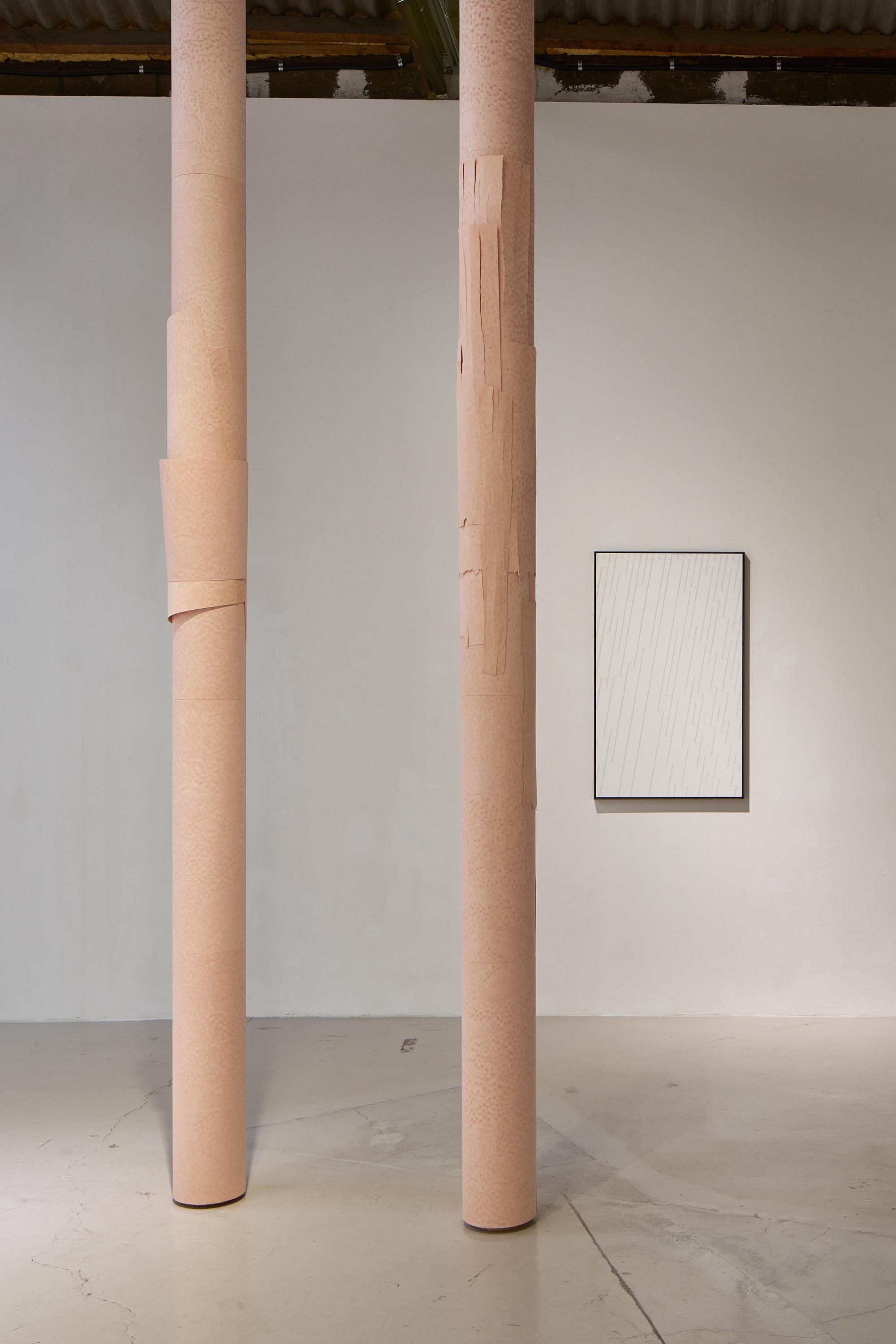
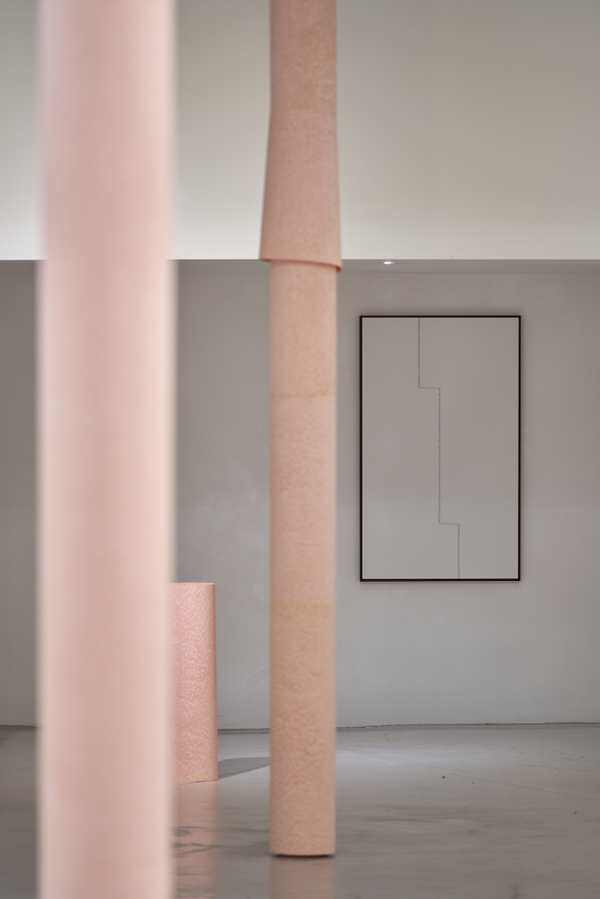
Shinae Kim, slicing with grid, 2022, Mineral paper, drawing installation, Dimensions variable © Shinae Kim

Following this, during the COVID-19 pandemic, Shinae Kim began to question the planar nature of space as experiences that had previously taken place within physical space were replaced by experiences mediated through the flat surfaces of screens.
 
This inquiry led to her 2022 solo exhibition 《Slicing Space》 (Seetang Raum, 2022), which brought together works that focused on two aspects of the planar nature of space: “instantaneity” and “surface.”
 
Kim paid particular attention to the visual experience that occurs in the moment of perceiving space as divided into layers, and translated the structures that constitute the exhibition space into works resembling planar grids.


Shinae Kim, slicing horizontally, 2022, Paper, frame, drawing installation, Dimensions variable © Shinae Kim

Meanwhile, Kim turned her attention to the visual textures conveyed by the surfaces of spaces, textures that can be perceived without physical contact.
 
Through elements that evoke the sense of touch while remaining entirely visual experiences—such as rough, uneven walls, cracked concrete floors, and the varnished surfaces of tiles and wood that reflect light—she invited viewers to look anew at familiar spaces.


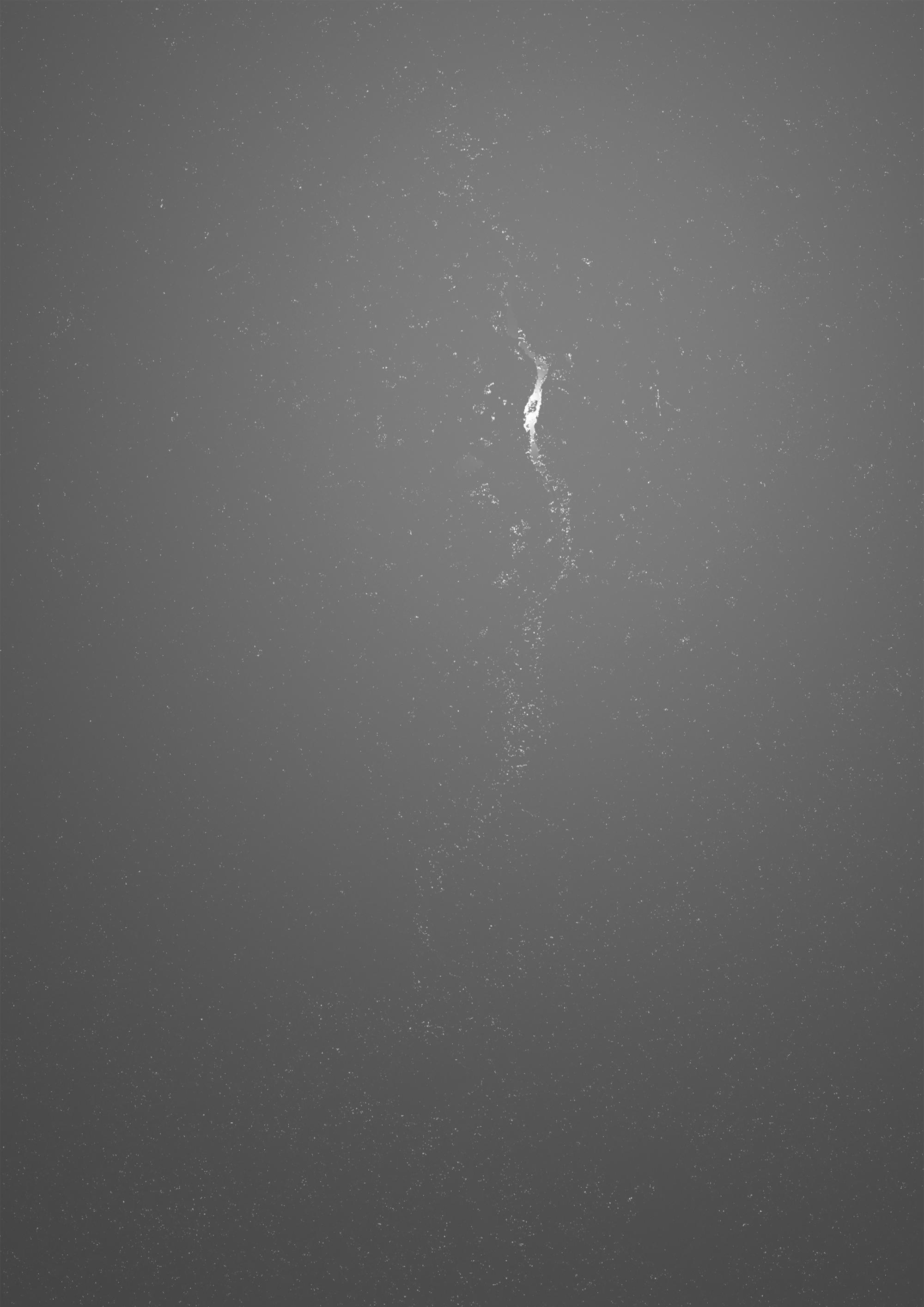
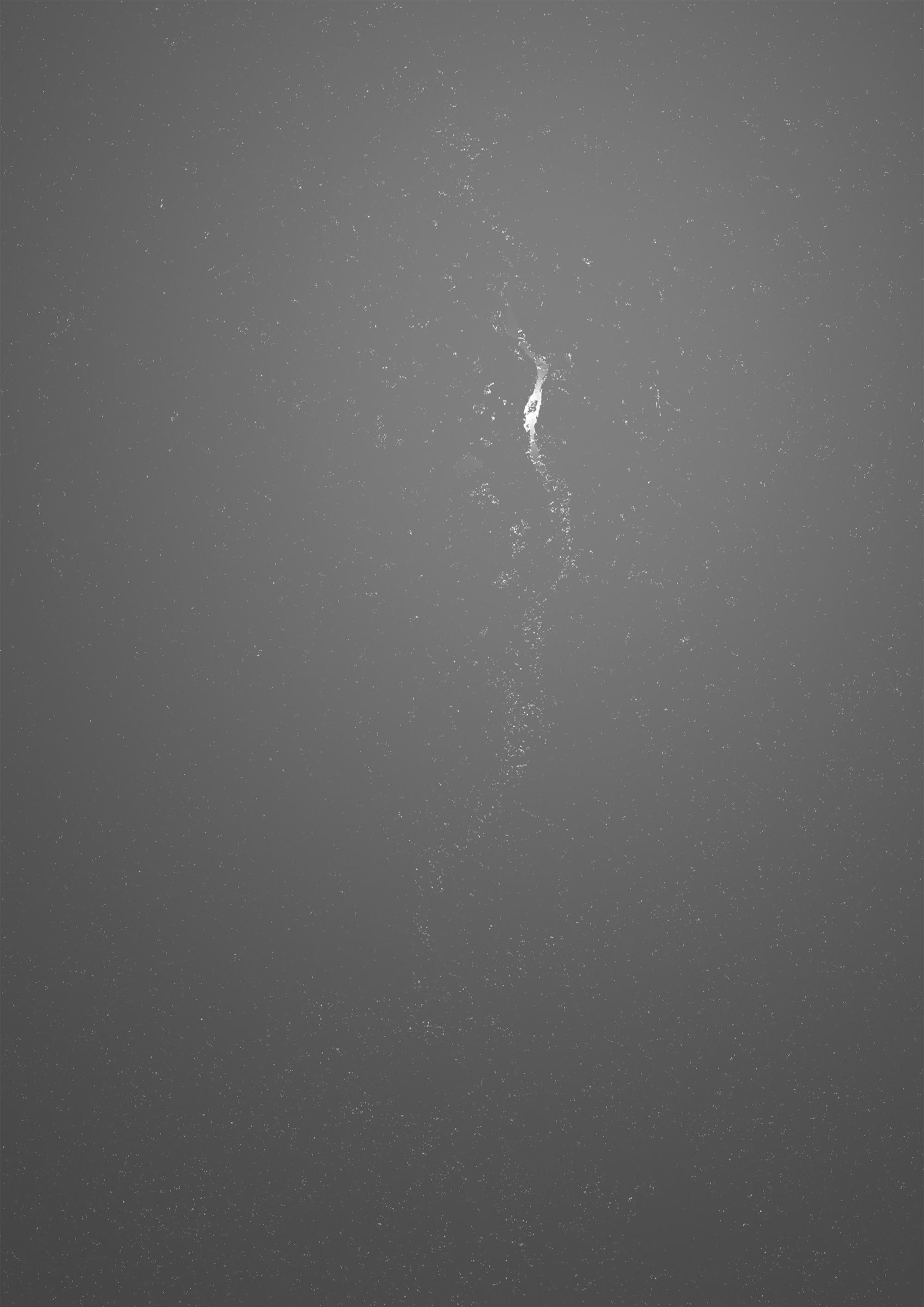
Shinae Kim, slicing vertically 1, 2022, 3D rendering, 21x29.7cm © Shinae Kim

In the first exhibition room on the first floor, Slicing with Grid (2022) deconstructed the visual layers created by the different materials of the space, separating the grid formed by the tiles and cement into vertical and horizontal lines and rendering them as drawings.
 
On the second floor, Slicing Horizontally (2022) transformed the five horizontal edges that constitute the walls on the first floor into the form of a paper drawing.
 
Meanwhile, in the second exhibition room on the first floor, Slicing Vertically (2022) presented a single layer of the exhibition floor’s surface, digitally peeled away through 3D rendering and transferred onto a vertical wall. By modeling the space as a plane and applying its texture, the artist sought to represent a layer of space as it is translated onto a screen.


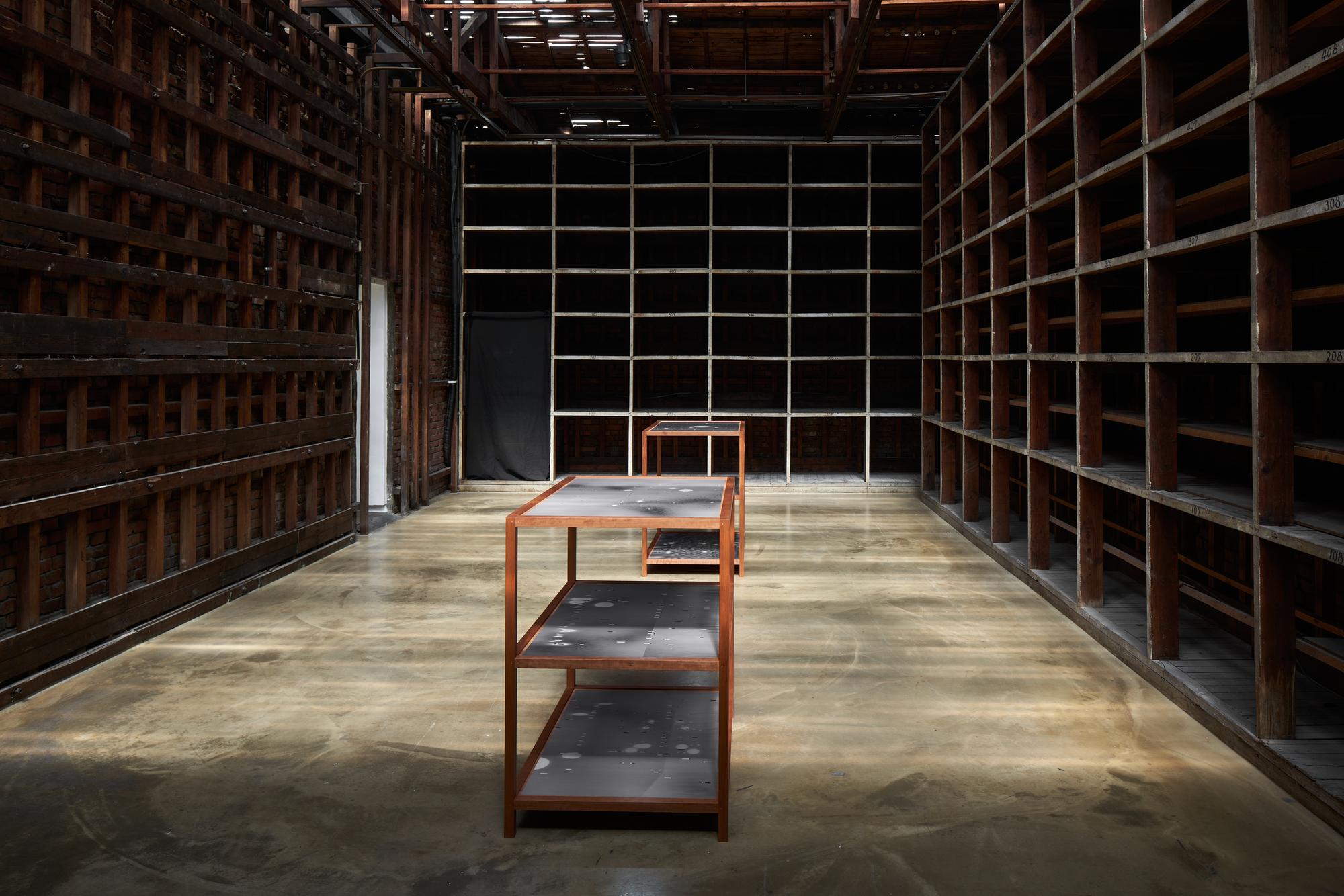
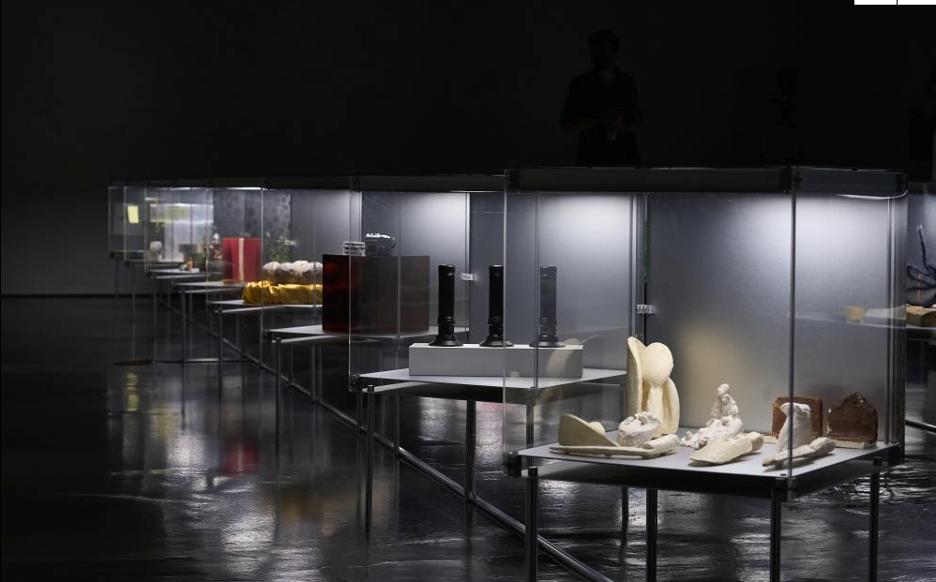
Installation view of 《Romantic Storage》 (SeMA Storage, 2022) © Shinae Kim

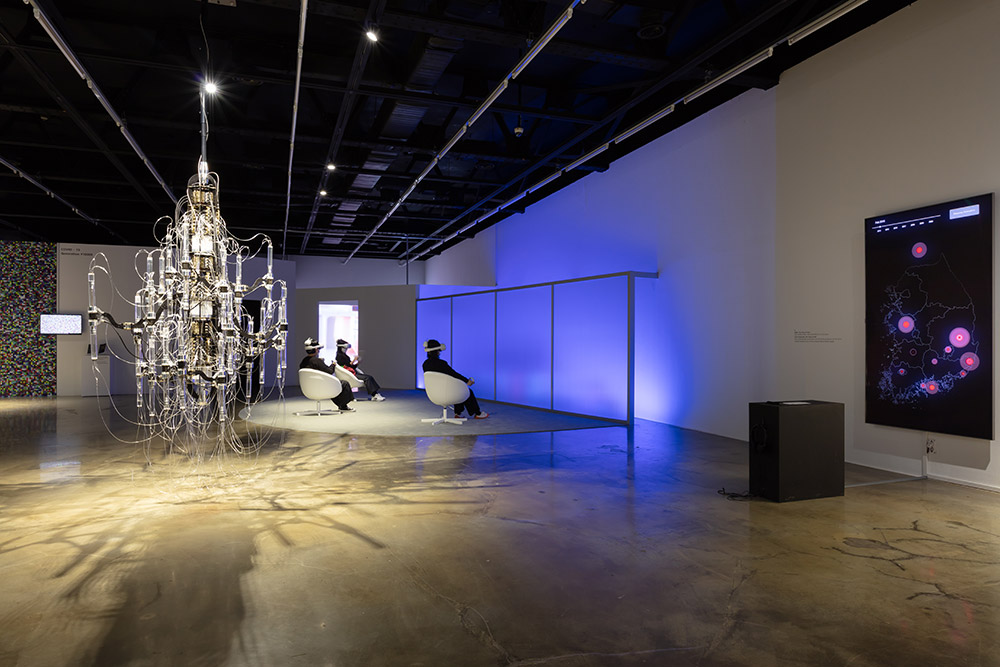
In her solo exhibition 《Romantic Storage》, also held that same year, Shinae Kim interpreted the SeMA Storage, formerly used as a reagent warehouse by the Korea Centers for Disease Control and Prevention, as a temporary repository for fragmented information. Treating the SeMA Storage as a site where information dispersed into countless forms takes shape, Kim created a multilayered installation.
 
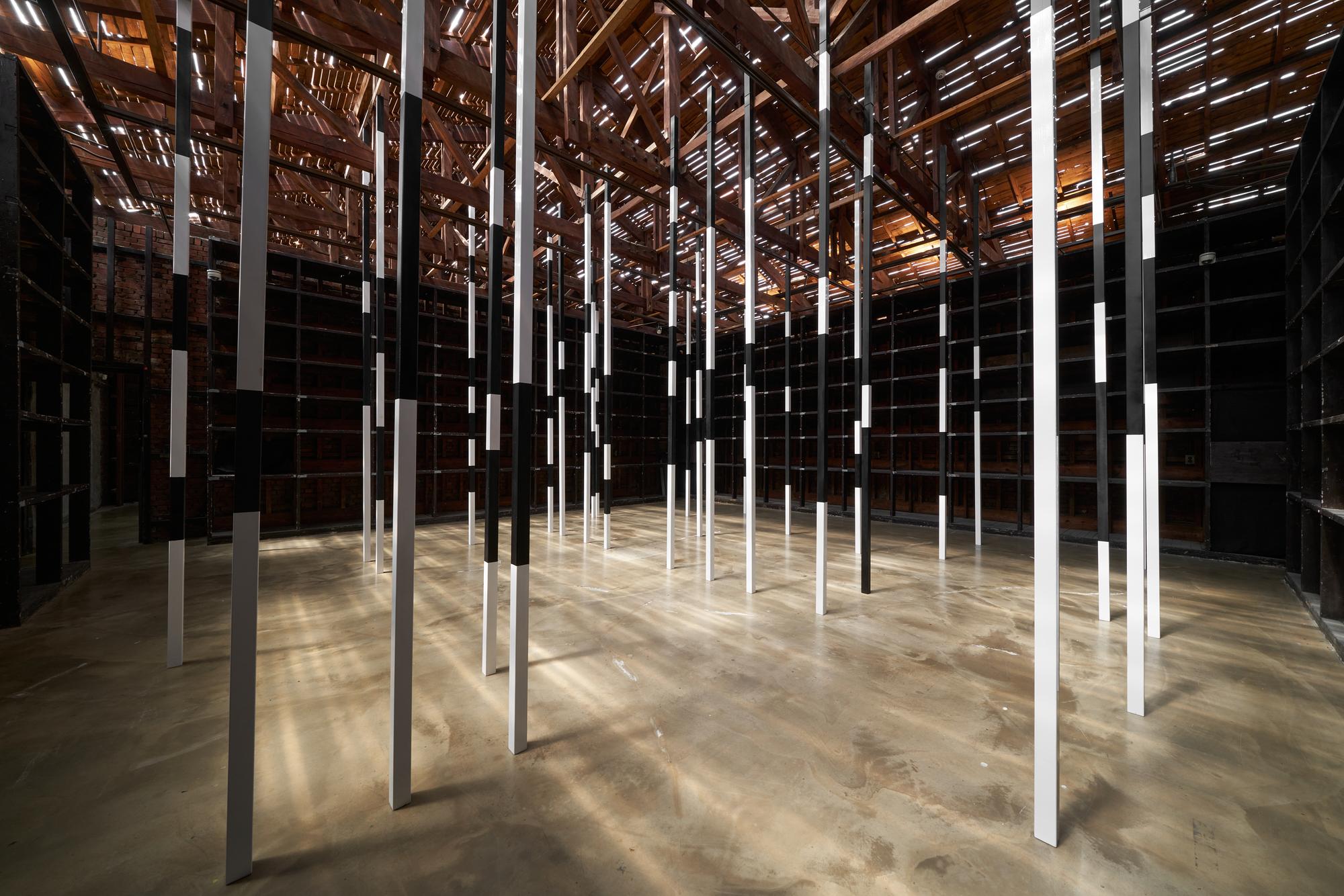
Within the space, Kim installed information transformed into binary code as structural elements, seeking to both disrupt and draw the viewer’s gaze.


Installation view of 《Romantic Storage》 (SeMA Storage, 2022) © Shinae Kim

The works installed in various directions are sometimes connected to the horizontal axis shelf, sometimes to the vertical axis, and interact with the light coming in from the ceiling or extend to the structure on the ceiling to create miscellaneous spatial scenes.
 
In particular, the installation allows viewers to embrace a side of the structure in alignment with various viewpoints, thereby keeping them fully engaged. This venue enables viewers to approach the digital drawing, the shelf on which it is placed, and the space to experience the message conveyed by the artwork.
 
In 《Romantic Storage》, the sensual relationship built through the artwork and the space blending in together gives a new shape along the path where the viewers’ eyes come to rest or follow.


Installation view of 《Configuration-Event》 (Hall1, 2024) © Shinae Kim

Meanwhile, in her 2024 solo exhibition 《Configuration-Event》, Shinae Kim explored new formal possibilities through the characteristics of mutable digital structures and natural materials such as wood veneer.
 
As a trace of movement, a “pattern” possesses a sense of mobility, while also functioning as a condensation of accumulated time and information. For the artist, an “event” is a temporary phenomenon that emerges through the intersection of various unpredictable and contingent elements.
 
Based on these concepts of “pattern” and “event,” 《Configuration-Event》 explored moments in which small elements that ordinarily escape our awareness emerge as temporary and contingent forms.
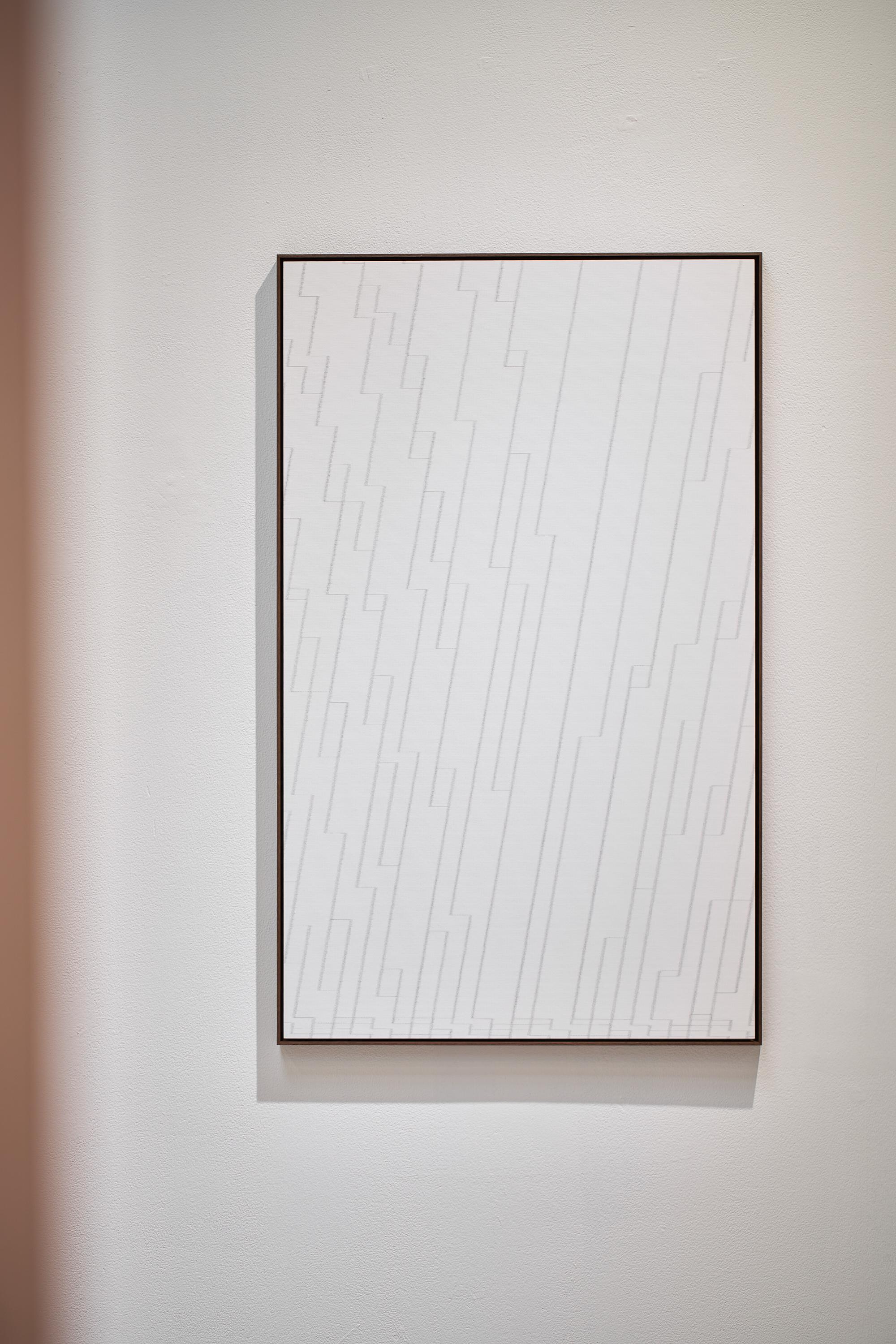

Installation view of 《Configuration-Event》 (Hall1, 2024) © Shinae Kim

Kim paid particular attention to wood veneer as a medium through which form, event, and information become intertwined to generate new fields of possibility.
 
The organic information accumulated through the growth of a tree is recorded in its patterns, which in turn enter into a relationship with the exhibition space and the event of the exhibition, revealing the structure of the information embedded in the wood across a thin surface.
 
Meanwhile, although digital materials in Kim’s work lack tactile qualities, the absence of a physical body allows the viewer to focus instead on the meaning of the image itself, revealing its potential as pure information.
 
By bringing together digital structures and wood veneer, which possess such contrasting characteristics, Kim explores the conceptual boundary between the immaterial and the material.
 
Furthermore, by allowing the two materials to function as both accumulations and conduits of information through which space can be sensed in different ways, she experiments with the possibility of new forms emerging through relationships and events.


Installation view of 《Configuration-Event》 (Hall1, 2024) © Shinae Kim

For Kim, therefore, “form” ultimately refers to countless events that either contain the potential to continually circulate and be substituted into other forms, or are already situated within such a process. The artist captures the myriad forms of information that constitute our surroundings and the fleeting relationships that arise among them, transforming them into visual forms.
 
Kim’s practice thus does not leave the viewer with the mere act of “looking” at an artwork, but invites them to experience a process in which forms shift and new relationships emerge as their gaze moves through the work.
 
In other words, rather than being a fixed outcome, Kim’s form expands into a phenomenological experience that continually changes and comes into being through the relationships among the viewer’s gaze, space, and information.

“Can the latent digital materiality perceived in the physical properties of nature, or the sense of physical substance revealed by digital materiality, truly be separated?” (Shinae Kim, Artist’s Note)


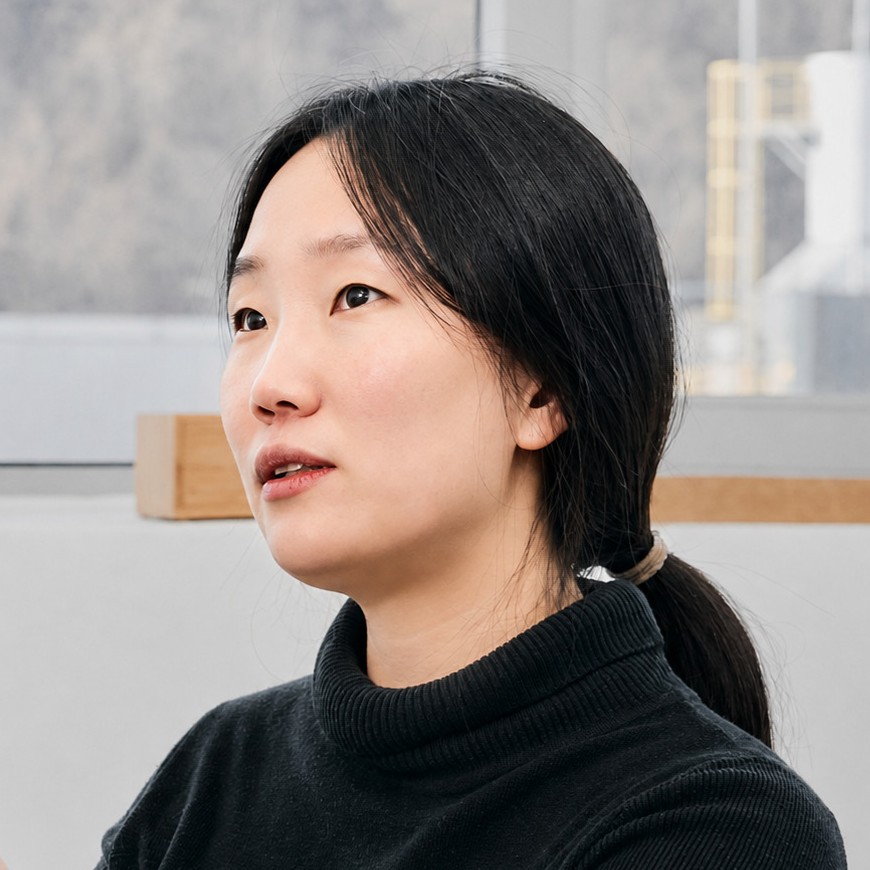
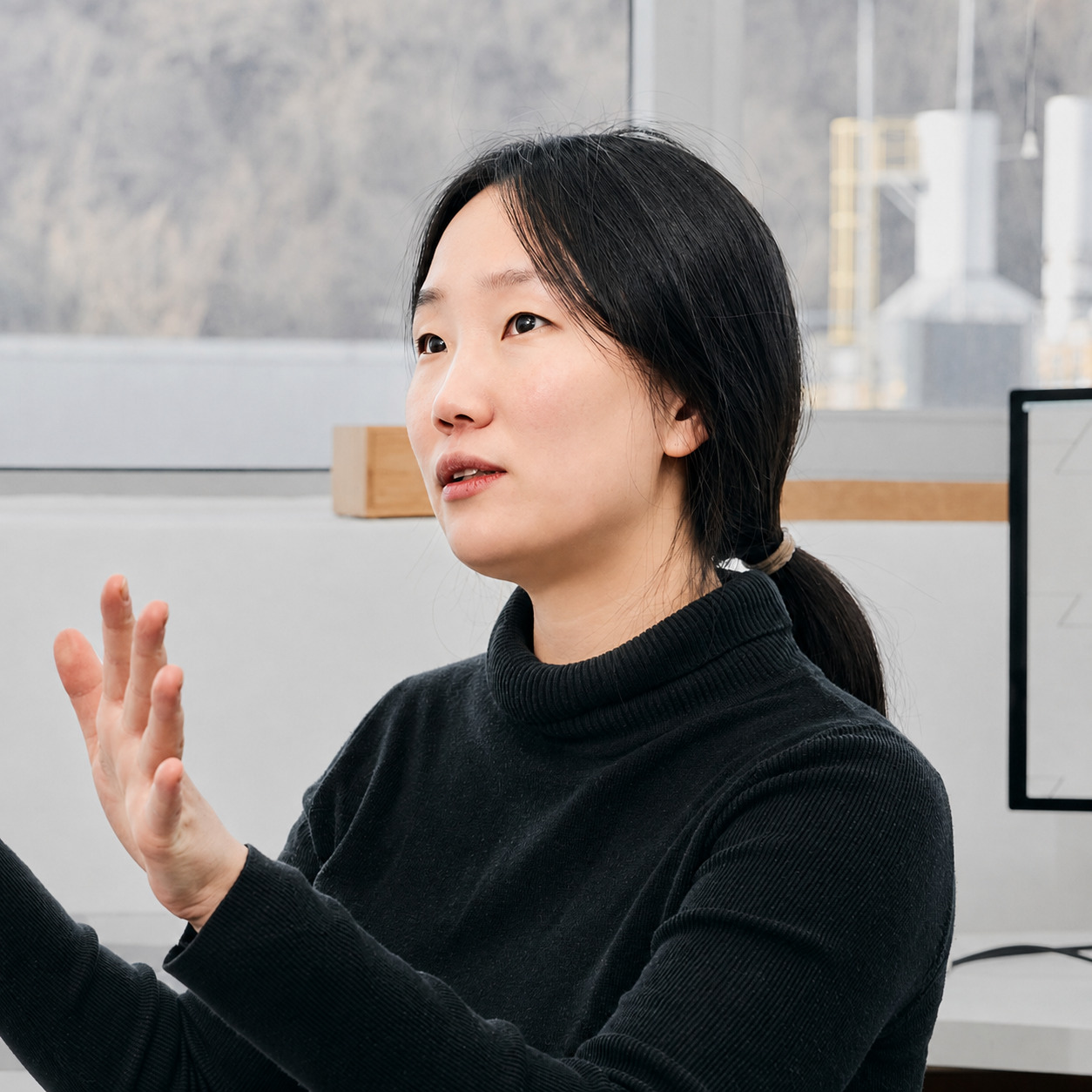
Artist Shinae Kim © Rebinder

Shinae Kim graduated from the Department of Painting at Hongik University. She went on to earn her Diplom and Meisterschüler under Prof. Olaf Nicolai at the Academy of Fine Arts Munich, and completed a master’s degree in Spatial Design and Exhibition Design at Berlin University of the Arts.

 
Her recent solo exhibitions include 《i.i.il.lʌ.ʌŋ》 (Seetang Raum, Jeju, 2026), 《Configuration-Event》 (Hall1, Seoul, 2024), 《Romantic Storage》 (SeMA Storage, Seoul, 2022), and 《Slicing Space》 (Seetang Raum, Jeju, 2022).
 
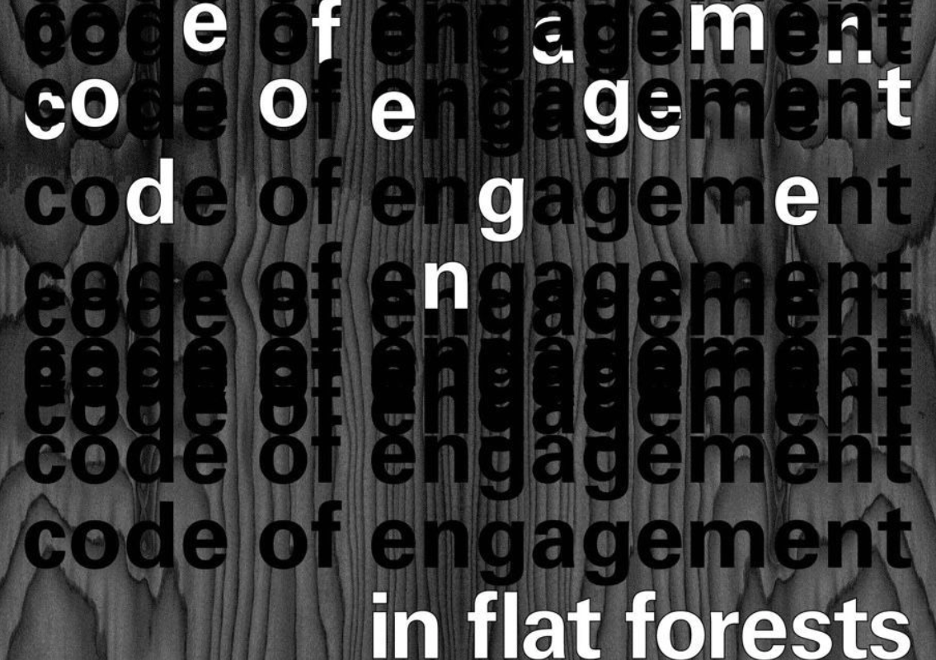
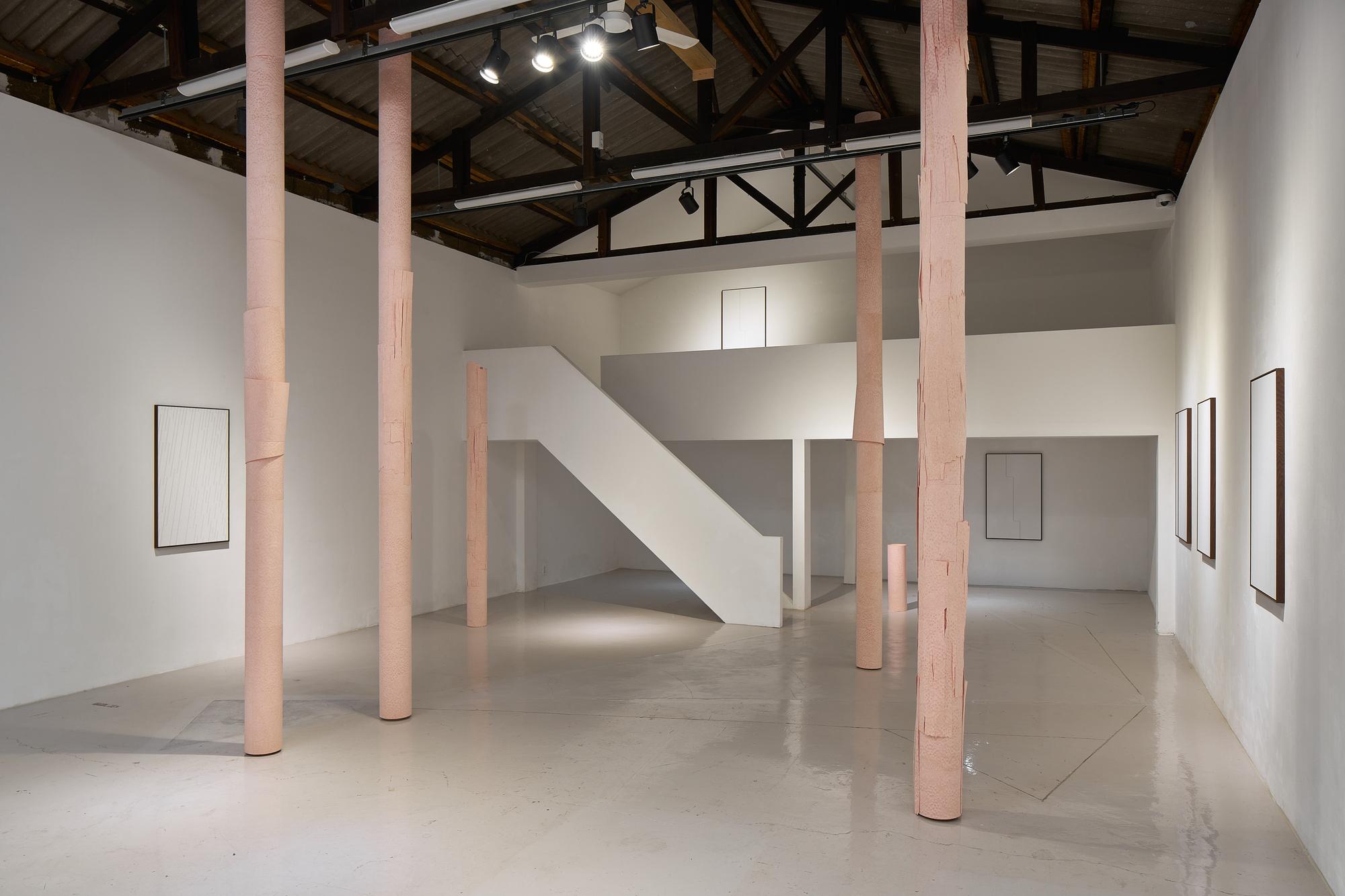
Kim has also participated in numerous group exhibitions, including 《code of engagrment in flatforest》 (Hošek Contemporary, Berlin, 2025), 《Sensory Projection》 (Gallery Planet, Seoul, 2025), 《et cetera》 (Nanji Residency, Seoul, 2024), 《NANJI ACCESS with PACK: Mbps》 (Seoul Museum of Art, Seoul, 2022), 《Nothing Makes Itself》 (ARKO Art Center, Seoul, 2021), and 《Spiele mit der Ewigkeit》 (Grimmuseum, Berlin, 2018).
 
Kim has participated in numerous residency programs, including the OCI Museum of Art Residency (2026), Nanji Residency at the Seoul Museum of Art (2023), and the MMCA Residency Goyang (2022).

References