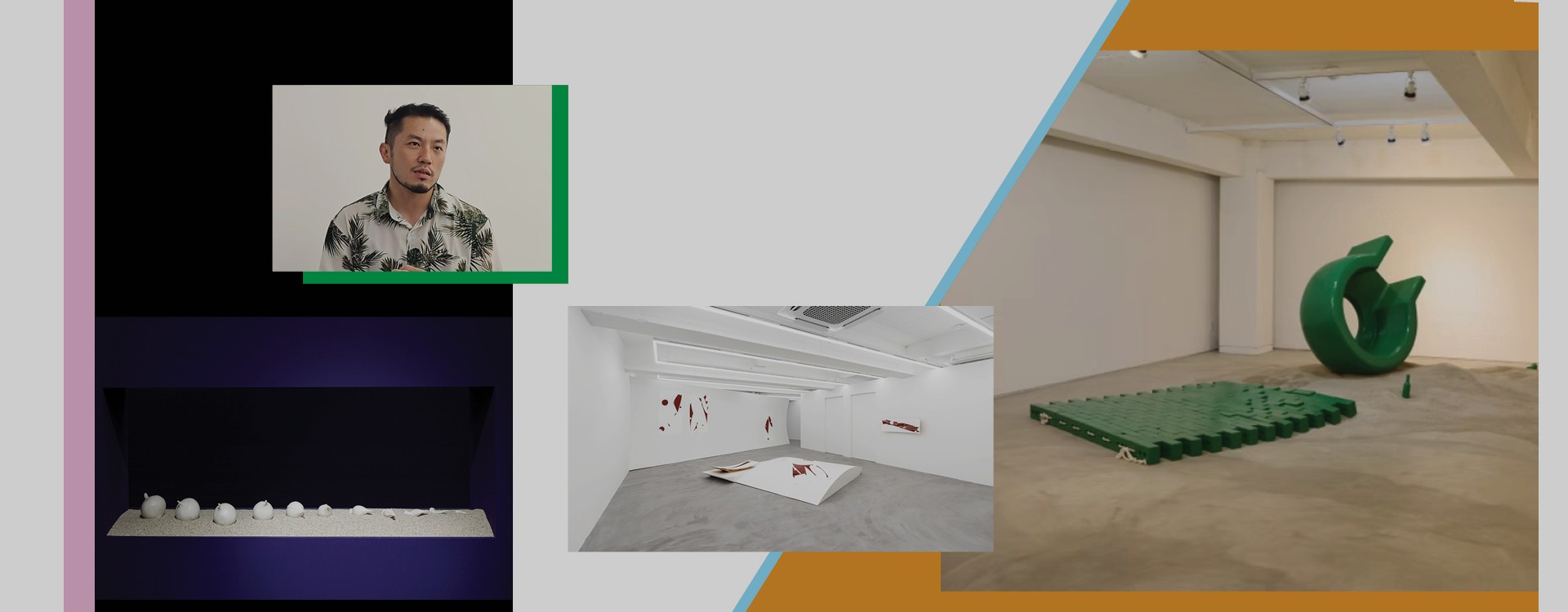
Byun Sanghwan (b. 1986) explores the contemporary urban landscape through an analytical lens, drawing on his experience of accelerated time in the city of Seoul. In particular, he focuses on the ordinary yet ambiguous scenes found within the urban environment, transforming them into a source of artistic inspiration.


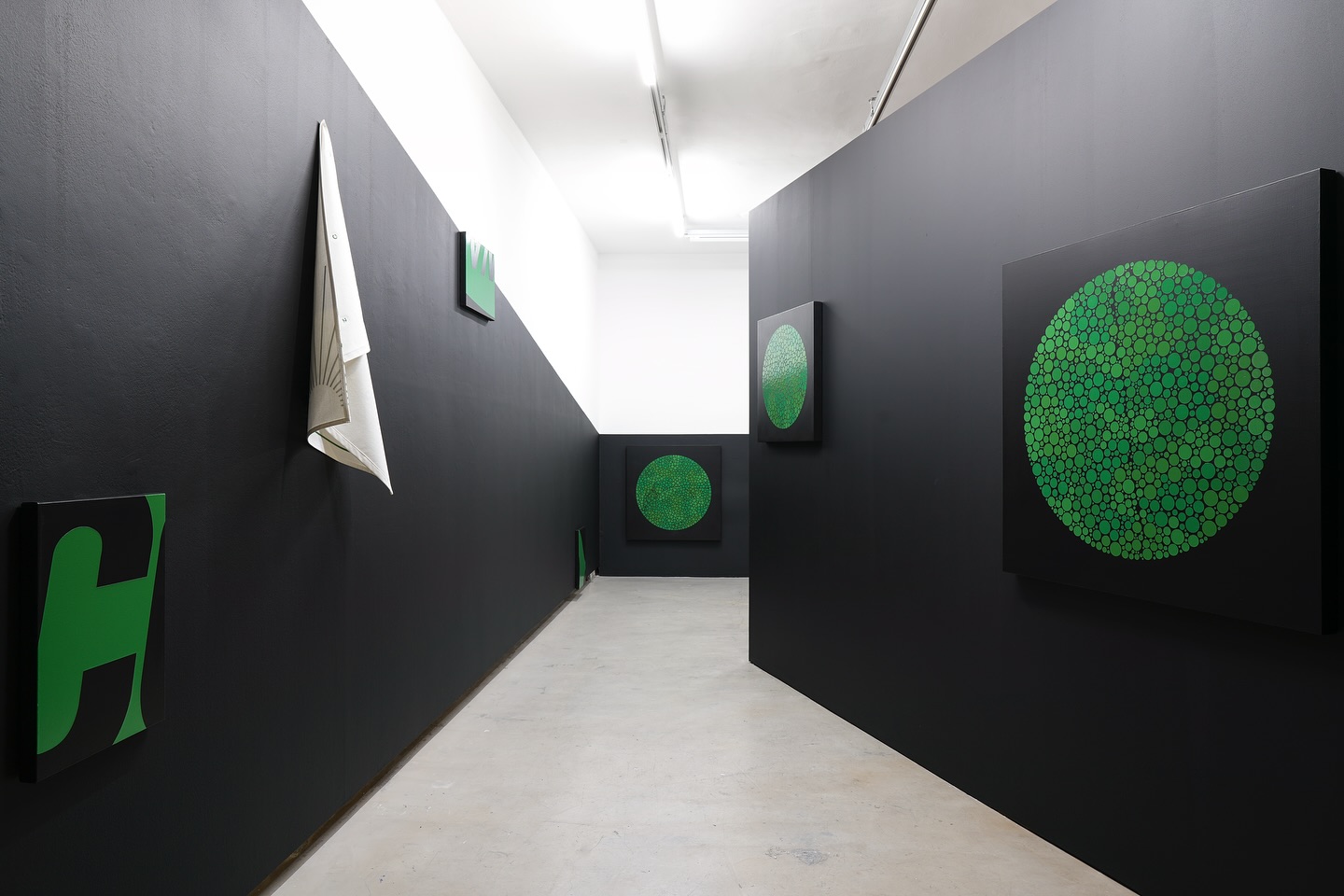
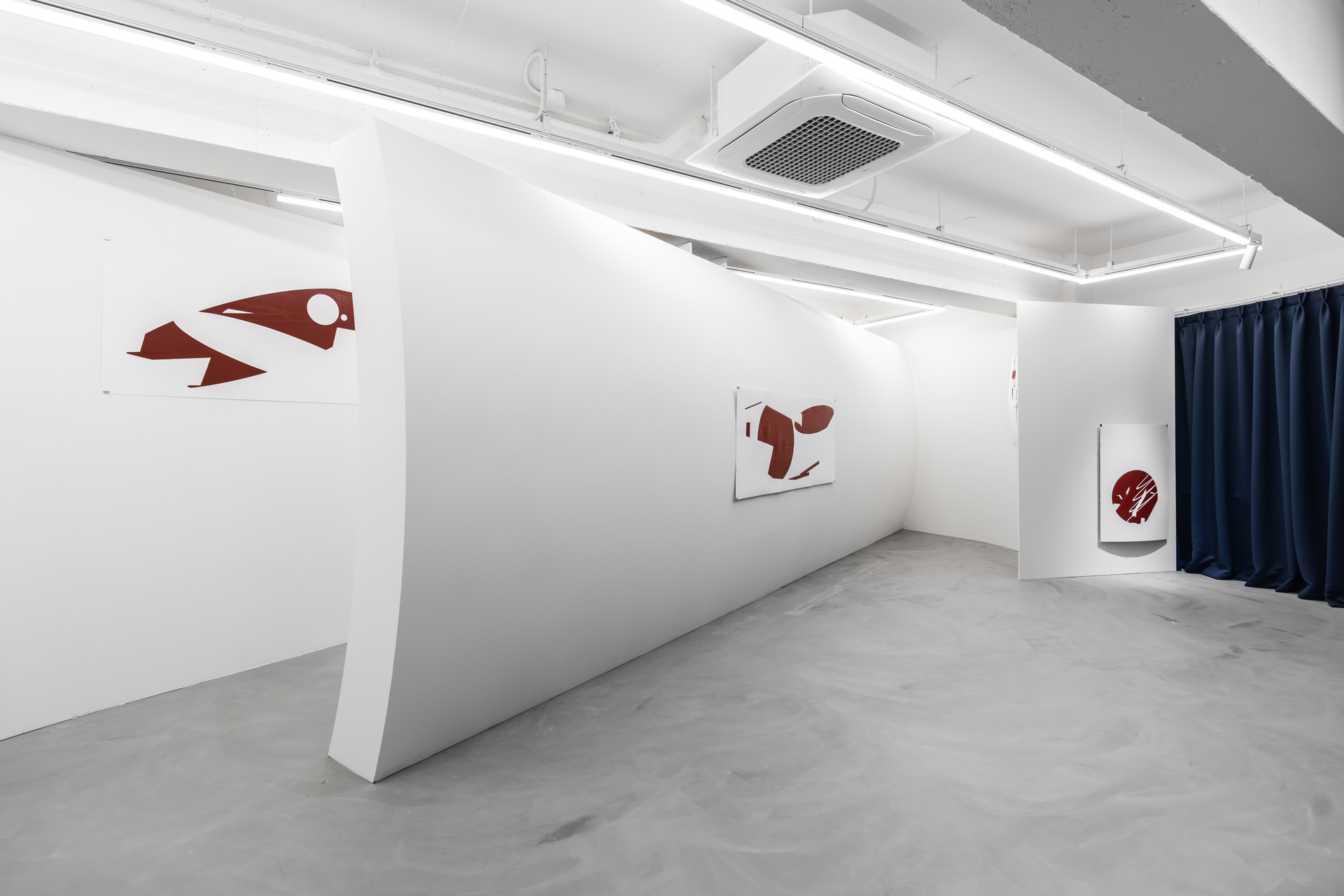
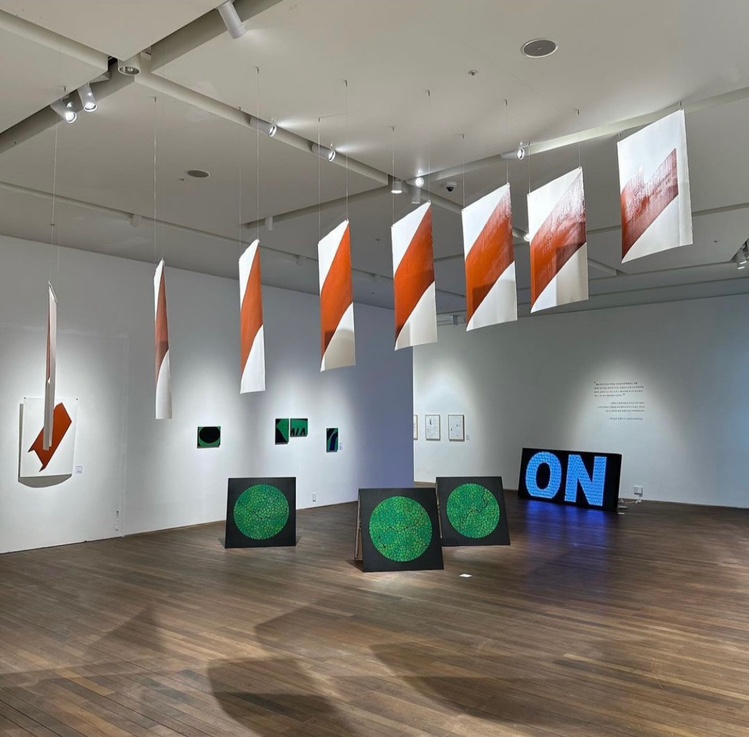
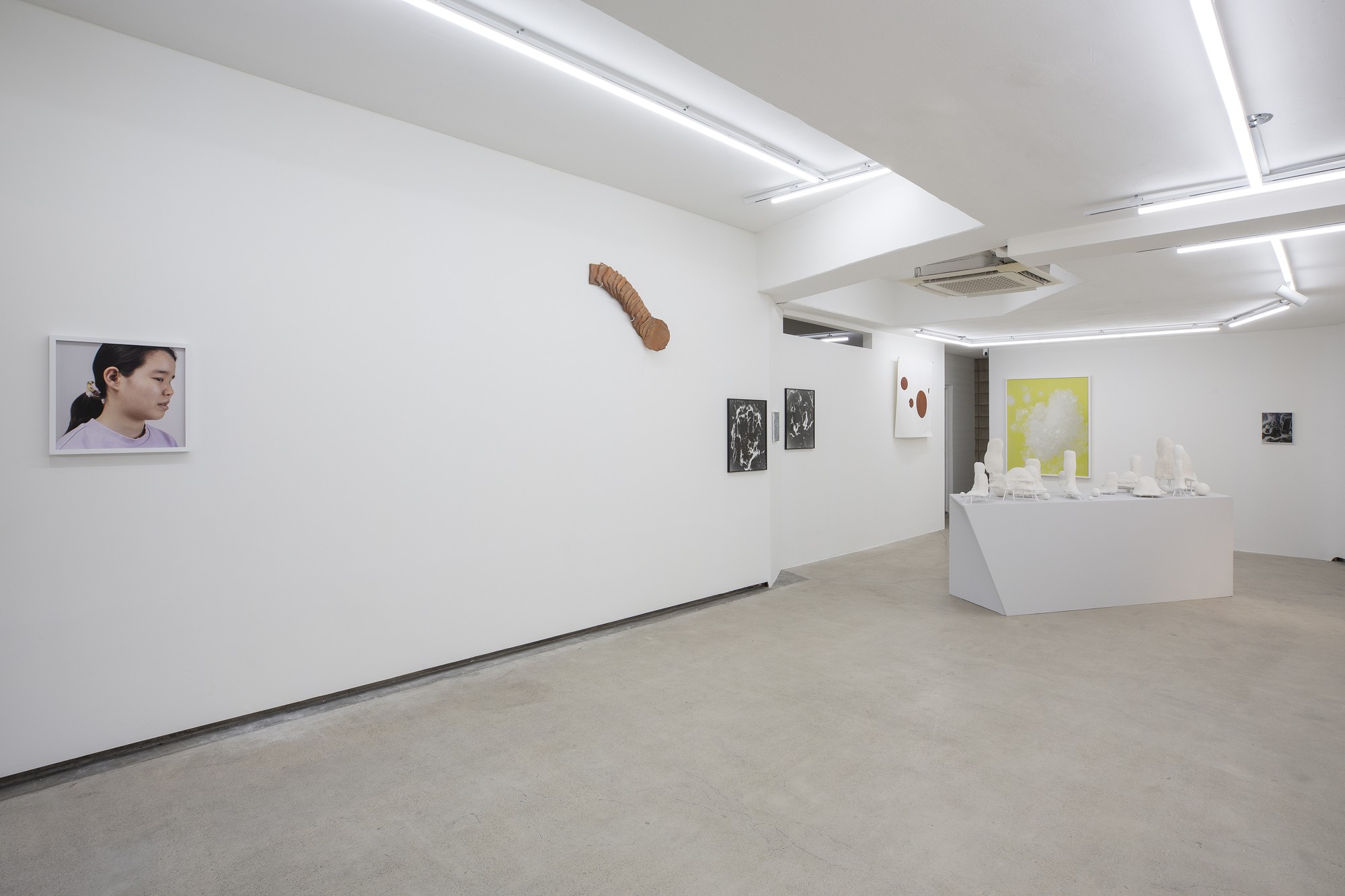
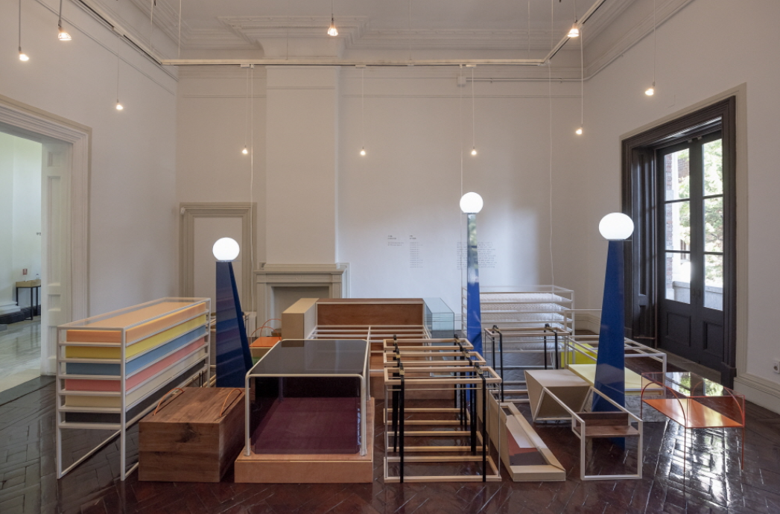
Installation view of 《Penetrating Ball》 (NEW SPACE, 2024) © NEW SPACE

Byun Sanghwan regards his artistic process as an act of “excavation,” akin to uncovering forms already embedded within objects, and has focused on extending this approach into the three-dimensional realm.

 
Much like an anthropologist studying the meticulous records preserved in layers of sediment, his practice involves exploring the nooks and crannies of the city and collecting seemingly insignificant scenes from everyday life.
 
The landscapes he gathers are subsequently broken down into minute fragments before being transformed into sculptural forms through poetic metaphors, paradoxes, and humor. In this process, familiar objects and scenes are recontextualized within the realm of art, while everyday materials that reemerge in unfamiliar forms invite viewers to recall the city and urban life from a new perspective.


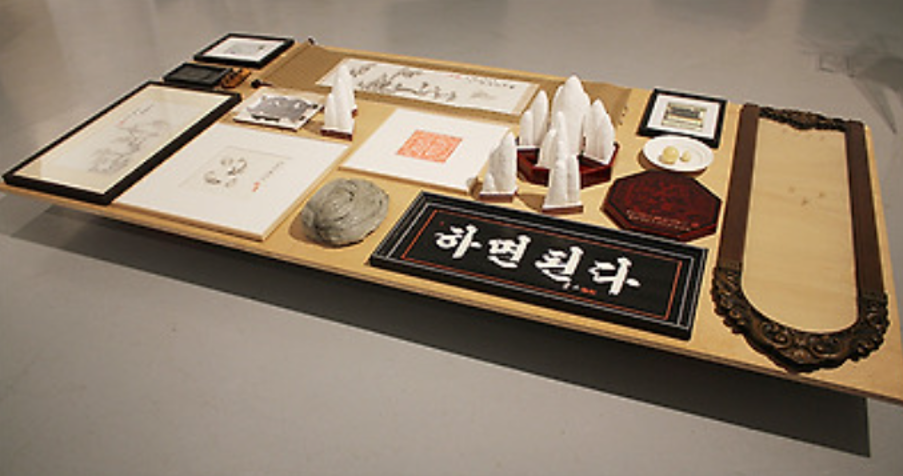
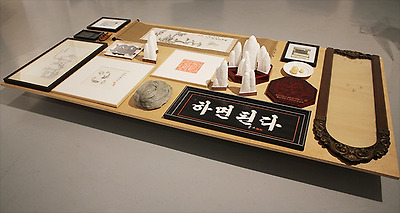
Byun Sanghwan, Installation view, 2012, Mixed media, 240x120x30cm © Byun Sanghwan

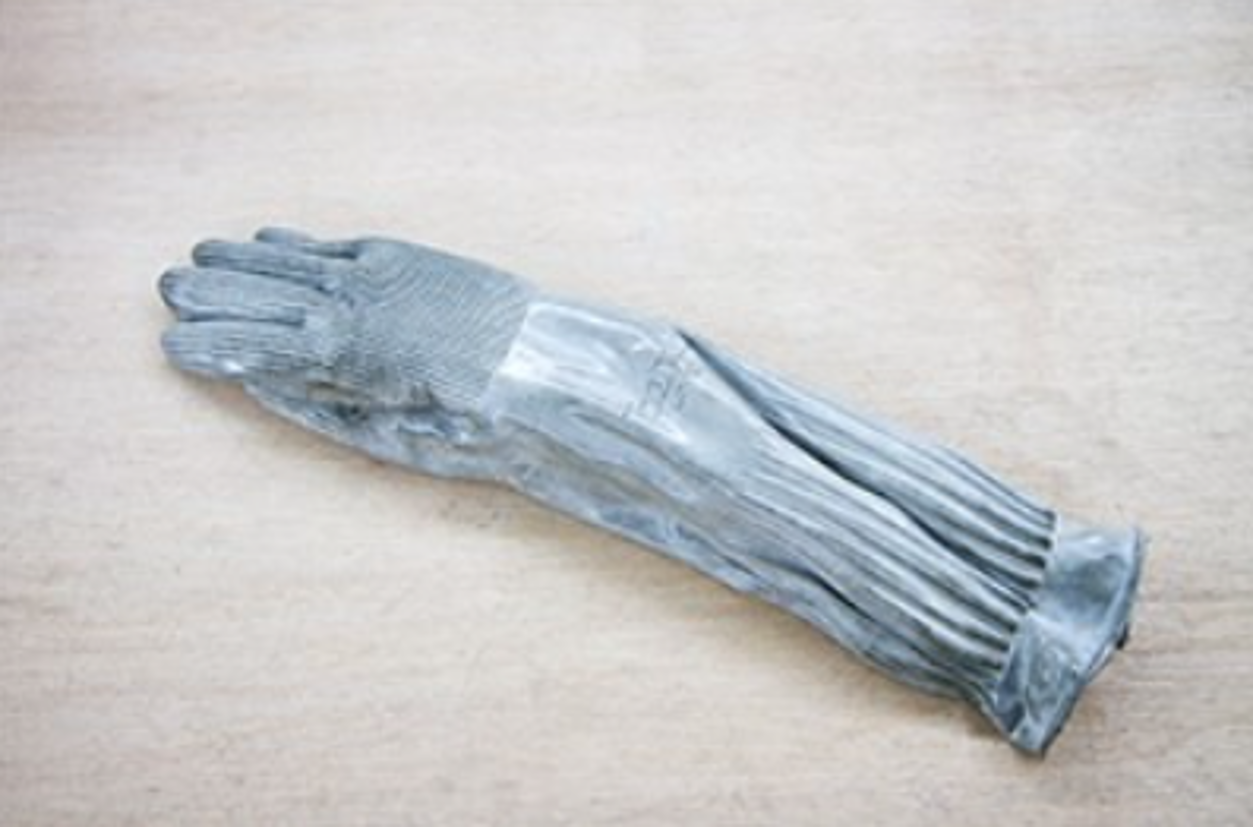
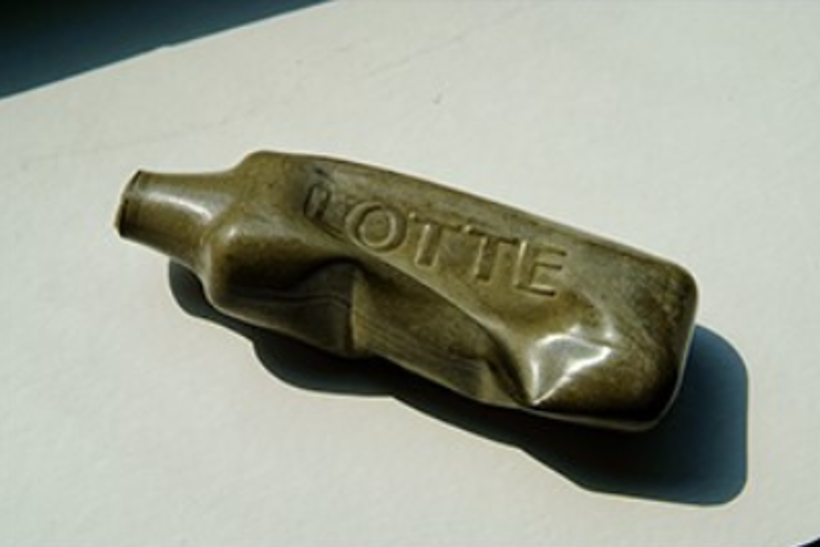
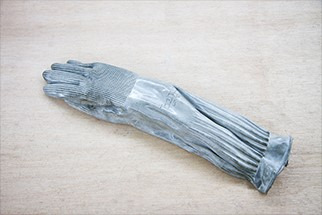
Byun Sanghwan’s early work grew out of his interest in the distinctive sensibilities and affective qualities found in objects from a bygone era. He collected discarded and aged objects and transferred their forms onto paper through frottage, effectively preserving traces of the past as images. At the same time, he cast soft, organic objects such as rubber gloves, kimchi-making cabbages, and soy-marinated crab in cement, transforming them into solid, fossil-like forms.
 
These works evoke a peculiar sense of familiarity at the intersection of objects from the past and contemporary sensibilities. By altering familiar objects into forms that are at once recognizable and subtly unfamiliar, the artist infuses everyday scenes with a kitsch sensibility, creating distinctive landscapes in which the sentiments of a bygone era intermingle with those of the present.


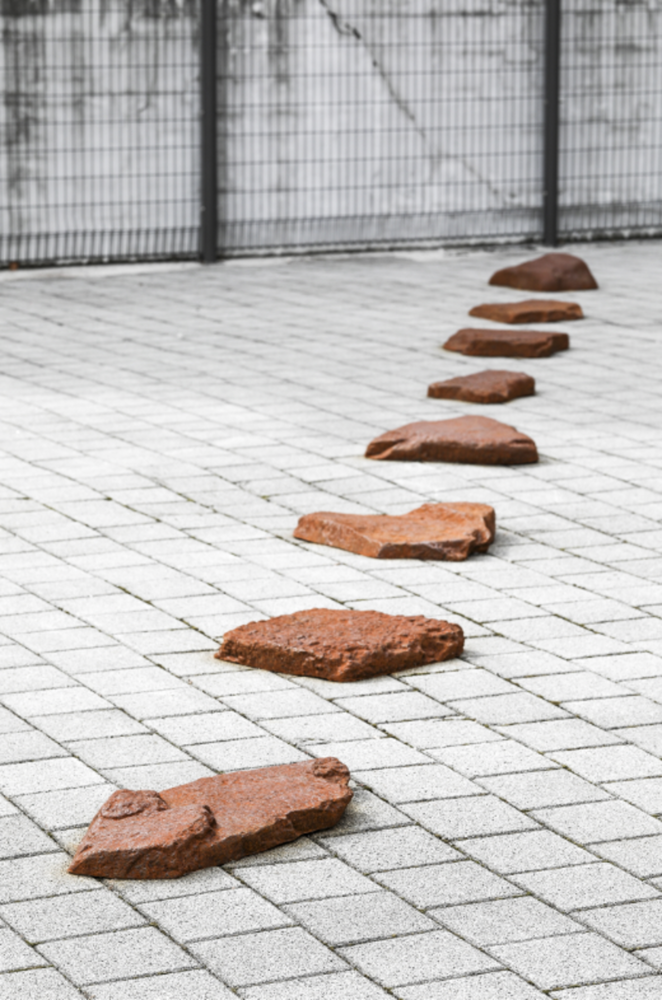
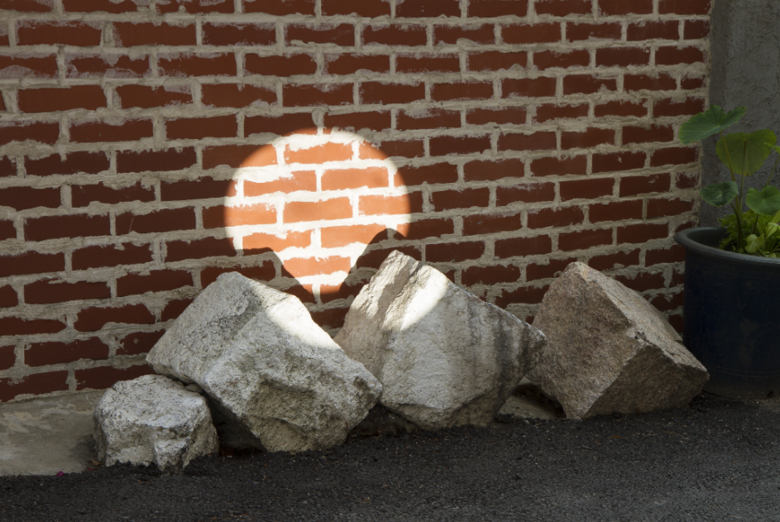
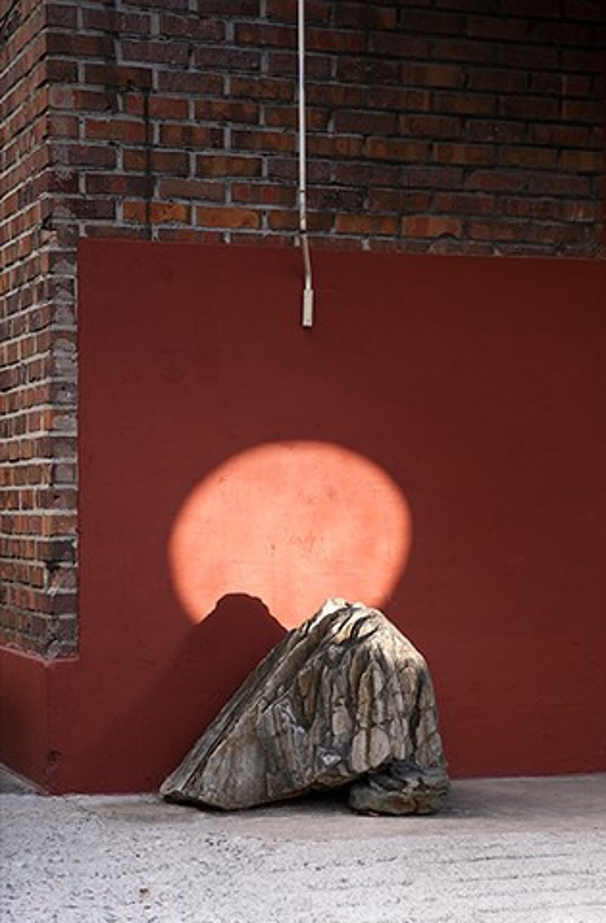
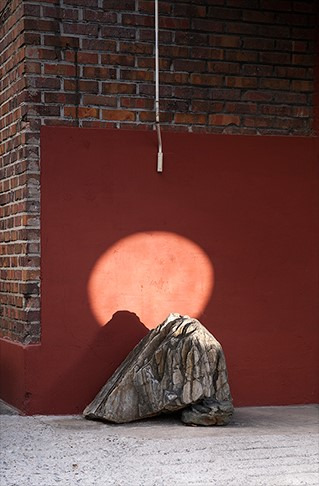
Byun Sanghwan, Daesagwan-ro 30ga-gil 36, 2015, Mirror Reflected Light, Inkjet Print, 59.4x84.1cm © Byun Sanghwan

In his subsequent ‘Stone’ (2015) series, Byun Sanghwan turned his attention to the seemingly insignificant stones scattered along the streets—objects that are easily overlooked in everyday life. At the time, the alleys of Changsin-dong around Naksan, where the artist was living, were filled with stones lying here and there.
 
While most people would regard these stones merely as obstacles, Byun approached them from a different perspective. He viewed these ordinary stones as silent observers of human history, illuminating them by reflecting natural light onto their surfaces with mirrors and documenting the resulting scenes through photography.
 
He further emphasized their significance by using the addresses of the stones’ locations as the titles of the works.


Byun Sanghwan, Crocodile, 2011, Rubber gloves, cement, 43x13x9cm © Byun Sanghwan

In this way, Byun has explored and transformed objects with which he has formed relationships within the city—from traditional iconography and old objects to familiar everyday things and stones—and expressed these encounters through solid sculptural forms. Reflecting his distinctive sense of humor, he reconstructs the ordinary landscapes of Korea into works that offer a fresh perspective on the everyday.
 
His practice also constitutes a process of seeking the certainty of existence by revealing the spaces and places occupied by objects, through which he traces and affirms the conditions of his own life.


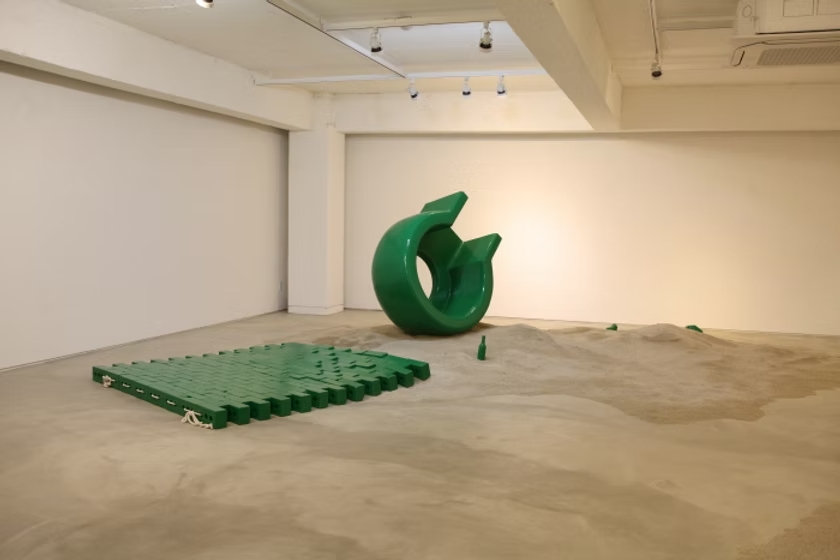
Installation view of 《Pure, solid courage》 (Space Willing N Dealing, 2016) © Space Willing N Dealing

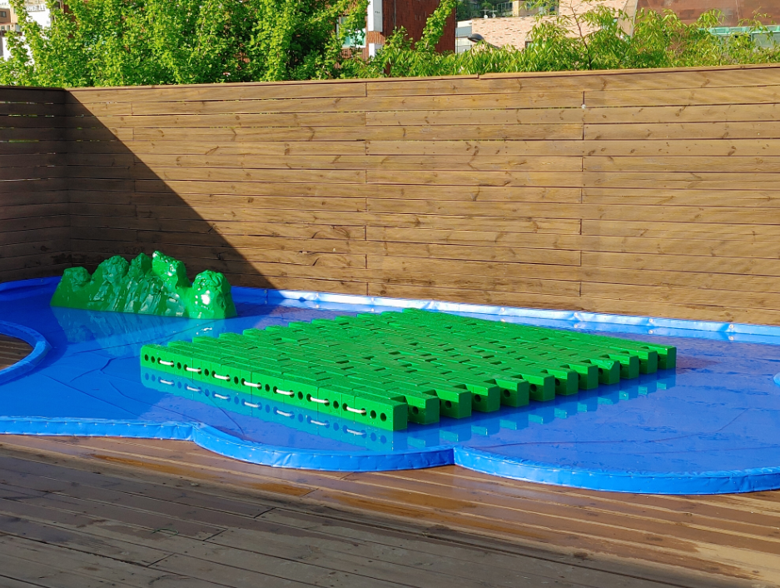
At his first solo exhibition, 《Pure, Solid Courage》, held at Space Willing N Dealing in 2016, Byun Sanghwan sought to subvert conventional notions of sculpture as well as established visual information and common assumptions by working with a lightweight material—floral foam.
 
The exhibition title was taken from a phrase printed on a plastic washbasin commonly found in cheap motel rooms. The artist recalls having initially misunderstood the Korean word yonggi (용기), which means “container” (容器) in this context, as yonggi meaning “courage” (勇氣).
 
The exhibition began with this kind of humorous incident and explored the trivial and ironic situations that occur in our surroundings today through the artist’s own witty perspective.


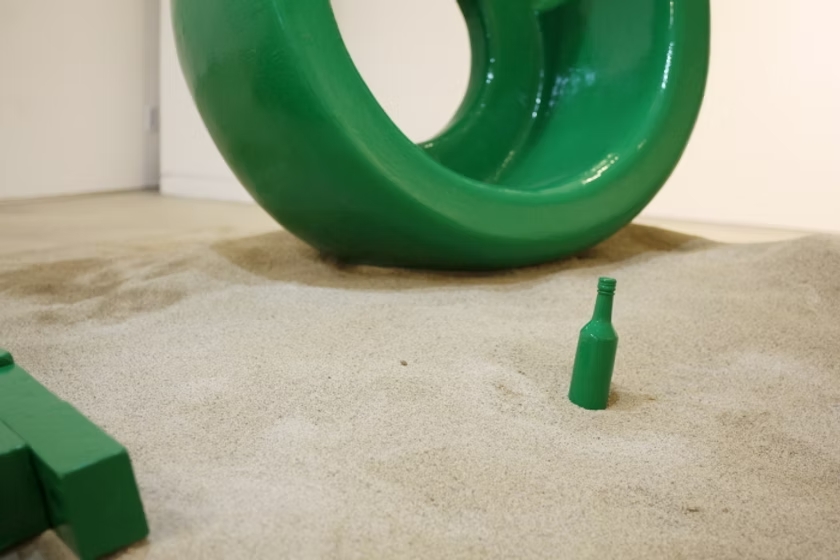
Installation view of 《Pure, solid courage》 (Space Willing N Dealing, 2016) © Space Willing N Dealing

Throughout the exhibition space, large and small green masses were scattered across the sandy floor. The space was filled with forms resembling an enlarged end of the handle of a plastic washbasin, a raft roughly one pyeong in size made by tying bricks together, soju bottles strewn across the floor, and sculptures with rough, irregular forms reminiscent of stones and chocolate balls.
 
These works were made using floral foam and waterproof paint, materials with contrasting functions. The objects made of floral foam, a material that absorbs water, were ironically coated with waterproof paint that prevents water from penetrating, adding an impression akin to a lighthearted joke. The dominant green color of the works was inspired by the color commonly found on the floors of rooftops in Korea.
 
Byun Sanghwan excavates “green” from Korea’s bleak gray urban landscape and applies it to the surfaces of sculptures that are both solid and lightweight, embodying an ironic quality. Among these works, which reinterpret the world around us through his lighthearted and witty perspective, viewers encounter the “kitsch” of everyday life in Korea.


Installation view of 《gestures, exaltation, a short life》 (Space So, 2018) © Space So

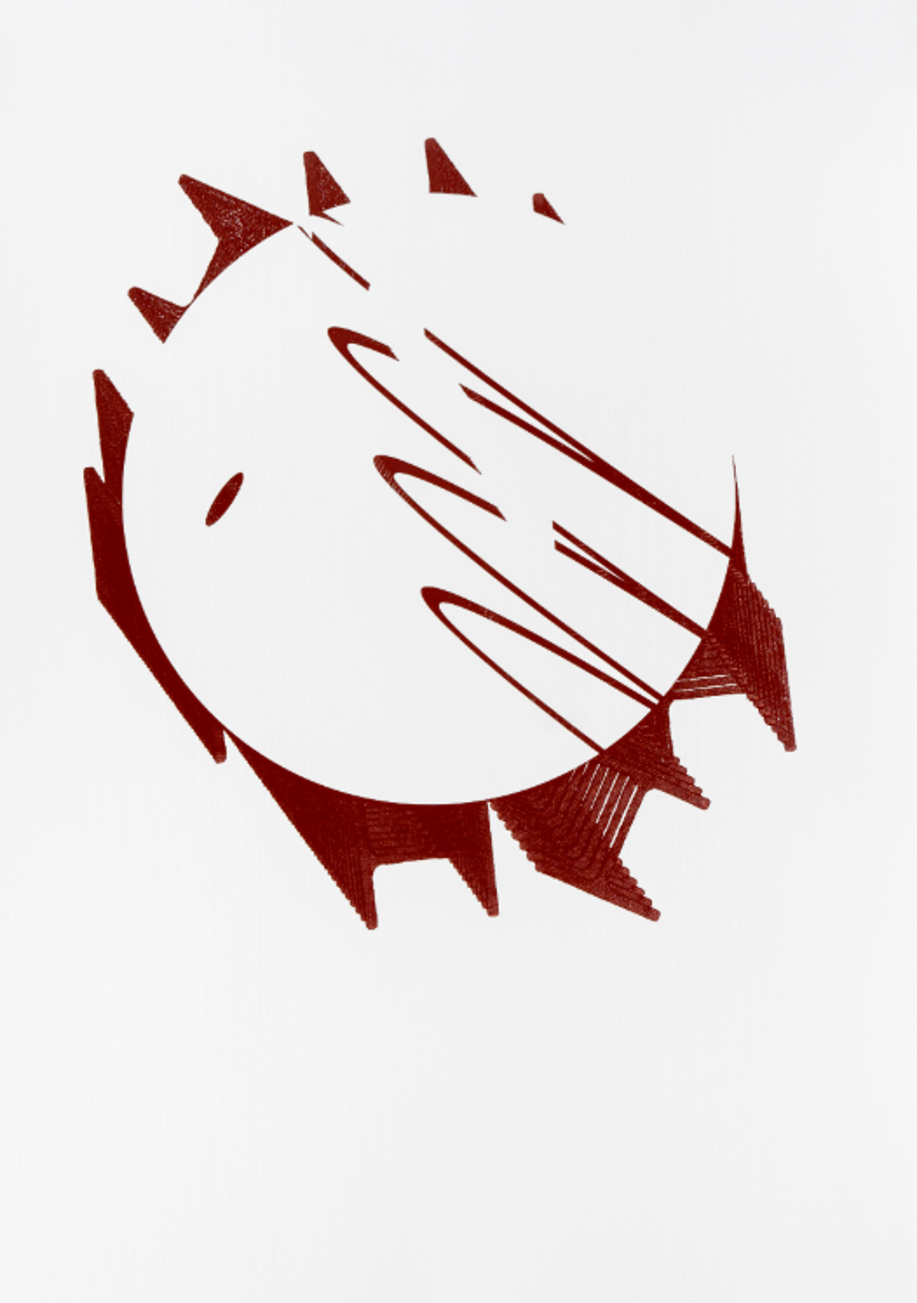
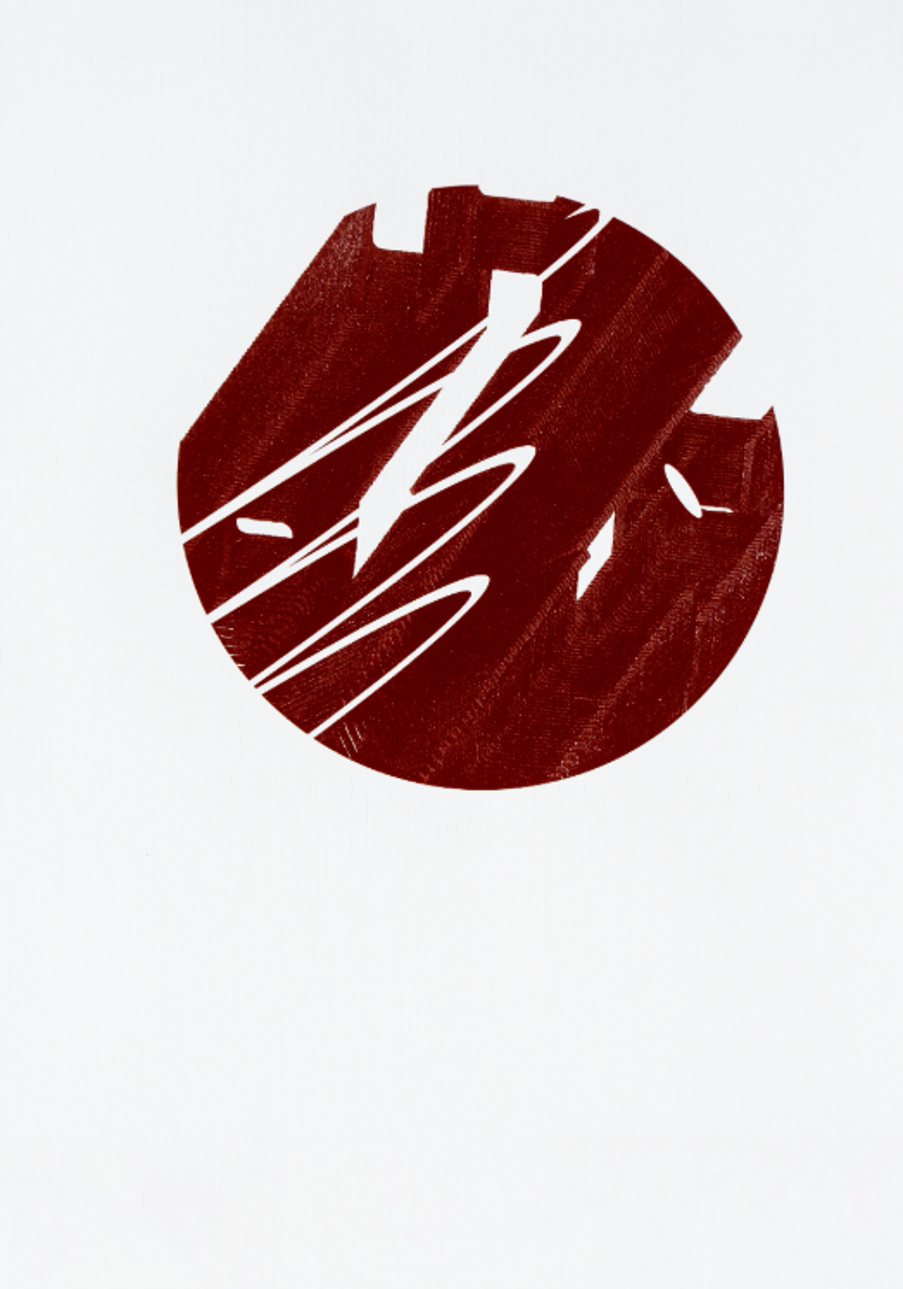
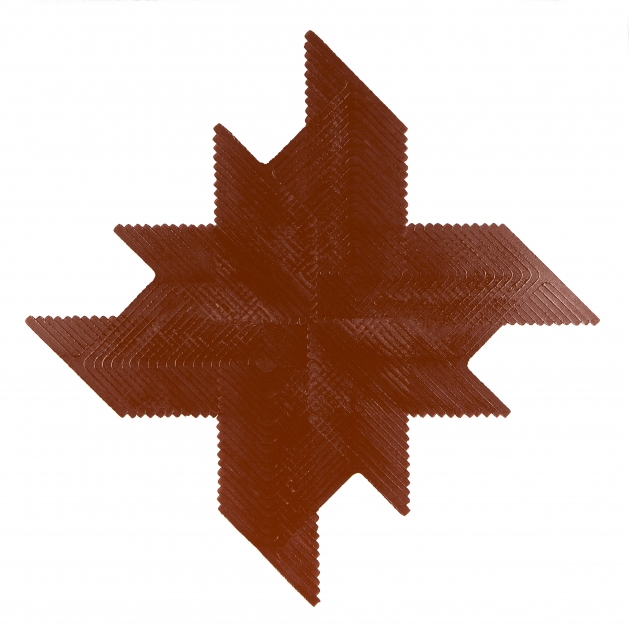
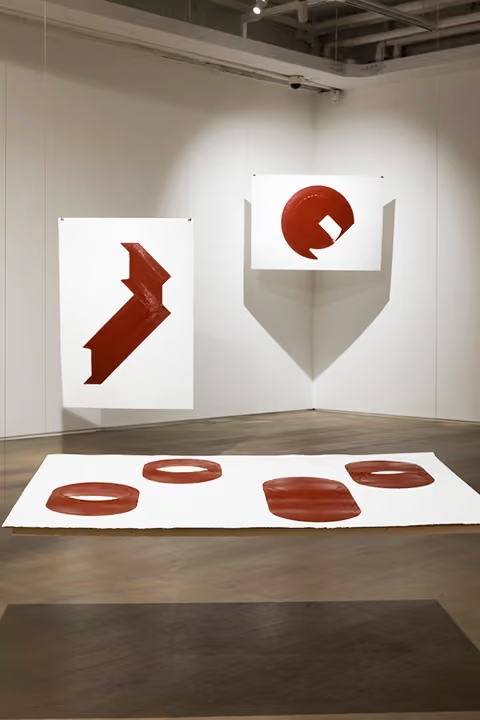
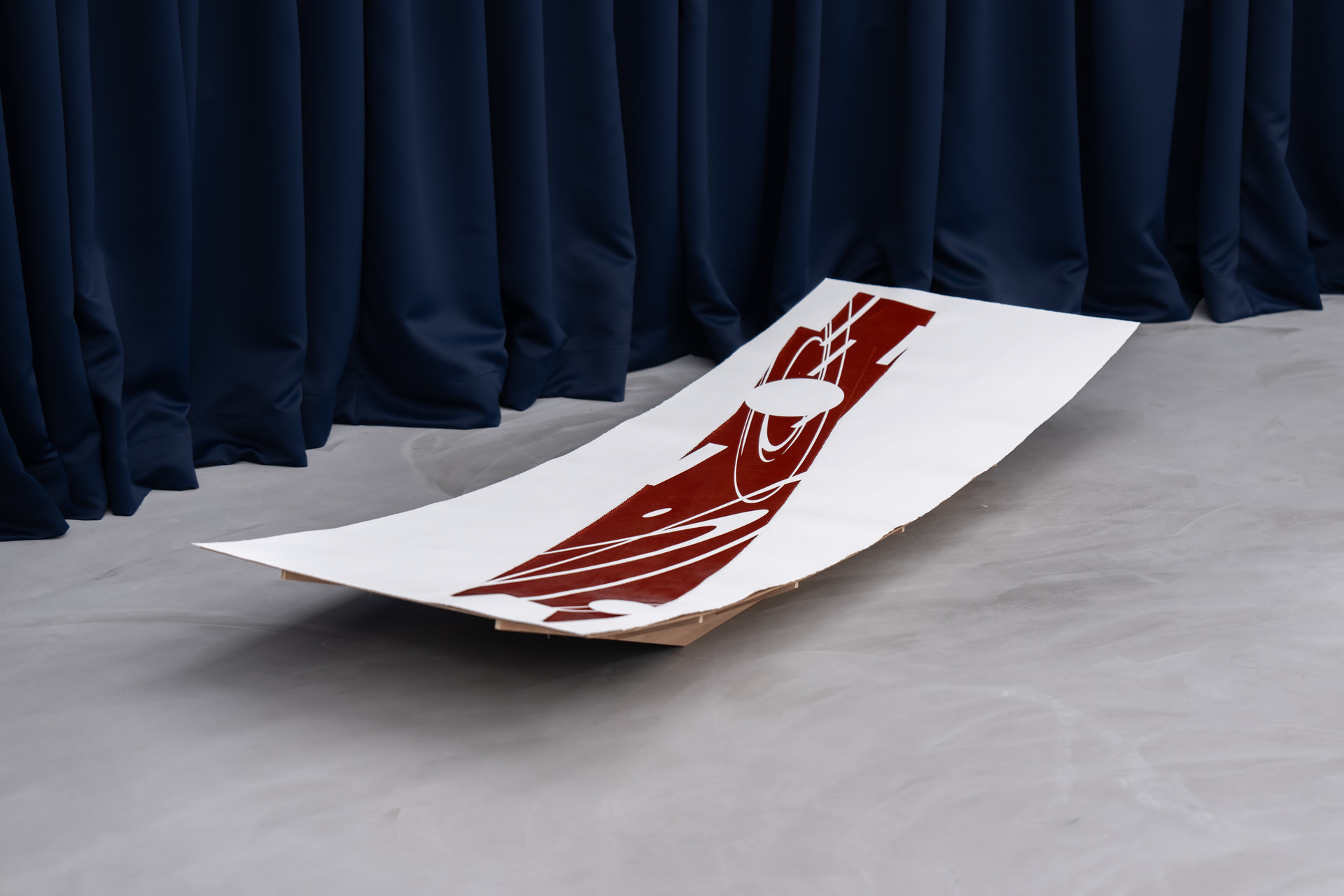
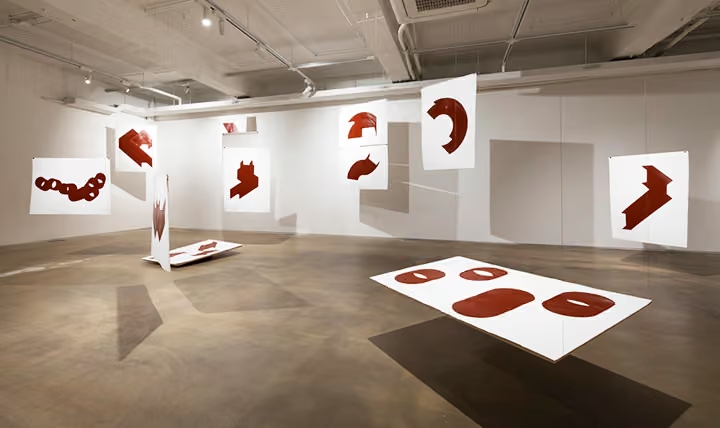
In his 2018 solo exhibition 《gestures, exaltation, a short life》, held at Space So, Byun Sanghwan presented the ‘Live Rust’ series, created using reddish-brown anti-rust paint, which is used to prevent rust, and steel sections of specific shapes, such as H-beams and I-beams.
 
As discussed above, by selecting industrial products as materials for his works, Byun Sanghwan brings attention to the inherent qualities of paint itself, such as its color and texture, which might otherwise go unnoticed. He also combines two or three industrial products so that, removed from their original purposes, they produce humorous and paradoxical results.


Installation view of 《gestures, exaltation, a short life》 (Space So, 2018) © Space So

These characteristics are also clearly evident in the ‘Live Rust’ series, which uses anti-rust paint and steel sections.
 
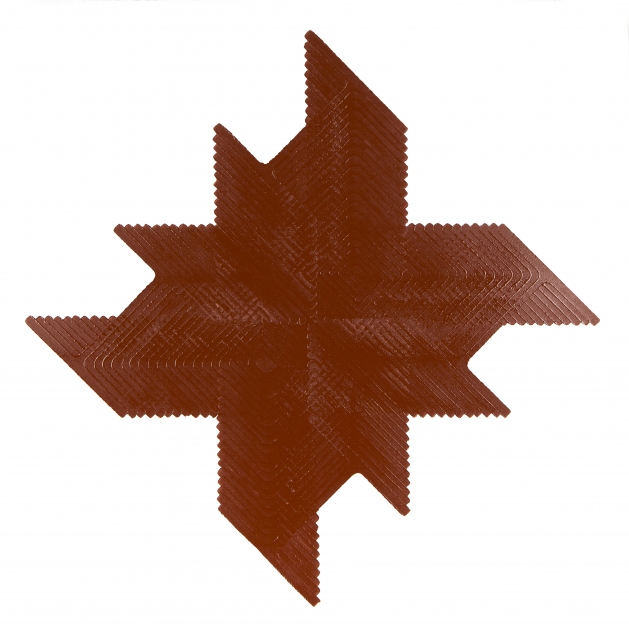
The artist applied anti-rust paint to the cross-sections of steel sections that had been flattened and finished, then placed them on paper and pressed them down to transfer the paint. While anti-rust paint is generally applied to steel sections to prevent them from rusting, the artist instead used the steel sections and anti-rust paint as a printing plate and ink, respectively.
 
Through this working process, the massive weight and three-dimensionality of the steel sections are transformed into geometric forms, resulting in two-dimensional works. Yet the process itself is closer to arduous physical labor.
 
To make the prints, the artist needs steel sections weighing nearly 20 kilograms each, as well as a pressing bar used to apply pressure so that their forms are transferred clearly.


Byun Sanghwan, Live Rust, 2019, Anti-rust paint, printmaking paper, steel section, 70x70cm © Byun Sanghwan

To make a single impression of anti-rust paint on paper, the artist went through the arduous process of lifting and setting down the steel sections and pressing bar, which together weigh nearly 40 kilograms. He repeated this process more than one hundred times to complete a single work.
 
By shifting the coordinates slightly with each impression, the layers of anti-rust paint gradually form new spaces and structures on the surface. The sense of directionality perceived within these spaces and structures intuitively evokes the artist’s physical labor as he moved the steel sections and pressing bar.


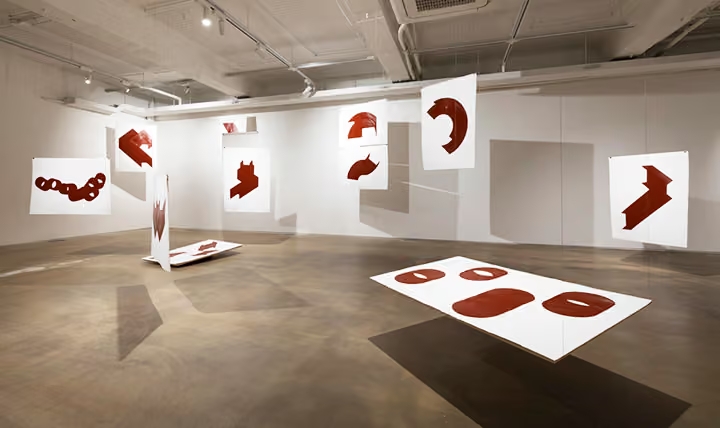
Installation view of 《New, Twinkling Hairtail》 (SeMA Storage, 2021) © Seoul Museum of Art

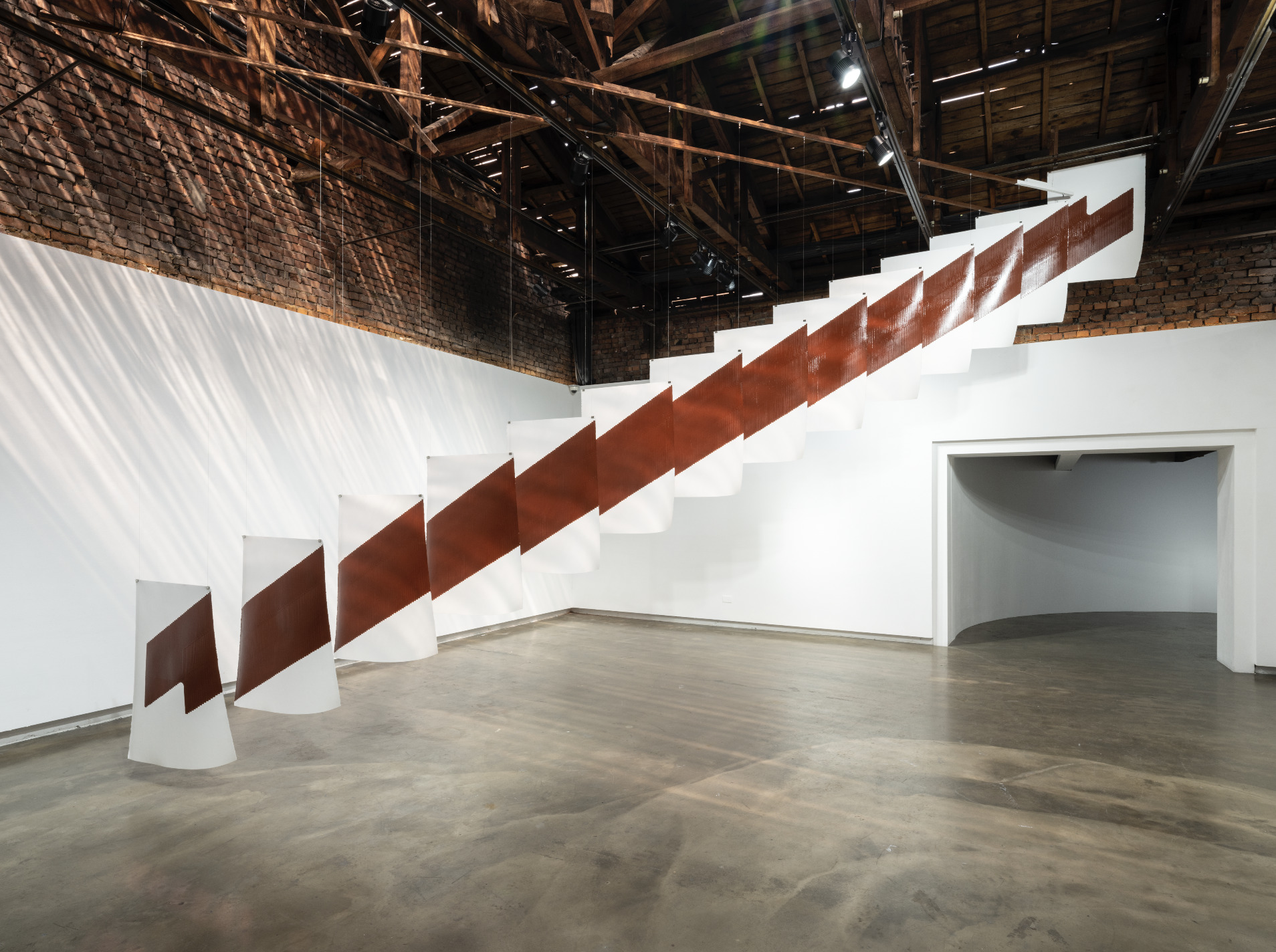
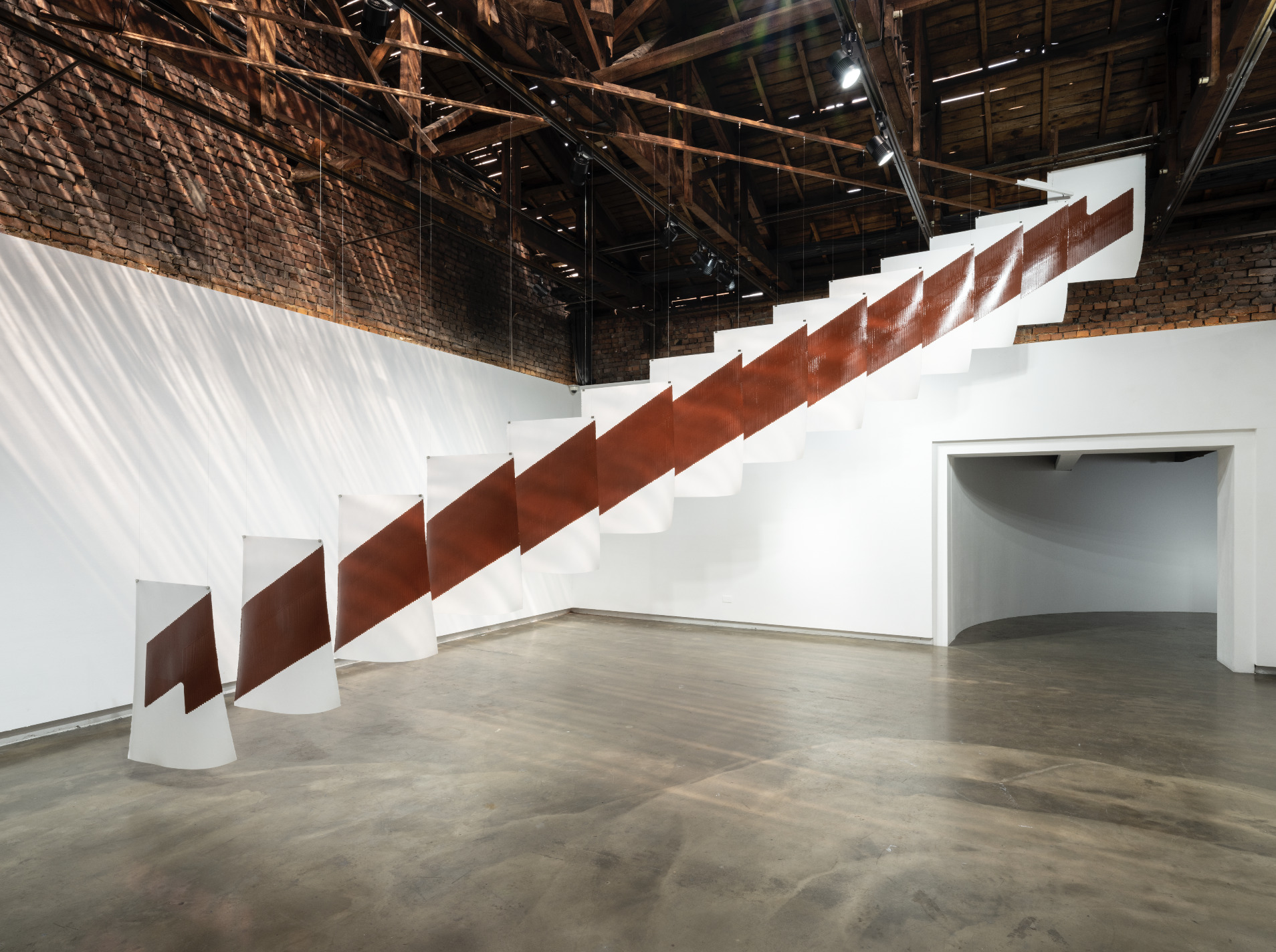
Furthermore, in his 2021 solo exhibition 《New, Twinkling Hairtail》, held at the SeMA Storage, Byun Sanghwan expanded and experimented with the ‘Live Rust’ series in an actual three-dimensional space, incorporating elements of painting, sculpture, printmaking, and performance.
 
Originally created as two-dimensional works, the ‘Live Rust’ series occupied the exhibition space in a massive and monumental manner, stretching across and taking over three rooms of the gallery. The reddish-brown planes moved through the constantly shifting space, appearing differently depending on the viewer’s perspective and stimulating the senses on multiple levels.


Installation view of 《The Hand Is Quicker than the Eye》 (Space So, 2022) © Space So

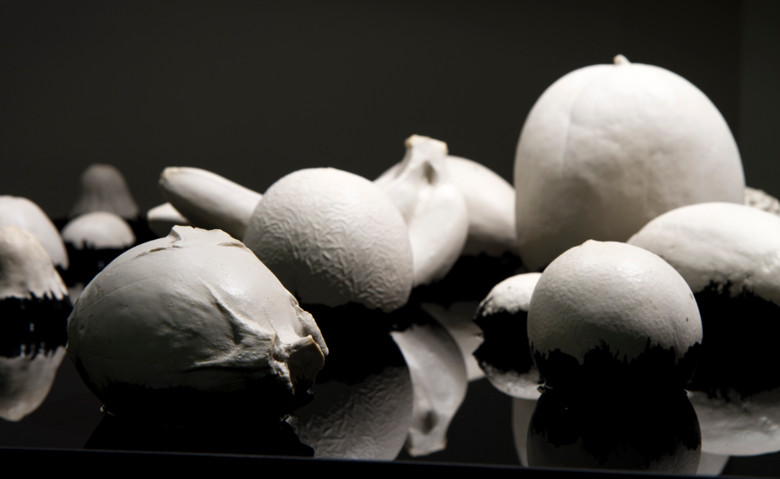
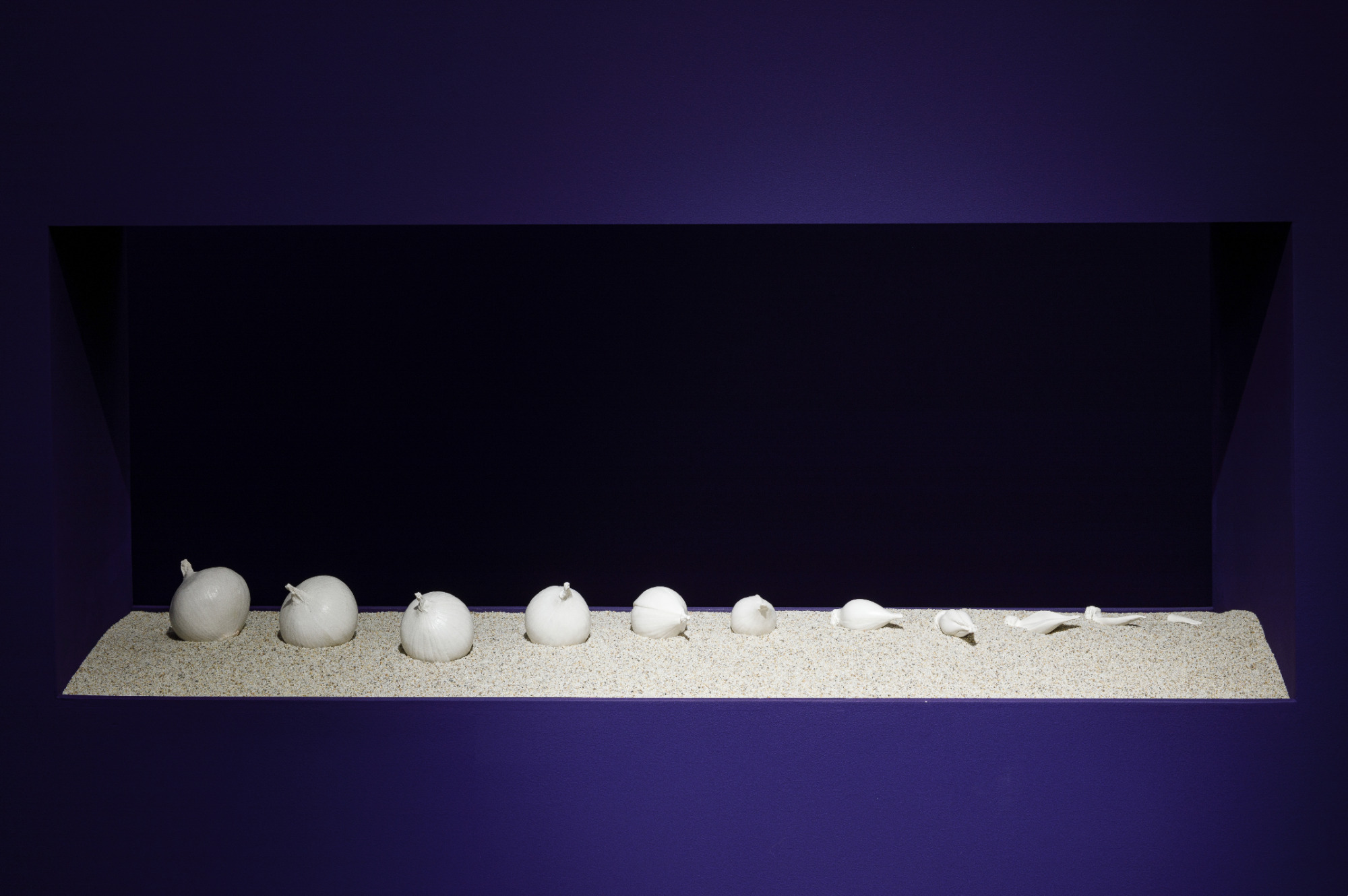
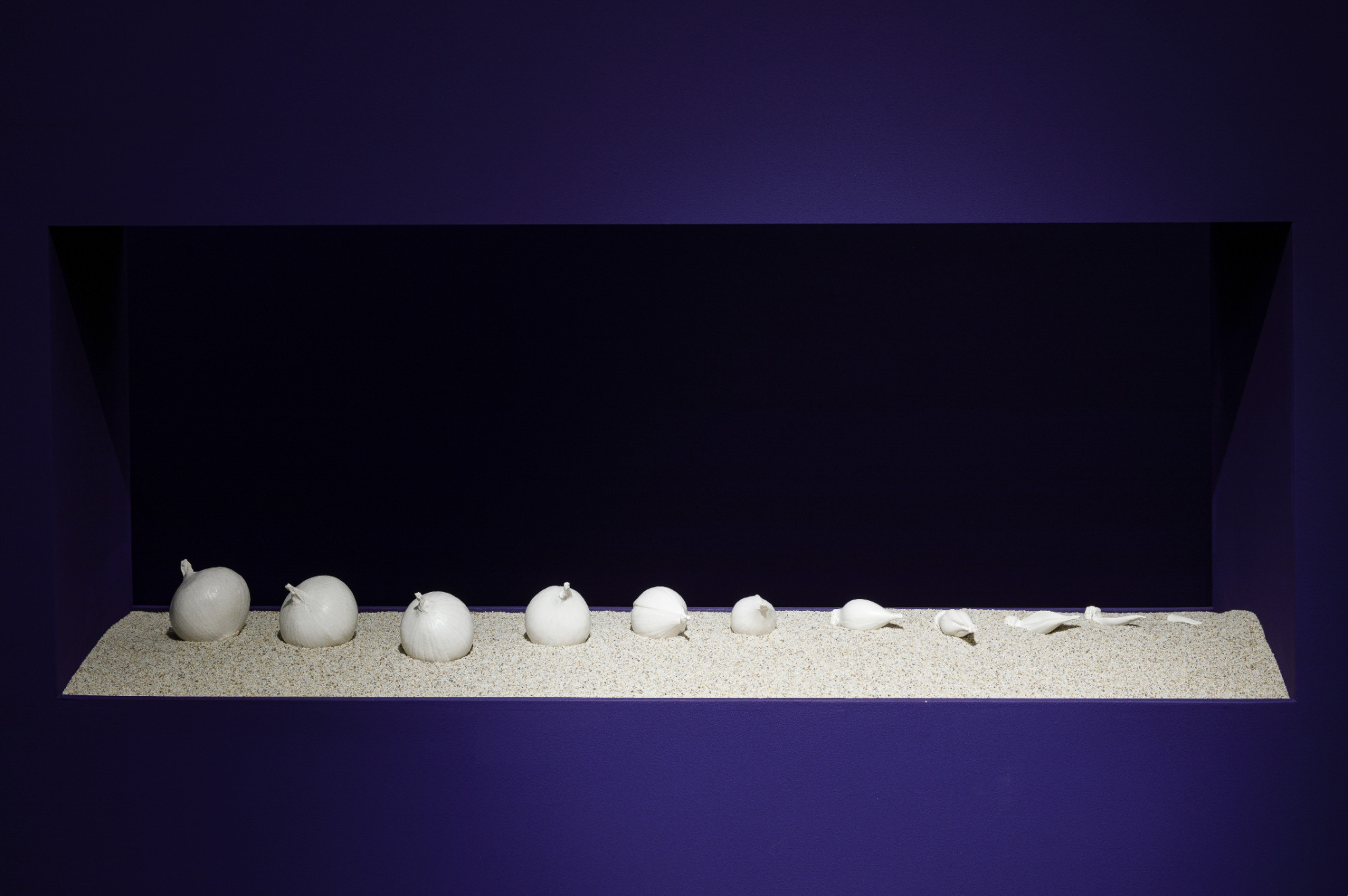
Meanwhile, in his 2022 solo exhibition 《The Hand Is Quicker than the Eye》, held at Space So, Byun Sanghwan focused on the forms of things that were originally natural objects, or that had come to acquire a status similar to that of natural objects through human intervention.
 
For example, the artist reproduced everyday ingredients such as bell peppers and onions in plaster or metal, transforming them into new sculptures. Appearing with new bodies given to them by the artist, these various objects existed with their original colors and scents concealed, revealing only their mass and texture.
 
The forms of objects that would disappear as time passed and the seasons changed were, through the artist’s hands, preserved as solid and imperishable sculptures. The light and shadows produced by their white or weighty, lustrous surfaces allow viewers to experience once again a fleeting moment of the objects captured by the artist’s two hands.


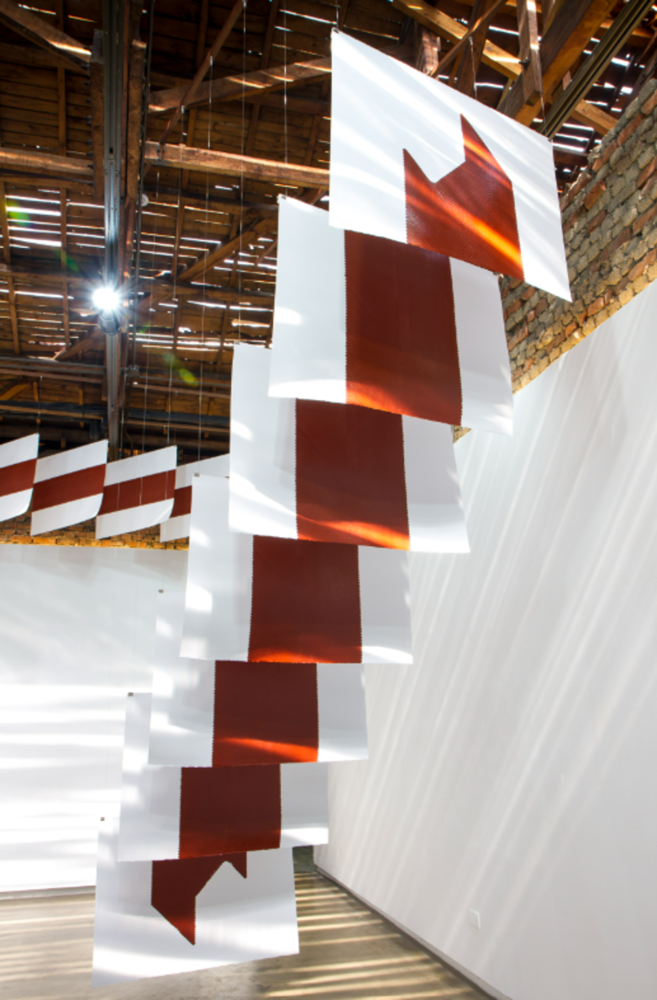
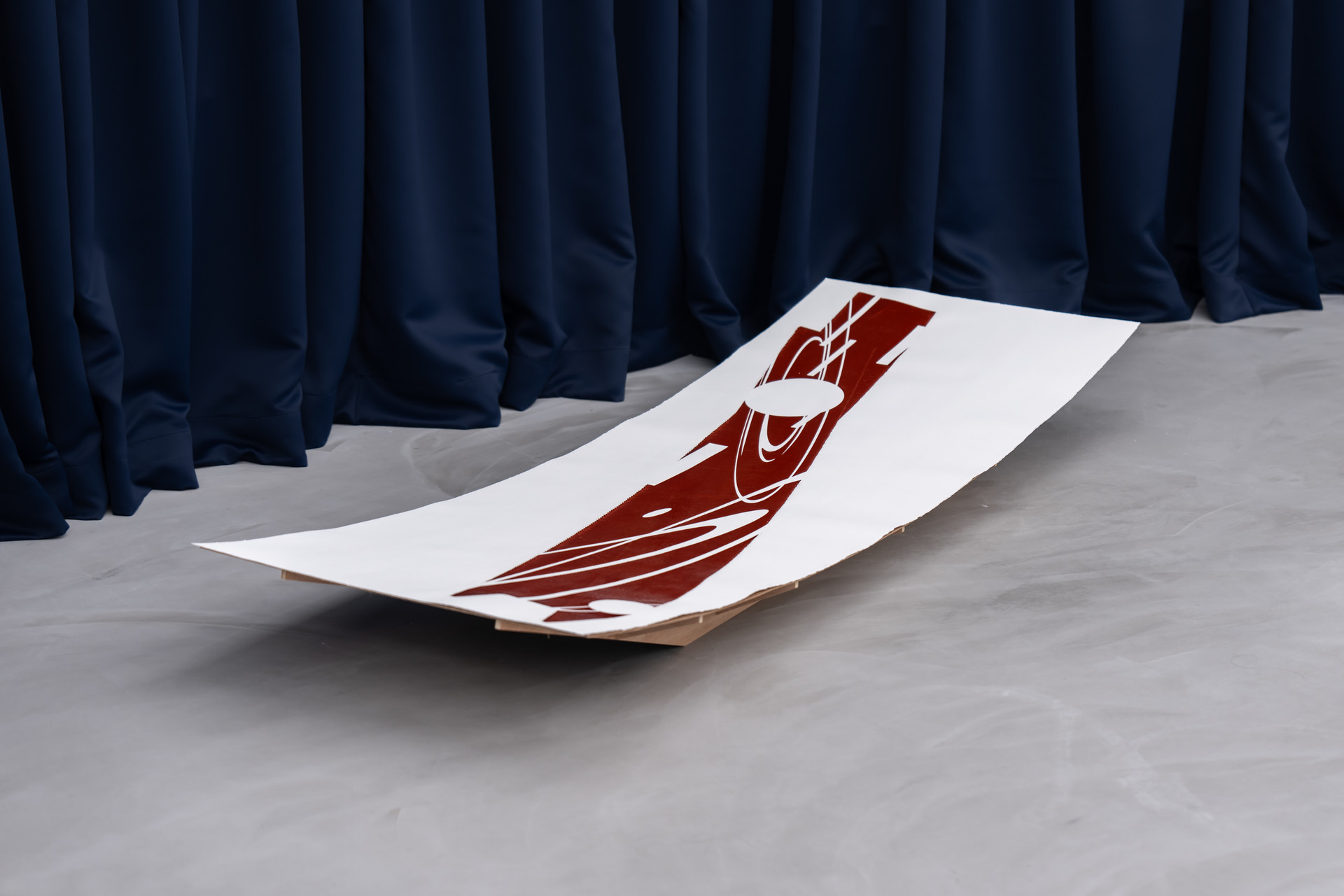
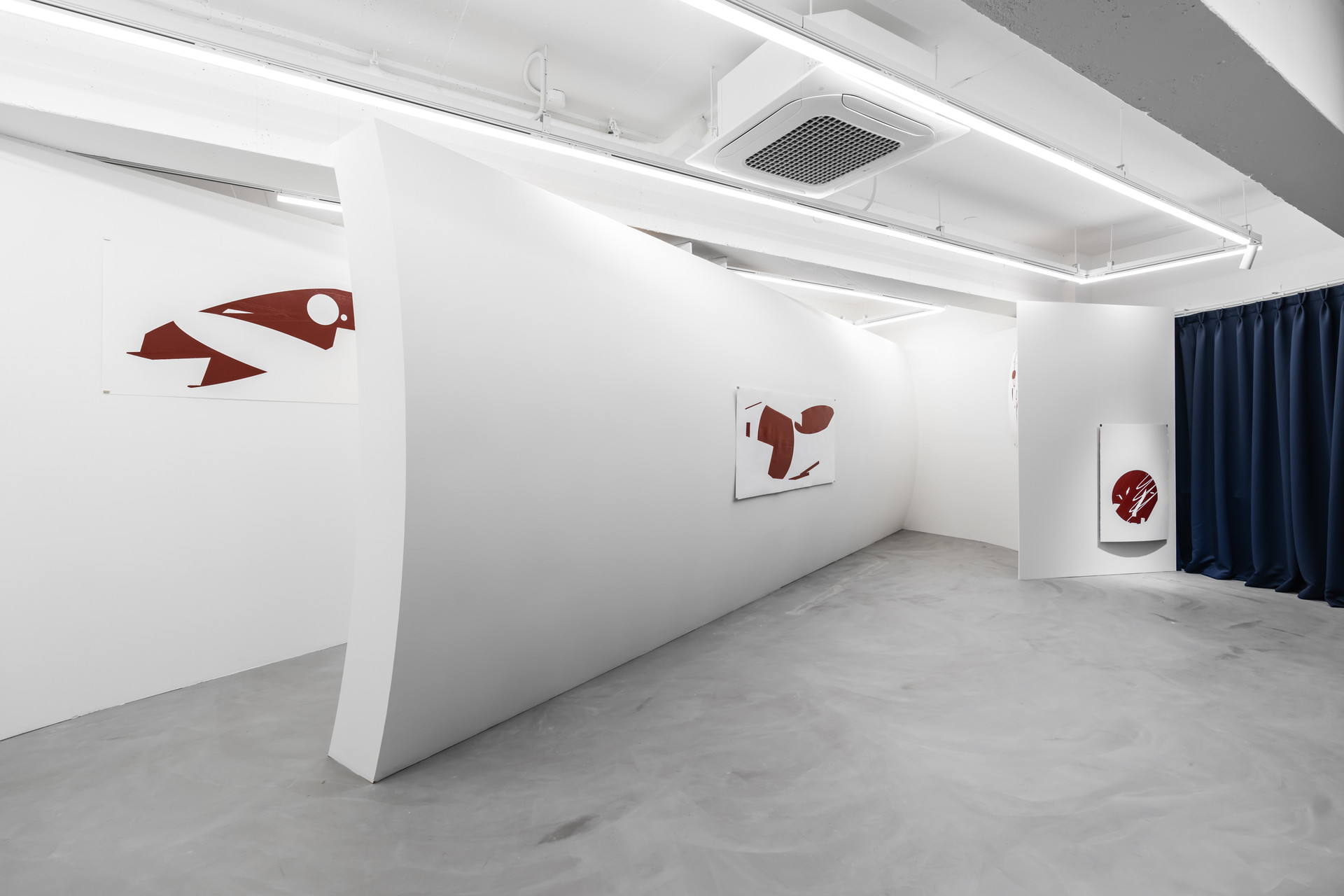
Installation view of 《Horizon, and the Curtain of Ellipses》 (Space So, 2025) © Space So

In his recent solo exhibition 《Horizon, and the Curtain of Ellipses》 (Space So, 2025), Byun Sanghwan introduced ‘Live Rust-Odyssey’, a series derived from his ‘Live Rust’ series. As a new development of ‘Live Rust’, the ‘Live Rust-Odyssey’ series expands upon his ongoing project by incorporating his imagination of cosmic space and time.
 
The artist envisions two worlds on either side of a wormhole resonating with one another. Based on this premise, he created multiple images of Alpha and Beta that share the same trajectory but exist as different planes and gaps.


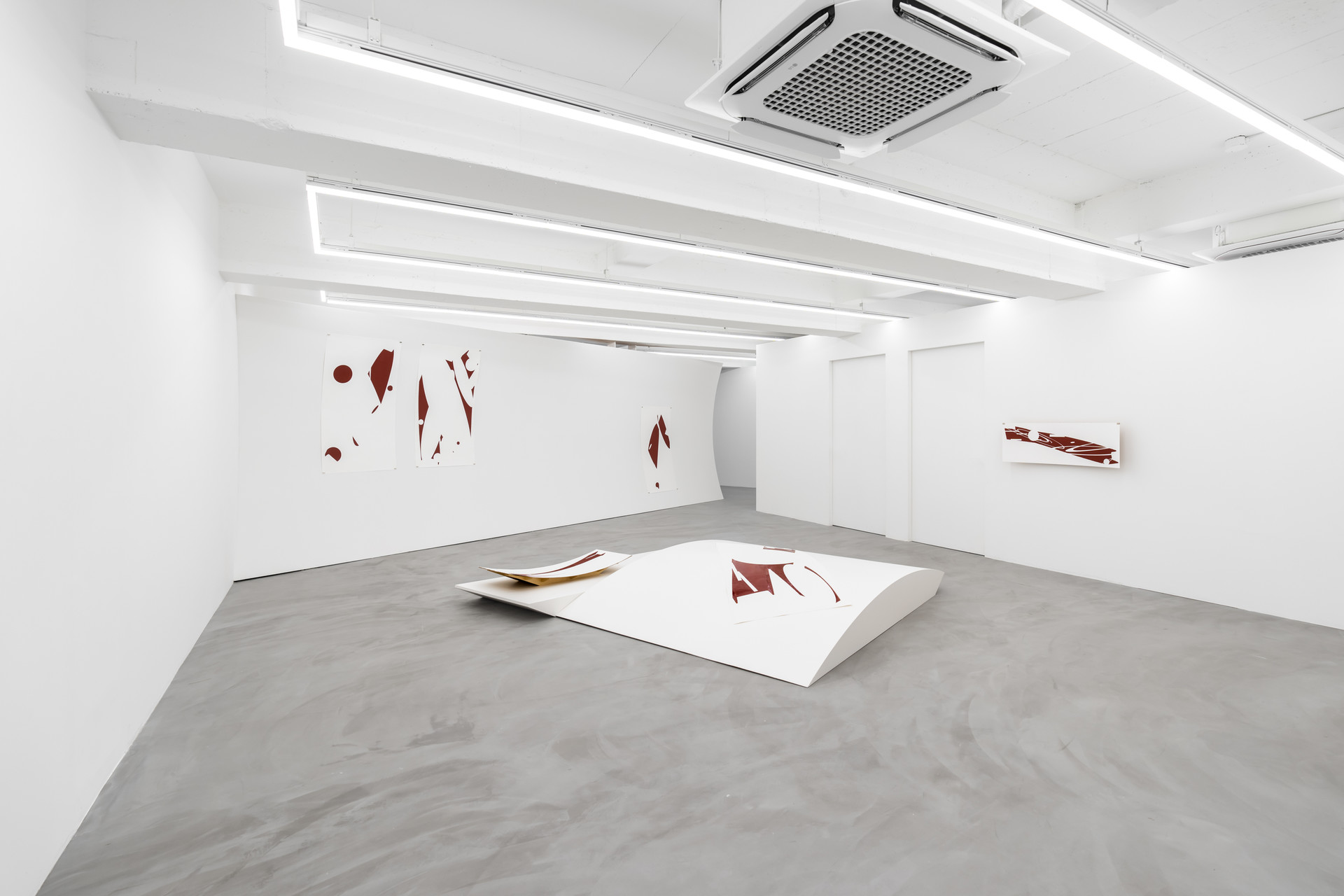
Installation view of 《Horizon, and the Curtain of Ellipses》 (Space So, 2025) © Space So

By projecting the three-dimensional sensibility gained from the city beyond the Earth, or the human world, into a higher-dimensional space-time, the artist adds formal sophistication to his early images, which remained faithful to revealing trajectories as they were. In doing so, he maximizes the refined beauty inherent in the aesthetics of ‘Live Rust’.
 
The works welcomed viewers into an irregular white space composed of three layers. Freely moving through this surreal and unfamiliar sensory environment, viewers could observe the traces of intense physical labor, heavy gravity, and the red light left behind by the immense skeleton of the city.
 
This subtle correspondence that emerged between the viewer’s shifting gaze and the red light invites us to reflect on the correspondence between body and matter that may have existed throughout the artist’s creative journey, and further, on the correspondence between humanity and the city unfolding in real time within the world around us.


Installation view of 《Horizon, and the Curtain of Ellipses》 (Space So, 2025) © Space So

In this way, Byun Sanghwan has excavated contemporary history embedded throughout the city by introducing bold variations into traditional artistic methodologies.
 
Existing in diverse forms, his works demonstrate an ongoing exploration of the conditions that define artistic forms, including the weight, volume, and spatiality of sculpture, the surfaces and pigments of painting, and the processes and multiplicity of printmaking.
 
The everyday subjects that emerge in unfamiliar forms throughout his work invite us to reconsider ways of living and existing in the contemporary city, while the traces of arduous physical labor inscribed in his works evoke both the hardships and vitality of life.

“Among the very ordinary things that we normally see and encounter frequently, there are objects that seem to be precariously situated within the contemporary moment. I think of them as objects that carry a distinctly Korean sensibility. I tend to be particularly drawn to such things. Naturally, this leads me to use them as subjects in my work.” (Byun Sanghwan, from a Hello Artist interview)


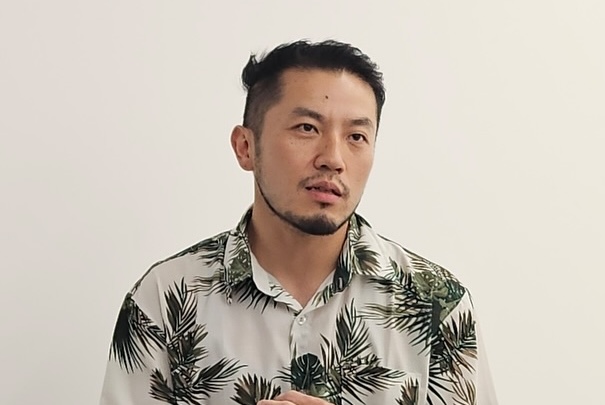
Artist Byun Sanghwan © Space So

Byun Sanghwan received his B.F.A. in 2012 and M.F.A. in 2018 in fine arts from Seoul National University of Science & Technology. His recent solo exhibitions include 《Horizon, and the Curtain of Ellipses》 (Space So, Seoul, 2025), 《Penetrating Ball》 (NEW SPACE, Seoul, 2024), 《The Hand Is Quicker than the Eye》 (Space So, Seoul, 2022), and 《New, Twinkling Hairtail》 (SeMA Storage, Seoul, 2021).
 
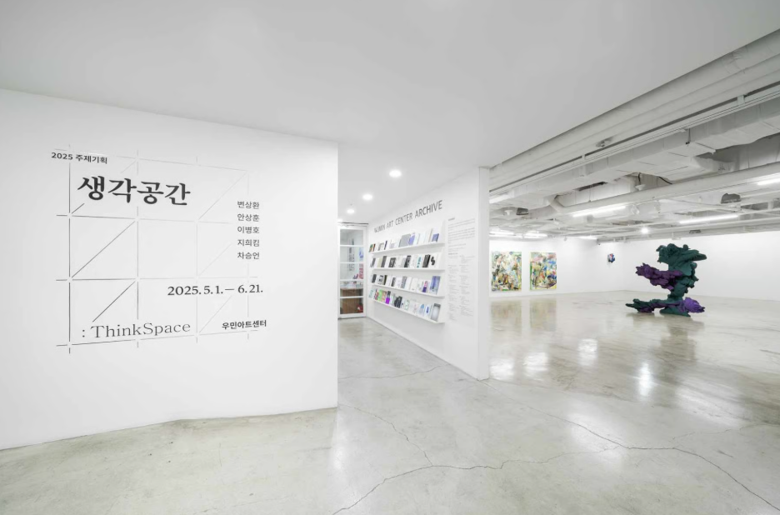
He has also participated in numerous group exhibitions, including 《ThinkSpace》 (Wumin Art Center, Cheongju, 2025), 《EDITION: Who Sets the NUMBER?》 (Space So, Seoul, 2024), 《The Journey Through Art Sociology Leads To Art Philosophy: Artists’ Anthology》 (Seoul National University Museum of Art, Seoul, 2023), 《Skin and Skeleton》 (Primary Practice, Seoul, 2023), 《Prints, Printmaking, Graphic Art》 (MMCA, Gwacheon, 2020), and 《萬Lab》 (Nam-Seoul Museum of Art, Seoul, 2018).
 
Byun Sanghwan participated in the Seoul Art Space Geumcheon Residency Program (2019) and the Kuandu Museum of Fine Arts Residency Program in Taipei (2019). His works are held in the collections of institutions, including the MMCA Art Bank.

References