Individual narratives, group memories
We explore artists’ identities through their works. Various
messages can be observed in the life of a single artist: the problems of an
individual, or of a society, or of a state. While living in Germany for over 20
years, Chan Sook Choi has contemplated the history of human migration, the
scientific and technological devices that enabled movement through space, and
the issues of spiritual migration that accompany physical movement. On a
microscopic level, she has acutely sensed the changes in unfamiliar environments
around her, while exploring on a macroscopic level the history of humanity and
its inevitable migrations as a whole. Using multiple media including video,
performance and installation, she has reflected upon the lives of herself and
of other women like her, while developing a calm and composed voice of her own.
All of Choi’s work starts from situations that can arise in
humanity, history and society, but her perspective begins with highly intimate
human histories. Normally, when art is used to address issues of humanity,
history and society, the private life perspectives of individuals become
inadvertently buried within grand narratives, but Choi’s works stand in
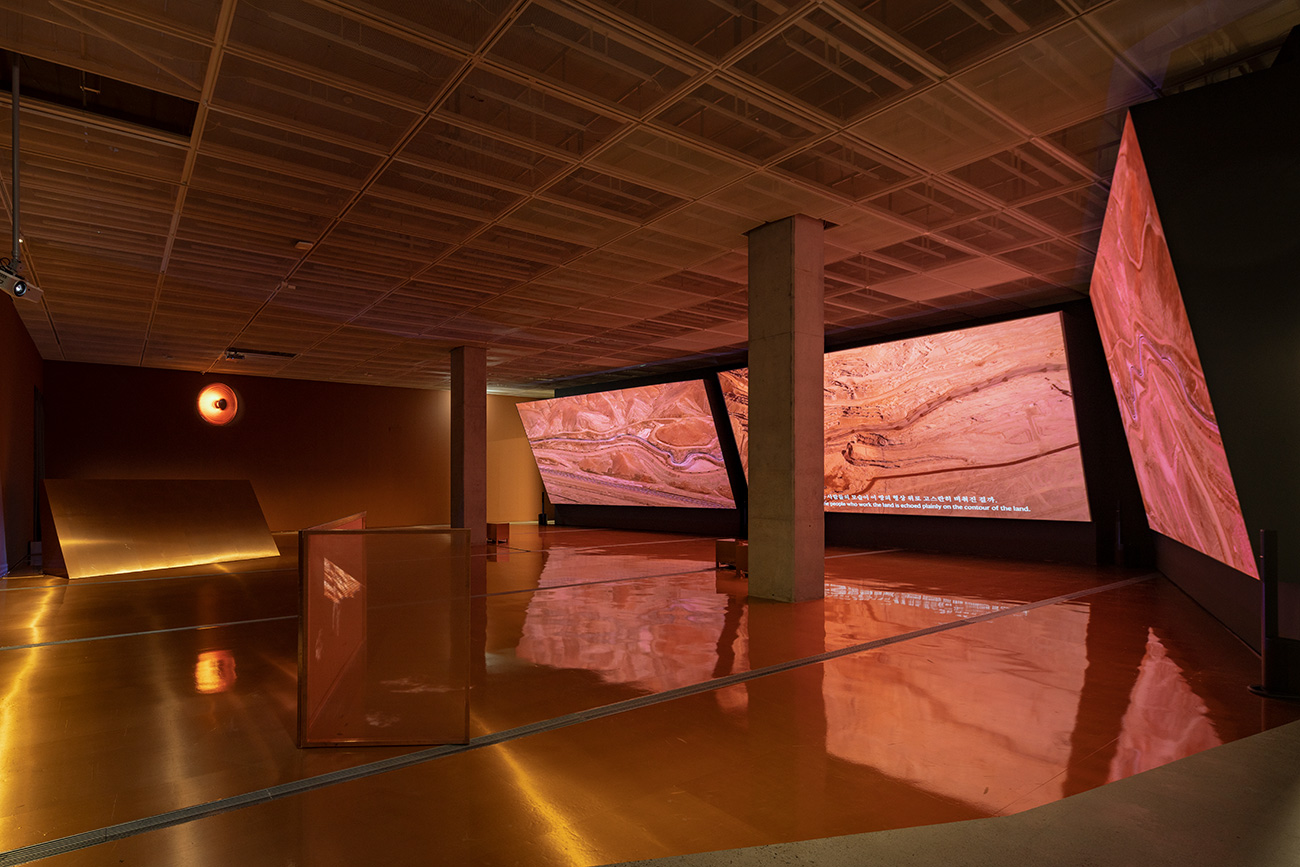
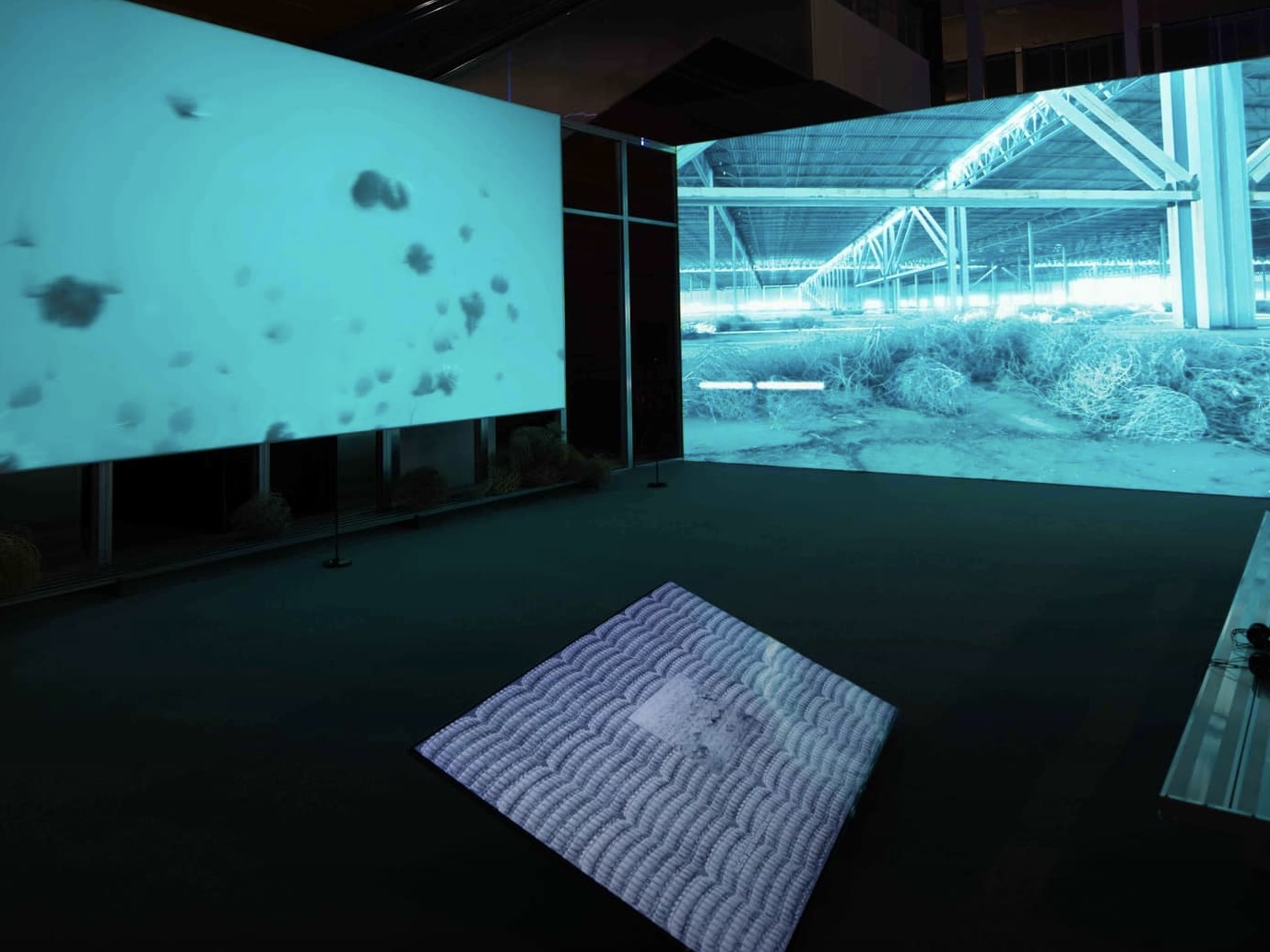
diametric opposition to this rule. A direct example of this is The
Promised Land, in which the exhibition hall is designed with machines
and technology against the background of a company producing vehicles through
beautiful, magnificent automation. The work prompted an awareness of just how
mechanical a space we find ourselves in in contemporary society. But the artist
goes further, also placing devices within the automated system that show videos
of extremely ordinary private lives, awe of God, and stories of ordinary
individuals able to live as protagonists in unfamiliar places. Here, she is
stating that even within automation and technology-oriented perspectives, we
must remember and maintain our human love, our intimate conversations with
those around us, and our private daily lives.
Choi’s works thus relocate the philanthropy and love of humanity
that cannot be produced or handled using automated systems, despite the highly
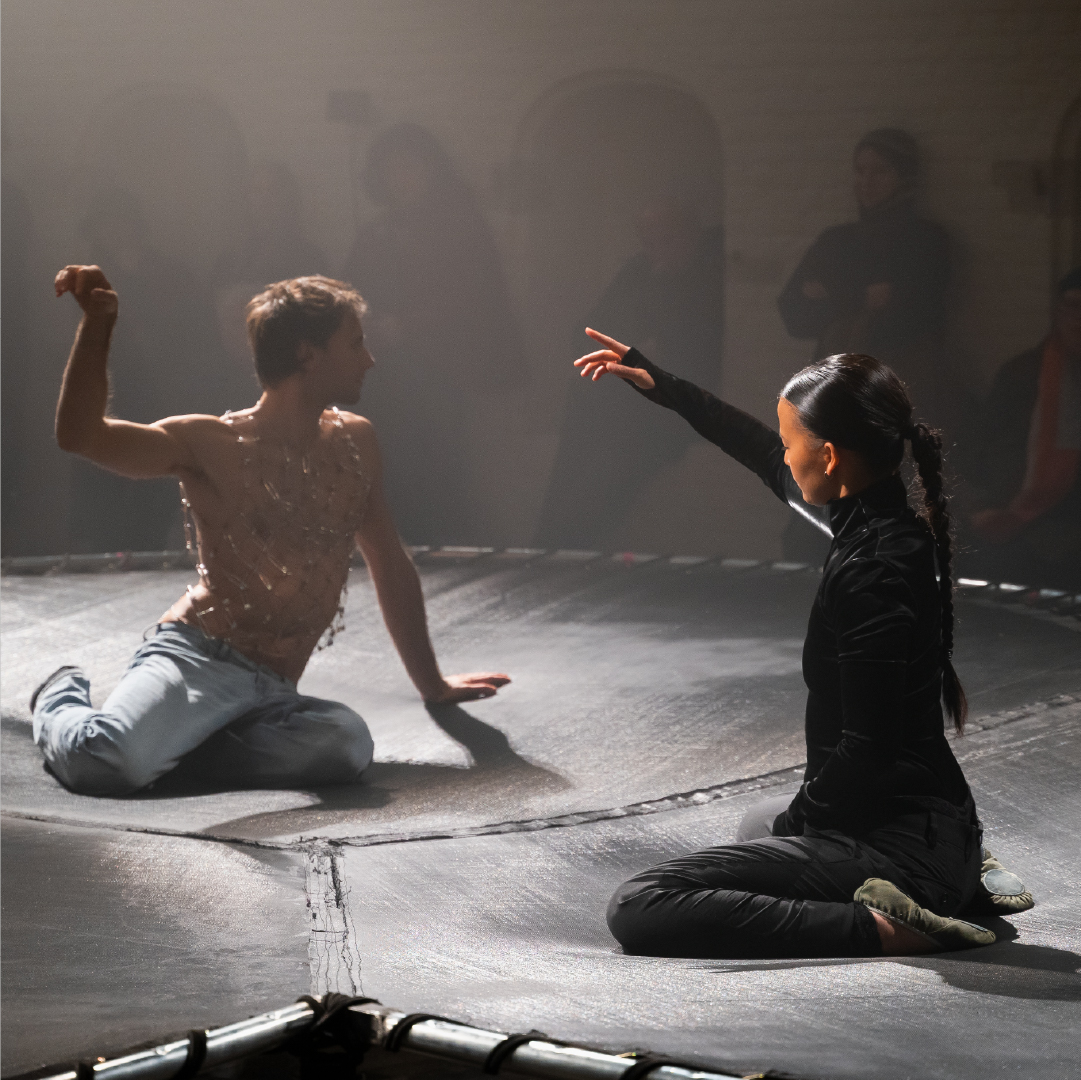
industrialized nature of our society. This line of work continues in FOR
GOTT EN. Conducted during her residency in Leipzig, this work was
created to record how women in their 70s, 80s and 90s narrated their memories
of God, faith and religion. It explored “spiritual migration,” a phenomenon
totally different to that of physical migration (via transportation). If The
Promised Land presented a situation of coexistence between physical and
spiritual migration, FOR GOTT EN shows a more
practical extension of the latter concept. The women who took part in these
interviews had moved from the other cities in Germany to Leipzig.
To the artist, spiritual migration includes issues of
re-transplanting or re-raising and re-organizing memories. Choi created a
dedicated interview space in which to focus solely on issues of God and faith
with the women. The space was produced as a mobile tool. Inspired by the form
of a Korean kiln, it was built as a place for recording special memories while
cut off from the outside.
Choi takes special situations and historical events that must be
directly confronted while standing firmly in the time and space of the present
as the central themes of her work. Using a variety of media, she evokes
problems that were not resolved in the past, or are impossible to resolve.
Summoned once again through her works, these problems are presented using
arguments on a completely different level to the narrative methods of history,
politics and sociology, though they deal with specific periods and events.
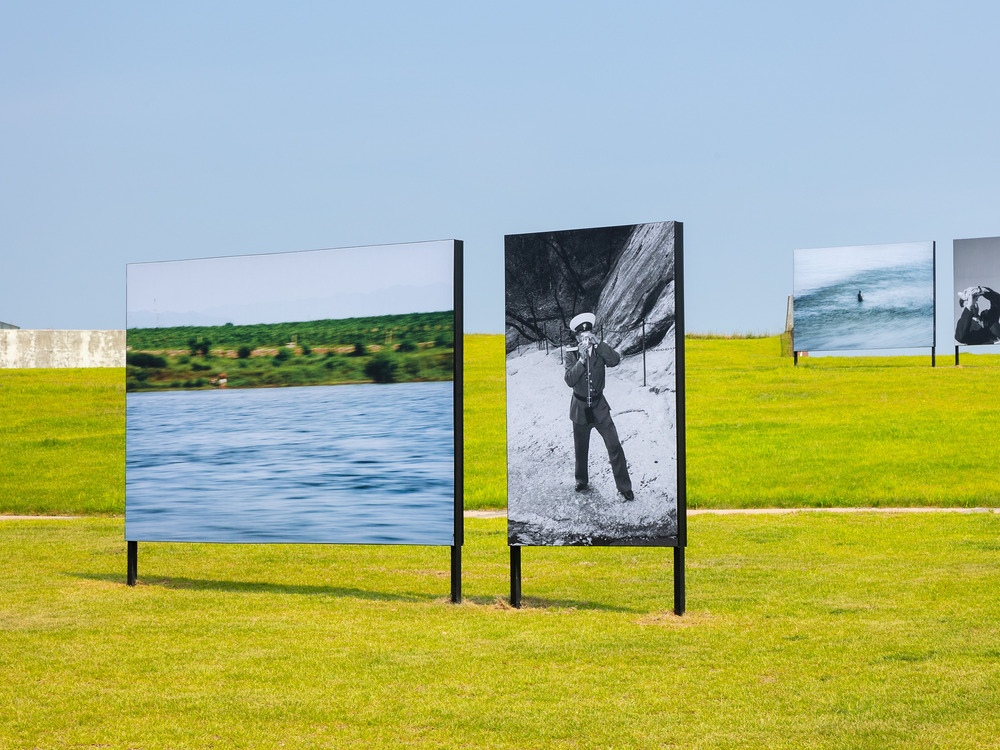
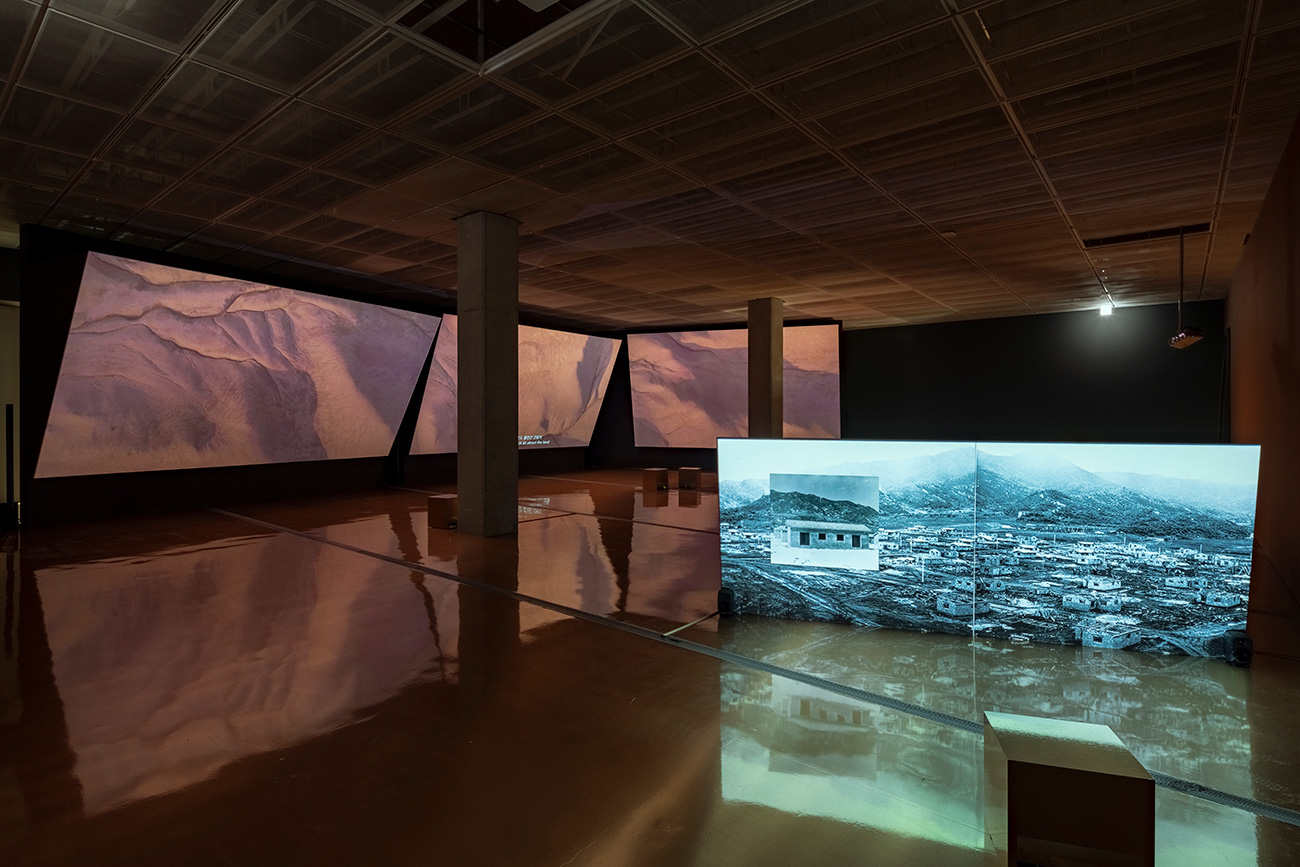
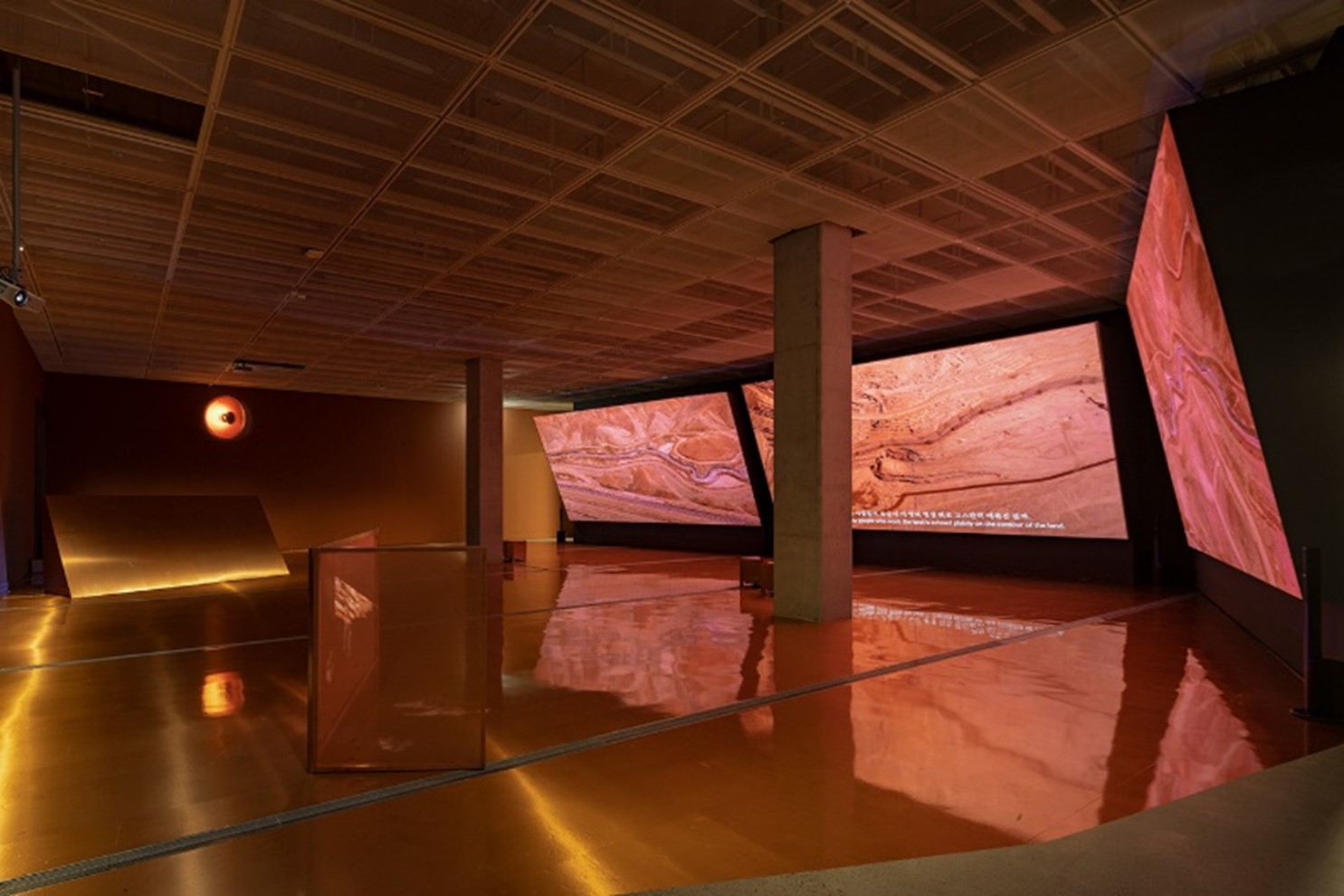
Examples include Yangjiri Archive, produced over
several months living in Minbuk Village, on the border of Korea’s Demilitarized
Zone (DMZ), and Myitkyina, a work on the subject of
comfort women. The themes chosen by the artist for her works—Minbuk Village and
its residents, comfort women, migration—are ones that remain unresolved in
Korean society. In this way, she uses a provocative yet restrained formal
language to express weighty themes from the hidden side of Korean society that
remain unresolved despite their importance.
Choi has devoted herself to two keywords, “migration” and “women,”
with a central focus on Yangjiri Archive. Indeed, the
topics of Minbuk Village and comfort women, in which she has immersed herself,
transcend the framework of sociopolitical discussion that forms around Korean
society. The artist does not fling her own thoughts into interpretations or
assessments that package and present problems on the hidden side of Korean
society, with its tortuous path of modernization including war and forced occupation
by Japan, as finished stories. And she takes a very intimate approach to
comfort women, a subject that can be regarded as taboo and covered up in Korean
society. I believe she aspires to create a cautious and intimate relationship
with her themes. In Yangjiri Archive, too, she highlights the lives of the
migrant women living in the village rather than focusing on the political
issues surrounding the village, such as the inherent division and military
boundaries of the area. Choi’s working method explores the intimate life
experiences and memories of individuals, while marking out the trajectories by
which lives seen from a microscopic perspective gradually become history.
Perhaps she doubts whether all of these things really need to become history at
all.
Choi plans her works so that the particular situations and events
within the themes she addresses do not become objectified within history.
Perhaps the very act of attempting such plans is the role of an artist
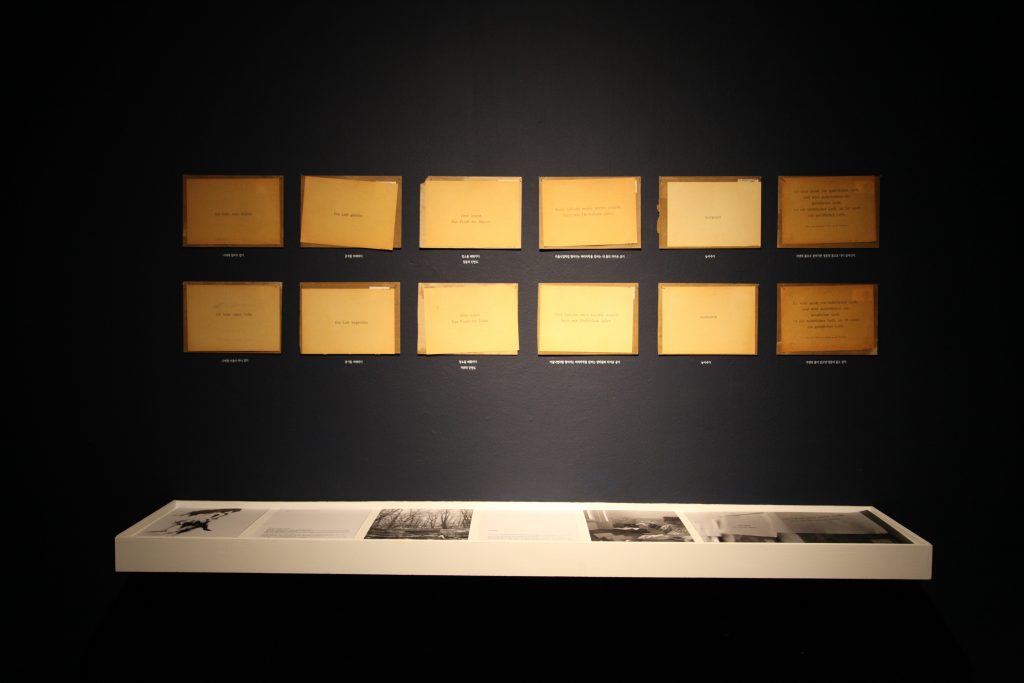
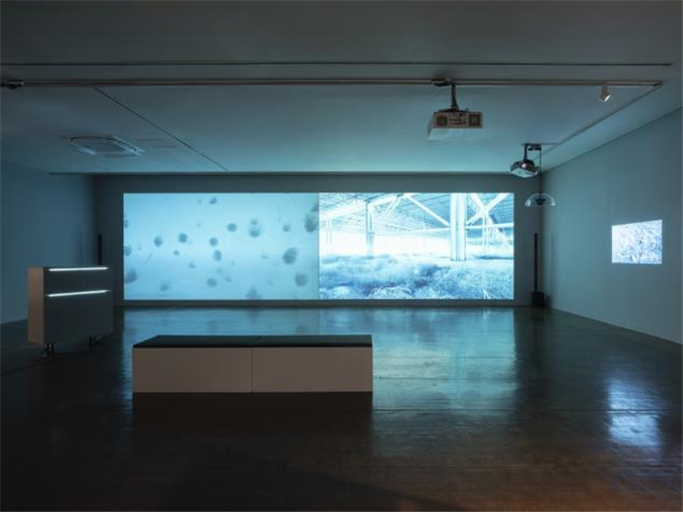
transforming history and women, incidents and people into works. Myitkyina is
the story of 20 comfort women forcibly taken to the Myitkyina region of Burma.
This work began with passenger records from the Maloha, a ship that sailed
between between China and India. History aims to represent records from the
past as factually as possible, but Choi’s Myitkyina takes
a diametrically opposed stance to this. Indeed, since there is not a single
witness and no extant testimony regarding the work, the artist derived her own
individual narratives from the characters in photographs. What skies would the
women in the photographs have seen in the unfamiliar land of Myitkyina? What
sounds would they have heard all day? Questions such as these build the
narrative structure of the work. Choi writes down “imaginary memories,”
meditating on the skies the women would have seen and the individual feelings,
such as fear of war, that they would have felt. Moreover the three women in the
video were each in Myitkyina for a different reason. Their various opinions on
how they came to be there are narrated: one was deceived into going; one went
after seeing a recruitment notice for comfort women; and one was illiterate and
had not been able to read the recruitment notice. Different opinions are thus
given for a single situation. This is also an aspect of explanations for
political situations, when a single incident is interpreted on various
different levels, or when totally different opinions are formed. And,
ultimately, the imaginary dialogues chosen by the artist were made possible
because they are the stories of comfort women who left no testimony. Our
problems, which exist, unresolved, despite Choi’s Myitkyina has
eliminated works that objectify the lives of individuals in order to elucidate
our own problems. She faithfully creates works that address how individual
narratives can become all of our problem.