Indirect
The interval makes contact; the interval encounters; contact takes place across an interval.
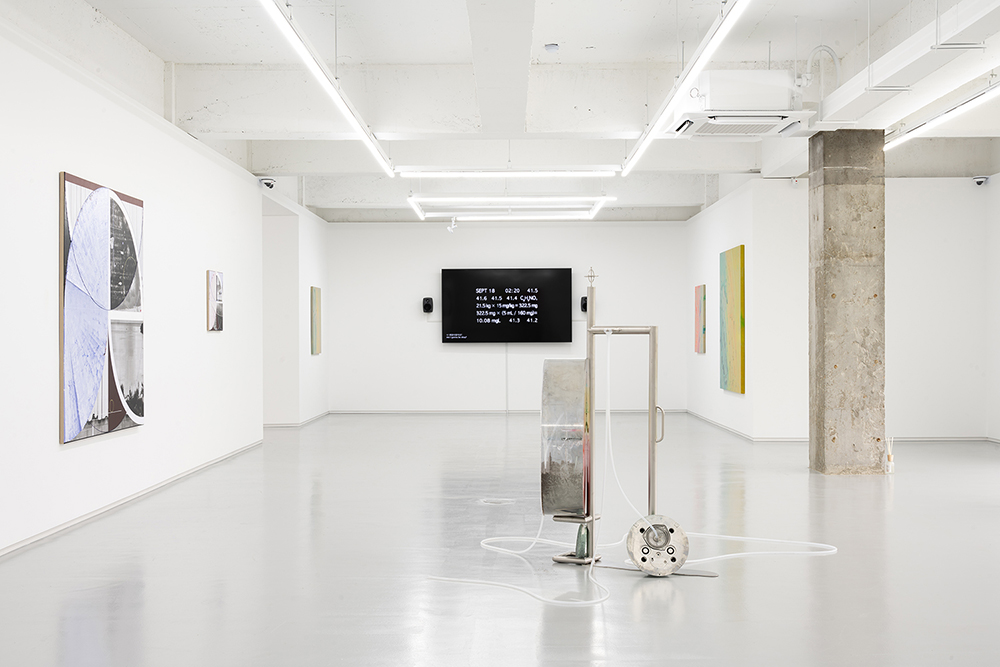
Daum Kim is interested in the “in-between,” or more precisely, in what happens within the “in-between.” In Part of You(2009), the artist seems to have focused on the material aspect of this interval. In this work, a dehumidifier collected moisture from the exhibition space and, after a certain period of time, released it back into the room.
The air filling the space between the visitors, the heat emitted from their bodies, and the breath they inhaled and exhaled were drawn into the dehumidifier and mixed together. This “materialized in-between,” produced through such mixing, was then dispersed once again among the people. Here, the “in-between” was collected, contained, and handled in the form of air and moisture.
This materialized interval—air or moisture—is physical matter and yet more transparent than almost anything immaterial. It is “almost invisible.” It is precisely because it cannot be seen that it can occupy the space between people, allowing them to come into contact and encounter one another. The artist seems to have been fascinated by the operation of this kind of “indirectness.”
Many of the characteristics that would later recur consistently throughout Daum Kim’s practice are already present in this work: the nearly invisible interval, encounters within that interval, and encounters that occur across it.
The “in-between” is an amorphous space-time produced where person meets person, object meets object, or object meets person. In that sense, no one and nothing exist within the interval itself. Yet the fact that no one and nothing are there does not mean that nothing happens. Numerous media and interfaces operate within it, claiming to connect people to people, and people to objects.
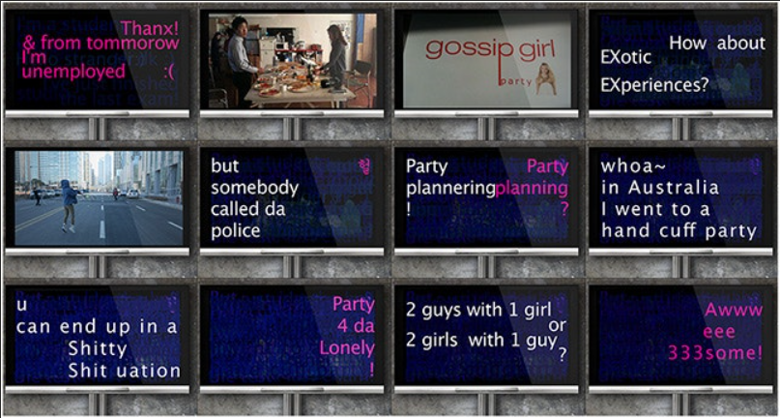
Daum Kim’s series of chat-based “flirting” works from 2010 to 2011 can be understood as experiments with media that operate within such intervals. Through these media, the artist reaches toward “someone” located on the other side of the in-between. In Rika(2010), he converses with a twenty-one-year-old nurse named Rika through a “compatibility” app; in Frenger(2010), he encounters “Frenger” through the app Who’s Here; and in Bella(2011), he converses for seven months with “Bella,” whom he meets through the “Cuckoo” app.
In each case, the encounter between the artist and these women takes place indirectly through chatting. What we actually encounter in a chat is not a body with facial expressions and a voice, but words filling the “in-between” between ourselves and an unseen other.
Disembodied text, which reveals neither face, gesture, nor voice, may actually heighten the tension of flirting—what expression might he or she make upon reading this message?—but even so, when we chat, we remain within the indirectness of exchanged text. (The chat work with Simsimi(2011), which automatically generates responses based on an accumulated database, functions in this respect as an ironic reversal of the other chat works.)
At the time of these chat works, the artist’s interest lay in the authenticity of indirectness. In an interview related to the works, he once described the positive potential of indirect communication through chatting in the following terms: because people do not meet directly, there is less need to embellish oneself, and no real reason to do so.
In this indirect mode of communication, where all that can be shared is speech—or more precisely, “text”—one can “reveal one’s inner self more easily and quickly,” and it can “bring people closer together.” In other words, for Daum Kim, “indirectness”—“an encounter within the interval,” or “an encounter across an interval”—offers the possibility of a new kind of relationship produced between selves that are not being deliberately embellished.
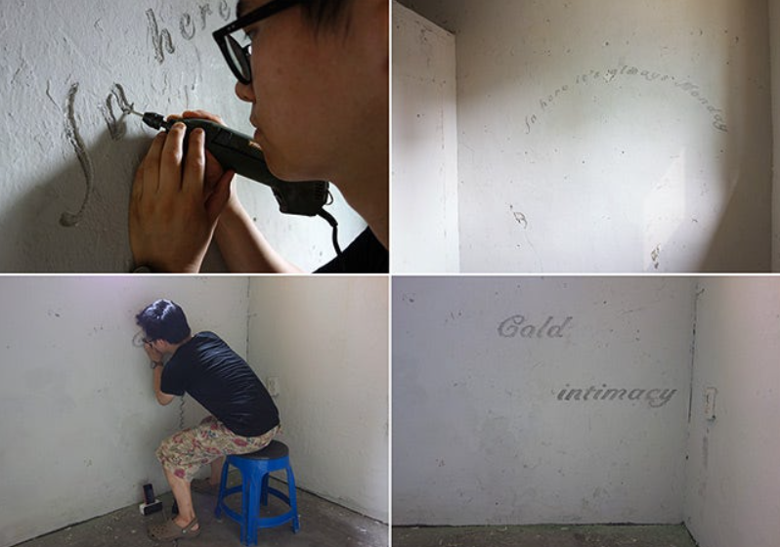
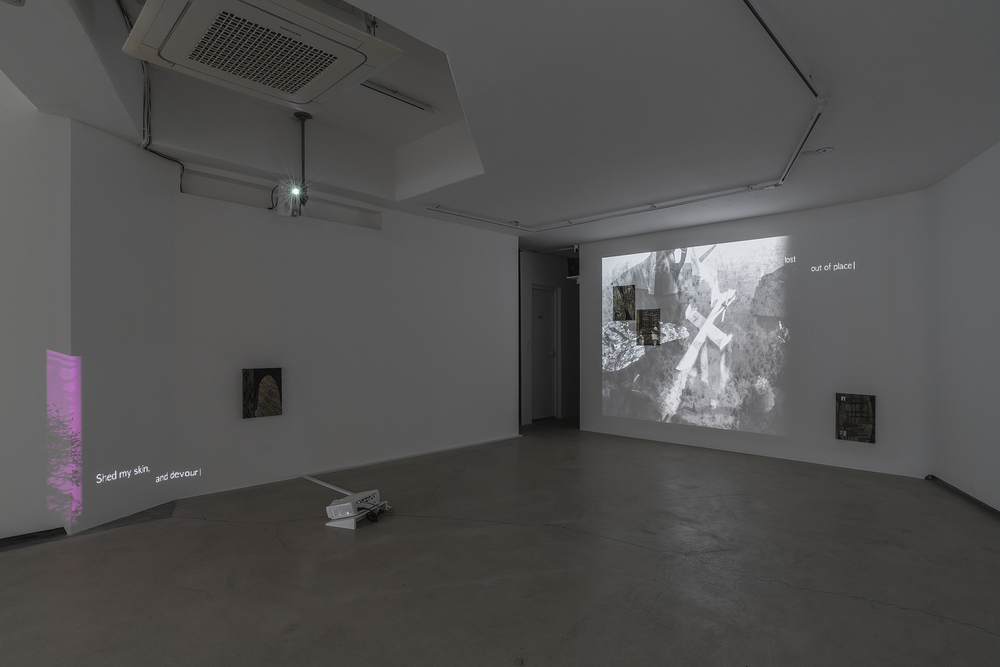
After these chat works, the artist seems to have realized that the most important condition for indirectness was to make himself like the air in Part of You: to remain “almost invisible” while occupying the space between people and objects. In It Is Always Monday Here / Cold Intimacy(2013) and IF SOMEONE HATES U FOR NO REASON GIVE THAT JERK A REASON(2014), the artist engraved text into the exhibition walls and then filled the incisions back in, making the words “almost invisible,” or only barely visible.
This “modest” (or perhaps “cunning”) gesture allowed his work to remain in the “in-between” among works by other artists that would later occupy the same exhibition space. Nearly invisible among other people’s works, it would remain there, repeatedly coming into contact with new audiences “across the interval.” Compilation(2014) follows the same strategy.
Composed from floor plans of exhibitions by other artists, the work places the artist between traces of exhibitions that have already taken place and audiences in the present. The principle of indirectness operating here is fundamentally no different from that in the two works mentioned above—It Is Always Monday Here / Cold Intimacy and IF SOMEONE HATES U FOR NO REASON GIVE THAT JERK A REASON.
The only difference is that, in other artists’ exhibition spaces, the artist’s “indirectness” operates between an exhibition currently taking place and its viewers, whereas in Compilation, indirectness operates between exhibitions that have already occurred and viewers in the present. Indirectness, working “almost invisibly,” enables other encounters and relationships to take place through it.
In the minimalist installation RSVP(2014), presented at Art Sonje Center, the artist pushed this notion of indirectness quite forcefully. Let us first look at the artist’s statement. It consists of two parallel texts. The first is written from the perspective of someone who has invited another person. Yet instead of being primarily concerned with meeting the guest directly, the host is more preoccupied with how he might reveal himself through the way he has arranged and categorized the space.
The second text is written from the perspective of someone visiting another person. Here too, the visitor is less interested in directly meeting the host than in “discovering the owner’s life” through the classification of books on the shelves, photographs on particular pages, Post-it notes, underlined passages, annotations, and receipts accidentally found between pages. In both cases, what matters is not the direct meeting between host and guest, but the experience of encountering the space—the “in-between”—that they have organized and categorized.
“Classification inevitably has its own linear or nonlinear rules,” and “seven identical books can tell different stories depending on how they are arranged and where they are stored.” The spaces they have organized and classified therefore “listen more” and “tell more stories” than the two people meeting face-to-face.
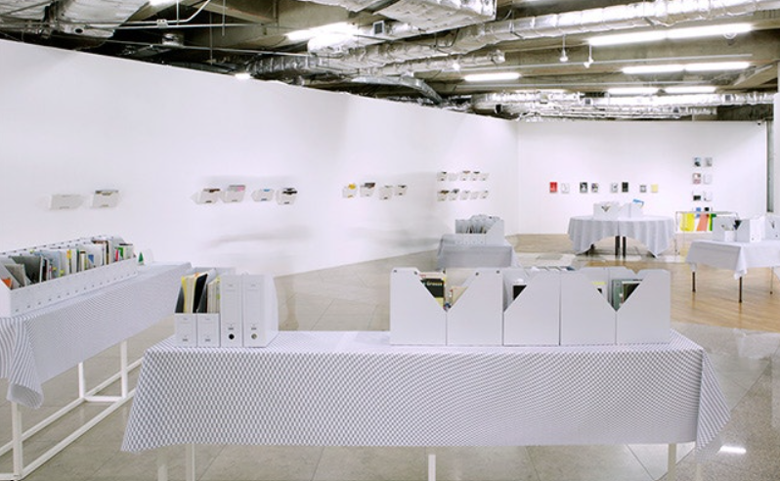
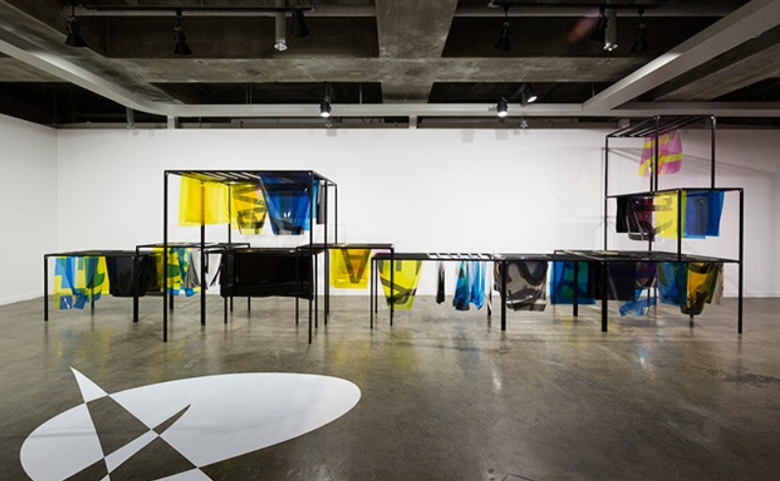
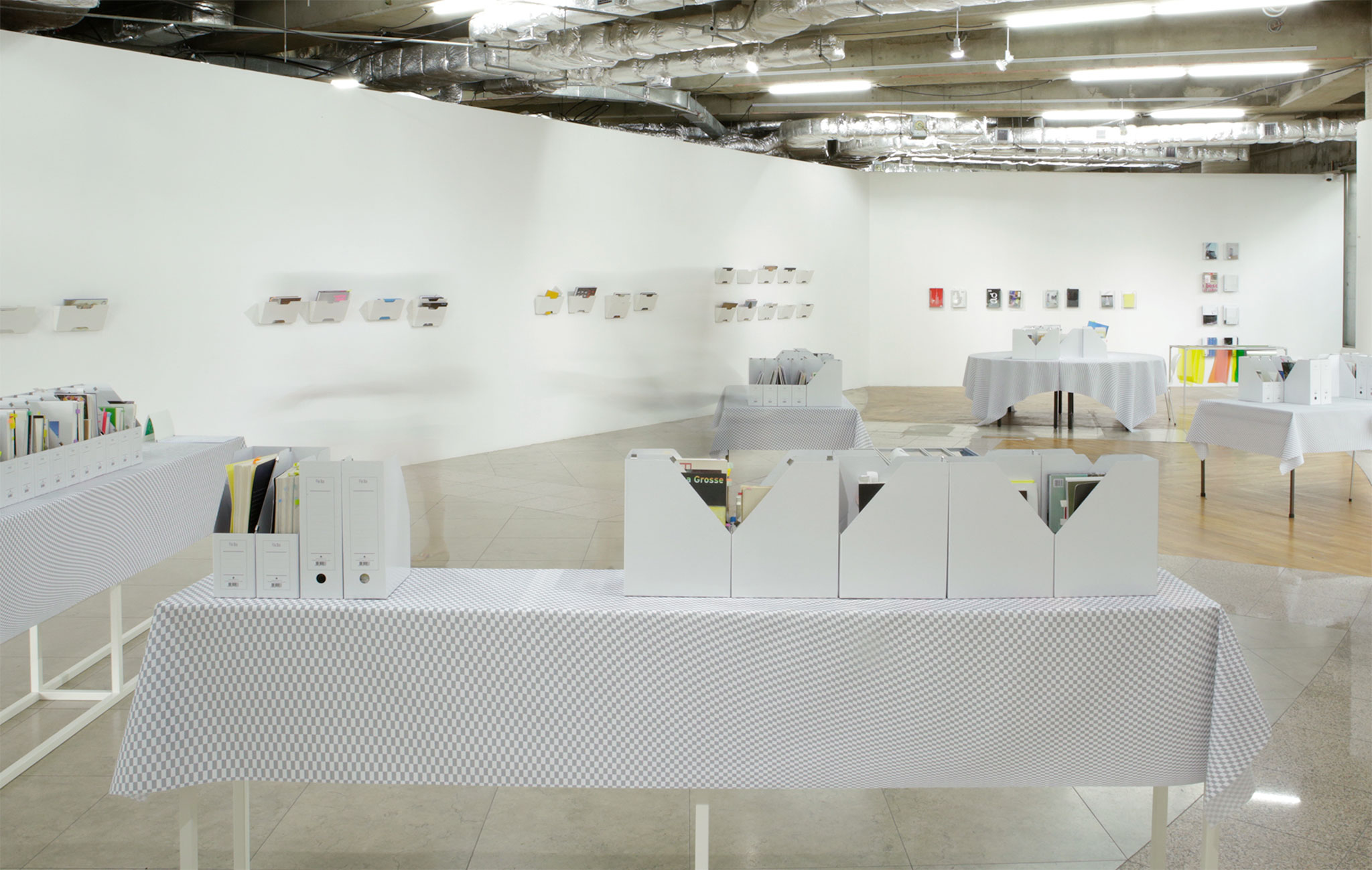
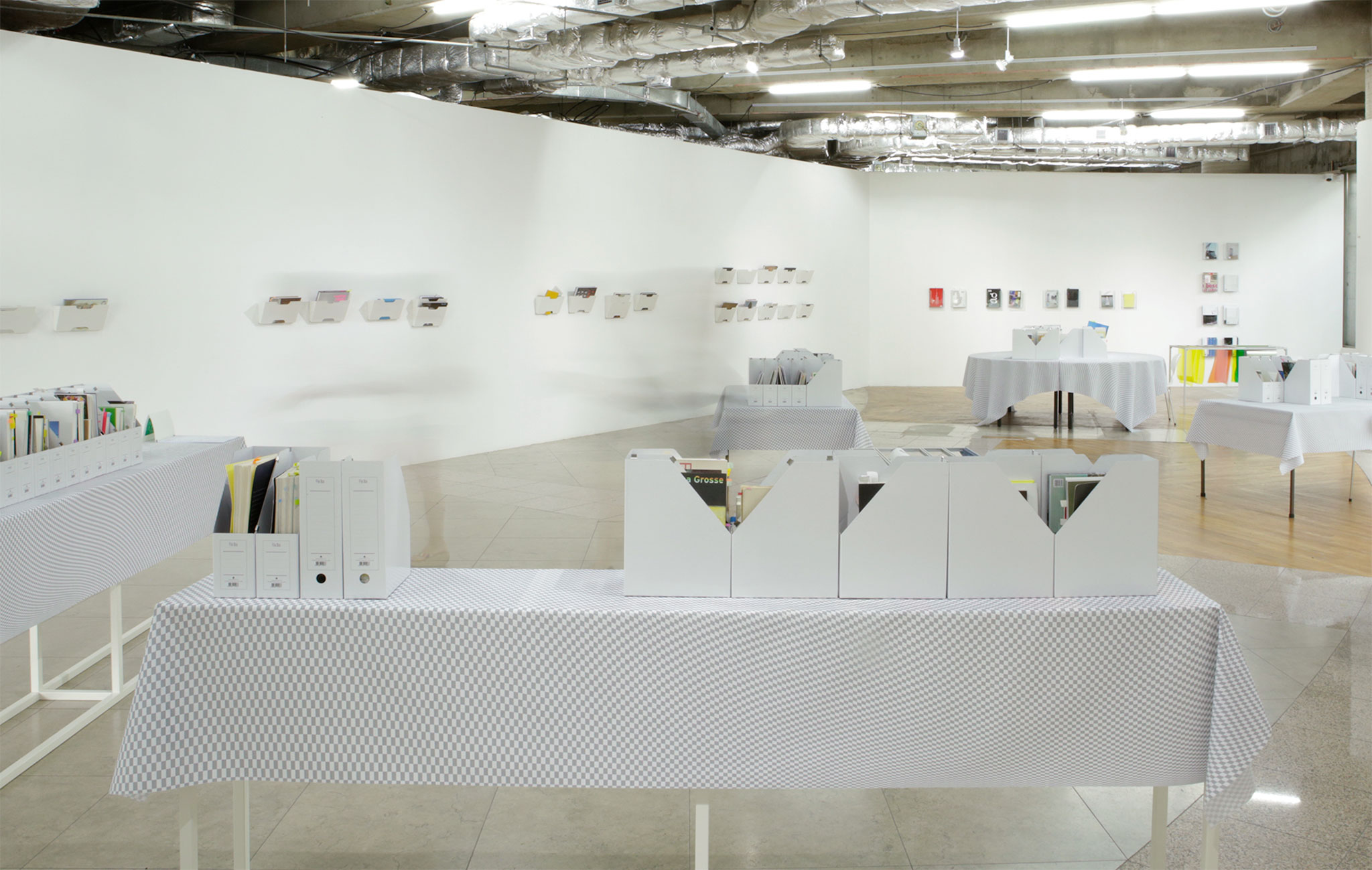
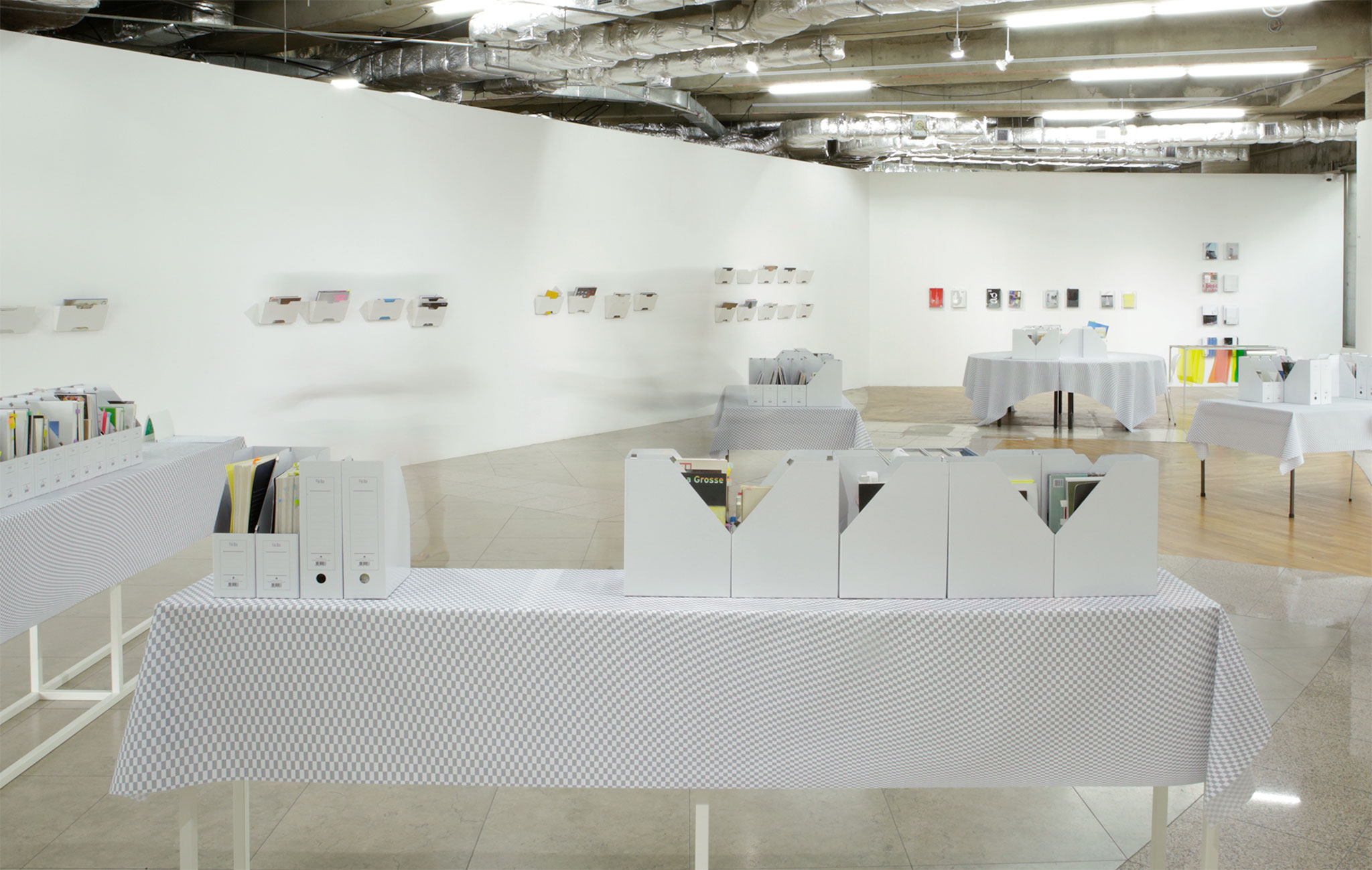
In this exhibition, the artist neatly organized books and materials related to hospitality inside file boxes placed on several tables. Post-it notes were attached between the pages of books and magazines, while cards containing messages were inserted between the pages of certain books. In the accompanying works Merging Orders, Dubbed Orders, and Reverberating Orders(2014), colored films and posters were suspended across aluminum profiles “according to a certain order.”
In other words, the exhibition was conceived as a space of indirectness, a place where intervals meet. Here, the artist reveals himself only through the materials he has categorized, the Post-it notes he has attached, and the notes and cards inserted somewhere among the books—he appears “almost invisibly.” Only the faint order he has imposed upon these objects “barely” speaks of the artist. In this respect, the work follows the strategy of indirectness he had been pursuing with remarkable fidelity, almost to a dangerous degree.
Why dangerous? For viewers who discover the Post-it notes attached by the artist and the cards hidden among the classified books and magazines without necessarily experiencing any sense of being “welcomed”—there was not even a chair to sit on in the gallery—the artist becomes at once excessively revealed and excessively concealed.
We understand that the artist does not place great faith in the authenticity of direct encounters, but did he not, after all, invite viewers into this space of indirectness through the exhibition? The artist’s statement that calling or meeting someone is both “an act of revealing the version of oneself that one wants to show to another person” and, simultaneously, “an act of concealing the version of oneself one wishes to hide” can easily turn into cynicism.
Hidden within this proposition is an ominous trigger capable of destabilizing even his earlier belief in the authenticity of indirectness. If calling or meeting someone is nothing more than an act of showing the “self one wishes to reveal” while hiding the “self one wishes to conceal,” and if the “tension” of inviting or being invited overwhelms any sense of “anticipation,” then is the very idea of “RSVP,” which presupposes the expectation of a reply, not impossible from the outset?