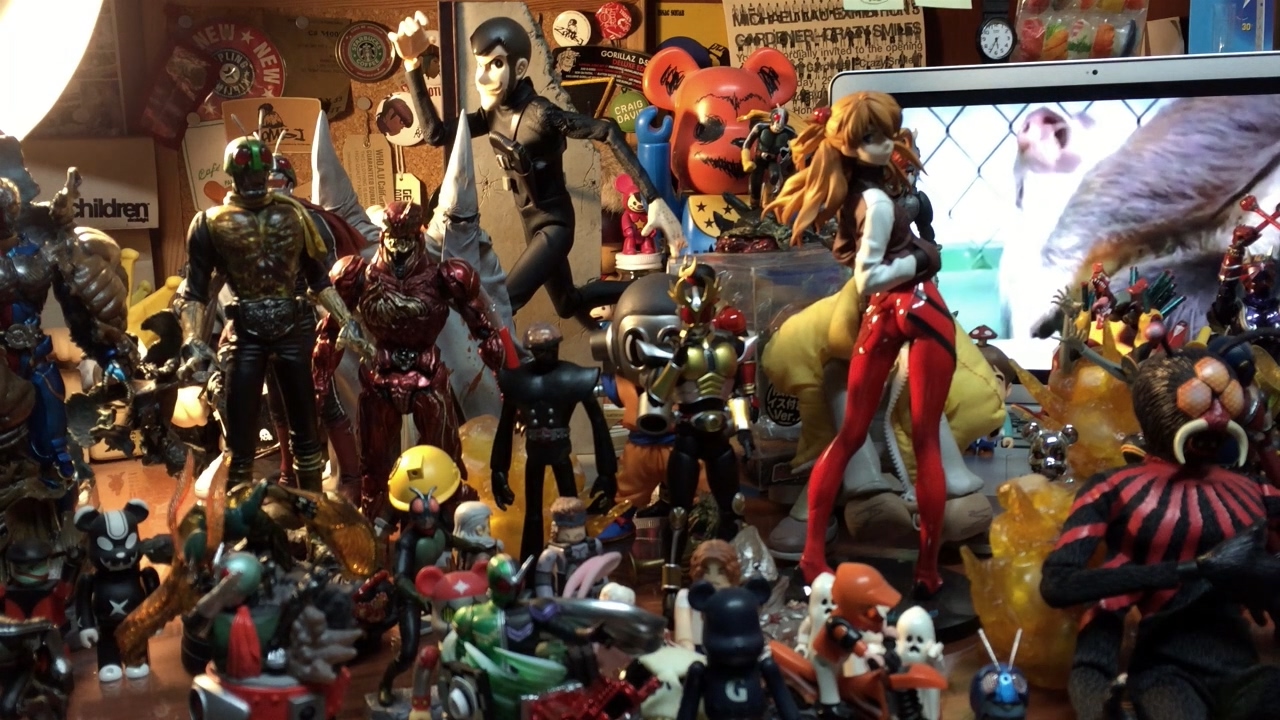
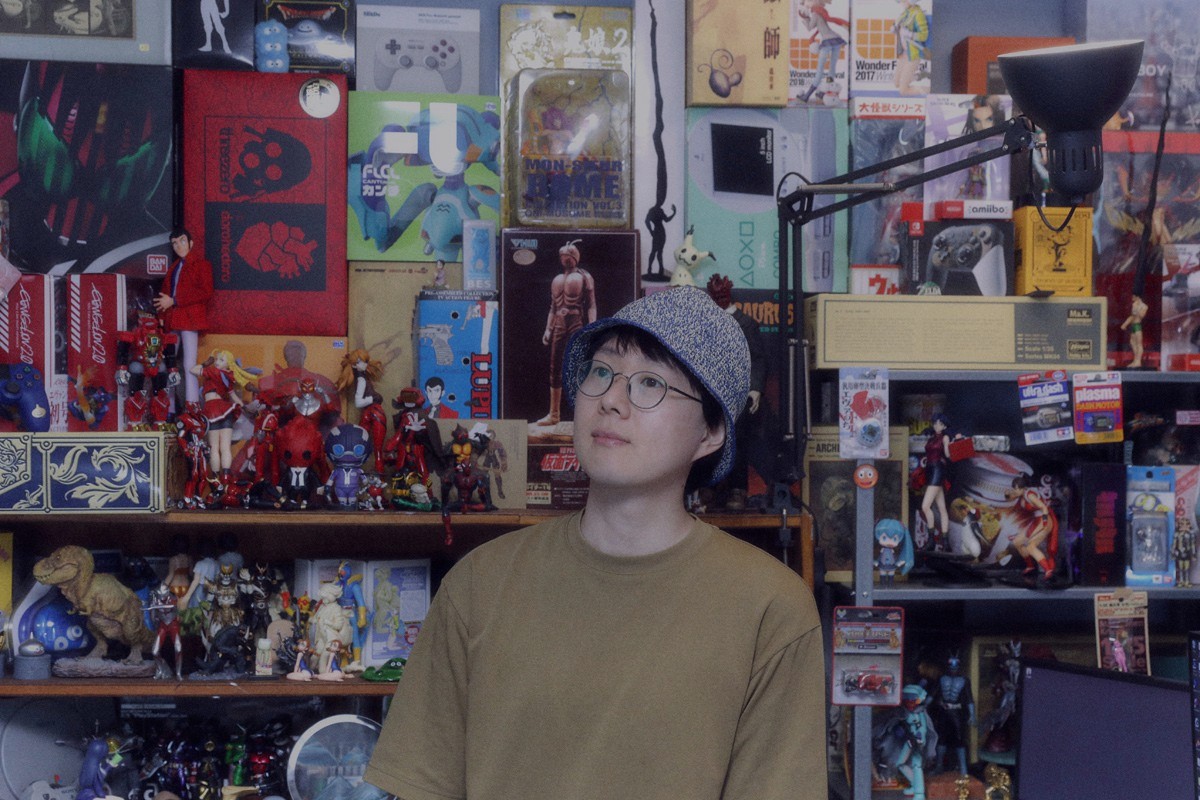
There are semiotic landscapes built by particular individuals around an object of affection, and there are blind yet beautiful passions that make possible their endless tangible and intangible expansion. For Don Sunpil, that object has long been the figure, and through his distinctive meticulous and persistent spirit of inquiry and affection, he has expressed in his work analytical diagnoses and serious critiques that go beyond the realm of hobby.
For the artist personally, figures are objects of individual affection, but as subjects of his work, figures function not so much as representations of particular objects as tools for analyzing socially agreed-upon semiotic phenomena. The exhibition 《Industrial Bishōjo》 operates within the same category, this time addressing the driving force behind the production of “bishōjo” figures from the perspective of the producer.
This differs from the artist’s previous exhibitions, which dealt primarily with semiotic phenomena from the consumer’s perspective. Here, he imagines the peculiarities and driving forces of an industrial structure in which bishōjo figures—produced more frequently than any other fictional character through an inexplicable, almost blind passion, while still operating according to the principles of supply and demand within the capitalist market structure—are generated and transformed without interruption or end, and presents the impressions and reflections derived from this imagination.
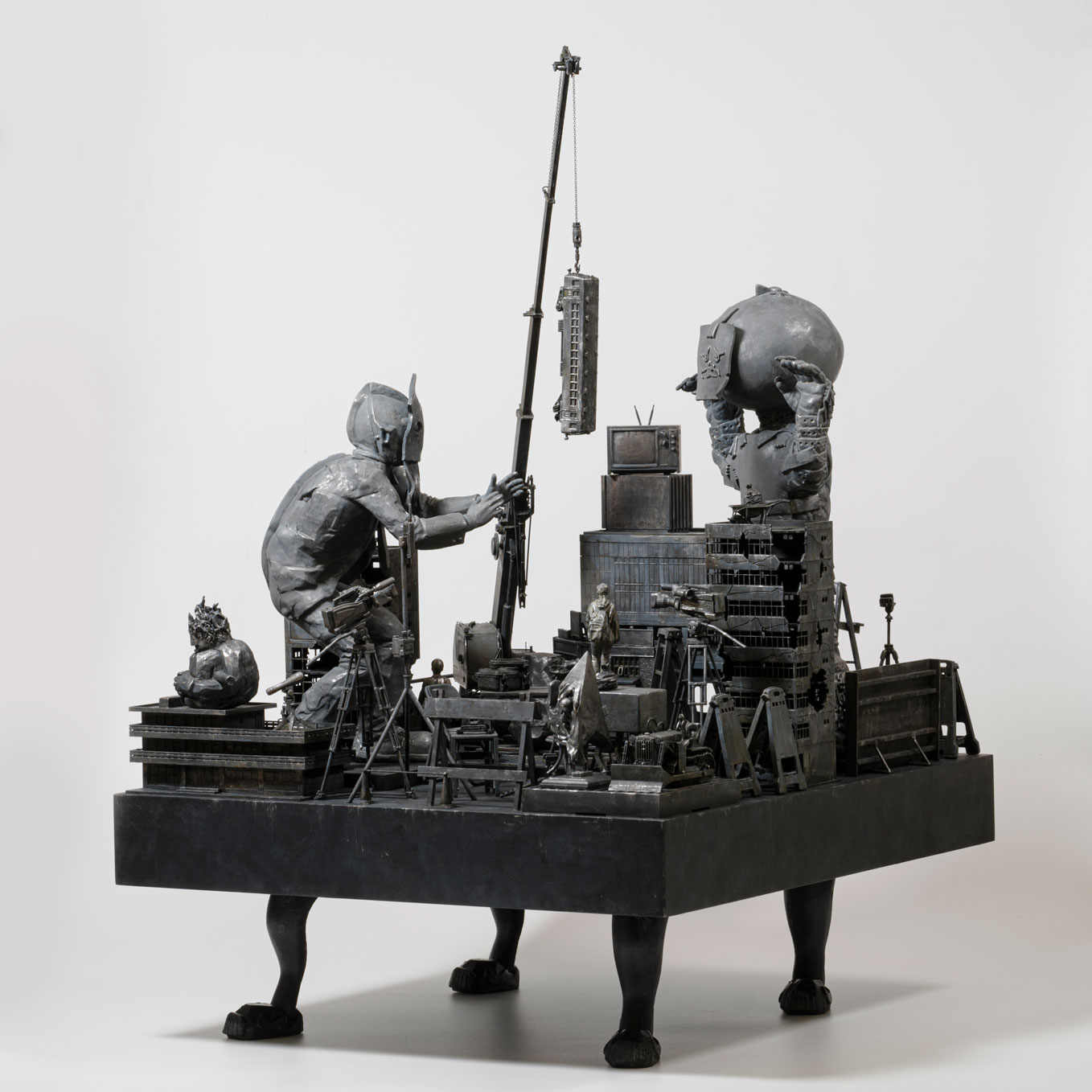
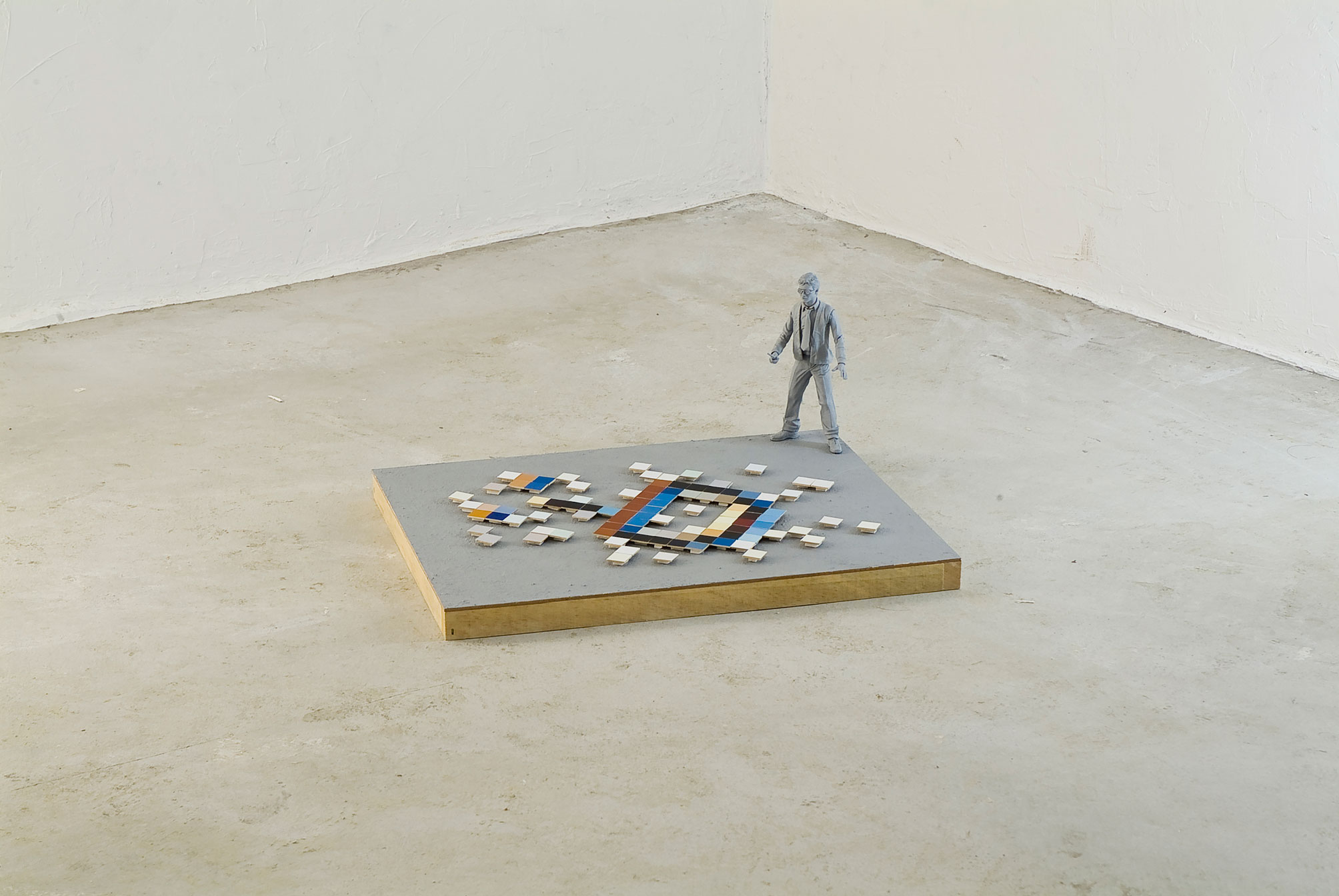
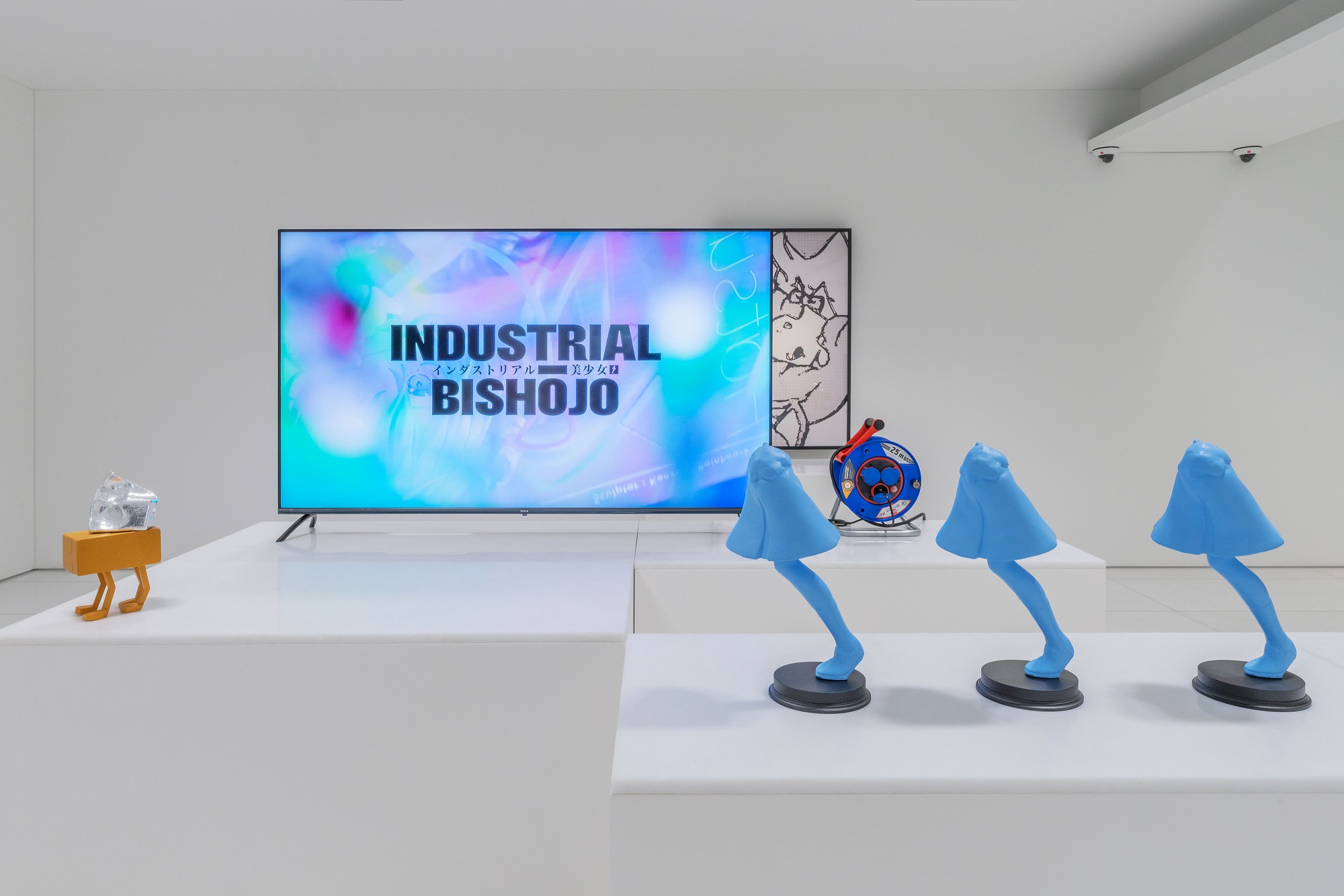
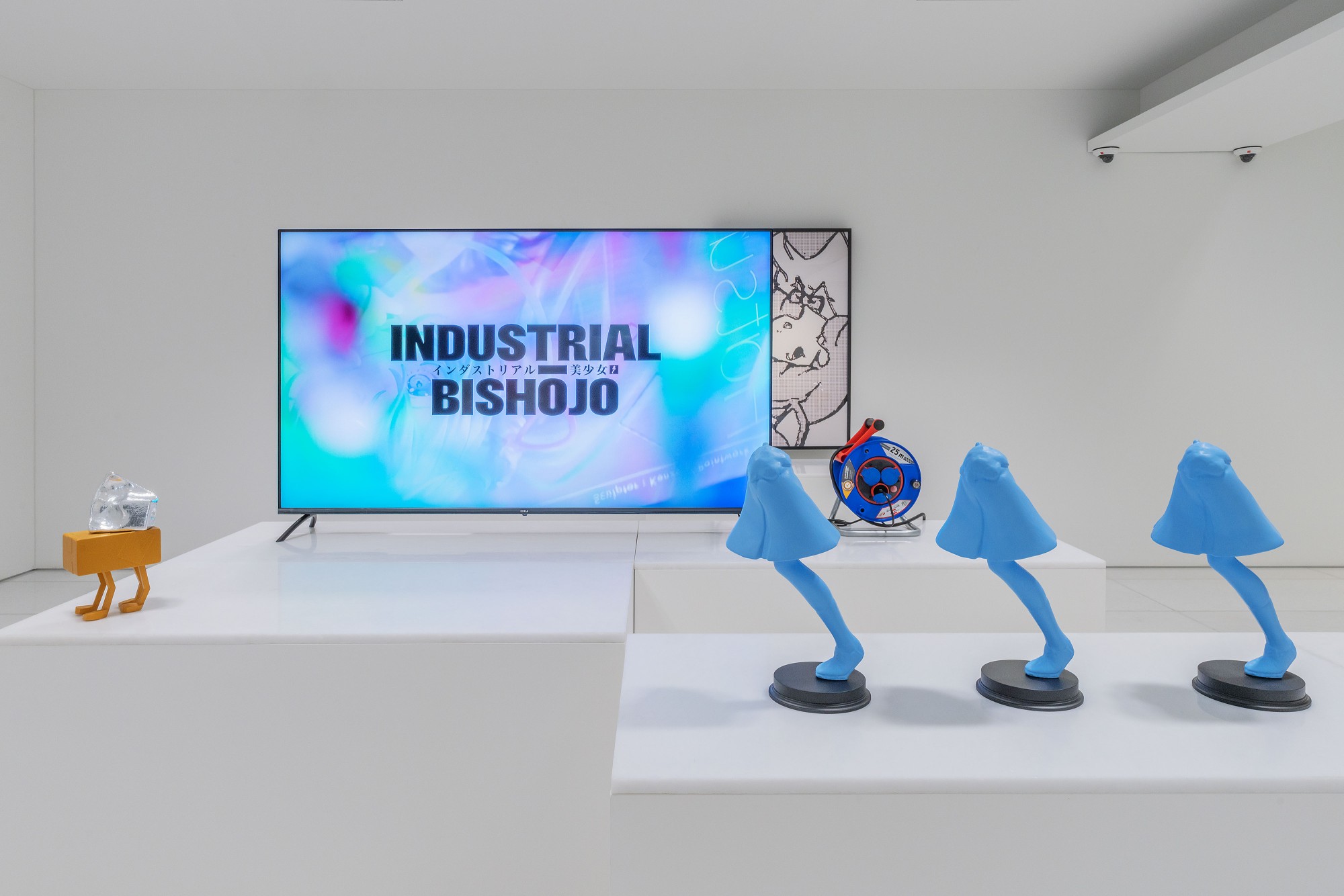
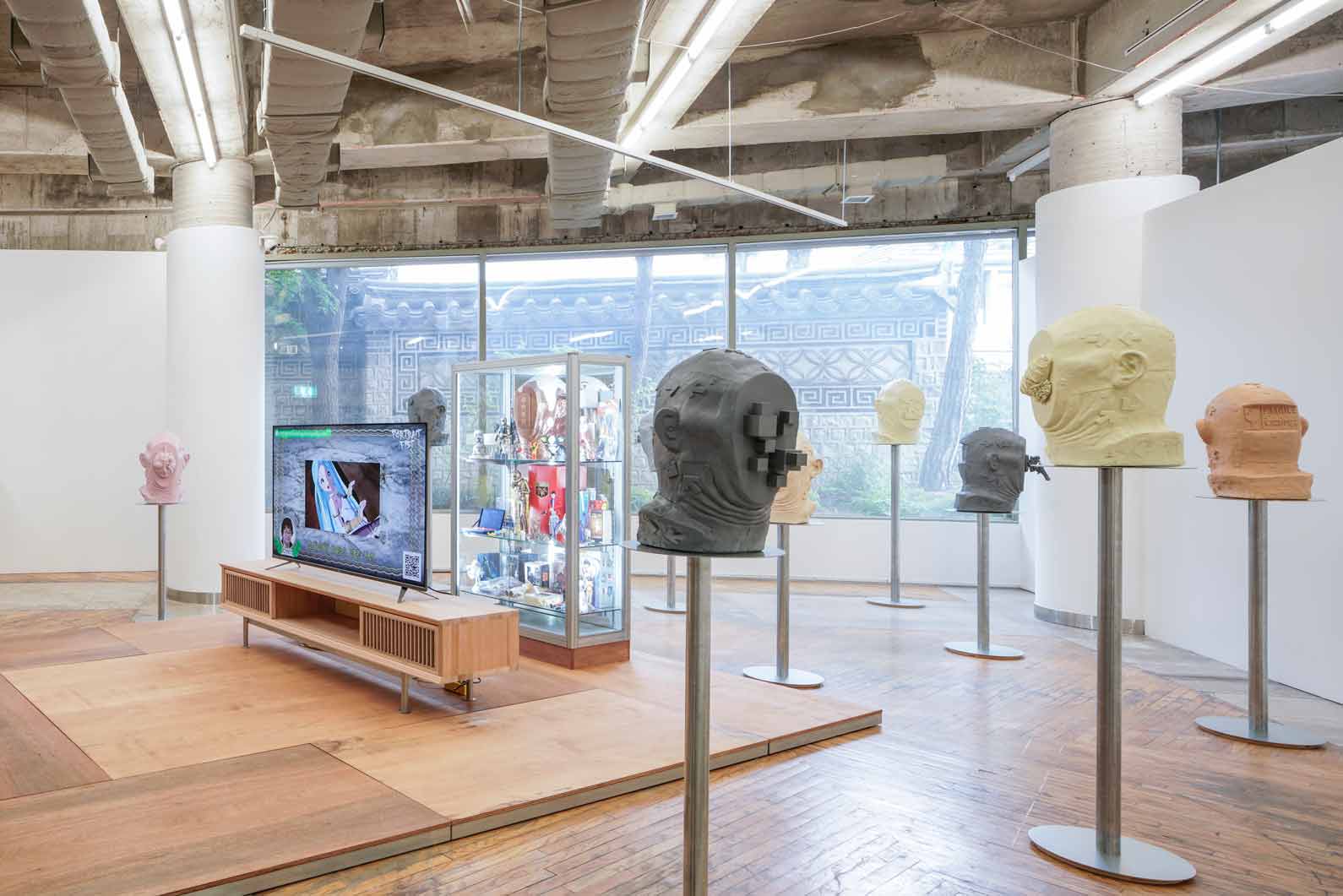
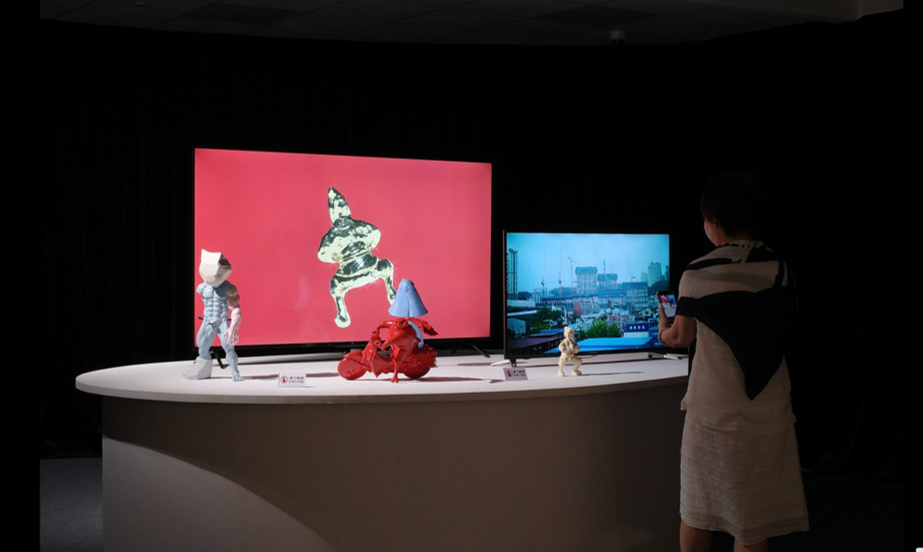
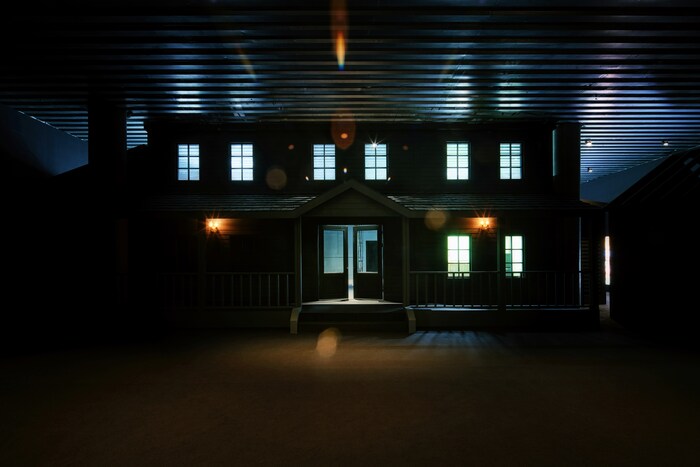
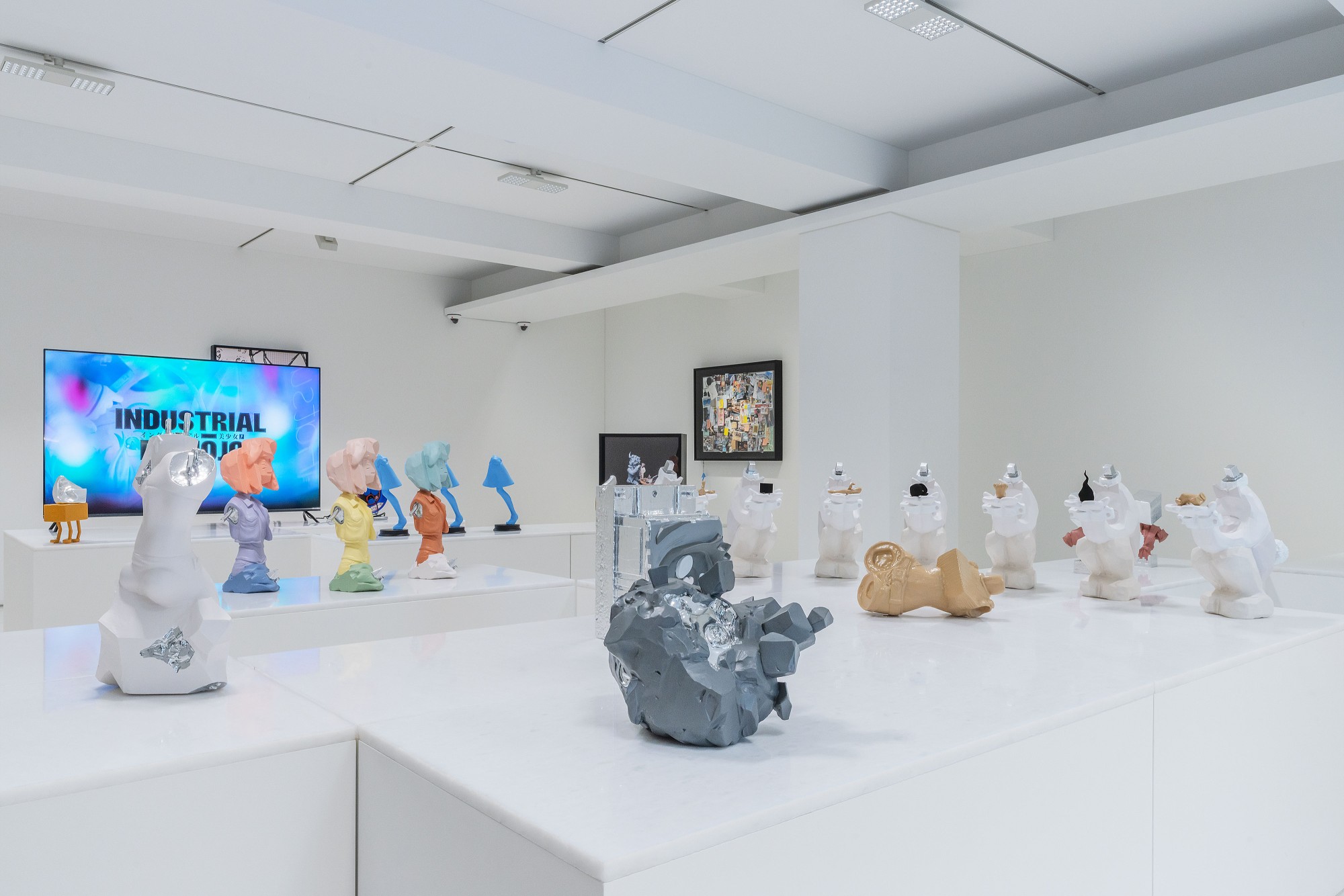
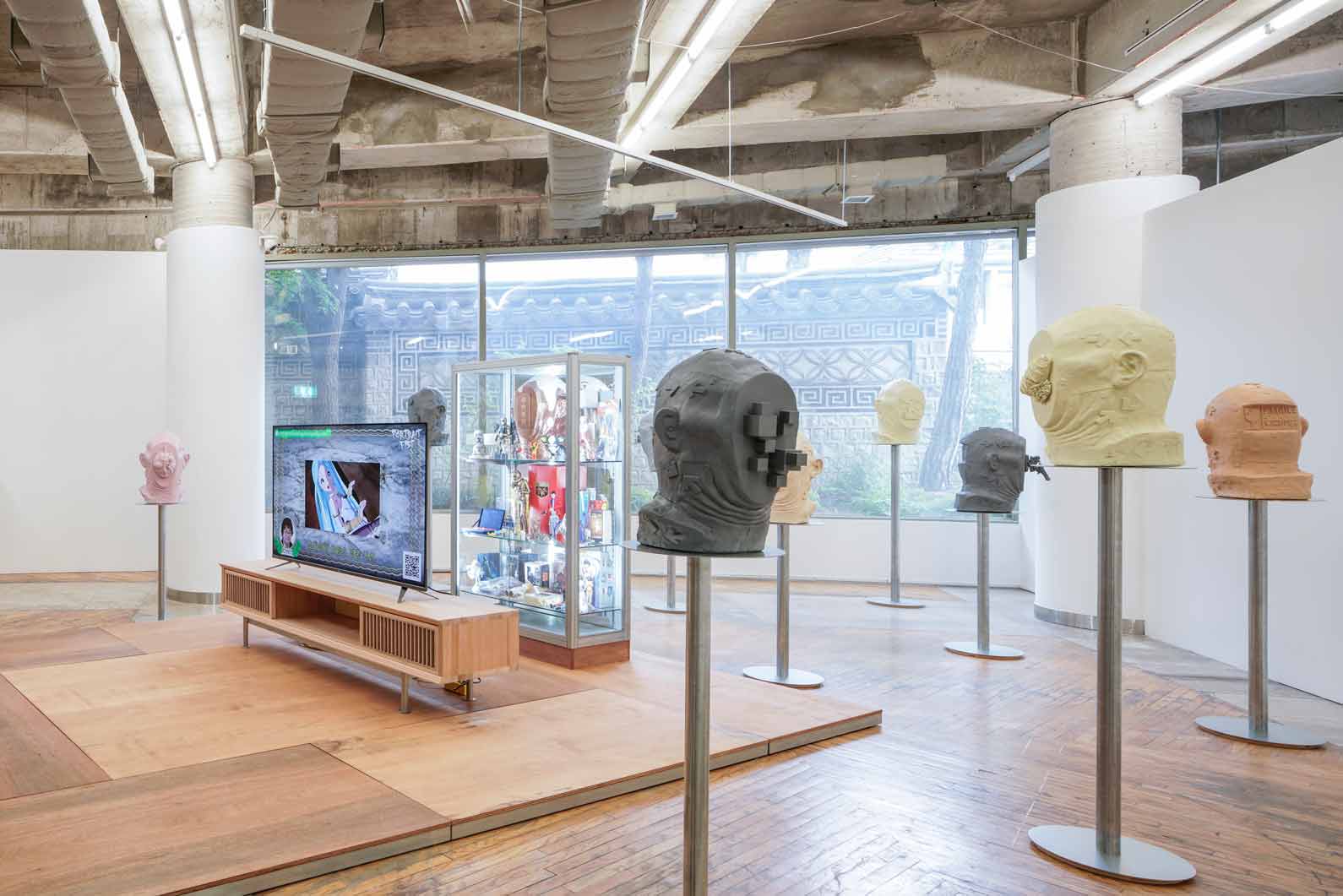
The exhibition is broadly composed of one video work, twenty-four sculptures, and four photographic works, including a photograph of a model of a figure sculptor created by the artist (while the original sculpture itself is not exhibited) and a design drawing for a bishōjo figure. The artist considers the video work in the exhibition to be the original animation and the sculptures to be figures derived from that original.
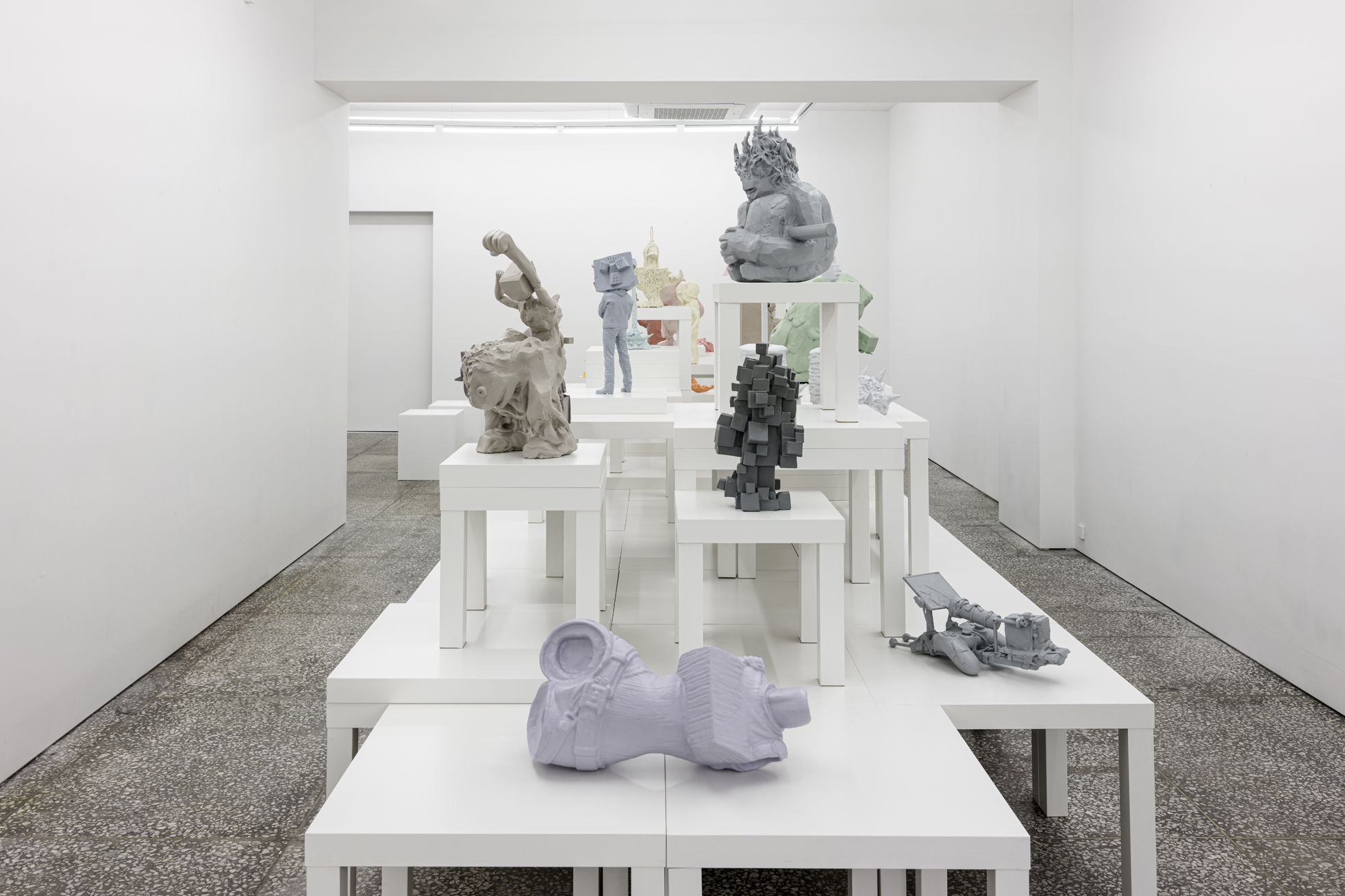
Occupying a place among the sculptures almost as though it were one of them, the video work prompts viewers to anticipate the complementary and organic relationship between the two. Each work is installed on a pedestal structured as though part of the gallery floor itself had risen upward. This structure not only lends the space a virtual quality but also cleverly utilizes the gridded floor to create a visual image resembling something that has broken through the grid of a comic book, continuously evoking questions about the relationship between the original and its derivatives.
The video work, functioning as the original animation, observes the thoughts and words of its protagonist, Engineer J, from a third-person perspective. J is a professional designer who makes a living designing molds and figures. One day, he receives a prototype sample from an unidentified prototype sculptor and must prepare it for mold production, but because the prototype does not conform to standard specifications, Engineer J begins to agonize.
Caught between aesthetic preferences and industrial considerations, he tries to change the methods he has repeatedly followed, only to accept them again. He then falls into a strange cycle in which he continues to become frustrated as he considers the balance and fractures that these habits may produce, while nevertheless persisting with them. The video concludes with Engineer J lost in thought, continuing to worry that although he retains the existing style, such habitual methods inevitably lead to a simplification of form.
The first image in the video is footage, shot in April of that year, of a bishōjo figure that is soon to be released, while the final image shows the figure being preordered online in footage shot the previous year. The video is edited in reverse chronological order, but without viewers necessarily realizing this for themselves, they are unknowingly trapped within a nonlinear temporal structure by the contradictory expression at the end of the video, in which Engineer J drinks coffee while reminiscing about the future.
The passion of preordering a figure after seeing only an image rather than the original and then waiting months for it, and the fervor of producing bishōjo figures that are continually resurrected anew from animations made long ago, lead us to imagine prototype sculptors and passionate figure enthusiasts endlessly repeating themselves within a twisted space-time in which beginnings and endings eventually lose their meaning.
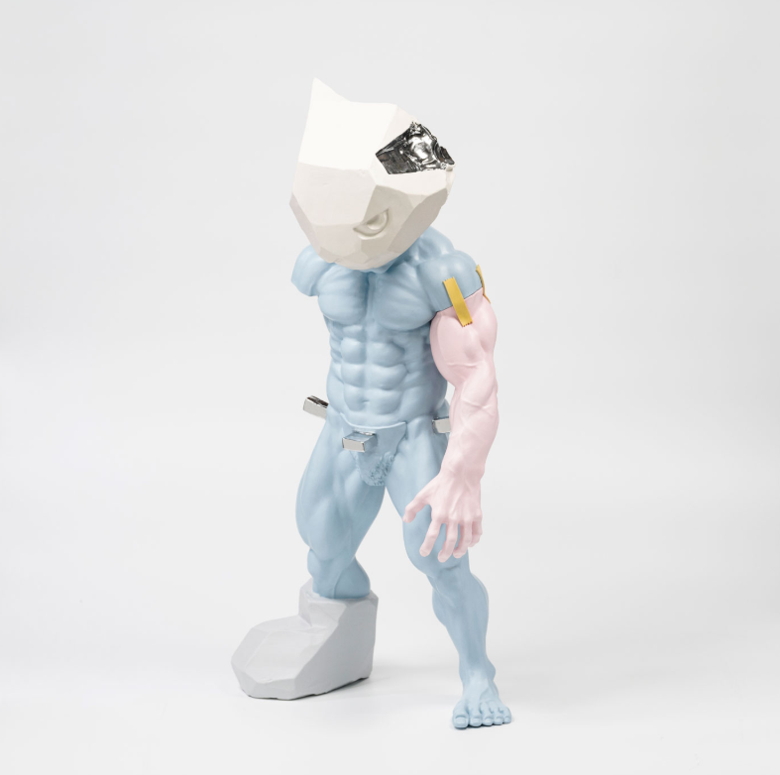
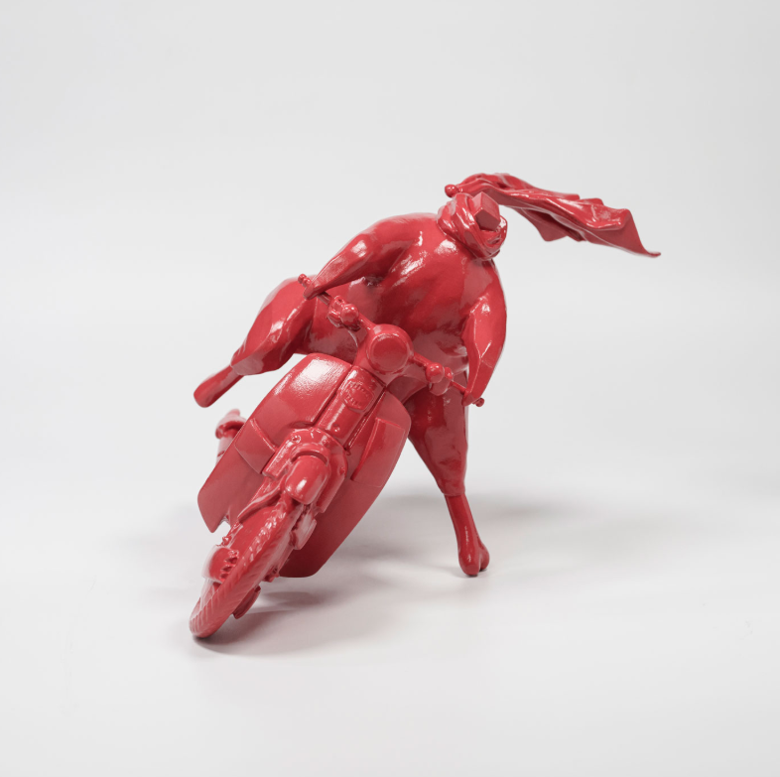
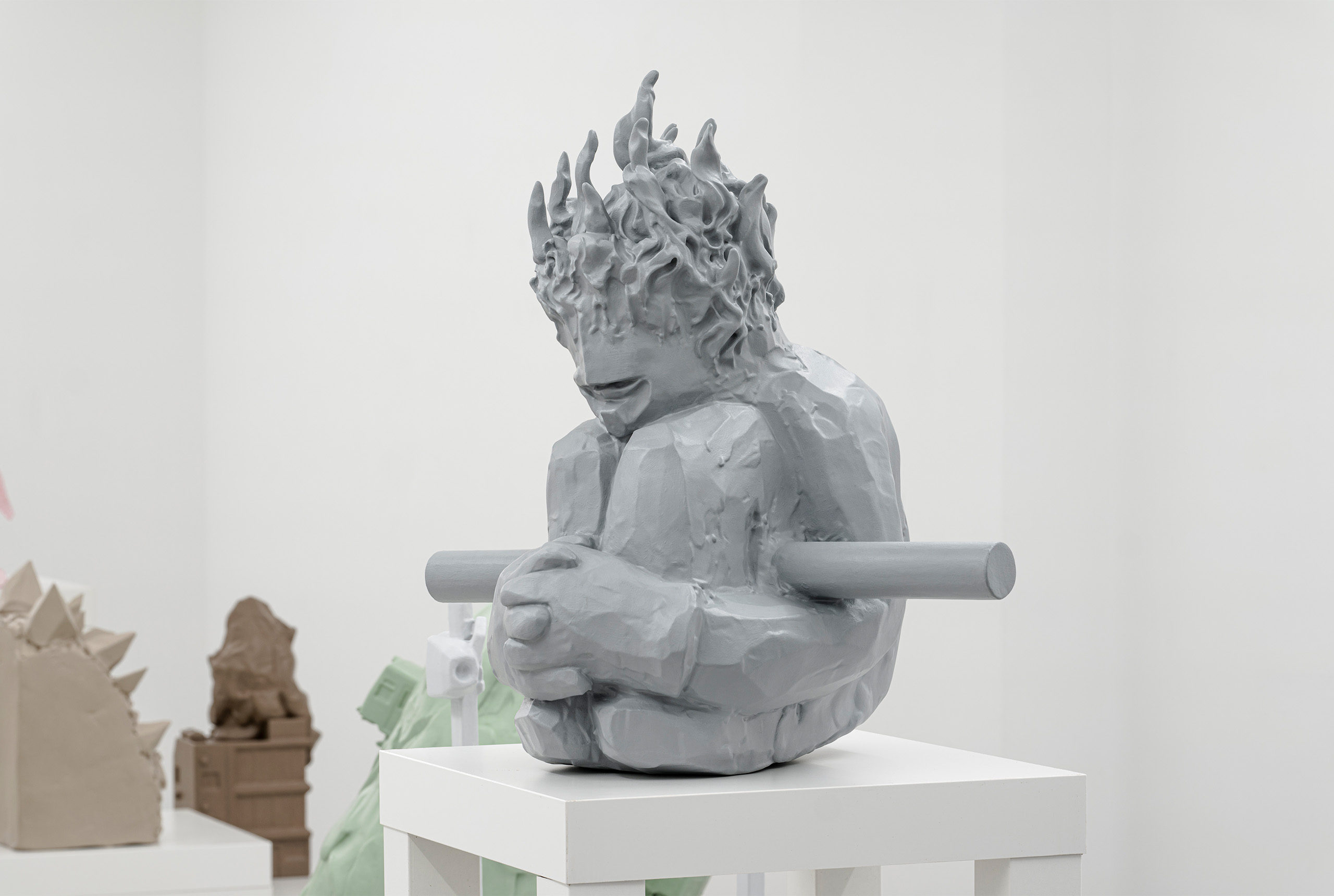
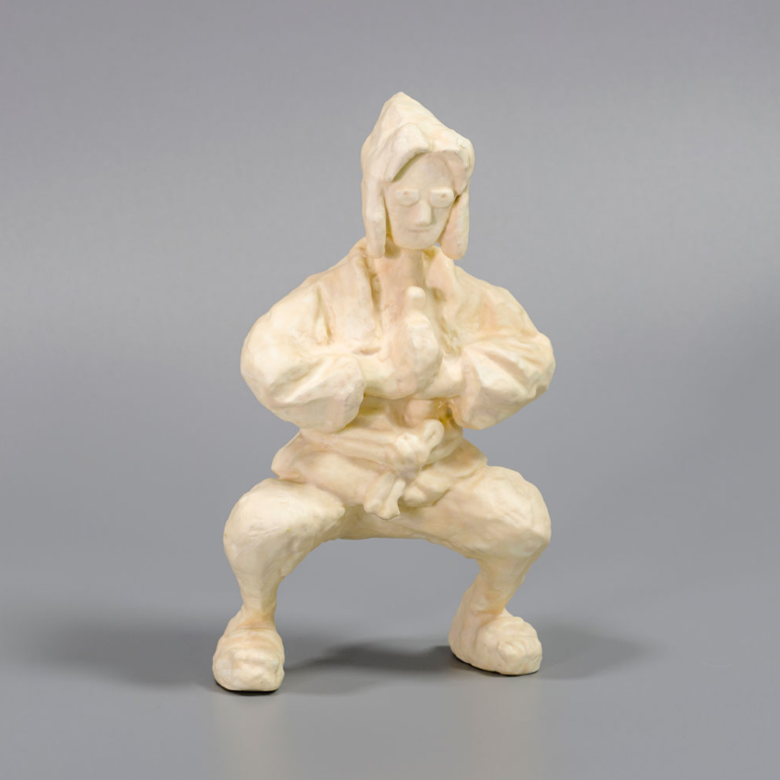
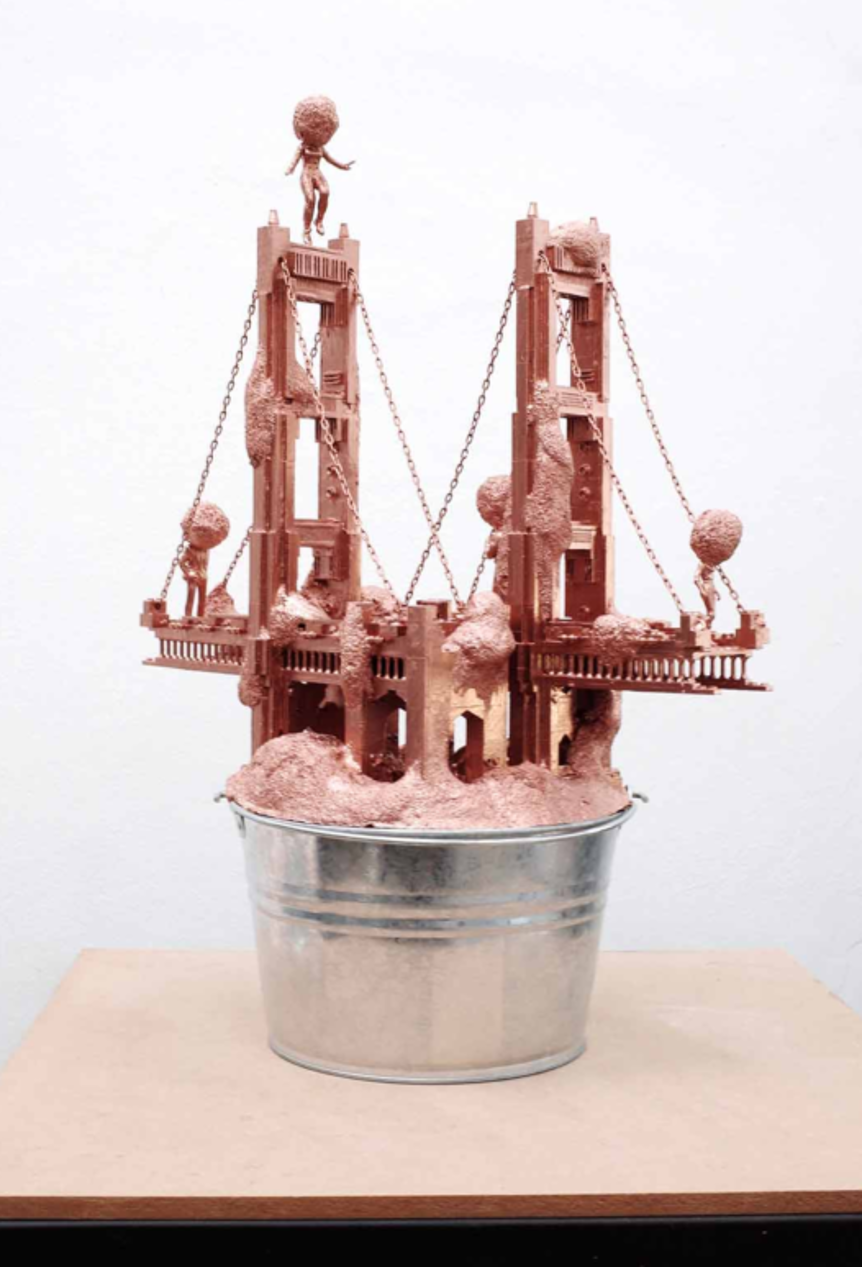
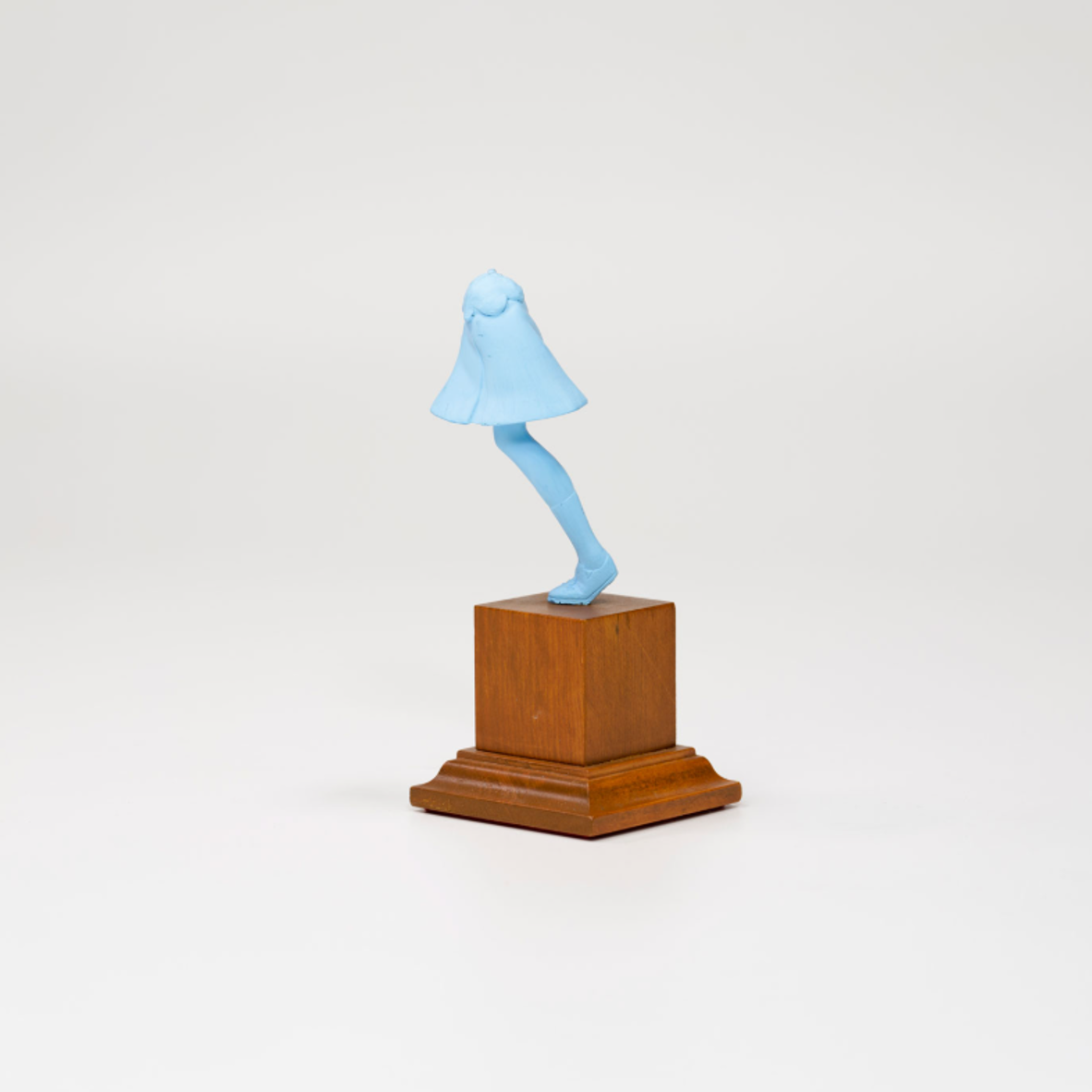
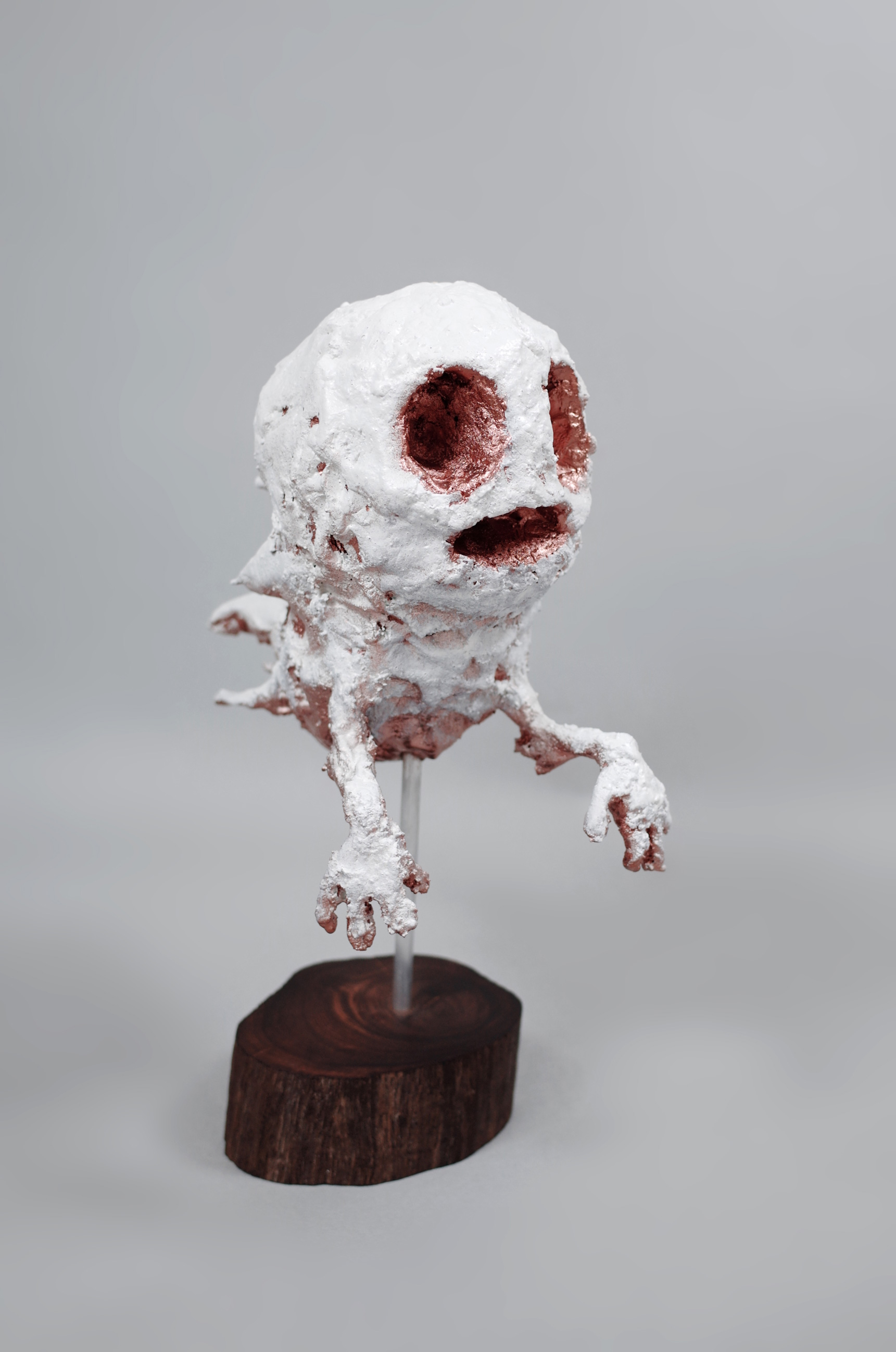
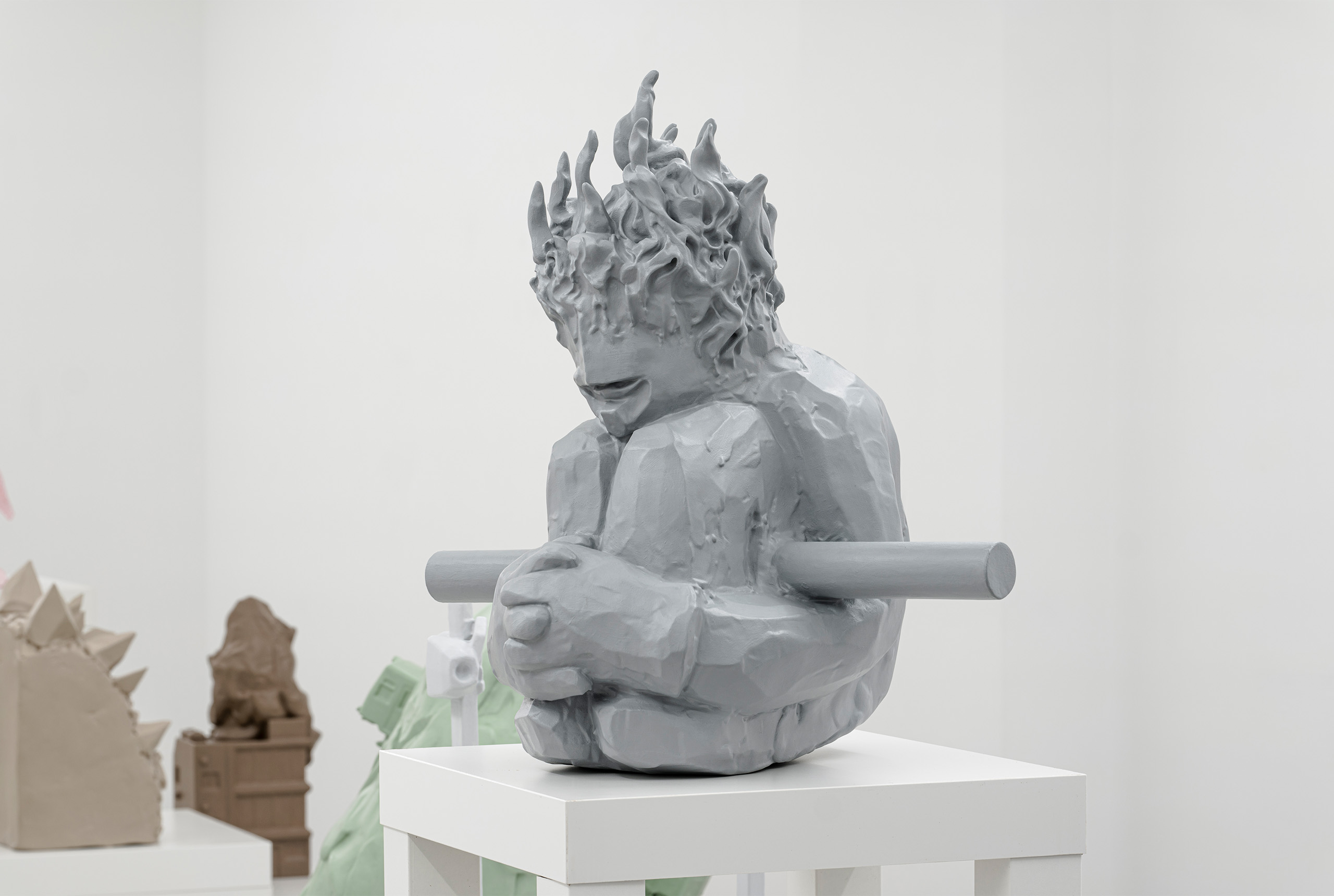
The sculptural works on display are transformed versions of distinctive elements selected by the artist from the signs of bishōjo figures. Each form can be recognized to the extent that one understands the visual language surrounding a particular figure, although this is not especially important to understanding the exhibition. The descriptions of forms that already suggest themselves as fragments of something larger, together with the array of certain forms repeated in similar ways, are sufficient to produce visual pleasure and lightness as sculpture in themselves.
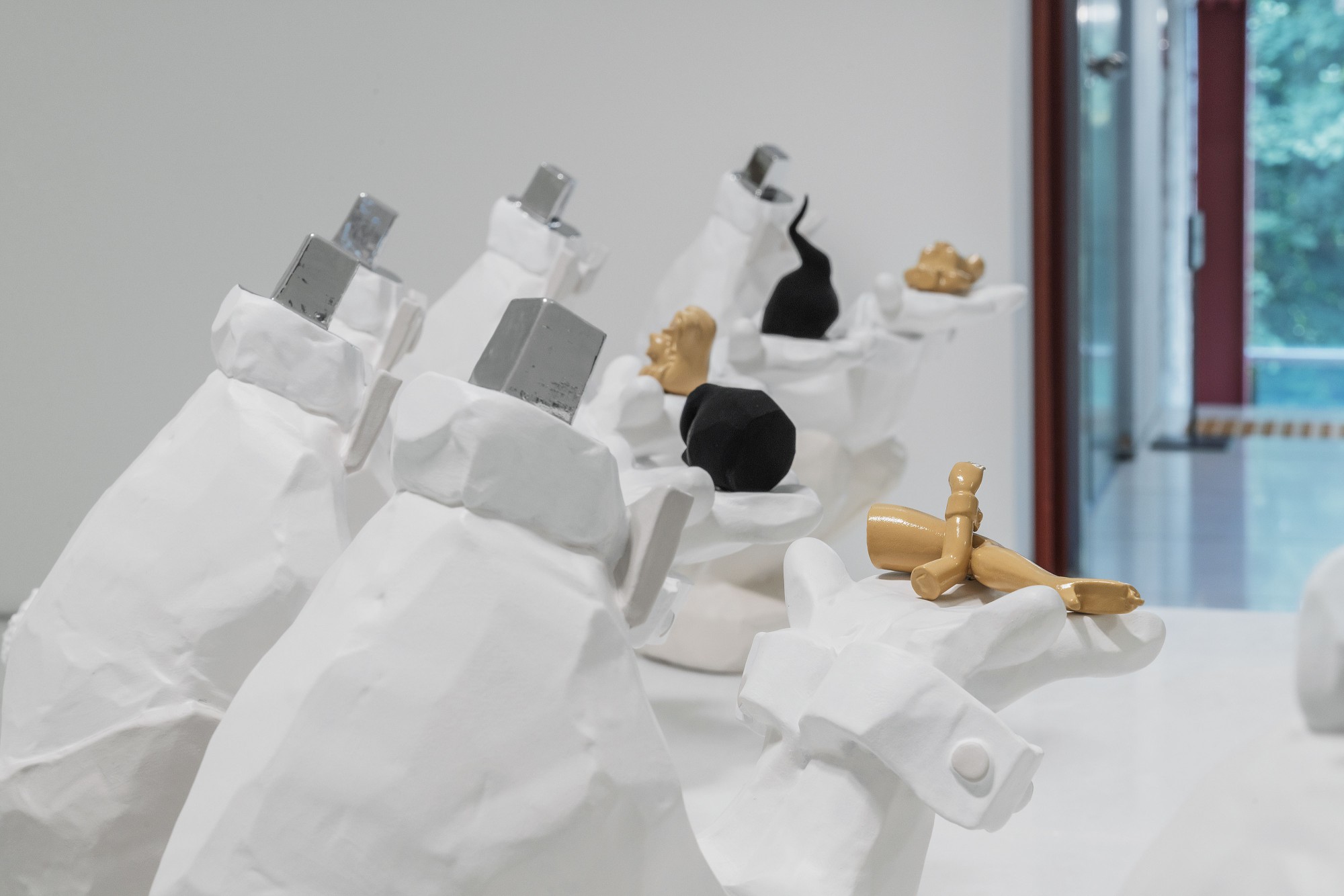
Nevertheless, there is one presence that needs to be mentioned: the “bunny girl” figure. The bunny girls, which constitute the overwhelming majority of the exhibition, are all crouched down with their heads removed, each holding something in their hands. These forms suggest that they are probably parts of some other figure.
Bunny girls are among the figures that have persisted through the period beginning in the 1980s, when bishōjo figures first emerged and rapidly developed; for the artist personally, they are also regarded as an origin and starting point symbolizing the bishōjo figure. The other sculptures in the exhibition likewise unfold a field of subtle repetitions and differences: two works may share the same form, or identical forms may be painted in different colors.
In this process, they clearly convey the inherent characteristics of figures as mass-produced fabricated objects and industrial structures, while simultaneously revealing sculptural beauty as aesthetic objects. The difference in temperature generated by this hybrid of industrial structure and sculptural work is one of the pleasures of viewing Don Sunpil’s sculpture in general.
In this exhibition, he goes one step further by emphasizing an especially conspicuous formal fragmentation and the different coloration of identical sculptures, prominently presenting not completed figures but parts of figures that appear to have entered a production line, thereby subtly revealing the otherwise invisible presence of the prototype sculptor as producer.
Although figures are products of mass production, they still require intricate manual processes. Properly rendering a single eye, for instance, may require the application of more than twenty complex layers of paint; it is an industry that can function only through the diverse skills and endless passion of numerous individuals. Countless concerns and decisions arise throughout this process.
In particular, although figures are born through systems of mass production, they develop through the will and affection of countless individuals beyond simply being products of capitalism. At the same time, however, they must also reflect socially accepted semiotic interpretations and tastes. The world of figures therefore has a distinctive, highly paradoxical and contradictory structure in which the extremely microscopic and the macroscopic coexist.
The producer group, which constitutes one half of the axis sustaining this unique world where industry and hobby converge, consists of subjects who think, imagine, and act along that boundary. The exhibition is interesting in that it visualizes not the finished product but the doubts, considerations, and hesitations that arise along the way.
Reflecting on the artist’s perceptive diagnosis of the point of contact between figure culture and fine art—that “they are alike in that they are useless except for appreciation”—one comes to realize that this exhibition, which unfolds the circumstances and phenomena surrounding the figure engineer, inevitably leads back to the situation in which Don Sunpil himself exists as an artist.
As a result, while dealing with the endless driving force of the figure industry from a producer’s perspective, the exhibition also prompts us to imagine Don Sunpil’s position as a producer in the entirely different field of art. Engineer J’s reflective agony is ultimately that of the artist Don Sunpil, or perhaps of countless other artists.