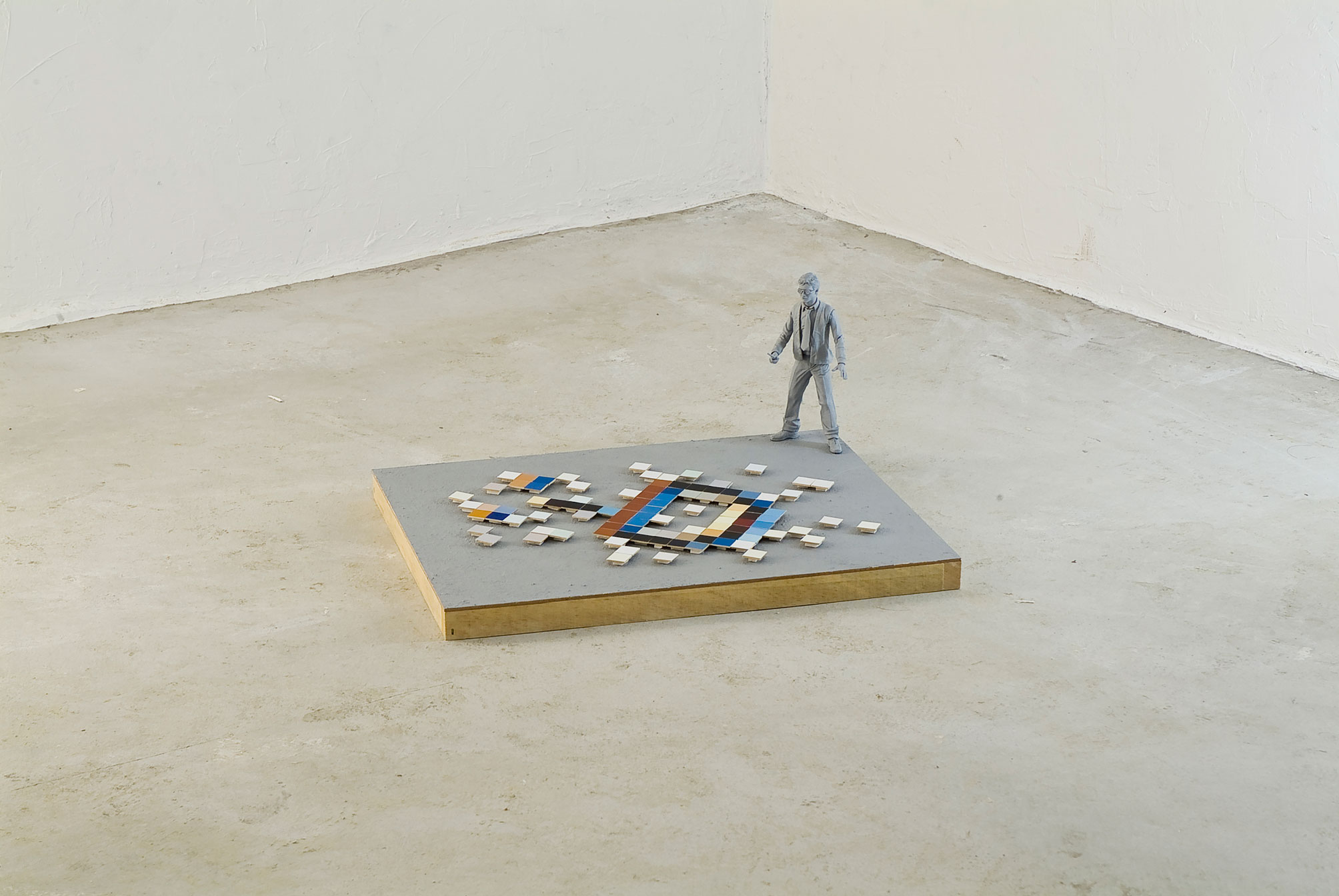
Don Sunpil (b. 1984) has explored characters, structures, and cultural phenomena frequently found in so-called “subculture” as central themes in his practice.
 
He approaches elements often regarded as marginal or peripheral not merely as niche cultural products, but as meaningful social phenomena and clues to shared aesthetic sensibilities, bringing them into dialogue with and cross-examining them against the systems and conventions of mainstream institutions.
 
In particular, Don Sunpil examines the multifaceted dimensions generated by the phenomenon of the “figure,” including the social phenomena and implicit narratives surrounding it, the desire for a sense of reality, and its self-contained identity as a sculptural object.


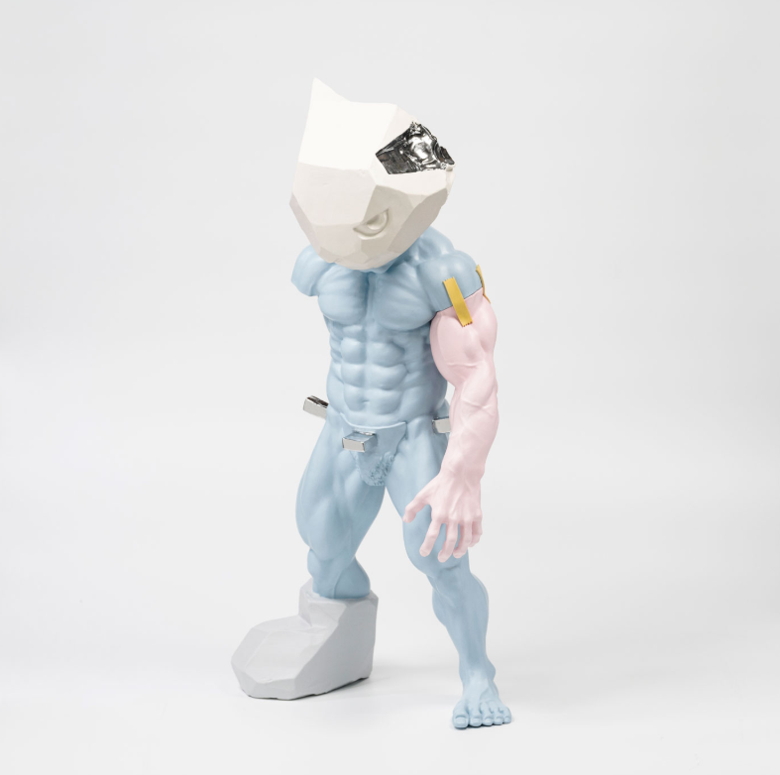
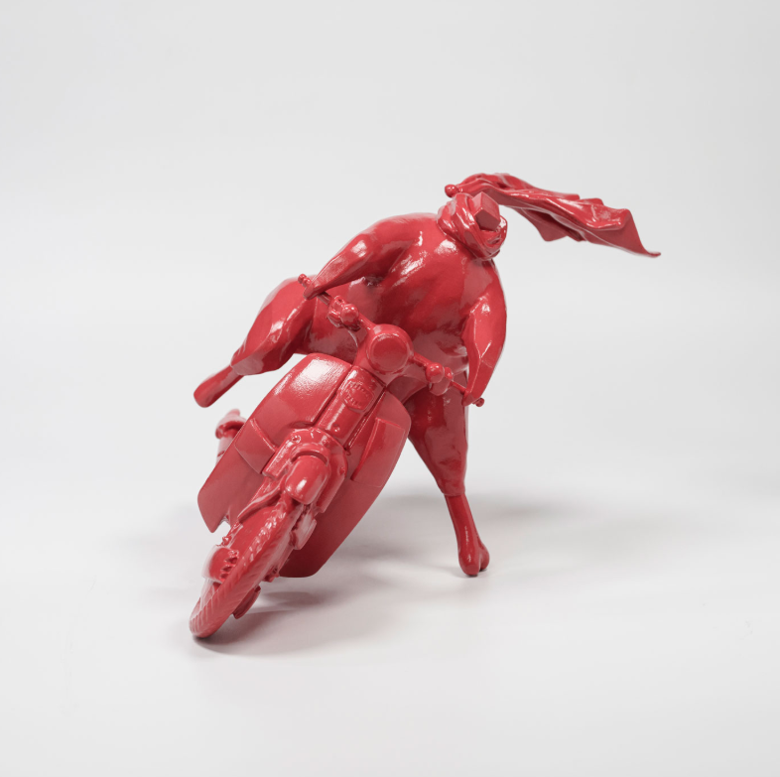
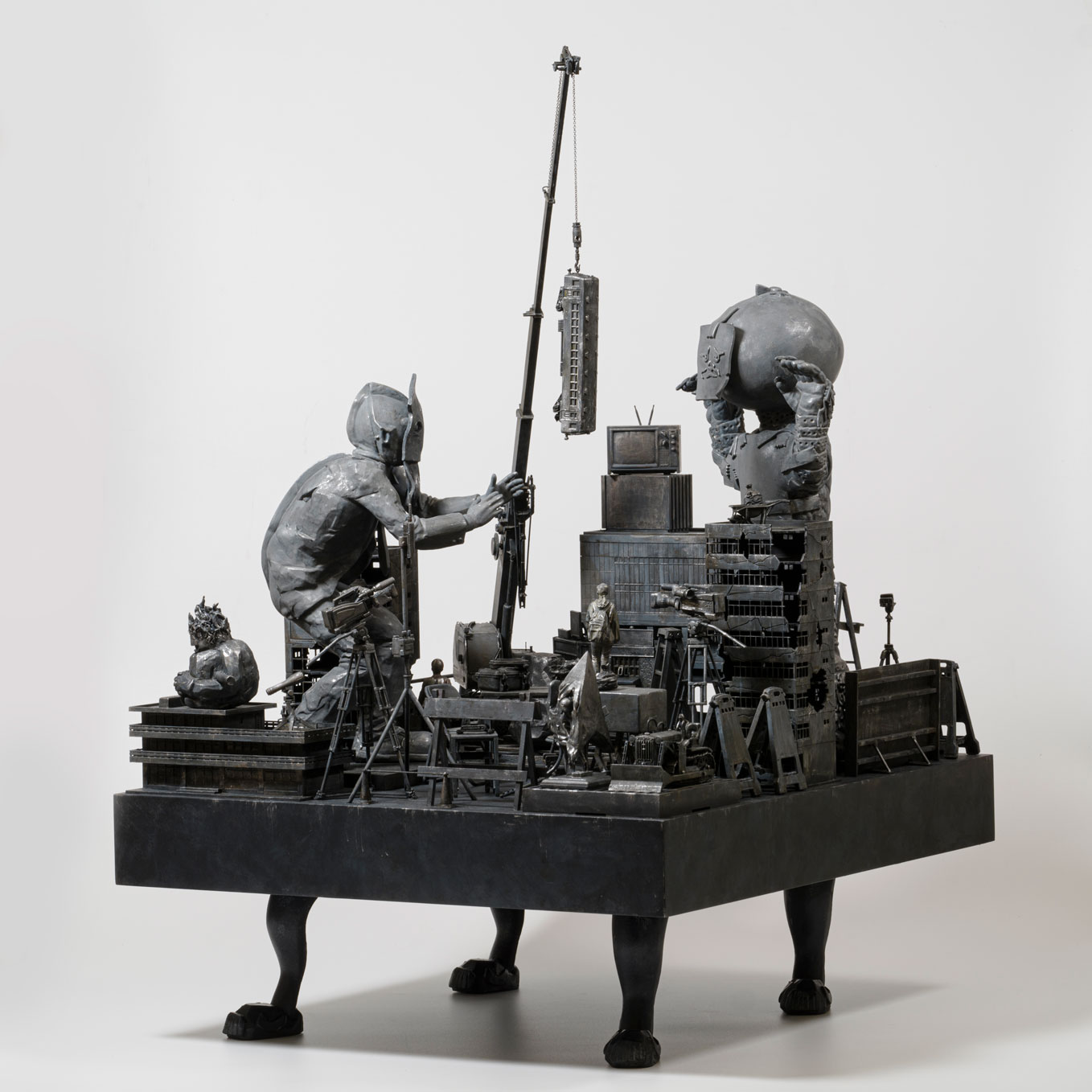
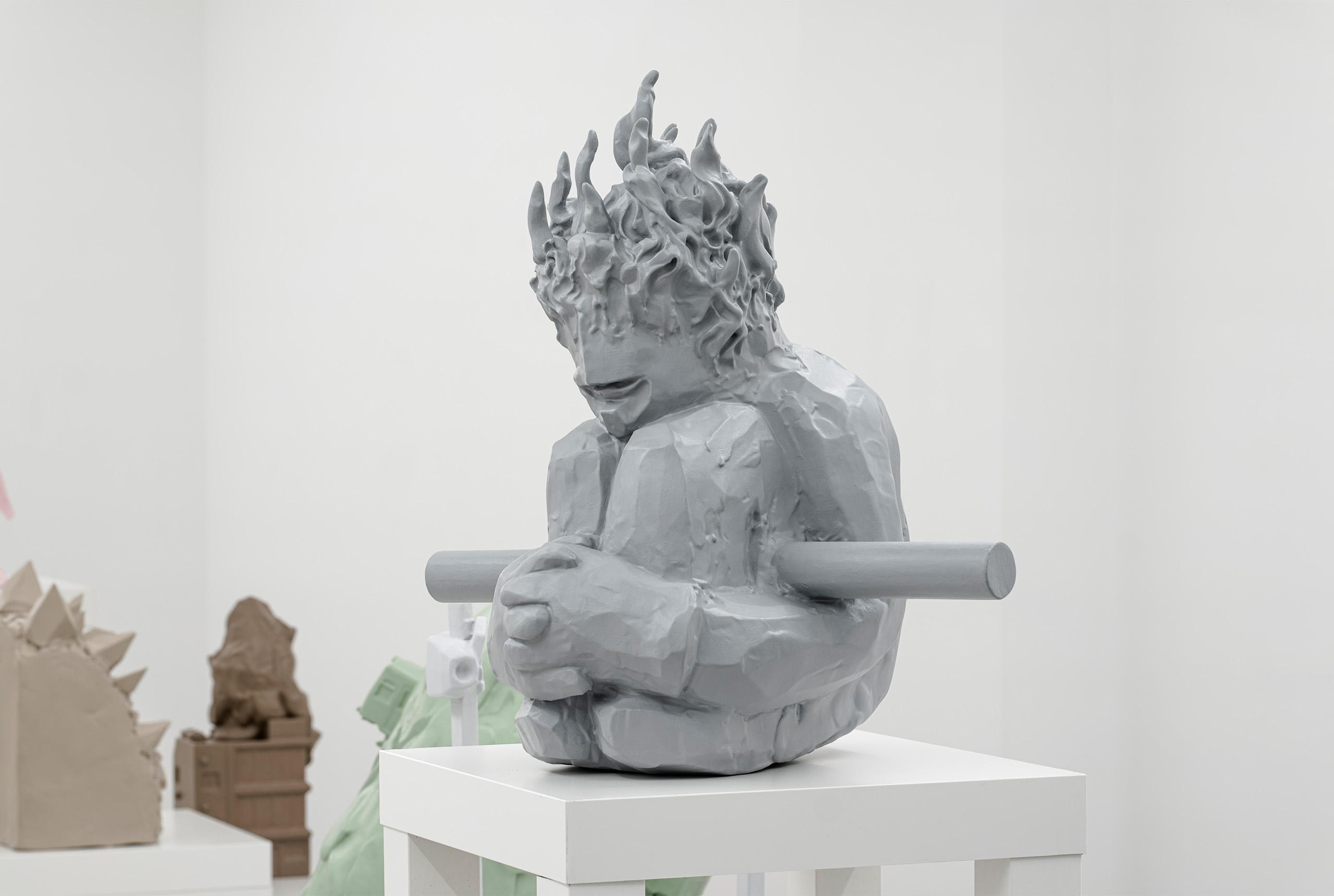
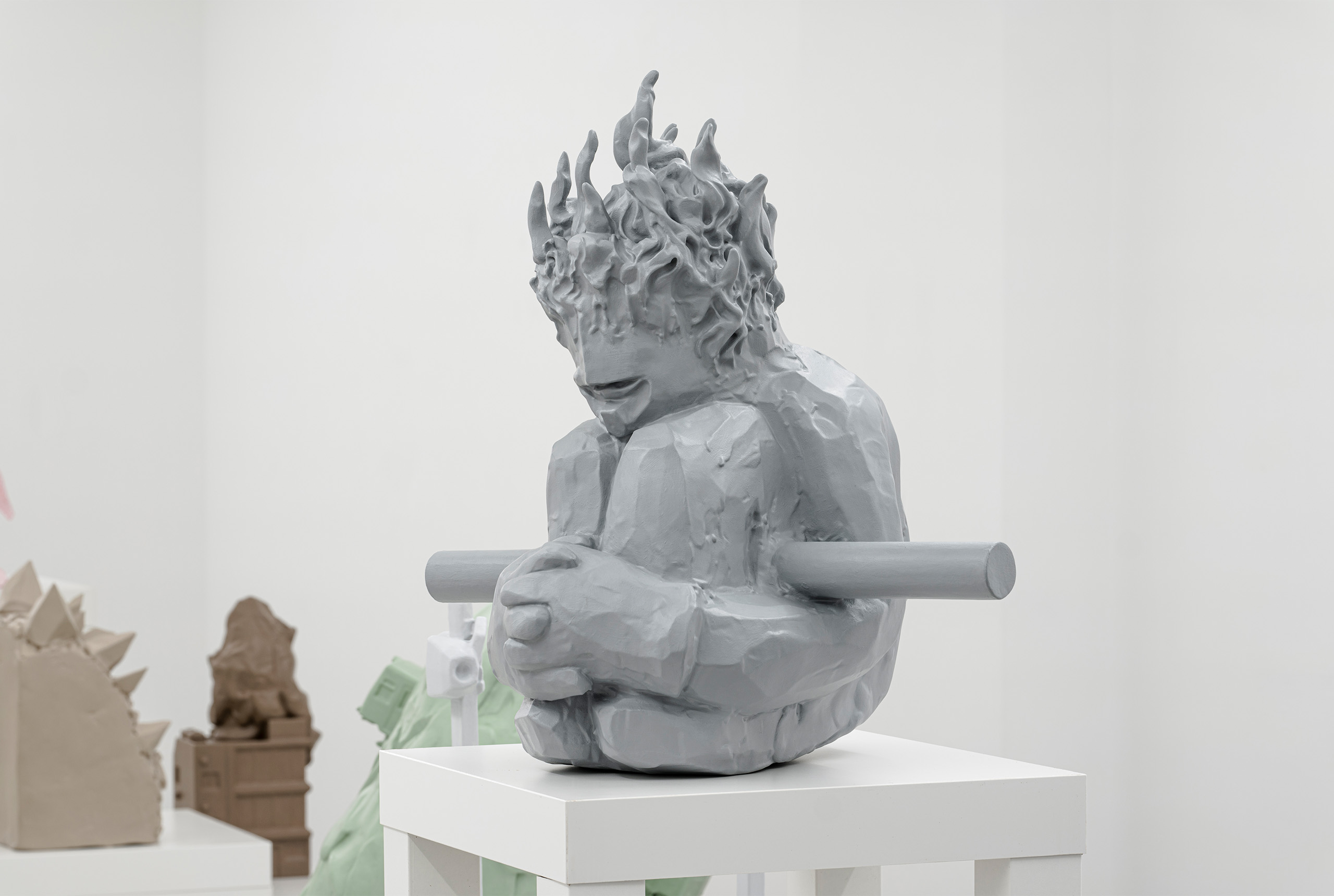
Don Sunpil, FFWS_Dreary Tangerine, 2025, Stereolithography, resin, primer, wood, plastic kit, acrylic paint, liqud chrome, varnish, 670x420x450(HxWxD)mm © Don Sunpil

Don Sunpil interprets contemporary language and social phenomena through the concept of “materialization.” His practice begins with an interest in treating intangible realms—such as emotions, thoughts, concepts, and sensations—as if they were concrete objects, or in focusing on objects that give material form to these abstractions. Among these, the “figure,” which materializes animated characters in three-dimensional form, has been a recurring subject of his practice.
 
Most figures are objects that emerge from characters as signs and images. Although their transformation from 2D drawings into 3D objects involves considerable labor, time, and technical expertise, the figure itself is essentially an embodiment of inefficiency, existing beyond any practical function or utilitarian purpose.


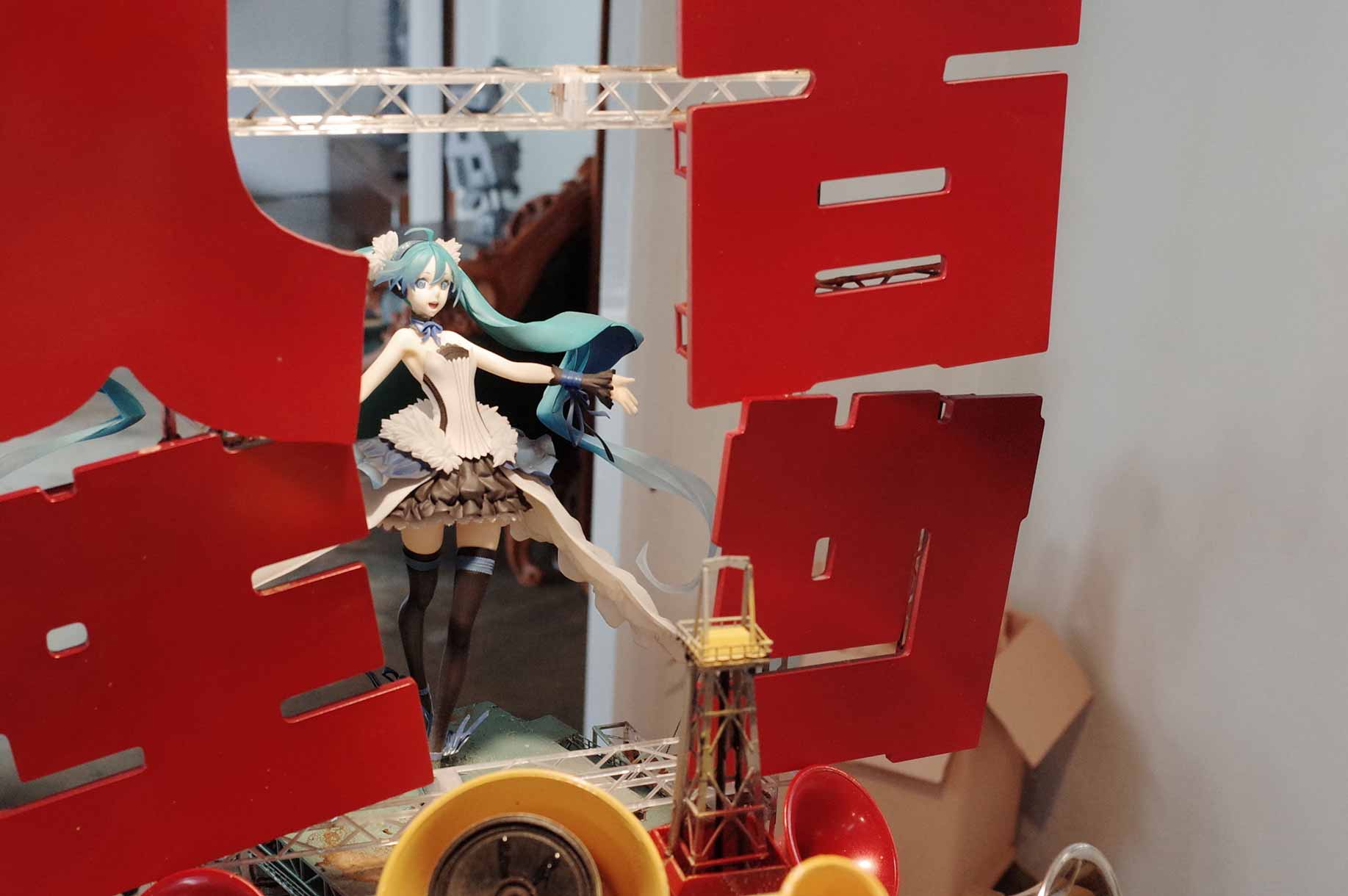
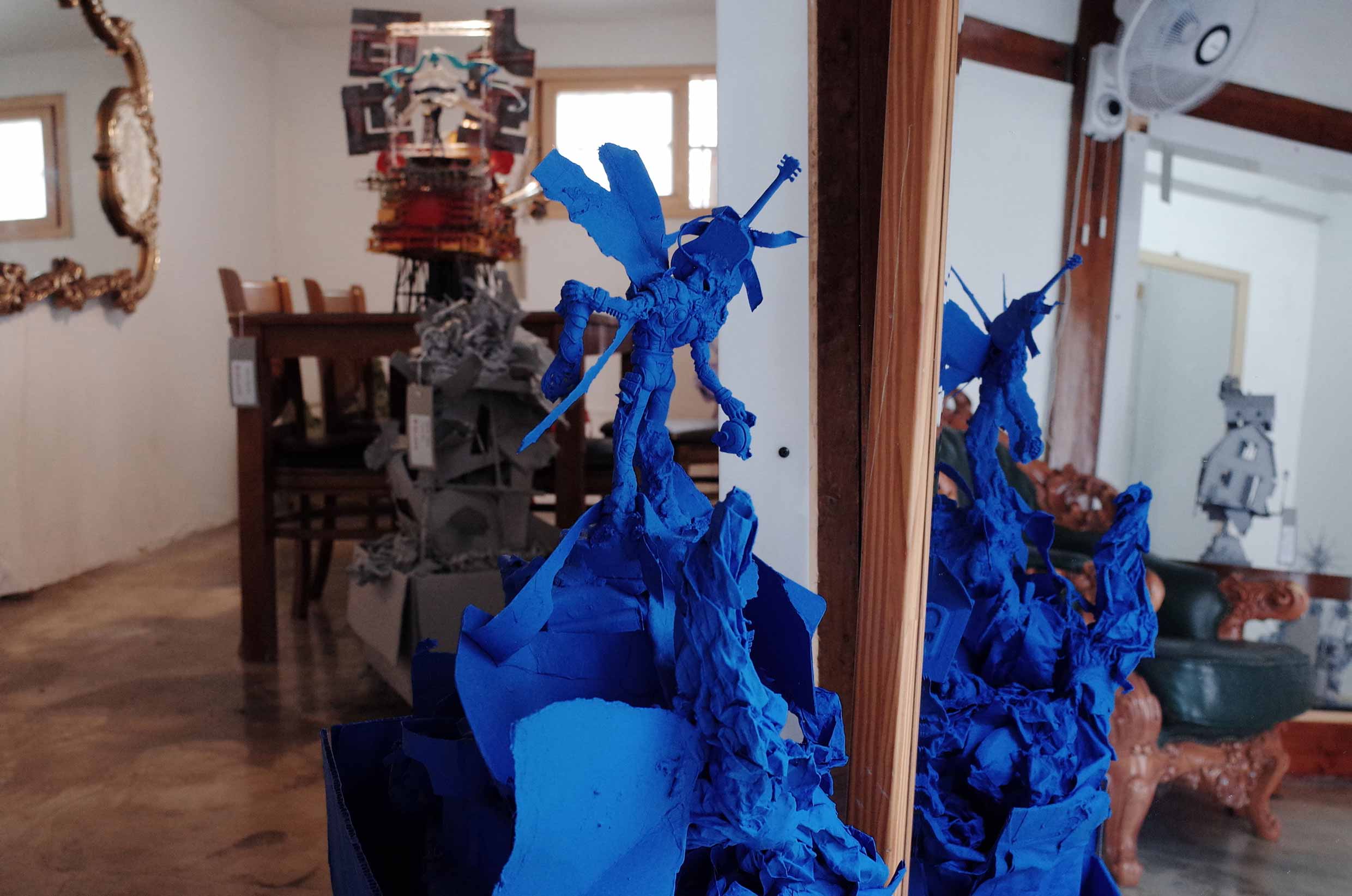
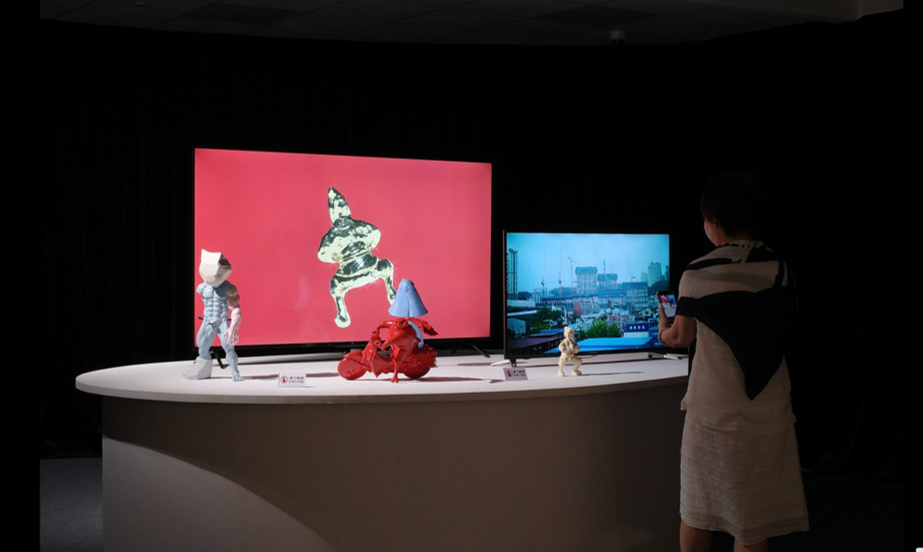
Installation view of 《Minmay Attack: Re-Re-Cast》 (Audio Visual Pavilion, 2016) © Don Sunpil

Don Sunpil has made figures a recurring subject of his practice, drawn to their peculiar appeal as objects that are produced with an excessive degree of technical skill and care compared with most everyday objects, yet are ultimately devoid of practical utility.
 
Rather than viewing figures simply as collectibles or consumer products, Don Sunpil approaches them as sculptural objects that emerge through the translation of original images and data into material form.
 
His practice traces the processes of production, circulation, and consumption surrounding figures rooted in Japanese subculture, focusing on the additions, omissions, and transformations that inevitably occur in the process of translating an original into its material counterpart.


Installation view of 《Minmay Attack: Re-Re-Cast》 (Audio Visual Pavilion, 2016) © Don Sunpil

In his 2016 solo exhibition 《Minmay Attack: Re-Re-Cast》, Don Sunpil focused not on treating poorly finished figures as defective products, but on how they function as signs that refer to particular characters and on the sculptural outcomes produced through this process.
 
By transforming and reconfiguring existing figures, he disrupts the relationship between original and replica while exploring the potential of the figure as an autonomous sculptural language.
 
For Don Sunpil, a figure is always based on an original, yet inevitably undergoes transformation as it is translated into another dimension: something is added while something else is lost, giving rise to an entirely different entity.
 
Through this structure of “degraded replication,” he explores and interprets the relationships between image and object, original and copy, and, more broadly, the spaces and temporalities we inhabit.


Installation view of 《METAL EXP: Loner’s Moving Time》 (Taste House, 2018) © Don Sunpil

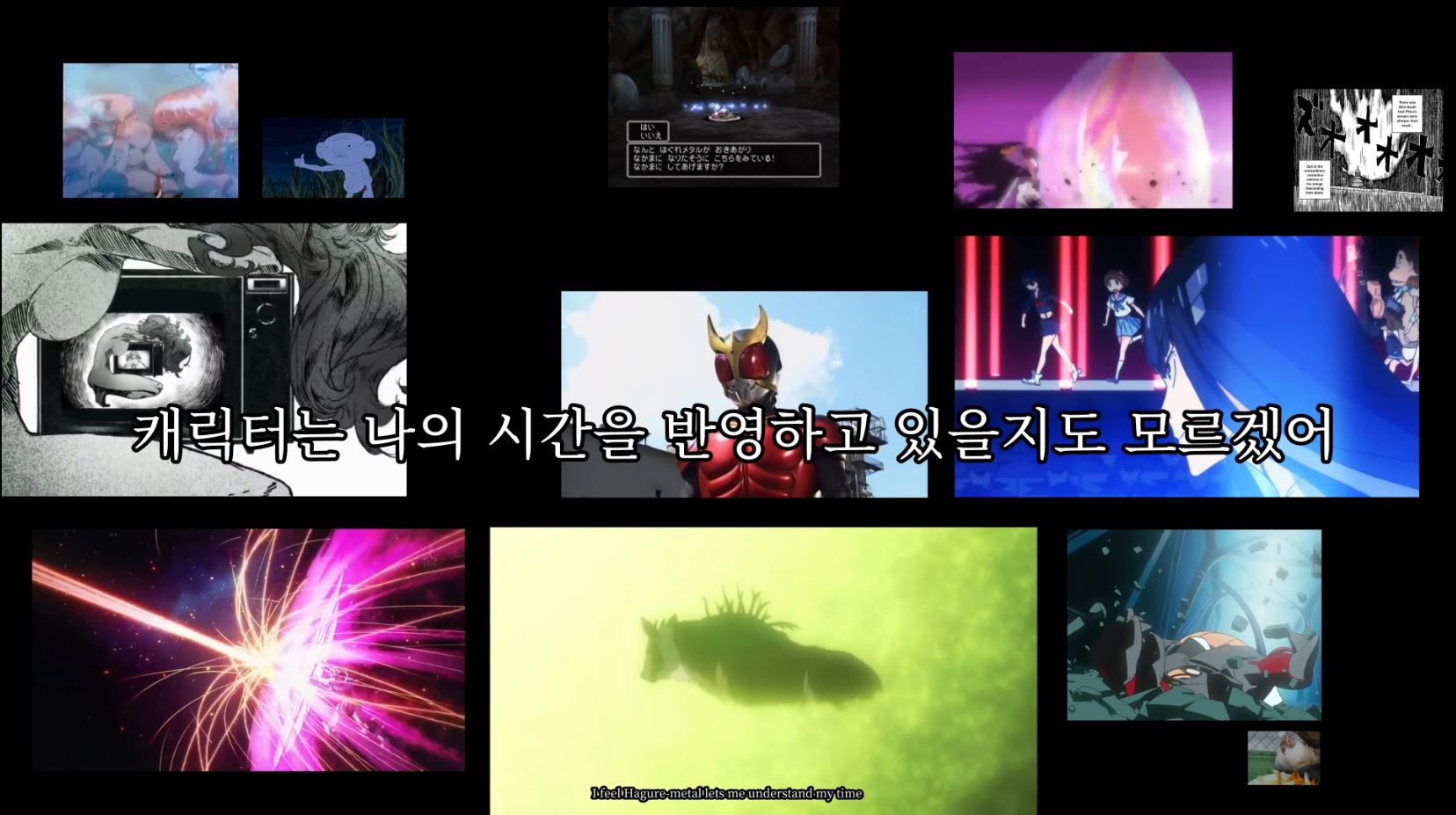
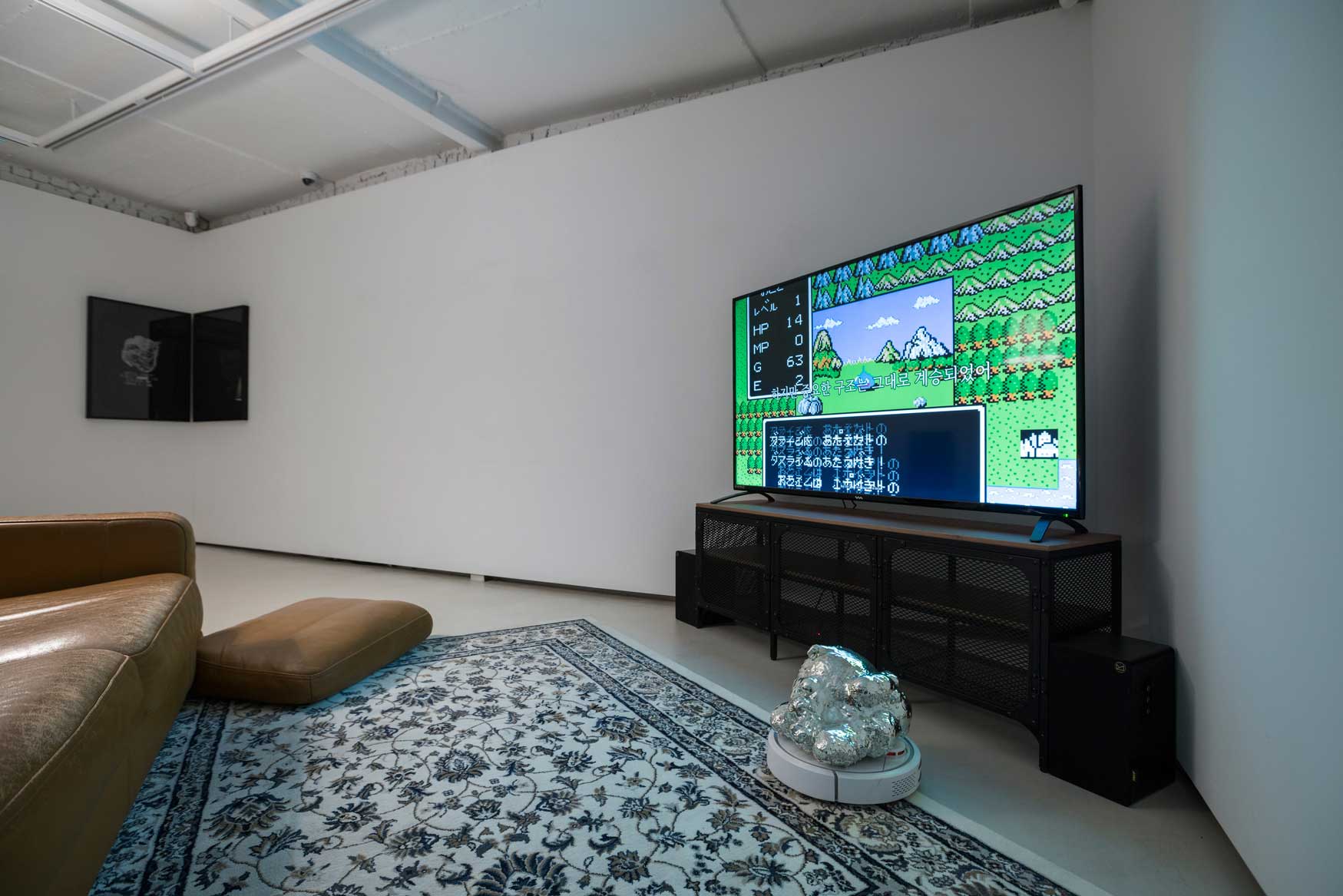
In his 2018 solo exhibition 《METAL EXP: Loner’s Moving Time》, Don took the monster “Hagure Metal” from the RPG Dragon Quest as his subject, exploring the theme of the “shape” of time and luck.
 
In the game, Hagure Metal is a monster that can only be encountered by chance, and defeating it allows players to gain a substantial amount of experience at once. Don Sunpil therefore regarded the monster as an embodiment of condensed time—the accumulated time required to “level up.”
 
Following the logic of RPGs, in which characters grow in proportion to the time invested in them, the exhibition approached the passage of time in a quiet and understated manner.
 
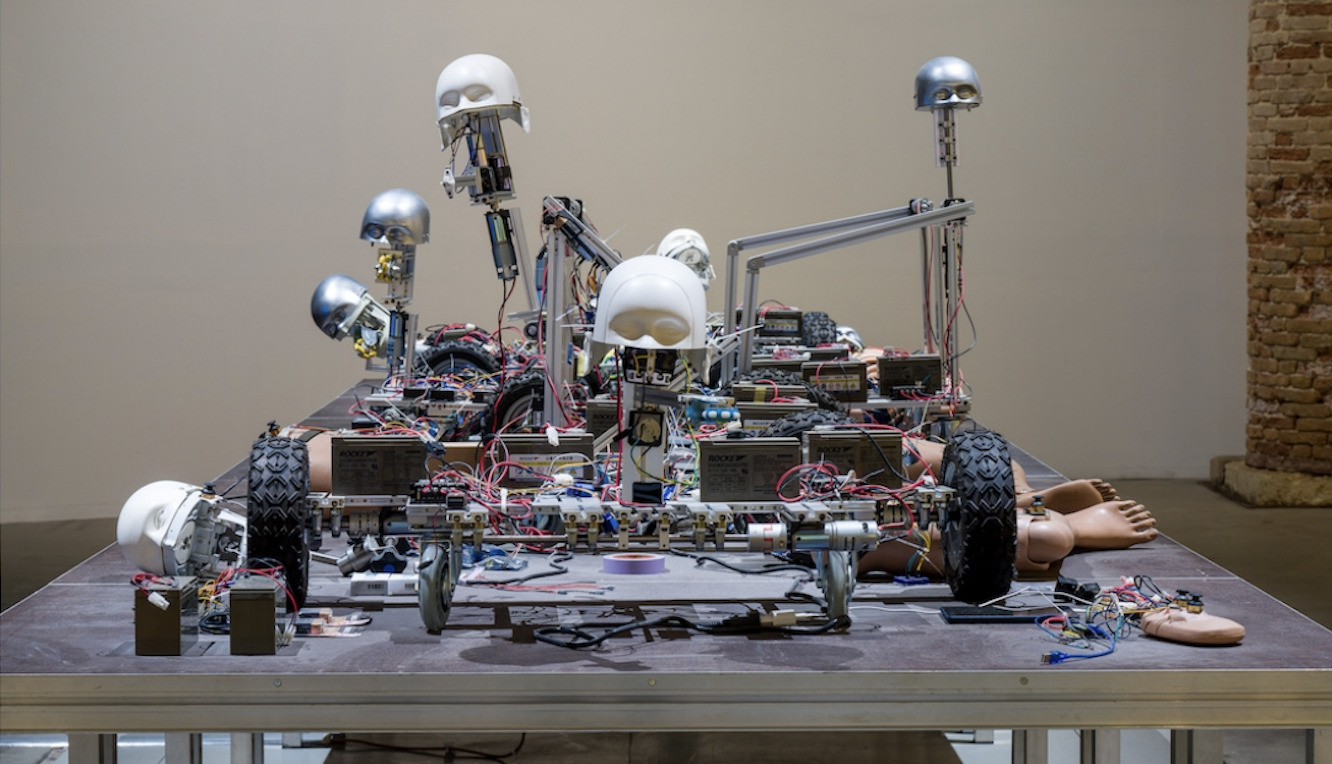
The exhibition space was arranged like a domestic interior, with a comfortable sofa, TV monitor, and game console, alongside a robotic vacuum cleaner carrying a metal model as it moved through the space and metal objects attached throughout the gallery.
 
The familiar landscape created by chance encounters and mass-produced objects invites viewers to imagine the form of something as intangible as time.


Installation view of 《Kitsutaiten 喫態店》 (Arario Museum, 2019) © Don Sunpil

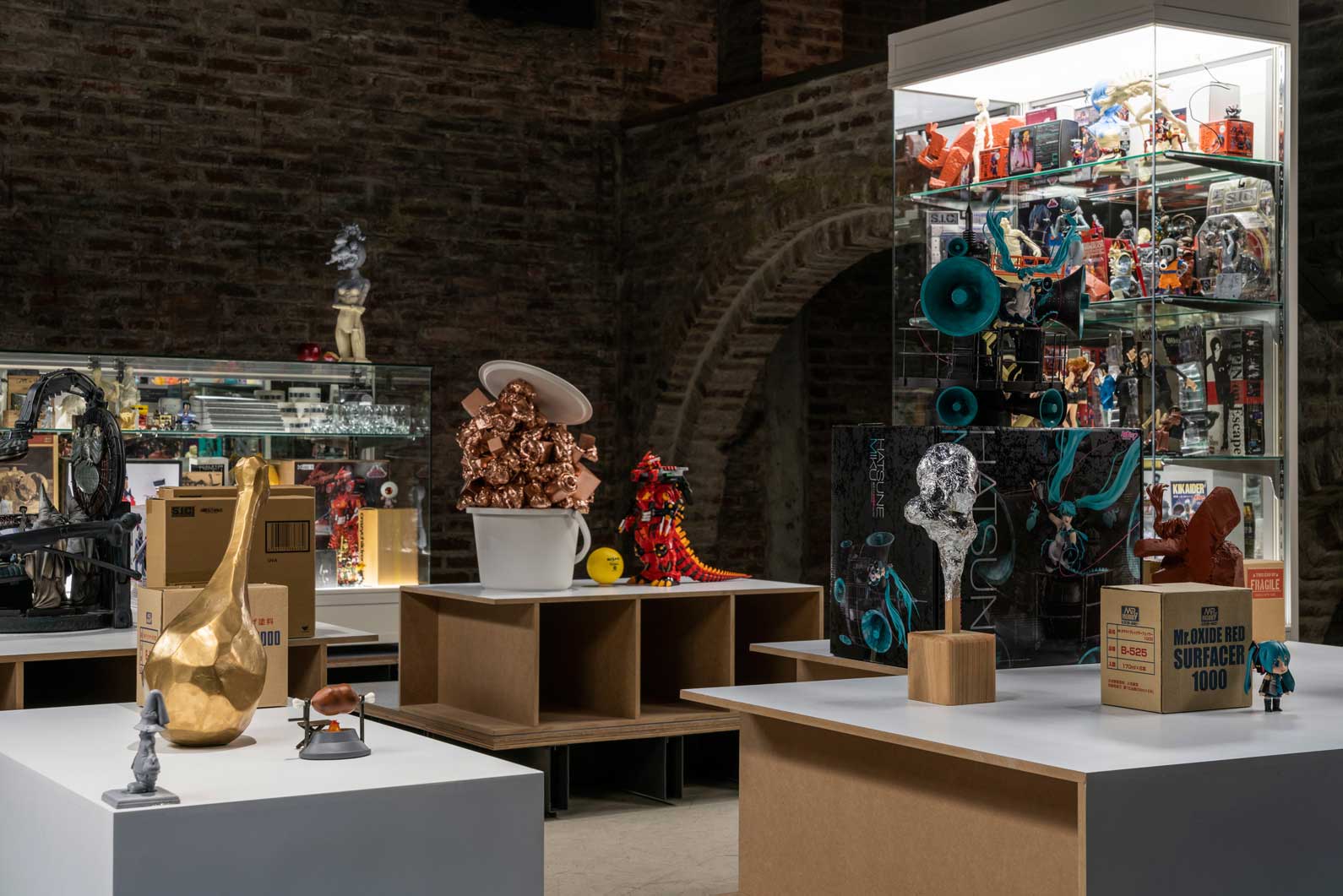
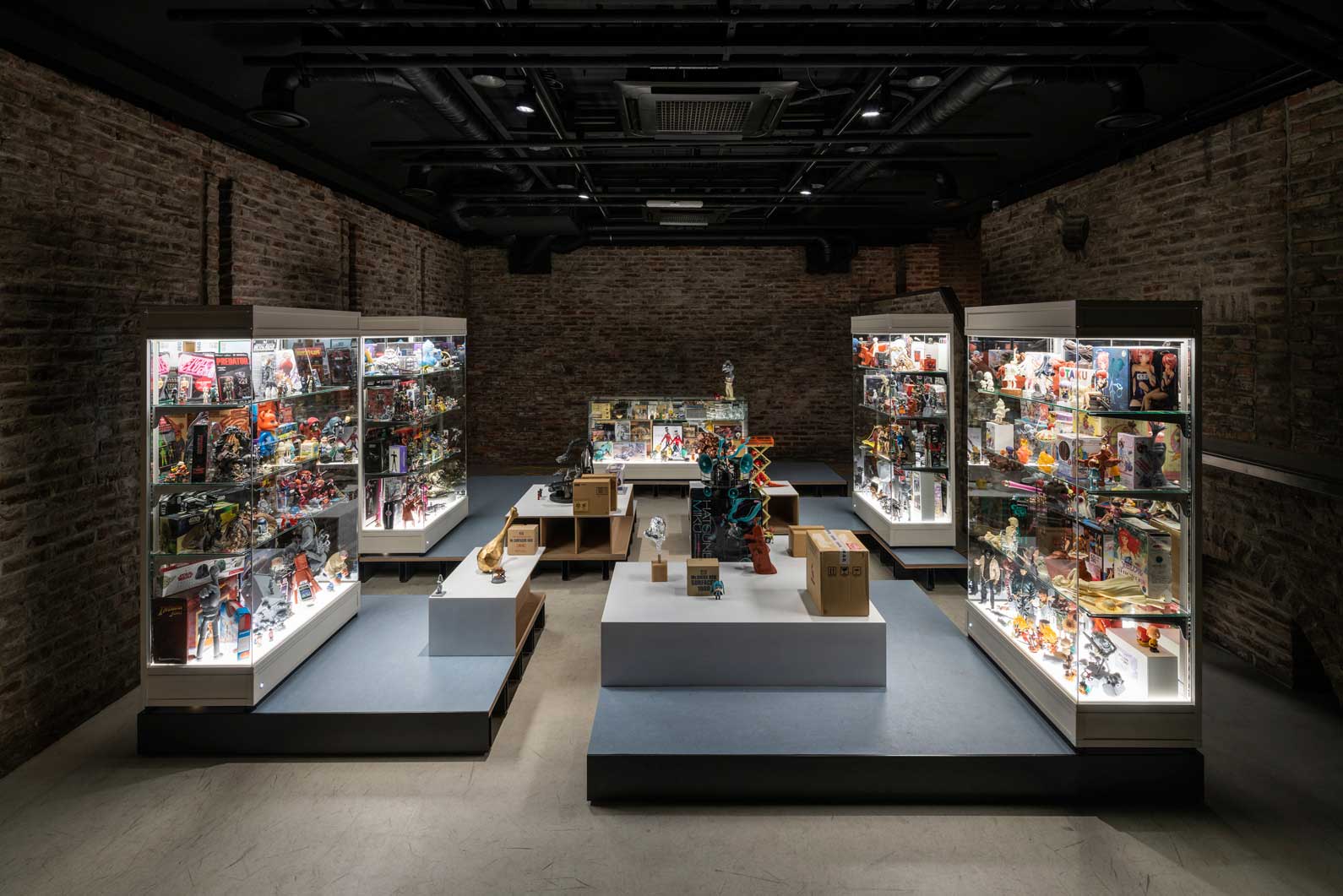
The following year, his solo exhibition 《Kitsutaiten 喫態店》, whose title literally suggests a “shop for indulging in forms,” consisted of an installation modeled on the spatial structure of a small retail store. Moving between the display cases, viewers encountered various aspects of contemporary life that the artist presented through the concrete format of a shop.
 
Inside the glass display cases, existing figures were intermingled with sculptural objects that resembled figures but were not actually figures. These ambiguous forms resulted from adding new elements to existing figures or attaching decorative components to sculptural forms to make them appear figure-like.
 
Through these concrete forms and synthetic-resin objects, Don Sunpil questions the boundary between manufacturing and artistic creation.


Installation view of 《Kitsutaiten 喫態店》 (Arario Museum, 2019) © Don Sunpil

Like pieces of a Tetris puzzle, the structure was divided into five sections, each functioning as an independent sculptural form while also embodying a vessel for memory and time. Each object represented a different temporal experience, carrying within it traces of the moments and histories accumulated through our lives.
 
The “figure” that Don Sunpil has persistently explored is not merely a miniature replica, but a distinctive state that reflects and articulates the conditions of its time.
 
In this sense, the exhibition itself can be understood as a kind of figure, taking the form of a shop under the name Kitsutaiten. Through this “figure,” the artist sought to present viewers with a tangible manifestation of the contemporary language and cultural phenomena that surround us.


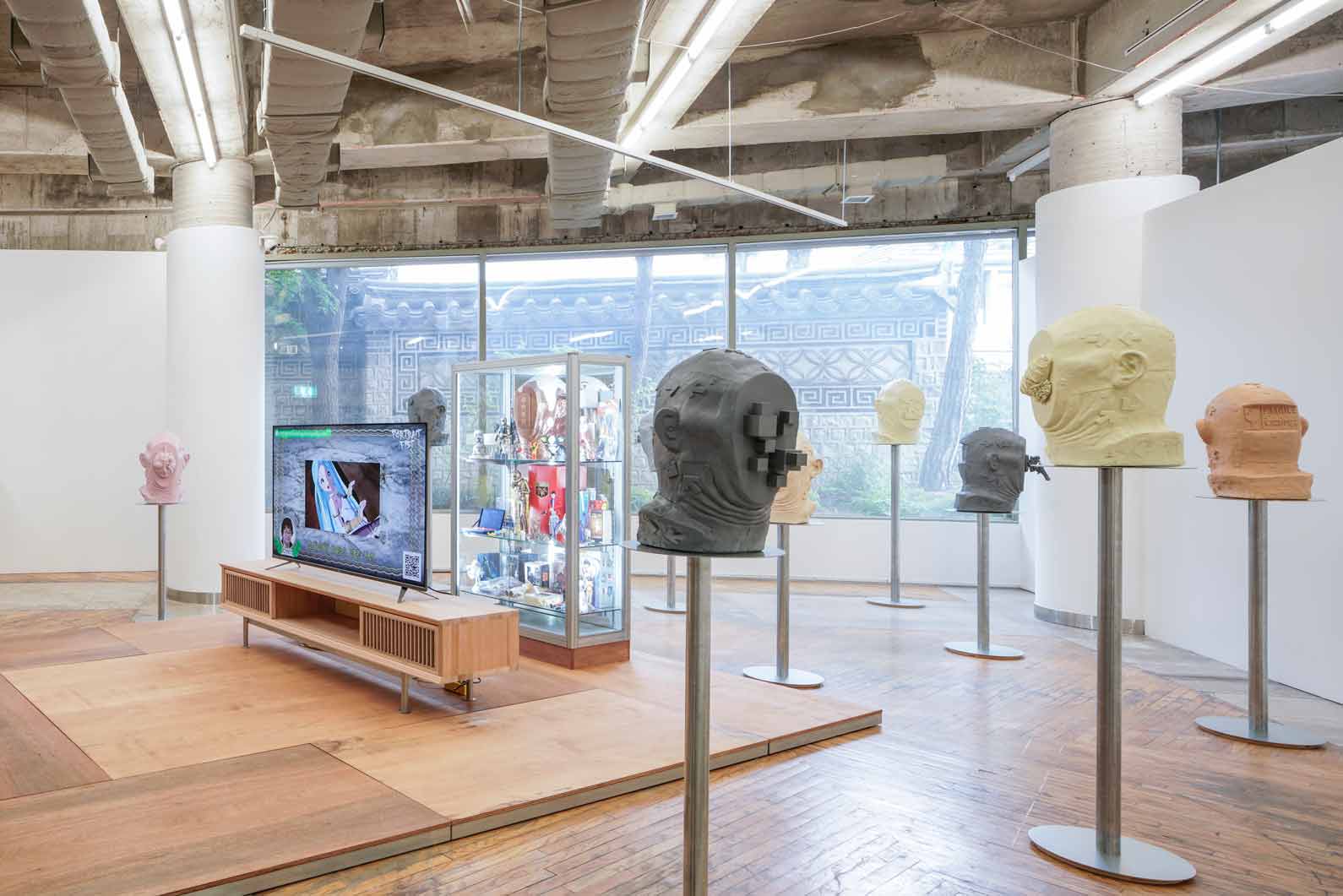
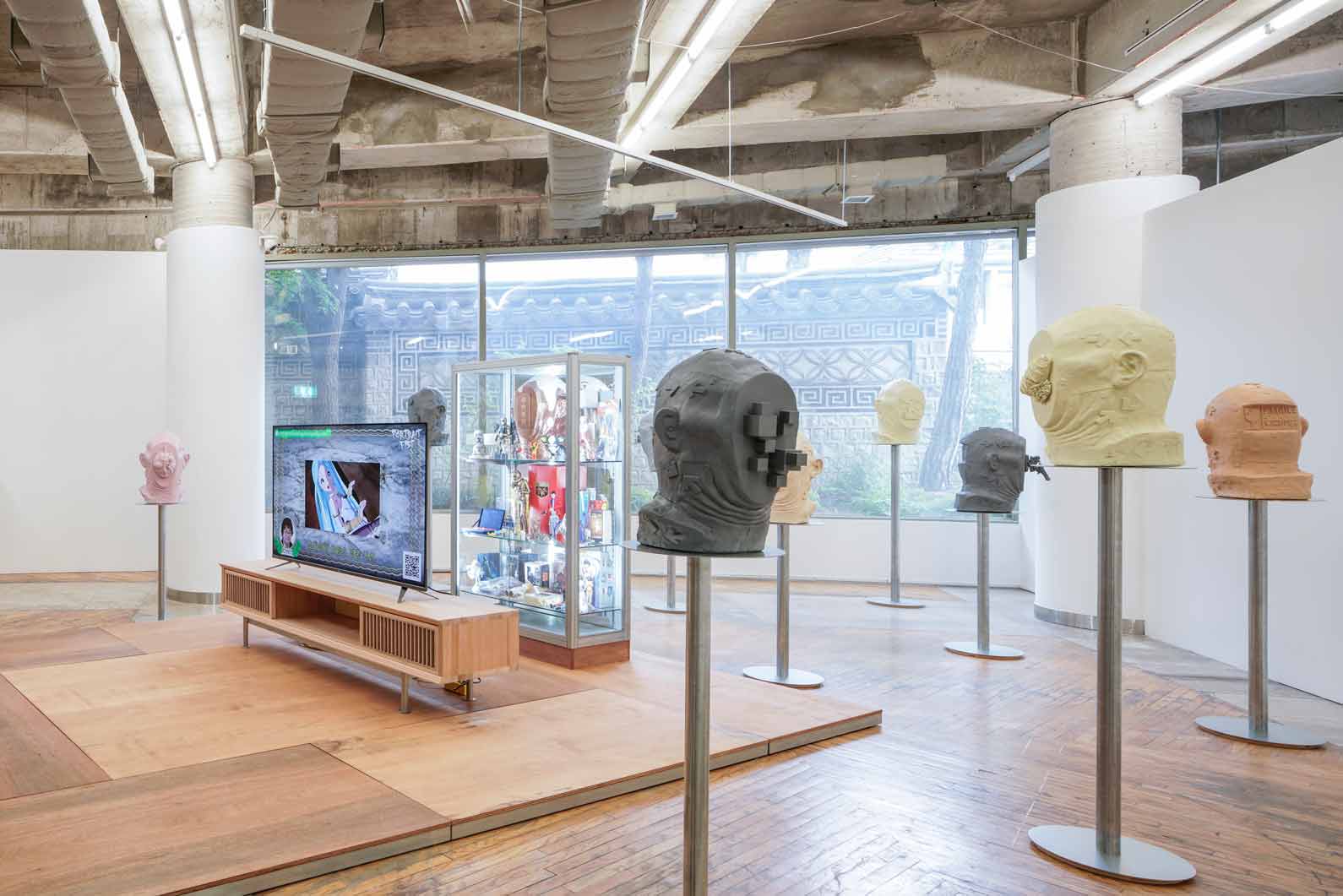
Installation view of 《Portrait Fist》 (Art Sonje Center, 2020) © Don Sunpil

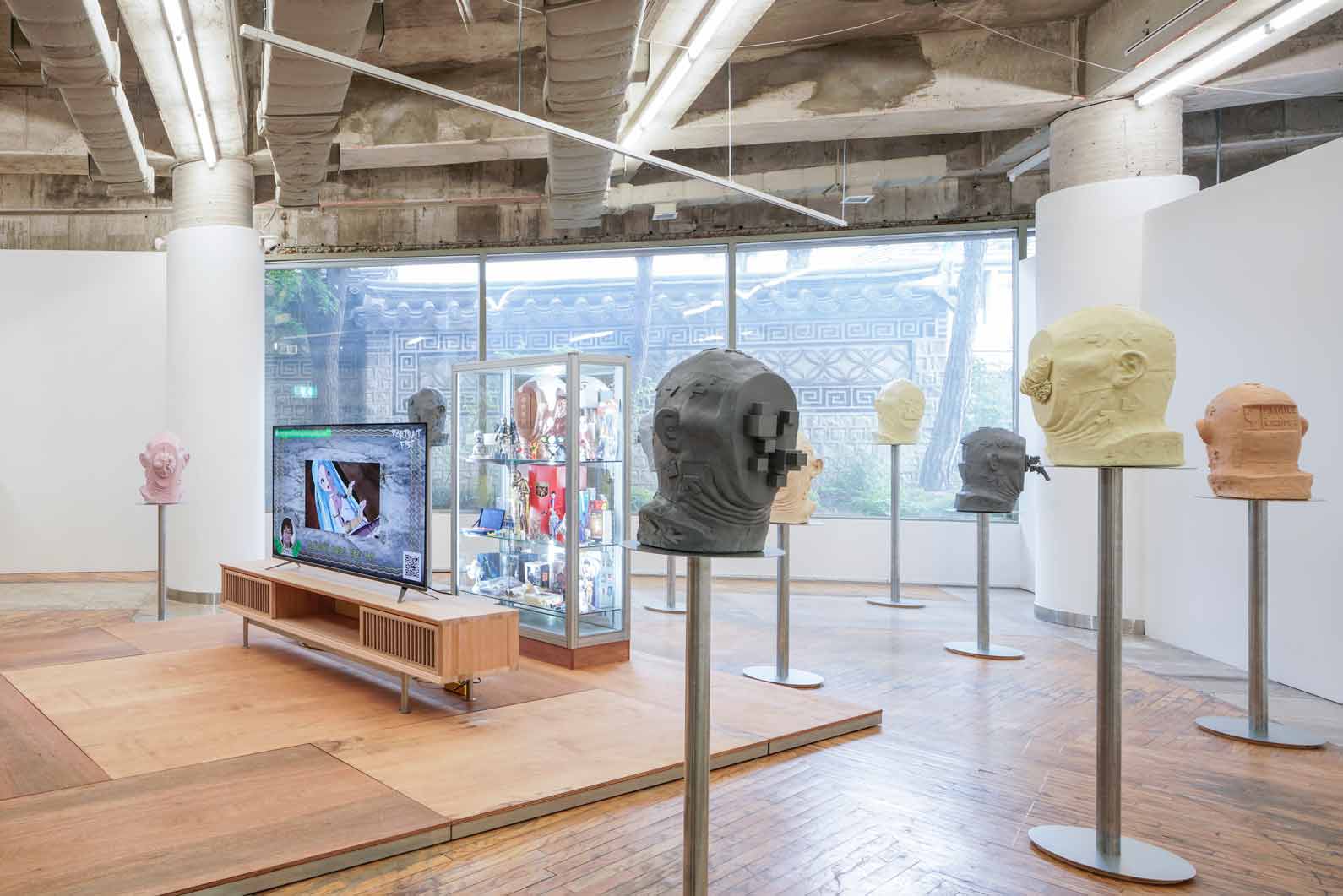
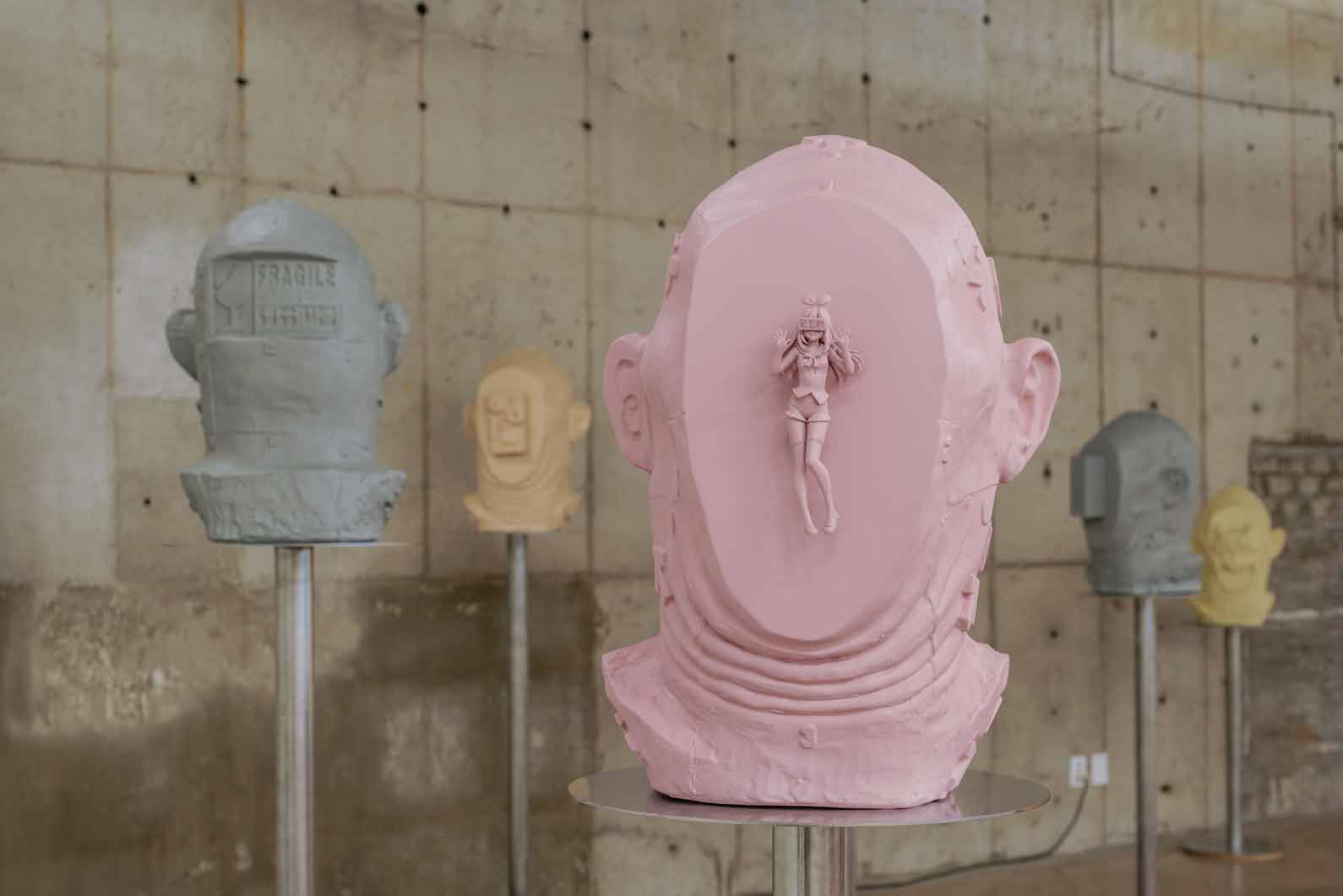
In his 2020 solo exhibition 《Portrait Fist》, Don Sunpil explored how we perceive and consume images of the “face” today. From portraits of real individuals and actors to fictional characters and highly codified icons, the face functions as more than a part of the body; it serves as an image that stands in for an individual’s identity, nationality, social position, and life story.
 
The artist draws particular attention to the “kyara” face, a term derived from the Japanese pronunciation of character (キャラクター), referring to a personality or an animated figure.
 
Although a kyara face possesses recognizable facial features, it remains empty of the qualities associated with an actual face. Nevertheless, we readily recognize it as a face when encountering an animated character. Rather than reproducing a specific face as a photograph would, the kyara face shifts toward the condition of an object.
 
Through this exploration, Don Sunpil examines how something comes to be recognized as a face, and how an image acquires meaning and power as it comes to stand in for a particular person, character, or entity.


Installation view of 《Portrait Fist》 (Art Sonje Center, 2020) © Don Sunpil

The exhibition materializes these various states of the face through the medium of the figure. By translating characters into three-dimensional objects, figures give tangible form to abstract images and fictional settings, revealing how a character’s sense of “reality” is constructed in the process.
 
In particular, the face functions as a crucial element in determining a figure’s identity, situated at the intersection of the character’s fictional setting and its sense of realism.
 
In this way, 《Portrait Fist》 amounts to a story about the power of the face that we, whether knowingly or not, manipulate or are taken advantage for as the title suggests. It is also an observation of the state of the figurine: how are portrait images that we often call faces objectified? And how do they compel other objects?


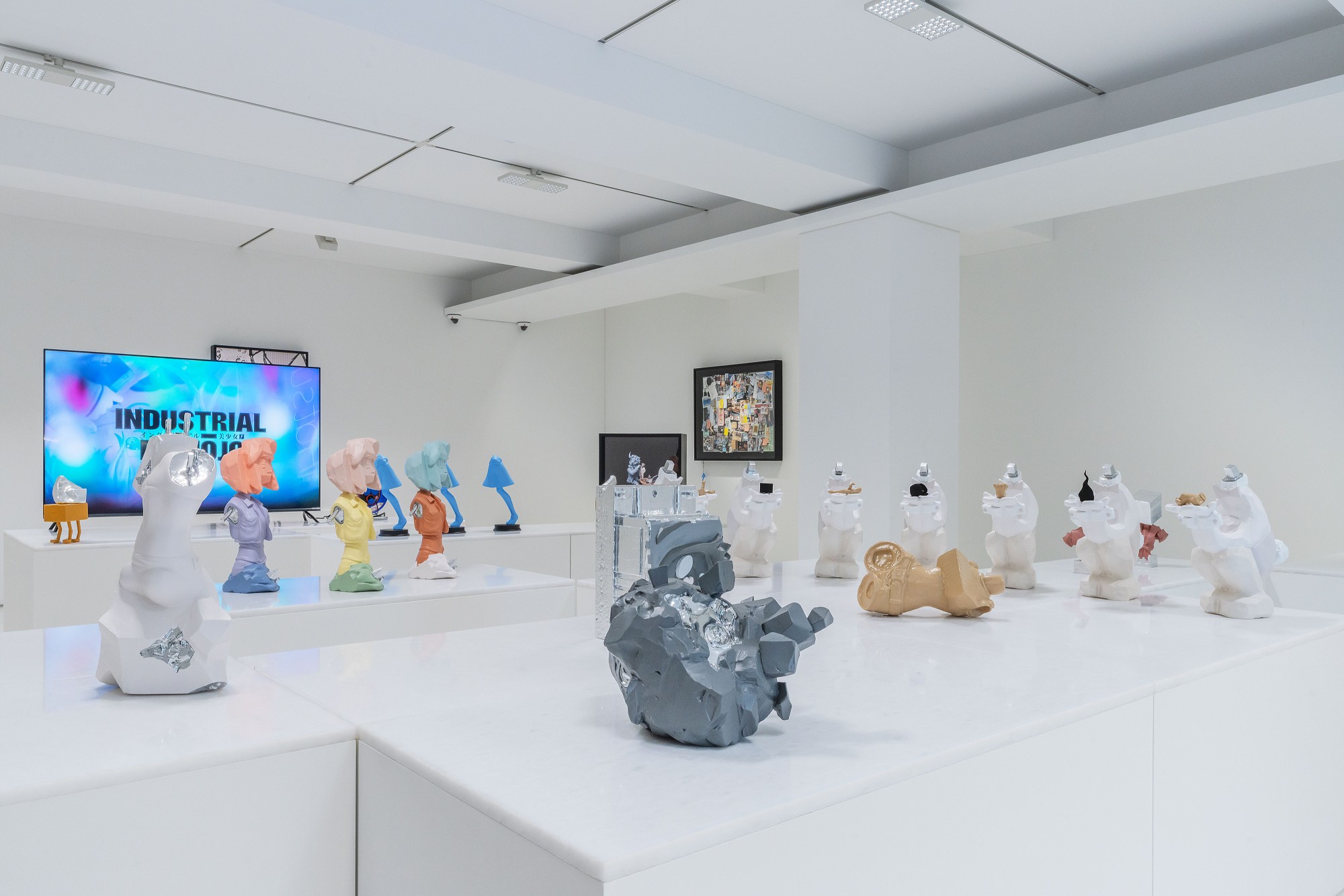
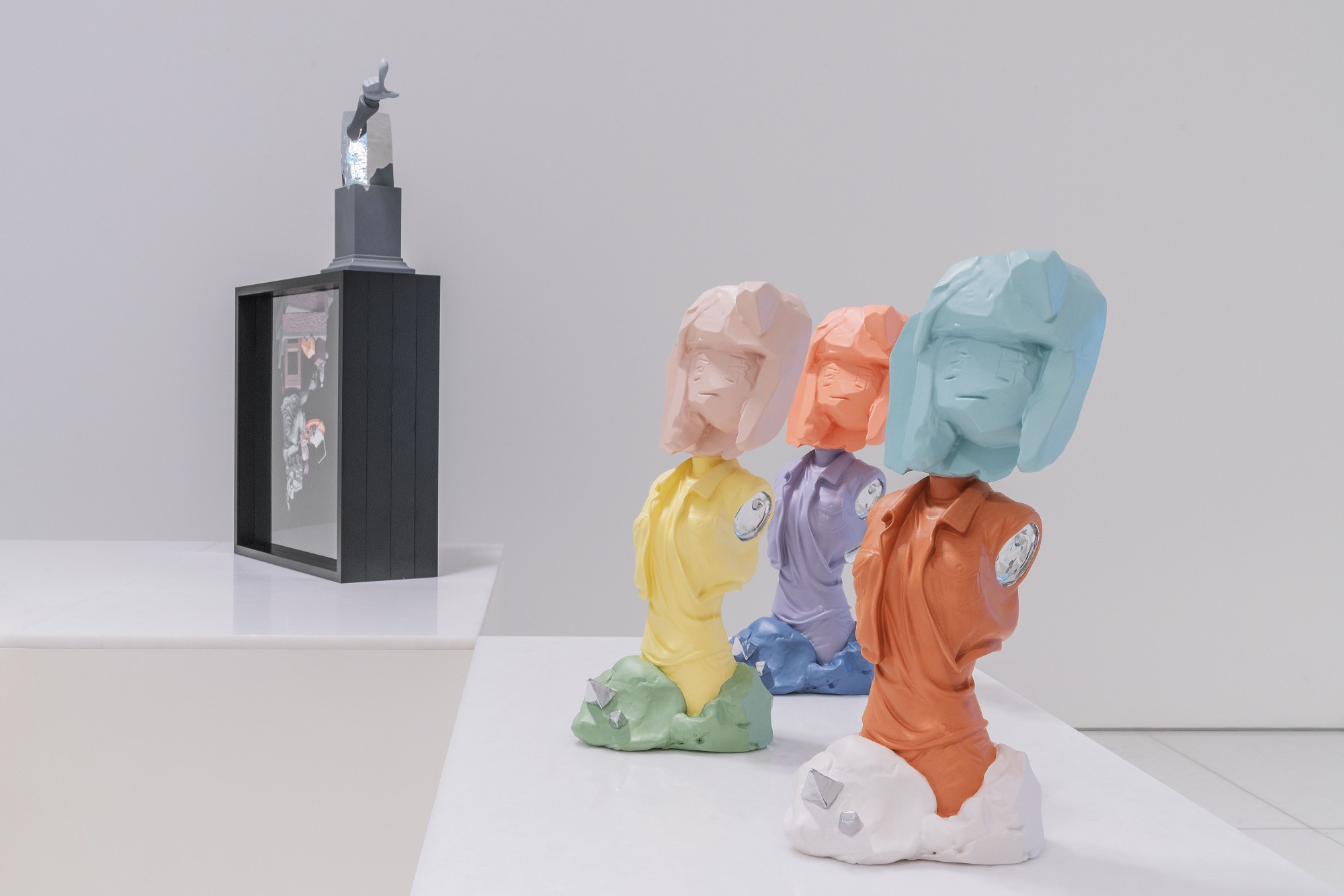
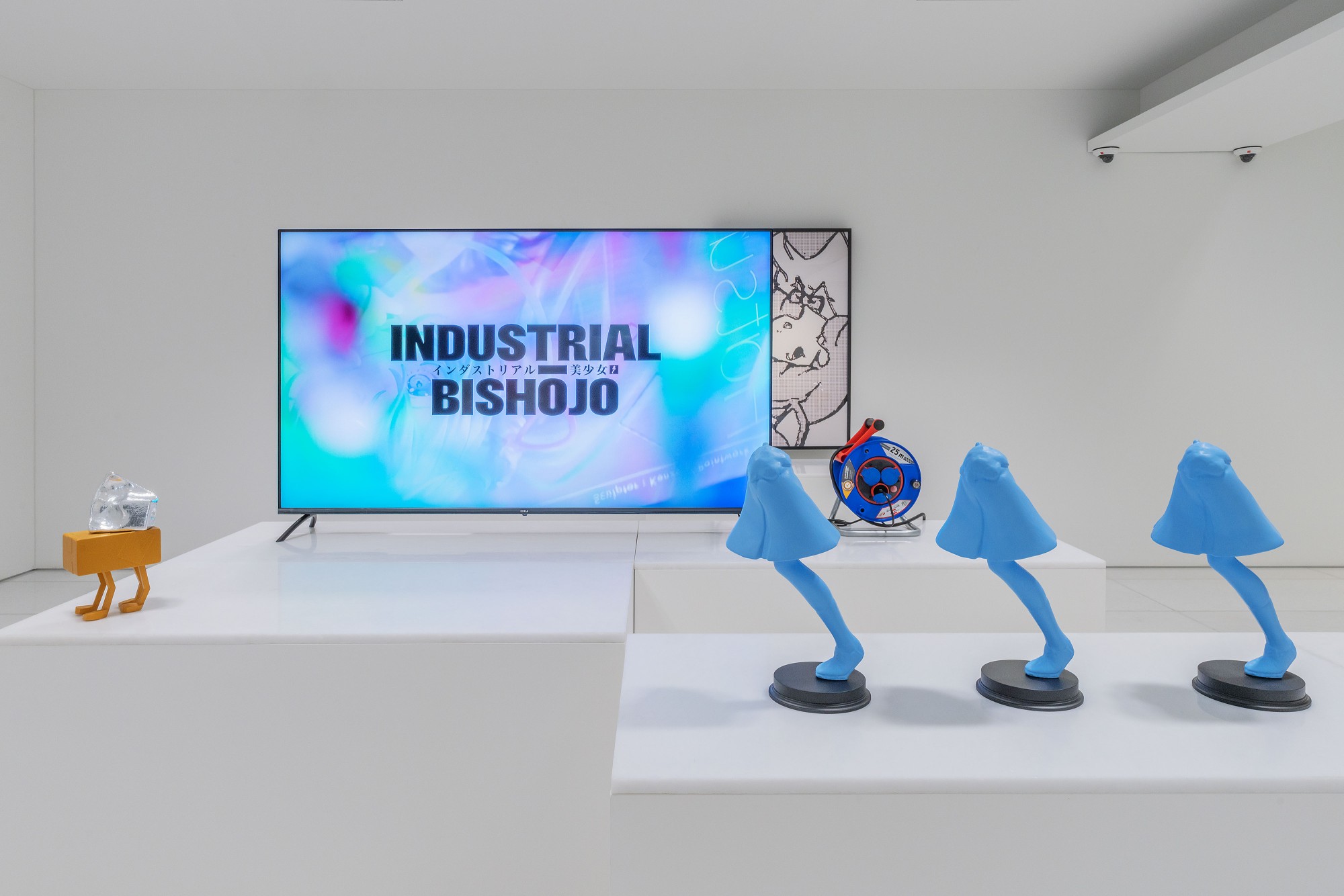
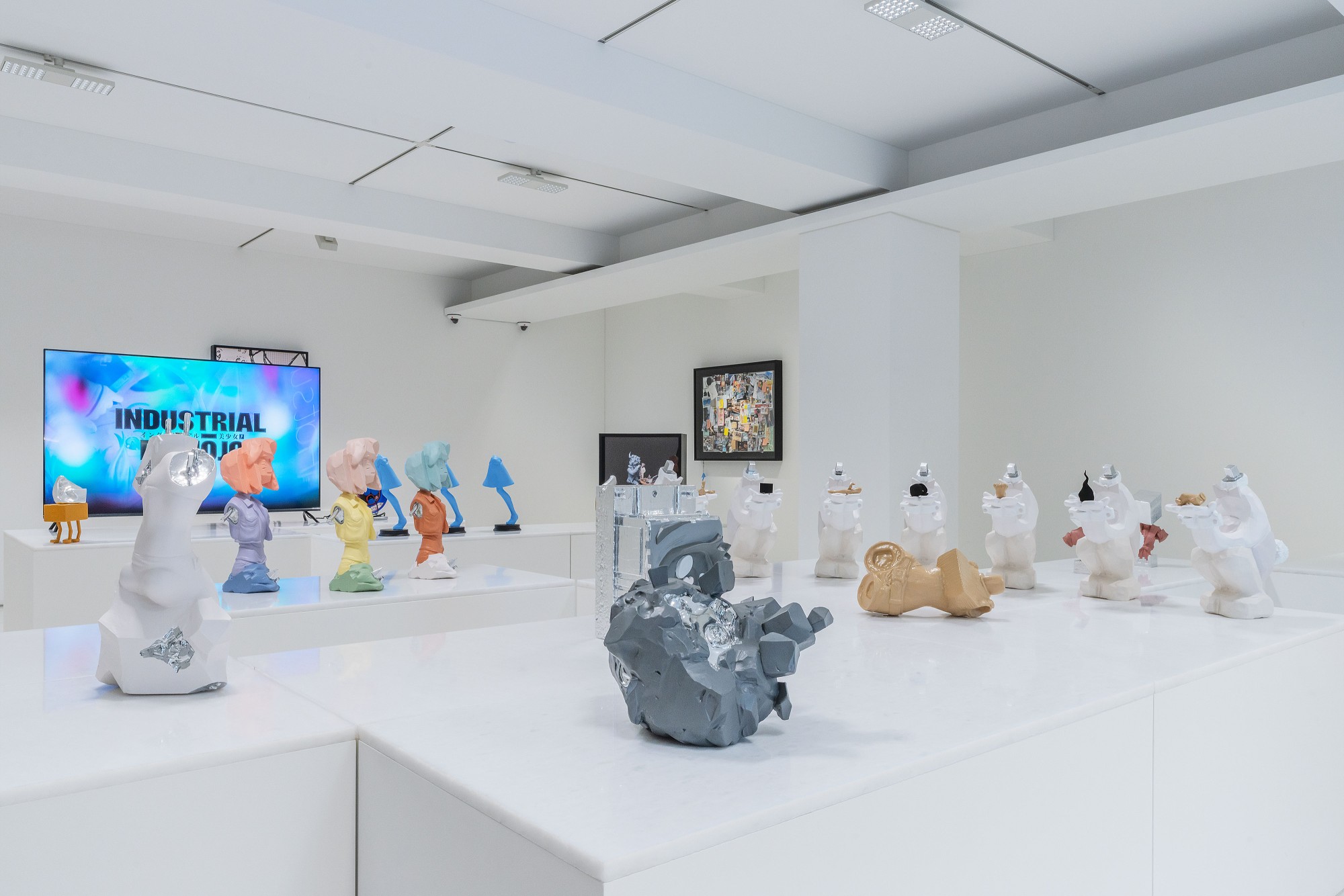
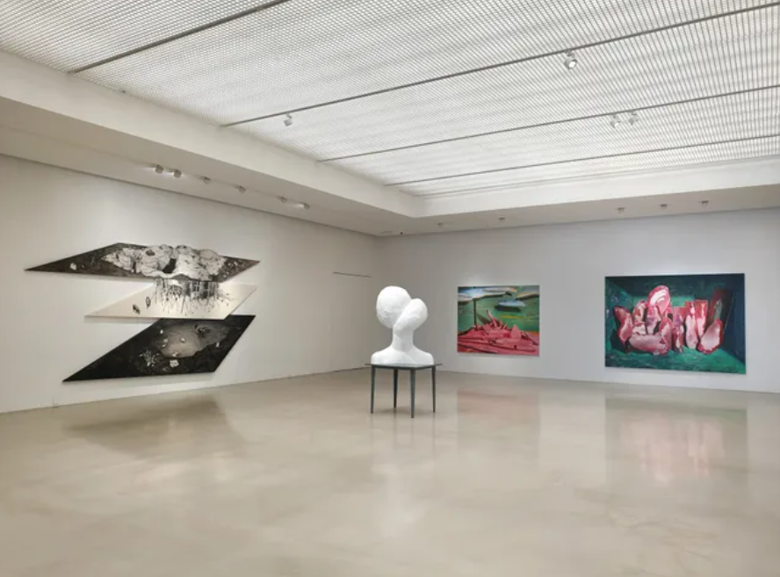
Installation view of 《Industrial Bishōjo》 (Arario Gallery, 2023) © Don Sunpil

In his 2023 solo exhibition 《Industrial Bishōjo》, Don Sunpil approached the production of “bishōjo” figures from the perspective of the producer.
 
Where his earlier works primarily focused on the signs and cultural phenomena that emerge through the consumption of figures, this exhibition turns its attention to the industrial structure behind their production.
 
Going beyond the logic of capitalist supply and demand, Don Sunpil imagines the forces driving the continuous production and variation of bishōjo figures, fueled by a fervor that is difficult to fully explain through economic rationality alone.


Installation view of 《Industrial Bishōjo》 (Arario Gallery, 2023) © Don Sunpil

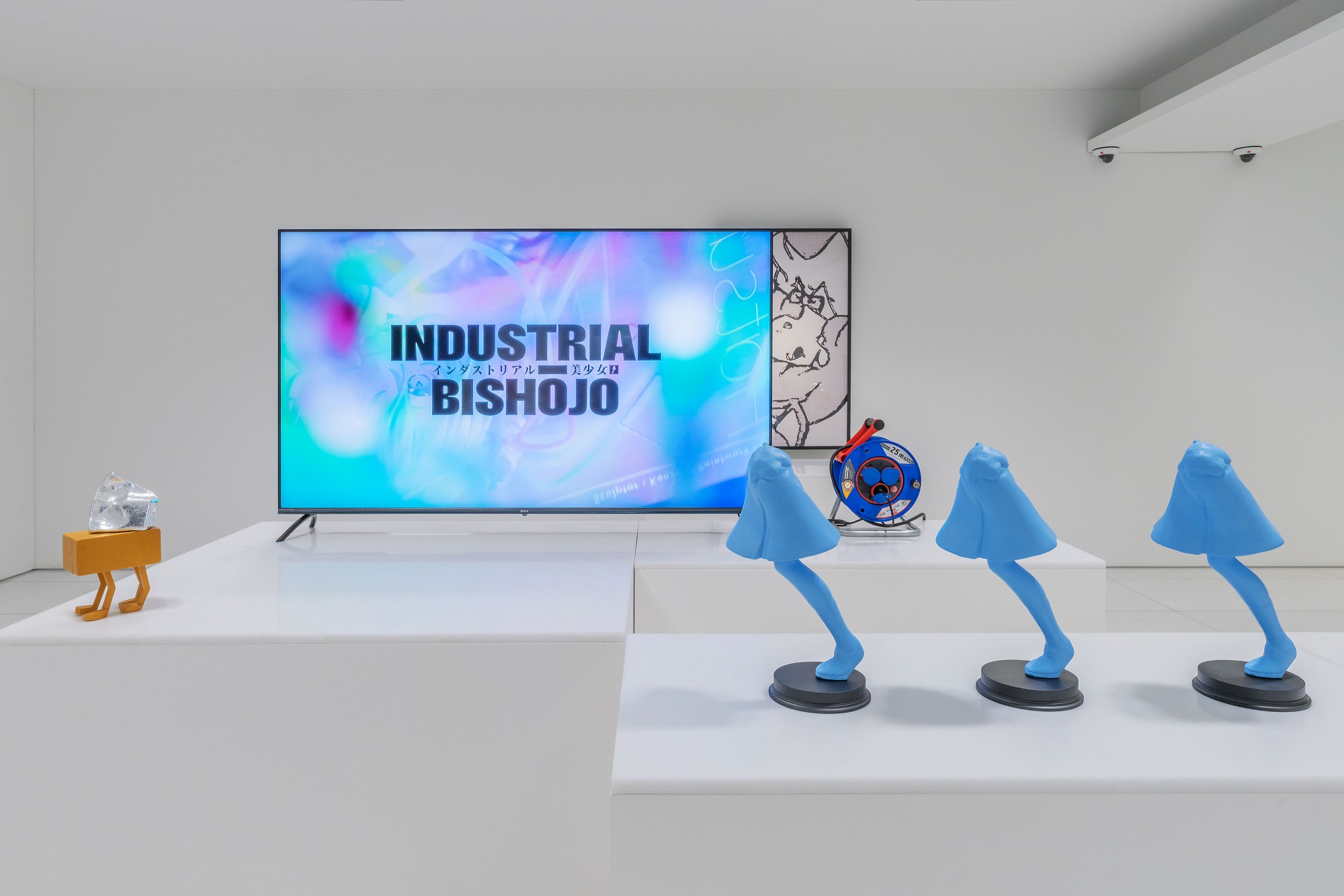
The artist establishes a correspondence between the video works, which represent the original animations, and the sculptures, which function as figures derived from them. Positioned among the sculptures as an integral component of the installation, the videos reveal the complementary and organic relationship between the original and its replicas.
 
The videos unfold the thoughts of Engineer J, who reflects on the tensions between aesthetic preferences, industrial demands, and conventional methods of production that are repeatedly employed. The sculptures, meanwhile, present transformed and reconfigured forms derived from distinctive features of bishōjo figures.


Installation view of 《Industrial Bishōjo》 (Arario Gallery, 2023) © Don Sunpil

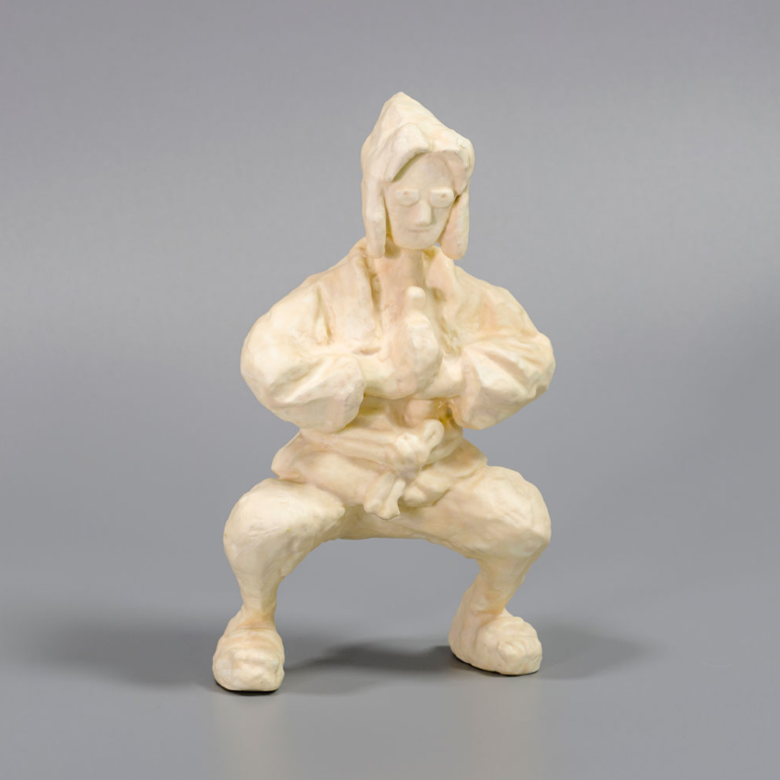
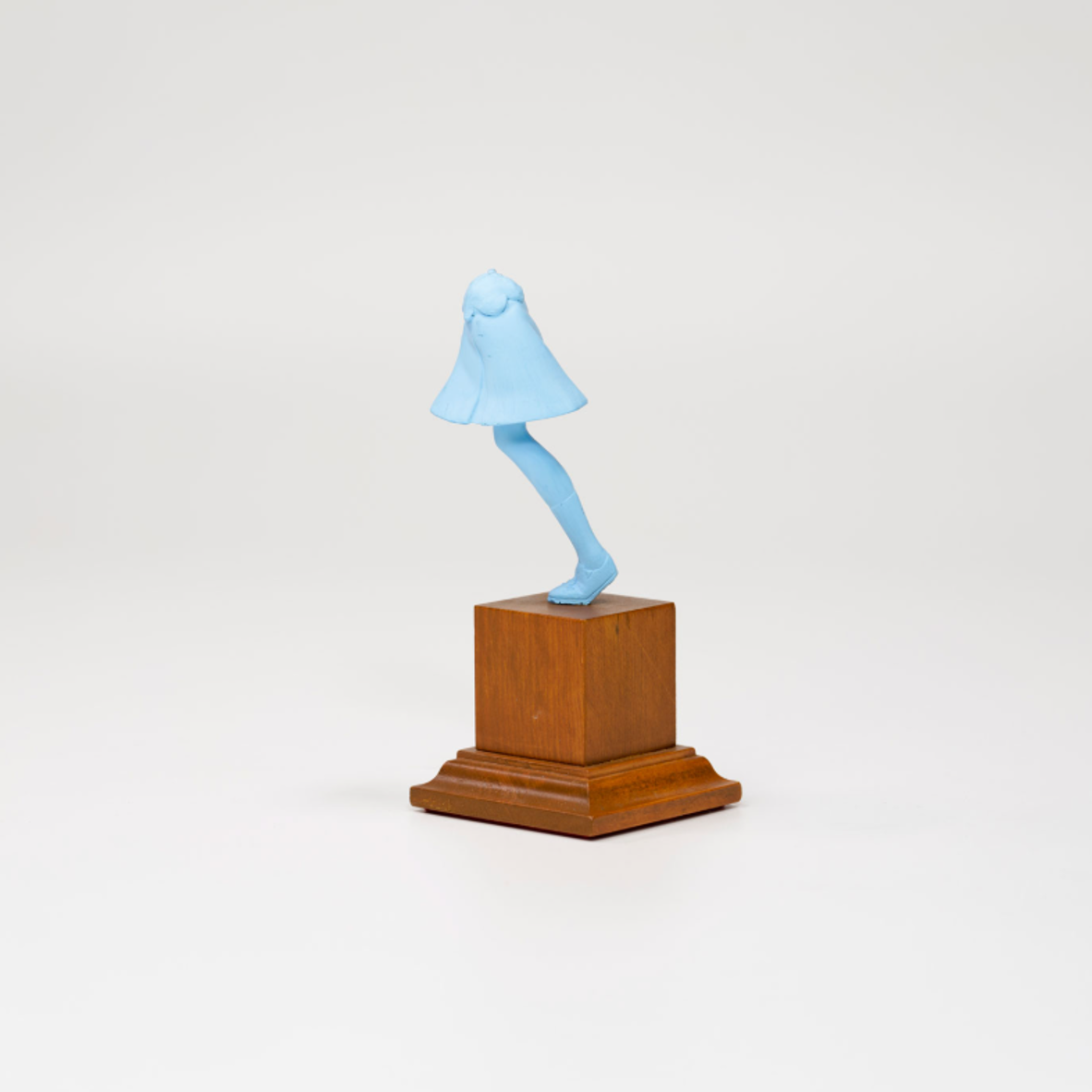
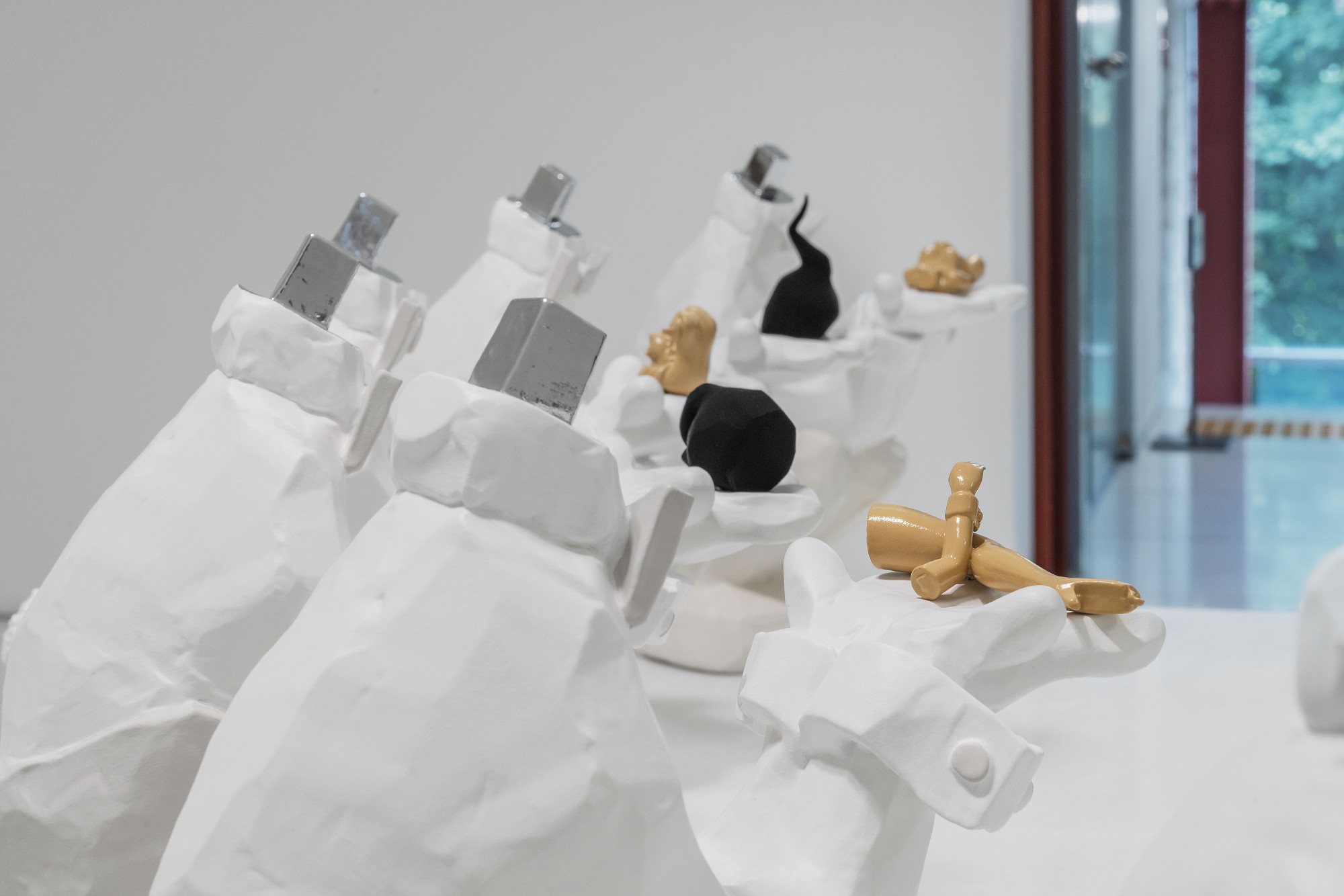
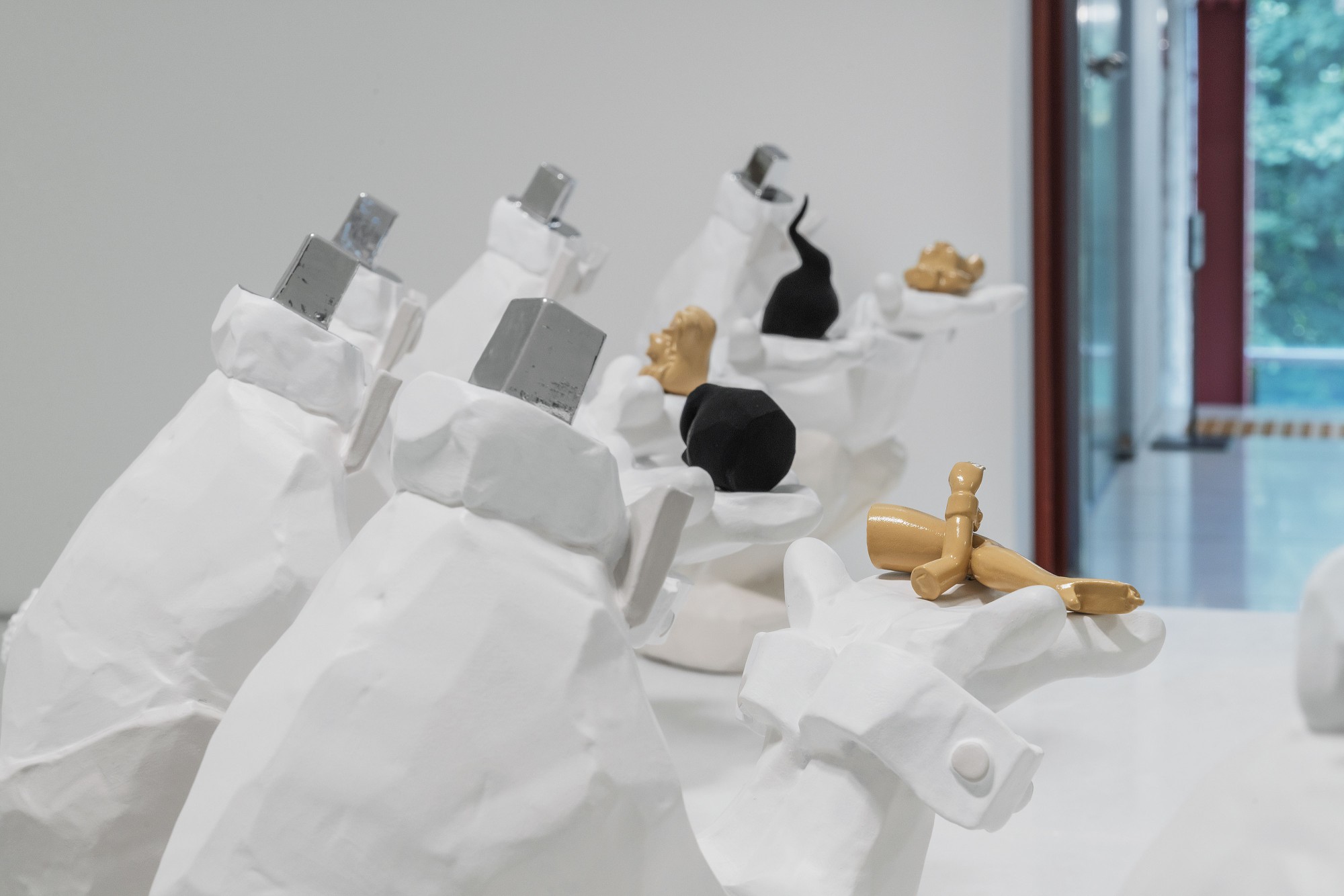
In particular, the “bunny girl” figures, which occupy much of the exhibition space, are repeatedly presented headless and crouching, each holding a different object in its hands. Having emerged and gained popularity alongside the rise of bishōjo figures in the 1980s, the bunny girl holds a particular significance for the artist as a kind of origin point for the bishōjo figure.
 
The other sculptures likewise explore subtle variations through repetition, presenting identical forms or the same forms in different colors. These repetitions and variations simultaneously reveal the figure’s fundamental nature as a mass-produced industrial product while highlighting the sculptural beauty of each individual work.


Installation view of 《Industrial Bishōjo》 (Arario Gallery, 2023) © Don Sunpil

Furthermore, the exhibition emphasizes fragments separated during the production process and identical sculptural components painted in different ways, rather than presenting figures as completed forms.
 
By shifting the focus to the stages of production that precede the finished figure, these works also serve to reveal the otherwise invisible presence of the genkeishi (原型師), the model sculptor involved in the process.
 
As one of the two pillars sustaining this unique world where industry and hobby converge, producers are agents who contemplate, imagine, and act along the boundary between the two. Rather than focusing on finished products, the exhibition gives form to the thoughts, uncertainties, and hesitations that emerge along the way toward their completion.


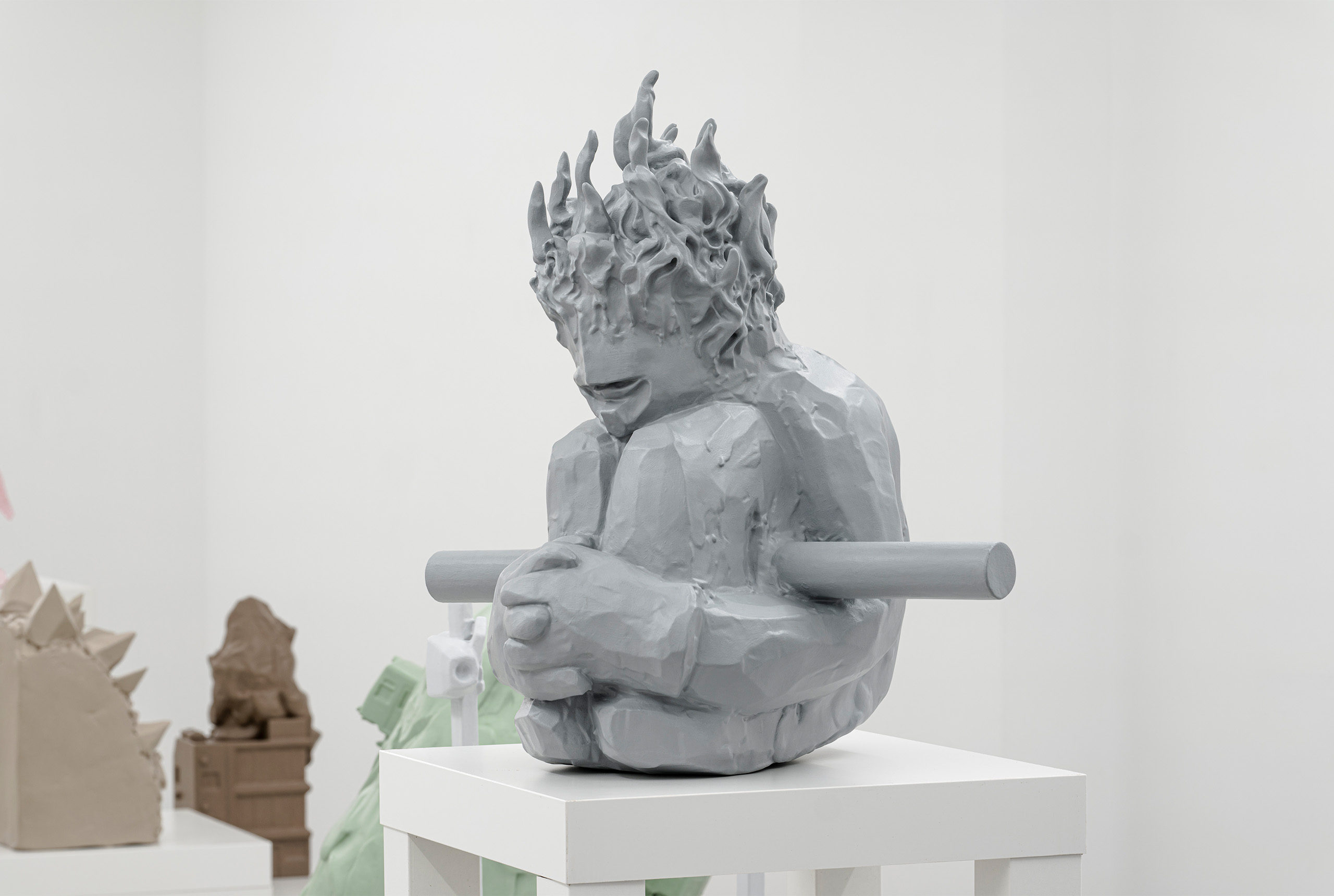
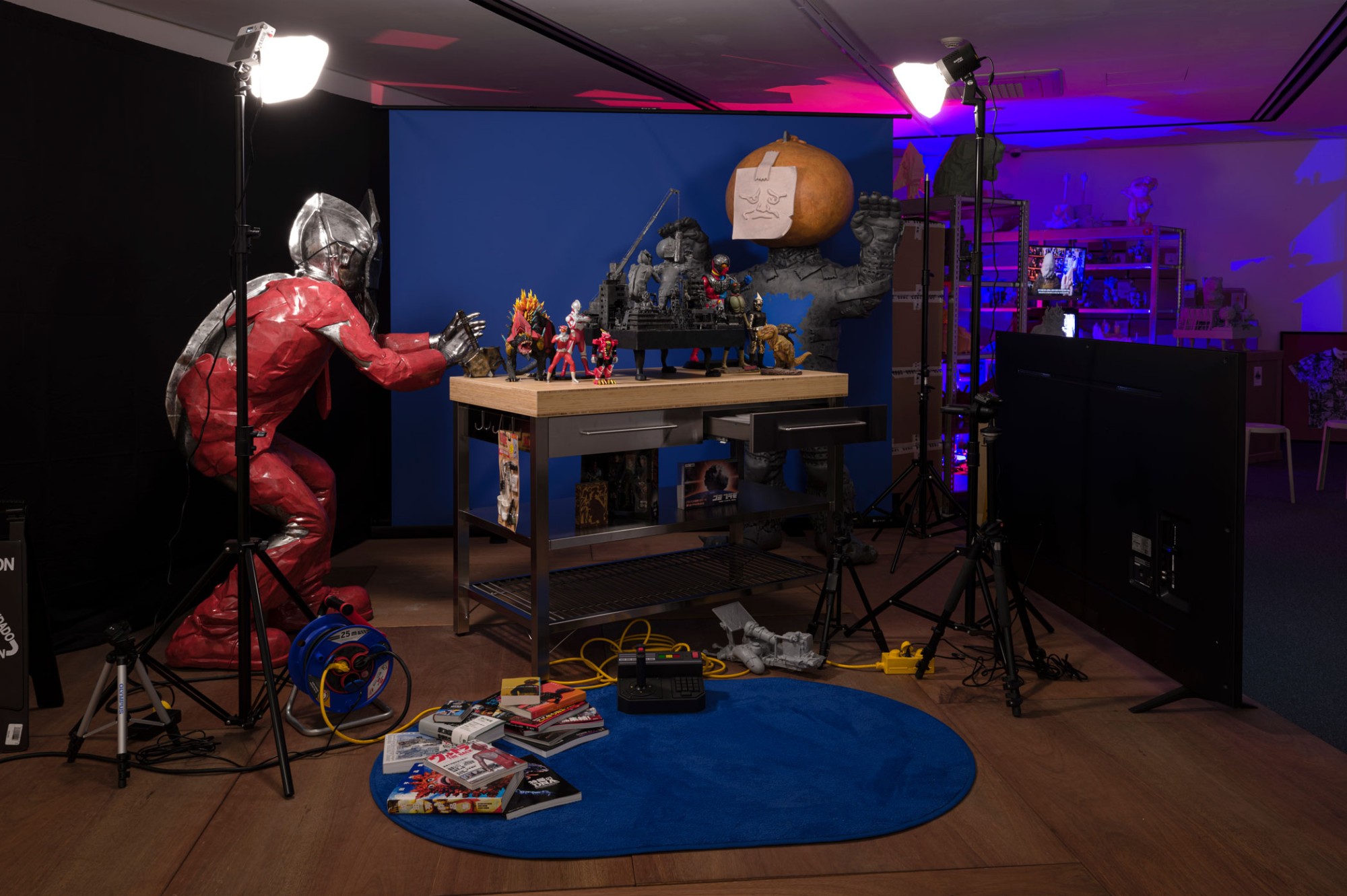
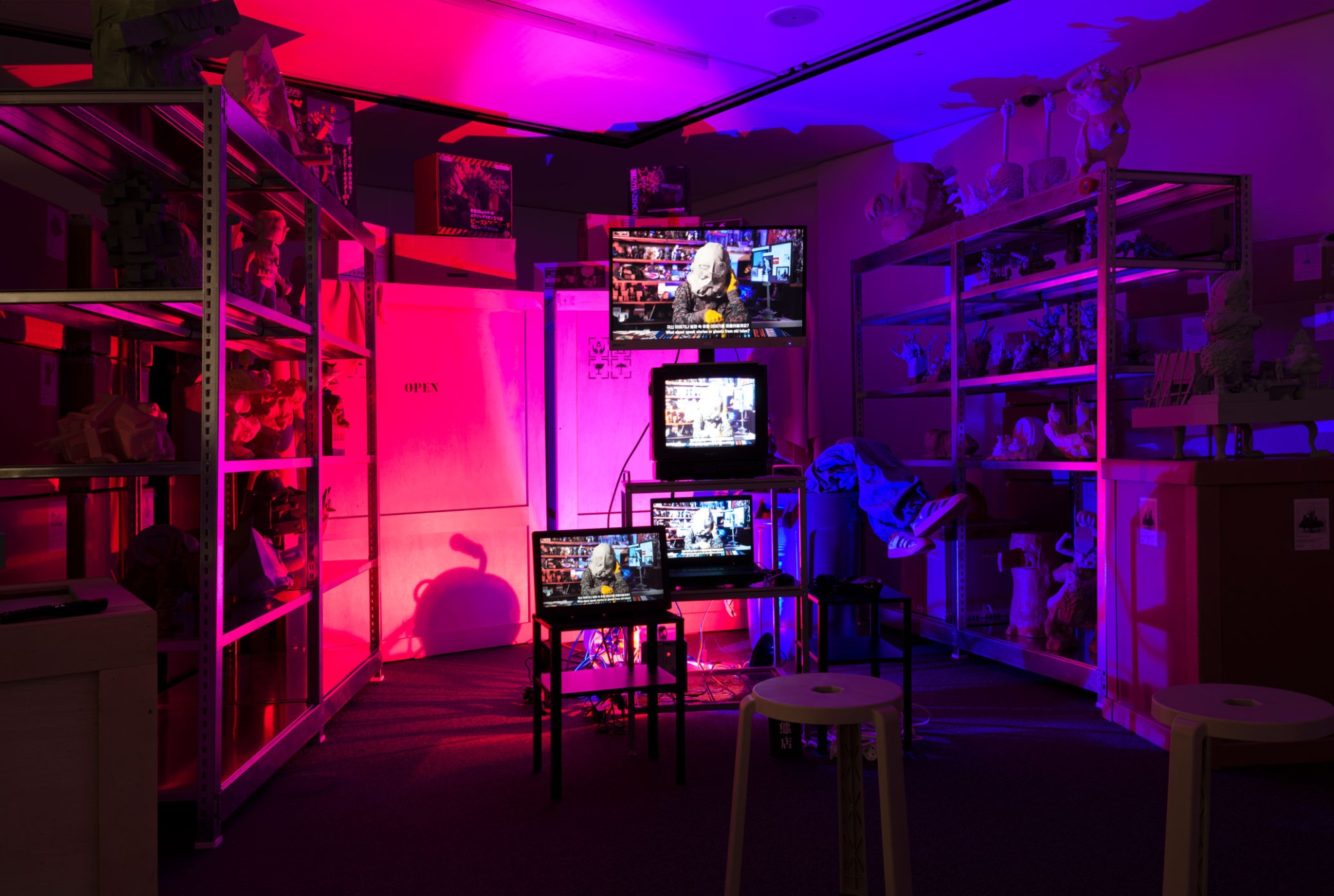
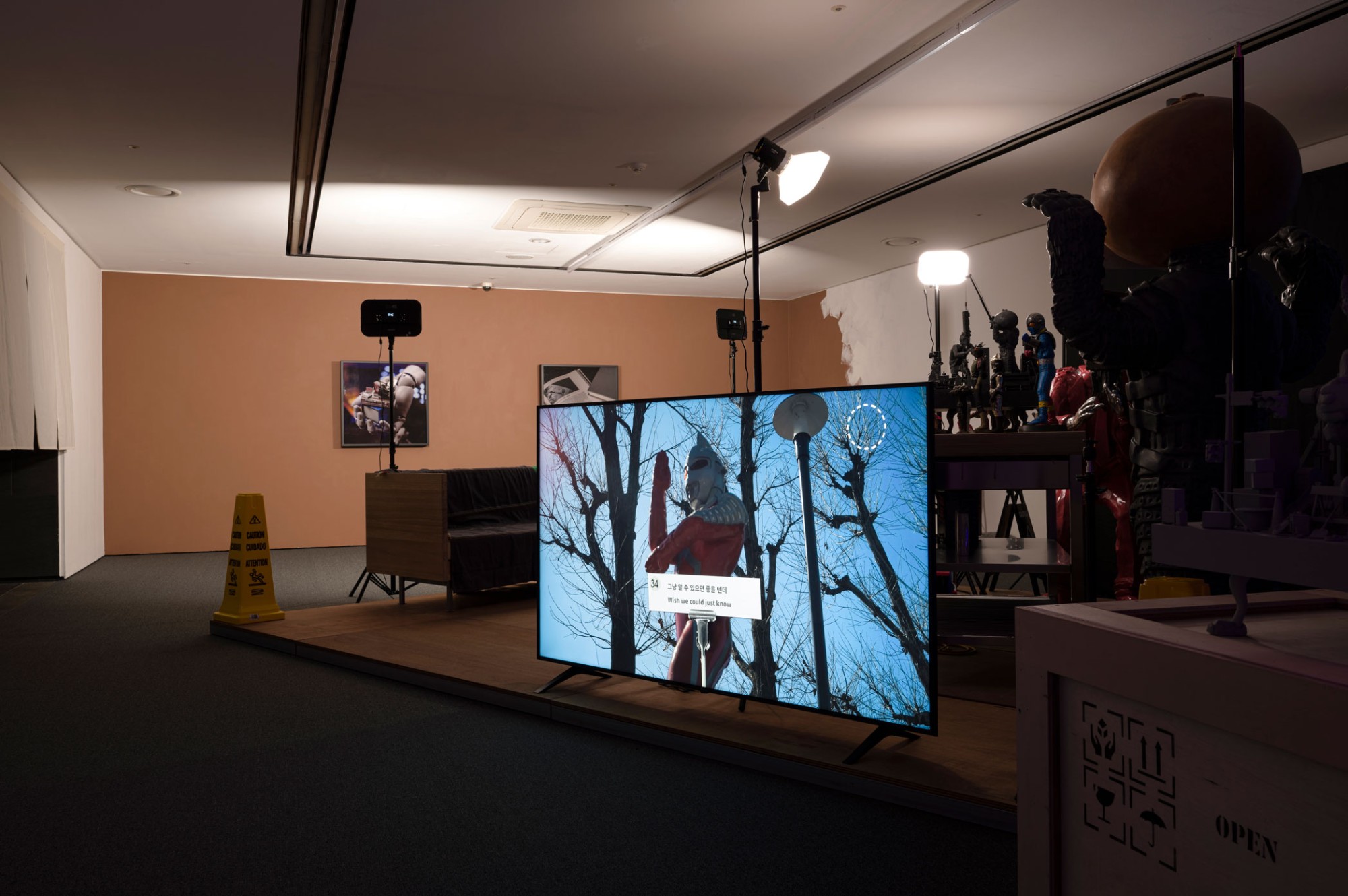
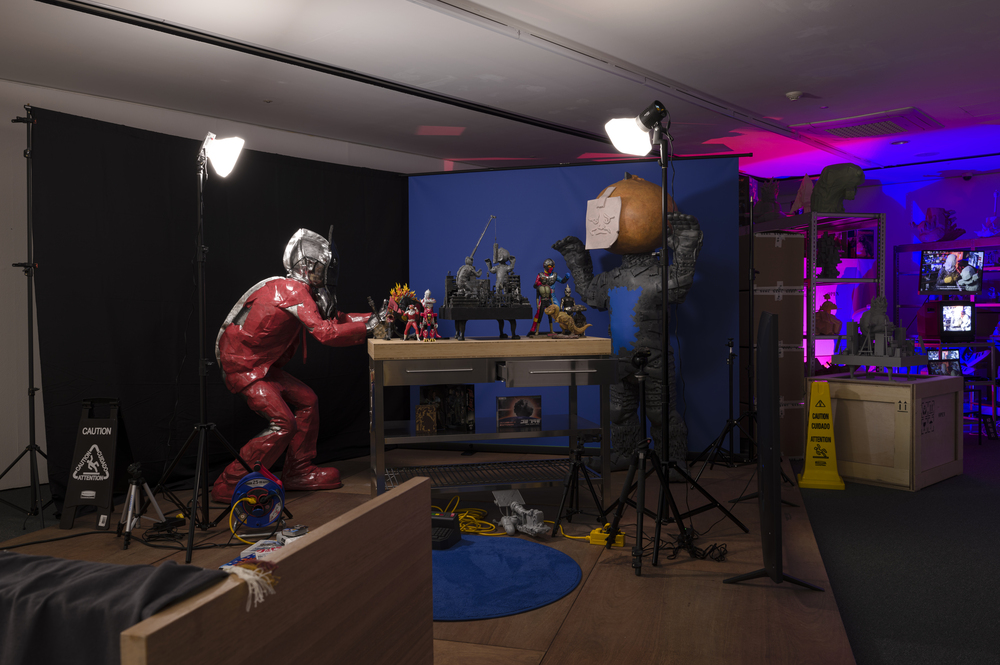
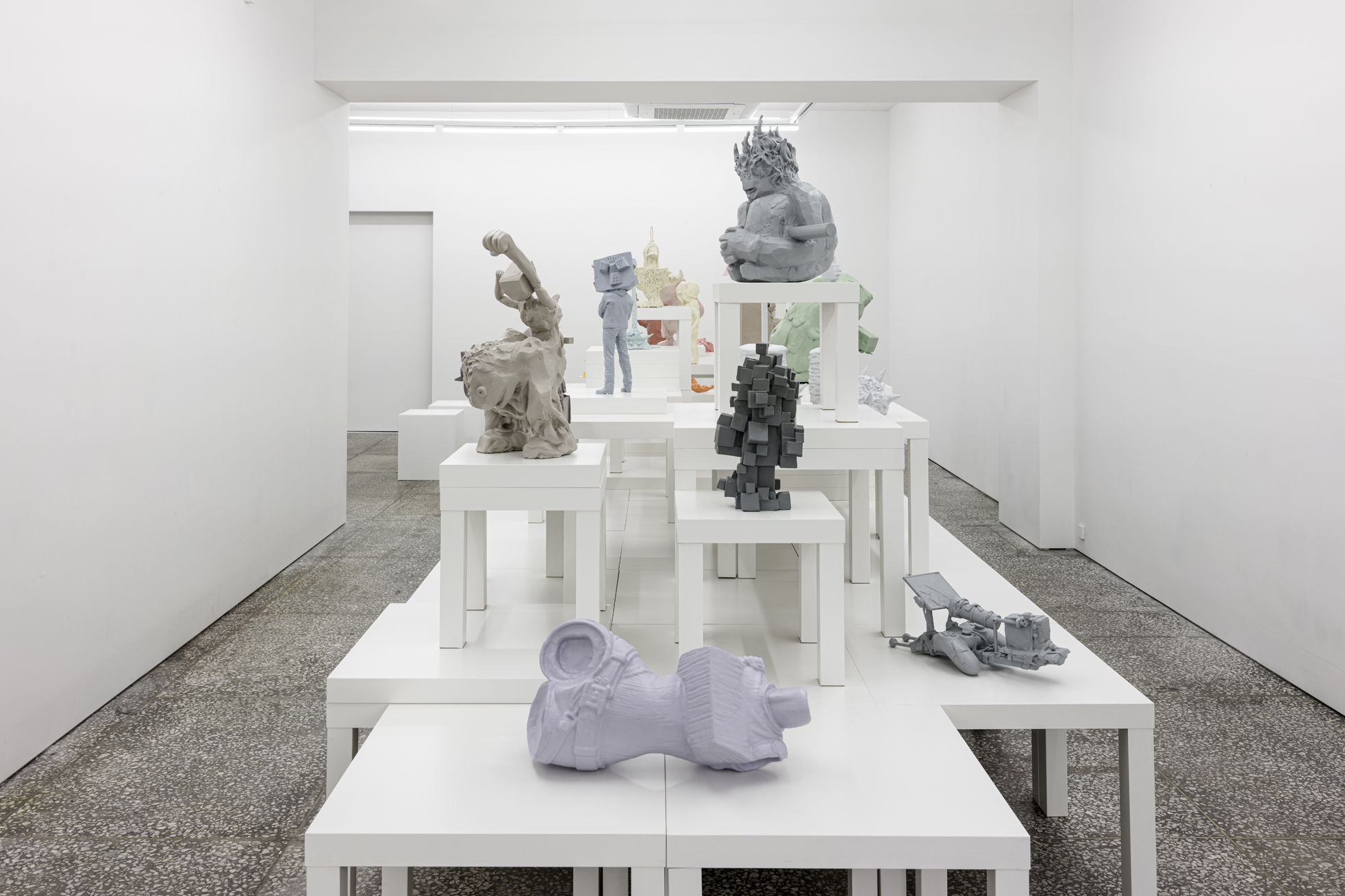
Installation view of 《Dreary Tangerine》 (Perigee Gallery, 2025) © Don Sunpil

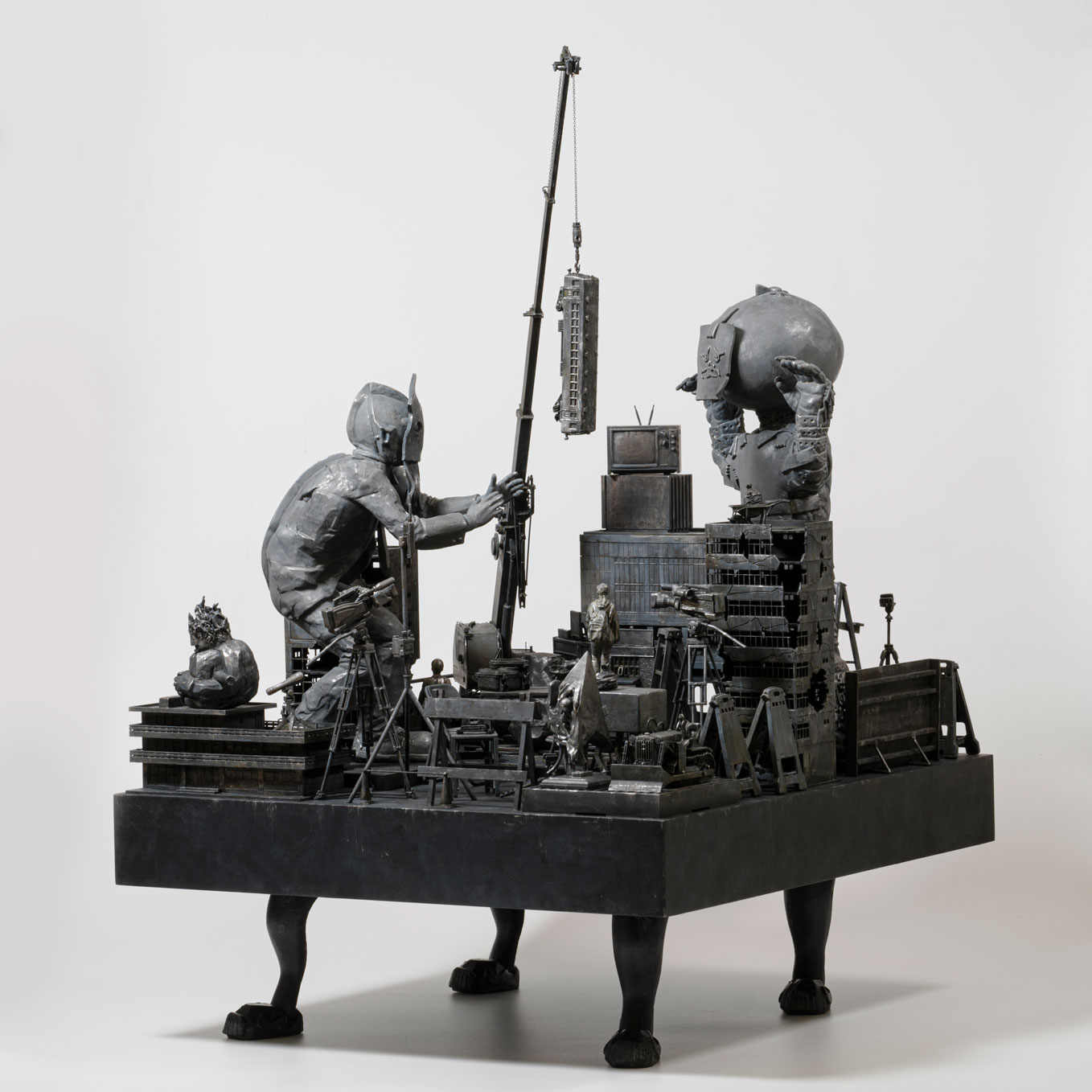
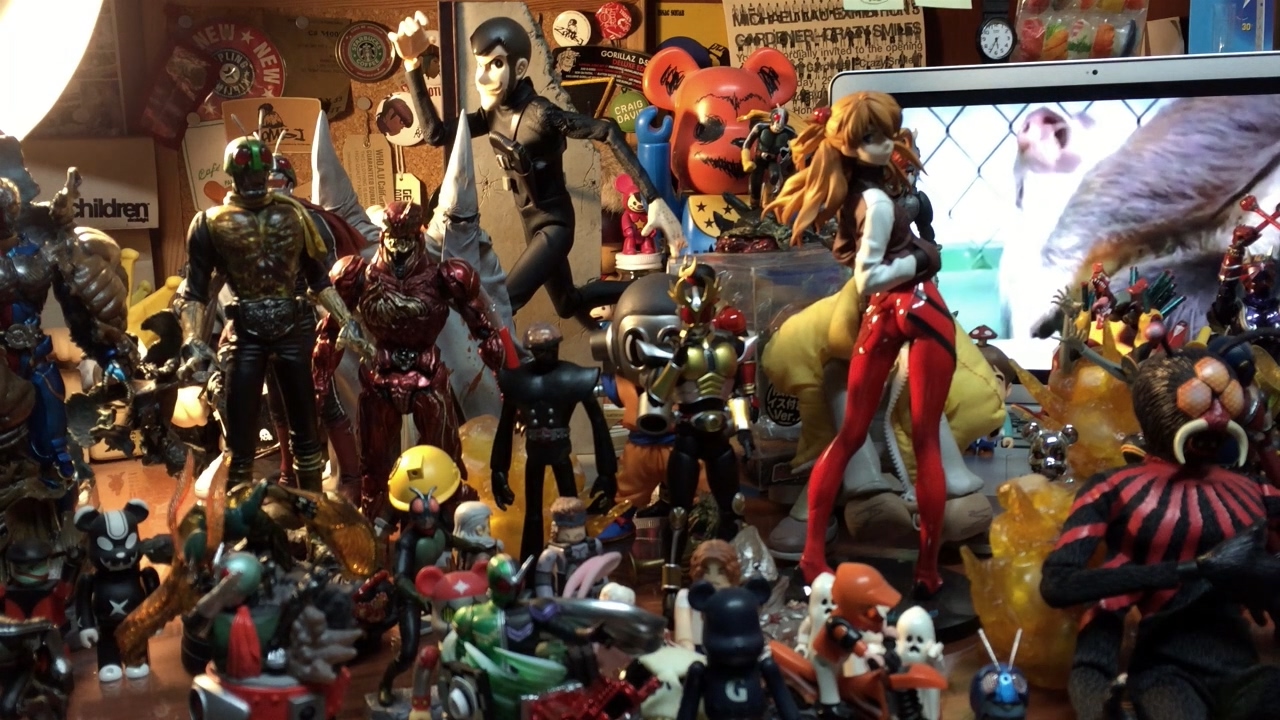
His 2025 solo exhibition 《Dreary Tangerine》 grew out of Don Sunpil’s interest in tokusatsu (特撮), a process that combines various attempts to recreate fictional temporal and spatial settings in reality—including those that have yet to come into existence or have already disappeared.
 
What the artist finds particularly compelling is that, even after filming is complete, the objects involved still remain as tangible entities. Masks, suits, monster bodies, diorama sets portraying cityscapes—these are all created while negotiating unavoidable constraints of necessity and limitation. Even after shooting concludes, they remain in reality, preserving strange traces of their fictional forms.


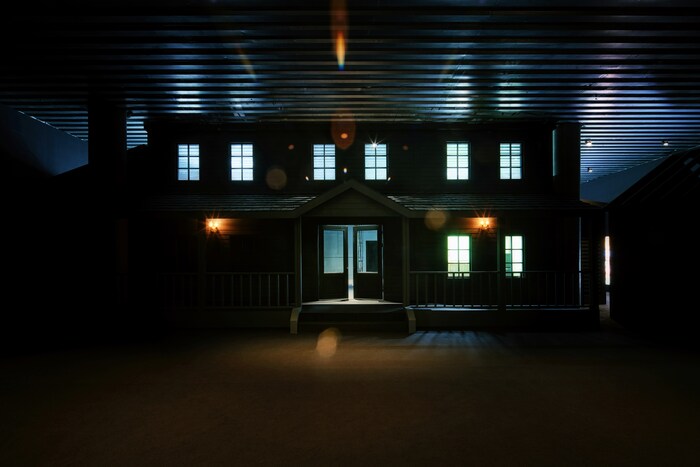
Installation view of 《Dreary Tangerine》 (Perigee Gallery, 2025) © Don Sunpil

Meanwhile, the exhibition intricately unfolds a cyclical structure in which stories that begin with personal life, hobbies, or work disperse into sculpture, writing, and video—only to return again as objects.
 
The artist does not forcibly seal the gaps between text and form, the external transformations of materiality, or the moments when surfaces crack open.


Installation view of 《Dreary Tangerine》 (Perigee Gallery, 2025) © Don Sunpil

The study of figurines offers a compelling example that encapsulates the structure and character of Tokusatsu. The artist analyzes not only the precise reproduction of a figurine’s appearance but also the coexisting elements that deviate from realistic proportions and balance.
 
This approach can be perceived differently depending on the viewer—beautiful and alluring to some, strange and uncanny to others, as a peculiar hybrid form.
 
The artist follows Tokusatsu unfolding what they perceive exactly as it is, without exaggeration or omission. This becomes an act of expressing something not yet clearly defined, allowing the audience to see what can be seen, and feel what can be felt.


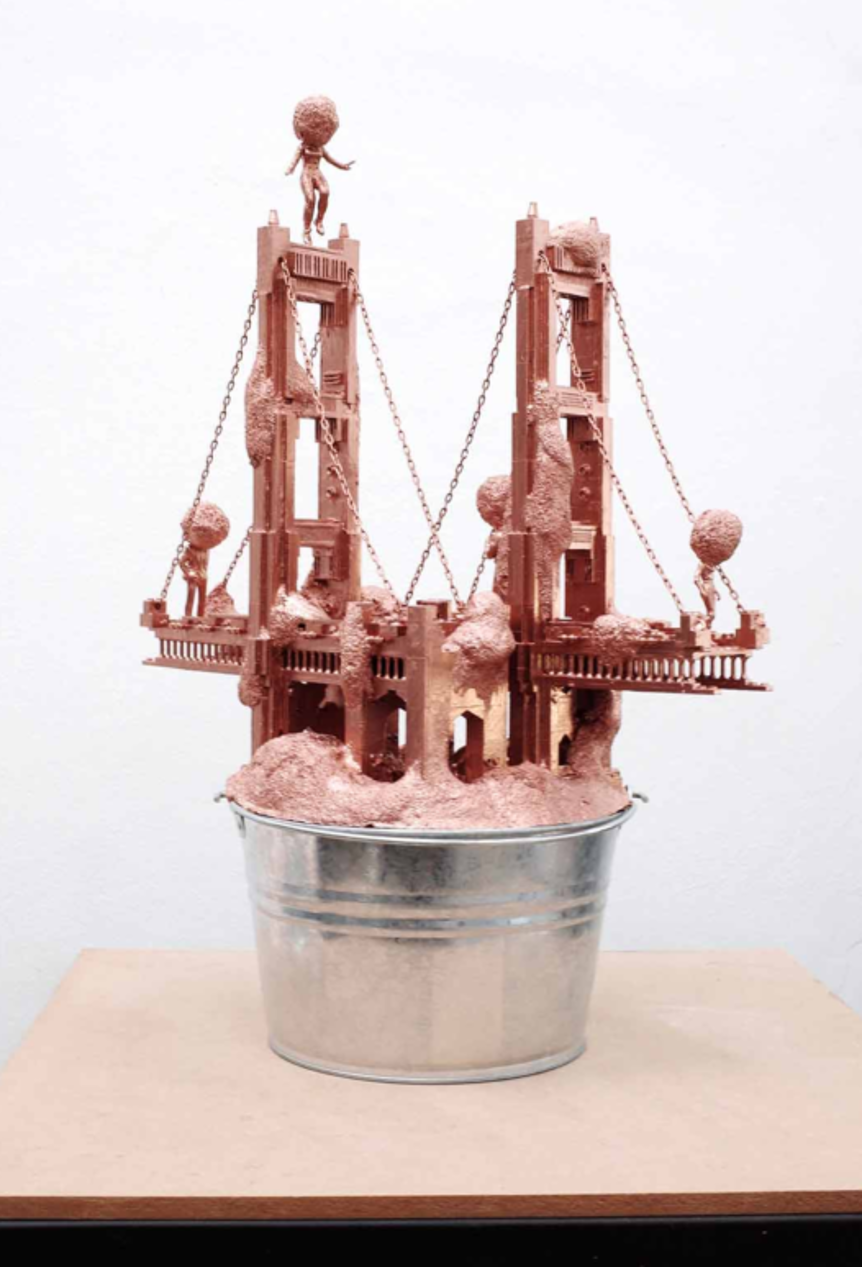
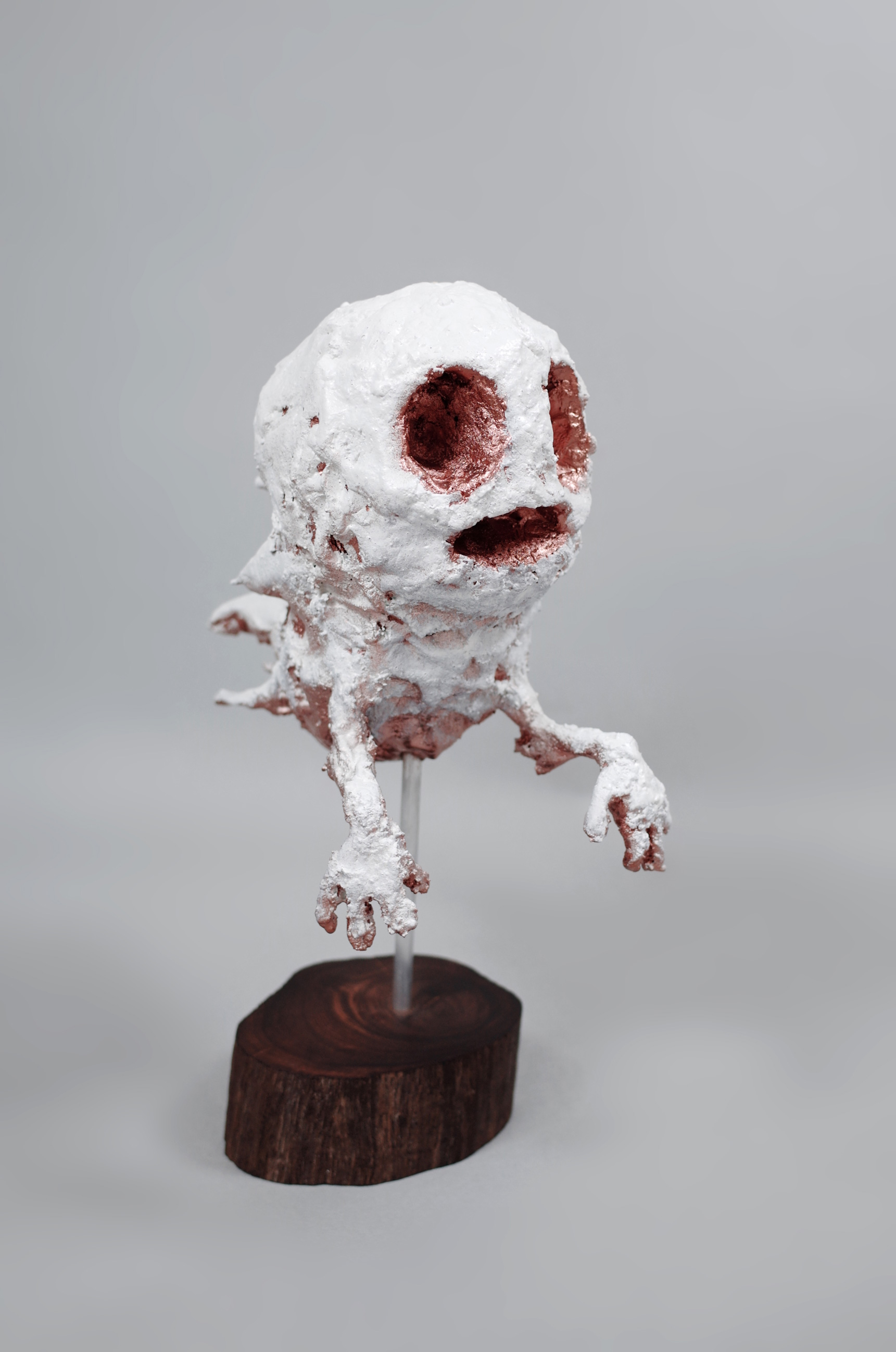
Don Sunpil, Specimen of Affect Phenomenon (SAP): Error+Conservation, 2022, Resin, primer, poly putty, acrylic paint, varnish, 449x462x335(HxWxD)mm © Don Sunpil

In this way, Don Sunpil has explored the processes through which objects and characters come into being and the various ways in which they can be consumed, redefining social phenomena and events from the perspective of the “figure.”
 
Based on these inquiries, he presents sculptural objects and narrative videos corresponding to each subject and phenomenon, expanding the figure into both a sculptural form and a way of looking at reality.
 
Like figures that continually branch into new forms from a single original, Don Sunpil’s practice likewise refuses to settle on a definitive judgment or fixed meaning, instead unfolding into multiple possibilities.
 
While capturing emotions and sensations that arise momentarily within a particular atmosphere, he also explores the invisible paths that emerge only in the process of moving between reality and the virtual, and between the original and its derivatives.

“We possess the ability of abstraction to define what is unknowable, as well as the ability of materialization to contain it once again in a concrete form. I encourage you to slowly encounter once more the small objects and fleeting images that pass by unnoticed in everyday life.
 
Perhaps they still hold the traces of an affect that you had momentarily forgotten, yet already knew, one that remains endlessly vivid.” (Don Sunpil, excerpt from “Reja: Lighter than the Mask, Thicker than the Shell,” 2025)


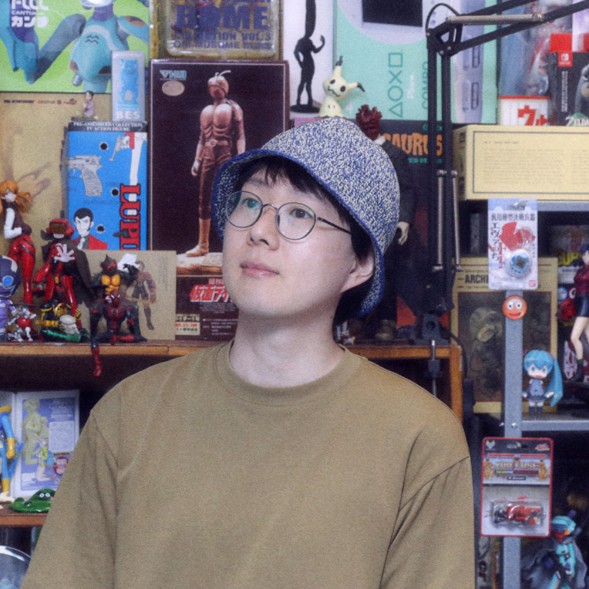
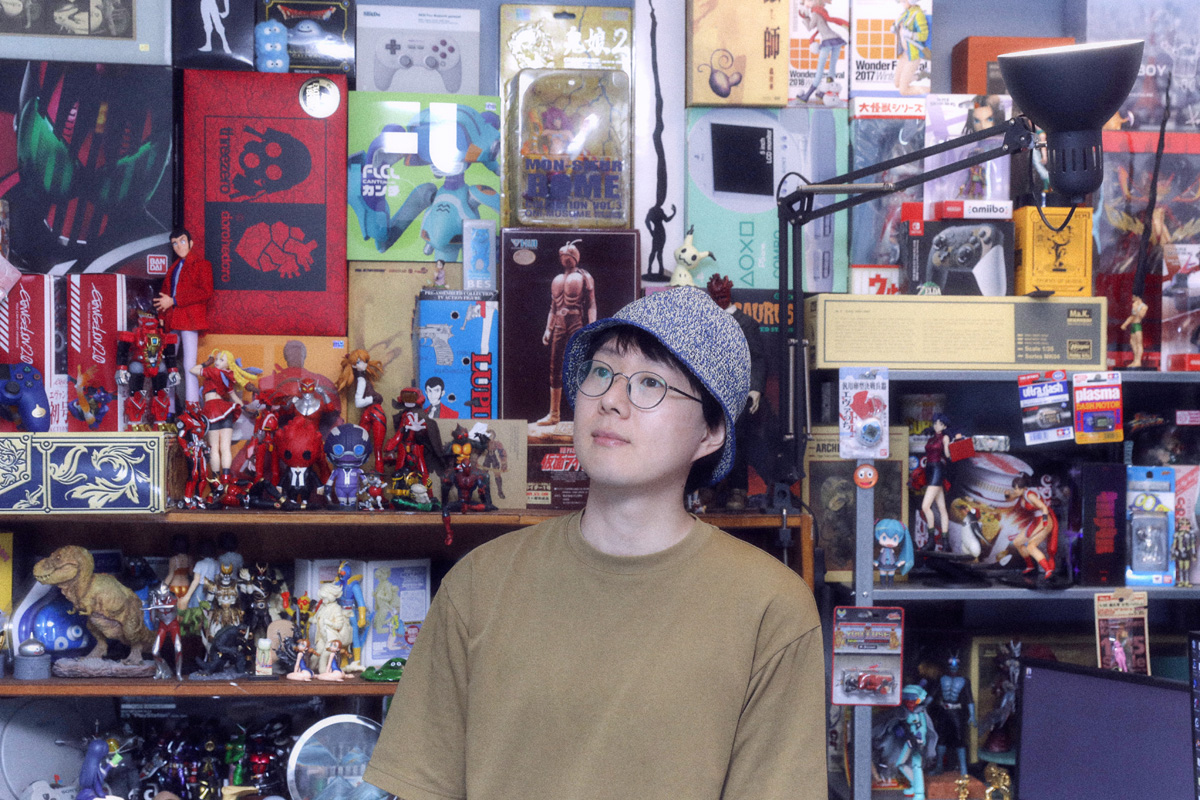
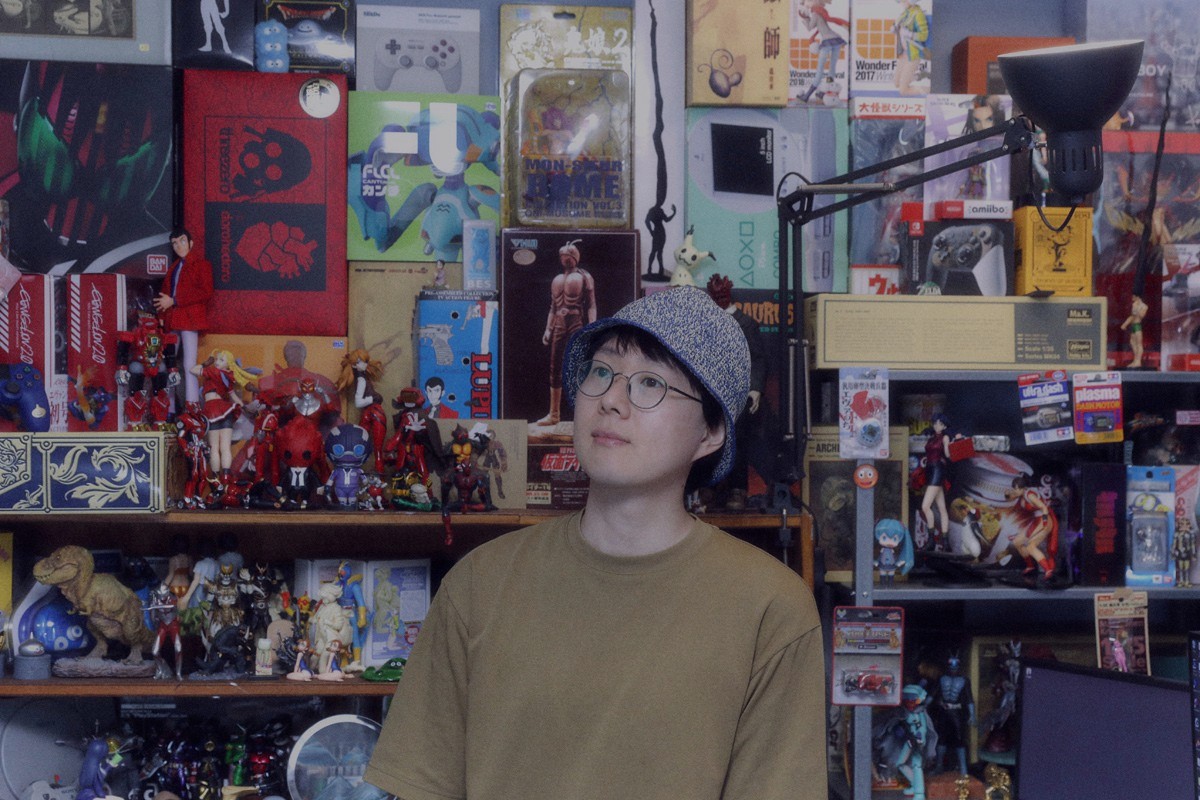
Artist Don Sunpil © Visla Magazine

Don Sunpil received his BFA in Printmaking at Hongik University and MFA in Fine Arts at Seoul National University of Science and Technology. His recent solo exhibitions include 《Dreary Tangerine》 (Perigee Gallery, Seoul, 2025), 《Electronic Tomb Raider》 (Kukje Electronic Center, Seoul, 2024), 《Industrial Bishōjo》 (Arario Gallery, Seoul, 2023), and 《Kai • Ju • People》 (YPC Space, Seoul, 2022).
 
He has also participated in numerous group exhibitions, including 《Reverse Cabinet》 (COEX, Seoul, 2025), 《Kitsch & Pop: Korean Pop Art Now》 (Korean Cultural Center China, Shanghai, 2025), 2024 Art Spectrum 《Dream Screen》 (Leeum Museum of Art, Seoul, 2024), 《Unboxing Project 3: Maquette》 (New Spring Project, Seoul, 2024), 《Fake it Real》 (Digital Art Center, Taipei, 2022), 《The Fable of Net in Earth》 (ARKO Art Center, Seoul, 2022), and 《Sculptural Impulse》 (Buk-Seoul Museum of Art, Seoul, 2022).
 
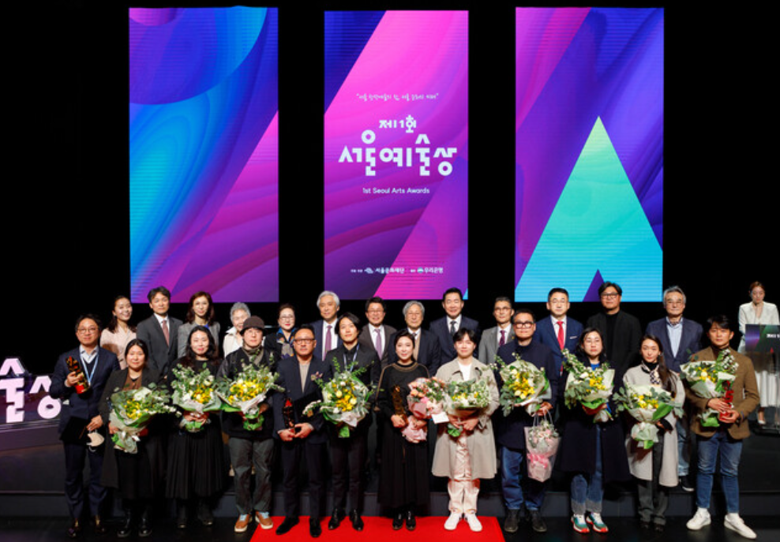
In 2023, Don Sunpil received the Excellence Award in the Visual Arts category at the 1st Seoul Arts Award. His works are held in the collections of the MMCA Art Bank, Seoul Museum of Art, Busan Museum of Art, and Arario Collection, among others.

References