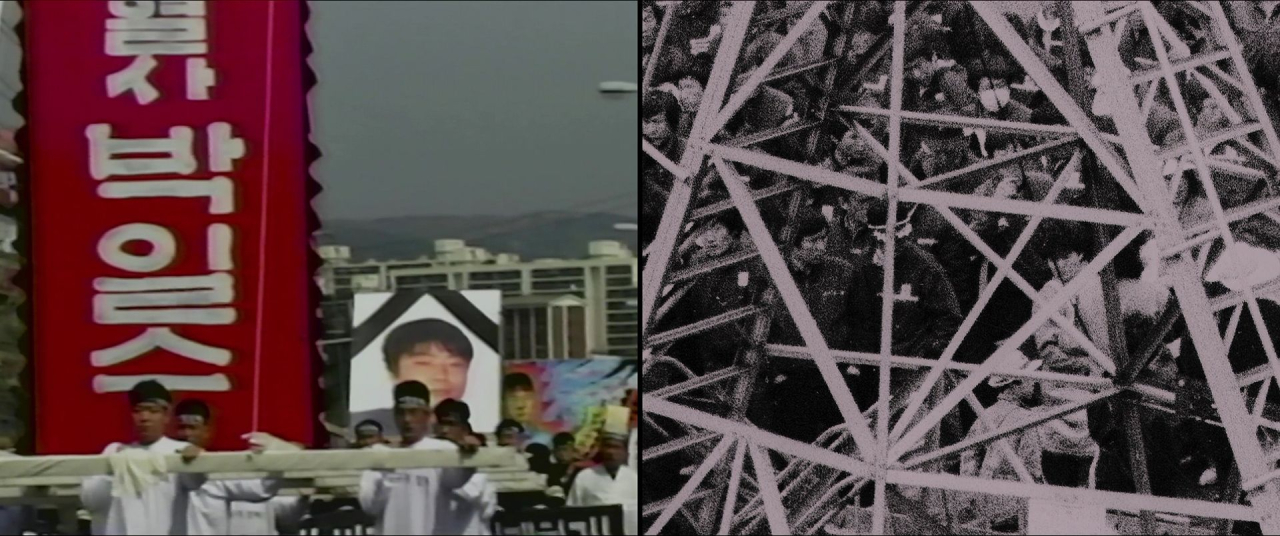
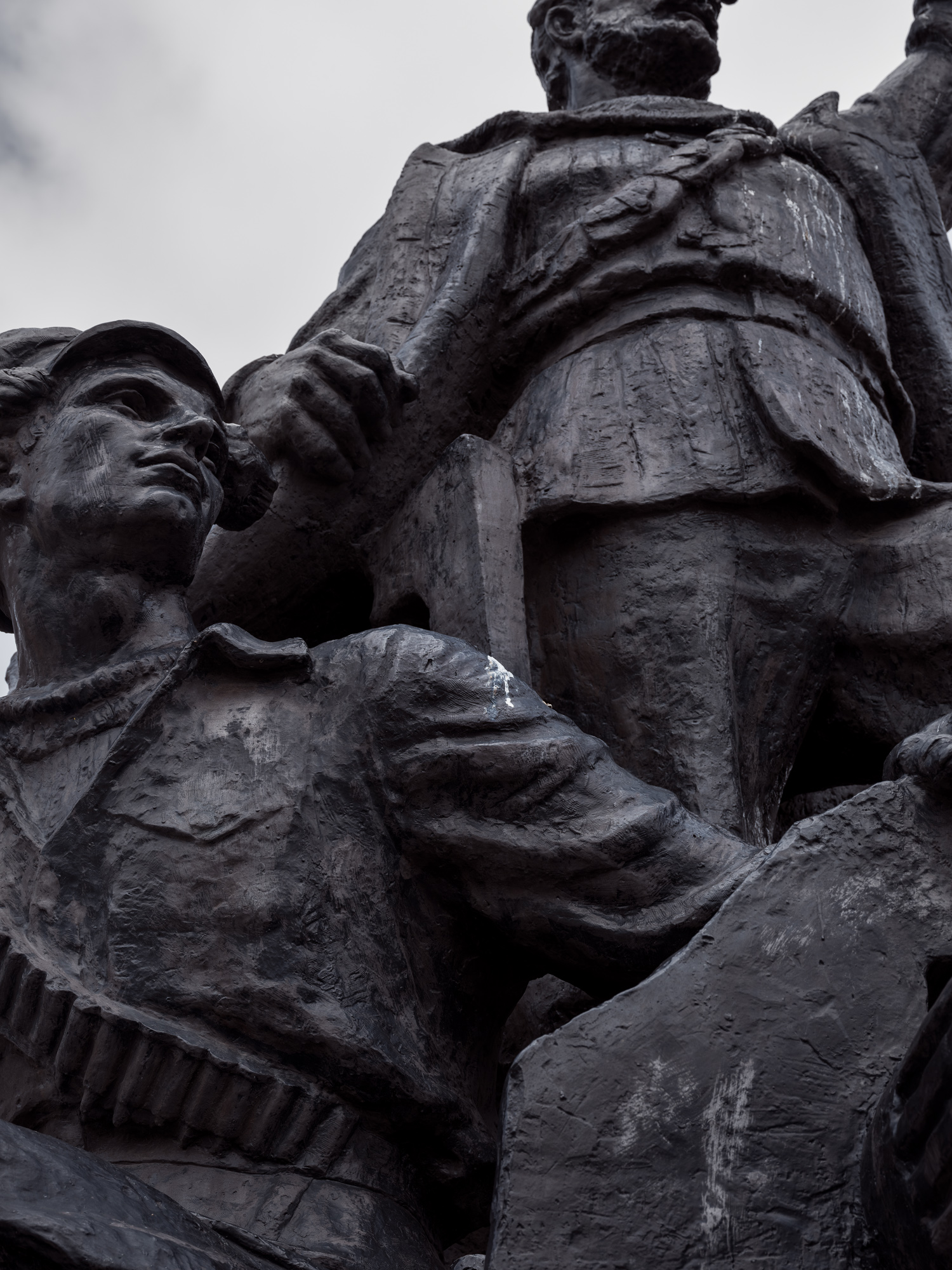
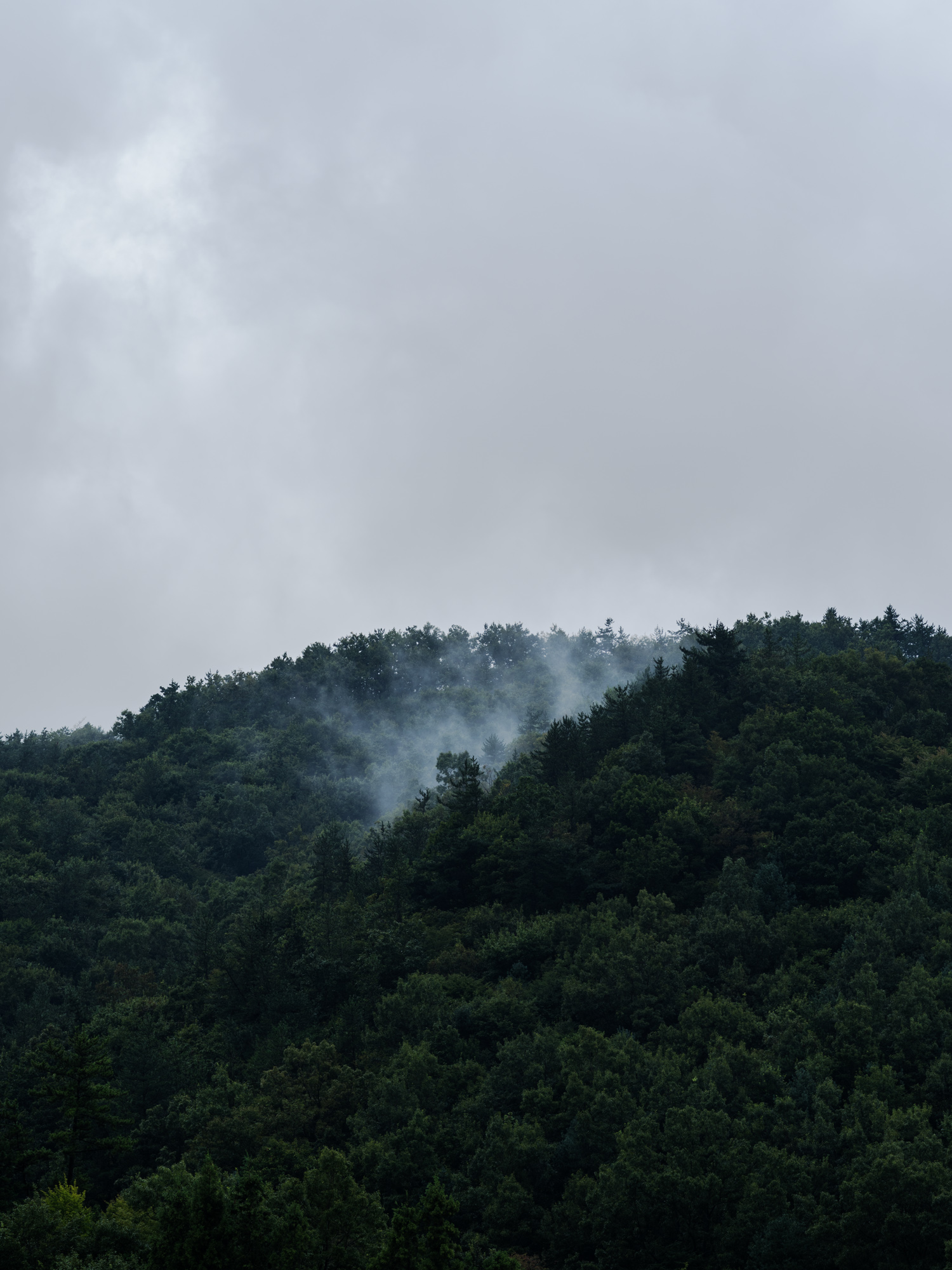
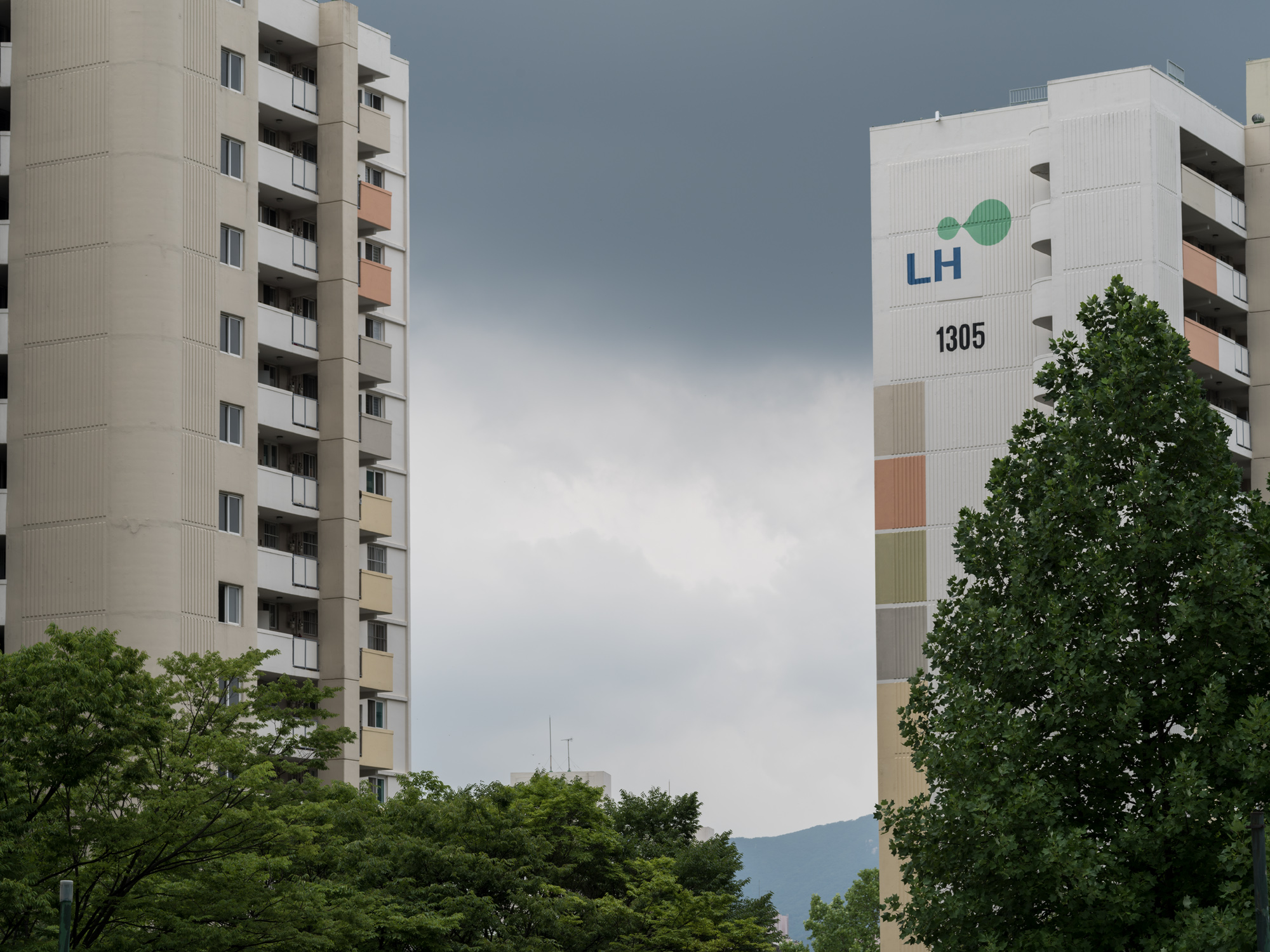
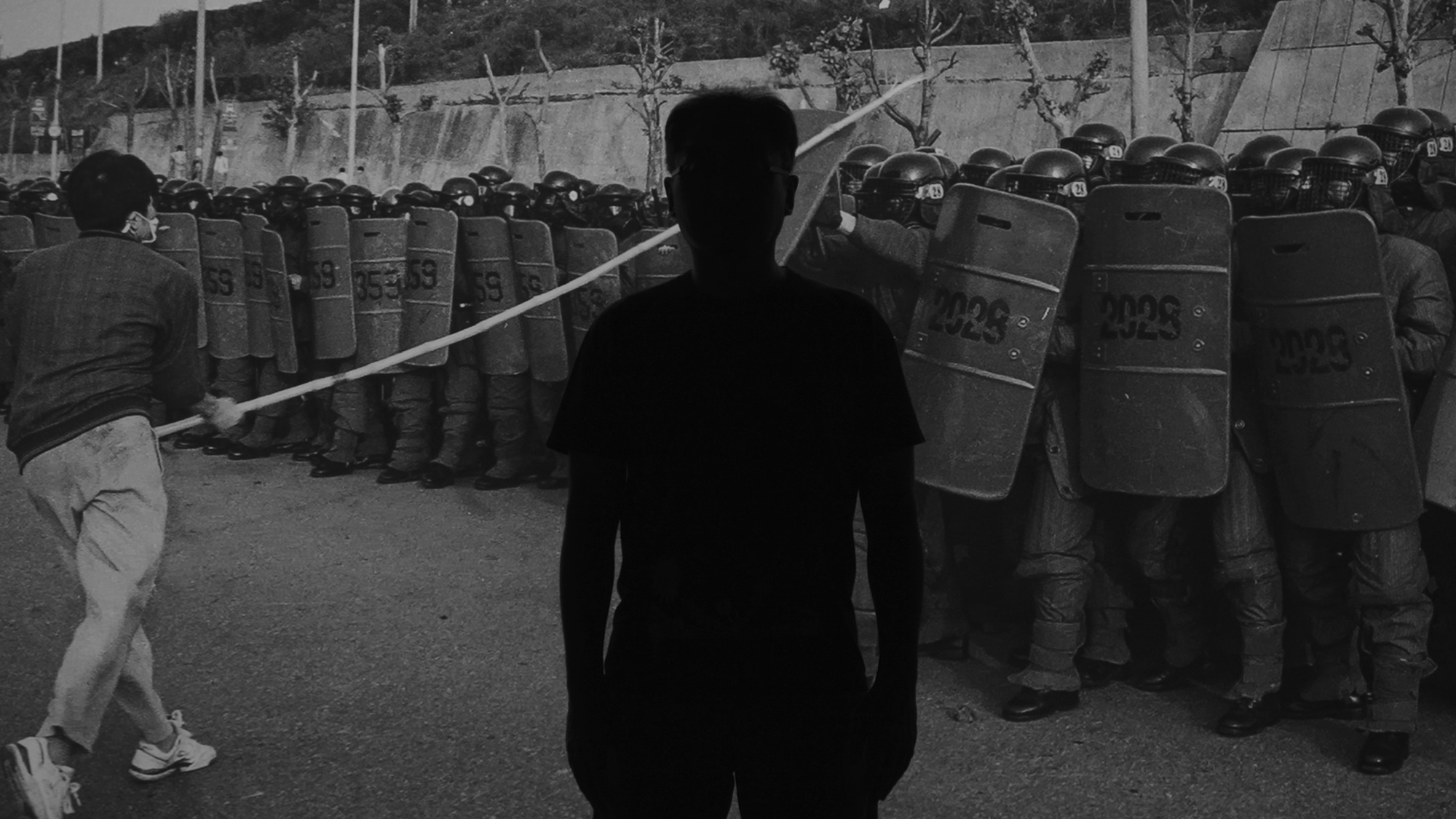
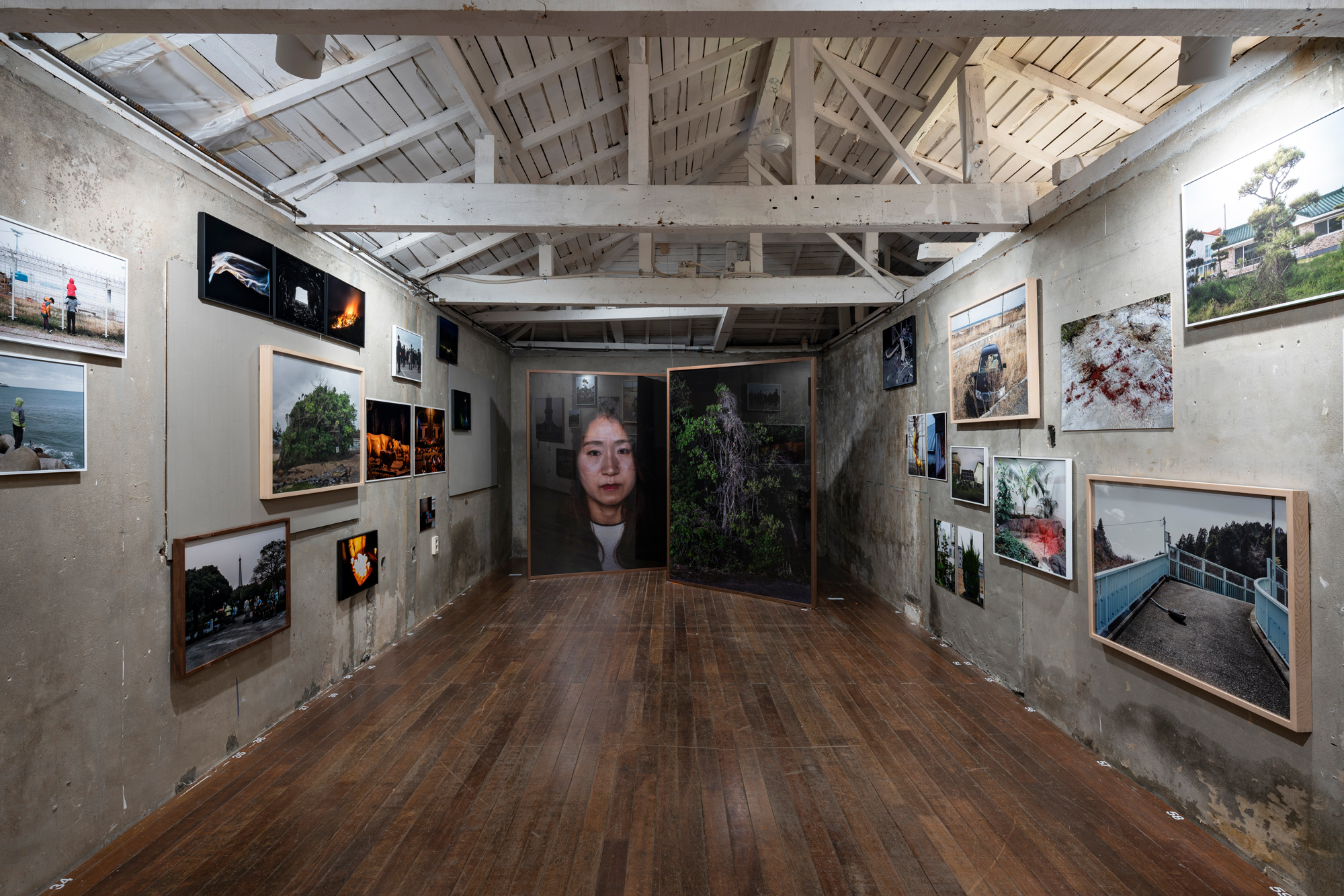
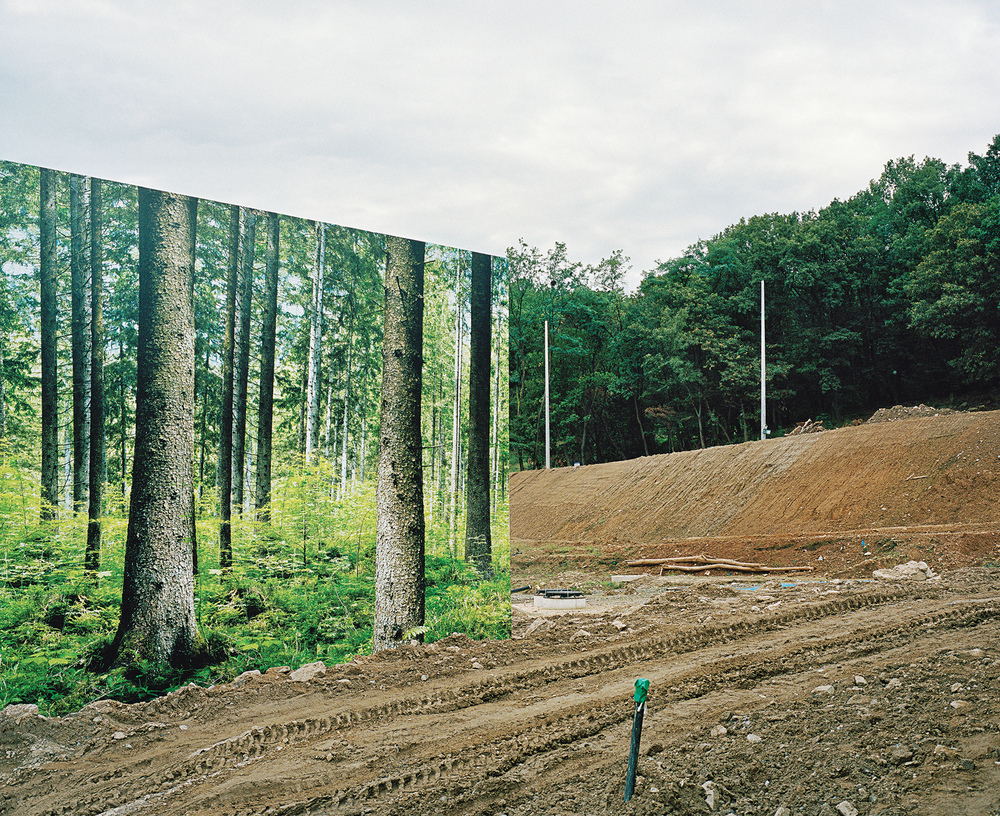
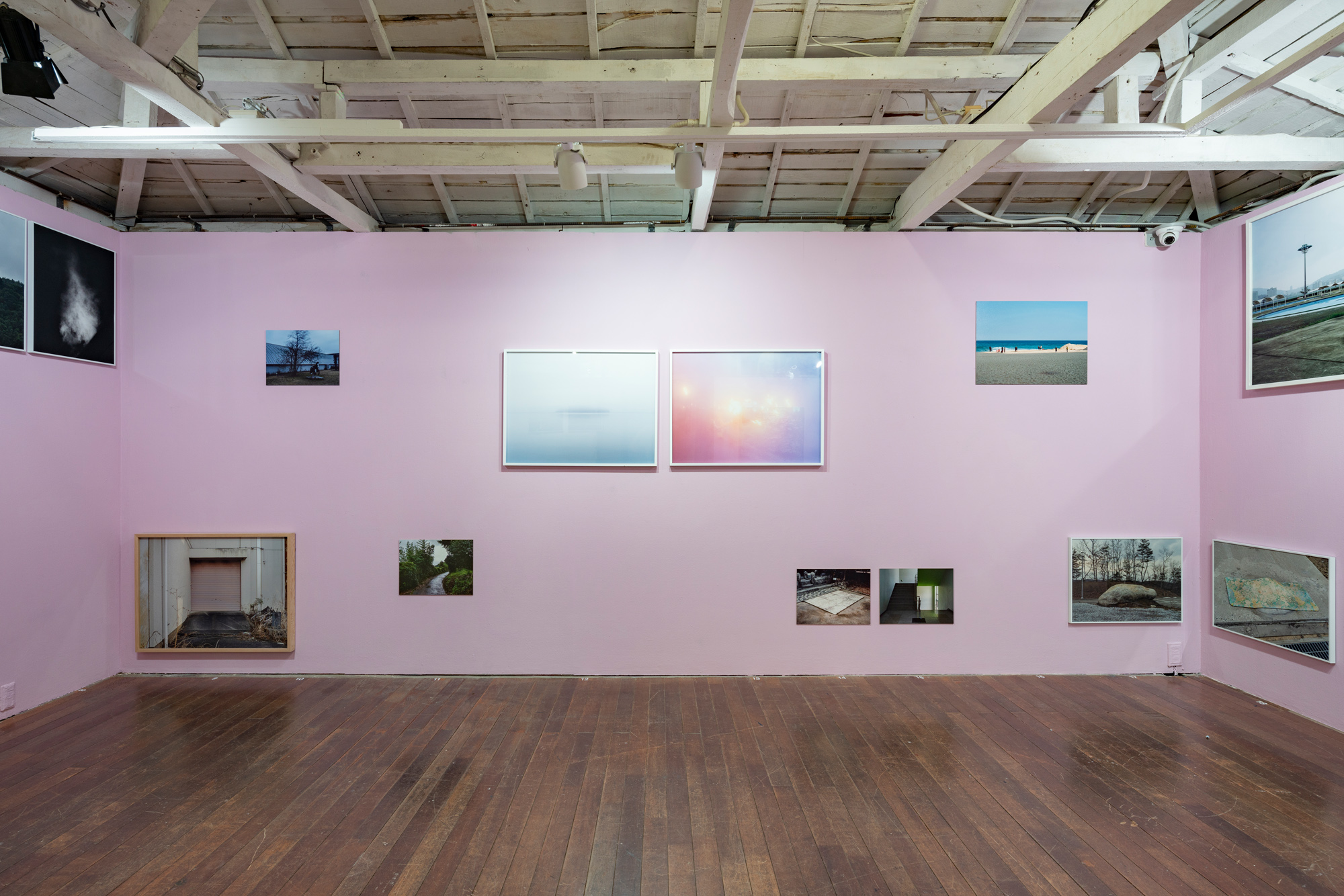
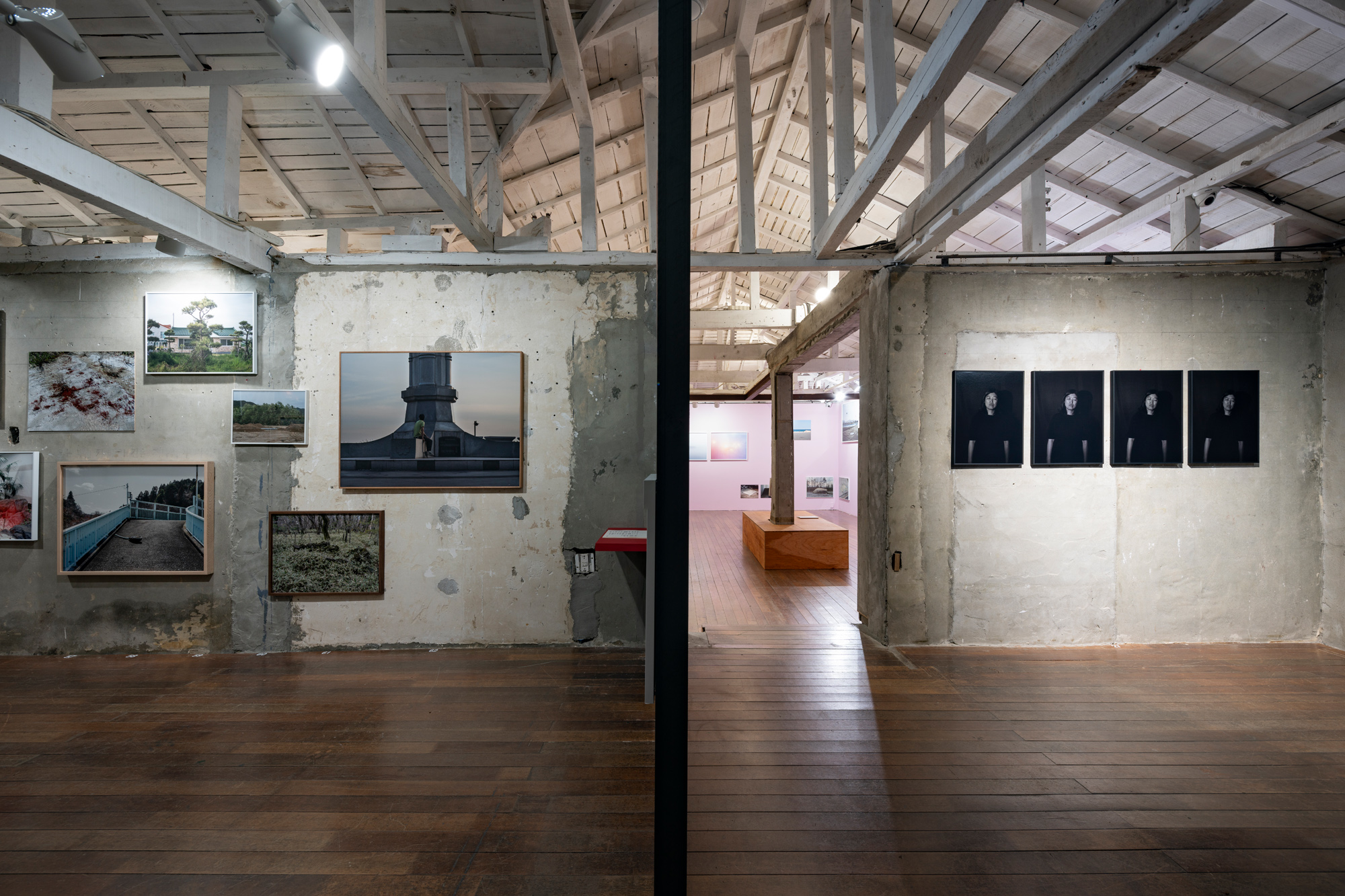
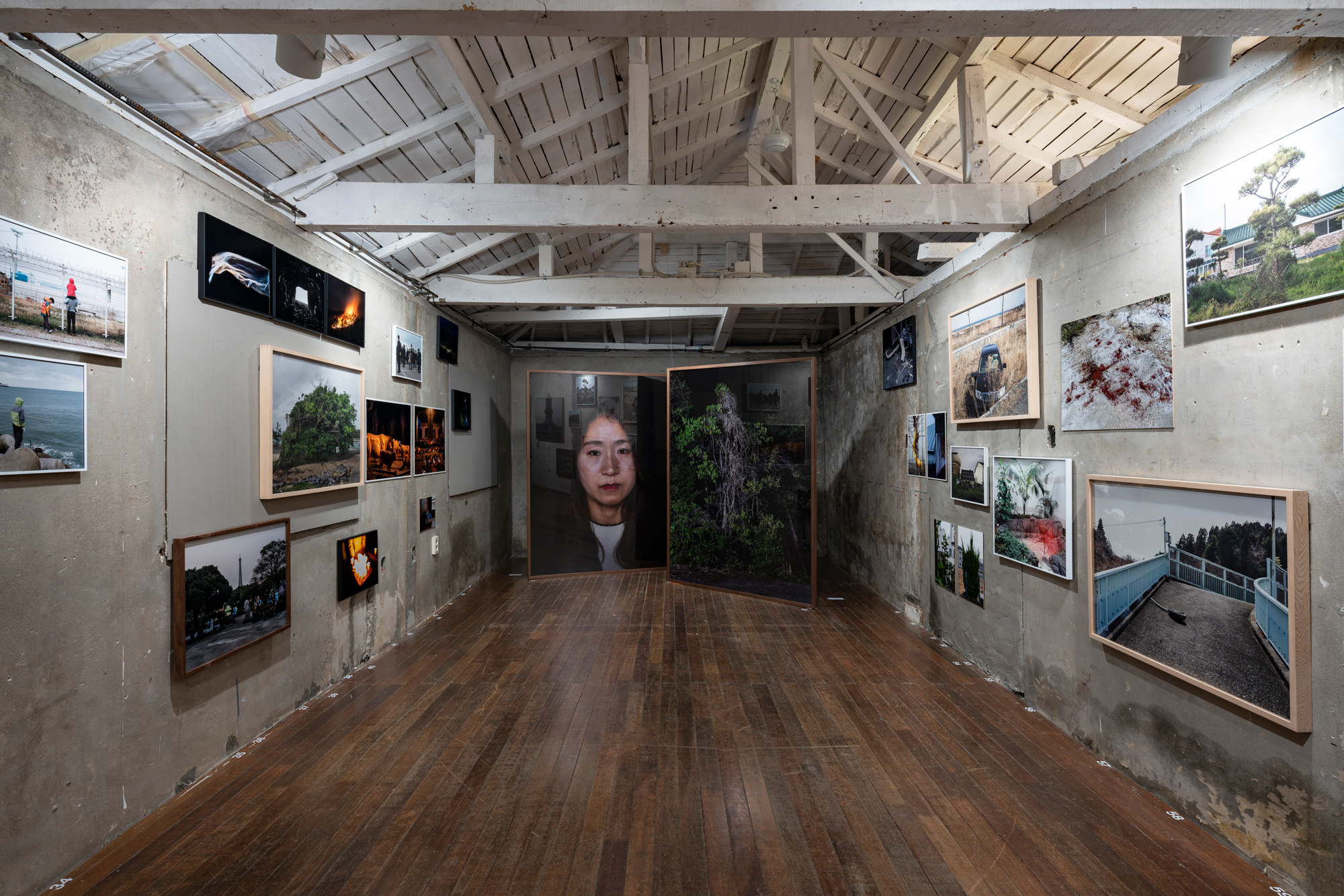
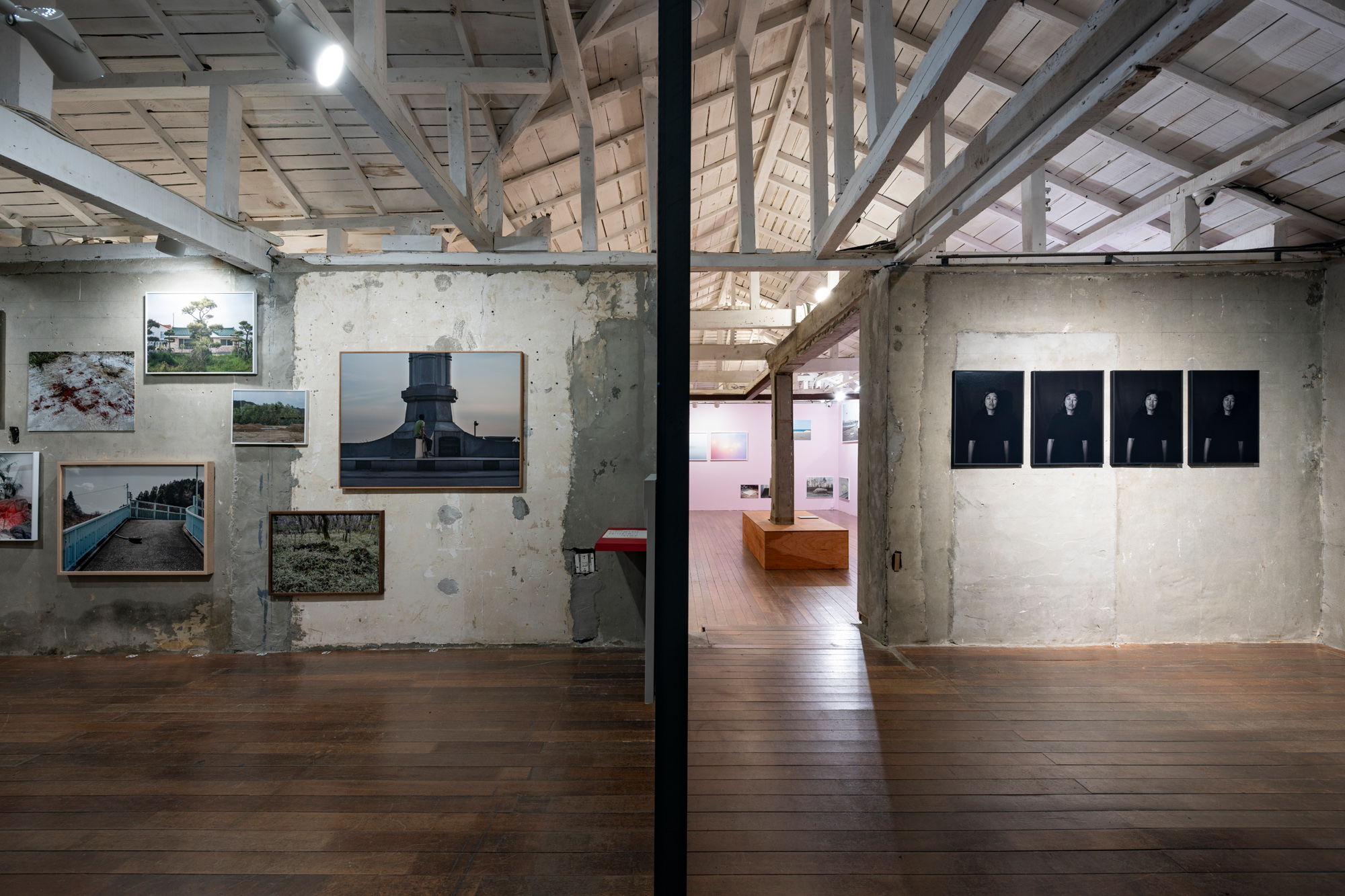
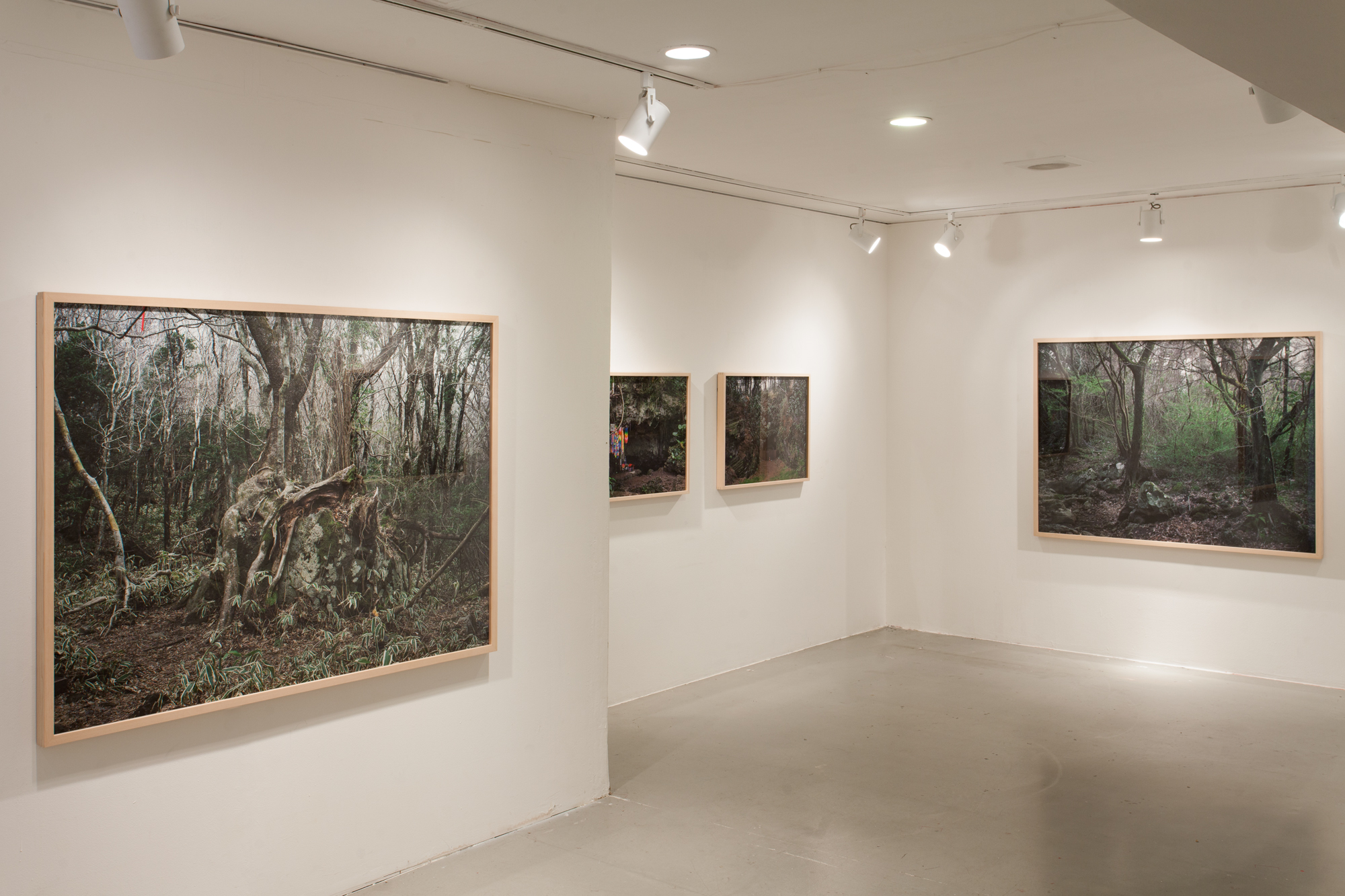
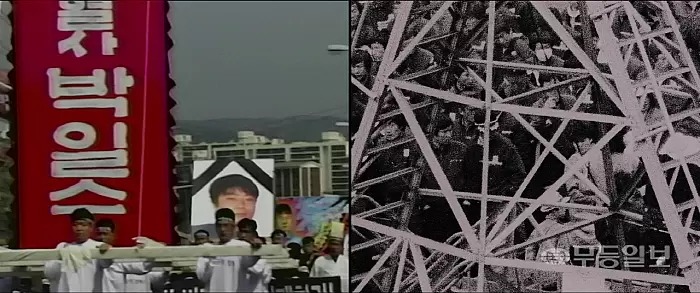
As one moves from the bright room into the dark one, the photographs no longer seem to whisper with subtle intensity but rather to cry out. The deserted landscapes of Fukushima, where trees have grown into strange forms and cars have been abandoned (30, 32, 53, 55, 58); the people who gathered in connection with the Sewol ferry disaster (34, 36, 40, 42); landscapes destined to disappear through development or left behind in awkward forms (28, 41, 56, 57, 59, 60); and scenes of protest or funerals (43, 49, 50, 63) all read like shrill voices of warning.
Yet however much their voices may have changed, the “photographer’s” images are rarely direct oratory about reality or complete propositions in themselves. Rather than claiming that a fragment of reality cut out by photography can stand in for the whole, these images seem to emphasize photography’s partiality and limitations, focusing not on comprehensive views that would allow the situation to be fully understood but on fragments of particular scenes.
Moreover, on closer inspection, many of the photographs reveal a sense of absence in ways not so different from those in the first room. Why, then, do they read so differently?
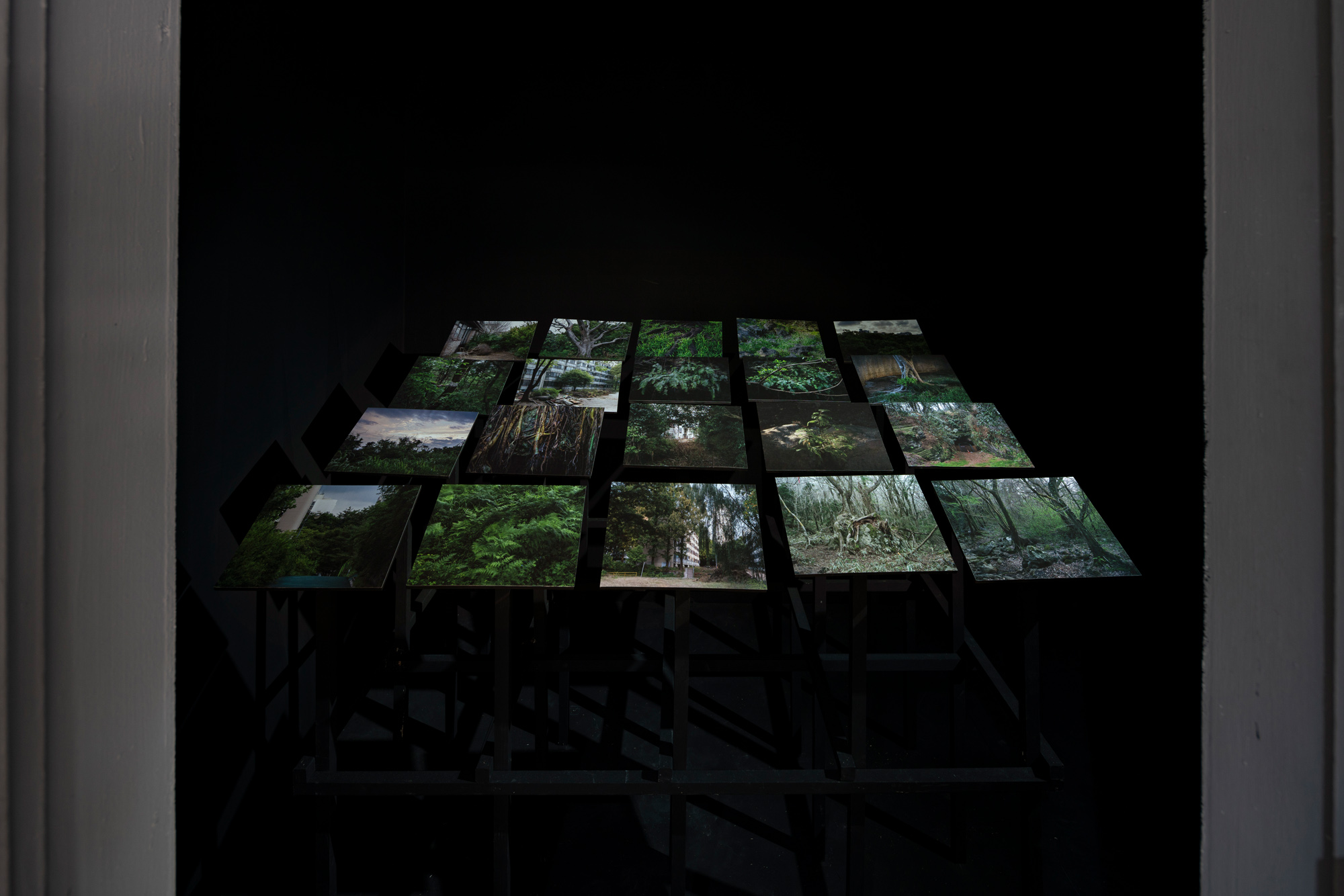
There are four nearly identical black-and-white portrait photographs (27). A perceptive viewer who has acquired a sensitivity to “thisness” in the first room may notice minute changes in movement and consciousness among them. Such changes become perceptible only through the repeated act of moving to adjacent photographs and then returning. In a small, pitch-dark room, trees and thickets seem to murmur among themselves (29).
Each plant appears entirely ordinary on its own, yet once they form a cluster, strange reflections and unfamiliar shapes begin to emerge, and artificial elements such as location, surrounding buildings, and boundary markings gradually add to the sense of strangeness. These plants were photographed at different sites of tragedy: Jeju 4·3, Okinawa, the Miryang transmission tower protests, the redevelopment site in Sanggye-dong, and Boseong, where farmer Baek Nam-gi lived.
Yet as though the morphological grotesqueness of the cluster itself were proof of the ubiquity of tragedy, the viewer forgets the “lack of relation” among these events. In the middle of a long, ominous room, two large photographs loom. Apart from their proximity and scale, there is no connection between them, yet these simple elements compel us to read the two images in the same way.
Because of the face, the tree acquires an expression like a portrait; because of the light reflected on the tree, our attention is drawn to the reflected light on the face. Once the accompanying text is read, we bind together the face marked by the unjust death of someone with whom the subject had shared an intimate life (47) and an invasive tree species that penetrated and killed a tree at the protest camp against the construction of the Miryang transmission towers (48).
Only then do we realize that the intensity of the photographs mentioned above is being affected by these two portraits. The photographs lining both walls stand like iron filings around two powerful magnets. Each image, in turn, acquires a magnetism of its own, joining with adjacent photographs to produce a distinct voice.
I tried to erase the photographer and remain within the photographic images for as long as possible. These images could be classified according to the ways they produced a sense of absence; they could be grouped solely through subtle gradations of force; and they could change their voices through proximity to neighboring photographs.
The process resembled the way a computer, without presupposing human intention, randomly combines images and allows meaning to emerge. Paradoxically, however, reading the images eventually returns us to the photographer. To read “thisness” in a photographic image is, in the end, to listen to the photographer’s most minute voice and to regard his modulation of force itself as a meaningful act.
Likewise, to read the effects of collecting, classifying, and arranging photographs is to understand not only the act of taking photographs but also the acts of combining and reconstructing them as significant. And so, somewhat futilely—though fortunately, given that this is a text for a solo exhibition—we return to Hong Jin-hwon.
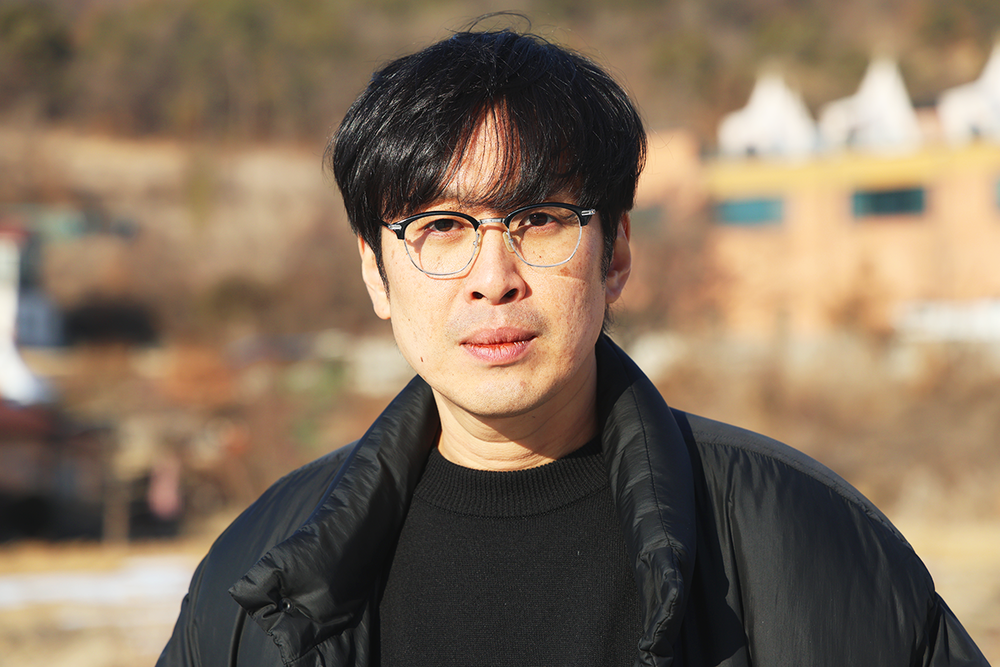
He repeatedly photographs what is absent, backs turned to the camera, and sites of tragedy flattened into landscapes, rendering them quiet and subdued; yet by re-editing those photographs, printing them anew, reclassifying them, and exhibiting them, he creates contours of meaning. As Hong has often said, for him the acts of the photographer and the curator cannot be separated.
To read his photographs, one must follow not only the trajectory of his image-making but also the processes of exhibition-making and programming. The more coldly one reads the images, the more clearly one encounters the photographer’s heated trajectory: the experience of reading Hong Jin-hwon’s photographs might be condensed into precisely that paradox.