In Laws of Form, mathematician George Spencer-Brown argued that the most fundamental act through which humans comprehend the world takes the form of drawing a line across it from their own perspective, thereby distinguishing this side from that side. In fact, human beings can view the world only “as a part contained within it.”
With the exception of a few astronauts, no human being can leave the Earth, and therefore no one can occupy a position from which to view the world in its entirety—that is, attain a so-called “critical distance.” What this reflection implies is that no matter who draws a line from their own perspective, it is not drawn from a vantage point capable of surveying the whole, and therefore the distinction produced by that line cannot be complete either.
Although speculative realism proposes comparing the distinctions drawn by different people, in practical terms, comparison merely adds new knowledge to our brains. Naturally, this new knowledge is not complete either. Yet there is no doubt that the distinctions redrawn on the basis of new knowledge are more multidimensional than those that preceded them.
In this regard, the concept of the “pensive image” proposed by Jacques Rancière in his writings is similar to Spencer-Brown’s notion of form, while also offering a useful perspective for appreciating art. To introduce, albeit roughly, the line of reasoning through which Rancière arrived at the concept of the pensive image: his research was not concerned with discovering the structures that sustain the world.
Instead, it sought to expose how sensibility is used as a tool in the process of establishing those structures and how the sensibility of workers had historically been excluded from this process. He went on to argue that a new form of the aesthetic should be created on the basis of a sensibility that includes workers’ sensibility, and the methodology for achieving this might be summarized as the pensive image.
In other words, the premise was that the maker of an artwork should not construct an image whose answer has already been predetermined, but instead draw a line of their own and present an image that inevitably invites contemplation, thereby prompting viewers to consider what they have felt through the artwork and to decide whether or not to accept it.
The point at which the distinctions proposed by Spencer-Brown and Rancière intersect perhaps lies in the process of comparing one’s own knowledge with that of others. Rather than assuming that there is something objectively correct, this methodology places its faith in the potential for alternative perspectives to emerge through comparison.
Applied to art, this could be interpreted to mean that the meaning of an artwork is constructed through a process in which multiple viewers compare their perspectives, choose or reject meanings, or develop alternative perspectives of their own.
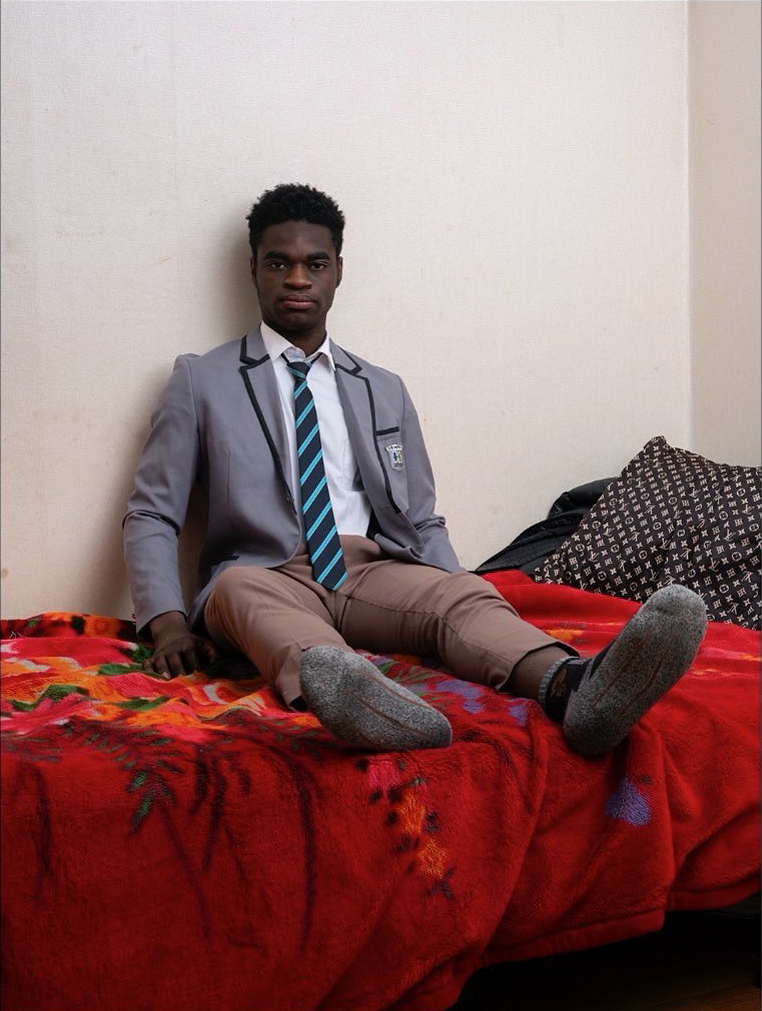
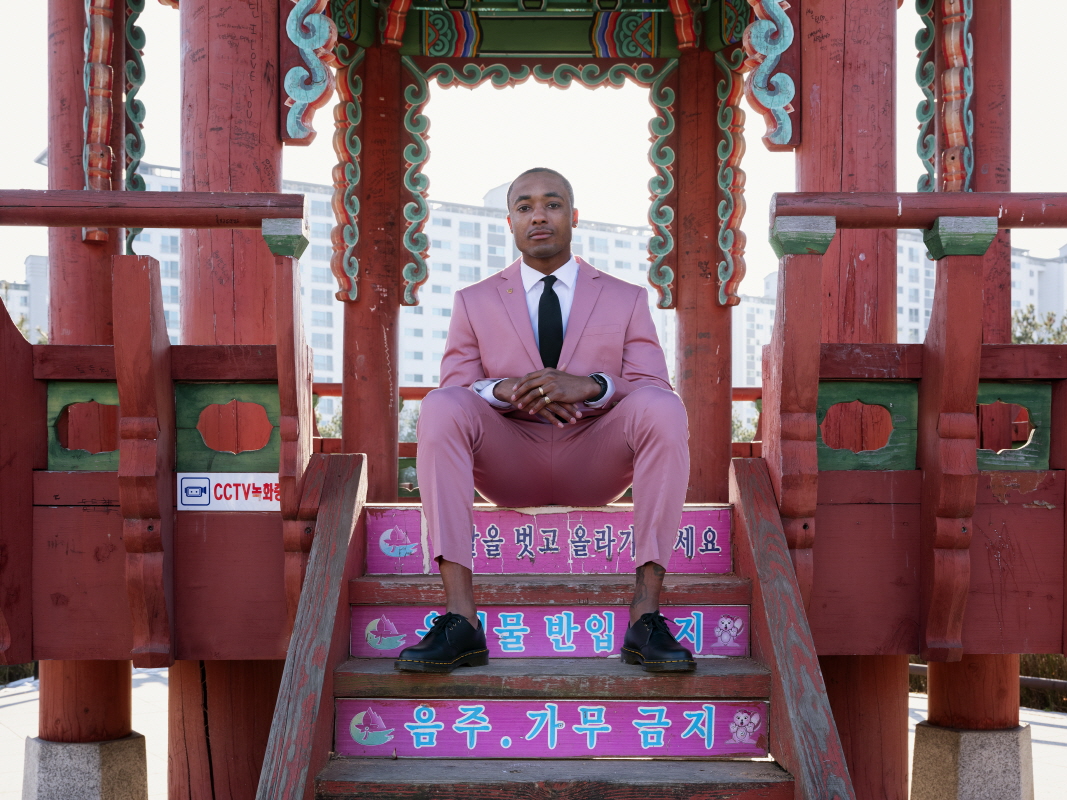
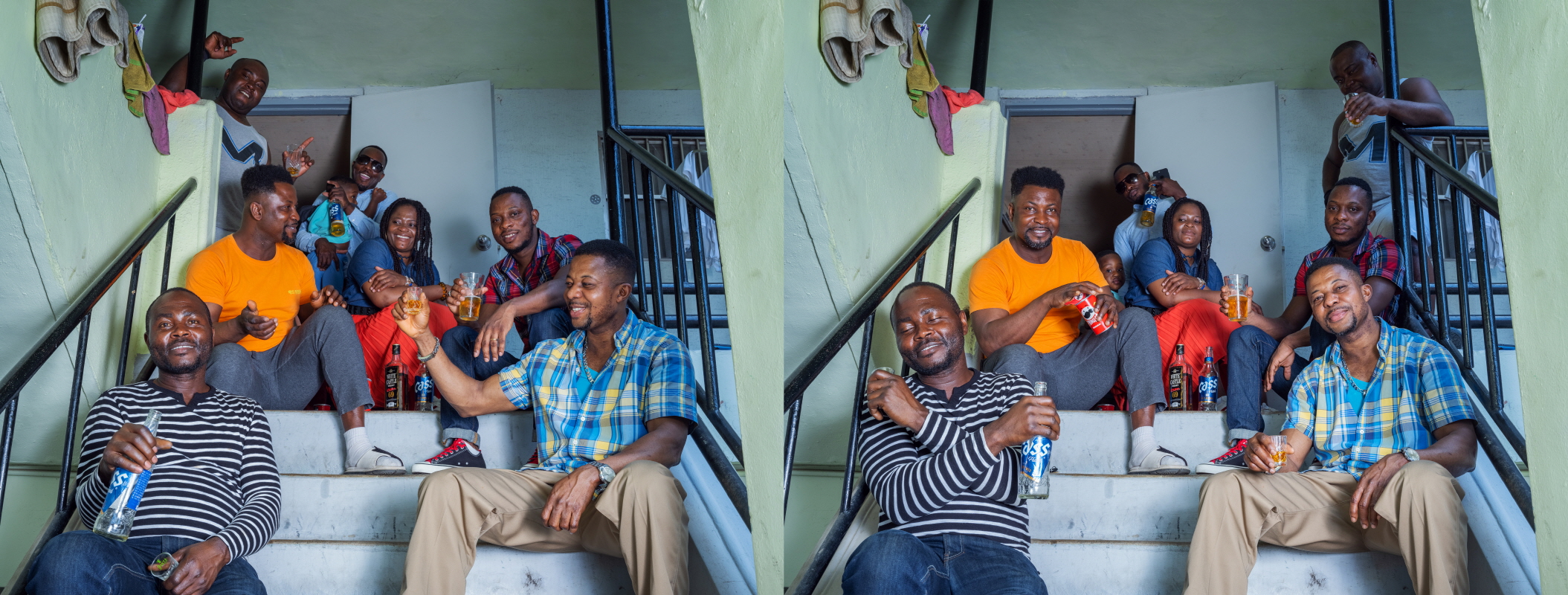
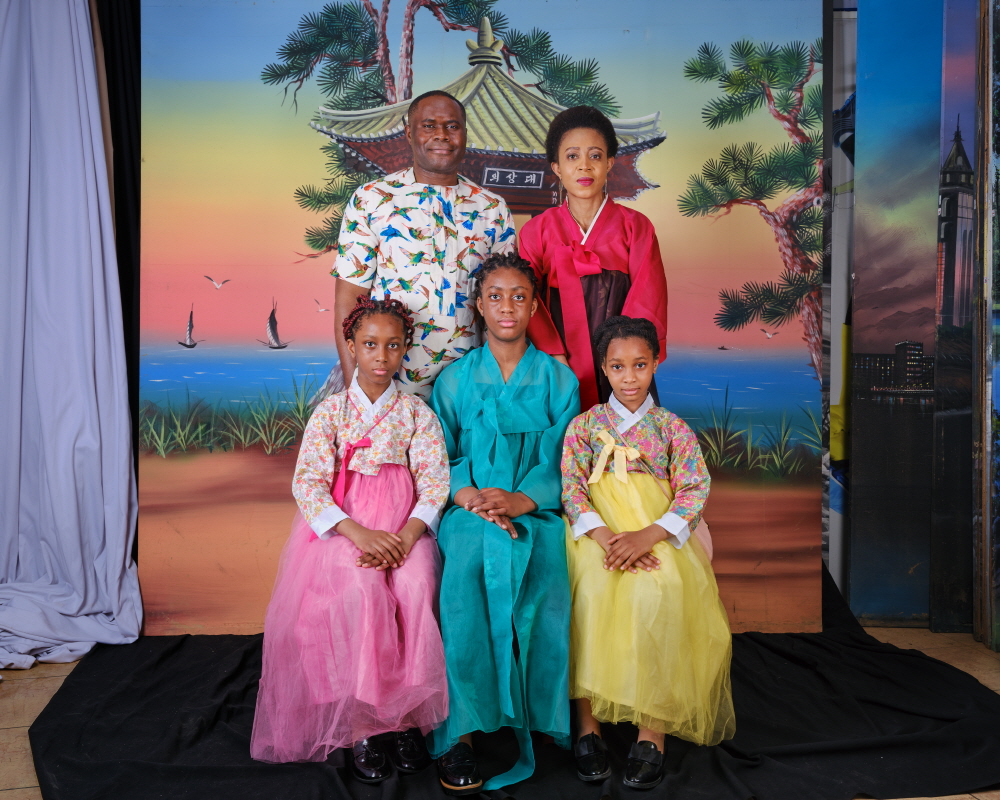
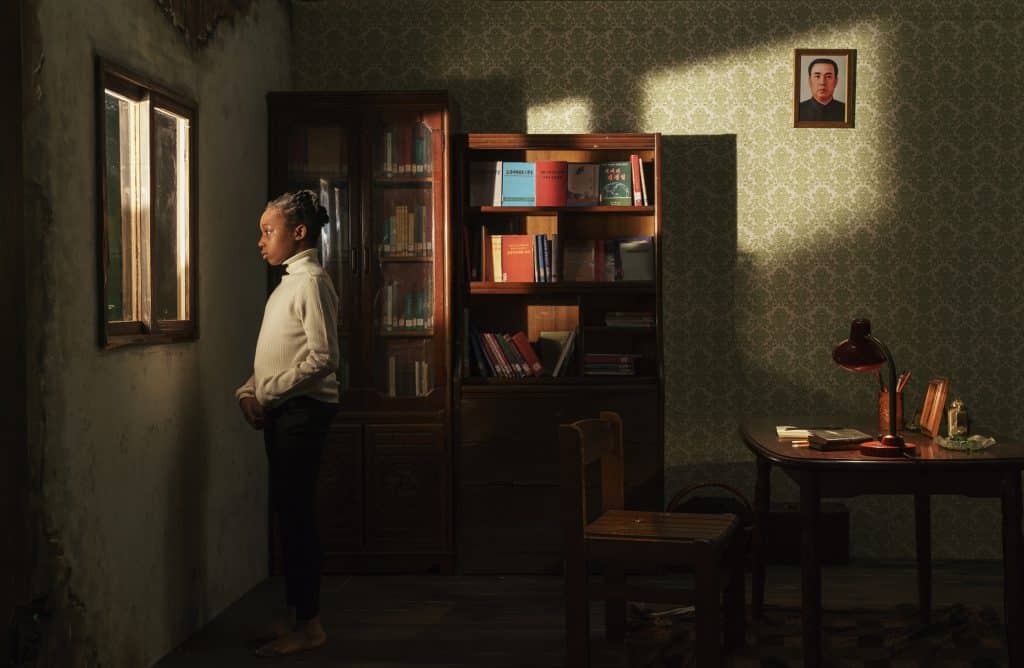
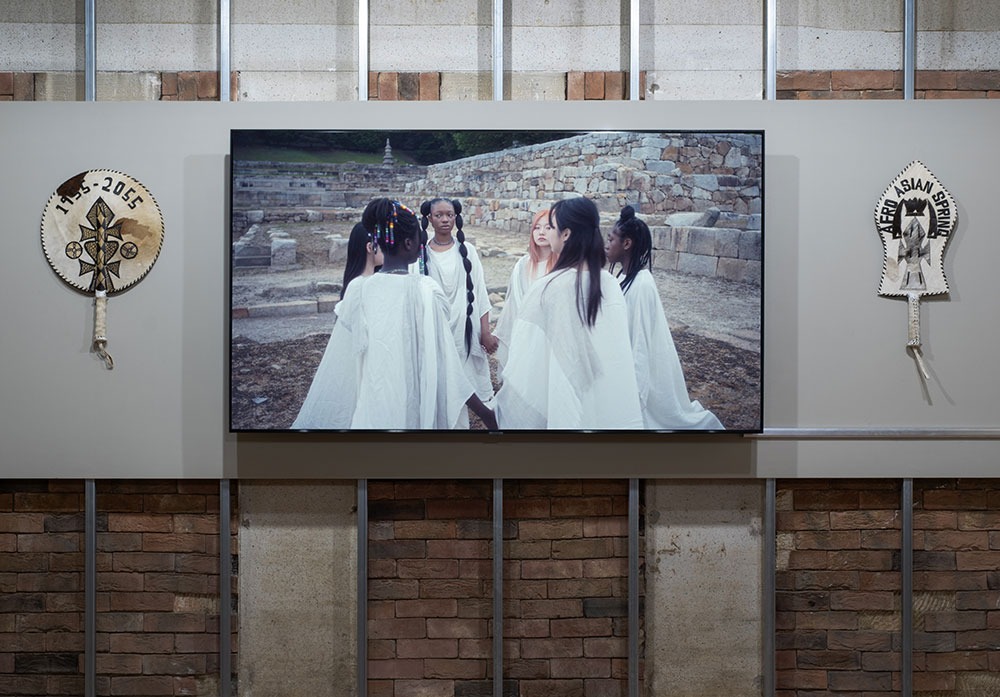
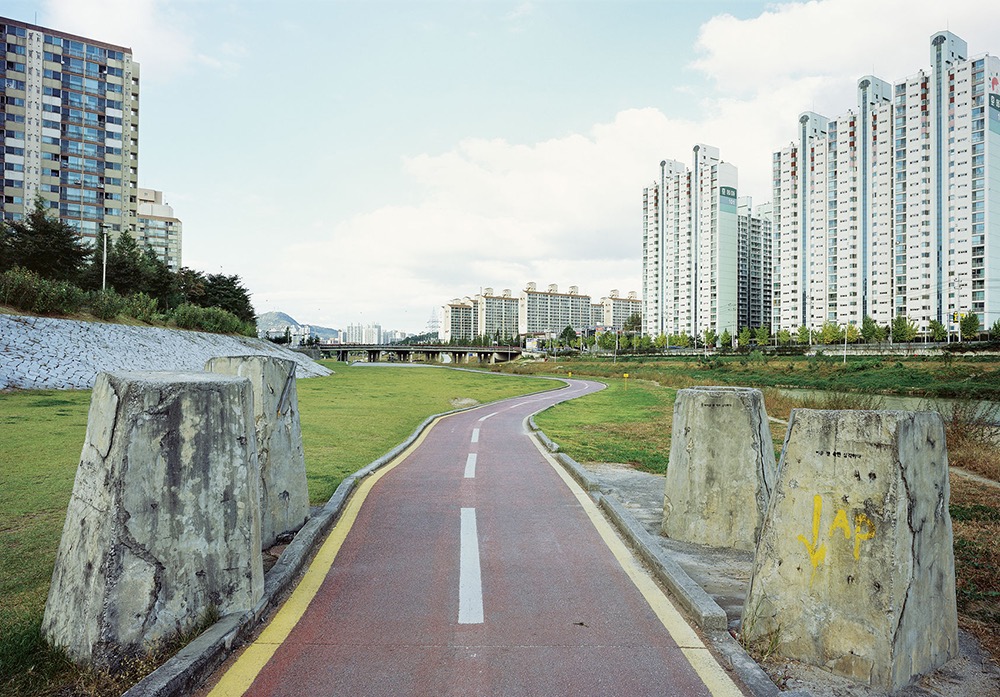
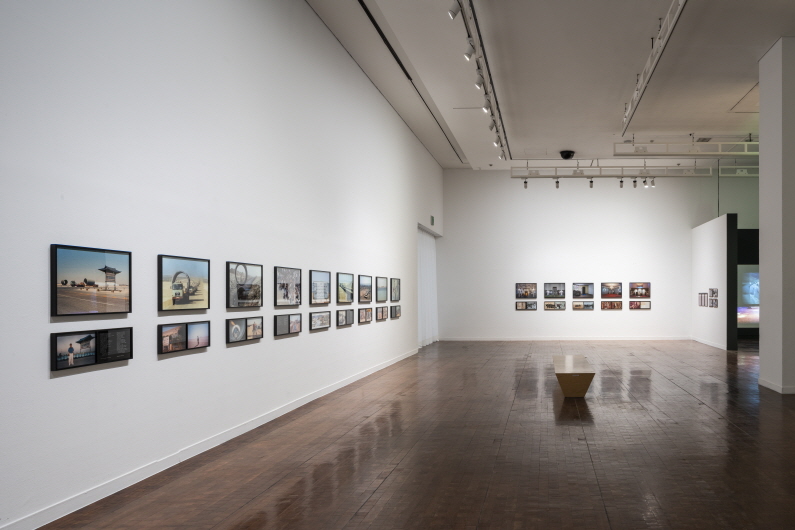
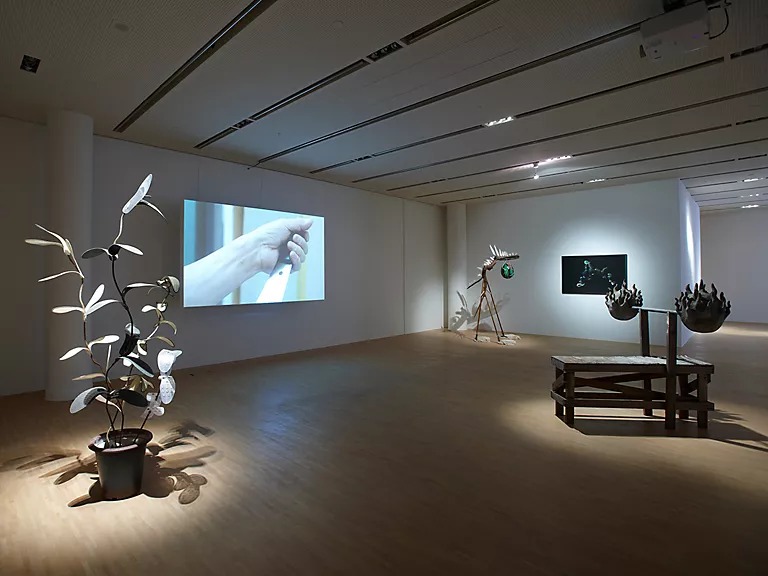
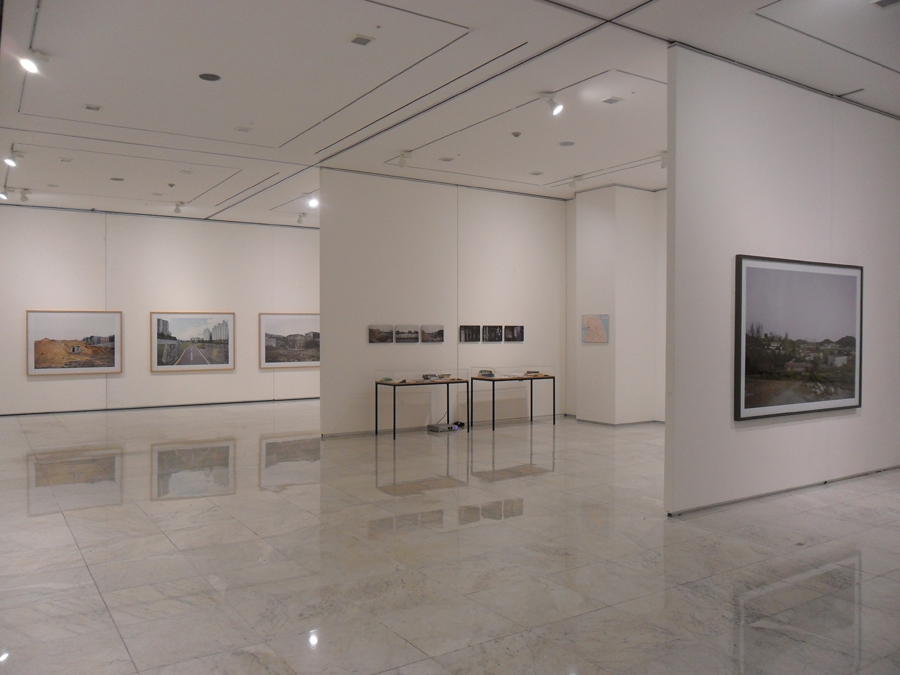
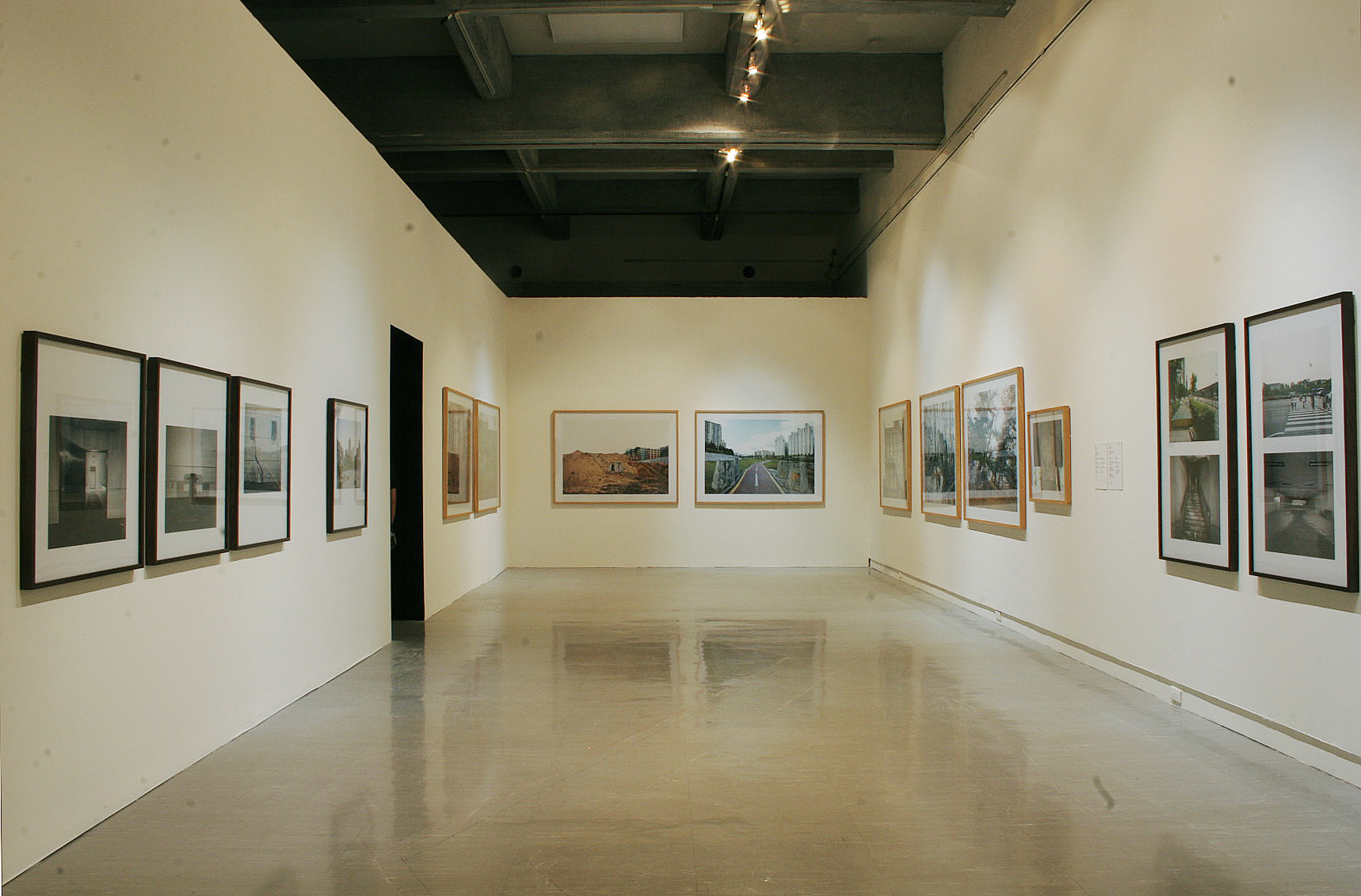
Using these ideas as a framework, I would like to discuss CHE Onejoon’s earlier work Made in Korea and his new work No Pain No Gain, presented in the exhibition 《Language Between》 at the Kim Hong-do Museum. By setting down my own impressions alongside a number of other perspectives, I hope to propose a thought experiment that allows viewers who encounter CHE Onejoon’s works and read this critique to select or construct meanings for themselves.
First, Made in Korea and No Pain No Gain can be described as follows. These two music videos were co-directed by CHE Onejoon and Osinachi Igwe, an African migrant worker based in Dongducheon, using songs by Osinachi. The musical genre employed is highlife, a representative fusion dance music that combines rhythms distinctive to West Africa with jazz, and it is also the genre in which Osinachi, the singer-songwriter and protagonist of the music videos, primarily works.
The music contains an upbeat rhythm reminiscent of reggae, suggesting that highlife is one of its musical roots. The lyrics mix English, Nigerian languages, and Korean, and according to CHE Onejoon’s remarks at the 《The Breath of Fresh》 workshop on December 9, 2022, some of the words were suggested by the artist himself.
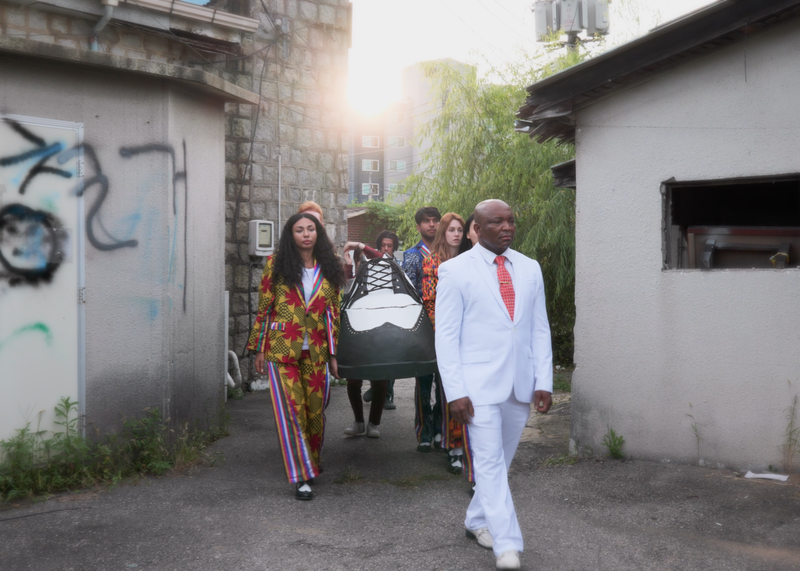
The plot of Made in Korea begins with a Black man, Osinachi, waking up and apparently heading to work. He then purchases and puts on traditional clothing, and from the middle of the video onward, he dances to the music with fellow African workers and one dancer who appears to be a Korean woman. The choreography seems improvised rather than specifically planned.
Interspersed among scenes of Osinachi and his friends smiling broadly as they dance and sing are shots of objects that appear to be trucks or automobile parts being loaded into containers. The lyrics express gratitude to the Korean friends who have welcomed him since his arrival. Particularly prominent are lines about doing one’s best and leaving the rest to God, living harmoniously under one love, the melody of Africa, and the universal melody of humanity.
The second work, No Pain No Gain, includes brief but recurring scenes throughout the music video of Osinachi working in a factory and of fellow African workers at work. While the basic melody and rhythm remain upbeat, much like the previous work, the content of the music video has become noticeably darker.
Osinachi speaks of losing a colleague (due to COVID-19) and of the difficulties he faced moving from one factory to another. Yet his intention to offer hope and courage is very direct. The lyrics notably include lines such as, “The sun and moonlight shine over the whole world … … a star is born in Africa, and the message inspired by him saves many souls, give me strong legs, I want to save souls,” suggesting that thousands of fainthearted people are waiting for a message of inspiration.
At the point where he sings, “I want to save souls,” scenes of him walking near the statue of Jeon Tae-il or greeting it are intercut. Midway through the video, he is also shown dressed in a new pale sky-blue suit, looking through shop windows displaying luxury goods such as Rolex watches on a bustling street.
Viewers 1 and 2 had both received no formal education in art theory. I first showed each of them the earlier work and asked for their impressions, then showed them the new work and asked again. Viewer 1 responded as follows.
“I don’t know… The melody is upbeat, but it doesn’t feel light. It has weight. Maybe I feel that way because my own mood is being reflected in it. I don’t have much to say about the lyrics. They’re simple and repetitive as well. … … But after seeing the second work, I understood why the first one bothered me. I didn’t feel sincerity in the earlier work. Maybe that’s because of my own prejudice toward Black people.
But when I saw the second one, the lyrics went by so quickly that I couldn’t really tell what he was trying to say, and it still bothered me, but nevertheless it felt sincere. In the first one, I wondered whether the word ‘love’ was being used too lightly. And saying that you have to be diligent to live well … does that mean if you’re not diligent, you don’t deserve to live well? Isn’t that gaslighting?
I even thought, do you really know what love is? … But in the second work there was much more room to interpret it as a realistic expression. Whether something is difficult or not isn’t objective, but I could feel his suffering, and still, hope is important.”
Viewer 2 responded as follows. “What’s striking is that he embodies a theme like fusion through his body. The way he dances… something natural, embodied…. Labor that could be harsh… I felt that ‘all humanity shares these qualities.’ He expresses that through his own melody, and he does so confidently…. We are friends, and this is a country where we can be together. Doesn’t he actually shout ‘universal’?
He has pride in his own music, and within that, Korea is a friend that respects me, something to be grateful for… … He sings of his own pride as something universal. Though it is made in Korea, he seems to emphasize blending in his own rhythm. At the very end, how should we interpret the fact that the image of labor was only vaguely present at the beginning?
Mixing labor with each person’s culture, or mixing Korea and Africa as something universal, may seem impossible, but perhaps it becomes possible because it is art. Because he demonstrates it through his own body and rhythm, maybe he was able to mix things that seem as though they could never mix. Humanity tends to consume heroes and focus on technology, but perhaps he created this out of his own primordial song?
There is consistency in No Pain No Gain as well. If the earlier work emphasized fusion, this one introduces the grammar of contrast. There are industrial accidents, and yet he still wishes for success. If what Jeon Tae-il did was to demand the fulfillment of promises and assert rights, this person seems to say that a positive mindset is a universal truth. If Jeon Tae-il looked at the negative, this person is a little different. Self-respect…. He is someone with strong pride. He looks at both the negative, such as life and death, and what lies beyond it, and sees providence itself as a journey.”
My own response was as follows.
“My first impression was that the video was ‘full of excitement and vitality.’ Most newspaper coverage of migrant workers is filled with articles about how workers from countries with relatively lower economic levels come to Korea in search of higher wages only to accept inhumane labor conditions, or about prejudices that see migrant workers as taking jobs away from Korean workers or as potential criminals.
At least, that is the information I have encountered. I also found it difficult to shed my own prejudice that African people who still live in tribal societies are somehow uncivilized. In contrast, Osinachi’s happiness diverged considerably from what I had expected. According to the exhibition text, this discrepancy between expectation and reality was part of the artist’s intention. Even so, it is difficult to separate Osinachi’s ‘exuberance’ from the innocent hope of a migrant worker beginning anew.
How similar or different are Osinachi’s exuberance and self-respect from the sensibilities of most Nigerian migrant workers? Looking through newspaper articles and academic papers, I came across a report by Kim Seul-gi of Maeil Business Newspaper stating that “they are not interested in K-pop or Korean culture, and many of them interact through ethnic churches and community associations while maintaining the culture of their homeland.”
A study on African migrant workers by Han Geon-soo, a professor at Kangwon National University, gives the impression that “they tend to regard Korea as a kind of transit point.” According to him, many Nigerian migrant workers do not simply regard sending wages, or foreign currency, back home as their ultimate goal. Nigeria is, after all, an oil-exporting country and boasts the world’s 24th-largest market.
Of course, its per capita GDP ranks near the bottom globally. A considerable number of these workers reportedly view their time as migrant workers in Korea as a means of building the human networks and material foundations necessary to return home and establish companies engaged in continued trade with Korea.
In other words, they do not see Korea as a potential hostile country that might exploit them, but as a potential future trading partner. For them, successful migrant labor is evaluated in terms of the goods they are able to load into containers and send back to their home country. Perhaps for this reason, No Pain No Gain includes scenes of Osinachi and his colleagues filling containers with used automobile parts.
The fact that he had already worked as a singer in Nigeria, together with these container scenes, suggests that the relationship he establishes with Korea—as an artist and as a Nigerian migrant worker—is based on equality not only in terms of human rights, as fellow human beings, but also economically and socially. Yet the lyrics, with their almost innocent sense of self-respect, also evoke the disappointment he may soon face. Already, the atmosphere of the second music video has grown somewhat darker.
It is extremely difficult to distinguish CHE Onejoon’s voice from Osinachi’s within the video. Was the music video, composed of naïve lyrics and a modest form reminiscent of cable television commercials, CHE Onejoon’s choice? Or was it Osinachi’s? As in the earlier work, why did they avoid a more aesthetically refined grammar, or one closer to high art? Or why did the work need to remain modest?
Why were the aesthetic devices employed in CHE Onejoon’s earlier works, such as My Utopia, excluded here? Will the visual grammar of this video work, or the simplicity of its lyrics, grant Osinachi the equal standing that he presumably desires?”
These, then, are the perspectives—or rather, the distinctions—of three people. I would like to ask the readers of this essay: by intersecting and comparing these different perspectives, did you experience the process through which new knowledge, or a new sensibility, became established in your own mind?