Photography represents the world with a machine. In other words, the essence of photography lies in such processes of capturing a certain object with the camera and representing it with an image. Hence, when viewing a photo, people tend to ask about its image and the identity thereof. Namely, they equalize the images with their objects.
However, such indicative attributes of photography would well limit its artistic expression, although being an essential nature of the medium. In the history of photography, various artists have not aimed to represent an object but endeavored in diverse ways to realize an aesthetic value in both representative and abstract forms.
In the early 20th century, avant-garde artists used vortographs, applying the optical device based on photograms and kaleidoscopes, while U.S. formalistic photography closed up the object and thereby highlighted the forms of the object or its surface texture.
Since the development of digital technology, the situations have been more diversified and complicated. However, manipulation and distortion are very easy, so the resultant works could not well be valuable as artworks if the criteria and intentions are not clear. In this post-photography age, how could photography keep its turf as a genre of art?
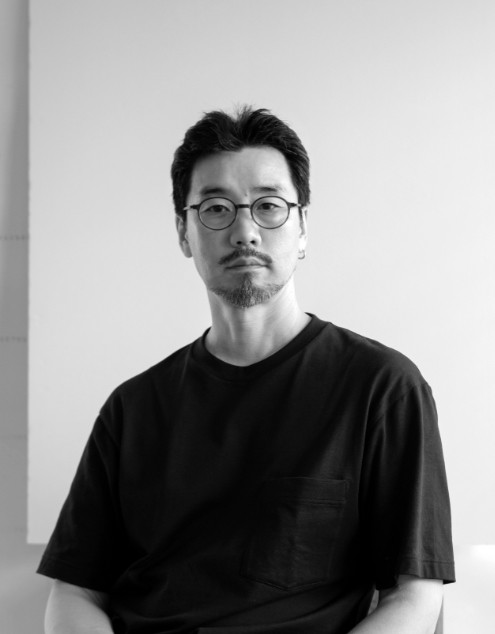
Reciprocating between representation and abstraction, Dongsin Seo explores the artistic possibilities of photography. The photo artist, who has worked in various areas related to photos for the last decade, is more familiar than any other photo artist in terms of producing photo works, but he seems to have agonized deeply over the limits of realistic representation of photography.
He has agonized not only over the limits of the photo medium in terms of its artistic expressions but also over the accommodation of the relation between the objects and their images into a unitary semantic action. The artist follows the indicative nature of photography while processing the work from different perspectives after photographing.
Thus, he generates another different semantic action, pursuing the visual aesthetics of a new image and the pleasure thereof. This critique is about his major modes of work, ‘Equation’ and ‘Entropy’.
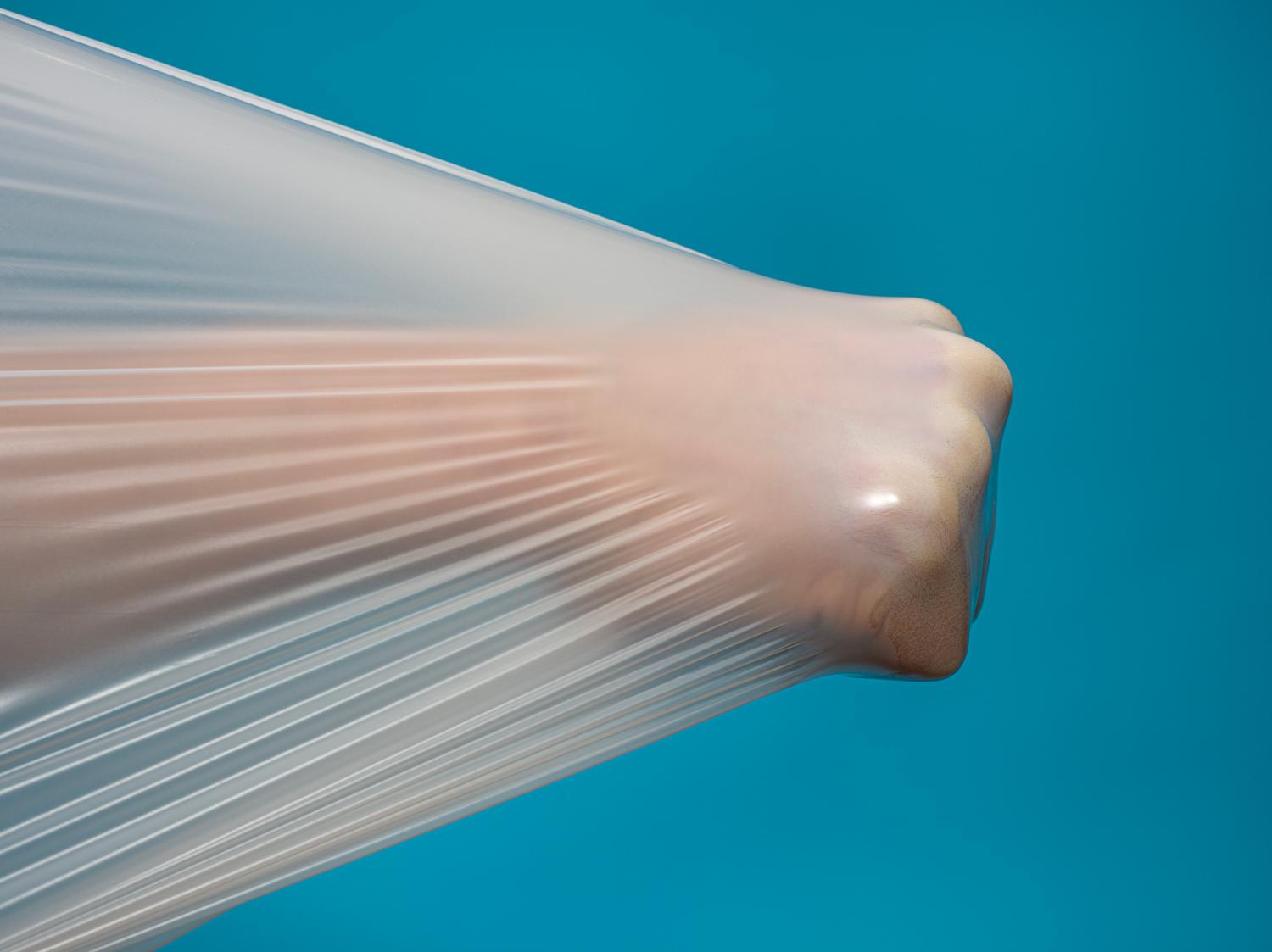
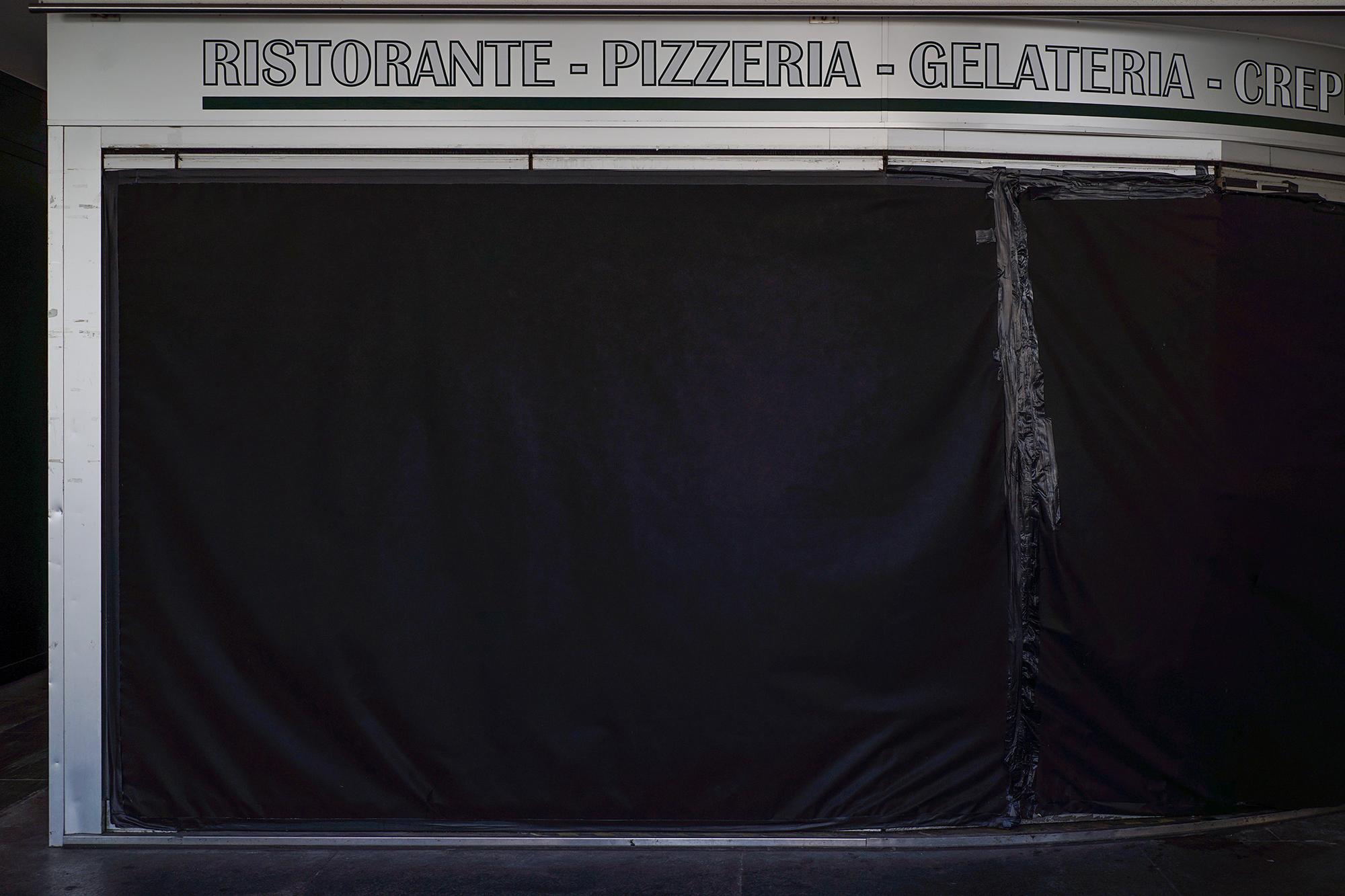
First of all, ‘Entropy’ precedes ‘Equation’. ‘Entropy’ is a photo work series or a source of ‘Equation’. Its photo works have been produced with little manipulation of the common objects and scenes around him. Each image is a common scene of our ordinary life, but minimal differences between them have been captured. The typical attributes of the objects are yet to be revealed.
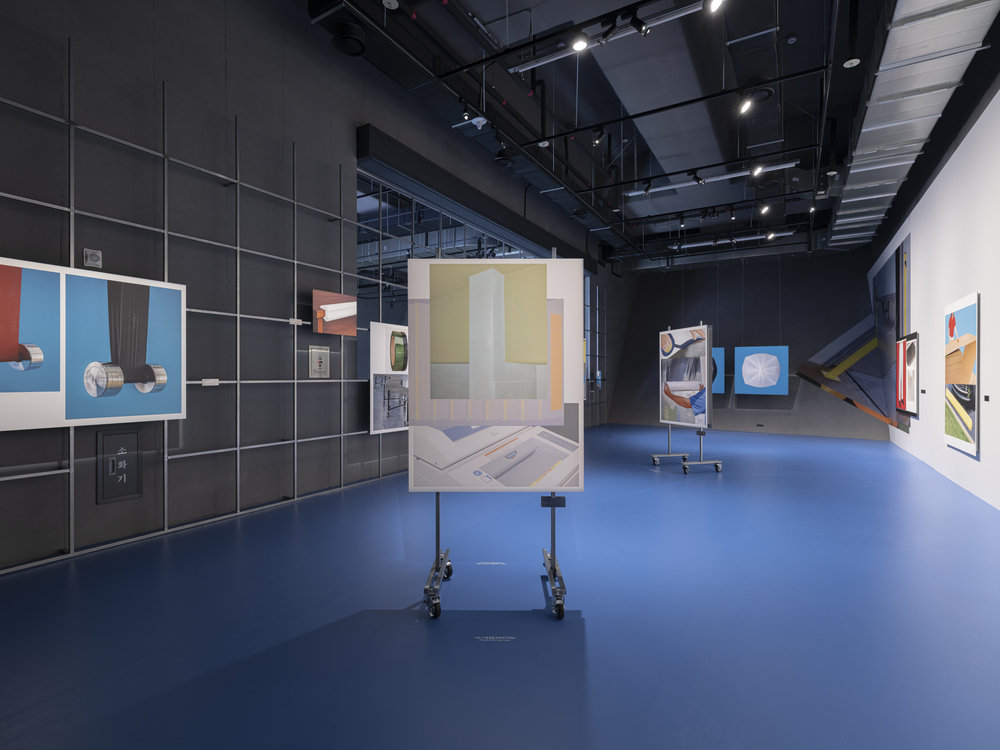
The objects have been born anew through the artist’s visual filter. The examples are diverse: the messy table just after dining instead of a well-set table, the disorderly overlaid wet tableware just washed instead of a well-arranged table in the display cabinet, the access-controlled line installed around a big fan in the exhibition hall instead of the artworks hung on the wall, the taking-off flat airplane like a model airplane put on a blue reflective floor instead of the airplane flying over the blue ocean surrounded by the clouds, etc.
As can be inferred from the theme ‘Entropy’, meaning the degree of disorder or the degree we cannot know, the artist attempts with such unfamiliar photos to reveal the fact that everyone experiences the world differently with the infinite “visual fields.” The objects in the photos of ‘Entropy’ seem to be off their familiar locations or excluded from their original functions and contexts.
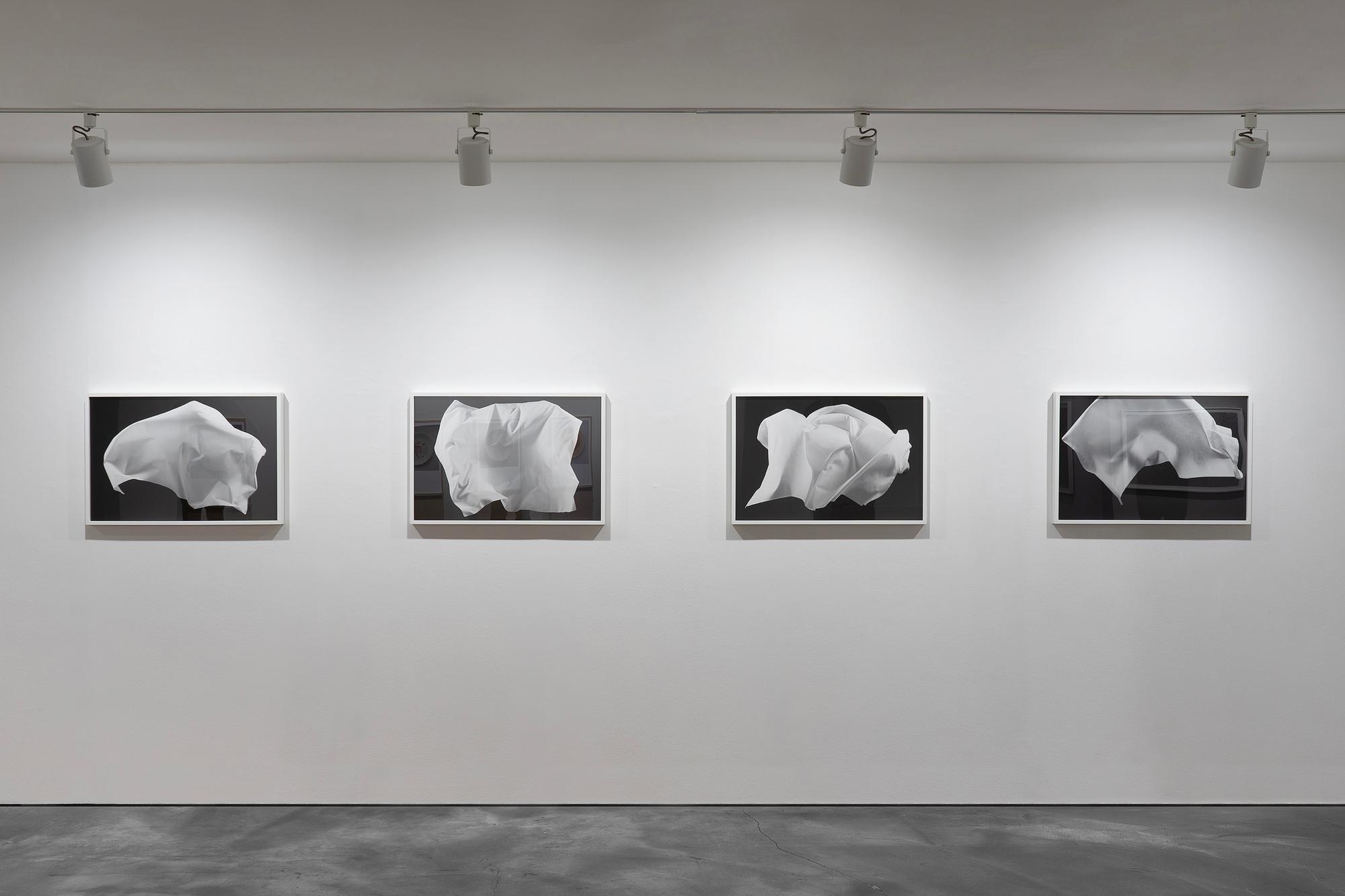
Namely, they are represented differently in terms of the textures or colors we know. Such results may be attributable to the fact that the artist looks at the object from the unfamiliar perspective of the camera or that only a part of the object was photographed closely, and therefore, we can hardly gauge the whole form and real size.
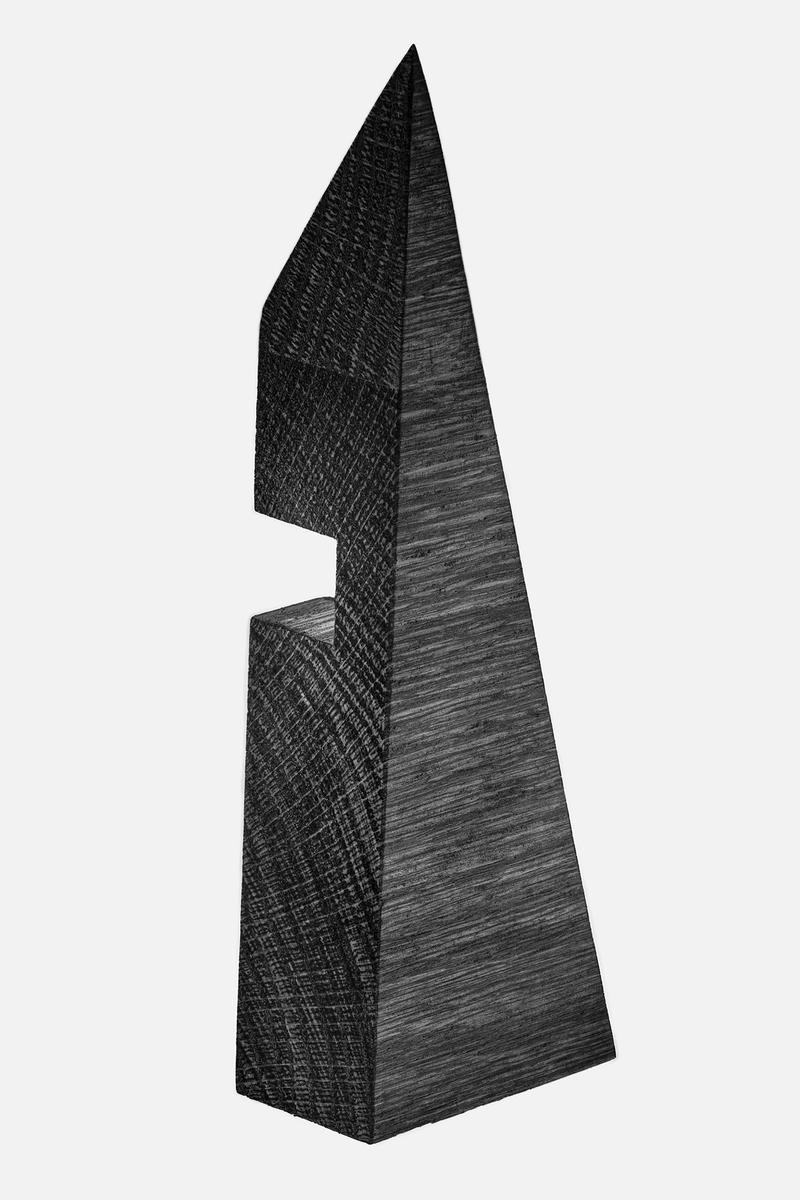
The screen and waterproof cloth fill the canvas fully with their wrinkled silver curtain and green tent, while the plywood overlaid obliquely in a corner of the studio becomes color-filled, featuring some repeated geometric lines and subtle light. As such, the artist does not perceive the object habitually but pays attention to the act of seeing to re-structure his experienced world within the photo frame.
‘Entropy’ does not end up with an image. After photographing the objects, the artist attached an emerging word to each image. However, such matching by the artist is arbitrary. Thus, the words matching similar images are quite different from each other. For example, he matches such heterogeneous words in terms of parts of speech and relevancy to the photos of trees and woods as “low,” “gardening,” “apeak,” “scatter,” “flourishing,” etc.
In ‘Entropy’ or a photo collection showing some of the artist’s artwork series, each image is accompanied not by a caption but by the part of speech and literal meaning, while a list of the words is shown in the preceding part of the book. Upon viewing the images, the readers would estimate their literal meaning by comparing them with those words they remember while confirming the words that the artist remembers in the list.
Such a process evokes a pure pleasure as if the artist were talking with the audience. The refusal of the artist’s intended semantics would well be allowed for the audience. If you ignore the text to see the image only, you would still be able to understand the context.
Namely, owing to the seriality of the images and their interactions, they may well be represented, which would not be possible in the case of a single image. Just as the words are linked with each other to create phrases and sentences and thus their meanings expand, so the images are linked with each other for a visual sense of abundance.
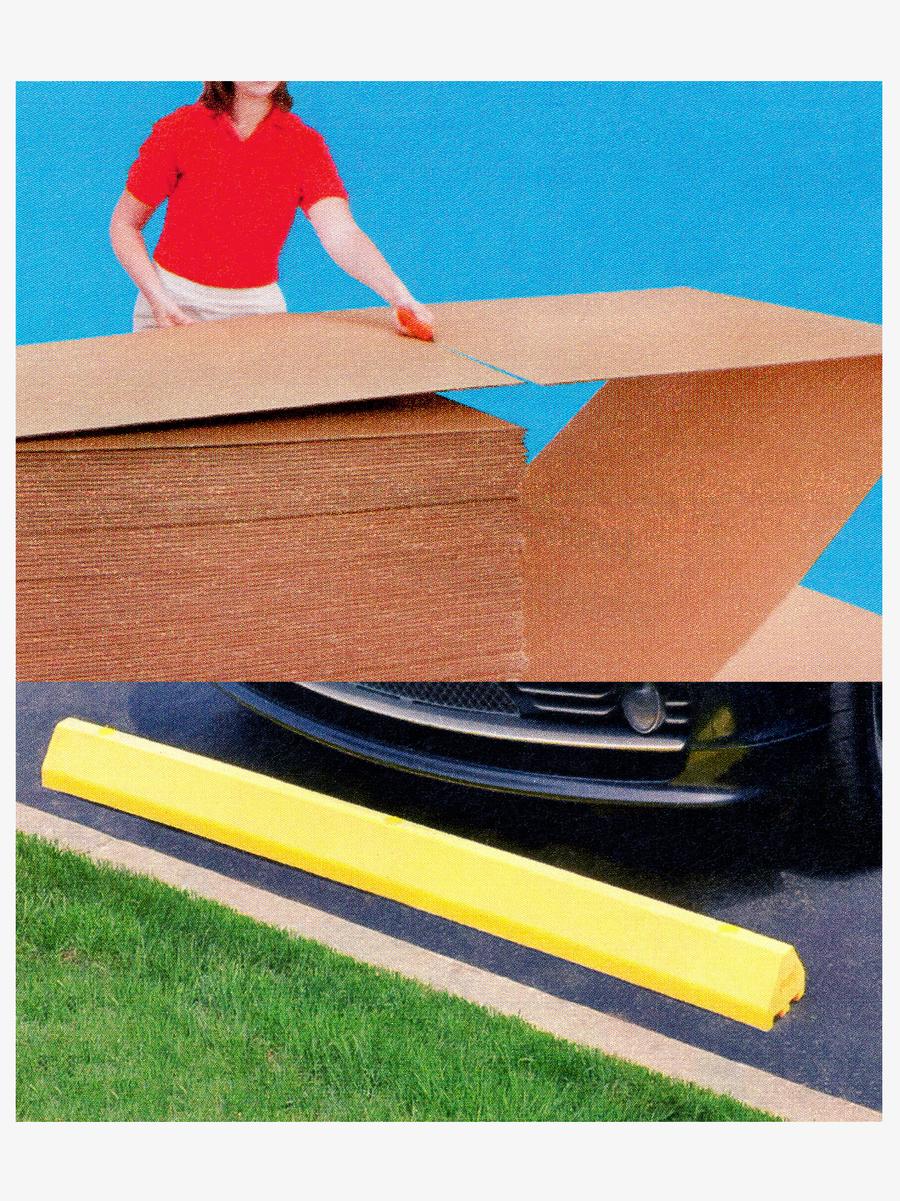
In order to overcome the directive nature of the photo images and their limited semantics, the artist has made multi-faceted efforts. As a result, the images of several photos were transformed with Photoshop too, and thus, the series ‘Equation’ was born. At first, the artist selected the images according to the appropriate words in the ‘Entropy’ folder, but he soon became aware of the fact that the selection of images should not be restrained by the words, and thus, he stored the images as numbers and retrieved them arbitrarily.
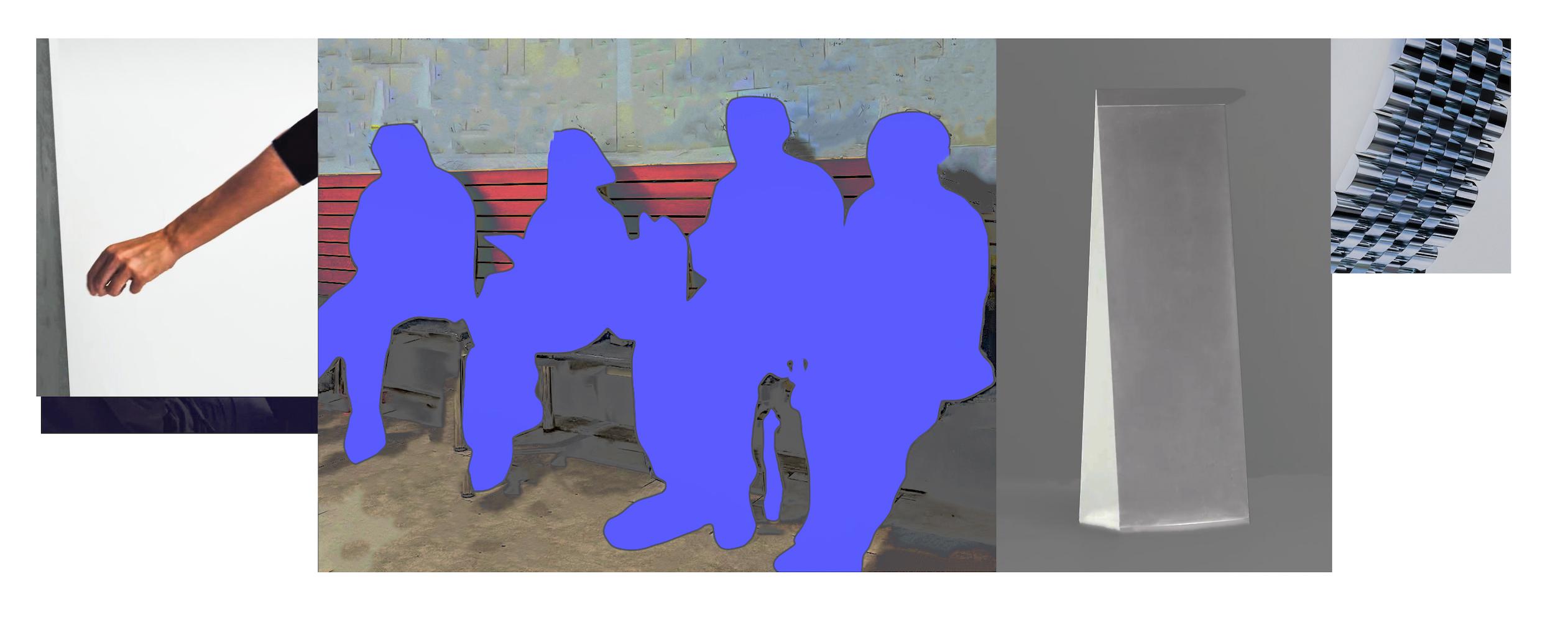
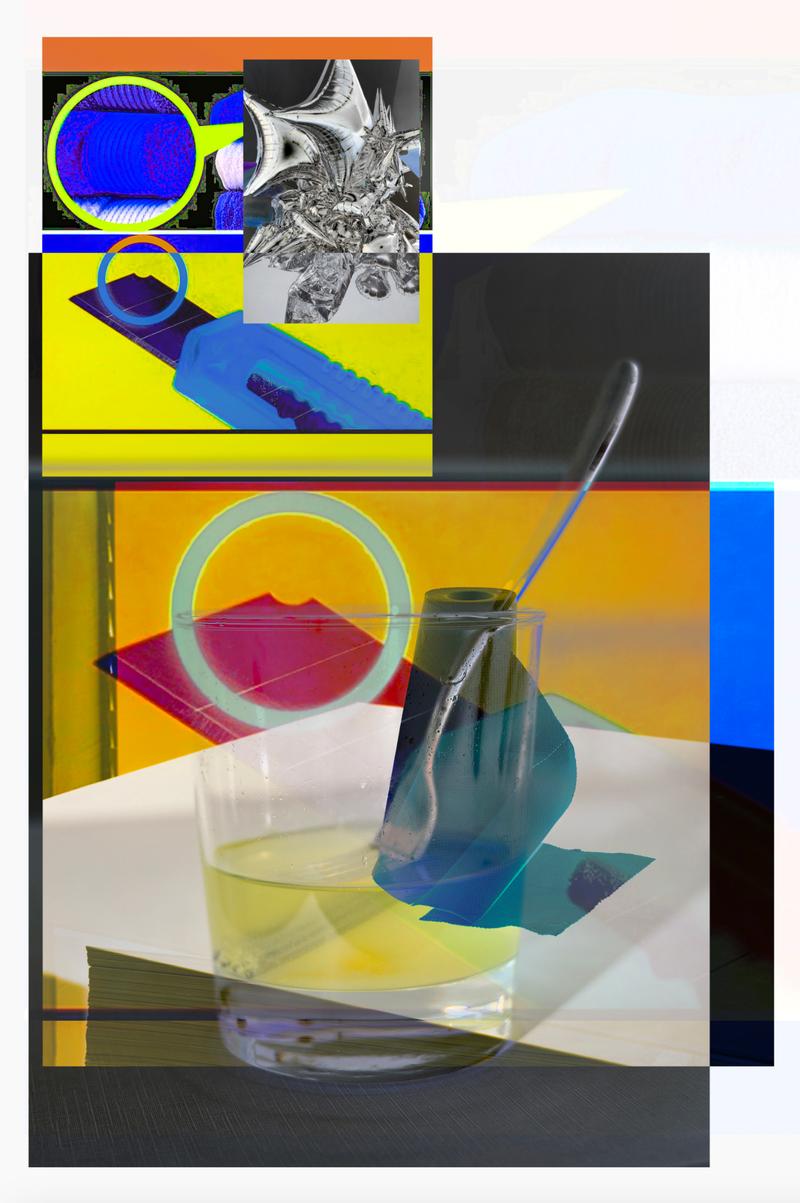
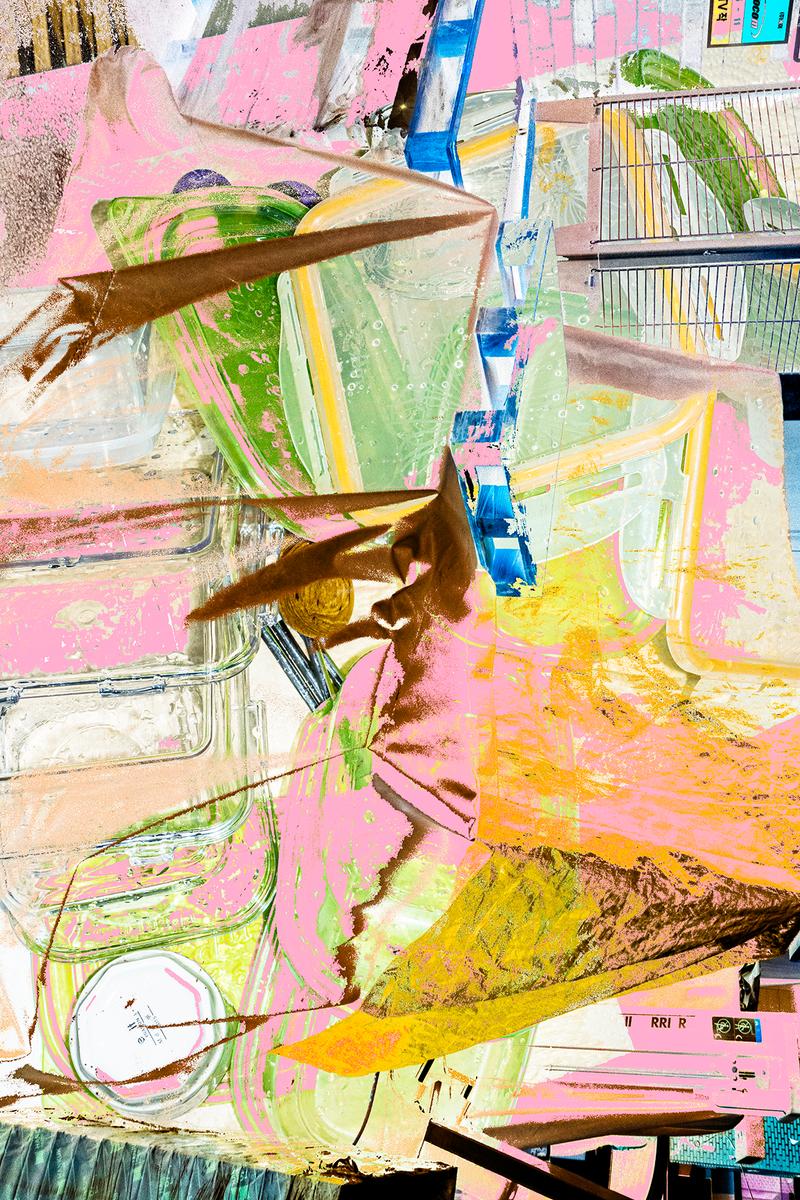
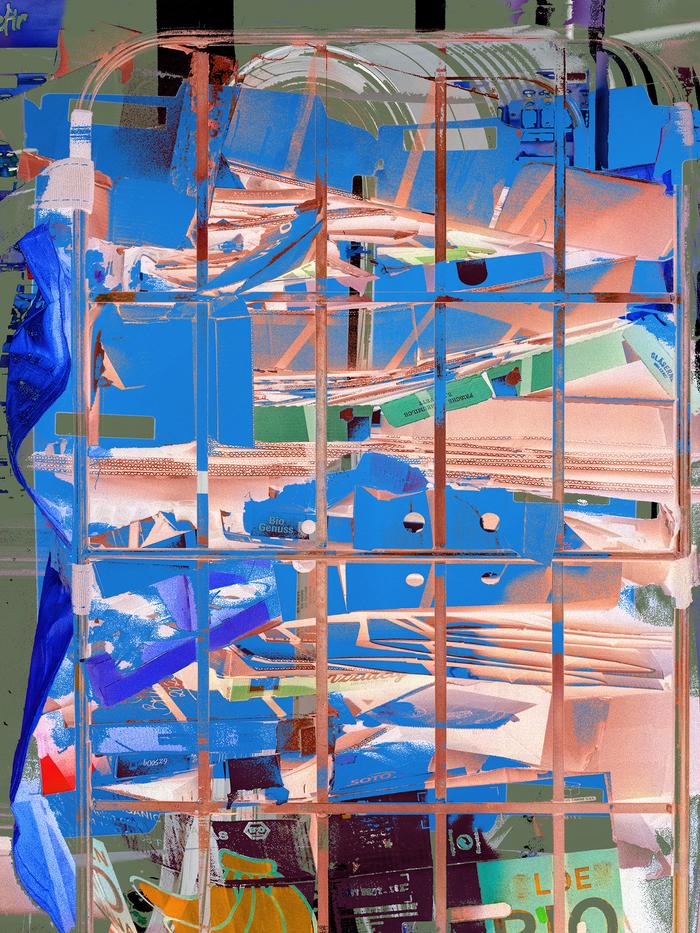
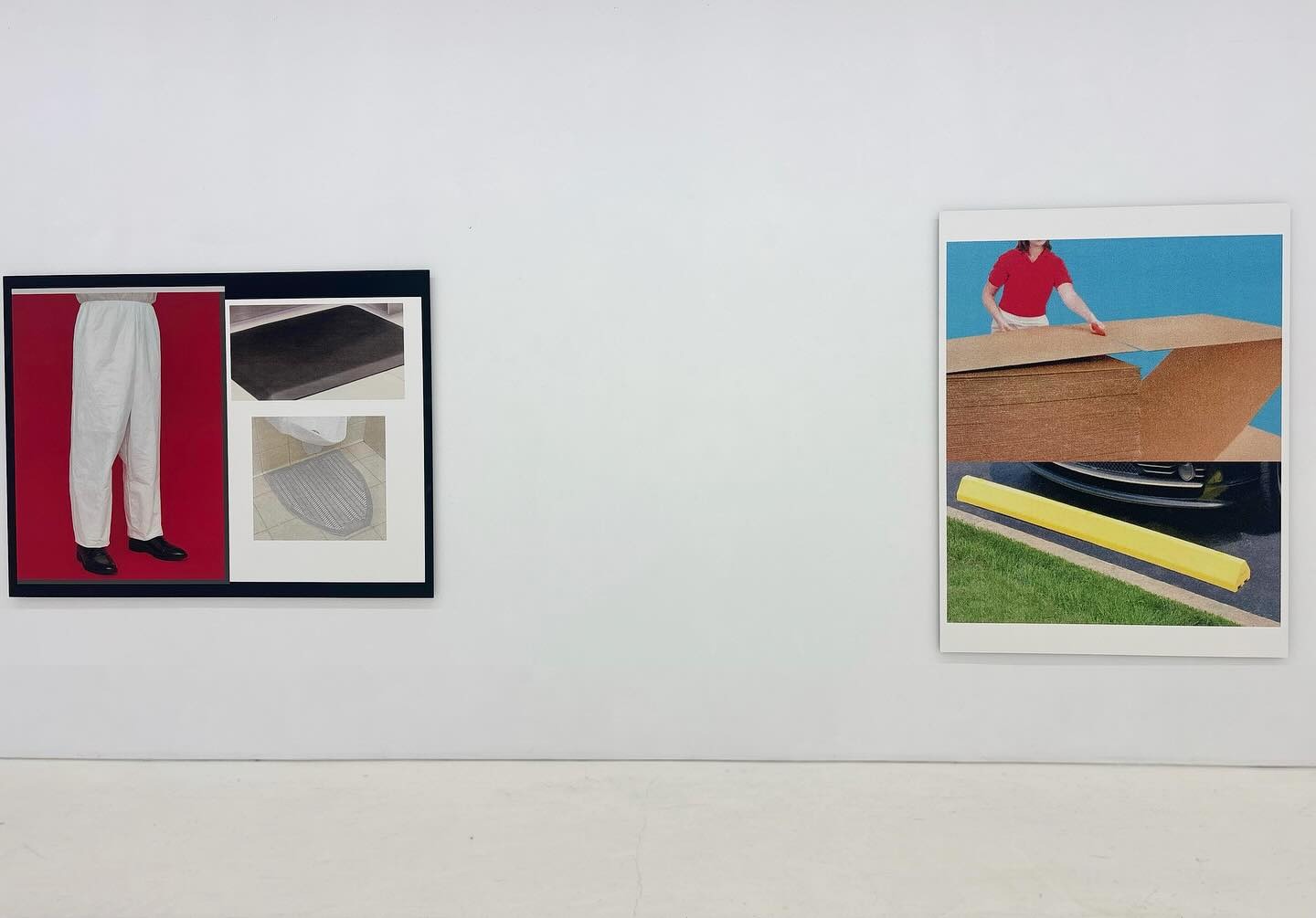
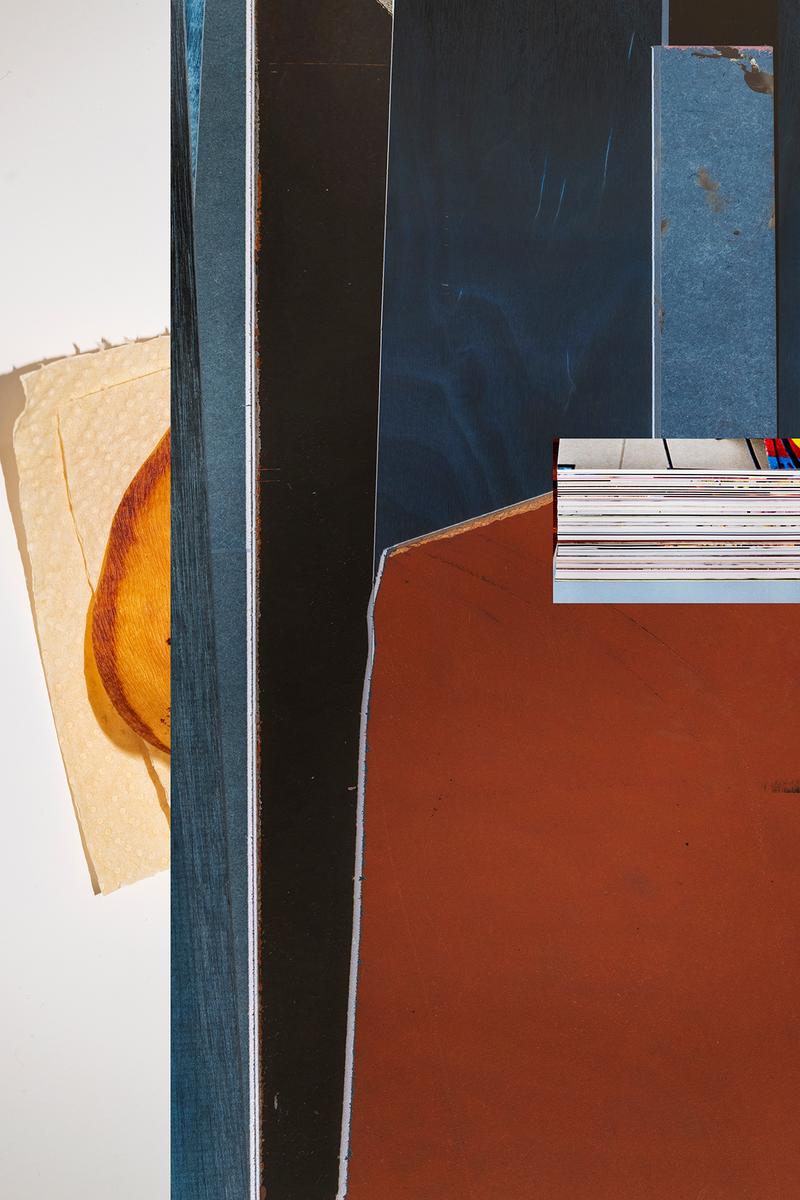
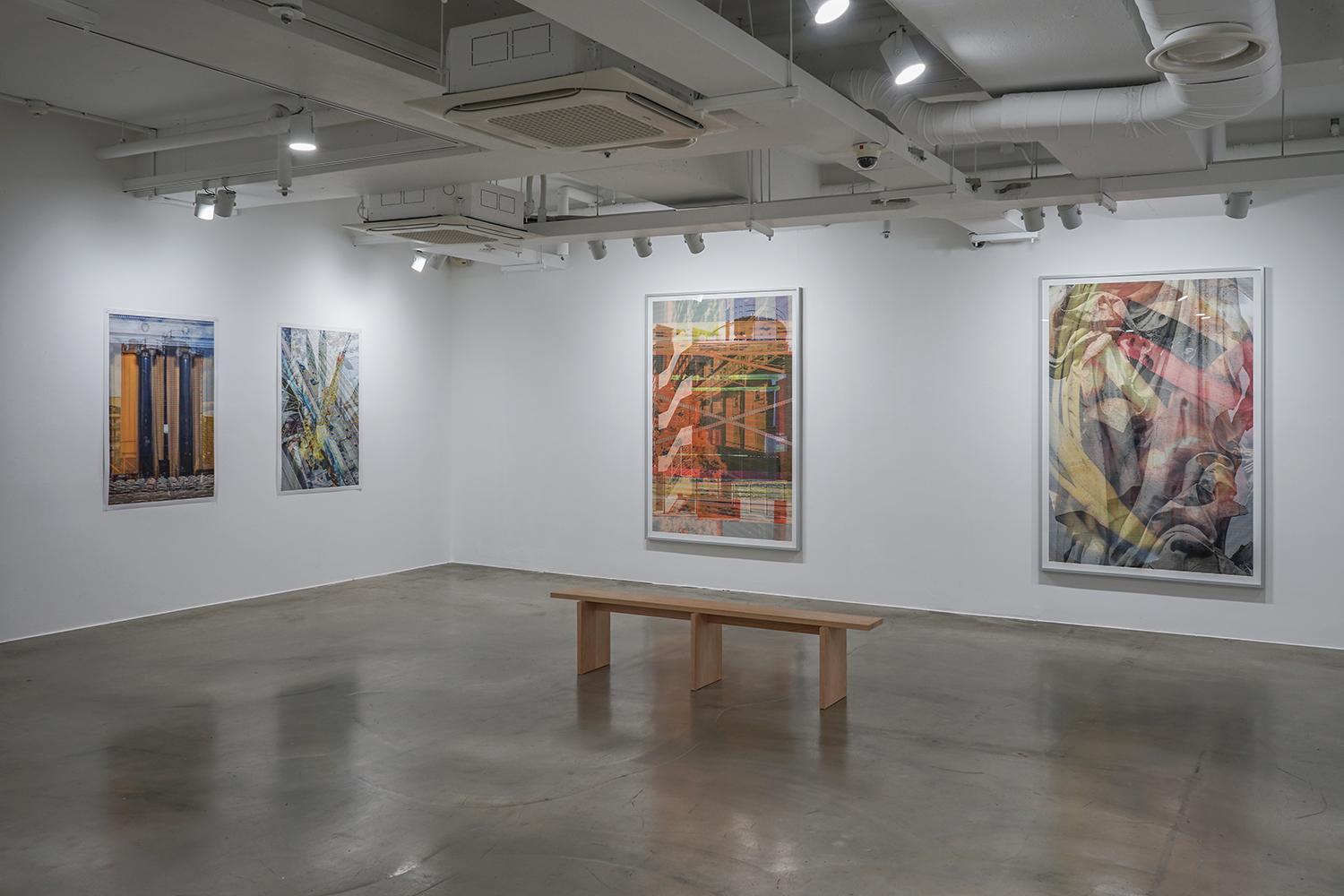
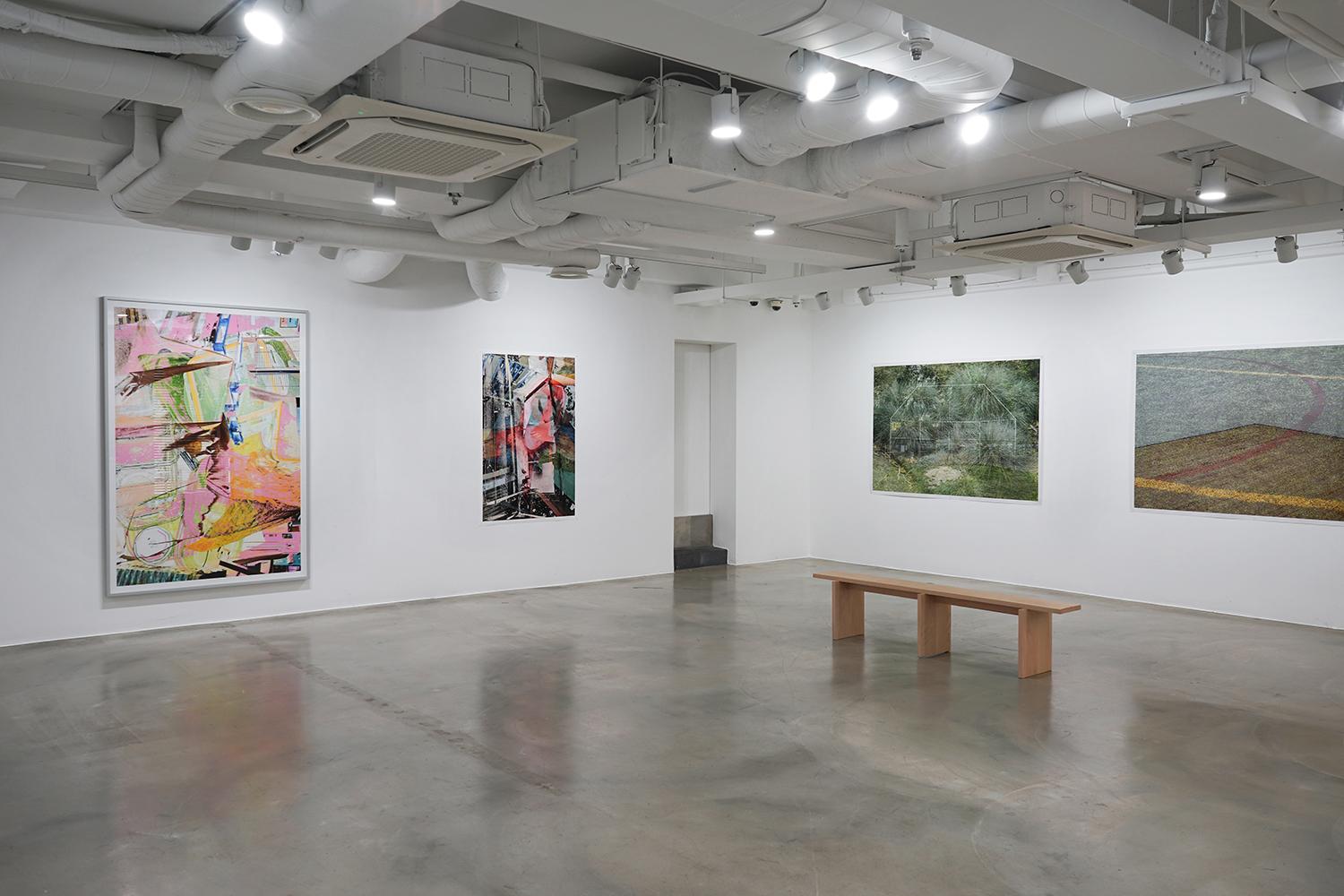
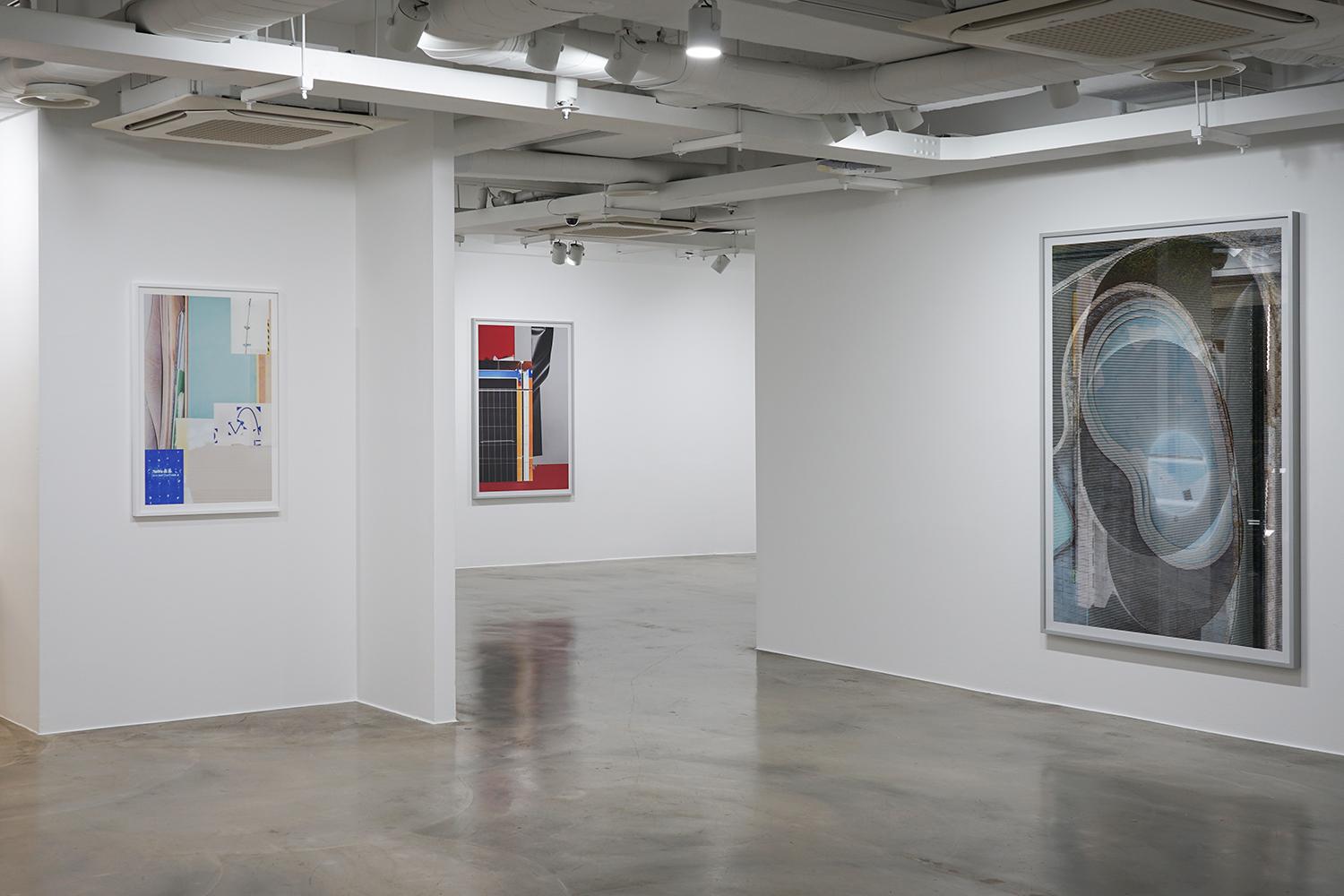
The primary method of variation is the layout of several smaller images on a single basic image. He does not crop any part of the image. He keeps the original format intact. After all, the collisions and harmony among the dislocated images, contrasting extremely in terms of sizes, help create a new screen unexpectedly. The extension of the color inversion between negative and positive photos—the theme of the entire series—corresponds to ‘Equation’, or the first method of transformation.
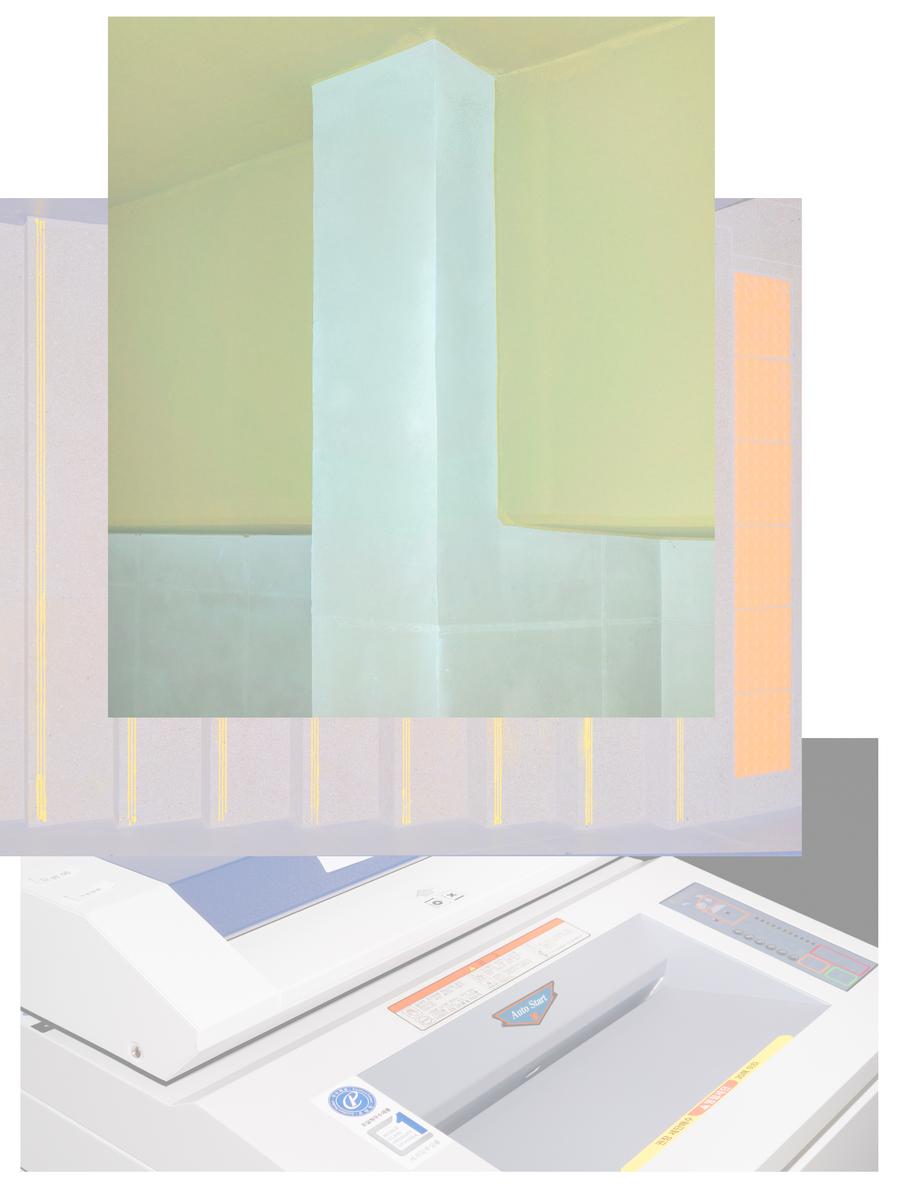
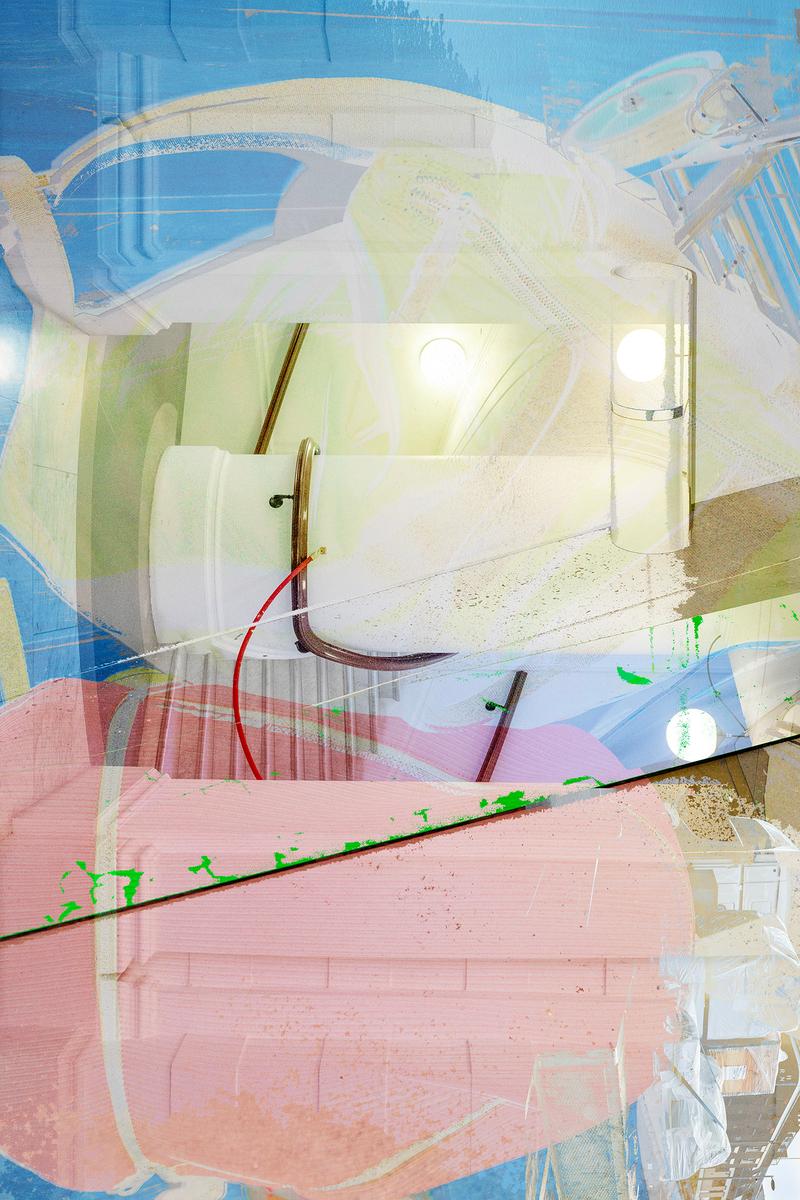
The second method, or ‘Cacophony’, extracts and removes certain colors among RGB, while two or more images are overlapped at the same size. Because some colors are deleted partially, the color of the entire canvas changes, while different images hidden behind the removed colors emerge partially, and thus, colors are mixed irregularly.
If ‘Equation’ is a physical transformation composing the entire canvas with the images arranged in parallel, ‘Cacophony’ is a kind of chemical transformation where the simple act of extracting certain colors leads to the complex mix of the original images. The result is an unexpected—maybe inconceivable—image that is strange and uncomfortable, like a dissonance beyond the artist’s intention.
Moreover, the concrete forms visible between the erased parts—like the parts where the sticker is removed—attract our attention while contrasting with the almost abstract canvas. On the other hand, the overlay of different-size images is like a dissonance in ‘Arithmetic’, but the result is much different.
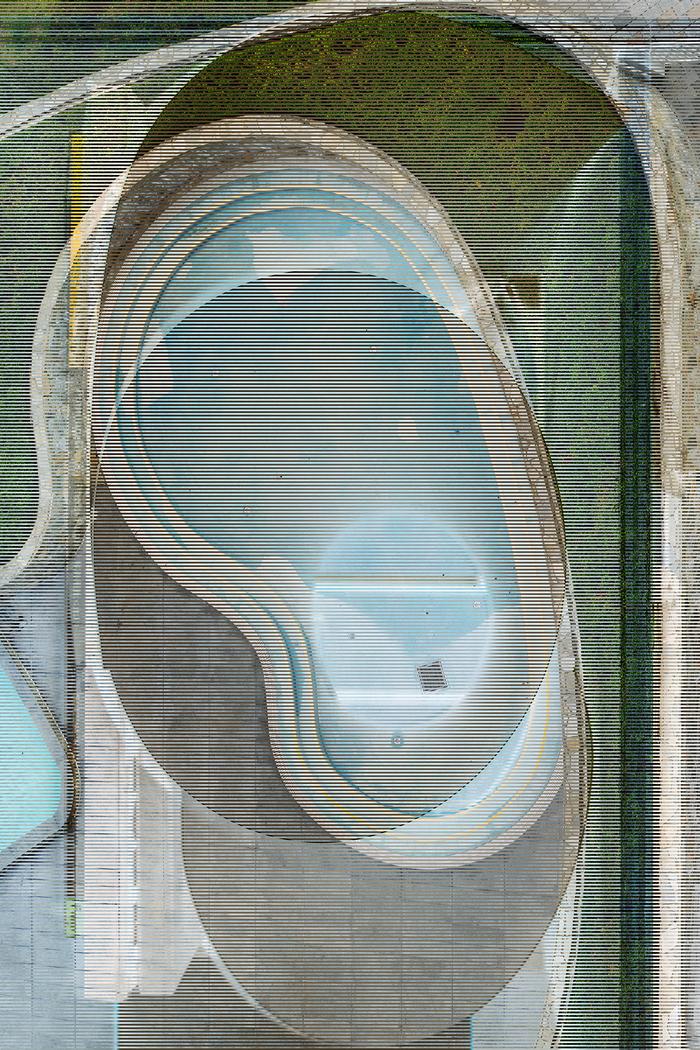
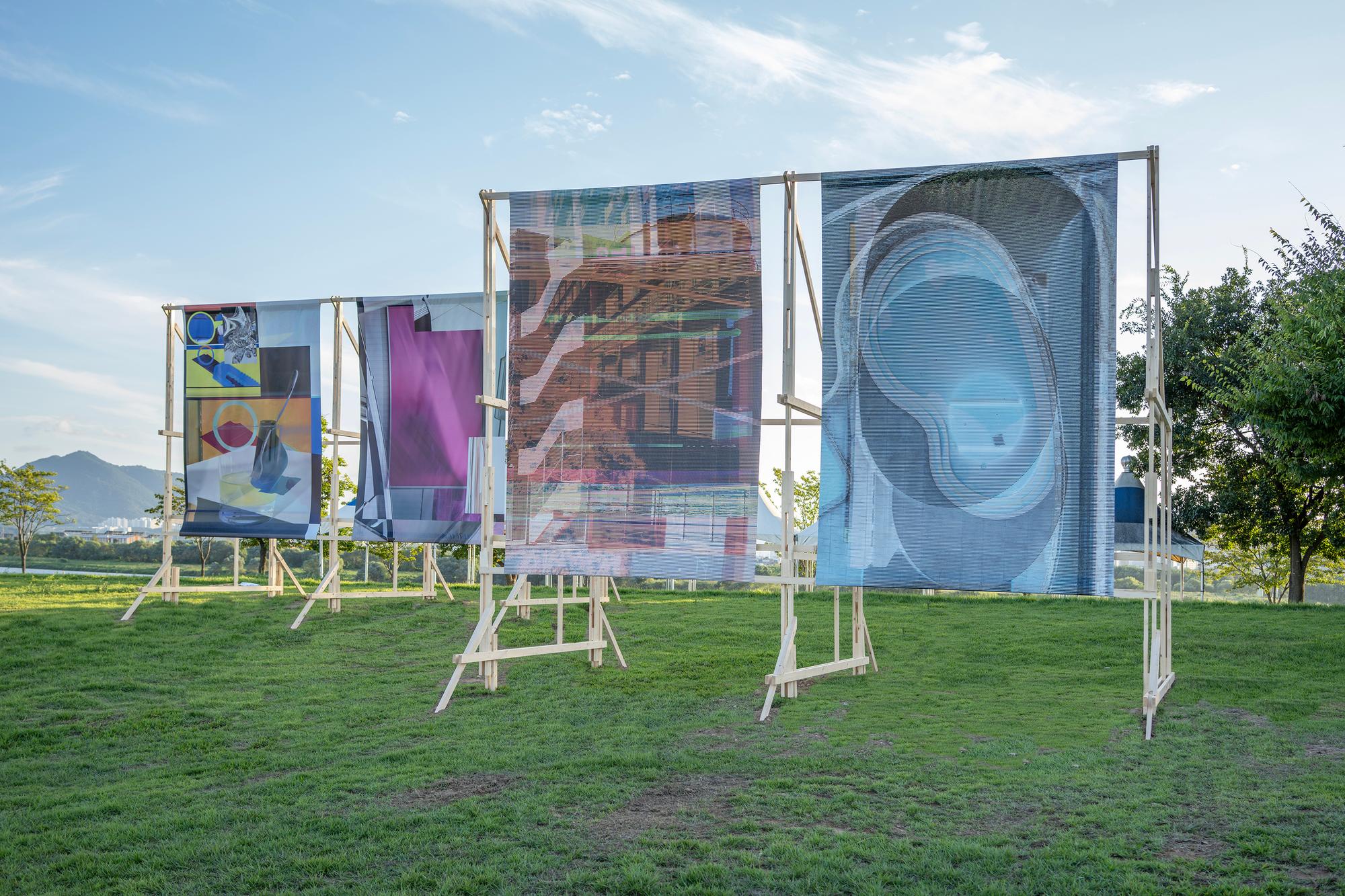
Seen from afar, it looks like an unidentifiable dim image, but if you see it closely, you would find that a thin horizontal incision line is repeated with the two images overlaid. As is well suggested in the theme, it is a precise arithmetic transformation. Two images are cut longitudinally as thinly as 10-pixel width and then their parts are removed one by one so that different images may be overlaid across. The two images overlaid alternate like the digital 0 and 1. Namely, the absence and presence are repeated, while only half is visible. However, the human eyes grasp them as a single dim image.
As such, the artist uses several simple Photoshop methods, like a kind of manual, to transform the concrete images of ‘Entropy’ into the new ones near abstraction, or ‘Equation’. At first, the artist discerned the themes as ‘Equation’, ‘Cacophony’, and ‘Arithmetic’ according to the three methods of variation, but now, he cross-applies each method with no single border to expand his canvas more irregularly.
The artist extracts several images partially by means of twisting and thereby produces two images overlaid, crossed, or deleted. Although the artist applies a certain principle to induce a result, his final image is a difficult-to-understand abstract image, just as a math equation becomes more and more complex as the exponents increase. In this process, the constants are always the artist’s sense and intuition. It is just like a technique used by an abstract painter who naturally knows the moment of starting and ending their abstract work.
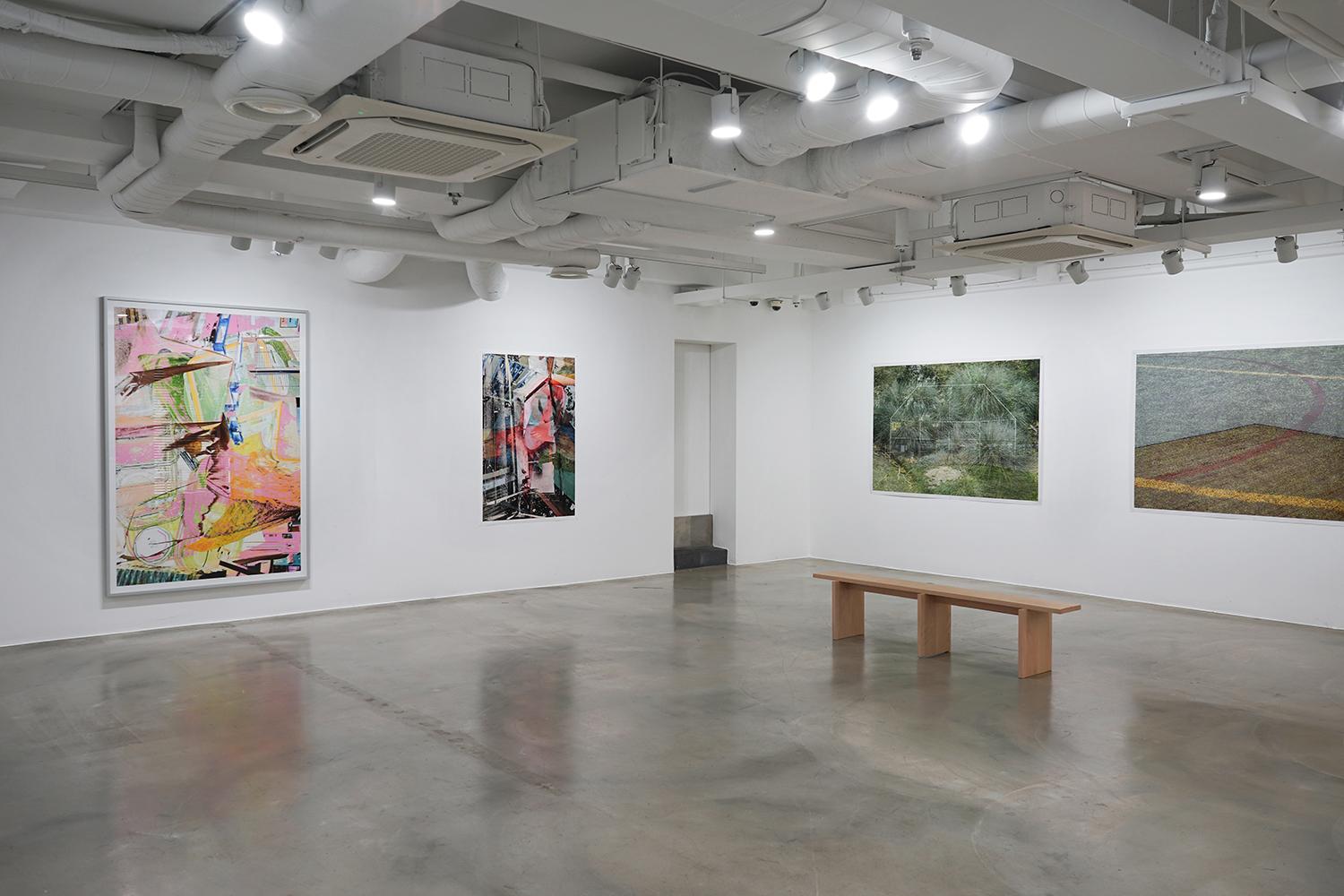
Actually, Dongsin Seo’s ‘Equation’ may well correspond to digital abstraction. His works are similar to abstract paintings in that he intends to depart from limited semantic interpretation by representing some concrete forms, and in that he follows his own senses and intuition to produce his works. In addition, he values the nature of the materials like abstract painters.
His photo works produced with archival pigment print reveal “a color field” leading the entire atmosphere of the canvas. Even in ‘Entropy’, or a kind of representational photos, the color field is a unique formal element occupying a certain area or more of the object containing sufficient light. In ‘Equation’, based on ‘Entropy’, the color field dominates the entire canvas even after the Photoshop variation.
Only the color field of the ink coating the sensitized paper corresponds to the paints spread on the canvas. Since the pigment is coated on the surface of the support, his canvas is a plane like abstract paintings. Merely, the unique materiality of the photo works due to the even coating of the thinly spread ink is aesthetically formal, unlike the brushing of oil paint.
As is well known, the artist uses the most common materials and the basic digital techniques to complete his visually abstract images that are complicated, as discussed above. He carries a mini digital camera to capture the images in his ordinary life. The images sampled as such become part of a series or are saved in his huge storage to be completed as new images through some simple manipulation.
He does not use complicated devices like high-end medium or large digital cameras and advanced Photoshop programs, but rather the most common tools and methods that everyone feels familiar with, which is a kind of constraint he imposes on himself. Within a certain limit, Dongsin Seo attempts to produce unique images open for interpretation through numerous repeated attempts and his own artistic intuition, while allowing for the intervention of accidental elements.
His strategy is to identify the images with the objects of instruction while not denying the original nature of the medium or the chemical representation of the specific objects, thereby securing the space for photography as a genre of art. “Tools are made to achieve a goal, and in this sense, they may well represent our desire and intention.
We make the tools, and the tools make us. We use certain tools to correspond to what we want and reveal our intention.” William Mitchell’s above comment regarding the varied topography of the image in the earlier discussion about post-photography seems to resonate deeply with Dongsin Seo’s photo works.