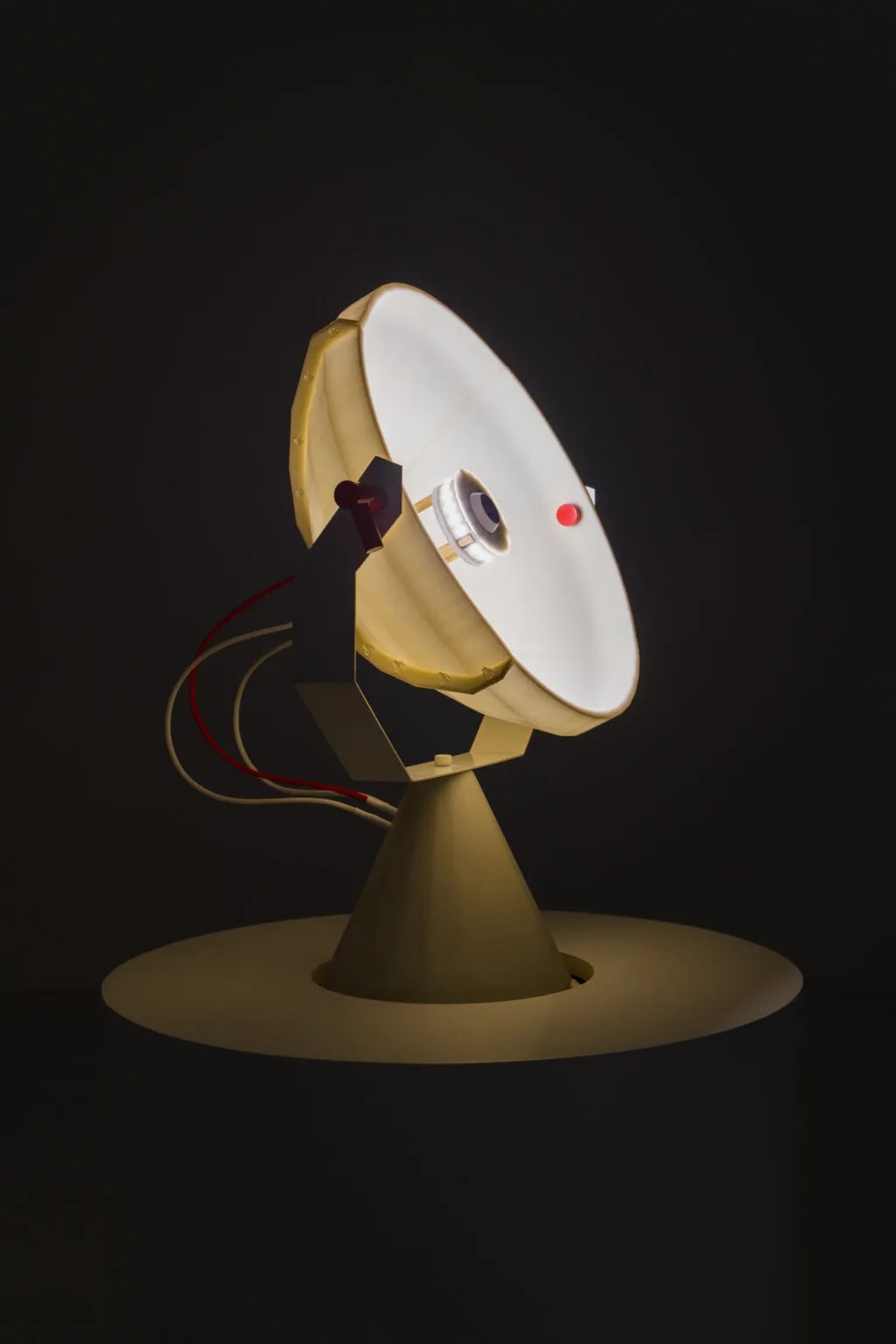
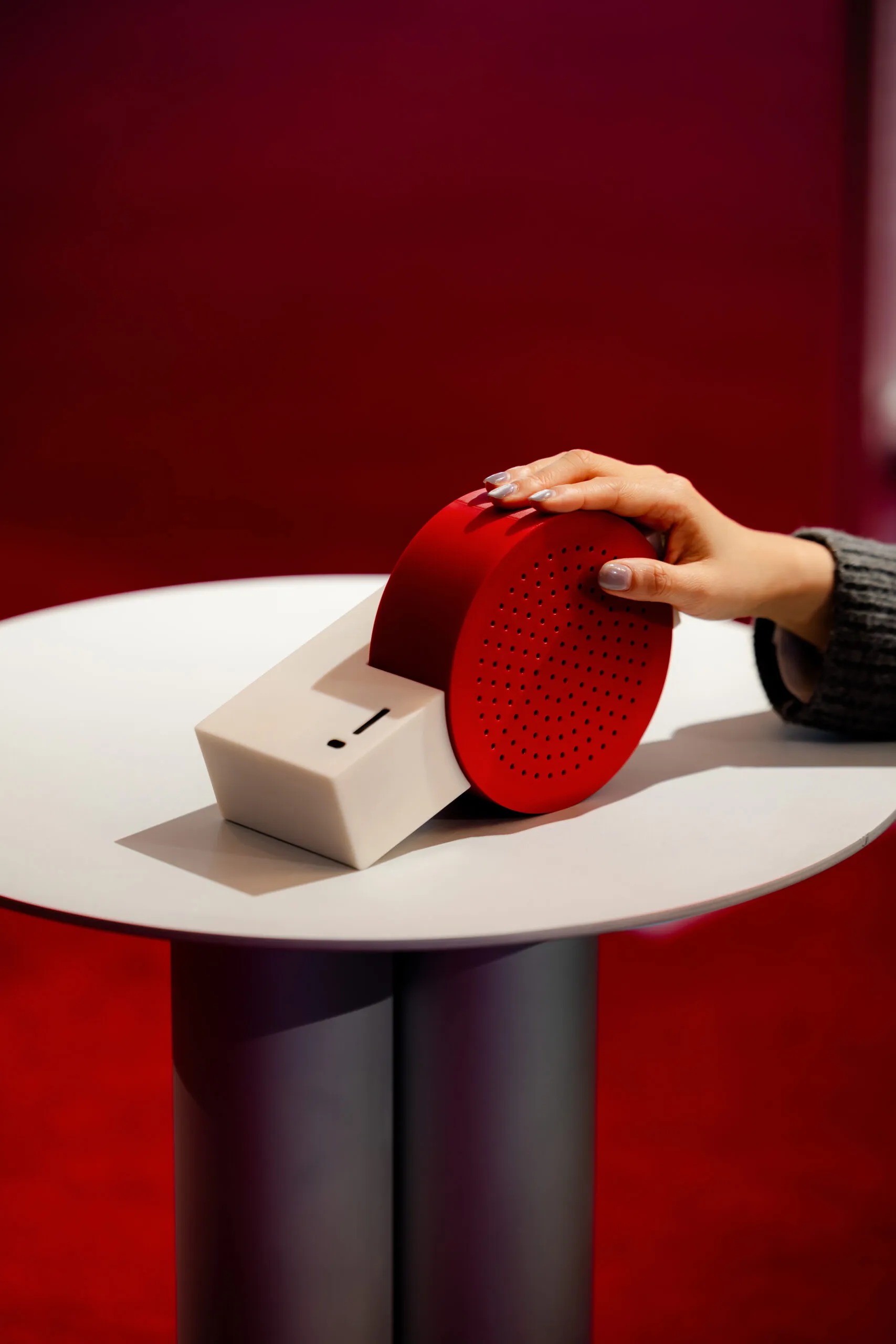
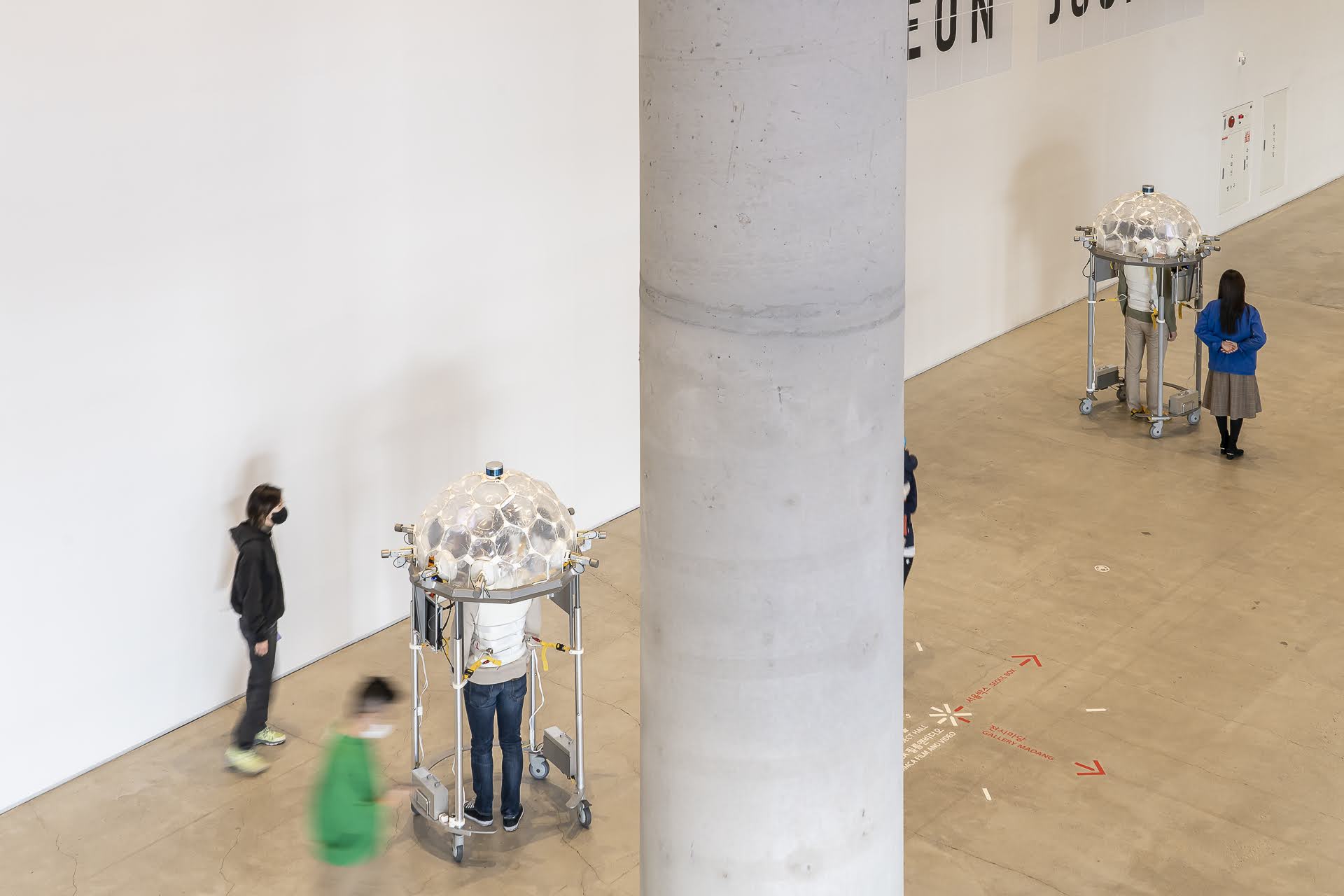
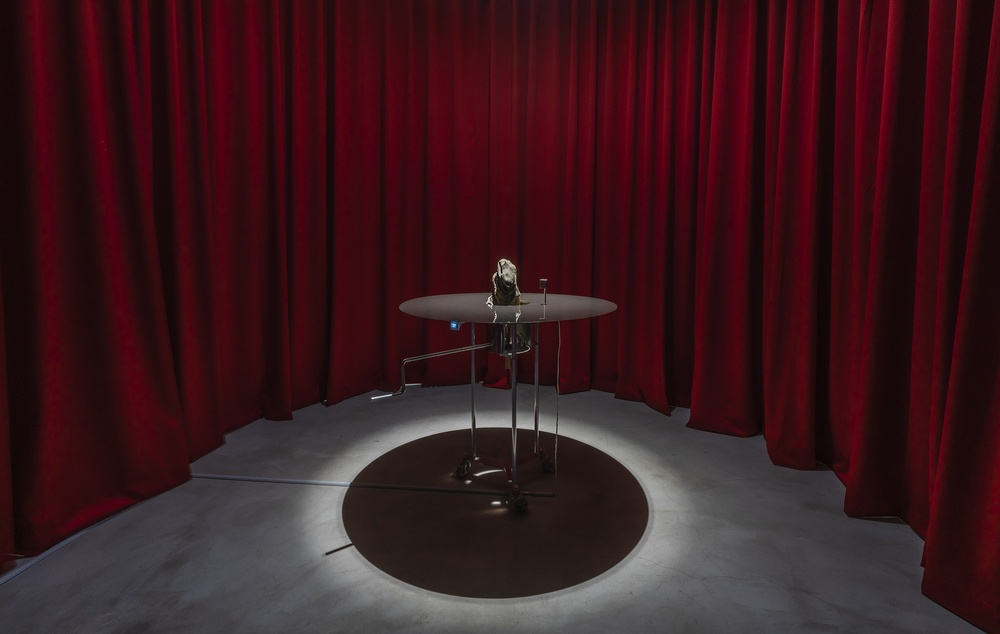
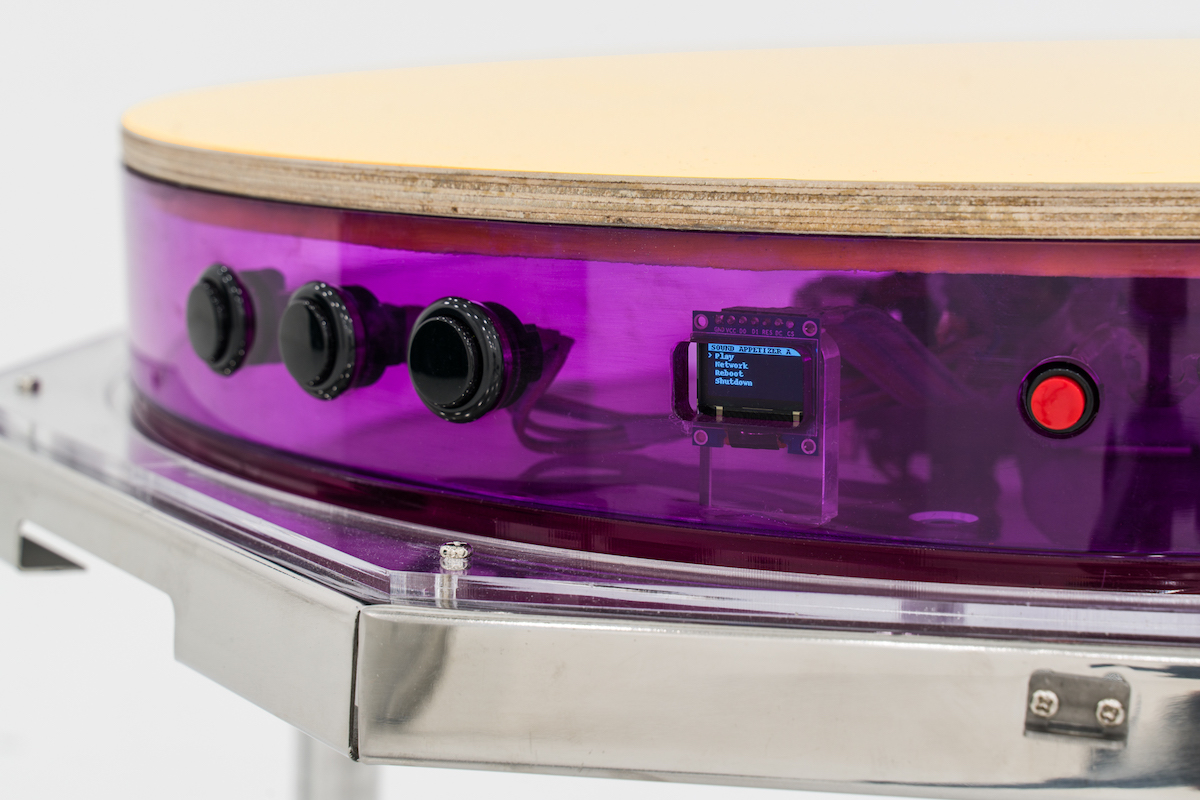
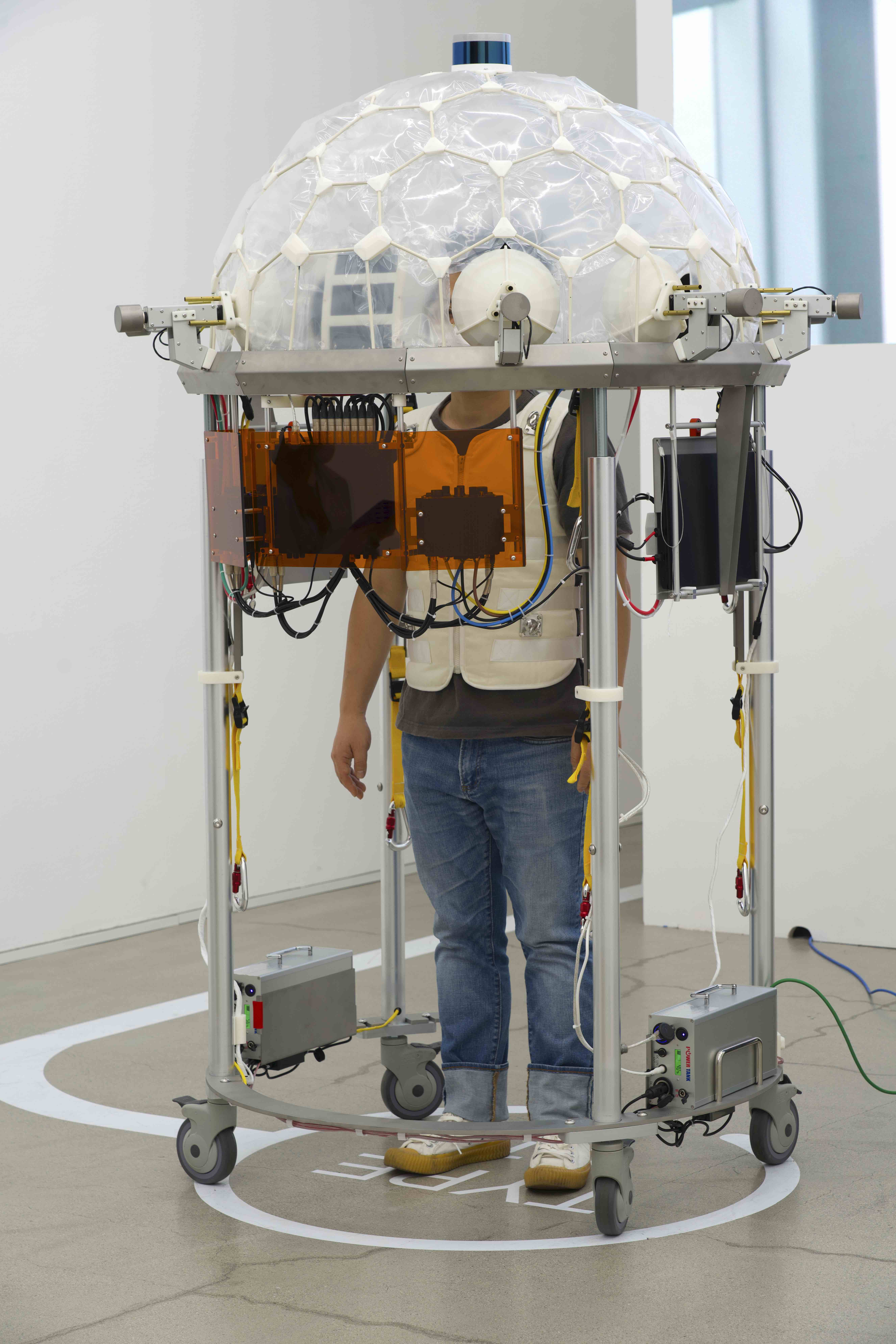
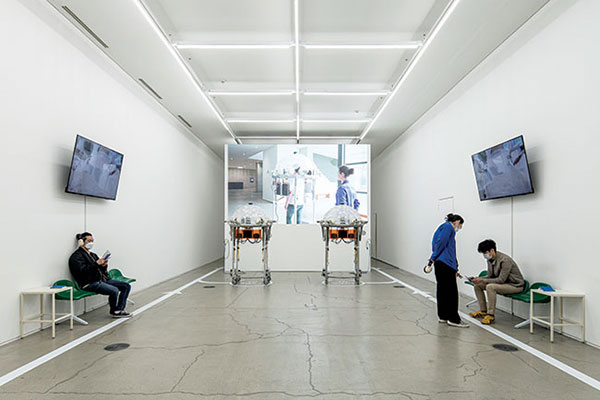
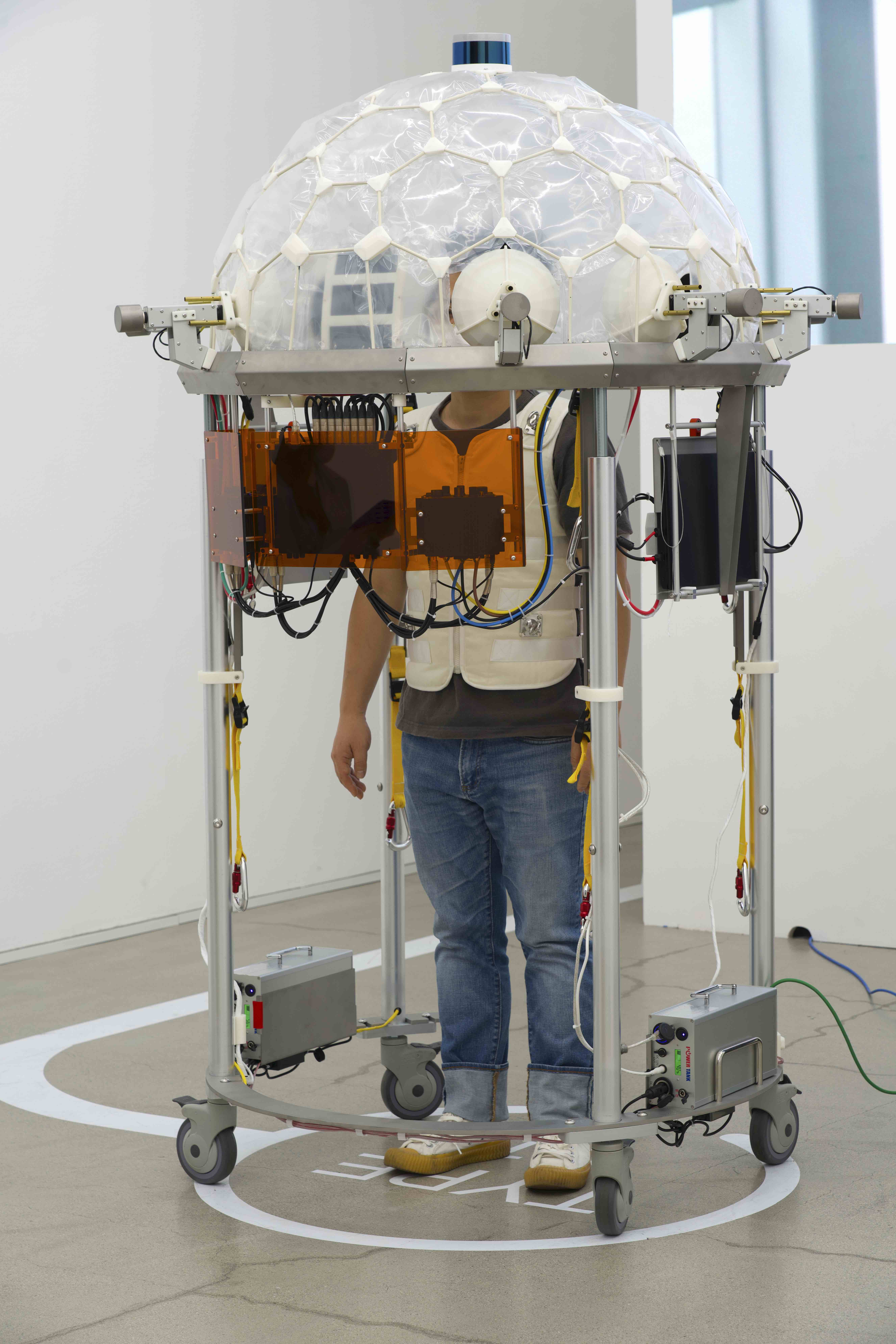
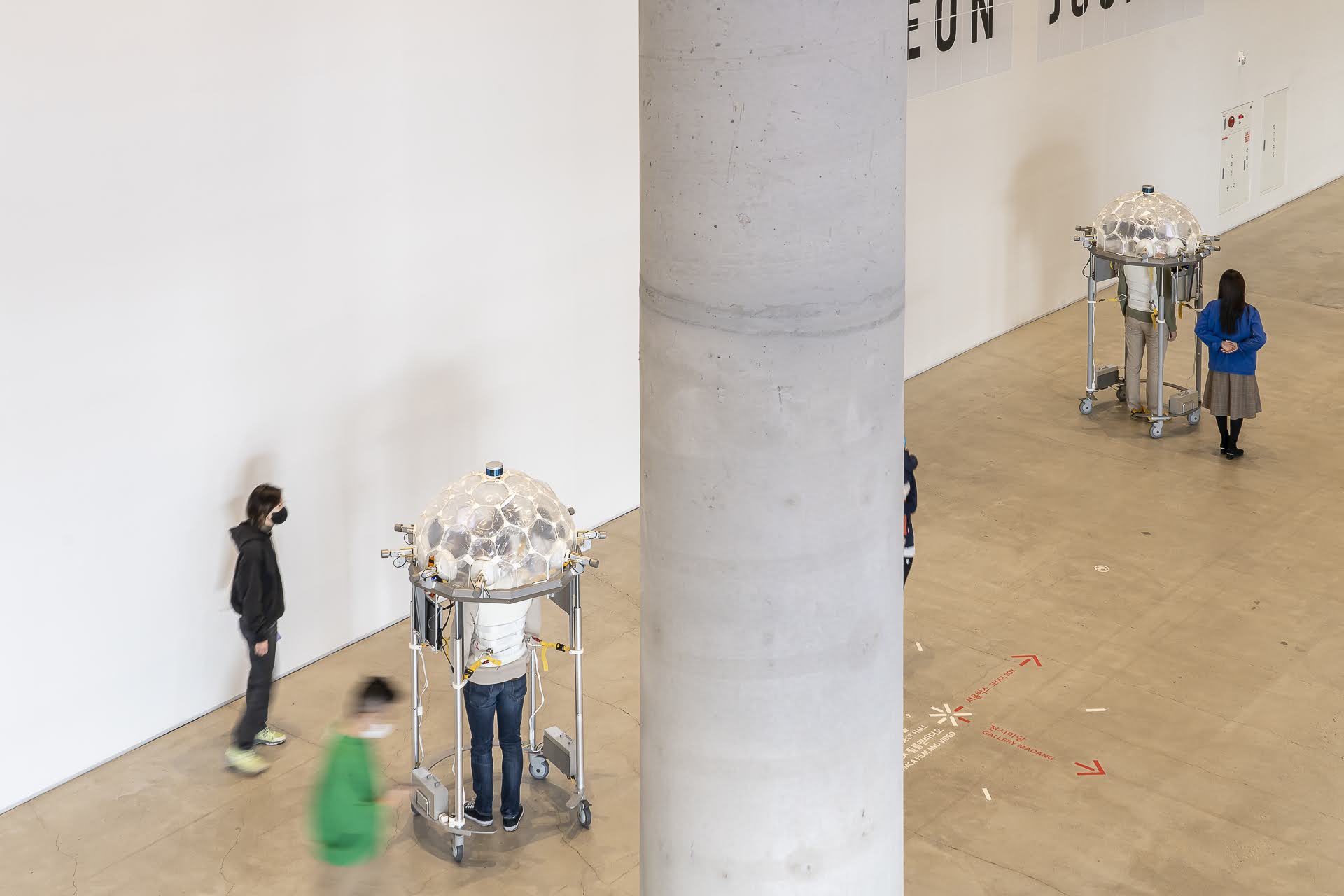
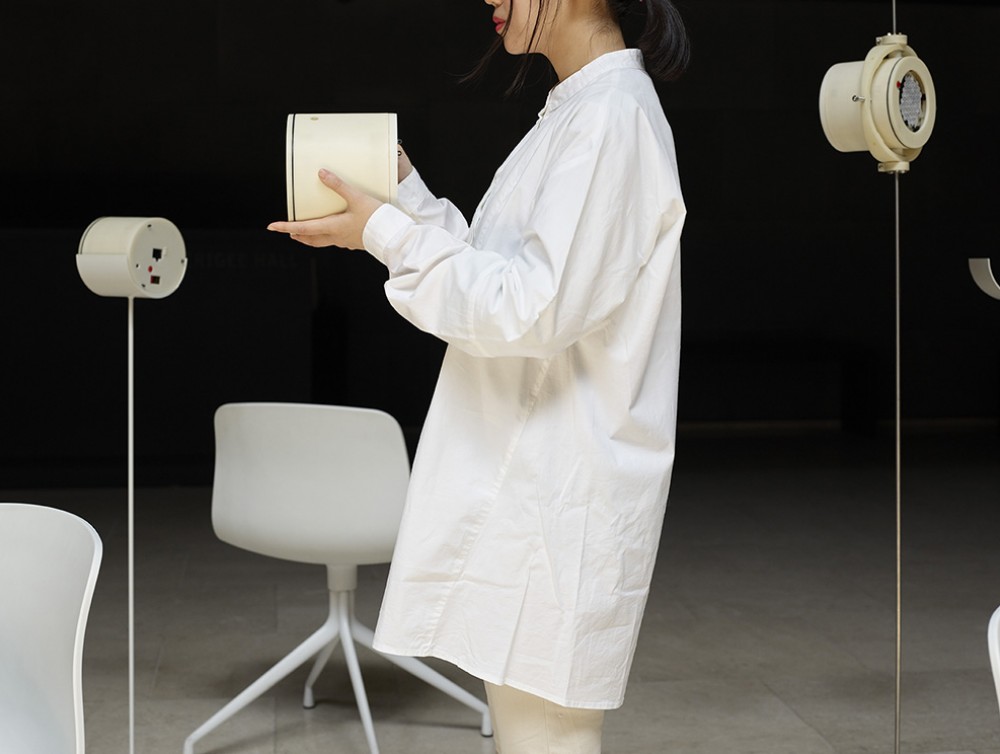
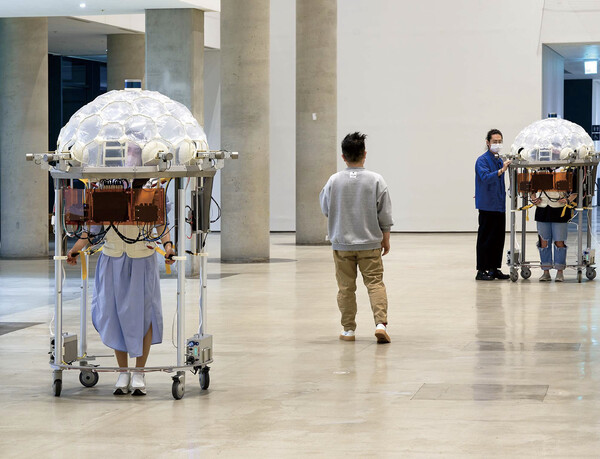
Even among the various appendages, I had grafted onto my body until then, it was overwhelming for its size and too complex to identify at first glance with any certainty. The inside of the cylinder, with its dome-shaped top, was filled with speakers, displays, and laptop computers.
I would have guessed its overall height to be about two meters, its diameter one, and, judging by the sense of resistance I felt when it was grafted onto my body, it must have weighed well over thirty kilograms.
The preparatory process I was put through before the transplant was far from simple, too. In order to graft the device onto my body, I had to tell a Navigator my walking speed and height, then familiarize myself with a variety of safety regulations. Preparation not only applied to the body, but intervened actively in issues of knowledge. Navigators handed everyone awaiting a transplant a booklet titled Perspective-Implant Manual.
It was full of short, aphoristic questions that made you doubt your own perceptions. Only after fully reading it were transplantees-in-waiting able to graft the “Datascape” in Hoonida Kim’s Landscape being Decoded onto their bodies. They were given about fifteen minutes with it.
A sensory prosthesis
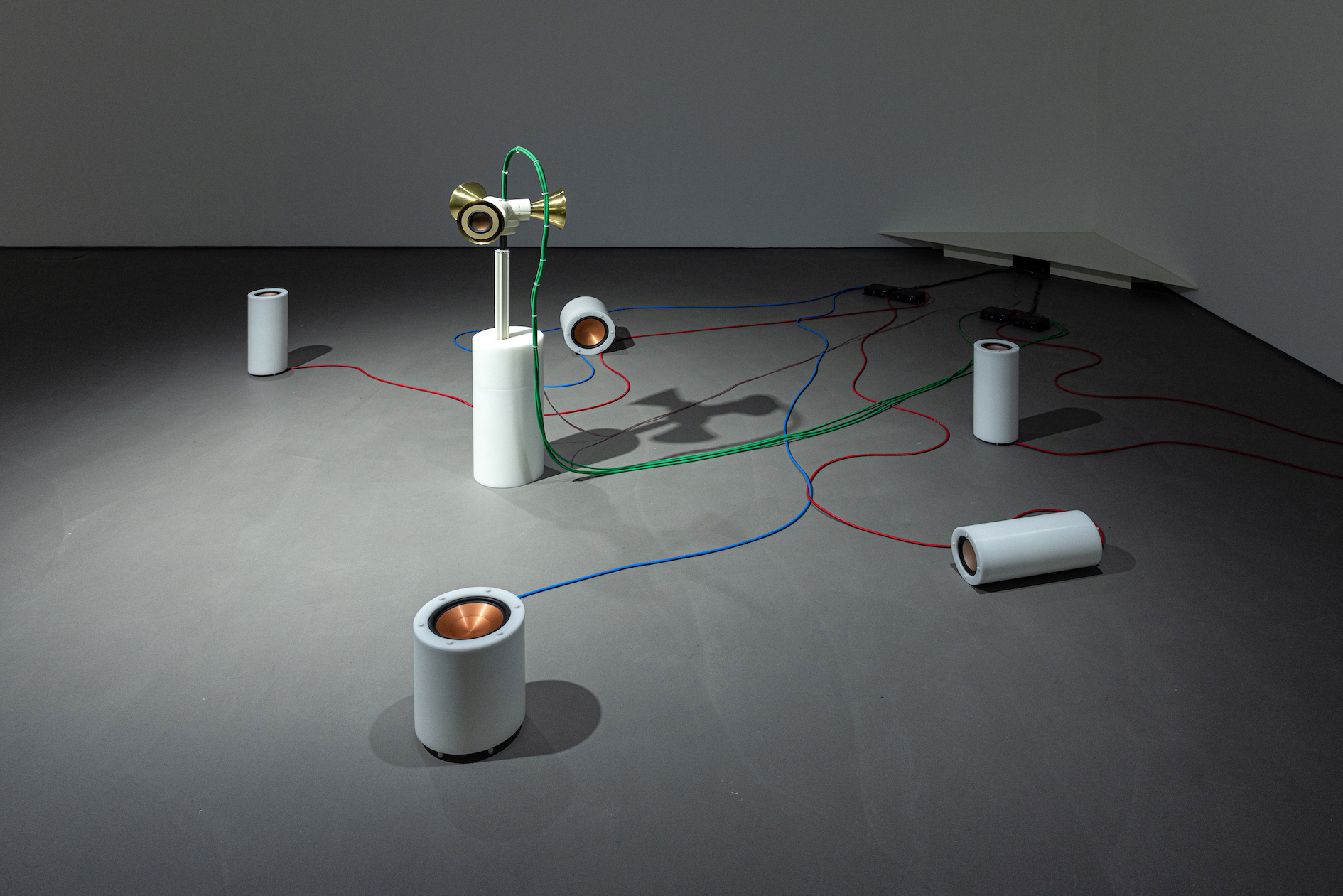
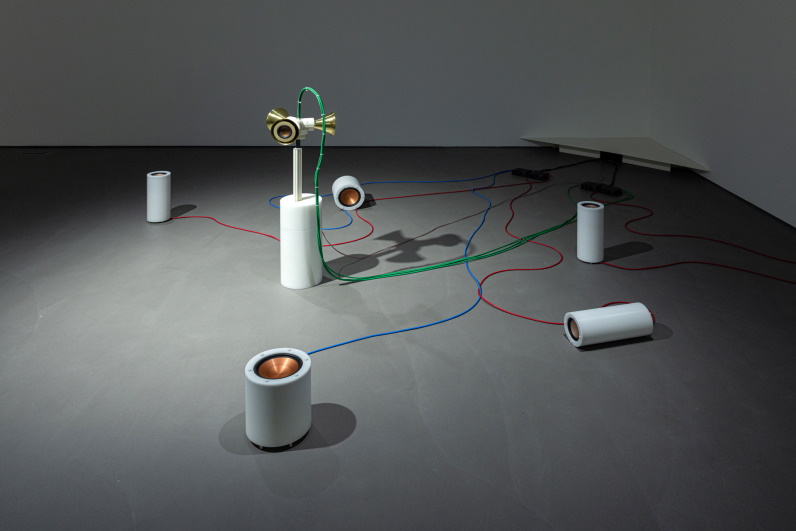
For fifteen minutes, transplantees no longer read the world through human eyes and ears. An opaque, vision-blocking membrane and eight speakers surrounding the head at ear level stealthily block off the body from the outside world, preventing the former’s innate sensory organs from perceiving the latter as before.
After they receive the Datascape transplant and wander slowly around the museum, it is the LiDAR sensors at the crown of the Datascape’s head that acquire audio-visual information about the surrounding space instead of human eyes and ears.
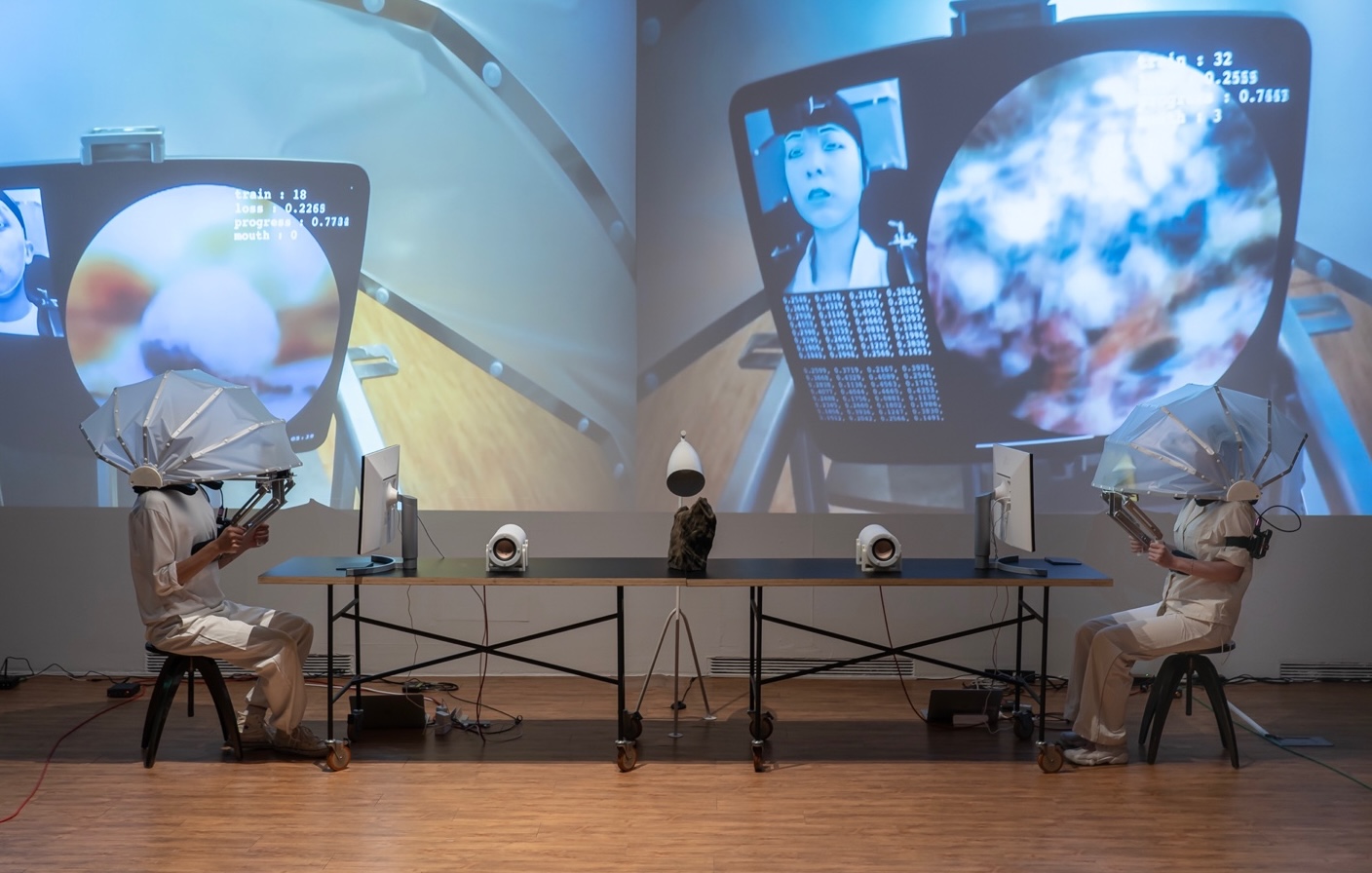
LiDAR sensors, widely used in the field of self-driving vehicles, rotate rapidly through 360 degrees, reading numerous pieces of quantitative data (walls, slopes, position of moving objects, etc) within a space. Then, the Datascape transfers spatial data acquired by the LiDAR into the realm of the audio-visual, allowing them to be sensed by the human body.
The Datascape’s internal display and eight-channel speakers, showing a bird’s eye view of what is where, and what objects demand vigilance, convey information on the space around us in real time.
Through a display, transplantees clearly see what is approaching behind their backs, and how fast. At the same time, in the form of sounds, they hear things that try to approach them, then disappear. The closer the blue mass on the display approaches me, the more clearly I hear the sine wave noise; the closer I move towards the wall, the thicker the white noise becomes.
Amid all this, various concrete sounds, each with its own origin, suddenly emerge, as if someone is constantly adjusting the frequency on a radio. These sounds, each with a different weight and density, form their own sense of space. The white noise that exists as a realm, the sine wave sounds that exist like objects, and the concrete sounds that rush in for a brief moment before disappearing again, as if they will, at some point, become connected to another world.
I walk around the museum feeling as if I am floating in a cloud, repeatedly surrounded, then released again, by strange sounds; observing the endlessly moving world with me at its center.
Then, the relationships between spaces, movements and sounds that I have vaguely taken for granted until now take on a different composition. My body starts rattling somewhere, my movements become clunky, and my reactions to the outside world slow down, as if experiencing buffering. The world I sense through my body and the world read by the Datascape are totally different.
The world I observe after my device transplant is constantly in motion, constantly making noises. The noises coming in from all directions cause my sense of balance to become tuned in a slightly different way. As if I am wearing glasses made not to supplement my eyes’ own resolution but to create a different resolution altogether, my body feels a faint motion sickness. To borrow the words of Oh Youngjin: a “discord between body and machine” emerges.
For a moment, the body resists the feelings presented by this unfamiliar machine. Soon, though, it starts looking for a method of application that can provide a kind of point of contact between the two. The rhythm of the body and the movements of the Datascape slowly become synchronized, and the process of seeing and hearing the world around me in the same way as the Datascape becomes gradually easier.
But when the sensory-perception system is grafted onto the body, my suspicions are re-oriented. What if the nausea comes not from my body but from the world itself? What if the world was dizzying, constantly in motion and endlessly noisy to begin with, and I’ve only noticed it now? What if I hadn’t been able to read it with my own eyes and ears? Can we really trust the world we’ve become so used to sensing and perceiving?
Lenses of perception
The space within Landscape being Decoded is digitally deciphered through LiDAR sensors; the resulting data change once again into forms that humans can sense. Reading the world by way of digital technology may appear unfamiliar at first glance, but it is actually something that happens in our lives all the time. The data surrounding humans are acquired through myriad sensors, while our experience of perceiving the world has been infiltrated by a wide range of digital devices.
These sensors and devices each read the world according to their own sensory systems and logic, and our reliance on them is profound. Sometimes, we are unable to perceive their structures, or to notice their existence. But this work draws these digital entities to the surface of our senses, proposing that we experience the landscapes they read.
In that sense, Landscape being Decoded appears at first glance to convert visual landscapes and soundscapes into digital form right before us. The spatial images filling a display the size of a small book; the soundscapes reconstituted in totally different ways and emitting constant electronic noise. The Datascape reads and reconstitutes the world that clearly existed before our eyes.
But if this work has an aim, it is not just showing or reconstituting landscapes in different ways. Here, the suffix “-scape” is more like a passage through which to move closer to the center of the work than a destination for viewers. Landscapes are not objects for us to observe while we forget ourselves, but reflections of, or mirrors onto, the worlds observed by each of us.
The Datascape reads the size of the space around us and the distances between the objects hovering around us in real time. The reason we feel this space, which may be empty and may be full to bursting, more clearly the longer we wander it is the distance between ourselves and other objects; and the entities that are ourselves, intervening in space and actively perceiving the world.
If there is a final destination that this work points to, it is the perceptions and feelings of humans observing the current world. In order to reveal these, Hoonida Kim goes beyond the decoding of space and creates big and small triggers that allow transplantees to decode bodily feelings for themselves.
The purpose of transplanting the Datascape is not merely to supplement our awareness of feelings and the digital world surrounding our lives. It is also to add another layer of feelings to our bodies, as if fitting us with a completely different type of glasses in order to make us aware of the glasses we are already wearing, with the aim of letting us reflect upon our own perceptual and sensory conditions.
After fifteen minutes experiencing foreign bodily and perceptual feelings, the afterimage that remains on our bodies is more than just a sense of liberation at the removal of the external device. Though each transplantee doubtless feels it differently, the vacancy left by the foreign object on their bodies and minds remains intact.
A new and unfamiliar awareness appears of the fact that though they are using their own eyes again, their fields of vision have narrowed from 360 to 200 degrees; and that though they are using their own ears again, the things approaching and retreating from them have fallen silent. The next experience planned by Landscape being Decoded is one that explores the unfamiliar sensations experienced by transplantees once the device has left their bodies, and questions about these feelings.
For example, what were the things they believed they were seeing? What is the world they see and hear made of? What kind of sensors are their eyes and ears? What were the external sensors transplanted onto their bodies, and how have they been using them?
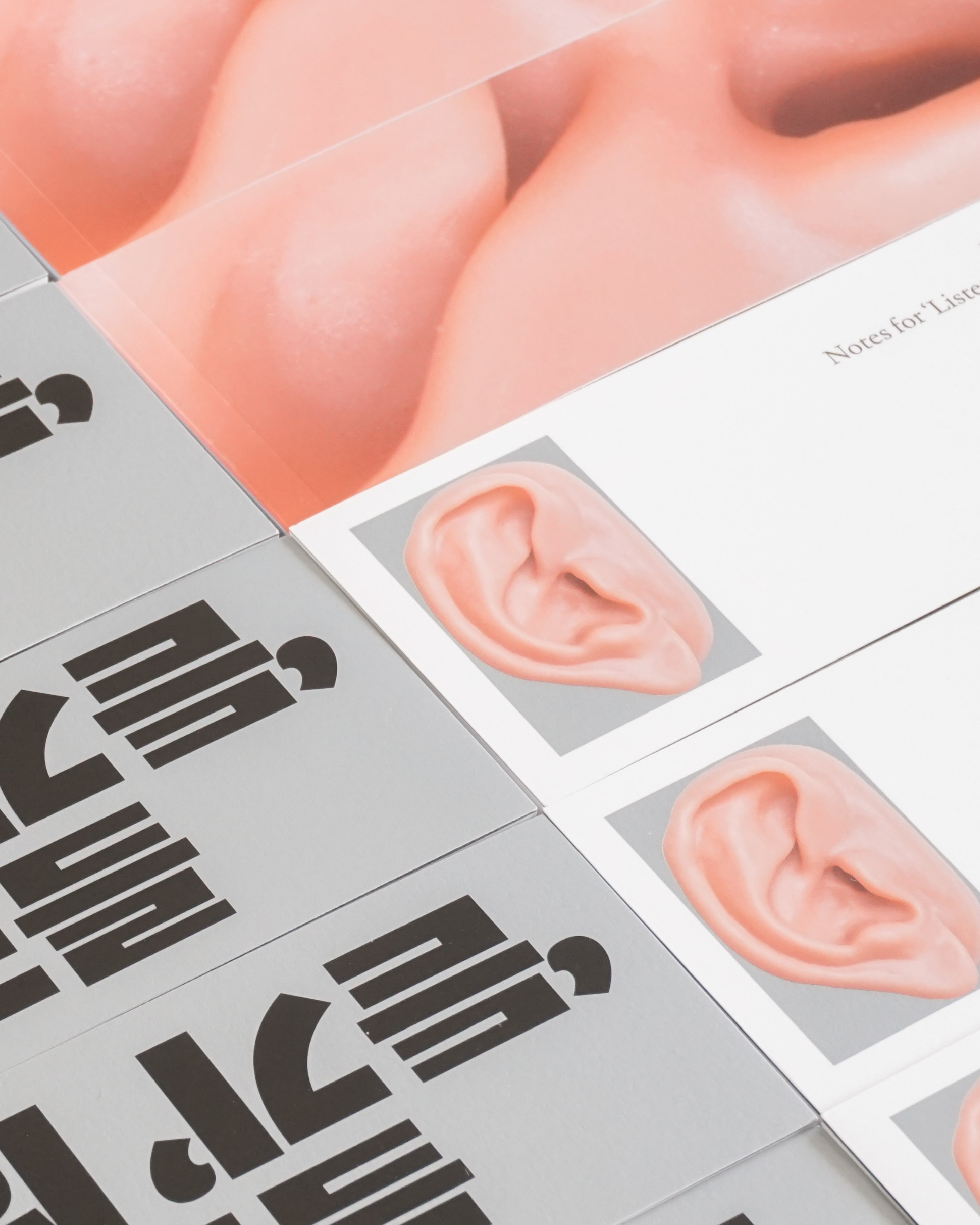
These questions, which cause them to doubt their own perception, are also scattered throughout the Perspective-Implant Manual that they had to read before the Datascape transplant, and hidden in Through The Looking Apparatus, a small storybook handed to them after the experience.
These doubts are the destination towards which the overall experience of Hoonida Kim’s Landscape being Decoded is oriented. The work approaches the real, not the imagined, suggesting things that cannot easily be sensed with the human body. In this respect, the use of an additional sensory device is essential, delivering an experience like putting in contact lenses in order to find “something” that has always existed in our world but is hard to sense.
This cannot be neatly summarized by any concrete term; inevitably, it ends up in big questions full of pronouns. This is because it begins with self-doubt regarding the world around us, and our bodies, perceptions and senses.
Space composition
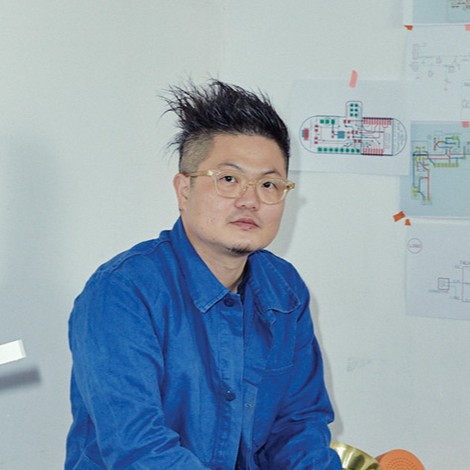
The transplantees in Landscape being Decoded become entities that constitute the space-time they perceive. This is linked to the concept of “space composition” that the artist talks about. Kim describes himself as an artist who “composes space and molds air.” Landscape being Decoded can be read as a direct embodiment of this perspective.
The act of composing space is one of deciding how to constitute space and what noises to make in it. If Kim has formed composed spaces in his previous works, in this one, he provides a system for others to compose their own spaces.
Transplantees approach walls in order to hear white noise; in order to trace the trajectories of sounds, they stand still in one place to detect or pursue changes in objects, or sometimes wait for intruding concrete sounds. Movements within spaces result in sound. The Datascape also appears to reify the act of spatial composition into forms that can be experienced by others.
But these composed sounds disappear even as they appearing, go unrecorded, and are impossible to duplicate or reproduce given that everyone’s movements are different. This depends on the present. This work makes us observe and doubt the reality that we perceive; as such, it is firmly and inevitably rooted in the “now” that we see with our eyes and experience with our bodies.
Movement above time never stops. The world moves constantly, and we, who form a part of it, ceaselessly update the present. Sounds prove this, and the fact that moving things always make noise emerges in conjunction with this.
At this point, it becomes even clearer where the time-space for which this work aims is located. Landscape being Decoded explores perceptions and feelings that are quite likely to appear in the present, focusing clearly on experience of the now rather than on records of the past or predictions of the future.
This is not a process for creating things that aren’t there, but one for reading in a different way the latent worlds within the present faced by transplantees. The artist sometimes calls his work “not a metaphor for anything but just a different way of showing the actual world and existing objects.” This is the solid goal at the beginning and end of the work.
Triggers
Hoonida Kim’s works are experienced immediately by transplantees, but identifying where they are headed is, at first glance, not easy. This is due to the tangled web of multiple media and concepts that exist within them, from sensors to digital technology, soundscapes, landscapes, the environmental perception mechanism of the Datascape, and the body.
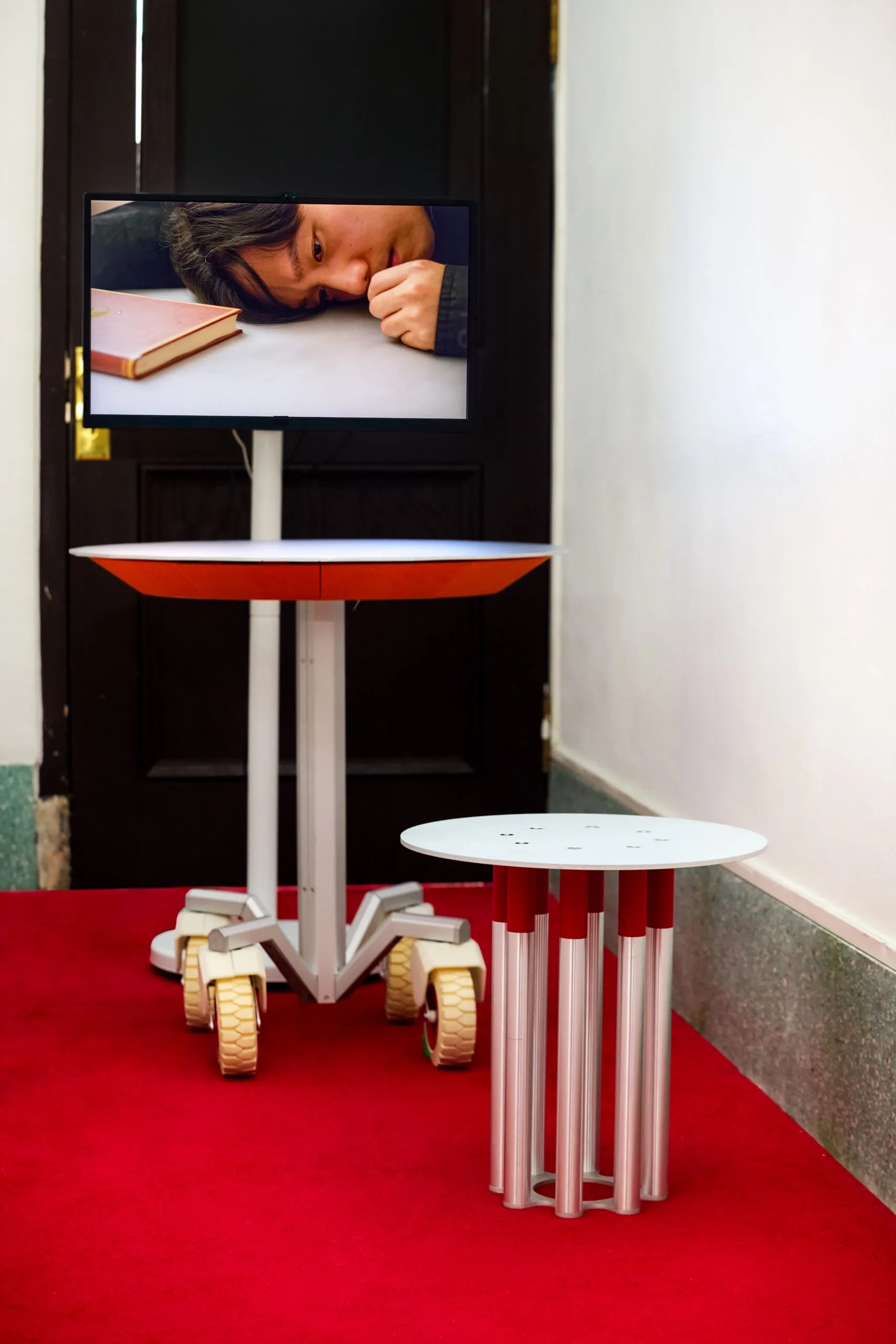
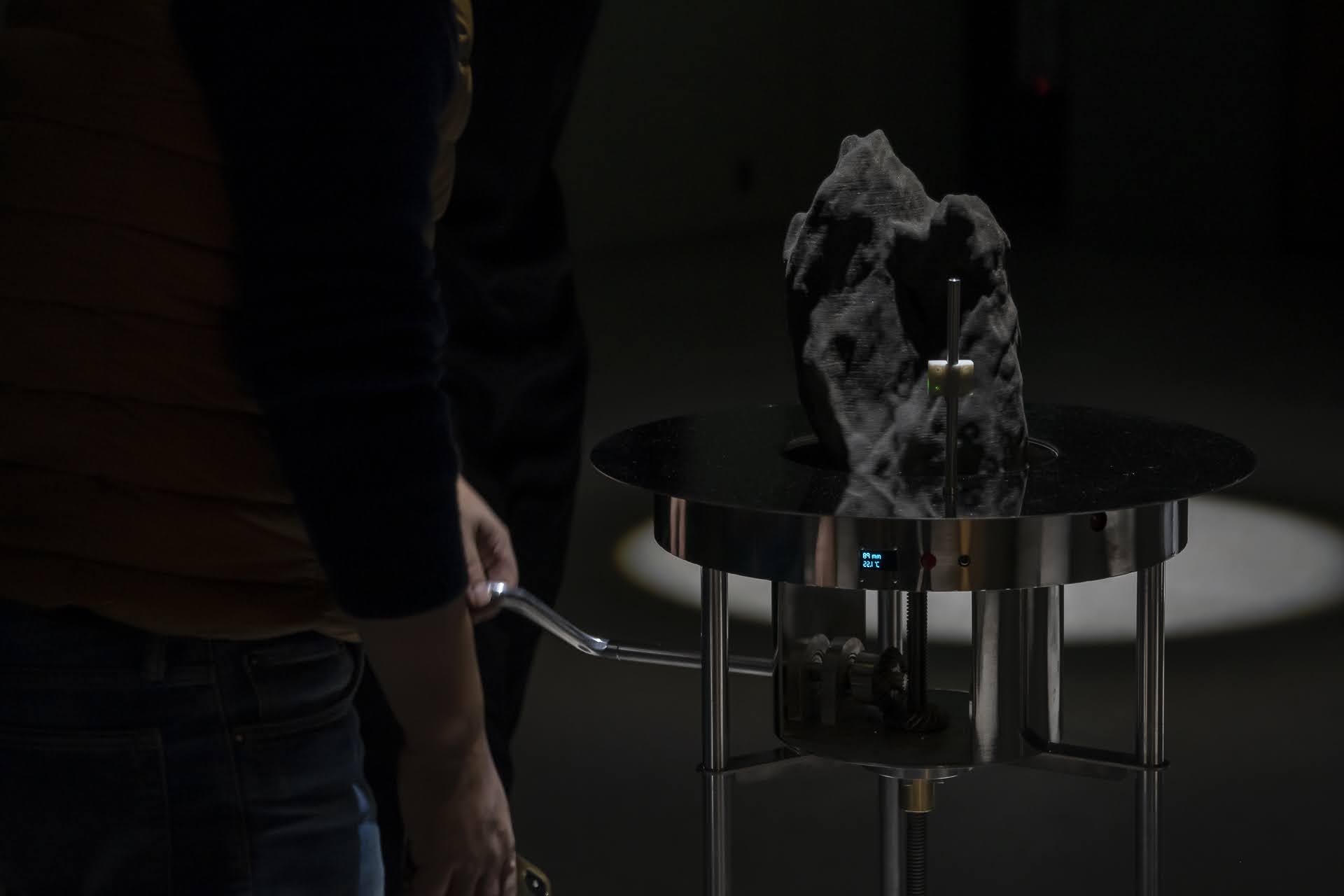
Not to mention the transplant information booklet, the Perspective-Implant Manual, the two hefty Datascapes, the words of the Navigators, the fifteen minutes’ experience, and the storybook Through The Looking Apparatus, to be read later, together, while reviewing the experience. The concepts and elements comprising the work are too many to count on one hand.
But this work creates many access points in accordance with its complex web of connections. Viewers encounter the questions asked by the work, some through verbalized questions, some through newly-awkward bodily motions, some through the small suspicion that the digital devices in which their everyday lives are covered may not be all that different from the Datascape, some through the experience of tracing the trajectories of sounds heard.
If they can find even just one small link, within the entirety of the work, capable of activating them, that link will spread through the channels of the works’ inner network, one by one, gradually activating other questions.
Landscape being Decoded exists not just as a work to be observed: it works as an experience to be input into our bodies and perceptions. After that, we hope, it will also affect our senses as they perceive reality. There is no knowing when the triggers placed throughout the work will manifest themselves.
The fifteen-minute period of having this device transplanted onto our bodies may remain merely as a novel experience, and may be seen only as an unfamiliar happening, not worthy of much reflection. It may vanish from our memories before long.
But if the experience here becomes just the smallest trigger and creates, at some time, a moment’s hesitation; if, at a totally unexpected moment, we feel a subtle sense of déjà vu that brings our thoughts back to the experience, it may be only then that the seeds of perception planted by Landscape being Decoded have started taking effect. Once that trigger has been pulled, we and our perceptions and feelings of the world will never be the same again.