A Turn Toward Virtual Space: Like a Shipwreck That Never Sinks
We are directly experiencing a paradigm shift in which virtual reality is becoming a form of virtuality that feels indistinguishable from reality. While cyberspace seeks the remediation of place-based social worlds, we are simultaneously experiencing the respatialization of actors within media or through media.
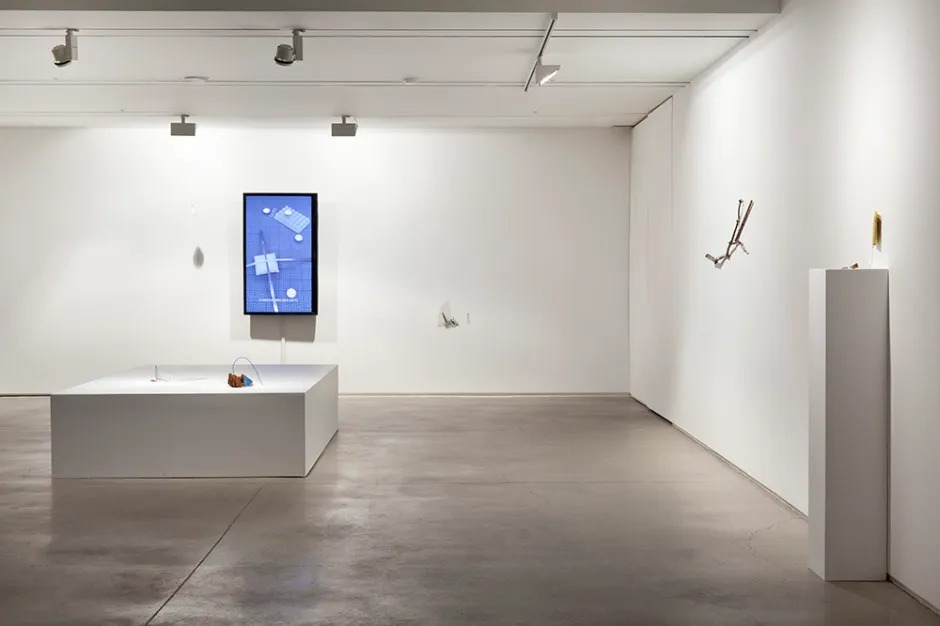
Byungsu Lee’s exhibition 《Welcome to the Seamless World》 raises questions, through artistic practice, about the artist’s investigation of media and his critical awareness of its conditions. In a VR environment so seamlessly woven that no traces of suturing can be found—a “world of excessively smooth seams”—what kind of epistemological world are we experiencing? How can we know whether the world is represented to us as truth? And how can we distinguish between what is real and what is not? The exhibition calls for a reflective attitude toward these questions.
Byungsu Lee has consistently remained wary of everything we take to be certain in reality, pursuing various artistic attempts to render visible the uncertain realms behind them. In his earlier works One After Another (2018) and Ode to Our Communities (2018), the artist continues to pose reflective questions through serious experiments and research into media.
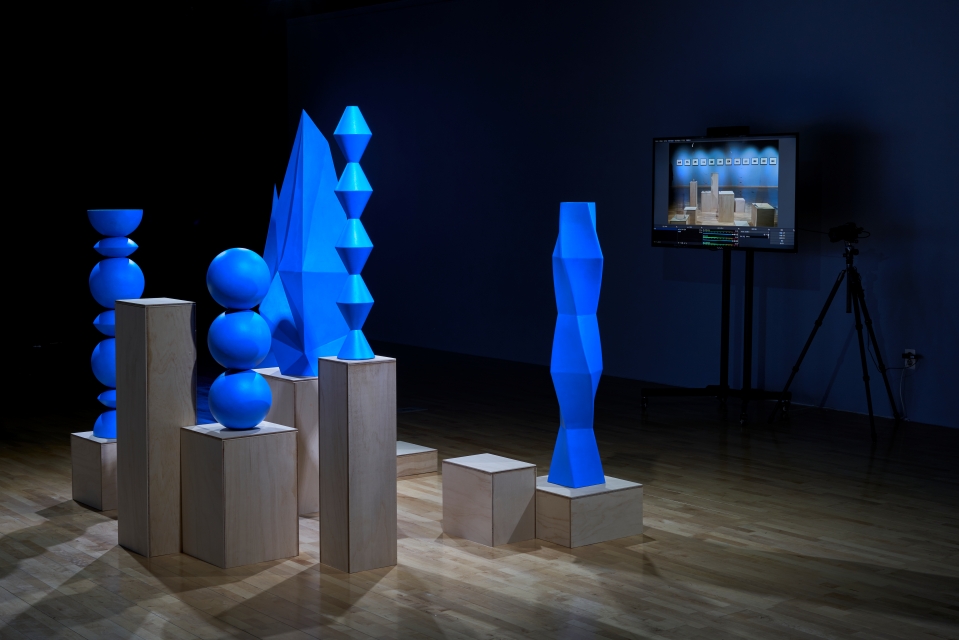
In One After Another, in particular, he models Google Earth images of Mount Baekdu as a wireframe structure, appropriating space through mapping in a new way. He then captures satellite images of Heaven Lake taken at different times, adds elements such as wind and clouds, and juxtaposes the original images with computer-generated imagery.
Through this form of “speculative cartography,” he proposes a new way of thinking about space. The work attempts a kind of spatial turn: first, as a shift toward the search for a “transcendental place”; second, as an experiment in seeking “space that exists beyond the measurable”; and finally, as a testimonial attempt to reconsider “the idea that space is in some way separated from time.”
These media experiments grounded in “placeness” reveal the spatial turn as a process that simultaneously emphasizes, questions, and overturns the solid materiality of a world with referents. It also signifies a turn toward an “undrawn space” even though that space has been mapped. Ultimately, the work suggests that media may offer a way to overcome the binary opposition between spaces of social practice and spaces of territorial order. At the same time, Lee continues to investigate how we should perceive virtual worlds.
In the exhibition, the artist’s attitude toward media does not begin with an evolved experiment in technological methodology. Rather, it begins as a warning and reflective question addressed to us, who ought to be the subjects of media but risk being reduced to mere consumers or slaves. In Before Your Very Eyes (2019), Lee locates an evolved form of self-reflexive media experimentation in virtual reality (VR).
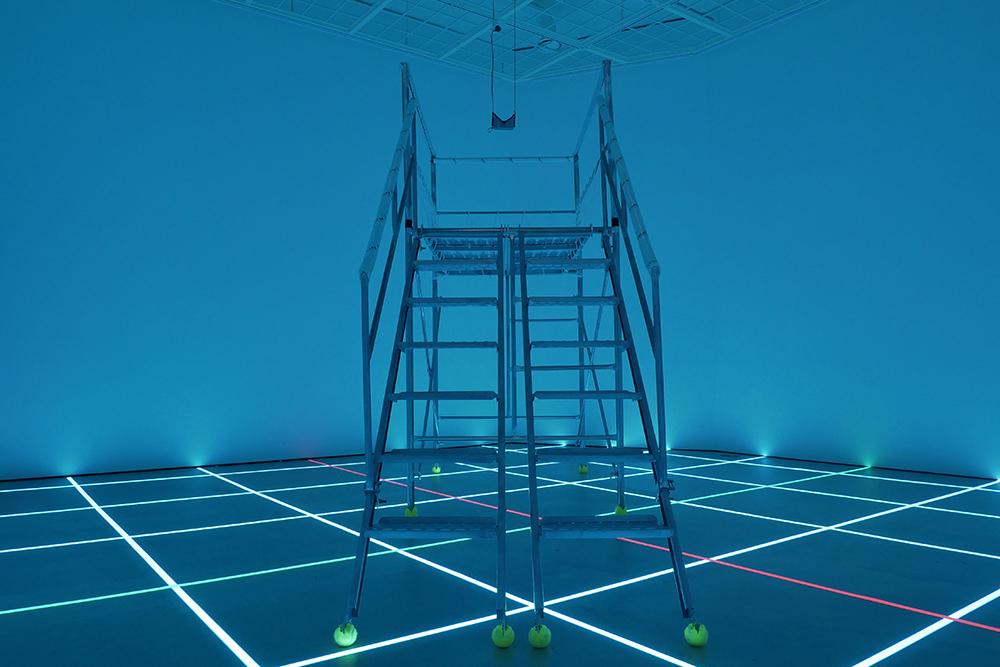
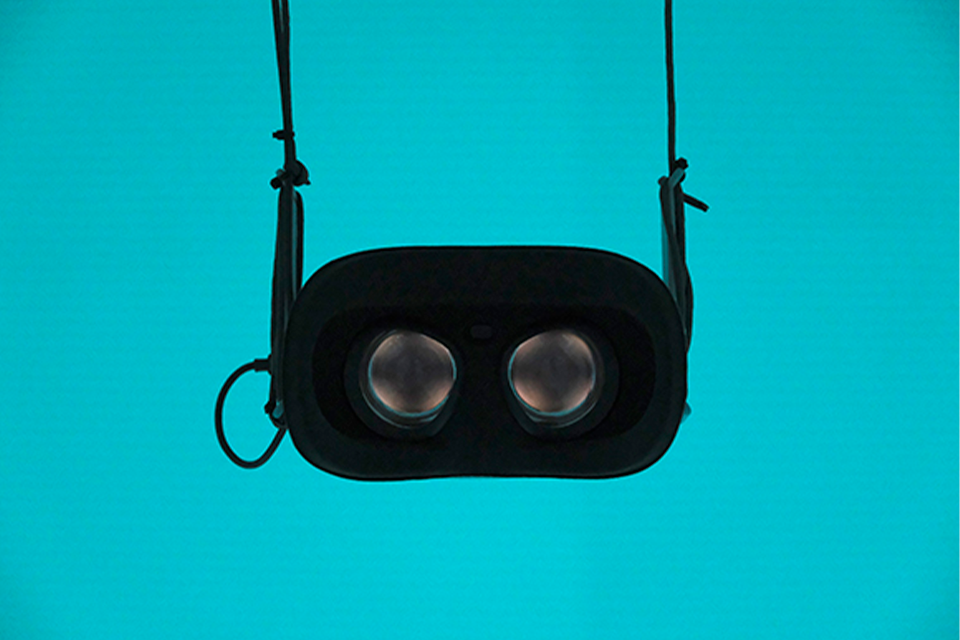
The work is an installation viewed from a structure resembling an observation deck, set within a gridded space marked by luminous tape reminiscent of the x- and y-coordinates of three-dimensional computer graphics. Viewers climb onto the observation platform and, as if looking through a telescope, put on an Oculus Rift headset to enter the presented VR environment.
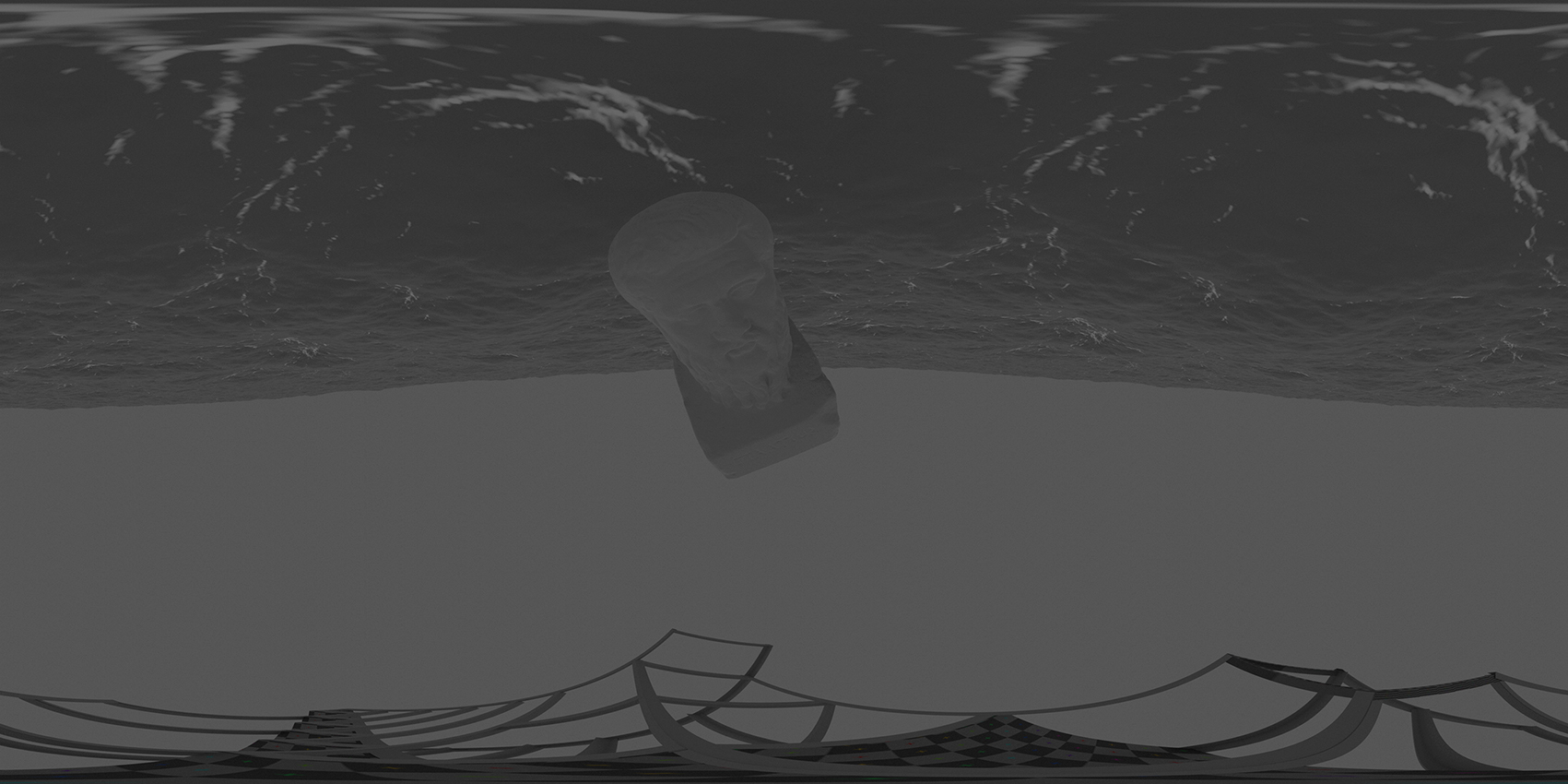
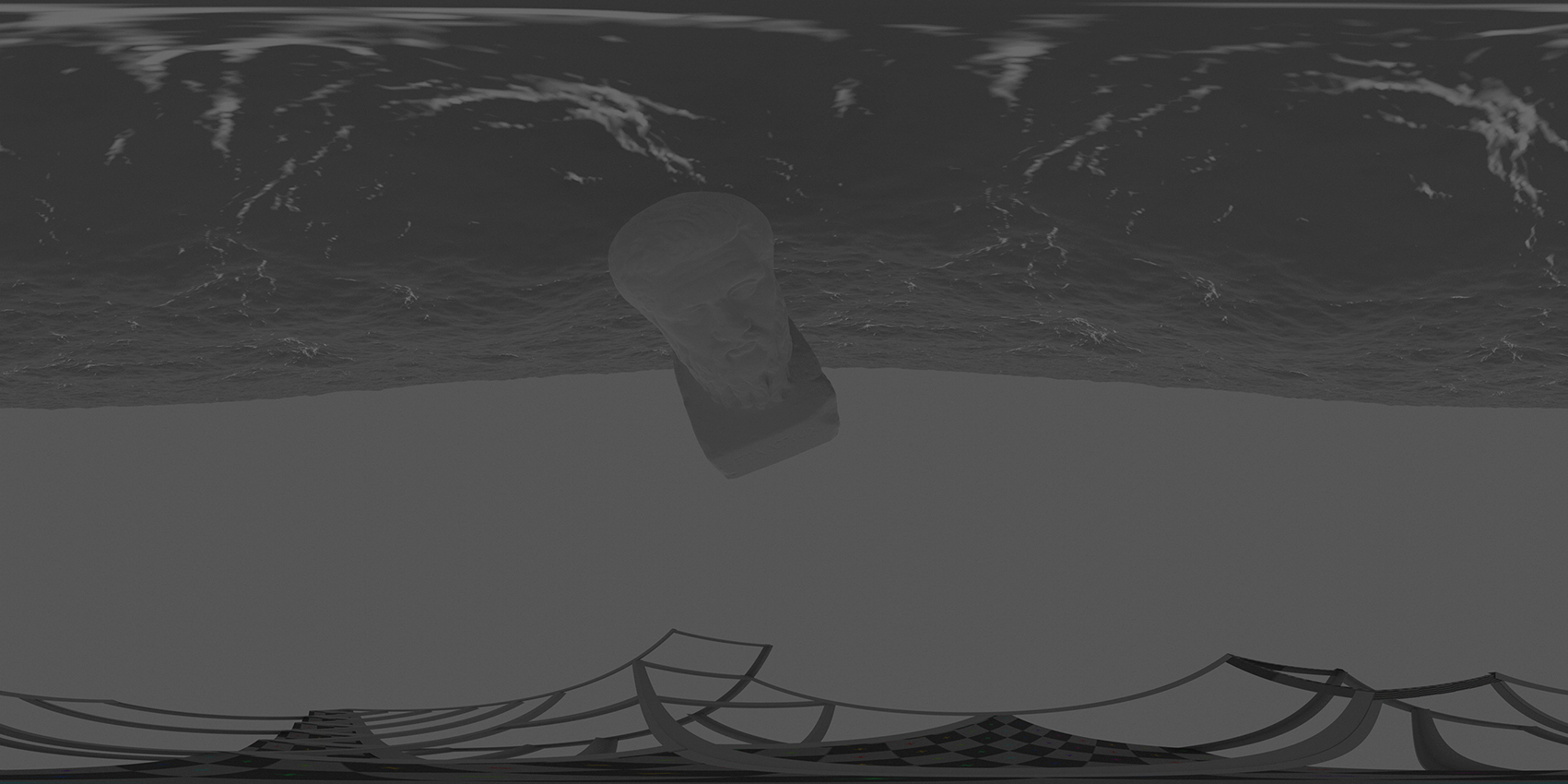
On the steep and narrow platform, the viewer’s body is far from free. Only limited movement within a 360-degree field of view is possible. This “connected space” within a perceptual environment seeks a transcendental place in the utopian prospect of technology and guides us into a world of “immersion.” There, a virtual landscape “separated from time” exists, leading us into the middle of the sea.
Ultimately, as objects and subjects mediated by media, we are able to exist in a “disembodied” state. This disembodied subject is no longer bound to the existential time and space of “now” and “here.” Temporal and spatial presence cease to matter. The seawater gradually rises, and an unidentified object slowly approaches. As it comes closer, we realize that it is the head of a human figure.
The water rises further, eventually surpassing our height, and at the moment we sink beneath the surface, we experience anxiety and fear in embodied form. Among the basic territories related to human existence, before humanity conquered the skies, the sea was perhaps the most unsafe place of all. Yet the terror of the abyss lasts only briefly, and soon we become reassured, because we know that none of this is real.
This is a virtual environment without physical substance, a world in which we exist not through “presence” but as subjects of “telepresence,” with only mind and sensation and without a body. There was never any actual risk of drowning at sea. Virtual reality may be a world beyond the limits of time and space, but what is certain is that it is not the reality of the here and now.
As we sink into the abyss and feel relieved upon realizing that we can still breathe—that this was never reality—Before Your Very Eyes confronts us with fundamental questions: “What is it that we are seeing?” and “Where do we exist?”
A small gesture of humor can be found in this work: the floating “head of Plato.” At the moment we recognize its symbolic significance, we begin to grasp just how seriously the artist pursues his reflection on media. In Plato’s famous “Allegory of the Cave,” the shadows projected onto the cave wall are cast by a moving procession of represented images.
These become imprinted upon us as places we have visited, faces we have encountered, landscapes or bodies, the earth, repeated gestures, or images of movement. The virtuality of the image is already presupposed. Gilles Deleuze understood the difference between the original and the image, or between the model and its copy, as an essential characteristic of Platonism, upon which philosophy would subsequently establish the foundations of its own domain.
This famous story, introduced in Plato’s Republic, describes people who have been bound inside a cave since childhood and are able to see only artificially produced shadows. For them, everything reflected on the wall appears to move as though it were real, yet it is in fact fabricated and false. If we were to compare the cave wall to something in the present day, it might be a cinema screen, a computer monitor, or, further still, a VR environment.
Thus, those “fakes” that appear “real” are perceived by us as technologically mediated “virtual images” that disguise themselves as reality. Virtual images are thereby liberated from materiality and transformed into self-generating entities. Philosophically speaking, however, the virtual world is epistemologically false and ontologically inferior.
Now, like a “shipwreck that never sinks,” we are invited into an epistemological world that exists as another reality independent of physical reality.
Deficient and Constrained Space: Self-limiting Embodiment
Plato’s philosophy generally understands technology as a form of “false knowledge” that is provisional, sensory, and contingently produced. This is also a long-standing conventional assumption in Western philosophy regarding technology, yet it simultaneously calls attention to technology’s ambivalent nature. Technology transforms various elements of our lives. It changes the appearance of reality as mediated by technology, as well as the spatiotemporal elements that constitute that reality.
For example, we live amid the landscapes of Instagram, while YouTube has become part of everyday life; in such a reality, our lives are always mediated through media. Considering that much of our sensory experience is already shaped according to forms established by media technologies and popular culture, it becomes difficult to determine which comes first and which follows. Ultimately, as media restrict and encroach upon us, we may gradually be losing our subjectivity.
If virtual reality is the most dramatic outcome of technological imagery, then the reality of virtual reality intersects with the virtuality of art. Virtual reality consists of continuous three-dimensional graphics rendered at high resolution. As this simulated reality is perceived by the user, it becomes another form of actuality. We can now set sail into cyberspace anytime and anywhere.
VR places viewers within a virtual space of reality and makes them subjects who see the world directly. The scenes generated as viewers move forward and turn their heads become the very world they themselves see and experience. It is the viewer wearing the VR device who decides where to go and what to look at, from what direction, at what distance, and for how long.
In this sense, VR is a medium that necessarily requires viewer participation and interaction. But does this interaction liberate us within the horizon of perception? The artist argues that it does not. Rather, he raises the question of whether technological media may in fact restrict and control the expansive dimension of perception.
In particular, Double Bind (2019) is “an experiment in how technological experience constrains and limits our bodies.” Two VR devices connected face-to-face are designed so that the movement of one affects the other, deliberately producing collisions between two viewers. The mechanical features that accommodate bodily autonomy for the sake of immersion—the current convenience of the Oculus Rift, for example, which greatly simplifies the complexity of HMDs—paradoxically operate through a fixed installation that controls and restricts each viewer through the movements of the other.
The work also limits autonomous vision: the environment itself is blacked out like a stage, and viewers are eventually guided to direct their gaze toward wherever a spotlight indicates. Through the series of processes by which the interactor moves, feels, and thinks, the work ultimately points to the limitations of the body insofar as it establishes a dual relationship between “subject” and “object” and remains preoccupied with the act of doing something.
In this sense, it reveals that our bodies are “per-formed” under constraint by media. This organic relationship between technology and humans can be defined, in Vilém Flusser’s terms, as an “apparatus-operator complex.” Here, the apparatus functions as a black box that simulates both the human body and processes of thought while simultaneously mechanizing that thought once again; in this process, apparatus and operator merge through feedback.
In other words, from an “intersubjective” position, this becomes evidence that humans are ultimately both subjects and objects of technological media. Accordingly, virtual reality content does not simply allow users to escape into a world of fantasy; by containing unfamiliar realities, it ultimately enables users to perceive reality differently.
Rather than transforming illusion into an ever more perfect virtual-reality environment through seamless simulation, such an apparatus operates through a media-based method of “distancing,” reviving a sense of embodiment associated with Mixed Reality. This approach does not present a utopian vision based on continual technological evolution.
Instead, it reveals that humans, as operators of technological media, are ultimately themselves objects manipulated by those media, while at the same time constituting the artist’s experiment and attitude toward recovering subjectivity.
Everything Disappears, and Only Thought Remains
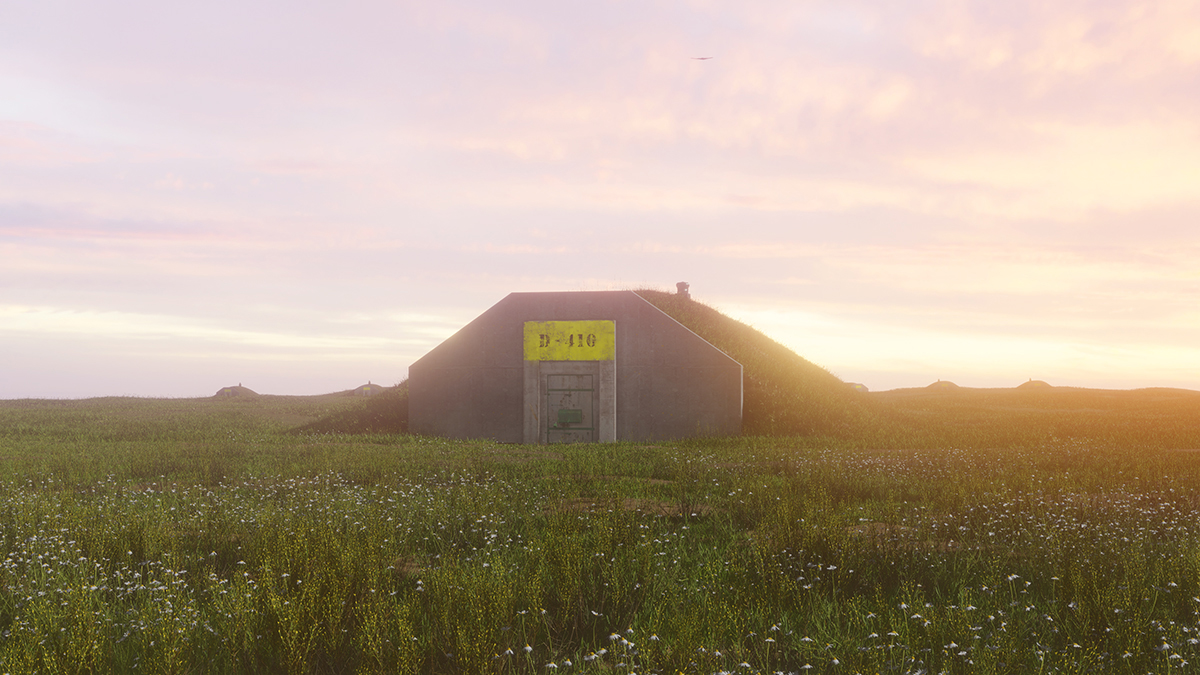
In the major works presented in 《Welcome to the Seamless World》, viewers experience VR, yet there is no physical human presence within it. There are only empty spaces, objects, and artificial landscapes. In the virtual world, only our disembodied perception remains; no tangible evidence of human existence can be found. What remains instead is evidence that this is a temporary, transit-like space generated by apparatuses.
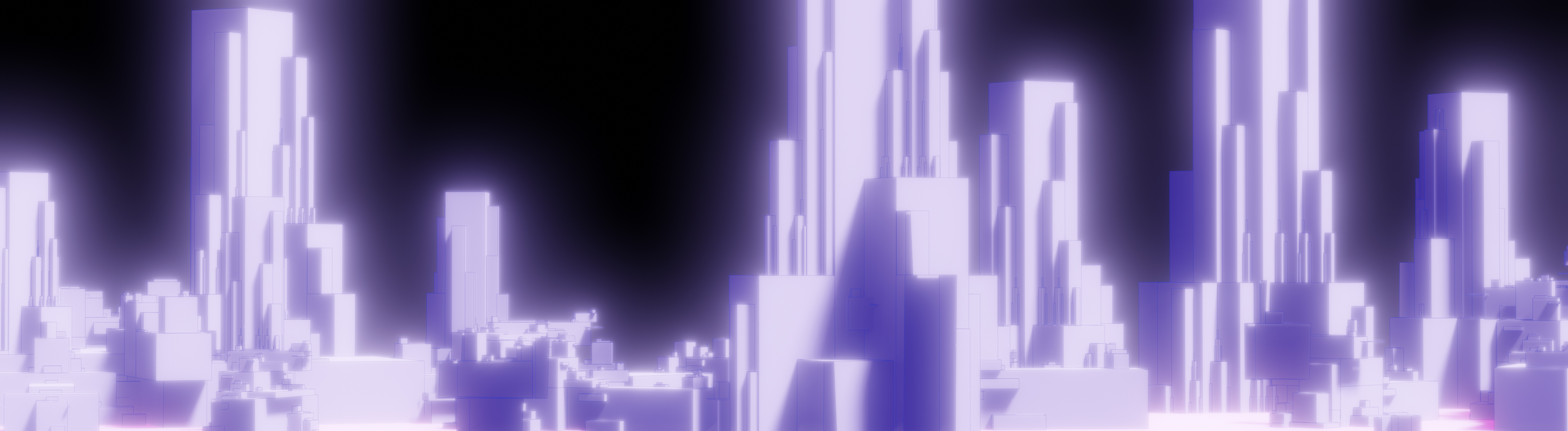
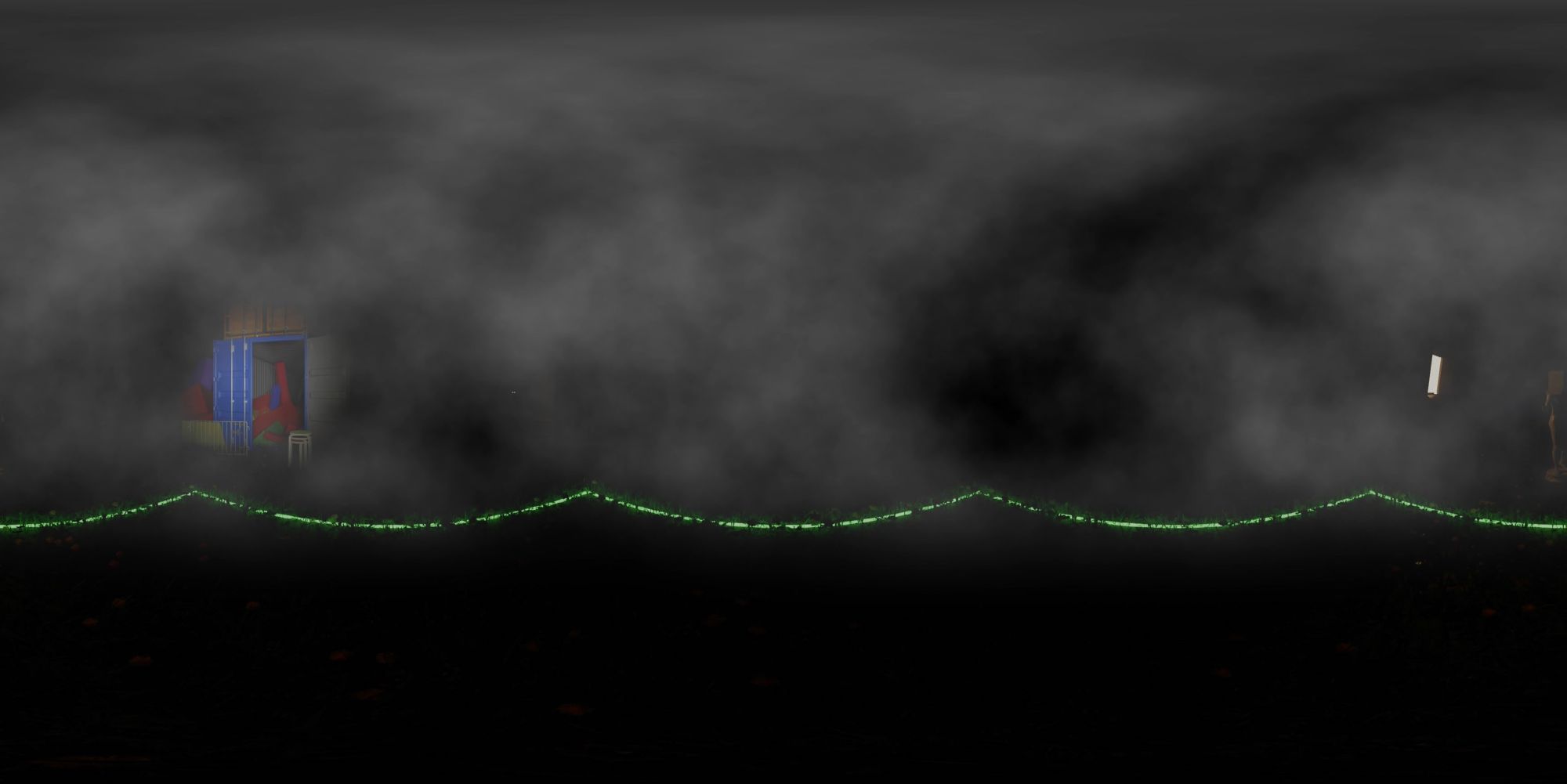
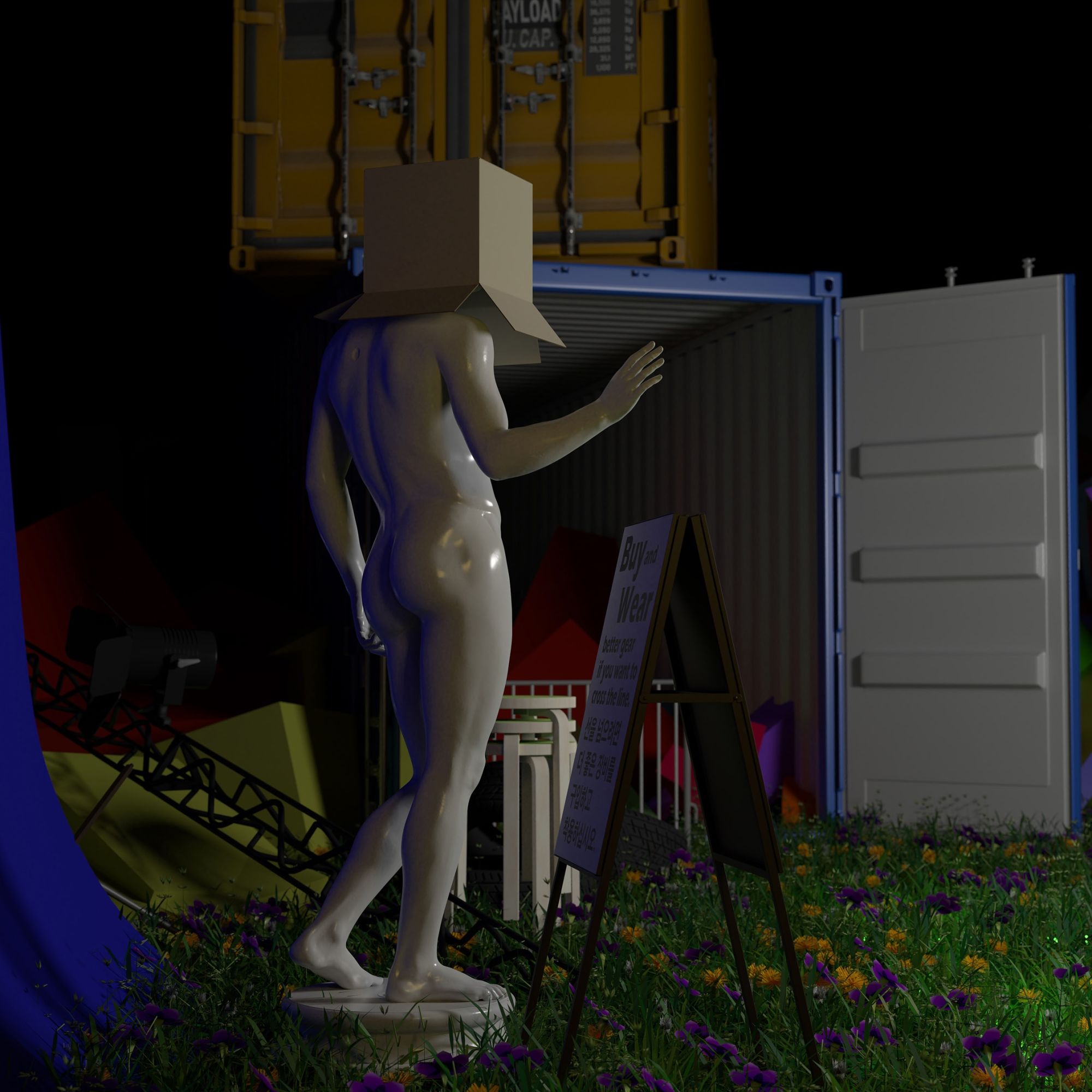
In Double Bind, images of a crashed Korean Air aircraft, scattered shipping containers, abandoned refrigerators and furniture, and various forms of debris allow us to infer and interpret the events or accidents embedded within the space. A mediated space without humans feels empty and melancholic.
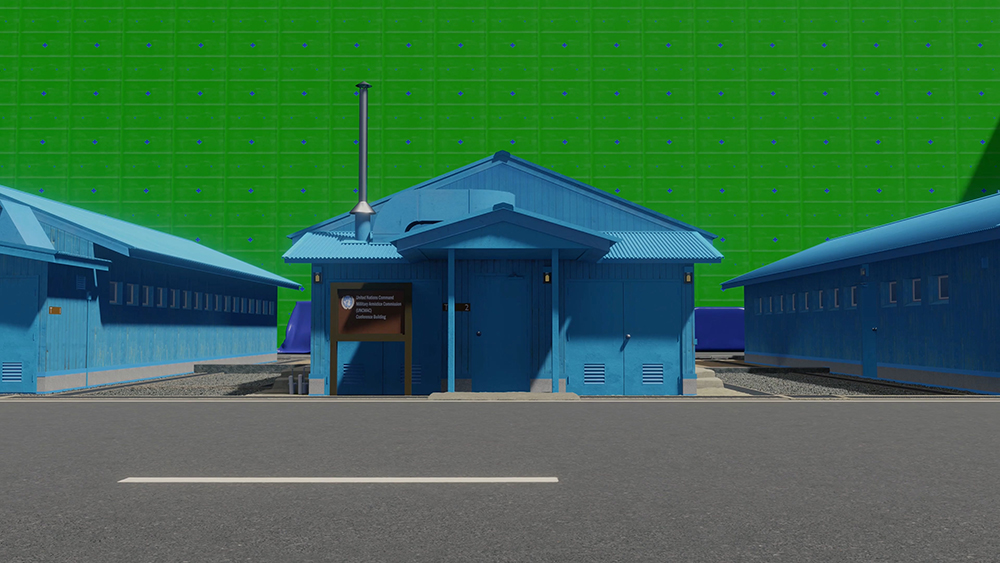
The same is true of Gloomy Rendering (2019). In Gloomy Rendering, the matrix-like world surveyed from a transcendental viewpoint may be less a Baudrillardian melancholy satisfaction derived from the loss of the referent than a reactionary nostalgia for “the real”—a longing for actual nature and the body. In Double Bind, Lee constructs the environment by directly appropriating freely circulating 3D images of objects that appear real.
Virtual reality as a constructed environment is not actual reality, yet it presents a reality that feels real. The virtual elements presented in the work no longer function merely as exchangeable or substitutive values for reality; rather, they exist in an interdependent relationship, leaning upon reality itself.
Based on their spatiotemporal capacity to make the distant present and to reverse the passage of time, they remain distinct from the tangible space represented by “now” and “here,” yet at times they can also be read within entirely different contexts. This is because they reorganize concepts of time and space, summoning memories and events from reality.
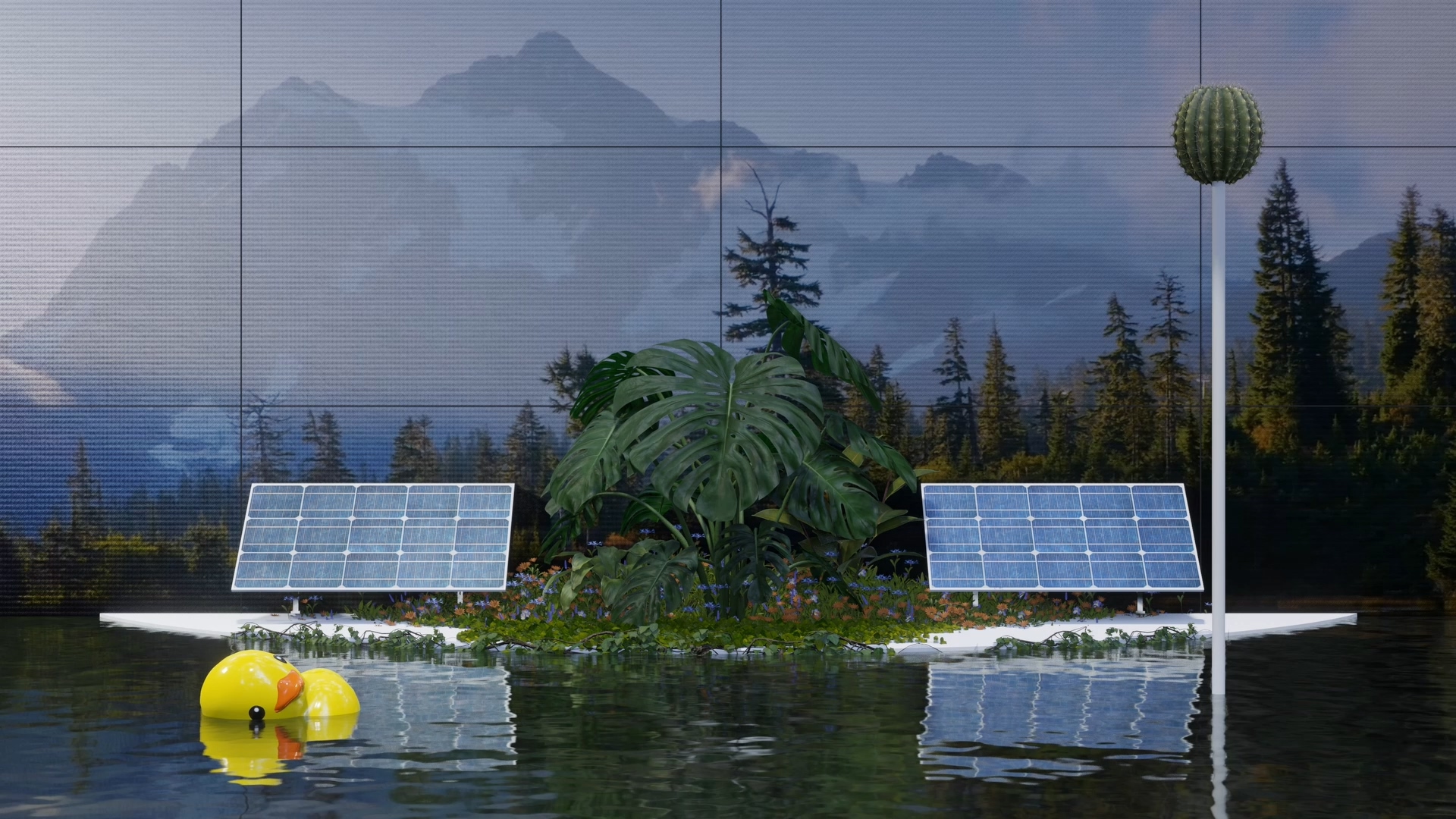
Regardless of the artist’s intention, Gloomy Rendering and Before Your Very Eyes may evoke referential foundations rooted in real-world events such as the Sewol ferry disaster or an aircraft crash. Within this complementary relationship, we remain adrift between the virtual and the actual, trapped within the hyperreal—a fake that appears real.
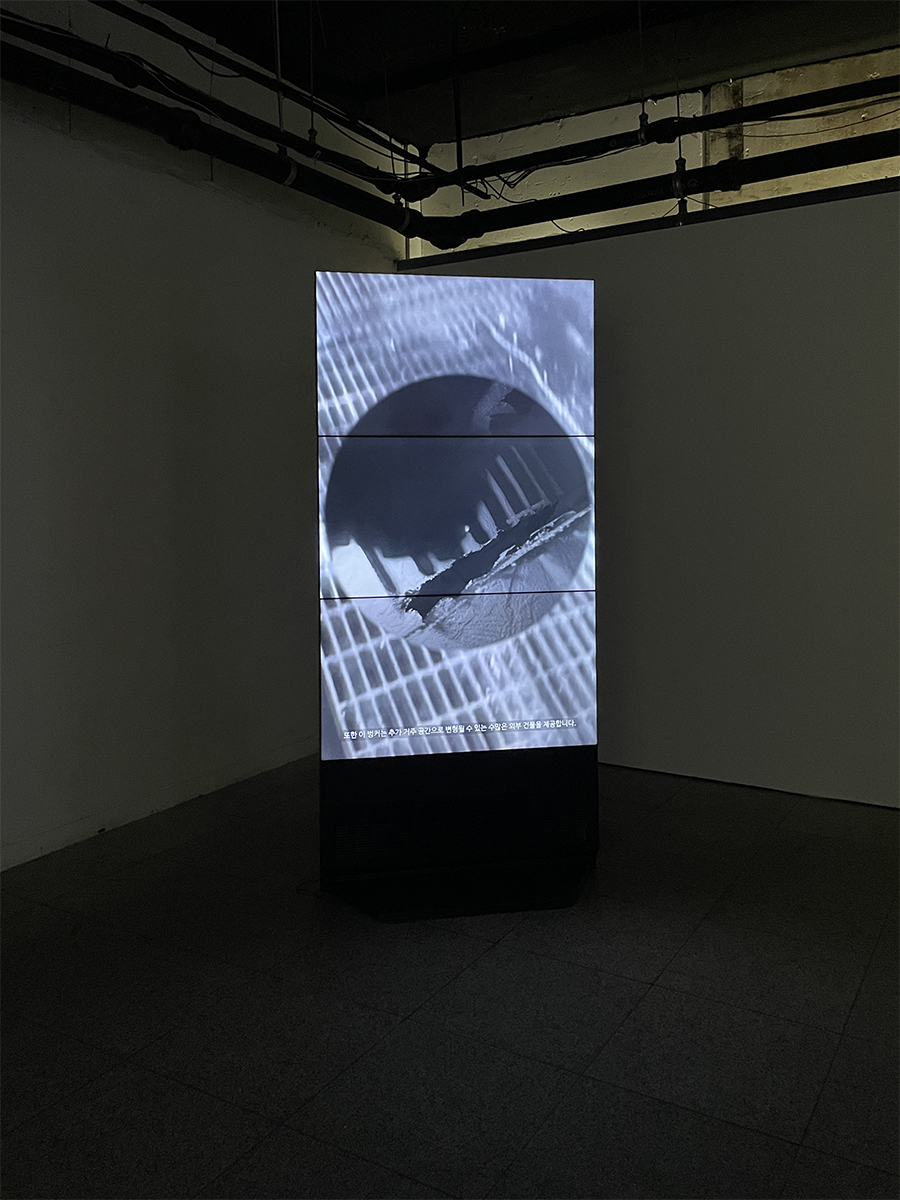
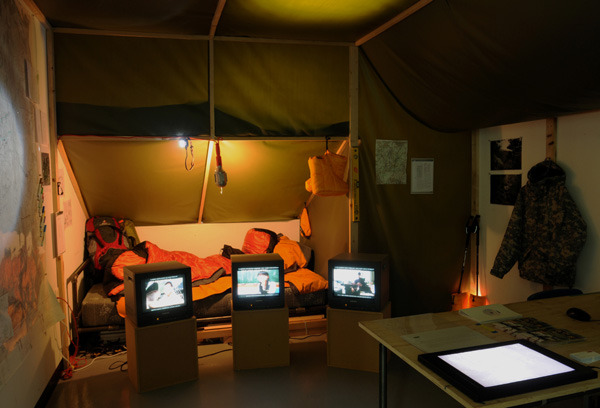
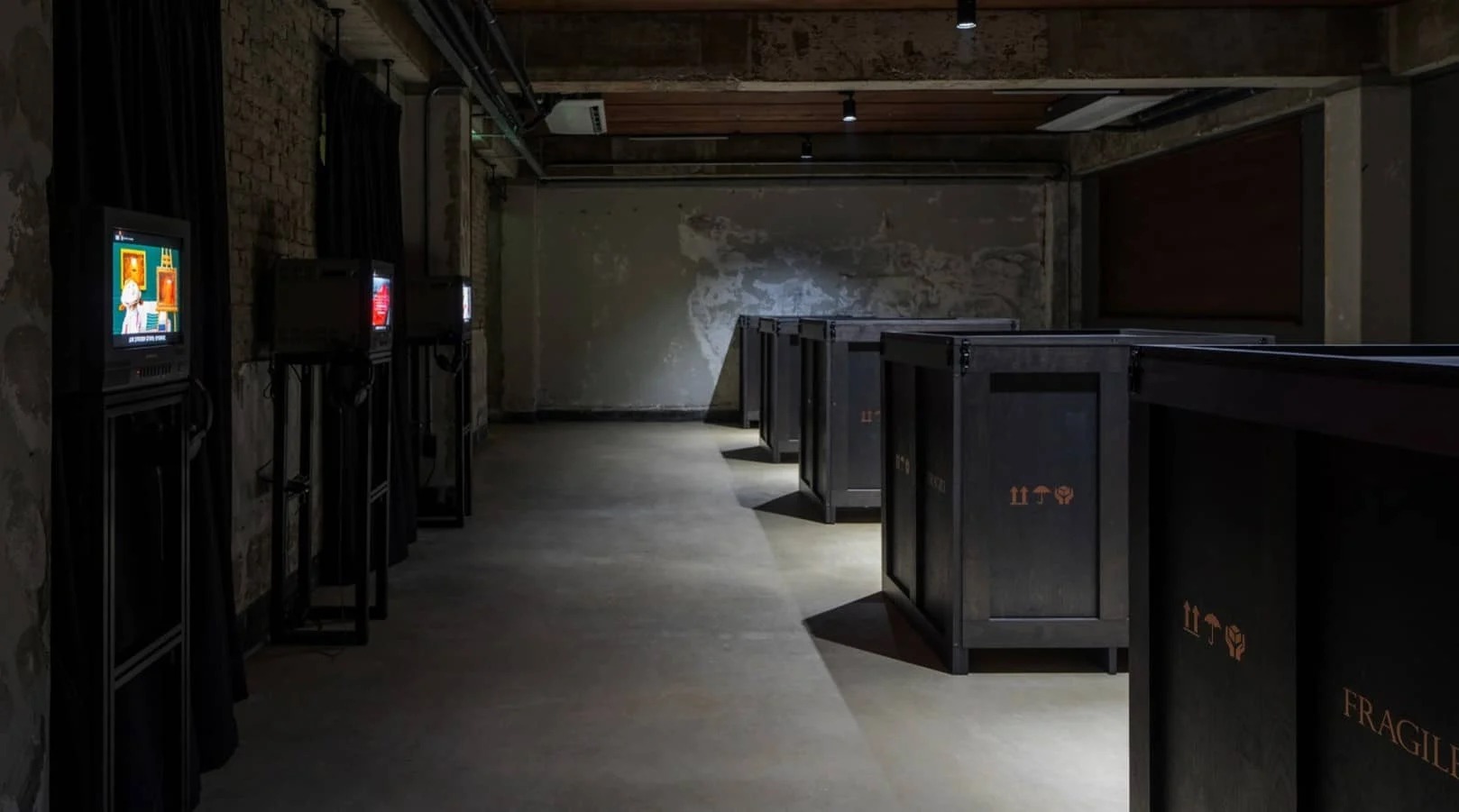
The three-channel 3D computer graphics video work Screen Cave (2018), visible through the first-floor window of the exhibition space, is played on three box-shaped CRT televisions that observe, from an omniscient viewpoint, a human figure wandering while trapped within the boundaries of a physical screen.
The movements of a naked human endlessly circling through three spaces represented by RGB metaphorically depict the vulnerability of contemporary individuals bound within a virtual digital world. The human image analogizing us as beings trapped by media is primal, almost like an animal without personhood. A human returned to the past as a raw body—perhaps virtual reality itself is nothing more than an empty, foolish slogan.
Just as social institutions guide human beings, natural personhood, society, and the state, the increasingly hyperreal virtual society, structured as vast network servers and programs, may be telling us that humans are no longer the sole cultural beings. Perhaps this is the source of the melancholy that permeates the exhibition space without any tangible origin: a fear of returning to something impersonal, objectified by technology.
The world presented in 《Welcome to the Seamless World》 confronts us with moments that urgently demand both technological preconditions and the artist’s “technical imagination” linked to the images they produce. What art must achieve from this, then, may be the revelation of a world beyond what is invisible and hidden yet undeniably “exists.” Ultimately, this role falls to the artist who uses technological apparatuses.
Rather than allowing us to become something like melancholic and solitary residues produced by technological media—“non-things” or “non-persons”—we must become both subjects of technological media and discerning consumers, much like the artist who refuses to relinquish the role of a solitary creator, contemplating true value within such artificial environments and seeking redemption through art.
Technological—or apparatus-based—representation will ultimately operate as a new type of image through the subjective perception of all creators and users, including artists, while remaining within a dimension whose effects may prove either harmful or beneficial to us.
Thus, this extraction of perception as a sense of universal equality toward the world must remain within the proper register in which a new mode of perception can function critically upon its essence, recalling Walter Benjamin’s insight that such perception entails “stripping away the shell of every object.” Despite all of this, fragments of utopia or dystopia modeled after images of our reality stand before us as moments of dialectical synthesis.
And so, at the end, when the apparatus disappears, everything vanishes and only our thought remains.