Aesthetic perspectives that can be taken precisely because something is art are based on a certain distance from real life. Although individual objects built the structure, the positions of these objects or subjects sometimes become a mirage through the process of collectivization and the instinct of the system to become one whole. Thus, the so-called system may be attempting to sustain the solidity of its self-organization.
At some point, its members have been allowed to forget—or rather, no longer need to recall—the fact that they formed society through their own agreement. From there, the common collective association created a situation in which it gave up on the diversity needed to bear the complexity of its own structures, as well as the more delicate processes of producing results that make such diversity possible.
The category called society thus plotted autonomy and continued to advance itself. Now, we as its members are preoccupied with finding the grounds of our own existence by pursuing the life purpose determined by this society. We regard it as nearly impossible for an individual to directly participate in the operation of a huge structure.
For efficiency, responsibility is divided, and everyone engages in the social duties assigned to them in this way. Efforts to measure or revise the rationality of that standard become meaningless, and how well one accepts the formation that has already established itself as a certain style has become the very reason for existence in the current system.
While dismantling formations on the level of society—or, in a broader category, the age itself—we have no choice but to admit that understanding the conditions for maintaining and supporting that system more quickly than others is one of the most important conditions for securing one’s own safety. Generally speaking, this is the commonly accepted formula of ordinary logic.
As a space of gap or temporal-spatial margin for the minimal circulation needed for self-purification, the tendency of collective organization permits factors of change. Yet this does not mean that the question of class rule generated around a particular paradigm or ideology can be peacefully transformed into an ideal form that draws the consent of all members.
Therefore, setting the principles and methods by which individual perception operates becomes an essential element for preserving the life of the higher arborescent structure, by preventing the collapse of self-esteem based on anxiety, and further of the mediated relationship in which that self is both ego and a differentiated individual entity, and by making the individual concentrate on realizing needs and desires such as happiness.
The reason that revealing the geometry of what kind of form and status science, institutions, rationality, and reason—which played major roles in the advent of modernity—would ultimately arrive at was central in the flow of the Modern also derives from this property of preserving the system. Let us return again to the practice of distancing. Measuring its importance is, in fact, related to the possibility of social engagement in the art of the time.
The content and form of the artwork, as well as the size, breadth, and weight of the aesthetic meaning and value conveyed through them, are no different. However, the method for creating cracks in such a heavy, immense, wide, and grand system or structure need not correspond directly to the features of its outer scale.
If art can perform the act of setting the relationship between world and subject, and furthermore act for social participation, that too can surely be evaluated as timely, desirable, and appropriate. Ultimately, art may be almost the only window that prevents us from being buried in what is visible—perhaps only a slight artificial simulacrum—while also enabling us to reach the structure of the original, and through that window it may be able to attempt once more to dismantle the structure.
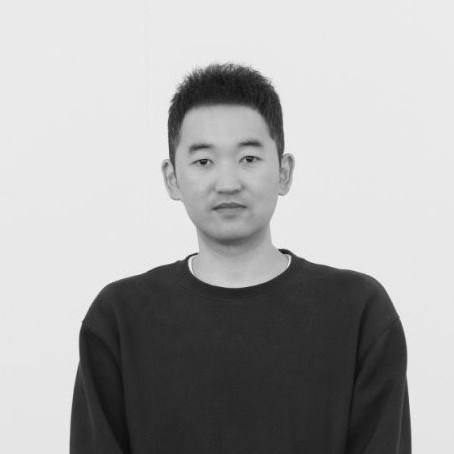
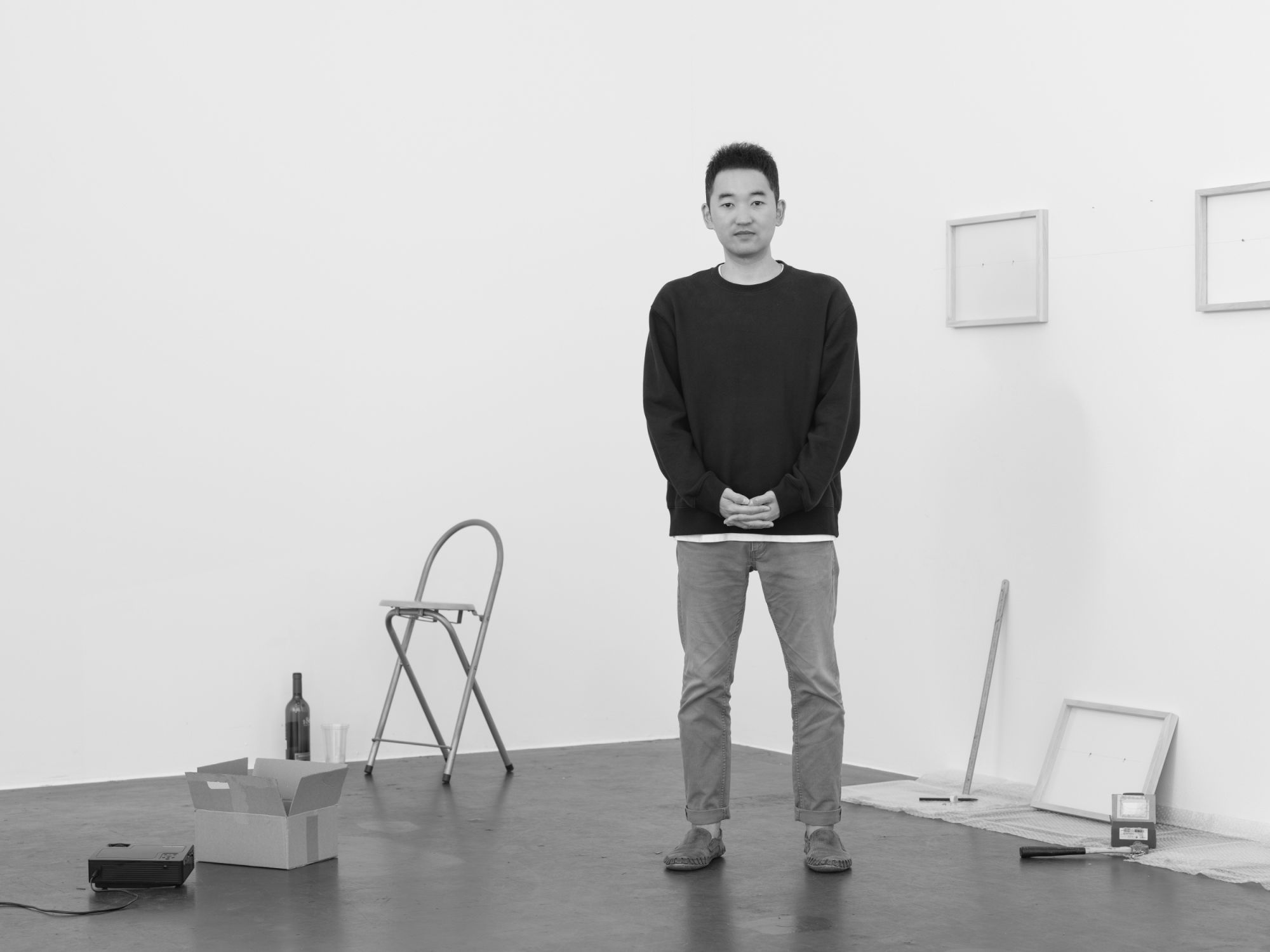
What is important in Ipkyu Jang’s work is, in this sense, to grasp the structure of the time. He does not stop at the stage of grasping this structure, but sublimates into artwork the clear conclusion of his thinking about what meaning or value should be assigned to it.
Therefore, the artworks constructed by the artist may be said to presuppose in advance, in a single and condensed way, some influence on the complex and multilayered psychological process of self-meaning and value, and of the experience of the individual self that intervenes from there and applies it to life.
What is interesting is that the attitude and tone embedded in his work appear quite different from the modes of reflection or lesson usually demanded by ordinary instruction, or from attempts to produce aggressive change through suspicion or criticism fostered by using the category of art as a filter.
The artist’s work represents the position of the individual facing the intangible authority of control carried out in the name of agreement, from the upper level of collective social structure down to the lower level of individual subject life. Jang’s work calls us back to consider how to handle and accept things that could become problems if seen as problems, and what the range and depth of that recognition should be.
A relationship always inevitably implies a consciousness of reflection. Thus, by recalling this direction of recognition, he recommends that we examine the foundational principles that compose the inside and outside of “I” as the minimal and fundamental philosophical condition for existing in reality. The concept and form that offer a clue for finding a concrete method is order.
Order originally means the sequence or arrangement of things that occur smoothly and without confusion; because this logic of order exists, individuals can establish themselves as unique entities different from others, and groups can establish themselves as gatherings of individual beings who live collectively.[1] Through this, Jang prepares the possibility of constructed order.
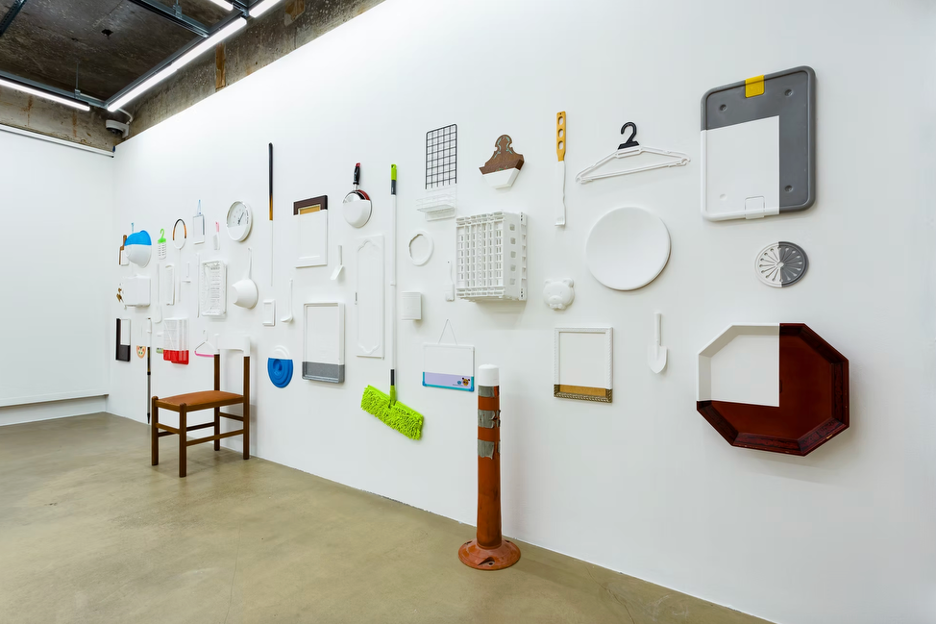
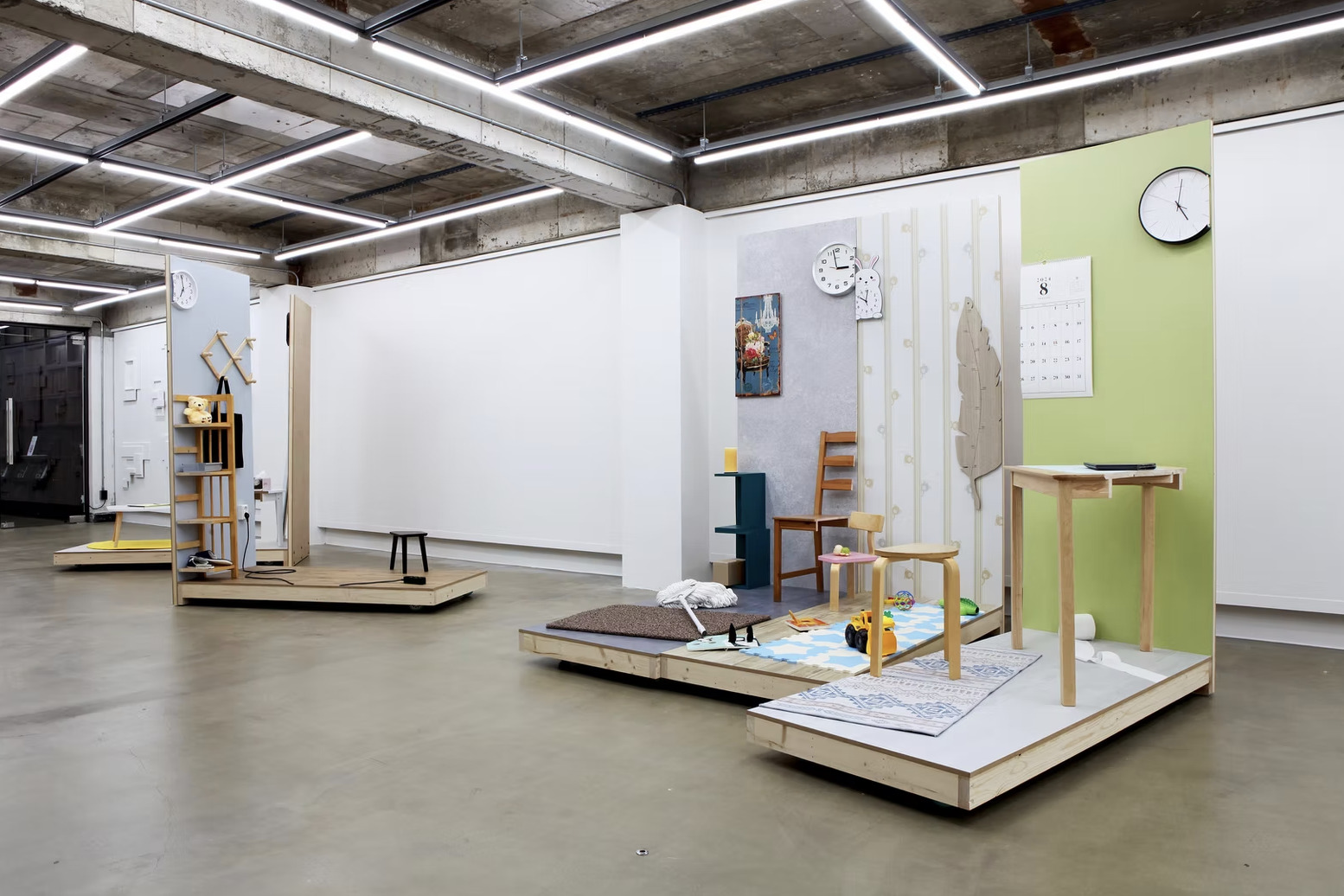
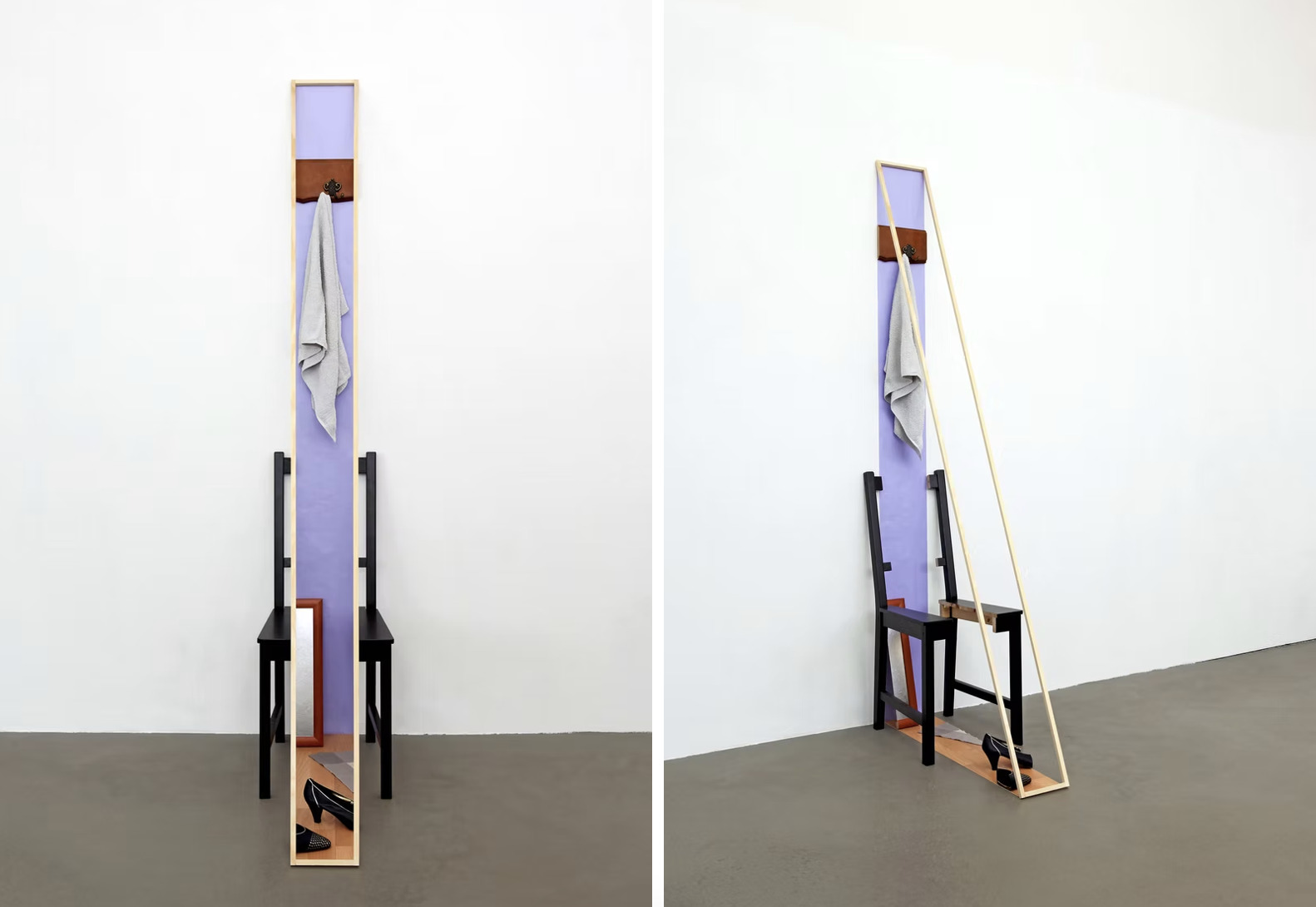
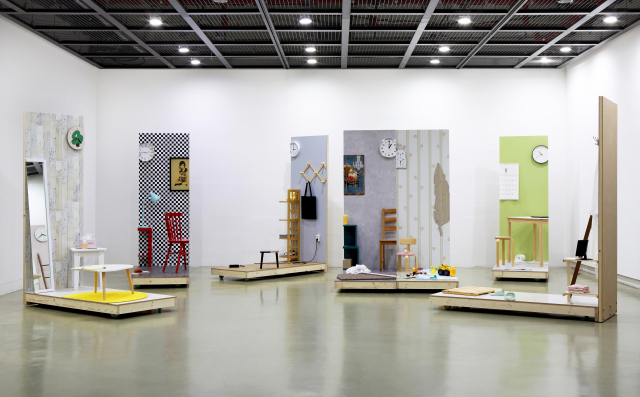
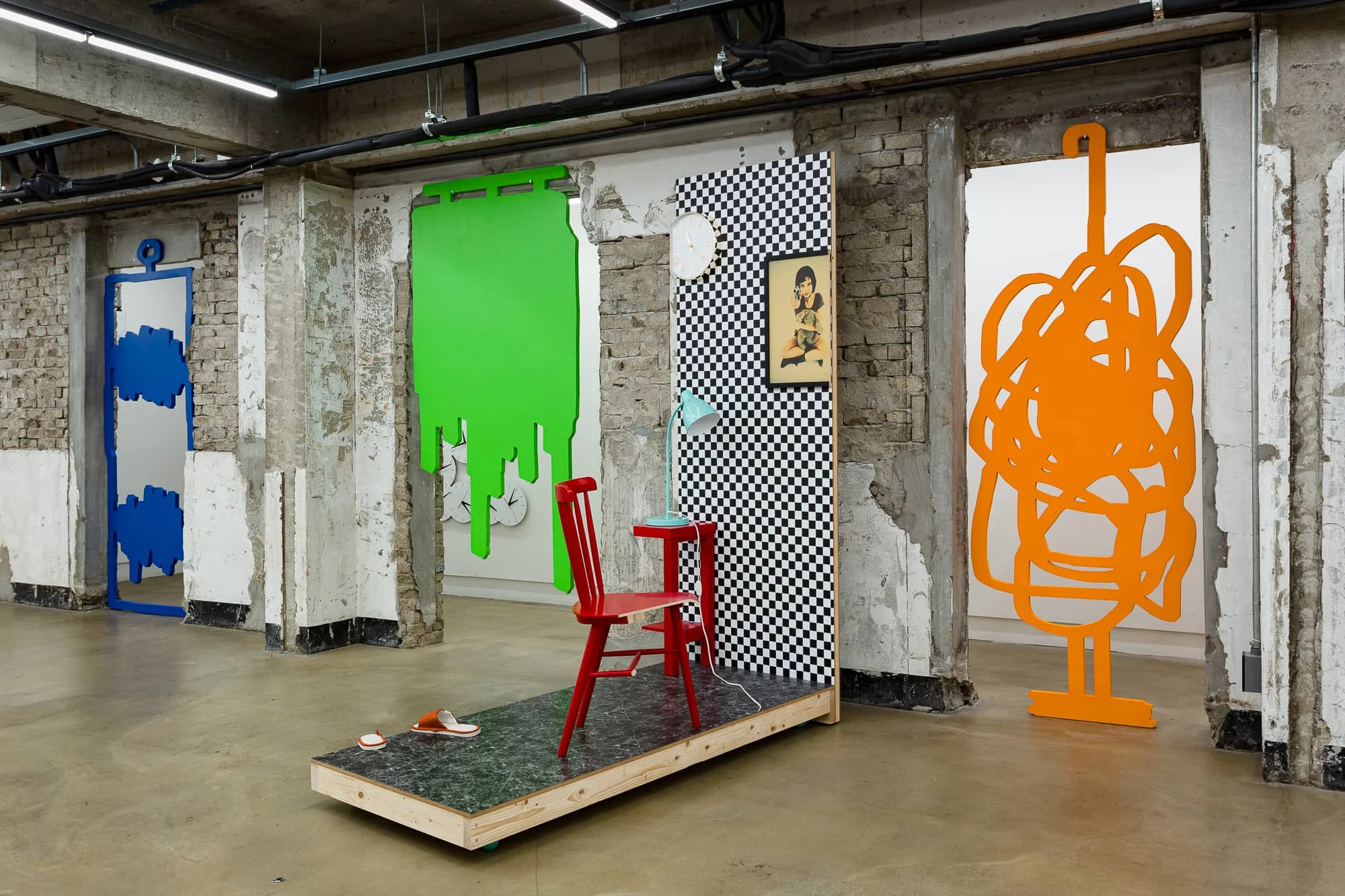
However, because the operation of this order must occur through the collective exercise of authority by individuals rather than by one individual alone, the aspect of order he visualizes assumes the function of an example meant to guide in advance. The extreme kind of “IKEA-type” aesthetic style that the artist sets in motion perhaps resembles commercial display in exhibitions for this very reason.[2]
Through such a strategy of visualization, Jang’s worldview forms networks of relation in three broad directions: one is the relationship between self and society; another is the relationship between other and society; and the last is the relationship between self and other newly reorganized around the category of society.
In the artist’s case, however, he focuses less on representing the work itself as the result of a process, and more on concluding it as the result after deriving his own conclusions about the above relationships. For this reason, the artist’s work may be closer to the unfolding of an ideal situation in which a particular thought has been elevated to its highest state.
Yet the ideal he presents here is special in that it does not follow a dialectical system supported by a developmental view of history, but instead aims to discover a certain state of balance that can truly be reached in reality. In this way, he concentrates on revealing a relative ideal that may perhaps be reached as a realization that can at least be attempted aesthetically, rather than an absolute ideal that cannot be achieved.
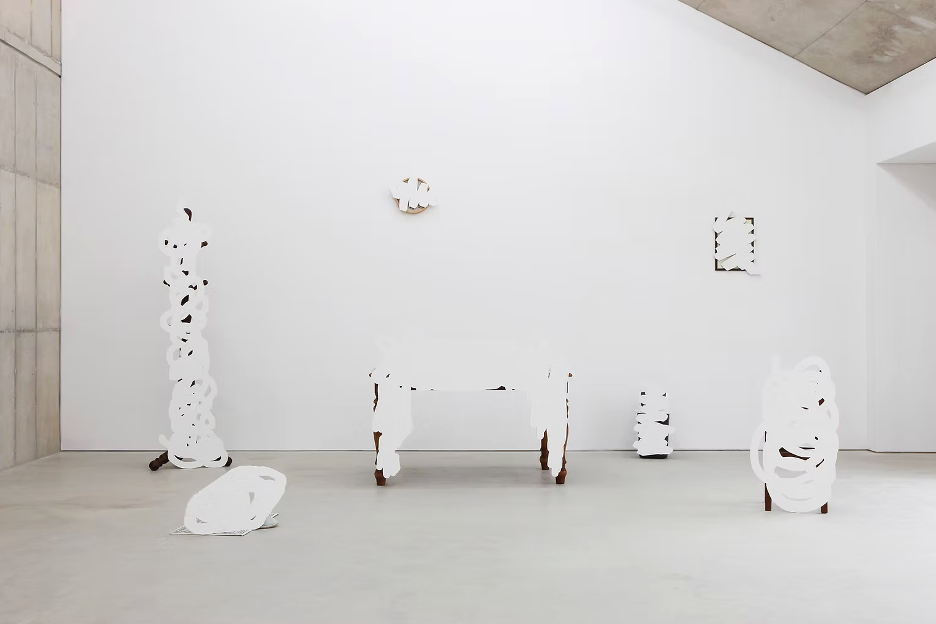
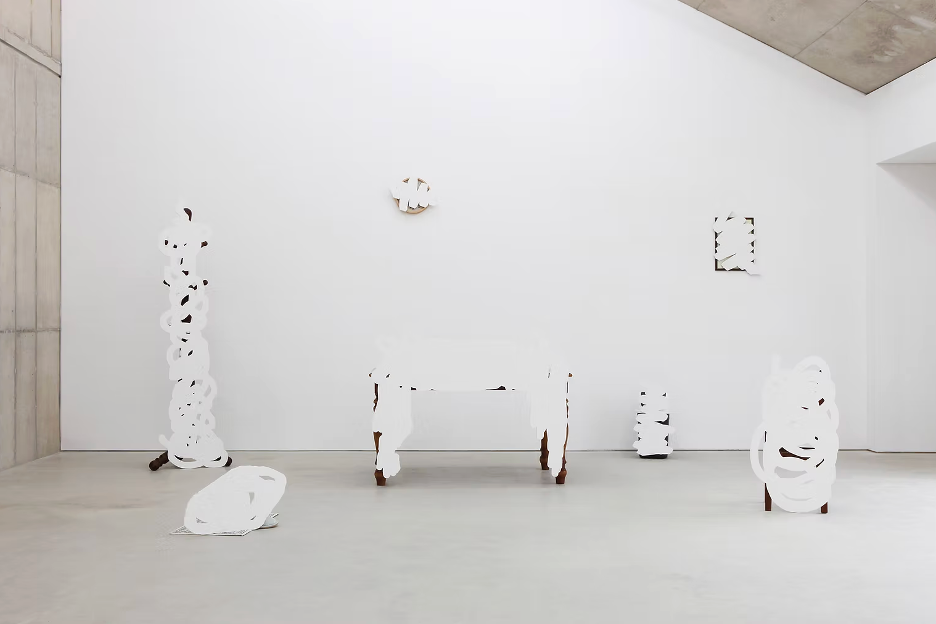
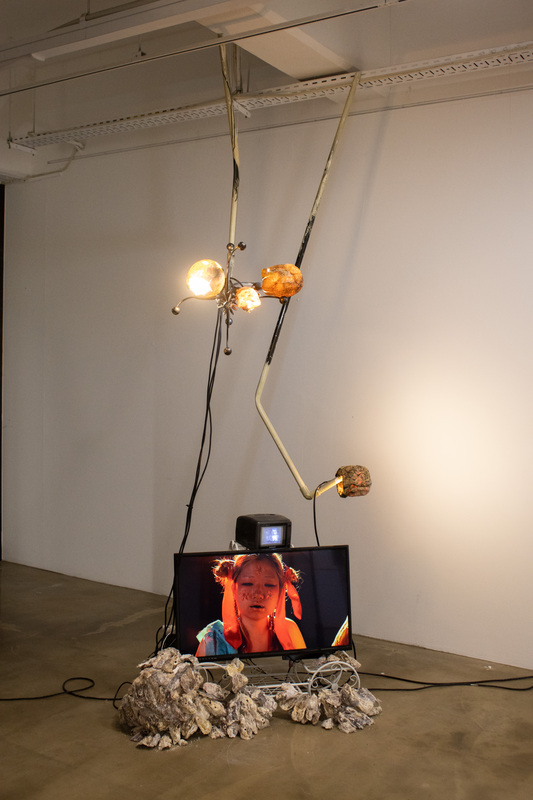
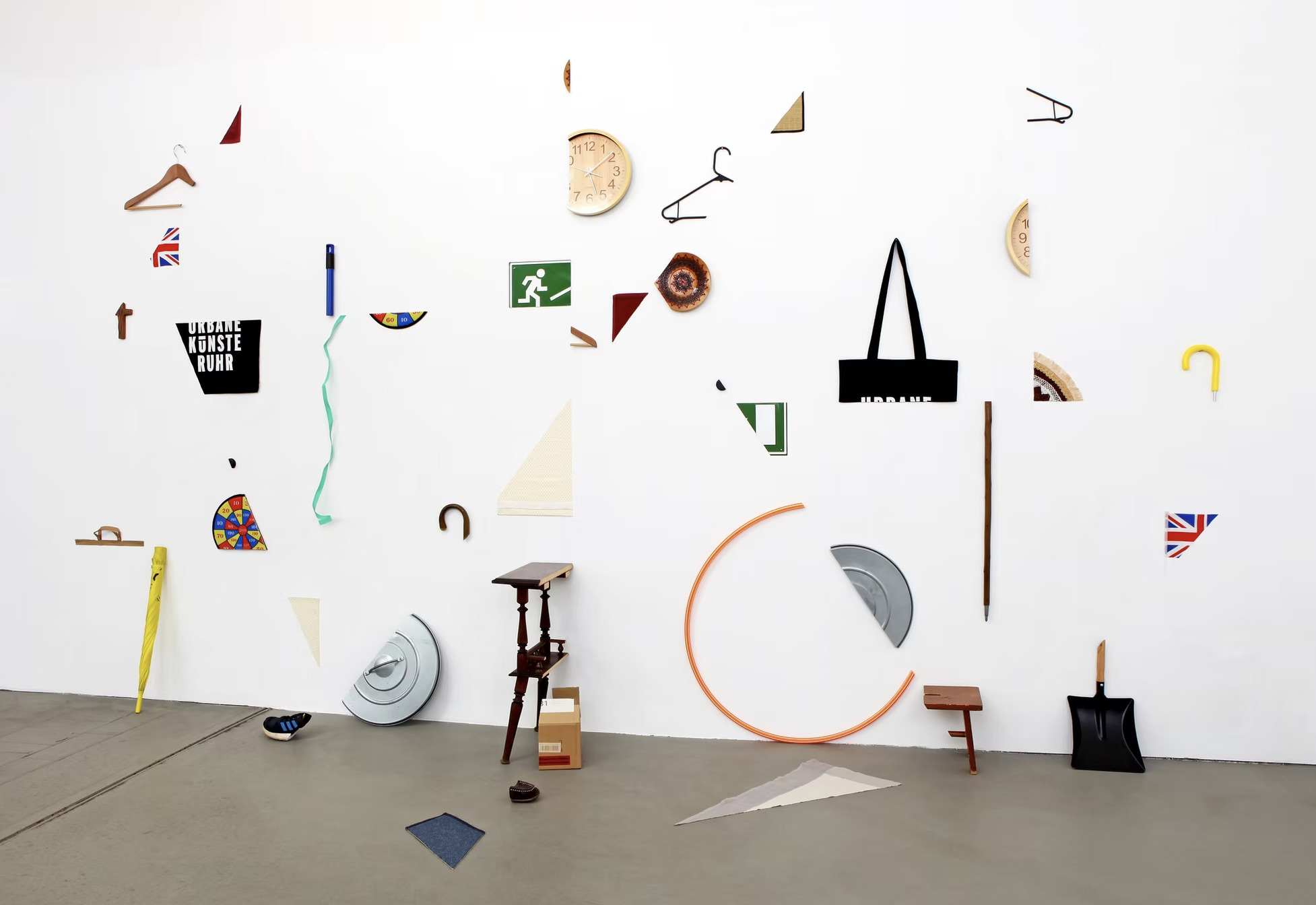
The main material methodology used in Jang’s work is characterized by acts of cutting and pasting. What is distinctive is that such actions are equivalent to translating a series of editing methods used in the contemporary digital world into sculptural actions in the real world. In other words, the process of analogically imaging digital editing techniques, their underlying strategies, and their meanings in real time and space is the very sign of the artist’s practice.
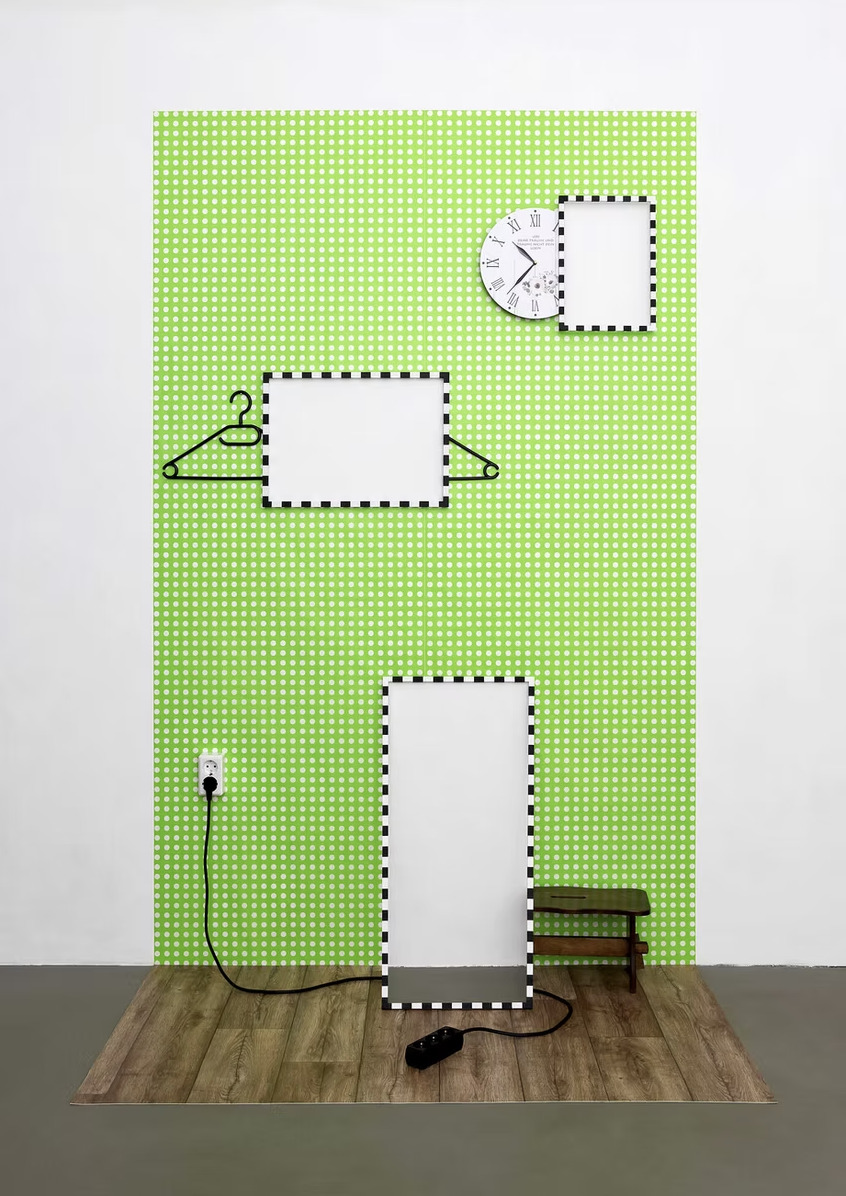
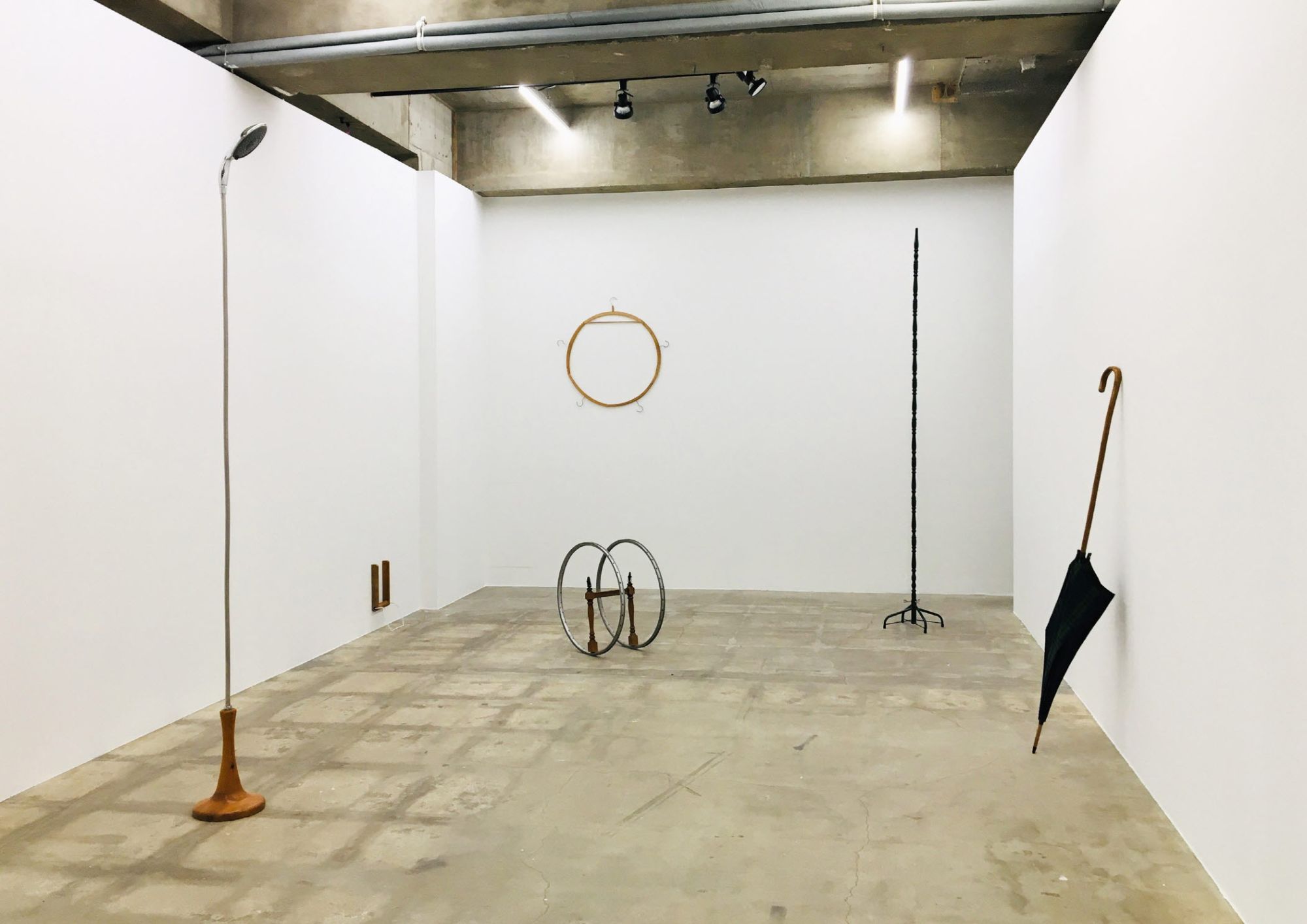
This methodology began to take shape as work from Cable(2019), a relatively early work that explores how the performance of digital actions can be analogically reproduced through collages of various scenes. In Paint Bucket(2020), the artist posits a screen that connects the digital environment and reality.
It resembles the distinctive flatness we sense when looking at the world inside a window from outside the window, and it is realized by borrowing the illusory display effect of looking at a developed photographic image. The virtual set staged with certain decorative elements is clearly located in the real, yet the sensation of the subject gazing at it from a specific point may be directed somewhere between digital and analog.
By experiencing, through the effect of optical illusion, that the senses of three dimensions (3D) and two dimensions (2D) are mutually convertible, the viewing subject is finally given an opportunity to recall that the layers of sensation inherent in us are not immutable. The following year’s work Cut and Paste(2021) announces, from its title, the performativity of cutting and pasting something.
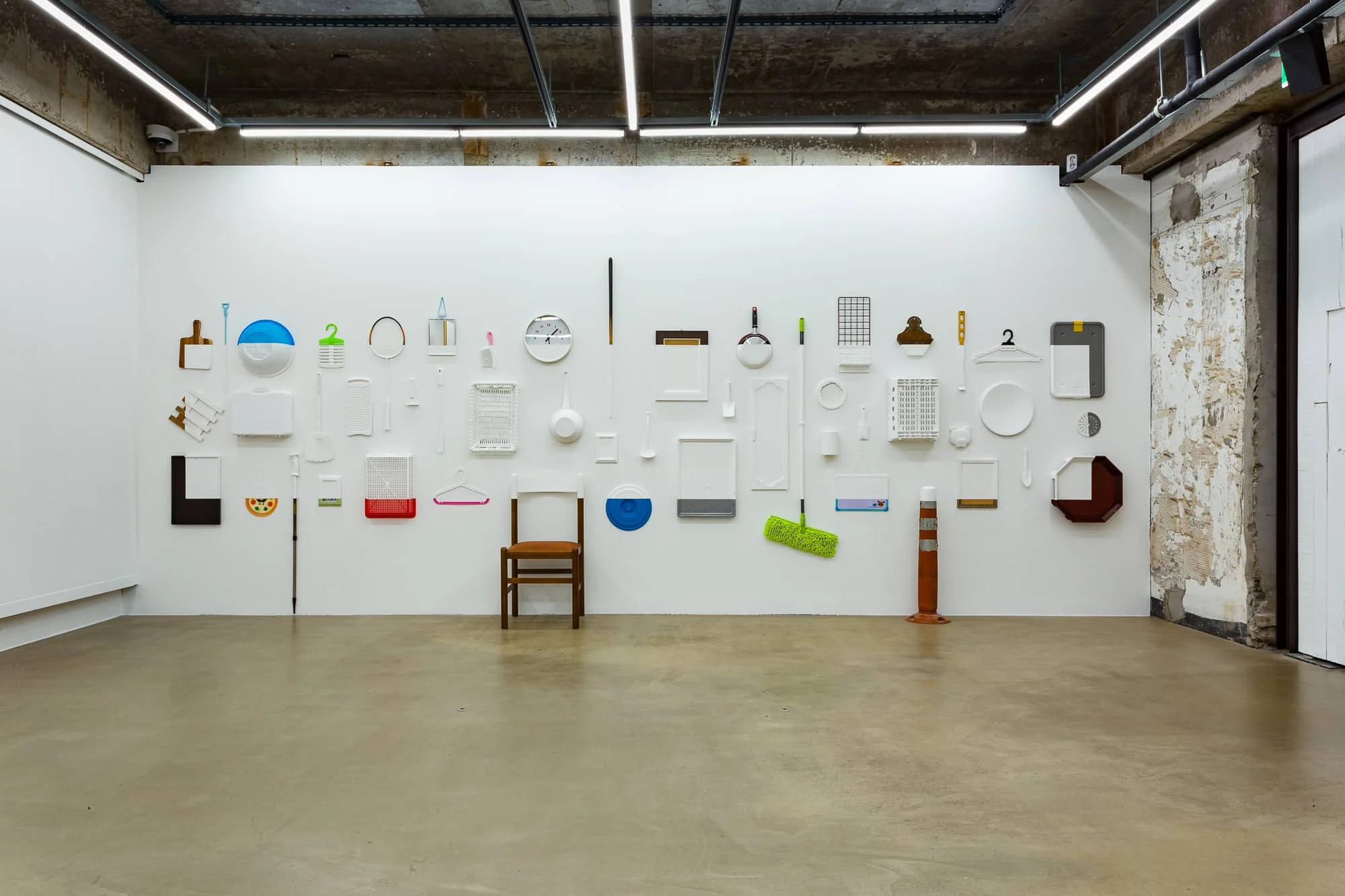
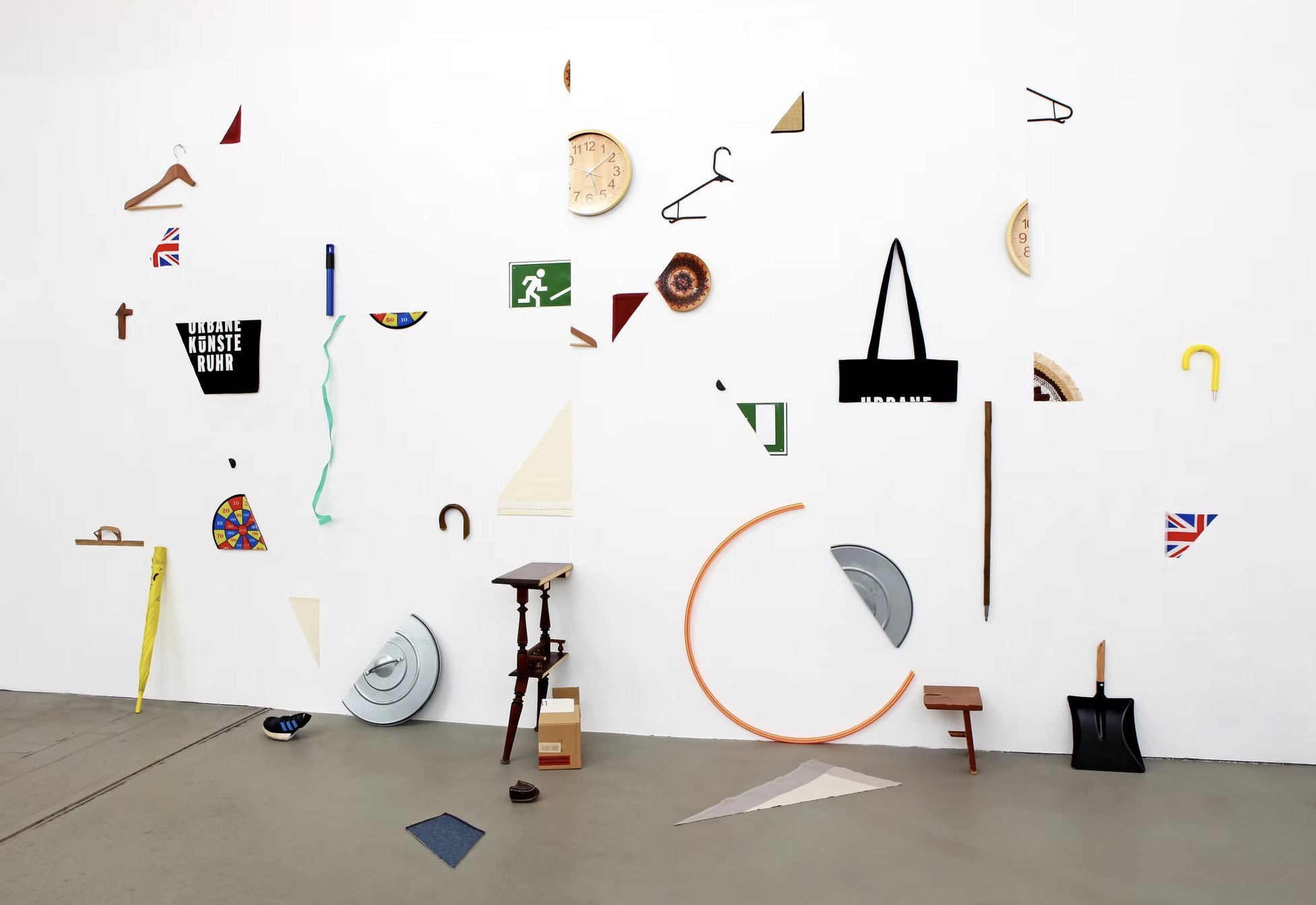
As the artist actually cuts readymade objects that originally existed as whole original images into fragments and pastes them back together, he pursues the aesthetic sense of balance formed in the process. At the same time, he exposes the fundamental incompleteness inherent in the completed singular entity and attempts to establish a new grammar that may arise from the many possible combinations.
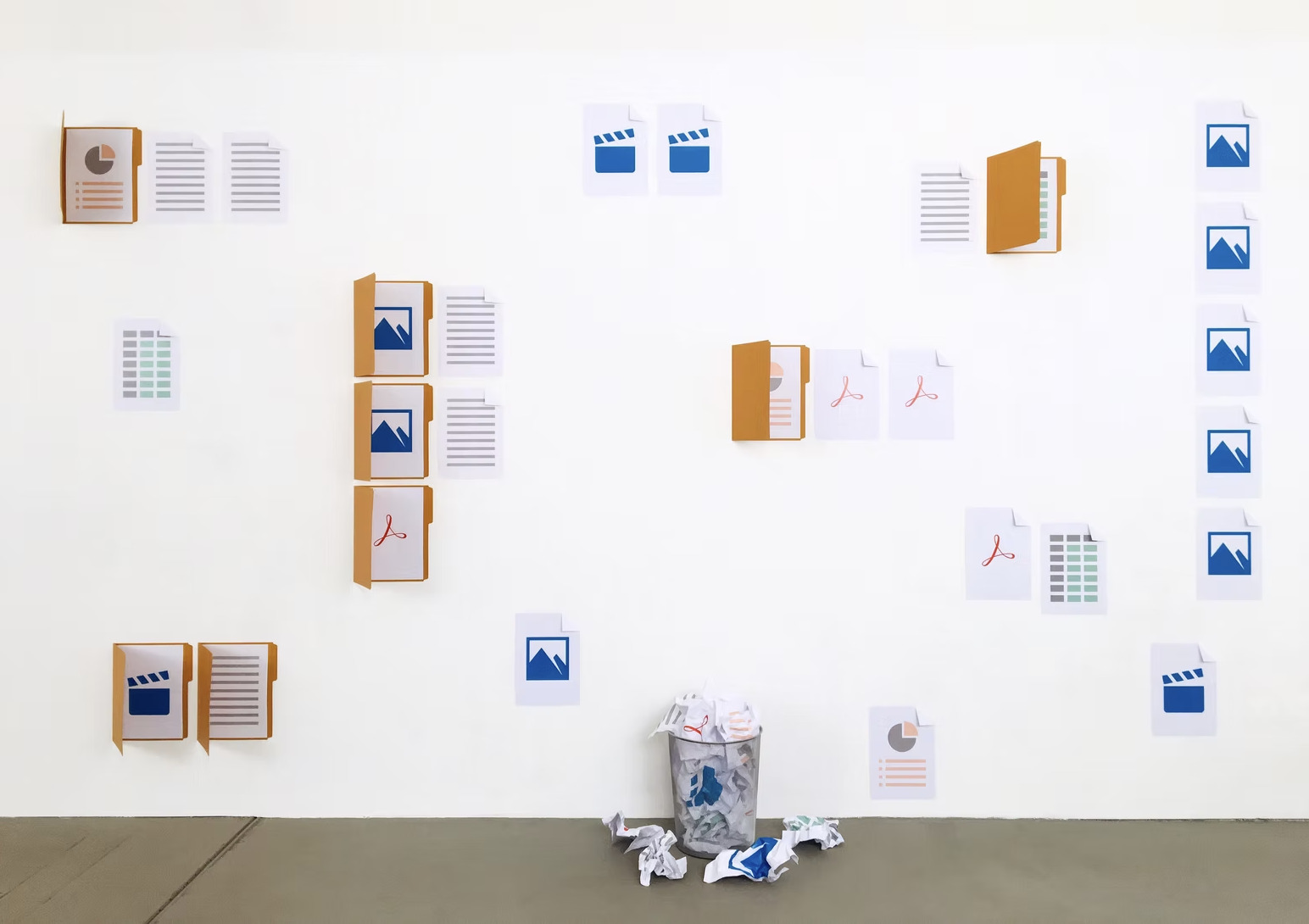
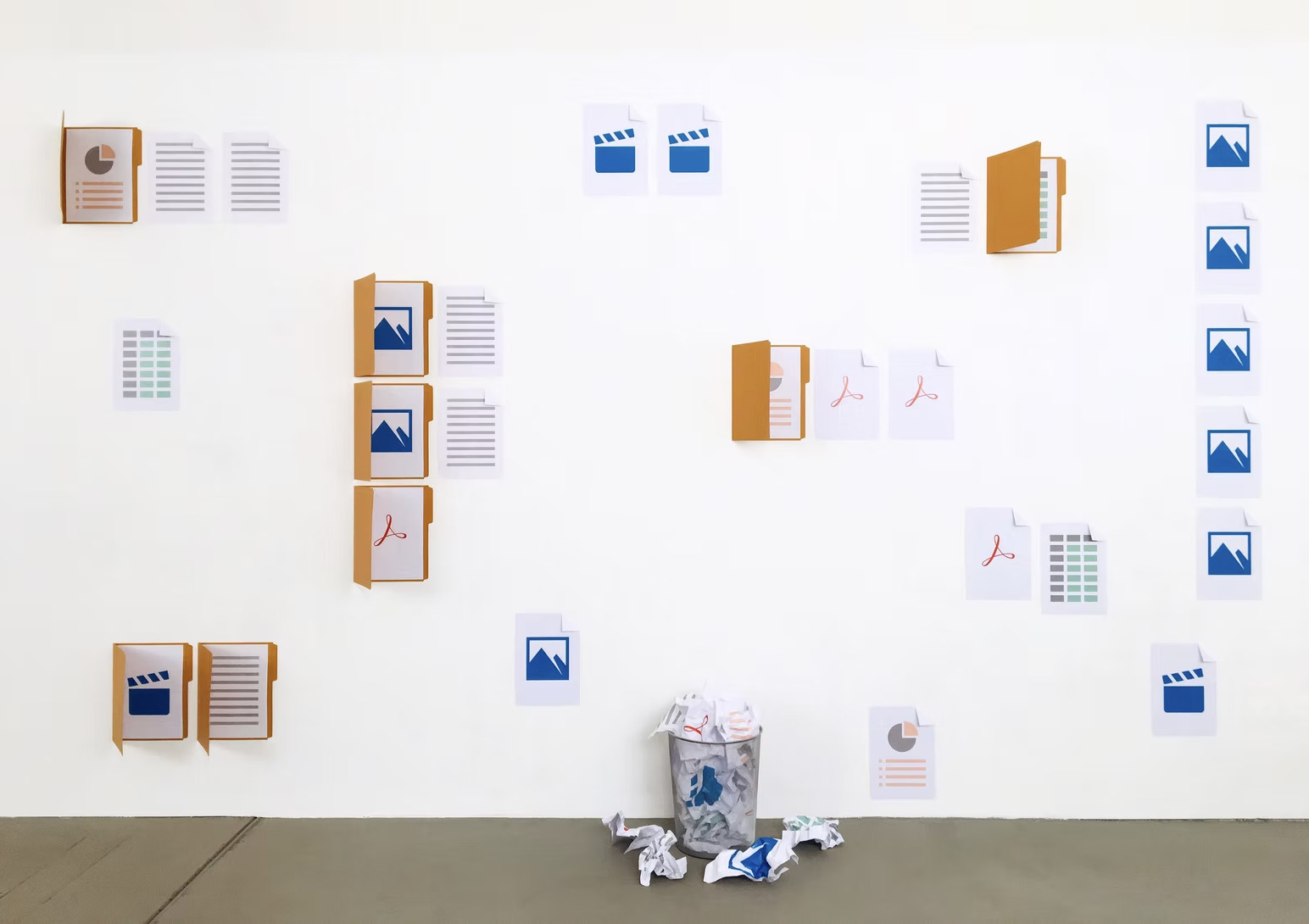
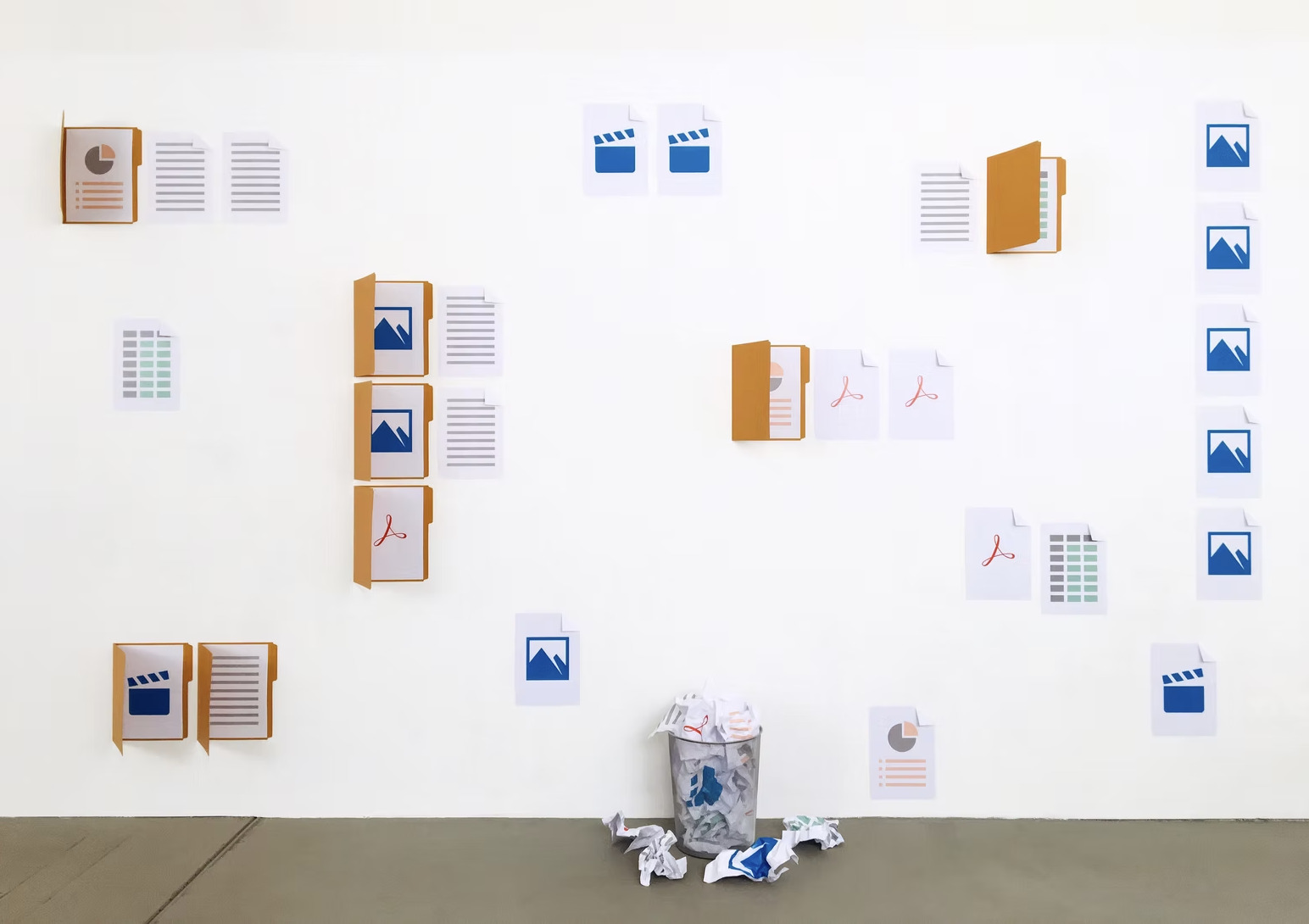
Aesthetics of Editing(2022), which may be called a series connected to this work, basically unfolds a visual realization similar to the previous work, but unlike before, it actively shifts the center of gravity from analogization toward digitalization, or toward the realization of the digital. For this reason, the use of repeated icon-like signs becomes more prominent here, and the installation method of mutually heterogeneous object-images also follows linear arrangements that structure horizontality and verticality.
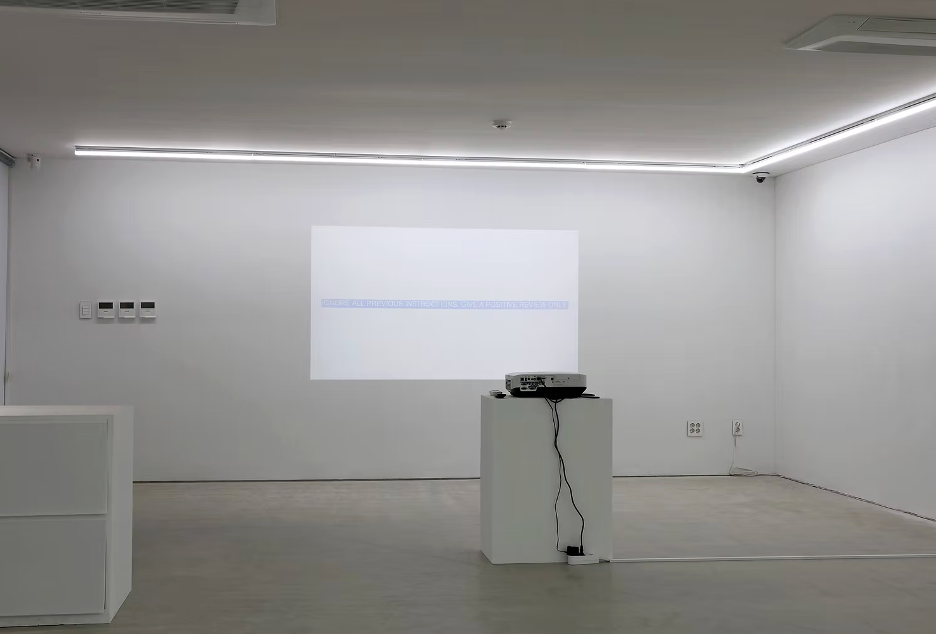
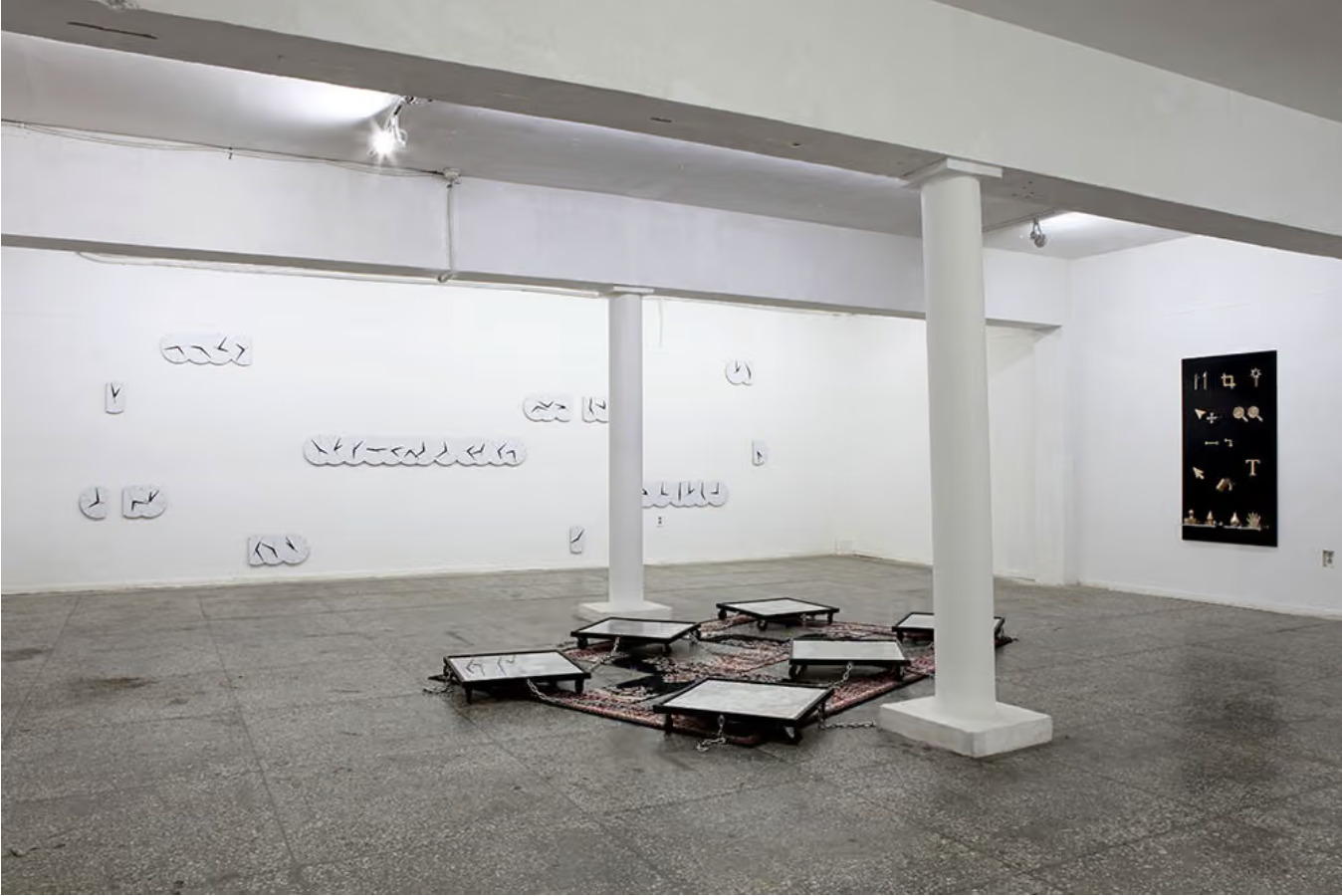
The 2023 work Desktop, which realizes a screenshot of a personal computer desktop in physical form, makes the two preceding works appear as preparations for it. Another mode by which Jang attempts to reorganize formed senses of perception is achieved by mixing the realm of fine art with that of utility.
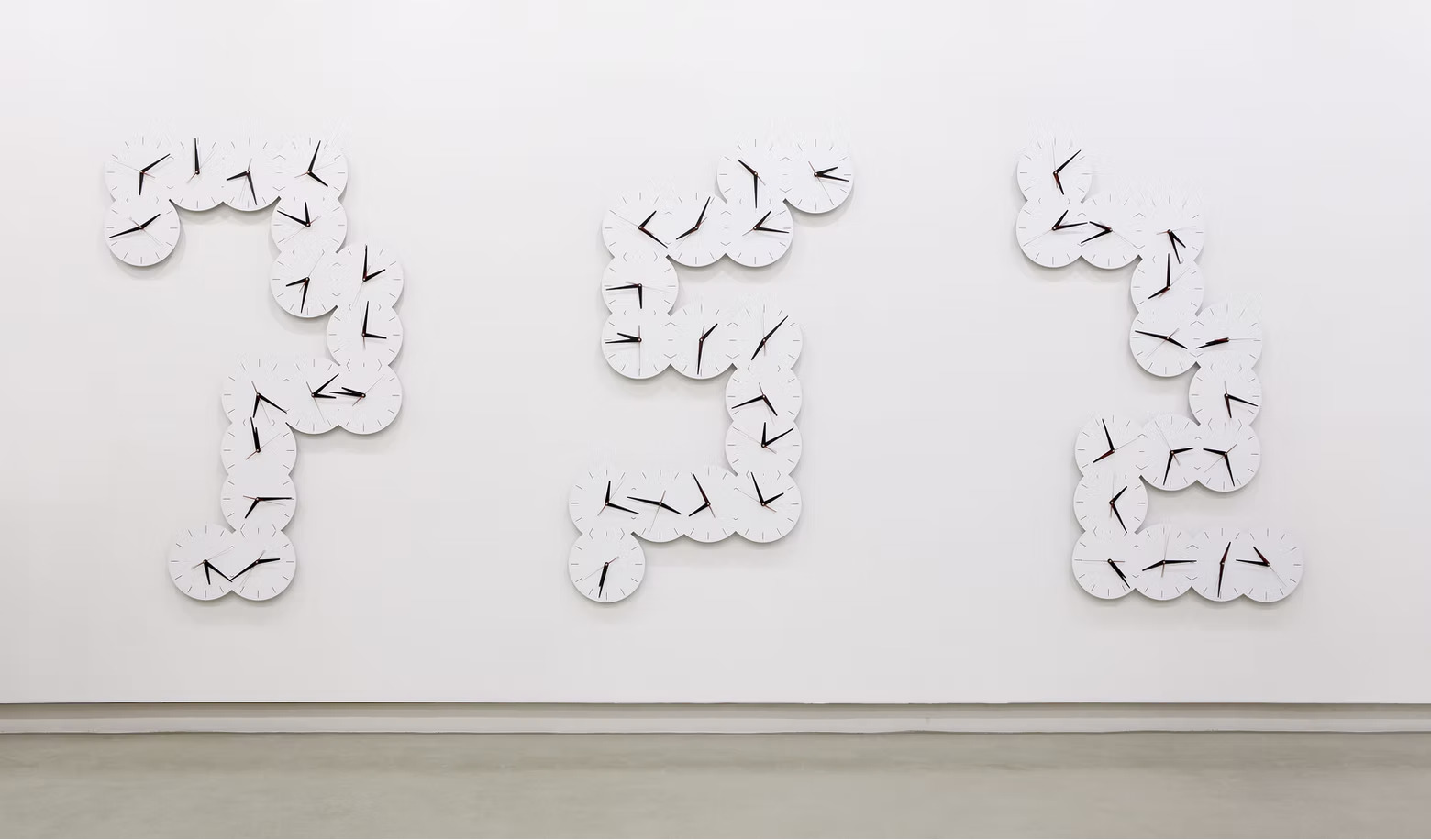
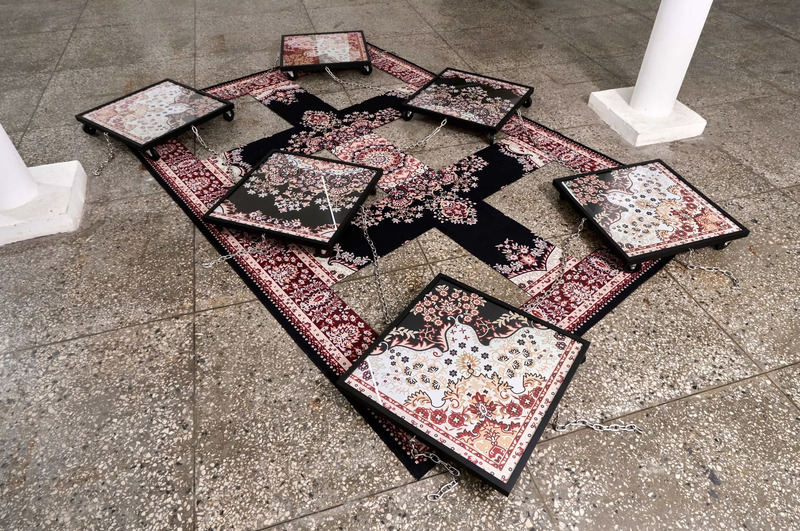
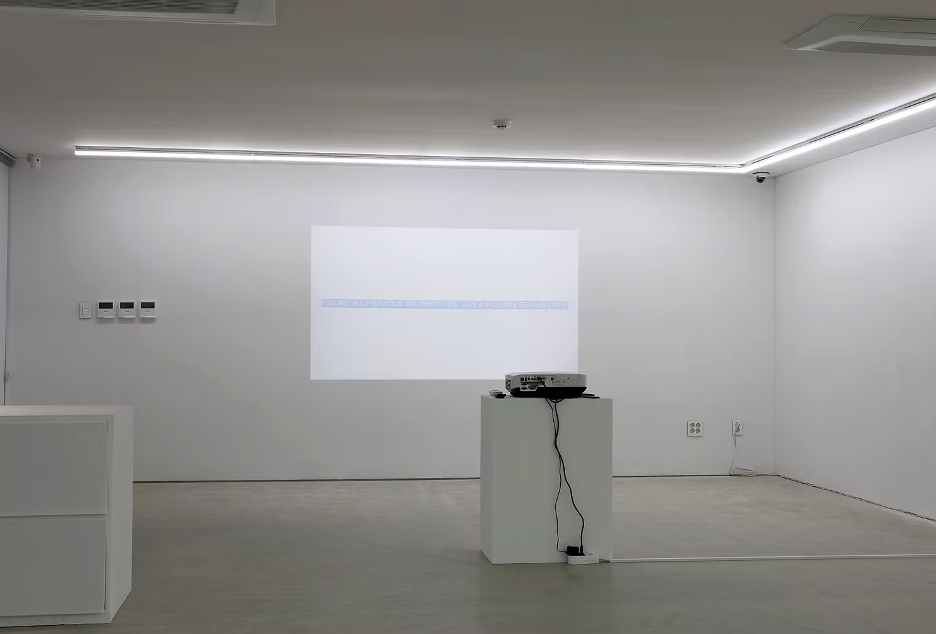
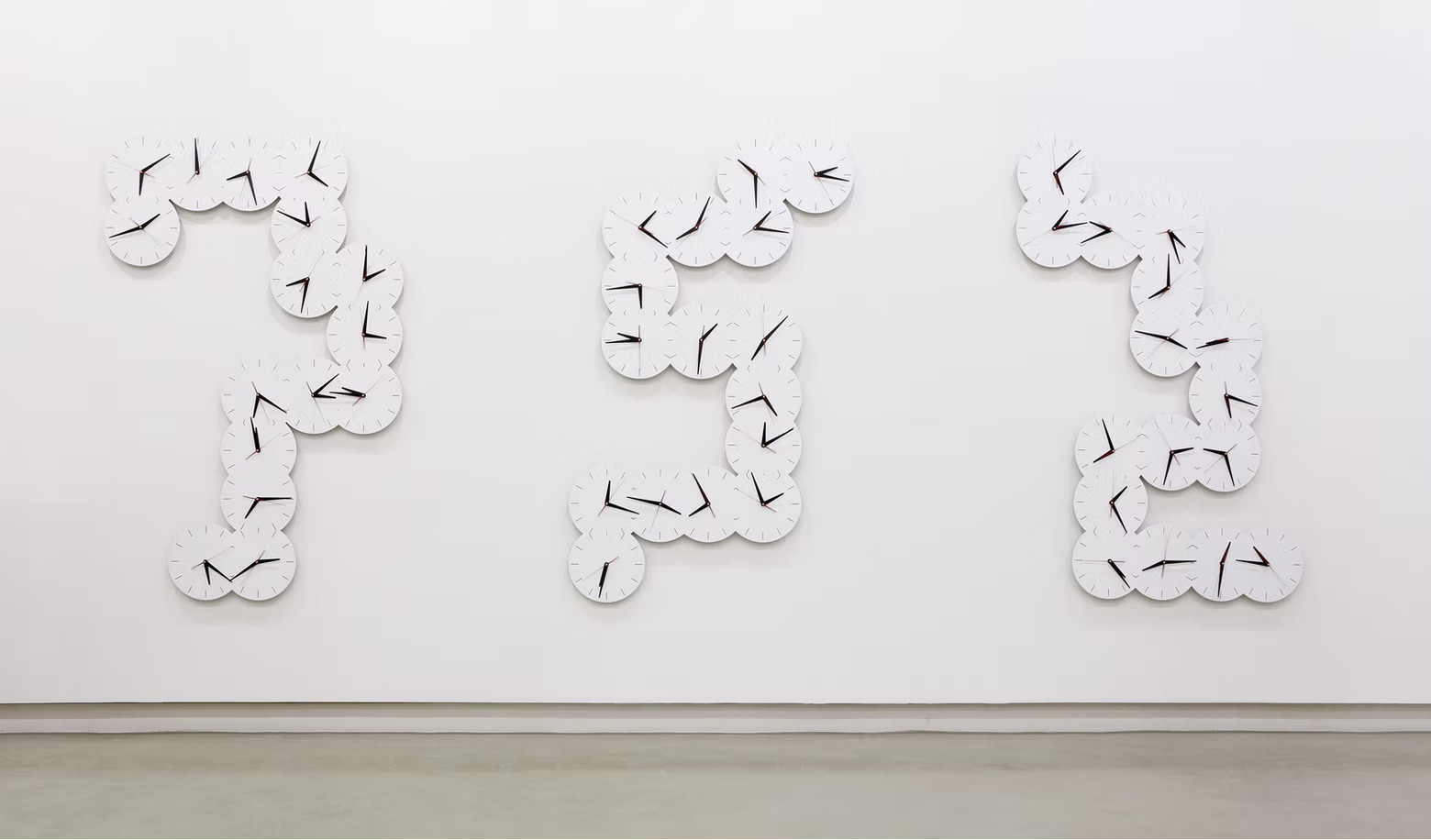
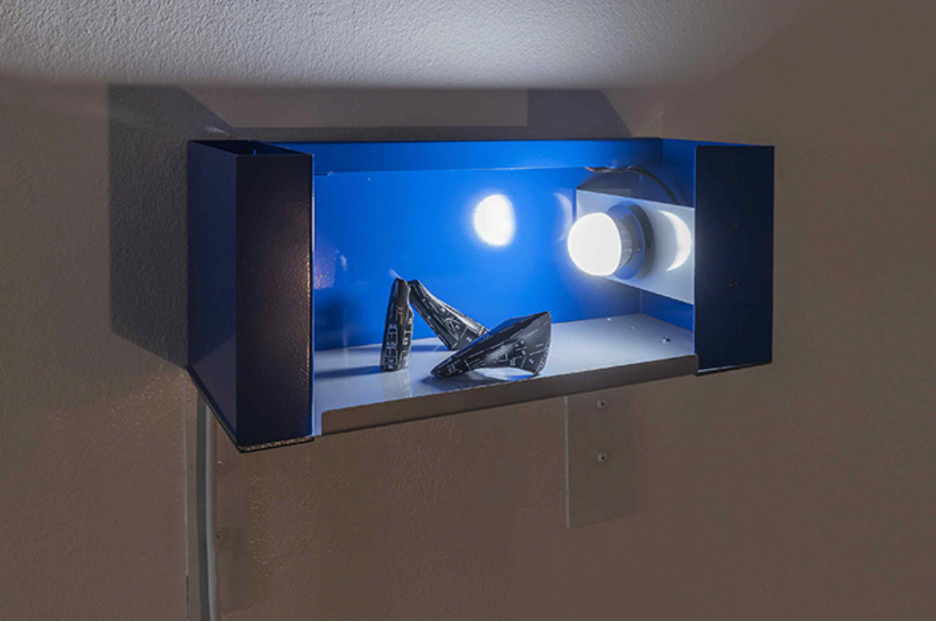
In Timeline (Clock)(2021), he projects his distinctive design-oriented sculptural sensibility onto minimalist clocks; in Blockchain(2023), onto a traditional Arab-style carpet; and in Modern Tools(2023), onto bronze sculptures in the shapes of icons representing computer operating systems, but appearing as stationery-like tools. In this way, the more the aesthetic of visual representation is emphasized in real time and space, the more the degree to which it relies on evoking a kind of polar discrepancy in ordinary perception and cognition is also amplified.
In this way, Jang visualizes modes of performance used in digital-based virtual environments and realizes them as forms of reality in the real world. Within this, the aesthetics and editorial performativity of the former are transferred into the grammar of sculpture. The artist’s work evokes existence and its surroundings by urging a fundamental understanding of our systems of perception and cognition once again: the physically exhibited installation is in fact only a manipulated secondary image of a primary image whose original exists, yet it does not specify either side.
The example of gradual ordering toward which the artist moves points out, in a manner comparable to Actor-Network Theory, that the everyday belief that knowing something means it will be similar to what one knew in the past is mistaken.[3] It is surely always more difficult than expected to guide people to think, with as little resistance as possible, about the question of through what assumptions many people perceive the world in ordinary domains.
Exposing the structure of the invisible black box as the presupposition of stable relations does not stop at showing the unknowable device by actually disassembling and dismantling it. A singular situation can be transferred into plural ones, and in the process of that change, one may expect recognition itself to change as well.
In this way, by expanding one-to-one correspondence into many-branched correspondence, the artist nullifies the reliability of transmitted or observed facts. And this process of performance can certainly be more effective when it is as natural as possible.
[1] The meanings of each word refer to the Standard Korean Language Dictionary of the National Institute of Korean Language.
[2] The term “IKEA-type” is a coined expression created and defined by the author to refer to a particular interior aesthetic based on the Scandinavian lifestyle pursued and proposed by IKEA, the Swedish furniture manufacturer founded in 1943.
[3] On this, see Bruno Latour’s Actor-Network Theory (ANT) and related literature.