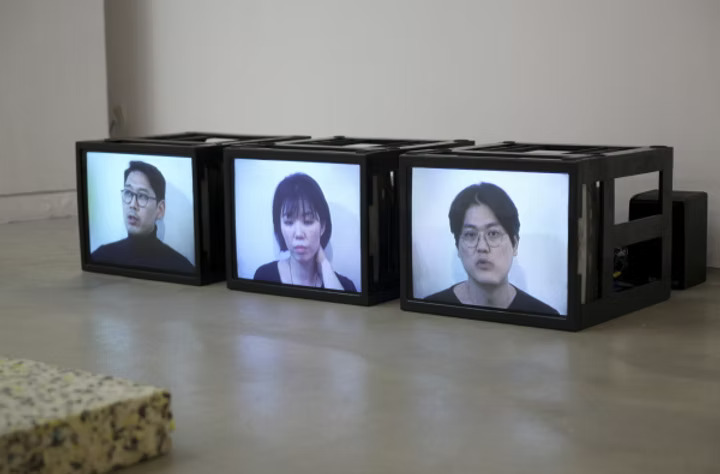
RohwaJeong, formed in 2007, is an artist duo comprising Noh Yoonhee (b. 1981) and Jeong Hyunseok (b. 1981). By continuously engaging in a process of persuading one another, while internally challenging and critiquing each other, the two artists maintain an objective perspective and sustain the fictional identity and singularity of “RohwaJeong.”
 
RohwaJeong has explored ways of examining contemporary conditions from an objective perspective, reflecting their observations of the various boundaries they encounter in the process across a range of media and forms.


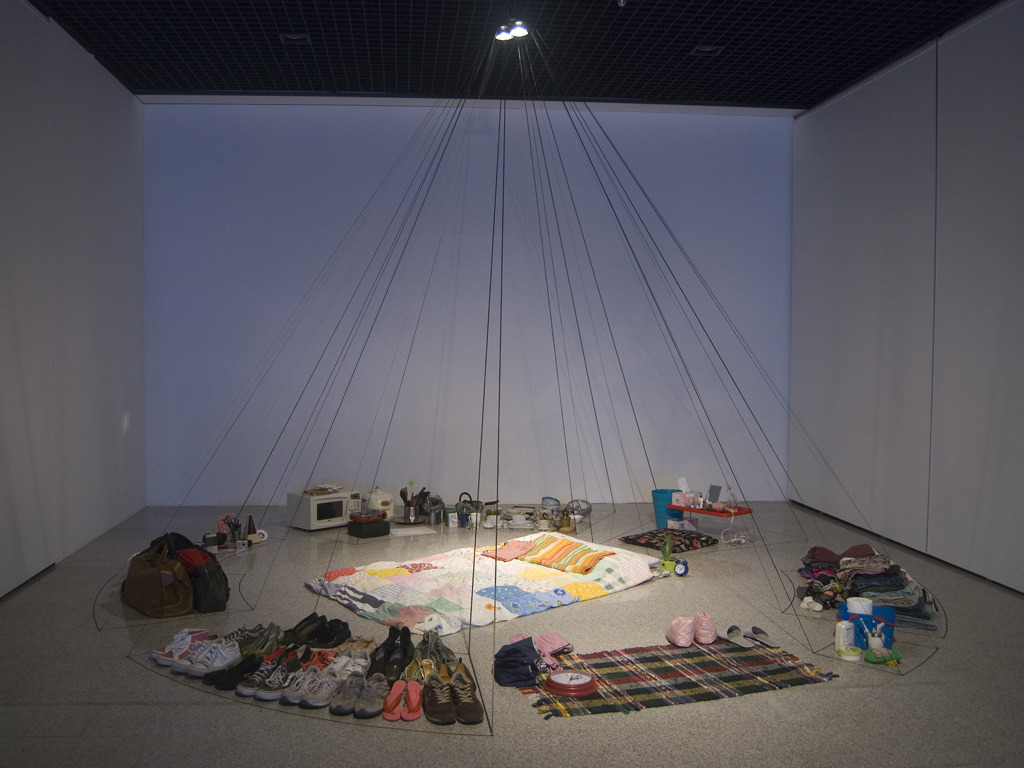
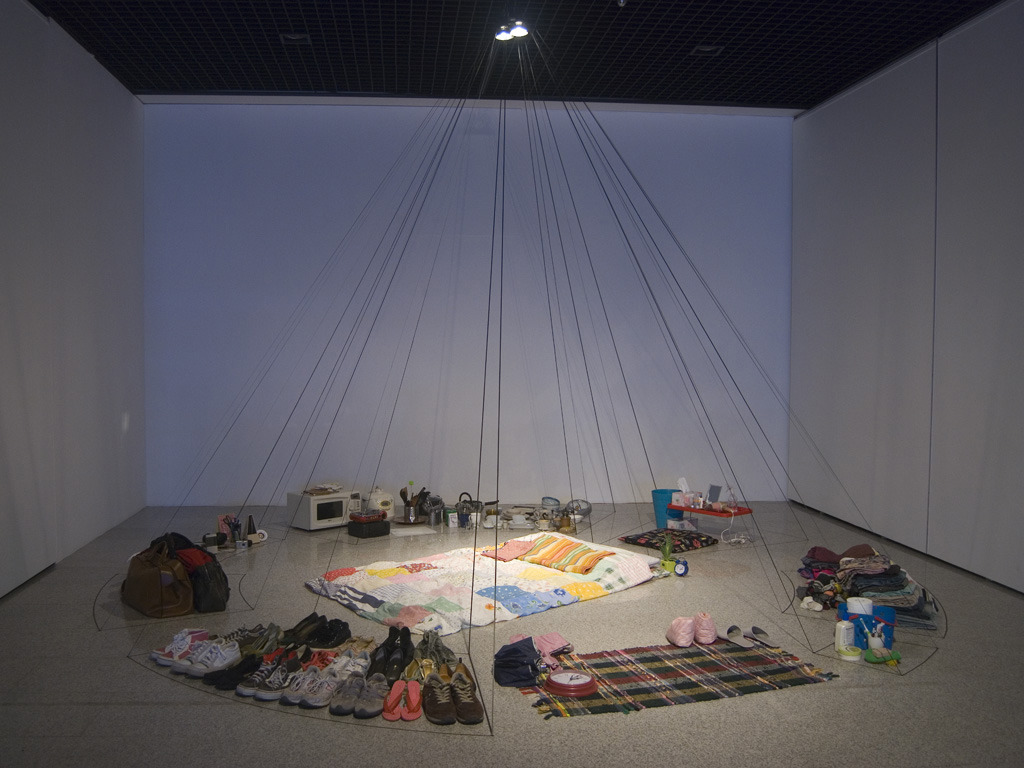
RohwaJeong, The discovery of living, 2010, Masking tape, personal objects in use, 550x550x350cm © RohwaJeong

RohwaJeong’s practice begins with the concept of “relationship,” rooted in the duo’s very structure. Emerging from the process of comparing their different perspectives and negotiating their views, their work has developed through an ongoing interest in various forms of contemporary relationships and structures of understanding, from the relationship between the center and the periphery to that between individuals and the societies to which they belong.
 
RohwaJeong focuses on translating binary oppositions and their paradoxical meanings into the language of art, including the real and the image, the artificial and the natural, the inside and the outside, the center and the periphery, and the past and the future—opposing points positioned along a linear continuum.


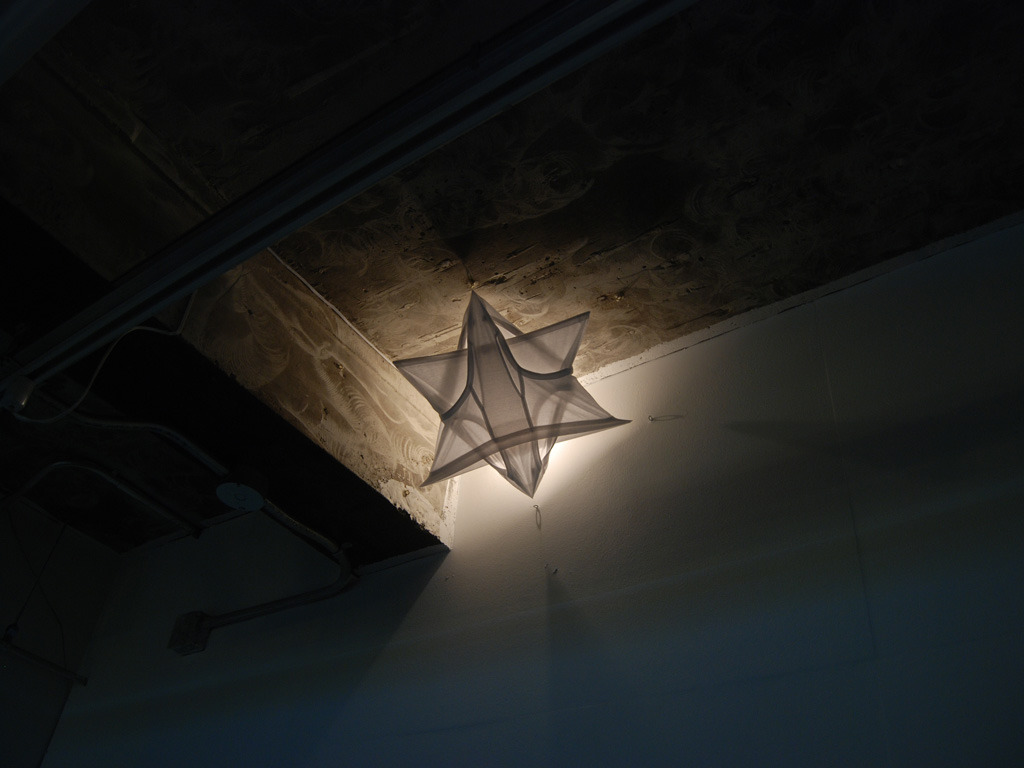
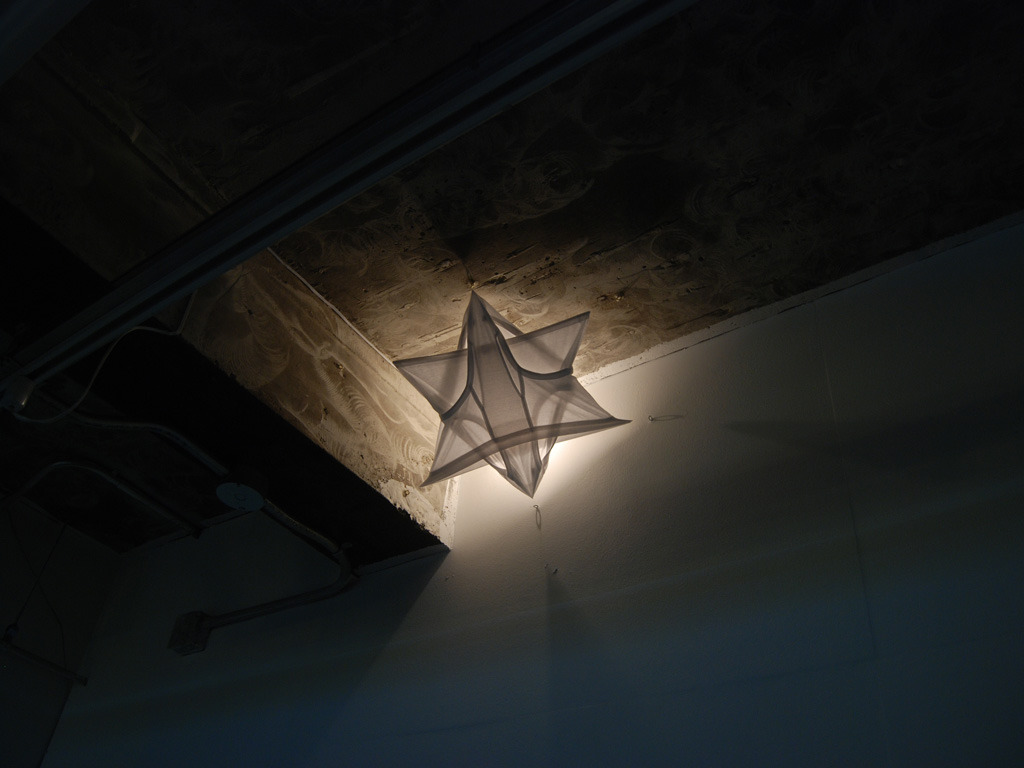
RohwaJeong, Wanna be happy every night…, 2010, Brief x 2ea, lamp, 40x40x40cm  © RohwaJeong

In relationships that are fluid and constantly changing rather than fixed, RohwaJeong has naturally expanded the scope of their practice, reflecting their evolving interests—which shift and grow in response to their surroundings—through a range of media and forms.
 
Through the repeated process of persuading and negotiating with one another, the duo maintains a fluid and adaptable practice while internally challenging and critiquing each other, ensuring a degree of objectivity and preserving the distinctive identity of RohwaJeong.


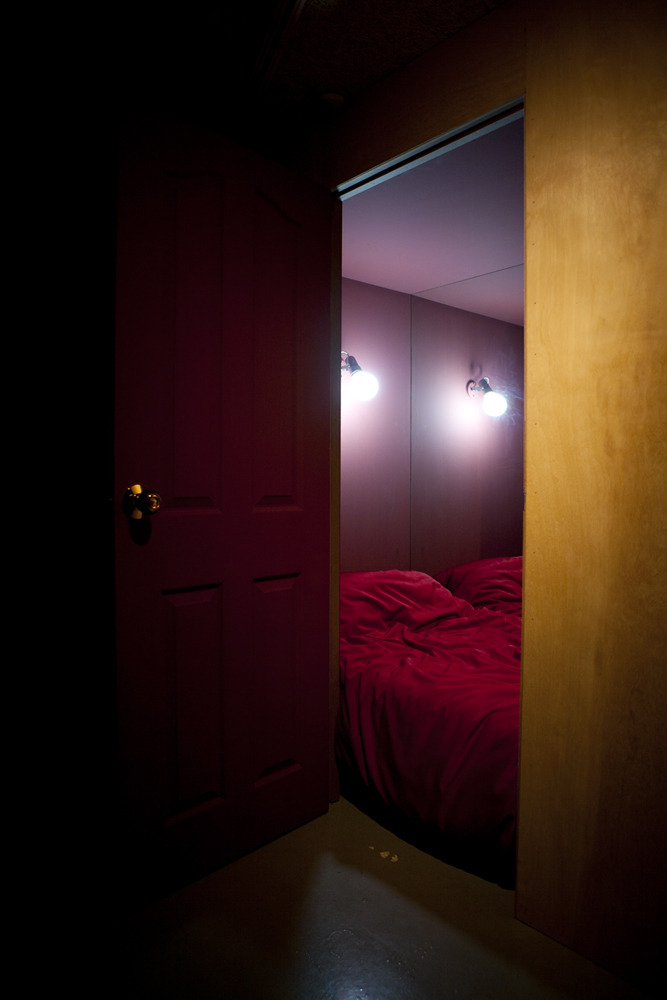
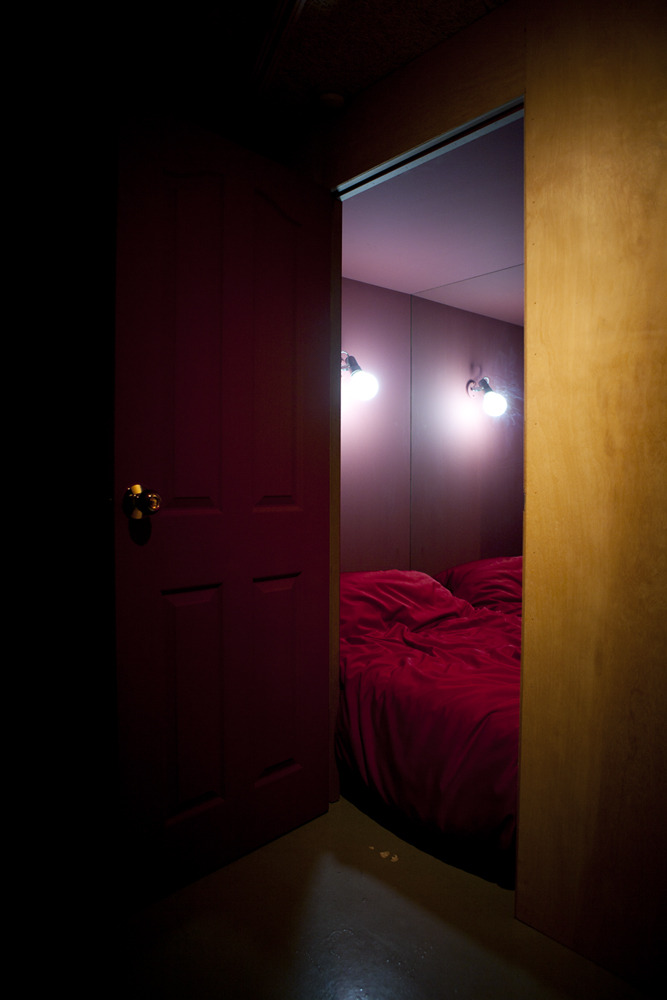
RohwaJeong, Single room for two people, 2008, Single bed x 2ea, mirror x 2ea, door x 2ea, lamp x 2ea, 200x200x200cm © RohwaJeong

RohwaJeong’s early practice explored the various situations and emotions that arise in relationships between people through a range of media.
 
In their 2008 solo exhibition 《Single Room for 2 People》 at Ssamzie Space, for example, the duo took “marriage”—a representative form of relationship in which two distinct individuals form a shared community—as its subject, metaphorically exploring the process through which a man and a woman negotiate and adapt to one another beneath the idealized notion of romantic love.


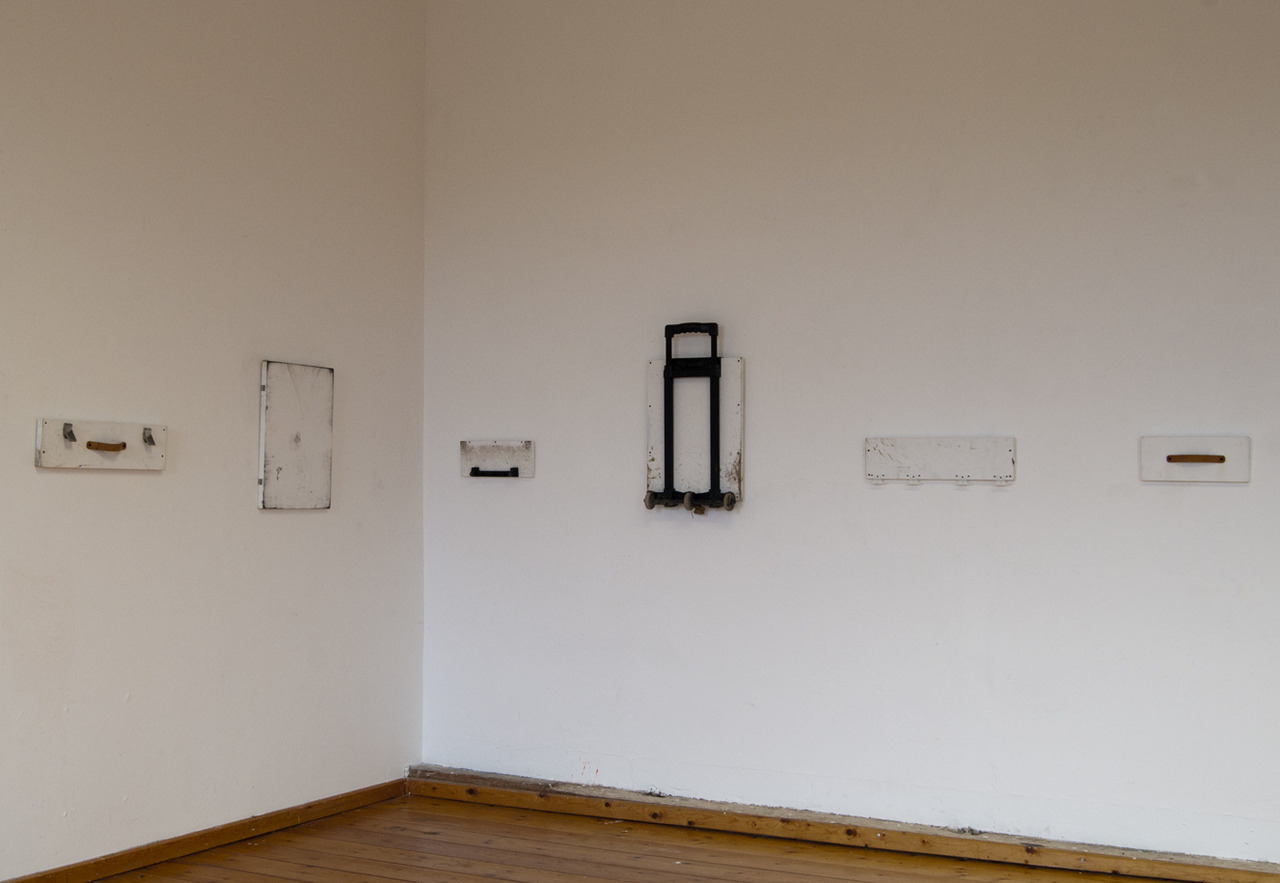
RohwaJeong, 86 days packed, 2010, Canvas panel, mixed media, Dimensions variable © RohwaJeong

In their subsequent work, RohwaJeong expanded their inquiry beyond interpersonal relationships to consider their relationship with the surrounding environment, expressing these ideas in poetic ways. For example, in 86 days packed (2010), the duo traveled for 86 days carrying bags they had made themselves, documenting the traces of time and space left on the bags throughout their journey.
 
As they moved from place to place over the 86 days, fragmented traces of muddy water from rainy days, dust, and other elements accumulated on the surfaces of the bags. These “marks of time,” gathered both inside and outside the bags, became accidental forms produced through the artists’ movements and the changing environments they encountered.
 
At the end of the journey, the individual panels of the bags were dismantled and presented as “paintings” created collaboratively by the artists and their surrounding environment.


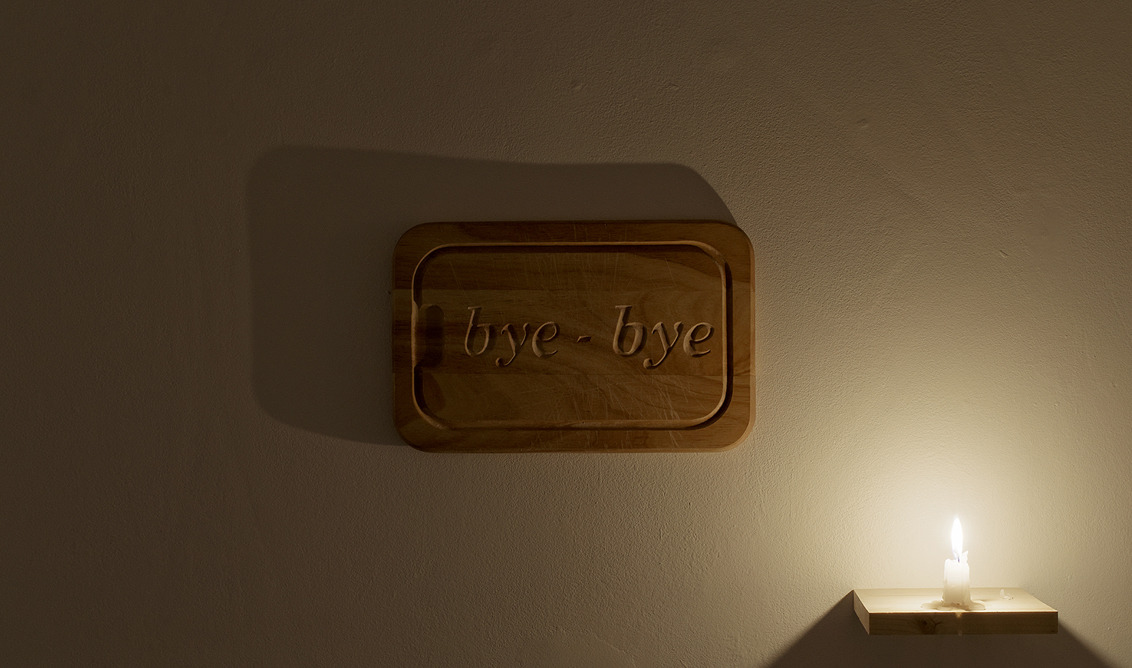
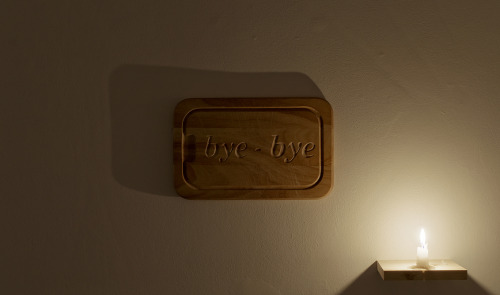
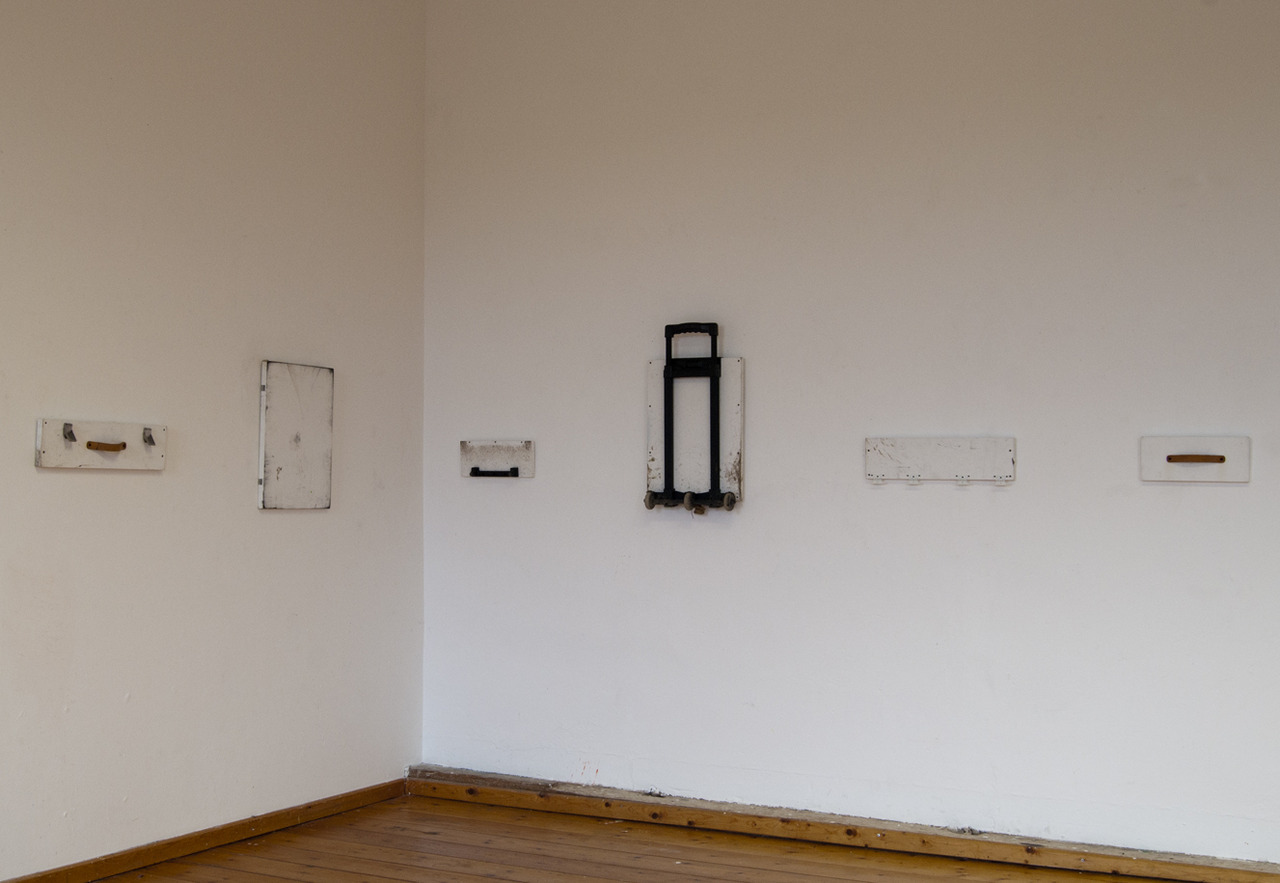
RohwaJeong, Bye - Bye, 2014, Wooden cutting board, 33x21cm © RohwaJeong

RohwaJeong has also continued to recontextualize the places, functions, and everyday uses of familiar objects through the language of art, repositioning both the objects themselves and the boundaries surrounding them.
 
Examples include Wanna be happy every night… (2010), in which two pairs of underwear and lighting are arranged to form a polygonal, star-shaped structure; The Discovery of Living (2010), which arranges everyday household objects in a circular formation, then uses masking tape to trace the light cast by the lamps and reconnects these elements into a conical structure; and Bye - Bye (2014), in which the duo bids farewell to a well-used, scratched wooden cutting board by engraving the words “bye-bye” onto its surface.


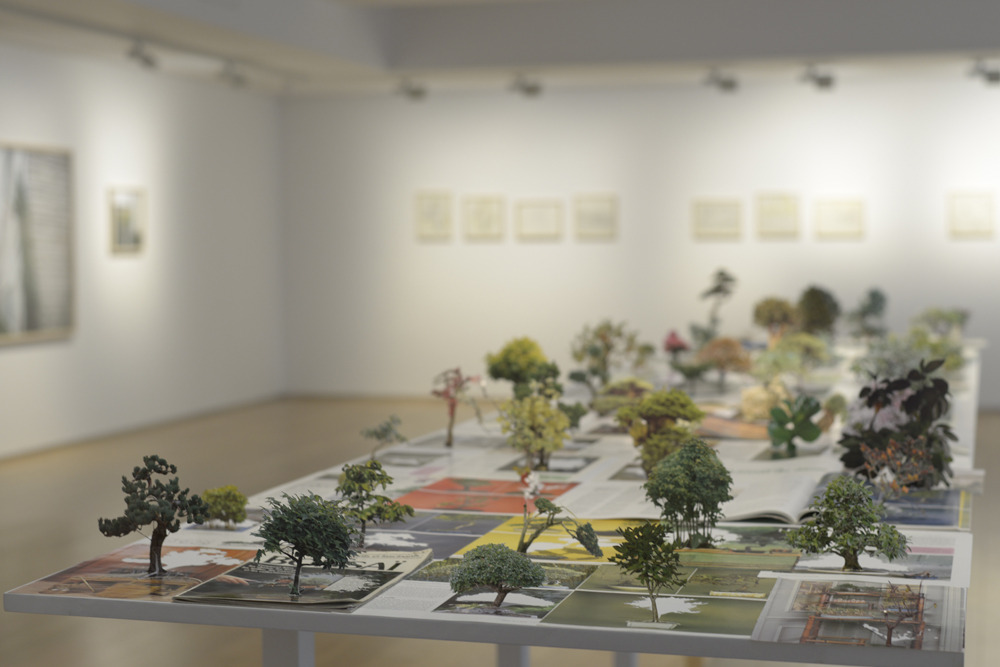
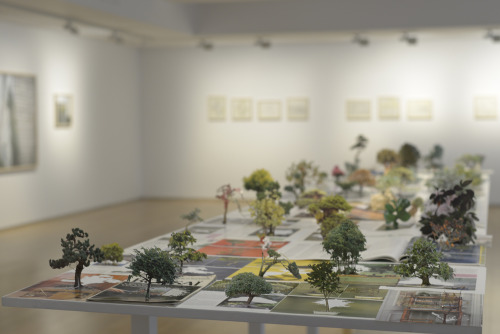
RohwaJeong, Souvenir of somewhere (tree), 2013, Second-hand magazines, table, 90x400x90cm © RohwaJeong

In their 2013 work Souvenir of somewhere (tree), RohwaJeong cut out images of trees from printed materials and erected three-dimensional tree models on the paper. The trees, which had previously lain flat as images, were brought together on the ground to form a thicket, creating a scene that was both familiar and unfamiliar.
 
The work invited viewers to reconsider the hierarchy between images and objects, producing a striking and unexpected encounter.


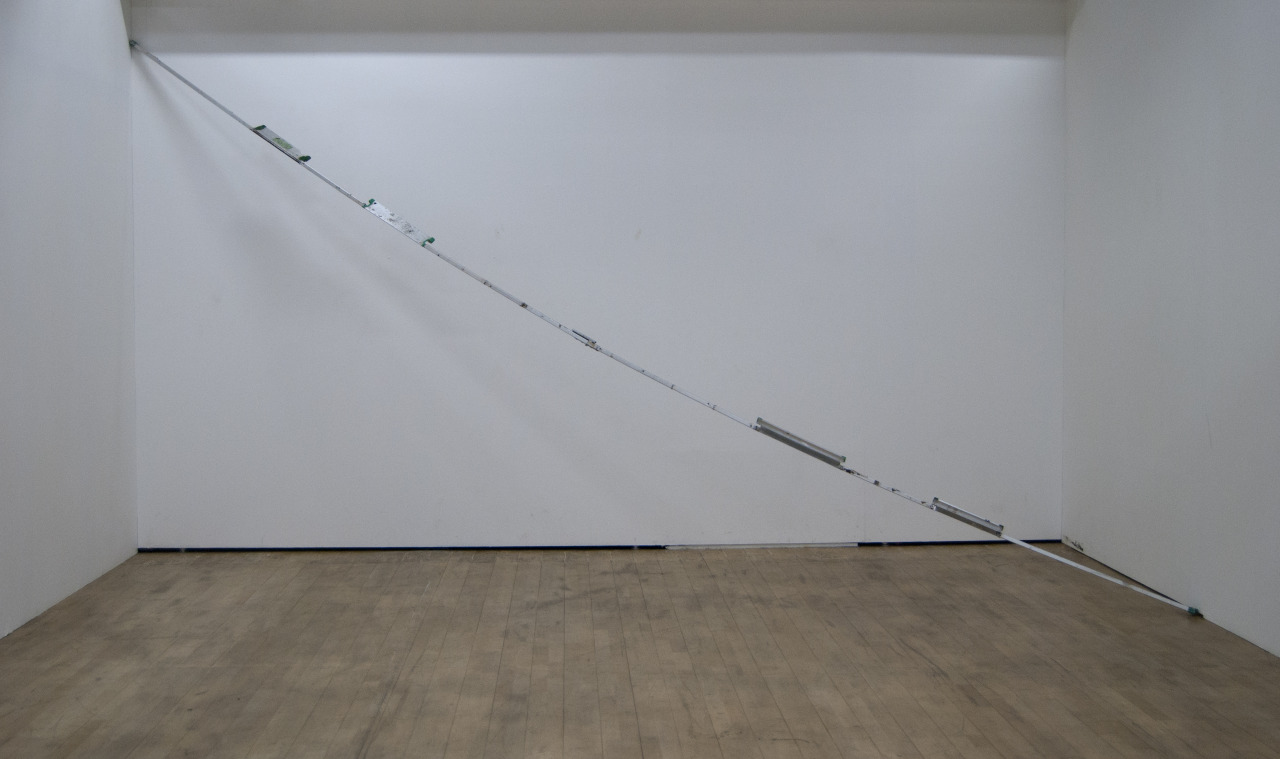
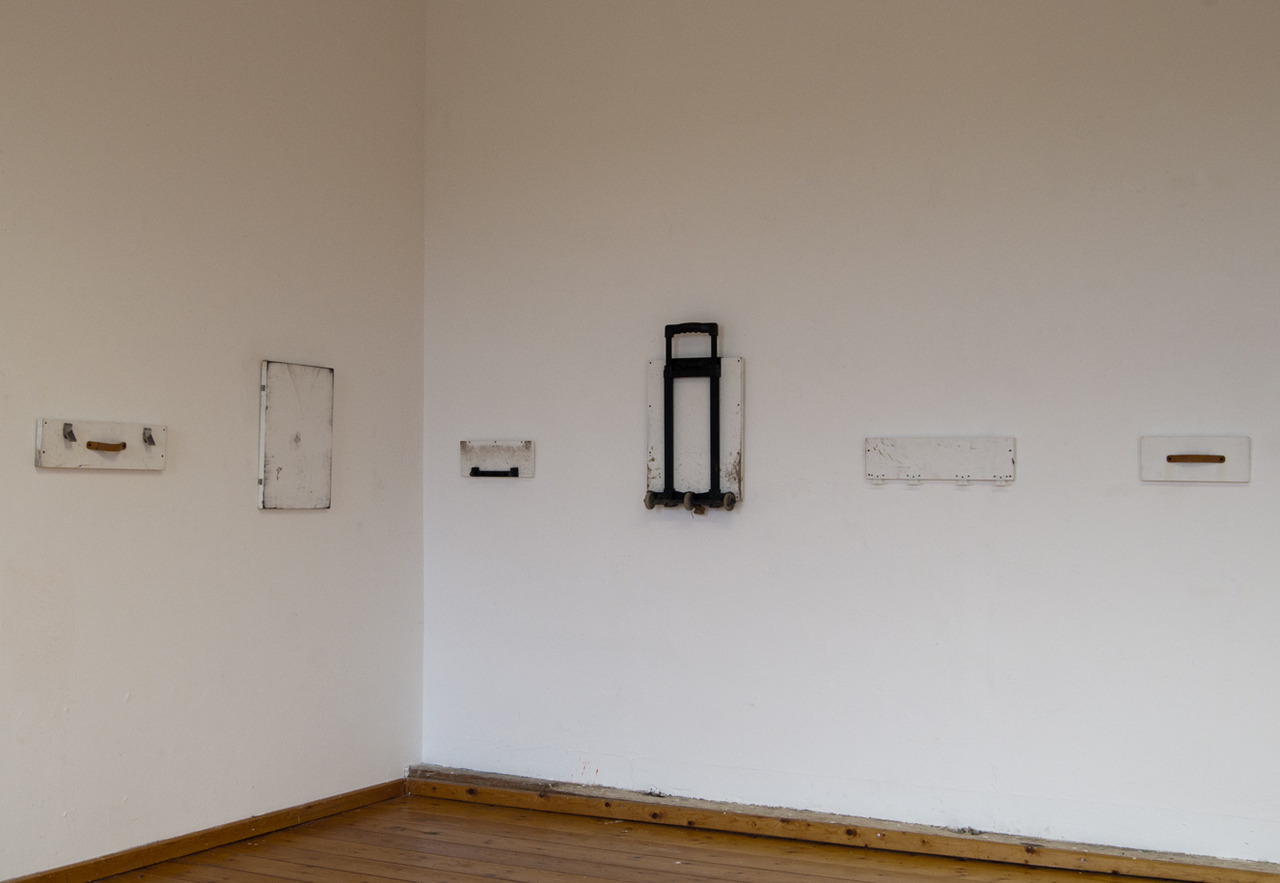
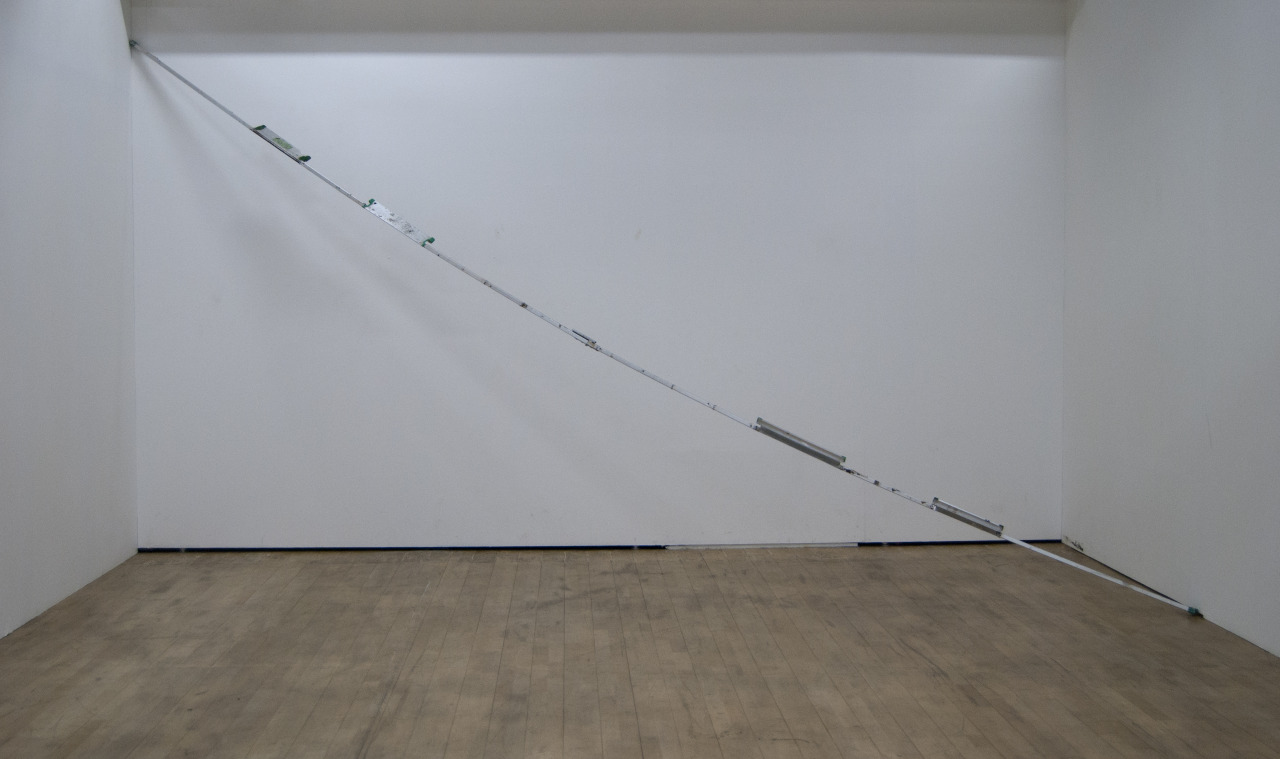
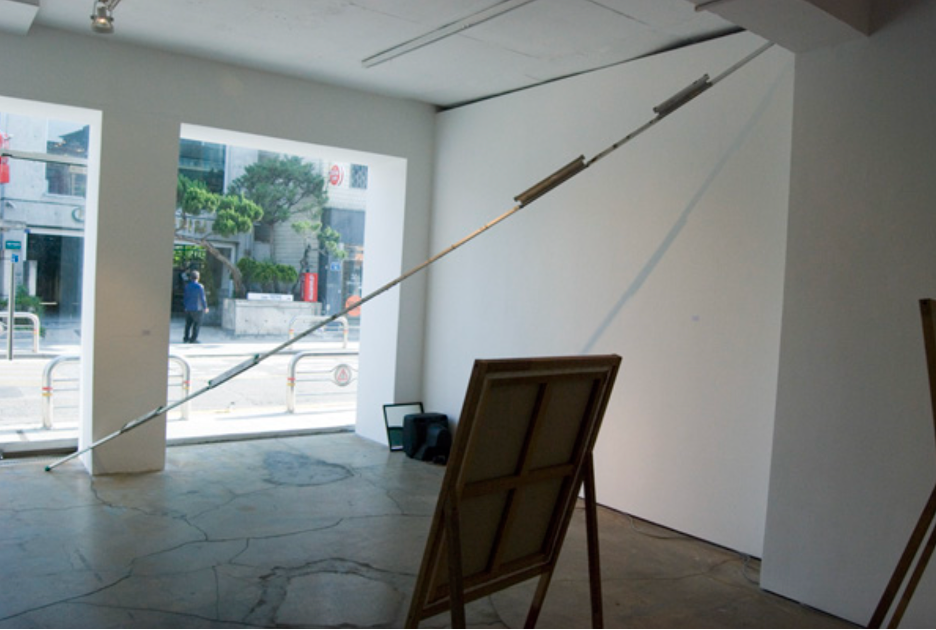
RohwaJeong, Doubled Distance, 2014, Aluminum steel ladder used in Gallery Factory, 8x2x562cm © RohwaJeong

In their 2014 solo exhibition 《Within Arm’s Length》 at Gallery Factory, RohwaJeong reconfigured the relationships between objects that typically exist around or behind the scenes of an exhibition space.
 
By transforming the series of processes leading up to an exhibition into works in their own right, the duo sought to reposition the peripheral elements that may once have occupied the center—or existed close to it—before the center itself was established.
 
For example, a pair of canvases reflecting the backs of one another, a blank exhibition floor plan with nothing printed on it, and a ladder used for installation were shifted from their conventional roles as tools or devices into the position of artworks. In doing so, objects situated on the “periphery” of the exhibition space were brought to the “center.”


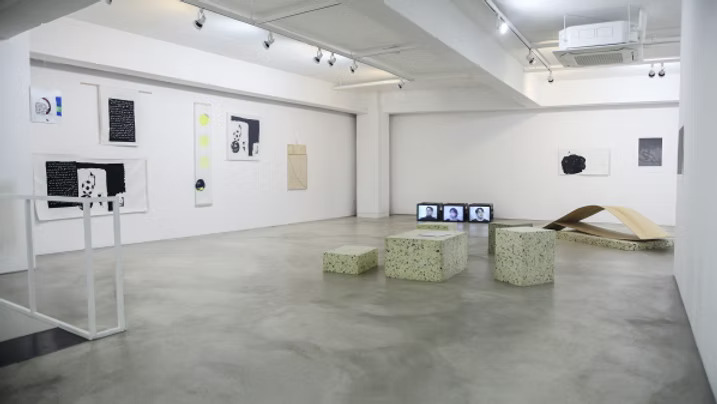
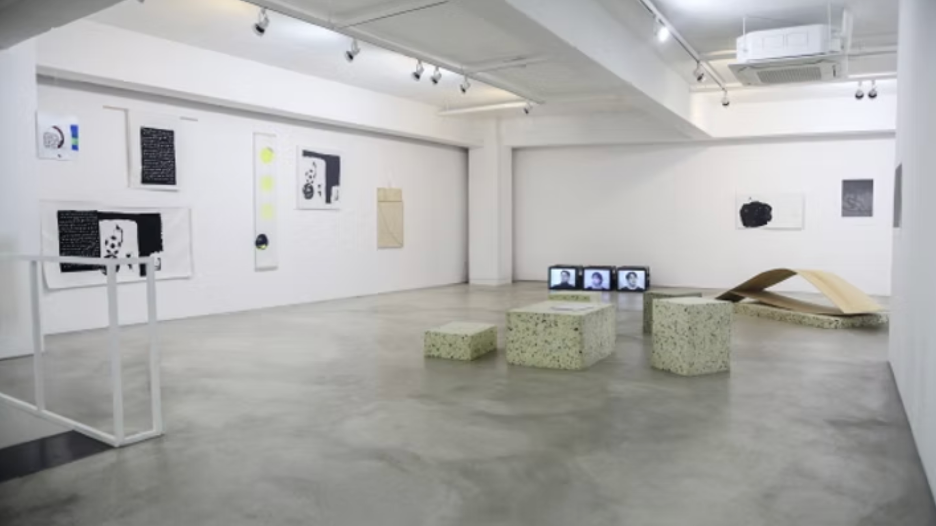
Installation view of 《Sunday is Monday, Monday is Sunday》 (Space Willing N Dealing, 2018) © Space Willing N Dealing

This exploration of the boundaries between the periphery and the center, and between process and outcome, continued in RohwaJeong’s 2018 exhibition 《Sunday is Monday, Monday is Sunday》 at Space Willing N Dealing.
 
In this exhibition, the duo questioned the process of being reduced to a final outcome by condensing multiple times and spaces within a predetermined site and duration. The exhibition was structured around three temporal axes: A, B, and C.
 
Each temporal axis presented a different situation. Over the course of the exhibition, A moved through B before reaching C. Yet each stage functioned simultaneously as a process and as an outcome viewed from a different point in time.
 
Depending on when they encountered the exhibition, viewers experienced A, B, or C as their own particular present state. Premised on chance and contingency, these states formed a nonlinear structure in which cause and effect did not follow a fixed or predictable sequence.


Installation view of 《Sunday is Monday, Monday is Sunday》 (Space Willing N Dealing, 2018) © Space Willing N Dealing

In this exhibition, RohwaJeong positioned themselves not only as artists and producers, but also as mediators who, through the variable of time, placed the audience in the role of co-producers. Transforming a space into a distinctive temporal and spatial experience—an exhibition—thus became a shared task undertaken by all of its co-producers, whose actions and encounters shaped the exhibition’s timeline.
 
Yet, as noted above, the flow of this temporal and spatial experience, made distinctive through the succession of disparate and fleeting moments, is inherently difficult to maintain as a coherent whole.
 
In 《Sunday is Monday, Monday is Sunday》, RohwaJeong explored how these different present moments might be reorganized within an exhibition, creating a space in which different temporal axes collide.


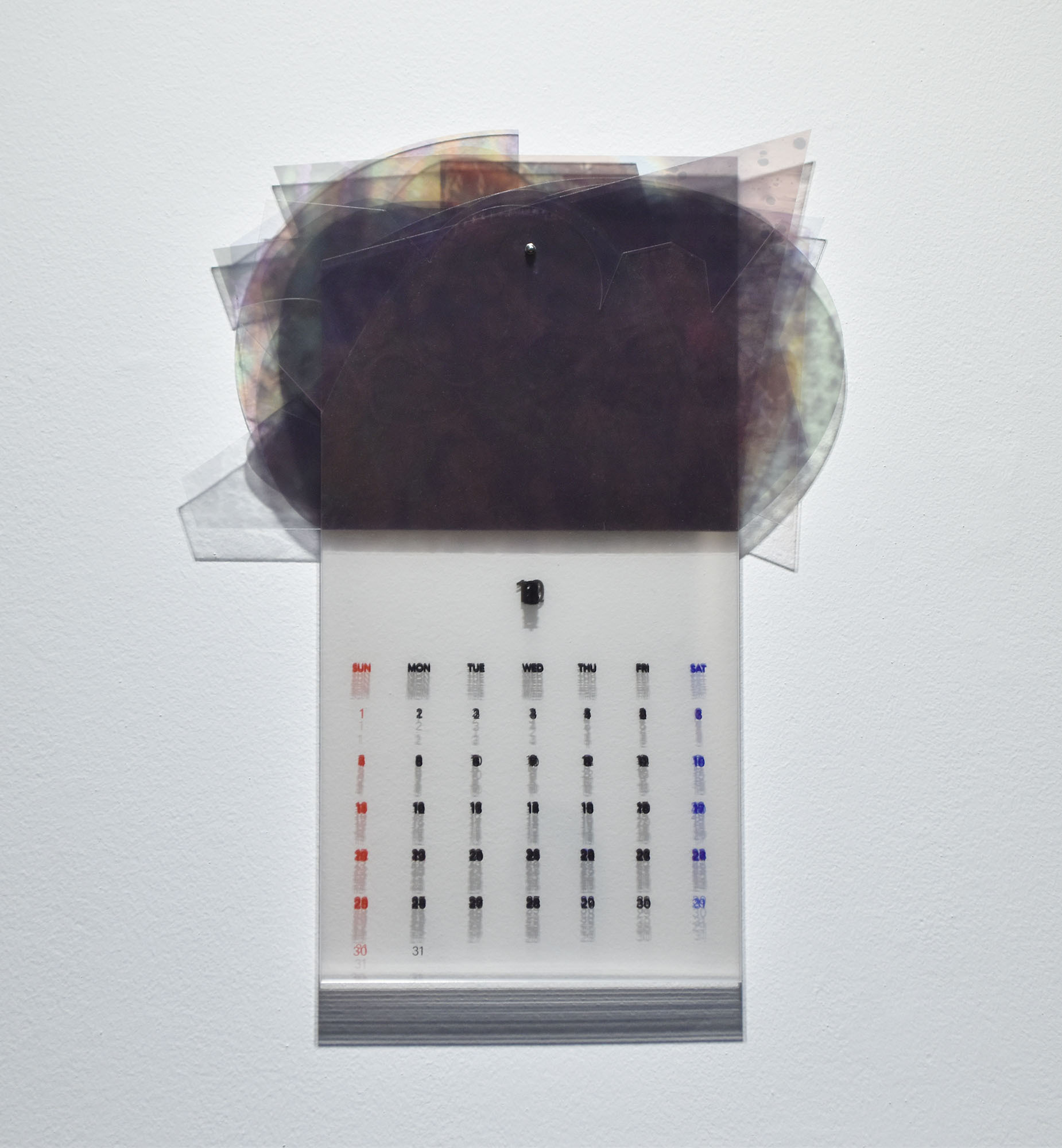
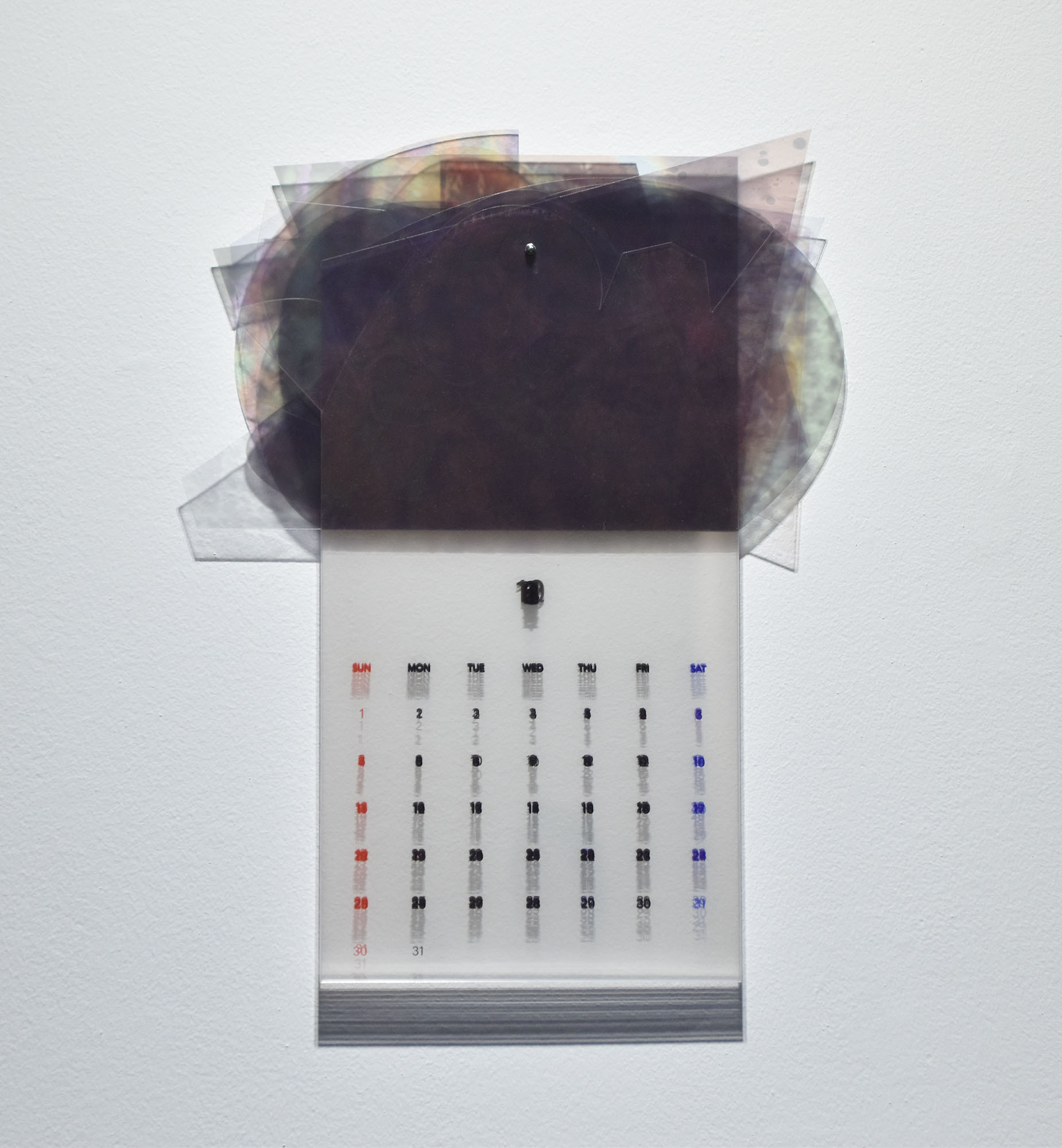
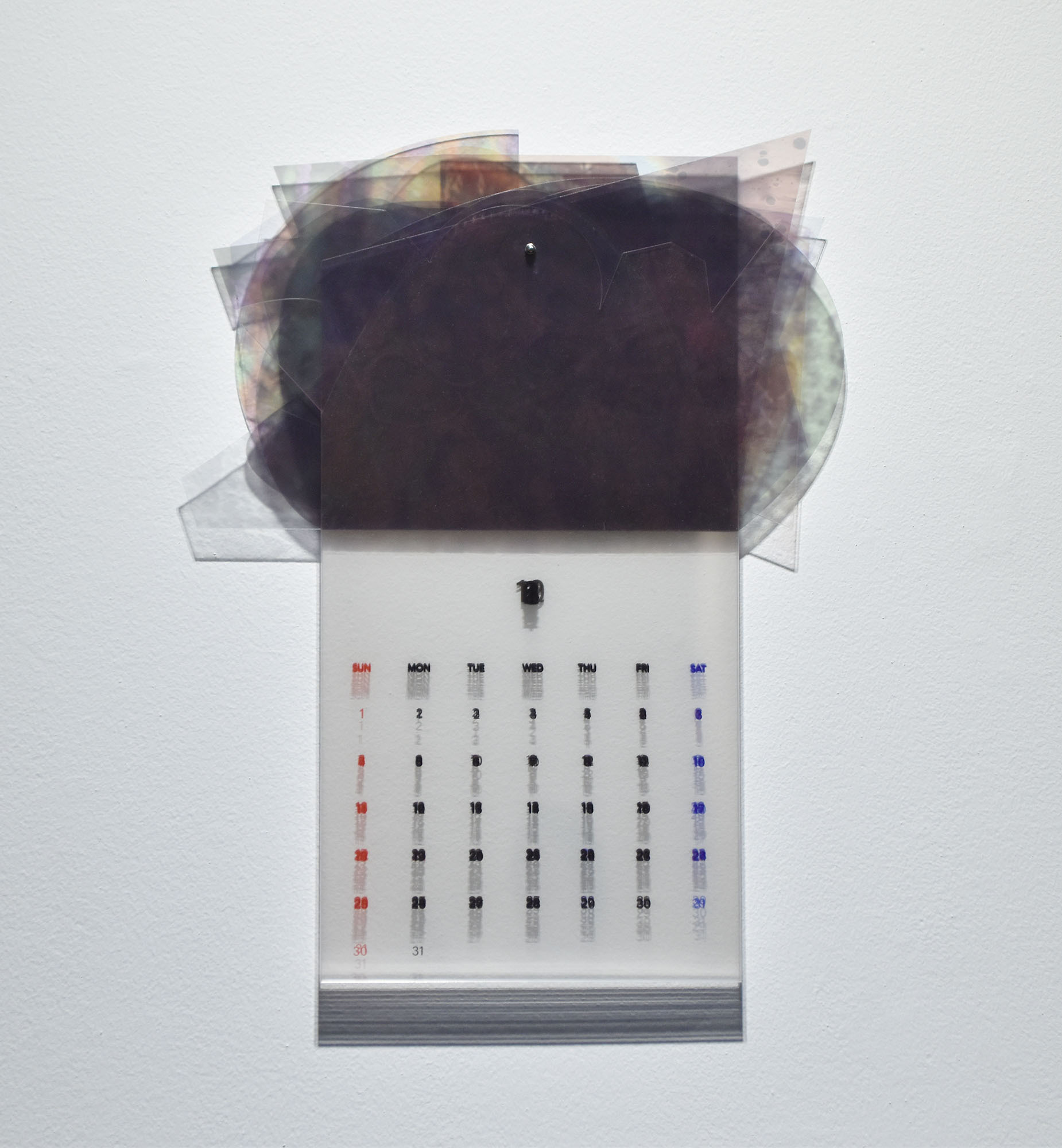
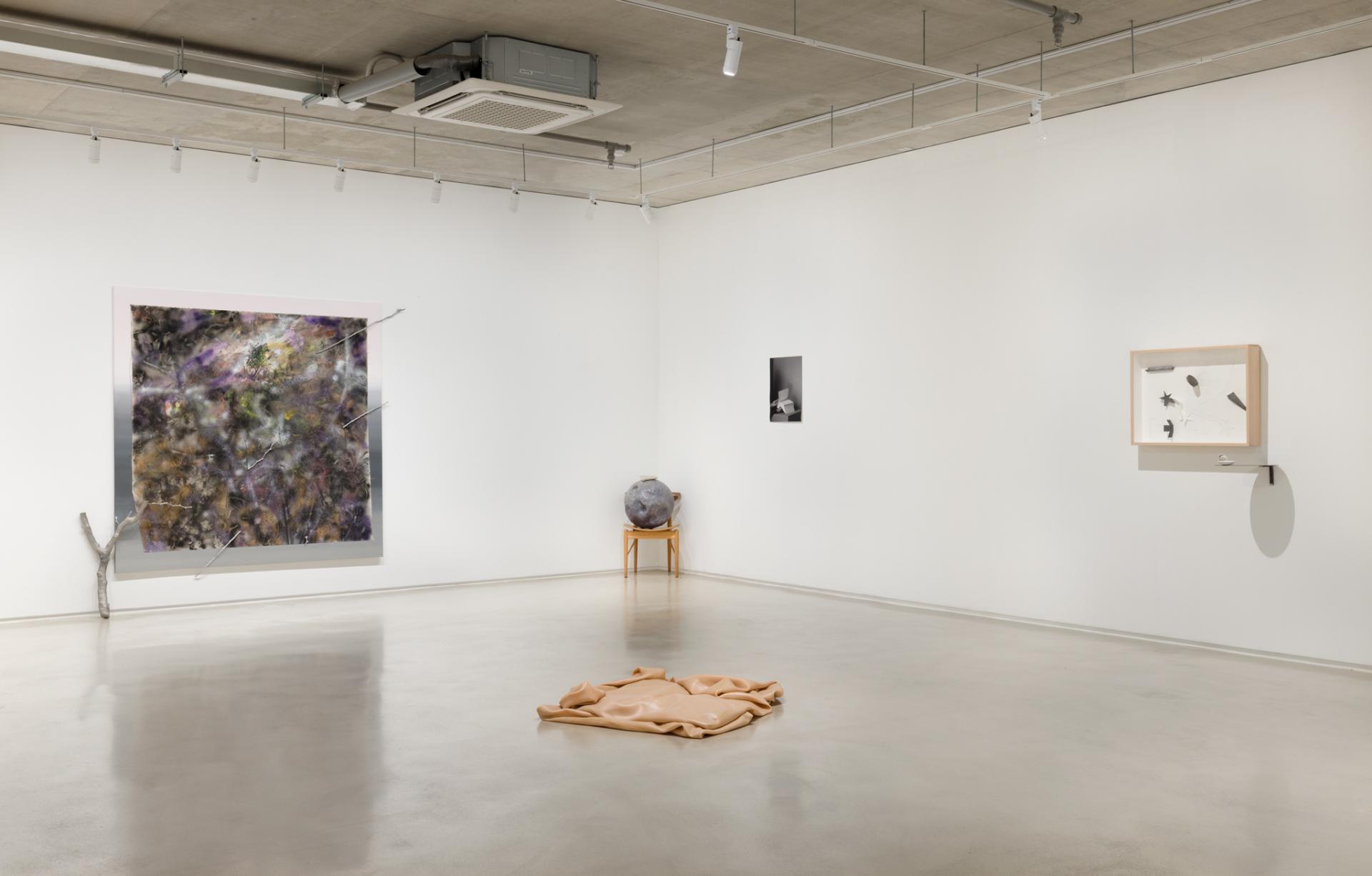
RohwaJeong, 2184, 2024, UV print on acrylic, 57x40x3cm © RohwaJeong

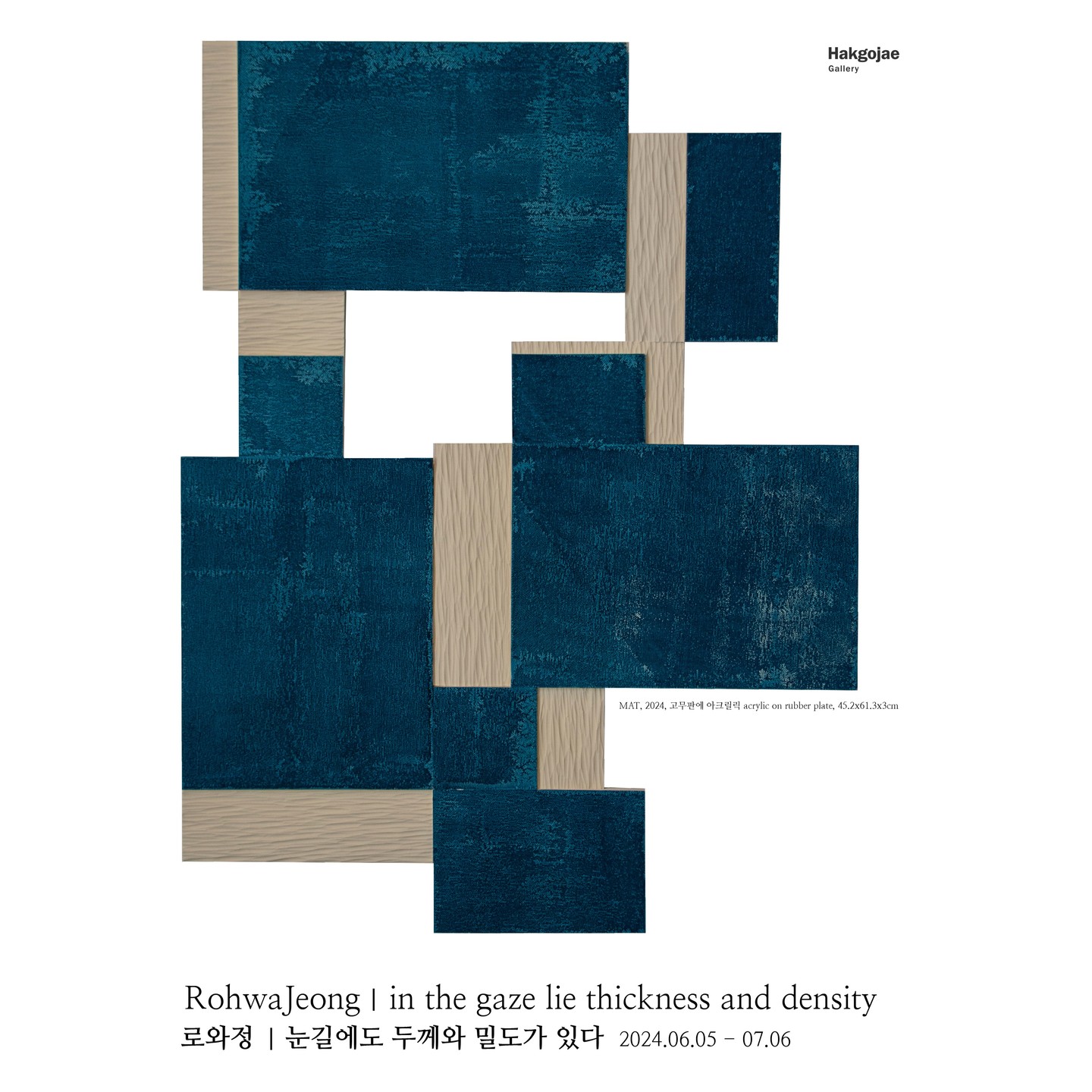
In their 2024 solo exhibition 《in the gaze lie thickness and density》 at Hakgojae Gallery, RohwaJeong extended their longstanding interest in images across a range of media. For the duo, the concept of “image-ness” they have explored does not involve defining a particular image within a fixed context or instrumentalizing it.
 
Rather, it refers to the possibility of recovering what is lost between language and the world when the elements of image and text are allowed to speak simultaneously.
 
At the entrance to the exhibition was 2184 (2024), a montage that transparently superimposed a calendar for the year 2184 with images of cells. The work suggests that language and vocabulary, which operate for humans with an authority comparable to that of truth, may ultimately be systems that merely claim to represent truth. This idea is conveyed through numerical images layered over one another until they become impossible to clearly distinguish.
 
In place of the conventionally “pleasing image” positioned at the top of a calendar, the duo juxtaposed nonlinear images of cells that come alive through processes of division, mutation, connection, and integration. In doing so, they invite viewers to imagine the landscape of the not-yet-arrived year 2184 through the organic world of cells—the microscopic units of life—beyond the privileged human system of language.


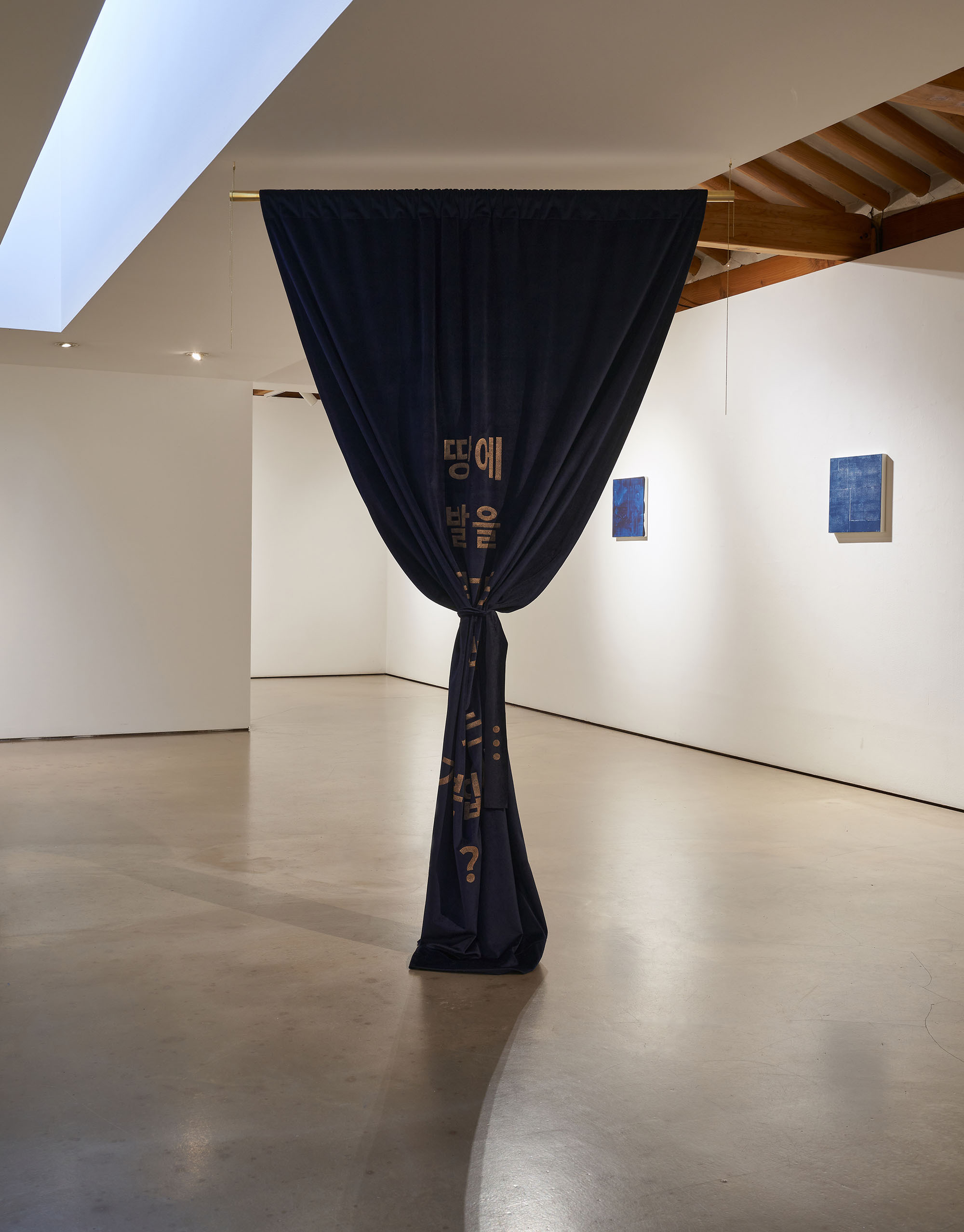
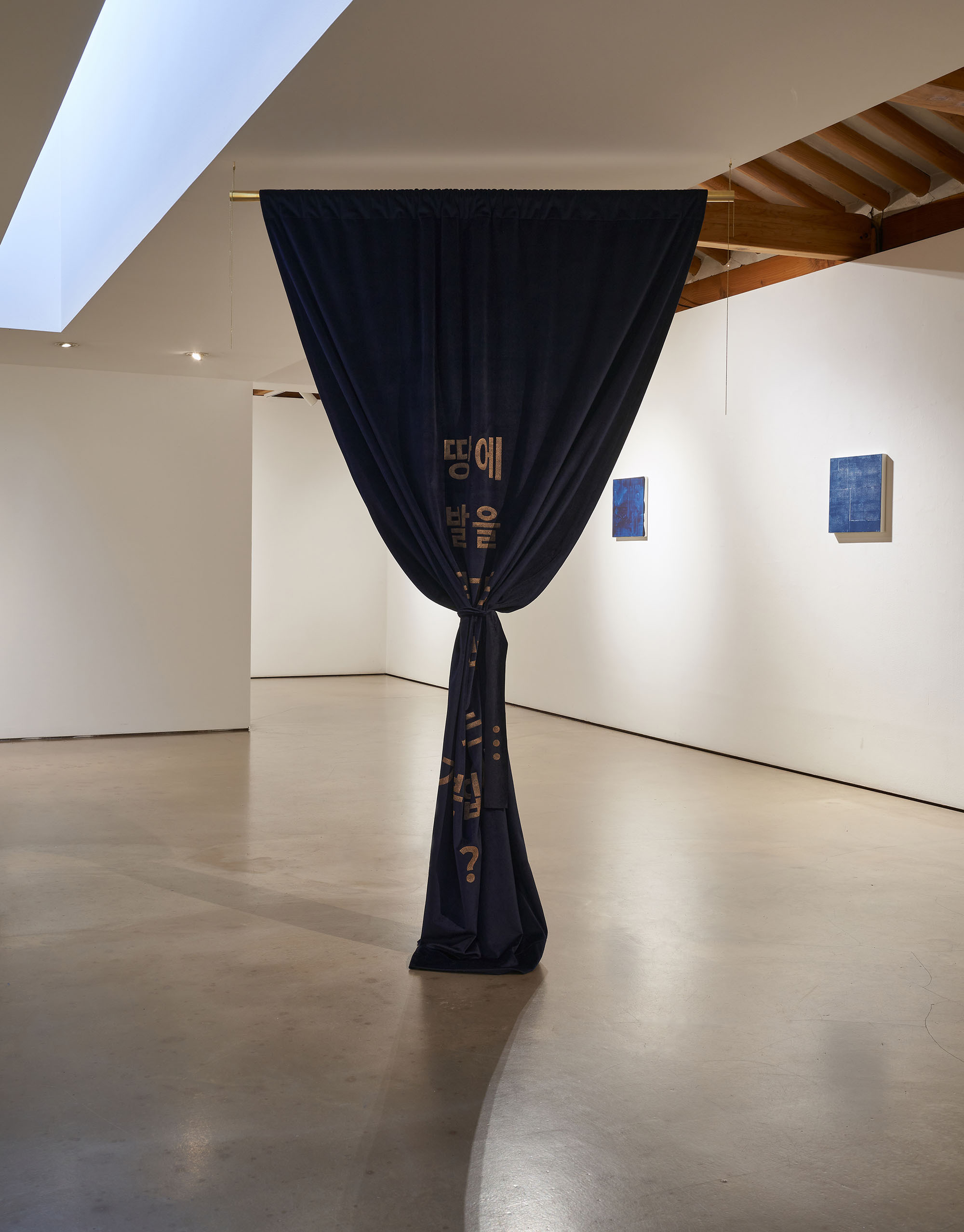
RohwaJeong, Curtain, 2024, Acrylic on velvet curtain, brass tube, brass chain, 250x150cm © RohwaJeong

At the same time, turning text into an image gives rise to new possibilities as well as new risks. In the process of becoming an image, text can once again be reduced to a fixed meaning. RohwaJeong finds the potential of “image-ness” in a state where text fully operates as an image while, at the same time, the image speaks with the flexibility of language.
 
Here, “image-ness” expands beyond establishing a hierarchy between language and image, becoming a space in which different ideas freely intersect and boundless metaphors can emerge.
 
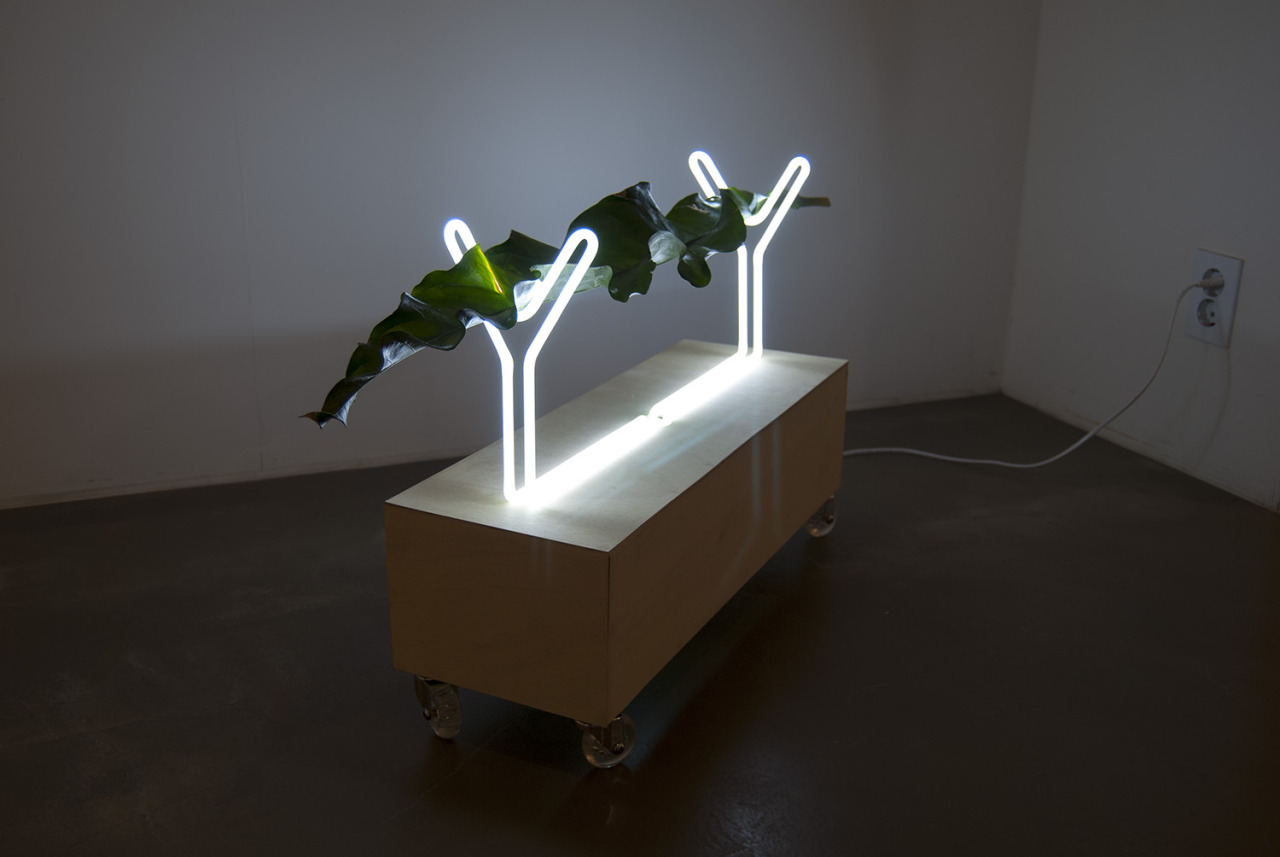
Curtain (2024) replaces the web of meanings surrounding text with the folds of fabric, bringing to the surface the images latent within the signifier. At once a text and a folded material object, the work continually asserts its own physical presence while embracing the infinite possibilities of language that can never be reduced to a single, definitive meaning.


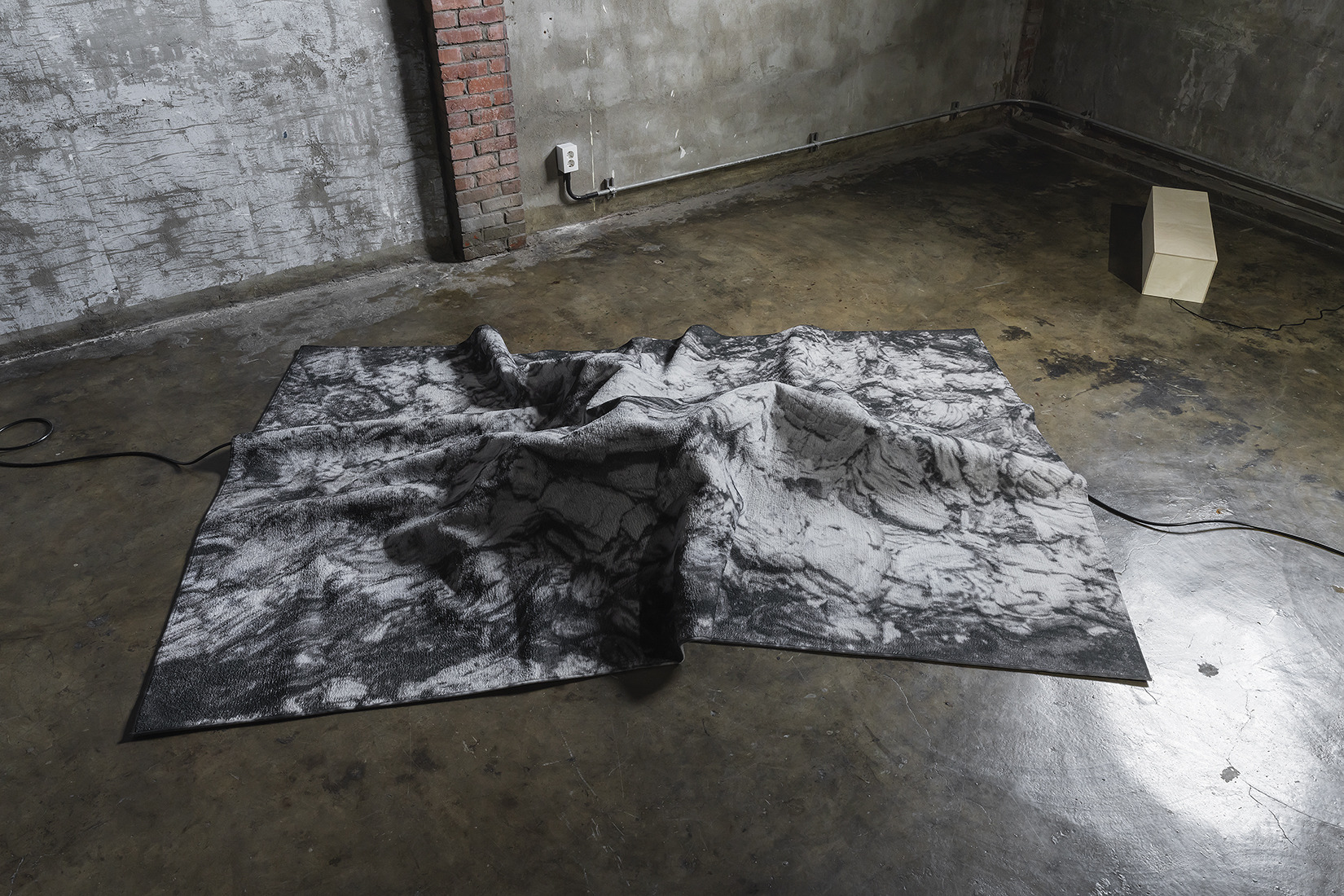
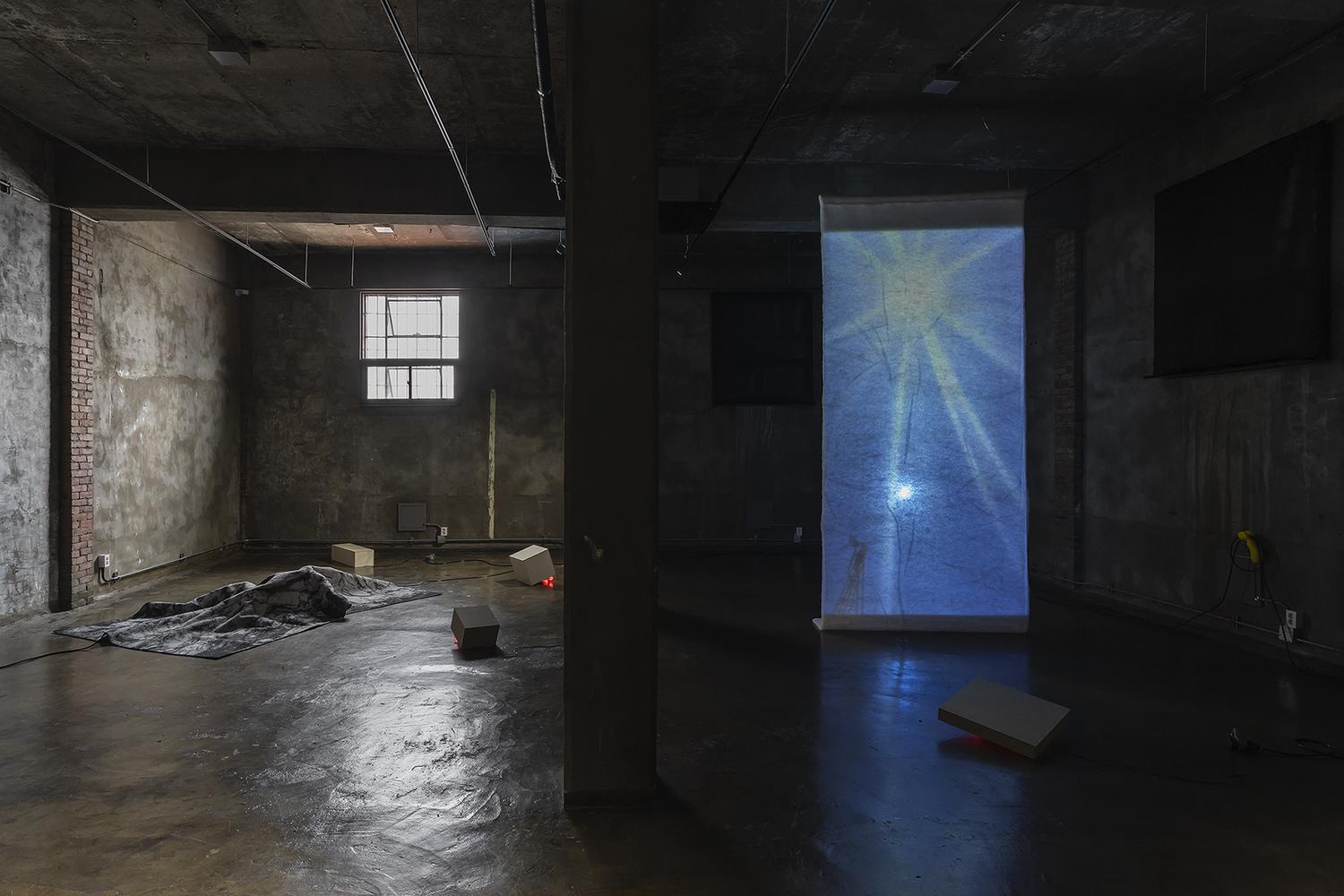
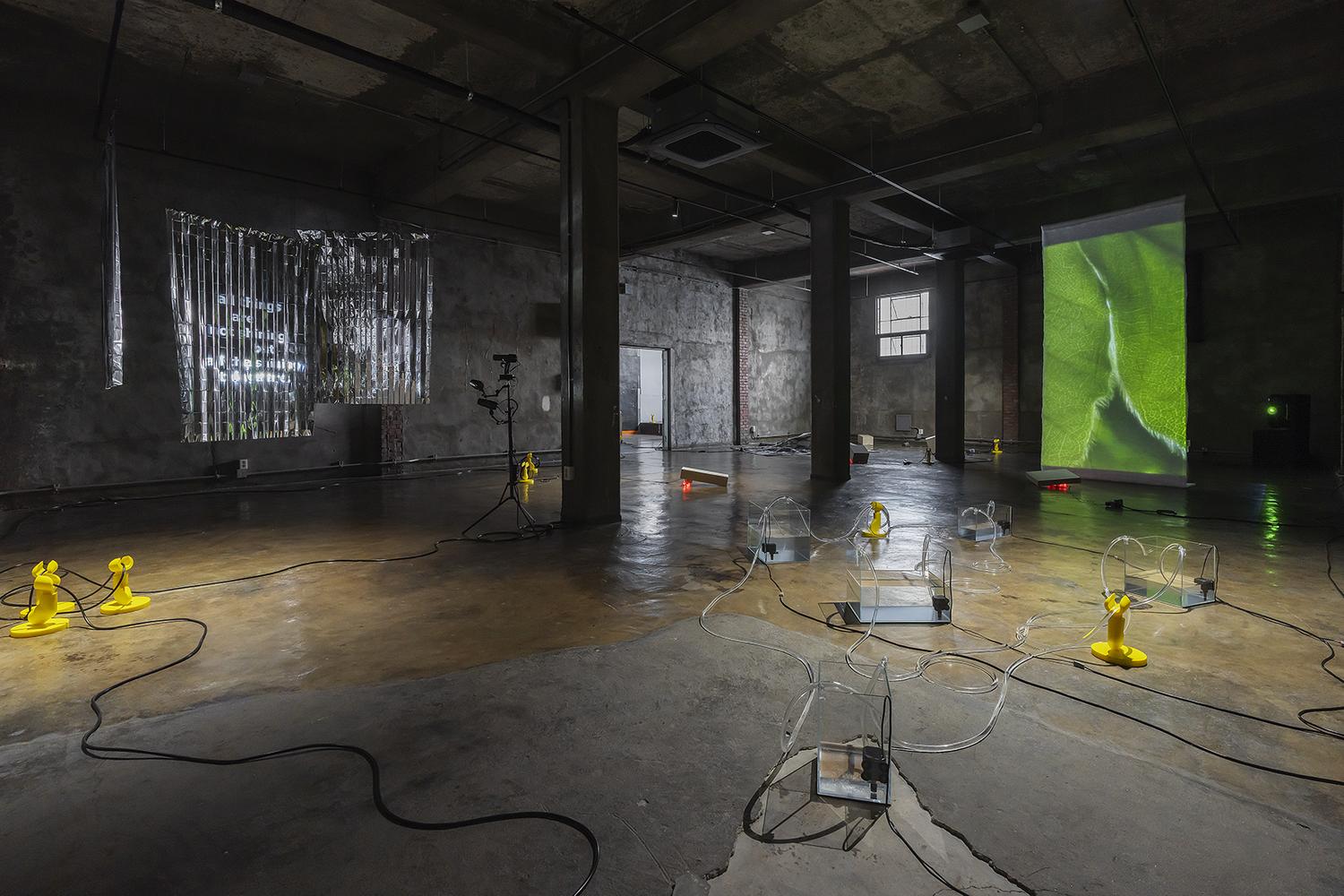
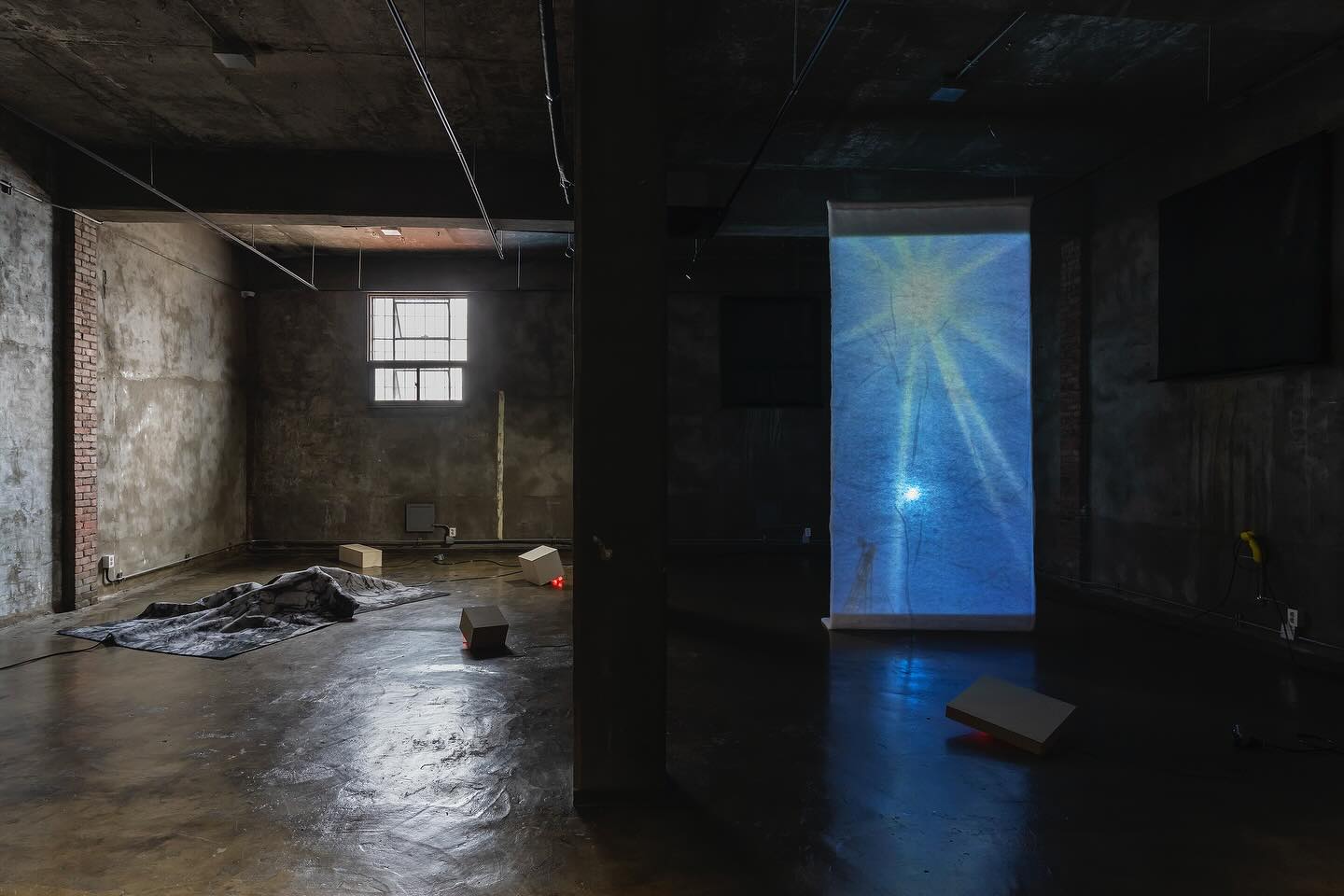
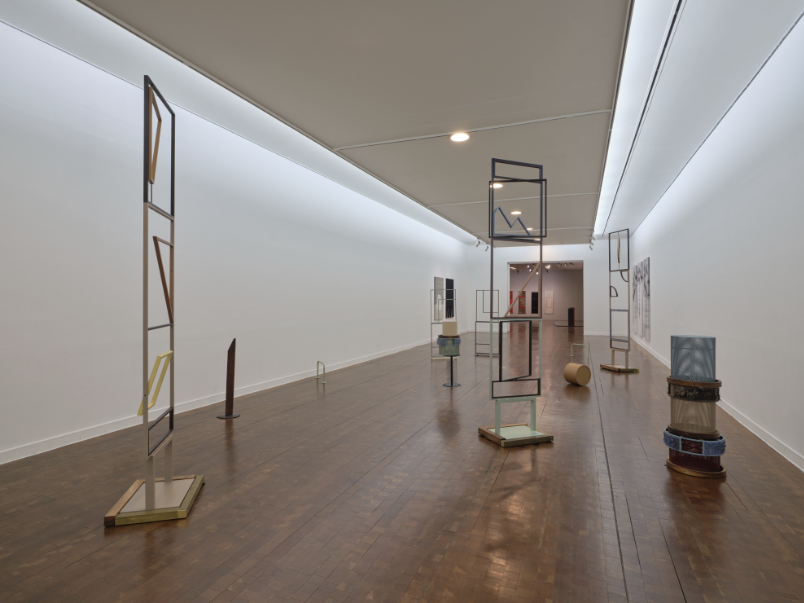
Installation view of 《yesterday’s surprise》 (The WilloW, 2025) © The WilloW

If 《in the gaze lie thickness and density》 explored metaphors and ironies that emerge through the constant shifting of positions between language and image, RohwaJeong’s 2025 solo exhibition 《yesterday’s surprise》 extends this inquiry into the realm of social relationships, turning their attention to the relationship between the self and another self—that is, the other.
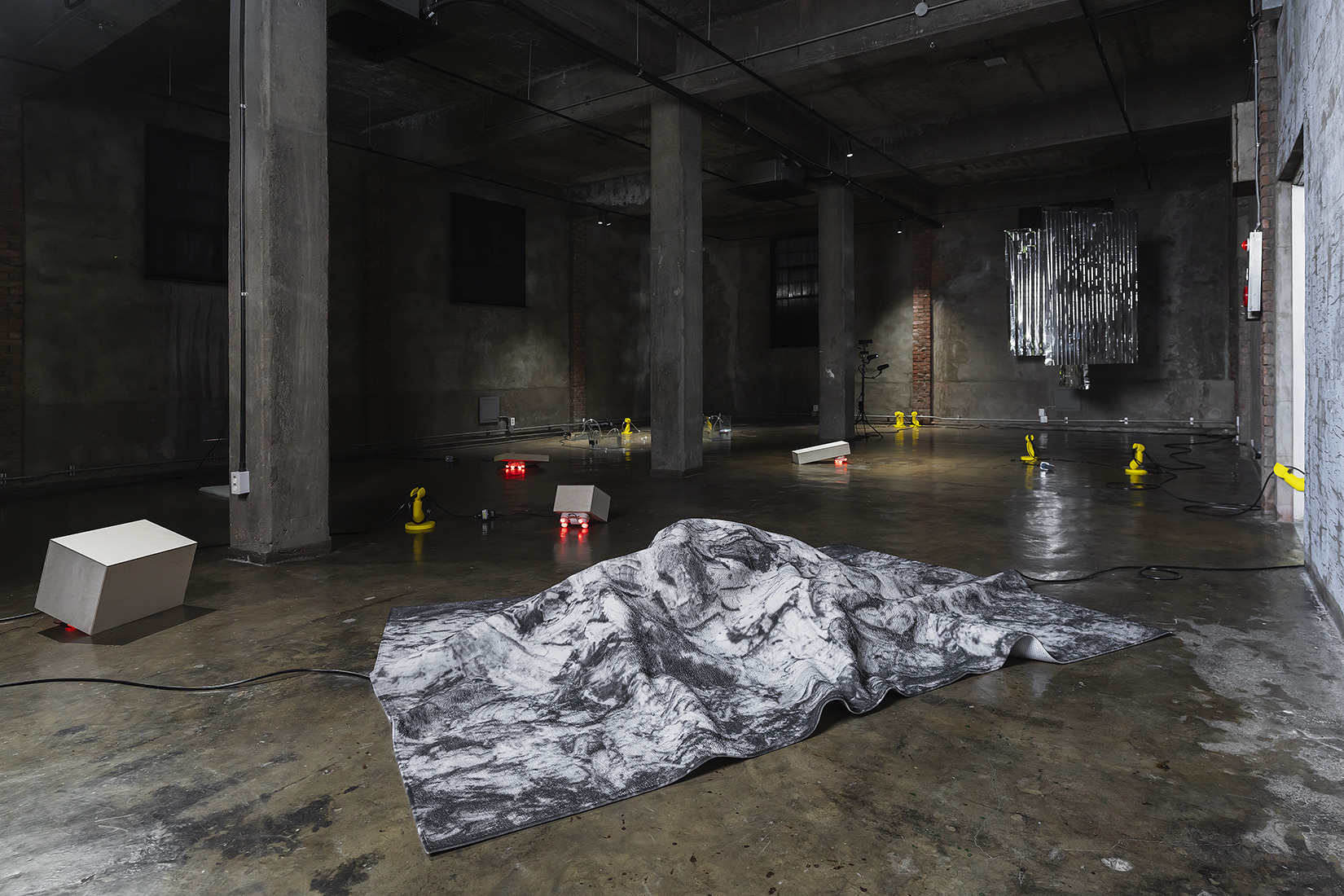
 
RohwaJeong focuses on the instability inherent in relationships with the other, in contrast to the increasingly solidified sense of self in a contemporary society preoccupied with establishing and asserting individual identity.
 
Against this backdrop, the exhibition explores the instability of relationships and the possibilities and impossibilities of connection within the emotional conditions of our time.


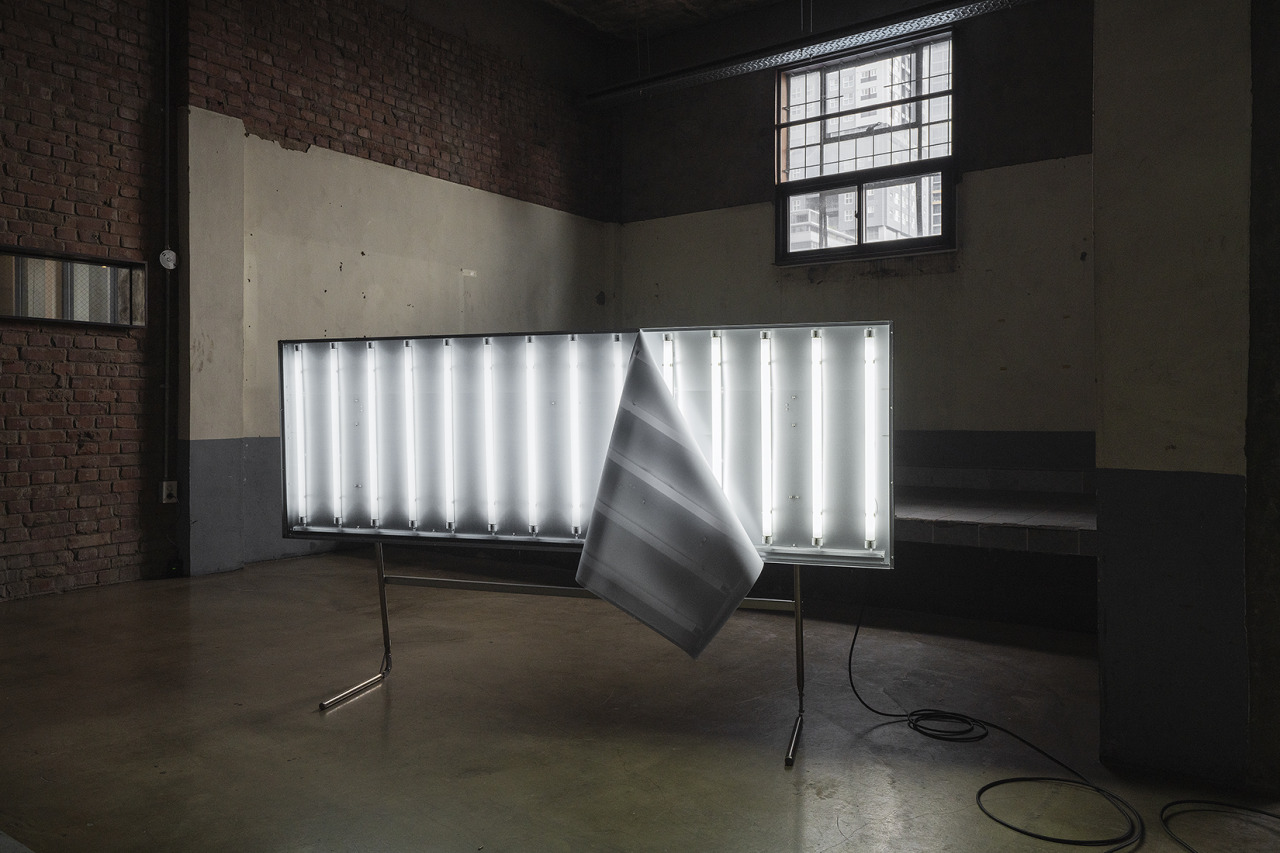
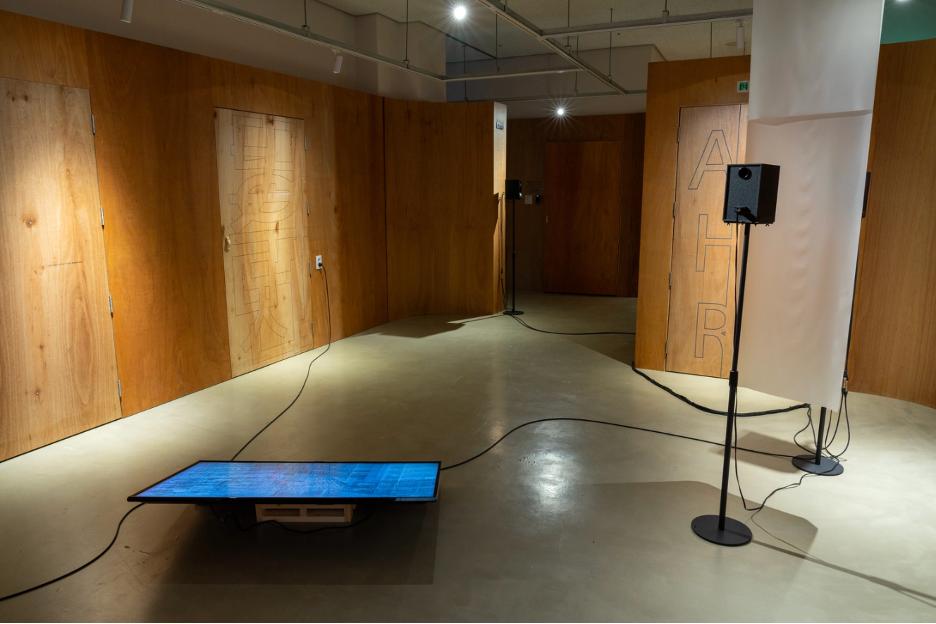
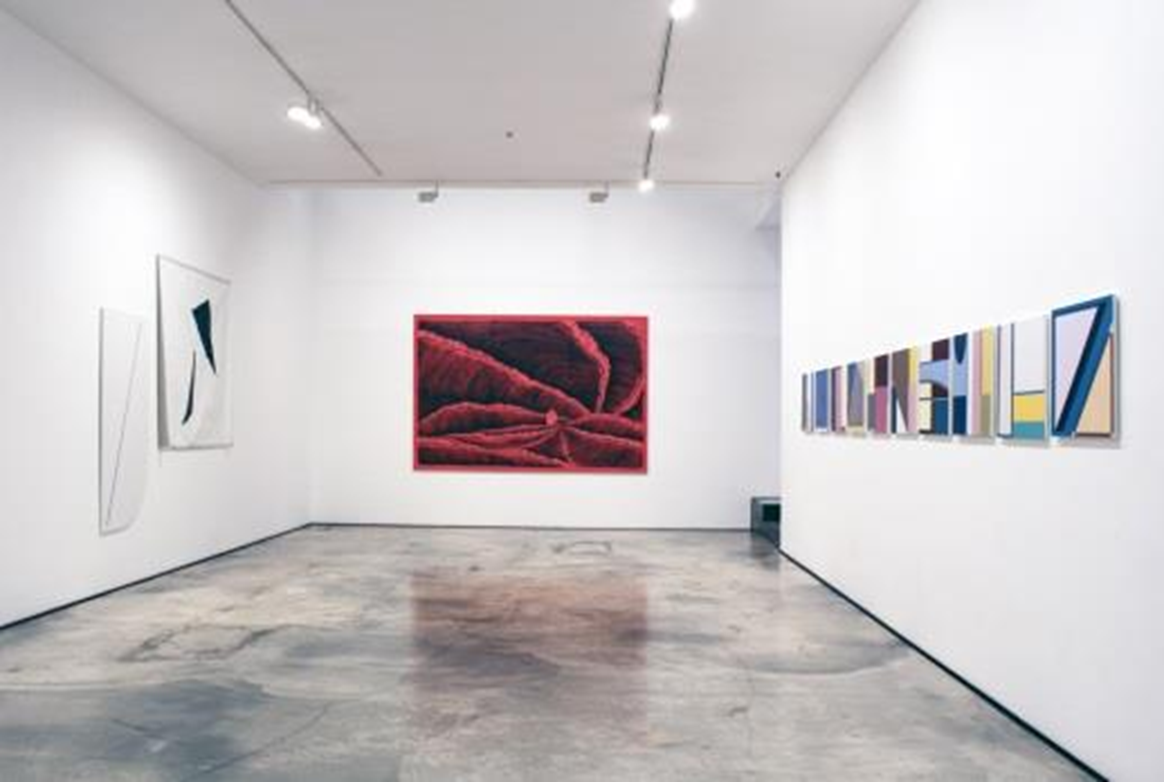
Installation view of 《yesterday’s surprise》 (The WilloW, 2025) © The WilloW

The duo seeks to reveal both the ways in which relationships are formed and the limits of connection by destabilizing and overturning binary structures. To this end, they suspend clear directives and fixed meanings, creating gaps within the signifier-signified system through signs, images, and various devices that delay meaning and invite ambiguity, multiple interpretations, and play.
 
The recurring motif of electrical wires further materializes this inquiry into relationships. Functioning simultaneously as mediators, supports, and sculptural elements, the wires connect the individual works throughout the exhibition.
 
By linking different elements and making them dependent on one another, the structure of the wires destabilizes the boundary between subject and object and evokes a new sensibility toward the ways in which relationships are formed. It ultimately asks how we might relate to different beings beyond an increasingly individualized and disconnected environment.


Installation view of 《yesterday’s surprise》 (The WilloW, 2025) © RohwaJeong

In this way, RohwaJeong’s practice has developed from an ongoing reflection on the countless relationships and boundaries that constitute our surroundings, extending beyond interpersonal relationships.
 
The duo explores these concerns through the open structure of artistic language, which allows for interpretation and misreading, while actively engaging viewers by evoking affect and sensory responses. In doing so, they encourage viewers to move beyond a single fixed meaning and approach the work from more layered and multifaceted perspectives.
 
Ultimately, RohwaJeong’s practice transforms the traditionally passive experience of viewing an exhibition into an active encounter. Rather than fixing the meaning of a work within a single interpretation, they leave it open to continual change through the interaction between the work and the viewer.
 
In this way, their work offers the possibility of sensing and reconsidering the meanings of the “self” and the “other” within constantly shifting relationships.

“We are very interested in the world and society. New issues emerge every day, but in that process, certain things are inevitably marginalized. We have been making work that brings those overlooked things back into view through the language of art.” (RohwaJeong, interview with Living Sense)


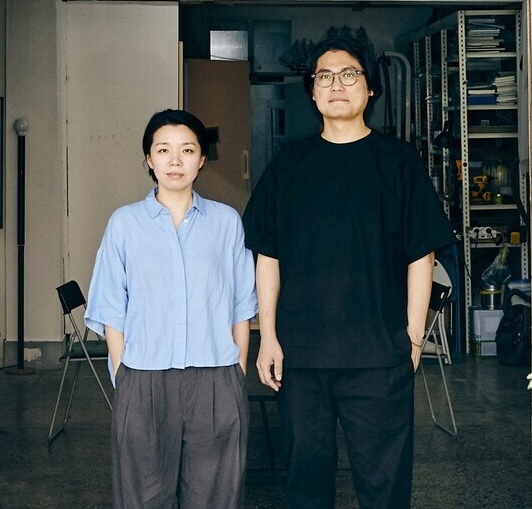
Artist RohwaJeong © Living Sense

RohwaJeong (Noh Yoonhee and Jeong Hyunseok) graduated from the Department of Spatial Art at Kookmin University's College of Art. Recent solo exhibitions include 《yesterday’s surprise》 (The WilloW, Seoul, 2025), 《in the gaze lie thickness and density》 (Hakgojae Gallery, Seoul, 2024), 《rrr》 (A-Lounge Contemporary, Seoul, 2020), and 《Willing N Dealing Open Project by RohwaJeong》 (Space Willing N Dealing, Seoul, 2019).
 
They have also participated in numerous group exhibitions, including 《Shimmering Memories》 (Pohang Museum of Art, Pohang, 2025), 《from the earth》 (Hakgojae Gallery, Seoul, 2025), 《THE VOLUME OF VOID》 (Yangpyeong Cultural Foundation Aolda, Yangpyeong, 2024), 《Portrait Of》 (Ulsan Art Museum, Ulsan, 2023), 《Manual》 (Primary Practice, Seoul, 2022), and 《Collecting for All》 (Seoul Museum of Art, Seoul, 2020).
 
RohwaJeong has participated in residency programs including the Jeju Museum of Contemporary Art Residency (2022), HIAP – Helsinki International Artist Programme (2017), SeMA Nanji Residency (2015), and Seoul Art Space Geumcheon (2015). Their works are held in the collections of the Seoul Museum of Art, Ulsan Art Museum, and the MMCA Art Bank.

References